Elevating Digital Realism: The Indispensable Role of High-Quality Commercial Vehicle 3D Models
In the vast and rapidly evolving landscape of 3D visualization, the demand for highly detailed and versatile assets has never been greater. From cinematic automotive rendering to interactive game environments and cutting-edge AR/VR experiences, the quality of your 3D models directly impacts the realism and impact of your final project. While sports cars and luxury sedans often grab the spotlight, the often-overlooked commercial vehicle plays a crucial role in grounding digital worlds in reality. These workhorses of industry and urban life add authenticity, scale, and narrative depth to countless scenes.
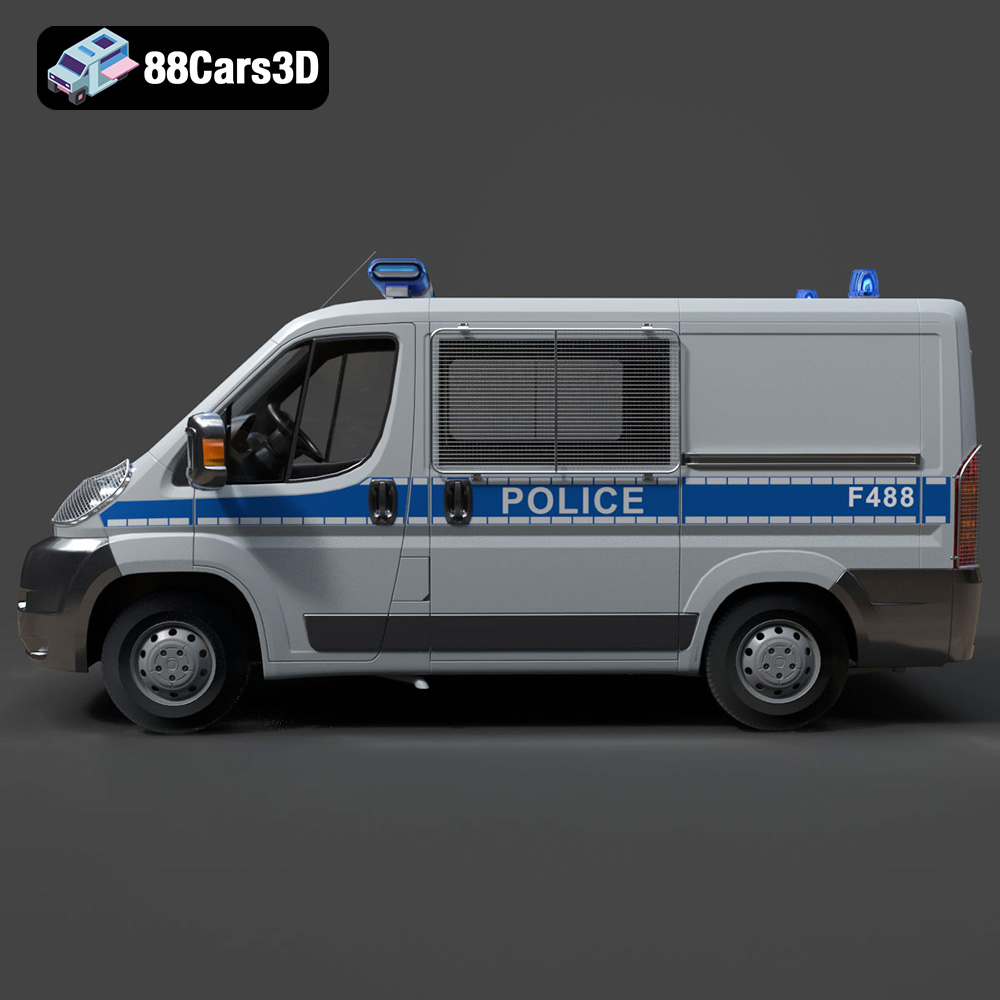
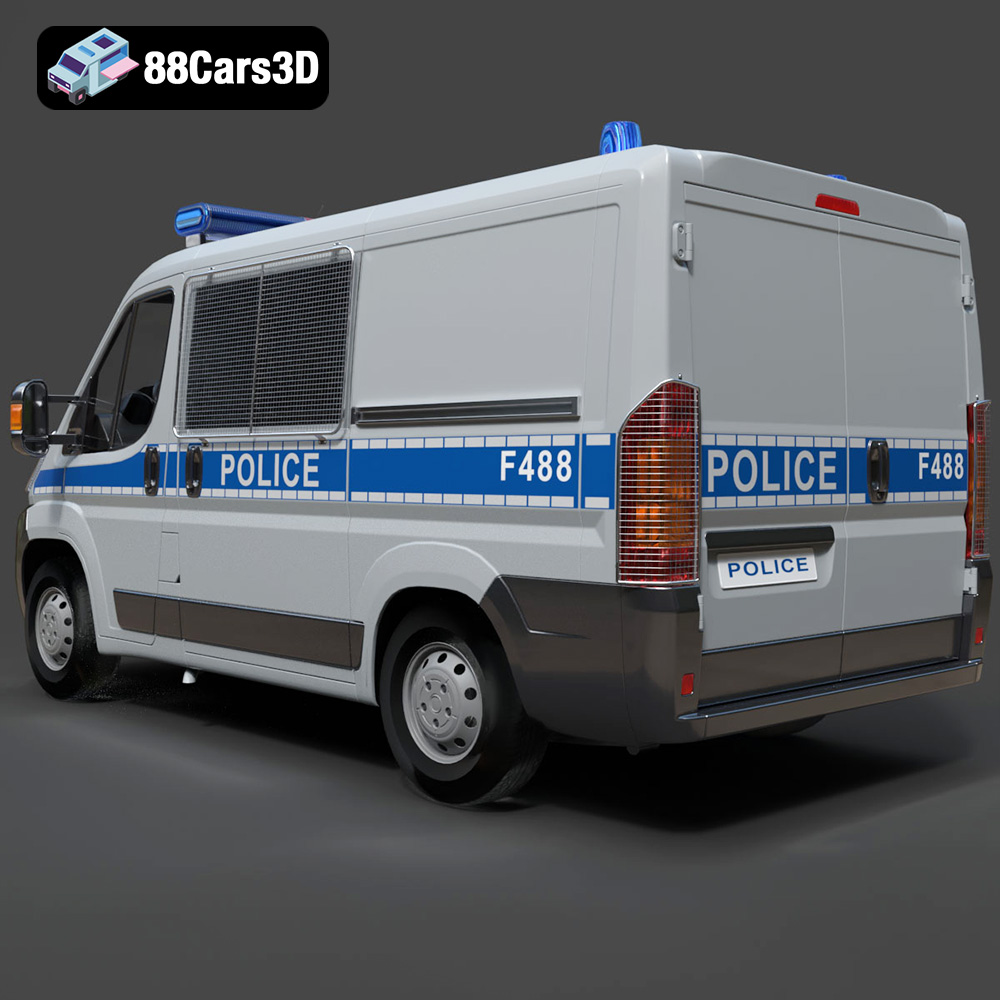
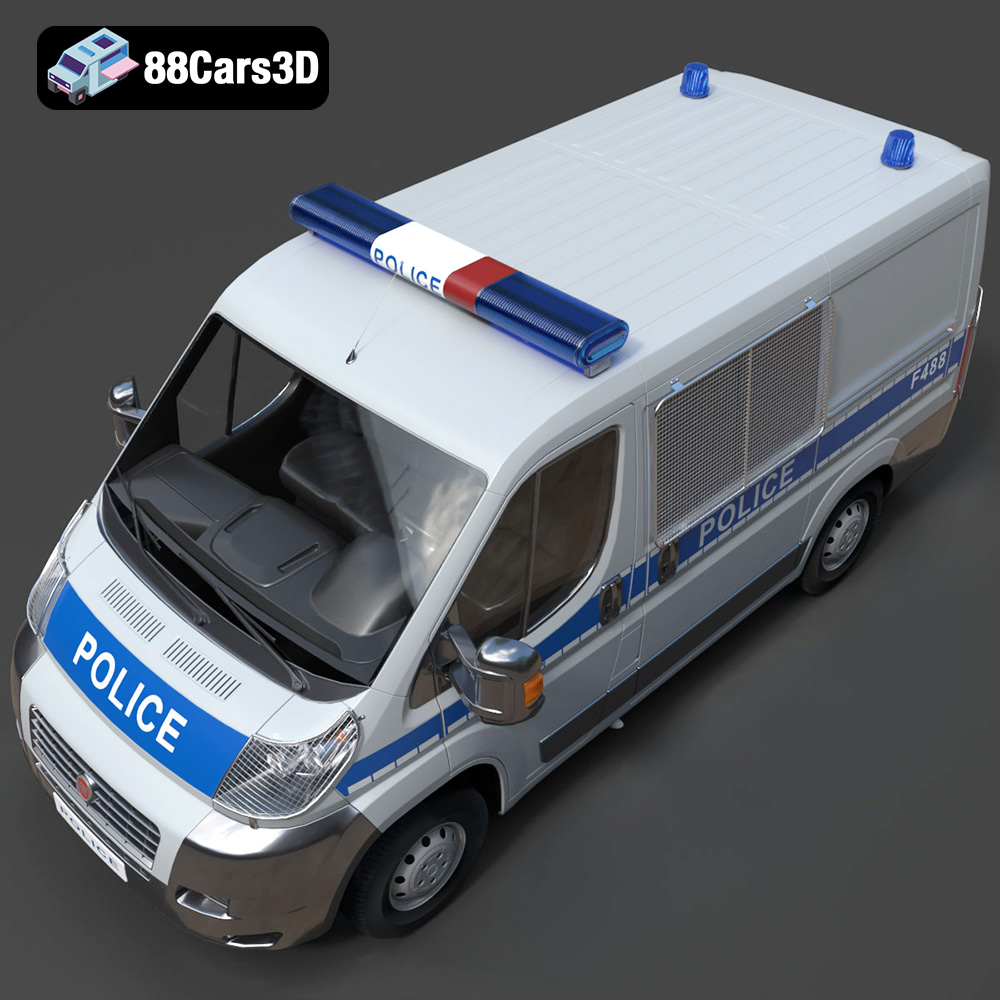
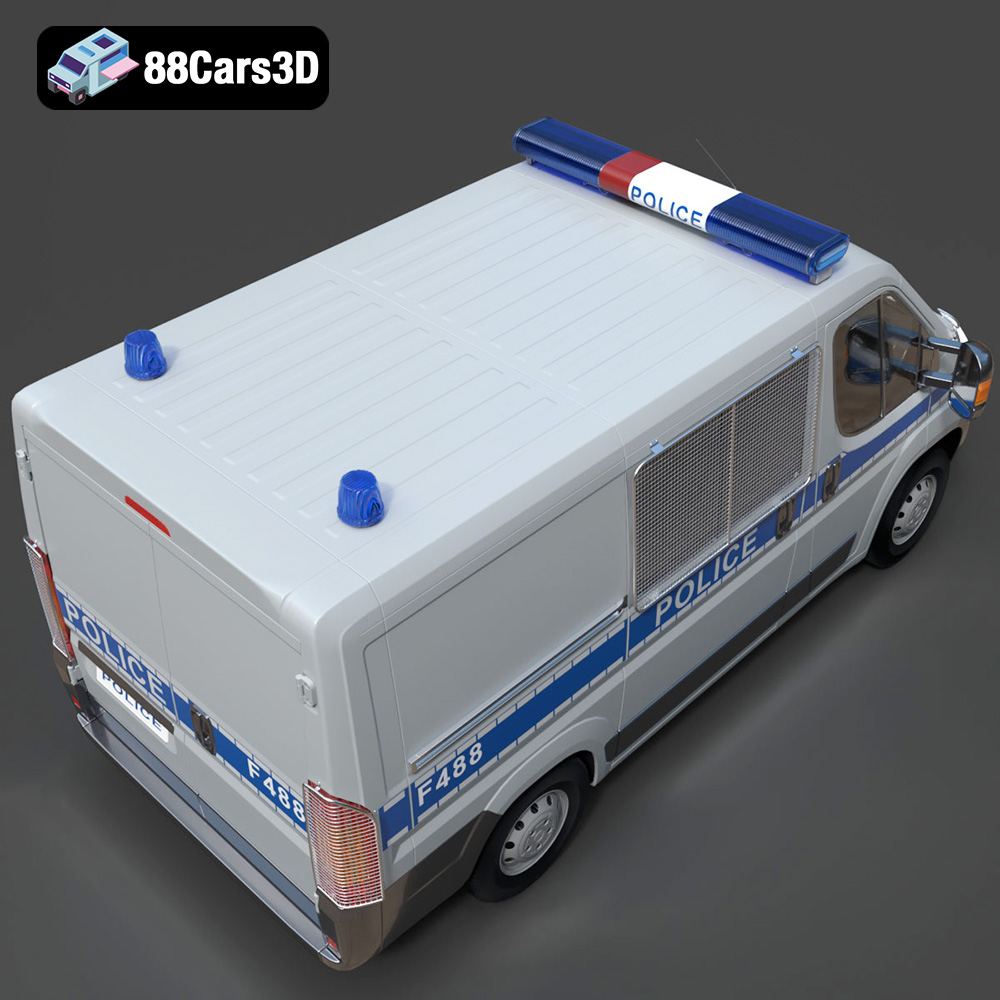
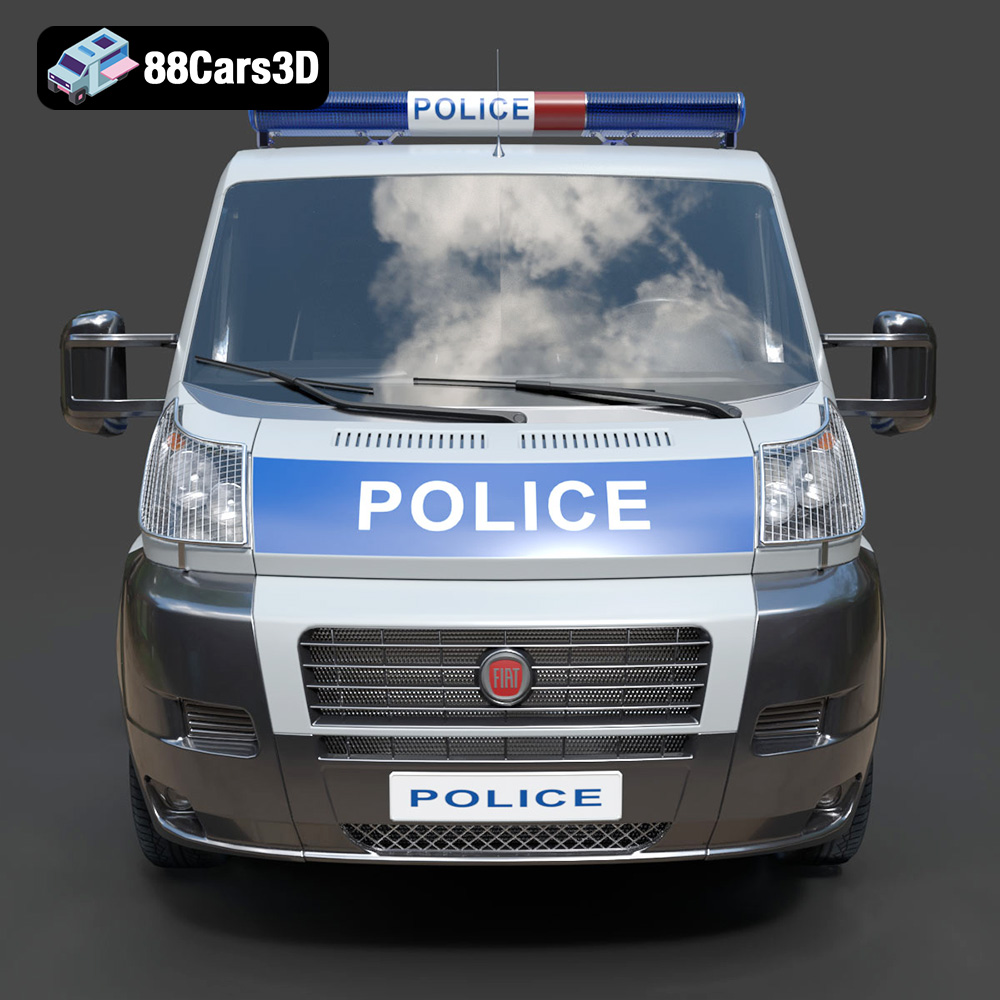
Today, we’re diving deep into the technical intricacies and creative applications of a prime example of such an asset: the Fiat Ducato SWB-001 3D Model. This meticulously crafted digital representation of the popular commercial van offers a robust foundation for a myriad of professional projects. Whether you’re an architectural visualizer needing to populate a street scene, a game developer building a bustling city, or an animator creating a dynamic advertisement, understanding the capabilities of a premium 3D asset like this can transform your workflow and elevate your results. We’ll explore its technical features, delve into practical integration strategies across various software, and showcase why investing in high-fidelity 3D car models from marketplaces like 88cars3d.com is a cornerstone of professional success.
Understanding 3D Model File Formats for Professional Workflows
The journey of a 3D model from creation to integration into diverse projects often involves navigating a complex landscape of file formats. Each format serves specific purposes, offering unique advantages in terms of compatibility, data retention, and optimization for particular applications. Understanding these distinctions is paramount for any professional working with 3D assets, ensuring seamless transitions between software and optimal performance in the target environment. The Fiat Ducato SWB-001 3D Model exemplifies this versatility by offering a comprehensive suite of formats, catering to virtually every professional need.
.blend – The Native Blender Ecosystem
The .blend file is the native format for Blender, a powerful open-source 3D creation suite. When you acquire a .blend file, you’re not just getting the raw mesh; you’re often receiving a fully editable scene complete with materials, textures, lighting setups, and sometimes even animation rigs. This format is ideal for users deeply integrated into the Blender ecosystem, allowing for immediate scene manipulation, material adjustments, and rendering without any import/export conversions that could potentially lose data. For the Fiat Ducato SWB-001, the .blend file provides a ready-to-render setup, perfect for quick iterations or deep customization.
.fbx – The Industry Standard for Interoperability
.fbx (Filmbox) is a proprietary file format owned by Autodesk and is widely considered the industry standard for 3D data interchange, particularly for game development and animation. It’s designed to carry a comprehensive range of 3D data, including geometry, materials, textures, animations, and camera information, across different software applications. Its robust support in game engines like Unreal Engine and Unity makes it an indispensable format for asset developers. For the Ducato model, the .fbx version ensures that all critical data is preserved and easily transferable, making it ideal for real-time pipelines where performance and fidelity are crucial.
.obj – The Universal Geometry Carrier
.obj (Wavefront OBJ) is one of the oldest and most widely supported 3D file formats. While it primarily stores geometric data (vertices, normals, texture coordinates) and references to external material files (.mtl), its universal compatibility makes it a go-to for cross-software integration. Almost every 3D application can import and export .obj files, making it a safe choice when compatibility is a primary concern. The Fiat Ducato SWB-001 in .obj format guarantees that its core mesh structure is accessible, regardless of your preferred 3D modeling software, serving as a reliable backbone for diverse projects.
.glb – Optimized for AR, VR, and Web
.glb (GL Transmission Format Binary) is a modern, compact, and efficient format designed for rapid loading in web browsers, augmented reality (AR), and virtual reality (VR) applications. It bundles all necessary data—geometry, materials, textures, and animations—into a single binary file, optimizing delivery and rendering performance. Its efficiency makes it perfect for interactive web experiences or embedding 3D models directly into AR/VR apps. The .glb version of the Fiat Ducato SWB-001 is therefore tailor-made for innovative digital showcases and immersive experiences, where responsiveness is key.
.stl – The Backbone of 3D Printing
.stl (STereoLithography) is the de facto standard for 3D printing. It represents a 3D model as a series of connected triangles, describing only the surface geometry of an object. While it doesn’t carry color or texture information, its simplicity and widespread adoption ensure compatibility with virtually all 3D printers and slicing software. Having the Fiat Ducato SWB-001 available as an .stl opens up possibilities for physical prototyping, scale models, or even custom parts, bridging the gap between digital design and tangible reality.
.ply – Precision Mesh for Analysis and CAD
.ply (Polygon File Format) is another format that describes a 3D object, often used for storing data from 3D scanners or for CAD applications requiring high precision. It can store various properties beyond geometry, such as color, transparency, and even normal vectors per vertex. While less common for general rendering, its robustness for precision mesh data makes it valuable for specialized engineering, analysis, or scientific visualization tasks. The .ply option for the Ducato model caters to technical users who might integrate the van into complex simulation or design validation scenarios.
.unreal – Engine-Ready for Real-Time Excellence
The .unreal file, often referring to a cooked asset or a specific asset package designed for Unreal Engine, signifies a model that has been pre-configured or optimized for direct use within the engine. This means materials are often set up with Unreal’s Physically Based Rendering (PBR) pipeline, collisions might be pre-generated, and optimizations applied for real-time performance. This format streamlines the integration process, saving significant development time. The .unreal version of the Fiat Ducato SWB-001 provides an immediate, high-fidelity asset for anyone building immersive real-time environments in Unreal Engine.
.max – The 3ds Max Professional’s Choice
Finally, the .max file is the native project file for Autodesk 3ds Max, a powerful software widely used in architectural visualization, animation, and game asset creation. Similar to .blend, a .max file provides a fully editable scene, retaining all project settings, modifiers, materials, lighting, and animation data. It offers the highest level of flexibility for 3ds Max users who need to customize the model, create intricate animations, or integrate it into complex V-Ray or Corona renders. The .max file for the Fiat Ducato SWB-001 ensures that 3ds Max professionals can leverage the full power of their software for bespoke visualizations and animations.
The Fiat Ducato SWB-001: A Closer Look at Detail and Optimization
At the heart of any truly professional 3D asset lies a commitment to both visual fidelity and technical efficiency. The Fiat Ducato SWB-001 3D Model from 88cars3d.com embodies this principle, offering a blend of realistic detail and optimized structure that makes it an invaluable addition to any digital artist’s toolkit. This isn’t just a basic shape; it’s a meticulously engineered digital twin designed for peak performance across diverse applications.
Precision in Geometry: Exterior and Chassis
The first impression of any vehicle model comes from its exterior, and the Ducato SWB-001 does not disappoint. Its bodywork is modeled with an acute attention to real-world dimensions and curvatures, capturing the distinctive lines and practical aesthetics of the Fiat Ducato van. This level of accuracy is critical for architectural visualization, where vehicles need to seamlessly integrate into realistic streetscapes, or for advertising, where the product itself needs to be instantly recognizable. Beyond the visible shell, the model includes detailed chassis elements. While often hidden in standard renders, these components contribute to the model’s overall integrity, making it suitable for dynamic camera angles, close-up shots, or even exploded views for technical demonstrations. The clean, organized geometry ensures that subdivision surfaces, if applied, will produce smooth, artifact-free results, maintaining crisp edges where necessary.
Structured Interior for Close-Up Fidelity
What truly sets a premium 3D model apart is its suitability for a variety of camera distances, including the most demanding: interior shots. The Fiat Ducato SWB-001 features a fully structured interior, making it ideal for close-up renders and detailed visualizations. This means not just seats and a dashboard, but often controls, door panels, and even subtle texture variations that mimic real-world materials. For applications such as advanced driving simulators or interactive AR/VR experiences, a detailed interior is non-negotiable, providing the immersion necessary for a convincing user experience. Imagine a virtual walkthrough where users can step inside the van, or a simulation where they can realistically interact with the cockpit – this model provides the foundation for such scenarios.
Optimized Polygon Counts and Clean UV Mapping
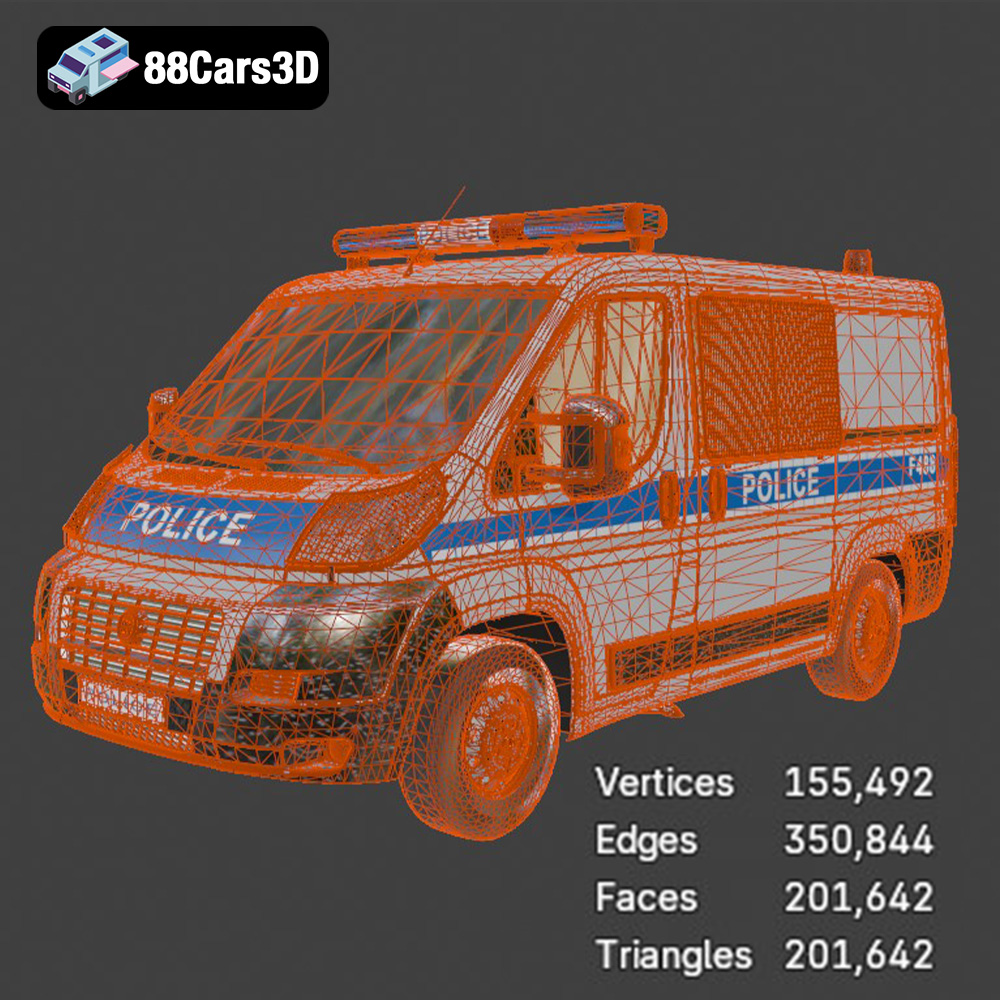
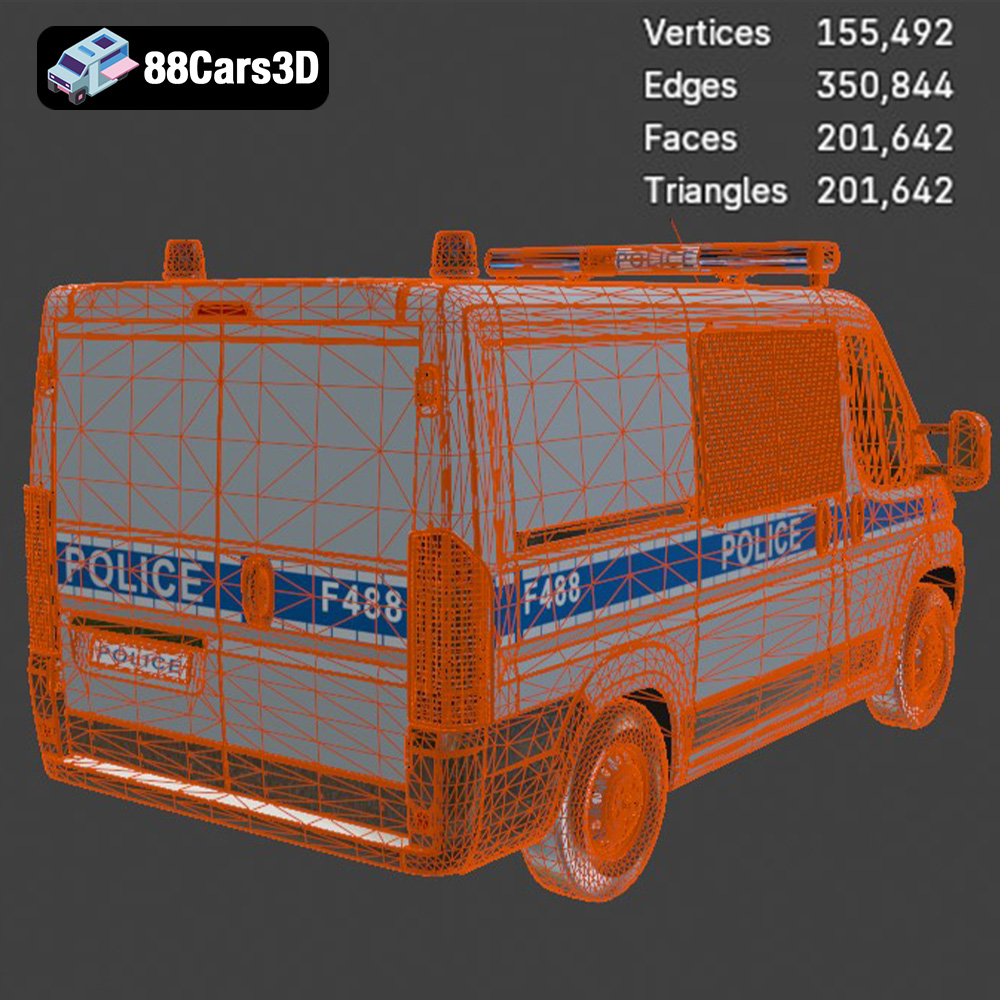
Technical optimization is as important as visual appeal, especially when working with large scenes or real-time engines. The Fiat Ducato SWB-001 is built with optimized polygon counts. This means the model strikes a crucial balance: enough polygons to maintain smooth curves and detail, but not so many that it bogs down performance. Low-polygon models might look blocky, while excessively high-polygon models can lead to slow viewport navigation, long render times, and poor frame rates in games. The thoughtful optimization of this model ensures a smooth experience across various 3D applications and game engines, making it a truly versatile game asset. Complementing this, the model includes physically accurate materials and professional UV mapping. Clean UVs are essential for ensuring that textures—be it paint, glass, or rubber—render correctly without stretching, blurring, or seams under diverse lighting conditions. This attention to detail guarantees a consistent and realistic appearance, whether viewed in a ray-traced render or a real-time game engine.
Integrating the Ducato into Professional Workflows: From Arch-Viz to Game Engines
The true value of a versatile 3D asset like the Fiat Ducato SWB-001 lies in its adaptability across various professional pipelines. Its multi-format availability and optimized structure ensure that it can be seamlessly integrated into diverse projects, from photorealistic architectural visualizations to high-performance interactive game environments.
Architectural Visualization (Arch-Viz) with 3ds Max and V-Ray/Corona
In architectural visualization, vehicles are not merely background elements; they are essential components that add scale, context, and life to a scene. The Fiat Ducato SWB-001, especially in its .max format, becomes a powerful tool for Arch-Viz artists working with 3ds Max, V-Ray, or Corona Renderer. The editable .max file allows for deep customization: artists can easily change paint colors, adjust material properties for specific lighting scenarios, or even add custom branding to the van for client presentations. Its detailed exterior and structured interior mean it can hold up to close-up shots as part of a street-level render, or be animated to show bustling urban life. Imagine populating a new logistics hub design with a fleet of these vans, or placing one realistically parked outside a commercial building, enhancing the realism and narrative of the rendered environment.
Blender for Independent Artists and Studios
Blender has emerged as a dominant force in the 3D industry, particularly among independent artists and studios seeking a comprehensive, open-source solution. The .blend file included with the Fiat Ducato SWB-001 provides a native, ready-to-use asset within this environment. Artists can immediately open the file and find the model with its materials and lighting setup, allowing for rapid iteration and creative exploration. Blender users can leverage its powerful Eevee real-time renderer for quick previews or its Cycles path tracer for photorealistic results. The organized geometry and clean UVs facilitate easy re-texturing or integration into larger Blender scenes, whether for animated shorts, product showcases, or environmental design. The Ducato model empowers Blender artists to produce professional-grade visuals without the overhead of complex import processes or material conversions.
Unreal Engine for Real-Time Game Development and Simulations
For game developers and those working on real-time simulations, performance and visual fidelity in-engine are paramount. The Fiat Ducato SWB-001 offers both .fbx and .unreal formats, making its integration into Unreal Engine exceptionally smooth. The .fbx file is a robust starting point, importing geometry, basic materials, and UVs, ready for Unreal’s PBR material system. Even more convenient is the .unreal file, which often implies a pre-configured asset, saving significant time in material setup, collision generation, and LOD (Level of Detail) implementation. This optimized game asset can be dropped directly into an urban environment, a driving simulator, or an architectural walkthrough, maintaining high frame rates while looking incredibly realistic. Its use in high-fidelity simulations, such as logistics training or urban planning scenarios, benefits immensely from its detailed yet optimized construction, making it an ideal commercial vehicle for any interactive experience.
Beyond Visualization: Simulation, AR/VR, and 3D Printing Applications
While stunning renders are a primary use case, the versatility of a high-quality 3D model like the Fiat Ducato SWB-001 extends far beyond static imagery. Its robust construction and various file formats unlock a spectrum of applications across emerging technologies and specialized fields.
Advanced Driving Simulators and Interactive Training
The demand for realistic vehicle models in advanced driving simulators is immense, particularly for professional training in logistics, emergency services, or urban delivery. The Fiat Ducato SWB-001 is perfectly suited for such applications. Its detailed exterior provides accurate visual cues for exterior perception and maneuvering, while its fully structured interior offers a convincing cockpit environment for immersive training. Developers can integrate the model into simulation platforms, add physics behaviors, and create scenarios that mimic real-world driving conditions. This allows for safe, repeatable training that develops critical skills, from parking and reversing to navigating complex urban environments with a commercial vehicle. The optimized geometry ensures that these simulations run smoothly, crucial for preventing motion sickness and providing a fluid user experience.
Immersive AR/VR Experiences and Digital Twins
Augmented Reality (AR) and Virtual Reality (VR) are transforming how we interact with digital content, offering immersive experiences that blend the real and virtual. The Fiat Ducato SWB-001’s .glb format is specifically optimized for these applications, allowing for quick loading and efficient rendering in AR/VR environments. Imagine a prospective buyer viewing a new fleet of vans in AR, walking around the Ducato, opening its doors, and even sitting inside virtually, all from their smartphone or AR headset. For businesses, this model can serve as a digital twin for fleet management, maintenance planning, or even demonstrating new vehicle customizations in an interactive virtual showroom. The low overhead and high visual quality of the .glb version make it an ideal candidate for creating engaging and highly accessible immersive content.
3D Printing for Prototyping and Scale Models
Bridging the gap between the digital and physical realms, the .stl format of the Fiat Ducato SWB-001 makes it suitable for 3D printing and prototyping. While 3D prints won’t carry the intricate textures or materials of a rendered image, they provide a tangible representation of the model’s form and dimensions. This can be invaluable for design validation, creating physical scale models for architectural layouts, or even producing custom parts for modifications or dioramas. Engineers might use a 3D-printed version to assess ergonomic considerations or visualize how a custom racking system might fit within the van’s interior. The ability to quickly manifest a digital asset into a physical object offers a unique advantage for conceptualization and presentation.
Mastering Automotive Rendering with Realistic 3D Models
Achieving breathtaking automotive rendering isn’t just about powerful software and skilled artists; it fundamentally relies on the quality of the underlying 3D car models. A professional asset like the Fiat Ducato SWB-001 provides the essential building blocks for creating compelling and photorealistic visuals, whether for advertising, product showcases, or cinematic sequences.
The Art of Material and Texture Setup
For any 3D model to look realistic, its materials and textures must accurately represent real-world surfaces. The Ducato model’s inclusion of physically accurate materials and professional UV mapping simplifies this process significantly. Artists can leverage the pre-configured materials, or easily adjust them to specific needs within their chosen rendering engine (e.g., V-Ray, Corona, Cycles, Arnold). This involves fine-tuning properties like diffuse color, metallic reflection, roughness, and normal mapping to simulate paint, glass, rubber, and plastics. For example, the precise UV mapping ensures that custom liveries or company logos can be applied flawlessly without distortion, making the van ready for branded advertising campaigns. Understanding how light interacts with these surfaces, from subtle reflections on the body to the slight transparency of windows, is critical for achieving a true-to-life appearance.
Lighting and Environment Integration for Photorealism
Even the most detailed 3D car models will fall flat without proper lighting and environment integration. Realistic automotive rendering often relies on High Dynamic Range Imagery (HDRI) maps to simulate real-world lighting conditions, from sunny outdoor scenes to moody overcast days. The Fiat Ducato SWB-001 can be placed into any such environment, and its optimized materials will react naturally to the ambient light, reflections, and shadows cast. Artists can also incorporate studio lighting setups for product photography-style renders, highlighting specific features of the van. The van’s geometry is clean enough to receive accurate shadows and contribute to realistic global illumination, making it a perfect fit for complex scene integration. This capability ensures that the Ducato doesn’t just look good in isolation, but truly belongs within any rendered scene.
Animation and Dynamic Visualizations
Beyond static images, the Fiat Ducato SWB-001 is perfectly suited for animated sequences. Its clean topology and organized structure make it easy to rig for animation, allowing for dynamic camera movements, opening and closing doors, or even full driving sequences. This is invaluable for advertising spots, showcasing vehicle features, or creating cinematic intros for games. Imagine a shot of the Ducato driving through an urban street, making a delivery, or being customized in a virtual garage. Its robust design ensures that deformations during animation are smooth and realistic. Coupled with realistic automotive rendering techniques, animated 3D car models like this can tell powerful stories and deliver engaging visual content that resonates with audiences.
Conclusion: The Fiat Ducato SWB-001 – A Foundation for Digital Excellence
In the demanding world of 3D visualization and content creation, the difference between good and great often lies in the quality of your foundational assets. The Fiat Ducato SWB-001 3D Model stands out as a prime example of a meticulously crafted, technically optimized, and incredibly versatile commercial vehicle asset. From its detailed exterior and fully structured interior to its inclusion of physically accurate materials and clean UV mapping, every aspect of this model has been designed with professional use in mind.
Whether your project demands photorealistic architectural visualization, high-performance game assets, immersive AR/VR experiences, or precise 3D prints, the Ducato model delivers. Its comprehensive suite of file formats – including .blend, .fbx, .obj, .glb, .stl, .ply, .unreal, and .max – ensures seamless integration into virtually any professional workflow. This commitment to flexibility and quality saves valuable development time, streamlines pipelines, and ultimately empowers artists and developers to focus on creativity rather than troubleshooting.
Investing in high-quality 3D car models like the Fiat Ducato SWB-001 from reputable sources such as 88cars3d.com is not just about acquiring an asset; it’s about equipping your projects with the realism, performance, and adaptability needed to achieve digital excellence. This van isn’t just a vehicle; it’s a catalyst for richer narratives, more believable environments, and truly engaging interactive experiences. Elevate your next project with an asset that’s built for purpose and designed for perfection.
Featured 3D Model
Fiat Ducato SWB-001 3D Model
The Fiat Ducato SWB-001 3D model is a meticulously crafted digital asset representing the popular commercial van. Designed for accuracy and realism, this model features detailed exterior bodywork, chassis elements, and a fully structured interior suitable for close-up renders and detailed visualizations.
This professional 3D vehicle asset is built with clean, organized geometry and optimized polygon counts, ensuring smooth performance across various 3D applications and game engines. The model includes physically accurate materials and UV mapping to ensure textures render correctly under diverse lighting conditions, making it an ideal choice for architectural visualization and high-fidelity simulations.
Utilize the Fiat Ducato SWB-001 model across multiple professional domains, including architectural visualization, advanced driving simulators, interactive AR/VR experiences, advertising campaigns, and integration into large-scale game environments requiring realistic commercial vehicles.
Included File Formats:
- .blend – Editable Blender file with materials and lighting setup
- .fbx – Game-engine ready format for Unreal Engine and Unity
- .obj – Standard 3D model format compatible with all major software
- .glb – Optimized for AR/VR and web-based visualization
- .stl – Suitable for 3D printing and prototyping
- .ply – Detailed polygon mesh for analysis and visualization
- .unreal – Pre-configured for Unreal Engine use
- .max – Editable 3ds Max file for rendering and animation
Tags: .fiat, .ducato, .swb001, .van, .commercialvehicle, .lighttruck, .utilityvehicle, .car3dmodel, .rendering, .simulation, .gameasset, .arvr, .blend, .fbx, .obj, .glb, .stl, .ply, .unreal, .max
Tags:
.fiat, .ducato, .swb001, .van, .commercialvehicle, .lighttruck, .utilityvehicle, .car3dmodel, .rendering, .simulation, .gameasset, .arvr, .blend, .fbx, .obj, .glb, .stl, .ply, .unreal, .max
$19.99
Product Image Gallery