Elevating Digital Realism: The Power of Premium 3D Car Models in Modern Workflows
In the rapidly evolving landscape of digital content creation, the demand for unparalleled realism and efficiency has never been higher. From breathtaking cinematic sequences to immersive game worlds and compelling architectural visualizations, high-quality 3D models form the bedrock of successful projects. Among these, meticulously crafted 3D car models hold a special place, representing complex challenges in design, materials, and optimization.
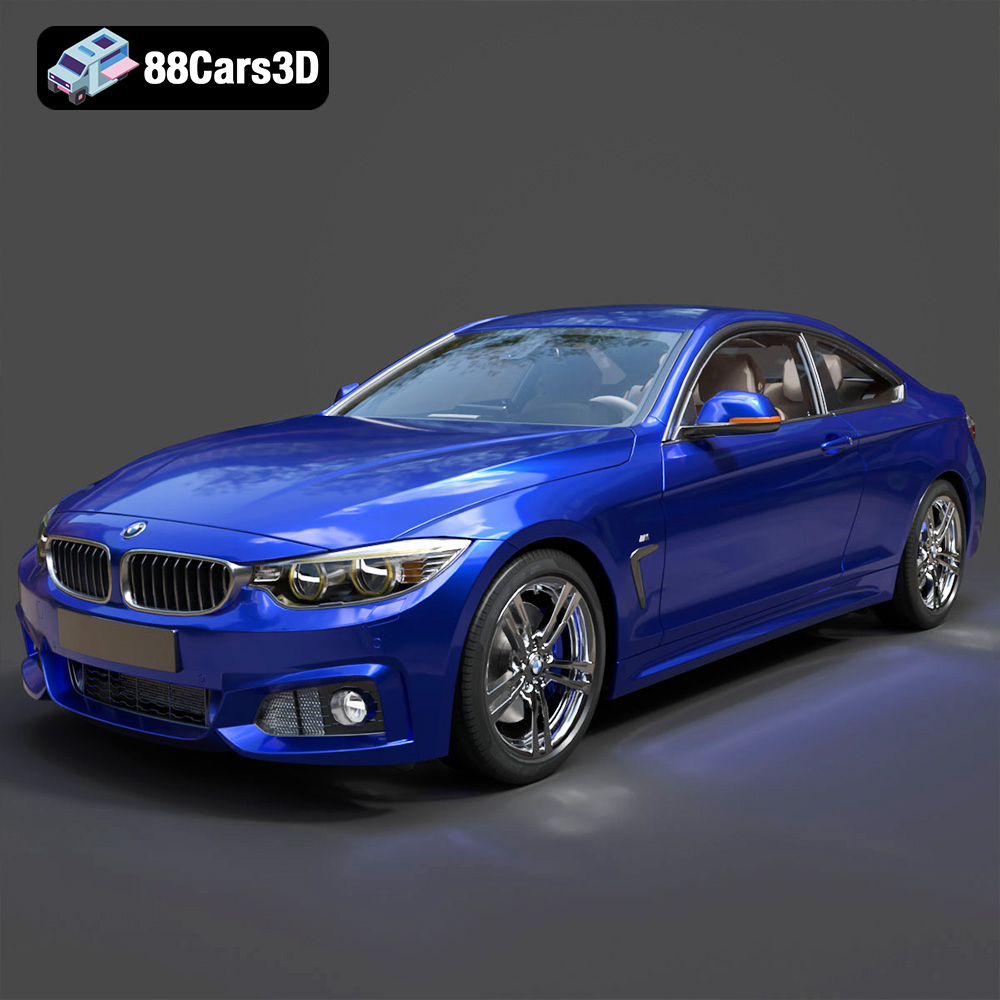
The ability to integrate a photorealistic vehicle into a scene can instantly elevate a project from good to exceptional. It saves countless hours of development, allowing artists and developers to focus on creative direction rather than fundamental asset creation. Today, we’ll delve deep into the technical intricacies and professional applications of premium 3D vehicle assets, highlighting how models like the BMW 4 Series Coupe M Sport 2014 3D Model from 88cars3d.com serve as indispensable tools in a myriad of industries. This particular model, renowned for its aggressive styling and dynamic characteristics, offers professional-grade geometry and PBR-ready materials, making it a stellar example of what a high-quality asset can bring to your creative endeavors.
Understanding 3D Model File Formats: The Backbone of Digital Pipelines
The versatility of a 3D model often hinges on its availability in various file formats, each tailored for specific software, engines, or applications. Understanding these formats is crucial for seamless integration and optimal performance within your professional workflow. The BMW 4 Series Coupe M Sport 2014 3D Model exemplifies this versatility by offering a comprehensive suite of formats, ensuring it’s ready for any project.
.blend – The Blender Ecosystem
The .blend format is the native file type for Blender, a powerful open-source 3D creation suite. A .blend file typically encapsulates an entire scene, including the 3D car model’s geometry, materials (often configured for Cycles or Eevee renderers), textures, lighting setups, cameras, animations, and even scene organization. For artists working within Blender, this format provides full editability and preserves all project settings, making it ideal for customization, re-lighting, or further development. The included .blend file for the BMW 4 Series Coupe M Sport 2014 3D Model ensures that Blender users can immediately dive into a professionally set up scene, ready for rendering or modification.
.fbx – The Universal Pipeline Standard
FBX (Filmbox) is a proprietary file format owned by Autodesk and is widely regarded as the industry standard for interoperability between different 3D software applications and game engines like Unreal Engine and Unity. It efficiently stores 3D models, textures, animations, bones, and even embedded media. Its robustness makes it excellent for exporting complex scenes and character rigs while maintaining crucial data fidelity. For 3D car models, .fbx is often the go-to for game development due to its balance of detail and engine compatibility, allowing developers to import the BMW 4 Series into their interactive environments with minimal setup.
.obj – Simplicity and Ubiquity
The .obj (Wavefront OBJ) format is one of the oldest and most universally supported 3D file formats. It’s a simple, text-based format that primarily stores geometry data (vertices, UVs, normals, faces). While it doesn’t typically store animations or advanced material properties within the file itself (materials are usually linked via an accompanying .mtl file), its widespread compatibility makes it a safe bet for cross-software transfers. If you need to import a 3D car model into virtually any 3D application, the .obj format is a reliable choice for the raw mesh data, providing a clean slate for material assignment in your preferred software.
.glb – Web-Optimized Interactivity
GLB is the binary version of glTF (Graphics Language Transmission Format), an open standard for 3D scenes and models. Designed for efficient transmission and loading of 3D content, .glb files embed all necessary data—geometry, materials, textures, and animations—into a single file. This makes it particularly well-suited for web-based applications, augmented reality (AR), virtual reality (VR), and any scenario where rapid deployment and small file sizes are critical. The BMW 4 Series Coupe M Sport 2014 3D Model in .glb format is therefore perfect for interactive product viewers, AR car configurators, or lightweight VR experiences.
.stl – Precision for Prototyping
STL (STereoLithography) is the standard file format for 3D printing. It represents a 3D model as a series of connected triangles, describing only the surface geometry without color, texture, or other properties. While not used for rendering or animation, .stl is essential for creating physical prototypes, scale models, or custom parts. For automotive designers and engineers, having a high-quality .stl file of a 3D car model like the BMW 4 Series allows for rapid prototyping and tangible evaluation of design concepts.
.ply – Data-Rich Meshes
PLY (Polygon File Format, or Stanford Triangle Format) is another format used to store 3D data, particularly from 3D scanners. It supports properties such as color, transparency, surface normals, and texture coordinates per vertex, making it more robust than .obj for certain applications. While less common for general 3D asset exchange, .ply is valuable in scientific, engineering, and CAD workflows where precise mesh data and vertex attributes are critical for analysis or reconstruction. For specialized visualization or data integrity checks, the .ply version of the BMW 4 Series can be highly beneficial.
.unreal – Native Engine Integration
While not a traditional generic file format in the same vein as .fbx or .obj, the inclusion of a “.unreal” file or specifically prepared asset for Unreal Engine signifies a model that has been pre-configured, imported, and optimized directly within the Unreal Engine ecosystem. This often means textures are properly linked, materials are set up as Unreal Engine materials, collision meshes might be generated, and LODs (Levels of Detail) could be configured. This format eliminates significant setup time for game developers, offering a truly “plug-and-play” experience for integrating the BMW 4 Series into an Unreal Engine project.
.max – The 3ds Max Powerhouse
The .max format is the native file type for Autodesk 3ds Max, one of the leading software packages for 3D modeling, animation, and rendering in the architecture, engineering, and construction (AEC) industries, as well as film and game development. A .max file, similar to a .blend file, contains the entire scene data, including geometry, complex material networks (e.g., V-Ray, Corona), lighting, camera setups, and animation curves. For professionals using 3ds Max, the .max version of the BMW 4 Series Coupe M Sport 2014 3D Model provides maximum flexibility for high-fidelity rendering and cinematic animation within their familiar environment.
Crafting Realism: The Art of Automotive Rendering
Automotive rendering is a specialized field where the intersection of artistry and technical precision creates compelling visuals. A high-quality 3D car model, such as the BMW 4 Series Coupe M Sport 2014 3D Model from 88cars3d.com, is the essential foundation for achieving photorealistic results. The model’s clean topology, accurate dimensions, and well-prepared PBR materials are critical for a seamless rendering workflow in software like 3ds Max, Blender, or V-Ray.
PBR Texturing and Material Fidelity
Physical Based Rendering (PBR) has become the gold standard for achieving realistic materials. The BMW 4 Series model comes equipped with PBR-ready materials, meaning its textures (Albedo/Base Color, Roughness, Metalness, Normal, Ambient Occlusion) accurately describe how light interacts with surfaces in the real world. This is crucial for replicating the nuanced reflections of metallic paint, the transparency and subtle imperfections of glass, and the unique sheen of rubber tires. An artist can effortlessly load these materials into any PBR-compliant renderer and expect a physically accurate response, whether it’s the subtle glint off the M Sport grille or the deep reflections on the coupé’s bodywork. The meticulous attention to detail in the material setup ensures that the digital BMW behaves just like its physical counterpart under varying lighting conditions.
Lighting for Dramatic Effect
Even the best 3D car model requires expert lighting to truly shine. Automotive rendering often employs studio-style HDRI (High Dynamic Range Image) lighting to simulate professional photo shoots, or complex environmental setups for outdoor scenes. With a robust model like the BMW 4 Series, artists can experiment with three-point lighting, rim lights, and softboxes to highlight its aggressive lines and sculpted form. In 3ds Max, for instance, users might employ V-Ray or Corona lights in conjunction with an HDRI to create dynamic reflections and realistic global illumination. Blender artists can leverage Cycles or Eevee with similar techniques, utilizing the provided lighting setup within the .blend file as a starting point. The model’s optimized geometry ensures that light bounces and shadows are calculated accurately, contributing to a believable final image.
Post-Production and Final Polish
No render is truly complete without a touch of post-production. Software like Adobe Photoshop or Affinity Photo allows artists to enhance their raw renders, adding effects such as subtle chromatic aberration, lens flares, depth of field, and color grading. This stage is where the mood and atmosphere of the image are fine-tuned, transforming a technically accurate render into a piece of art. For a car model like the BMW 4 Series, post-production can emphasize its sleekness, power, or luxurious feel, pushing the visual fidelity to cinematic levels for automotive marketing or high-end visualization projects.
Driving Engagement: Integrating 3D Cars into Game Development
Game development demands a unique blend of visual quality and performance optimization. A premium 3D car model needs to be detailed enough to look stunning, yet efficient enough to run smoothly in real-time environments. The BMW 4 Series Coupe M Sport 2014 3D Model is built with game development in mind, offering formats and structures ideal for engines like Unreal Engine and Unity.
Optimization for Real-Time Performance
High-fidelity rendering models often boast millions of polygons, which is impractical for real-time game engines. Game-ready assets, like the BMW 4 Series, are optimized with careful polygon reduction (often through LODs – Levels of Detail) while retaining visual integrity. This means generating multiple versions of the model, each with a decreasing poly count, that swap in and out based on the camera’s distance from the vehicle. Additionally, efficient UV mapping and atlas packing for textures are crucial to minimize draw calls and optimize memory usage. The BMW 4 Series model’s professional-grade geometry ensures a clean mesh that can be easily optimized, whether for a high-end racing simulator or a mobile AR application.
Workflow in Unreal Engine and Unity
Integrating a 3D car model into game engines like Unreal Engine or Unity involves specific workflows. For Unreal, the included “.unreal” file or a well-prepared .fbx streamlines the process. This typically involves importing the .fbx, which brings in the mesh, textures, and material slots. Artists then create Unreal Engine materials, connecting the PBR texture maps (Base Color, Normal, Roughness, Metallic, etc.) to their respective nodes. The process in Unity is similar, utilizing the .fbx file for import and setting up custom Standard or HDRP/URP materials. The clean naming conventions and logical grouping of components within the BMW 4 Series model mean developers can quickly navigate and assign materials to different parts like wheels, body, interior, and lights, accelerating the setup time significantly.
Collision Models and Physics Setup
Beyond visual fidelity, a game asset requires functional components for interaction. Collision models (simplified mesh representations of the vehicle) are vital for detecting impacts with the environment or other vehicles. These are often automatically generated or manually created for precision. Furthermore, integrating a vehicle into a game’s physics system (e.g., Unreal’s Chaos Vehicle system or Unity’s Wheel Colliders) involves setting up suspension, tire friction, engine power, and gear ratios. A well-structured 3D car model facilitates this by allowing easy isolation of components like wheels and suspension elements, which are critical for accurate physics simulation. The BMW 4 Series model provides the robust geometric foundation needed for these advanced game mechanics.
Beyond Visualization: AR/VR and 3D Printing Applications
The utility of a high-quality 3D car model extends far beyond traditional rendering and game development, venturing into cutting-edge applications like Augmented Reality (AR), Virtual Reality (VR), and 3D printing. The BMW 4 Series Coupe M Sport 2014 3D Model’s versatility is further enhanced by its provision in formats like .glb and .stl, specifically catering to these innovative uses.
Immersive Experiences in AR/VR
AR and VR are transforming how we interact with digital content, offering immersive experiences that blur the lines between virtual and reality. For automotive brands, this means virtual showrooms, interactive car configurators, or engaging marketing campaigns where customers can “see” a car in their driveway via AR, or “sit” inside it in VR. The .glb format, included with the BMW 4 Series model, is a game-changer here. Its optimized, single-file structure makes it ideal for web-based AR applications (like those utilizing WebXR) or standalone VR experiences. The model’s PBR materials translate beautifully into these environments, allowing for realistic appearance and interaction, helping potential buyers visualize the car in exquisite detail before ever stepping into a dealership. Imagine a user placing a virtual BMW 4 Series in their garage, inspecting its aggressive M Sport body kit from all angles, or even changing its paint color in real-time.
From Digital to Physical: 3D Printing
3D printing offers a tangible connection to the digital world, enabling the creation of physical prototypes, scale models, or custom accessories. The .stl file format provided for the BMW 4 Series Coupe M Sport 2014 3D Model is specifically tailored for this purpose. Automotive designers can use this to quickly prototype design iterations, engineers can create functional components, and enthusiasts can print highly detailed scale models for display. The model’s professional-grade geometry ensures a manifold (watertight) mesh, which is a critical requirement for successful 3D printing. This allows for precise replication of the car’s distinctive lines and proportions, turning a digital asset into a physical object that can be held and examined. Whether for a desk ornament, a proof-of-concept for a custom body part, or a detailed component for a larger diorama, the 3D printable version adds another layer of utility to this versatile asset.
The Professional Edge: Why Quality 3D Assets Matter
In the competitive digital content creation industry, time is money, and quality is paramount. Relying on premium 3D assets from reputable marketplaces like 88cars3d.com isn’t just a convenience; it’s a strategic advantage. The BMW 4 Series Coupe M Sport 2014 3D Model embodies the benefits of investing in professional-grade resources.
Saving Time and Resources
Creating a highly detailed and optimized 3D car model from scratch is an incredibly labor-intensive process, demanding hundreds of hours from skilled modelers, UV artists, and texture artists. This includes meticulous blueprint matching, accurate topology creation, complex material development, and often optimization for various target platforms. By acquiring a pre-made, professional model like the BMW 4 Series, studios and individual artists can bypass this entire initial phase. This drastically reduces project timelines, frees up valuable artist bandwidth, and allows teams to allocate resources to other critical aspects like scene composition, animation, or interactive logic. The cost-effectiveness of buying a ready-to-use asset, especially for a complex subject like an automobile, far outweighs the expense of internal development.
Ensuring Consistency and Quality
Professional marketplaces like 88cars3d.com curate their offerings to ensure a high standard of quality. This means models are typically created by experienced artists, adhering to industry best practices for mesh cleanliness, UV mapping, PBR material calibration, and logical asset organization. The BMW 4 Series model is a testament to this, boasting professional-grade geometry, PBR-ready materials, and logically grouped components. Such consistency ensures that the asset will behave predictably across different software and rendering engines, minimizing unexpected issues and rework. For large-scale projects or collaborative environments, using pre-vetted, high-quality assets maintains a consistent visual fidelity across all deliverables, enhancing the overall professionalism of the final product.
A Foundation for Creativity
Having a solid foundation allows artists to leapfrog directly into the creative fun. Instead of getting bogged down in the technicalities of mesh cleanup or material creation, they can immediately focus on the artistic aspects: staging dynamic scenes, crafting compelling narratives, experimenting with lighting, or developing innovative interactive experiences. Whether it’s animating a cinematic sequence of the BMW 4 Series speeding through a city, integrating it into a virtual test drive, or showcasing it in a luxurious architectural render, the clean and well-structured nature of the model empowers creativity rather than hindering it. It provides a robust starting point from which artists can confidently build, customize, and innovate without compromising on quality.
Conclusion
The digital realm thrives on realism and efficiency, and high-quality 3D car models are pivotal in meeting these demands across diverse industries. From the meticulous detail required for automotive rendering to the rigorous optimization for game development, and the innovative applications in AR/VR and 3D printing, a well-crafted asset is an indispensable tool.
The BMW 4 Series Coupe M Sport 2014 3D Model stands out as a prime example of such an asset, offering unparalleled realism, professional-grade geometry, PBR-ready materials, and a comprehensive suite of file formats. Whether you’re working in 3ds Max, Blender, Unreal Engine, or preparing assets for web-based AR, this model provides the technical foundation and artistic fidelity necessary to elevate your projects. By choosing expertly created assets from platforms like 88cars3d.com, creators can streamline their workflows, save valuable time, and consistently deliver stunning visuals that truly resonate with their audience. Invest in quality, and unlock the full potential of your creative vision.
Featured 3D Model
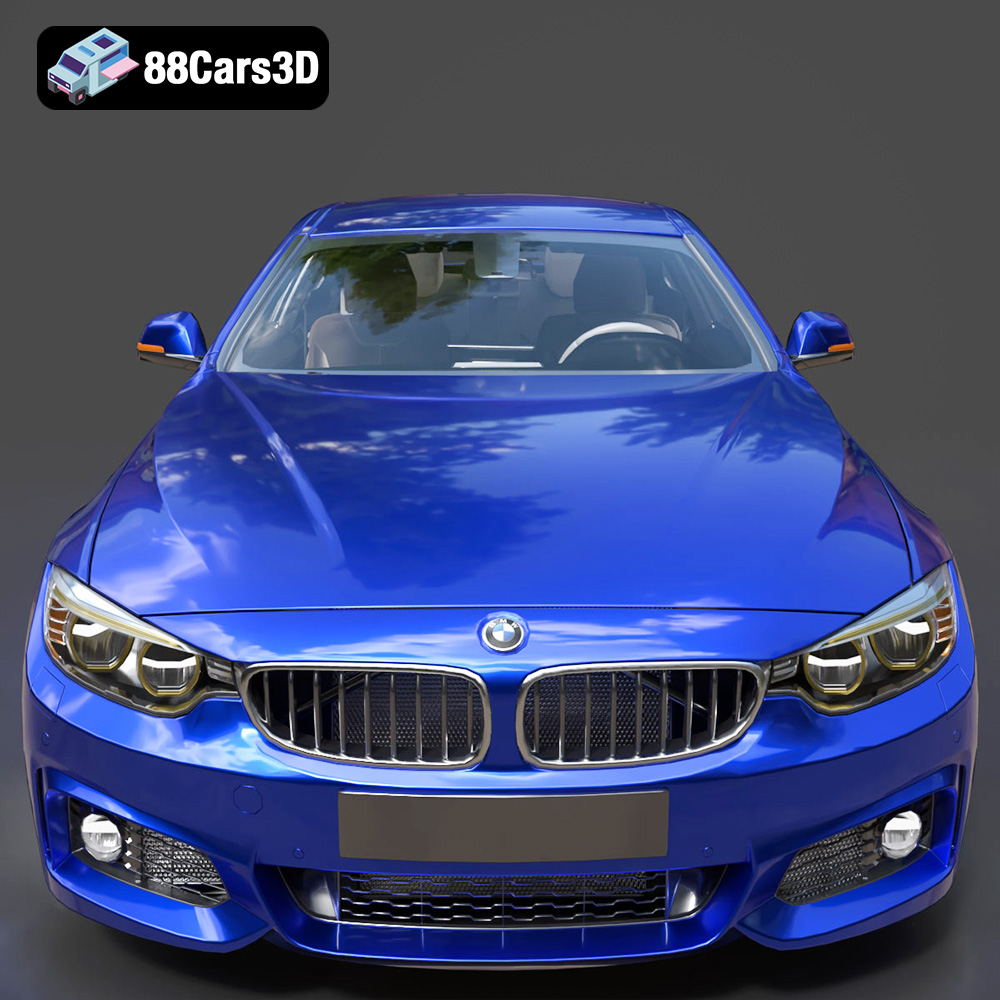
BMW 4 Series Coupe M Sport 2014 3D Model
Bring unparalleled realism to your projects with the BMW 4 Series Coupe M Sport 2014 3D Model. This asset meticulously captures the aggressive styling and dynamic characteristics of the M Sport package, making it perfect for high-fidelity simulations and visualizations.
The model boasts professional-grade geometry optimized for performance and detail. It includes realistic, PBR-ready materials replicating paint, glass, and rubber textures. All components are logically grouped and named, ensuring easy manipulation and integration into any professional pipeline.
This versatile asset is ideal for various industries, including video game development (optimized for both Unreal Engine and Unity), architectural visualization, automotive marketing, cinematic rendering, and interactive AR/VR experiences.
$14.99
Product Image Gallery