

The digital realm of automotive design and visualization has reached unprecedented levels of fidelity and realism. From breathtaking cinematic sequences in commercials to immersive experiences in cutting-edge video games, the demand for high-quality 3D car models is constant and ever-growing. Professionals in these fields understand that the foundation of any stunning visual project lies in the quality of its core assets. A meticulously crafted 3D model doesn’t just look good; it provides the flexibility, efficiency, and technical reliability required for complex production pipelines.
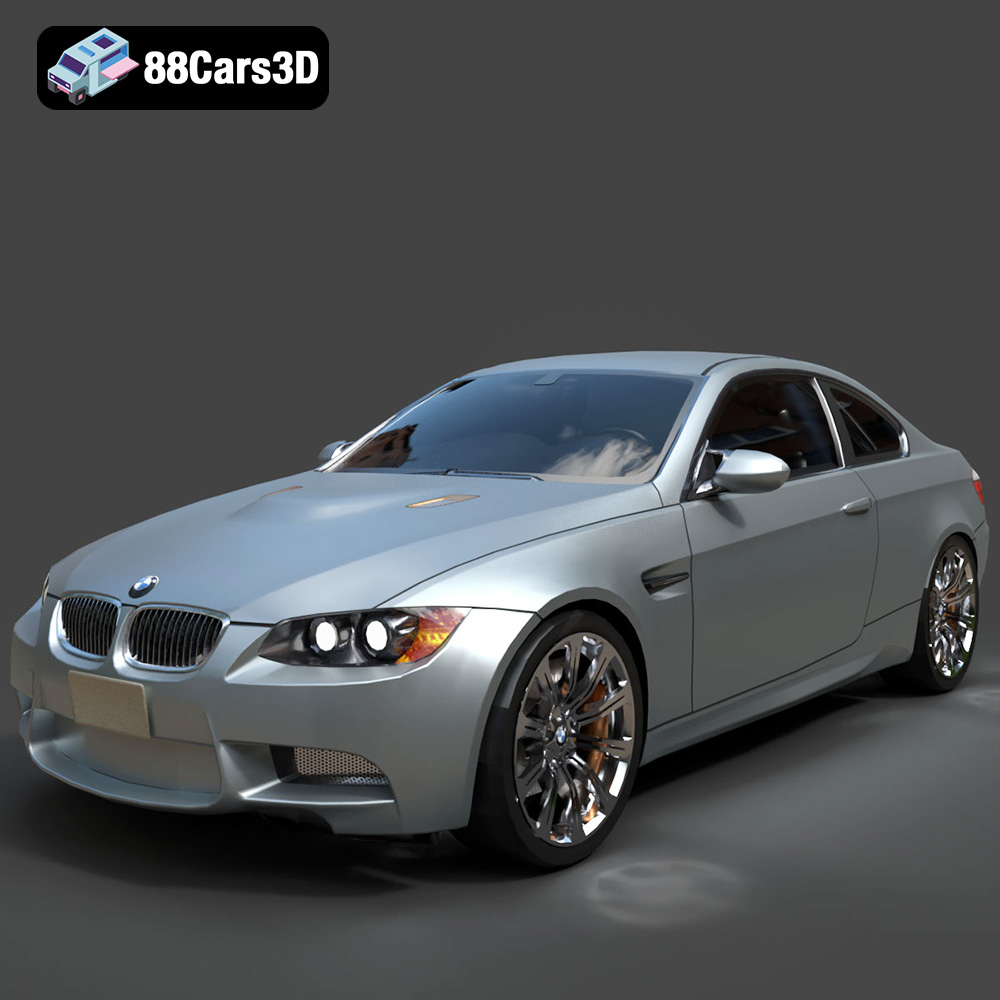
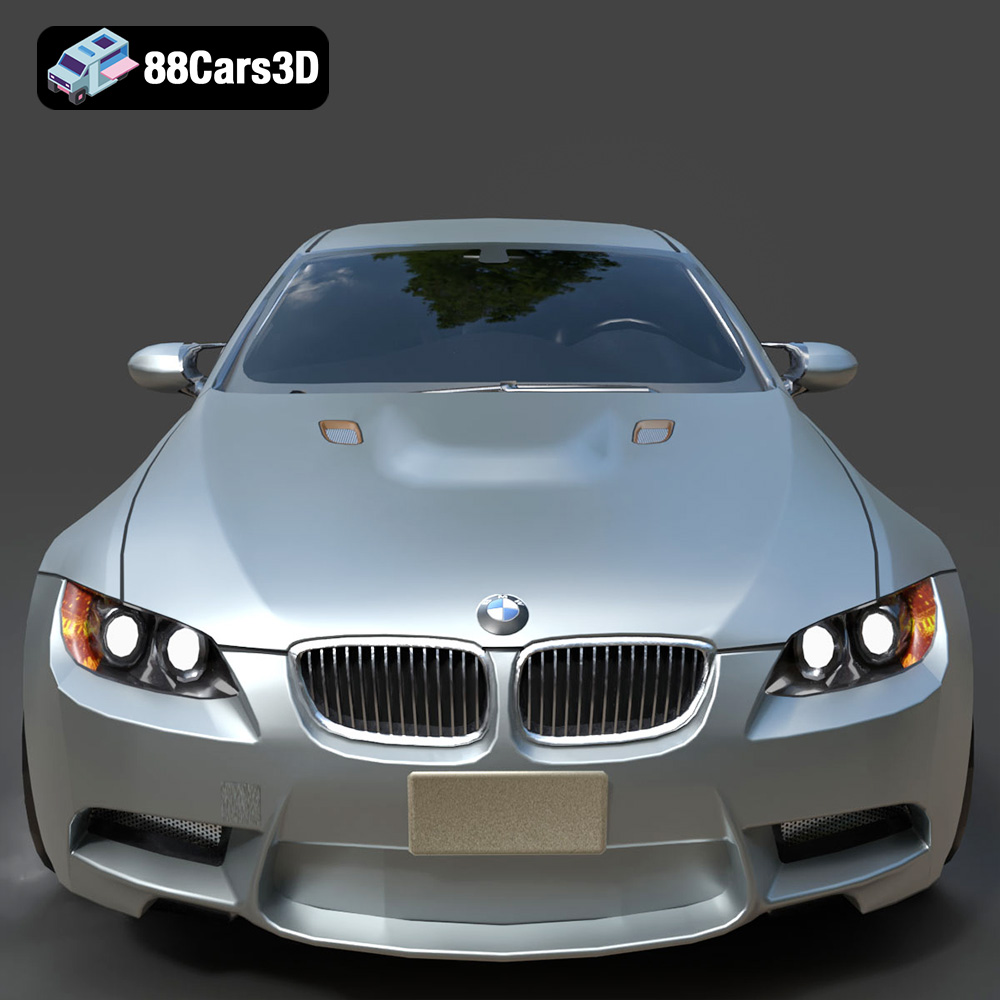
At 88cars3d.com, we specialize in providing such professional-grade assets, and today we’re delving into one such exemplar: the BMW M3 Coupe E92-002 3D Model. This particular model isn’t just a static representation; it’s a meticulously engineered digital twin of one of BMW’s most iconic sports coupes. Designed for optimal performance across a spectrum of applications – from photorealistic rendering to real-time game environments – it embodies the precision and detail that modern 3D professionals demand.
In this comprehensive guide, we’ll explore the critical aspects of working with premium 3D automotive assets, detailing workflows, technical specifications, and the diverse applications where models like the BMW M3 Coupe E92-002 truly shine. Whether you’re an automotive visualization artist, a game developer, or an AR/VR innovator, understanding the nuances of high-quality 3D models is paramount to achieving exceptional results.
Understanding 3D Model File Formats
One of the most crucial aspects of acquiring and utilizing 3D car models efficiently is understanding the various file formats available. Each format serves specific purposes, offering unique advantages for different workflows and software applications. The BMW M3 Coupe E92-002 3D Model comes equipped with a comprehensive suite of formats, ensuring maximum compatibility and utility for diverse professional needs. Selecting the right format can significantly streamline your project, improve performance, and maintain data integrity.
.blend – Blender’s Native Powerhouse
The .blend format is the native file type for Blender, a powerful open-source 3D creation suite. When you receive a .blend file, it means you’re getting a fully editable Blender scene, often including materials, textures, lighting, cameras, and even animation data, all pre-configured. This format is ideal for artists who primarily work in Blender, allowing for direct modification, rendering, and further development without any import/export issues. It ensures that all original scene data, modifiers, and node setups are preserved, offering unparalleled flexibility for customization and refinement.
.fbx – The Industry Standard for Interoperability
.fbx (Filmbox) is arguably the most widely used proprietary 3D file format for data exchange between various 3D applications, game engines, and virtual production pipelines. Developed by Autodesk, it’s known for its ability to store a comprehensive range of data, including model geometry, UVs, textures, materials, animations, and skeletal structures. For real-time applications like Unreal Engine and Unity, .fbx is often the go-to choice due to its robust support for animation and scene hierarchy. It’s an excellent format for transferring animated game assets or complex rigged models between different software packages without significant data loss, making it indispensable for collaborative projects.
.obj – The Universal Workhorse
The .obj (Wavefront OBJ) format is a widely adopted, universal format that has been around for decades. It’s highly compatible with nearly all 3D software due to its simple, text-based structure. While .obj is superb for conveying geometry (vertices, faces, normals) and UV coordinates, it typically handles materials and textures through an accompanying .mtl (material library) file and doesn’t inherently support animation or rigging. It’s an excellent choice for straightforward mesh exchange, especially when you need a clean model for sculpting, retopology, or basic rendering across different platforms.
.glb – Optimized for AR, VR, and Web
.glb (GL Transmission Format Binary) is the binary version of the glTF format, designed for efficient transmission and loading of 3D scenes and models by engines and applications. It’s quickly becoming the standard for 3D content delivery on the web, in AR (Augmented Reality), and VR (Virtual Reality) environments. .glb files are “self-contained,” meaning all assets like geometry, materials, textures, and animations are bundled into a single file, reducing HTTP requests and simplifying deployment. This format is crucial for interactive web experiences, virtual showrooms, and augmented reality applications where performance and rapid loading are key.
.stl – Precision for 3D Printing
The .stl (STereoLithography) format is the de facto standard for 3D printing. It represents a 3D model as a series of connected triangles, defining only the surface geometry without color, texture, or other CAD attributes. While simple, its ubiquity makes it essential for anyone looking to bring a digital model like the BMW M3 Coupe E92-002 into the physical world. For 3D printing, the model needs to be watertight (no holes in the mesh) and have a consistent normal orientation, which high-quality source models often facilitate.
.ply – Precision Mesh for Analysis
.ply (Polygon File Format) is another format primarily used for storing 3D data from 3D scanners or for CAD/analysis workflows. It can store a wider range of properties than .stl, including color, transparency, and often more complex polygonal structures. While less common for general 3D model exchange, it’s valuable in scientific, engineering, and cultural heritage applications where precise mesh data, often derived from real-world scans, is paramount. For engineering simulations or detailed analyses of a car’s structure, .ply can be a robust choice.
.unreal – Engine-Ready for Real-Time
The inclusion of an .unreal file (often a .uproject or a set of asset files structured for Unreal Engine) signifies that the model is provided as an engine-ready asset. This means the model has likely been imported, optimized, and configured within Unreal Engine, with materials set up, potentially blueprints for interactive elements, and proper scaling. This saves significant development time for game developers and real-time visualization artists, allowing for immediate integration into an Unreal Engine project without extensive setup or optimization processes. It’s a direct pipeline to creating stunning real-time environments with minimal friction.
.max – The 3ds Max Master File
Similar to .blend for Blender, the .max format is the native file type for Autodesk 3ds Max, a leading software for 3D modeling, animation, and rendering. A .max file provides the complete editable scene, including all geometry, materials, textures, lighting setups, cameras, and animation data. This format is crucial for professionals who rely on 3ds Max for high-end visualization, architectural rendering, or complex animation sequences, offering the fullest control and fidelity to the original asset’s creation within that ecosystem.
The provision of such a comprehensive set of file formats for the BMW M3 Coupe E92-002 3D Model from 88cars3d.com underscores its versatility and commitment to professional users, ensuring it can seamlessly integrate into virtually any digital production pipeline.
The Art of Automotive Rendering with High-Fidelity 3D Models
Automotive rendering is a specialized field that demands exceptional attention to detail, material accuracy, and lighting mastery. A premium 3D car model like the BMW M3 Coupe E92-002 is the cornerstone of achieving photorealistic results. Its carefully constructed geometry and optimized materials significantly streamline the rendering process for artists using software such as 3ds Max, Blender, or V-Ray.
Crafting Photorealistic Visuals
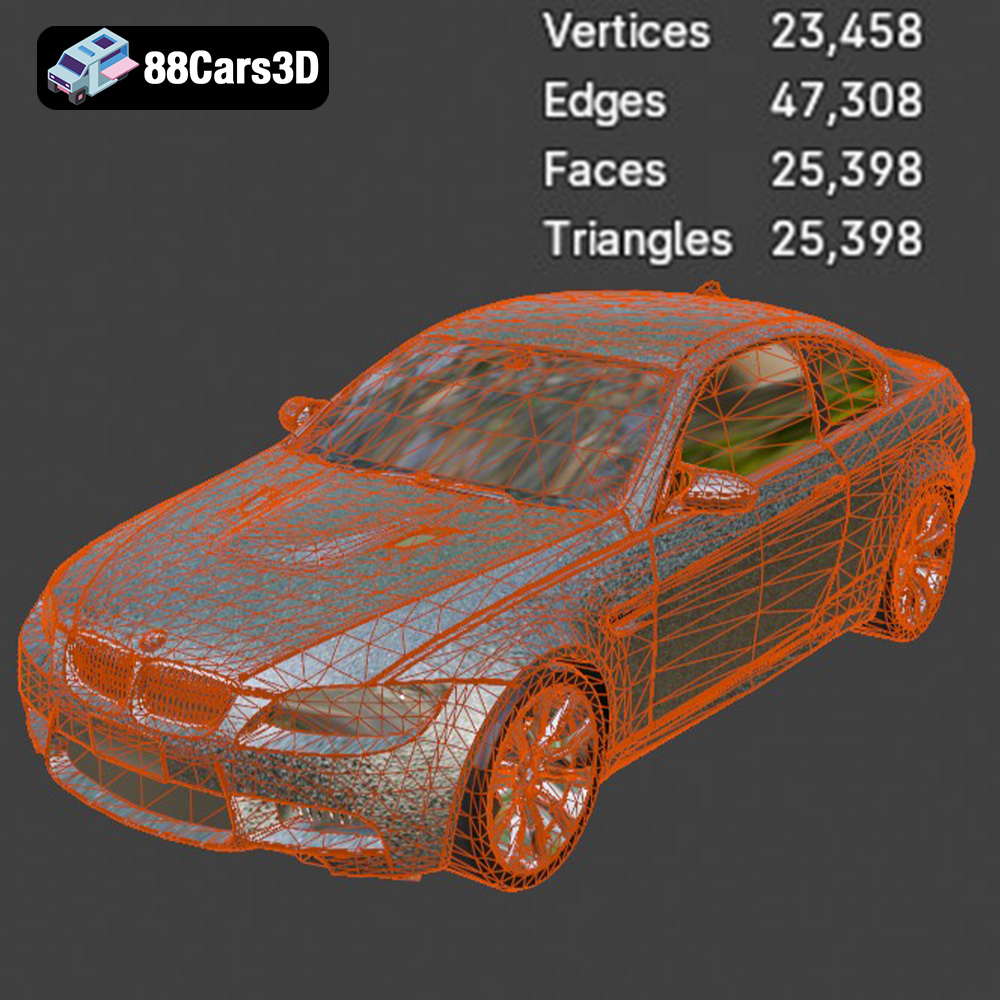
For advertising agencies, architectural visualization studios, or automotive manufacturers, rendering an iconic vehicle like the BMW M3 Coupe E92-002 requires a model that can stand up to extreme close-ups and diverse lighting scenarios. The model’s “clean, quad-dominant topology” is crucial here. This means the mesh is composed primarily of four-sided polygons, which ensures smooth subdivision surfaces and avoids unsightly pinching or artifacting when rendered at high resolutions. Artists can confidently apply subdivision modifiers (like Turbosmooth in 3ds Max or Subdivision Surface in Blender) to achieve ultra-smooth curves and reflections, mimicking the flawless bodywork of a real car.
Furthermore, “detailed headlights and taillights with realistic material shaders” are not just aesthetic touches; they’re functional elements that contribute to realism. Properly configured glass, chrome, and clear plastic shaders interact with light in predictable ways, creating captivating refractions and reflections. The “precisely modeled wheels and tires, featuring accurate tread patterns and brake caliper details” add another layer of authenticity. These are often areas where lower-quality models cut corners, but their accurate representation is vital for compelling visuals, especially in dynamic shots or detailed showcases.
Material and Texture Versatility
Beyond geometry, the ability to “easily modify paint finishes, body graphics, and decal applications” is paramount for creative professionals. A well-structured 3D model comes with logically separated material IDs, allowing artists to quickly change the car’s color, apply custom liveries, or adjust the metallic flake in the paint. The BMW M3 Coupe E92-002 3D Model’s material properties are designed for this flexibility, enabling artists to fine-tune reflections, roughness, and translucency for elements like metal, chrome, plastic, rubber, and glass. This adaptability is invaluable for creating diverse marketing assets, from sleek studio renders to gritty urban scenes, all from a single base model.
Integrating Automotive Assets into Game Development and Real-Time Environments
The world of interactive media, including video games, virtual reality (VR), and augmented reality (AR), demands a different set of optimizations and considerations for 3D car models. Performance is key, and an asset must balance visual fidelity with efficient resource consumption. The BMW M3 Coupe E92-002 3D Model is specifically “optimized for real-time performance,” making it an ideal candidate for these demanding environments.
Optimized for Game Engines: Unreal and Unity
Game developers working with engines like Unreal Engine or Unity require models that are not only visually appealing but also efficient in terms of polygon count, draw calls, and texture memory. While a high-poly model is desired for cinematic renders, real-time applications often require a balance. A “clean, quad-dominant topology” with a “logically organized hierarchy with properly set pivots” aids immensely in this. The clean mesh allows for efficient LOD (Level of Detail) generation, ensuring that the car appears detailed when close to the player but simplifies gracefully at a distance to save performance. The properly set pivots for components like doors, hood, trunk, and wheels are critical for quick and accurate rigging and animation within the game engine, enabling interactive elements and realistic physics simulations.
The provision of an .unreal specific file format (or Unreal Engine project setup) for the BMW M3 Coupe E92-002 3D Model is a significant advantage. This means the model is likely pre-configured with optimized materials, collision meshes, and potentially even basic blueprints for interactive elements, saving game developers countless hours of setup time. This plug-and-play capability allows teams to focus more on gameplay and less on asset preparation, accelerating development cycles for racing games, open-world simulations, or virtual showrooms.
Dynamic Animation and Simulation
Beyond static representation, the ability to animate a vehicle is crucial for many projects. The BMW M3 Coupe E92-002 3D Model features “separated components such as doors, hood, trunk, and wheels, prepared for animation workflows.” This structural foresight allows animators to easily articulate these parts, creating realistic opening and closing sequences, suspension travel, or wheel rotations. For driving simulators or cinematic game intros, these animated details add a layer of immersion that is difficult to achieve with less organized models. The “consideration for underbody details and suspension elements” further enhances realism for physics-based simulations, where accurate component placement and interaction are vital for a believable driving experience.
Beyond Visualization: AR/VR, Simulation, and 3D Printing Applications
The utility of a high-quality 3D car model extends far beyond traditional rendering and game development. Emerging technologies like Augmented Reality (AR), Virtual Reality (VR), and advanced simulation, alongside the growing accessibility of 3D printing, open up new avenues for professional use. The BMW M3 Coupe E92-002 3D Model is designed with these diverse applications in mind, offering flexibility and precision for a wide array of innovative projects.
Immersive AR/VR Experiences
In AR and VR, realism and performance are paramount. Users expect to interact with digital objects that feel tangible and responsive within their virtual or augmented space. The “optimized mesh quality” and “accurate real-world scale” of the BMW M3 Coupe E92-002 3D Model are essential here. Real-world scale ensures that when the car is placed in an AR environment or a VR showroom, it appears correctly proportioned relative to its surroundings and the user. The optimized mesh facilitates smooth frame rates, preventing motion sickness in VR and maintaining interactivity in AR. The inclusion of the .glb format is specifically tailored for these experiences, providing a highly efficient, single-file package for web-based AR/VR viewers, interactive product configurators, or virtual showrooms on platforms like Google’s Poly or Apple’s AR Quick Look.
Imagine an automotive manufacturer using this model for a virtual car configurator, allowing prospective buyers to explore the M3 in their driveway via AR, or walk around it in a VR showroom, changing colors and examining interior details. The level of detail and optimization in models from 88cars3d.com makes such sophisticated applications feasible and impactful.
Driving Simulations and Technical Training
For professional driving simulators or automotive engineering visualization, the demand for accuracy is absolute. Simulation environments require not just visual fidelity but also technically correct geometry and component separation. The “faithful interior detailing, including dashboard, sport seats, steering wheel, and central console elements” means that a virtual driver experiences an authentic cockpit. This is critical for training modules, ergonomic studies, or professional racing simulations where every button and gauge needs to be accurately represented and potentially interactive. The “consideration for underbody details and suspension elements” extends this realism to the mechanical aspects, allowing for more precise physics calculations and visual feedback during simulations, making the BMW M3 Coupe E92-002 an invaluable asset for serious simulation work.
Bringing Digital to Physical: 3D Printing
While often seen as a separate domain, 3D printing offers an exciting way to bridge the gap between digital models and physical prototypes or collectibles. The BMW M3 Coupe E92-002 3D Model is “suitable for conversion to .stl format, allowing for the creation of high-quality physical models and prototypes.” The inherent clean geometry and precise scaling of a professional 3D model make it an excellent candidate for 3D printing. Artists can export the model as an .stl (or .obj for more control over mesh density) and, after minor preparation steps (like ensuring watertightness and manifold geometry), print highly detailed physical replicas. This opens doors for creating scale models for display, rapid prototyping for custom parts, or even educational aids in engineering courses.
Optimizing Workflows: The Technical Advantages of a Premium 3D Model
In any professional 3D production pipeline, efficiency and reliability are just as important as visual quality. A high-quality 3D car model, such as the BMW M3 Coupe E92-002, is engineered with these practical considerations in mind, delivering tangible technical advantages that streamline workflows and reduce production headaches. These advantages are what differentiate a professional-grade asset from a quickly assembled model.
Clean Geometry and Subdivision Readiness
The description highlights “clean, quad-dominant topology for smooth subdivision and professional rendering results.” This is a foundational technical advantage. Quad-dominant meshes are easier to UV map, rig, and animate. More importantly, they handle subdivision surface modifiers (like TurboSmooth in 3ds Max or Subdivision Surface in Blender) flawlessly, allowing artists to dynamically control the model’s detail level without introducing artifacts. This flexibility means the model can be used as a lightweight asset for real-time applications and then easily scaled up in detail for high-resolution renders, all from the same base geometry. This dual-purpose capability significantly reduces the need for creating separate models for different use cases, saving valuable production time and maintaining consistency.
Accurate Scaling and Scene Integration
Another often-overlooked but critical technical detail is “accurate real-world scale.” This ensures that the BMW M3 Coupe E92-002 3D Model will seamlessly integrate into any existing scene or environment without requiring manual scaling adjustments. When working in architectural visualization, for instance, placing a car of incorrect scale into an exterior rendering can immediately break realism. For game development, accurate scaling is crucial for physics engines, collision detection, and maintaining a consistent sense of proportion within the game world. This seemingly small detail saves artists significant time and effort in the initial setup phase, allowing them to focus on creative aspects rather than technical corrections.
Logical Hierarchy and Animation Preparedness
The model boasts a “logically organized hierarchy with properly set pivots for easy rigging, animation, and scene manipulation.” This structure is indispensable for animators and technical artists. A logical hierarchy means that components are grouped and named intuitively (e.g., ‘car_body’, ‘wheel_front_left’, ‘door_driver’). Proper pivot points ensure that when you rotate a wheel, it rotates around its central axis, or when a door opens, it hinges correctly. Without these, animating even simple movements becomes a tedious and error-prone process. For game assets, this setup is fundamental for character rigging, vehicle physics, and creating interactive elements like opening car doors or turning steering wheels. This level of preparation exemplifies the professional quality found in 3D car models from sources like 88cars3d.com, transforming a raw mesh into a production-ready asset.
Customization and Versatility for Creative Professionals
While the inherent quality and technical precision of a 3D model are crucial, its true value often lies in its adaptability and the creative freedom it offers to artists. The BMW M3 Coupe E92-002 3D Model provides extensive customization options, allowing professionals to tailor the asset to their specific vision, branding requirements, or project needs, making it an incredibly versatile tool across various creative endeavors.
Personalizing the Aesthetics
The ability to “easily modify paint finishes, body graphics, and decal applications” is a significant advantage for designers and marketers. Imagine a scenario where an automotive marketing agency needs to showcase the BMW M3 in different brand colors, or with custom racing liveries for a promotional campaign. A well-structured model allows for quick material changes without complex re-texturing. Artists can experiment with metallic flakes, matte finishes, pearlescent effects, or even apply entirely new textures for scratches and dirt, opening up a world of visual possibilities. This flexibility saves immense time compared to starting from scratch or attempting to modify a poorly organized model.
Refining Material Properties for Realism
Beyond color, the capacity to “adjust material properties for elements like metal, chrome, plastic, rubber, and glass to achieve desired visual effects” is key to achieving true photorealism. Every material interacts with light differently, and fine-tuning properties like reflectivity, roughness, Fresnel IOR (Index of Refraction), and translucency is essential. For example, a realistic chrome trim requires high reflectivity and a specific Fresnel curve, while a rubber tire needs a rougher surface with distinct displacement for tread patterns. The BMW M3 Coupe E92-002 3D Model’s material setup is designed to allow artists to delve into these details, ensuring that every surface accurately portrays its real-world counterpart, enhancing the overall believability of the render or real-time scene.
Dynamic Lighting and Environmental Context
The creative process extends to how the model interacts with its environment. The option to “adapt lighting setups within your chosen 3D software to create diverse moods and realistic scene environments” empowers artists to tell different stories. Whether it’s a dramatic sunset render, a sleek studio shot, or a gritty street scene under artificial light, the way light plays across the vehicle’s surfaces defines the mood. A high-quality model, with its accurate reflections and material responses, acts as a perfect canvas for complex global illumination and physically based lighting setups. This versatility means the same BMW M3 Coupe E92-002 3D Model can be a star in a luxury car commercial one day and a robust game asset in a virtual racing championship the next, proving its comprehensive value.
Conclusion: Driving Innovation with Premium 3D Automotive Assets
The landscape of 3D visualization is constantly evolving, with new technologies and demands pushing the boundaries of what’s possible. For professionals in automotive rendering, game development, AR/VR, simulation, and even 3D printing, the quality of their foundational assets is paramount. A truly exceptional 3D car model is more than just an aesthetic marvel; it’s a highly optimized, technically sound, and versatile tool that empowers creativity and efficiency.
The BMW M3 Coupe E92-002 3D Model exemplifies these principles. Its meticulous attention to authentic exterior and interior detailing, combined with crucial technical advantages like clean quad-dominant topology, accurate real-world scale, and a logically organized hierarchy, positions it as an indispensable asset for a wide range of applications. Whether you’re crafting a cinematic masterpiece in 3ds Max, integrating a high-performance vehicle into an Unreal Engine game, creating an immersive AR experience with .glb, or preparing a physical prototype via .stl, this model provides the solid foundation you need.
The comprehensive file format support, from editable .blend and .max scenes to optimized .fbx and .unreal files, ensures seamless integration into virtually any professional workflow. This commitment to quality and versatility is a hallmark of the assets available at 88cars3d.com, where designers and developers can find the premium 3D car models necessary to bring their most ambitious projects to life with stunning realism and efficiency. Investing in high-quality assets like the BMW M3 Coupe E92-002 3D Model isn’t just about purchasing a file; it’s about acquiring a catalyst for innovation and a cornerstone for professional success.
Featured 3D Model
BMW M3 Coupe E92-002 3D Model
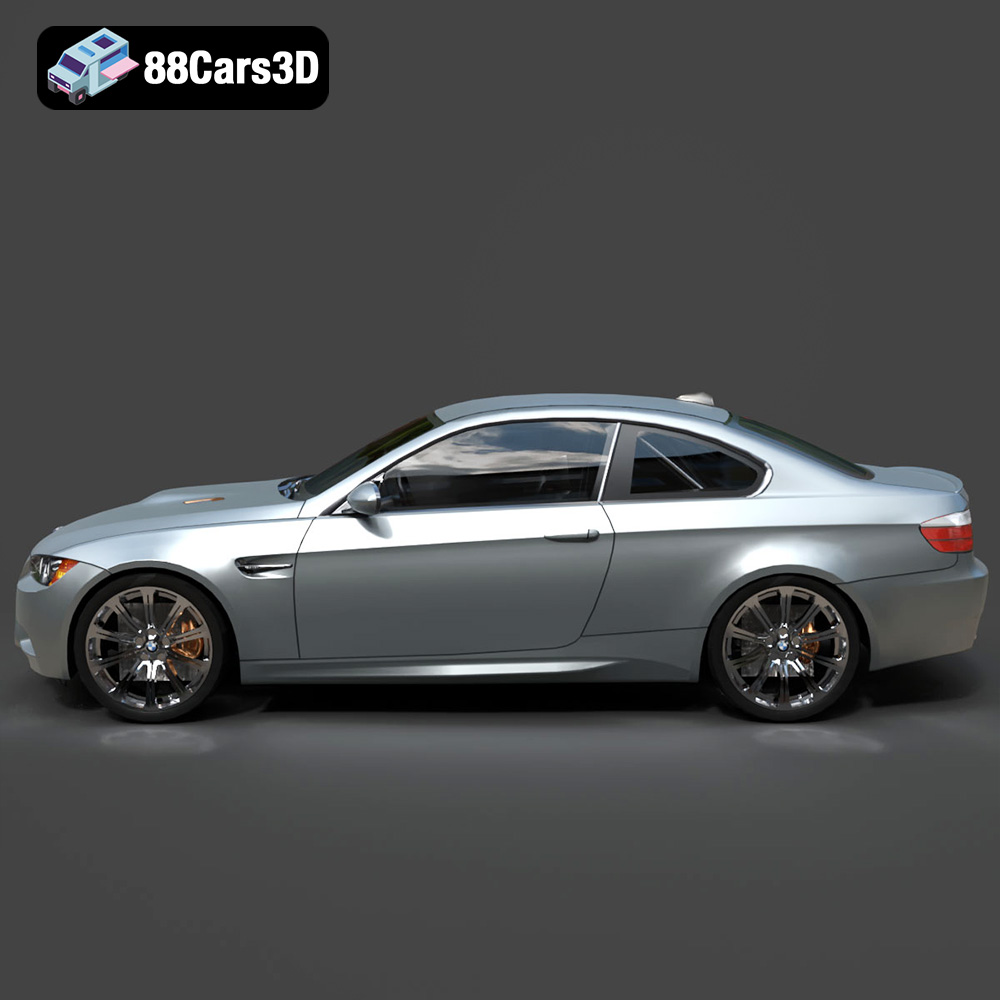
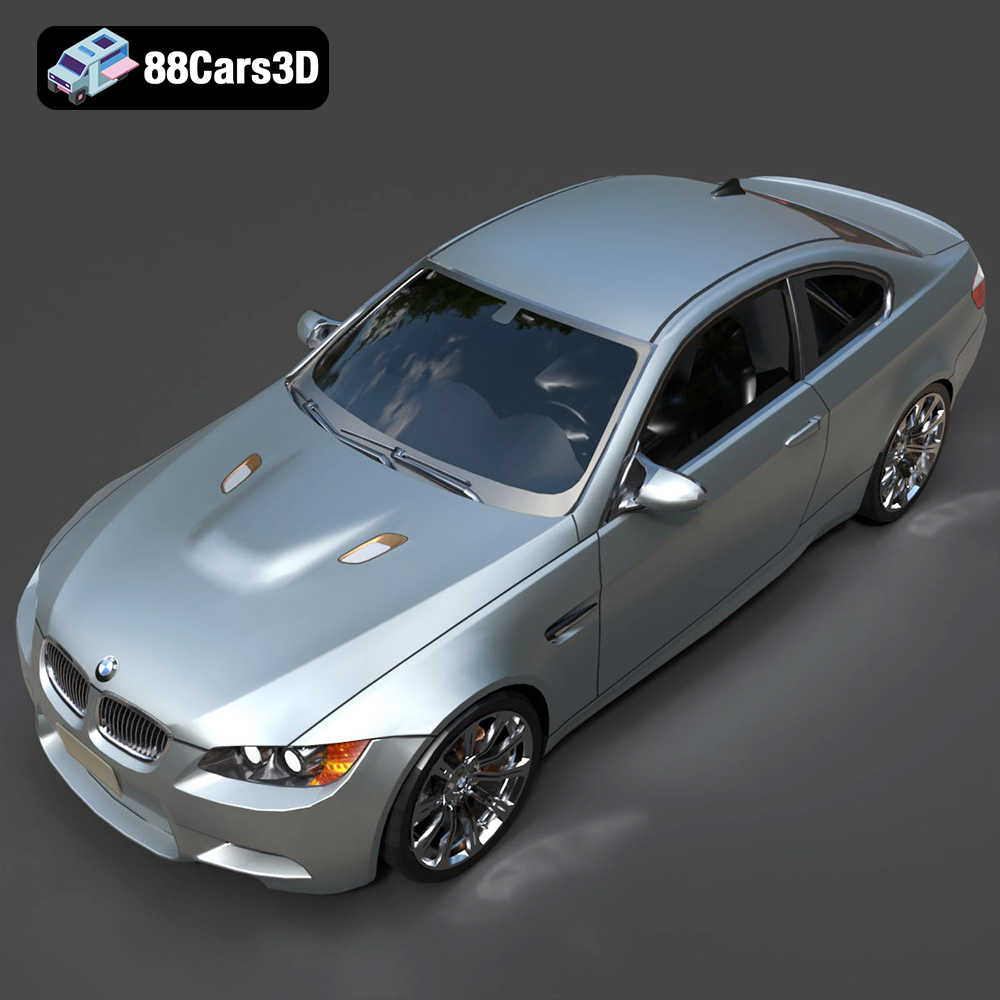
Immerse yourself in the world of high-performance automotive design with this professional 3D model of the BMW M3 Coupe E92-002. This model meticulously captures the aggressive stance and iconic styling of BMW’s renowned sports coupe, offering an authentic digital representation. Engineered with clean geometry and balanced detailing, it is optimized for a wide range of applications, including high-fidelity rendering, dynamic animation sequences, realistic simulations, and integration into modern game development pipelines.
$10.79
Product Image Gallery



Related Tags
.arvr
.blend
.bmw
.car
.coupe
.fbx
.gameasset
.glb
.m3coupee92002
.max
.obj
.ply
.rendering
.simulation
.sportsCar
.stl
.unreal
