

The demand for high-quality, production-ready 3D car models has never been higher. From cinematic visualization studios requiring perfect detail for close-up shots to game developers needing optimized assets that can run smoothly in massive open-world environments, the bar for technical fidelity continues to rise. Specialized vehicles, such as those used in emergency services, pose a unique challenge, requiring not only accurate exterior modeling but also intricate interior detail suitable for interactive simulations and high-impact automotive rendering.
Sourcing such specific assets—like an authentic ambulance—often means compromising on optimization or spending weeks modeling complex equipment and accurate liveries from scratch. This is where professional marketplaces like 88cars3d.com provide immense value, offering meticulously engineered solutions ready for immediate deployment.
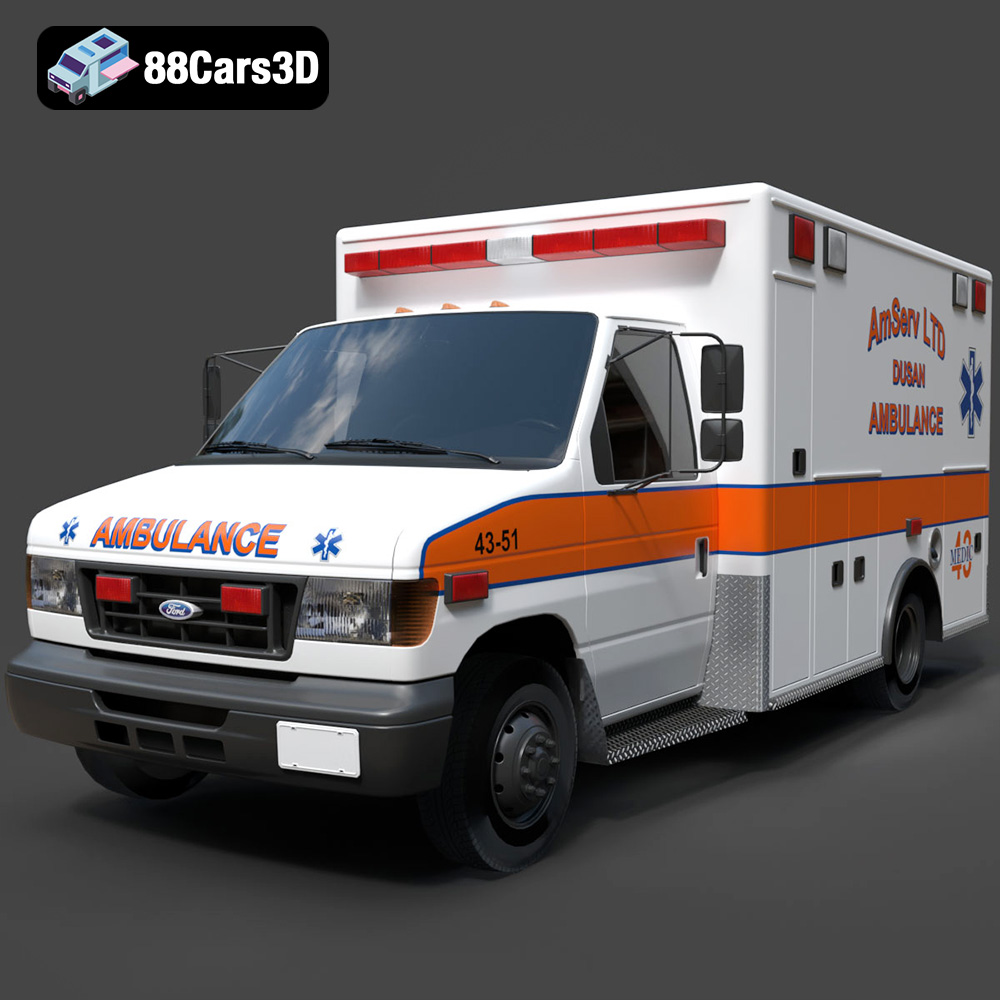
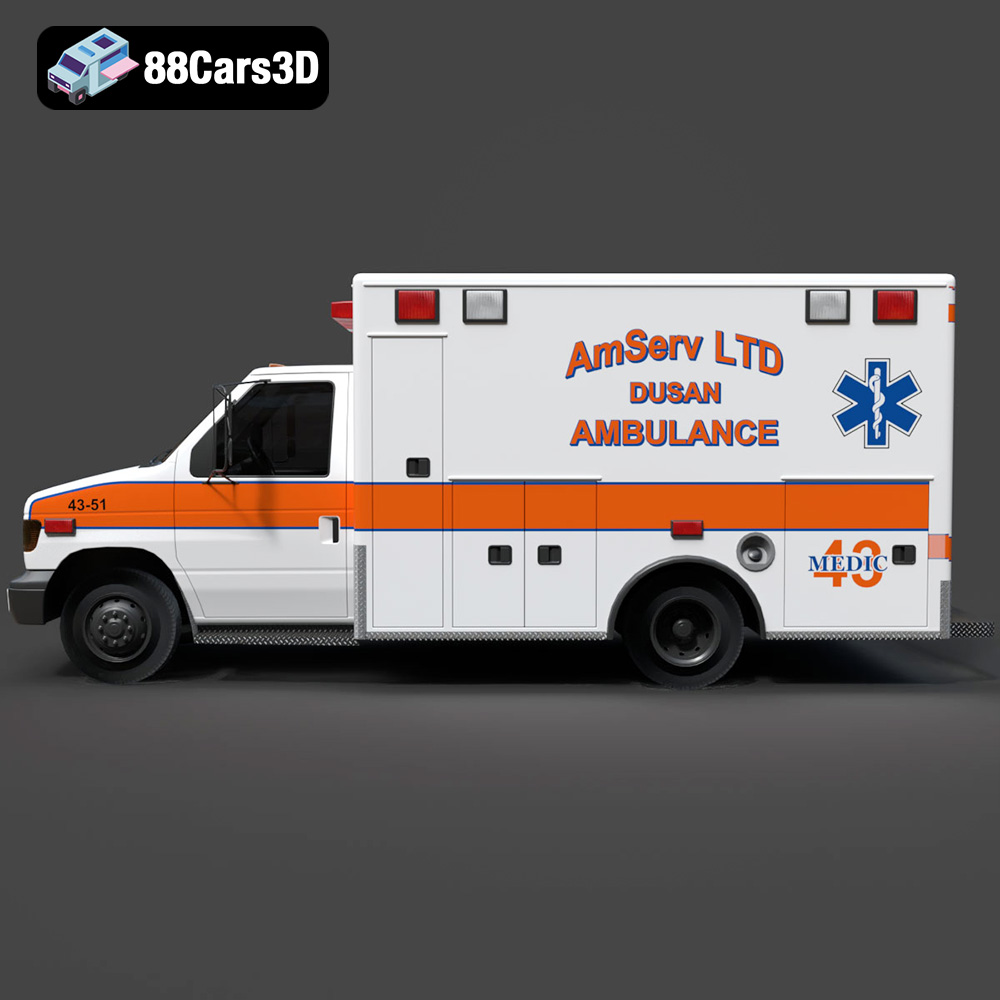
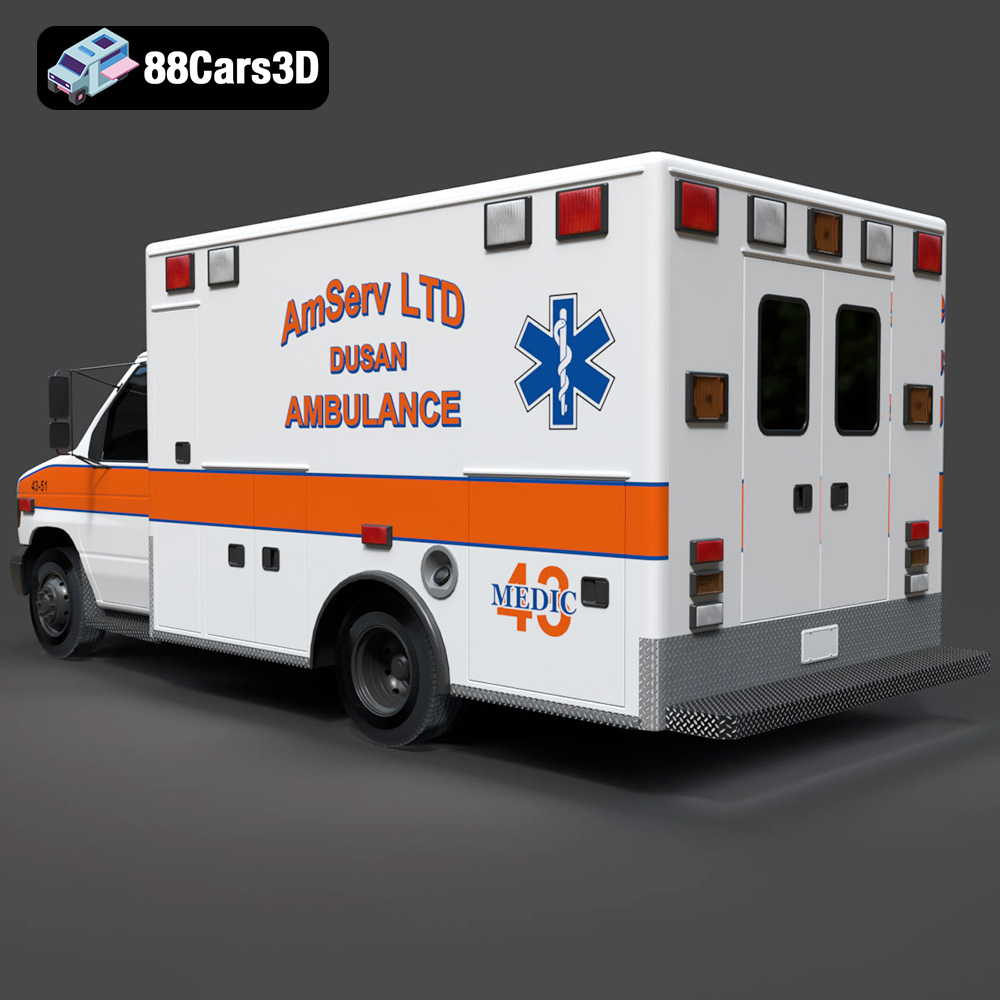
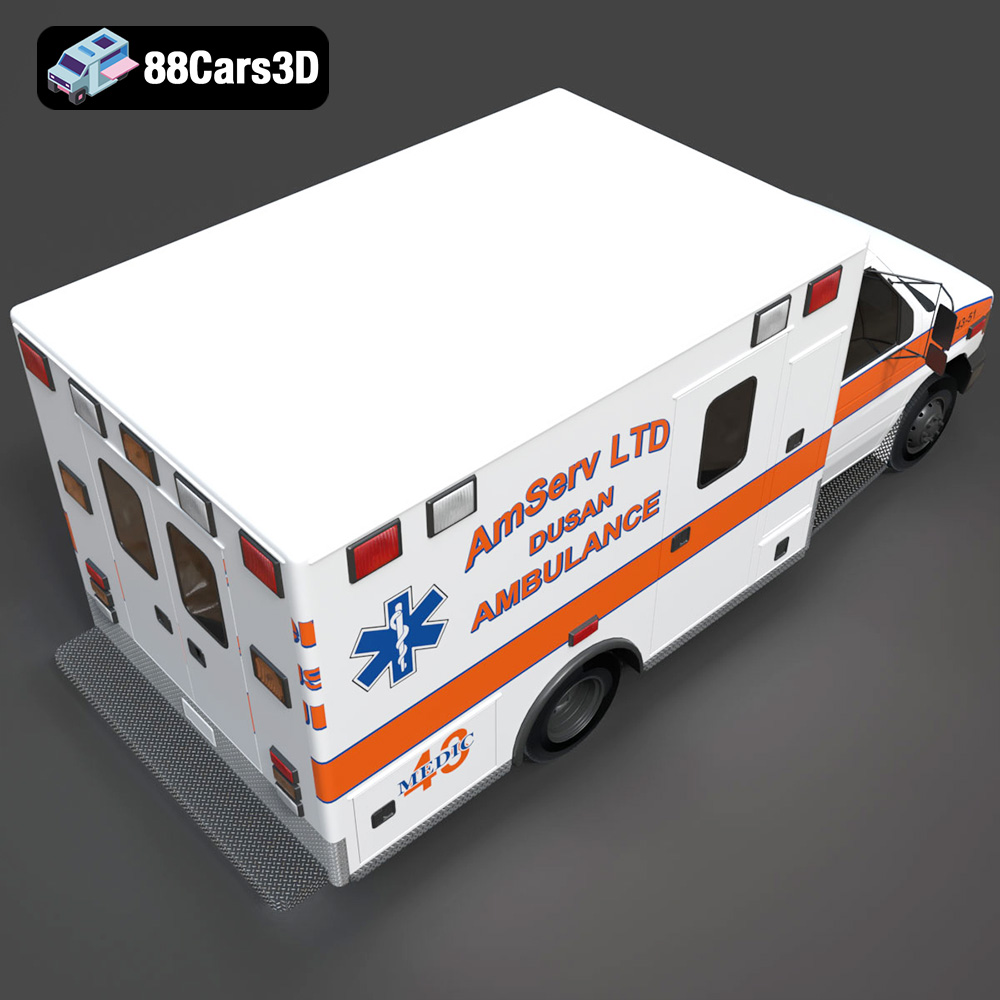
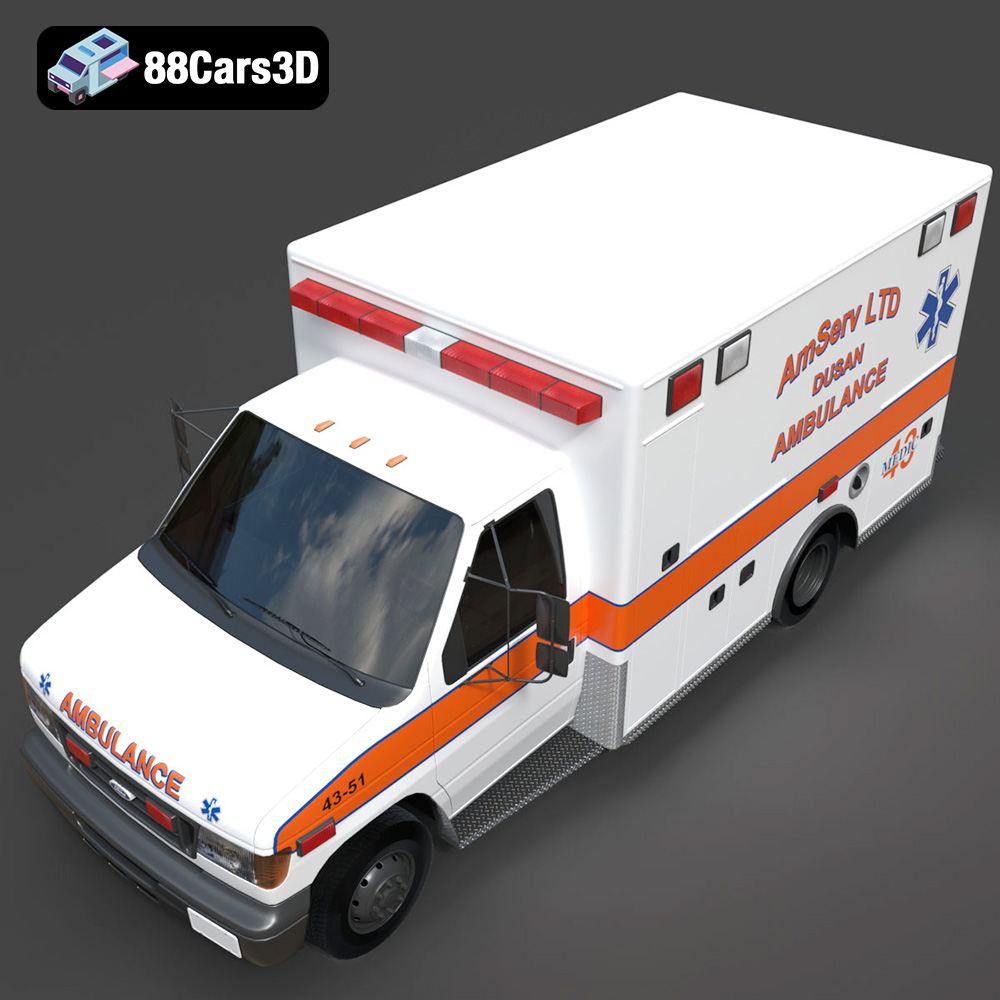
We are focusing today on a prime example of this professional-grade asset quality: the Ford Ambulance AmServ LTD Dusan-002 3D Model. This model is designed to bridge the gap between technical precision and application versatility, making it a critical asset for projects ranging from architectural visualization to complex simulation training programs.
The Technical Blueprint of Professional 3D Car Models
For any 3D asset to be truly professional, its foundation must be structurally sound. This involves adhering to stringent standards regarding topology, scale, and object hierarchy. The Ford Ambulance AmServ LTD Dusan-002 is built precisely on these principles, ensuring that it functions reliably across multiple high-end workflows.
Topology and Optimization for Subdivision
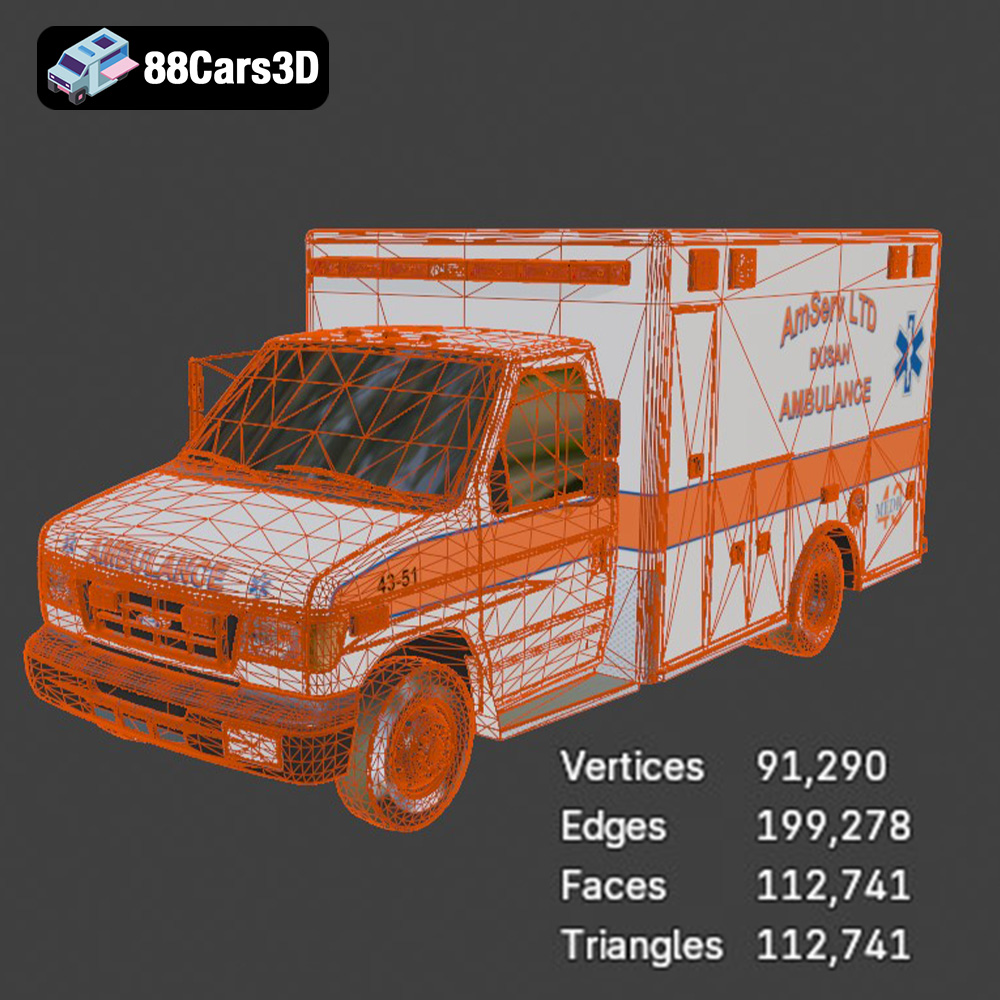
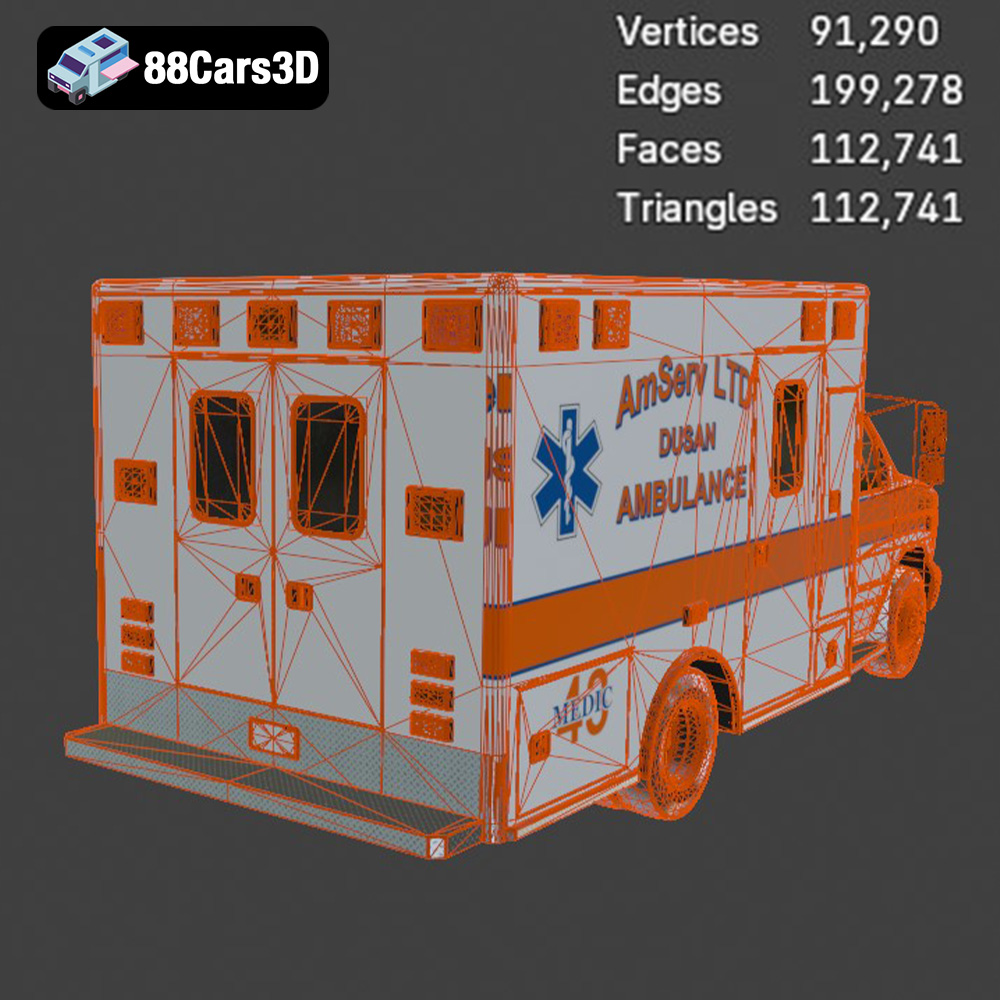
A key indicator of a high-quality model is its topology. The Dusan-002 features clean, quad-dominant geometry. Quads (four-sided polygons) are the industry standard because they allow for predictable deformation during animation and smooth, artifact-free subdivision. While a game asset might prioritize triangle counts for real-time performance, a professional model must offer flexibility.
This quad structure ensures that if a cinematic shot requires extreme close-ups—for instance, detailing the emergency light bar casing or the texture of the rubber tires—the model can be easily subdivided in software like 3ds Max or Blender without introducing pinching or stretching. Furthermore, clean topology simplifies retopology workflows, should a developer need to create highly customized Level of Detail (LOD) meshes for specialized game assets.
Precision Scale and Measurement
In simulation and visualization, accuracy is paramount. An asset must fit seamlessly into a virtual world without requiring tedious resizing or recalibration. This Ford Ambulance model is precisely modeled to real-world scale. This feature is crucial for architectural visualization (ArchViz), where the vehicle needs to be accurately positioned relative to buildings, or in high-fidelity simulation environments where real-world physics calculations rely on accurate mass and dimension data. Using real-world scale eliminates scaling errors, speeding up integration into existing scenes and environments.
Comprehensive Component Separation and UV Mapping
The asset’s utility hinges on its organization. The model features separate components for every functional element: doors, wheels, emergency light lenses, and interior equipment. This organizational structure is essential for rigging and animation, allowing users to quickly set up keyframe sequences for opening doors, rotating wheels, or cycling the intense illumination of the strobes. Furthermore, the model includes well-organized UV mapping, which facilitates seamless texturing using PBR (Physically Based Rendering) workflows. Clean UVs prevent texture stretching and allow artists to easily apply custom liveries and decals—a frequent requirement for region-specific emergency service vehicles.
Understanding 3D Model File Formats
In professional 3D production, technical compatibility dictates workflow efficiency. A top-tier asset must be provided in multiple formats, each optimized for specific software or pipeline stages. The Ford Ambulance AmServ LTD Dusan-002 model is exceptional because it delivers eight distinct, tailored formats, ensuring that regardless of whether you are focused on automotive rendering, game development, or specialized training simulations, you have an immediate, native starting point.
Understanding when and why to use each format is critical for leveraging this model to its fullest potential (300-500 words minimum coverage).
Real-Time Engine Integration and Visualization Formats
- .fbx (Filmbox): This is the ubiquitous standard for transferring assets between applications, particularly crucial for game engine integration (Unreal Engine, Unity). FBX maintains object hierarchy, pivot points, skinning, and often, rudimentary material definitions. It is the go-to format when moving the asset into a run-time environment as a raw, animatable asset.
- .unreal (Unreal Engine Project Setup): This dedicated file format means the asset is delivered engine-ready. It often includes optimized collision meshes (convex hull generation), pre-setup material instances utilizing the engine’s PBR system, and correct scaling for the Unreal unit system. This significantly cuts down on the integration time required by game asset pipelines, allowing immediate use of the ambulance model.
- .glb (GL Transmission Format Binary): Optimized for modern, browser-based applications, Augmented Reality (AR), and Virtual Reality (VR) experiences. GLB bundles the mesh data, textures, and material definitions into a single, highly efficient file. When deploying the ambulance model for interactive web demos or viewing it through a mobile AR application, the GLB format is mandatory for performance and compatibility.
Native Project and Universal Exchange Formats
- .max (3ds Max Project): As the native format for 3ds Max, this is indispensable for professional rendering studios that utilize industry-standard renderers like V-Ray or Corona. The .max file retains complex modifiers, lighting setups, render settings, and the full scene hierarchy, providing the artist with the most flexibility for high-resolution, cinematic automotive rendering and complex character integration.
- .blend (Blender Project): This provides the fully editable scene specifically for Blender users. It includes the Cycles or Eevee material node setups, modifier stacks, and collection organization. For users focused on open-source pipelines or seeking complete control over mesh editing and procedural texturing, the .blend file is the native starting point.
- .obj (Wavefront Object): Known as the universal exchange format, OBJ is the most compatible file type for cross-software movement when hierarchy and animation data are less critical. Every major 3D application supports OBJ, making it reliable for transferring the core geometry and UV data across different platforms (e.g., ZBrush, Substance Painter) without compatibility concerns, although it typically requires manual material reassembly.
Specialized Applications and Precision Formats
- .stl (Stereolithography): This format is essential for additive manufacturing (3D printing). STL describes only the surface geometry of a 3D object using linked triangles, omitting color or texture data. The Dusan-002 model can be easily converted and checked for manifold errors within the STL structure, allowing users to produce highly detailed physical prototypes or models of the Ford Ambulance.
- .ply (Polygon File Format): Often used in precision applications like CAD, geological data capture, or scientific analysis. PLY can store various properties (color, normals, curvature) beyond basic geometry. For simulation engineers or analysts needing precise mesh data for structural integrity testing or stress analysis, PLY offers a robust data structure.
The availability of these varied formats ensures that whether a project demands a photorealistic studio render or a highly optimized game asset, the user has the correct technical specification readily accessible from 88cars3d.com.
Integrating High-Fidelity Assets into Game Engines
The transition of a highly detailed visualization model into a functional game asset requires specific optimization steps. The Ford Ambulance AmServ LTD Dusan-002 model is designed with this pipeline in mind, providing features that streamline integration into platforms like Unreal Engine and Unity.
Level of Detail (LOD) Creation and Performance Budgeting
While the base model provides high fidelity for close-up shots, game environments demand performance efficiency. A single, high-poly vehicle must be accompanied by several LOD stages (e.g., LOD1 at 75% poly count, LOD2 at 50%, LOD3 at 20%) to manage the draw call budget effectively. Although the model delivers a highly optimized base mesh, its clean topology simplifies the automatic or manual generation of these necessary LOD stages, ensuring the ambulance looks great when viewed up close but doesn’t cripple performance when seen from a distance.
PBR Texturing and Material Instancing
Modern game engines rely on Physically Based Rendering (PBR) workflows (using maps like Albedo, Normal, Roughness, Metalness, and Ambient Occlusion). The organizational structure of this 3D model allows for efficient PBR setup. Using the provided .fbx or .unreal files, developers can import the model and quickly create material instances. This is vital for managing variations. For example, instead of creating multiple materials for slight color changes, developers can modify a single PBR instance to switch between a standard white ambulance and a fire department variant, saving significant memory and rendering resources.
Implementing Interactive Features for Gameplay
An ambulance in a game or simulation isn’t static; it must interact with the environment. The structured hierarchy of the Dusan-002 model—with separate, properly pivoted components for all doors, the steering wheel, and wheels—makes rigging and blueprint creation straightforward. In Unreal Engine, this translates directly into setting up physics constraints for the wheels, creating interactive trigger volumes for door opening animations, and, crucially, sequencing the complex flashing patterns for the emergency light bars, which requires precise material masking and emissive channel control.
Achieving Photorealism in Automotive Rendering
For marketing visualizations, film CGI, or specialized virtual photography, the goal shifts from optimization to absolute visual perfection. The Ford Ambulance AmServ LTD Dusan-002 3D Model provides the raw detail necessary to achieve museum-quality photorealism using industry-leading rendering packages.
Studio Lighting Setup in 3ds Max and Blender
In 3ds Max, artists using V-Ray or Corona can leverage the included .max file to immediately begin rendering. Achieving realistic vehicle renders starts with lighting, typically using an HDRI dome for global illumination combined with carefully placed area lights to highlight body contours. The precise geometry of the Dusan-002 ensures that light reflections—particularly on the robust Ford chassis and highly polished emergency lights—behave exactly as they would in the real world, producing sharp, convincing specular highlights.
Blender users, working with the native .blend file, benefit from pre-configured Cycles materials. By utilizing Blender’s advanced shader node system, artists can easily simulate complex materials like the layered glass of the windshield, the matte texture of the rubber tires, and the specific metallic flake paint used on the bodywork.
Material Shading Networks for Complex Components
The devil is in the details, particularly for specialized components. The emergency light bars require complex material setups—combining highly reflective clear plastics, underlying colored emissive surfaces, and internal reflectors. The transparent materials on the strobes are crucial for simulating realistic illumination when the siren lights are active in a cinematic sequence. Furthermore, the detailed interior—including medical equipment, stretcher, and driver cockpit controls—must have realistic PBR textures applied to hold up under close-up interior shots, elevating the entire quality of the automotive rendering.
Cinematic Animation Preparation
High-fidelity animation demands that all pivot points are correctly located (e.g., wheel hubs, door hinges). The organized hierarchy of the Dusan-002 model ensures that these pivots are set correctly out-of-the-box. This allows artists to quickly animate cinematic shots, such as a dolly zoom focusing on the detailed AmServ LTD branding, or a sequence showing the ambulance driving and turning with accurate steering geometry, drastically reducing rigging and cleanup time.
Beyond Visualization: Simulation, AR/VR, and 3D Printing
The versatility of a truly professional 3D car model extends far beyond simple imagery. The rigorous detailing and multi-format support of this asset make it invaluable for specialized applications that require functional geometry and rapid deployment.
Suitability for Medical Training Simulations
The detailed patient compartment—featuring an accurate stretcher, control panels, and storage units—makes this model perfectly suited for medical training simulations. In VR training environments, first responders can practice navigating the confines of the vehicle, retrieving equipment, and securing a patient. The precise, real-world dimensions ensure that spatial awareness and procedural memory developed in the simulation accurately transfer to real-world scenarios, leveraging the model’s immersive quality for critical education.
AR/VR Deployment using .glb
For augmented reality marketing or field education, the .glb format is key. The optimization inherent in GLB allows this high-detail Ford Ambulance model to be displayed smoothly on mobile devices or HMDs (Head-Mounted Displays). Imagine a potential customer viewing the ambulance at scale in their parking lot via AR, or a mechanic being able to overlay virtual repair instructions onto the physical vehicle—all powered by this optimized 3D model.
Preparing Meshes for Detailed 3D Printing
For creating physical prototypes or collectible models, the included .stl format is a huge advantage. Due to the clean, manifold geometry, the mesh requires minimal preparation before slicing for FDM or SLA printing. This allows designers to rapidly produce physical models of the specialized ambulance chassis, ensuring structural integrity checks or creating detailed displays for presentations.
Workflow Efficiency and Customization for Production Pipelines
Time is the most valuable resource in a production environment. A highly organized asset reduces integration friction, freeing up artists to focus on creative tasks rather than technical cleanup.
Production-Ready Asset Hierarchy and Naming Conventions
A poorly organized model can take hours to clean up. This professional ambulance model features a clearly labeled, intuitive hierarchy. Components are named meaningfully (e.g., “Wheel_Front_Left,” “Door_Cabin_Right,” “LightBar_Strobe_01”). This organizational standard is critical for animation teams, coding departments (for game assets integration), and rendering artists, allowing instant identification and manipulation of parts without guesswork. Proper pivot points are already set, preventing animation errors when rotating wheels or opening hinged elements.
Customizing Liveries and Decals
The ability to quickly adapt the model to specific needs is crucial. The materials are designed to allow simple modifications of paint finishes and the application of custom emergency service graphics. Artists can use external texture painting software (like Substance Painter) or simply adjust UV maps to overlay regional decals, specific unit numbers, and custom colors, ensuring the single base model can be repurposed for dozens of different scenarios and environments efficiently.
Conclusion
The complexity of modeling specialized vehicles like ambulances, coupled with the varied technical requirements of modern production pipelines—from cinematic automotive rendering to demanding real-time game assets—necessitates truly professional 3D car models.
The Ford Ambulance AmServ LTD Dusan-002 3D Model provides an exemplary standard of technical detail and workflow compatibility. Its quad-dominant topology, adherence to real-world scale, comprehensive interior modeling, and support for eight essential file formats (.max, .blend, .fbx, .obj, .glb, .stl, .ply, .unreal) make it a superior choice for any professional seeking efficiency and quality.
By investing in assets of this caliber, artists and developers minimize setup time and maximize creative output, ensuring their projects stand out visually and perform flawlessly technically. You can find this and other high-quality, production-ready assets tailored for your specialized projects exclusively at 88cars3d.com.
Featured 3D Model
Ford Ambulance AmServ LTD Dusan-002 3D Model
Step into the world of emergency services with this meticulously crafted 3D model of the Ford Ambulance AmServ LTD Dusan-002. This professional-grade model captures the robust design and critical functionality of a modern ambulance, ideal for urgent medical transport scenarios. Built with clean geometry and a balanced level of detail, it ensures optimal performance across various applications. Perfect for high-fidelity rendering, realistic animation sequences, immersive simulation environments, and detailed game development projects.
$19.99
Product Image Gallery

Related Tags
.ford .ambulanceamservltddusan002 .ambulance .emergencyvehicle .van .rendering .simulation .gameasset .arvr .blend .fbx .obj .glb .stl .ply .unreal .max
