The Anatomy of Precision: Leveraging High-Fidelity 3D Car Models in Professional Visualization
In the competitive fields of automotive design, film production, and game development, the quality of digital assets dictates the final outcome. Photorealism is no longer a luxury; it is the industry standard. This necessitates the use of exceptionally detailed, professionally constructed 3D car models that can withstand rigorous scrutiny under high-resolution rendering and real-time lighting environments. Capturing the nuance of classic vehicles, like the BMW 5 Series E12, requires not just artistic skill, but deep technical knowledge regarding topology, materials, and format compatibility.
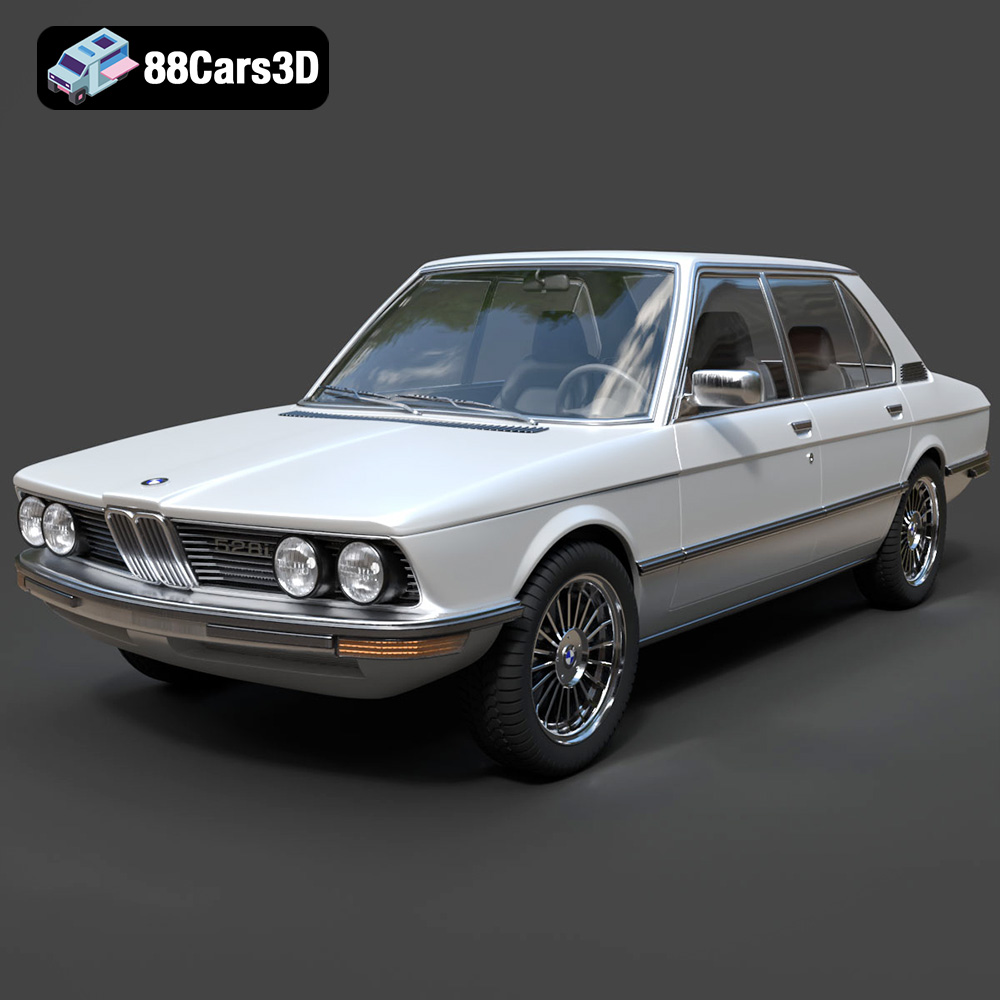
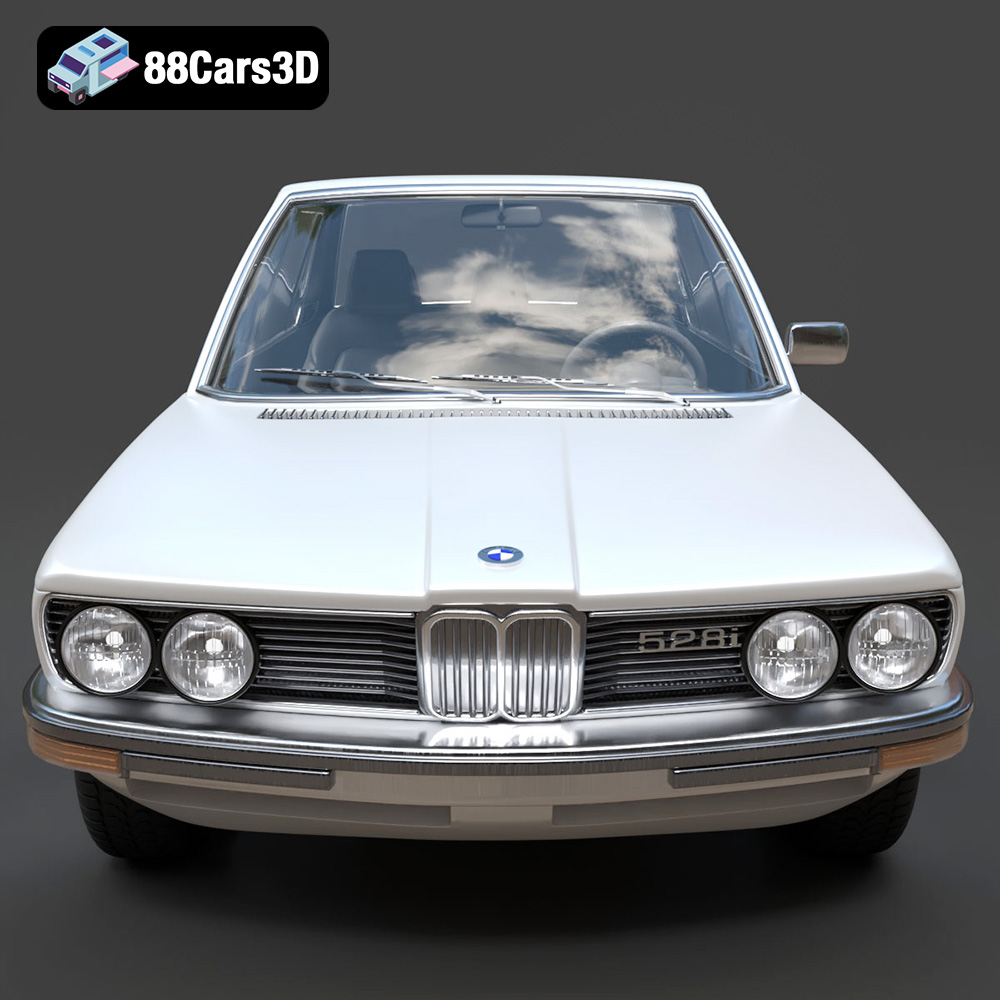
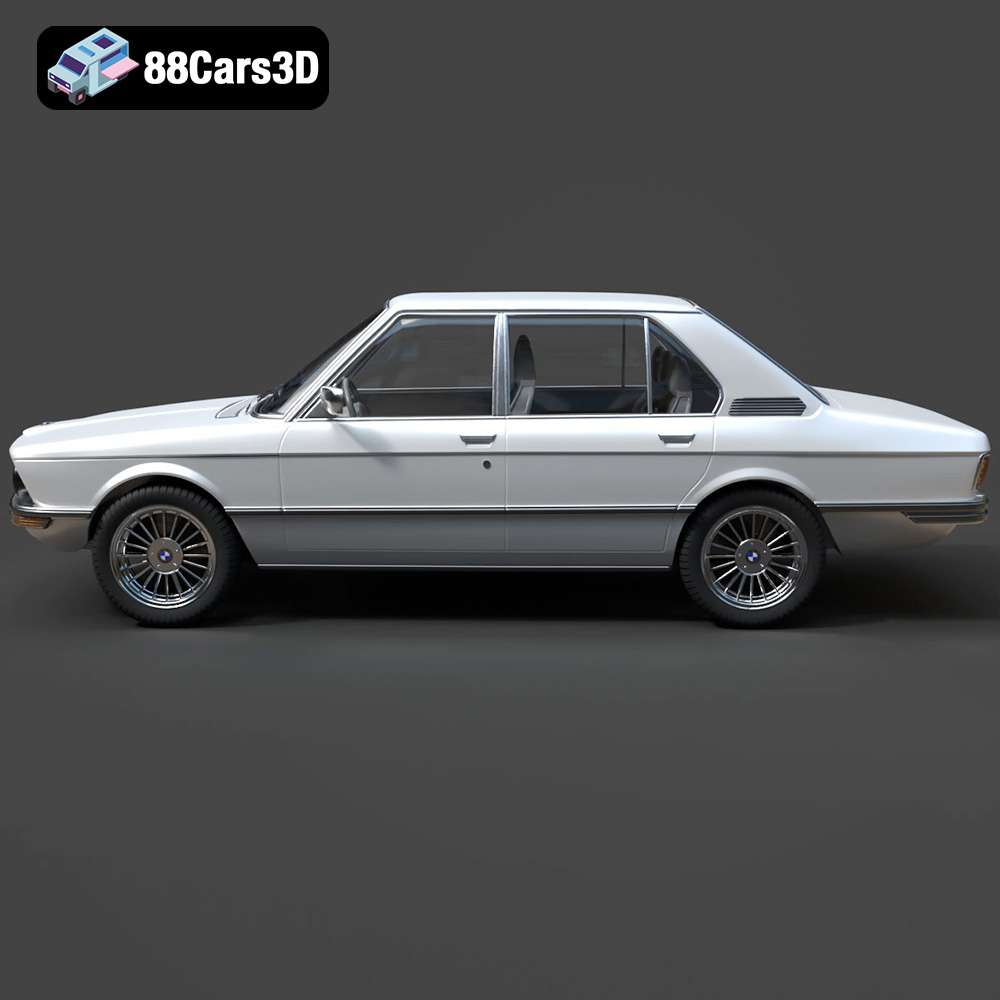
The first generation BMW 5 Series, specifically the E12 528i, holds a significant place in automotive history. Replicating this machine digitally demands accuracy down to the millimeter—from the iconic Hofmeister kink to the precise curvature of the kidney grille. When sourcing assets for demanding projects, technical artists and visualization specialists look for models that are ready to integrate, optimized for performance, and versatile across multiple software platforms. This deep dive explores the technical requirements for modern automotive rendering and real-time simulation, using high-quality assets available on marketplaces like 88cars3d.com as a benchmark for professional quality.
Why Model Accuracy Defines Professional Automotive Rendering
The difference between a consumer-grade model and a professional asset lies in the minutiae of the geometry and material setup. For photorealistic visualization, inaccuracies in panel gaps, headlight housing depth, or surface curvature immediately break the illusion. The BMW 5 Series E12 528i 3D Model, for instance, must perfectly translate the engineering intent of the original vehicle into the digital realm.
The Importance of Clean Topology and Quad Dominance
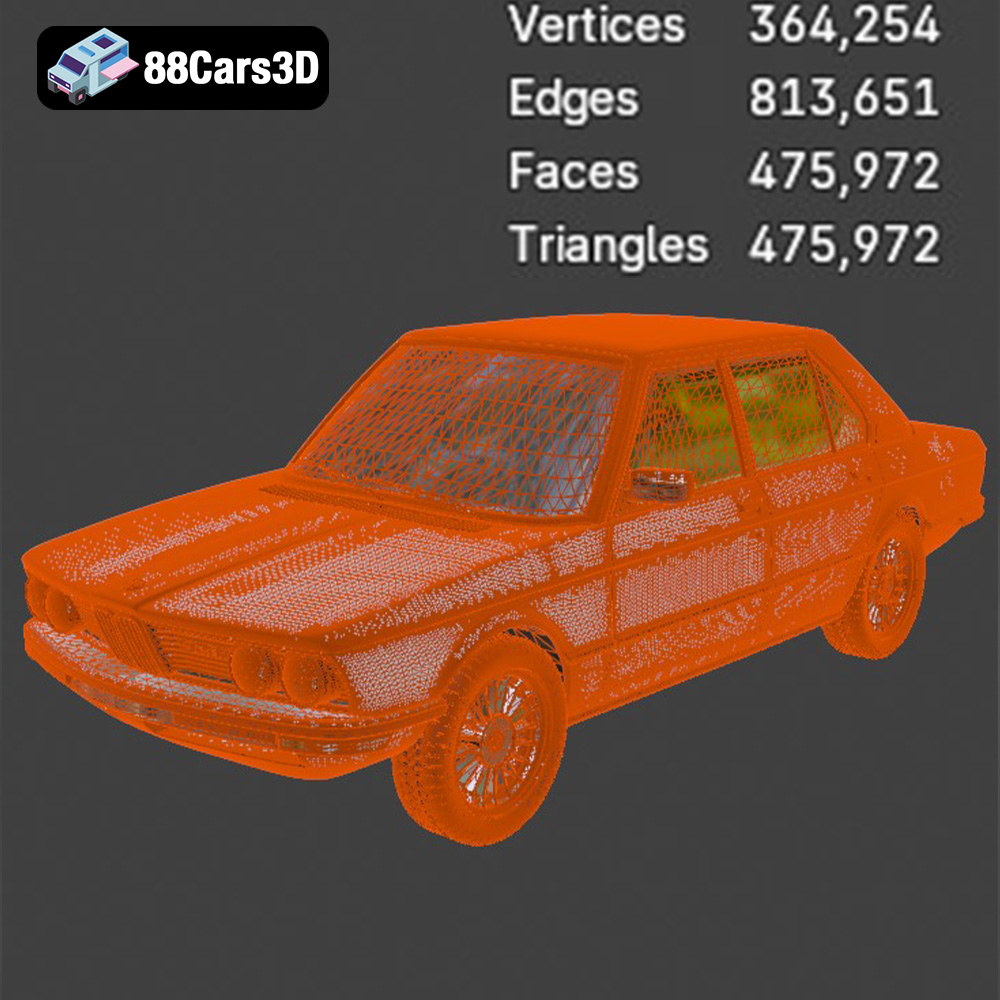
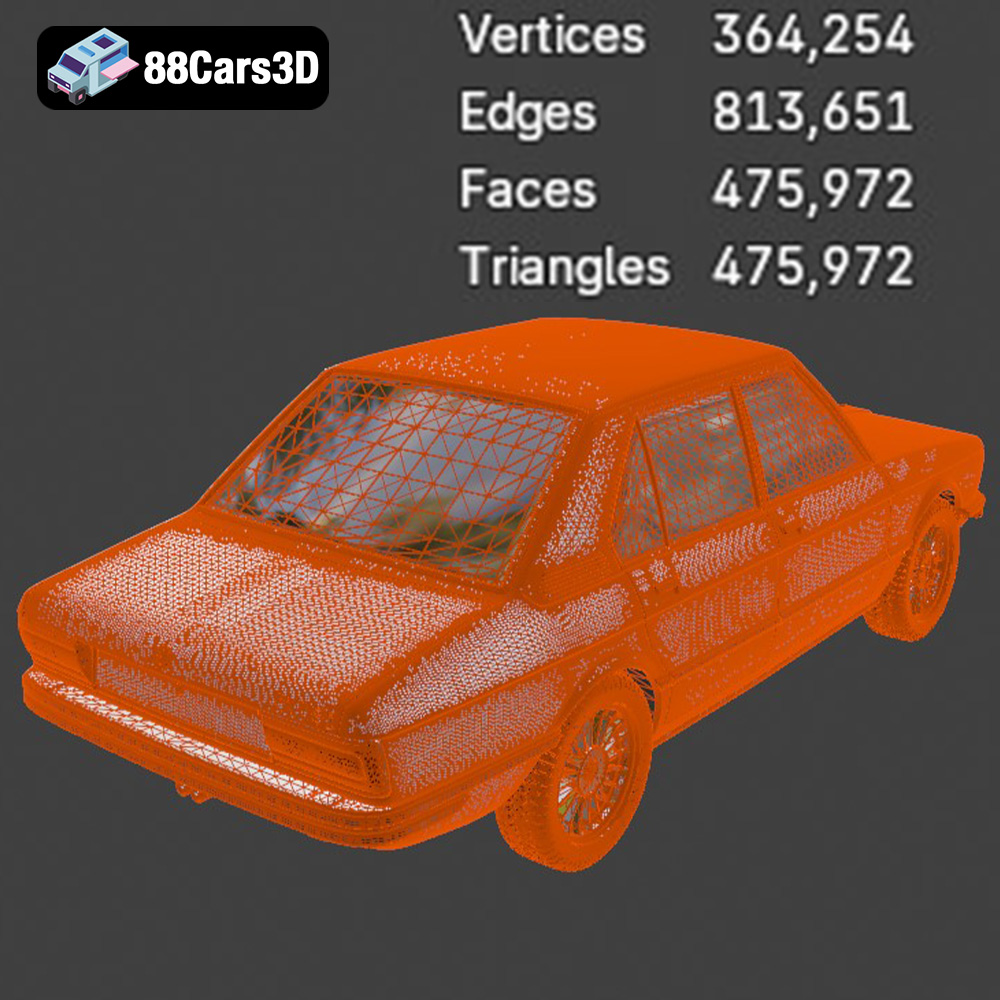
High-fidelity modeling relies heavily on maintaining clean, quad-based topology. When working with complex curved surfaces, such as vehicle bodies, triangulation (tris) should be minimized, especially on areas requiring smooth subdivision. Quad-dominant meshes ensure predictable behavior when smoothing modifiers are applied in tools like Blender or 3ds Max, preventing artifacts and pinching that ruin reflections.
- Subdivision Readiness: Professional models are built to look good both raw (low-poly) and subdivided (high-poly). This flexibility is crucial for adapting the model for different project needs—low poly for game engines, high poly for marketing renders.
- Edge Flow: Proper edge flow follows the physical contours of the vehicle. This is paramount for accurately capturing the hard lines and creases of the E12’s classic design, ensuring that light bounces off the paint surface correctly during automotive rendering.
Material Calibration for Photorealism
Beyond geometry, materials dictate the final look. Professional 3D car models utilize physically based rendering (PBR) workflows. This involves calibrating texture maps (Albedo/Base Color, Metallic, Roughness, Normal, Ambient Occlusion) to mimic real-world light interaction. For a classic car like the 528i, this means careful attention to:
- Car Paint Shader: Mimicking complex multilayer paint (base color, metallic flakes, clear coat) using advanced shaders in V-Ray, Corona, or Cycles.
- Chrome and Trim: Achieving the characteristic reflectivity and micro-surface details of polished metal components, which are vital for classic car aesthetics.
- Glass Refraction: Accurate representation of windscreen and window glass, including subtle distortion and reflection management, which drastically impacts overall realism.
Understanding 3D Model File Formats: The Backbone of Cross-Platform Workflow
A crucial technical consideration when purchasing 3D car models is the suite of file formats provided. Professional studios rarely operate exclusively within one ecosystem. The ability to seamlessly transfer a detailed model, such as the BMW 5 Series E12 528i, between modeling applications, rendering engines, and real-time platforms is non-negotiable. The formats included with premium assets dictate their versatility and integration ease.
Here is a technical breakdown of essential formats and their primary use cases:
.blend – Fully Editable Blender Scene with Materials
The native Blender format is ideal for users deeply integrated into the open-source ecosystem. A good .blend file provides the complete scene setup, including lights, cameras, modifiers (like subdivision surfaces), and Cycles or Eevee-configured materials. This allows for immediate modification of the geometry, textures, or animation rigging without losing non-destructive workflow elements. It is the perfect starting point for personalized customization of the 528i model.
.max – Editable 3ds Max Project for Animation and Rendering
The .max format is essential for architectural visualization and high-end commercial rendering studios that often rely on 3ds Max paired with V-Ray or Corona Renderer. This format retains complex scene organization, layered materials, and specific animation timelines, making it a professional standard for complex scene integration and automotive rendering.
.fbx – Ideal for Unreal, Unity, and Real-Time Pipelines
The Autodesk Filmbox (.fbx) format is the industry standard for asset exchange, particularly for game development. It efficiently packages geometry, UV layouts, material assignments, and skeletal data (if applicable) into a single file. When importing the E12 528i into Unreal Engine or Unity, .fbx ensures that the mesh normals and smoothing groups are correctly translated, maintaining visual fidelity crucial for performance optimization of game assets.
.unreal – Engine-Ready Asset for Real-Time Environments
While often derived from .fbx, a dedicated .unreal package signifies that the asset has been pre-configured and tested specifically within the Unreal Engine environment. This typically means optimized texture compression, validated LOD (Level of Detail) setups, and material instances ready for immediate real-time lighting integration, saving significant setup time for interactive visualization.
.obj – Universal Format for Cross-Software Compatibility
The Wavefront .obj format is the most universal 3D standard. It primarily exports geometry and UV coordinates, relying on accompanying Material Library (.mtl) files for basic material properties. While it doesn’t retain complex shader trees or rigging, its near-universal support ensures the BMW 5 Series model can be opened and utilized in almost any 3D software package, including specialized CAD programs or niche rendering tools.
.glb – Optimized for AR, VR, and Browser-Based Display
GL Transmission Format (.glb), often the binary version of .gltf, is crucial for emerging visualization fields. It is highly optimized for fast loading and efficiency, making it the format of choice for augmented reality (AR) apps, virtual reality (VR) simulations, and web-based 3D viewers (like those using Babylon.js or Three.js). This allows the E12 528i to be viewed interactively on mobile devices or embedded directly into websites.
.stl – Suitable for 3D Printing Output
The Stereolithography (.stl) format uses simple triangular meshes and is the standard input for most 3D printers. While the complex automotive model must be adapted (e.g., shell thickness defined, internal detail removed) for physical output, the availability of the .stl format indicates the source model’s clean geometry can be prepared for physical prototyping or creating scale models of the BMW 528i.
.ply – Precision Mesh Format for CAD or Analysis
The Polygon File Format (.ply) is commonly used when dealing with complex data derived from 3D scanning or for applications requiring precise geometrical analysis, often in engineering or historical preservation contexts. Its inclusion suggests the model possesses a high degree of mesh integrity, suitable not just for rendering, but potentially for reverse engineering studies.
The comprehensive format support, such as that offered by 88cars3d.com, validates the professional standard of the asset, ensuring maximum utility across all major industry pipelines.
Integrating the E12 528i into High-Fidelity Rendering Pipelines
Achieving photorealistic quality with a classic vehicle requires tailored workflows depending on the chosen rendering engine. Whether using physically accurate path tracers like V-Ray or the faster, hybrid approach of Blender’s Cycles, the core technical steps remain consistent.
Workflow 1: 3ds Max and V-Ray for ArchViz Integration
In architectural visualization (ArchViz), vehicles serve as crucial context elements. The ability to drop the BMW 5 Series E12 528i (via the .max file) directly into a large scene ensures native material compatibility. V-Ray’s advanced material system allows artists to fine-tune reflections based on the vehicle’s specific metallic flake paint setup and achieve true volumetric fog interacting with the headlights, crucial for moody, realistic exterior shots.
- Proxy Generation: For scenes involving many cars, the E12 model can be converted into a V-Ray proxy to minimize viewport slowdown and optimize memory usage during final rendering.
- HDR Lighting Calibration: Utilizing high dynamic range images (HDRIs) that accurately represent real-world lighting environments is key. Adjusting the car paint’s glossiness and Fresnel curves relative to the HDRI ensures the classic curves of the 5 Series reflect the sky accurately.
Workflow 2: Blender for Independent Animation and Concept Art
The included .blend file significantly accelerates the workflow for Blender users. Since the materials and lighting (often Eevee or Cycles) are pre-configured, artists can immediately focus on composition and animation. For cinematic shots of the E12 528i, utilizing Blender’s geometry nodes for subtle environmental details (like wet road spray or dust) around the wheels enhances realism without requiring complex simulation setup.
- Displacement Maps: Even on a smooth surface, micro-detail is necessary. Using procedural noise or texture maps to slightly displace the paint surface simulates subtle orange peel or aging effects, pushing the realism beyond simple PBR maps.
- Interior Detailing: The fully detailed interior requires dedicated lighting setups. Utilizing small, low-intensity area lights within the cabin prevents the interior from falling into deep shadow, ensuring the detailed dashboard and classic upholstery are visible even in exterior shots.
Optimizing Classic Car Models for Real-Time Game Development
The shift towards real-time rendering in fields beyond traditional gaming—such as virtual production, automotive configurators, and training simulations—demands highly optimized game assets. Converting a high-fidelity rendering model like the E12 528i into a performant real-time asset requires rigorous optimization.
Managing Poly Count and LOD Strategy
While the initial model must be high-poly for accuracy, game engines like Unreal Engine and Unity require efficient geometry to maintain high frame rates. A crucial step involves creating Levels of Detail (LODs) for the 528i.
- LOD 0 (Closest View): Full poly count, detailed interior/engine bay (if visible). Essential for close-up cockpit views or cinematic camera angles.
- LOD 1 & 2 (Mid-Range): Progressive reduction in polygon count (50%-75% reduction), simplifying or eliminating small details like bolts and engine geometry.
- LOD 3 (Distant View): Aggressive reduction (80%+), often replacing complex meshes (like wheel spokes) with simpler geometry or using baked normal maps for detail illusion.
The included .fbx and .unreal formats streamline this process, often containing pre-optimized meshes or at least a clean base mesh ready for LOD creation using engine tools.
Advanced Material and Texture Optimization in Unreal Engine
Real-time realism hinges on efficient material setup. For the BMW E12, the material configuration must balance visual quality with draw call efficiency.
- Material Instancing: Using a master car shader and creating material instances for different components (paint, glass, rubber) reduces shader complexity and allows for dynamic color changes (e.g., configuring different paint schemes for the 528i) easily.
- Texture Resolution Management: High-resolution 4K or 8K textures are necessary for the main body panels, but lower resolutions (1K or 512x) are used for internal, unseen, or minor components to manage video memory usage effectively.
Case Study: The BMW E12 528i in AR/VR and Digital Preservation
The applications for highly accurate 3D car models extend beyond traditional media. Classic vehicles are increasingly featured in interactive experiences and digital archives, where technical fidelity enables completely new forms of consumption. The BMW E12 528i serves as an excellent candidate for digital preservation projects.
Utilizing GLB for Augmented Reality Experiences
The .glb format provides the gateway to AR. Imagine a user placing a virtual BMW 5 Series E12 528i in their driveway via their smartphone (using platforms like Apple ARKit or Google ARCore). This requires the model to be lightweight and fully textured, yet dimensionally accurate. The robust topology of professional models ensures that the virtual car interacts realistically with the environment, casting correct shadows and maintaining scale when viewed through the camera.
Technical Challenges in VR Simulation
Virtual Reality demands the most stringent performance metrics, typically targeting 90 FPS or higher to avoid motion sickness. If the E12 model is used within a full driving simulator, the engine bay and interior (which are fully detailed in this specific asset) become critical. This level of detail necessitates:
- Culling and Visibility Optimization: Ensuring engine geometry is only rendered when the hood is open, and interior components are only rendered when the camera is inside the car.
- Simplified Collision Mesh: A separate, heavily optimized low-poly collision mesh must be generated for physics calculations, decoupled from the high-resolution visual mesh.
Ensuring Future-Proof Assets: Maintenance and Scalability
Investing in professional 3D car models is a long-term strategy. Studios need assets that can be easily updated and adapted as rendering technology evolves. Quality assets purchased from platforms like 88cars3d.com are built with scalability in mind.
The Role of Non-Destructive Workflows
A professional 3D artist ensures that the base mesh of the E12 528i remains clean and unaltered, relying on modifiers (like subdivision surfaces, bevels, and mirror modifiers) to generate the final high-resolution output. If future projects require a less pristine version of the classic car (e.g., adding rust, dents, or period-specific modifications), these changes can be implemented efficiently without destroying the core asset integrity.
Future-Proofing Materials
PBR material setups are highly adaptable. If a studio transitions from using a proprietary renderer like V-Ray to a procedural node-based system like SideFX Houdini’s Karma, the base PBR texture maps (Albedo, Roughness, Metallic) remain largely reusable. This allows the classic BMW 5 Series E12 528i model to remain relevant for years, regardless of software shifts.
Conclusion: The Value Proposition of Technical Precision
The technical demands of modern visualization—whether for cinematic automotive rendering, interactive game assets, or cutting-edge AR/VR—require 3D car models that are engineered, not just sculpted. The BMW 5 Series E12 528i 3D Model exemplifies this technical excellence, providing a meticulously accurate representation of an automotive icon ready for any professional pipeline.
By offering a comprehensive suite of optimized file formats (from .blend and .max for artists to .fbx and .glb for real-time developers), and featuring clean topology suitable for both subdivision and LOD creation, these assets significantly reduce production time and guarantee professional-grade results. Choosing specialized marketplaces ensures you are acquiring assets where technical quality is paramount, driving efficiency and photorealism in your most demanding projects.
Featured 3D Model
BMW 5 Series E12 528i 3D Model
The BMW 5 Series E12 528i 3D model captures the essence of this influential classic sedan with uncompromising accuracy. Every exterior panel, lighting fixture, and badge has been meticulously recreated to deliver a digital asset suitable for professional visualization projects. This model provides an authentic representation of the first generation of the 5 Series, perfect for projects requiring automotive nostalgia and technical precision. This model includes a fully detailed interior and engine bay suitable for close-up renders and simulation environments.
$14.99
Product Image Gallery