The Cornerstone of Digital Transport: Why Professional 3D Car Models are Essential for Modern Pipelines
In the expansive world of digital content creation, the difference between a high-end visualization and a mediocre one often lies in the quality and technical preparation of the assets used. For sectors ranging from architectural visualization (ArchViz) to AAA game development and specialized training simulations, vehicles are not merely background elements; they are critical functional components.
This necessity for precision and pipeline readiness brings us to a crucial asset type: professional 3D car models of everyday transport. While highly detailed sports cars dominate many rendering showcases, vehicles designed for utility—like buses, vans, and commercial carriers—are the silent workhorses of digital environments. When developing urban environments, logistical simulations, or detailed automotive rendering projects, having a versatile, production-ready model saves hundreds of hours in cleanup and optimization.
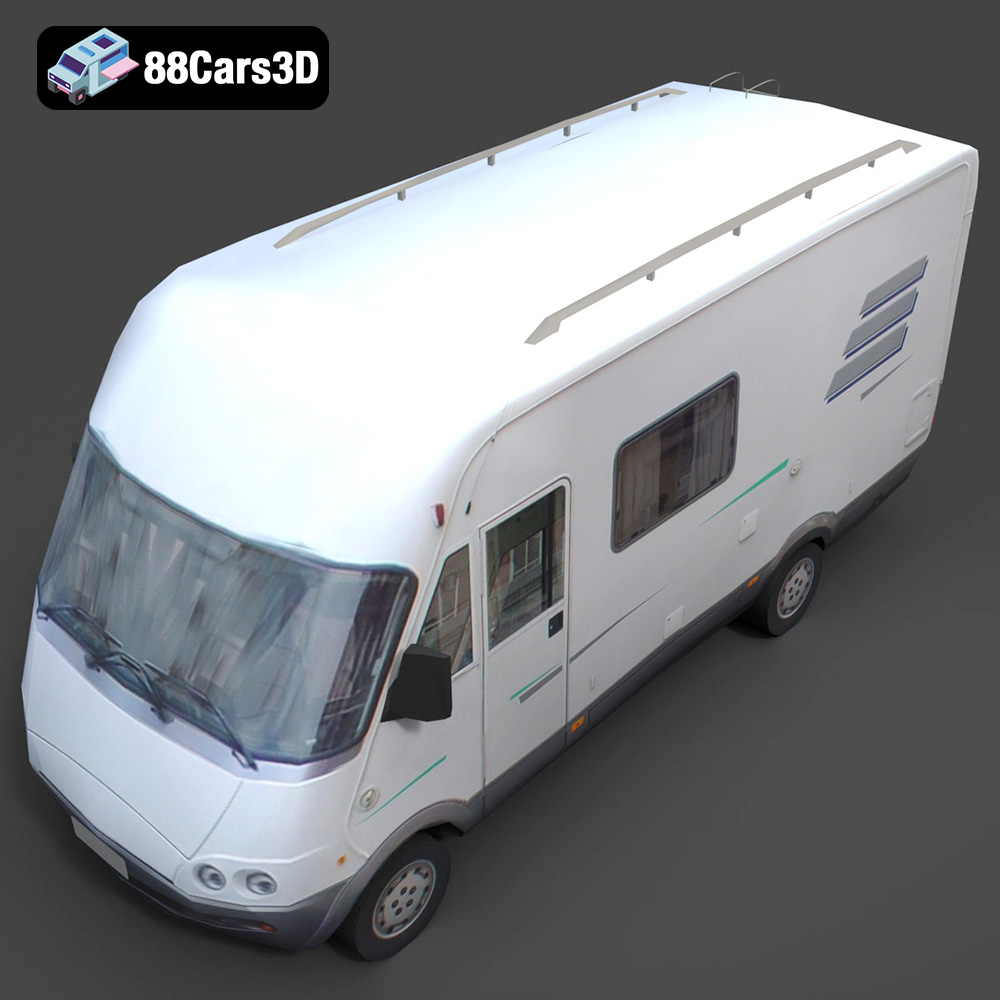
We are focusing today on an exceptional example of pipeline efficiency: the Generic Mini-Bus 3D Model, available through 88cars3d.com. This asset is specifically engineered to meet the stringent demands of professional production, offering optimized geometry, logical hierarchy, and broad compatibility across all major software packages, from 3ds Max and Blender to Unreal Engine.
Understanding 3D Model File Formats: The Backbone of Cross-Platform Workflow
For professional 3D car models, success hinges on compatibility. A truly valuable asset must not be tethered to a single software ecosystem. The inclusion of a robust suite of file formats ensures that the Mini-Bus model can seamlessly transition from a high-resolution rendering pipeline into a lightweight game engine environment or even specialized manufacturing visualization. Understanding the technical specifics of each format is crucial for maximizing workflow efficiency.
.blend – Fully Editable Blender Scene with Materials
The native Blender format (.blend) offers immediate access to the entire scene setup. This is vital for artists who prefer Blender’s powerful procedural shading and nodal material system. Because the Mini-Bus model is supplied with pre-configured Blender materials, lighting setups, and organized collections, users can instantly dive into customization without time wasted on porting basic textures and shader networks. This format is ideal for rapid prototyping and iterative design processes in an open-source environment.
.fbx – Ideal for Unreal, Unity, and Real-Time Pipelines
As the industry standard for asset exchange, the FilmBox format (.fbx) is non-negotiable for serious game development and animation. FBX efficiently stores mesh data, textures, skeletal hierarchy, and animation curves. When importing the Mini-Bus into Unreal or Unity, the .fbx file ensures that the logically separated components (doors, wheels, steering wheel) retain their correct pivot points and parent-child relationships, making immediate rigging and keyframing straightforward. It is the preferred format for transferring complex, animated game assets.
.obj – Universal Format for Cross-Software Compatibility
The Wavefront Object format (.obj) is perhaps the most universally accepted 3D exchange format. While it lacks native support for complex animation and rigging data, it excels at reliably transferring pure geometry and UV mapping across different software suites (e.g., moving geometry from ZBrush to Maya, or using it as a fallback when proprietary formats fail). The Mini-Bus geometry, when exported as .obj, retains its clean quad topology, ensuring smooth importation into any application for geometry manipulation or retopology work.
.glb – Optimized for AR, VR, and Browser-Based Display
The Graphics Library Transmission Format (.glb) is an increasingly vital standard, especially for immersive technologies. GLB packages the mesh, materials, and textures into a single, compact binary file. Its efficiency and small footprint make it perfect for rapid deployment in augmented reality (AR) apps, virtual reality (VR) environments, and web-based configurators, where speed and performance are prioritized over deep editability. This allows for quick, interactive previews of the Mini-Bus model on websites powered by services like Sketchfab.
.stl – Suitable for 3D Printing Output
Stereolithography (.stl) is the definitive format for additive manufacturing. It defines the surface geometry of a 3D object using a collection of connected triangles. For the Mini-Bus, the .stl output is critical for creating physical prototypes or scale models. Crucially, the source geometry must be “manifold” (water-tight), which the professional structuring of this 3D model ensures, minimizing errors during slicing and printing preparation.
.ply – Precision Mesh Format for CAD or Analysis
The Polygon File Format (.ply) is often used in scientific visualization, 3D scanning, and CAD workflows. PLY files can store complex information beyond geometry, including color, transparency, and sometimes reliability data. For simulation projects requiring high precision or complex analyses of vehicle structure, the .ply export provides a robust, detailed mesh ready for specialized engineering software.
.unreal – Engine-Ready Asset for Real-Time Environments
Beyond the generic .fbx, supplying an engine-specific package like the .unreal format minimizes setup time exponentially. This package includes pre-setup material instances, optimized LOD (Level of Detail) settings, and often pre-built collision geometry tailored specifically for the Unreal Engine physics system. For developers focused on rapid deployment, this ready-to-use package is a massive time saver.
.max – Editable 3ds Max Project for Animation and Rendering
For high-fidelity visualization, particularly in architectural and traditional automotive rendering firms, 3ds Max remains a dominant force. The native .max file provides access to the scene’s original hierarchy, cameras, and potentially V-Ray or Corona specific material setups, enabling seamless, advanced lighting and material adjustments for cinematic quality output.
The Geometry of Efficiency: Topology and Optimization
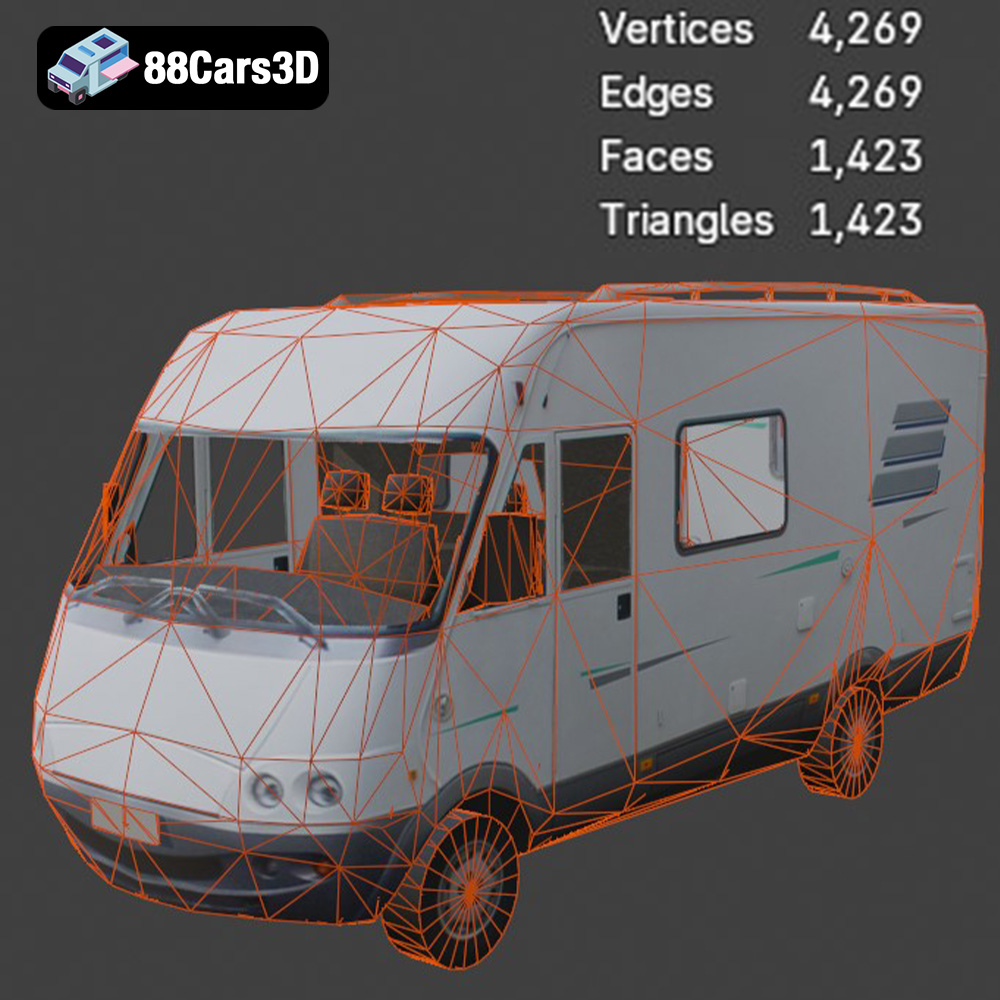
The technical foundation of any high-quality 3D car model is its topology. Amateur models often rely on messy triangulated meshes or excessive polygon density that cripples performance. The professional Mini-Bus model adheres to strict quality controls that ensure technical integrity.
Quad-Dominant Topology for Smooth Subdivision
The Mini-Bus features clean, quad-dominant geometry. Quads (four-sided polygons) are essential for two reasons: they allow for predictable deformation during animation and rigging, and they are mandatory for smooth subdivision algorithms (like TurboSmooth or Subdivision Surface modifiers). If the geometry needs to be rendered at 8K resolution for a cinematic close-up, the clean quad structure ensures that the body panels subdivide perfectly without pinching or artifacts, producing flawless curves and reflections—a hallmark of superior automotive rendering.
Accurate Real-World Scale and Dimensional Integrity
For simulation, visualization, and ArchViz, models must adhere to precise real-world dimensions. Integrating a vehicle into a planned city street or a specialized training environment requires scale accuracy. This Mini-Bus model is built to 1:1 scale, guaranteeing that its dimensions integrate perfectly with scene cameras, light falloff, and physics engine calculations, eliminating scaling issues that plague less professional assets.
Efficient UV Mapping for Non-Destructive Texturing
Efficient UV mapping is vital for texturing and customization. The UVs on the Mini-Bus are non-overlapping and logically laid out, which is critical for complex tasks like baking ambient occlusion maps, applying detailed liveries, or utilizing procedural texturing tools like Substance Painter. Clean UVs allow artists to easily create high-resolution decals and branding specific to a project scenario, such as adding a corporate logo or specialized transit route information.
Integrating the Mini-Bus into Real-Time Game Engine Workflows
The demands of real-time rendering, particularly in complex open-world games, require specialized preparation beyond static rendering. The Mini-Bus is designed as a robust game asset, optimized for performance without sacrificing visual fidelity.
Hierarchical Structure and Pivot Point Setup
A vehicle in a game engine must be interactive. This model utilizes a logically organized hierarchy, meaning that the wheels, steering wheel, doors, and potentially the suspension components are separated and parented correctly to the main chassis. Crucially, pivot points are set precisely at the rotation axis (e.g., the center of the wheel axle, or the hinge of the door). This preparation ensures that developers can immediately apply physics constraints and animation blueprints without tedious pivot alignment.
Collision Geometry and Physics Preparation
In simulation and gaming, collision complexity directly impacts performance. While the visible mesh of the Mini-Bus is detailed, professional integration requires optimized, lower-poly proxy meshes for collision detection. Utilizing the .fbx and .unreal exports, developers can quickly assign simple box or hull collision meshes to the Mini-Bus, ensuring accurate physical interactions with the environment and other vehicles while keeping CPU overhead minimal.
Achieving Cinematic Quality: Advanced Automotive Rendering Pipelines
When the Mini-Bus is used in marketing materials, cinematic trailers, or high-fidelity architectural presentations, the focus shifts entirely from real-time optimization to visual fidelity and material realism.
PBR Material Setup for Realism
The model features detailed material separations for components like rubber, chrome, glass, paint, and plastic trim. Utilizing the native project files (.max and .blend), artists can easily implement physically based rendering (PBR) workflows. The clear separation of these material IDs allows for immediate use of high-dynamic range (HDR) lighting and complex subsurface scattering effects on plastics, achieving the photorealistic quality expected in professional automotive rendering.
Dynamic Lighting and Reflection Management
Realistic vehicle rendering relies heavily on accurate reflections and lighting interaction. The professional detailing of the exterior, including the separated transparent glass materials and specialized headlight/taillight geometry, allows rendering artists to manipulate the scene’s environmental light source. This enables creating dynamic scenes, such as a Mini-Bus driving through a rainy city street at dusk, where the refraction and wetness effects on the glass and body panels are paramount.
Specialized Applications: Simulation, AR/VR, and 3D Printing
The versatility of this 3D car model extends far beyond traditional visualization and gaming, proving its value in highly specialized, technical fields.
The Mini-Bus in Training and Logistical Simulation
Simulation platforms (used for driver training, logistical planning, or autonomous vehicle development) demand predictable geometry and accurate mass/volume representation. The Mini-Bus is an ideal candidate for these environments due to its accurate scale and predictable, clean mesh structure. Using the .ply format allows engineers to input the mesh directly into analytical software to calculate load factors, turning radius, and precise physics behaviors, making it a reliable tool for professional engineering pipelines.
Performance Optimization for AR/VR Experiences
Augmented and virtual reality devices operate under extreme performance constraints. The inclusion of the .glb format directly addresses this. Furthermore, the Mini-Bus’s balanced detailing—meaning it features adequate resolution for the exterior while maintaining an optimized, reduced-detail interior—is a key strategy in AR/VR asset creation. This balance ensures high visual quality when viewed externally while maintaining crucial performance budgets, preventing lag and nausea in immersive environments.
Preparing the Model for High-Fidelity 3D Printing
For rapid prototyping, creating scale models for presentations, or even manufacturing custom accessories, 3D printing requires geometry free of holes, reversed normals, or intersecting faces. The .stl export provided for the Mini-Bus confirms that the geometry is manifold and ready for immediate slicing. This capability transforms the digital asset into a tangible physical product, showcasing the versatility available when purchasing high-quality 3D car models from marketplaces like 88cars3d.com.
Customization and Rigging for Production
A professional asset must be flexible. The Mini-Bus is built to accommodate extensive customization and animation requirements, ensuring maximum ROI for any project.
Non-Destructive Livery and Material Customization
The organized UV maps allow users to quickly create custom liveries (paint schemes and graphics) specific to their brand or scenario. This is crucial for advertising campaigns or simulations where specific branding must be applied accurately. Artists can leverage masking techniques based on the clean UVs to change the metallic sheen of the paint, the roughness of the tires, or the specific tinting of the windows without altering the core geometry.
Animation Readiness: Separated Components
The description highlights functional-looking doors and robust wheels that are separated for animation workflows. This simple organizational choice saves rigging artists days of prep work. Because the pivots are set correctly, the Mini-Bus can be immediately rigged with inverse kinematics (IK) controls for the wheels and simple rotational drivers for the doors, enabling complex sequences where passengers board or the vehicle moves realistically over terrain.
Conclusion
The Generic Mini-Bus 3D Model stands as a prime example of what professional 3D car models should deliver: technical efficiency, cross-platform compatibility, and robust geometry suitable for the highest levels of production. Whether your project demands photorealistic automotive rendering using 3ds Max, requires an optimized, physics-ready game asset for Unreal Engine, or necessitates a water-tight mesh for 3D printing, this model is built to integrate seamlessly.
Choosing assets engineered for pipeline stability ensures that time is spent on creative output, not technical remediation. Explore this high-quality, versatile vehicle and many other expert 3D assets designed for professional workflows at 88cars3d.com.
Featured 3D Model
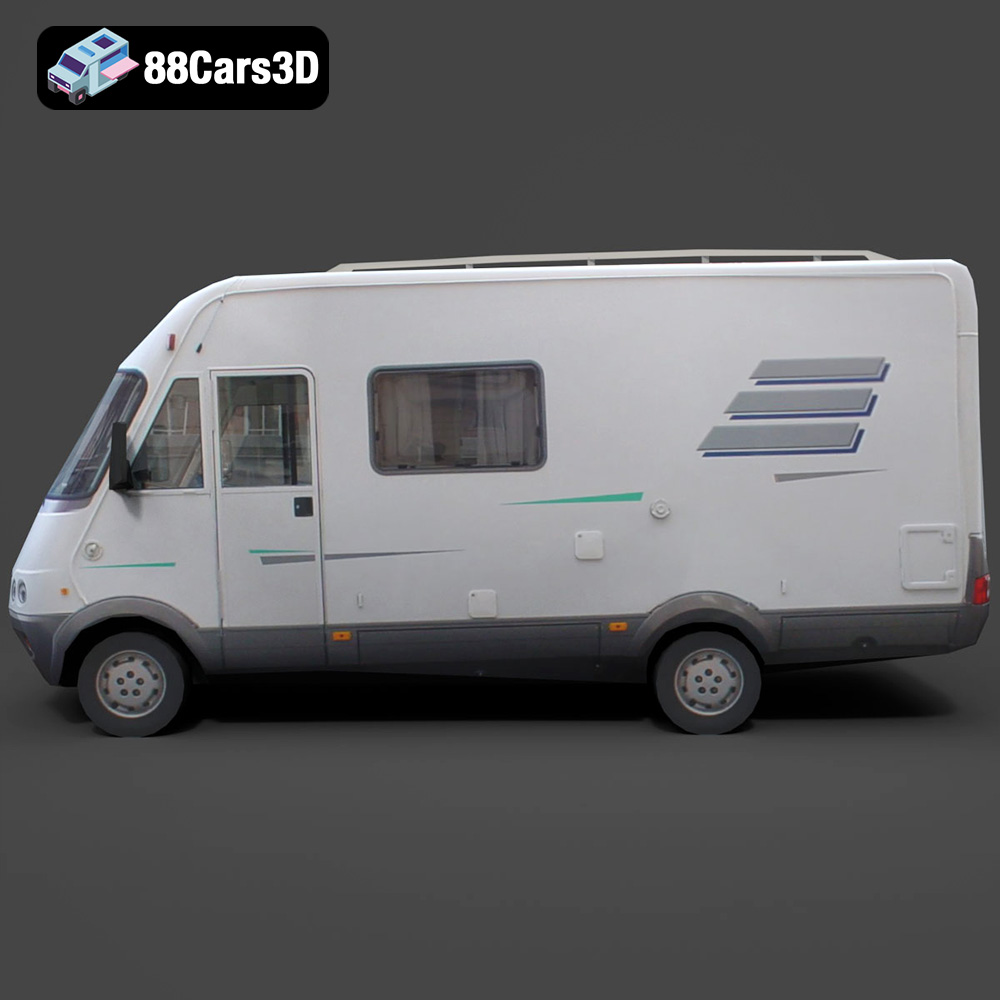
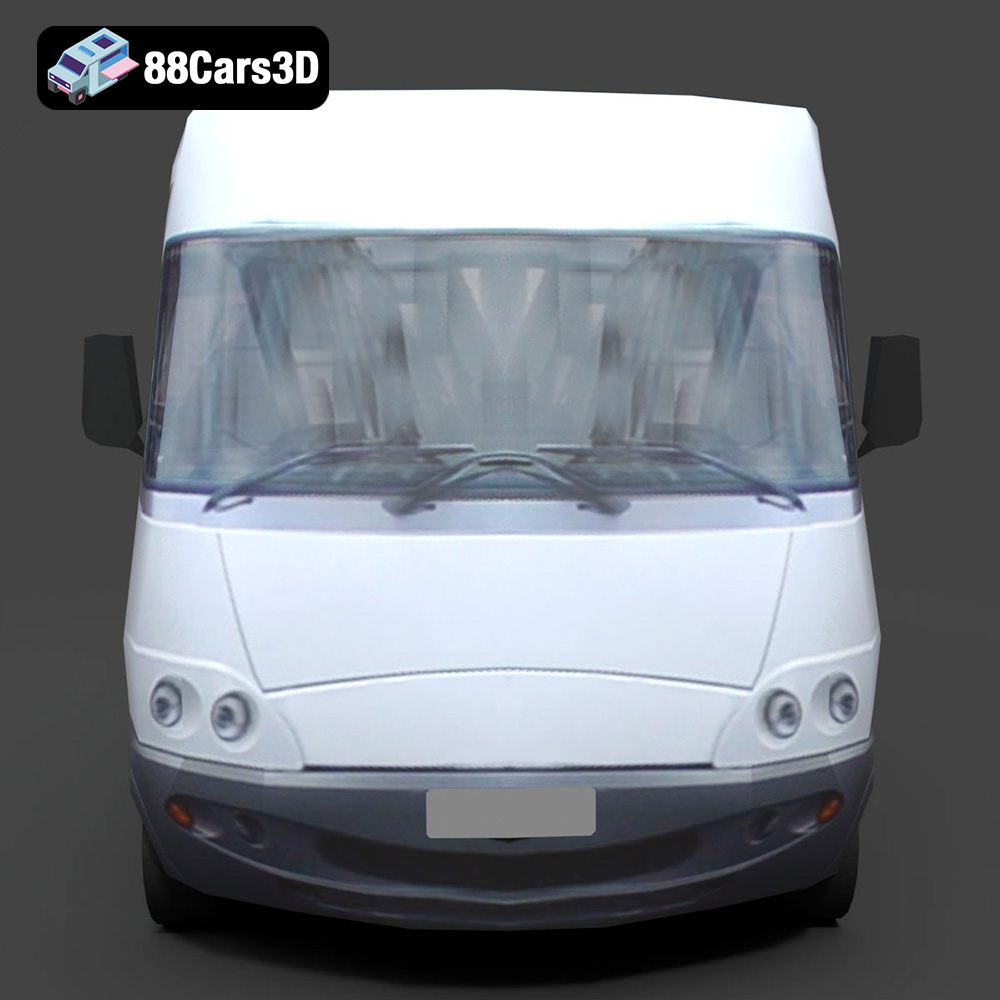
Generic Mini-Bus 3D Model
Experience the versatility and efficiency of our professional 3D model of a Mini-Bus. Designed with urban transport and passenger services in mind, this model features a clean, optimized geometry suitable for a wide range of applications. With balanced detailing and a realistic representation, it’s perfect for high-quality rendering, intricate animations, detailed simulations, and robust game development. This Mini-Bus 3D model offers unparalleled professional quality and versatility, making it an essential asset for any digital project requiring a detailed and functional urban transport vehicle.
$21.99
Product Image Gallery