

The Art of Precision Modeling: Integrating High-Fidelity Transport Assets into Professional Visualization and Game Development
In the highly competitive fields of architectural visualization, cinematic rendering, and AAA game development, the difference between an acceptable project and an exceptional one often lies in the quality of the peripheral assets. While massive, complex models—such as detailed 3D car models—capture the primary focus, the surrounding environment demands equally rigorous attention to detail. A high-fidelity transport asset, like a professionally built bicycle model, can ground a scene in reality, providing necessary context and scale.
The quest for realism requires assets that are not only visually stunning but technically robust. They must handle subdivision surfacing for close-up renders, utilize optimized geometry for real-time applications, and be supplied in formats that integrate seamlessly across diverse software pipelines, from Blender and 3ds Max to Unreal Engine. This article delves into the technical advantages and professional workflows associated with utilizing a top-tier asset, specifically the Bicycle 3D Model available at 88cars3d.com, and explains why comprehensive file format support is non-negotiable for serious technical artists.
This particular asset is built specifically to address the technical demands of modern pipelines. Featuring clean, quad-dominant topology and meticulous detail—from the functional chain and sprockets to the separated components optimized for rigging—it serves as a crucial case study in what production-ready visualization truly entails. Whether you are developing dynamic urban environments, creating detailed training simulations, or requiring accurate visualization for automotive rendering projects (where a non-motorized vehicle offers a perfect contrast element), understanding the underlying technical foundation of this model is paramount.
Understanding 3D Model File Formats: Selecting the Right Pipeline Component
The versatility of any professional 3D model is fundamentally tied to the range and integrity of its included file formats. A common pitfall in digital asset acquisition is receiving a model that only works natively in one software package, severely limiting its utility. For true cross-platform compatibility and professional workflow flexibility, a comprehensive selection of optimized formats is essential. The Bicycle 3D Model is packaged with eight distinct formats, each serving a critical role in different phases of production.
The Ecosystem of Production Formats
Choosing the correct file format dictates how well an asset translates between rendering engines, game engines, and modeling packages. Each format carries specific metadata, material definitions, and structural hierarchies that define its optimal use case.
- .blend – Fully Editable Blender Scene: This format offers the native project environment for artists using Blender. It retains all procedural textures, modifiers, light setups, and node graphs, allowing for complete non-destructive customization. It is ideal for rendering and animation specialists who require full control over the asset’s materials and topology.
- .fbx – The Interchange Standard for Real-Time: FilmBox (.fbx) is perhaps the most crucial format for asset portability. It reliably transfers mesh data, skinning, blend shapes, and animation data across applications like Maya, 3ds Max, Unity, and Unreal Engine. When integrating the bicycle as a dynamic game asset, the .fbx file ensures that the separated components and pivot points (for wheel rotation and steering) are accurately preserved.
- .obj – Universal Compatibility for Mesh Data: Wavefront OBJ (.obj) is the foundational format for geometry. While it sometimes struggles with complex material transfer, it guarantees that the core mesh geometry and UV mapping will be readable by nearly every 3D application ever created. It is the go-to format for basic cross-software compatibility or when stripping a model down to its raw polygons for analysis.
- .glb – Optimized for AR, VR, and Web-Based Display: GL Transmission Format (.glb) is the delivery format for 3D models on the web, especially crucial for augmented reality (AR) and virtual reality (VR) applications. It is a self-contained, binary version of the glTF standard, packaging geometry, materials, and textures into a single, highly efficient file for rapid loading and display in mobile or browser environments.
- .stl – The 3D Printing Output Standard: Stereolithography (.stl) is strictly a surface geometry format, describing only the external shell of a solid object via triangular facets. It is the necessary output for rapid prototyping and 3D printing. The clean geometry of the bicycle model ensures a watertight mesh suitable for conversion to .stl without major repair work.
- .ply – Precision Mesh Format for Analysis: The Polygon File Format (.ply) is often used in scientific or engineering contexts. It can store data associated with the vertices and faces, such as color, transparency, and range data, making it suitable for CAD integration or detailed mesh analysis workflows.
- .unreal – Engine-Ready Asset: This specialized setup indicates the model has been pre-processed, potentially including optimized UV maps, proper scale adjustments, and material instances configured specifically for the Unreal Engine environment. This drastically reduces the time required for importing and setting up the asset as a working entity in a real-time project.
- .max – Editable 3ds Max Project: Providing the native 3ds Max (.max) scene allows users in the visualization and traditional rendering space to leverage Max’s powerful rendering tools, physical camera setups, and advanced animation tools without relying on potentially lossy translation layers.
The inclusion of this diverse technical set ensures that the investment in the asset maximizes return across any digital visualization project.
Achieving Cinematic Realism: Advanced Rendering Techniques
When rendering a static image or a cinematic sequence, quality is judged by minute details—the way light catches the bicycle frame, the subtle deformation of the tires, or the glint of the metallic chain. The Bicycle 3D Model is designed with the underlying technical structure necessary to support these high-end rendering requirements.
PBR Materials and Texture Fidelity
Modern visualization relies on Physically Based Rendering (PBR) workflows. The materials included with this model—simulating rubber, anodized aluminum, and textured plastic—must accurately define parameters like Base Color, Metallic, Roughness, and Normal/Bump mapping. For the bicycle, the fine tread patterns on the tires and the precise grain of the saddle material are crucial. These textures must be laid out cleanly across the UV maps. Since the geometry is meticulously built, the UVs are less likely to suffer from stretching or distortion, allowing for high-resolution texture maps to be applied seamlessly, whether in V-Ray, Corona, or Cycles.
The Advantage of Quad-Dominant Topology
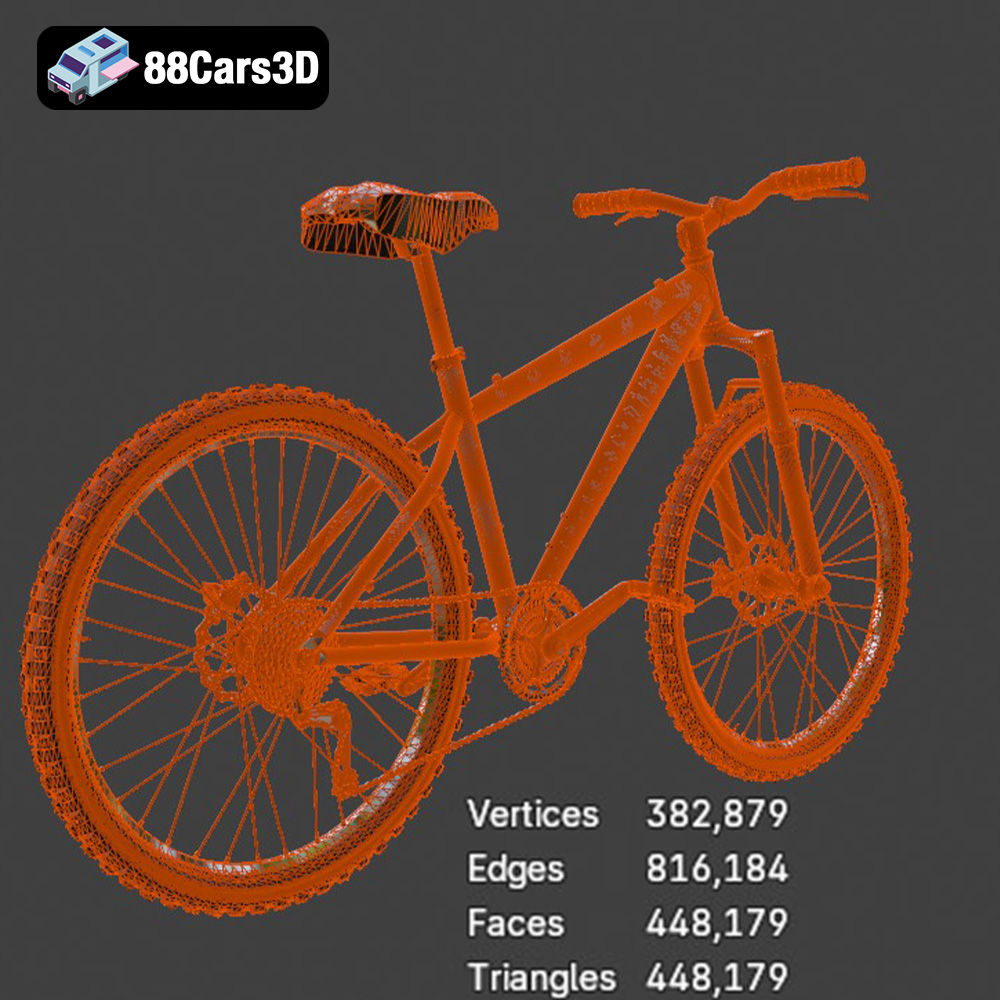
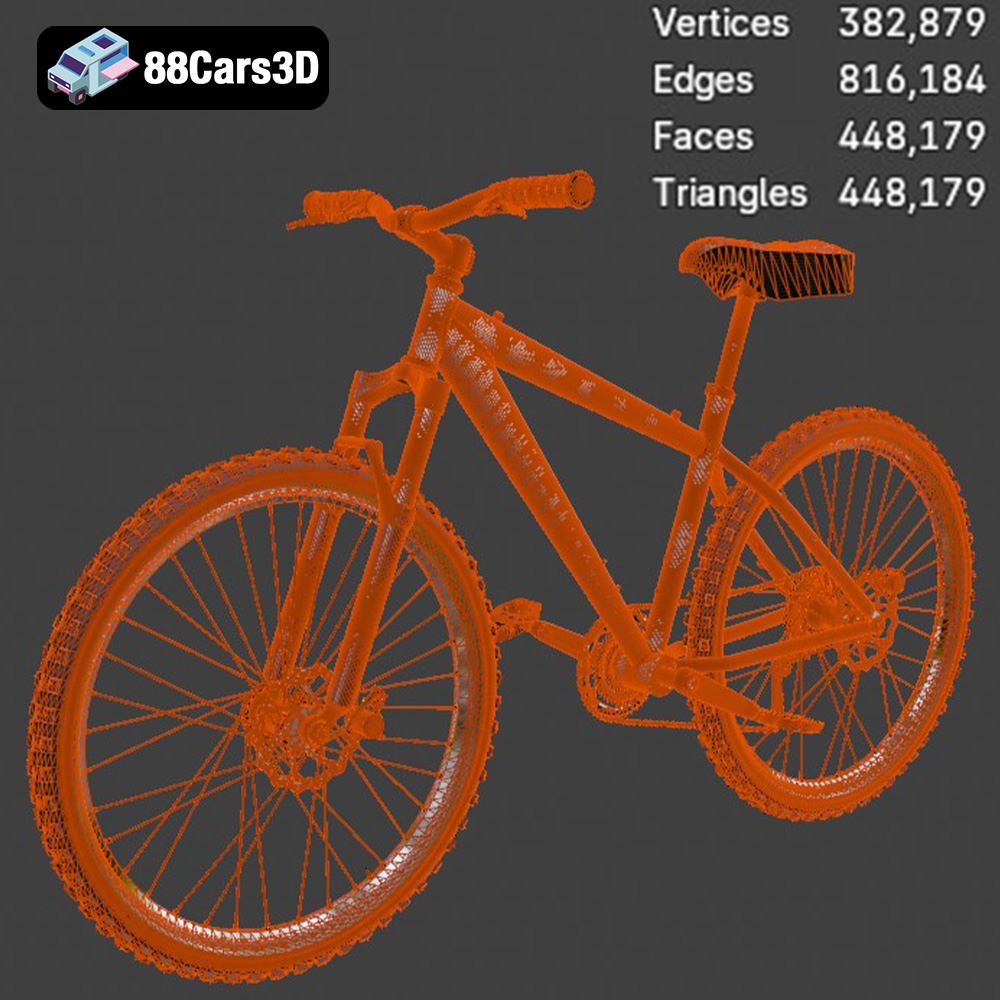
The product description highlights “clean, quad-dominant topology.” This is not merely an aesthetic choice; it is a fundamental technical requirement for professional rendering. Quads (four-sided polygons) allow for predictable and smooth subdivision. If an artist needs an extremely close-up shot of the handlebar grip or the reflective surface of the frame, they can easily apply a subdivision surface modifier (like Turbosmooth in Max or Subdivision Surface in Blender) without introducing unsightly pinching, artifacts, or unwanted creases. This capability ensures the model is scalable, performing efficiently at distance, but capable of hyper-realism up close.
Lighting Studies and Environmental Integration
In automotive rendering, integrating a vehicle realistically involves complex HDRI (High Dynamic Range Imaging) lighting setups. When incorporating the bicycle model into a similar scene—perhaps leaning against a detailed 3D car model—the asset’s realistic scale and material response are essential. Artists can use ray tracing to demonstrate how light reflects off the metallic spokes and how shadows are accurately cast beneath the chain mechanism. The organized hierarchy, with separate components, also allows artists to isolate specific parts for material overrides or localized lighting effects, such as adding a subtle glint to the braking cables.
Integrating High-Quality Game Assets into Real-Time Engines
The demands of real-time rendering, particularly in game development (Unity or Unreal Engine), shift the technical priority from absolute polygon count to optimized performance, efficient draw calls, and accurate physics representation. The Bicycle 3D Model is structured as a robust game asset ready for deployment.
Optimization and Level of Detail (LODs)
While the initial mesh might be high-poly for cinematic use, professional integration requires a Level of Detail (LOD) strategy. The clean topology facilitates easy LOD generation (e.g., using Blender’s Decimate modifier or Unreal’s automatic LOD system). By having a pre-configured .unreal format, developers benefit from pre-optimized mesh groupings and reduced material complexity, minimizing the risk of performance bottlenecks. A high-quality LOD0 can be used for close proximity, while a highly reduced LOD3 (with perhaps 10-15% of the original poly count) maintains visual integrity at a distance, ensuring smooth frame rates in dense open-world environments.
Rigging, Pivot Points, and Interactive Elements
The model’s functional hierarchy is critical for interactivity. The description notes “proper pivot points for animation and rigging.” This means the wheels pivot exactly on their central axes, the handlebars pivot correctly for steering, and the pedals have the necessary offsets for a realistic pedaling animation loop. For a game environment, these pre-set pivots allow developers to quickly attach physics constraints and animation blueprints, reducing setup time dramatically. The detailed internal features, such as the separated chain and sprockets, can also be rigged dynamically to respond to wheel rotation, enhancing immersion in driving or cycling simulations.
Collision and Physics Representation
In Unreal or Unity, every object that interacts with the player or the environment requires a collision mesh. Using the .fbx or .unreal import, the developer can generate complex collision geometry (often simplified convex hulls). Since the bicycle mesh is clean and built to real-world scale, generating accurate and efficient collision geometry is straightforward, preventing physics glitches when the asset is placed against a wall, or used in a ragdoll simulation.
Technical Deep Dive: Topology, Rigging, and Component Separation
The true measure of a technical 3D model lies hidden beneath the textures. The commitment to engineering accuracy ensures that the model is flexible for technical modifications, prototyping, and complex animation sequences.
Mechanical Fidelity: The Drive Train
One of the hardest elements to model convincingly is the mechanical action of a bicycle’s drive train. This model includes a detailed chain, sprockets, and a visible derailleur system. In contrast to lower-quality models where the chain might be a static texture or a single mesh, the physical separation of these components allows for:
- Procedural Animation: The chain links can be animated along a path constraint, driven by the rotation of the main sprocket, ensuring mathematically accurate movement.
- Simulation Accuracy: For training or engineering simulations, the visible mechanics provide the necessary visual feedback that reinforces the educational or analytical purpose of the project.
- Close-Up Detailing: The visible brake calipers and cables add layers of realism that satisfy high-resolution rendering demands, crucial for product visualization or marketing material that needs to highlight precision engineering.
Scalability and Customization Options
Professional assets must be adaptable. The ability to “easily modify frame colors, tire sidewall colors, and handlebar grips” is a direct result of well-defined material IDs and smart UV mapping. If an architectural visualization project requires 15 bicycles with 15 different corporate color schemes, the artist can iterate rapidly by simply adjusting color parameters within the PBR shader, rather than repainting and re-baking textures.
Furthermore, the accurate real-world scale ensures immediate integration. There is no need for time-consuming scale adjustments or alignment, which is often a hidden time sink when combining assets from various sources, such as placing this bicycle next to a high-precision 3D car models procured from the 88cars3d.com catalog.
Beyond the Screen: Leveraging the Model for AR/VR and 3D Printing
Modern visualization extends beyond the confines of the desktop monitor. Augmented reality, virtual reality, and physical prototyping present unique technical challenges that specialized formats are designed to overcome.
AR/VR Deployment with .glb
The inclusion of the .glb (glTF binary) format is essential for any forward-looking professional. AR/VR applications demand ultra-fast load times and standardized material representation. Whether deploying the bicycle model in an interactive virtual showroom or placing it virtually onto a construction site via an iPad (AR), the .glb file ensures efficiency. Its compact size and optimized mesh reduce latency, guaranteeing a smooth, responsive, and immersive experience without significant hardware drain.
Prototyping and Physical Production via .stl
While the model is designed for digital environments, its clean construction makes it an excellent candidate for 3D printing. The .stl format allows engineers and designers to quickly move from digital concept to physical prototype. For instance, a designer might use the model to print scale representations for a planning presentation or to prototype custom accessories. The focus on clean, watertight geometry prevents errors during slicing, ensuring a successful physical output.
The Future of Digital Assets: Why Precision Models Drive Project Success
The modern digital production landscape demands efficiency, technical integrity, and cross-platform compatibility. Specialized marketplaces like 88cars3d.com exist because general asset libraries often fail to meet the stringent technical requirements of professional studios—especially when dealing with complex objects like vehicles, whether motorized or human-powered.
The Bicycle 3D Model exemplifies this technical excellence. Its native format flexibility (from .max and .blend for rendering to .fbx and .unreal for real-time), combined with its detailed internal mechanics and quad-dominant topology, minimizes pipeline friction and maximizes creative freedom. Investing in such meticulously constructed game assets or visualization tools ensures that valuable production time is spent on artistic direction, lighting, and animation, rather than repairing broken geometry or incompatible file structures.
For studios aiming to deliver hyper-realistic scenes, integrate reliable game assets into simulations, or enhance their automotive rendering projects with perfectly scaled contextual elements, the technical quality embedded in this model is indispensable. It represents a streamlined pathway to delivering projects on time and above client expectations.
Featured 3D Model
Bicycle 3D Model
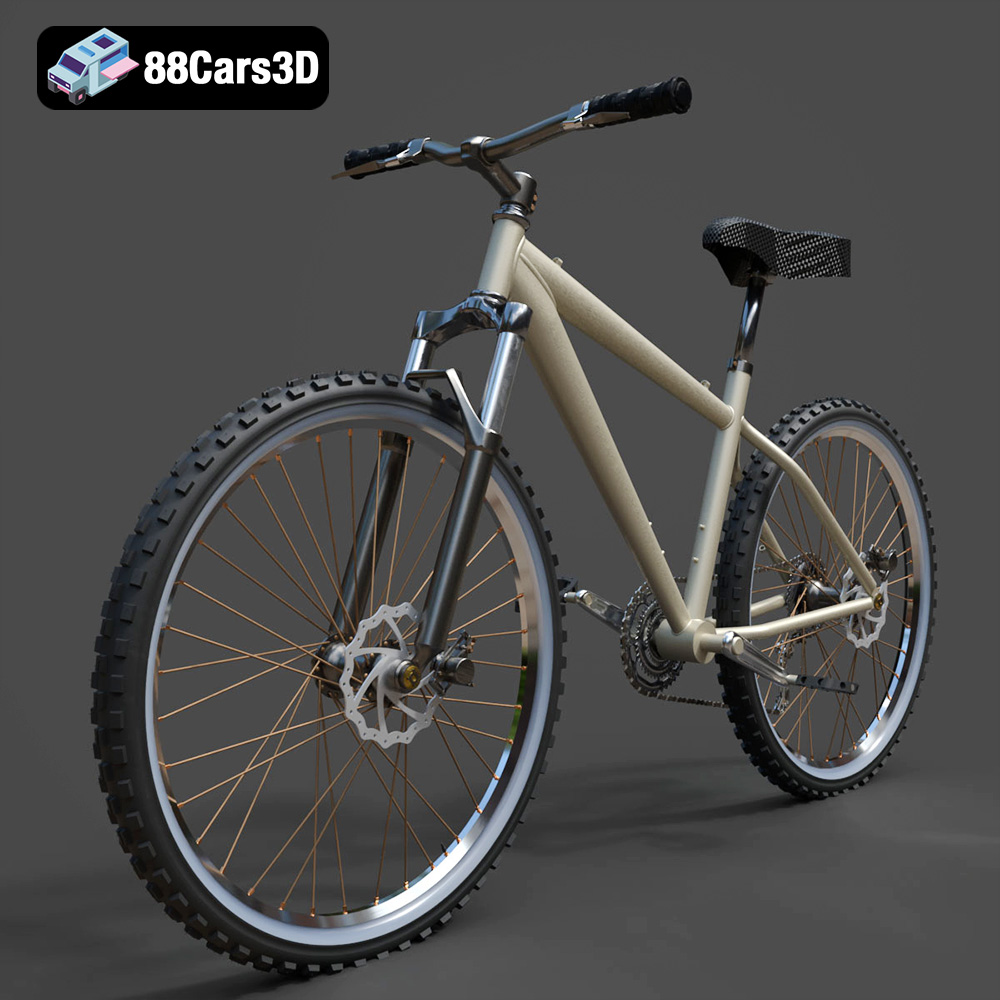
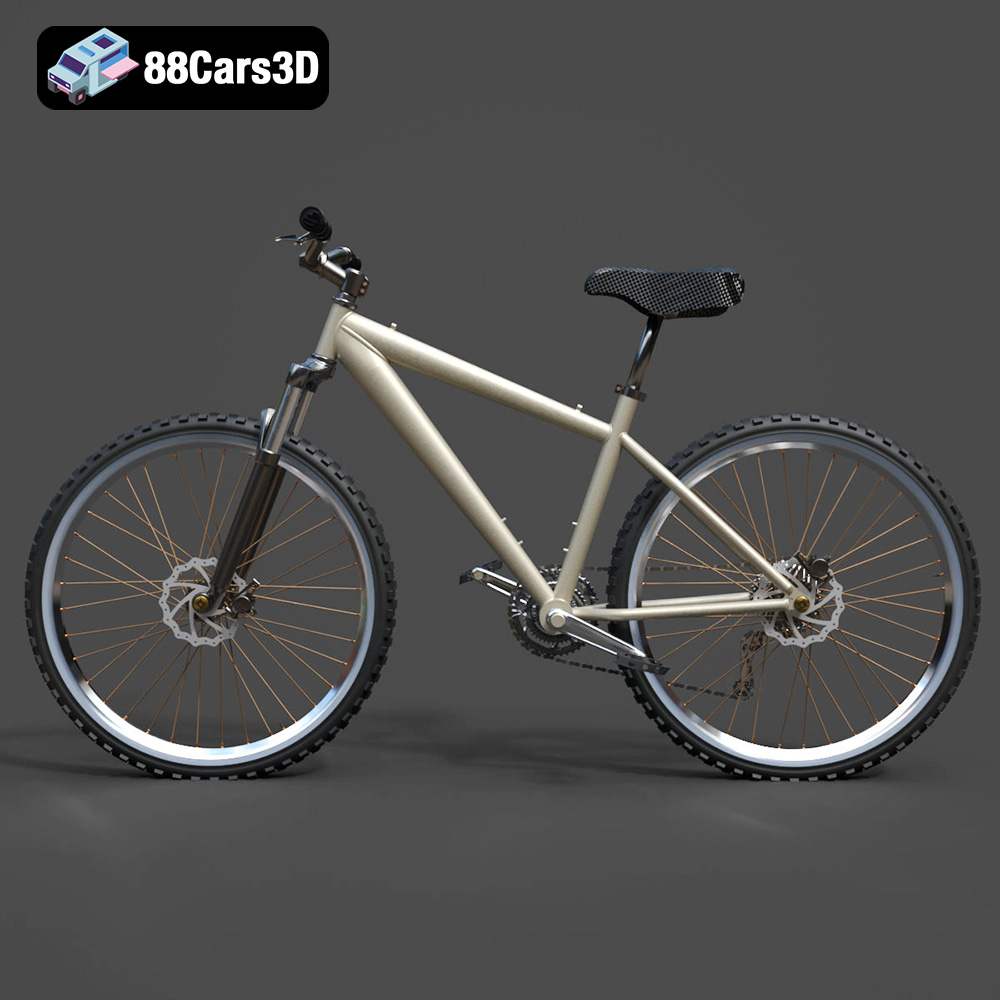
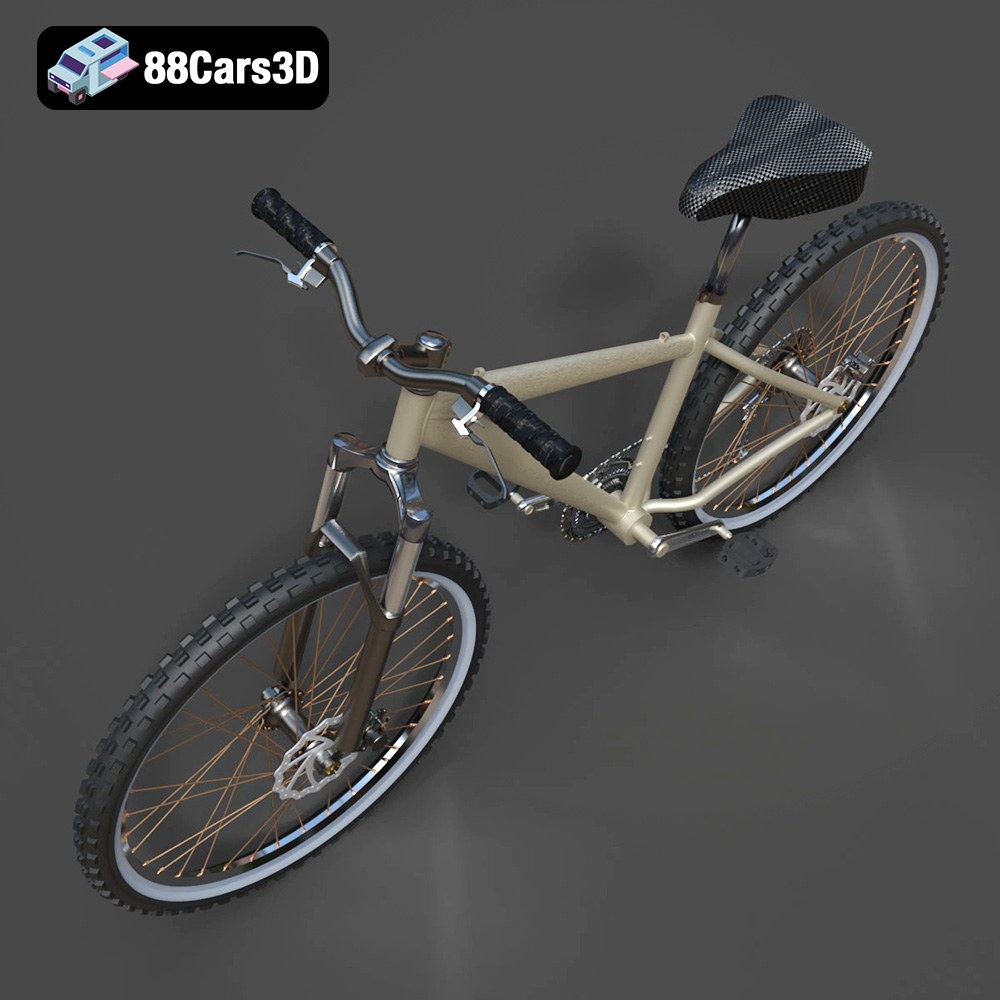
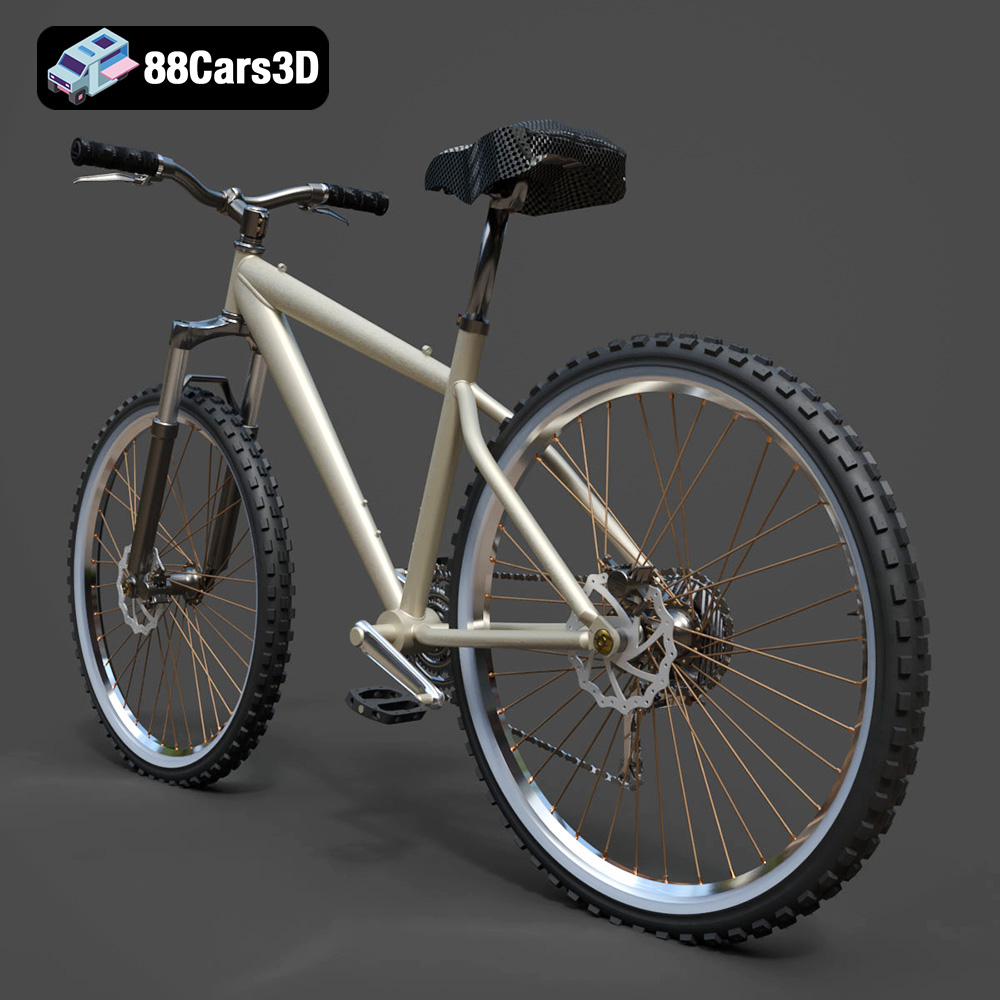
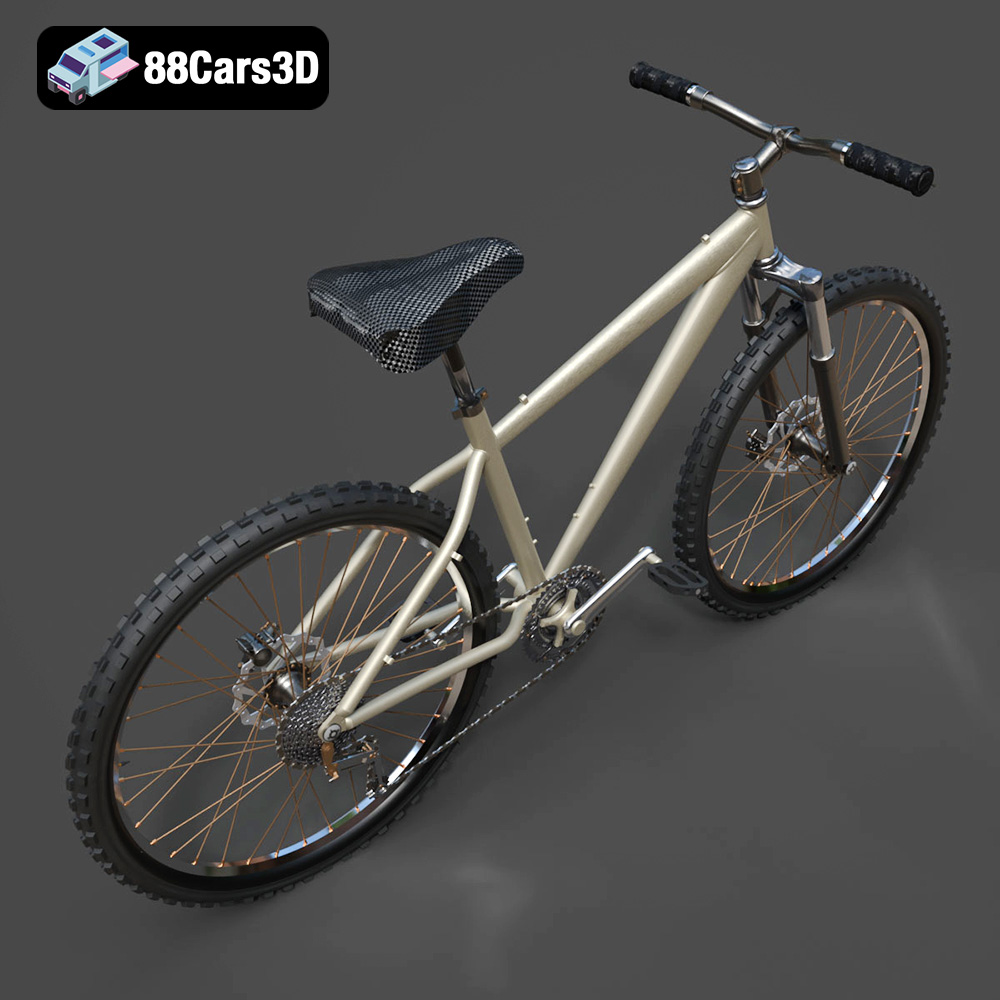
Presenting a meticulously crafted 3D model of a modern bicycle, designed for versatility and realism. This model captures the essential form and intricate details of a standard two-wheeler, making it perfect for a wide array of digital projects. Built with clean geometry and a balanced level of detail, it ensures optimal performance and visual fidelity. This asset is ideal for high-quality rendering, animations, detailed simulations, and seamless integration into game development environments.
$19.99
Product Image Gallery
Related Tags
.arvr
.bicycle
.bike
.blend
.fbx
.gameasset
.glb
.max
.obj
.ply
.rendering
.simulation
.stl
.transport
.unreal
