

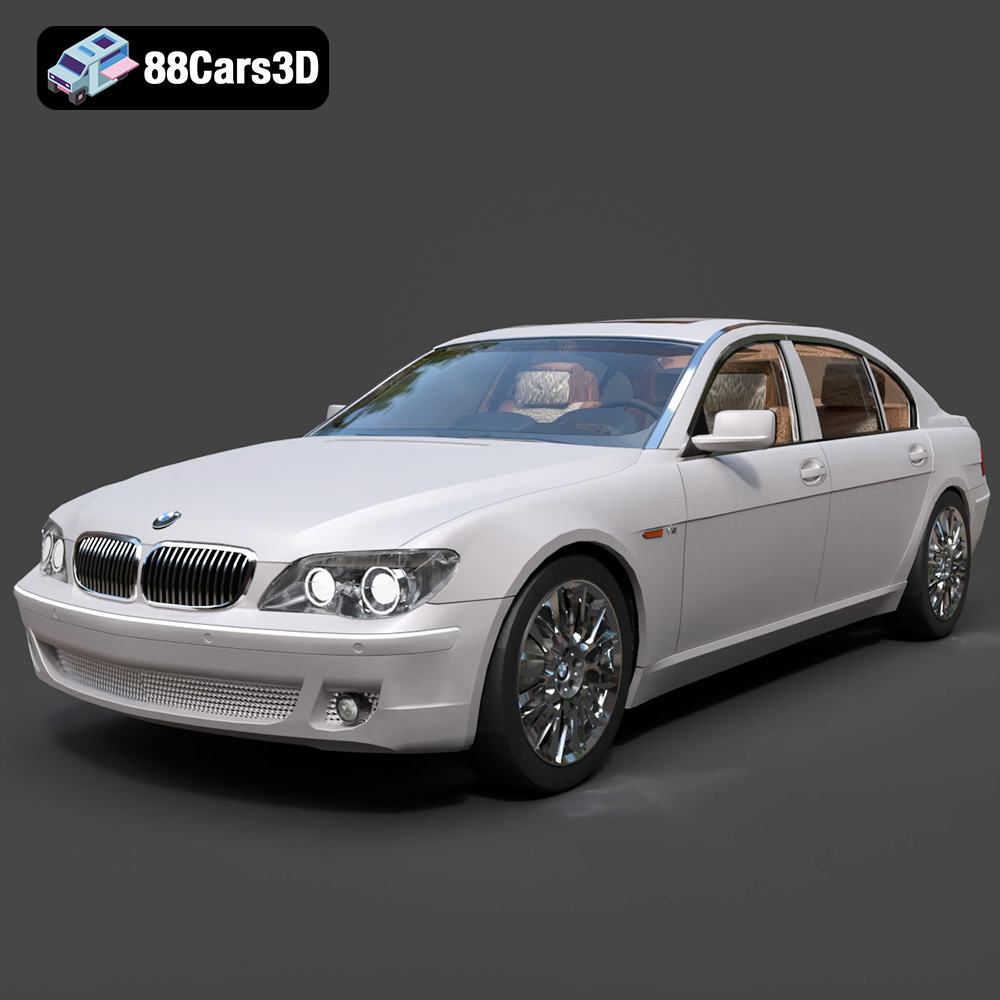
The pursuit of photorealism in visualization, cinematic production, and high-fidelity simulation hinges on the quality of source assets. When dealing with complex subjects like modern vehicles, precision is paramount. Generic or poorly optimized meshes simply cannot deliver the visual accuracy required for professional automotive rendering. Today, we delve into the technical requirements for creating and utilizing high-end 3D car models, using a particularly demanding example: the meticulously crafted BMW 760Li E66 2005 3D Model.
This model, available through platforms like 88cars3d.com, represents the gold standard for asset production—balancing geometrical complexity necessary for smooth curves with optimization required for real-time performance. Integrating such an asset into diverse workflows, from architectural visualization using 3ds Max to creating immersive environments in Unreal Engine, demands a deep understanding of mesh topology, material pipelines, and crucial file format dependencies. The featured BMW 760Li E66 model, iconic for its distinctive styling and complex panel lines, provides the perfect case study for mastering professional asset deployment.
Understanding 3D Model File Formats: The Backbone of Cross-Platform Projects
A professional-grade 3D car model is not just a single mesh; it is a carefully assembled data package designed for versatility. The ability to seamlessly transfer a detailed asset like the BMW 760Li E66 between various software packages—from modeling suites to game engines—is wholly dependent on selecting and preparing the correct file format. Each format serves a distinct purpose in the professional pipeline, managing everything from basic geometry to complex material definitions and rigging data.
.blend – Native Blender Environment
The .blend file is the native format for Blender, a dominant tool in the modern 3D landscape. For artists using the Cycles or Eevee rendering engines, the .blend file provides a fully editable scene, preserving all nodal material setups, lighting configurations, modifiers, and organizational structures. Utilizing the .blend version of the BMW 760Li E66 allows for non-destructive mesh editing and easy adjustments to the vehicle’s paint, glass, and interior shaders, providing maximum artistic control within an integrated open-source environment.
.max – The 3ds Max Project Hub
For high-end architectural visualization and cinematic animation, 3ds Max (.max) remains a staple. This format preserves the entire scene hierarchy, camera setups, animation keyframes, and, crucially, renderer-specific material definitions (like V-Ray or Corona shaders). The included .max file for the 760Li E66 ensures that developers who rely on established rendering farm workflows can access an asset with pivot points and geometry already prepared for complex driving animations.
.fbx – The Universal Pipeline Workhorse
The Filmbox (.fbx) format is arguably the most critical for asset portability. It is the industry standard for transferring 3D data into real-time environments like Unreal Engine and Unity. The power of .fbx lies in its ability to carry mesh geometry, UV mapping, material slot definitions, bones/rigging data, and animation curves all in one package. When preparing the BMW 760Li E66 as a game asset, the .fbx is meticulously exported to ensure scale accuracy, proper smoothing groups, and correct axis orientation for immediate engine integration.
.obj – Cross-Software Compatibility
The Wavefront Object (.obj) format serves as a robust, universal fallback. While it is excellent for transferring geometry and UV coordinates across disparate software platforms (e.g., from ZBrush to Maya), it typically does not store advanced information like rigging, animation data, or complex procedural materials. It’s ideal for artists needing the raw, clean mesh data of the 760Li E66 for retopology, conversion, or specialized mesh manipulation tasks.
.unreal – Engine-Ready Deployment
Specifically designed for high-efficiency, the .unreal format delivers the asset pre-packaged and configured within an Unreal Engine project structure. This is a massive time-saver for game developers, as it bypasses manual import settings, material instance creation, and initial scaling adjustments. A pre-configured .unreal file for the BMW 760Li E66 often includes pre-built Level of Detail (LOD) meshes and basic lightmap UVs, significantly accelerating the pipeline for interactive experiences.
.glb – Optimized for AR and Web Display
The GL Transmission Format (.glb) is an increasingly vital component for modern visualization, especially in Augmented Reality (AR), Virtual Reality (VR), and browser-based viewing. It efficiently bundles geometry, textures, and PBR (Physically Based Rendering) materials into a single, highly compressed binary file. The .glb version of the 760Li E66 ensures quick loading times and reliable appearance across different devices, crucial for product showcases and interactive marketing.
.stl and .ply – The Physical and Analytical Bridges
The StereoLithography (.stl) format is the standard language for 3D printing. It represents the mesh geometry entirely through triangulated surfaces. For artists wishing to produce a physical replica of the BMW 760Li E66, the .stl file ensures the model is manifold (watertight) and ready for slicing software. Conversely, the Polygon File Format (.ply) is often used for high-precision mesh data, frequently originating from 3D scanning or utilized in CAD and computational analysis workflows where accurate vertex and face data is critical.
Geometry and Topology: The Foundation of Professional Automotive Rendering
The visual quality of a vehicle render is intrinsically tied to its underlying geometry. Luxury cars, characterized by subtle curves and high-gloss surfaces, expose any flaws in topology instantly. The BMW 760Li E66 3D Model excels because it adheres to strict technical standards that guarantee smooth results, even under extreme close-ups or high-subdivision rendering.
The Critical Role of Quad-Dominant Topology
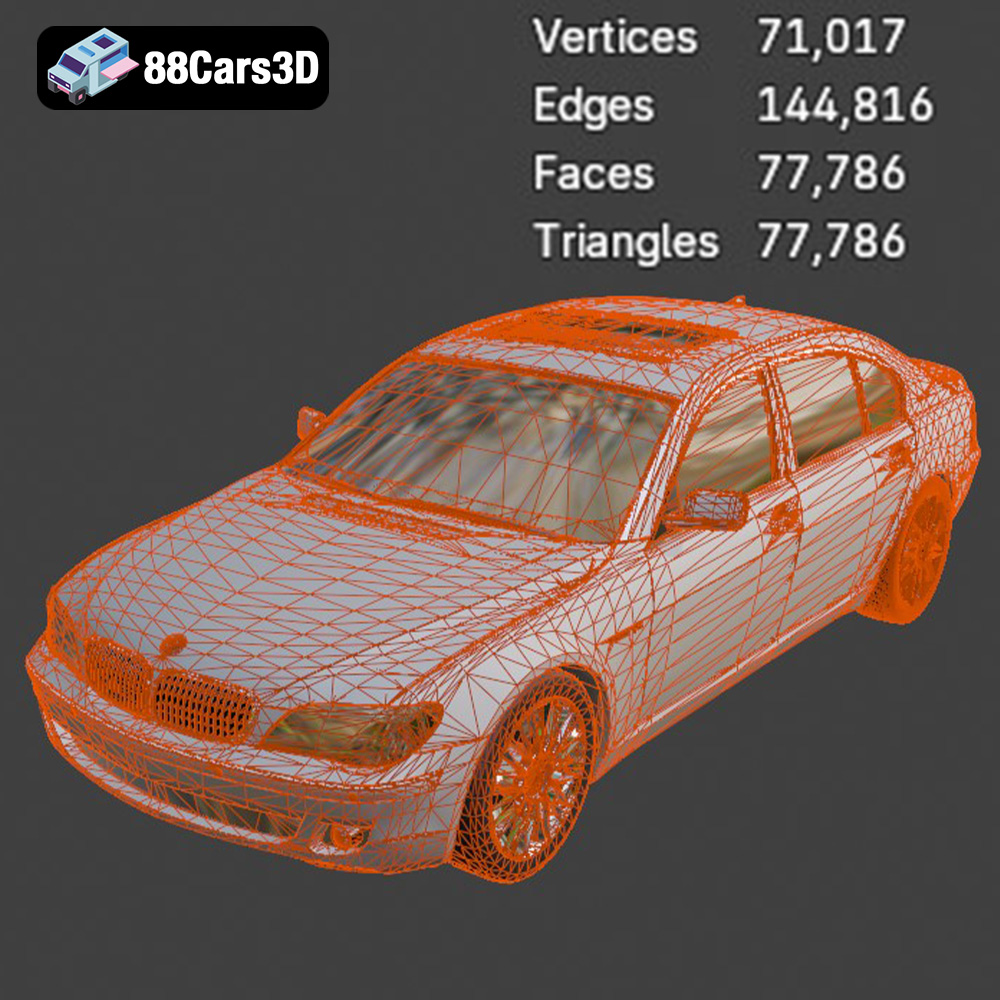
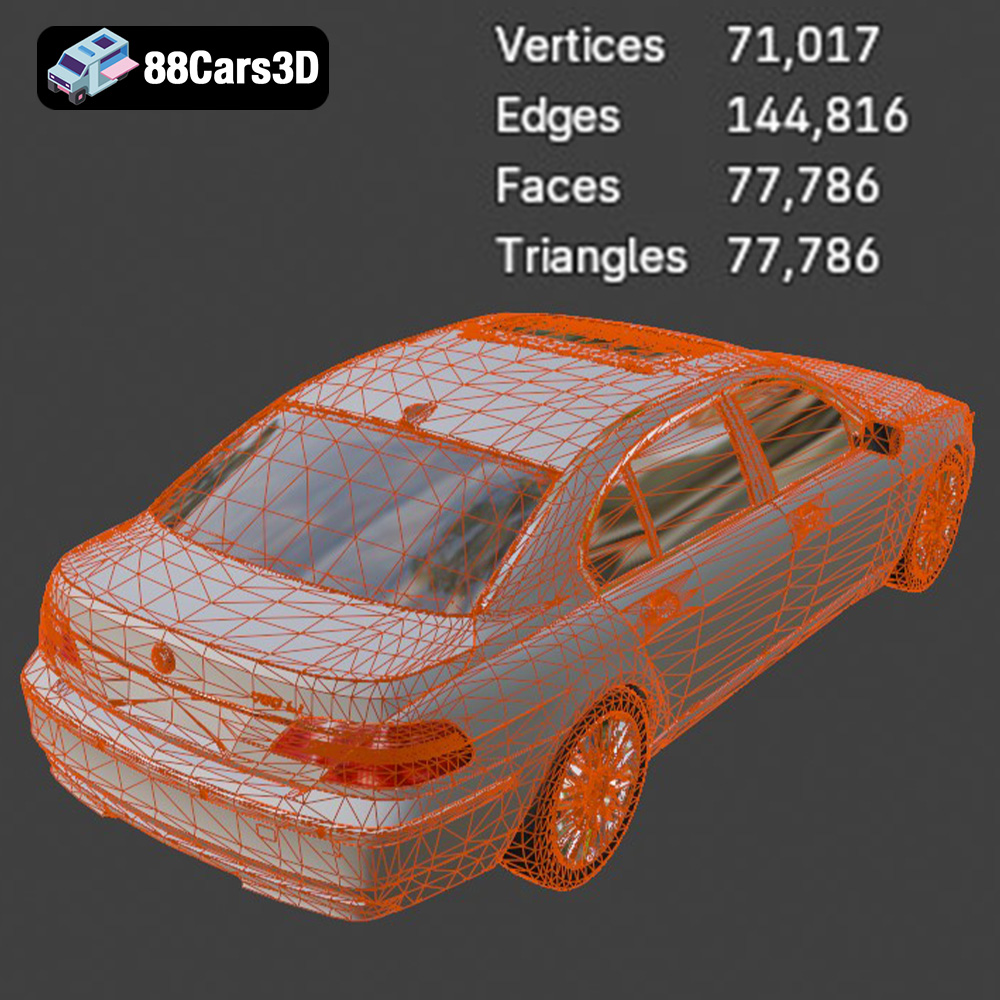
A professional 3D car model must maintain quad-dominant topology. This means the vast majority of faces are four-sided. Why is this critical? When using subdivision surface modifiers (like TurboSmooth in 3ds Max or Subdivision Surface in Blender), quads allow the mesh to smooth uniformly, preventing pinches, ripples, and undesirable artifacts along curvature transitions. The E66 model, with its distinct ‘flame surfacing’ design elements, demands this clean structure to maintain the integrity of its complex body panels.
Real-World Scale and Dimensional Accuracy
In visualization and simulation, scale is non-negotiable. The BMW 760Li E66 model is built to real-world scale, which is essential for two main reasons. First, it ensures the vehicle integrates seamlessly into architectural visualizations without scaling issues. Second, many modern rendering engines (especially those utilizing physically based camera models and lighting) rely on accurate object dimensions to calculate realistic light falloff, depth of field, and material reflections.
Detail Mapping and Component Separation
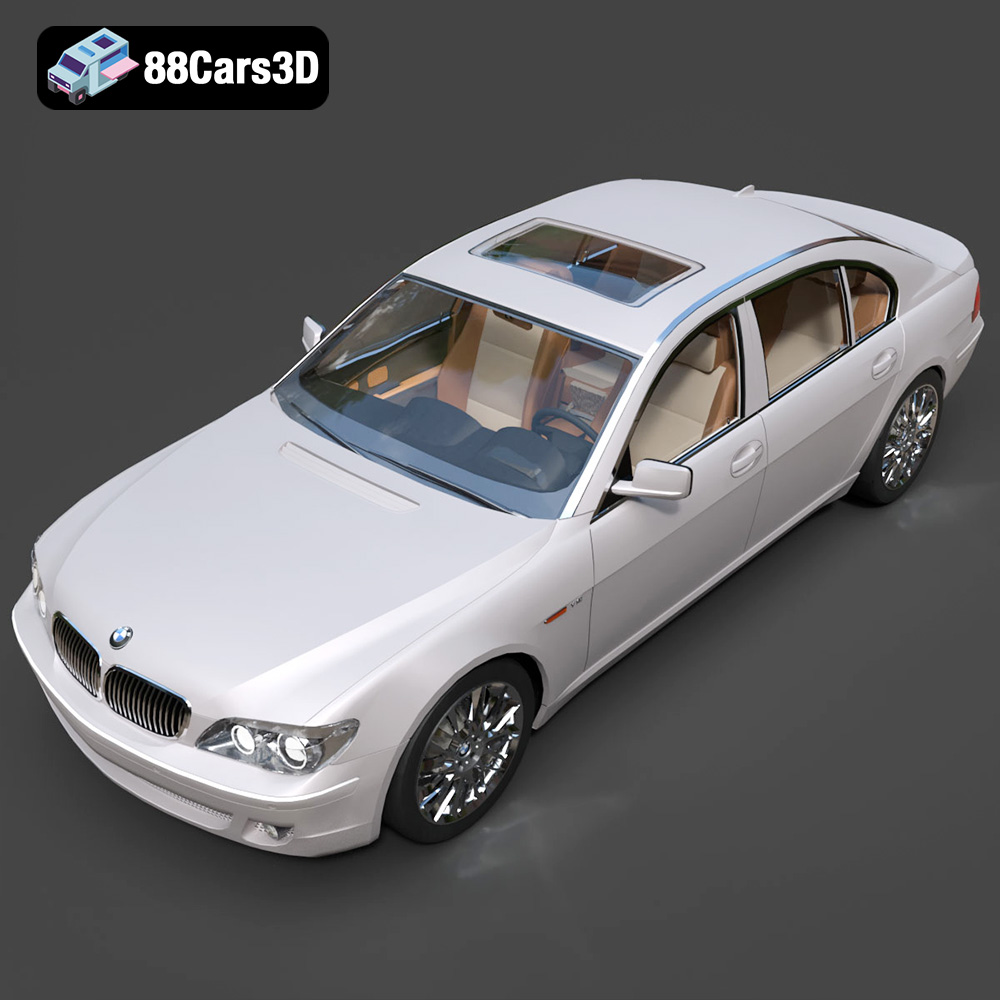
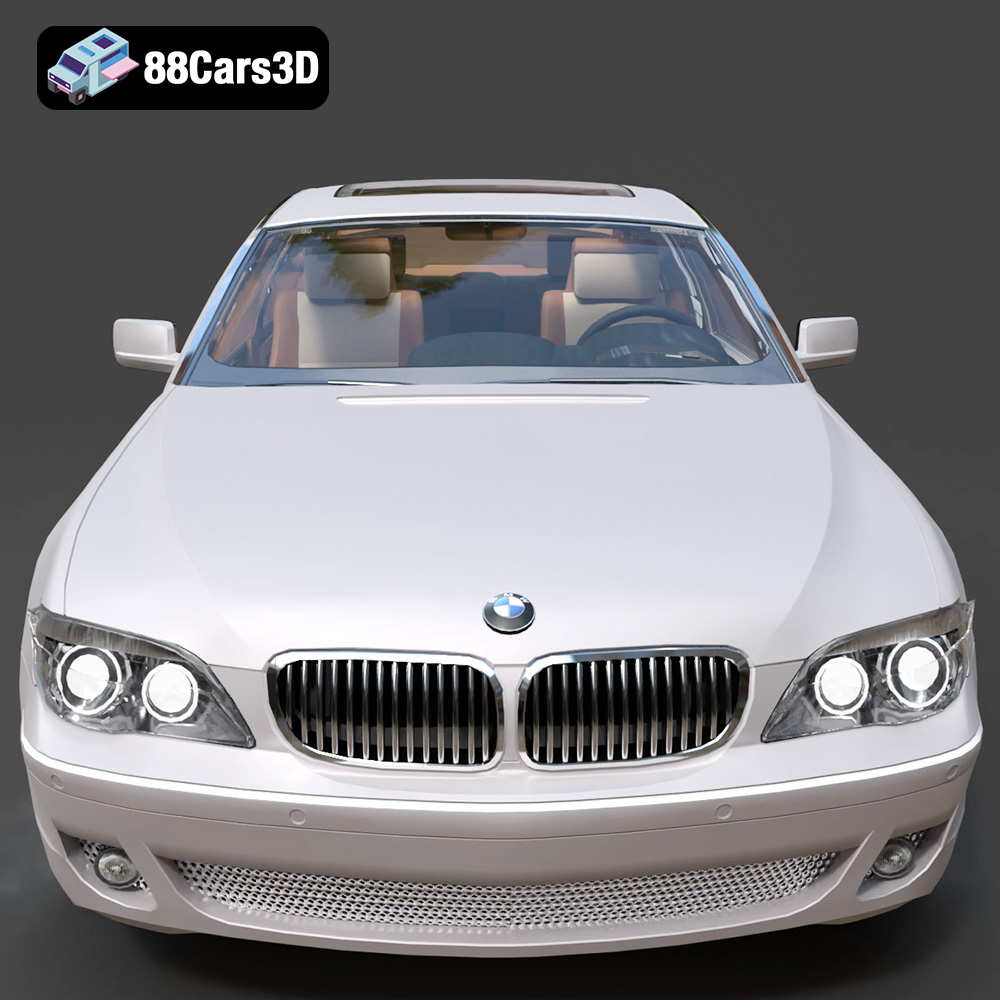
High-quality assets must manage complexity efficiently. This model features separated components—doors, hood, trunk, and wheels—which are necessary for rigging and animation. Furthermore, crucial details like headlamp reflectors, tail lights, and the kidney grille are modeled explicitly, not just textured. This geometric detail captures light and reflects the environment accurately, moving the final result beyond mere realism into the realm of photorealism. The meticulous interior, including detailed dashboard and center console, adds weight to scenes requiring interior views or driving simulations.
Integration into Real-Time Engines: Preparing Game Assets for Unreal and Unity
The demand for high-quality vehicle game assets has exploded, driven by photorealistic racing simulations and vast open-world environments. Integrating a detailed model like the BMW 760Li E66 into Unreal Engine or Unity requires specific preparation steps that transition the static high-poly model into an optimized, animated real-time object.
Optimizing Mesh Density and LOD Creation
While the initial mesh used for cinematic rendering is high-density to capture every nuance of the bodywork, real-time performance dictates the necessity of Level of Detail (LOD) meshes. A professional asset, especially one provided in the engine-ready .fbx or .unreal formats, must include simplified versions (LOD1, LOD2, LOD3) that automatically switch out as the camera distance increases. This technique drastically reduces the polygon count when the car is far away, preserving frame rates without compromising visual integrity up close. Managing poly budgets is a critical skill for any environment artist using models from 88cars3d.com.
UV Mapping for Textures and Lightmaps
In game environments, vehicles often require dual UV sets. The first UV channel is dedicated to material textures (paint, chrome, rubber). The second UV channel is mandatory for static lighting and shadow caching, known as lightmaps. The BMW 760Li E66 model, when properly optimized, includes clean, non-overlapping lightmap UVs across all major components, ensuring that static shadows baked into the scene are accurate and artifact-free, enhancing the realism of the vehicle within the environment.
Rigging and Physics Setup for Interactive Experiences
To truly function as a vehicle in a driving game, the 3D model must be rigged. This involves establishing pivot points for the wheels, doors, steering wheel, and suspension components. The organization and proper pivot placement detailed in the 760Li E66’s technical description streamline this process. Developers can easily attach wheel colliders and physics constraints to the defined pivots, quickly moving from static asset to drivable simulation vehicle.
High-Fidelity Rendering Pipelines: Achieving Photorealism in 3ds Max and Blender
The ultimate goal for many visualization artists is the perfect studio render or cinematic sequence. Utilizing the highest quality data from the BMW 760Li E66 model requires leveraging the advanced capabilities of production renderers like V-Ray, Corona, and Cycles.
Mastering Car Paint Shaders
Achieving realistic automotive rendering relies heavily on the complexity of the car paint shader. It is not a simple diffuse color; it is a multi-layered material requiring accurate Fresnel reflections, metallic flake maps, and a clear coat layer that handles subtle imperfections and environmental reflections. Whether working in 3ds Max with V-Ray or Blender with Cycles, artists must utilize physically based materials (PBR) workflows to accurately recreate the deep, glossy finish characteristic of a premium BMW sedan.
The Art of Environmental Lighting
No high-quality 3D car model looks convincing without proper lighting. Professional workflows often involve HDRI (High Dynamic Range Imaging) lighting to capture the complexity of real-world illumination. In 3ds Max, setting up a Corona or V-Ray environment dome powered by a high-resolution outdoor or studio HDRI ensures that the highly reflective body panels of the E66 pick up complex, natural reflections, anchoring the vehicle convincingly in the scene. Adjusting the paint finish, metal roughness, and glass transparency in conjunction with accurate lighting is the key to creating award-winning automotive imagery.
Interior Detailing and Close-Up Visualization
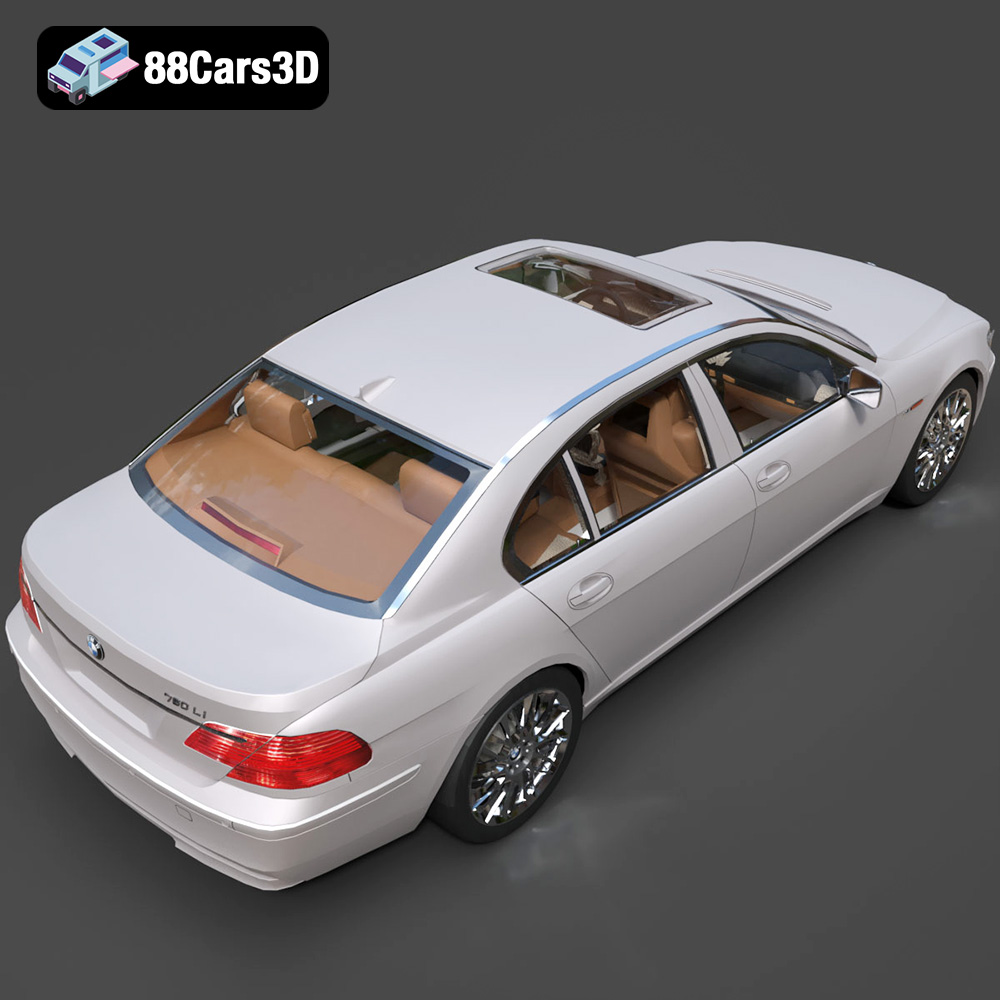
For cinematic shots or marketing materials, the quality of the interior becomes paramount. The description notes a faithful recreation of the luxurious interior. This level of detail supports demanding close-up shots of the dashboard, leather seats, and intricate control clusters. Artists must utilize specific shaders for stitching, detailed normal maps for leather grain, and subtle subsurface scattering for components like the steering wheel to convey tactile realism. This meticulous attention to interior detail is what separates a standard asset from a truly professional visualization piece.
Beyond Visualization: Simulation, AR/VR, and Physical Output
The versatility of a well-structured asset extends far beyond marketing renders. The technical specifications of the BMW 760Li E66 3D model make it uniquely suited for specialized, high-demand applications, proving its value across the digital visualization spectrum.
Driving Simulation and Training Modules
Driving simulators, whether for professional training or consumer entertainment, require models that are dimensionally accurate and topologically sound. The real-world scale accuracy and clean hierarchy of the E66 model allow engineering teams to import the asset and seamlessly integrate it with complex vehicle dynamics software. Accurate pivot points ensure that telemetry data for steering and suspension translates precisely to the 3D representation, minimizing visual latency and maximizing realism.
Optimizing for Immersive AR/VR Experiences
The transition of 3D car models into immersive environments—like VR showrooms or AR product overlays—demands extreme optimization. While the .fbx is often used, the .glb format becomes the choice for deployment. AR/VR platforms require low draw calls and highly efficient geometry, utilizing the PBR material data contained within the .glb structure. This allows clients or consumers to interact with a high-detail model of the BMW 760Li E66 on their mobile devices or headsets without significant performance lag.
Converting for High-Quality 3D Printing
For designers who need physical prototypes or collectible models, the integrated .stl format is essential. While a high-poly render model may require preparation (scaling and hollowing), the .stl version ensures that the mesh geometry is correctly defined for additive manufacturing. This capability allows visualization projects to bridge the gap between digital asset creation and tangible physical output, creating high-quality, scaled replicas of the classic BMW sedan.
Conclusion: The Professional Advantage of High-Fidelity 3D Car Models
In the competitive fields of automotive rendering, game development, and advanced visualization, asset quality dictates project success. Utilizing professional, meticulously built assets like the BMW 760Li E66 2005 3D Model provides a critical advantage, significantly reducing production time while ensuring technical stability and visual excellence across all platforms.
The versatility demonstrated through the comprehensive file format support—from editable native files (.max, .blend) to specialized outputs (.unreal, .glb, .stl)—ensures that this single investment can serve purposes ranging from photorealistic studio renders to demanding real-time simulations. When searching for reliable, geometrically precise 3D car models that meet stringent professional standards, resources like 88cars3d.com offer the assurance of quality necessary for serious digital production.
Investing in assets built with clean, quad-dominant topology, real-world scale, and organized hierarchies, as exemplified by the E66, guarantees that artists can focus on creativity and final polish rather than wrestling with messy geometry or incompatible file types. This model stands as a testament to the level of technical detail required to accurately capture the complexity and luxury of an iconic vehicle.
Featured 3D Model
BMW 760Li E66 2005 3D Model
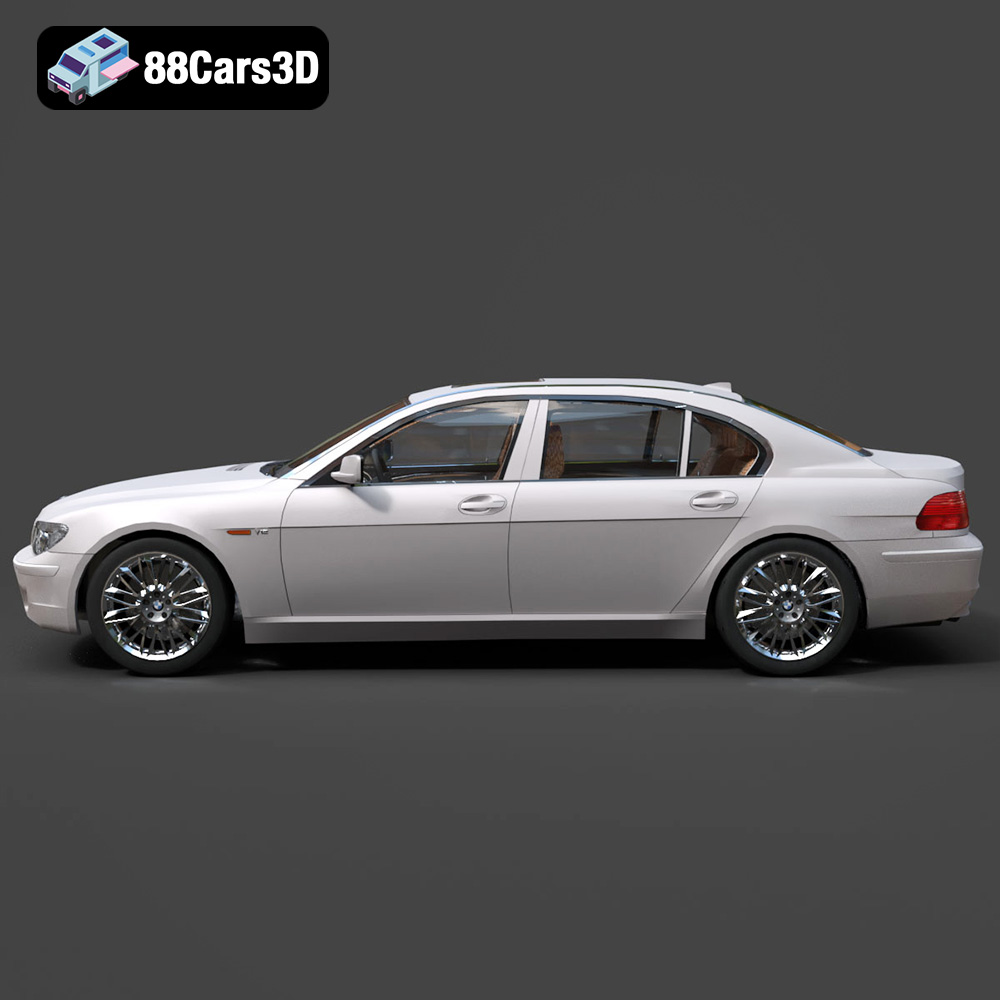
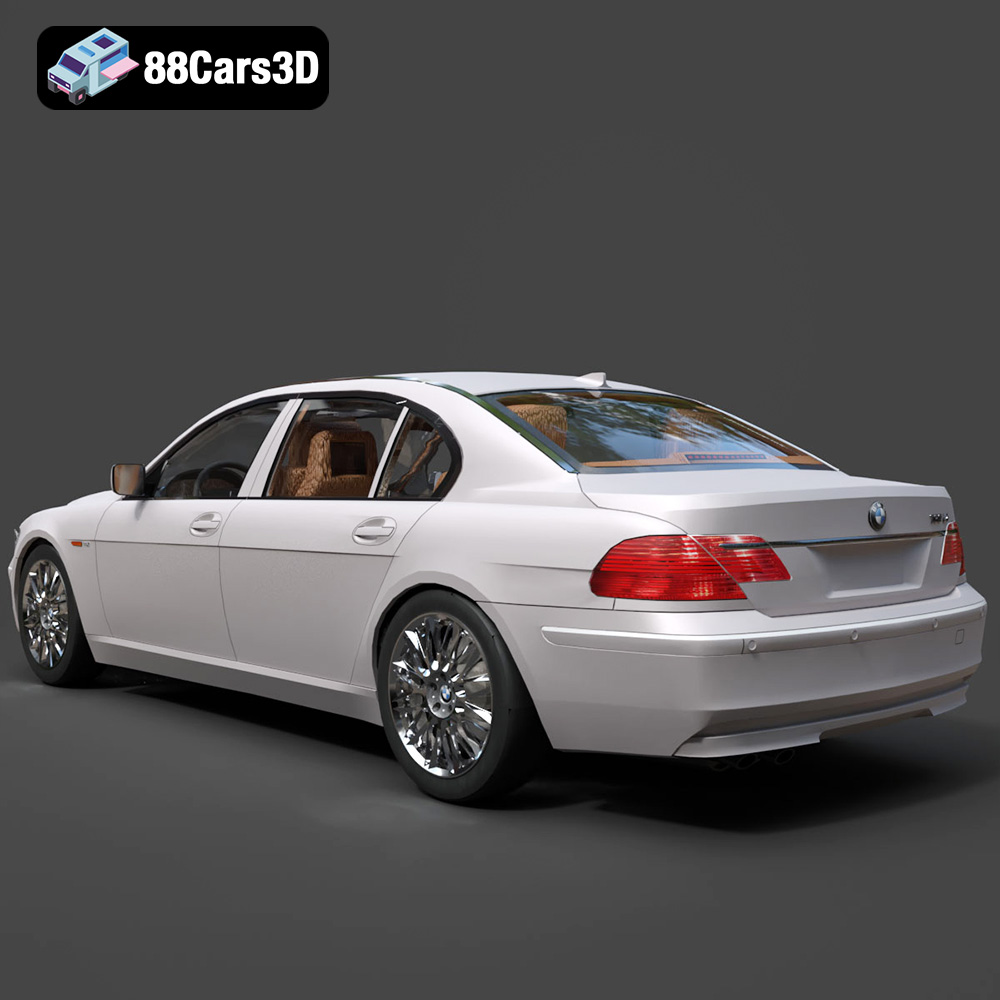
Presenting a meticulously crafted 3D model of the iconic BMW 760Li E66, representing the pinnacle of luxury and German engineering from the early 2000s. This model captures the distinctive styling and executive presence of BMW’s flagship sedan. Built with clean, optimized geometry and balanced detailing, it is engineered for high-fidelity rendering, realistic animations, comprehensive simulations, and robust integration into game development projects.
$10.79
Product Image Gallery
Related Tags
.760li
.arvr
.blend
.bmw
.e66
.executivecar
.fbx
.gameasset
.glb
.luxurycar
.max
.obj
.ply
.rendering
.sedan
.simulation
.stl
.unreal
