

The pursuit of photorealism in digital visualization demands not only powerful rendering software but also meticulously crafted base assets. In the highly specialized field of automotive visualization, quality is defined by geometry precision, realistic materials, and workflow compatibility. Professional studios, game developers, and visualization artists require 3D car models that function flawlessly across diverse pipelines—from high-resolution cinematic sequences to optimized real-time game engines.
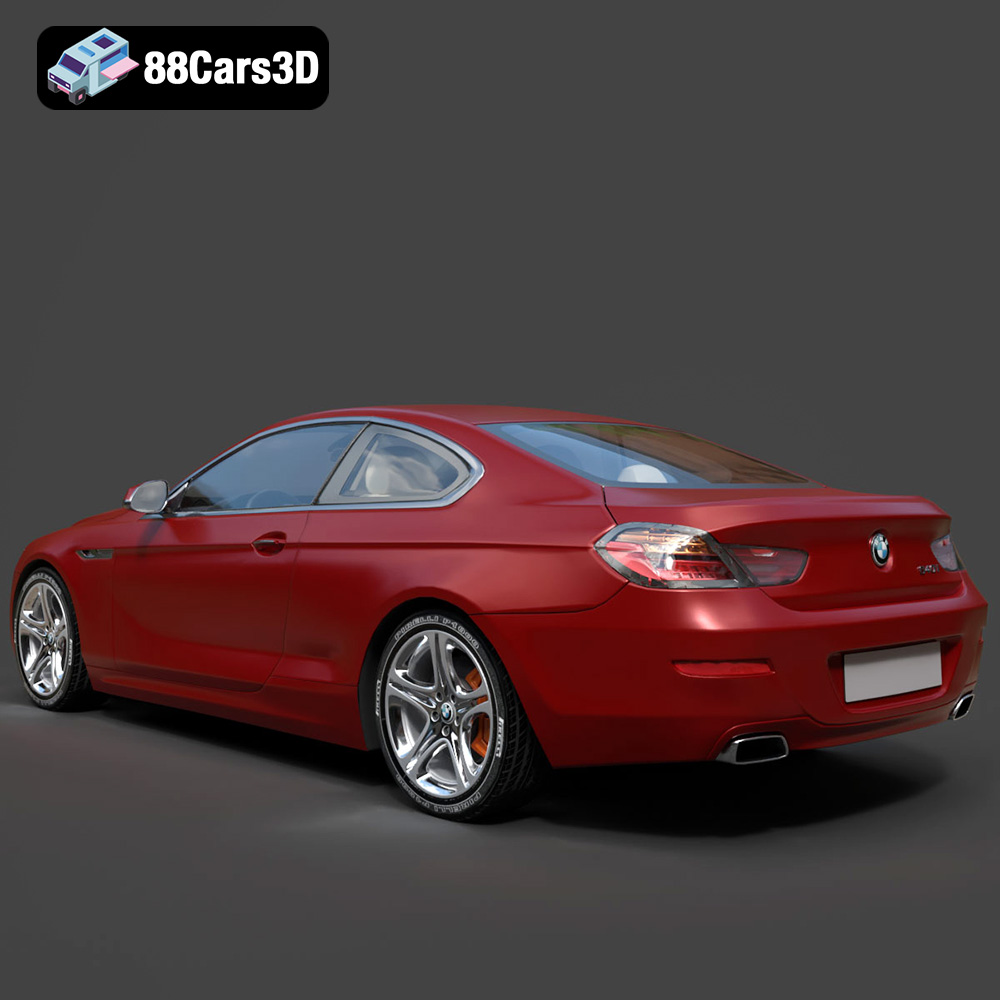
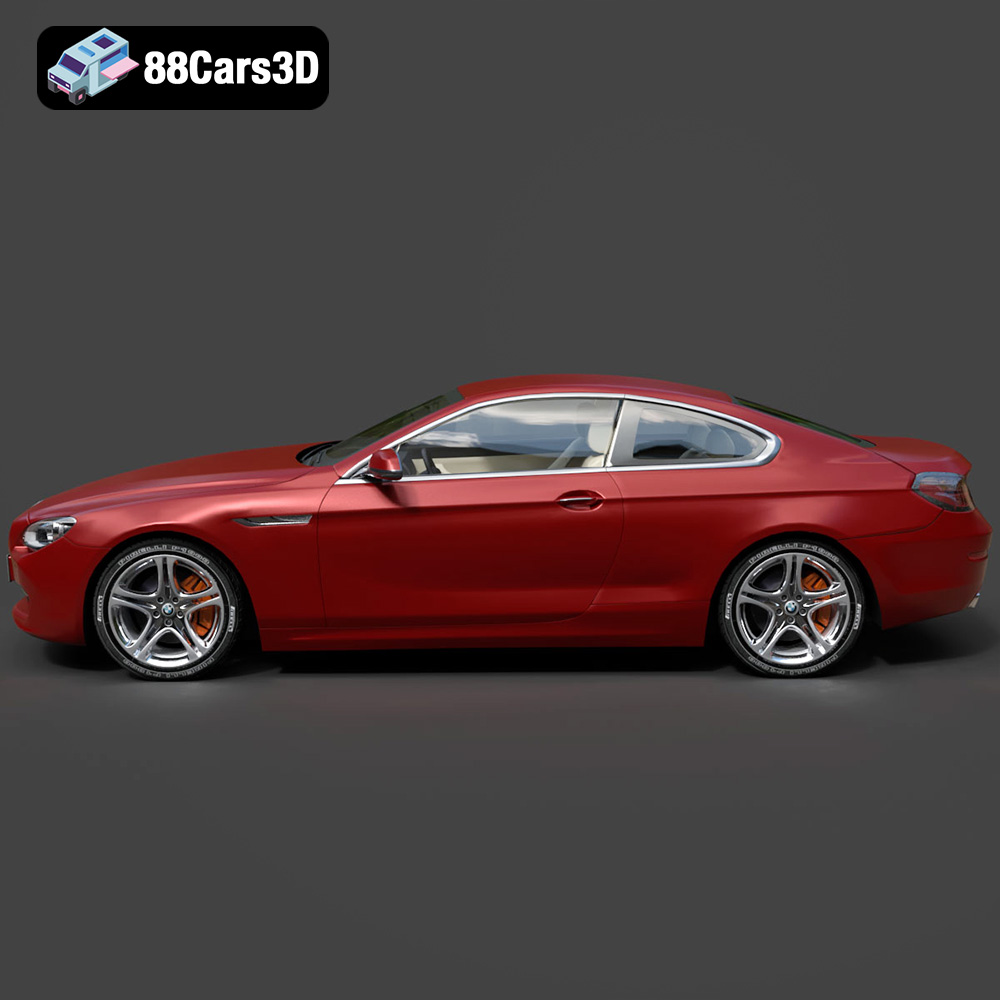
Few vehicles embody the blend of luxury engineering and sleek design as powerfully as the BMW 6 Series 640i F12. For 3D artists, replicating this complexity requires hundreds of hours of dedicated modeling. Fortunately, specialized marketplaces like 88cars3d.com offer assets, such as the high-fidelity BMW 6 Series 640i F12 3D Model, designed to meet these exacting standards right out of the box. This model is engineered not just for static renders, but for dynamic integration into professional workflows, whether your final output is an architectural visualization, a high-stakes simulation, or a demanding next-generation game environment.
This comprehensive guide delves into the technical necessities of utilizing top-tier automotive assets, examining everything from essential file formats and topology standards to advanced automotive rendering techniques and optimization strategies for game assets.
Understanding 3D Model File Formats: Choosing the Right Pipeline Asset
The versatility of a professional 3D car model is often defined by the range and quality of its included file formats. A common pitfall in project development is selecting a file type that either lacks crucial metadata or fails to translate material settings accurately across software platforms. The BMW 6 Series 640i F12 3D Model, designed for maximum professional compatibility, includes an extensive suite of formats, each serving a distinct purpose in the modern production pipeline.
The Native and Editable Formats
.max (3ds Max Project): This format is essential for users relying on the Autodesk ecosystem, particularly those focused on high-end visualization using renderers like V-Ray or Corona. The .max file preserves complex scene hierarchies, camera setups, procedural textures, modifier stacks, and lights, offering the highest degree of editability and ensuring that all components (like the separated doors and wheels of the F12) retain their pivot points and animation readiness.
.blend (Blender Project): As Blender continues its ascent in the professional space, the native .blend file provides a complete, ready-to-render scene, often pre-configured for the Cycles or Eevee rendering engines. For the BMW F12 model, this means all clean quad topology and PBR material definitions are intact, allowing immediate manipulation within the widely accessible Blender environment.
Universal Exchange and Engine-Specific Formats
.fbx (Filmbox): The industry standard for data exchange, .fbx is critical for moving geometry, skeletal data, animation, and basic materials into real-time engines like Unreal Engine and Unity, as well as animation suites like Maya and Cinema 4D. When integrating the BMW F12 into a high-performance environment, the .fbx file ensures that the organizational structure and pivot information translate robustly without loss of component separation.
.obj (Wavefront Object): This is the most universal and reliable format for cross-software compatibility. While it carries geometry (vertices, faces, normals, UVs) faithfully, it is largely agnostic to advanced material setups and rigging. It serves as a reliable backbone for importing the BMW F12 into nearly any legacy or niche 3D application where proprietary formats might fail.
.unreal (Unreal Engine Ready): For developers targeting hyper-realistic graphics, the specialized .unreal format means the asset has been pre-validated, optimized, and potentially packaged with engine-specific materials (like the required custom shaders for car paint and glass), saving significant time on import validation and optimization necessary for a high-quality game asset.
Specialty Formats for Advanced Workflows
.glb (GL Transmission Format): Optimized for the web, AR, and VR, .glb is crucial for immediate, lightweight deployment. It combines the mesh, textures, and material definitions into a single, efficient binary file, utilizing PBR standards (Metallic/Roughness). The F12 model in .glb is perfect for browser-based configurators or quick integration into mobile AR visualization projects.
.stl (Stereolithography): This format is non-negotiable for additive manufacturing. It converts the smooth, quad-based mesh of the F12 into a series of triangular facets, defining the surface geometry for 3D printing. This requires ensuring the model is “watertight” (no holes or gaps) to produce a successful physical replica.
.ply (Polygon File Format): Often used in CAD, photogrammetry, and computational analysis, .ply is a precision mesh format. It can store extensive data about the mesh structure, making it suitable for automotive design review or technical simulation environments where precise geometry measurement is paramount.
Technical Deep Dive: Topology, UV Mapping, and Scale Precision
The difference between a generic stock model and a professional asset, such as the BMW 6 Series 640i F12 3D Model available on 88cars3d.com, lies in the underlying geometry and organization. Technical artists prioritize assets that minimize cleanup and maximize flexibility.
Quad-Dominant Topology and Subdivision
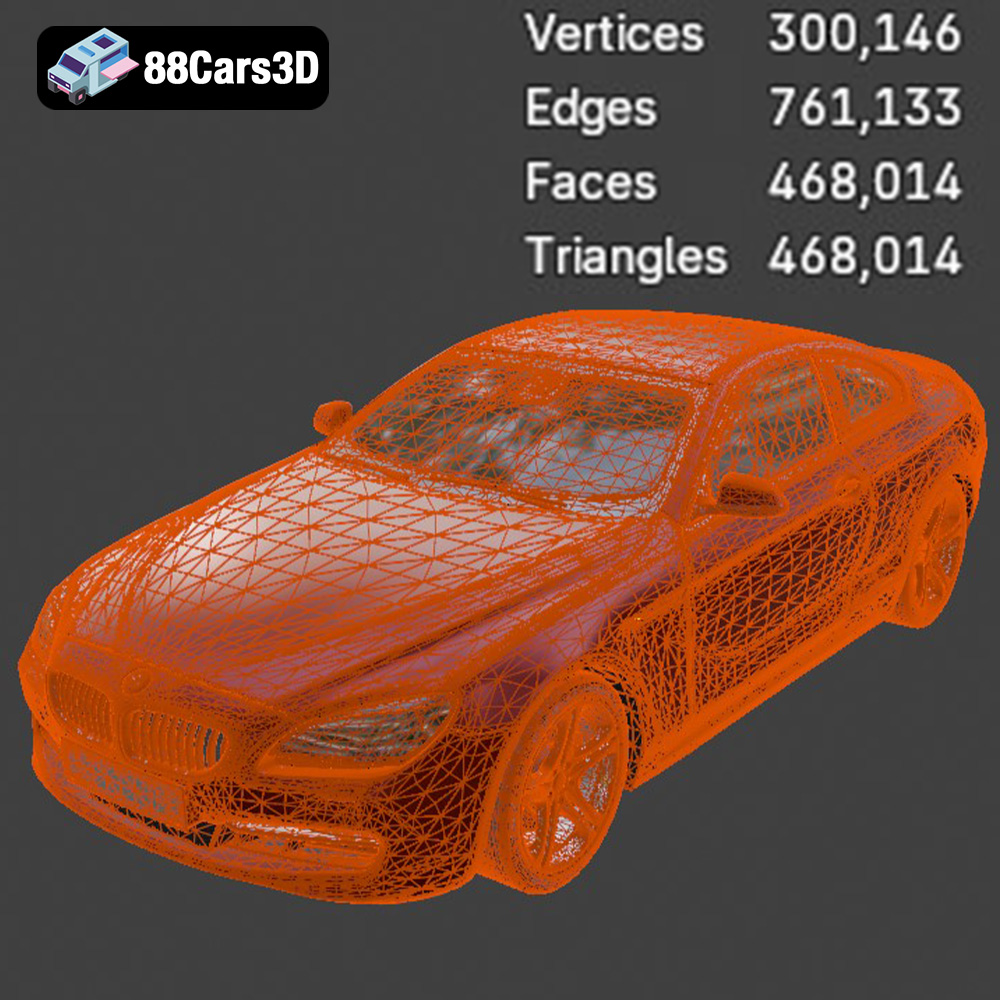
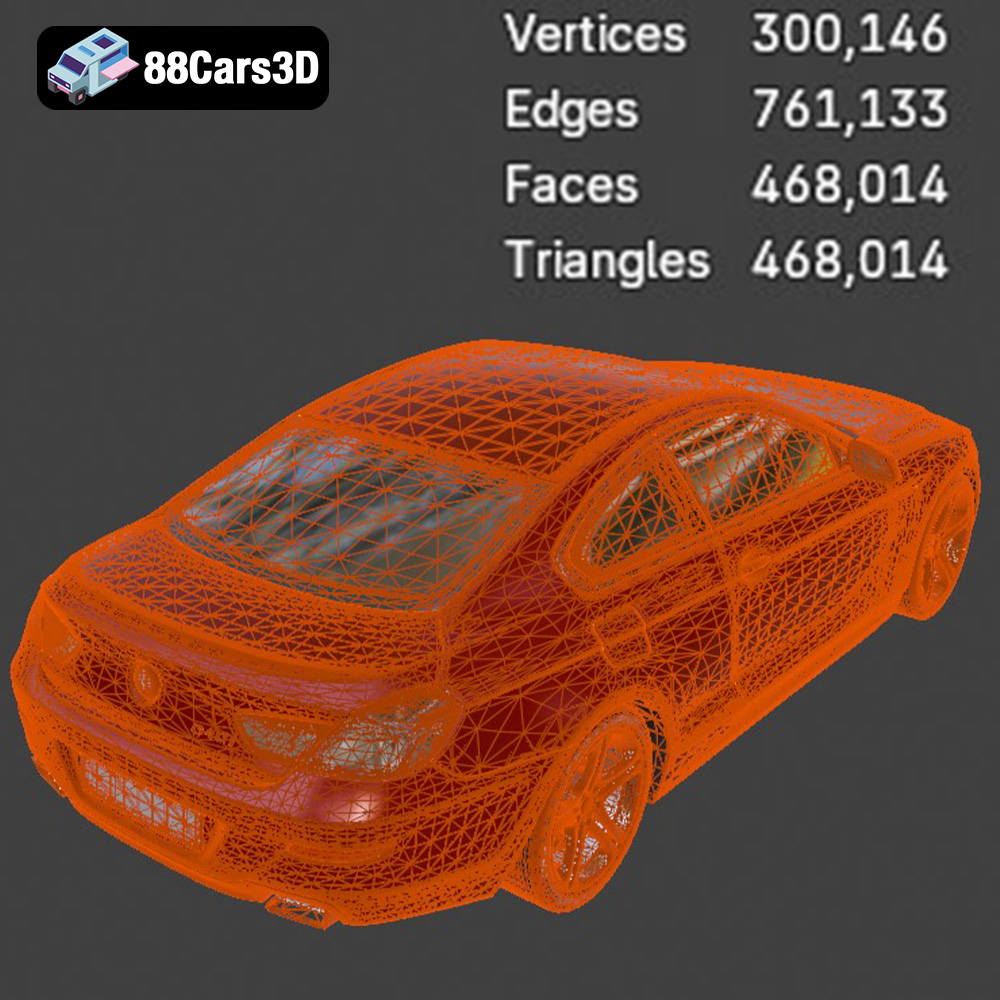
Why Quads are Crucial for Automotive Surfaces: Automotive design is characterized by sweeping, complex curves and razor-sharp creases. To accurately capture the sleek silhouette of the BMW F12’s body panels, the mesh must utilize quad-dominant topology (faces with four vertices). Triangles (tris) and N-gons (faces with five or more vertices) can lead to shading artifacts and unwanted pinching when smoothing or subdividing the mesh. The use of clean quads guarantees smooth application of subdivision surface modifiers (like TurboSmooth in 3ds Max or Subdivision Surface in Blender), which is essential for creating high-resolution marketing renders.
Edge Flow and Crease Control: A professionally built model ensures optimal edge flow—the direction and density of the polygon loops follow the contour lines of the car. This technical precision is vital for the subtle reflections on the F12’s long hood and distinctive side contours, ensuring that highlights move naturally across the surface.
UV Mapping and Texture Density
Non-Overlapping, Clean UVs: UV mapping is the process of flattening the 3D surface into 2D space for texturing. For professional 3D car models, the UVs must be non-overlapping. Overlapping UVs prevent the use of baked textures (like ambient occlusion, light maps, or custom decals), which are indispensable for optimization and realistic lighting in real-time environments. The BMW F12 model comes with organized UV layouts, allowing artists to immediately apply PBR texture sets without manual unwrapping.
Consistent Texel Density: A high-quality model maintains consistent texel density across all major components. This means that a texture applied to the door panel has the same apparent resolution as the texture applied to the roof. This consistency prevents jarring visual disparities and ensures seamless material transitions.
Real-World Scale and Coordinate Systems
Accuracy for Integration: All professional 3D assets must be modeled to real-world scale (typically measured in meters or centimeters). The BMW 6 Series 640i F12 model is built to its exact physical dimensions. This precision is not just for realism; it is mandatory for physics simulations, accurate lighting falloff calculations (ray tracing), and seamless integration into architectural visualization scenes (arch-viz) where the car must correctly relate to surrounding structures and objects.
Pivot Point Hierarchy: For animation and simulation, pivot points must be set accurately. In the F12 model, the wheels, doors, hood, and trunk are separate objects with pivots placed precisely at their points of rotation. This organizational structure is crucial for creating realistic driving animations, crash simulations, or interactive visualizations where components must articulate correctly.
Integrating the BMW F12 into Real-Time Engines (Unreal Engine and Unity Workflows)
The demand for high-quality real-time visualization has never been higher, particularly in the fields of high-end configurators, virtual showrooms, and AAA gaming. Integrating complex automotive geometry, such as the BMW 6 Series 640i F12, into these engines requires specific optimization techniques to maintain high framerates while preserving visual fidelity.
Unreal Engine Optimization Workflow
Leveraging the .unreal and .fbx Formats: When utilizing the specialized .unreal asset provided, developers bypass many of the manual steps required for material setup. The geometry is imported, followed by generating necessary Level of Detail (LOD) meshes. Since the BMW F12 is designed as a high-detail asset, developers typically generate three to four LOD levels, progressively reducing poly count for distant views. This is crucial for optimizing the model as a usable game asset.
Car Paint Shading in UE5: Achieving realistic car paint in Unreal Engine involves complex material graphs that simulate metallic flakes, clear coat reflection, and roughness variance. The clean UVs of the F12 model are ideal for applying highly detailed texture masks that control the separation between chrome trim, window glass, and the primary paint body, allowing for photorealistic automotive rendering directly within the engine.
Preparing for High-Performance Simulation
Collision Mesh Generation: For driving simulations, accurate collision geometry is essential. The high-poly visual mesh of the BMW F12 must be accompanied by simplified, low-poly collision meshes (often prefixed UCX_) for the chassis and individual wheel components. This ensures stable physics calculations without bogging down the CPU.
Rigging for Dynamic Movement: The separated components (wheels, suspension, steering wheel) are prerequisites for realistic simulation. Using the .fbx file, the model can be quickly rigged with control bones. The accurately placed pivot points simplify the process of setting up vehicle blueprints, ensuring that the suspension arms compress and the wheels turn exactly as they would on the real F12.
Mastering Automotive Rendering: Materials and Lighting Techniques
For marketing visuals and architectural contexts, rendering the BMW F12 requires specific techniques to achieve hyper-realism. The goal of professional automotive rendering is to make the viewer believe the image is a photograph.
PBR Material Setup for Photorealism
Advanced Car Paint Shader: The F12’s signature finish requires sophisticated material definition. This involves using Physically Based Rendering (PBR) workflows (Metallic/Roughness or Specular/Glossiness). The car paint shader should include layers for the base metallic color, a fine-grain flake map (for metallic sparkle), and a high-gloss, clear coat layer that accounts for Fresnel reflections. The high-quality mesh ensures these layered reflections are smooth and accurate across the entire surface.
Interior Detailing and Texturing: The description highlights the detailed interior—dashboard, instrument cluster, and seating. These areas require distinct materials: complex microsurface details for leather and fabric, subtle anisotropic reflections for plastic trims, and emissive materials for the instrument panel display, all mapped onto the clean geometry of the F12 cabin.
Studio Lighting and HDRI Environments
The Importance of Reflections: The key element in successful car rendering is reflection. Instead of relying solely on standard spot or area lights, professional renders almost exclusively use High Dynamic Range Image (HDRI) environments. The HDRI provides complex, real-world lighting information, resulting in nuanced reflections across the vehicle’s glossy surfaces, accurately mimicking the environment surrounding the F12.
Studio Strip Lighting: For classic studio shots, long, linear area lights (strip lights) are positioned strategically. These lights create signature, appealing highlights along the body lines, emphasizing the design characteristics and form language of the BMW 6 Series.
Beyond Visualization: Simulation and 3D Printing Applications
The utility of a high-quality 3D car model extends far beyond standard imagery. The technical specifications of the BMW 6 Series 640i F12 model make it suitable for niche professional applications, including extended reality (XR) and physical prototyping.
AR/VR Deployment with .glb
Lightweight and Efficient XR Assets: Augmented Reality (AR) and Virtual Reality (VR) platforms demand performance efficiency. The inclusion of the .glb format is crucial here. .glb files are highly compressed and standardized, allowing the high-fidelity F12 model to be displayed smoothly on mobile devices or VR headsets. Artists can rapidly prototype interactive virtual showrooms or AR experiences where the user can view the car superimposed onto their real-world environment.
Interaction Design: In immersive environments, the model’s logical hierarchy allows for interactive elements. Users can be coded to open the doors or trunk, or change the paint color dynamically, leveraging the precisely separated components built into the original F12 model.
Preparing the Mesh for Additive Manufacturing
From Quads to Watertight STL: While the primary model uses quad-dominant topology for smooth rendering, 3D printers require a watertight triangular mesh. The included .stl file (or easily generated equivalent) ensures that the BMW F12 model is ready for physical production. This process involves ensuring that all surfaces are sealed and that the model has the necessary wall thickness for the chosen printing technology (FDM, SLA, or SLS).
Scale Reduction Considerations: When reducing the scale of the model for desktop printing, intricate details like the front grille or brake calipers can become too small for the printer nozzle. Professional artists often use specialized software to thicken fine geometry and optimize fragile parts, ensuring that the resulting physical model retains the high level of detail present in the digital F12 asset.
Conclusion: Elevating Projects with Precision Automotive Assets
In the highly competitive sectors of cinematic visualization, professional automotive design review, and AAA game development, relying on substandard 3D car models is a risk that few professionals can afford. The BMW 6 Series 640i F12 3D Model exemplifies the pinnacle of technical artistry, providing clean topology, exhaustive file format compatibility, and real-world scale precision.
By offering essential formats like .blend, .max, and the optimized .fbx and .unreal packages, this asset ensures a frictionless transition into any production pipeline, whether the goal is sophisticated automotive rendering using path tracing or highly optimized, high-performance game assets. Investing in precision-engineered content, such as those found on 88cars3d.com, allows artists to bypass the painstaking modeling phase and focus immediately on creative execution, lighting design, and material refinement, ultimately delivering superior results faster.
This commitment to technical excellence is why the BMW F12 model is an invaluable resource for any serious professional seeking to elevate their visual projects to photorealistic standards. Explore the full technical specifications and file options today.
Featured 3D Model
BMW 6 Series 640i F12 3D Model
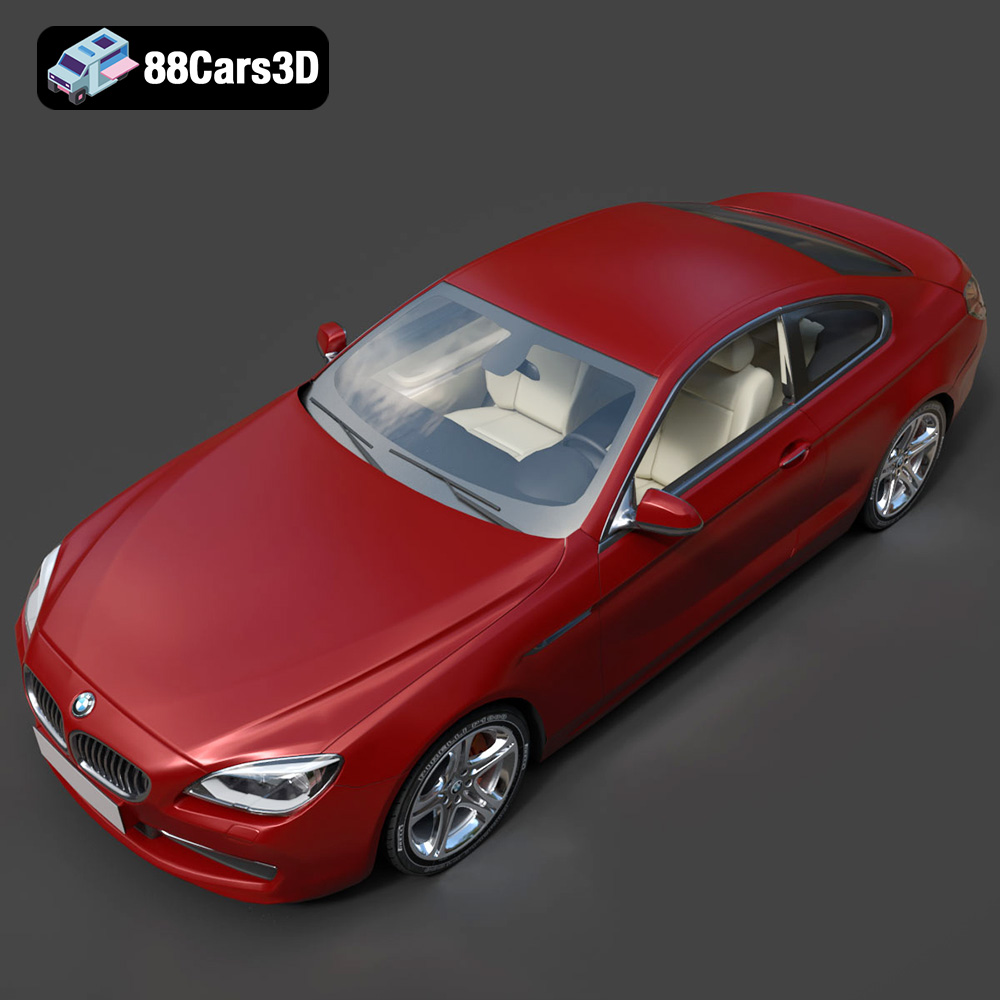
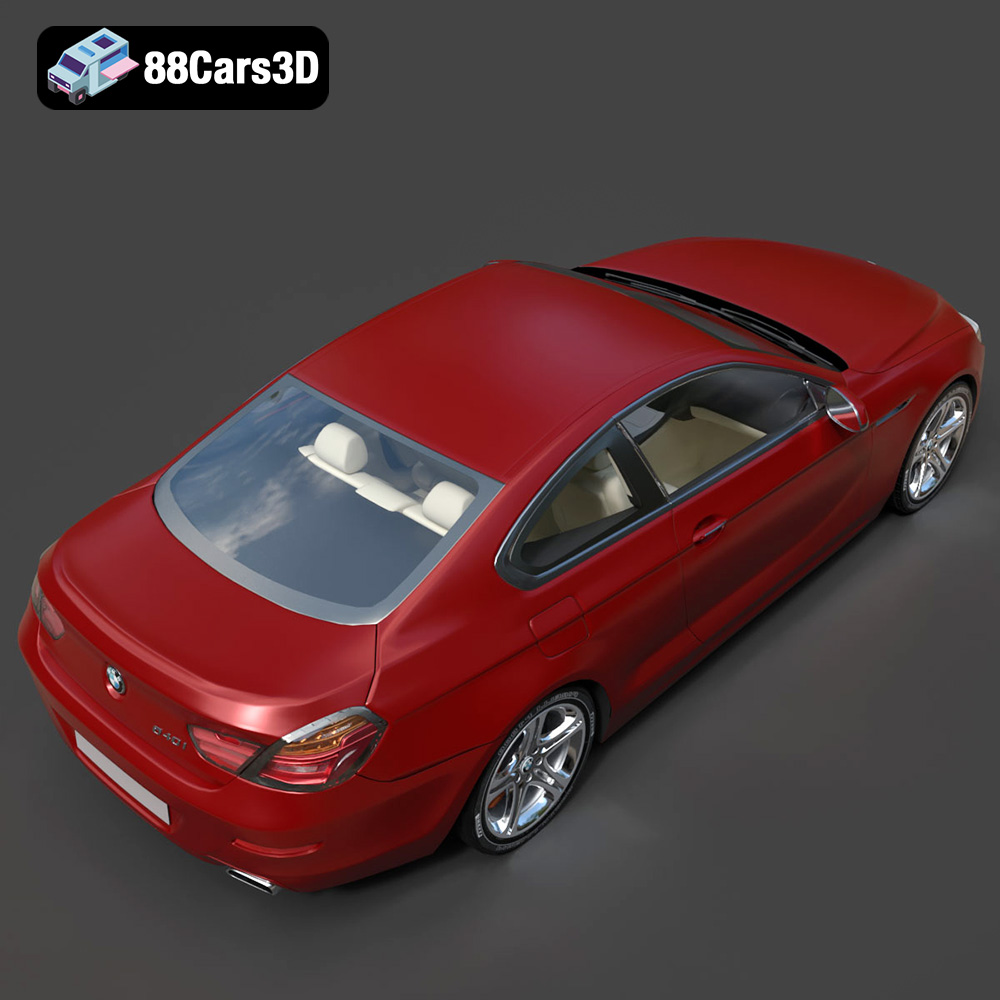
Experience automotive excellence with this meticulously crafted 3D model of the BMW 6 Series 640i F12. Representing BMW’s iconic blend of luxury, performance, and sophisticated design, this model captures the sleek lines and sporty elegance of the F12 generation. Built with clean geometry and balanced detailing, it is optimized for a wide range of professional applications, including high-end rendering, dynamic animation sequences, realistic simulations, and immersive game development environments.
$10.79
Product Image Gallery


Related Tags
.640i
.6series
.arvr
.blend
.bmw
.car
.coupe
.f12
.fbx
.gameasset
.glb
.luxurycar
.max
.obj
.ply
.rendering
.simulation
.sportsCar
.stl
.unreal
