Welcome to the forefront of digital automotive design. In an era where photorealism is the standard, the quality of your foundational assets dictates the success of your final output, whether that is a cinematic advertisement, an immersive VR experience, or a high-performance video game. Choosing a technically sound 3D model is not merely a matter of aesthetics; it is a critical decision that impacts workflow efficiency, render times, and compatibility across diverse software pipelines.
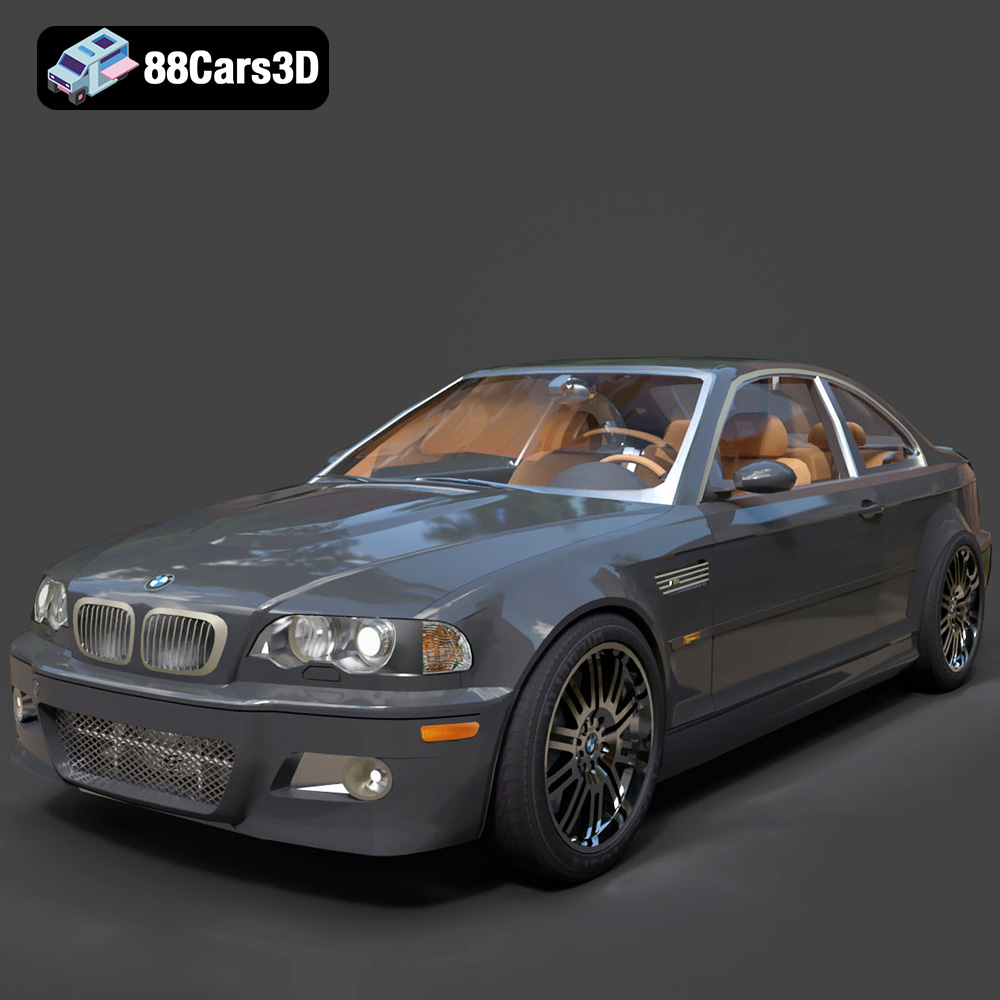
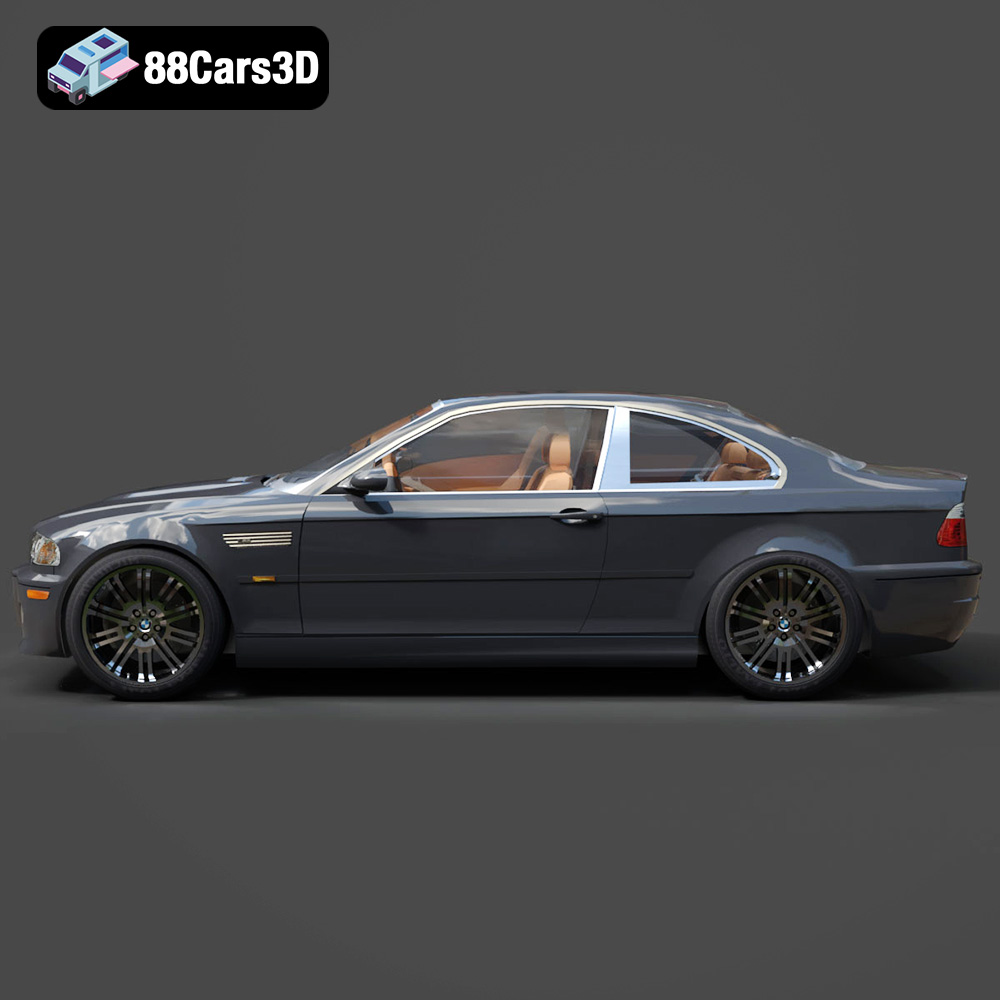
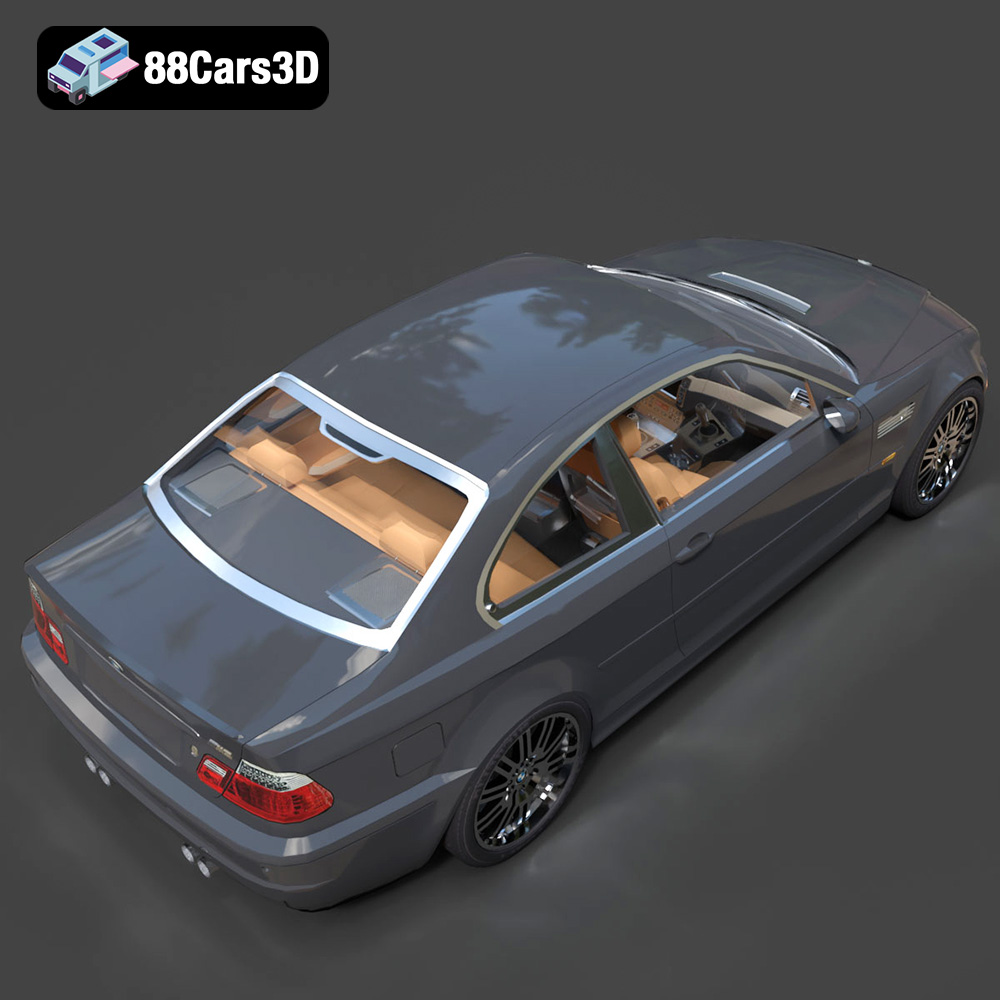
Few vehicles embody the convergence of performance and timeless design quite like the BMW M3 E46. As a professional asset provider, 88cars3d.com recognizes the enduring appeal and technical challenge of digitally replicating such an icon. This article delves deep into the technical specifications and advanced workflows required to leverage the BMW M3 E46 3D Model, ensuring it functions flawlessly across the demanding fields of automotive rendering and next-generation game assets development.
We will explore how the model’s optimized geometry, meticulous UV layout, and broad file format support streamline professional workflows in 3ds Max, Blender, Unreal Engine, and specialized AR/VR applications. This professional asset is designed not just to look good, but to integrate seamlessly into complex production pipelines.
The Cornerstone of Professional Workflow: Understanding 3D Model File Formats
For a professional 3D car model to be truly versatile, it must support a comprehensive range of file formats. The choice of format is dictated by the destination platform and the need for either maximum editability or optimized deployment. This section breaks down the eight crucial formats provided with the BMW M3 E46 3D Model and explains their strategic importance in production pipelines.
The Real-Time Standard: FBX and Unreal Engine Integration
The .fbx (Filmbox) format remains the industry standard for asset interchange, especially critical for transferring models into game engines like Unreal and Unity. FBX efficiently packages geometry, material definitions, basic light data, animation keyframes, and the critical hierarchical structure of the model. When importing the M3 E46, the .fbx file ensures that separated components (doors, wheels, hood) retain their pivot points and structural organization, which is vital for quick rigging and physics setup. For high-fidelity game assets, FBX is non-negotiable.
Similarly, the dedicated .unreal format provides the model pre-configured within an Unreal Engine project structure. This setup often includes pre-applied PBR (Physically Based Rendering) material definitions, optimized collision meshes (if provided), and correctly scaled geometry, dramatically reducing the time spent on initial engine preparation for real-time applications.
Mastering Editability: Native Project Formats (.max and .blend)
When maximum customization is required, the native formats are indispensable. The .max file provides the full, editable scene within Autodesk 3ds Max, often including established studio lighting setups and complex material shaders (like V-Ray or Corona). This allows rendering specialists to quickly dive into spline cage modifications, complex texturing, or animation keyframing using the environment the model was originally created in. Similarly, the .blend file offers the complete Blender scene, utilizing Cycles or Eevee rendering engines with fully accessible nodes and modifiers. These formats are ideal for deep technical adjustments, such as refining the quad topology or implementing custom deformation rigs, ensuring the model remains versatile for long-term project use.
Universal Compatibility and Specialized Outputs
For cross-software compatibility, the .obj (Wavefront Object) format is essential. While it does not store animation or advanced material data, it is universally recognized by nearly every 3D application, making it perfect for rapid transfer or archival purposes when only clean geometry and basic UV mapping are needed.
For modern visualization demands, the .glb (GL Transmission Format) is optimized for AR, VR, and web browsers. GLB packages the mesh, materials, and textures into a single, highly efficient binary file, making the BMW M3 E46 3D Model instantly deployable in virtual showrooms or augmented reality experiences without requiring complex engine setup.
Finally, we address physical output and analysis. The .stl (Stereolithography) format is the standard for additive manufacturing, providing a surface mesh ready for slicing software required for high-fidelity 3D printing. The geometry of the M3 E46 must be “manifold” (water-tight) to convert efficiently to .stl. The .ply (Polygon File Format) is often used in reverse engineering, CAD integration, or scientific analysis where precision, vertex colors, or specific data per polygon is crucial, offering a robust format for engineering or simulation pipelines.
Geometry and Topology: The Foundation of Photorealism
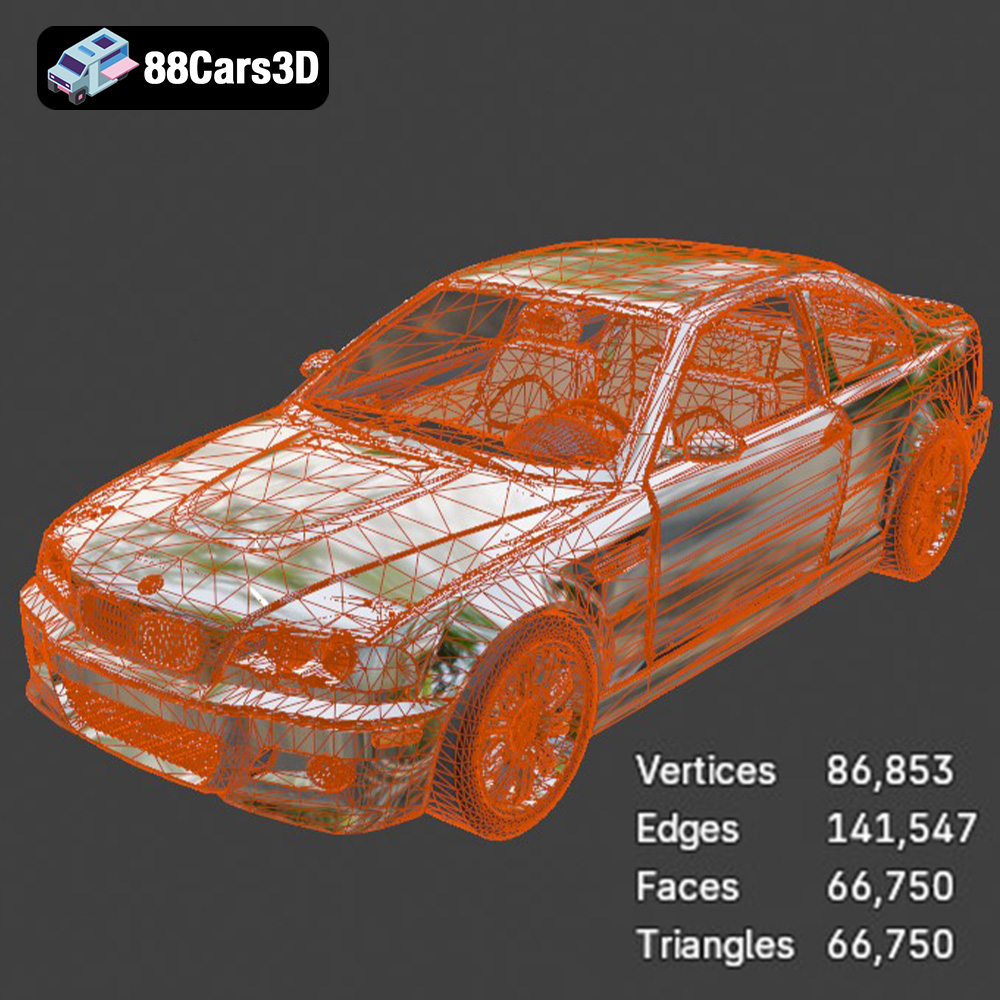
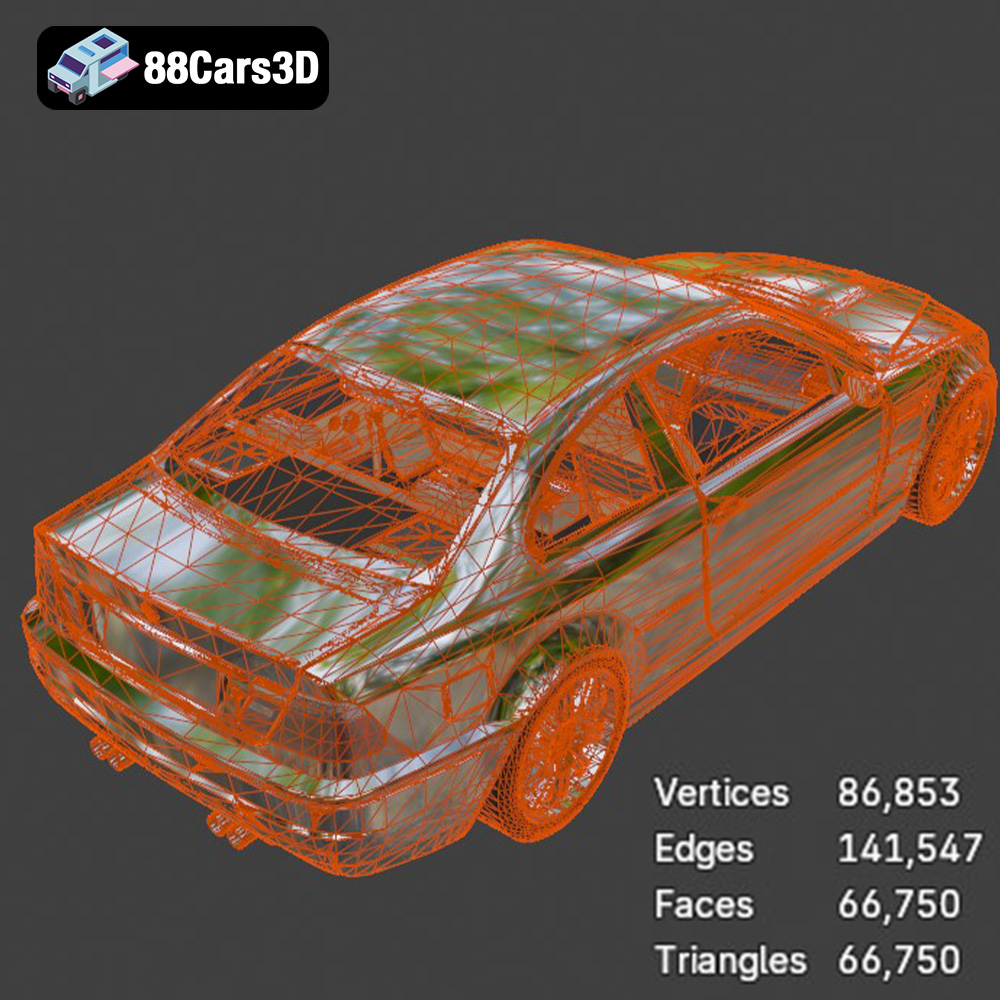
In high-end automotive rendering, the quality of the base geometry—the topology—is far more critical than raw poly count. A professionally modeled vehicle like the M3 E46 must utilize specific topological principles to ensure surfaces reflect light correctly and deform predictably during animation or subdivision.
The Criticality of Clean Quad Topology
The BMW M3 E46 3D Model features clean quad-dominant topology. This is the cornerstone of high-quality modeling. Why quads (four-sided polygons)?
- Subdivision Readiness: Quads distribute tension evenly when a Subdivision Surface modifier (like Turbosmooth in Max or Subdivision in Blender) is applied, resulting in perfectly smooth, predictable curves, crucial for replicating the M3’s distinctive body flares and contour lines. Triangles (three-sided) and N-gons (more than four sides) create unpredictable surface pinching and artifacts upon subdivision.
- Deformation Control: For animations involving crumpling, suspension travel, or body flex, quad topology allows the mesh to deform smoothly without tearing or introducing unwanted creases, ensuring cinematic quality output.
The model’s optimized mesh density strikes a balance: detailed enough to hold shape without subdivision (ideal for mid-range game assets) but clean enough to subdivide easily for close-up, high-resolution visualization.
Efficient UV Mapping and Material ID Organization
Photorealism is impossible without meticulously organized UVs. UV mapping is the process of flattening the 3D surface into 2D space for texture application. The E46 model features:
- Non-Overlapping UVs: Essential for baking high-quality normal maps, ambient occlusion, and specialized paint effects without artifacts.
- Logical Material IDs: Components such as the headlight glass, chrome trim, plastic moldings, and body paint are assigned distinct Material IDs. This organizational structure allows technical artists to rapidly assign complex, layered shaders to specific parts without manual selection, significantly speeding up both rendering and engine integration time.
Real-World Scaling and Pivot Point Precision
Integration into complex scenes—such as architectural visualizations or simulation environments—demands accurate scale. The M3 E46 model is built to real-world metric dimensions. Furthermore, professional 3D car models must have logically organized hierarchies with correctly positioned pivot points.
- The pivot point for the doors must be located precisely at the hinge mechanism.
- Wheel pivots must be centered on the axle for accurate rotation.
- The steering wheel pivot must align with the column axis.
This attention to detail ensures that the asset is animation-ready right out of the box, saving animators hours of setup time and ensuring physically accurate movement.
Mastering Cinematic Automotive Rendering Workflows
While the BMW M3 E46 is a formidable asset for real-time environments, its true visual potential shines in high-end cinematic rendering. This demands mastery of complex shading, precise lighting, and controlled camera effects within powerful renderers like V-Ray, Corona Renderer, or Blender’s Cycles engine.
Achieving Hyper-Realistic Car Paint Shaders
The most challenging material in automotive rendering is the paint finish. It’s not just a single color; it’s a multi-layered material requiring careful blending of specific parameters:
- Base Coat Layer: Defines the core color and underlying reflectivity.
- Metallic Flake Layer: A crucial micro-detail layer that uses procedural noise or texture maps to simulate tiny reflective particles, creating the signature sparkle effect under direct light. This layer needs a specific anisotropic reflection profile.
- Clear Coat Layer: This top layer is highly glossy, defining sharp reflections (fresnel effect) and often includes a slight bump or orange-peel texture to mimic real-world factory finishes.
The material definitions included in the native .max and .blend files provide a strong starting point for customizing these complex shaders, allowing artists to quickly switch from standard Imola Red II to a specialized custom finish, maintaining photorealism while adjusting hue and reflectivity.
Studio Lighting Techniques for Vehicle Showcase
For professional product visualization, lighting is paramount. The BMW M3 E46 should be lit using controlled, high-dynamic range environments (HDRIs) combined with localized light sources.
- Softbox Reflection Control: Large, rectangular, low-intensity area lights are positioned strategically to cast clean, even reflections down the long curves of the vehicle’s body panels. This highlights the flawless topology and surface accuracy.
- Rim Lighting: Subtle backlights define the silhouette of the M3, separating it from the background and emphasizing its aggressive stance, particularly around the rear fender flares.
- Ground Shadows: Accurate contact and environmental occlusion shadows are essential. The model’s accurate scale ensures that environmental shadows cast by global illumination systems are precisely rendered, anchoring the car firmly in the scene.
Integrating the Asset into Real-Time Engines for Game Development
The demand for high-fidelity game assets has exploded, requiring models that are not only detailed but also rigorously optimized for high frame rates. The BMW M3 E46 3D Model is structured to meet the demanding technical requirements of real-time engines like Unreal Engine 5 or Unity.
Optimizing Mesh Density and Level of Detail (LOD)
While the initial model possesses high detail for cinematic shots, optimization is key for games. The asset’s clean topology facilitates the creation of optimized LODs (Levels of Detail). LODs are lower-polygon versions of the mesh that are swapped in when the car is far from the camera, dramatically saving performance without a noticeable visual drop-off.
- LOD0 (High Poly): Used for close-up cockpit views and immediate surrounding cameras.
- LOD1 & LOD2 (Medium/Low Poly): Used for general gameplay distances.
- LOD3 (Minimal Poly): Used for cars far across the track or in distant environments.
The model’s organized wireframe minimizes the complexity of creating these LODs through decimation tools, ensuring the resulting meshes remain clean and predictable.
PBR Workflow and Shader Implementation in Unreal
Modern game rendering relies exclusively on PBR. The supplied .fbx and .unreal files are prepped for this workflow, using standard maps:
- Albedo/Base Color: Defines the car’s color (excluding metallic/specular response).
- Normal Map: Bakes high-frequency details (like panel gaps and vents) onto a lower-poly mesh, saving polygon count.
- Roughness/Gloss Map: Crucial for defining how shiny or dull different parts of the car are (e.g., glossy paint vs. matte rubber tires).
- Metallic Map: Indicates which parts of the car surface are metal (e.g., chrome accents).
Setting up the master car paint shader in Unreal requires careful calibration of these maps, along with implementing a specific clear-coat function to handle the realistic reflection and specular highlight behavior required for convincing vehicle surfaces in games.
Beyond Visualization: AR/VR and 3D Printing Applications
The versatility of a professional 3D car model extends far beyond standard screen rendering. The E46 model is structured to serve emerging technologies like immersive showrooms and high-precision manufacturing.
AR/VR Showrooms and Interactive Experiences
Immersive visualization platforms require highly efficient, single-package assets. The inclusion of the .glb format addresses this directly. Using the optimized GLB file, automotive marketing teams can deploy the BMW M3 E46 into augmented reality applications instantly. Potential buyers can visualize the vehicle in their driveway using their smartphone, interacting with the model by opening doors, cycling through paint options, and viewing the detailed interior. The optimization maintains high visual quality even on mobile devices, which are constrained by processing power.
Preparing the Model for High-Fidelity 3D Printing
For industrial design, prototyping, or high-end collectible production, 3D printing is a specialized output. The .stl format conversion process relies on the model being ‘water-tight’ (manifold). Because the M3 E46 3D Model features clean geometry and separated components (ideal for assembly after printing), it is highly suitable for conversion. For best results, technical artists often simplify the internal engine bay geometry for the .stl output, focusing the detail on the external body panels and undercarriage necessary for a perfect physical replica.
- Scale Check: Ensure the model is scaled correctly for the chosen printer volume (e.g., 1:18 scale or larger).
- Wall Thickness: Adjusting parts like mirrors or spoilers to ensure minimum wall thickness requirements are met for printing without fragility.
The Strategic Value of Technical Accuracy
Purchasing pre-made, high-quality 3D car models saves hundreds of hours of demanding modeling work. However, the true value lies in the technical accuracy and organization embedded within the file structure. When utilizing assets from sources like 88cars3d.com, professional studios are investing in certainty—the certainty that the geometry will subdivide cleanly, the UVs are usable, and the file formats are ready for immediate deployment.
The detailed specifications of the BMW M3 E46 3D Model—from the precise curvature of the fender flares to the separation of the hood and trunk for animation—are designed to minimize friction in the production pipeline, whether you are creating realistic driving simulators or producing the next generation of cinematic automotive rendering.
Conclusion: Elevating Automotive Projects with Precision 3D Car Models
The digital replication of an automotive legend like the BMW M3 E46 demands uncompromising technical execution. This model stands as a testament to professional asset creation, providing clean quad-dominant geometry, accurate real-world scaling, and robust compatibility across the spectrum of 3D applications—from rendering photorealistic stills in 3ds Max and Blender to deploying optimized game assets in Unreal Engine.
By offering comprehensive format support—including .fbx, .obj, .glb, and native project files—the asset ensures maximum flexibility for any project requirement, guaranteeing that creative vision is never constrained by technical limitations. Investing in highly detailed, workflow-optimized 3D car models is the single most effective way to elevate the quality and efficiency of your professional automotive visualization projects. Find this and other expert-level assets ready for integration today on 88cars3d.com.
Featured 3D Model
BMW M3 E46 3D Model
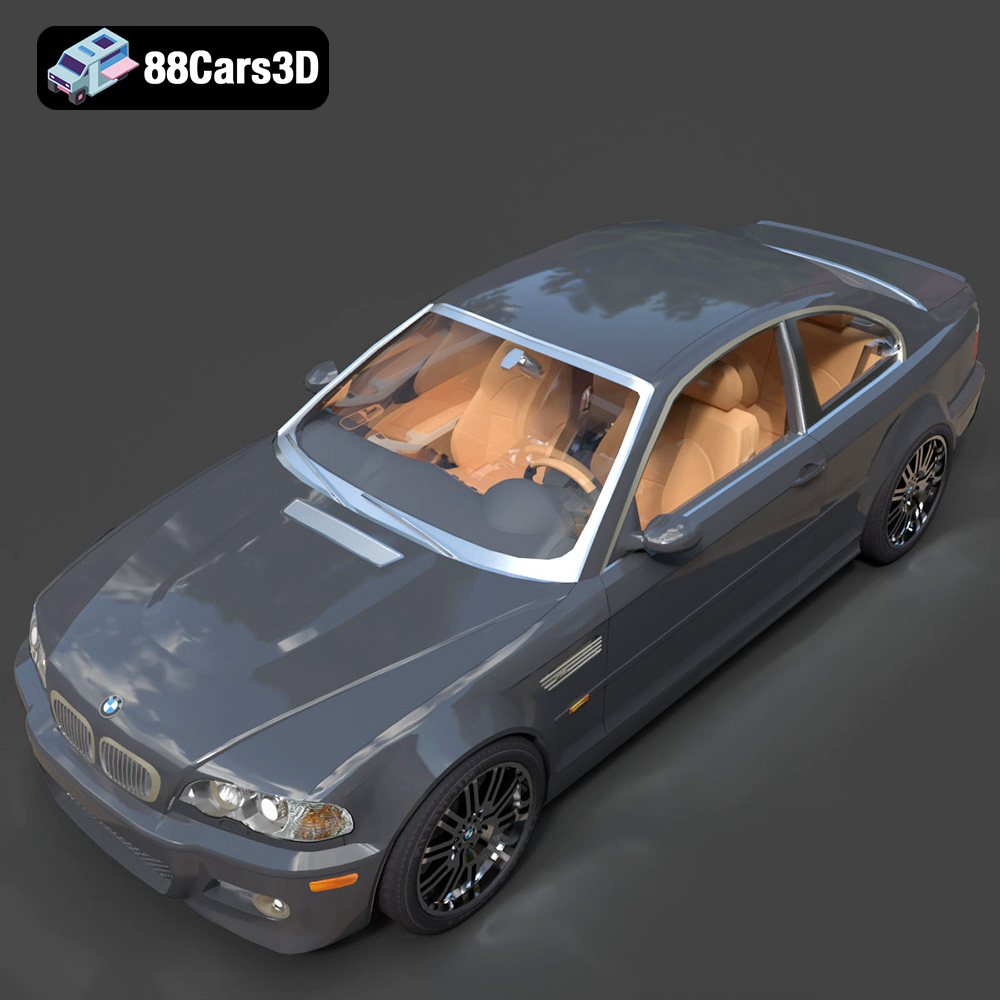
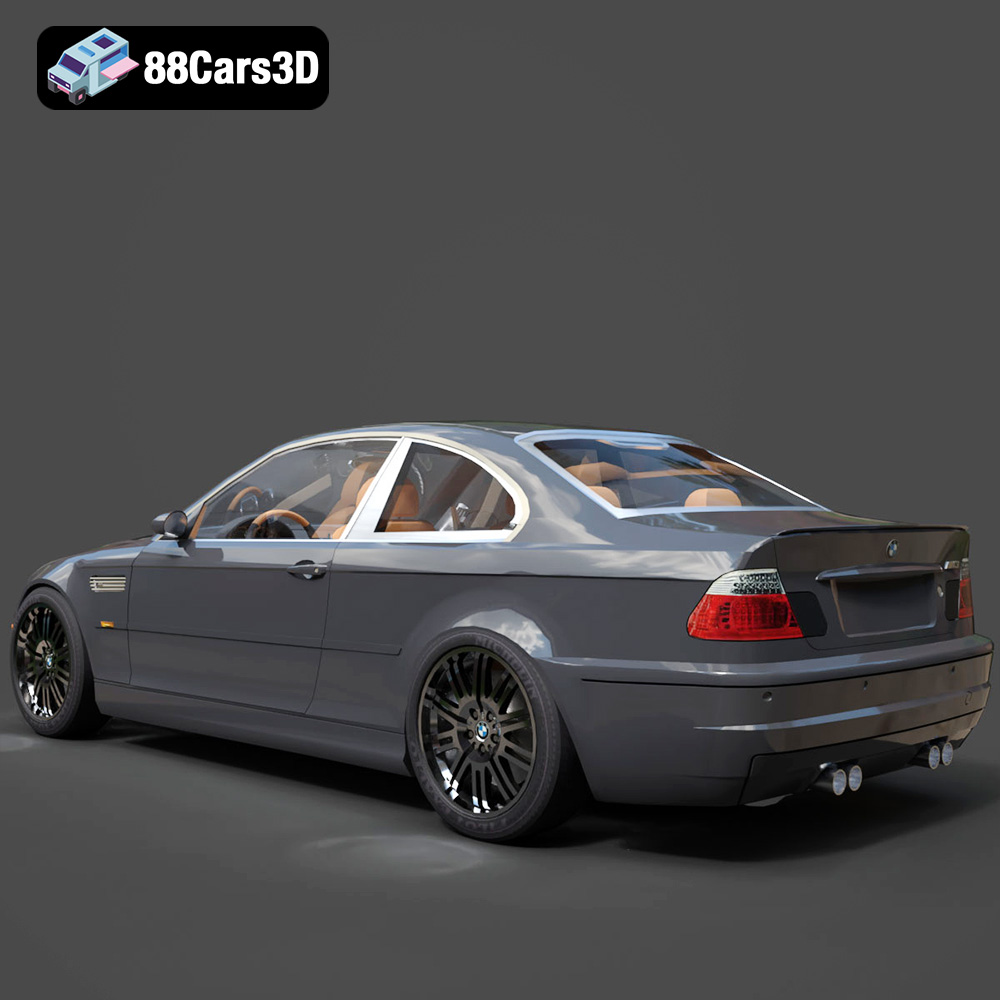
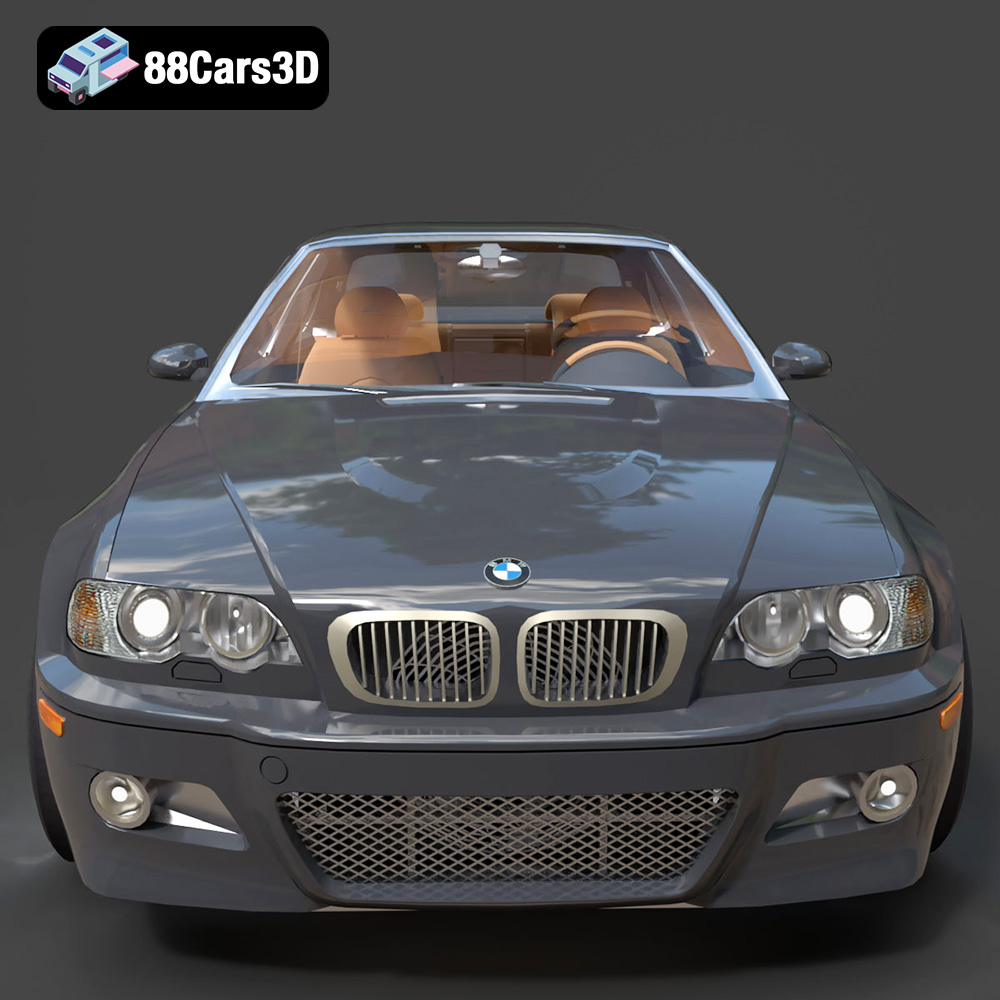
Immerse yourself in the world of high-performance automotive design with this meticulously crafted 3D model of the BMW M3 E46. Representing a pinnacle of sports car engineering from its era, this model captures the aggressive stance, classic lines, and intricate details that define the iconic M3 E46. Built with clean, optimized geometry and balanced detailing, it ensures exceptional visual fidelity and performance across various applications. This professional-grade asset is perfectly suited for high-quality rendering, realistic animations, precise simulations, and robust game development.
$16.99
Product Image Gallery