

The demand for high-fidelity 3D car models has never been greater. Whether you are building the next generation racing simulator, creating photorealistic automotive rendering advertisements, or integrating vehicles into immersive AR/VR experiences, the quality of the base asset dictates the success of the final output. Professional artists and studios require models that strike a crucial balance: visual accuracy and technical optimization.
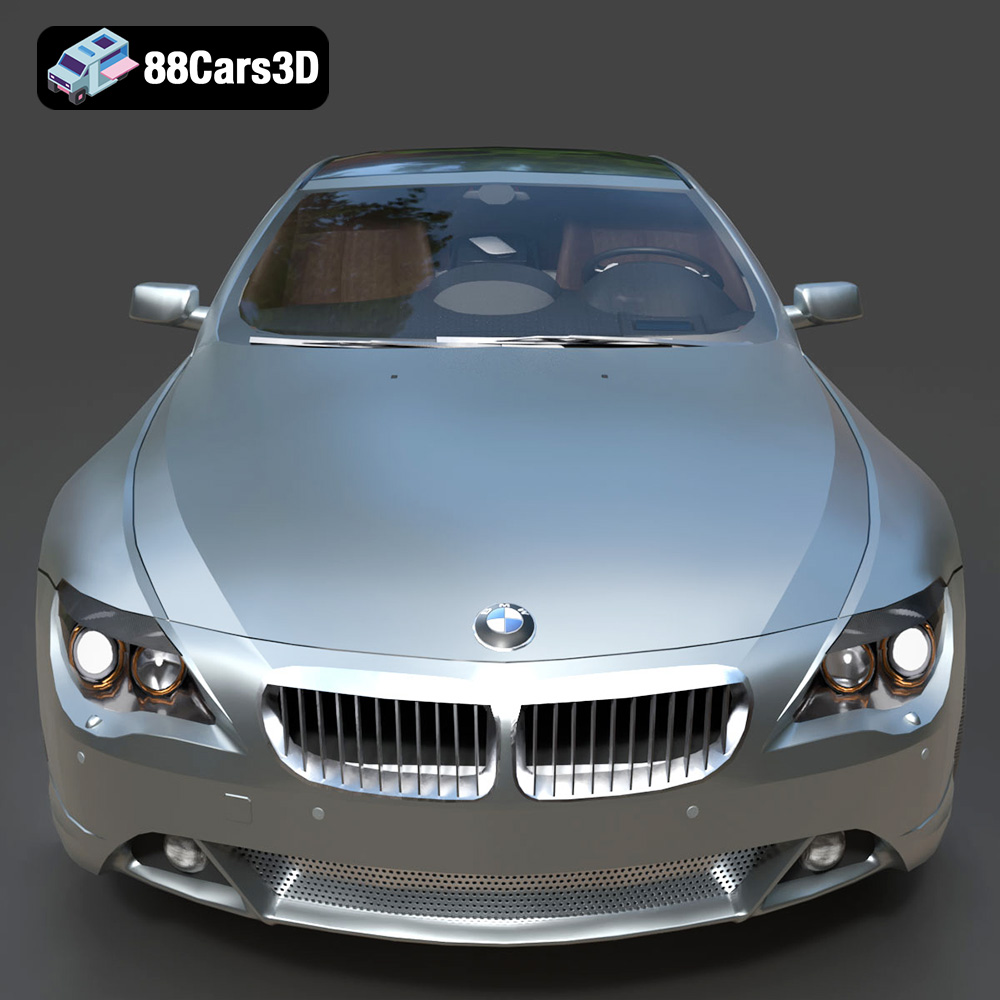
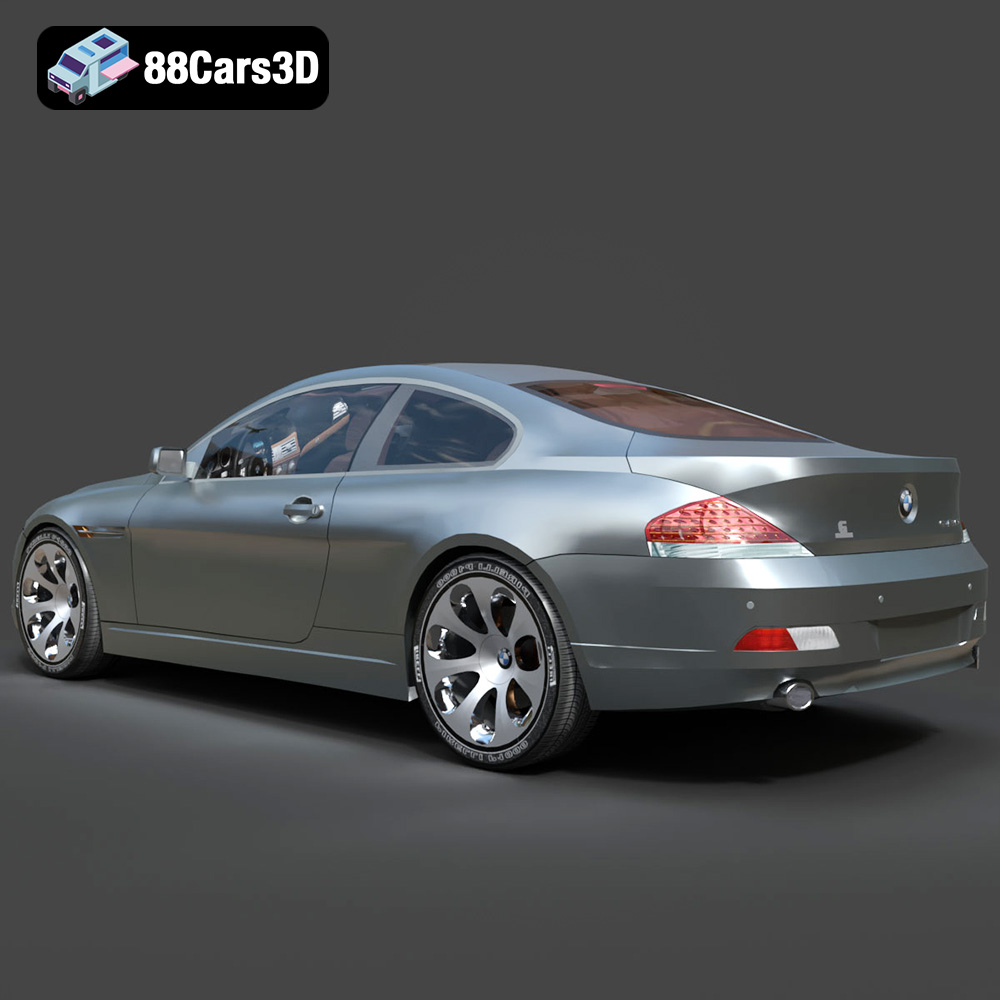
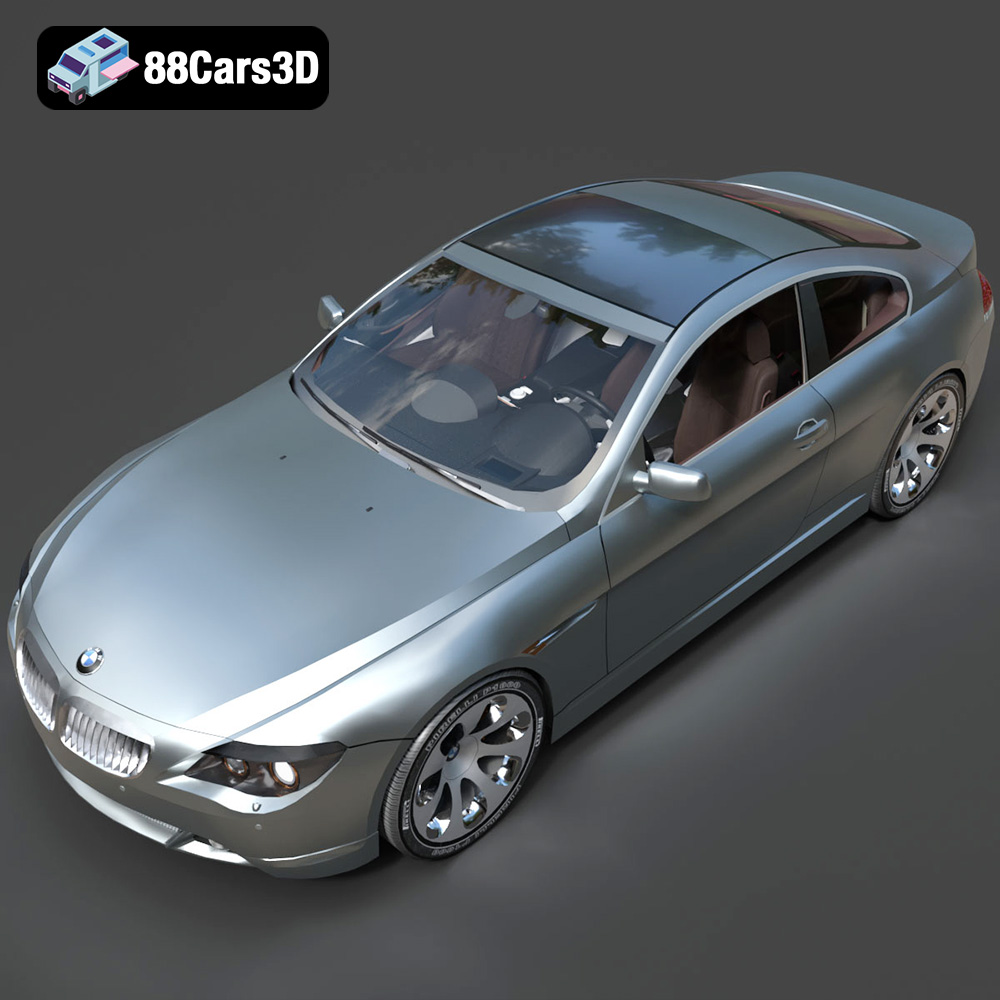
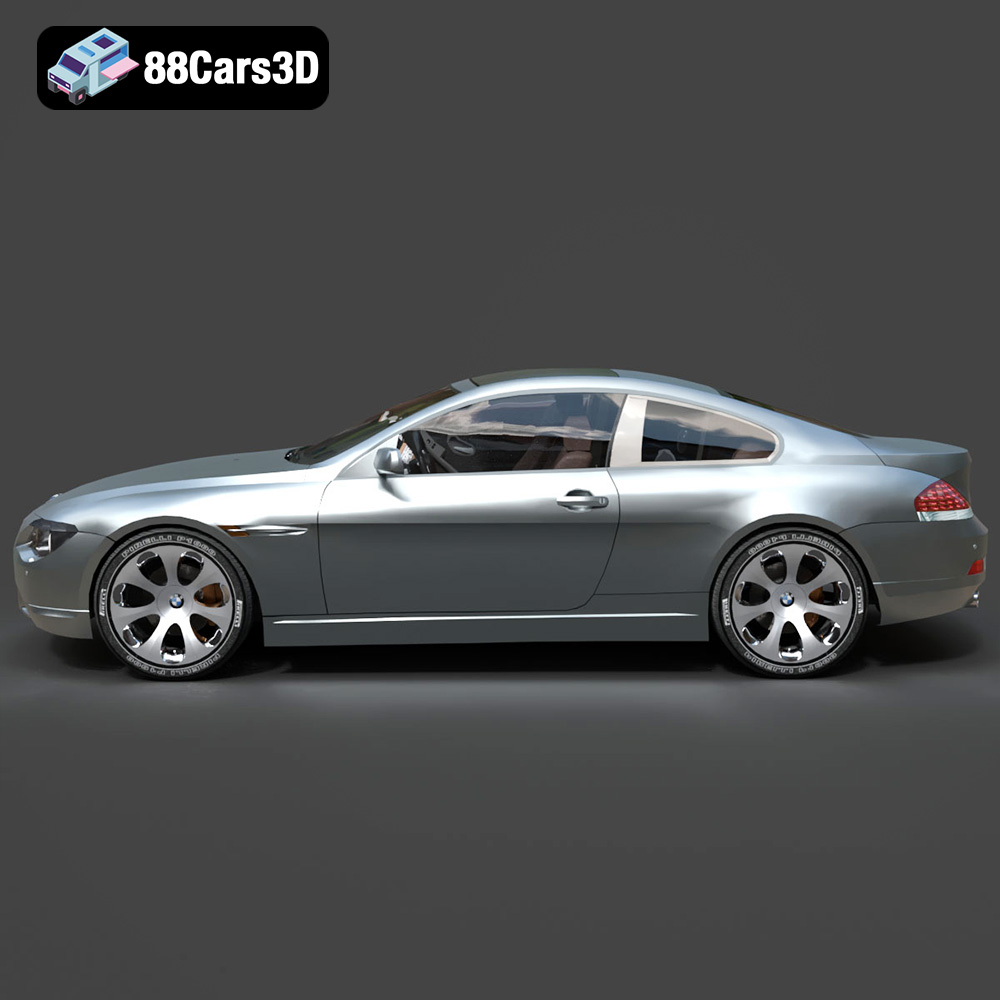
Few vehicles capture the essence of high-end design and dynamic performance quite like the BMW 6 Coupe E63. This iconic grand tourer, known for its “Bangle Butt” styling and luxurious presence, demands precision when translated into the digital realm. A top-tier asset, such as the BMW 6 Coupe E63 3D Model available on 88cars3d.com, provides the perfect foundation for demanding projects. This article dives deep into the technical requirements for integrating a complex vehicle model like the E63 into various professional pipelines, from real-time game engines to high-end cinematic visualization.
The Essential Criteria for Professional 3D Car Models
When selecting a vehicle asset, technical specifications must align with the intended application. A model designed for static, photorealistic rendering has different requirements than one built for a fast-paced video game. Professionals prioritize clean geometry, real-world scale, and flexible asset structure.
Clean Topology and Quad-Dominant Meshes
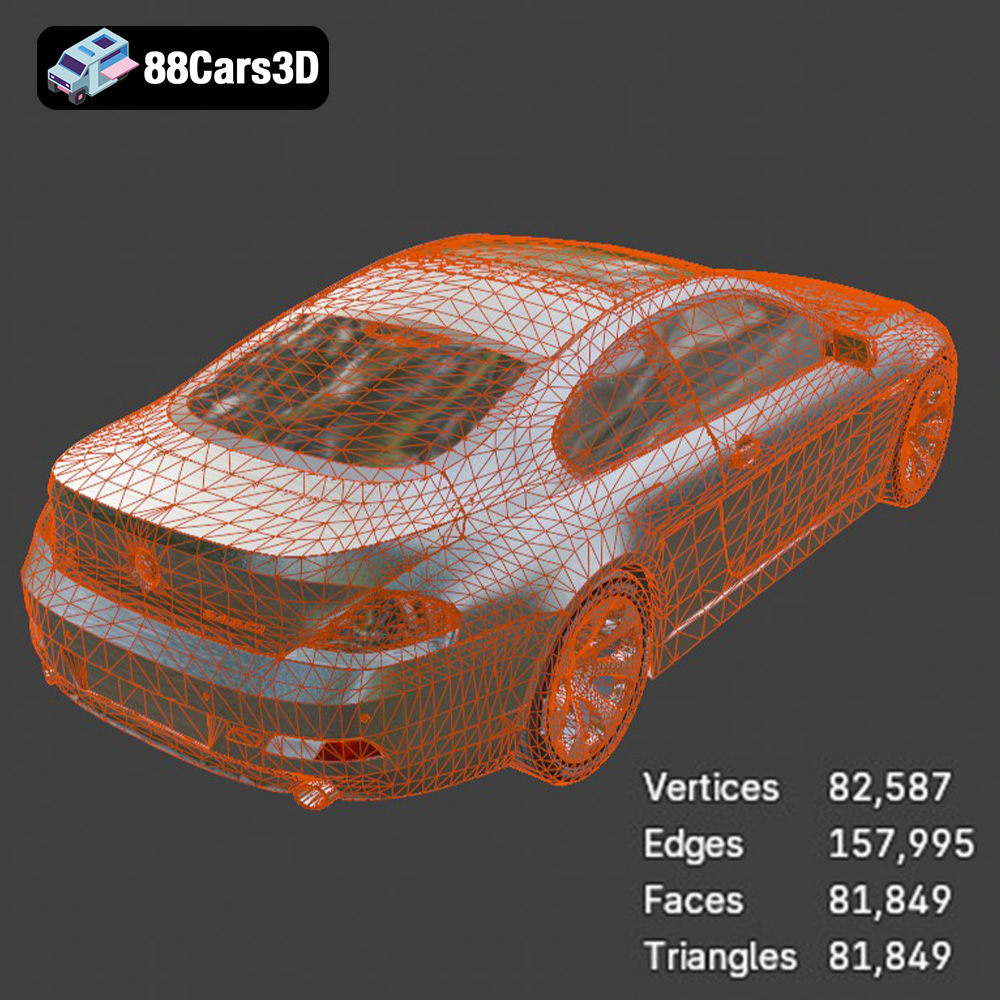
The foundation of a good 3D model is its topology. The BMW 6 Coupe E63 3D Model emphasizes clean, quad-dominant geometry. Quads (four-sided polygons) are essential for two main reasons:
- Subdivision Smoothness: Quads ensure predictable and smooth deformation when using subdivision surface modifiers (like TurboSmooth in 3ds Max or Subdivision Surface in Blender). This is critical for capturing the subtle curves and high-tension lines of complex automotive body panels without introducing pinching or artifacts.
- UV Unwrapping and Texturing: Clean topology simplifies the process of generating seamless UV maps, which is vital for applying high-resolution textures, decals, and realistic paint materials.
Real-World Scale and Dimensional Accuracy
Automotive visualization and simulation require models to adhere strictly to real-world dimensions. Using the correct scale ensures accurate physics calculations in game engines and correct camera perspective in rendering workflows. The E63 model is built to real-world scale, allowing for drop-in integration into existing architectural visualizations, scene setups, or professional simulators without needing manual rescaling.
Hierarchical Organization for Animation
A static mesh is insufficient for professional work. The model must be structured logically for rigging and animation. The BMW 6 Coupe E63 model features an organized hierarchy with correctly set pivots. This means components like doors, the hood, the trunk, and wheels are separated and centered at their rotational points. This detail drastically speeds up the animation workflow for sequences such as opening doors, driving simulations, or suspension movement.
Understanding 3D Model File Formats
Compatibility is paramount in collaborative and multi-disciplinary pipelines. A professional-grade 3D car model must be available in multiple formats to ensure seamless transition between modeling packages, rendering engines, and real-time platforms. The availability of numerous formats included with the BMW 6 Coupe E63 3D Model is a massive technical advantage. Understanding when and why to use each format is critical for an efficient workflow.
.blend – Fully Editable Blender Scene with Materials
The .blend format is the native file for Blender. It’s ideal for artists heavily integrated into the Blender ecosystem. This format typically includes the full scene setup: lighting, camera rigs, specific procedural materials (using Cycles or Eevee), modifiers, and collections. Using the .blend file allows the artist maximum flexibility for making fine-tuned modifications to the mesh or materials before export.
.fbx – Ideal for Unreal, Unity, and Real-Time Pipelines
FBX (Filmbox) is arguably the industry standard for exchanging 3D data between different software applications, especially for game development. It efficiently packages mesh geometry, UVs, materials (though material translation can sometimes be imperfect), skeletal data, and animation curves. For integrating the E63 into Unreal Engine or Unity, .fbx is the preferred format due to its robust support for scene hierarchy and efficient poly count handling required for high-performance game assets.
.obj – Universal Format for Cross-Software Compatibility
OBJ (Object) is a foundational, universal format known for its simplicity and reliability. It primarily stores geometry (vertices, normals, and UV coordinates) and material references (.mtl file). While it doesn’t typically store complex rigging or animation data, .obj is the safest fallback format for ensuring compatibility across virtually any 3D software package, including legacy systems or niche CAD applications.
.glb – Optimized for AR, VR, and Browser-Based Display
GLB (GL Transmission Format Binary) is the optimized format for the transmission of 3D scenes and models, specifically tailored for web, AR, and VR applications. It bundles the model data, textures, and materials into a single, compact binary file. The .glb format is crucial for developers aiming to showcase the BMW 6 Coupe E63 in augmented reality experiences on mobile devices or embed interactive 3D viewers directly into websites.
.stl – Suitable for 3D Printing Output
STL (Stereolithography) is the standard format used for 3D printing. It represents the surface geometry of a 3D model using a series of connected triangles. When preparing the E63 model for physical reproduction, the .stl conversion must be watertight (manifold). This format discards color and texture data, focusing solely on the structural mesh required by slicing software.
.ply – Precision Mesh Format for CAD or Analysis
PLY (Polygon File Format) is often used for storing data from 3D scanners or for scientific and analytical applications. It can store complex data beyond geometry, such as color per vertex, transparency, and sometimes precision measurements. For workflows involving engineering analysis, forensic reconstruction, or detailed CAD integration, the .ply format provides a robust, descriptive mesh structure.
.unreal – Engine-Ready Asset for Real-Time Environments
The dedicated .unreal project file saves significant setup time. This format often includes pre-configured Unreal Blueprints, optimized materials (like complex Car Paint shaders using the Unreal Material Editor), LODs (Levels of Detail), and collision meshes, ensuring the BMW 6 Coupe E63 is ready to drop into a functioning level environment with minimal preparation for high-performance use.
.max – Editable 3ds Max Project for Animation and Rendering
The .max format is the native file for Autodesk 3ds Max, a powerhouse tool in the automotive rendering industry. Including the original .max file ensures that professional artists utilizing V-Ray, Corona, or Arnold renderers have access to the complete scene setup, editable spline cage data (if present), and all complex material node graphs used for the highest possible visual fidelity.
Advanced Automotive Rendering Workflows (3ds Max & Blender)
Creating photorealistic images of a luxury vehicle requires mastery of lighting, materials, and specialized rendering techniques. The quality inherent in the E63 model simplifies the artistic process by providing a perfect foundation.
Mastering Car Paint Shaders
The most crucial element in automotive rendering is the paint finish. Professional visualization demands physically accurate materials. In 3ds Max (using V-Ray or Corona), or Blender (Cycles), the setup requires multiple layers:
- Base Coat: Diffuse color and metallic flakes (controlled by roughness/microsurface detail).
- Clear Coat: A highly reflective, slightly rough layer on top, controlled by a thin-film interference node or complex IOR map to mimic real-world lacquers.
- Flake Normal Mapping: Subtle normal maps applied to the clear coat to simulate the microscopic geometry of metallic or pearl paint flakes catching the light.
Because the BMW 6 Coupe E63 3D Model has clean UVs and predictable topology, applying and adjusting these complex layered shaders is straightforward and yields flawless results.
Studio Lighting Setups and HDRI Integration
For cinematic product shots, studio environments are key. Artists often use high-dynamic-range imaging (HDRI) maps of automotive studios combined with targeted area lights to accentuate body lines.
- The Highlight Test: A key aspect is the “highlight trail.” By analyzing how reflections trail across the curved body panels (like the E63’s distinctive bonnet and roofline), artists can ensure the model’s geometry is smooth and accurate, delivering a professional look that emphasizes the vehicle’s design language.
Integrating the BMW E63 into Game Engines (Unreal & Unity)
While high-poly models are perfect for cinematic rendering, game engine integration requires careful optimization. The E63 model is designed to function effectively as a high-fidelity game asset.
LODs and Poly Budget Management
Real-time environments rely on Level of Detail (LOD) systems. A high-poly model suitable for close-up views (LOD 0) must be aggressively optimized for distant views (LOD 1, 2, 3) to maintain frame rate. The clean topology of the E63 simplifies the decimation process, ensuring that lower poly versions retain the essential silhouette and recognizable features of the vehicle.
- Collision Mesh Generation: In Unreal and Unity, the model requires a separate, simplified collision mesh. The organized, hierarchical nature of the E63 file simplifies the automatic or manual creation of accurate collision hulls, which are essential for realistic driving physics and interaction.
PBR Texturing for Real-Time Fidelity
Physically Based Rendering (PBR) workflows are standard in modern game engines. The E63 asset supports PBR workflows, requiring maps such as Albedo/Base Color, Metallic, Roughness, Normal, and Ambient Occlusion. These textures ensure that materials react correctly to real-time lighting systems, providing realistic glass refractions, glossy paint, and matte rubber tire textures.
Case Study: Visualization for AR/VR Experiences
The rise of AR/VR technology demands high-quality, lightweight 3D car models. The BMW 6 Coupe E63 is particularly well-suited for immersive visualization due to its format availability and optimized geometry.
Optimizing for Mobile AR (The GLB Advantage)
When presenting a car model in augmented reality on a mobile device (iOS ARKit or Android ARCore), performance is bottlenecked by draw calls and poly count. The .glb format, included with the 88cars3d.com model, is crucial here. It provides a highly compressed, efficient package that loads quickly and displays accurately in real-time AR viewers. This allows automotive designers or sales teams to showcase the E63 in a customer’s driveway using their phone, a highly effective marketing tool.
Interactive VR Showrooms
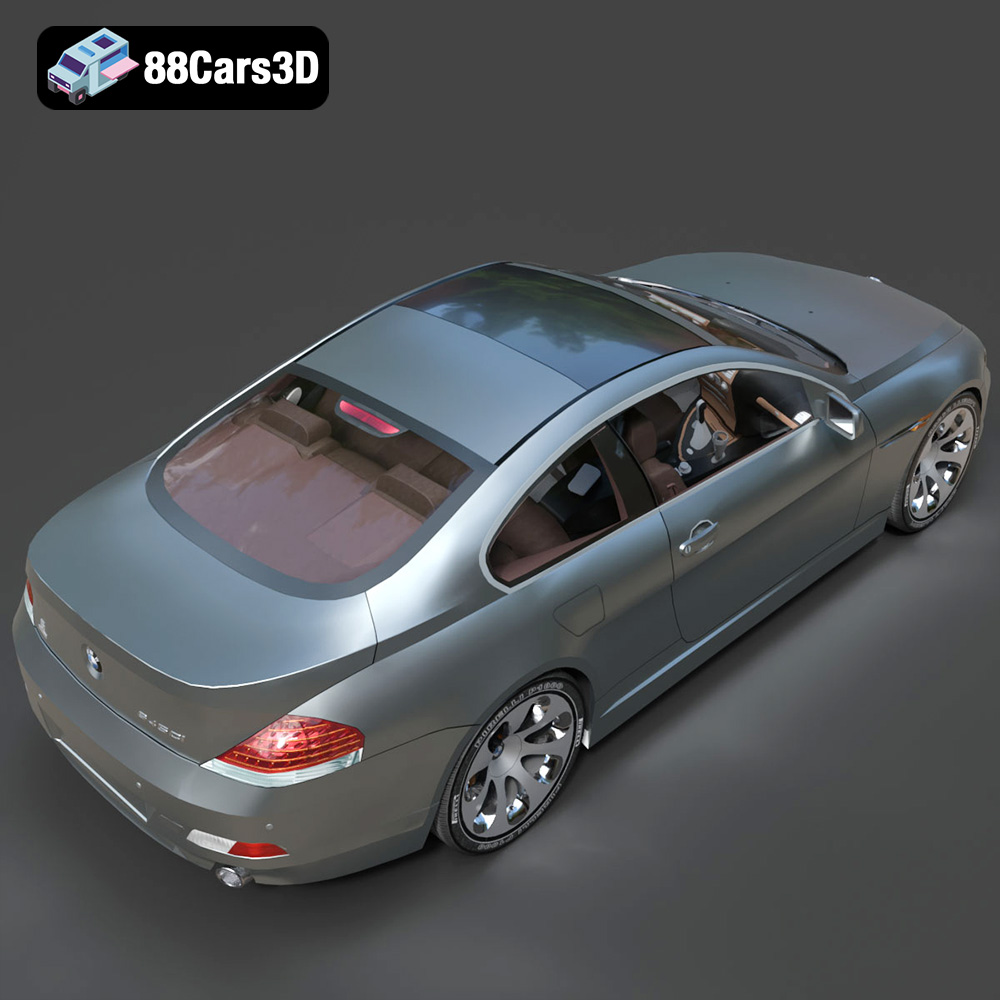
In virtual reality, detail is perceived more acutely. The fully modeled interior of the E63 becomes a key feature. Users can virtually sit inside the coupe, examine the dashboard, steering wheel, and premium leather seating. Since the model utilizes separated components (doors, steering wheel), developers can quickly script interactive features, such as opening the door handles or starting the virtual ignition, enhancing immersion.
Utilizing Separated Components for Complex Animation
Professional animation, whether for a commercial or a detailed simulation, relies on flexible asset geometry. The technical advantage of having separated and properly pivoted components cannot be overstated.
Vehicle Rigging and Suspension Simulation
For realistic driving animations, the BMW 6 Coupe E63 needs a vehicle rig. Since the wheels, axles, and suspension elements (even if simplified) are separated, artists can easily link them to inverse kinematics (IK) systems. This allows for complex, realistic suspension travel over uneven terrain, ensuring the car’s movement looks authentic in cinematic sequences.
Detailing the Interior and Engine Bay Shots
While the exterior sells the design, the interior sells the luxury experience. The E63 model’s detailed interior allows for specific camera shots focusing on craftsmanship—the instrument cluster, the quality of the center console, or the texture of the seat material. Furthermore, the separated hood allows for seamless animation of lifting the hood to reveal an engine (if added) or to simplify lighting the interior cabin for rendering.
Conclusion: Elevating Projects with High-Fidelity Car Assets
Selecting a professional-grade 3D car model is an investment that streamlines production across visualization, simulation, and game development. The BMW 6 Coupe E63 3D Model exemplifies the necessary technical quality: quad-dominant topology, accurate scaling, flexible hierarchy, and comprehensive file format compatibility. From the detailed interior designed for immersive VR to the clean geometry optimized for real-time game assets, this model serves as a powerhouse asset.
Whether you are pursuing photorealistic automotive rendering using 3ds Max or developing a high-performance simulation in Unreal Engine, assets sourced from 88cars3d.com provide the essential building blocks for success. The technical readiness of the E63 model drastically reduces preparation time, allowing experts to focus their energy on creative lighting, texturing, and final output optimization.
Featured 3D Model
BMW 6 Coupe E63 3D Model
Experience the elegance and dynamic performance of the BMW 6 Coupe E63 with this meticulously crafted 3D model. Representing the iconic luxury grand tourer, this model captures the sleek lines, assertive stance, and refined details of the E63 generation. Built with clean geometry and balanced detailing, it offers both visual fidelity and optimal performance. Ideal for professional rendering, immersive animation, realistic simulations, and high-quality game development projects.
$10.79
Product Image Gallery


Related Tags
.6coupee63
.arvr
.blend
.bmw
.coupe
.fbx
.gameasset
.glb
.luxurycar
.max
.obj
.ply
.rendering
.simulation
.sportsCar
.stl
.unreal
