

The automotive industry has always been at the forefront of technological innovation, not just in vehicle design and engineering, but also in how cars are presented, marketed, and experienced. In an era where visual fidelity and real-time interaction are paramount, traditional pre-rendered visualizations are giving way to dynamic, interactive experiences powered by game engines. Among these, Unreal Engine stands out as a transformative force, offering unparalleled photorealism, lightning-fast iteration, and incredible versatility for everything from design reviews to virtual showrooms and cinematic advertising.
For 3D artists, game developers, automotive designers, and visualization professionals, mastering Unreal Engine is no longer an option but a necessity. It empowers creators to bring high-fidelity 3D car models to life, complete with physically accurate materials, dynamic lighting, and immersive interactivity. Imagine a customer configuring their dream car in real-time, walking around it, opening doors, and changing colors, all rendered with cinematic quality. This is the promise of Unreal Engine in automotive visualization.
This comprehensive guide will walk you through the complete workflow for leveraging Unreal Engine for automotive visualization, starting from acquiring optimized 3D car models from platforms like 88cars3d.com to deploying interactive experiences. We’ll delve into project setup, asset optimization with Nanite, crafting stunning PBR materials, mastering real-time lighting with Lumen, implementing interactivity with Blueprint, and much more. By the end of this post, you’ll have a solid understanding of the tools and techniques required to create breathtaking automotive visualizations that push the boundaries of real-time rendering.
Laying the Foundation: Project Setup and High-Quality Asset Acquisition
The journey to stunning automotive visualization in Unreal Engine begins with meticulous project setup and the selection of high-quality 3D assets. A well-configured project provides the optimal environment for performance and visual fidelity, while premium models ensure your vehicles look their best from the outset. Compromising on either of these foundational steps can lead to significant headaches down the line.
Unreal Engine Project Configuration for Automotive Excellence
When starting a new project in Unreal Engine, choosing the right template and configuring key settings is crucial. While a ‘Blank’ project offers maximum flexibility, the ‘Automotive Configurator’ template (available through the Marketplace or specific Epic Games Launcher versions) provides a great starting point with pre-configured settings and example assets tailored for automotive use cases. However, for maximum control, let’s consider a manual setup:
Begin by creating a new ‘Blank’ project. Once open, navigate to Edit > Project Settings. Here, several adjustments are essential. Under Engine > Rendering, ensure the following are enabled for cutting-edge visuals:
- Lumen Global Illumination and Lumen Reflections: These are game-changers for realistic indirect lighting and reflections, crucial for shiny car surfaces.
- Nanite Virtualized Geometry: Essential for handling high-polygon car models without performance hitches.
- Virtual Shadow Maps (Beta): Provides incredibly detailed and accurate shadows, enhancing realism significantly.
- Hardware Ray Tracing (if targeting high-end PCs): Further enhances reflections, shadows, and global illumination.
Additionally, check Edit > Plugins. Make sure essential plugins like Datasmith Importer (for CAD data), USD Importer (for interoperable scenes), and Chaos Vehicles (for physics simulation) are enabled. For virtual production setups, nDisplay will also be vital. These initial configurations lay the groundwork for a robust and visually impressive automotive project.
Sourcing High-Quality 3D Car Models: The 88cars3d.com Advantage
The quality of your 3D car model directly impacts the final visualization. Low-quality models with messy topology, poor UV mapping, or non-PBR materials will inevitably lead to an inferior result, regardless of Unreal Engine’s power. This is where sourcing professional-grade assets becomes critical. Platforms like 88cars3d.com specialize in providing high-quality 3D car models specifically optimized for real-time rendering and Unreal Engine projects.
When selecting models, prioritize those with:
- Clean Topology: Quads are generally preferred, ensuring smooth deformation and efficient polygon distribution. Check for excessive tessellation in flat areas or overly sparse meshes where detail is needed.
- Realistic PBR Materials & Textures: Models should come with textures (Base Color, Metallic, Roughness, Normal, etc.) that adhere to Physically Based Rendering standards, allowing for accurate light interaction. Texture resolutions typically range from 2K to 4K for primary surfaces like paint, and 1K-2K for interiors or less visible parts.
- Proper UV Mapping: Non-overlapping, cleanly unwrapped UVs are essential for applying textures without distortion and for efficient lightmap generation (though less critical with Lumen).
- Multiple File Formats: FBX is the industry standard for game engines, offering good compatibility. USD (Universal Scene Description) is gaining traction for its robust scene description capabilities and interoperability, especially in complex pipelines. Ensure your chosen models support these formats for seamless import into Unreal Engine.
Models from marketplaces such as 88cars3d.com are typically pre-optimized, meaning they often have correct scale, pivot points, and a reasonable polygon count for their intended detail level, saving significant time in preparation. For example, a high-detail exterior model might have 200,000-500,000 polygons, while a full interior could push it to 1-2 million. With Nanite, even multi-million polygon models can be efficiently managed, allowing for unprecedented detail.
Importing and Optimizing Automotive Assets for Peak Performance
Once you have your high-quality 3D car models, the next crucial step is to efficiently bring them into Unreal Engine and optimize them for real-time performance. This involves leveraging powerful import tools and Unreal Engine’s cutting-edge virtualized geometry system, Nanite, along with traditional optimization techniques like Level of Detail (LOD) management.
Efficient Model Import with Datasmith and USD
Unreal Engine offers robust solutions for importing complex automotive assets. For models originating from CAD software (like SolidWorks, Catia, or Autodesk VRED) or DCC tools like 3ds Max or Maya, Datasmith is your go-to. Datasmith not only imports meshes but also attempts to preserve scene hierarchy, material assignments, and metadata, significantly streamlining the conversion process. To use it, simply export your scene from your DCC application using the Datasmith exporter plugin, then import the .udatasmith file into Unreal Engine via File > Import Into Level… or the Content Browser’s Import button.
When importing, pay attention to the Datasmith import options:
- Import Geometry: Ensure this is enabled.
- Import Materials: Datasmith attempts to convert source materials into Unreal Engine materials, often requiring manual refinement afterward.
- Import Lights/Cameras: Depending on your needs, these can be imported or recreated within Unreal.
- Merge Meshes: Use this cautiously. While it can reduce draw calls, it might hinder individual part manipulation (e.g., opening a door).
- Build Nanite: Crucially, ensure this is checked for optimal performance with high-poly meshes.
For more advanced, collaborative workflows and interoperability, USD (Universal Scene Description) is becoming increasingly prominent. USD allows for non-destructive scene composition, layering, and attribute inheritance, making it ideal for managing complex automotive assemblies with multiple contributors. Unreal Engine’s native USD support allows you to import .usd, .usdc, or .usdz files directly, preserving much of the scene structure and relationships. This is particularly useful when working with assets that might undergo continuous iteration in different software packages.
Harnessing Nanite for High-Fidelity Car Models
Nanite Virtualized Geometry is a core component of Unreal Engine 5, revolutionizing how high-polygon meshes are handled. For automotive visualization, Nanite is a game-changer. It allows artists to import incredibly detailed models, even millions of polygons, without performance penalties typically associated with such complexity. Nanite streams and renders only the necessary detail, at pixel-scale, eliminating traditional LODs for static meshes and significantly reducing draw calls. For comprehensive information on Nanite, refer to the official Unreal Engine documentation at dev.epicgames.com/community/unreal-engine/learning.
To enable Nanite on your imported static meshes:
- Import your high-poly car model (e.g., from 88cars3d.com) into Unreal Engine.
- In the Content Browser, double-click your static mesh asset to open the Static Mesh Editor.
- Under the Details panel, find the Nanite Settings section.
- Check the Enable Nanite checkbox.
- Click Apply Changes.
You’ll immediately see the polygon count decrease in the viewport while the visual fidelity remains impeccable. Nanite dramatically simplifies the asset pipeline, freeing artists to focus on detail rather than polygon budgets. It’s particularly effective for car bodies, intricate engine parts, and detailed interiors. However, it’s important to remember that Nanite currently works only with static meshes. Skeletal meshes (for animated parts like rotating wheels or articulated suspension if not handled via Blueprint), masked materials (e.g., some glass types), and translucent materials are not yet supported by Nanite and require traditional optimization methods.
Level of Detail (LOD) Management for Performance and Flexibility
While Nanite handles static mesh optimization beautifully, Level of Detail (LOD) management remains vital for non-Nanite meshes, such as skeletal meshes, and for ensuring optimal performance in scenarios where Nanite might not be the best fit (e.g., very distant objects, mobile platforms). LODs are simplified versions of your mesh that are swapped in at varying distances from the camera, reducing polygon count and draw calls when a high level of detail isn’t perceptually necessary.
Unreal Engine offers automatic LOD generation. In the Static Mesh Editor, under the LOD Settings, you can configure the number of LODs and parameters like reduction settings. For a typical car model, you might have:
- LOD0: Full detail (Nanite enabled for static parts, or high poly for non-Nanite).
- LOD1: ~50% reduction in polygons.
- LOD2: ~75% reduction.
- LOD3: Aggressive reduction, perhaps a simplified proxy mesh for very distant views.
For skeletal meshes or very specific components, manual LOD creation in your DCC software and importing them into Unreal Engine often yields superior results. When importing, ensure your LODs are named correctly (e.g., Car_LOD0, Car_LOD1) for automatic detection. Proper LOD setup is crucial for maintaining smooth frame rates, especially in complex scenes or when targeting less powerful hardware like AR/VR headsets or mobile devices. For example, a car’s wheels, often skeletal for animation, might require carefully crafted LODs ranging from 50,000 triangles (LOD0) down to 5,000 (LOD3) to maintain performance without visible popping.
Crafting Realistic Materials and Textures in Unreal Engine
The visual impact of a 3D car model is largely determined by the quality and realism of its materials. In Unreal Engine, this means leveraging Physically Based Rendering (PBR) principles and mastering the Material Editor to create surfaces that interact with light just like they would in the real world. From the intricate reflections of car paint to the subtle imperfections of glass and rubber, attention to detail in materials is paramount for automotive visualization.
PBR Material Principles for Automotive Surfaces
PBR is a workflow that aims to render materials in a way that accurately simulates how light behaves in the physical world. For automotive surfaces, this means understanding and correctly applying several key PBR channels:
- Base Color (Albedo): This map defines the inherent color of the surface without any lighting information. For car paint, it’s the base hue. For metals, it’s typically dark or black, as the color comes from the Metallic channel.
- Metallic: A grayscale map where black (0) represents a dielectric (non-metal) and white (1) represents a conductor (metal). Car paint is dielectric (0), while chrome accents or alloy wheels are metallic (1). This channel dictates whether reflections are colored by the Base Color.
- Roughness: A grayscale map defining the microscopic surface irregularities. Black (0) is perfectly smooth and reflective (e.g., polished chrome), while white (1) is completely rough and diffuse (e.g., matte plastic). Car paint usually has very low roughness, while tires have high roughness.
- Normal Map: This map fakes surface detail by altering how light interacts with the mesh’s normals, giving the illusion of bumps and grooves without adding actual geometry. Essential for subtle panel gaps, tire treads, or even the microscopic flakes in metallic paint.
- Ambient Occlusion (AO): A grayscale map that darkens crevices and recessed areas, simulating localized shadowing and enhancing perceived depth.
- Emissive: Used for materials that emit light, such as headlights, tail lights, or interior dashboard displays.
The key to realistic automotive materials lies in having high-quality, physically accurate textures for each of these channels. When sourcing assets from platforms like 88cars3d.com, ensure they come with a comprehensive set of PBR textures, ideally at 2K or 4K resolution for close-up detail. Consistency in texel density (pixels per unit of surface area) across different parts of the car will prevent textures from looking blurry or stretched.
Advanced Material Editor Techniques for Automotive Realism
Unreal Engine’s Material Editor is a powerful node-based system that allows for incredible flexibility in material creation. For automotive visualization, advanced techniques are often employed to achieve photorealistic results:
- Master Materials and Material Instances: Create robust ‘Master Materials’ that contain all the complex logic for a specific surface type (e.g., ‘M_CarPaint_Master’, ‘M_Glass_Master’). Then, create ‘Material Instances’ from these masters. Instances allow artists to quickly adjust parameters (like color, roughness values, normal map intensity) without recompiling the shader, enabling rapid iteration for different car colors or material finishes.
- Layered Car Paint: Realistic car paint is complex, often involving a base color, metallic flakes, a clear coat, and even orange peel effects. A master car paint material might include:
- Base Layer: Simple PBR setup for the underlying paint color.
- Flake Layer: A ‘flake normal map’ and custom logic to simulate microscopic metallic flakes that catch the light, adding sparkle.
- Clear Coat Layer: Utilizes Unreal Engine’s built-in Clear Coat shading model, which provides an additional specular lobe for realistic reflections on a transparent top layer, crucial for modern automotive finishes. Parameters like Clear Coat Roughness and Clear Coat Normal can be exposed.
- Fresnel Effect: Used for both clear coat and base reflections to ensure reflections dim at grazing angles, mimicking real-world physics.
- Advanced Glass Materials: Beyond simple transparency, automotive glass requires accurate refraction, reflections, and potentially even subtle imperfections. Using a dedicated ‘M_Glass_Master’ with parameters for tint color, roughness, refraction index (IOR), and subtle normal maps for dirt or smudges can greatly enhance realism. For complex scenarios, masked materials with custom depth rendering can create convincing multi-layered glass effects.
- Material Functions: Encapsulate reusable chunks of material logic (e.g., a custom metallic flake generator, an adjustable dirt overlay). These can be dropped into multiple master materials, promoting efficiency and consistency.
- Detail Normals: For close-up shots, a secondary, tiled normal map (often very subtle) can be blended over the primary normal map to add microscopic surface detail that might not be present in the original texture, like slight orange peel on paint or fine grain on leather.
By combining these techniques, artists can craft materials that truly bring 3D car models to life, making them indistinguishable from their real-world counterparts in a real-time environment. Regular testing under various lighting conditions is key to ensuring PBR accuracy.
Dynamic Lighting and Stunning Visuals in Real-Time
Lighting is arguably the most critical element in any visualization, and for automotive rendering, it can make or break the realism of a scene. Unreal Engine offers a suite of powerful lighting tools, from advanced global illumination systems like Lumen to traditional light sources, all complemented by cinematic post-processing effects. Mastering these tools allows artists to create environments that perfectly showcase the intricate details and exquisite materials of 3D car models.
Real-Time Global Illumination with Lumen
Lumen is Unreal Engine 5’s default global illumination and reflections system, designed specifically for next-generation real-time applications. It replaces the need for baked lightmaps and greatly simplifies the lighting workflow by providing dynamic, diffuse global illumination and reflections from emissive surfaces and sky lights. For automotive visualization, Lumen is transformative:
- Dynamic GI: As lights move or objects (like cars) change position, Lumen instantly updates the indirect lighting, providing realistic bounce light and color bleeding. This is critical for interactive configurators where environmental changes are common.
- Accurate Reflections: Lumen provides high-quality reflections on all surfaces, crucial for car paint, chrome, and glass. It integrates seamlessly with Nanite meshes, offering accurate reflections even on highly detailed geometry.
- Emissive Light Contribution: Headlights, tail lights, and dashboard screens can dynamically contribute to the scene’s global illumination, creating realistic glows and illuminating surrounding objects.
To optimize Lumen for automotive scenes, navigate to Project Settings > Engine > Rendering > Lumen. Consider adjusting parameters like Ray Tracing Quality (if hardware ray tracing is enabled), Lumen Scene Detail, and Final Gather Quality. Higher settings yield more accurate and smoother results but come with a performance cost. For detailed insights into Lumen and its various settings, refer to the official Unreal Engine documentation at dev.epicgames.com/community/unreal-engine/learning.
Mastering Directional, Sky, and Spot Lights
While Lumen handles indirect lighting, primary light sources are crucial for defining mood and showcasing form. A typical automotive lighting setup might include:
- Directional Light: Simulates the sun. Adjust its angle to control shadows and highlights, defining the car’s contours. Enable Cast Shadows and consider using Virtual Shadow Maps for crisp, detailed shadows.
- Sky Light: Captures the light from the sky and environmental reflections. Crucially, pair this with a high-dynamic-range image (HDRI) in the Source Cubemap slot. A good HDRI provides realistic ambient light and reflections, making the car look like it’s truly in that environment.
- Spot Lights & Rect Lights: Essential for studio lighting setups or accentuating specific features. Use Rect Lights (area lights) for soft, broad illumination (like studio softboxes) and Spot Lights for targeted highlights or interior lighting. Experiment with IES profiles (Illuminating Engineering Society photometric files) to simulate real-world light fixture distribution patterns, providing authentic light falloff.
- Point Lights: Useful for general fill light or small, localized light sources like interior dome lights.
Combining these lights with Lumen allows for incredibly dynamic and realistic illumination. For example, a crisp Directional Light might cast sharp shadows, while Lumen fills in the indirect bounces and the Sky Light provides overall ambient realism, all reflected accurately on the car’s body.
Post-Processing for Cinematic Appeal
No render is complete without a professional post-processing pass. Unreal Engine’s Post Process Volume is where you fine-tune the final look of your automotive visualization, adding cinematic flair and enhancing realism. Place a Post Process Volume in your scene and ensure its Unbound property is checked to apply effects globally.
Key post-processing settings for automotive include:
- Exposure: Crucial for balancing the overall brightness. Often, ‘Exposure > Metering Mode’ is set to ‘Auto Exposure’ with min/max brightness values defined, or manually tuned.
- Color Grading: Adjust ‘Color Grading > Global’ settings for temperature, tint, contrast, saturation, and gamma to achieve a desired mood or match reference imagery. Look-up Tables (LUTs) can also be used for advanced color grading.
- Bloom: Adds a soft glow to bright areas, enhancing the realism of lights and reflections. Adjust ‘Intensity’ and ‘Threshold’.
- Depth of Field (DoF): Blurs foreground and background elements, drawing the viewer’s eye to the car. Use ‘Focus Method > Tracking’ for dynamic focus on the vehicle or ‘Manual’ for fixed shots.
- Vignette: Subtly darkens the edges of the screen, focusing attention towards the center.
- Anti-Aliasing: Crucial for smooth edges. Temporal Super Resolution (TSR) is the default and generally recommended for UE5, but other options like Multi-Sample Anti-Aliasing (MSAA) might be used in specific scenarios.
- Ray Tracing (Optional): If hardware ray tracing is enabled, leverage its capabilities for high-quality shadows, reflections, and ambient occlusion, offering superior fidelity compared to screen-space alternatives.
Careful application of these effects, guided by artistic taste and reference materials, can elevate a good render to a truly stunning cinematic piece.
Bringing Cars to Life: Interactivity and Cinematics
Beyond static renders, Unreal Engine excels at creating dynamic, interactive experiences and high-quality cinematic content. This is where the true power of real-time rendering shines for automotive visualization, enabling everything from customizable car configurators to compelling virtual productions.
Blueprint for Interactive Automotive Configurators
Blueprint Visual Scripting is Unreal Engine’s powerful node-based scripting system that allows artists and designers to create complex gameplay and interactive functionalities without writing a single line of code. For automotive configurators, Blueprint is indispensable:
- Changing Materials: The core of a configurator is allowing users to change car paint colors, interior trims, or wheel finishes. This is achieved by creating Material Instances for each option and using Blueprint to set these instances dynamically. For example, a UI button click can trigger a Blueprint function that targets the car mesh’s material slot and assigns a new Material Instance Parameter.
- Swapping Mesh Components: For different wheel designs, spoilers, or body kits, Blueprint can swap static mesh components. You might have several wheel meshes, and Blueprint simply toggles their visibility or replaces them when a user selects an option.
- Animating Car Parts: Opening doors, hoods, or trunks can be animated using Timeline nodes within Blueprint. A user interaction (e.g., clicking a door) triggers an animation sequence defined in the Timeline, which drives the rotation or translation of the relevant mesh components.
- Environment Changes: Blueprint can also control the environment, allowing users to switch between different studio setups, outdoor scenes, or time-of-day settings. This might involve swapping HDRI cubemaps for the Sky Light, adjusting Directional Light rotation, or enabling/disabling different scene actors.
- User Interface (UMG): Unreal Motion Graphics (UMG) is used to create the interactive UI elements (buttons, sliders, dropdowns) that drive the Blueprint logic. Blueprint handles the communication between the UI widgets and the 3D car model.
A typical configurator Blueprint might involve an Actor Blueprint for the car itself, containing all mesh components and functions for changing materials/parts, and a Widget Blueprint for the user interface, which calls these functions on the car actor when buttons are pressed.
Cinematic Storytelling with Sequencer
For high-quality video output, advertisements, or virtual production, Sequencer is Unreal Engine’s non-linear cinematic editor. It allows you to choreograph complex scenes with precise timing and control over every aspect of your automotive showcase:
- Camera Animation: Create dynamic camera moves around and through the car. Keyframe camera positions, rotations, and focal lengths to achieve professional cinematography.
- Actor Animation: Animate specific car components (doors opening, wheels turning, suspension compression) and props in the scene.
- Material Parameter Tracks: Animate material properties, such as changing car paint color over time, adjusting reflectivity, or fading in/out decals.
- Lighting Changes: Keyframe light intensity, color, and position to create dramatic lighting shifts or time-of-day transitions.
- VFX Integration: Add visual effects like exhaust smoke using Niagara particle systems, or subtle dust particles to enhance realism.
- Audio Tracks: Sync sound effects (engine roar, door close) and background music.
- Rendering Cinematics: Use the Movie Render Queue within Sequencer to render out high-quality video sequences in various formats (e.g., EXR for professional post-production, H.264 for web distribution). This tool offers advanced features like temporal anti-aliasing, render warm-up frames, and arbitrary output variables, ensuring pristine image quality.
Sequencer is a powerful tool for crafting compelling narratives around your 3D car models, delivering polished, broadcast-quality content directly from your real-time engine.
Vehicle Physics and Dynamics with Chaos Vehicles
For interactive driving experiences, accurate vehicle physics is essential. Unreal Engine 5 integrates the Chaos Vehicles plugin, which offers a robust and highly configurable physics system for simulating realistic vehicle dynamics. This is invaluable for showcasing a car’s performance or creating interactive test drives.
Setting up Chaos Vehicles typically involves:
- Vehicle Blueprint: Create a Blueprint class inheriting from
WheeledVehiclePawnorChaosVehiclePawn. - Skeletal Mesh Setup: Your car model needs to be a skeletal mesh with appropriately rigged wheels (each wheel as a separate bone). Assets from 88cars3d.com often come with separate wheels, ready for this.
- Wheel Configuration: Define parameters for each wheel (radius, width, suspension length, spring rate, damping rate) in the Vehicle Movement Component.
- Engine & Transmission: Configure engine torque curves, gear ratios, and transmission types (manual/automatic) for realistic acceleration and speed.
- Tire Friction: Adjust tire friction parameters to simulate different surface types (asphalt, dirt, snow).
While the initial setup can be intricate, Chaos Vehicles provides a highly customizable framework for creating authentic driving simulations, allowing users to experience the feel of a car in real-time within your Unreal Engine project. This can elevate an automotive configurator from a static viewer to an immersive driving simulator.
Advanced Applications and Optimization Strategies
Unreal Engine’s capabilities extend far beyond basic visualization, offering solutions for cutting-edge virtual production and immersive AR/VR experiences. However, pushing these boundaries necessitates a deep understanding of performance optimization to ensure smooth, high-fidelity real-time rendering across diverse platforms.
Virtual Production and LED Wall Workflows
Virtual Production (VP) has revolutionized filmmaking and broadcast, and automotive marketing is no exception. Using Unreal Engine with large LED volumes (LED walls) allows for real-time in-camera visual effects, eliminating green screens and enabling dynamic, interactive backgrounds that react to physical camera movement. This is particularly impactful for automotive commercials and photo shoots.
The core technology for VP in Unreal Engine is nDisplay. nDisplay enables the engine to render multiple viewpoints simultaneously across an array of displays, like an LED wall. Key aspects of this workflow include:
- Multi-Machine Rendering: A cluster of PCs, each rendering a segment of the virtual environment, all synchronized by nDisplay.
- Camera Tracking: Physical camera movement (position, rotation, lens data) is tracked in real-time and fed into Unreal Engine, allowing the virtual environment to update its perspective correctly on the LED wall, creating a seamless illusion of depth for the camera.
- Real-Time Compositing: The virtual background rendered on the LED wall is captured by the physical camera, often with the physical car in the foreground. This creates a final composite shot directly in-camera, reducing post-production time.
For automotive, VP means designers can iterate on car concepts within virtual environments, marketers can shoot commercials with dynamic, customizable backdrops, and event planners can create immersive product launches. This workflow requires precise calibration and a powerful hardware setup, but the creative freedom it offers is unparalleled.
Performance Optimization for AR/VR and High-End Demos
While Nanite and Lumen offer incredible visual fidelity, real-time performance is always a primary concern, especially for demanding applications like AR/VR or high-frame-rate interactive demos. Optimization is an ongoing process throughout development.
Key Optimization Strategies:
- Profiling Tools: Regularly use Unreal Engine’s built-in profiling tools.
stat gpu: Shows GPU frame time breakdown.stat rhi: Displays rendering hardware interface statistics (draw calls, primitives).stat unit: Basic frame time breakdown (Game, Draw, GPU, RHI).- Unreal Insights: A powerful standalone tool for deep profiling of CPU and GPU performance, memory usage, and more.
Identifying bottlenecks (e.g., too many draw calls, expensive post-processing, inefficient materials) is the first step.
- Draw Call Reduction: Even with Nanite, non-Nanite meshes contribute draw calls. Combine meshes where possible (e.g., small interior components that are always visible together) to reduce calls.
- Texture Optimization:
- Use appropriate texture resolutions (e.g., 2K for primary car body, 512-1K for interior props).
- Enable texture streaming in asset settings.
- Use texture compression (e.g., BC7 for normal maps, BC5 for color).
- Material Complexity: Simplify expensive materials. Reduce the number of instructions in material graphs. Utilize Material Functions for shared logic, but be mindful of their complexity.
- Lightmap Baking (for non-Lumen scenarios): For highly optimized static scenes (e.g., some AR/VR applications or older hardware), consider baking static lighting. While Lumen is dynamic, baked lighting offers superior performance for completely static environments.
- Blueprint Optimization: Avoid complex calculations on Tick events. Use efficient loops, cache references, and only update variables when necessary.
- LODs for Non-Nanite Meshes: Ensure all non-Nanite meshes (skeletal meshes, translucent parts) have appropriate LODs to reduce polygon count at a distance.
- Culling and Visibility: Ensure proper frustum culling (objects outside camera view are not rendered) and occlusion culling (objects hidden behind others are not rendered) are working. Use Hierarchical LOD (HLOD) for very large open-world environments.
- Scalability Settings: Provide users with graphics quality options. Configure Engine Scalability settings to dynamically adjust render quality (shadows, view distance, post-processing) based on user preference or hardware.
Continuous profiling and iterative optimization are key to achieving target frame rates and a smooth user experience, especially when dealing with the visual complexity of automotive models.
Exporting and Deployment Considerations
Once your automotive visualization is complete, packaging and deploying it for its intended platform is the final step. Unreal Engine provides robust packaging tools for various targets:
- Windows Executables: For high-end PC demos, virtual showrooms, or virtual production environments.
- Android/iOS: For mobile AR applications or tablet-based configurators. Requires specific project settings and mobile rendering optimizations.
- Web (HTML5): For browser-based experiences (though less common for high-fidelity automotive due to performance limitations).
- VR/AR Headsets: Dedicated pipelines for platforms like Oculus, SteamVR, HoloLens, or Magic Leap.
Go to File > Package Project and select your desired platform. Before packaging, ensure you have configured your project settings for the target platform, including input settings, rendering profiles, and any required platform-specific plugins. For example, mobile deployment requires specific texture compression settings and often demands more aggressive optimization. For interoperability, you can also export parts of your scene or individual assets as USD, allowing them to be easily used in other software packages that support the standard.
Conclusion: Driving Innovation with Unreal Engine and High-Quality Assets
The realm of automotive visualization has undergone a dramatic transformation, driven by the advent of real-time rendering engines like Unreal Engine. This comprehensive guide has explored the end-to-end workflow, from the critical first step of acquiring high-quality 3D car models to the sophisticated techniques required to bring them to life with stunning photorealism and dynamic interactivity.
We’ve delved into configuring your Unreal Engine project for optimal automotive rendering, efficiently importing and optimizing assets using Datasmith, USD, and the revolutionary Nanite virtualized geometry system. We’ve uncovered the secrets of crafting physically accurate PBR materials, mastering dynamic real-time lighting with Lumen and traditional sources, and applying cinematic post-processing. Furthermore, we’ve explored how Blueprint empowers interactive configurators, Sequencer facilitates professional cinematic content, and Chaos Vehicles enables realistic driving simulations. Finally, we touched upon advanced applications like virtual production and essential performance optimization strategies for demanding platforms like AR/VR.
The journey to creating breathtaking automotive experiences in Unreal Engine is a blend of technical expertise and artistic vision. By leveraging cutting-edge features like Nanite and Lumen, and starting with a solid foundation of optimized 3D car models from trusted sources such as 88cars3d.com, you are equipped to push the boundaries of what’s possible in real-time visualization. The automotive industry continues to embrace these technologies for design, marketing, and sales, making proficiency in Unreal Engine an invaluable skill.
Now is the time to experiment, iterate, and build. Dive into Unreal Engine, practice these workflows, and start creating your own stunning automotive visualizations. The road ahead is filled with exciting possibilities, and with the right tools and knowledge, you’re ready to drive innovation.
Featured 3D Car Models

Elite Future Mobility: EV & Autonomous SUV Bundle (4 High-End 3D Models)3D Printable STL
Download the Elite Future Mobility Bundle featuring 4 highly optimized 3D models: Tesla Model S, Avatr 11, Li L9, and Zoox Robotaxi. Perfect for ArchViz, Smart City renders, and game dev. Optimized for Unreal Engine and Blender. Includes .fbx, .obj, and .max formats.
Price: $99

German Luxury & Performance Bundle – High-End 3D Vehicle Collection3D Printable STL
🚗 5 Iconic German Cars (BMW M4 G82, M5 CS, X3, 1 Series & Mercedes E-Class). ✅ Optimized for ArchViz: Ready for Corona & V-Ray. 💰 Save €71 with this limited-time collection! 🚀 Instant Download after purchase.
Price: $119

Extreme Off-Road & Survival 3D Models Bundle (4-in-1 Pack)3D Printable STL
Download the Extreme Off-Road & Survival 3D Models Bundle! Includes the Brabus 800 Adventure, Dodge Ram Bigfoot, Spec Truck, and a Caravan. Save over €210 on this premium 4-in-1 off-grid vehicle pack for ArchViz and game development.
Price: $149.99

Heavy Duty & Commercial Logistics 3D Models Bundle (4-in-1 Pack)3D Printable STL
Download the Heavy Duty & Commercial Logistics 3D Models Bundle! Includes the Ford Sterling, Caterpillar CT680, Mercedes Citaro Bus, and Vito Van. Save over €130 on this massive, game-ready 4-in-1 industrial vehicle pack.
Price: $109.99

The Ultimate Garage Props & Custom Motorcycles 3D Models Bundle 3D Printable STL
Download the Ultimate Custom Motorcycles 3D Models Bundle. Includes a Custom Chopper, Ducati 916 Café Fighter, Harley XR1200X, and BMW K100. Perfect premium props for luxury ArchViz garages. Save over €250 today!
Price: $159.99

Japanese Legends: JDM Street Racing 3D Models Bundle (5-in-1 Pack) Nissan Mitsubishi Honda Mazda Toyota 3D Printable STL
Download the ultimate JDM Street Racing 3D Models Bundle! Includes the Nissan GT-R, Toyota Supra, Mazda RX-7, Lancer Evo IX, and Honda NSX. Save big on this highly optimized, game-ready 5-in-1 Japanese legend car pack.
Price: $129.99

American Muscle & Classics Pack 4 in 1 Ford Dodge Chevrolet 3D Printable STL
Download the ultimate American Muscle & Cinematic Classics 3D Models Bundle! Includes the Dodge Charger ’68, Mustang Eleanor GT500, Camaro Z28 ’79, and a custom ’69 Mustang. Save over €240 on this game-ready, premium 4-in-1 pack.
Price: $149.99

Everyday City Traffic Essentials pack 5in1 Hyundai Kia Volkswagen Toyota Ford 3D Printable STL
Download the Everyday City Traffic 3D Models Bundle. Includes the VW Golf, Kia Picanto, Hyundai Tucson, Toyota Yaris, and a DHL Ford Transit Van. Save big on this 5-in-1 pack, perfectly optimized for realistic ArchViz streets and game traffic.
Price: $99.99
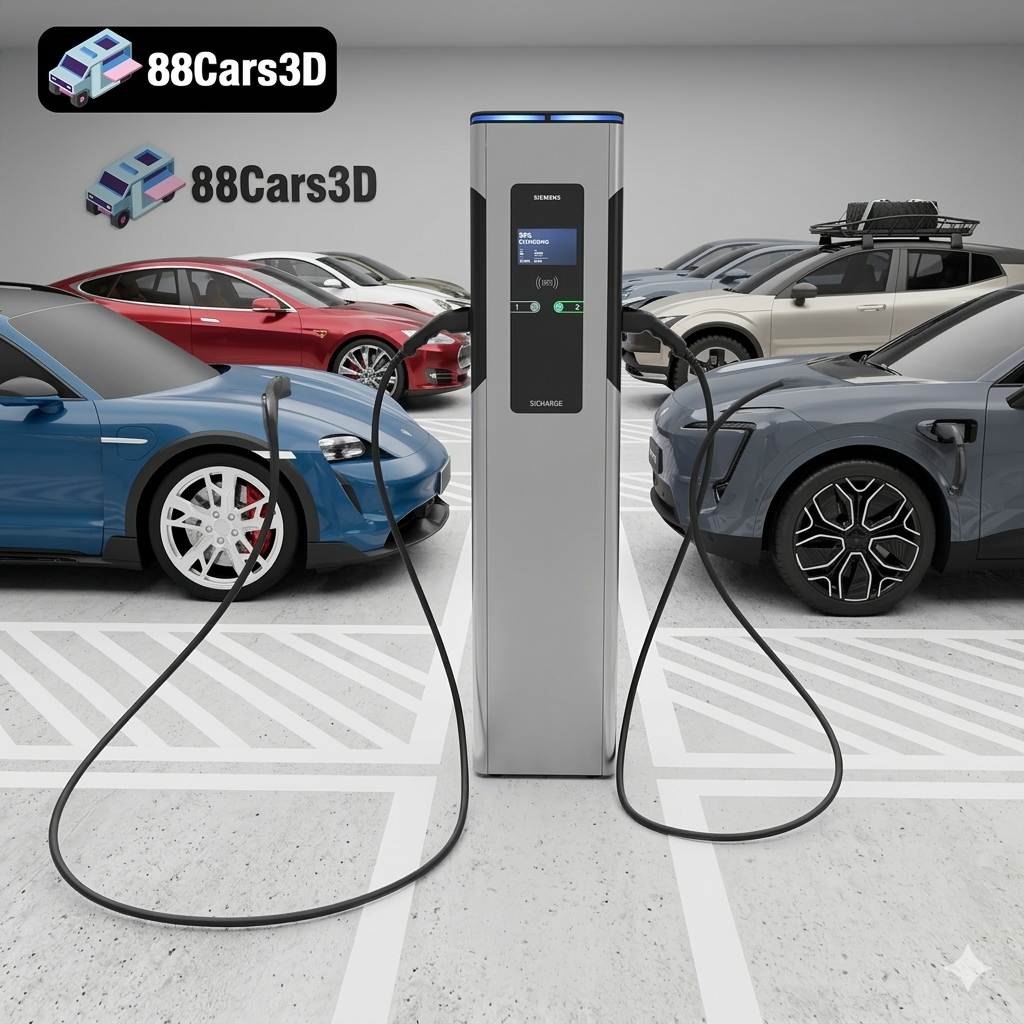
The Future of Mobility: Smart City EV 3D Models Bundle (5-in-1 Pack) Volvo Tesla AVATR Porsche 3D Printable STL
Download the Future of Mobility EV 3D Models Bundle. Includes the Volvo EX30, Tesla Model S, AVATR 11, Porsche Taycan, and a Siemens EV Charger. Save big on this highly optimized 5-in-1 pack for ArchViz and game development!
Price: $89.99

Ultimate German Luxury ArchViz Pack BMW Mercedes Porsche Audi3D Printable STL
Download the Ultimate German Luxury Cars 3D Models Bundle. Includes the Porsche 911 GT3, Audi RS7, BMW M4 F82, and Mercedes-Benz G63 AMG. Save over 50% on this premium 4-in-1 pack! Highly optimized for ArchViz, rendering, and game development.
Price: $129.99
