

Unreal Engine has revolutionized the way we approach real-time rendering and visualization, particularly within the demanding realm of automotive design and marketing. Gone are the days of lengthy offline rendering queues; today, stunningly realistic 3D car models can be experienced, interacted with, and even driven in a dynamic, real-time environment. This paradigm shift offers unparalleled flexibility for automotive configurators, virtual showrooms, game development, cinematic production, and advanced design reviews.
For professionals and enthusiasts alike, mastering Unreal Engine’s powerful toolset is key to unlocking the full potential of high-fidelity 3D car models. From meticulous asset import and geometry optimization with cutting-edge features like Nanite, to crafting lifelike PBR materials, setting up advanced lighting with Lumen, and creating interactive experiences with Blueprint, Unreal Engine provides a comprehensive ecosystem. This guide delves deep into the essential workflows and techniques required to bring automotive excellence to life in Unreal Engine, ensuring your projects stand out with visual fidelity and optimal performance. We’ll explore how to leverage Unreal Engine to its fullest, transforming high-quality assets sourced from platforms like 88cars3d.com into captivating real-time experiences.
Setting the Stage: Unreal Engine Project Setup and Model Integration
Embarking on any automotive visualization project in Unreal Engine begins with a solid foundation. Proper project setup and efficient model integration are critical steps that influence everything from visual fidelity to long-term scalability and performance. Understanding the nuances of Unreal Engine’s architecture and how it handles complex 3D car models will streamline your workflow significantly.
Initial Project Configuration for Automotive Projects
When starting a new Unreal Engine project, selecting the right template is crucial. For automotive visualization, a “Blank” project is often preferred as it gives you maximum control, though “Games” or “Film, Television, and Live Events” templates can also be adapted. Regardless of the template, several plugins are indispensable. The Datasmith plugin is a cornerstone for importing complex CAD data and scene hierarchies from professional design software like 3ds Max, Maya, or CAD packages. It preserves metadata, layers, and material assignments, making the transition much smoother. Additionally, consider enabling the “USD Importer” for projects utilizing Universal Scene Description, an open-source format increasingly adopted for large-scale content pipelines and collaborative workflows, offering excellent interoperability. For optimal performance in high-fidelity projects, you’ll want to target the latest Unreal Engine version, which provides access to features like Nanite and Lumen, significantly improving visual quality and performance for complex scenes.
Seamless Import of High-Quality 3D Car Models
Importing your 3D car models efficiently is the next crucial step. While Datasmith handles complex scenes, individual high-quality models, such as those found on 88cars3d.com, often come in optimized formats like FBX or USD. When importing an FBX file, pay close attention to the import settings:
- Scale: Ensure the model’s scale is correct (1 unit = 1cm in Unreal). Mismatched scales can lead to physics issues, lighting artifacts, and improper interaction.
- Pivot Point: Verify the pivot point is at the base of the model for easy placement and rotation. Unreal Engine allows you to adjust pivots post-import, but getting it right initially saves time.
- Collision: For interactive applications or physics simulations, generate appropriate collision meshes. Simple Box or Spherified collision generally suffices for the main body, while more complex shapes might be needed for wheels or interactive elements. For static visualization, “No Collision” might be acceptable to save performance.
- Material Import: Let Unreal Engine import materials, but expect to rebuild or significantly adjust them using PBR principles in the Material Editor for optimal visual fidelity.
Once imported, organize your assets within the Content Browser using a consistent naming convention and folder structure to maintain project clarity.
Optimizing Geometry with Nanite and LODs
High-fidelity 3D car models can be incredibly detailed, often featuring millions of polygons, which traditionally posed significant performance challenges in real-time engines. Unreal Engine’s Nanite virtualized geometry system is a game-changer here. Nanite allows artists to import film-quality assets directly into the engine, rendering them with an unprecedented level of geometric detail without manual LOD creation or significant performance penalties. For a detailed car model, simply enable Nanite on the static mesh, and Unreal Engine will handle the rest, intelligently streaming and rendering only the necessary triangle data at pixel-level fidelity. This means even intricate details like engine components, interior stitching, and subtle body panel curves can be rendered with exceptional clarity.
However, Nanite isn’t always the solution for every scenario. For assets not compatible with Nanite (e.g., animated meshes, translucent materials, or particle systems), or for projects targeting platforms that don’t support Nanite (like mobile or specific AR/VR headsets), traditional Level of Detail (LOD) management remains crucial. Manually generated LODs (e.g., three to five levels ranging from 100% detail down to 10-20% detail at distance) can significantly improve performance by swapping out high-polygon meshes for simpler ones as objects move further from the camera. Unreal Engine provides an automated LOD generation tool, but hand-optimizing is often superior for critical assets like car models. Polygon count targets vary widely, but for a high-end PC visualization, a Nanite-enabled car might easily exceed 5 million triangles, while a non-Nanite game-ready car might target 100,000-300,000 triangles for its base LOD0, with subsequent LODs dropping to tens of thousands.
Crafting Realism: PBR Materials and Advanced Shading
The visual impact of any 3D car model in Unreal Engine is profoundly influenced by its materials. Physically Based Rendering (PBR) is the industry standard for achieving photorealistic results, accurately simulating how light interacts with different surfaces. Mastering Unreal Engine’s Material Editor to create compelling PBR materials for automotive assets is an art form that blends technical understanding with an eye for detail.
Fundamentals of Physically Based Rendering (PBR)
PBR is an approach to shading that aims to mimic the physical properties of light and surfaces, resulting in more consistent and realistic rendering under varying lighting conditions. The core PBR textures, often referred to as maps, include:
- Base Color (Albedo): Defines the diffuse color of the surface without any lighting information. It should be flat, without shadows or highlights. For metals, this map can define their color.
- Normal Map: Adds surface detail without increasing polygon count by faking bumps and dents through manipulating surface normals. Essential for intricate details like tire treads, leather grain, or subtle body imperfections.
- Roughness Map: Controls the microscopic surface irregularities. A rough surface scatters light more broadly (dull appearance), while a smooth surface reflects light more sharply (glossy appearance). Crucial for distinguishing between matte paint, glossy clear coats, and polished chrome.
- Metallic Map: Determines if a surface is metallic (0 for non-metal, 1 for metal). Metals typically have no diffuse color and reflect light based on their Base Color.
- Ambient Occlusion (AO) Map: Simulates soft self-shadowing in crevices and corners, enhancing depth and realism.
Understanding how these maps interact is fundamental to crafting believable automotive surfaces.
Building Realistic Car Materials in Unreal’s Material Editor
Unreal Engine’s Material Editor is a node-based interface that allows for intricate material creation. For automotive assets, specific material types require careful attention:
- Car Paint: This is arguably the most complex and visually critical material. A realistic car paint material often requires a layered approach:
- A base diffuse color, optionally blended with a subtle metallic flake texture.
- A clear coat layer (simulated using a second specular lobe or a dedicated clear coat shader model if available in your Unreal version, e.g., using Advanced Material Options like “Clear Coat” input). This layer provides the glossy, reflective finish over the base paint.
- Adjustments for roughness, metallic, and normal maps for imperfections or a subtle orange peel effect.
Utilize Material Instances to create variations of a master material. This allows artists to quickly change colors, roughness values, or texture inputs without recompiling the entire shader, which is invaluable for car configurators.
Mastering Material Functions for Complex Shaders
As your automotive materials become more complex, Material Functions become an invaluable tool for organization and reusability. A Material Function is a self-contained graph of material nodes that can be reused across multiple master materials. For example, you could create a Material Function for a “Car Paint Flake” effect, a “Dirt Generator,” or a “Headlight Glass” effect. This modularity not only cleans up your main material graphs but also ensures consistency across different car models and reduces the effort required for updates or changes. Imagine having a single “PBR Car Paint” function that encapsulates all the intricate clear coat, metallic flake, and base color logic; you simply plug in your textures and values for each car. This significantly streamlines the material creation and iteration process, especially when working with a large library of car models and variations.
Illuminating the Scene: Dynamic Lighting and Ray Tracing
Lighting is the soul of any visualization, and in Unreal Engine, it’s where much of the magic happens for automotive projects. Achieving photorealistic results for 3D car models requires a deep understanding of Unreal’s advanced lighting systems, from dynamic global illumination to cutting-edge ray tracing.
Unreal Engine’s Modern Lighting Solutions: Lumen and Global Illumination
With Unreal Engine 5, Lumen Global Illumination and Reflections has fundamentally transformed real-time lighting. Lumen is a fully dynamic global illumination and reflection system that offers incredible realism without the need for lightmaps or pre-baking. For automotive studios, this means immediate visual feedback on lighting changes, dynamic environment interactions (e.g., a car driving into a shadow or a studio light moving), and incredibly accurate indirect lighting. This is paramount for showcasing a car’s form language and material nuances, as Lumen accurately simulates light bouncing off surfaces, illuminating darker areas and enriching colors. It eliminates the time-consuming process of lightmap baking, allowing for fluid iteration on scene setups and immediate visual validation of design choices. While Lumen offers stunning quality, it is also performance-intensive. Optimizing scene complexity, material settings, and Lumen-specific console variables (e.g., adjusting ‘r.Lumen.ScreenProbeGather.MaxRayBounces’) can help balance fidelity and frame rate.
Setting Up Professional Lighting Environments
To achieve studio-quality renders for your car models, a strategic approach to lighting is essential.
- HDRI Backdrops: High Dynamic Range Image (HDRI) backdrops are fundamental for realistic exterior lighting. An HDRI provides both background visuals and accurate environment lighting, casting natural light and reflections onto your car. Ensure your HDRI is high-resolution (8K-16K) for crisp reflections.
- Directional Lights: Mimic the sun. Adjust its intensity, color, and angle to create dramatic shadows and highlights. For a controlled studio environment, multiple directional lights at varying intensities can simulate a three-point lighting setup.
- Sky Light: Captures the ambient light from the sky (or the HDRI) and applies it to the scene, providing soft, even illumination that fills in shadows.
- Spot Lights and Rect Lights: Crucial for highlighting specific features of the car, adding rim lighting, or creating precise studio setups. Rect lights (part of the Rect Light component) are particularly effective for simulating softbox lights found in photography studios.
Experiment with light temperatures, intensities, and shadow biases to fine-tune the mood and emphasize the car’s design elements. Post-processing volumes with settings for exposure, color grading, bloom, and chromatic aberration can further enhance the final look, mimicking camera effects.
Leveraging Ray Tracing for Unparalleled Visual Fidelity
For the ultimate in visual fidelity, particularly in high-end automotive visualization and virtual production, Unreal Engine’s hardware-accelerated Ray Tracing capabilities are indispensable. Ray Tracing provides physically accurate global illumination, reflections, shadows, and ambient occlusion, surpassing the quality achievable with screen-space techniques or traditional rasterization. For car models, ray-traced reflections on glossy paint, glass, and chrome are incredibly accurate, capturing the environment and other objects with pristine detail. Ray-traced shadows are soft and realistic, eliminating traditional shadow mapping artifacts. While demanding on hardware (requiring an RTX or equivalent GPU), enabling ray tracing for key components like reflections and shadows, especially in conjunction with Lumen, elevates the realism to an almost indistinguishable level from offline renders. Optimize ray tracing by carefully selecting which lights and objects contribute to specific effects, and by adjusting the ‘Ray Tracing Samples Per Pixel’ in the Post Process Volume to balance quality and performance.
Bringing Cars to Life: Interactivity and Cinematics
Beyond static renders, Unreal Engine excels at creating dynamic, interactive experiences and compelling cinematic sequences for automotive assets. From configurators that allow real-time customization to stunning marketing films, these capabilities elevate the perception and engagement with 3D car models.
Blueprint Visual Scripting for Interactive Automotive Experiences
Unreal Engine’s Blueprint Visual Scripting system allows artists and designers to create complex gameplay and interactive logic without writing a single line of C++ code. This is a game-changer for automotive configurators and interactive demos. With Blueprint, you can build systems for:
- Color and Material Swapping: Create an array of material instances (e.g., different paint colors, wheel finishes) and use UI buttons (UMG) to switch them on the car in real time. For instance, a Blueprint script can detect a button click, retrieve the chosen color material instance, and apply it to the car’s paint mesh.
- Part Swapping: Dynamically change out wheel designs, interior trim, or body kits. This involves hiding one static mesh component and making another visible, often using an array of mesh options.
- Door Opening/Closing: Animate car doors, hood, or trunk with simple timelines or interpolation nodes, triggered by player interaction (e.g., clicking on the door).
- Camera Controls: Implement cinematic camera paths or allow free camera movement around the vehicle, with different pre-set “hot spots” for showcasing specific features.
Blueprint empowers rapid prototyping and iteration, allowing you to quickly test and refine interactive elements crucial for engaging automotive presentations.
Mastering Vehicle Physics and Dynamics
For driving simulations or realistic car interactions in games, Unreal Engine’s Chaos Vehicle physics system provides robust capabilities. This allows you to define realistic vehicle dynamics, including:
- Engine Parameters: Torque curves, RPM ranges, and gear ratios to simulate different engine types and performance characteristics.
- Transmission: Automatic or manual transmission settings, including shift points and differential types.
- Suspension: Configure spring rates, damping, and wheel offsets to accurately represent a car’s suspension system, influencing handling and visual deformation.
- Tire Friction: Define grip, slip, and other tire properties to affect how the car handles on different surfaces.
Setting up Chaos Vehicles involves creating a Chaos Vehicle Blueprint and assigning a Skeletal Mesh with correctly weighted bones for wheels and suspension. Tuning these parameters requires patience and iteration, but the result is a highly convincing and enjoyable driving experience that accurately reflects the real-world performance of the 3D car model.
Crafting Cinematic Sequences with Sequencer
Unreal Engine’s Sequencer is a powerful multi-track editor for creating stunning cinematic content, perfect for automotive marketing, commercials, or game cutscenes. It functions much like a traditional video editing suite but operates in real time within the engine. With Sequencer, you can:
- Animate Cameras: Keyframe camera movements, focal lengths, and aperture settings to achieve professional-grade cinematography. Use virtual camera systems for a more intuitive, on-set feel.
- Animate Objects: Animate car doors opening, wheels spinning, or the entire car moving along a path.
- Control Lighting: Animate light intensities, colors, and positions to create dynamic lighting changes throughout the shot.
- Integrate VFX: Add effects like exhaust fumes (using Niagara particle systems), rain, or dust.
- Post-Processing: Keyframe post-process volume settings (color grading, depth of field, motion blur, lens flares) to fine-tune the visual style of your cinematic.
Sequencer outputs high-quality image sequences (EXR, PNG) or video files, ready for post-production or direct use. Its real-time nature allows for quick iterations and pre-visualization, significantly reducing production time and costs compared to traditional linear workflows.
Performance and Deployment: Optimizing for Diverse Applications
High-fidelity automotive visualization demands not only stunning visuals but also robust performance. Whether deploying to a high-end virtual production stage, a VR headset, or an interactive web application, optimization is paramount. Understanding Unreal Engine’s performance tools and best practices ensures your 3D car models run smoothly across various platforms.
Granular Performance Optimization Techniques
Achieving optimal performance with detailed 3D car models in Unreal Engine requires a multi-faceted approach.
- Draw Calls: Minimize draw calls by combining meshes where appropriate (e.g., merging small interior details, though Nanite mitigates this for static meshes). Instanced Static Meshes can render multiple identical objects with a single draw call, ideal for elements like bolts or small repetitive parts.
- Texture Streaming: Ensure textures are appropriately sized and set to stream. Use the ‘Texture Streaming Pool’ settings to manage memory. High-resolution textures (4K-8K for car body) are vital, but less critical elements can use smaller textures (2K or 1K).
- Culling: Leverage frustum culling (objects outside the camera’s view are not rendered) and occlusion culling (objects hidden behind others are not rendered). Set appropriate bounds for your meshes.
- Scalability Settings: Unreal Engine’s built-in scalability options (View Distance, Anti-Aliasing, Post-Processing, Shadow Quality, etc.) allow you to dynamically adjust rendering quality based on hardware capabilities, crucial for broader deployment.
- Profile and Debug: Use Unreal Engine’s profiling tools like ‘Stat GPU,’ ‘Stat RHI,’ ‘Stat Engine,’ and the ‘Unreal Insights’ profiler to identify performance bottlenecks. These tools provide detailed metrics on CPU and GPU usage, draw calls, and memory consumption.
Careful planning and iterative testing are key to maintaining a smooth frame rate while preserving visual quality.
Tailoring for AR/VR and Mobile Automotive Experiences
Deploying automotive visualizations to AR/VR headsets or mobile devices introduces unique optimization challenges due to their constrained hardware.
- Geometry: While Nanite is revolutionary, it’s not yet available on mobile/standalone VR. For these platforms, aggressive LODs are mandatory. Aim for significantly lower polygon counts for the base meshes (e.g., 50,000-100,000 triangles for the entire car).
- Draw Calls: Group meshes and materials to minimize draw calls. Use a single material for as many parts as possible, relying on texture atlases.
- Lighting: Static lighting (baked lightmaps) is often preferred over fully dynamic lighting like Lumen (which is not supported on mobile/standalone VR) for performance reasons. If dynamic lighting is needed, use simpler forward rendering, optimized directional lights, and pre-computed indirect lighting.
- Post-Processing: Minimize expensive post-processing effects like bloom, depth of field, and volumetric fog.
- Resolution and Frame Rate: Target a stable 60-90 FPS for VR to prevent motion sickness and optimize render resolution for mobile displays. Foveated rendering can be leveraged on supported VR platforms to render the peripheral vision at a lower resolution, saving GPU cycles.
When sourcing automotive assets from marketplaces such as 88cars3d.com, look for models that explicitly state “game-ready” or “VR optimized” as they often come with pre-built LODs and streamlined materials.
Virtual Production and LED Wall Workflows
Unreal Engine has become the backbone of virtual production, particularly for automotive commercials and film. This involves rendering real-time 3D environments (often featuring high-fidelity car models) on massive LED walls, which then act as dynamic backgrounds for live-action foreground elements. This technique, known as In-Camera VFX, offers several advantages:
- Real-time Compositing: The virtual background is captured directly by the camera, eliminating complex green screen keying in post-production.
- Accurate Reflections and Lighting: The LED wall emits real light onto the physical car and actors, creating perfectly integrated reflections and environmental lighting.
- Iterative Creative Control: Directors can make real-time changes to the environment, lighting, and camera angles, seeing the final result immediately.
Setting up for LED walls involves precise calibration, matching the Unreal Engine camera to the physical camera, and optimizing content to run at extremely high resolutions and stable frame rates across multiple synchronized GPUs. Features like nDisplay and Multi-User Editing are critical for managing these complex setups, allowing multiple artists and technicians to work collaboratively on the same project in real time. For more information, refer to the official Unreal Engine documentation on virtual production.
Unreal Engine provides an unparalleled platform for bringing automotive visions to life with stunning realism and interactivity. From the initial import of high-quality 3D car models to the meticulous crafting of PBR materials, the dynamic illumination provided by Lumen and Ray Tracing, and the engaging experiences built with Blueprint and Sequencer, every aspect of automotive visualization can be elevated. The continuous advancements in features like Nanite and the robust optimization tools empower developers to push the boundaries of visual fidelity while maintaining crucial performance across a diverse range of applications, from high-end cinematic production to mobile AR experiences.
Mastering these workflows not only enhances the quality of your projects but also streamlines your production pipeline, allowing for faster iterations and greater creative freedom. As you embark on your next automotive project, remember the importance of high-quality base assets, such as those available on 88cars3d.com, combined with a deep understanding of Unreal Engine’s powerful toolset. The journey of transforming a static 3D model into a captivating, interactive automotive experience is both challenging and incredibly rewarding. Keep exploring, keep optimizing, and let Unreal Engine drive your automotive visualizations to new heights.
Featured 3D Car Models

The Italian Legends Bundle 5 Ultimate Supercar 3D Models STL Optimized
Texture: Yes | Material: Yes | 3D Printable: Yes. Download the Italian Thoroughbreds Bundle featuring 5 iconic 3D models: Lamborghini Huracán Performante, Ferrari 458 Italia, Lamborghini Urus, Diablo SV, and Maserati GT. Optimized for 4K rendering and 3D printing (STL included). Save 50% with this ultimate Italian vehicle collection.
Price: $199.99

Elite Future Mobility: EV & Autonomous SUV Bundle (4 High-End 3D Models)3D Printable STL
Download the Elite Future Mobility Bundle featuring 4 highly optimized 3D models: Tesla Model S, Avatr 11, Li L9, and Zoox Robotaxi. Perfect for ArchViz, Smart City renders, and game dev. Optimized for Unreal Engine and Blender. Includes .fbx, .obj, and .max formats.
Price: $99

German Luxury & Performance Bundle – High-End 3D Vehicle Collection3D Printable STL
🚗 5 Iconic German Cars (BMW M4 G82, M5 CS, X3, 1 Series & Mercedes E-Class). ✅ Optimized for ArchViz: Ready for Corona & V-Ray. 💰 Save €71 with this limited-time collection! 🚀 Instant Download after purchase.
Price: $119

Extreme Off-Road & Survival 3D Models Bundle (4-in-1 Pack)3D Printable STL
Download the Extreme Off-Road & Survival 3D Models Bundle! Includes the Brabus 800 Adventure, Dodge Ram Bigfoot, Spec Truck, and a Caravan. Save over €210 on this premium 4-in-1 off-grid vehicle pack for ArchViz and game development.
Price: $149.99

Heavy Duty & Commercial Logistics 3D Models Bundle (4-in-1 Pack)3D Printable STL
Download the Heavy Duty & Commercial Logistics 3D Models Bundle! Includes the Ford Sterling, Caterpillar CT680, Mercedes Citaro Bus, and Vito Van. Save over €130 on this massive, game-ready 4-in-1 industrial vehicle pack.
Price: $109.99

The Ultimate Garage Props & Custom Motorcycles 3D Models Bundle 3D Printable STL
Download the Ultimate Custom Motorcycles 3D Models Bundle. Includes a Custom Chopper, Ducati 916 Café Fighter, Harley XR1200X, and BMW K100. Perfect premium props for luxury ArchViz garages. Save over €250 today!
Price: $159.99

Japanese Legends: JDM Street Racing 3D Models Bundle (5-in-1 Pack) Nissan Mitsubishi Honda Mazda Toyota 3D Printable STL
Download the ultimate JDM Street Racing 3D Models Bundle! Includes the Nissan GT-R, Toyota Supra, Mazda RX-7, Lancer Evo IX, and Honda NSX. Save big on this highly optimized, game-ready 5-in-1 Japanese legend car pack.
Price: $129.99

American Muscle & Classics Pack 4 in 1 Ford Dodge Chevrolet 3D Printable STL
Download the ultimate American Muscle & Cinematic Classics 3D Models Bundle! Includes the Dodge Charger ’68, Mustang Eleanor GT500, Camaro Z28 ’79, and a custom ’69 Mustang. Save over €240 on this game-ready, premium 4-in-1 pack.
Price: $149.99

Everyday City Traffic Essentials pack 5in1 Hyundai Kia Volkswagen Toyota Ford 3D Printable STL
Download the Everyday City Traffic 3D Models Bundle. Includes the VW Golf, Kia Picanto, Hyundai Tucson, Toyota Yaris, and a DHL Ford Transit Van. Save big on this 5-in-1 pack, perfectly optimized for realistic ArchViz streets and game traffic.
Price: $99.99
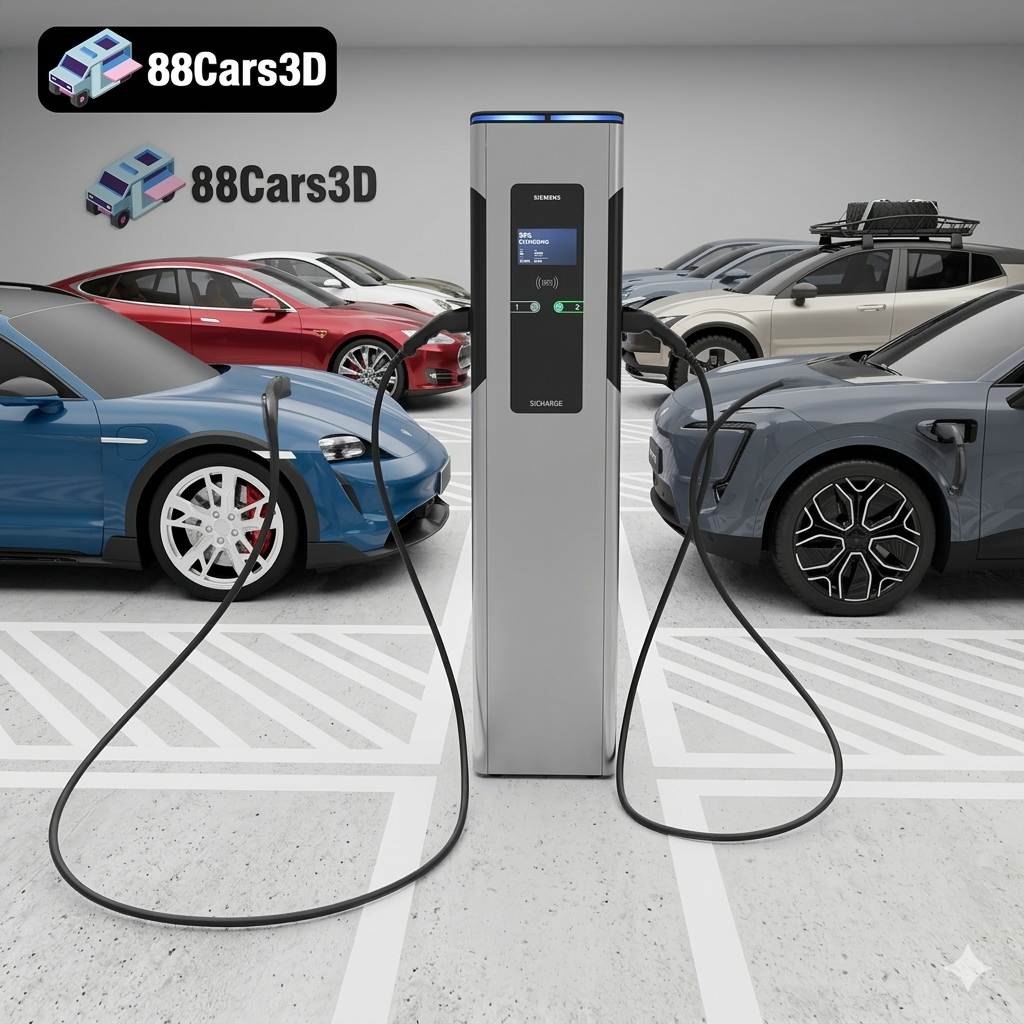
The Future of Mobility: Smart City EV 3D Models Bundle (5-in-1 Pack) Volvo Tesla AVATR Porsche 3D Printable STL
Download the Future of Mobility EV 3D Models Bundle. Includes the Volvo EX30, Tesla Model S, AVATR 11, Porsche Taycan, and a Siemens EV Charger. Save big on this highly optimized 5-in-1 pack for ArchViz and game development!
Price: $89.99
