

In the expansive and meticulously detailed world of 3D modeling, automotive assets hold a special place. They are not merely objects; they are characters, environments, and historical artifacts that breathe life into digital canvases. From the sleek, futuristic lines of a concept car to the rugged charm of a vintage workhorse, each vehicle tells a story. Today, we delve into the intricate process of bringing these automotive legends to life in three dimensions, focusing on a particular gem that embodies a bygone era: the Ford Taunus (P6) 12M Station Wagon 1967 3D Model. This high-fidelity digital recreation, available at 88cars3d.com, is more than just a model; it’s a versatile tool for professionals across rendering, game development, AR/VR, and even 3D printing.
The 1960s were a definitive period for automotive design, particularly in Europe, where practicality and distinctive styling converged. The Ford Taunus P6, affectionately known as the “Turnier” in its station wagon guise, perfectly encapsulates this spirit. It was a common sight on European roads, a reliable family estate blending American-influenced design cues with European sensibilities. Recreating such an icon in 3D demands precision, an understanding of historical context, and technical mastery. This article will explore the technical nuances behind developing and utilizing such a detailed 3D asset, examining its journey from concept to multiple professional applications, and highlighting why a comprehensive asset like this is indispensable for any serious digital artist or developer.
Understanding 3D Model File Formats
The versatility of a 3D asset often hinges on its availability in various file formats, each tailored for specific workflows and software environments. Understanding these formats is crucial for seamless integration into diverse projects, from photorealistic rendering to real-time interactive experiences. The Ford Taunus (P6) 12M Station Wagon 1967 3D Model, for instance, comes equipped with a comprehensive suite of file types, ensuring maximum compatibility and utility.
.blend – The Native Blender Scene
The .blend format is the native file type for Blender, the powerful open-source 3D creation suite. When you acquire a .blend file, you’re not just getting the mesh; you’re gaining access to the complete Blender scene. This includes all lighting setups, camera positions, materials, textures, rigging, and even animation data as configured by the original artist. For the Ford Taunus model, this means the ability to dissect the scene, study its construction, make extensive modifications, and render directly within Blender’s Cycles or Eevee engines with full fidelity. It’s the ideal format for artists who prefer Blender as their primary DCC (Digital Content Creation) tool and require maximum editability.
.fbx – The Industry Workhorse for Interoperability
Autodesk’s .fbx (Filmbox) format is arguably the most widely adopted interchange format in the 3D industry. Its strength lies in its ability to encapsulate a vast range of 3D data, including geometry, materials, textures, animation, and even skeletal deformation, into a single file. This makes it ideal for transferring complex assets like the Ford Taunus between different software packages such as 3ds Max, Maya, Cinema 4D, and critically, into game engines like Unreal Engine and Unity. For real-time pipelines, .fbx is often the go-to format due to its robust support for game engine features, ensuring that UV maps, normals, and material assignments translate accurately.
.obj – Universal Compatibility for Static Meshes
The .obj (Wavefront Object) format is one of the oldest and most universally supported 3D file formats. It’s an excellent choice for exporting static mesh data and basic material information. While it doesn’t support complex features like animation or rigging, its simplicity ensures near-universal compatibility across virtually all 3D software. For the Ford Taunus, an .obj file provides a clean, raw mesh, perfect for artists who need to import the car model into less common software or simply want the core geometry to build upon with their own material and rendering setups.
.glb – Optimized for Web and Immersive Experiences
The .glb (GL Transmission Format Binary) is an increasingly popular format, particularly in the realms of AR, VR, and web-based 3D applications. It’s a binary version of the glTF format, designed for efficient transmission and loading of 3D scenes and models. A .glb file contains all necessary data—geometry, materials, textures, and animations—in a single, self-contained file, making it incredibly easy to deploy on websites, social media, and AR/VR platforms. For showcasing the Ford Taunus in an interactive web viewer or a mobile AR app, the .glb format offers superior performance and convenience.
.stl – The Standard for 3D Printing
When the digital world meets the physical, the .stl (Standard Tessellation Language) format takes center stage. This format represents a 3D model as a collection of interconnected triangles, defining only the surface geometry without any color, texture, or material information. It’s the de facto standard for 3D printing, requiring models to be “manifold” (watertight with no holes or intersecting geometry) to ensure a successful print. The Ford Taunus model, being available as an .stl, empowers hobbyists and professionals to bring this classic car to life as a physical scale model, complete with specific print settings provided for optimal results.
.ply – Precision Mesh for CAD and Analysis
The .ply (Polygon File Format) is another widely used format, particularly common in scientific and engineering applications, as well as for storing data from 3D scanners. It can store a wider range of properties than .obj or .stl, including color per vertex, normal information, and sometimes even material properties. For highly precise applications, CAD, or situations where detailed vertex data is critical, the .ply format offers a robust solution for the Ford Taunus model.
.unreal – Engine-Ready for Real-Time Environments
The .unreal format signifies an asset specifically optimized and packaged for direct import into Unreal Engine. While .fbx is often used for initial import, having an .unreal file implies a higher level of engine-specific preparation. This might include pre-configured material instances, collision meshes, LODs (Levels of Detail), and optimized shader networks, streamlining the workflow for game developers and real-time visualization artists looking to integrate the Ford Taunus quickly and efficiently into their Unreal projects.
.max – The Native 3ds Max Project File
Similar to .blend for Blender, the .max format is the native file type for Autodesk 3ds Max. It contains the complete 3ds Max scene, including all scene objects, modifiers, materials, lighting, cameras, and animation data. For professionals deeply embedded in the 3ds Max ecosystem, the .max file provides unparalleled flexibility and control over the Ford Taunus model. Artists can fully leverage 3ds Max’s powerful modeling, rendering (V-Ray, Corona, Arnold), and animation tools to integrate the classic car into complex architectural visualizations, cinematic sequences, or product renders.
The Art and Science of Crafting a Classic Car 3D Model
Creating a high-fidelity 3D car model, especially one with the historical significance of the 1967 Ford Taunus P6 Station Wagon, is a meticulous process that blends artistic vision with rigorous technical execution. It’s about capturing not just the shape, but the essence and subtle details that define a vehicle.
Recreating Vintage Authenticity through Topology
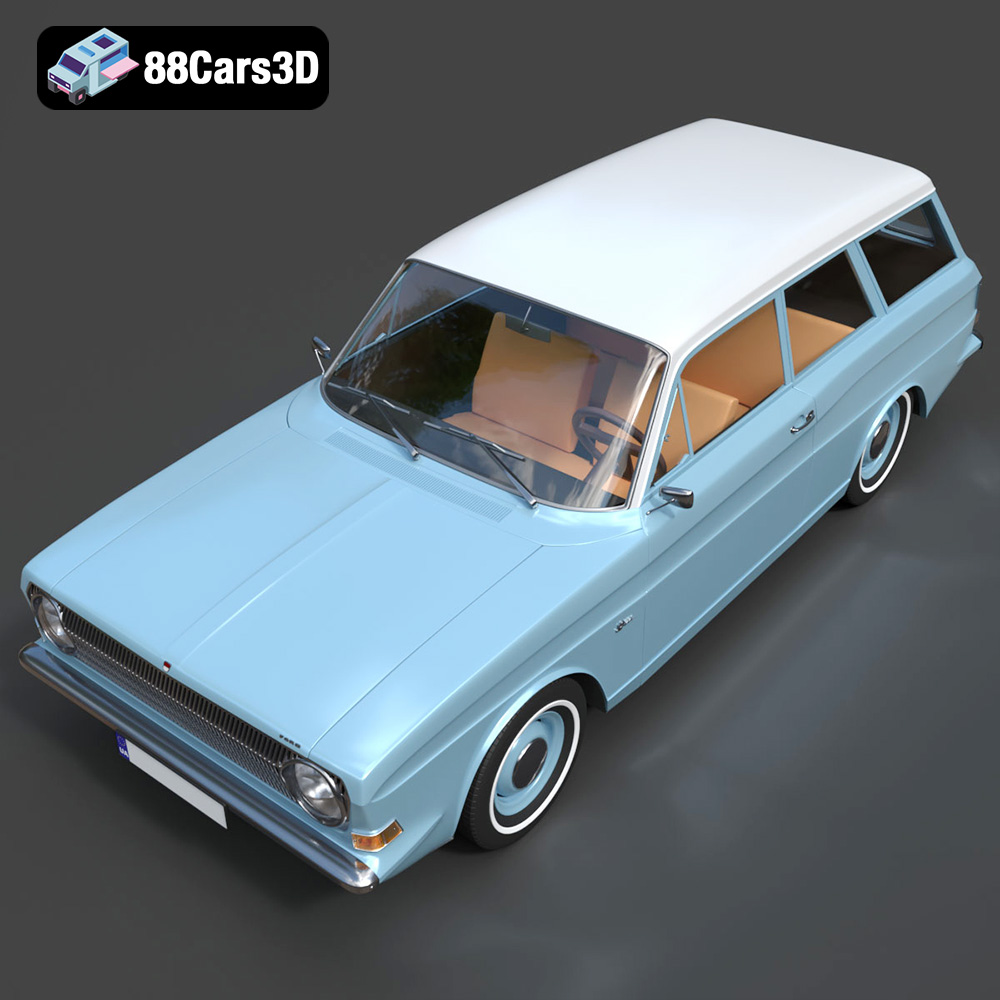
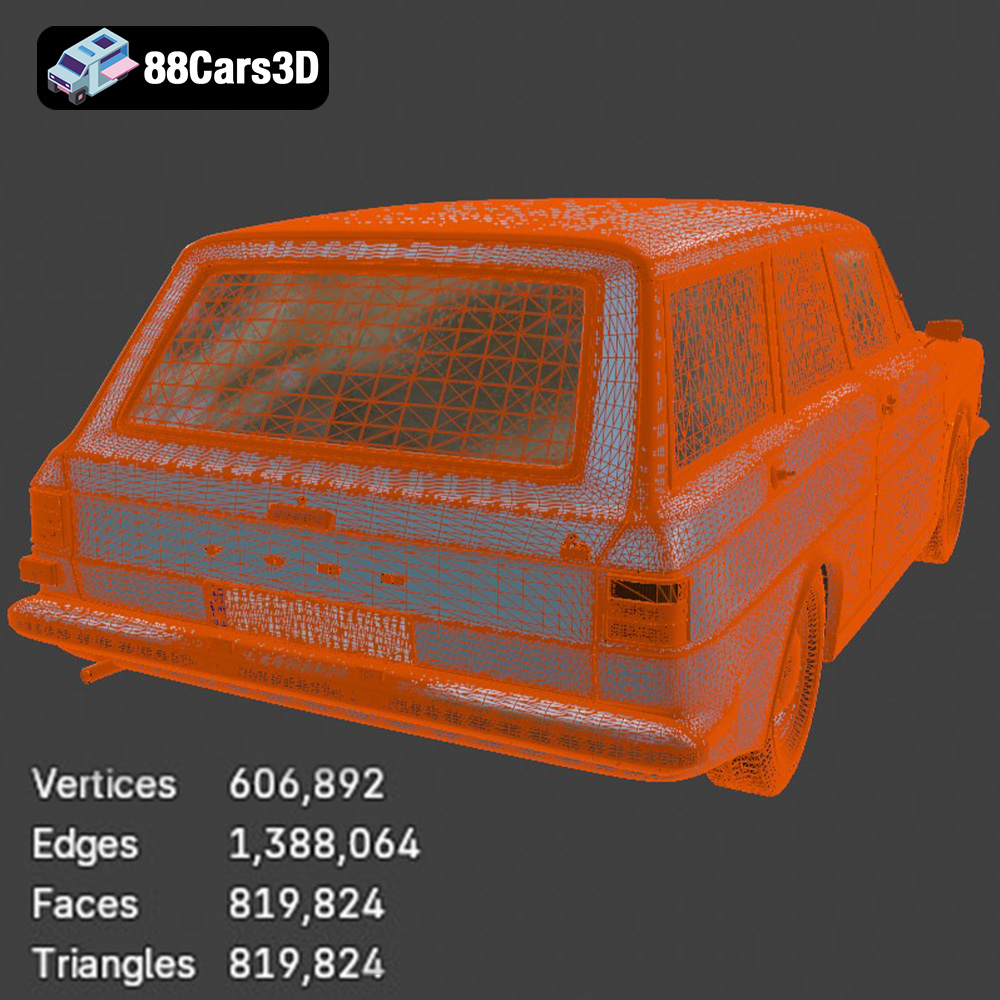
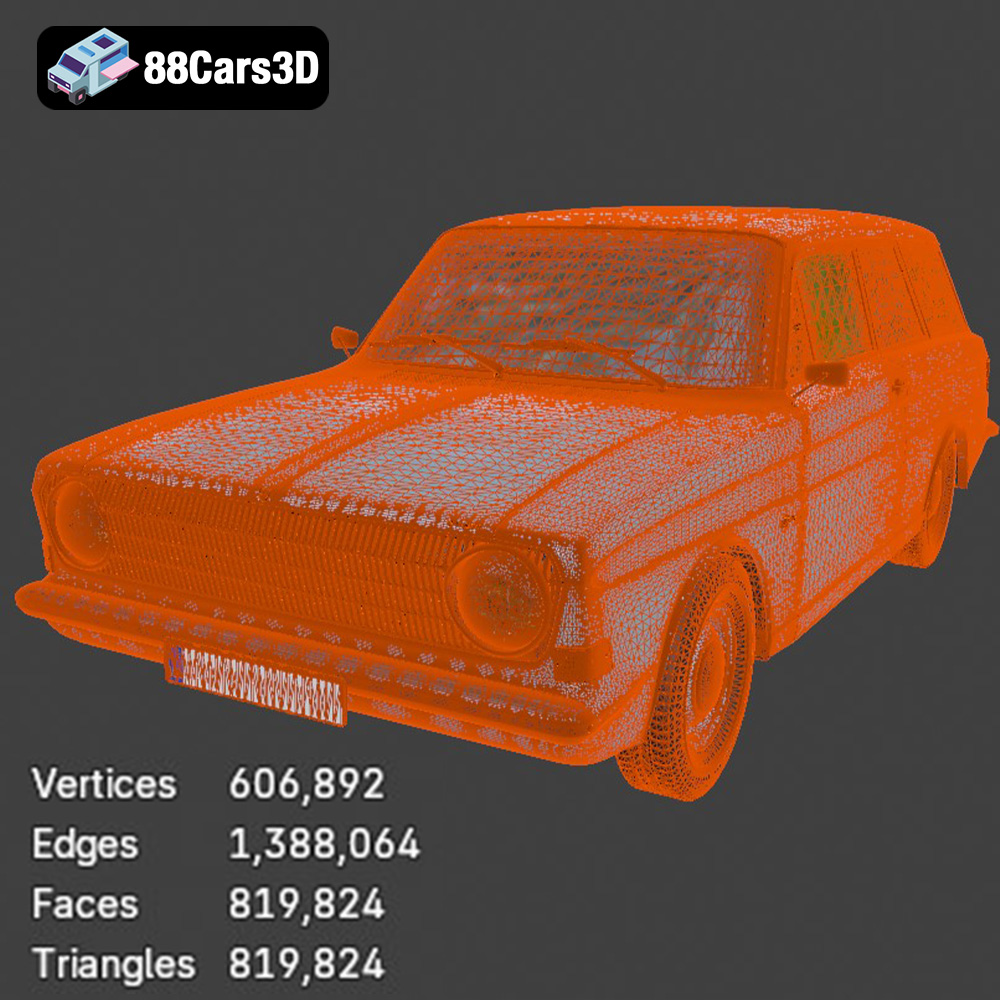
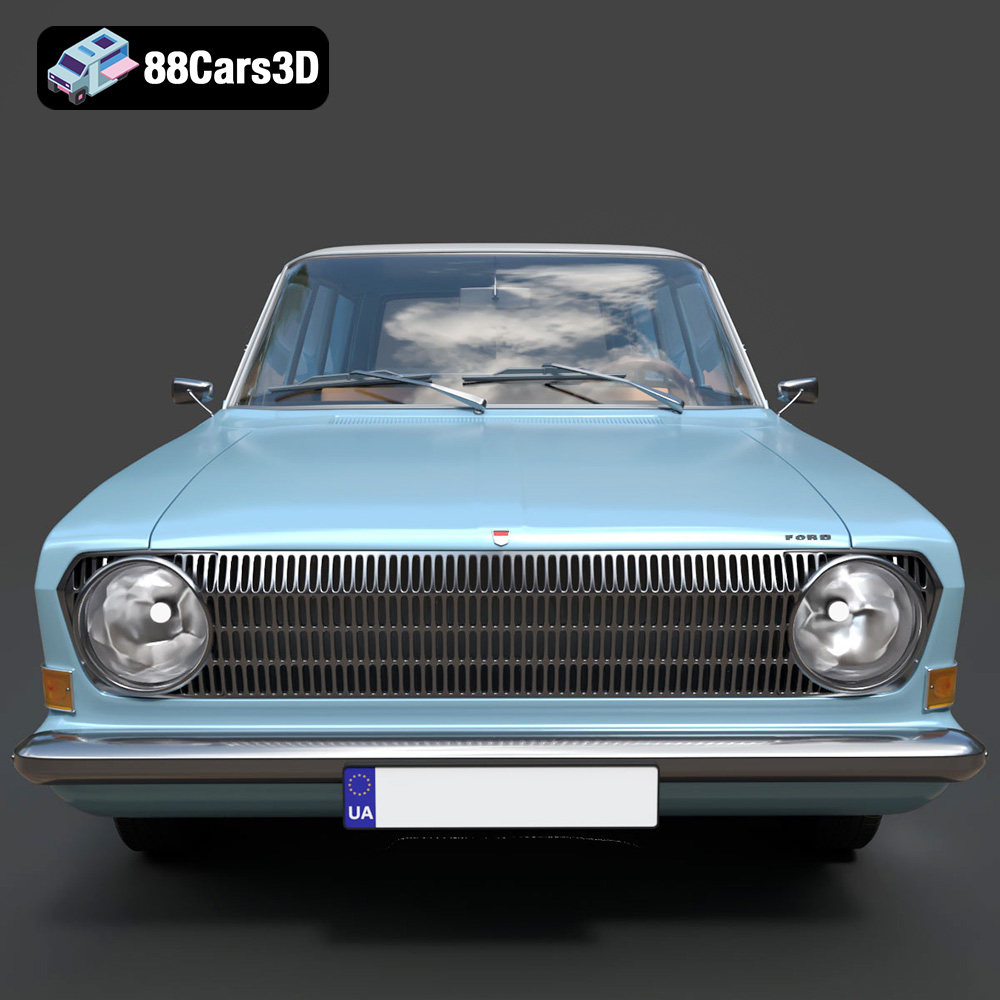
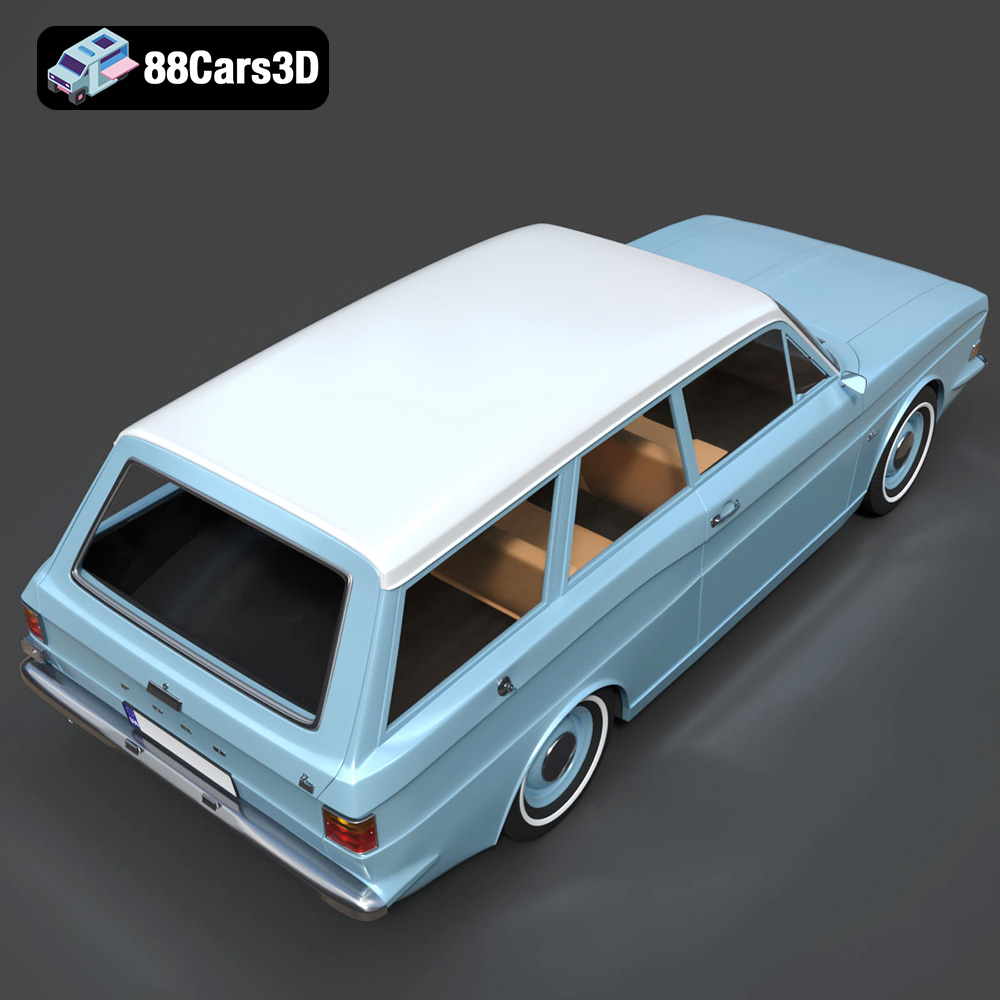
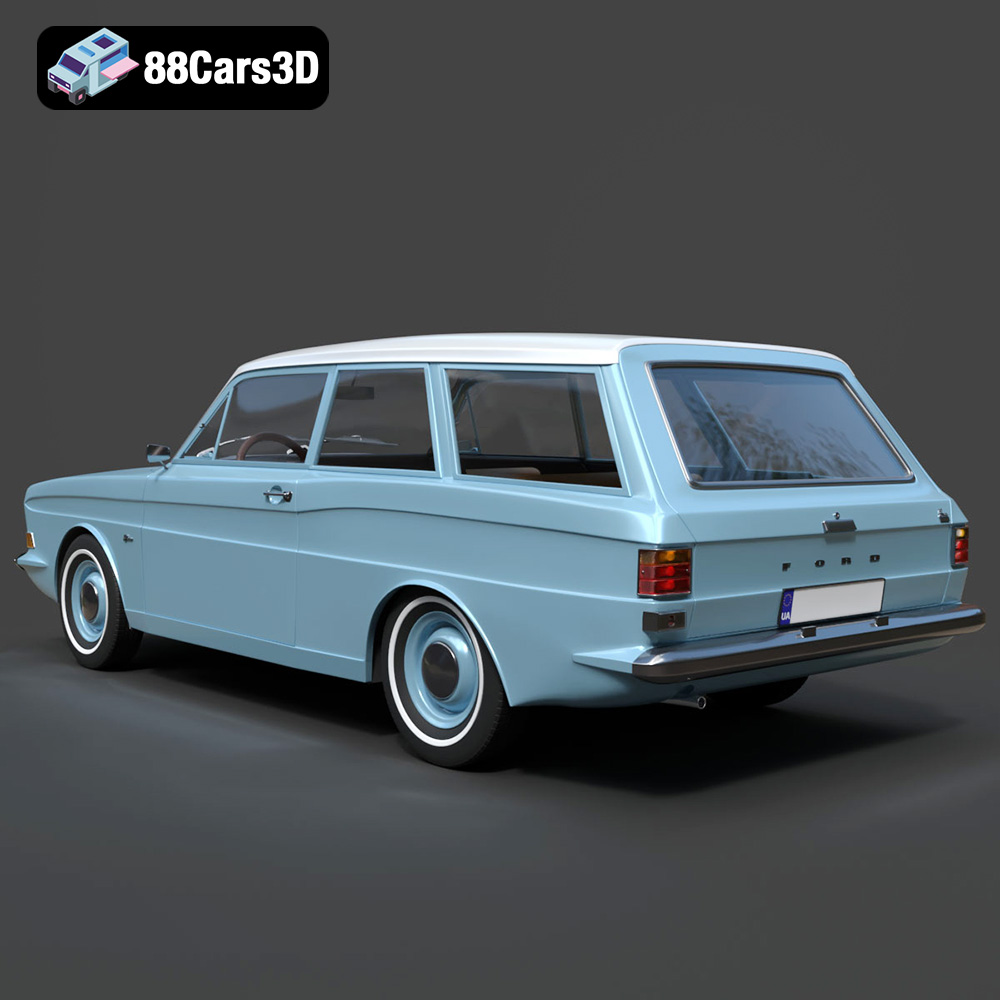
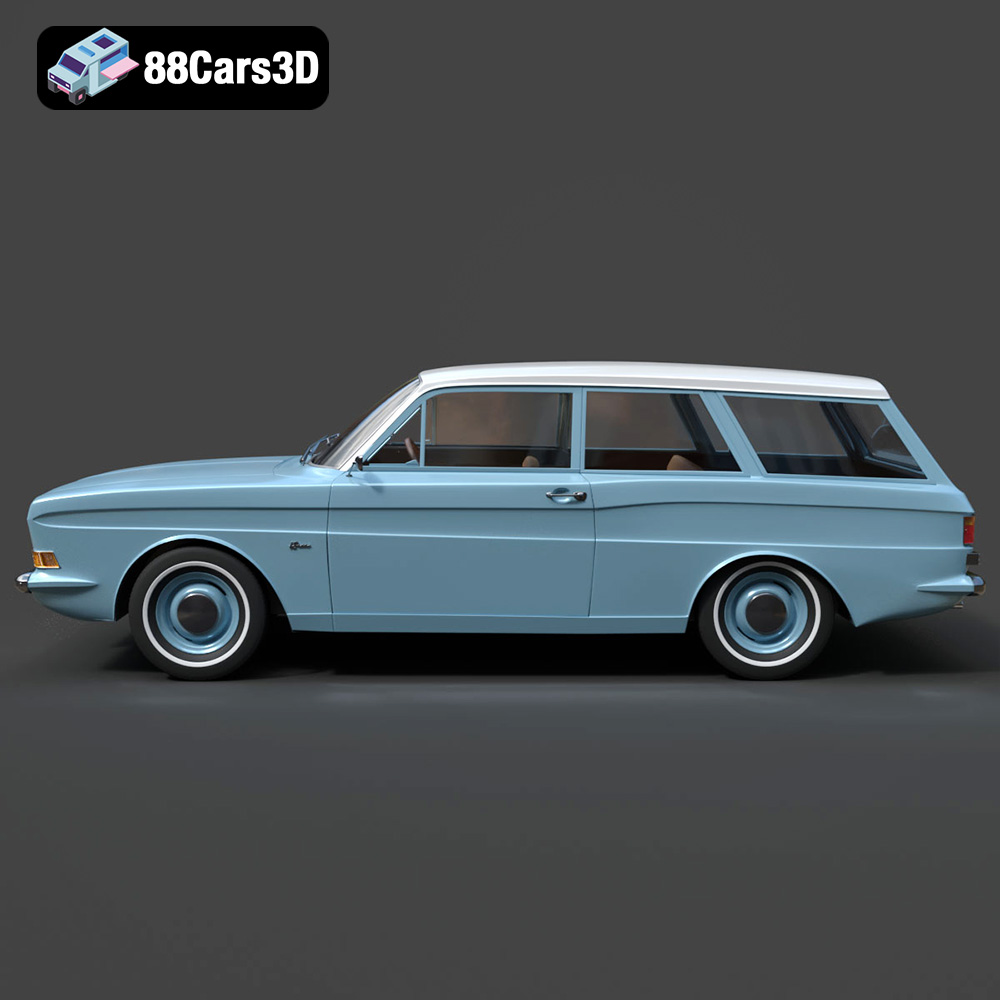
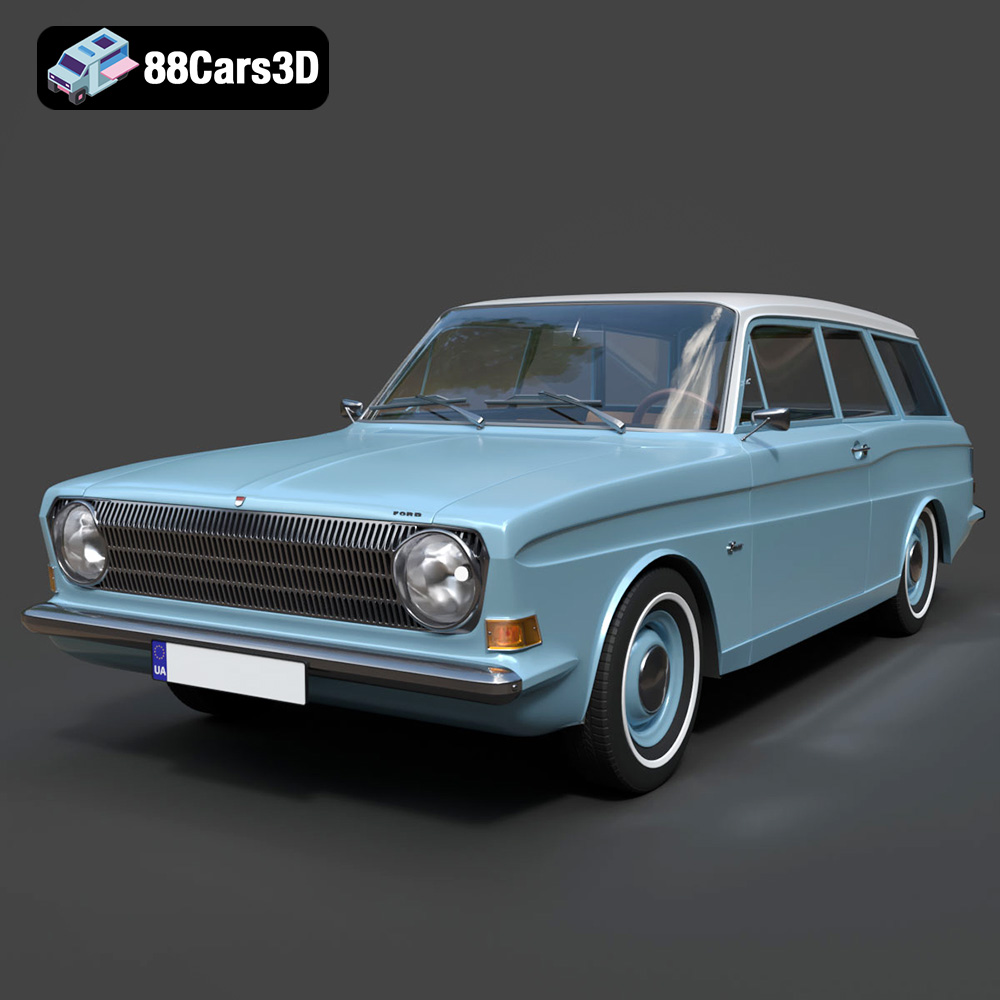
The foundation of any high-quality 3D model lies in its topology. For the Ford Taunus, this means a dense, well-organized mesh structure of over 1.2 million polygons (1,215,800 faces/polygons, 1,185,400 vertices, 2,350,100 edges). This high polygon count is crucial for achieving premium visual fidelity, especially in close-up renders where every curve and panel gap must be perfectly smooth and accurate. The model faithfully reproduces the Taunus’s charming, boxy silhouette, its distinctive round headlights, wide horizontal grille, and classic chrome bumpers. Every detail, from the elongated estate roofline to the period-correct hubcaps and highly detailed taillight clusters, is meticulously modeled based on real-world scale and original blueprints.
The careful construction ensures that the model holds up under scrutiny, making it ideal for archival purposes, historical visualization, and cinematic productions where authenticity is paramount. Clean edge flow and proper polygon distribution are also vital for deformation during animation and for accurate subdivision surfacing, should further smoothing be required.
Interior Detailing and Animation Readiness
A truly comprehensive 3D car model extends beyond the exterior. The Ford Taunus model features a fully detailed interior, capturing the classic 1960s spacious family cabin layout. This includes a retro dashboard with period-accurate analog dials, a thin-rimmed classic steering wheel geometry, and vintage seating upholstery with authentic seam detailing. Even the minimalist center console and manual gear shifter are represented, allowing for compelling interior shots and virtual explorations.
Furthermore, the model is built with animation in mind. Separate wheels, steering components, and doors are properly pivoted, ready for animating vehicle movement, turns, or opening/closing actions. This ‘rigging readiness’ significantly reduces preparation time for animators and game developers, allowing them to jump straight into creative work without extensive setup. The proper pivot setup for steering, wheel rotation, and tailgate hinges is a testament to the model’s professional-grade construction.
Integrating Automotive 3D Models into Professional Workflows
High-quality 3D car models are essential tools across various creative industries. The Ford Taunus (P6) 12M Station Wagon 1967 3D Model from 88cars3d.com demonstrates its versatility by seamlessly integrating into diverse professional workflows, empowering artists and developers alike.
Photorealistic Rendering and Visualization
For advertising agencies, architectural visualization studios, and film production houses, photorealistic rendering is key. The Ford Taunus model, with its high-poly count and meticulous detail, is perfectly suited for this. Its authentic representation makes it ideal for period-accurate film/TV backgrounds, vintage brand campaigns, and classic automotive showcases. Imagine this classic estate car parked in a retro street scene, bathed in soft, cinematic lighting, or as a focal point in a historical documentary. The detailed chrome accents, realistic glass, and accurately modeled body panels respond beautifully to advanced rendering engines like V-Ray, Corona Renderer, or Arnold, producing stunning, lifelike imagery. Artists can easily adjust exterior colors to typical 1960s hues like Pastel Blue or Muted Mustard, or configure lighting for specific vintage photography studio setups.
Game Development and Real-Time Experiences
While the Ford Taunus model boasts a high polygon count, its clean topology and well-organized mesh provide an excellent foundation for game development. For historically set open-world games or classic vehicle packs, this model offers unparalleled detail. Though it may require retopology or decimation for optimal real-time performance, particularly on older hardware, its base mesh ensures that the optimized versions retain crucial visual fidelity. Modern game engines like Unreal Engine and Unity can leverage LODs (Levels of Detail) to manage performance, dynamically switching to lower-poly versions of the model as the car moves further from the camera. The included .fbx and .unreal formats streamline integration into these engines, often coming with pre-configured UVs and material slots ready for PBR (Physically Based Rendering) textures. This allows for immersive virtual classic car museums or interactive retro vehicle experiences within AR/VR applications.
Simulation, AR/VR, and Digital Archiving
Beyond traditional rendering and gaming, detailed 3D car models play a crucial role in simulation, augmented/virtual reality, and digital archiving. For historical vehicle studies or classic car restoration visualization, the Taunus model provides an accurate digital twin. Engineers and restorers can use it to visualize modifications, test material properties, or simply archive the vehicle’s design for posterity. In AR/VR, the model transforms into an interactive object that users can walk around, inspect from all angles, and even “sit inside” in a virtual showroom. The .glb format is particularly beneficial here, offering a streamlined asset for web-based AR/VR experiences. The model’s real-world scale accuracy, based on original blueprints, makes it invaluable for applications where precise measurements and proportions are critical.
Beyond Digital: The World of 3D Printing with the Taunus Model
The boundary between digital and physical is increasingly blurred, and 3D printing is at the forefront of this convergence. The Ford Taunus (P6) 12M Station Wagon 1967 3D Model offers an exciting avenue for bringing this classic car into the tangible world, perfect for hobbyists, collectors, and prototyping enthusiasts.
From Screen to Shelf: Preparing for 3D Printing
The inclusion of an .stl format for the Ford Taunus model signifies its readiness for physical manifestation. STL, or Standard Tessellation Language, is the universal file format for 3D printing. The model’s manifold geometry ensures it’s watertight and printable, avoiding common issues like gaps or intersecting surfaces that can lead to printing failures. For classic model car hobbyists, this means they can create display-scale replicas of this iconic vehicle in various recommended scales such as 1:32, 1:24, or 1:18.
Optimizing Print Settings for Detail and Durability
Achieving a high-quality physical print requires careful consideration of 3D print settings. The product description provides excellent guidelines to ensure successful prints:
- Recommended scale: 1:32 / 1:24 / 1:18. These scales balance detail with manageability for most desktop 3D printers.
- Layer height: 0.08–0.16 mm. A finer layer height results in smoother surfaces and better capture of intricate details, crucial for a realistic car model. For even smaller details and finer finishes, resin printing (SLA/DLP) with layer heights of 0.04-0.12mm is often recommended, especially for delicate elements like side mirrors and chrome trim.
- Wall thickness: 1.2–2.0 mm. This ensures structural integrity, preventing parts from being too fragile, especially important for separate components like doors or wheels.
- Infill: 15–25%. A moderate infill saves material and printing time while maintaining sufficient strength for the model.
- Supports: Required for side mirrors, classic bumpers, and wheel arches. These overhanging or unsupported areas need temporary structures during printing to prevent sagging. For resin prints, more delicate supports can be used and removed with less scarring.
- Print orientation: Body printed angled for smooth surface finish; wheels printed separately. Angling the main body can minimize visible layer lines on prominent surfaces. Printing wheels separately allows for optimal detail and easier post-processing.
Post-Processing for a Flawless Finish
The journey from a raw 3D print to a collectible display piece involves careful post-processing. Sanding is typically required to smooth out layer lines, especially with FDM prints. Applying a primer creates a uniform base for painting. For the Ford Taunus, a vintage pastel paint finish, paired with silver or chrome detailing for bumpers and trim, is recommended to capture the authentic 1960s aesthetic. This hands-on process adds another layer of engagement for enthusiasts, transforming a digital asset into a unique, custom-finished physical collectible.
Optimizing for Performance and Visual Fidelity in 3D
The balancing act between stunning visual fidelity and optimal performance is a constant challenge in 3D production. The Ford Taunus (P6) 12M Station Wagon 1967 3D Model exemplifies a high-detail asset, and understanding its technical specifications is key to leveraging it effectively across various applications.
Understanding High-Poly Geometry
With 1,185,400 vertices, 2,350,100 edges, 1,215,800 faces/polygons, and 1,215,800 triangles, this model is undeniably high-poly. This density is a deliberate choice for maximum realism and detail, making it superb for close-up rendering and cinematic sequences where every curve and reflection matters. High-poly models minimize faceting and allow for smooth surfaces without relying heavily on normal maps or subdivision surfaces for basic geometry. This level of detail is critical for historical visualization where accuracy down to the smallest panel gap or trim piece is expected.
However, such high polygon counts can be demanding on hardware, particularly in real-time environments. For game development or interactive AR/VR, developers would typically perform optimization steps. This might include retopology to create a cleaner, lower-polygon mesh, followed by baking high-detail normal maps from the original high-poly model onto the optimized mesh. Another common technique is generating Levels of Detail (LODs), where progressively lower-polygon versions of the model are swapped in as the camera moves further away, maintaining visual quality while saving performance.
Materials, UVs, and Texture Application
While the product description indicates “Texture: Yes | Material: Yes,” the effectiveness of these elements is crucial. High-quality 3D car models benefit from well-defined UV mapping—the process of unwrapping the 3D mesh onto a 2D plane so that textures can be applied without distortion. Clean UVs are essential for realistic paint finishes, accurate decal placement (like badges or license plates), and detailed interior upholstery patterns.
Physically Based Rendering (PBR) workflows are standard in modern 3D. This means the materials provided would typically include maps for albedo (color), roughness (surface smoothness), metallic (reflectivity), and normal (surface detail). These maps, combined with the detailed geometry, allow the Ford Taunus to react realistically to light, capturing the sheen of chrome bumpers, the subtle imperfections of vintage paint, and the texture of interior fabrics. The model’s compatibility with major 3D software and engines ensures that these PBR materials can be easily translated and rendered consistently across platforms.
Customization and Creative Freedom
A significant advantage of acquiring a professional-grade 3D model like the Ford Taunus (P6) 12M Station Wagon 1967 is the inherent flexibility it offers for customization. Artists and developers are not just purchasing a static asset; they are gaining a powerful foundation for their creative visions.
Tailoring Appearance and Presentation
The ability to customize exterior colors is a primary creative outlet. Changing the vehicle’s paint to typical 1960s colors such as Pastel Blue, Seafoam Green, Classic White, or Muted Mustard can dramatically alter its mood and fit within a scene. Beyond color, the model allows for modification of wheel design, whether representing classic steel wheels or the authentic chrome hubcaps. Similarly, interior materials can be adjusted to reflect different upholstery options, from retro vinyl to fabric representations, enabling artists to fine-tune the cabin’s aesthetic for specific periods or styles.
Dynamic Scene Integration and Interaction
The inherent design of the Ford Taunus model, with separate components for animation, opens up possibilities for dynamic scene integration. Configuring the tailgate or doors open/closed presentation allows for more interactive and narrative-driven scenarios—perhaps a family packing for a holiday or a repair scene in a garage. Furthermore, adapting the vehicle’s lighting for specific environments, whether for a vintage photography studio setup or integration into a classic street environment, is straightforward. This level of customization ensures that the model can be seamlessly adapted to a multitude of creative requirements, making it an incredibly versatile asset for any project.
Conclusion: The Enduring Value of a Classic 3D Car Model
The digital age has opened up unprecedented opportunities to preserve and reimagine automotive history. The Ford Taunus (P6) 12M Station Wagon 1967 3D Model stands as a testament to the power of meticulous 3D artistry, offering a highly detailed, historically accurate, and incredibly versatile asset for a broad spectrum of professional applications. From the demanding precision of cinematic rendering and historical visualization to the interactive realms of game development and AR/VR, and even the tangible satisfaction of 3D printing, this model serves as a cornerstone asset.
Its high-polygon construction ensures stunning visual fidelity, while its clean topology and included file formats—ranging from .blend and .max for native DCC work, to .fbx and .unreal for game engines, and .stl for 3D printing—guarantee seamless integration into virtually any workflow. This thoughtful approach to asset creation means less time spent on preparation and more time dedicated to creative output. For anyone seeking a premium 3D car model that embodies both historical charm and technical excellence, the Ford Taunus (P6) 12M Station Wagon 1967 is an exceptional choice, readily available to enhance your projects at 88cars3d.com. Invest in quality, and let this classic European estate car drive your digital narratives forward.
Featured 3D Model
Ford Taunus (P6) 12M Station Wagon 1967 3D Model 3D Printable STL
The Ford Taunus (P6) 12M Station Wagon 1967 3D Model is a high-detail digital recreation of the classic European family estate, also known as the “Turnier.” Designed during the golden era of 1960s automotive manufacturing, the Taunus P6 combines a charming, boxy silhouette with practical station wagon proportions, chrome accents, and distinctive vintage Ford styling. This 3D model accurately represents the retro exterior styling, including the iconic round headlights, wide horizontal front grille, classic chrome bumpers, elongated estate roofline, and period-correct hubcaps. Built with dense, high-polygon topology for premium visual fidelity and real-world scale accuracy, it is ideal for close-up rendering, period-accurate historical visualization, animation, game development, and AR/VR classic car showcases. Perfect for retro street scenes, 1960s cinematic productions, classic automotive galleries, and vintage vehicle collections.
$49.99
Product Image Gallery
Related Tags
.automotive
.blend
.fbx
.obj
.rendering
.stl
1967-classic
3d printing
car-3d-model
estate-car
ford-taunus
game asset
german-ford
high poly
p6-12m
retro-auto
station-wagon
turnier
vintage-car
