

Unlocking Visual Excellence: The Power of High-Fidelity 3D Car Models in Modern Production
In the dynamic world of digital content creation, the demand for realistic, high-quality 3D assets is more prevalent than ever. From cinematic visual effects and immersive game environments to groundbreaking architectural visualizations and interactive product configurators, the ability to rapidly integrate detailed models is crucial for success. Automotive design, in particular, thrives on precision and visual authenticity, making premium 3D car models indispensable tools for artists, designers, and developers.
The journey from concept to final render or real-time experience demands meticulous attention to detail, optimized geometry, and flexible asset pipelines. Whether you’re a seasoned professional working on a high-stakes commercial project or an independent creator bringing a unique vision to life, the foundation of any compelling scene often begins with the right core assets. Today, we’ll delve into the multifaceted applications and technical intricacies of leveraging professional-grade 3D car models, using a prime example from 88cars3d.com: the Chery Tiggo 4 RU-Spec 2019 3D Model. This versatile asset exemplifies the quality and adaptability required in contemporary 3D production pipelines, offering a robust solution for a wide range of creative and commercial endeavors.
Understanding 3D Model File Formats: The Backbone of Digital Automotive Assets
Choosing the correct file format is a critical first step in any 3D project, directly impacting compatibility, workflow efficiency, and the final output quality. The Chery Tiggo 4 RU-Spec 2019 3D Model, like many professional 3D car models available on platforms like 88cars3d.com, is offered in a comprehensive suite of formats, each serving distinct purposes and optimized for specific software or applications. Understanding these formats is paramount for maximizing your asset’s utility.
.blend – The Native Blender Scene
The .blend format represents a fully editable Blender scene. This is a powerful choice for users deeply integrated into the Blender ecosystem. It encapsulates everything within a single file: the mesh data, materials, textures, lighting setups, cameras, animation data, and even modifiers. For the Chery Tiggo 4 model, having the .blend file allows for unparalleled flexibility. Artists can easily inspect the scene structure, modify shaders, adjust topology, or even re-rig components if needed. It’s an excellent format for artists who want full control and plan extensive customization or integration into a Blender-centric project pipeline, providing a complete environment ready for immediate rendering with Cycles or Eevee.
.fbx – The Industry Standard for Interchange
.fbx (Filmbox) is arguably the most widely adopted interchange format in the 3D industry, particularly popular for its robust support of complex scene data. It excels at transferring geometry, materials, textures, animations, and skeletal data between different 3D applications and game engines like Unreal Engine and Unity. When working with the Chery Tiggo 4 in .fbx, you can expect a reliable transfer of the model’s high-poly mesh, UVs, and PBR (Physically Based Rendering) material assignments, making it an ideal choice for integrating into real-time pipelines or moving between various DCC (Digital Content Creation) tools like 3ds Max, Maya, or Cinema 4D. Its widespread compatibility makes it a go-to for collaborative projects.
.obj – The Universal Geometry Format
The .obj (Wavefront OBJ) format is a universal standard for storing 3D geometry data. While it might not carry all the sophisticated scene information of an .fbx file (like animation or complex material nodes), it reliably preserves mesh data, UV coordinates, and basic material definitions (via an accompanying .mtl file). The Chery Tiggo 4 as an .obj is an excellent fallback for maximum cross-software compatibility. It’s incredibly stable and often preferred for purely static geometry transfers where the mesh integrity is paramount, making it suitable for archiving or for workflows where materials and animations are handled natively in the target application.
.glb – Optimized for Web, AR, and VR
.glb (GL Transmission Format Binary) is quickly becoming the standard for 3D models in web, AR (Augmented Reality), and VR (Virtual Reality) environments. It’s a single-file, binary representation of the glTF format, known for its efficiency and compact size. .glb files are optimized for fast loading and rendering on various devices, making them perfect for interactive product viewers, virtual showrooms, or browser-based experiences. For the Chery Tiggo 4, a .glb version would be invaluable for clients wanting to showcase the model directly on their website, integrate it into a mobile AR app, or visualize it within a WebGL-powered configurator.
.stl – The Go-To for 3D Printing
.stl (STereoLithography) is the de facto standard for 3D printing. It describes only the surface geometry of a 3D object using a collection of interconnected triangles. While it doesn’t carry color or material information, its simplicity and robustness make it perfect for fabricating physical objects. The Chery Tiggo 4’s inclusion of an .stl format means it’s ready for manufacturing scaled-down models, prototypes, or collectibles. Users can load this file directly into slicing software for FDM (Fused Deposition Modeling) or SLA (Stereolithography) printers, bringing the digital design into the physical world.
.ply – Precision Mesh Format for CAD or Analysis
.ply (Polygon File Format) is another format for storing 3D data, particularly useful for scanned data, precision meshes, and scientific applications. It can store not just vertices and faces, but also properties like color, transparency, surface normals, and even texture coordinates. While less common in general animation or game development compared to .fbx or .obj, its ability to store detailed mesh properties makes it valuable for CAD (Computer-Aided Design) integrations, reverse engineering, or specific analysis workflows where geometric precision and additional per-vertex data are crucial for the Chery Tiggo 4 model.
.unreal – Engine-Ready Asset for Real-Time Environments
The .unreal format, or more accurately, assets packaged for Unreal Engine, signifies a model that has been specifically prepared and potentially imported into an Unreal project. This often means optimized meshes, material setups using Unreal’s PBR shader system, collision geometry, and perhaps even LODs (Levels of Detail) tailored for real-time performance. For the Chery Tiggo 4, an “Unreal-ready” asset saves significant time and effort for game developers and real-time visualization artists, ensuring a smooth import and immediate usability within the engine’s ecosystem.
.max – The Native 3ds Max Project
Finally, the .max format is the native file type for Autodesk 3ds Max. Similar to .blend, it contains the entire scene, including geometry, modifiers, materials, lights, cameras, and animation. For professionals who primarily use 3ds Max for modeling, rendering (often with V-Ray or Corona), and animation, the .max file for the Chery Tiggo 4 offers the highest level of direct editing capability. It allows for full access to the original modeling stack, enabling detailed adjustments and seamless integration into existing 3ds Max pipelines.
The availability of such a diverse array of formats for a single asset like the Chery Tiggo 4 RU-Spec 2019 3D Model underscores its versatility and the foresight of its creators. It empowers users to pick the format best suited for their specific project, ensuring maximum compatibility and efficiency across virtually any professional 3D workflow.
Deep Dive into the Chery Tiggo 4 RU-Spec 2019 3D Model: Precision and Authenticity
The Chery Tiggo 4 RU-Spec 2019 3D Model is more than just a digital representation; it’s a testament to meticulous craftsmanship and a deep understanding of automotive design. This high-fidelity asset from 88cars3d.com offers an authentic recreation of the popular compact crossover SUV specifically tailored for the Russian market, making it an invaluable tool for a variety of professional applications.
Exterior Detailing: Capturing the Essence of a Modern Crossover
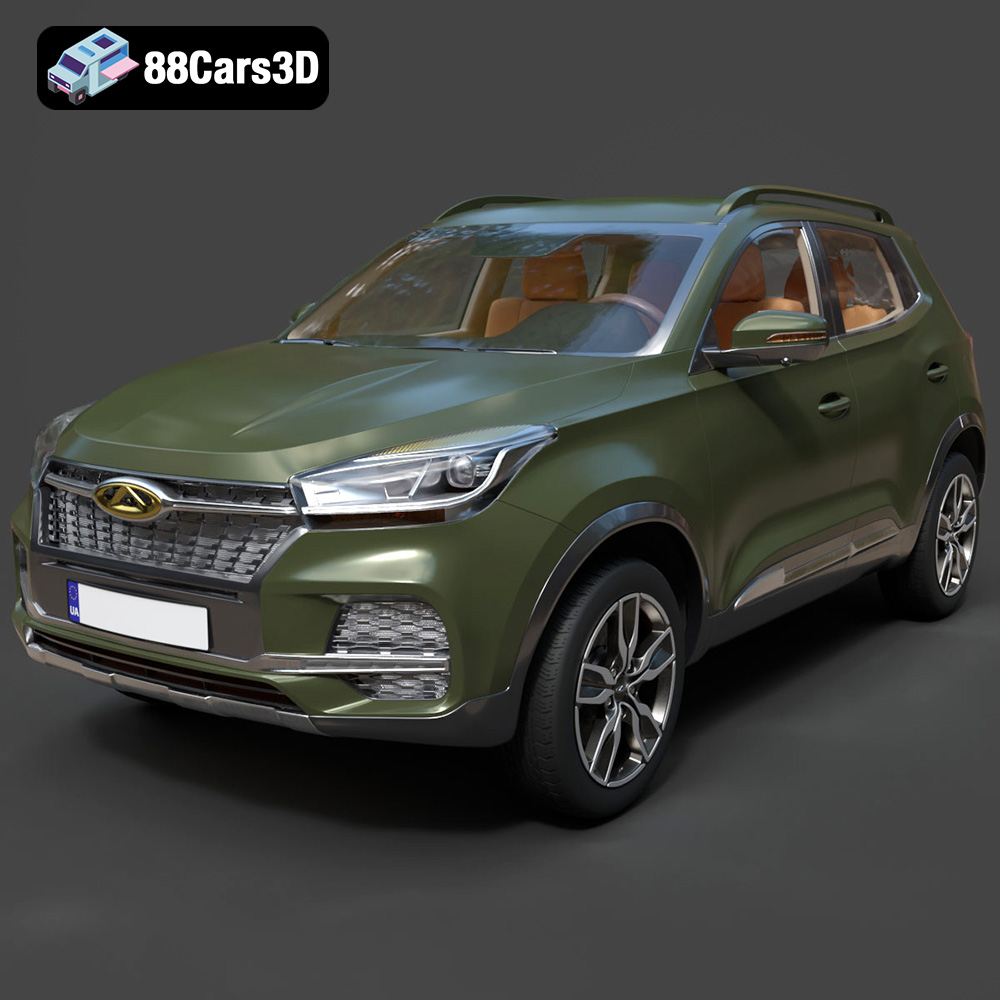
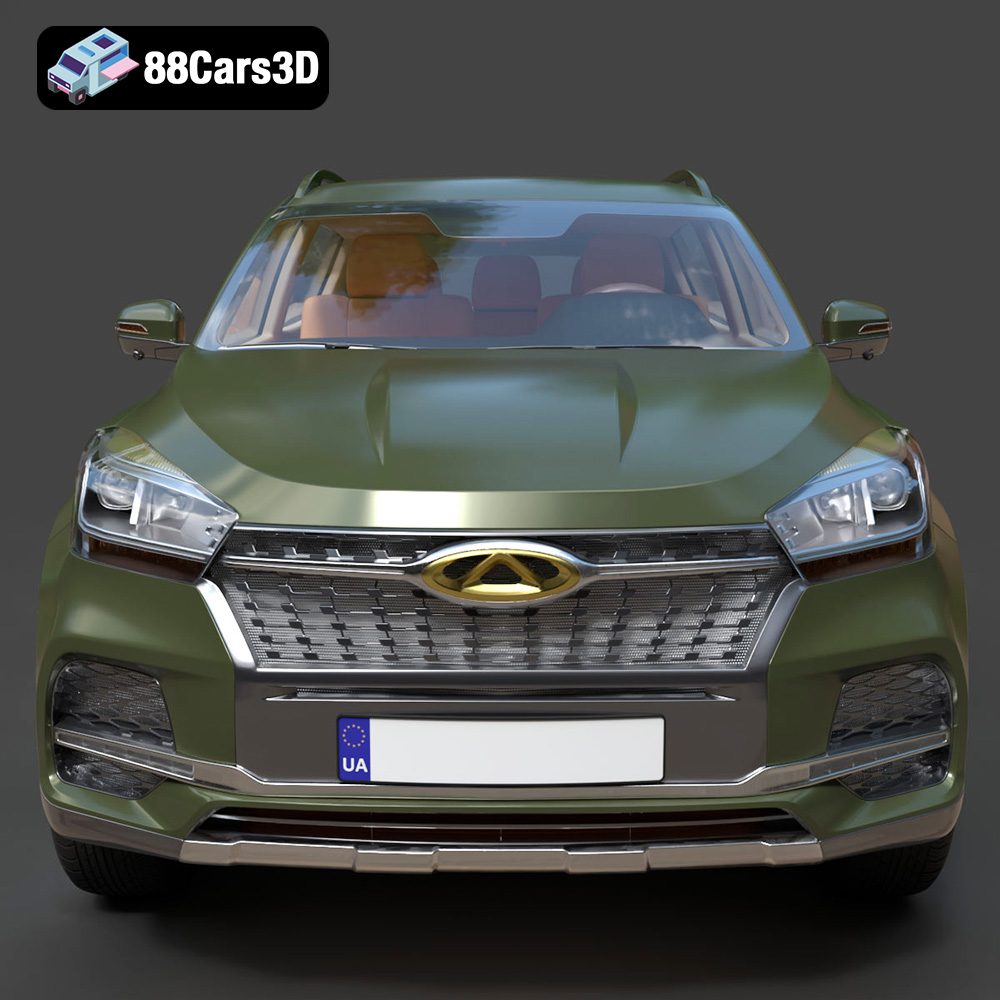
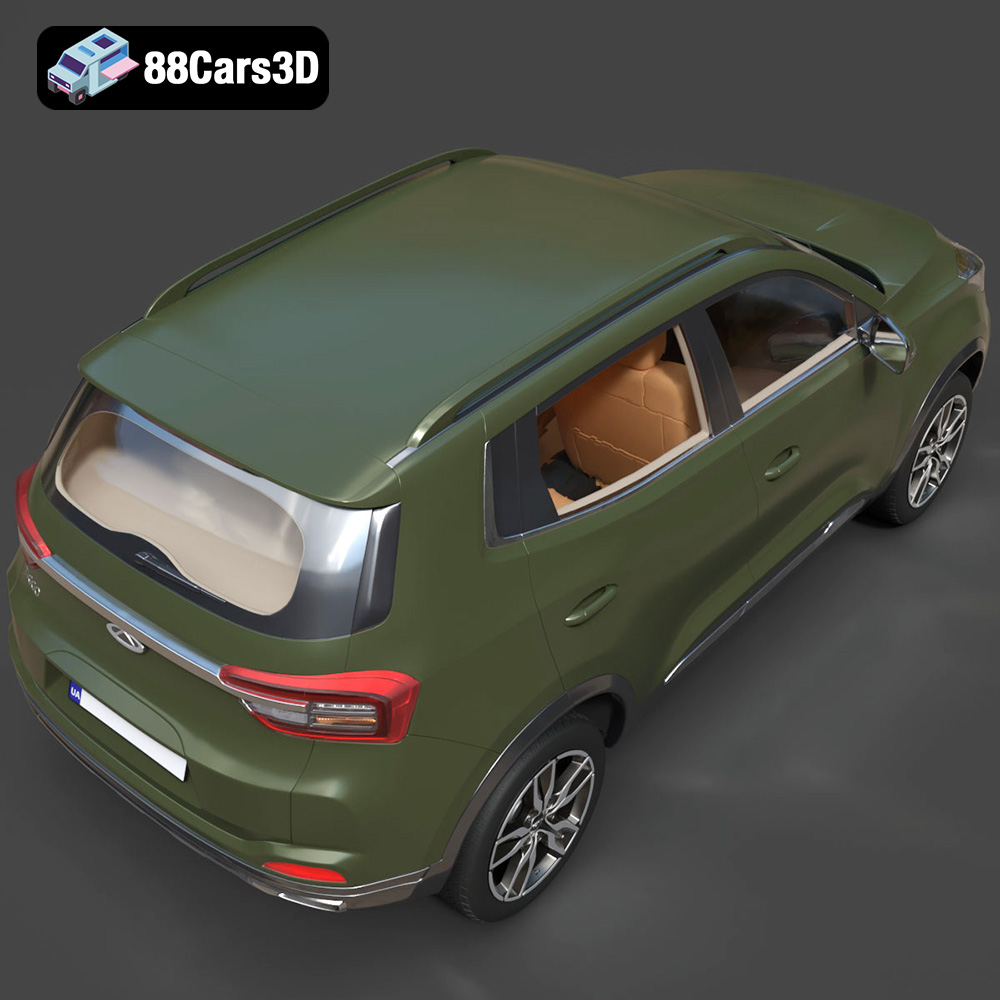
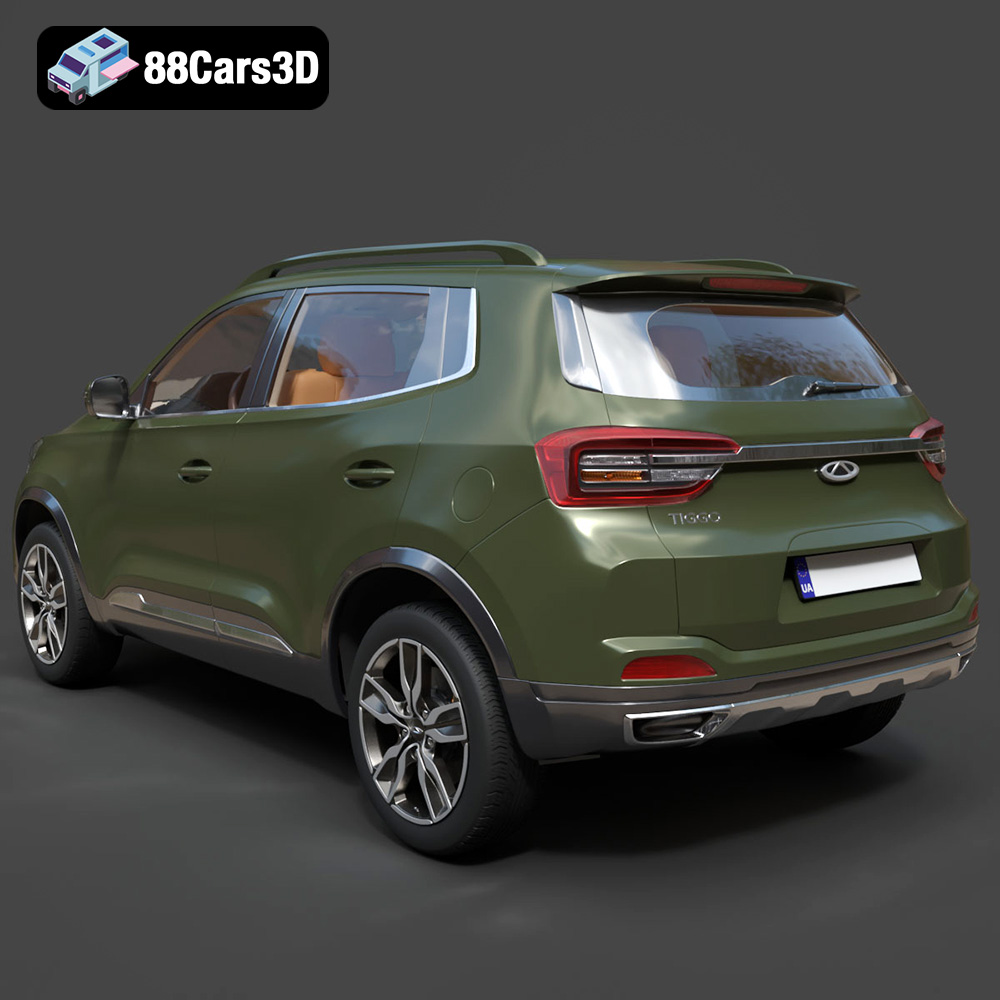
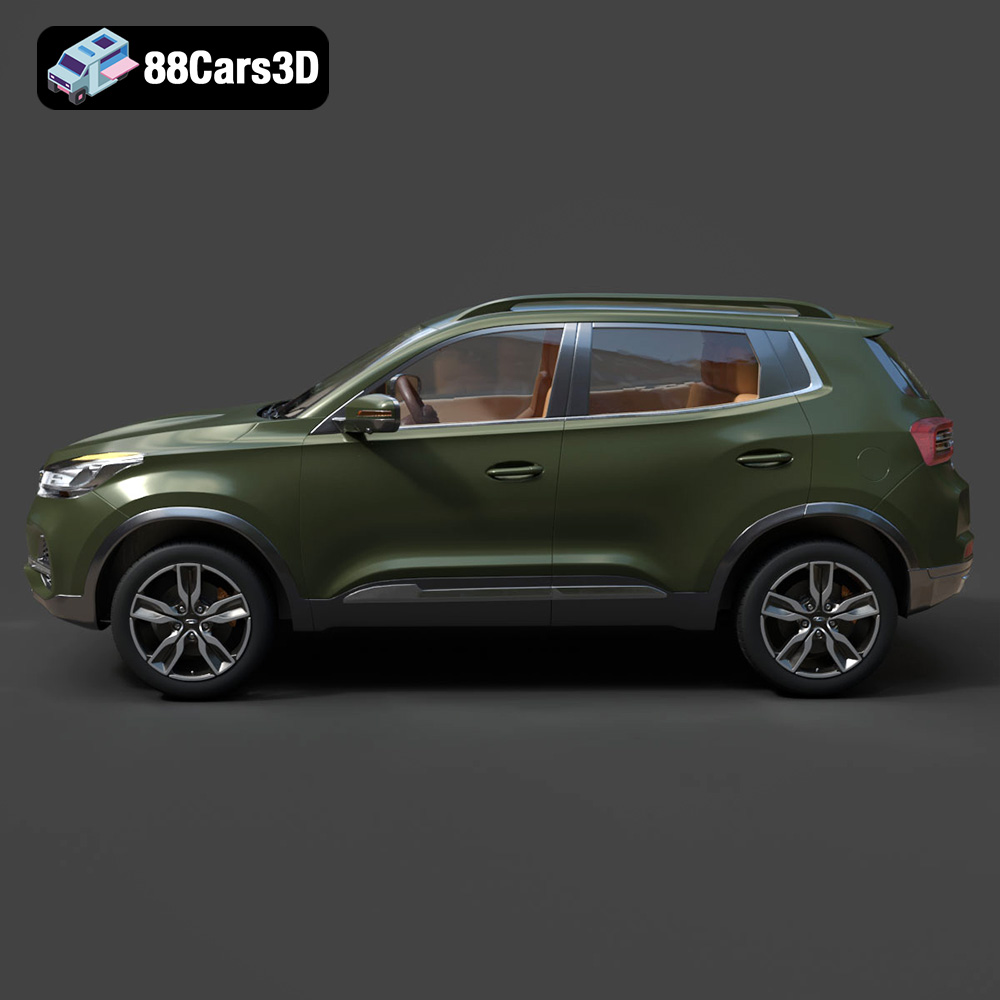
The exterior of the Tiggo 4 model showcases a bold and contemporary design philosophy. Its robust proportions are accurately translated, featuring the distinctive matrix front grille with Chery badging that defines its brand identity. The detailed headlight and taillight assemblies, complete with LED signatures, add a layer of realism vital for close-up renders and visual fidelity. Practical elements like the rugged plastic lower body cladding, wheel arch trim, and functional roof rails are not just superficial additions; they are carefully modeled components that contribute to the vehicle’s authentic “RU-Spec” appearance and versatility. The five-door layout, with precise panel gaps, and realistic standard-issue alloy wheel design further cement its visual integrity. Crucially, components like the wheels, brake calipers, and steering parts are separated, providing essential flexibility for animation and interactive applications.
Interior Features: A Functional and Detailed Cabin
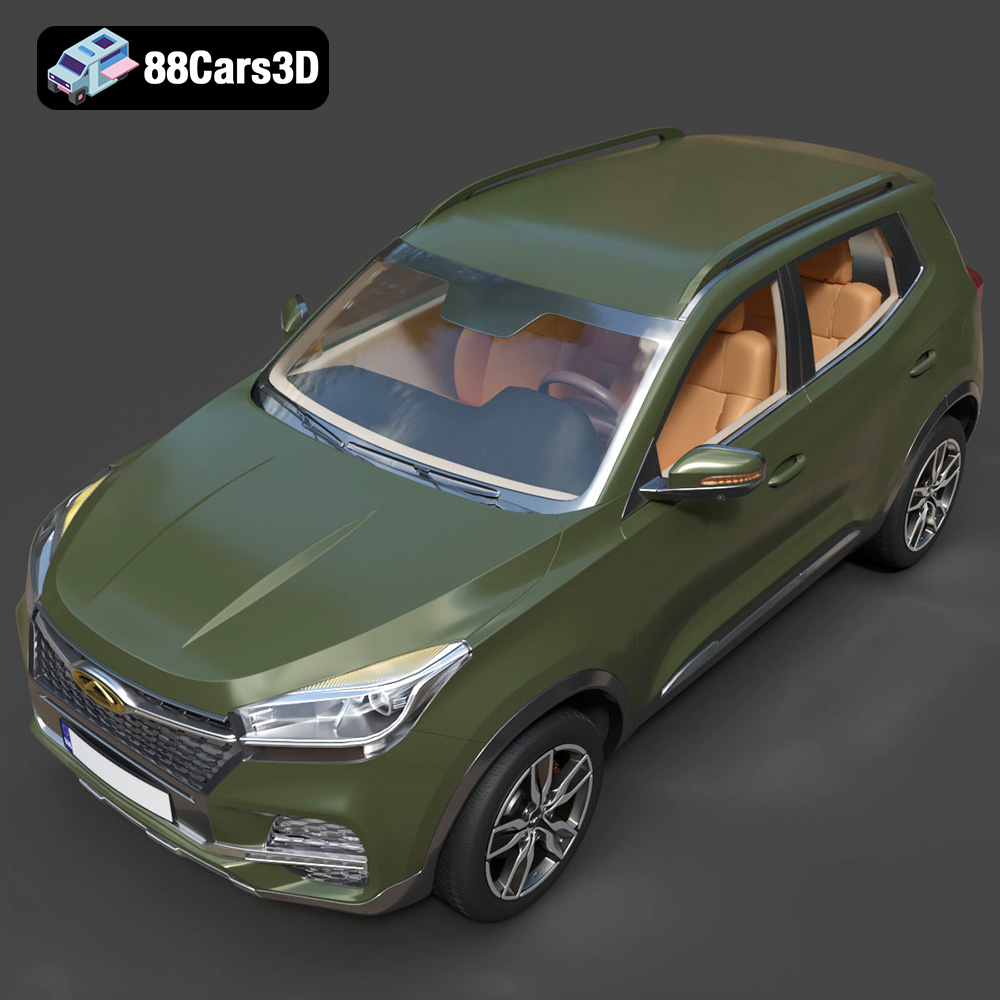
While often overlooked in external shots, a well-detailed interior is paramount for comprehensive visualizations and immersive experiences. The Chery Tiggo 4 model boasts a five-seat practical cabin layout, designed for optimal interior close-up rendering. The modern dashboard, with its central infotainment screen geometry, and the detailed center console and gear selector structure, provide a convincing environment. Sculpted seating geometry with accurate stitching seams adds a touch of realism, while the multi-function steering wheel details enhance the overall authenticity. This level of interior detail makes the model suitable for virtual showrooms, architectural scene population where the car interior is visible, or even driver training simulations.
Technical Specifications & Advantages: Built for Performance and Realism
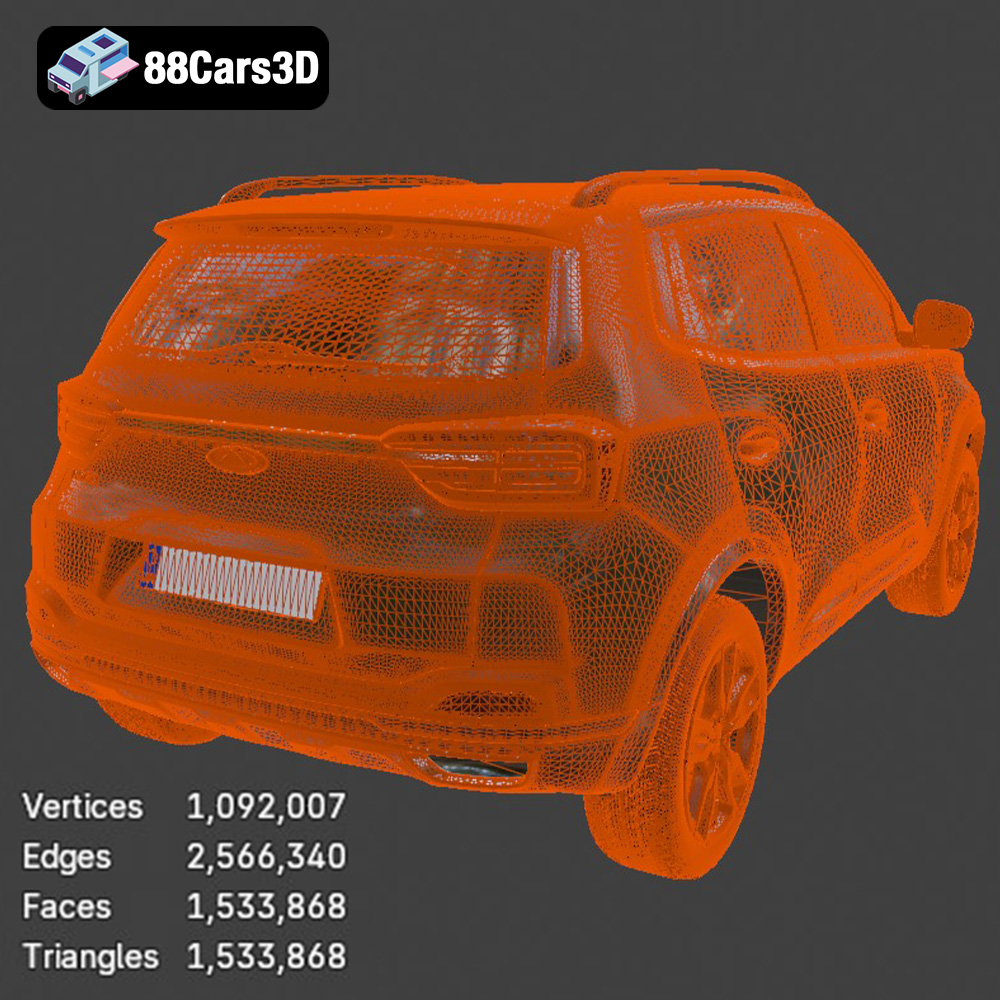
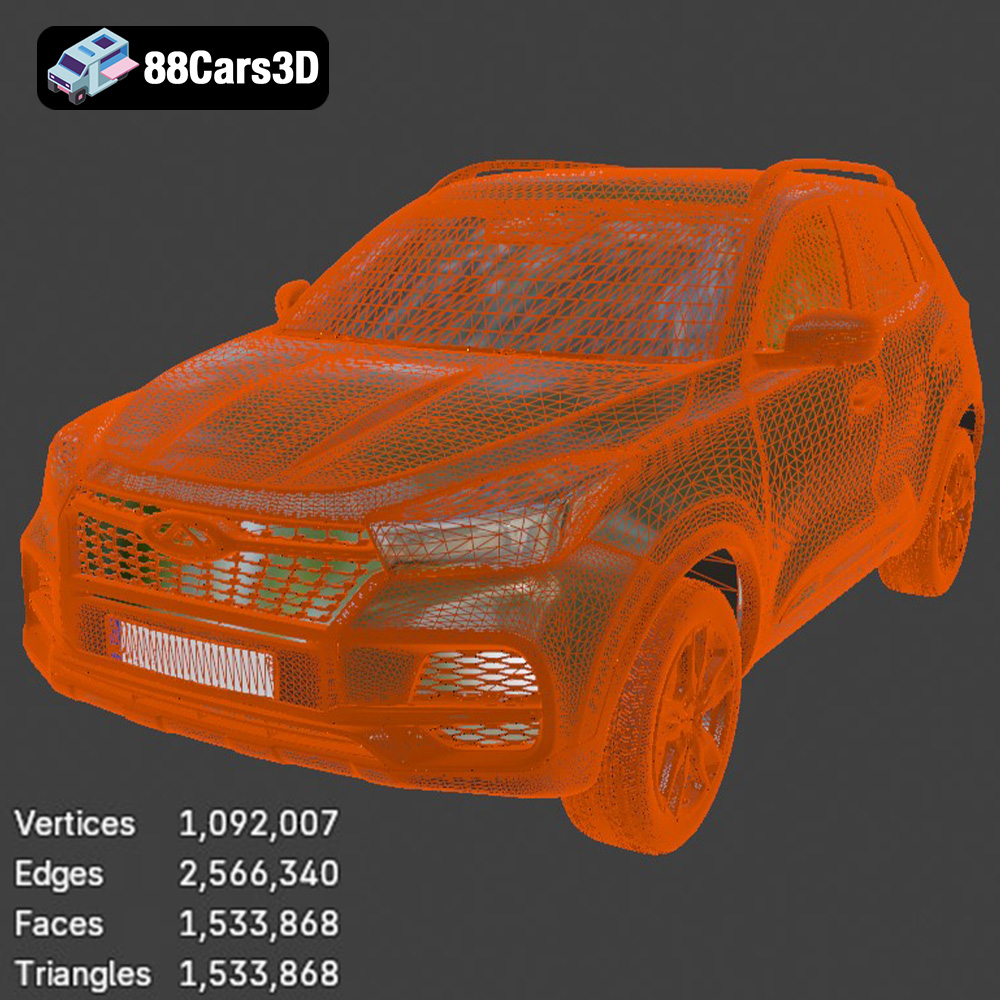
The technical foundation of the Chery Tiggo 4 RU-Spec 2019 3D Model is robust, designed for high-resolution output and performance. With 1,245,600 vertices, 2,480,200 edges, 1,350,400 faces/polygons, and 1,350,400 triangles, this is a high-poly asset optimized for maximum realism in renders. Such a dense mesh ensures smooth curves and sharp details, free from artifacts even in extreme close-ups. The well-organized mesh structure simplifies scene management and potential modifications. Furthermore, the model features real-world scale accuracy and proper pivot setups for steering, wheel rotation, and door hinges, which are essential for seamless animation workflows. This technical excellence makes it suitable for demanding commercial visualization projects and serves as a highly adaptable base for further optimization for real-time applications.
Professional Workflows: Rendering & Visualization with the Chery Tiggo 4
The ability to produce stunning, photorealistic renders is a cornerstone of automotive design, advertising, and architectural visualization. The Chery Tiggo 4 RU-Spec 2019 3D Model provides a solid foundation for achieving exceptional visual results across various rendering pipelines, especially within industry-standard software like 3ds Max and Blender.
Automotive Design Showcases and Product Launches
For automotive manufacturers and design studios, the Chery Tiggo 4 model serves as an ideal asset for virtual product showcases and launch events. The high-polygon count and accurate detailing allow for cinematic quality renders that highlight design nuances, material finishes, and functional components. In a workflow leveraging 3ds Max with renderers like V-Ray or Corona, artists can apply complex PBR materials to simulate paint, glass, chrome, and rubber with incredible realism. Dynamic lighting setups can accentuate body lines, reflect environmental nuances, and create compelling mood shots. The separated components (wheels, doors, etc.) enable easy animation of opening doors, rotating wheels, or demonstrating suspension articulation, providing a complete visual narrative of the vehicle’s features and capabilities.
- Studio Lighting Setups: Utilizing HDRI environments combined with targeted area lights to mimic professional photography studios.
- Material Customization: Experimenting with various paint finishes (metallic, pearlescent, matte) and interior fabric/leather options to present different trim levels or bespoke configurations.
- Contextual Integration: Placing the Tiggo 4 within meticulously crafted urban or natural environments to showcase its intended use case, enriching the visual story for marketing materials.
Architectural Visualization and Scene Population
In architectural visualization (ArchViz), adding realistic vehicles transforms static building renders into vibrant, believable scenes. The Chery Tiggo 4 RU-Spec 2019 3D Model, with its modern urban SUV aesthetic, is perfect for populating parking lots, driveways, or street scenes in residential and commercial architectural projects. Its real-world scale accuracy ensures it fits perfectly within the context of architectural designs. ArchViz artists working in Blender can leverage the Eevee real-time renderer for quick iterations and Cycles for physically accurate, high-quality final renders. The model’s optimized geometry and organized structure facilitate easy import and material adjustments within these environments.
- Environment Integration: Placing the vehicle on a realistic asphalt shader, ensuring proper shadow casting and reflections from surrounding buildings and foliage.
- Time-of-Day Lighting: Simulating different lighting conditions (day, dusk, night) to observe how the vehicle interacts with the environment’s illumination.
- Optimization for Large Scenes: While high-poly, the mesh can be decimated or instanced for performance in very large ArchViz scenes without losing significant detail at typical viewing distances.
Integrating the Chery Tiggo 4 into Game Development and AR/VR
The rapidly evolving fields of game development and immersive AR/VR experiences demand 3D assets that are not only visually appealing but also highly optimized for real-time performance. The Chery Tiggo 4 RU-Spec 2019 3D Model, while high-fidelity, serves as an excellent starting point for these applications, particularly within powerful engines like Unreal Engine.
Game Development: Creating Immersive Urban Environments
For modern open-world games and urban traffic simulations, detailed 3D car models are essential for creating believable cityscapes. The Chery Tiggo 4, with its contemporary design, fits perfectly into a vehicle pack for realistic traffic or player-drivable cars. While its native high-poly count (1.3M+ polygons) is ideal for cinematic rendering, it may require strategic retopology and LOD (Level of Detail) implementation for optimal real-time performance in a game engine. This process involves creating lower-polygon versions of the model that swap in as the vehicle moves further from the camera, significantly reducing rendering overhead.
Within Unreal Engine, the Chery Tiggo 4 model (especially the .unreal or .fbx formats) can be imported, materials set up using Unreal’s robust PBR shader system, and collision meshes generated. The separate wheels and steering components are crucial for implementing realistic vehicle physics and animation systems. Developers can then script complex behaviors, from basic AI traffic to fully drivable vehicles with realistic suspension and tire dynamics, enhancing the player’s immersion.
- LOD Generation: Creating 3-5 levels of detail to manage polygon count dynamically in-game.
- Optimized Textures: Baking high-resolution texture maps (normal, roughness, metallic, ambient occlusion) to optimize visual quality without heavy geometry.
- Physics Asset Creation: Defining accurate collision shapes and mass properties for realistic vehicle interactions within the game world.
AR/VR Showrooms and Interactive Configurators
Augmented Reality (AR) and Virtual Reality (VR) offer unparalleled opportunities for interactive product showcases, especially in the automotive sector. Imagine a virtual car dealership where prospective buyers can walk around, inspect, and even customize a Chery Tiggo 4 in real-time, right from their living room. The high-detail nature of this 3D model is perfectly suited for such immersive experiences.
Using Unreal Engine or similar real-time platforms, the Chery Tiggo 4 can be integrated into AR/VR applications. The .glb format is particularly useful here for web-based AR experiences. Users can interact with the vehicle, change exterior colors (Ruby Red, Quartz White, Cosmic Silver, Metallic Black, as suggested by the product details), modify wheel designs, or even open doors to view the detailed interior. This provides a dynamic and engaging way for consumers to explore a product before it’s physically available or to offer extensive customization options that would be impractical in a physical showroom. The optimized geometry for interior close-ups ensures a high-quality experience even when users “sit” inside the virtual car.
- Interactive Elements: Implementing hotspots for users to click on and learn about specific features, or controls to change car colors and materials dynamically.
- Performance Budgets: Balancing visual fidelity with performance targets for various AR/VR devices, ensuring a smooth and comfortable user experience.
- Realistic Reflections: Utilizing real-time ray tracing or screen-space reflections to make the car’s paint and windows reflect the virtual environment authentically.
Leveraging the Chery Tiggo 4 for 3D Printing and Physical Prototyping
Beyond digital displays, 3D models like the Chery Tiggo 4 RU-Spec 2019 3D Model bridge the gap between virtual design and tangible objects through 3D printing. The inclusion of the .stl format, alongside detailed printing recommendations, opens up a world of possibilities for scale models, prototypes, and collectible miniatures.
Creating Scale Models and Prototypes
For designers, collectors, or hobbyists, producing a physical representation of a vehicle can be incredibly satisfying and useful. The Chery Tiggo 4 model, being 3D printable, allows for the creation of display-scale SUV models. The recommended scales (1:32 / 1:24 / 1:18) offer a good balance between detail and manageable print size. Using the .stl file, makers can import the model into their slicer software, prepare it for printing on FDM or resin (SLA) printers, and then bring the digital design to life. This is particularly valuable for product designers who need physical prototypes for evaluation or for marketing teams who desire tangible giveaways.
- Slicing Software: Utilizing software like Ultimaker Cura, PrusaSlicer, or Chitubox to prepare the .stl file for the chosen 3D printer.
- Material Selection: Choosing appropriate filaments (PLA, ABS) for FDM or resins for SLA/DLP printers based on desired detail, strength, and finish.
- Multi-Part Printing: Separating complex models into smaller, manageable parts for optimal print quality and easier post-processing, such as printing wheels separately for better detail.
Optimizing for 3D Print Quality and Post-Processing
Achieving a high-quality 3D print requires careful attention to print settings and post-processing techniques. The detailed recommendations provided with the Chery Tiggo 4 model are invaluable: layer height (0.08–0.16 mm), wall thickness (1.2–2.0 mm), infill (15–25%), and specific support requirements for elements like side mirrors, roof rails, and bumper overhangs. Print orientation is also critical; printing the body angled can result in a smoother surface finish, while printing wheels separately allows for greater detail and easier painting.
Post-processing is where the model truly shines after printing. Sanding, applying primer, and then using a standard automotive paint finish are recommended to achieve a professional look. Suggesting matte black for lower cladding perfectly mimics the real vehicle’s aesthetics. This comprehensive approach to 3D printing ensures that the physical model accurately reflects the high standards of its digital counterpart, offering a unique opportunity to interact with the design in a tangible way.
- Support Placement: Strategically adding supports only where necessary to minimize material waste and post-processing effort while ensuring print success.
- Resin Printing Benefits: For smaller scales or higher detail, resin printers (SLA/DLP) are often preferred for their ability to capture intricate features like fine grilles and badging.
- Finishing Techniques: Beyond basic painting, techniques like clear coating, weathering, or adding decals can further enhance the realism of the 3D-printed model.
The Strategic Advantage of Ready-to-Use 3D Car Models
In today’s fast-paced digital environment, time is a precious commodity. Creating a high-fidelity 3D car model from scratch, like the Chery Tiggo 4 RU-Spec 2019, requires hundreds of hours of expert modeling, texturing, and optimization. This substantial investment in time and resources can often be a bottleneck for projects with tight deadlines or limited budgets. This is where high-quality, ready-to-use 3D car models from trusted marketplaces like 88cars3d.com offer a significant strategic advantage.
Efficiency and Cost-Effectiveness
Acquiring a professionally pre-made asset dramatically reduces production timelines and associated costs. Instead of allocating weeks or months for an in-house team to model every curve, panel gap, and interior detail of a vehicle, studios and individual artists can purchase a production-ready model like the Chery Tiggo 4 and immediately integrate it into their projects. This allows teams to focus their valuable creative energy on scene composition, animation, lighting, and rendering, rather than foundational asset creation. The cost of a premium 3D model is often a fraction of what it would cost to model it from the ground up, providing exceptional value.
- Reduced R&D Time: Bypass the research and development phase of modeling complex vehicle geometry.
- Immediate Scalability: Quickly scale up projects by populating scenes with multiple vehicle types without a massive upfront modeling effort.
- Budget Allocation: Reallocate budget from asset creation to other critical project areas like marketing, animation, or advanced simulations.
Guaranteed Quality and Technical Standards
Purchasing from a reputable source like 88cars3d.com ensures that you’re receiving assets that meet professional industry standards. The Chery Tiggo 4 RU-Spec 2019 3D Model, for instance, boasts well-organized mesh structures, real-world scale accuracy, proper pivot setups for animation, and optimized geometry for close-up rendering. This level of technical integrity minimizes compatibility issues, reduces post-purchase cleanup, and ensures reliable performance across different software and engines. The comprehensive file format support (.blend, .fbx, .obj, .glb, .stl, .ply, .unreal, .max) further guarantees flexibility and ease of integration into virtually any workflow.
- Reliable Geometry: Confidence in clean, manifold geometry free from errors that can plague custom-built models.
- Consistent Textures/Materials: Assets often come with PBR-ready materials and properly UV-mapped textures, streamlining the look development process.
- Ongoing Support: Reputable marketplaces often provide support, ensuring any unforeseen issues can be addressed.
Conclusion: Empowering Your Creative Vision with Premium 3D Car Models
The journey through the intricate world of 3D automotive design and visualization underscores a fundamental truth: the quality of your foundational assets directly impacts the excellence of your final output. From stunning photorealistic renders for advertising and immersive experiences in game development and AR/VR, to tangible 3D-printed prototypes, the demand for high-fidelity 3D car models is unwavering.
The Chery Tiggo 4 RU-Spec 2019 3D Model stands as a shining example of a versatile, technically robust asset capable of meeting these diverse demands. Its meticulous detailing, real-world accuracy, and comprehensive file format support (including .blend, .fbx, .obj, .glb, .stl, .ply, .unreal, and .max) position it as an invaluable resource for professionals across industries. Whether you’re enhancing an architectural visualization, building a compelling game environment, or crafting an interactive virtual showroom, this model provides the quality and flexibility needed to accelerate your workflow and elevate your projects.
Investing in pre-built, production-ready 3D car models from platforms like 88cars3d.com is not just a convenience; it’s a strategic decision that saves time, reduces costs, and guarantees a level of quality that would otherwise require significant in-house effort. Embrace the power of expertly crafted digital assets and unlock new possibilities for your creative vision. The road to exceptional 3D content begins with the right tools, and a model like the Chery Tiggo 4 is undoubtedly one of them.
Featured 3D Model
Chery Tiggo 4 RU-Spec 2019 3D Model
The Chery Tiggo 4 RU-Spec 2019 3D Model is a high-detail digital recreation of the popular compact crossover SUV tailored for the Russian market. Designed as a versatile and practical urban vehicle, the Tiggo 4 features a bold front fascia, rugged lower body cladding, elevated ground clearance, and a modern, dynamic silhouette that reflects Chery’s contemporary SUV design language. This 3D model accurately represents the robust exterior proportions, striking matrix grille, detailed headlight clusters with LED DRLs, functional roof rails, five-door layout, and distinct alloy wheels. Built with dense, high-polygon topology for premium visual fidelity and real-world scale accuracy, it is ideal for close-up rendering, automotive visualization, animation, game development, and AR/VR showroom showcases. This model boasts impressive technical specifications, including 1,245,600 vertices, 2,480,200 edges, and 1,350,400 polygons, ensuring exceptional detail for commercial visualizations, immersive AR/VR experiences, and even accurate 3D printing.
$49.99
Product Image Gallery
Related Tags
.automotive
.blend
.fbx
.obj
.rendering
.stl
2019-suv
3d printing
car-3d-model
chery
compact-crossover
game asset
high poly
ru-spec
tiggo-4
urban-suv
vehicle-design
VR/AR
