

Unlocking Nostalgia: Crafting Immersive Worlds with the Vintage Tricycle 1930 3D Model
In the vast landscape of 3D content creation, where cutting-edge vehicles and futuristic designs often dominate, there’s an enduring charm in models that transport us back in time. Whether you’re a seasoned game developer building a historical open world, an architect visualizing a period-specific scene, or a renderer aiming for that perfect nostalgic advertisement, the power of a meticulously crafted vintage asset is undeniable. It’s not just about polygon count; it’s about the story it tells, the era it evokes, and the seamless integration into your project.
Today, we’re diving deep into the world of such assets, focusing on a prime example that embodies this timeless appeal: the Vintage Tricycle 1930 3D Model. This exceptional digital recreation, available at 88cars3d.com, is far more than a simple prop. It’s a gateway to recreating the innocent joy and sturdy craftsmanship of the early 20th century. From its oversized front wheel and classic steel frame to its simple saddle seat and solid rubber tires, every detail has been thoughtfully preserved, offering unparalleled versatility for rendering, animation, historical visualization, game development, and AR/VR experiences. Let’s explore how such a specialized model can elevate your creative endeavors, from conceptualization to final output, across various professional pipelines.
Understanding 3D Model File Formats: The Backbone of Digital Assets
When acquiring a 3D model like the Vintage Tricycle 1930 3D Model, understanding the included file formats is paramount. Each format serves specific purposes, catering to different software, engines, and workflows. The comprehensive selection offered with this model ensures maximum compatibility and flexibility for professionals. Let’s break down the technical nuances of each, ensuring you know exactly when and how to leverage them.
.blend – The Blender Native Powerhouse
The .blend format is Blender’s native project file. It’s an all-encompassing container, storing not just the mesh geometry but also materials, textures (packed or external references), lighting, cameras, animations, modifiers, scene settings, and even the UI layout. For users working within Blender, this format provides the most flexibility for further development. You can easily modify the topology, adjust materials, rig components like the wheels and pedals for custom animations, or even re-sculpt elements. It’s the ideal starting point for anyone intending to integrate the Vintage Tricycle into a Blender-centric pipeline, offering complete creative control over every aspect of the model.
.fbx – The Industry Standard for Interchange
Autodesk’s .fbx (Filmbox) format is arguably the most widely adopted 3D interchange format in the industry. It’s a robust format designed for transferring complex scene data, including meshes, animation curves, skinning, cameras, lights, and basic material properties, between different 3D applications and game engines. The Vintage Tricycle 1930 3D Model provided in .fbx is perfect for direct import into Unreal Engine, Unity, 3ds Max, Maya, and many other DCC tools. Its binary nature makes it efficient for real-time pipelines, making it a go-to for game development and complex cinematic sequences where animation data needs to be preserved.
.obj – The Universal Geometry Carrier
The .obj (Wavefront OBJ) format is a classic and highly compatible file type primarily used for exchanging pure geometry data. It stores vertex positions, normals, UV coordinates, and face definitions. While it doesn’t typically embed animation or complex scene hierarchies, it references external .mtl (material) files for basic material properties and texture maps. Its text-based nature makes it highly readable and universally supported by virtually every 3D software. For simple asset transfers or when you only need the raw mesh data, the .obj version of the Vintage Tricycle is a reliable choice, ensuring broad cross-software compatibility.
.glb – Optimized for Web, AR, and VR
.glb (GL Transmission Format Binary) is a relatively newer, but rapidly gaining traction, format optimized for efficient transmission and loading of 3D scenes and models in web browsers, Augmented Reality (AR), and Virtual Reality (VR) applications. It packs all necessary data – geometry, materials, textures, and even animations – into a single, self-contained binary file. This makes the .glb version of the Vintage Tricycle ideal for interactive web experiences, AR filters, or VR museum exhibits, offering quick loading times and seamless integration into modern immersive platforms.
.stl – The Go-To for 3D Printing
The .stl (Stereolithography) format is the industry standard for 3D printing. It represents the surface geometry of a 3D object using a collection of interconnected triangles, without any color, texture, or material information. For the Vintage Tricycle 1930 3D Model, the .stl file is specifically prepared for physical fabrication. It ensures a “manifold” mesh, meaning it has no holes or inverted normals, which is crucial for successful slicing and printing. If your goal is to create a tangible, collectible scale replica or display miniature, this is the format you’ll use to feed into your 3D printer’s slicer software, following the recommended print settings for optimal results.
.ply – Precision Mesh for Scanned Data and Analysis
The .ply (Polygon File Format) is often used for storing 3D data from optical scanners or other acquisition devices. It can store a variety of properties, including color, transparency, normals, texture coordinates, and even confidence values, typically per vertex or per face. While less common for manually modeled assets, its inclusion with the Vintage Tricycle indicates a highly precise and detailed mesh, suitable for applications requiring fine-grained data, such as scientific visualization, archival, or when converting models for CAD analysis.
.unreal – Engine-Ready for Immersive Experiences
While “unreal” isn’t a standalone file format in the conventional sense (Unreal Engine uses its proprietary .uasset files internally), its inclusion here signifies that the asset has been specifically pre-optimized and prepared for direct import and setup within Unreal Engine. This typically means the model’s hierarchy, materials, and potentially even initial collision meshes are structured to integrate seamlessly into an Unreal project via an .fbx import. It indicates a pipeline-ready asset that minimizes setup time for game development and real-time visualization, allowing creators to drop the Vintage Tricycle into their scene with minimal fuss and immediately begin lighting and material refinement.
.max – The 3ds Max Project File
Similar to .blend for Blender, .max is the native file format for Autodesk 3ds Max. It contains all scene data, including geometry, modifiers, textures, materials, lighting, cameras, and animation. For professionals working primarily in 3ds Max, this file offers the highest level of editability and ensures that all proprietary features and scene setups are preserved. It’s ideal for artists who wish to further animate the Vintage Tricycle, adjust its geometry with Max-specific tools, or integrate it into complex scenes built within the 3ds Max ecosystem.
The availability of such a diverse array of formats for the Vintage Tricycle 1930 3D Model underscores its professional-grade design and commitment to cross-platform compatibility, making it a truly versatile asset for any creative pipeline.
Bringing History to Life: The Craft of Vintage 3D Modeling
Recreating a vintage object like the 1930s tricycle requires an acute eye for detail and a deep understanding of historical design. It’s not just about replicating a shape; it’s about embodying the essence of an era. The Vintage Tricycle 1930 3D Model achieves this through meticulous research and expert modeling techniques.
Capturing Period-Correct Aesthetics and Proportions
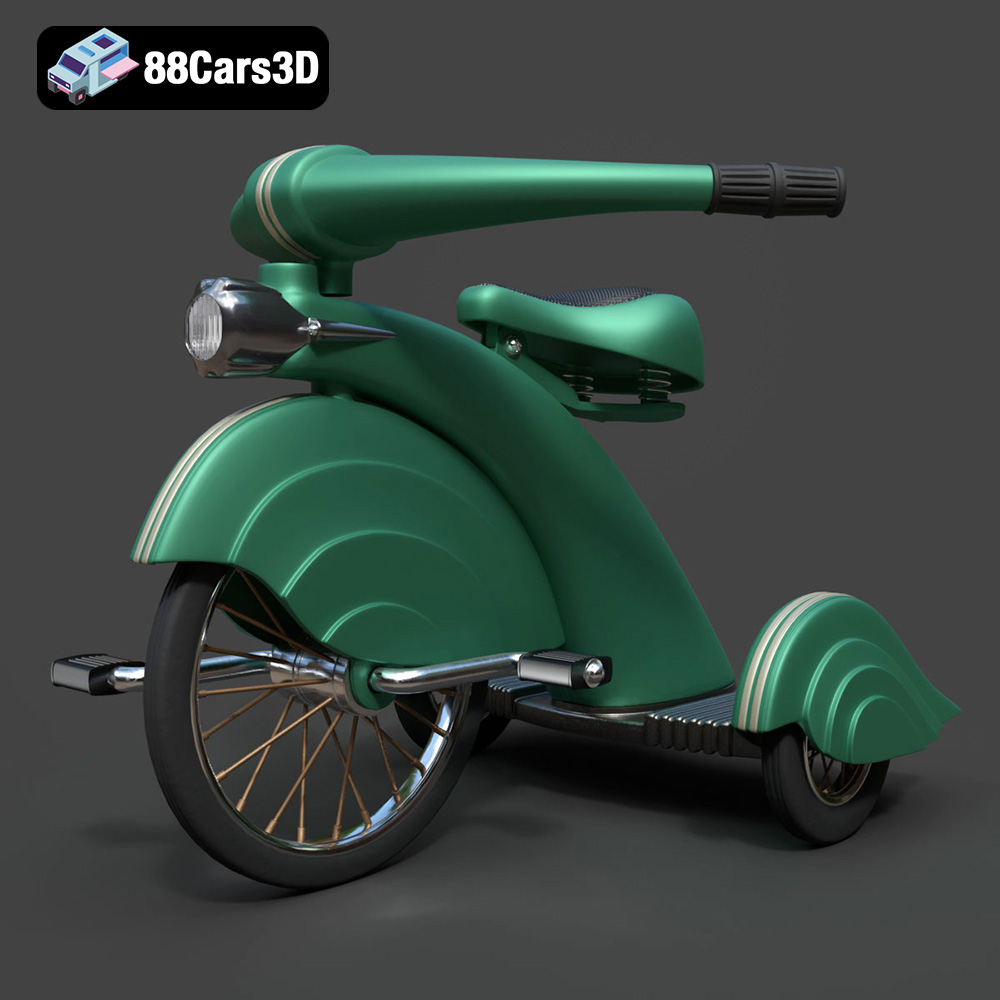
The 1930s was a distinct period for industrial design, characterized by a blend of emerging manufacturing techniques and a sense of utilitarian elegance. The tricycle reflects this with its sturdy tubular steel frame, a common material of the time, and its distinctive oversized front wheel with integrated pedal crank – a design choice that was both functional and aesthetically iconic for early children’s vehicles. The model’s accurate 1930s tricycle proportions ensure that it feels authentic, not just a generic “old bike.”
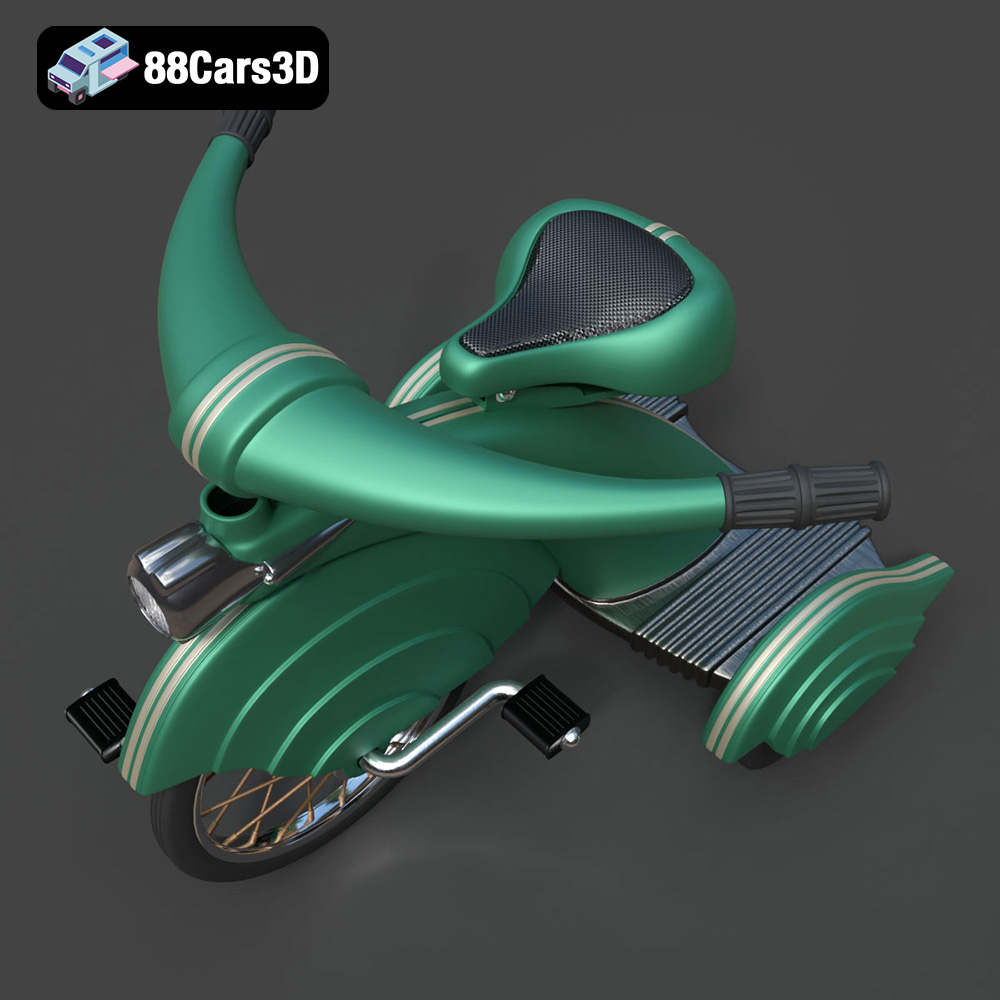
Furthermore, details like the curved vintage-style handlebars and the simple molded saddle seat contribute significantly to its historical accuracy. These aren’t modern interpretations but faithful renditions of components that would have been common during that decade. Such precise modeling is critical for projects demanding historical accuracy, whether it’s an educational simulation, a period film set, or a museum’s digital archive.
The Importance of Mechanical & Structural Details
Beyond external aesthetics, a truly high-quality 3D model like this vintage tricycle delves into the mechanical and structural integrity of the object. The product description highlights features like the front-wheel drive pedal mechanism and rear axle connection detailing. These aren’t just visual flourishes; they are functionally accurate representations that allow for realistic animation and interaction.
The steering pivot properly aligned and frame weld and joint structure representation are further testaments to the model’s technical depth. For animators, correctly aligned pivots are essential for smooth, believable motion. For close-up renders or detailed visualizations, the subtle representation of welds and joints adds a layer of realism that elevates the asset from a mere prop to a character in its own right. This level of detail makes the model suitable for everything from a high-resolution still render to an interactive AR experience where users can virtually “inspect” the tricycle’s construction.
Beyond the Render: Integrating the Vintage Tricycle into Professional Workflows
The versatility of the Vintage Tricycle 1930 3D Model lies in its readiness for diverse professional applications. Its optimized mesh and multiple file formats ensure it can seamlessly integrate into various pipelines, from cinematic rendering to real-time game environments.
Cinematic Rendering and Visualization in 3ds Max and Blender
For artists working on high-fidelity renders, the included .max and .blend files provide native access to the model, allowing for extensive customization. In 3ds Max, artists can leverage sophisticated rendering engines like V-Ray or Corona to create breathtakingly realistic visuals. Imagine the tricycle bathed in soft, nostalgic light, perhaps in a period-correct playroom scene or a dimly lit attic. The “proper pivot setup for wheel rotation and steering” is a godsend for animators creating short films or commercials, allowing for fluid, convincing motion without extensive rigging work.
Similarly, Blender users can take full advantage of its Cycles or Eevee renderers. The clean topology and optimized polygon flow for performance and realism mean that even with high subdivision levels for extreme close-ups, the model maintains its integrity and visual quality. Customization options like changing frame color, adding vintage decals, or applying weathered or restored finishes allow artists to tailor the tricycle to specific narrative or aesthetic requirements, producing unique and compelling visuals for nostalgic marketing visuals, toy catalogs, antique showcases, and themed presentations.
Real-time Integration for Game Development and AR/VR
The “optimized mesh for real-time engines and high-quality renders” makes this model an excellent candidate for interactive experiences. The .fbx and .unreal files are crucial here. In Unreal Engine, developers can import the .fbx, apply physically based rendering (PBR) materials, and integrate the tricycle into a dynamic game environment. Its optimized polygon structure ensures minimal impact on frame rates, which is critical for smooth gameplay.
Consider a retro-themed adventure game set in the 1930s. This tricycle could be a key collectible, an interactive prop for puzzles, or simply an atmospheric detail that enriches the game world. For AR/VR applications, the .glb format comes into its own. Imagine an interactive museum experience where users can view the tricycle in AR, walking around it, inspecting its details, and even rotating its wheels in a virtual space. The low-poly optimization for real-time performance, combined with its historical accuracy, makes it ideal for interactive museum experiences and vintage product demonstrations.
Simulation and Educational Projects
Beyond entertainment, the Vintage Tricycle 1930 3D Model offers significant value for simulation and educational contexts. Its real-world scale accuracy and detailed mechanical representation make it useful for historical toy design references and mechanical visualization projects. Engineers or historians could use the model to analyze early 20th-century toy mechanics, explore material use, or even simulate the forces at play in such a simple vehicle. Its clean and well-organized mesh structure provides an excellent foundation for such analytical tasks, ensuring accurate measurements and simulations.
The Art of Digital Fabrication: 3D Printing Your Vintage Tricycle
One of the most exciting applications for the Vintage Tricycle 1930 3D Model is its suitability for 3D printing. The inclusion of the .stl and .ply formats directly caters to this, allowing creators to bring this digital artifact into the physical world as a tangible collectible or display piece.
From Screen to Shelf: Preparing for 3D Printing
3D printing requires precise model preparation, and the provided .stl format for the Vintage Tricycle 1930 is crucial. It represents the model as a watertight, manifold mesh of triangles, which is exactly what a 3D printer needs to understand its geometry. The specific recommended scales (1:12 / 1:10 / 1:8 / 1:6) are excellent starting points for creators, offering flexibility depending on the desired physical size and level of detail for the replica.
The layer height (0.08–0.16 mm) suggestion for FDM (Fused Deposition Modeling) printers indicates a balance between print speed and fine detail. For even higher fidelity, especially at smaller scales, resin (SLA/DLP) printing would be an excellent alternative, capturing the subtle curves and structural details with exceptional smoothness. The wall thickness (1.2–2 mm) and infill (15–25%) recommendations ensure structural integrity without excessive material usage, making the printed tricycle robust yet efficient to produce.
Overcoming Printing Challenges with Supports and Orientation
Printing intricate models often requires careful consideration of supports and orientation. The instruction that supports are required for handlebars and frame curves is invaluable. These overhangs would otherwise sag during FDM printing. Similarly, the advice for print orientation: frame angled; wheels printed separately is expert-level guidance. Printing the frame at an angle can minimize visible layer lines on prominent surfaces and optimize support placement, leading to a cleaner final product. Printing wheels separately allows for greater detail, easier post-processing, and the option to assemble movable parts.
Post-processing, including sanding, primer, glossy enamel, or vintage matte paint finish, is the final step in truly bringing the printed tricycle to life. This allows for personalized finishes, replicating the look of pristine factory paint or a well-loved, weathered antique. This detailed 3D print setting guide ensures that anyone, from hobbyists to professional prop makers, can successfully fabricate a high-quality physical replica of this charming vintage toy.
Optimizing for Performance and Realism: A Technical Deep Dive
The true mark of a professional 3D model lies in its underlying technical foundation. The Vintage Tricycle 1930 3D Model excels in this area, offering a clean, efficient, and versatile asset that performs well across various demanding applications.
Clean Topology and Real-World Scale
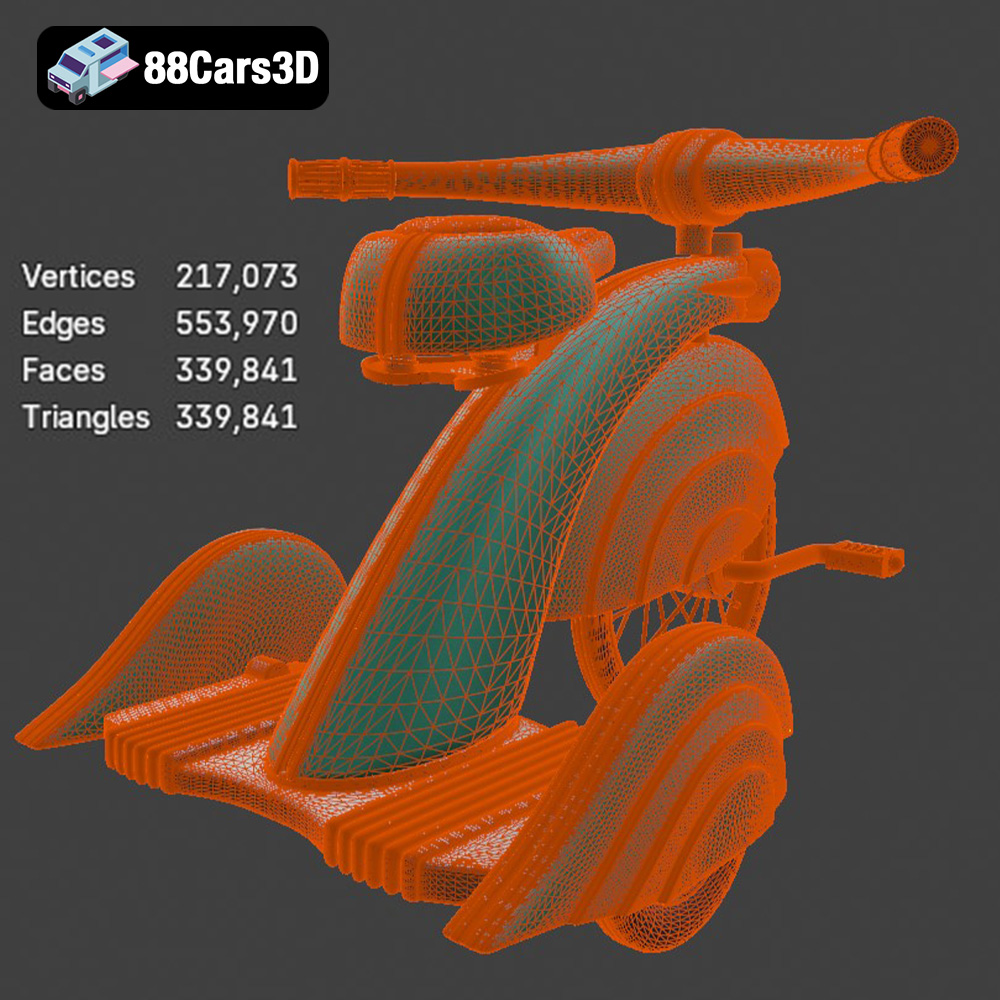
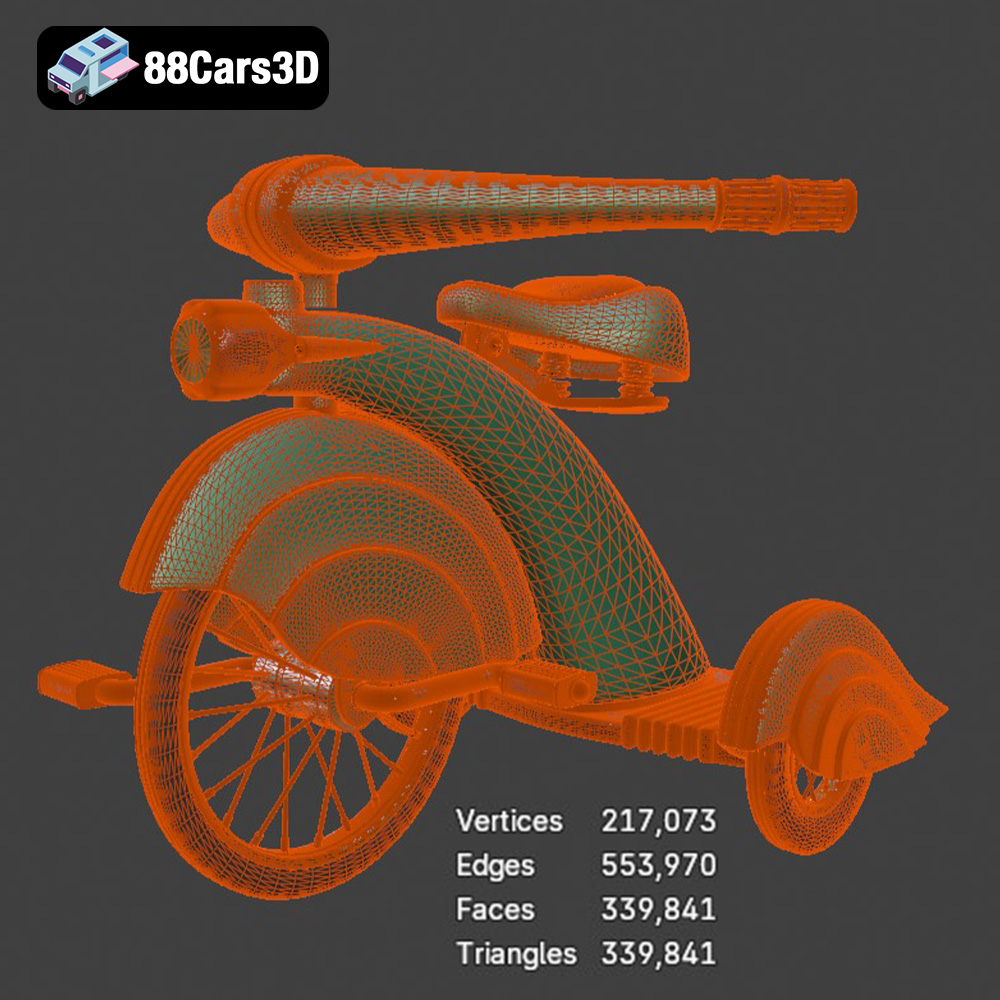
The product description highlights clean and well-organized mesh structure, a fundamental requirement for any serious 3D project. Clean topology means the polygons (quads, ideally) flow logically, allowing for smooth subdivision, distortion-free deformation during animation, and easy UV mapping. This is crucial for maintaining visual integrity, especially in close-up renders or when applying advanced shading techniques.
Furthermore, real-world scale accuracy is non-negotiable for integration into many professional environments. Whether it’s for architectural visualization, game level design, or AR/VR, having an asset that is dimensionally correct from the outset saves immense time and effort. It ensures the tricycle looks appropriate alongside other objects in a scene and interacts realistically with physics simulations.
Proper Pivot Setup and Optimized Polygon Flow
The proper pivot setup for wheel rotation and steering is a significant technical advantage for animators and game developers. Without correctly positioned pivots, animating rotations becomes a tedious and often inaccurate process. With this model, the wheels and handlebars are ready to be animated with minimal fuss, enabling realistic movement sequences straight out of the box.
The optimized polygon flow for performance and realism is a testament to skilled modeling. It means the model has enough detail where it’s needed (e.g., curves, joints) but avoids unnecessary polygons in flat areas, striking a balance between visual fidelity and computational efficiency. This optimization is critical for real-time applications like games and AR/VR, where every polygon counts towards maintaining high frame rates. For high-quality renders, it ensures that subdivision modifiers can be applied effectively, resulting in perfectly smooth surfaces without unsightly artifacts.
Creative Applications and Customization Potential
The intrinsic quality and attention to detail in the Vintage Tricycle 1930 3D Model unlock a world of creative possibilities, further enhanced by the listed customization options.
Expanding Beyond the Default Look
The model’s inherent flexibility allows artists to tailor its appearance to suit any creative vision. The option to change frame color (classic red, cream, blue, or pastel tones) provides an immediate path to personalization. Imagine a vibrant red tricycle for a cheerful childhood memory scene, or a muted pastel tone for a whimsical, dream-like sequence. This simple customization alone can dramatically alter the mood and narrative context of the asset.
Further possibilities include adding vintage decals or logo markings, which can transform the tricycle into a branded item from a specific fictional toy company of the era, or a prop with a unique backstory. Applying a weathered or restored finish opens up artistic avenues for storytelling – a rust-pitted, chipped paint job for an abandoned attic scene versus a gleaming, freshly restored version for a high-end antique display. Even the seat material texture can be modified to reflect different types of early plastics, leathers, or fabrics, adding another layer of realism.
Scene-Building and Lighting Considerations
Beyond the model itself, the article mentions configuring lighting for studio or nostalgic indoor scenes. This highlights the model’s potential as a focal point within a larger environment. For a retro-themed scene, soft, warm lighting could evoke a feeling of comfort and nostalgia. For a more dramatic visual, focused spotlights could highlight the tricycle’s intricate details, creating a sense of preciousness or historical significance. The model’s excellent geometry and material setup will react beautifully to any lighting scheme, making it a joy to work with for any rendering artist.
Whether it’s for a vintage advertising campaign, a historical documentary, a mobile game with a retro aesthetic, or an immersive AR experience for a virtual toy collection, the Vintage Tricycle 1930 3D Model provides a rich and adaptable foundation for a myriad of creative projects, proving its worth as an essential game asset and rendering prop.
Conclusion: The Enduring Value of Authenticity in 3D
In the dynamic realm of 3D content creation, the pursuit of authenticity and technical excellence remains paramount. The Vintage Tricycle 1930 3D Model stands as a testament to this principle, offering a meticulously crafted digital asset that transcends mere polygons to embody a slice of history. From its accurate period proportions and detailed mechanical elements to its clean topology and diverse file format support, every aspect of this model has been designed with professional utility in mind.
Whether your project demands cinematic realism in 3ds Max or Blender, seamless integration into real-time environments like Unreal Engine for game assets or AR/VR experiences, or the tangible satisfaction of a 3D printed replica, this model provides the foundation. Its versatility as a 3D car model (broadly speaking for vehicle props), for automotive rendering (in a historical context), and as a compelling game asset makes it an invaluable addition to any digital artist’s toolkit.
The ability to customize its appearance, coupled with its robust technical build, ensures that the Vintage Tricycle 1930 3D Model is not just a ready-made prop but a flexible tool that empowers creators to tell their unique stories with unparalleled historical accuracy and visual appeal. Discover this exceptional model and more high-quality 3D assets to elevate your next project at 88cars3d.com, your premier source for professional-grade 3D content.
Featured 3D Model
Vintage Tricycle 1930 3D Model 3D Printable STL
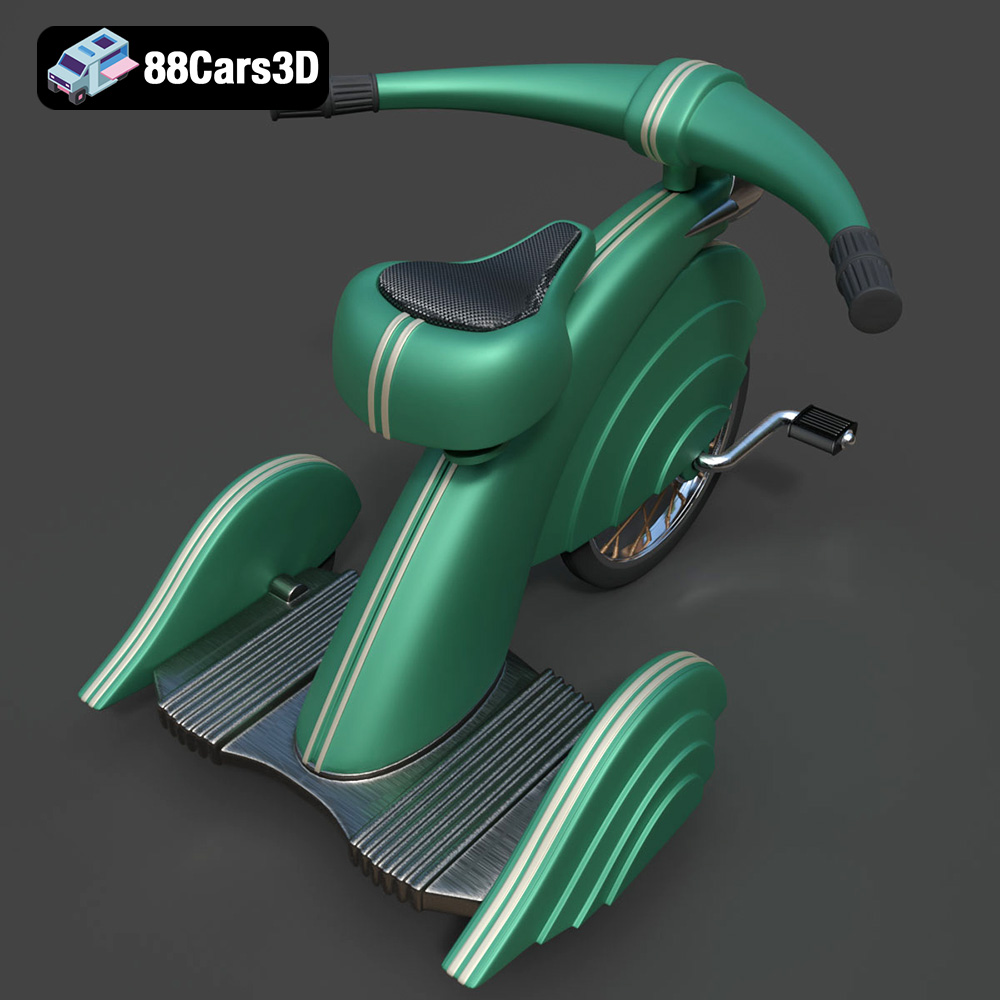
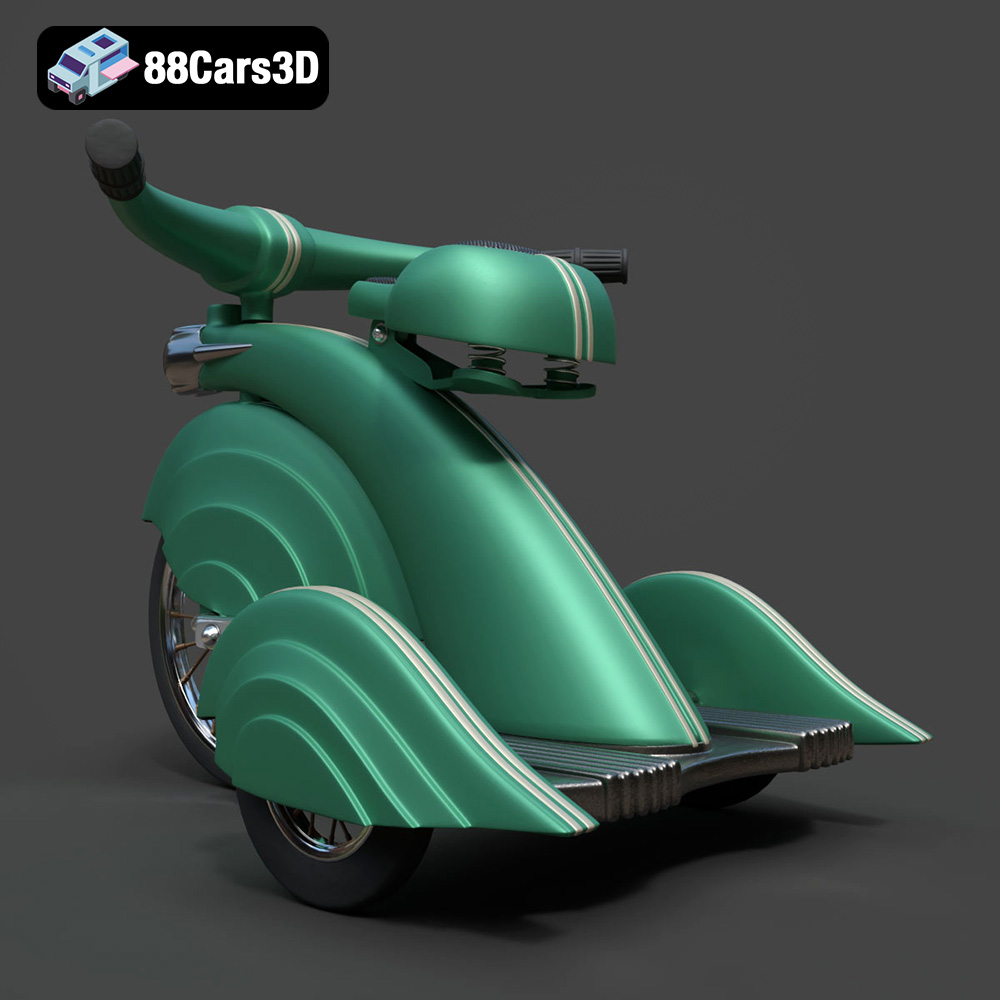
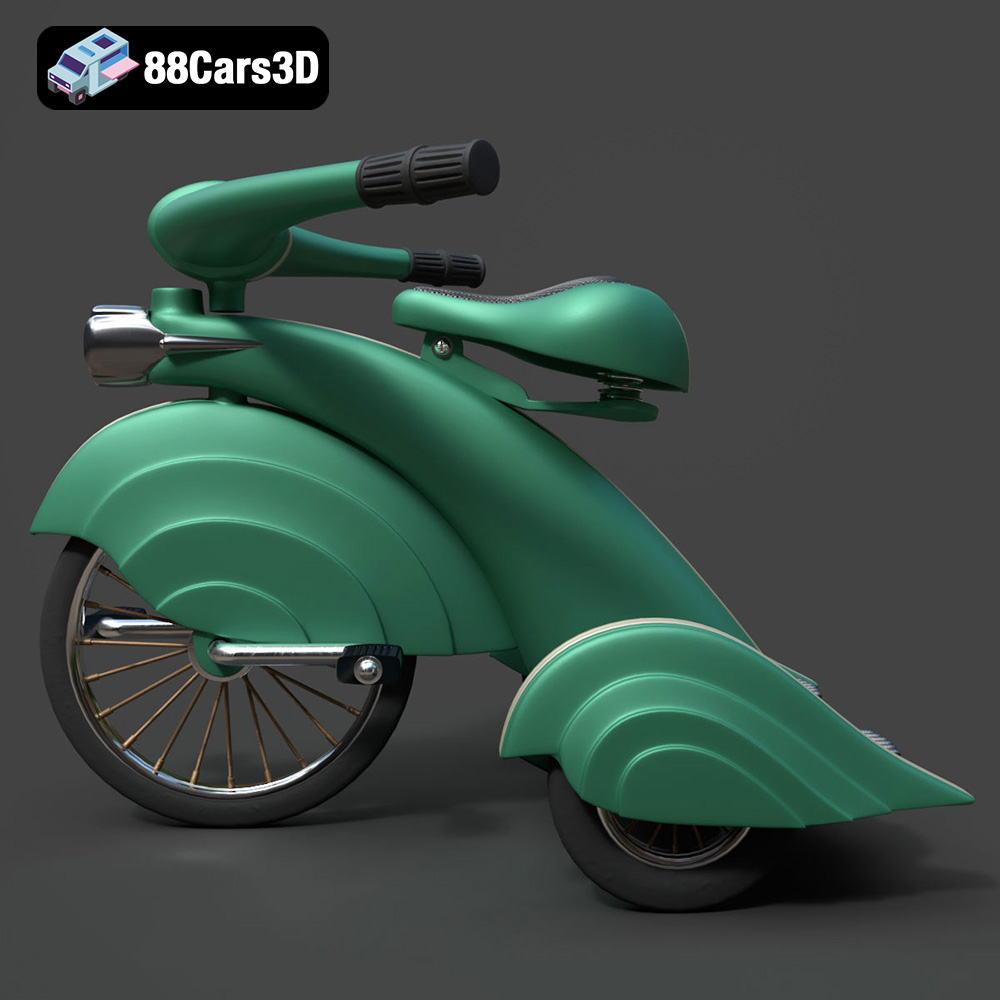
The Vintage Tricycle 1930 3D Model is a high-detail digital recreation of a classic early 20th-century three-wheeled bicycle designed for children. Inspired by 1930s craftsmanship, this model captures the nostalgic charm of vintage steel construction, oversized front wheel, curved handlebars, simple saddle seat, and solid rubber tires. This 3D model accurately represents the sturdy tubular frame, large front drive wheel with pedals, dual rear wheels, rear axle structure, classic fender detailing, and period-correct handlebar design. Built with clean topology and real-world scale accuracy, it is ideal for rendering, animation, historical visualization, game development, and AR/VR experiences. Perfect for retro-themed scenes, antique toy collections, museum displays, cinematic projects, and nostalgic advertising visuals.
$15.9
Product Image Gallery
Related Tags
.1930s
.antiquetoy
.arvr
.blend
.classictricycle
.fbx
.gameasset
.glb
.max
.nostalgicdesign
.obj
.ply
.rendering
.retrobike
.simulation
.stl
.toy3dmodel
.unreal
.vintagetricycle
