

Unleashing Digital Muscle: The Harley-Davidson FXDR 114 in 3D
The roar of a Harley-Davidson isn’t just a sound; it’s an experience, a statement of freedom and raw power. For enthusiasts and creatives alike, capturing this visceral feeling in a digital realm presents a unique challenge and opportunity. From the thunderous Milwaukee-Eight engine to the aggressive, drag-inspired lines, every detail contributes to the iconic presence of a Harley. The FXDR 114 stands out as a modern power cruiser, a machine engineered for unadulterated muscle and dynamic street presence.
In the world of 3D modeling, bringing such a legendary vehicle to life requires meticulous attention to detail, robust technical specifications, and a deep understanding of how these digital assets will be used across various mediums. Whether it’s for cinematic automotive rendering, a high-fidelity game asset, an interactive AR/VR experience, or even a tangible 3D printed collectible, the foundational quality of the model is paramount. This is where a precisely crafted asset like the Harley-Davidson FXDR 114 3D Model truly shines, offering an exceptional blend of visual fidelity and technical versatility for professional pipelines.
In this comprehensive guide, we’ll delve into the intricacies of integrating high-quality 3D models into diverse projects, focusing on the technical advantages and creative possibilities offered by a premium asset such as the FXDR 114. We’ll explore critical file formats, professional workflows, and even the exciting prospect of bringing digital designs into the physical world through 3D printing. Join us as we explore how a single, well-crafted 3D model can power a multitude of creative and commercial ventures.
Understanding 3D Model File Formats
The journey of a 3D model, from its creation in a digital sculptor’s hands to its final deployment in a game engine or a physical print, is often dictated by the file format chosen. Each format serves a specific purpose, offering unique advantages in terms of data preservation, compatibility, and optimization for particular workflows. Selecting the correct format is a critical decision for any project involving 3D car models or other complex assets, directly impacting efficiency and end-result quality. The Harley-Davidson FXDR 114 3D Model is provided in an extensive range of formats, ensuring maximum compatibility and utility.
.blend – The Blender Native Project
The .blend format is the native file type for Blender, an incredibly powerful open-source 3D creation suite. A .blend file typically contains a complete scene, including the 3D mesh, materials, textures, lighting, cameras, animation data, and even physics simulations. For artists working primarily in Blender, this format offers full editability, allowing for comprehensive modifications to every aspect of the Harley-Davidson FXDR 114 3D Model, from mesh topology adjustments to intricate shader network modifications. It’s ideal for those who want to integrate the model seamlessly into an existing Blender project or perform extensive customization.
.fbx – The Industry Workhorse
.fbx (Filmbox) is arguably one of the most widely supported 3D file formats in the industry. Developed by Autodesk, it excels at transferring complex 3D models and their associated data – including meshes, materials, textures, animations, and skeletal deformations – between different software applications. For game development, especially with engines like Unreal Engine and Unity, .fbx is the gold standard. Its robust structure ensures that the animated components of the FXDR 114, such as separate wheels, steering, and suspension, transfer accurately, making it ideal for real-time pipelines where precise hierarchy and animation capabilities are crucial.
.obj – The Universal Exchange Format
The .obj (Wavefront Object) format is a venerable and highly compatible format for exchanging static 3D geometry. While it doesn’t typically store animation or scene information, it’s excellent for transferring mesh data, UV coordinates, and material group definitions across virtually any 3D software. For simple static renders or when starting a new project in a less common software, the .obj version of the FXDR 114 provides a clean, universal starting point, ensuring broad cross-software compatibility.
.glb – Optimized for AR, VR, and Web
.glb (GL Transmission Format Binary) is a modern, compact, and efficient format that bundles 3D models, textures, and animations into a single file. It’s rapidly becoming the go-to format for AR (Augmented Reality), VR (Virtual Reality), and browser-based applications due to its optimized structure for quick loading and efficient rendering in web environments. For developers looking to showcase the Harley-Davidson FXDR 114 in an interactive virtual showroom or on a product configurator webpage, the .glb format offers excellent performance and visual quality.
.stl – The 3D Printing Standard
.stl (Stereolithography) is the most common file format for 3D printing. It represents 3D surfaces as a collection of triangular facets, making it perfectly suited for additive manufacturing processes. The .stl version of the Harley-Davidson FXDR 114 3D Model is specifically prepared for physical output, allowing hobbyists and professionals to bring the digital design to life. It’s crucial for this format to have manifold geometry (watertight surfaces) to ensure successful prints, a key feature of high-quality assets like those found on 88cars3d.com.
.ply – Precision Mesh for CAD and Analysis
The .ply (Polygon File Format) is another popular format for storing 3D data, particularly known for its ability to store properties beyond just geometry, such as color, transparency, and normals for each vertex or face. It’s often used in scientific applications, 3D scanning, CAD software, and scenarios requiring precision mesh data for analysis or reverse engineering. While less common for general animation, it offers a robust solution for specific technical and manufacturing pipelines.
.unreal – Engine-Ready Asset
When a model is provided in an .unreal specific format, it signifies that it has been pre-optimized or packaged for direct import into Unreal Engine. This might include pre-configured materials, collision meshes, LODs (Levels of Detail), and proper skeletal setups, saving developers significant time on asset preparation. The .unreal version of the FXDR 114 is designed to be engine-ready, allowing for immediate integration into real-time environments for game development or high-end architectural visualization with minimal setup.
.max – The 3ds Max Native Project
Similar to .blend for Blender, .max is the native project file for Autodesk 3ds Max, a leading software for 3D modeling, animation, and rendering. A .max file retains all scene data, including advanced modifiers, V-Ray or Corona renderer setups, complex rigging, and animation timelines. For users entrenched in the 3ds Max ecosystem, this format provides the most flexibility for detailed scene composition, advanced rendering techniques, and animation sequencing for the Harley-Davidson FXDR 114 3D Model.
The Harley-Davidson FXDR 114 3D Model: A Deep Dive into Digital Craftsmanship
From the moment you lay eyes on the Harley-Davidson FXDR 114, its aggressive stance and drag-bike aesthetics command attention. Replicating this potent presence in a 3D model requires more than just polygon counts; it demands an understanding of form, function, and the subtle nuances that define its character. The Harley-Davidson FXDR 114 3D Model available on 88cars3d.com exemplifies this dedication to digital craftsmanship.
Capturing the FXDR’s Aggressive Aesthetic
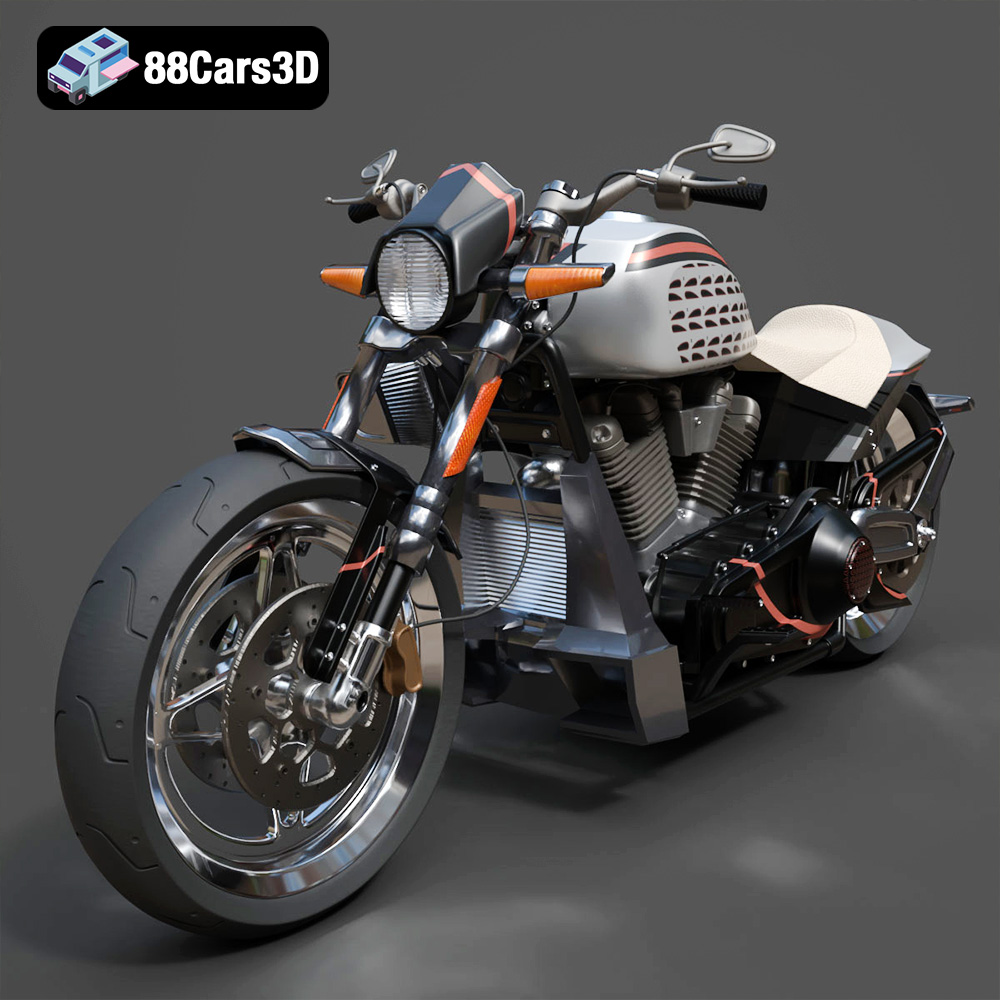
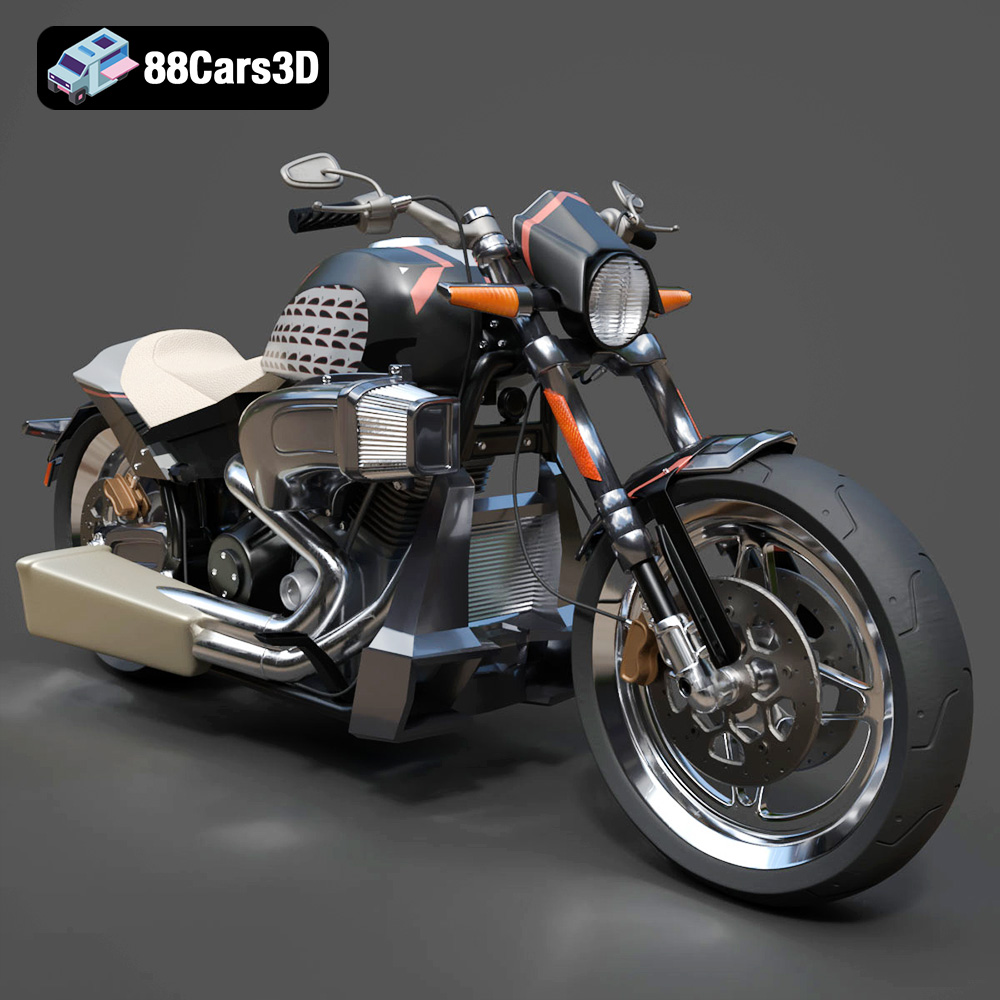
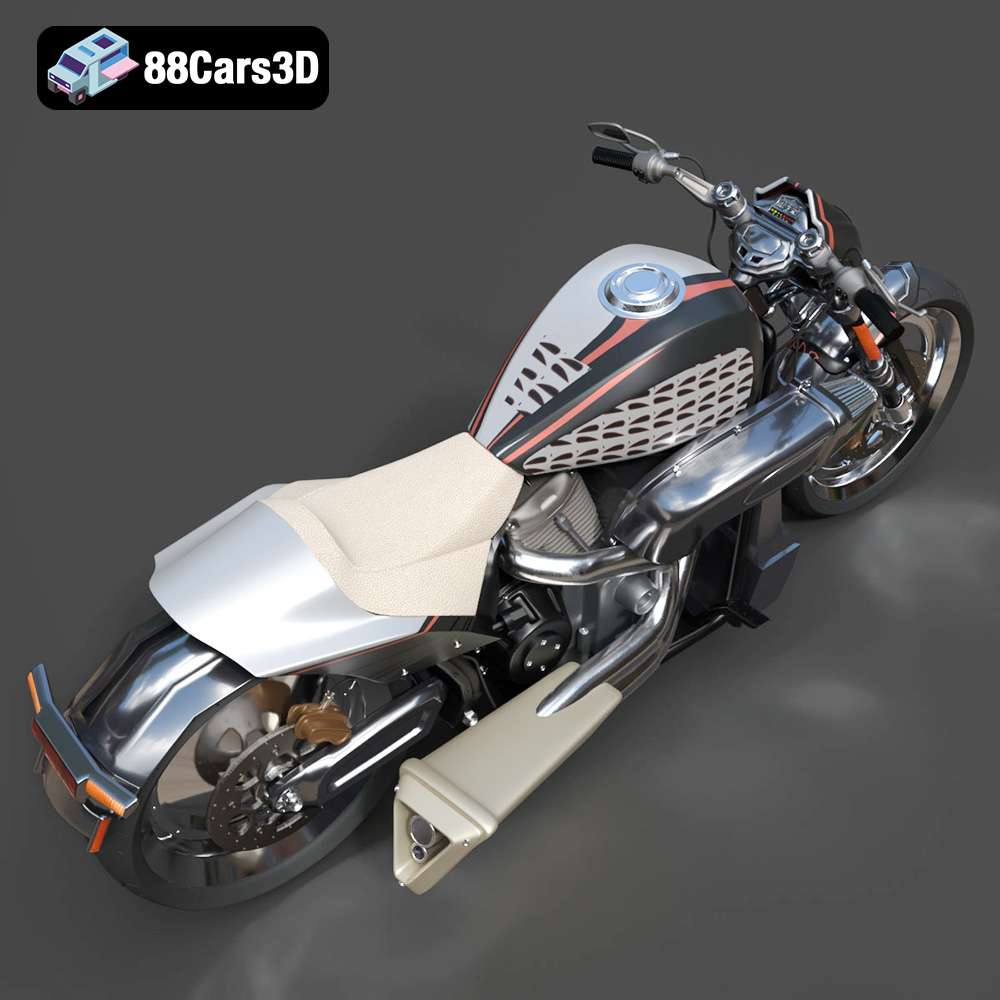
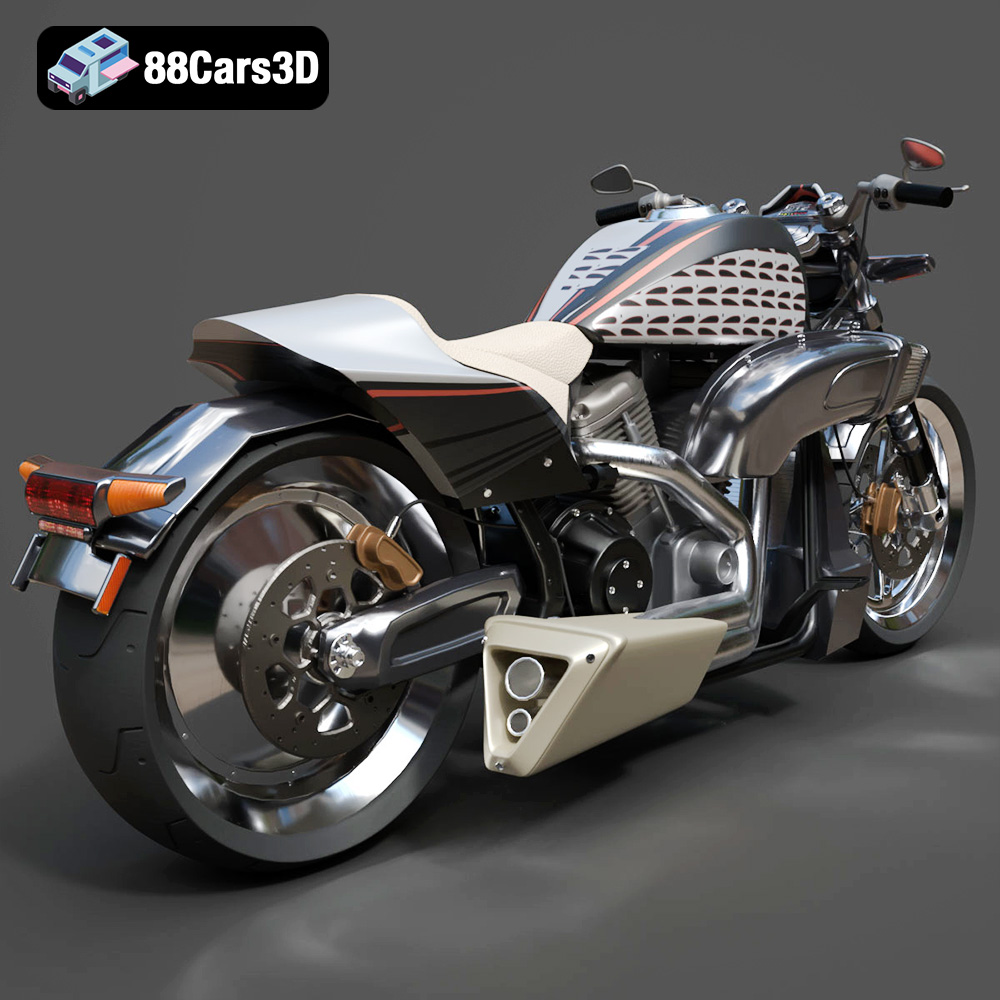
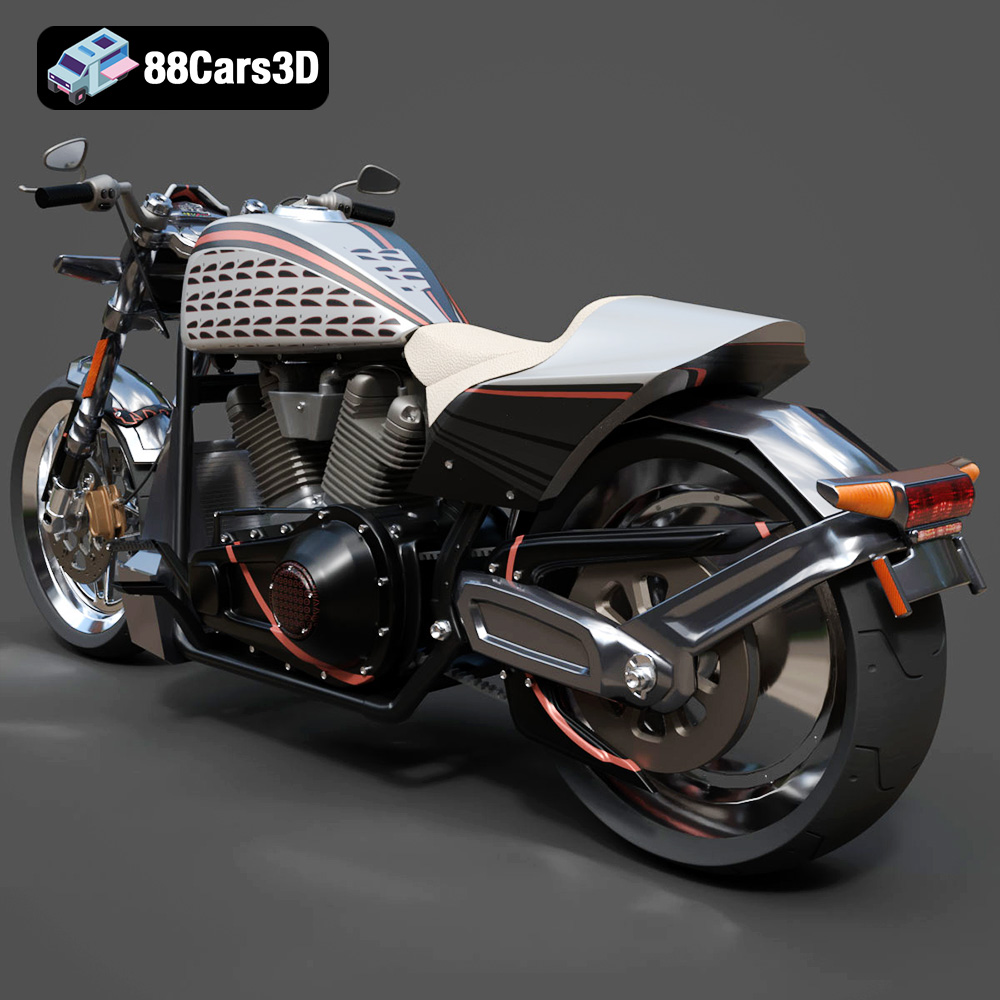
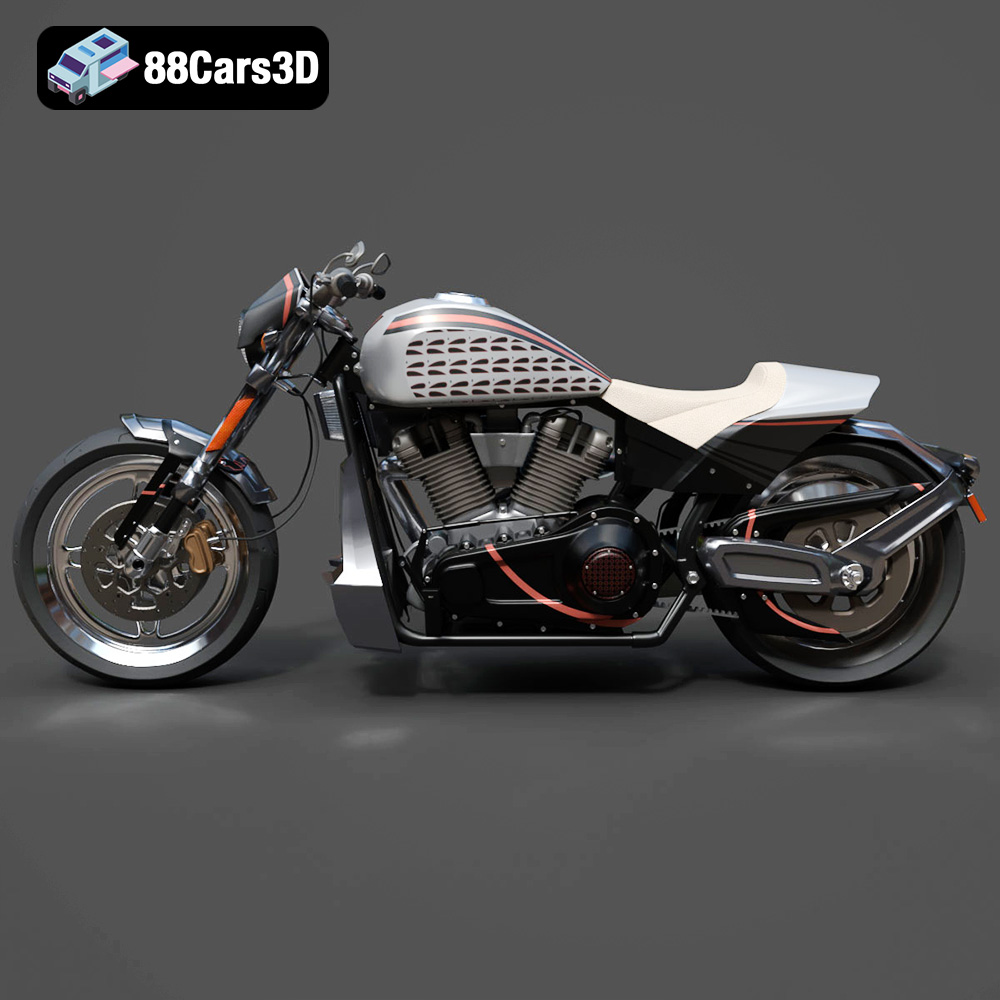
The digital recreation of the FXDR 114 meticulously mirrors its real-world counterpart. The core of its identity – the Softail chassis geometry and powerful drag-bike proportions – is accurately translated. Every curve, every angle, and the distinctive rake of the forks are faithfully represented. The heart of the beast, the highly detailed Milwaukee-Eight 114 V-Twin engine block, is a highlight, complete with its primary drive and forward-facing air intake. The signature performance 2-into-1 exhaust system, a key visual and auditory component of the physical bike, is also precisely modeled. Beyond the engine, the massive 240mm rear tire and the lightweight cast-aluminum swingarm geometry are accurately proportioned, contributing to the model’s authentic visual weight and stance. Even subtle elements like the sleek LED Daymaker headlight assembly and the aggressively clipped, drag-style tail section are rendered with an impressive level of detail, ensuring that the model maintains its unmistakable Harley presence from every angle.
Rider Interface and Interior Detail
While the exterior screams power, the rider’s interface is where the human connection is made. The 3D model doesn’t overlook these crucial details. The deep, drag-style solo saddle geometry is sculpted for authenticity, reflecting the rider’s aggressive posture. The forward-reaching aluminum clip-on style handlebars and the minimalist digital riser gauge cluster are precisely placed and modeled, providing a realistic cockpit experience. Authentic forward foot control and peg placements complete the rider’s ergonomic setup. This level of detail, particularly in the cockpit, is invaluable for immersive experiences, making the model perfectly suited for first-person POV in gaming or high-end virtual reality applications where the user will be “sitting” on the bike.
Technical Prowess: Topology and Scale
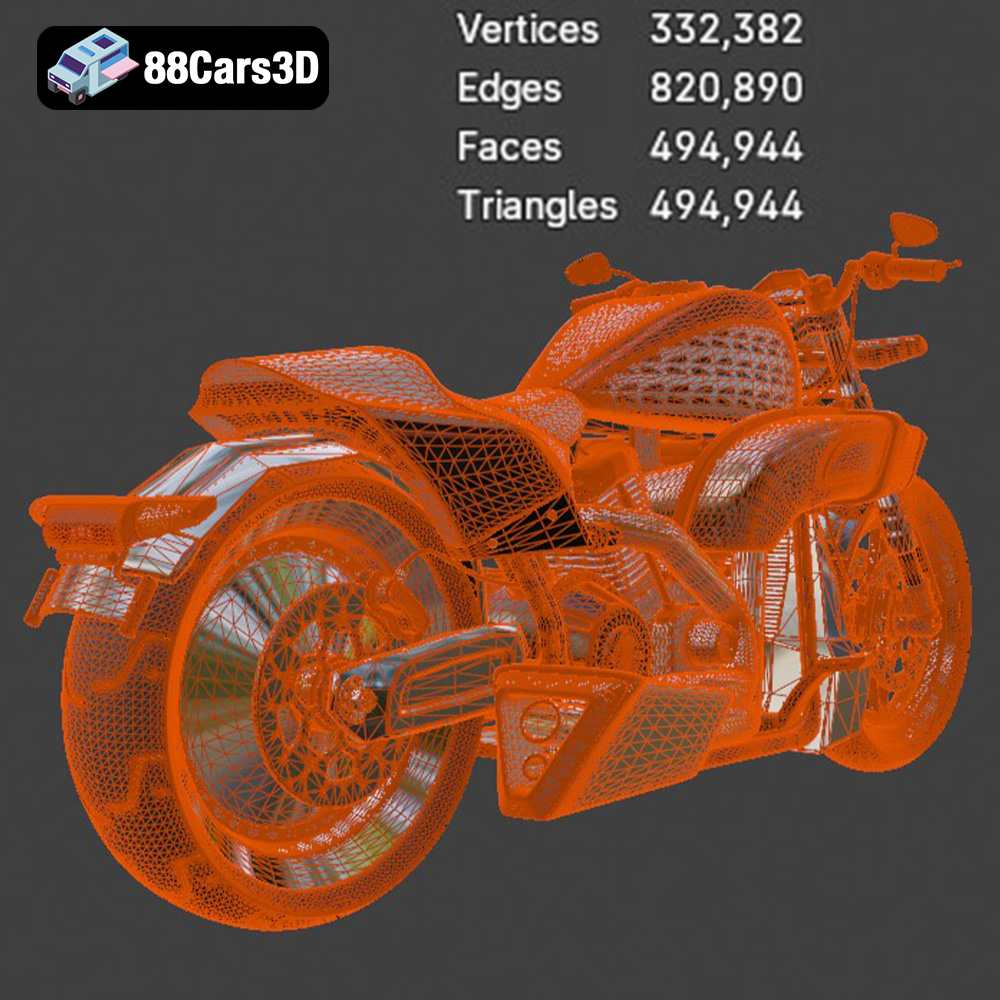
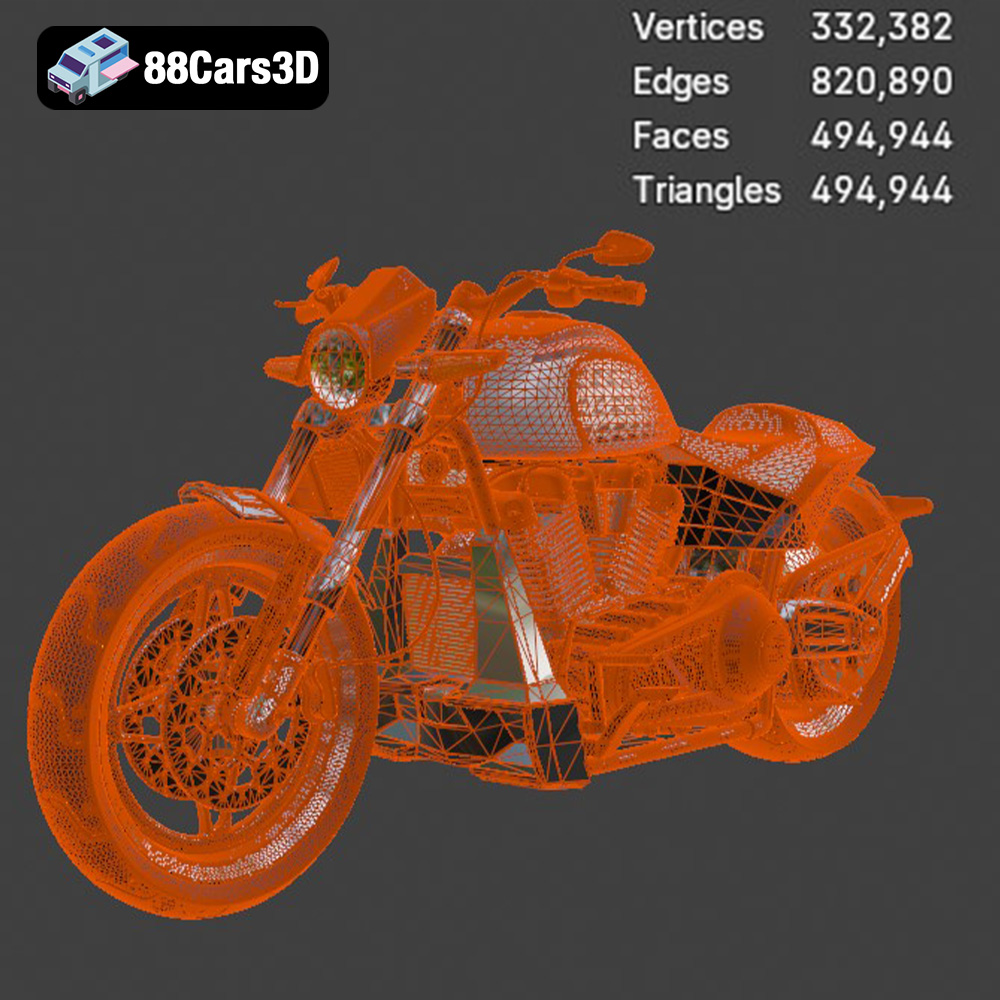
From a technical standpoint, what truly impresses about this FXDR 114 model is its perfectly balanced topology. With 332,382 vertices, 820,890 edges, and 494,944 faces/triangles, it strikes a critical balance. This mid-to-high polygon count provides excellent extreme close-up detail, crucial for high-resolution renders and cinematic sequences, without becoming an unmanageable behemoth that would cripple game engine performance. As experienced 3D artists understand, balancing detail with optimization is key to a truly versatile asset. Furthermore, the model adheres to real-world scale accuracy based on the FXDR Softail chassis, ensuring it integrates flawlessly into scenes with other real-world scaled assets. Proper pivot setups for steering, wheel rotation, and even kickstand articulation mean this model is ready for dynamic animation straight out of the box, a significant advantage for game developers and animators alike.
Professional Workflows: Integrating the FXDR 114 into Your Pipeline
A high-quality 3D model is a powerful tool, but its true value is unlocked when seamlessly integrated into professional workflows across diverse industries. The Harley-Davidson FXDR 114 3D Model, with its robust technical foundation and multiple file formats, is engineered for exactly this kind of versatility, serving as an invaluable asset for various creative and commercial applications.
Automotive Rendering and Visualization
For artists specializing in automotive rendering and visualization, the FXDR 114 model is a dream to work with. In software like 3ds Max or Blender, its detailed geometry allows for stunning, photorealistic outputs. Imagine setting up a studio lighting environment, playing with reflections on the polished engine parts, or capturing the play of light on its metallic paint. It’s ideal for lifestyle brand campaigns, where the bike’s aggressive stance can evoke a sense of freedom and power, perfectly complementing apparel or product advertisements. Beyond sterile studio shots, the model excels in gritty urban street scenes, where dynamic lighting and atmospheric effects can truly highlight its “drag-strip attitude.” Its clean topology makes it easy to apply advanced material shaders, allowing for realistic paint flakes, tire rubber, and metallic sheen that push the boundaries of visual fidelity. This model can form the centerpiece of an entire visualization project, from static hero shots to dynamic animations showcasing its performance.
Game Development and Real-time Engines
In the fast-paced world of game development, high-quality game assets are crucial for delivering immersive experiences. The Harley-Davidson FXDR 114 3D Model is an excellent candidate for a “hero” drivable vehicle in current-gen console and PC games. Its optimized polygon count (just under 500k triangles) provides impressive detail for close-up views and first-person perspectives without imposing an overwhelming load on modern game engines like Unreal Engine 5 or Unity HDRP. The model’s separate wheels, steering components, and suspension are already set up with proper pivots, streamlining the rigging and animation process for developers. This means less time spent on initial setup and more time refining gameplay and physics. For AR/VR applications, such as high-end virtual motorcycle showrooms or interactive part configurators, the FXDR 114 offers the necessary visual fidelity and optimized geometry to deliver a smooth, engaging user experience, allowing potential buyers to explore every angle and customize features in real-time.
The Art of 3D Printing: Bringing Digital to Tangible
The digital realm offers boundless creative freedom, but there’s an undeniable magic in holding a physical manifestation of a virtual design. The Harley-Davidson FXDR 114 3D Model, specifically its .stl format, bridges this gap, opening up exciting possibilities for hobbyists, collectors, and prototyping professionals to bring this iconic power cruiser into the tangible world.
Preparing the Model for Physical Creation
Converting a high-detail rendering asset into a successful 3D printable model requires careful consideration. The .stl format provided ensures that the model’s geometry is manifold (watertight), a critical requirement for slicing software to correctly interpret the object’s volume. For a complex asset like a motorcycle, ensuring all intricate parts are connected and properly scaled for printing is paramount. The recommended scales – 1:12, 1:10, or 1:8 – allow for a significant level of detail to be preserved while creating a display-worthy model. The advice to use resin printing (SLA/DLP) with a layer height of 0.04–0.08 mm is particularly insightful, especially for delicate features such as the engine cooling fins and the spokes of the wheels. FDM (filament) printing, while versatile, often struggles with such fine details, making resin the superior choice for capturing the FXDR’s intricate design elements. Understanding where supports are needed (forward air intake, handlebars, exhaust pipes, kickstand) and how to orient the print (frame angled for structural integrity; wheels and exhaust printed separately) are crucial tips that ensure a successful, high-quality physical output.
Post-Processing and Customization for Physical Models
The journey from a raw 3D print to a finished scale model is where craftsmanship truly shines. Post-processing steps like sanding, priming, and painting are essential to elevate the printed FXDR 114. The suggestion of classic Harley colors like Vivid Black or Industrial Gray Denim for the tank, paired with bronze or matte metallic finishes for engine accents and exhaust, guides hobbyists towards authentic aesthetics. Beyond just replication, 3D printing also allows for unique customization. Imagine printing a custom aftermarket exhaust system designed in a separate CAD program and seamlessly integrating it with the printed model. The separate wheels, steering components, and suspension, which are excellent for digital animation, also translate well to physical assembly, allowing for articulated models or simplified kits for easier painting and assembly. This ability to convert a high-fidelity digital asset into a customizable, physical object truly expands the creative possibilities, transforming a screen-based visualization into a tactile piece of art.
Customization and Adaptability for Creative Projects
A superior 3D model isn’t just about its initial fidelity; it’s about its adaptability. The Harley-Davidson FXDR 114 3D Model embodies this, offering an exceptional digital asset for a wide range of applications.
From its meticulous exterior and cockpit detailing to its perfectly balanced topology, this model is designed for peak performance and visual fidelity. Its comprehensive set of included file formats ensures unparalleled compatibility, whether you’re embarking on a high-end automotive rendering project in 3ds Max, developing a next-generation game with Unreal Engine, creating an interactive AR/VR experience, or even bringing the design to life through 3D printing. The emphasis on real-world scale, proper pivot setups, and customizable features empowers artists and developers to integrate this asset seamlessly and creatively into their pipelines.
Ultimately, investing in high-quality 3D car models and motorcycle assets like the FXDR 114 from 88cars3d.com streamlines workflows, enhances visual quality, and unlocks new creative possibilities for any project. It’s a testament to the power of digital craftsmanship, transforming a virtual blueprint into a versatile tool ready to accelerate your creative vision.
Featured 3D Model
Harley-Davidson FXDR 114 3D Model
The Harley-Davidson FXDR 114 3D Model is a high-detail digital recreation of the aggressive, drag-inspired power cruiser. Built to represent raw, unapologetic muscle, the FXDR 114 combines the massive torque of the Milwaukee-Eight 114 V-Twin engine with weight-saving aluminum components, a clipped tail, and a massive 240mm rear tire. This 3D model accurately captures the drag-strip attitude of the original bike, featuring the signature forward-reaching air intake, 2-into-1 tuned exhaust, lightweight cast aluminum swingarm, and the sleek LED Daymaker headlamp surround. Built with an optimized mid-to-high polygon topology (just under 500k triangles), it strikes a fantastic balance between premium visual fidelity for close-up rendering and manageable performance for modern current-gen game engines as a hero asset. Perfect for gritty urban street-racing scenes, biker lifestyle campaigns, modern open-world video games, and automotive visualization.
$44.99
Product Image Gallery
Related Tags
.blend
.fbx
.obj
.rendering
.stl
car-3d-model
drag-bike
fxdr
fxdr-114
game asset
harley-davidson
mid-poly
milwaukee-eight
motorcycle-3d-model
power-cruiser
softail
VR/AR
