

Driving Digital Heritage: The Old Tractor 3D Model and Its Versatile Applications
In the vast landscape of 3D modeling, few subjects evoke a sense of timeless charm and rugged utility quite like vintage machinery. From the sleek lines of classic sports cars to the intricate mechanisms of industrial equipment, 3D car models offer a unique blend of artistry and technical precision. Today, we’re taking a closer look at a particularly captivating asset that embodies this spirit: the Old Tractor 3D Model. This meticulously crafted digital recreation of a classic agricultural tractor from the mid-20th century isn’t just a nostalgic piece; it’s a powerhouse asset designed for a multitude of professional applications, from stunning automotive rendering to immersive game development and even intricate 3D printing projects. Whether you’re a seasoned professional or an aspiring digital artist, understanding the capabilities of such a model can unlock new creative avenues. At 88cars3d.com, we believe in providing assets that are not only visually striking but also technically robust, and this Old Tractor 3D Model stands as a testament to that commitment.
Understanding 3D Model File Formats: The Backbone of Digital Assets
The true utility and interoperability of a 3D model often hinge on the file formats it supports. For a professional-grade asset like the Old Tractor 3D Model, offering a comprehensive suite of formats is crucial for seamless integration into diverse pipelines. Each format serves a specific purpose, catering to different software, engines, and end-use applications. Understanding these distinctions is fundamental for any serious 3D artist or developer.
.blend – The Native Blender Ecosystem
The .blend format is Blender’s native file type, offering a complete scene package. When you download the Old Tractor 3D Model in .blend, you’re getting an editable Blender scene with all its materials, textures, lighting setups, cameras, and even animations embedded. This is ideal for artists who primarily work within Blender, providing maximum flexibility for modifications, rigging, and rendering using Cycles or Eevee. Technical details often include full support for Blender’s node-based material system, modifiers, and custom attributes, ensuring a non-destructive workflow.
.fbx – The Industry Standard for Interoperability
.fbx (Filmbox) is arguably the most widely adopted interchange format in the 3D industry. It’s designed for transferring 3D data, including models, animations, cameras, and lights, between different software applications like 3ds Max, Maya, Cinema 4D, and critically, game engines such as Unreal Engine and Unity. For a model like the Old Tractor, .fbx is ideal for ensuring that geometry, UVs, and basic material assignments translate effectively, making it a go-to choice for real-time pipelines and complex animated sequences. Its robust support for skeletal animation and blend shapes makes it indispensable for any asset destined for interactive environments.
.obj – The Universal Geometry Format
The .obj (Wavefront OBJ) format is a universal standard renowned for its simplicity and wide compatibility. It primarily stores geometric data – vertices, normals, UVs, and faces – along with references to external material files (.mtl). While it lacks support for animation or complex scene data, its widespread adoption means virtually every 3D software can import and export .obj files. The Old Tractor 3D Model in .obj ensures that the core geometry is accessible to any artist, regardless of their preferred modeling suite, making it excellent for cross-software compatibility and archival purposes.
.glb – Optimized for AR, VR, and Web
.glb is the binary version of glTF (Graphics Language Transmission Format), specifically optimized for efficient transmission and loading of 3D scenes and models on the web, in AR (Augmented Reality), and VR (Virtual Reality) applications. It bundles the model’s geometry, textures, and animations into a single, self-contained file, reducing load times and simplifying distribution. For the Old Tractor 3D Model, a .glb version is perfect for interactive browser-based showcases, mobile AR experiences, or light VR simulations, where performance and compact file size are paramount.
.stl – The Standard for 3D Printing
.stl (Stereolithography) is the de facto standard file format for 3D printing. It represents a 3D model as a series of connected triangles, forming the surface geometry. Critically, .stl files do not contain color or texture information; they are purely about form and manifold geometry (a solid, watertight mesh). The Old Tractor 3D Model’s availability in .stl format means it’s ready for conversion into physical scale models, collectibles, or prototypes. This format is a direct pathway from digital design to tangible product, enabling creators to bring the vintage tractor to life on a desktop 3D printer.
.ply – Precision Mesh for CAD or Analysis
The .ply (Polygon File Format) is another popular format for storing 3D data, often associated with 3D scanning and scientific applications. It can store a wider range of properties than .obj, including color, transparency, and sometimes even normal vectors per vertex or face. While not as universally used as .fbx or .obj for general asset transfer, .ply is a precision mesh format valuable for detailed analysis, CAD integration, or when a higher fidelity of per-vertex data is required, making it useful for specialized engineering or visualization tasks involving the Old Tractor model.
.unreal – Engine-Ready for Real-Time Environments
A native .unreal file type indicates an asset specifically optimized and packaged for direct import and use within Unreal Engine. This often means the model has been pre-configured with appropriate materials, collision meshes, LODs (Levels of Detail), and sometimes even basic blueprints. For game developers leveraging the Old Tractor 3D Model, an .unreal format saves significant setup time, ensuring the asset is engine-ready for immediate integration into farming simulators, open-world countryside games, or interactive architectural visualizations.
.max – The Power of 3ds Max Projects
Finally, the .max format is Autodesk 3ds Max’s native scene file. Similar to .blend for Blender, it contains the entire project data, including models, modifiers, materials (V-Ray, Corona, Physical Renderer), lighting, cameras, and animations. For artists working in 3ds Max, the Old Tractor 3D Model in .max offers full editability and control over every aspect of the scene. This format is crucial for high-end automotive rendering, complex animation sequences, and architectural visualization projects where 3ds Max is the primary tool. The presence of .max alongside other formats on 88cars3d.com underscores the model’s professional-grade readiness for various industry standard workflows.
Deconstructing the Old Tractor: A Masterclass in Automotive 3D Modeling
The creation of a truly high-quality 3D model, especially one that faithfully represents real-world machinery, requires an acute eye for detail and a deep understanding of technical execution. The Old Tractor 3D Model exemplifies this commitment to precision, delivering an asset that is both visually authentic and structurally sound.
Crafting Authenticity: Exterior & Mechanical Details
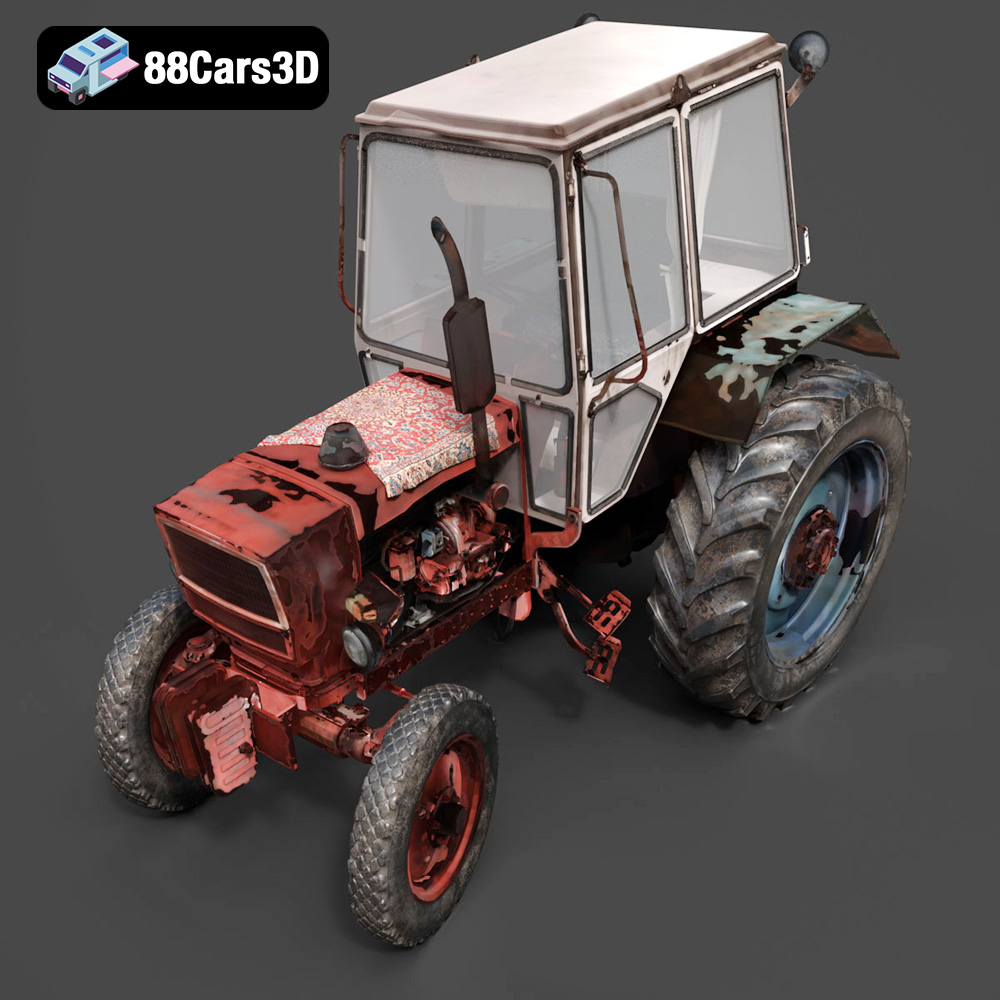
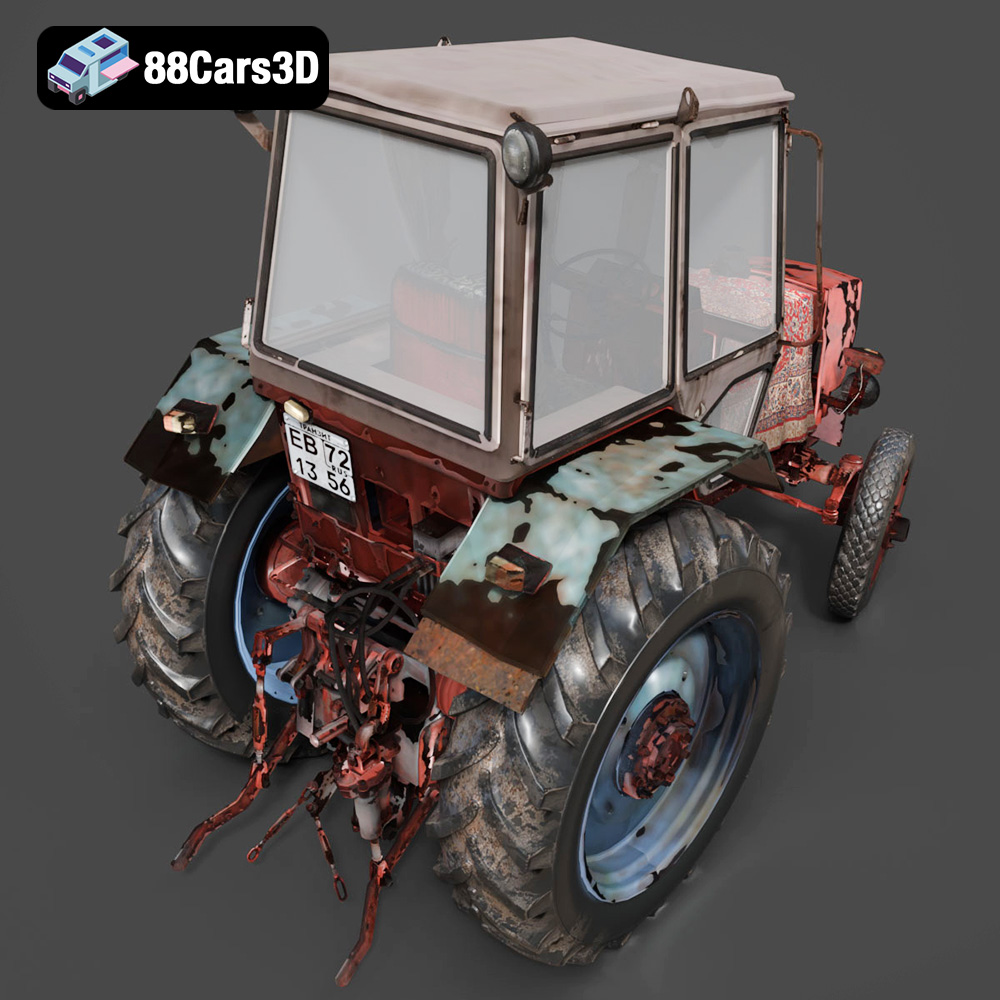
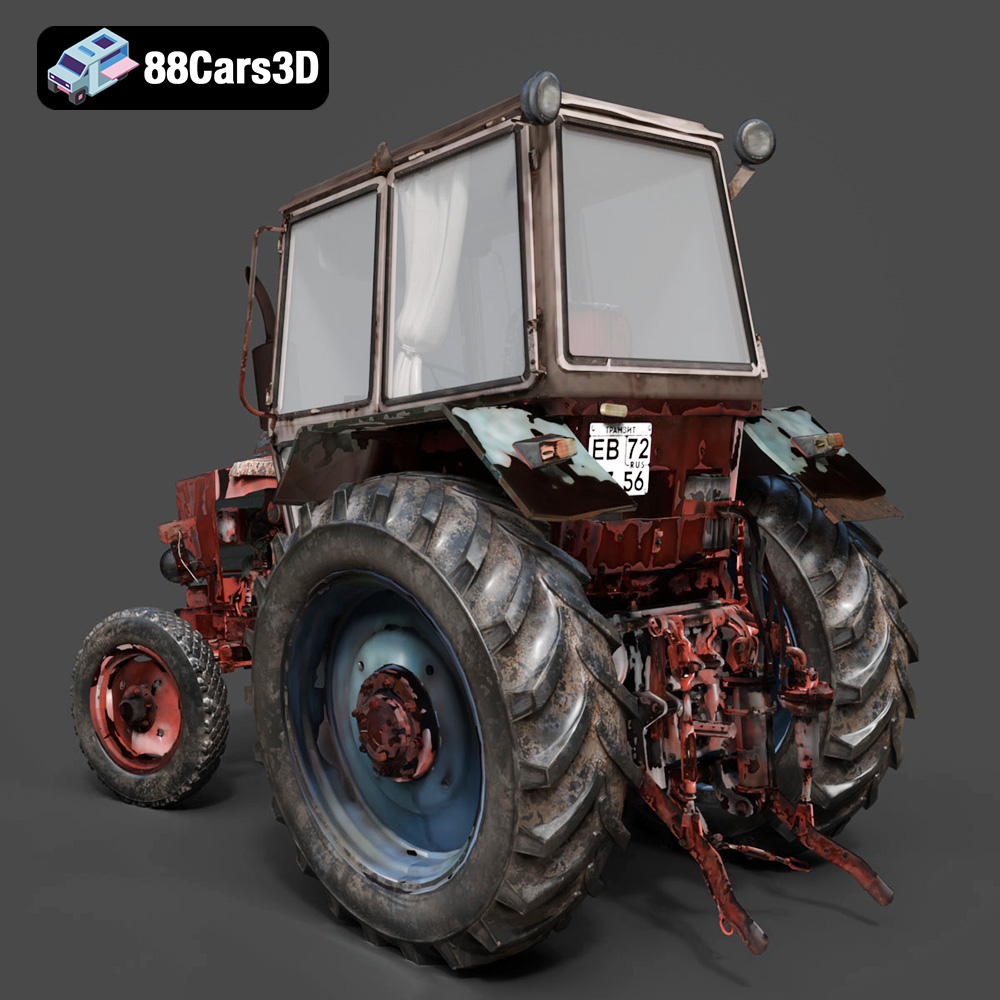
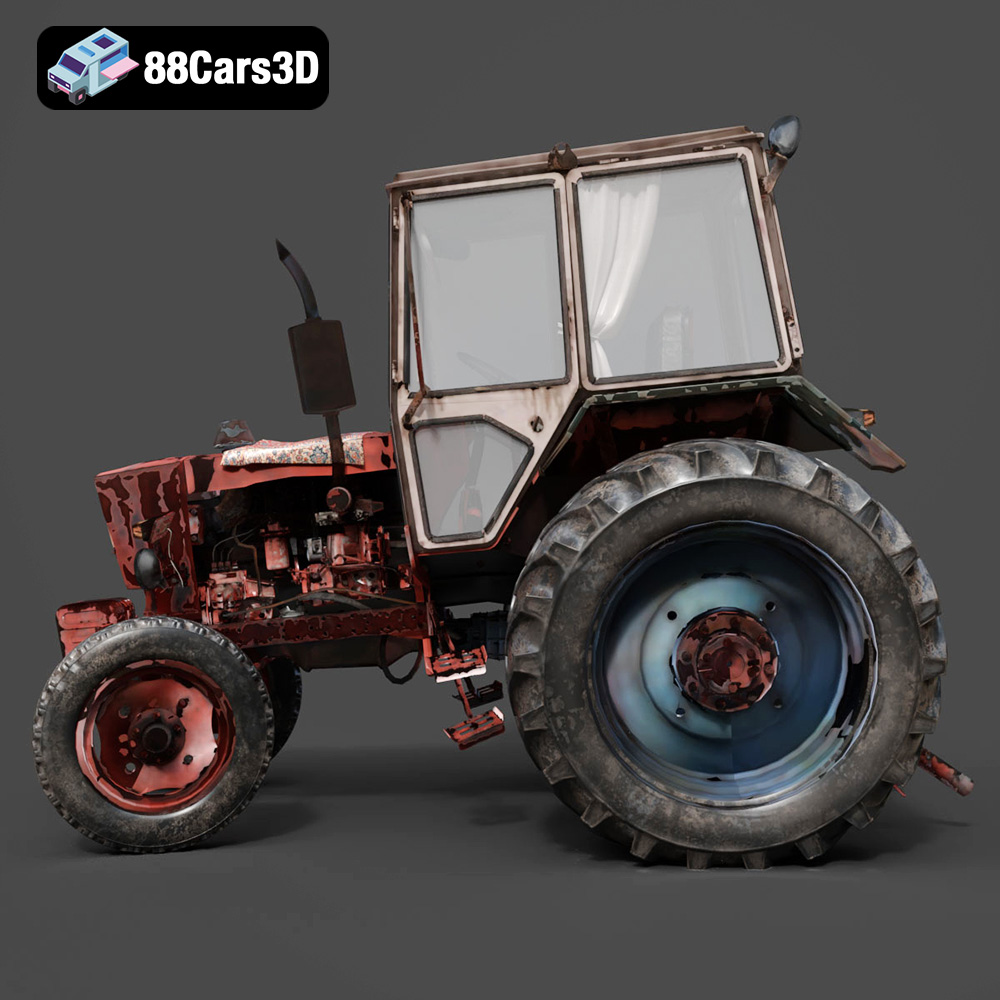
This model is a digital recreation designed to reflect vintage farming machinery from the mid-20th century. Its strength lies in its accurate representation of the era’s utilitarian aesthetic. We see a robust design with a rugged steel frame and strategically exposed engine components, capturing the mechanical simplicity that defined early farm equipment. The model accurately represents defining characteristics such as the distinctive narrow front axle (or dual front-wheel configuration), imposing large rear traction tires with deep treads, and the iconic rounded engine hood leading to a vertical exhaust pipe. Every element, from the open driver seat and steering column to the rear hitch system for farm attachments, is meticulously modeled. These exterior features, combined with the underlying mechanical and structural details like the modeled chassis frame, rear axle, suspension structure, basic transmission housing, and steering linkage components, ensure that the model is not just a shell but a convincing digital artifact of its time. The separate wheels are a critical design choice, allowing for realistic animation and rotation without complex rigging setups for basic movement.
Optimized Topology for Performance and Realism
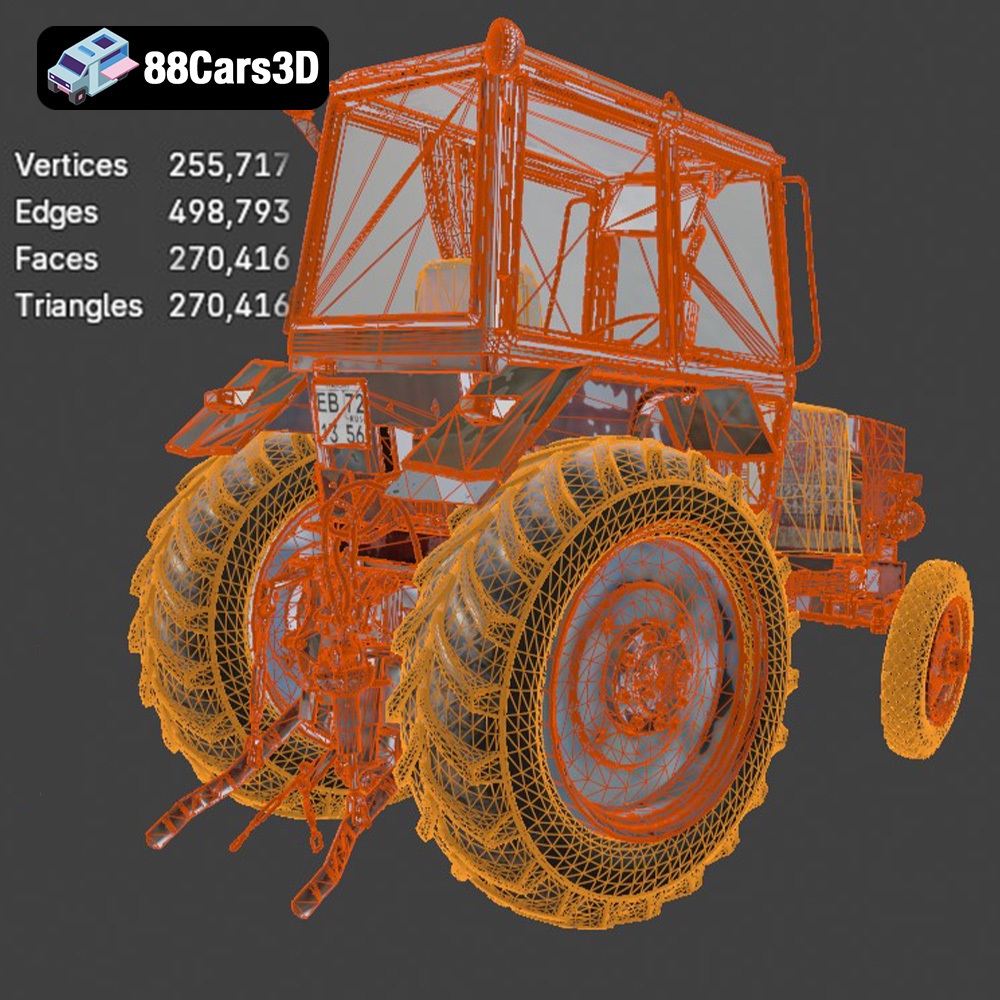
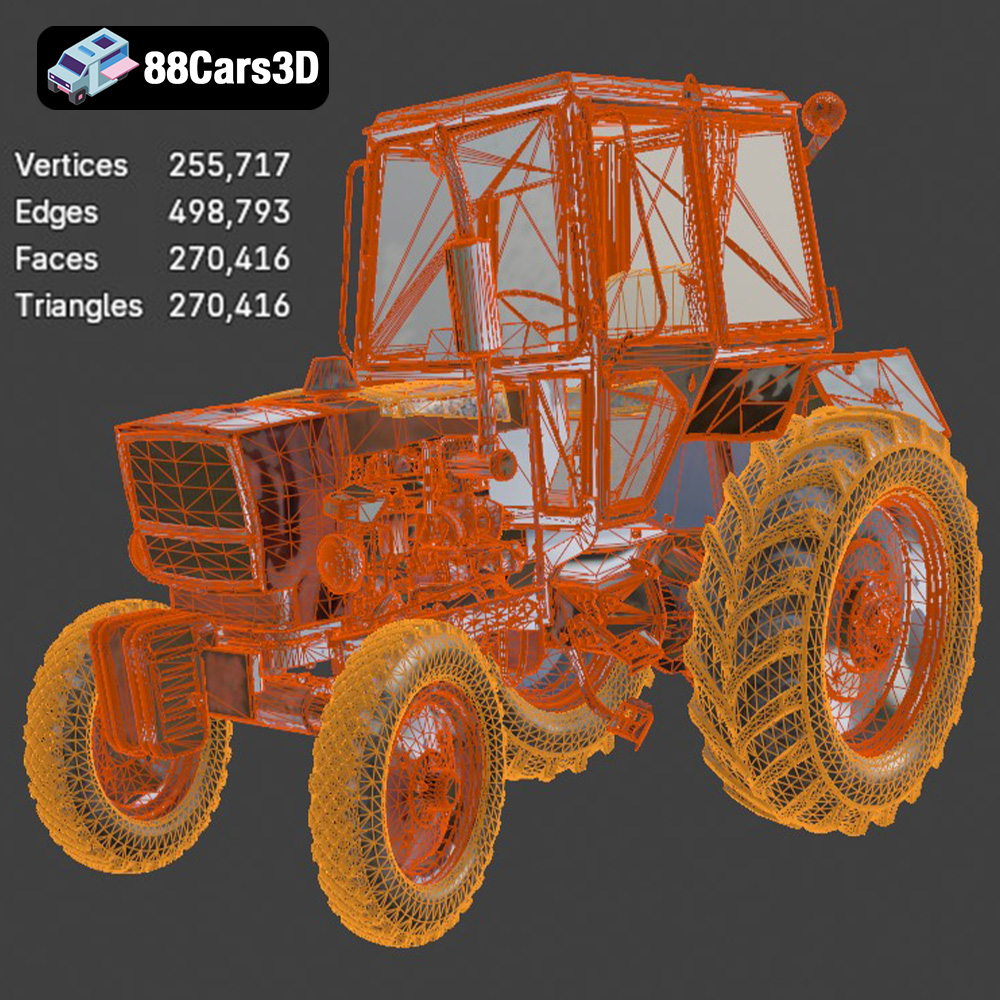
Beyond visual fidelity, the technical foundation of a 3D model dictates its performance across different applications. The Old Tractor 3D Model boasts a clean and well-organized mesh structure, a hallmark of professional-grade 3D car models. This means efficient polygon distribution, minimizing unnecessary geometry while retaining critical details. The mesh is optimized for polygon flow, ensuring smooth deformation if rigged for animation, and efficient rendering in both real-time engines and high-quality renderers. Crucially, the model is built to real-world scale accuracy, which is vital for maintaining visual consistency in simulations, architectural visualizations, and game environments. Furthermore, a proper pivot setup for wheel rotation and steering linkage components simplifies animation workflows, allowing artists to quickly bring the tractor to life without spending valuable time correcting rotation axes. This optimization ensures that whether it’s used as a background element or a focal point, the model performs efficiently and looks its best.
Bringing Vintage to Life: Workflows in Major 3D Software
The versatility of the Old Tractor 3D Model truly shines when integrated into professional 3D pipelines. Its availability in multiple formats makes it a flexible asset for artists working across various software platforms, enabling high-end automotive rendering and dynamic game asset creation.
Rendering & Animation in 3ds Max and Blender
For artists focused on high-fidelity visual output, the Old Tractor 3D Model provides an excellent foundation within industry-standard software like 3ds Max and Blender. Importing the native .max or .blend file provides immediate access to the model’s full scene data, including any pre-configured materials and hierarchies. In 3ds Max, artists can leverage powerful renderers like V-Ray or Corona to achieve photorealistic results. This involves setting up sophisticated PBR (Physically Based Rendering) materials, meticulously tuning textures for rust, weathered paint, and dirty metal, and crafting compelling lighting scenarios – perhaps a dramatic sunrise illuminating a misty farm scene or the warm glow of a barn interior. Animation is streamlined thanks to the model’s proper pivot setup for wheel rotation and steering, allowing for straightforward keyframing of movement along paths or interactive camera fly-throughs. Similarly, Blender users can harness Cycles or Eevee, utilizing Blender’s node-based shader editor to create rich, physically accurate materials and animations that breathe life into the vintage machinery, ideal for agricultural marketing visuals or historical presentations.
Game Development and Real-Time Visualization with Unreal Engine
The demand for high-quality game assets is ever-increasing, and the Old Tractor 3D Model is perfectly equipped for real-time environments. Its optimized mesh and inclusion of the .fbx and .unreal formats ensure seamless integration into game engines like Unreal Engine. Developers can import the .fbx to quickly bring the geometry and basic material slots into their project, then set up advanced PBR materials within Unreal using its powerful material editor. The .unreal format provides an even quicker start, often coming pre-configured with essential engine-specific data. Key steps in Unreal include generating appropriate LODs (Levels of Detail) to optimize performance at varying distances, creating precise collision meshes for accurate physics interactions, and implementing interactive elements if the tractor is to be drivable in a farming simulator or an open-world countryside game. Its clean topology and real-world scale make it an ideal candidate for environmental dressing, interactive vehicles, or even as a centerpiece in AR/VR experiences, offering perfect assets for immersive farm simulations or historical reconstructions.
Beyond the Screen: 3D Printing the Old Tractor Model
One of the most exciting aspects of the Old Tractor 3D Model is its suitability for 3D printing. The transition from a digital asset to a tangible object opens up a new realm of possibilities, from detailed scale models to unique collectibles.
Preparing for Physical Manifestation
The inclusion of the .stl file format is a direct invitation to the world of 3D printing. The .stl format triangulates the model’s surface, creating a manifold (watertight) mesh that 3D printers require. Before printing, users should consider the recommended scales: 1:32, 1:24, 1:18, or 1:12. These scales dictate the overall size and the level of detail that can be accurately resolved by the printer. For smaller scales, resin (SLA/DLP) printing is often recommended for finer details. FDM (Fused Deposition Modeling) printers are excellent for larger scales. Key print settings include a layer height of 0.12–0.20 mm for FDM (or finer for resin), ensuring a good balance of detail and print time. A wall thickness of 2–3 mm provides structural integrity. Infill percentages between 20–35% offer a good compromise between strength and material usage. Due to the intricate geometry, supports will be required for delicate overhangs such as the steering wheel, exhaust pipe, and hitch components. Printing orientation is also crucial: the main body should generally be printed upright, while wheels are best printed separately to achieve optimal surface finish and tread detail.
Post-Processing and Customization for Collectibles
Once printed, the physical Old Tractor model moves into the realm of traditional craftsmanship. Post-processing is essential for achieving a professional finish. This typically involves sanding to smooth layer lines or remove support marks, followed by applying a primer coat for better paint adhesion. The real artistry comes with painting. Users can opt for classic red, green, or blue paint schemes, or delve into highly realistic weathering techniques. This could involve applying matte or weathered paint finishes, adding realistic rust and dirt textures, or even simulating chipped paintwork to mimic decades of hard work. Customization extends beyond paint; users might choose to modify wheel types or tire tread designs, or even design and attach compatible farming implements like plows, trailers, or cultivators to create a dynamic diorama. The process of 3D printing and post-processing the Old Tractor 3D Model allows enthusiasts to create truly unique scale farm machinery models and collectible miniatures that capture the essence of agricultural history.
Real-World Applications and Case Studies for 3D Car Models
High-quality 3D car models, such as the Old Tractor, are not merely aesthetic creations; they are powerful tools with diverse applications across multiple industries. Their utility spans from academic and historical projects to commercial ventures and entertainment.
Historical Visualization and Agricultural Simulation
The Old Tractor 3D Model is an invaluable asset for historical visualization. Researchers and educators can use it to accurately reconstruct mid-20th-century farm scenes, bringing history to life in documentaries, museums, or interactive learning modules. Imagine a virtual reality experience where students can “walk around” a historically accurate farm, interacting with equipment like this vintage tractor. In agricultural simulations, the model serves as a foundation for training exercises related to farming education or visualizing equipment capabilities. Its real-world scale accuracy and detailed mechanical components make it suitable for demonstrating basic operational principles or illustrating the evolution of farming technology. For AR/VR platforms, this model can provide immersive agricultural demonstrations, allowing users to inspect the tractor from all angles, making it an excellent tool for interactive farm experiences that transcend geographical and temporal barriers.
Marketing, Advertising, and Immersive Experiences
In the commercial sphere, the detailed nature of the Old Tractor 3D Model makes it ideal for impactful marketing and advertising campaigns. Rural advertisements can leverage its nostalgic appeal to create compelling visuals that resonate with target audiences. Imagine a beautifully rendered image of the tractor against a sunset backdrop for a brand promoting agricultural products or rural tourism. For companies specializing in vintage equipment restoration or sales, this model provides a sophisticated way to showcase their offerings through high-quality renders, interactive 3D viewers on websites (using .glb), or even augmented reality apps that let potential customers “place” the tractor in their own environment. Such immersive experiences elevate product presentation far beyond traditional photography, demonstrating the power of professional 3D car models in engaging consumers and communicating product value effectively.
Conclusion: The Enduring Value of Expertly Crafted 3D Assets
The Old Tractor 3D Model is more than just a digital object; it’s a testament to the power of meticulous 3D modeling and its transformative impact across various creative and technical fields. From its authentic vintage design and optimized topology to its unparalleled versatility across different file formats, this model stands as an exemplary asset for professionals. Whether your goal is to produce breathtaking automotive rendering, develop immersive game assets for a farming simulator, reconstruct historical scenes, or bring a tangible piece of machinery to life through 3D printing, this tractor model provides the perfect foundation.
Its robust technical specifications and broad compatibility with major software like Blender, 3ds Max, and game engines like Unreal Engine ensure that it can seamlessly integrate into virtually any workflow. This commitment to quality and utility is precisely what professionals seek when sourcing 3D car models. Explore the possibilities and elevate your projects with premium, versatile assets. You can find this exceptional Old Tractor 3D Model and many other high-quality 3D car models and game assets available at 88cars3d.com.
Featured 3D Model
Old Tractor 3D Model 3D Printable STL
The Old Tractor 3D Model is a high-detail digital recreation of a classic agricultural tractor designed to reflect vintage farming machinery from the mid-20th century. Built with a rugged steel frame, exposed engine components, and large rear drive wheels, this model captures the mechanical simplicity and durability of early farm equipment. This 3D model accurately represents the narrow front axle (or dual front-wheel configuration), large rear traction tires, rounded engine hood, vertical exhaust pipe, open driver seat, steering column, and rear hitch system. Designed with clean topology and real-world scale accuracy, it is ideal for rendering, animation, historical visualization, simulation, and game development. Perfect for rural farm scenes, countryside environments, historical reconstructions, agricultural simulations, and vintage equipment showcases.
$14.9
Product Image Gallery


Related Tags
.agriculturalvehicle
.arvr
.blend
.farmingequipment
.farmtractor
.fbx
.gameasset
.glb
.max
.obj
.oldtractor
.ply
.rendering
.ruralvehicle
.simulation
.stl
.tractor3dmodel
.unreal
.vintagetractor
