

Mastering Industrial Visuals: A Deep Dive into High-Quality 3D Tanker Models
In the dynamic worlds of automotive rendering, game development, and industrial visualization, the demand for highly detailed and technically accurate 3D models is ever-increasing. From creating lifelike simulations to crafting immersive game environments and compelling marketing visuals, precision is paramount. A meticulously crafted 3D asset doesn’t just look good; it functions seamlessly within complex pipelines, saving countless hours in production and enhancing the overall quality of the final output.
Today, we’re taking a closer look at an exemplary asset that embodies this commitment to quality: the Fuel Tank Trailer 3D Model. This robust digital recreation, available on 88cars3d.com, is more than just a visual prop; it’s a versatile tool engineered for professional use across various industries. Whether you’re a seasoned 3D artist building realistic truck simulators, an architectural visualization specialist populating an industrial park, or a product designer creating a scale model for display, understanding the intricacies of such a model is crucial for unlocking its full potential.
This article will explore the technical advantages, diverse applications, and workflow integrations of high-quality industrial 3D car models, with a particular focus on how the Fuel Tank Trailer 3D Model stands out as an indispensable asset for your next project.
The Imperative of High-Fidelity Industrial 3D Models
Creating believable digital environments and interactive experiences hinges on the quality of individual assets. For industrial vehicles like a fuel tank trailer, accuracy isn’t just a preference; it’s a necessity. These models must reflect real-world proportions, mechanical details, and functional components to be truly effective in simulations, training modules, or even intricate marketing campaigns. A generic or low-detail model can quickly break immersion and undermine the professional integrity of a project.
Bridging the Gap Between Concept and Reality
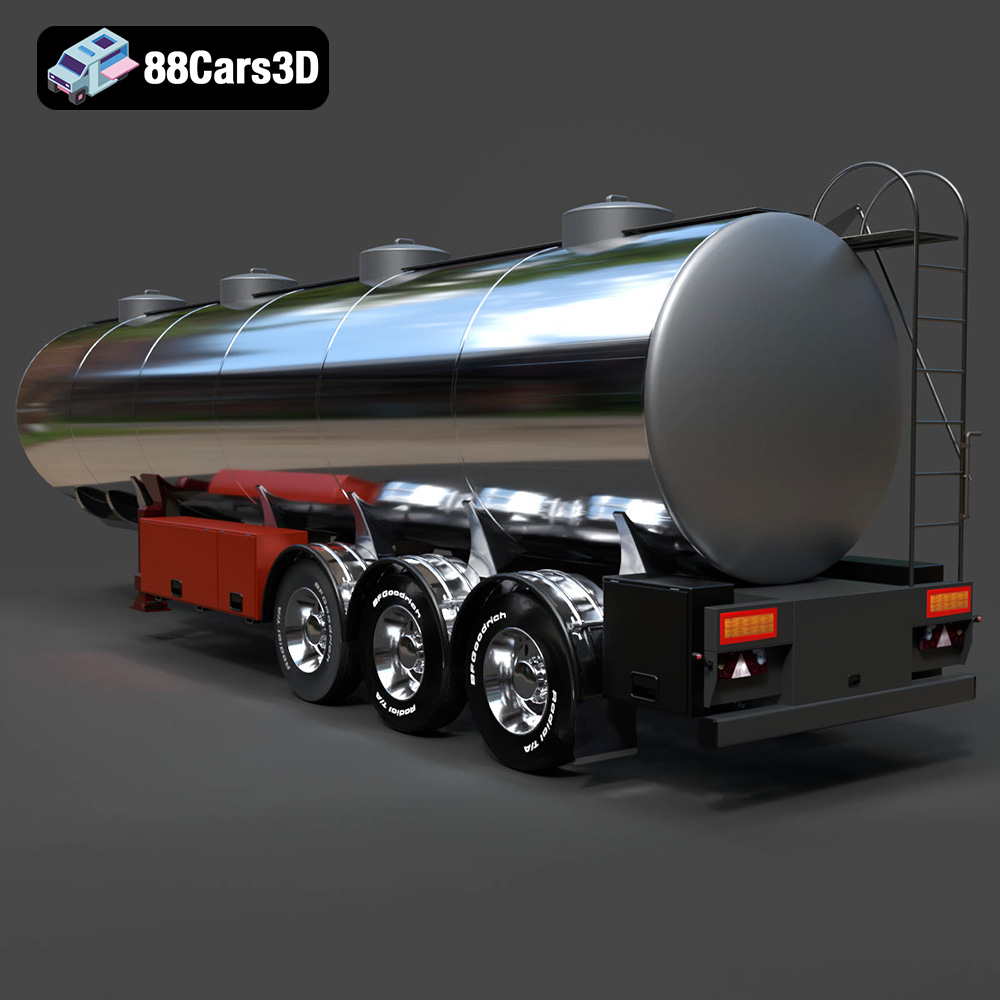
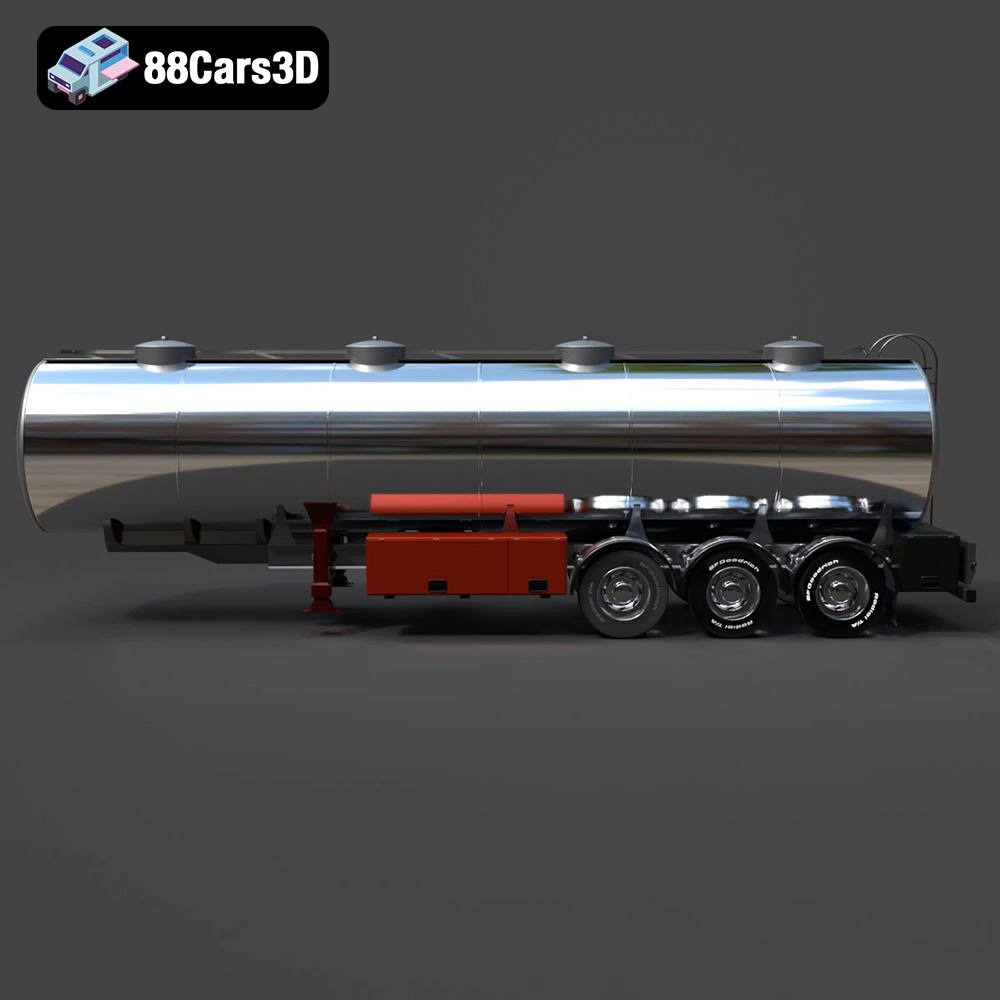
High-fidelity 3D models act as crucial intermediaries between abstract designs and tangible reality. For engineers and designers, visualizing a new transport route or an expanded fuel depot becomes far more effective when realistic assets are present. The Fuel Tank Trailer 3D Model, for instance, provides an accurate cylindrical tank body, a reinforced chassis frame, and a detailed axle system, allowing for precise placement and interaction within a simulated environment. This level of detail ensures that planning and visualization efforts are grounded in practical, real-world conditions, making it an invaluable asset for logistics planning or hazardous material transport training.
The Cost-Effectiveness of Pre-Built Assets
While custom modeling offers unparalleled specificity, it often comes with significant time and cost implications. For common industrial assets, purchasing a high-quality, pre-built 3D model like the Fuel Tank Trailer 3D Model from 88cars3d.com can dramatically accelerate production timelines and reduce expenses. These models are typically optimized, textured, and ready for integration, allowing artists and developers to focus on the more unique aspects of their projects. The technical advantages, such as clean mesh structures, real-world scale accuracy, and proper pivot setups for animation, ensure a smooth workflow right out of the box, translating directly into tangible project savings.
Understanding 3D Model File Formats
The versatility of a 3D model is often defined by the file formats it supports. Each format is designed for specific purposes, offering unique advantages for different stages of a project, from initial modeling to final rendering or real-time deployment. The Fuel Tank Trailer 3D Model is provided in a comprehensive suite of formats, ensuring maximum compatibility and utility across diverse professional workflows. Understanding when and why to use each format is crucial for efficient project management and optimal performance.
Versatility for Different Stages of Production
- .blend: This is Blender’s native file format, offering a fully editable scene with all materials, textures, lighting, and animation data intact. For artists working within Blender, the .blend file is the most flexible starting point, allowing for complete customization, re-texturing, or further refinement of the Fuel Tank Trailer’s geometry and rigging.
- .max: As the native format for Autodesk 3ds Max, the .max file provides an editable project for users of this industry-standard software. It contains all scene information, including modifiers, animation keys, and renderer-specific settings, making it ideal for high-end automotive rendering, animation, and architectural visualization projects that leverage 3ds Max’s robust toolset.
- .fbx (Filmbox): Widely regarded as the industry-standard interchange format, .fbx is exceptionally versatile. It efficiently stores 3D models, animation, and material information, making it ideal for transferring assets between different 3D software (e.g., from 3ds Max to Maya or Blender) and especially crucial for game engines like Unreal Engine and Unity. Its ability to preserve hierarchies and animation data makes it a go-to for complex animated game assets.
- .obj (Wavefront OBJ): A universal format, .obj is primarily used for static mesh data, including geometry, UV coordinates, and normals. While it doesn’t typically store animation or material properties (these are often in companion .mtl files), its simplicity and wide support make it excellent for cross-software compatibility, especially when the core geometry is the primary concern. It’s a reliable choice for importing into almost any 3D application.
- .ply (Polygon File Format): Also known as the Stanford Triangle Format, .ply is a precision mesh format primarily used for storing 3D data from 3D scanners, CAD software, or analysis tools. It can store various properties like color, transparency, and normals per vertex or face. For the Fuel Tank Trailer, a .ply export might be used for specific manufacturing processes or detailed structural analysis where precise geometry representation is critical.
Optimizing for Performance and Compatibility
- .unreal: While not a standalone file format in the traditional sense like .fbx or .obj, “Unreal” typically refers to an asset that has been specifically prepared and optimized for direct import into Unreal Engine. This often means the .fbx has been structured with correct units, pivot points, LODs (Levels of Detail), and collision meshes, ready for a drag-and-drop workflow in a real-time environment. It signifies an engine-ready asset, saving considerable setup time for game developers.
- .glb (GL Transmission Format Binary): This is a highly optimized, single-file format designed for efficient transmission and loading of 3D scenes and models in web and AR/VR applications. It bundles textures and other data directly into the binary file, making it perfect for browser-based display, interactive web experiences, and augmented reality apps where quick loading and a compact file size are essential. The Fuel Tank Trailer as a .glb could be effortlessly integrated into an interactive product configurator or an AR fleet visualization.
- .stl (Stereolithography): The cornerstone format for 3D printing, .stl represents a 3D model as a series of connected triangles (a triangulated surface). It lacks color or texture information but defines the surface geometry unequivocally, making it the standard for almost all 3D printers. The Fuel Tank Trailer 3D Model’s availability in .stl format means it can be directly prepared for physical fabrication, producing scale models for display or prototyping.
The inclusion of such a diverse array of formats for the Fuel Tank Trailer 3D Model underscores its adaptability, allowing users to select the optimal file type for each phase and purpose of their project, from high-quality renders to game development and even physical manufacturing.
Deconstructing the Fuel Tank Trailer 3D Model: A Technical Deep Dive
The quality of a 3D model isn’t just about surface aesthetics; it’s deeply rooted in its underlying technical construction. For an industrial asset like the Fuel Tank Trailer 3D Model, this means meticulous attention to geometry, topology, material definition, and preparation for animation. These technical advantages are what elevate a simple digital object into a professional-grade asset.
Geometry and Topology: The Foundation of Realism
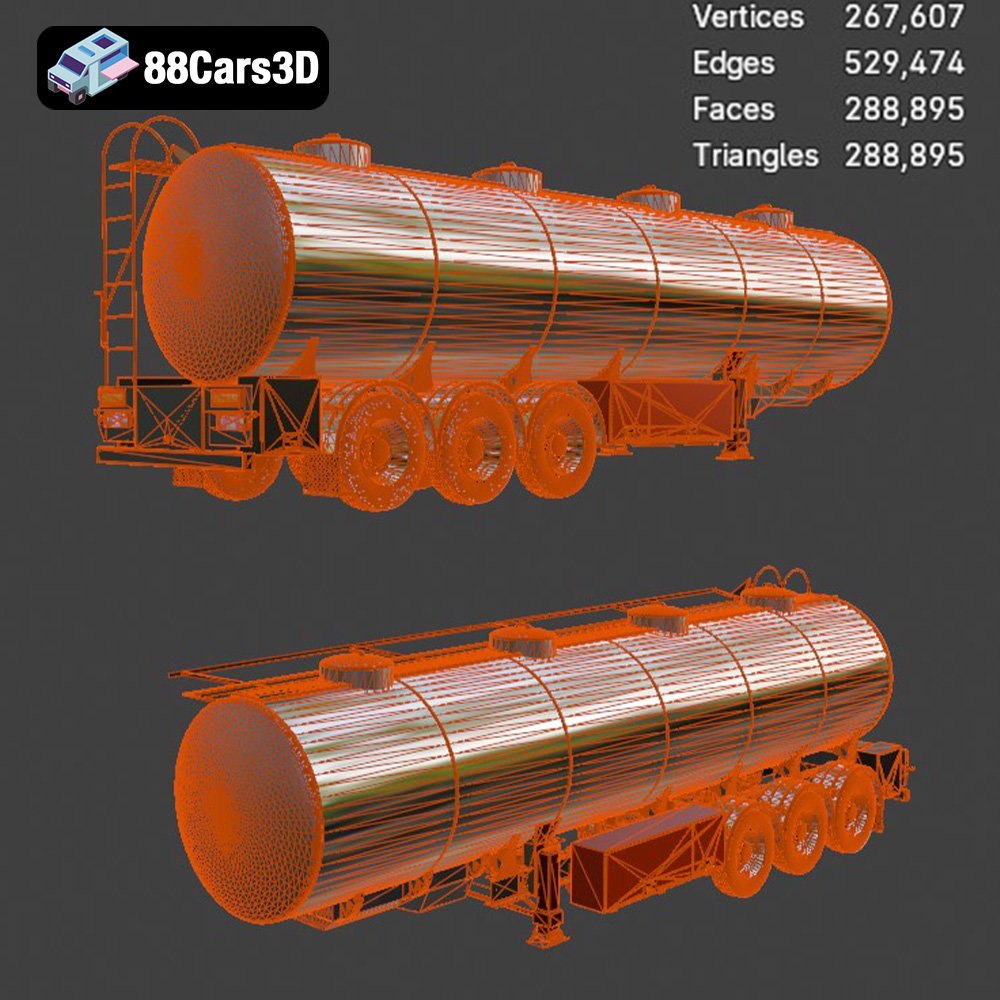
The Fuel Tank Trailer 3D Model boasts a “clean and well-organized mesh structure” and “optimized polygon flow for performance and realism.” This implies several key technical considerations:
- Poly Count & Edge Flow: The model likely features a balanced polygon count – high enough to capture the subtle curves of the cylindrical tank and intricate details of the chassis and valves, but optimized to prevent unnecessary computational overhead. Good edge flow ensures that the mesh deforms smoothly if animated and allows for easy manipulation and subdivision without artifacts.
- N-gon and Triangulation Management: While the description emphasizes “clean mesh,” a professional model will typically minimize n-gons (polygons with more than four sides) and manage triangulation effectively, especially in areas that might be subjected to deformation or subdivision.
- Real-World Scale Accuracy: Crucial for industrial visualization and simulation, the model adheres to “real-world scale accuracy.” This means it’s built to precise dimensions, ensuring it integrates seamlessly into scenes with other scaled assets and behaves correctly in physics-based simulations.
- Separate Components: Features like “separate wheels for animation and rotation” indicate a modular construction. This not only facilitates animation but also allows for easier customization or component replacement, such as swapping out different wheel types or modifying axle configurations.
Materiality and Texturing for Authenticity
The description confirms “Texture: Yes” and “Material: Yes,” indicating that the Fuel Tank Trailer 3D Model comes fully prepared for rendering.
- PBR Workflow: Modern 3D assets typically utilize Physically Based Rendering (PBR) materials, which accurately simulate how light interacts with surfaces in the real world. This means the model likely includes textures for albedo (color), roughness, metallic, normal, and possibly ambient occlusion, ensuring it looks correct under various lighting conditions, whether in an automotive rendering studio or a game engine.
- Detail Mapping: Details like mudguards, reflectors, safety markings, and hazard decals would be applied via high-resolution textures. This allows for intricate visual information without excessively increasing polygon count, maintaining performance while delivering realism.
- Weathering and Wear: The ability to “adjust weathering for industrial or realistic scenes” suggests that the materials or shaders are set up to allow for easy introduction of dirt, grime, or subtle wear, further enhancing the realism of the industrial asset.
Animation Readiness and Rigging Considerations
For a vehicle model, movement is often a key requirement.
- Proper Pivot Setup: The “proper pivot setup for wheel rotation” is a small but critical detail for animators. Correct pivot points ensure that components rotate naturally around their real-world axes, making animation intuitive and accurate.
- Chassis and Suspension: A “detailed chassis frame and support structure” and “realistic axle configuration with suspension system” lay the groundwork for a more complex rig. While the model itself might not come pre-rigged for full suspension physics, its detailed construction provides the necessary geometry for a skilled rigger to implement dynamic suspension or steering systems, vital for realistic vehicle simulations and cinematic animations.
- Modular Interaction: The ability to modify axle configurations (2-axle / 3-axle versions) further speaks to the model’s adaptability for animating different real-world scenarios or regional variations.
Professional Workflows: Integrating the Fuel Tank Trailer into Your Projects
The true value of a versatile 3D asset lies in its seamless integration into various professional workflows. The Fuel Tank Trailer 3D Model is designed with this in mind, offering broad compatibility and detailed construction that supports a wide range of applications.
Automotive Rendering and Visualization
High-quality static renders and animations are fundamental for product showcases, marketing, and architectural visualization. The Fuel Tank Trailer 3D Model excels here due to its “high-detail digital recreation” and “engineered for realism and industrial accuracy.”
- 3ds Max and Blender Workflows: With native .max and .blend files, artists can directly open the model in their preferred software. This allows for immediate setup of advanced rendering engines like V-Ray or Corona in 3ds Max, or Cycles and Eevee in Blender. Artists can adjust materials, set up studio lighting or outdoor HDRI environments, and render photo-realistic images for petroleum marketing visuals or logistics presentations. The “clean topology” and “optimized polygon flow” ensure smooth subdivision and fast render times.
- Environmental Integration: The model’s “real-world proportions” make it perfect for populating highway transport scenes, fuel depot environments, and industrial yards. Whether it’s showcasing a new refinery layout or creating visuals for a commercial fleet presentation, the Fuel Tank Trailer adds an essential layer of authenticity to any industrial landscape.
Game Development and Real-Time Environments
The demand for realistic game assets, particularly for vehicle simulation and open-world titles, is immense. The Fuel Tank Trailer 3D Model is an excellent candidate for these applications.
- Unreal Engine and Unity Integration: The inclusion of .fbx and specifically optimized .unreal files makes integration into leading game engines like Unreal Engine and Unity straightforward. Game developers can import the model, apply appropriate materials and textures, and immediately begin setting up physics-based interactions for truck simulators or open-world logistics games.
- Optimization and Performance: “Optimized geometry for real-time engines” is a critical technical advantage. This suggests the model is designed to be performant, potentially with appropriate polygon counts and UV mapping for efficient texture streaming. While not explicitly mentioned, developers might further implement LODs (Levels of Detail) and custom collision meshes for optimal performance across various platforms. The “separate wheels for animation and rotation” and “proper pivot setup” are crucial for implementing realistic vehicle physics and player control.
AR/VR and Simulation Applications
Augmented Reality (AR) and Virtual Reality (VR) are transforming training and interactive experiences, especially in industrial sectors. Simulation and training modules benefit greatly from realistic 3D models.
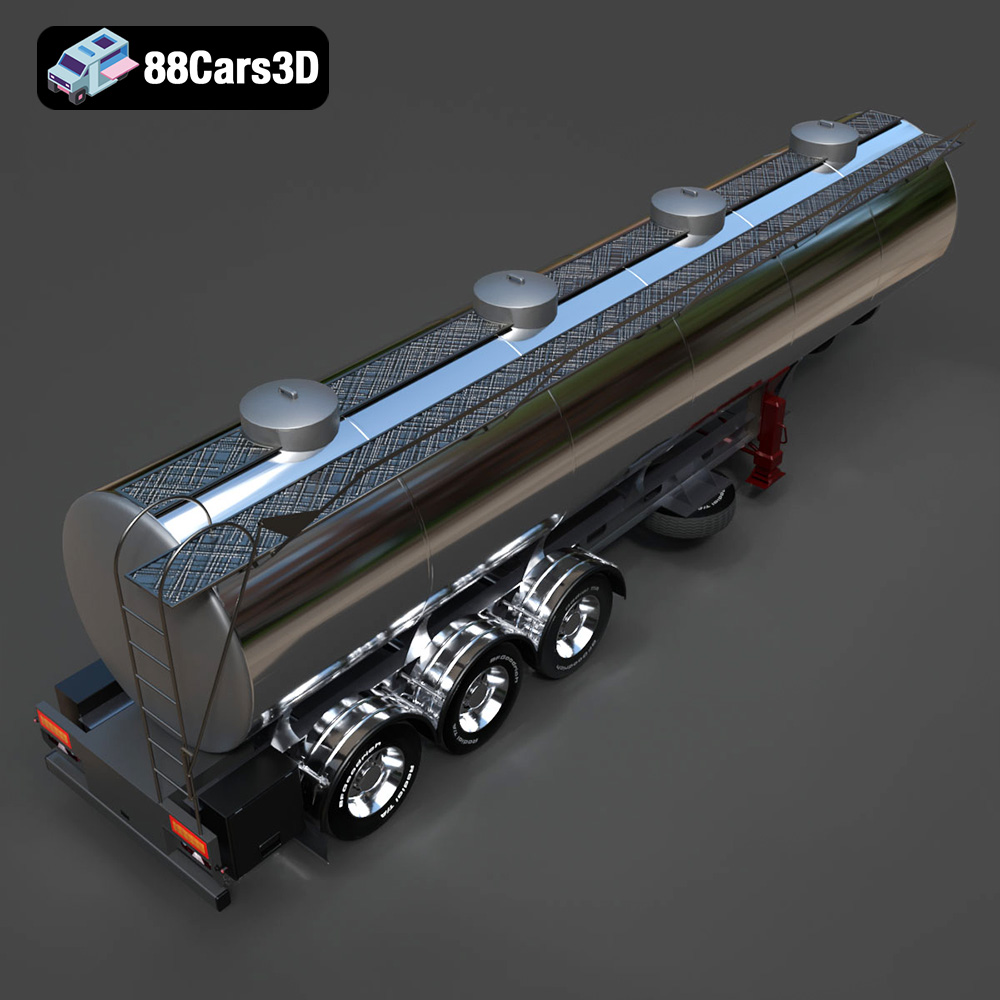
- Immersive Training and Fleet Demos: The Fuel Tank Trailer 3D Model, especially in .glb and .fbx formats, is perfect for creating immersive industrial training simulations or interactive fleet demonstrations. Imagine trainees walking around a virtual fuel depot, inspecting the tanker’s components, or practicing safety protocols. The detail in features like “rear ladder access, safety railings, hose compartments, and fuel discharge valves” contributes significantly to a believable and effective training scenario.
- Interactive Experiences: For AR applications, the .glb format provides an optimized, single-file solution for displaying the tanker in real-world environments via a smartphone or headset. This could be used for interactive sales presentations or on-site visualization of proposed infrastructure. The emphasis on “clean topology” ensures smooth rendering in these demanding real-time environments.
Beyond Digital: The Realm of 3D Printing and Physical Models
While often associated with screen-based applications, 3D car models also have a significant presence in the physical world through 3D printing. The Fuel Tank Trailer 3D Model’s design lends itself perfectly to this, allowing for the creation of tangible scale models and prototypes.
Preparing for Fabrication: STL and PLY Formats
The inclusion of the .stl format is a direct nod to 3D printing capabilities.
- Manifold Geometry: For successful 3D printing, a model must have “manifold geometry,” meaning it’s watertight with no holes or flipped normals. A high-quality .stl export from a clean mesh like the Fuel Tank Trailer ensures this, minimizing errors during slicing and printing.
- Scale Model Versatility: The recommended scales (1:32 / 1:24 / 1:18 / 1:14) highlight its adaptability for various modeling needs, from tabletop displays to larger, more detailed collector’s items. The .ply format, known for its precision, could be utilized for even more rigorous analysis or specialized printing processes if needed.
Print Settings and Post-Processing for Industrial Replicas
Achieving a high-quality physical replica requires careful attention to print parameters and post-processing.
- Layer Height and Infill: The recommended layer height of 0.12–0.20 mm is suitable for FDM printers, offering a good balance between detail and print speed. For finer details, a lower layer height or resin printing (SLA/DLP) might be considered, especially at smaller scales. The suggested infill (20–35%) provides structural integrity without excessive material usage.
- Supports and Orientation: Features like “supports: Required for ladder, railings, and valve assemblies” are critical for preserving intricate details and preventing print failures. The “print orientation: Tank printed horizontally; chassis printed flat for stability” is a strategic recommendation to optimize print quality and reduce support material, while “wheels printed separately for enhanced detail” ensures that these crucial components achieve maximum fidelity.
- Post-Processing for Realism: “Post-processing: sanding, primer, industrial paint finish, optional hazard decals” transforms the raw 3D print into a polished, realistic model. This step is where the scale model truly comes to life, emulating the industrial aesthetic of its full-size counterpart.
Customization and Adaptability for Specific Project Needs
Even with highly detailed, ready-to-use 3D models, the ability to customize them for specific project requirements is invaluable. The Fuel Tank Trailer 3D Model provides several avenues for modification, enhancing its utility across diverse applications.
Modifying Appearance and Branding
Visual customization is often the first step in integrating an asset into a unique scene or brand identity.
- Branding and Color Schemes: The option to “change tank color and fuel branding” allows artists to align the model with specific company liveries or fictional brands. Adding “company logos or hazard markings” further personalizes the asset, making it suitable for a wide range of commercial or governmental simulations. This is crucial for creating tailored advertising visuals or accurate representations of specific real-world fleets.
- Weathering and Realism: The flexibility to “adjust weathering for industrial or realistic scenes” allows for contextual customization. A brand-new tanker might require a pristine finish, while a long-haul veteran would benefit from subtle dirt, rust, or faded paint, adding to the realism and narrative of a scene. This level of control ensures the model fits perfectly, whether in a pristine showroom rendering or a gritty, post-apocalyptic game environment.
Structural and Functional Adjustments
Beyond aesthetics, the model’s structure can also be adapted to meet functional or geographical specifications.
- Axle Configurations: The ability to “modify axle configuration (2-axle / 3-axle versions)” is a significant advantage. Different regions and load capacities often dictate varying axle counts on trailers. This customization option ensures the model can accurately represent a wide array of real-world scenarios, from European to North American transport regulations, enhancing its utility in logistics simulations and game development.
- Internal Segmentation: “Internal tank segmentation (for multi-compartment versions)” is a highly technical detail that could be crucial for specialized simulations. While the base model may represent a single tank, the geometry might be structured to easily facilitate the creation of multiple compartments, which are common in real fuel tankers to carry different types of fuel or to manage sloshing effects. This allows for advanced simulations of liquid dynamics or specialized transport scenarios.
- Safety Enhancements: Adding “safety decals and reflective strips” is another vital customization for realism, particularly in scenes focused on safety training or highway simulation, adhering to real-world regulations and visual cues.
These customization options ensure that the Fuel Tank Trailer 3D Model remains a versatile and future-proof asset, capable of adapting to evolving project needs without requiring a complete rebuild.
Conclusion
The Fuel Tank Trailer 3D Model represents a benchmark for high-quality industrial 3D car models. Its meticulous detail, technical precision, and broad format compatibility make it an indispensable asset for a myriad of applications, from sophisticated automotive rendering and immersive game development to practical AR/VR experiences and physical 3D prints. The thoughtful construction, covering everything from optimized geometry and real-world scale to animation-ready components and comprehensive file formats, ensures a smooth and efficient workflow for professionals across industries.
Whether you’re looking to enhance the realism of a logistics simulation, populate a bustling industrial scene, or create a stunning visual presentation, this Fuel Tank Trailer 3D Model offers the foundation for exceptional results. It embodies the kind of ready-to-use, high-fidelity asset that empowers creators to achieve their vision without compromising on quality or efficiency.
To explore this exceptional model and discover other high-quality 3D car models and game assets for your next project, visit 88cars3d.com today. Elevate your creations with assets built for professional excellence.
Featured 3D Model
Fuel Tank Trailer 3D Model
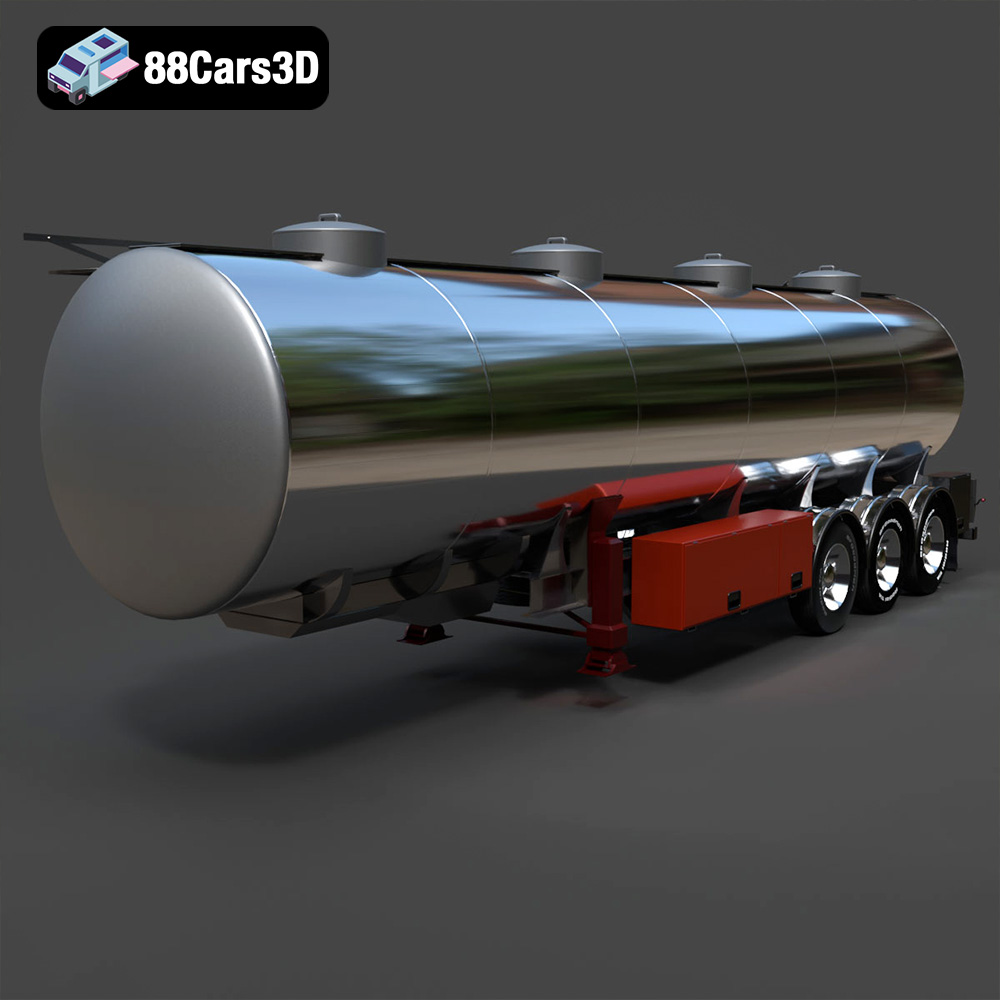
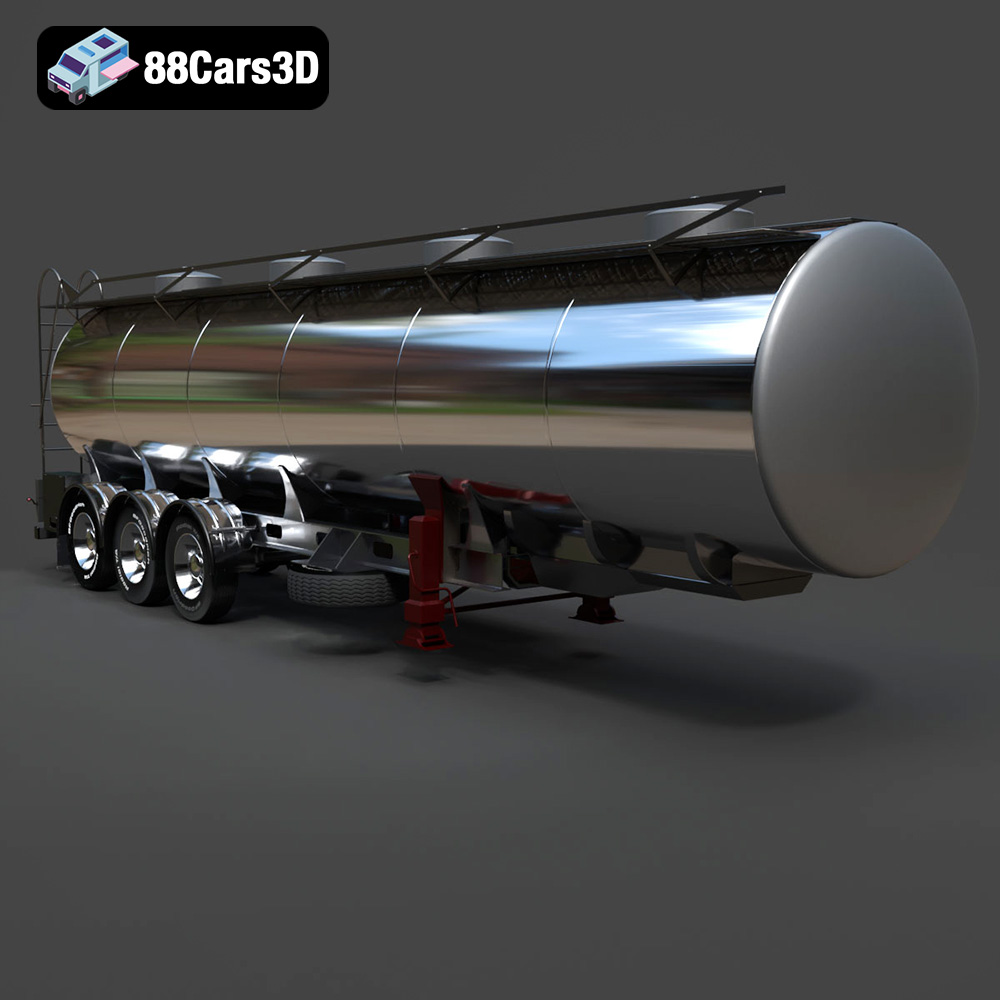
The Fuel Tank Trailer 3D Model is a high-detail digital recreation of a heavy-duty tanker trailer designed for transporting fuel and liquid petroleum products. Engineered for realism and industrial accuracy, this model reflects structural integrity and cylindrical tank design for logistics, petroleum distribution, and hazardous material transport operations. Ideal for rendering, animation, simulation, game development, AR/VR, and 3D printing, featuring clean topology, real-world proportions, and comprehensive file formats.
$14.9
Product Image Gallery
Related Tags
.arvr
.blend
.fbx
.fueltanktrailer
.fueltransport
.gameasset
.glb
.industrialvehicle
.logisticsvehicle
.max
.obj
.petroleumtransport
.ply
.rendering
.simulation
.stl
.tankertrailer
.trucktrailer
.unreal
