

In the vast landscapes of real-time rendering and interactive experiences, stunning visuals often take center stage. Yet, the unsung hero that truly breathes life into these digital worlds, transforming them from mere images into immersive realities, is sound. For automotive visualization, game development, and high-fidelity real-time applications using Unreal Engine, a sophisticated audio system is not just a luxury; it’s a necessity. It’s the roar of a supercar engine, the subtle creak of leather in the interior, or the ambient hum of a bustling city that elevates a visual masterpiece into an unforgettable sensory journey.
Unreal Engine offers a powerful and flexible audio framework, allowing developers and artists to craft intricate soundscapes that react dynamically to the environment and player actions. From precise spatialization that anchors sounds in 3D space to advanced mixing techniques that ensure clarity and impact, mastering Unreal Engine’s audio system is crucial for delivering truly compelling experiences. This comprehensive guide will delve deep into the technical intricacies of Unreal Engine’s audio capabilities, focusing on spatial sound, advanced mixing, and performance optimization, all tailored to the demanding world of automotive and real-time visualization. We’ll explore everything from initial asset setup to cutting-edge features like MetaSounds, dynamic mixing, and AR/VR considerations, empowering you to create sonic experiences that are as polished and realistic as the 3D car models you meticulously integrate from platforms like 88cars3d.com.
The Foundation of Audio in Unreal Engine: From Assets to Architecture
Building a robust audio experience begins with understanding the core components and workflows within Unreal Engine. The engine provides a comprehensive suite of tools for importing, managing, and structuring your audio assets, laying the groundwork for spatialization and mixing. A thoughtful approach at this stage can significantly streamline later development and improve overall project performance.
Importing and Managing Audio Assets: Quality and Efficiency
Unreal Engine supports common audio file formats such as .WAV and .OGG. While .WAV files are typically uncompressed and offer the highest fidelity, .OGG files provide excellent compression for smaller file sizes, crucial for game development and memory-sensitive applications. When importing, it’s essential to consider sample rates (e.g., 44.1 kHz or 48 kHz) and bit depth (e.g., 16-bit or 24-bit). For most real-time applications, 44.1 kHz at 16-bit stereo is a good balance between quality and performance. High-resolution audio (e.g., 96 kHz, 24-bit) might be suitable for very specific cinematic moments or virtual production, but often results in larger file sizes and increased processing demands.
Upon import, Unreal Engine allows you to configure various compression settings, which are vital for optimizing memory usage and load times. For instance, sounds that are purely ambient or have subtle detail can often tolerate higher compression ratios, whereas critical sounds like engine roars or impactful UI feedback require higher quality settings. Using the Sound Wave editor, you can preview different compression types (ADPCM, Bink Audio, etc.) and their impact on fidelity. It’s also possible to set audio to stream from disk rather than loading entirely into memory, a crucial optimization for long-form audio tracks or large sound files that aren’t needed constantly.
Sound Cues vs. MetaSounds: The Evolution of Audio Design
Historically, Unreal Engine relied heavily on Sound Cues for combining and manipulating Sound Waves. Sound Cues are node-based graphs that allow for basic randomization, looping, pitch modulation, and volume control. While still functional for simple tasks, the introduction of MetaSounds in Unreal Engine 5 represents a paradigm shift in real-time audio synthesis and procedural sound design. MetaSounds are far more powerful, offering a node-based, modular, and performant system for creating dynamic and interactive audio assets directly within the engine.
With MetaSounds, you can literally synthesize sounds from scratch, process existing audio in real-time, and build complex, responsive audio systems. For automotive projects, this means an engine sound can be driven by RPM parameters, gear shifts, throttle input, and even load, all within a single MetaSound. You can define inputs (e.g., ‘EngineRPM’, ‘GearRatio’) and outputs, and then connect modules for oscillators, filters, envelopes, delays, and more. This modularity allows for incredibly nuanced and data-driven audio experiences, moving beyond pre-recorded loops to truly dynamic soundscapes. For detailed guidance, consult the official Unreal Engine documentation on MetaSounds to fully leverage their capabilities.
Initial Project Setup for Audio: Structuring for Success
Effective audio management in Unreal Engine relies on a hierarchical structure using Sound Classes and Sound Mixes. Sound Classes allow you to categorize sounds (e.g., ‘EngineFX’, ‘UI_SFX’, ‘Environment_Ambience’) and apply global properties like volume, pitch, and attenuation overrides. This is invaluable for managing hundreds of audio assets, ensuring consistency, and simplifying future adjustments. For instance, all engine sounds sourced from 88cars3d.com’s meticulously crafted car models can be assigned to an ‘EngineFX’ Sound Class, allowing you to globally adjust their volume relative to other sounds.
Sound Mixes are used to dynamically alter the properties of Sound Classes, typically for specific scenarios. A classic example is a “Mute Music” Sound Mix activated during a cinematic or dialogue sequence, or a “Vehicle Interior” Sound Mix that subtly reduces exterior environmental volumes and enhances specific interior sound elements. These mixes can be blended over time, activated by Blueprint events, or triggered by specific game states, providing granular control over the overall audio balance and emotional impact of your scenes. This foundational setup is critical for maintaining a clean, scalable audio pipeline.
Mastering Spatial Audio: Immersion Beyond Stereo
True immersion comes from sound that behaves realistically within a 3D environment. Unreal Engine offers sophisticated tools to place sounds accurately in space, accounting for distance, direction, and environmental factors. This section explores how to achieve compelling spatial audio that grounds your 3D car models and scenes in a believable sonic reality.
Understanding Attenuation Settings: Realism Through Distance and Direction
Attenuation Settings are the cornerstone of spatial audio in Unreal Engine. They dictate how a sound’s volume, pitch, and spatialization properties change based on its distance from the listener. Key properties within an Attenuation Settings asset include:
- Falloff: Defines how sound volume decreases with distance. You can use various shapes (spherical, capsule, cone) and curves (linear, logarithmic, exponential) to customize this. For an engine sound, a gradual falloff might be desired, while a short, sharp horn blast could have a more confined range.
- Spatialization: Determines whether a sound is played in 2D (stereo) or 3D (spatialized). For most in-world sounds, 3D spatialization is essential. This includes options for Binaural (HRTF) rendering, which uses head-related transfer functions to simulate how sound reaches the ears, providing incredibly precise directional cues.
- Listener Focus: Allows sounds to be louder or clearer when the listener is looking directly at them, subtly fading or muffling them when outside the field of view. This enhances the sense of directional presence.
- Occlusion and Obstruction: Simulates how physical objects block or absorb sound. Occlusion completely blocks a sound, while obstruction merely dampens or filters it. Implementing this for environments (e.g., a car passing behind a building) adds significant realism.
Properly configured attenuation settings are vital for making a virtual car’s engine sound believable as it approaches, passes, and recedes, or for distinguishing between a car horn nearby versus one several blocks away. These settings ensure that sounds provide meaningful feedback about the player’s surroundings and the location of interactive elements.
HRTF and 3D Audio Plugins: The Next Level of Positional Accuracy
For truly convincing spatial audio, especially in AR/VR and high-fidelity simulations, Head-Related Transfer Functions (HRTF) are indispensable. HRTF is a set of filters that models how the human ear perceives sound from different directions, taking into account the shape of the head and outer ear. When applied, HRTF processing can make sounds feel as though they are originating from very specific points in 3D space, even with headphones, creating an immersive binaural experience.
Unreal Engine integrates various spatial audio plugins, such as Epic’s built-in HRTF spatializer, Google’s Resonance Audio, Steam Audio, or Oculus Audio. These plugins extend the engine’s capabilities, often providing advanced features like physics-based propagation, early reflections, and reverb based on the geometry of the environment. Choosing the right plugin depends on your target platform and specific requirements for realism and performance. For instance, in an AR experience where a 3D car model from 88cars3d.com is overlaid in the real world, HRTF is paramount for making its engine sound feel like it’s genuinely coming from the virtual vehicle’s position, enhancing the sense of presence and believability.
Environmental Audio: Reverb, Occlusion, and Obstruction
Beyond individual sound spatialization, the environment itself plays a crucial role in how we perceive sound. Reverb is perhaps the most common environmental effect, simulating the reflections of sound waves off surfaces, making sounds feel like they are occurring in a specific acoustic space – be it a small garage, an open field, or a long tunnel. Unreal Engine provides Reverb Volumes, which automatically apply reverb settings to sounds originating within their bounds. You can customize decay time, wet/dry mix, and various filter settings to match the acoustic properties of your virtual spaces.
As mentioned earlier, Occlusion and Obstruction are critical for simulating realistic sound propagation. Occlusion refers to a sound being fully blocked (e.g., by a thick wall), while obstruction means the sound is partially blocked, often resulting in muffled or filtered audio. Unreal Engine’s audio system can perform raycasts to detect obstacles between the sound source and the listener, dynamically applying low-pass filters or volume attenuation. This is vital for automotive scenarios where a car might drive behind a building, its sound becoming muffled, or turning a corner and its engine note changing as direct line-of-sight is lost. Combining these environmental effects transforms static audio playback into a dynamic, acoustically rich experience.
Dynamic Audio Mixing and Processing: Shaping the Sonic Landscape
A static audio mix quickly falls flat in an interactive environment. Unreal Engine’s robust mixing and processing tools allow developers to create dynamic, responsive soundscapes that adapt to gameplay, cinematic moments, and user interaction, ensuring clarity and impact for all audio elements.
Sound Classes and Submixes: Structuring Your Audio Hierarchy
As touched upon earlier, Sound Classes provide an organizational backbone for your audio assets. They are hierarchical, meaning a ‘Master’ Sound Class can have children like ‘Music’, ‘SFX’, and ‘Voice’, and ‘SFX’ might further branch into ‘EngineFX’, ‘UI_SFX’, ‘Environmental_SFX’, and so on. This hierarchy allows for global adjustments. For instance, reducing the volume of the ‘SFX’ class will proportionally reduce the volume of all its children, while still allowing for individual fine-tuning within ‘EngineFX’.
Submixes take this concept further by acting as virtual audio buses. You can route multiple Sound Classes or individual sounds into a Submix, where you can then apply a chain of real-time digital signal processing (DSP) effects. Think of it like a mixing board in a recording studio. For example, all your ‘EngineFX’ sounds could be routed into an ‘Engine_Submix’, where you might apply a global compressor or a specific EQ curve. Then, this ‘Engine_Submix’ along with other Submixes (e.g., ‘Music_Submix’, ‘Ambient_Submix’) can be routed into a ‘Master_Submix’ before reaching the final output. This modular approach is incredibly powerful for complex audio environments, such as a busy city scene populated with various 3D cars sourced from 88cars3d.com, each contributing to a layered sonic experience.
Real-time DSP with Submix Effects: Dynamic Audio Enhancement
The true power of Submixes lies in their ability to apply real-time DSP effects. Unreal Engine provides a range of built-in effects that can be chained together on any Submix, including:
- EQ (Equalization): Shape the frequency response of a sound, removing muddiness or boosting clarity.
- Compression: Control the dynamic range, making loud sounds quieter and quiet sounds louder, resulting in a more consistent volume.
- Reverb/Delay: Add spatial depth and echoes, simulating different acoustic environments.
- Chorus/Flanger: Create thick, swirling, or metallic effects.
- Sidechain Compression: A sophisticated technique where the volume of one sound (e.g., music) is automatically ducked when another sound (e.g., an engine roar) plays, ensuring clarity for important audio elements.
These effects can be dynamically controlled via Blueprints or C++, allowing for context-sensitive audio processing. Imagine a vehicle entering a tunnel: a Blueprint can detect this and, via the ‘Engine_Submix’, activate a specific reverb effect and slightly boost low frequencies, enhancing the feeling of being enclosed. Or, during a high-speed chase, a subtle distortion effect could be applied to engine sounds to convey intensity. This level of real-time manipulation dramatically increases the expressiveness and realism of your audio mix.
Sound Concurrency and Prioritization: Managing Performance and Clarity
In complex scenes with many sound sources, performance can become a concern, and too many sounds playing simultaneously can lead to a cluttered and fatiguing audio experience. Sound Concurrency settings address this by allowing you to define rules for how sounds behave when multiple instances try to play. You can limit the number of active instances of a particular sound or group of sounds. For example, you might set a concurrency limit of 3 for “horn honk” sounds, meaning only three car horns can play at any given moment, with subsequent attempts either stopping the oldest instance or simply failing to play.
Beyond simple limits, Prioritization allows you to designate which sounds are more important. High-priority sounds (e.g., the player car’s engine, crucial UI feedback) will be allowed to play over lower-priority sounds (e.g., distant ambient traffic). When combined with concurrency, this ensures that essential audio elements are always heard, even in busy scenarios, maintaining clarity and preventing audio “clipping” or an overwhelmed CPU. For a comprehensive overview of managing audio performance, refer to the Unreal Engine documentation on Sound Concurrency.
Interactive Audio with Blueprints and Sequencer
Unreal Engine’s strength lies in its ability to create deeply interactive experiences. This extends to audio, where Blueprints and Sequencer provide powerful mechanisms for triggering, modulating, and synchronizing sounds with game logic and cinematic sequences.
Triggering Audio Events via Blueprints: Dynamic Soundscapes
Blueprints, Unreal Engine’s visual scripting system, are the primary way to connect audio events with gameplay logic. This allows for an incredibly granular level of control over when and how sounds are played. Consider an automotive configurator:
- Engine RPM Simulation: A Blueprint can read the vehicle’s current RPM (either from a physics simulation or a predefined animation) and pass this value as a parameter to a MetaSound, which then procedurally generates the corresponding engine sound.
- Gear Shifts: On a gear shift event, a specific “gear shift” audio cue can be played, accompanied by a temporary pitch bend on the engine sound to simulate the engine revving down or up.
- UI Feedback: Every button press, menu navigation, or option selection (e.g., changing rim types on a 3D car model from 88cars3d.com) can trigger a subtle, context-appropriate UI sound.
- Collision Sounds: Vehicle impacts can trigger different sounds based on impact force and material.
Using nodes like Play Sound 2D (for non-spatialized sounds like UI), Play Sound at Location (for spatialized sounds), and Set Float Parameter/Set Integer Parameter on MetaSounds, you can create intricate cause-and-effect relationships between game state and audio output. This ensures that the audio experience is always responsive and reflective of the user’s actions and the environment’s state.
Parameterizing Audio with MetaSounds and Blueprints: Adaptive Sound
The true magic of MetaSounds shines when combined with Blueprint parameterization. Instead of simply playing a sound, you can dynamically alter its properties in real-time. For a vehicle simulation, this is revolutionary:
- Dynamic Engine RPM: A MetaSound can be built with modules for multiple engine layers (idle, mid, high RPM samples), crossfading between them based on an ‘RPM’ float parameter. Additionally, parameters for ‘ThrottleInput’, ‘EngineLoad’, or ‘TurboBoost’ can further modify the sound’s pitch, volume, or add specific effects like turbo whistle.
- Surface Interaction: As a car drives over different surfaces (tarmac, gravel, grass), a Blueprint can detect the surface material and pass a parameter to a MetaSound, which then blends in tire-squeal, gravel crunch, or dirt kick-up sounds.
- Weather Effects: A “rain intensity” parameter could dynamically increase the volume of rain sounds, add more splash effects, or even subtly change the reverb characteristics of the environment.
This data-driven approach allows for an almost infinite variety of sound variations from a single MetaSound asset, dramatically reducing the need for numerous pre-recorded audio files and increasing the realism and immersion of the experience. It makes the digital car model feel truly alive.
Cinematic Audio with Sequencer: Orchestrating Sonic Narratives
For cinematic sequences, promotional videos, or interactive walkthroughs showcasing your automotive models, Sequencer is Unreal Engine’s powerful non-linear editor. Just as it orchestrates visual elements, cameras, and animations, Sequencer also provides comprehensive tools for precise audio placement and mixing. You can:
- Add Audio Tracks: Import multiple audio files (music, sound effects, dialogue) and place them on dedicated audio tracks.
- Adjust Volume and Panning: Keyframe volume envelopes over time to create smooth fades, dips, and swells. Adjust stereo panning for specific effects.
- Synchronize with Visuals: Align critical sound cues (e.g., an engine starting, a door closing) with specific visual events in your sequence, ensuring perfect synchronization.
- Apply Attenuation Overrides: Temporarily override global attenuation settings for specific sounds within a cinematic to achieve desired dramatic effects.
- Automate Submix Levels: Control the volume of entire Submixes over time, allowing for complex and dynamic cinematic sound mixes that highlight key moments.
Sequencer brings professional-grade audio post-production capabilities directly into Unreal Engine, enabling artists and developers to craft compelling sonic narratives that complement the high-fidelity visuals of their automotive presentations.
Performance Optimization and Advanced Techniques
While powerful, an unoptimized audio system can quickly consume valuable CPU and memory resources. Understanding how to efficiently manage your audio assets and leverage advanced techniques is crucial for maintaining smooth frame rates and a responsive user experience, especially in demanding real-time applications like automotive configurators or VR experiences.
Audio Streaming and Memory Management: Efficient Asset Handling
For large audio files or sounds that are not constantly active, audio streaming is a vital optimization. Instead of loading the entire sound file into memory at once, streaming loads chunks of the audio as needed, playing them back while simultaneously loading the next segment. This significantly reduces initial memory footprint and load times. Unreal Engine provides settings within the Sound Wave asset to enable streaming, typically recommended for background music, long ambient loops, or extensive dialogue. For instance, a 5-minute background music track for a car showroom experience would be ideally streamed, whereas a short engine rev sound effect could be loaded entirely into memory.
Beyond streaming, general memory management for audio involves:
- Optimal Compression: Experiment with different compression settings (e.g., ADPCM, OGG Vorbis) in the Sound Wave editor to find the best balance between file size and perceived quality.
- Sample Rate Reduction: For sounds played at a distance or those not requiring pristine fidelity, consider reducing their sample rate (e.g., from 48 kHz to 24 kHz) to halve their memory footprint.
- Asset Auditing: Regularly use the Reference Viewer and Size Map tools within Unreal Engine to identify unused audio assets or excessively large ones that might need optimization.
These practices ensure that your project’s audio assets consume only the necessary resources, leaving more headroom for rendering and other game logic.
Batching and Caching Sounds: Reducing CPU Load
When multiple instances of the same sound are played in quick succession, or numerous distinct sounds are triggered simultaneously, the CPU can become overloaded with individual playback requests. Unreal Engine’s audio system implements various internal optimizations, but developers can contribute by:
- Sound Concurrency: As discussed, limiting the number of instances of a sound that can play simultaneously prevents CPU spikes.
- Preloading Sounds: For critical sounds that need to play instantly without any delay, ensure they are preloaded into memory rather than streamed or loaded on demand. This reduces potential hitches during playback.
- Audio Component Pooling: For frequently played, non-spatialized sounds (like UI clicks), consider creating an “audio component pool” via Blueprints. Instead of creating and destroying new audio components every time, reuse existing ones. This minimizes garbage collection overhead and improves performance.
For complex engine sound systems driven by MetaSounds, ensure that your MetaSound graphs are efficient. Avoid overly complex signal chains or excessive use of high-cost modules where simpler alternatives suffice. Regular profiling will help identify bottlenecks.
Profiling Audio Performance: Pinpointing Bottlenecks
To diagnose and resolve audio performance issues, Unreal Engine offers powerful profiling tools:
stat audioCommand: In the console, typingstat audioprovides real-time statistics on active sounds, sound concurrency, CPU usage for audio threads, and memory usage. This is your first line of defense for identifying problems.- Audio Debugger: Accessible from the Editor’s Window menu, the Audio Debugger provides a visual representation of all currently playing sounds, their sources, attenuation settings, and active concurrency rules. It’s invaluable for troubleshooting why a sound isn’t playing or is behaving unexpectedly.
- Unreal Insights: For in-depth analysis, Unreal Insights can capture detailed traces of your application’s performance, including specific audio events, CPU time spent on audio processing, and memory allocations. This allows you to drill down into frame-by-frame performance and pinpoint exact audio-related bottlenecks.
Regularly profiling your audio system, especially when integrating new assets or complex MetaSounds (e.g., highly procedural engine sounds for 3D car models from 88cars3d.com), is key to maintaining a smooth and responsive experience. The Unreal Engine documentation provides extensive guidance on profiling and optimization.
Automotive Applications and Future Trends in Audio
The synergy between Unreal Engine’s audio capabilities and the demands of automotive visualization is profound. From highly realistic engine notes to immersive AR/VR experiences, advanced sound design is transforming how we interact with virtual vehicles.
Designing Immersive Car Soundscapes: Engine, UI, Environmental
For an automotive experience, the “soundscape” is a multi-layered symphony:
- Engine & Exhaust Sounds: This is arguably the most critical component. Leveraging MetaSounds to create dynamic engine sounds that react to RPM, throttle position, load, and even gear changes is essential. This moves beyond simple looping WAV files to a truly interactive and realistic driving experience. Consider specific details like turbo spool-up, wastegate chatter, or backfires, all achievable with procedural audio.
- Interior Sounds: The subtle nuances inside a vehicle – the soft thud of a door closing, the whir of air conditioning, indicator clicks, seatbelt warnings, or even the sound of interior materials interacting – significantly enhance realism. These often require careful spatialization and subtle volume control.
- External Environmental Audio: Even in a focused car configurator, background ambience (city traffic, gentle wind, distant birds) grounds the vehicle in a believable setting. Use ambient zones and careful attenuation to ensure these sounds don’t distract but rather enhance the scene.
- UI & Haptic Feedback: For interactive configurators, crisp and responsive UI sounds (button clicks, menu transitions) provide crucial feedback. In AR/VR, combining these with haptic feedback can create a highly tactile experience.
When sourcing high-quality automotive assets, like the detailed 3D car models available on 88cars3d.com, remember that their visual fidelity should be matched by equally compelling audio design. The sound of a virtual car starting, accelerating, or simply idling can significantly impact the user’s perception of its quality and realism.
AR/VR Audio Considerations: Head-Locked vs. World-Locked Audio
AR/VR applications demand the highest level of audio spatialization to maintain immersion. Key considerations include:
- HRTF Spatialization: Absolutely critical for AR/VR. Using HRTF ensures that sounds appear to originate from fixed points in 3D space relative to the user’s head, even with headphones. This provides accurate directional cues and enhances presence.
- World-Locked Audio: Most sounds in AR/VR should be “world-locked,” meaning they originate from a fixed point in the virtual environment. As the user moves their head or body, the spatial relationship between them and the sound source remains consistent, reinforcing the illusion of a tangible virtual world.
- Head-Locked Audio: In contrast, “head-locked” audio (like UI sounds or non-diegetic music) remains fixed relative to the user’s head. It’s crucial to use this sparingly and intentionally, as it can break immersion if applied to in-world sounds.
- Optimization for Mobile VR/AR: Mobile platforms have stricter performance budgets. Optimize audio compression, reduce polyphony (number of concurrent sounds), and carefully manage streaming to ensure a smooth experience without audio dropouts or performance hitches.
For showcasing 3D car models in an immersive AR/VR experience, the audio must be flawless. Hearing the engine roar realistically from the virtual car’s location, feeling the subtle reverberations within a virtual showroom, or experiencing the distinct sounds of different car parts in an interactive breakdown, are all made possible through precise spatial audio design.
Integrating Physics-Based Audio: Beyond Simple Loops
The future of automotive audio in Unreal Engine leans heavily into deeper integration with physics simulations. Moving beyond simply playing an engine loop based on RPM, physics-based audio involves:
- Real-time Tire Skid and Surface Friction: Generating tire squeal, gravel crunch, or wet road splashes dynamically based on wheel slip, surface material, and speed parameters from the vehicle physics engine.
- Suspension and Chassis Sounds: Subtle creaks, groans, or impacts from the suspension system reacting to road conditions or G-forces.
- Aerodynamic Sounds: Wind noise dynamically generated based on vehicle speed, drag, and even open windows.
- Component Vibrations: Simulating the sympathetic vibrations of car components (dashboard, body panels) based on engine RPM and road vibrations, adding a layer of subtle, yet powerful, realism.
Achieving this level of detail often involves complex MetaSound graphs that take multiple inputs directly from the vehicle’s physics simulation. This creates a truly reactive and dynamic audio experience, where every aspect of the vehicle’s behavior is reflected in its sound, further blurring the line between the virtual and the real.
Mastering Unreal Engine’s audio system is an art and a science, demanding both technical prowess and creative intuition. From the fundamental decisions of asset management to the sophisticated orchestration of spatial sound, dynamic mixing, and interactive scripting, every layer contributes to the final immersive experience. By embracing tools like MetaSounds, diligently configuring attenuation, and strategically employing Blueprints and Sequencer, you can craft audio environments that are as detailed and compelling as the visual worlds they accompany.
For developers and artists leveraging high-quality 3D car models from marketplaces like 88cars3d.com, investing in superior audio design is not just an enhancement; it’s a critical differentiator. Realistic engine notes, immersive environmental soundscapes, and responsive interactive audio elevate automotive visualizations, game experiences, and AR/VR applications from merely looking good to feeling truly alive. Continuously experiment, profile your work, and stay updated with the latest advancements in Unreal Engine’s audio capabilities (via the official Unreal Engine documentation), and you’ll unlock the full potential of sound to captivate and immerse your audience like never before.
Featured 3D Car Models

The Italian Legends Bundle 5 Ultimate Supercar 3D Models STL Optimized
Texture: Yes | Material: Yes | 3D Printable: Yes. Download the Italian Thoroughbreds Bundle featuring 5 iconic 3D models: Lamborghini Huracán Performante, Ferrari 458 Italia, Lamborghini Urus, Diablo SV, and Maserati GT. Optimized for 4K rendering and 3D printing (STL included). Save 50% with this ultimate Italian vehicle collection.
Price: $199.99

Elite Future Mobility: EV & Autonomous SUV Bundle (4 High-End 3D Models)3D Printable STL
Download the Elite Future Mobility Bundle featuring 4 highly optimized 3D models: Tesla Model S, Avatr 11, Li L9, and Zoox Robotaxi. Perfect for ArchViz, Smart City renders, and game dev. Optimized for Unreal Engine and Blender. Includes .fbx, .obj, and .max formats.
Price: $99

German Luxury & Performance Bundle – High-End 3D Vehicle Collection3D Printable STL
🚗 5 Iconic German Cars (BMW M4 G82, M5 CS, X3, 1 Series & Mercedes E-Class). ✅ Optimized for ArchViz: Ready for Corona & V-Ray. 💰 Save €71 with this limited-time collection! 🚀 Instant Download after purchase.
Price: $119

Extreme Off-Road & Survival 3D Models Bundle (4-in-1 Pack)3D Printable STL
Download the Extreme Off-Road & Survival 3D Models Bundle! Includes the Brabus 800 Adventure, Dodge Ram Bigfoot, Spec Truck, and a Caravan. Save over €210 on this premium 4-in-1 off-grid vehicle pack for ArchViz and game development.
Price: $149.99

Heavy Duty & Commercial Logistics 3D Models Bundle (4-in-1 Pack)3D Printable STL
Download the Heavy Duty & Commercial Logistics 3D Models Bundle! Includes the Ford Sterling, Caterpillar CT680, Mercedes Citaro Bus, and Vito Van. Save over €130 on this massive, game-ready 4-in-1 industrial vehicle pack.
Price: $109.99

The Ultimate Garage Props & Custom Motorcycles 3D Models Bundle 3D Printable STL
Download the Ultimate Custom Motorcycles 3D Models Bundle. Includes a Custom Chopper, Ducati 916 Café Fighter, Harley XR1200X, and BMW K100. Perfect premium props for luxury ArchViz garages. Save over €250 today!
Price: $159.99

Japanese Legends: JDM Street Racing 3D Models Bundle (5-in-1 Pack) Nissan Mitsubishi Honda Mazda Toyota 3D Printable STL
Download the ultimate JDM Street Racing 3D Models Bundle! Includes the Nissan GT-R, Toyota Supra, Mazda RX-7, Lancer Evo IX, and Honda NSX. Save big on this highly optimized, game-ready 5-in-1 Japanese legend car pack.
Price: $129.99

American Muscle & Classics Pack 4 in 1 Ford Dodge Chevrolet 3D Printable STL
Download the ultimate American Muscle & Cinematic Classics 3D Models Bundle! Includes the Dodge Charger ’68, Mustang Eleanor GT500, Camaro Z28 ’79, and a custom ’69 Mustang. Save over €240 on this game-ready, premium 4-in-1 pack.
Price: $149.99
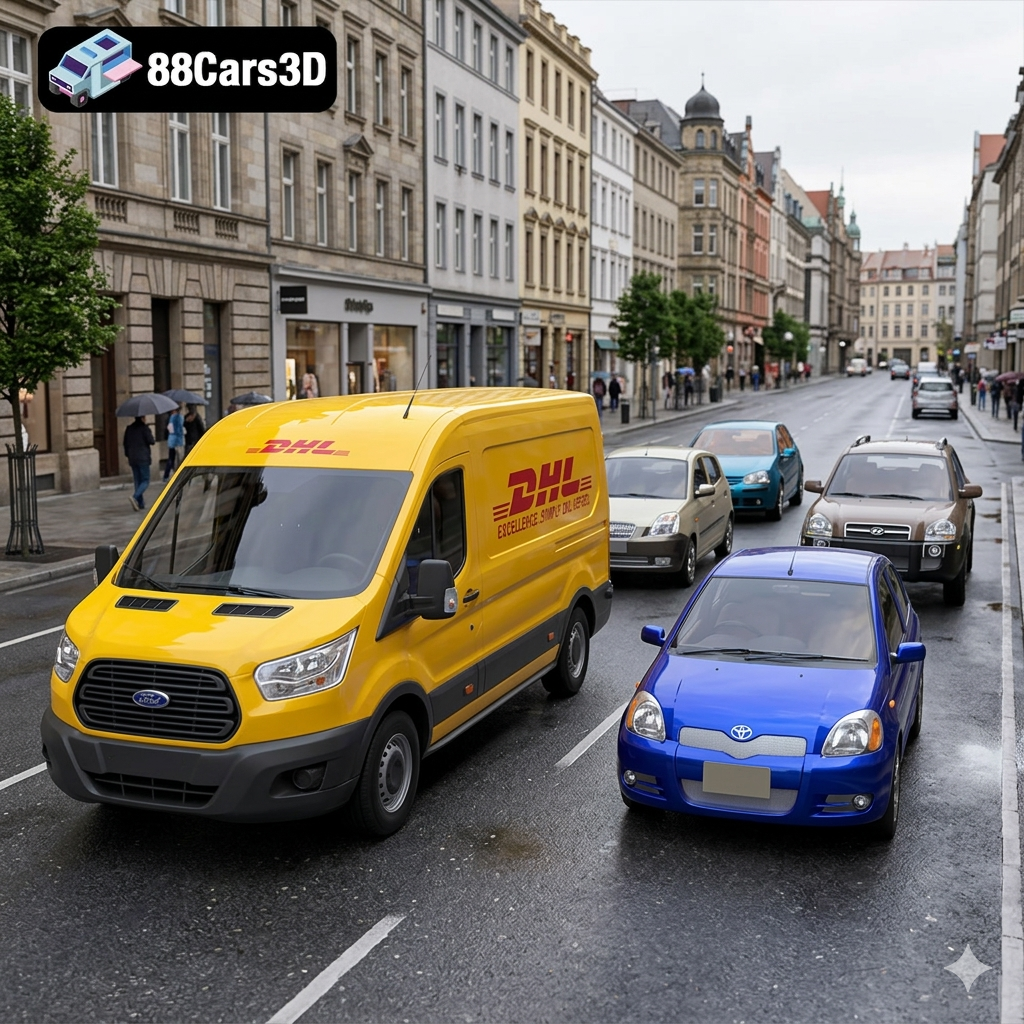
Everyday City Traffic Essentials pack 5in1 Hyundai Kia Volkswagen Toyota Ford 3D Printable STL
Download the Everyday City Traffic 3D Models Bundle. Includes the VW Golf, Kia Picanto, Hyundai Tucson, Toyota Yaris, and a DHL Ford Transit Van. Save big on this 5-in-1 pack, perfectly optimized for realistic ArchViz streets and game traffic.
Price: $99.99

The Future of Mobility: Smart City EV 3D Models Bundle (5-in-1 Pack) Volvo Tesla AVATR Porsche 3D Printable STL
Download the Future of Mobility EV 3D Models Bundle. Includes the Volvo EX30, Tesla Model S, AVATR 11, Porsche Taycan, and a Siemens EV Charger. Save big on this highly optimized 5-in-1 pack for ArchViz and game development!
Price: $89.99
