

In the world of 3D visualization, few subjects demand as much precision and artistry as automotive rendering. A stunning 3D car model, whether sourced from platforms like 88cars3d.com or painstakingly crafted, can only truly shine under the right illumination. Studio lighting is the silent hero, transforming raw geometry and PBR materials into a captivating image that evokes emotion and highlights every meticulously modeled curve and panel gap. This comprehensive guide will delve deep into the technicalities and artistic nuances of setting up impeccable studio lighting for car renders in 3ds Max, leveraging industry-standard renderers like Corona and V-Ray. We’ll explore everything from foundational principles to advanced techniques, ensuring your automotive visualizations achieve unparalleled realism and impact.
Mastering studio lighting is not merely about adding light sources; it’s about understanding how light interacts with complex surfaces, reflects off metallic paint, and accentuates the contours of a vehicle. It’s about crafting an environment that tells a story, whether it’s the pristine glow of a showroom or the dramatic contrast of a high-end photography studio. By the end of this journey, you’ll possess the knowledge to sculpt light with confidence, transforming your 3D car models into photorealistic masterpieces ready for portfolios, marketing, or even high-fidelity game assets and AR/VR experiences.
Understanding the Fundamentals of Studio Lighting for Automotive Renders
Before diving into the software specifics, it’s crucial to grasp the foundational principles of studio lighting that underpin all successful automotive renders. Light is not just brightness; it’s shape, mood, and texture. In a studio setup, we mimic real-world photography studios, which rely on controlled environments to highlight a product’s best features. The goal is to define the car’s form, emphasize its reflections, and establish a clear visual hierarchy.
The “Three-Point Lighting” Concept and Beyond
While often discussed in character rendering, the principles of three-point lighting (key, fill, and rim lights) are highly applicable to automotive renders, albeit with modifications. The key light is your primary light source, typically the brightest, defining the main shape and contours. For cars, this might be a large area light positioned to sculpt the primary body lines. The fill light softens the shadows created by the key light, reducing harsh contrast and revealing details in darker areas. This is often a less intense, broader light. Finally, the rim light (or back light) is positioned behind the object, creating a subtle highlight along its edges, separating it from the background and adding depth. For automotive renders, we often expand upon this, incorporating numerous additional lights to control reflections and specific highlights, sometimes referred to as “reflection cards” or “light shapers.”
Inverse Square Law and Light Decay
A critical physical principle is the Inverse Square Law, which dictates that the intensity of light decreases proportionally to the square of the distance from the light source. This means a light source twice as far away will be only a quarter as bright. Understanding this helps you predict how your virtual lights will behave and how their distance affects shadow softness and overall illumination. In 3ds Max, most photometrically accurate lights adhere to this law by default, simulating realistic decay and preventing an unnatural, flat look.
Reflections, Refractions, and Material Interaction
Automotive surfaces are a complex interplay of reflections and refractions. Car paint, chrome, glass, and plastic each interact with light uniquely. The quality of your reflections – their sharpness, color, and intensity – is paramount. Smooth, highly reflective surfaces like car paint will mirror your light sources directly. Imperfections, subtle dust, or orange peel textures on the paint will break up these reflections, adding realism. Glass elements refract light, bending it as it passes through, and often have subtle reflections of their own. Your lighting setup needs to not only illuminate the car but also be reflected in its surfaces in a pleasing and informative way. This is where the shape and size of your light sources become critical; larger light sources produce softer, more diffuse reflections and shadows, while smaller, more intense lights create sharper reflections and harsher shadows.
Choosing Your Renderer and Lighting Tools in 3ds Max
3ds Max offers flexibility with various third-party renderers, each with its own strengths and lighting ecosystems. For photorealistic automotive rendering, Corona Renderer and V-Ray are industry leaders, renowned for their physically based rendering (PBR) capabilities and ease of use. Your choice of renderer will influence the specific tools you use, but the underlying lighting principles remain consistent.
Corona Renderer: Simplicity Meets Power
Corona Renderer is celebrated for its intuitive workflow and high-quality output, making it an excellent choice for automotive visualization. Its physically based nature means lights behave realistically out of the box. Key lighting tools include:
- Corona Light: The workhorse light source. You can set it as a sphere, disc, rectangle, or cylinder. For studio lighting, rectangular or disc lights are frequently used to emulate softboxes or photographic strobes. Crucially, pay attention to its size; a larger Corona Light produces softer shadows and broader, more diffuse reflections.
- Corona Sun & Sky: While excellent for exterior scenes, the Corona Sun can be adapted for interior studio use, perhaps as a distant, powerful key light mimicking a strong studio strobe through a large diffuser, though typically we favor area lights for controlled studio environments.
- Corona Sky (HDRI): Often combined with a Dome Light, Corona Sky allows you to load High Dynamic Range Images (HDRIs) for environment-based lighting. This is a cornerstone of modern studio lighting setups, providing realistic global illumination and reflections from a single source.
- Corona LightMix: A powerful feature that allows you to adjust the intensity, color, and even toggle individual lights on/off during or after rendering, without re-rendering the scene. This is invaluable for fine-tuning your lighting setup and experimenting with different moods.
When working with Corona, setting up a Corona Physical Camera is essential for realistic exposure control, depth of field, and motion blur, just like a real camera. Adjusting ISO, shutter speed, and f-stop allows you to manage the overall brightness and depth of focus in your scene.
V-Ray Renderer: Industry Standard Versatility
V-Ray is another powerhouse, deeply integrated into many professional pipelines. It offers a comprehensive suite of lighting tools and advanced controls:
- V-Ray Light: Similar to Corona Light, V-Ray Light offers various shapes including Plane, Sphere, Mesh, and Dome. For studio setups, Plane lights are ideal for simulating softboxes, while Sphere lights can represent bulbs or small, intense highlights. The Mesh light allows you to turn any piece of geometry into a light source, perfect for custom light shapes.
- V-Ray Dome Light: This is V-Ray’s primary tool for HDRI-based lighting. Loading an HDRI into a V-Ray Dome Light provides comprehensive global illumination and accurate reflections across your scene. Its “Texture” slot is where you load your HDRI.
- V-Ray Sun & Sky: Like Corona’s counterpart, V-Ray Sun & Sky simulates realistic daylight. For studio work, its primary use might be for a very stylized, hard-light scenario, but generally, area lights and HDRIs are preferred for controlled studio environments.
- V-Ray Physical Camera: Similar to Corona’s camera, this gives you real-world camera controls (shutter speed, f-number, ISO) for realistic exposure and depth of field.
V-Ray’s Light Select Render Element is similar to Corona LightMix, allowing for post-render adjustments of individual light sources, offering immense flexibility in your workflow. Both renderers excel at creating realistic Global Illumination (GI), using methods like Brute Force, Irradiance Map, and Light Cache to simulate how light bounces around the scene, which is crucial for soft, natural illumination in a studio environment.
Crafting the Perfect Studio Environment: HDRI vs. Physical Lights
The foundation of any great automotive render is the environment that surrounds and illuminates the car. In 3ds Max, you generally have two primary approaches: High Dynamic Range Images (HDRIs) or a carefully constructed array of physical area lights. Often, the most compelling results come from a hybrid approach, leveraging the strengths of both.
Leveraging High Dynamic Range Images (HDRIs)
HDRIs are panoramic images that contain a vast range of light information, from the darkest shadows to the brightest highlights. When used with a Dome Light in Corona or V-Ray, they provide incredibly realistic global illumination, accurate reflections, and nuanced shadows from a single source. This is often the quickest way to achieve a professional-looking studio setup.
- Sourcing Quality HDRIs: Look for studio-specific HDRIs that feature softboxes, strip lights, and a neutral background. Websites like Poly Haven, HDRI Haven (now part of Poly Haven), and various commercial providers offer excellent options. The quality of your HDRI directly impacts the realism of your reflections.
- Loading and Placement:
- Corona: Create a Corona Light and set its type to Dome. In the Texture slot, load your HDRI as a CoronaBitmap (or a standard Bitmap if you prefer, but CoronaBitmap has more controls).
- V-Ray: Create a V-Ray Light and set its type to Dome. In the Texture slot, load your HDRI.
Crucially, ensure the HDRI is mapped as Spherical Environment or Lat-Long in the Bitmap settings.
- Rotation and Intensity: Experiment with rotating the HDRI (usually via the light source’s Z-axis rotation or a UVW Map modifier applied to the HDRI bitmap itself) to find the angle that best highlights your car’s features and creates appealing reflections. Adjust the multiplier or intensity of the Dome Light to control the overall brightness.
- Background vs. Illumination: Most renderers allow you to use the HDRI for illumination and reflections but replace the background with a solid color, gradient, or a separate backplate. This provides excellent control over the final composition without sacrificing realistic lighting.
Pro Tip: Look for HDRIs with clearly defined light sources within the panorama. These will produce sharper, more interesting reflections on your car’s paintwork, mimicking a real studio setup. For example, an HDRI with a large, soft rectangular light source will be reflected as a soft, rectangular highlight on the car’s body.
Building a Studio with Physical Area Lights
While HDRIs provide a great starting point, pure physical light setups offer unparalleled control over every highlight and shadow. This approach is more akin to traditional studio photography, where lights are precisely placed and shaped.
- The Seamless Backdrop: Start with a large, curved backdrop geometry (a seamless cyclorama). This ensures a clean, infinite background that guides reflections gracefully. You can model this manually or use plugins/scripts. Apply a neutral grey or white material.
- Key Lights (Large Area Lights): Create several large rectangular or disc lights. These are your virtual softboxes.
- Placement: Position them strategically around the car. A common setup involves a large key light slightly above and to the front of the car, shaping its main contours.
- Size and Intensity: The size dictates shadow softness and reflection size. For very soft light, make them quite large. Adjust intensity carefully; start low and build up.
- Fill Lights: Smaller, less intense area lights, often positioned opposite the key light, or slightly below the car to lift shadows from the undercarriage or wheels. Their purpose is to reduce harsh contrast without flattening the image.
- Rim Lights/Accent Lights: Long, thin rectangular lights (strip lights) placed behind and slightly to the side of the car. These create beautiful, crisp highlights along the edges, defining the car’s silhouette and making it pop. You can also use smaller, targeted lights to pick out specific details like badges or wheel spokes.
- Reflection Cards: Sometimes, you need a specific highlight in a specific place. Instead of an emitting light, you can place a large, self-illuminated plane (a V-Ray Light Mesh or Corona Light Material) in front of the car, but outside the camera’s view. The car’s reflective surfaces will pick up this “card,” allowing you to perfectly sculpt reflections. This is a common trick for adding sharp, controlled highlights to challenging areas or for achieving complex studio looks.
The hybrid approach is often the most effective: use an HDRI for primary global illumination and realistic reflections, then augment it with targeted physical area lights and reflection cards to refine highlights, deepen shadows, and add specific artistic touches. This combines the realism of HDRIs with the precise control of individual lights.
Advanced Lighting Techniques: Enhancing Reflections and Details
Once the basic studio setup is in place, it’s time to refine and enhance your lighting to push realism and visual appeal. This involves meticulous attention to reflections, subtle light bounces, and specific detail enhancement.
Sculpting Reflections with Light Shapers and Gobos
Reflections are the eyes of your car render. They communicate the quality of the paint, the shape of the body, and the environment around it. Instead of just letting your lights reflect, actively sculpt them. As mentioned, custom reflection cards (large, emissive planes) can be placed strategically to create specific highlights. You can also experiment with different shapes of area lights – long strip lights for sleek highlights along body lines, or square softboxes for broader, softer reflections. For V-Ray users, the V-Ray Light Mesh is perfect for this, allowing any geometry to become a light source. In Corona, a simple plane with a Corona Light Material applied does the trick. Beyond simple shapes, consider using Gobos (go-betweens). These are textures or masks applied to a light source (often in its Include/Exclude or Texture slot) to project patterns of light and shadow. While typically used for dramatic effects, subtle gobos can break up overly uniform reflections or cast interesting light patterns on the ground. For instance, a subtle noise map can make a light source appear slightly textured, leading to more organic reflections.
Targeted Fill Lights and Shadow Control
While global fill light comes from the general environment and bounced light, specific areas of a car often require targeted attention. The wheel wells, undercarriage, and deep recesses can sometimes appear too dark, losing important details. Use small, low-intensity area lights, positioned carefully, to gently lift these shadows. These aren’t meant to be obvious light sources but rather subtle illuminators that prevent crushed blacks. For example, a small rectangular Corona or V-Ray light placed low and aimed at the wheels can bring out tire tread details without compromising the main lighting. Ensure these fill lights are soft (large size) to avoid creating secondary, harsh shadows. Controlling shadows is equally important; too harsh and they look artificial, too soft and the image loses depth. Adjusting the size of your light sources is your primary control here.
Adding Volumetric Effects and Atmospheric Depth
To infuse your renders with a cinematic quality, consider subtle volumetric lighting. This effect simulates light interacting with atmospheric particles (like dust or haze), creating visible light rays (god rays) and adding depth. Both Corona and V-Ray offer volumetric effects:
- Corona: Use CoronaVolumeMtl in the Environment settings. Adjust scatter color, density, and absorption.
- V-Ray: Implement V-RayEnvironmentFog in the Environment & Effects tab. Control fog color, density, and distance.
For studio setups, these effects should be very subtle to avoid overwhelming the car. A gentle haze can add a sense of atmosphere and make light sources appear more powerful, subtly diffusing reflections and creating a soft glow around intense highlights. This is particularly effective for dramatic, moodier renders rather than pristine, clinical studio shots. Be mindful of render times, as volumetric effects can be computationally intensive.
Emissive Materials and Practical Lights
Don’t forget the practical lights within the car itself. Headlights, taillights, dashboard displays, and interior ambient lighting can all contribute to the overall realism and narrative of your render. Apply emissive materials to these elements. For example, a Corona Light Material or V-Ray Light Material to headlight bulbs and taillight plastics can add realistic glows. For headlights, consider adding actual light sources (e.g., small sphere lights) within the headlight geometry, set to a low intensity, to contribute to the scene’s illumination and cast realistic light patterns on the ground. Ensure these emissive elements are properly linked to your light mixer if your renderer supports it, allowing for individual control during post-production.
Optimizing Your Scene for Fast and Realistic Renders
Achieving stunning automotive renders often comes with the trade-off of extended render times. Optimization is key to an efficient workflow, especially when iterating on lighting setups. A well-optimized scene not only renders faster but can also produce cleaner, more accurate results.
Renderer Settings: Balancing Quality and Speed
Each renderer has a myriad of settings that influence render quality and speed. Understanding the core parameters is crucial:
- Global Illumination (GI) Settings:
- Corona: Typically uses Path Tracing + UHD Cache for primary and secondary GI. For most studio shots, this combination provides excellent quality and efficiency. Adjusting Pass Limit or Noise Limit will determine when the render stops.
- V-Ray: Common combinations are Brute Force for primary GI and Light Cache for secondary GI. Brute Force is highly accurate but slower, while Light Cache is faster for secondary bounces. Adjusting the Subdivisions for Light Cache and Noise Threshold for the overall render is vital.
- Sampling and Noise Threshold: These are your primary controls for image quality. Lower noise thresholds mean more samples and cleaner images but longer render times. For test renders, use a higher noise threshold (e.g., 5-10%). For final renders, aim for 1-2% or even less, depending on the scene complexity and desired quality.
- Ray Tracing Limits: Parameters like Max Ray Depth (Corona) or Max Depth (V-Ray) control how many times a light ray can bounce around the scene. While higher values increase realism (especially for complex reflections/refractions), they also increase render time. For most automotive renders, a value of 6-10 is usually sufficient.
Pro Tip: Utilize region rendering and interactive rendering (Corona Interactive Render, V-Ray IPR) extensively during the lighting setup phase. This allows for real-time feedback on specific areas, dramatically speeding up your workflow without committing to full renders.
Material Optimization: Balancing Detail and Performance
The materials on your car model can significantly impact render times. While 88cars3d.com models are known for their optimized PBR materials, understanding material settings is still important:
- Glossy Samples/Subdivisions: Highly reflective or glossy materials (car paint, chrome, glass) are computationally expensive because they require many samples to resolve accurately. In V-Ray, increasing Subdivisions on reflective surfaces reduces noise but increases render time. In Corona, the engine handles this more automatically, but complex materials still demand more processing.
- Texture Resolutions: Use appropriate texture resolutions. While 4K or 8K textures are great for hero renders, ensure they are necessary. Overly large textures for distant objects or minor details consume VRAM and can slow down scene loading without a proportional increase in visual quality.
- Displacement vs. Normal Maps: While displacement maps offer true geometric detail, they are much heavier than normal maps. For subtle surface imperfections like orange peel on paint, a good normal map often suffices and renders much faster. Use displacement sparingly for significant geometric changes.
Render Elements and Compositing Workflow
Rendering out multiple passes (render elements/channels) is a professional workflow that provides immense flexibility in post-processing. Instead of a single, final image, you render separate layers like diffuse, reflection, refraction, raw lighting, GI, ambient occlusion, and Z-depth. This allows you to fine-tune each aspect of the image in compositing software (like Photoshop or After Effects) without re-rendering the entire scene.
- Reflection Pass: Crucial for automotive renders. Allows you to selectively adjust the intensity and color of reflections.
- Raw Lighting Pass: Provides the direct illumination without GI, useful for adjusting key light strength.
- Z-Depth Pass: Essential for adding realistic depth of field or fog effects in post.
- Light Select Pass (Corona/V-Ray): As mentioned, allows for per-light adjustments, a game-changer for iterating on lighting.
This approach transforms rendering from a final step into an intermediary one, empowering you to iterate on the “look” of your render much faster and with greater control, especially when working with client feedback.
Post-Processing and Final Touches for Automotive Renders
The render coming out of 3ds Max is rarely the final product. Post-processing is a crucial stage where you elevate your image from a technically accurate render to a visually captivating piece of art. This involves color grading, exposure adjustments, adding atmospheric effects, and refining details to achieve a polished, professional look.
Exposure, Contrast, and Color Grading
Even with a perfectly exposed render, global adjustments are almost always necessary. Software like Adobe Photoshop, Affinity Photo, or even specialized color grading tools can transform your image:
- Exposure and Contrast: Start with these fundamental adjustments. Boost overall exposure slightly if the render is too dark, or pull it back if it’s overblown. Increase contrast to add punch and separation, but be careful not to crush blacks or blow out highlights.
- White Balance: Correct any color casts to ensure whites are truly white and colors are accurate.
- Color Grading: This is where you establish the mood. Use Curves, Levels, and Selective Color adjustments to subtly shift hues, boost saturation in specific areas (like the car’s paint), and create a cohesive color palette. For example, a slightly cooler overall tone can convey a high-tech, modern feel, while warmer tones might evoke luxury or nostalgia. Tools like Look-Up Tables (LUTs) can also be applied for cinematic color grades.
- Vignetting: A subtle dark vignette around the edges of the image can help draw the viewer’s eye towards the center, focusing attention on the car.
Enhancing Realism with Lens Effects and Atmospheric Details
Real-world cameras introduce certain imperfections and atmospheric interactions that our renders can emulate for added realism:
- Bloom/Glow: Light sources and bright reflections often exhibit a subtle glow. This can be added in post-processing to enhance the perceived intensity of lights and give reflections a softer, more photographic feel. Both Corona and V-Ray have built-in post-processing effects for bloom/glare that can be enabled and tweaked directly in the render buffer, but more control can be achieved in external software.
- Chromatic Aberration: A subtle color fringing often seen at high-contrast edges in real lens photography. Applying a very slight chromatic aberration (red/cyan shift) can trick the eye into perceiving more realism. Use sparingly, as too much looks like a mistake.
- Lens Distortion: A slight barrel or pincushion distortion can mimic wide-angle or telephoto lenses. Again, subtlety is key here.
- Depth of Field (DoF): While DoF can be rendered directly in 3ds Max using your physical camera, a Z-Depth pass allows you to apply and adjust DoF in post. This is incredibly powerful for blurring backgrounds and foreground elements, isolating the car, and guiding the viewer’s focus.
- Grain/Noise: A very fine layer of photographic grain can help blend color banding and give the image a more organic, less “perfect CGI” feel.
Sharpening and Final Output
The final step involves refining the image’s sharpness and preparing it for output.
- Sharpening: Apply a subtle sharpening filter (e.g., Unsharp Mask in Photoshop) to bring out fine details on the car, such as panel gaps, badges, and tire textures. Be careful not to oversharpen, which can introduce artifacts and a crunchy look. Focus on edges and areas of detail.
- Output Formats: Save your final image in appropriate formats. For web, JPEG is common, but for high-quality printing or further editing, TIFF or PNG are preferred to preserve detail and avoid compression artifacts. If you used render elements, ensure they are saved in a multi-layered format like EXR for maximum flexibility.
By diligently working through these post-processing steps, you transform a strong render into a truly exceptional automotive visualization, ready to captivate your audience and showcase the incredible detail of your 3D car models, perhaps even those acquired from specialized marketplaces like 88cars3d.com.
Conclusion: Mastering the Art of Automotive Studio Lighting
Setting up studio lighting for car renders in 3ds Max is a multifaceted discipline that marries technical precision with artistic vision. It’s not just about illuminating a 3D model; it’s about sculpting light to define form, emphasize exquisite PBR materials, and evoke the very essence of automotive design. From understanding the inverse square law to meticulously positioning virtual softboxes and fine-tuning render settings, every step contributes to the final impact of your visualization.
We’ve explored the power of industry-standard renderers like Corona and V-Ray, delved into the versatility of HDRI-based lighting versus custom physical light setups, and uncovered advanced techniques for enhancing reflections and adding atmospheric depth. Crucially, we’ve emphasized the importance of optimization and a robust post-processing workflow to ensure your renders are not only stunning but also produced efficiently. Remember, a high-quality 3D car model, whether for rendering, game development, or AR/VR, truly comes to life when bathed in thoughtfully crafted light.
The journey to photorealistic automotive renders is iterative. Experiment with different light shapes, intensities, and positions. Don’t be afraid to break conventional rules once you understand them. Utilize interactive rendering and render elements to speed up your learning and refinement process. By continuously honing your skills in lighting, you’ll elevate your 3D automotive visualizations from good to breathtaking, cementing your position as a master of digital car artistry.
Featured 3D Car Models

The Italian Legends Bundle 5 Ultimate Supercar 3D Models STL Optimized
Texture: Yes | Material: Yes | 3D Printable: Yes. Download the Italian Thoroughbreds Bundle featuring 5 iconic 3D models: Lamborghini Huracán Performante, Ferrari 458 Italia, Lamborghini Urus, Diablo SV, and Maserati GT. Optimized for 4K rendering and 3D printing (STL included). Save 50% with this ultimate Italian vehicle collection.
Price: $199.99

Elite Future Mobility: EV & Autonomous SUV Bundle (4 High-End 3D Models)3D Printable STL
Download the Elite Future Mobility Bundle featuring 4 highly optimized 3D models: Tesla Model S, Avatr 11, Li L9, and Zoox Robotaxi. Perfect for ArchViz, Smart City renders, and game dev. Optimized for Unreal Engine and Blender. Includes .fbx, .obj, and .max formats.
Price: $99

German Luxury & Performance Bundle – High-End 3D Vehicle Collection3D Printable STL
🚗 5 Iconic German Cars (BMW M4 G82, M5 CS, X3, 1 Series & Mercedes E-Class). ✅ Optimized for ArchViz: Ready for Corona & V-Ray. 💰 Save €71 with this limited-time collection! 🚀 Instant Download after purchase.
Price: $119

Extreme Off-Road & Survival 3D Models Bundle (4-in-1 Pack)3D Printable STL
Download the Extreme Off-Road & Survival 3D Models Bundle! Includes the Brabus 800 Adventure, Dodge Ram Bigfoot, Spec Truck, and a Caravan. Save over €210 on this premium 4-in-1 off-grid vehicle pack for ArchViz and game development.
Price: $149.99

Heavy Duty & Commercial Logistics 3D Models Bundle (4-in-1 Pack)3D Printable STL
Download the Heavy Duty & Commercial Logistics 3D Models Bundle! Includes the Ford Sterling, Caterpillar CT680, Mercedes Citaro Bus, and Vito Van. Save over €130 on this massive, game-ready 4-in-1 industrial vehicle pack.
Price: $109.99

The Ultimate Garage Props & Custom Motorcycles 3D Models Bundle 3D Printable STL
Download the Ultimate Custom Motorcycles 3D Models Bundle. Includes a Custom Chopper, Ducati 916 Café Fighter, Harley XR1200X, and BMW K100. Perfect premium props for luxury ArchViz garages. Save over €250 today!
Price: $159.99

Japanese Legends: JDM Street Racing 3D Models Bundle (5-in-1 Pack) Nissan Mitsubishi Honda Mazda Toyota 3D Printable STL
Download the ultimate JDM Street Racing 3D Models Bundle! Includes the Nissan GT-R, Toyota Supra, Mazda RX-7, Lancer Evo IX, and Honda NSX. Save big on this highly optimized, game-ready 5-in-1 Japanese legend car pack.
Price: $129.99

American Muscle & Classics Pack 4 in 1 Ford Dodge Chevrolet 3D Printable STL
Download the ultimate American Muscle & Cinematic Classics 3D Models Bundle! Includes the Dodge Charger ’68, Mustang Eleanor GT500, Camaro Z28 ’79, and a custom ’69 Mustang. Save over €240 on this game-ready, premium 4-in-1 pack.
Price: $149.99

Everyday City Traffic Essentials pack 5in1 Hyundai Kia Volkswagen Toyota Ford 3D Printable STL
Download the Everyday City Traffic 3D Models Bundle. Includes the VW Golf, Kia Picanto, Hyundai Tucson, Toyota Yaris, and a DHL Ford Transit Van. Save big on this 5-in-1 pack, perfectly optimized for realistic ArchViz streets and game traffic.
Price: $99.99
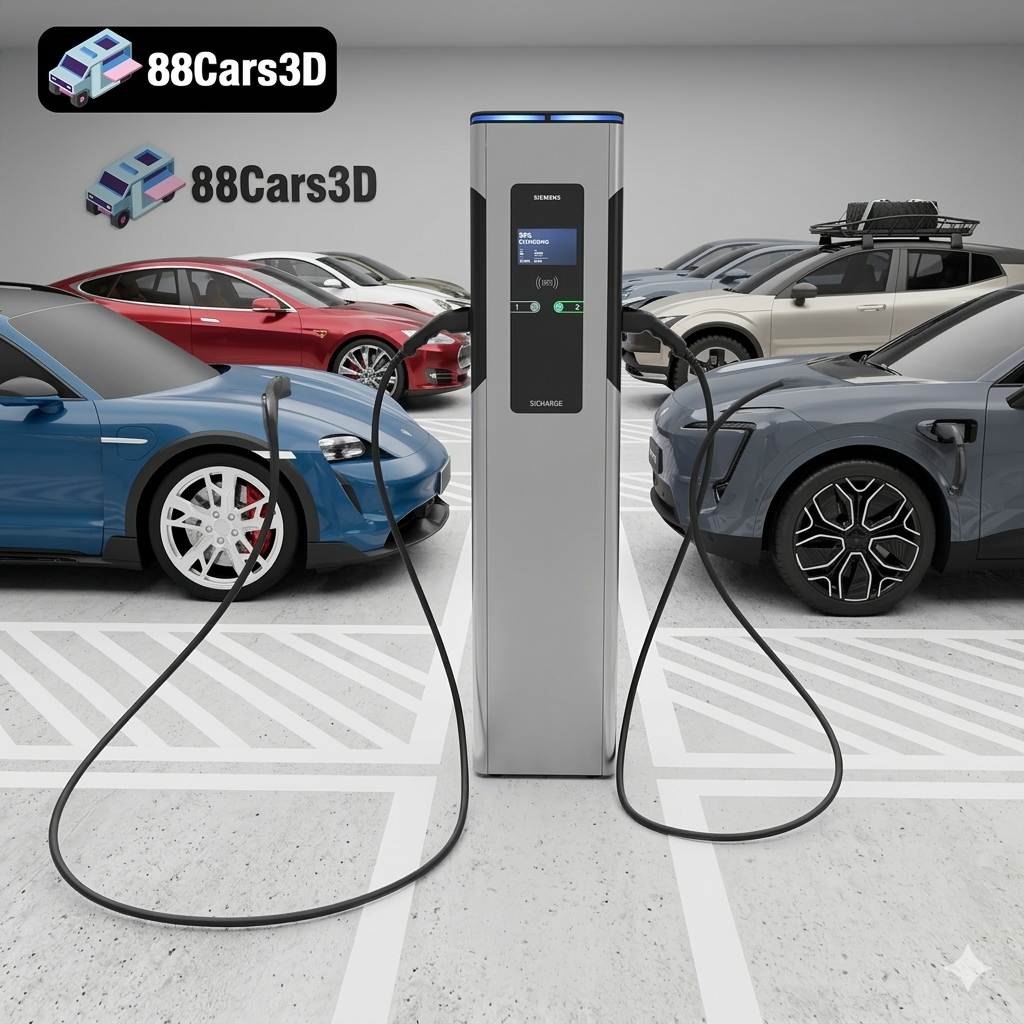
The Future of Mobility: Smart City EV 3D Models Bundle (5-in-1 Pack) Volvo Tesla AVATR Porsche 3D Printable STL
Download the Future of Mobility EV 3D Models Bundle. Includes the Volvo EX30, Tesla Model S, AVATR 11, Porsche Taycan, and a Siemens EV Charger. Save big on this highly optimized 5-in-1 pack for ArchViz and game development!
Price: $89.99
