Get 20% OFF All Premium 3D & STL Models!

In the dynamic world of 3D visualization, the demand for exceptionally detailed and accurate digital assets is ever-growing. From photorealistic marketing campaigns and immersive game environments to intricate architectural visualizations and even physical 3D prints, the quality of a 3D model directly impacts the success of a project. Automotive models, in particular, require an unparalleled level of precision to convey the intricate design philosophy and engineering prowess of real-world vehicles. This is where truly professional 3D car models shine, offering a foundation of authenticity and versatility that enables creators to push boundaries.
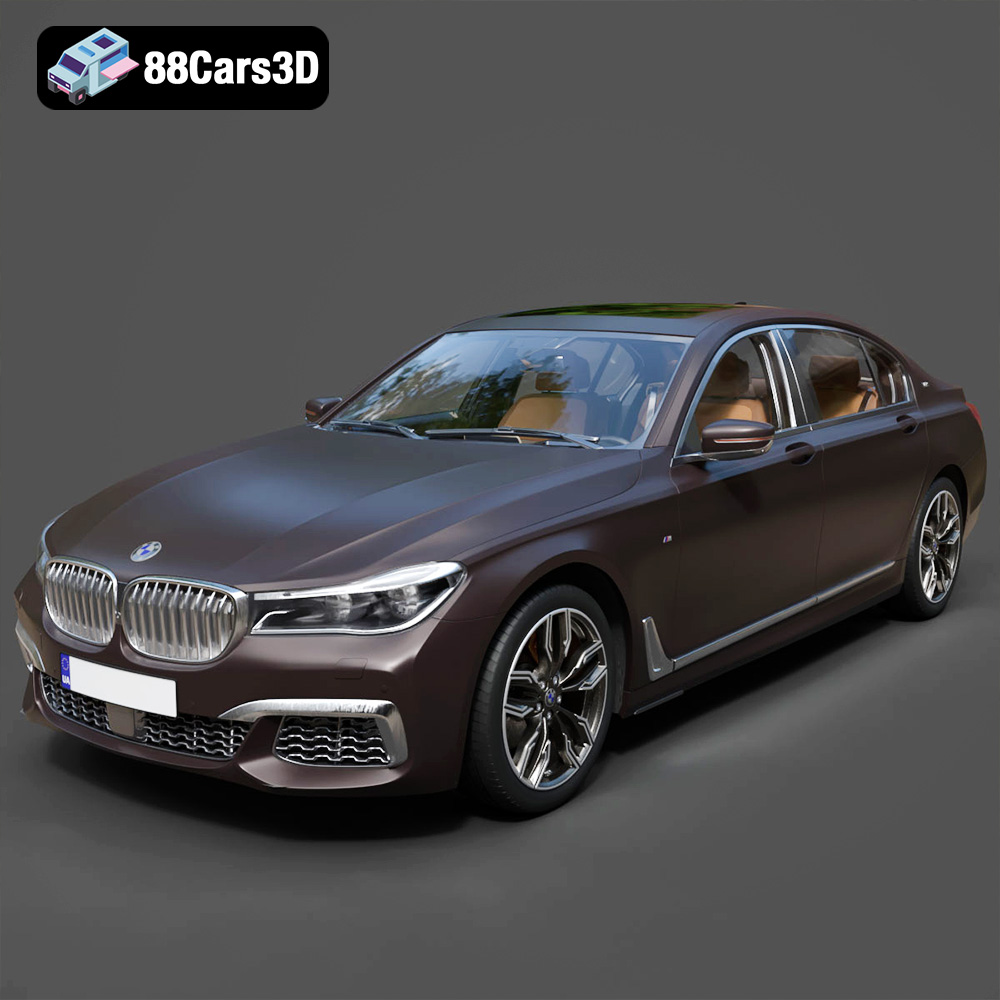
Imagine being able to showcase a luxury performance sedan with every curve, every interior stitch, and every headlight detail perfectly replicated in a digital space. This is precisely the kind of opportunity presented by the BMW M7 (G12) with HQ Interior 2017 3D Model. It stands as a testament to meticulous digital craftsmanship, bringing the elegance and aggression of BMW’s top-tier executive sedan into the virtual realm with stunning fidelity. Whether you’re an automotive designer, a game developer, an architect, or a marketing professional, this model provides an invaluable asset for a myriad of high-end applications.
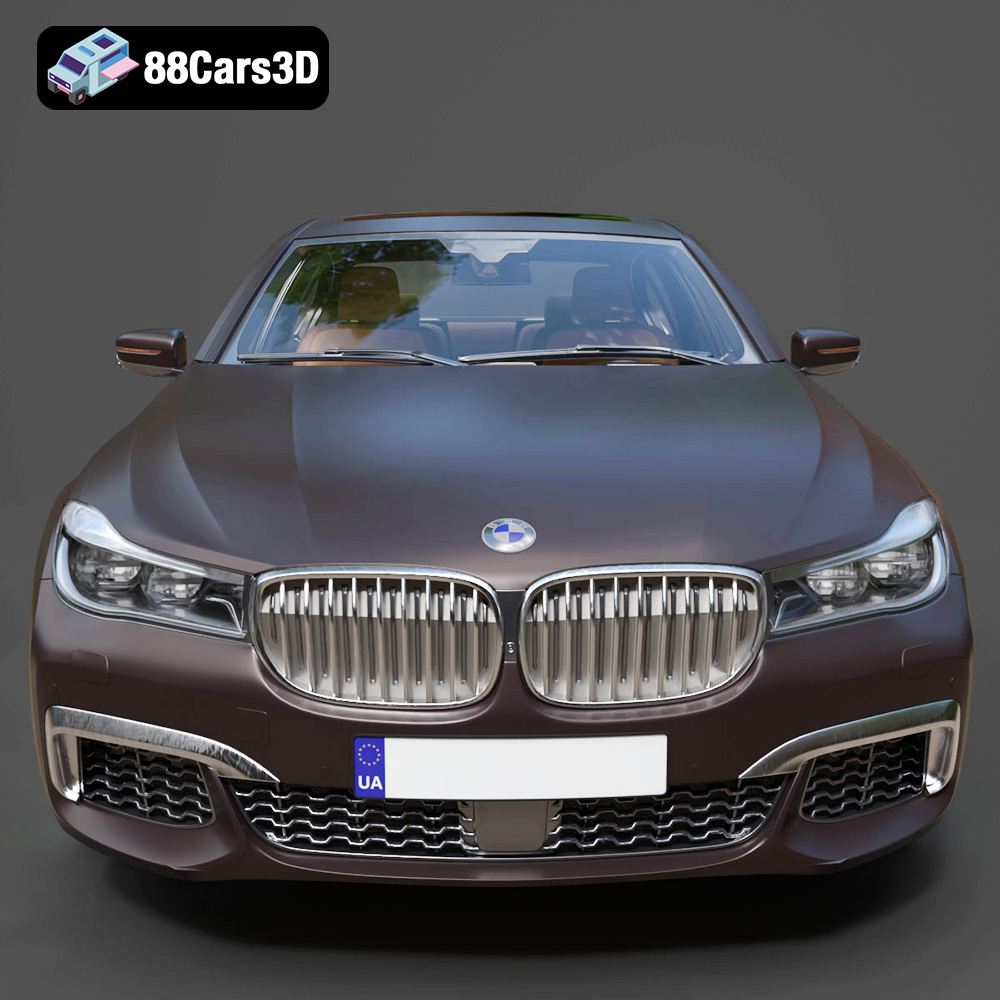
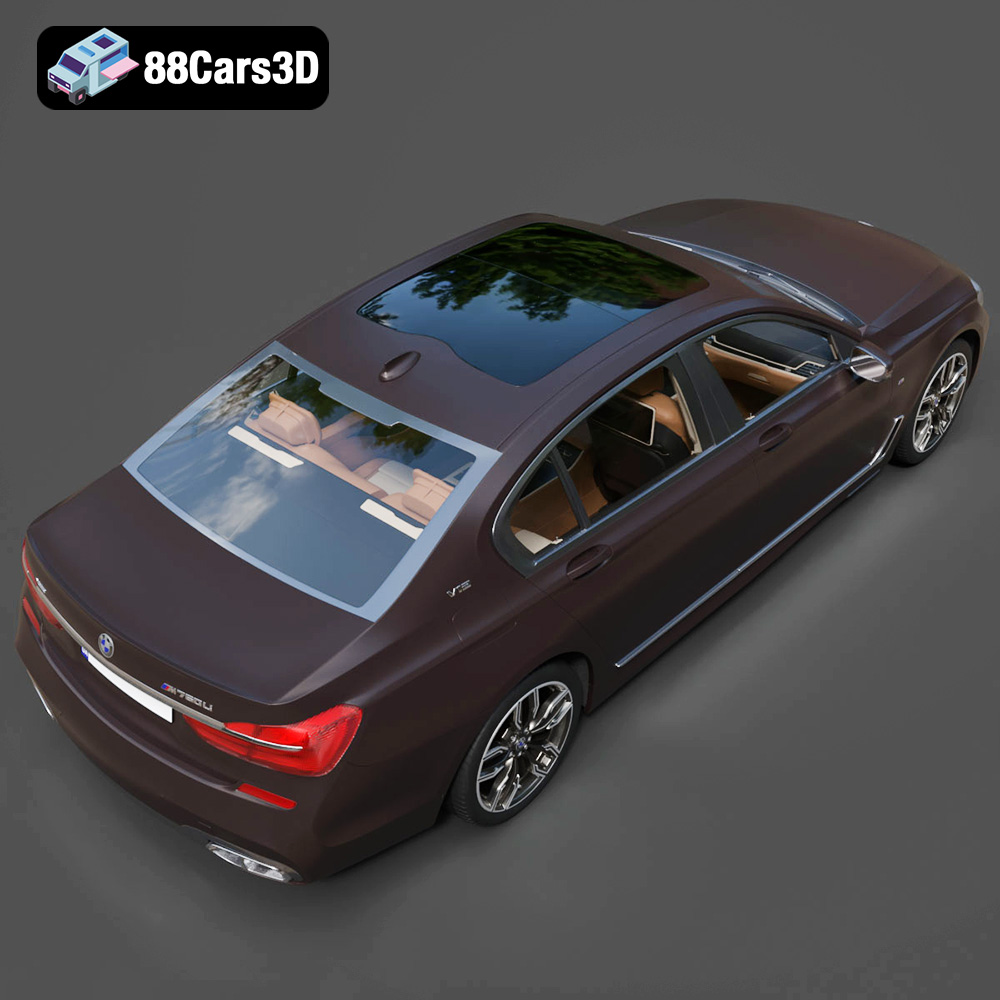
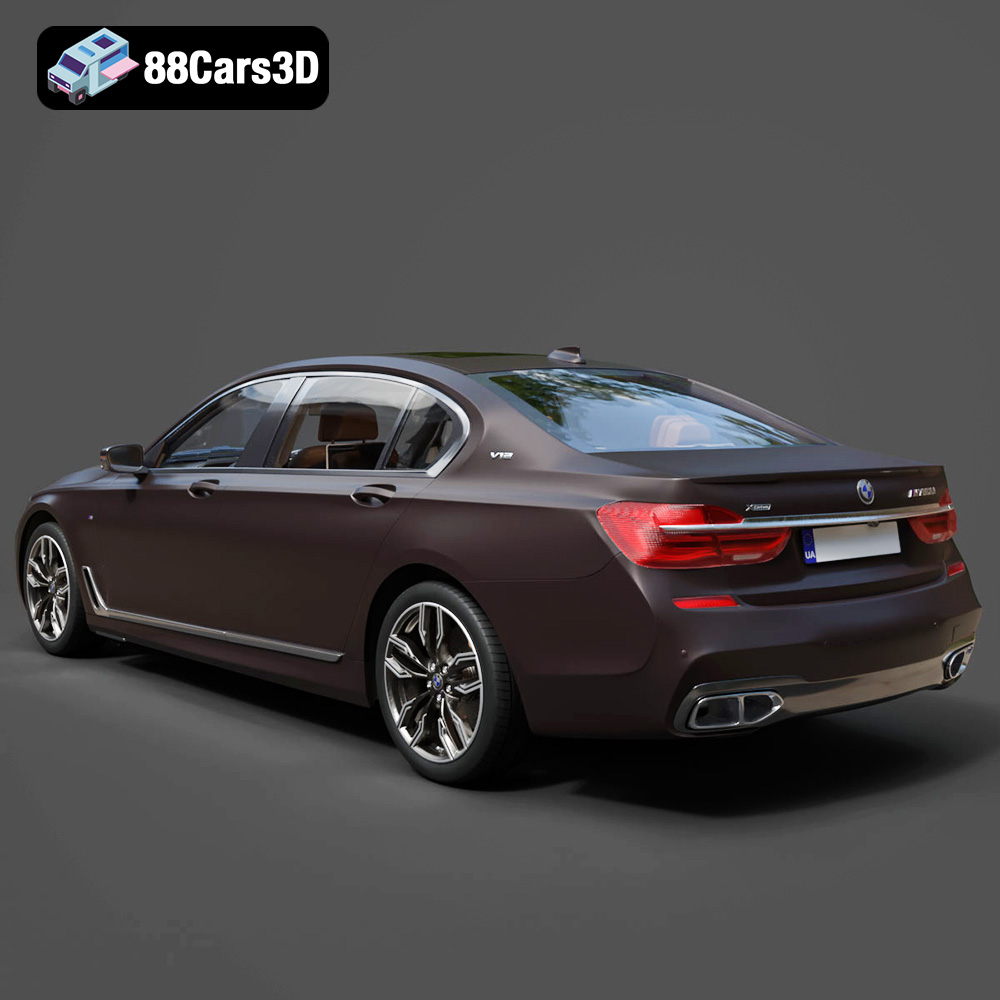
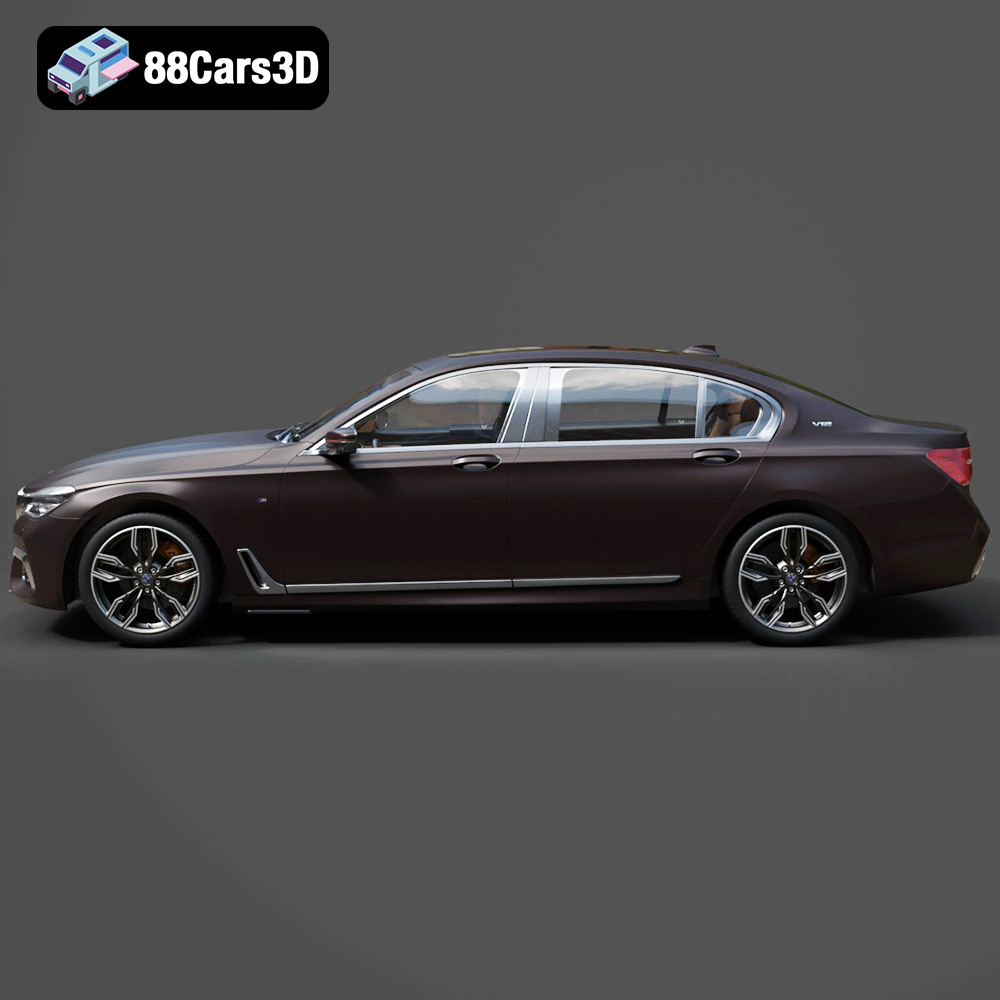
The BMW M7 (G12) represents the pinnacle of luxury and performance within the 7 Series lineup. Its long-wheelbase G12 platform combines executive comfort with aggressive M styling cues, resulting in a vehicle that exudes power and sophistication. This 3D model meticulously captures these characteristics, from the distinctive kidney grille and sculpted hood lines to the aerodynamic front bumper and the quad exhaust outlets. Every exterior feature, including the detailed LED headlight assemblies and realistic alloy wheel designs, has been faithfully recreated to ensure accuracy and visual impact.
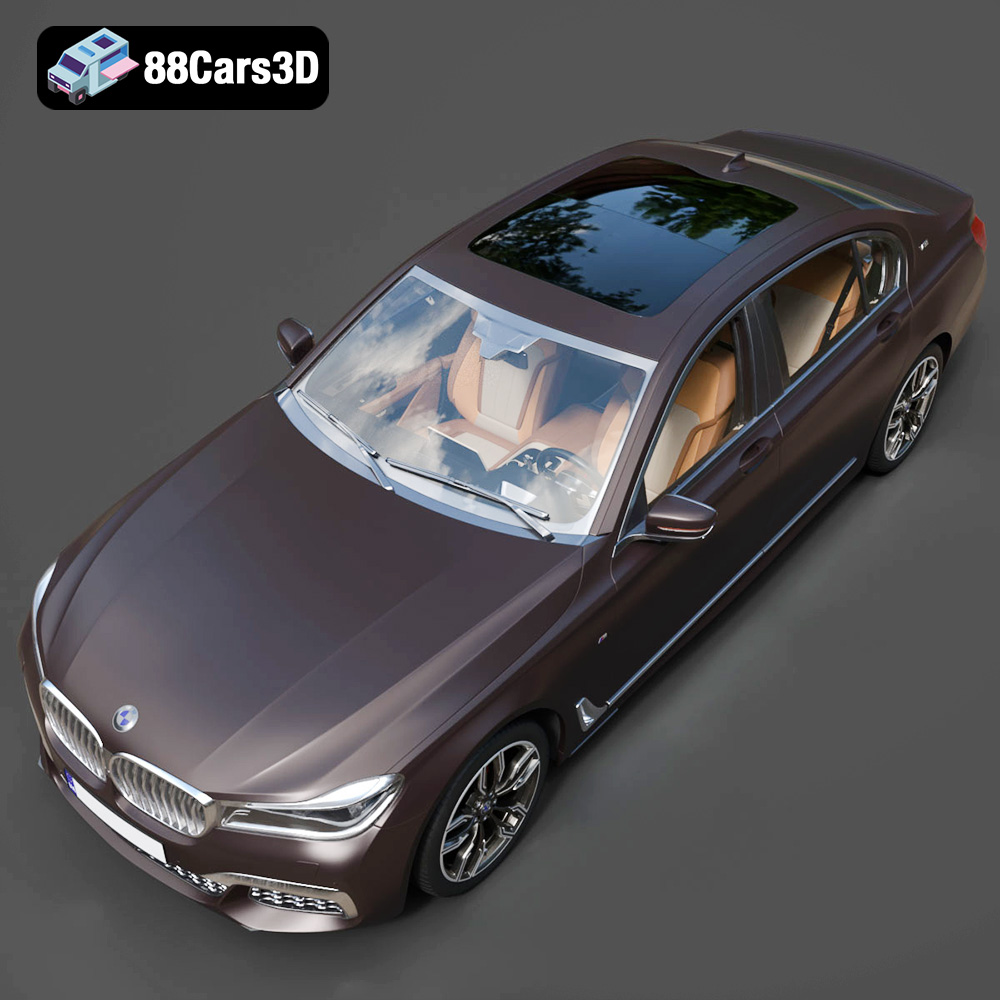
While the exterior of a car model often grabs initial attention, a truly high-quality interior elevates a project from good to exceptional. The BMW M7 (G12) model boasts an HQ interior that is optimized yet detailed enough for cinematic close-ups. This includes a high-resolution dashboard, a digital instrument cluster, a detailed infotainment display, and a center console. Crucially, the model features premium steering wheel design, leather seat modeling with intricate stitching, and rear executive seating arrangements, complete with ambient lighting strips and realistic trim accents. This level of interior detail is vital for applications demanding full immersion, such as virtual showrooms, AR/VR experiences, and high-fidelity automotive rendering projects.
Navigating the diverse landscape of 3D software and applications often requires a deep understanding of file formats. The BMW M7 (G12) with HQ Interior 2017 3D Model, available on 88cars3d.com, addresses this complexity by offering a comprehensive suite of formats, ensuring broad compatibility and utility across various professional workflows. Each format serves specific purposes, optimizing the model for different stages of production, from initial scene setup to real-time deployment and even physical manufacturing.
The provision of these varied formats ensures that the BMW M7 (G12) with HQ Interior 2017 3D Model from 88cars3d.com can be seamlessly integrated into virtually any professional pipeline, maximizing its value and utility for any digital creative.
Achieving photorealistic automotive rendering is an art form that blends technical proficiency with an keen eye for aesthetics. The BMW M7 (G12) with HQ Interior 2017 3D Model provides an exceptional foundation for these endeavors, offering the detail and clean topology necessary for stunning visual output. Professional artists leverage sophisticated rendering engines and techniques to transform a static 3D model into a captivating image or animation.
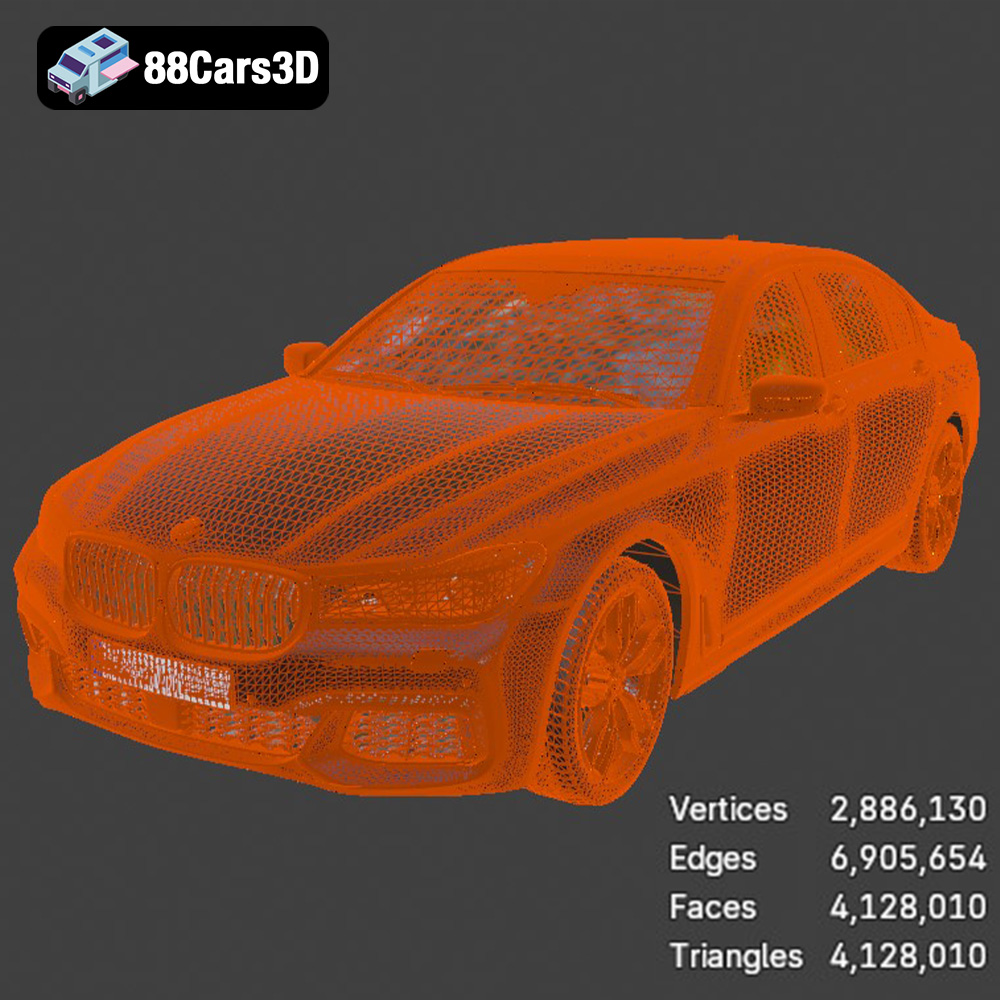
In rendering, lighting is paramount. Utilizing HDRI (High Dynamic Range Image) environments is a common practice to simulate real-world lighting conditions, from a sunny outdoor scene to a dimly lit studio or an urban night visual. Combined with carefully placed virtual light sources, artists can highlight the BMW M7’s sculpted lines and metallic paint finishes. The model’s clean mesh structure and properly organized UVs are crucial here, allowing for seamless application of complex PBR (Physically Based Rendering) materials. Metallic car paint, realistic glass, chrome trim, and the rich textures of the HQ interior’s leather and wood accents all require precise material definitions to react authentically to light. The “leather seat modeling with stitching detail” and “chrome trim and window surround detailing” of this model are specifically designed to respond beautifully to these advanced material setups, enhancing realism.
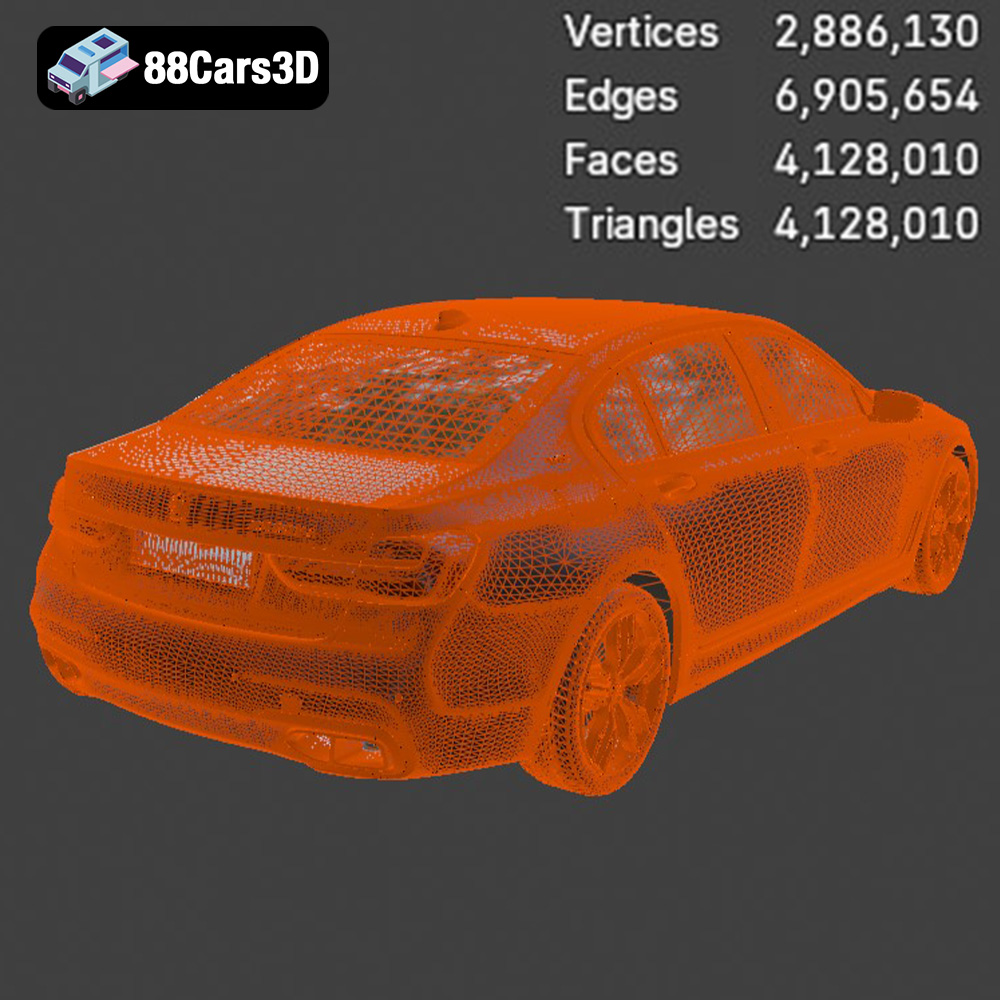
Beyond standalone car renders, automotive models are frequently integrated into larger scenes, such as architectural visualizations or product showcases. Imagine the BMW M7 (G12) positioned elegantly outside a modern luxury villa or featured prominently within a high-end car showroom. The model’s real-world scale accuracy ensures it fits naturally into these environments without requiring tedious adjustments. Its detailed interior makes it perfect for “luxury showroom renders” where even the cabin might be visible through windows or via close-up shots. This integration elevates the overall scene, adding a touch of realism and aspiration that only a premium vehicle can provide. The model’s optimized polygon flow contributes to faster rendering times even in complex scenes, maintaining efficiency without sacrificing detail.
The immersive worlds of modern video games and real-time simulations rely heavily on high-quality game assets that are both visually compelling and performant. The BMW M7 (G12) with HQ Interior 2017 3D Model is meticulously crafted to meet these demanding requirements, making it an ideal choice for developers looking to inject realism and luxury into their projects, whether for driving simulators or open-world urban games.
In game development, a balance must be struck between visual fidelity and computational efficiency. While the BMW M7 model boasts a high-quality interior suitable for cinematic close-ups, its “optimized polygon flow” suggests thoughtful geometry management. For real-time applications, techniques like Level of Detail (LOD) are often employed, where simpler versions of the model are swapped in when the vehicle is further from the camera, saving valuable processing power. The model’s clean and well-organized mesh structure is a significant advantage, as it simplifies the process of creating these LODs and ensures efficient rendering within engines like Unreal Engine and Unity. The inclusion of an .unreal format further streamlines this process, indicating the model is already prepped for the engine’s specific requirements, including potentially optimized materials and textures.
For driving simulators or interactive experiences, the functionality of the vehicle within the engine is as important as its appearance. The BMW M7 model features “separate wheels and steering components for animation” and “proper pivot setup for steering and wheel rotation.” These technical advantages are critical for implementing realistic physics and vehicle dynamics. Developers can easily apply wheel rotation, steering animations, and suspension movements, bringing the car to life with authentic motion. Furthermore, the detailed interior allows for first-person camera views, enhancing immersion for players or users. Imagine a virtual test drive where you can see the detailed infotainment display and premium steering wheel as you navigate a simulated track – the BMW M7 model makes this a high-fidelity reality, creating truly engaging luxury environments.
The journey of a 3D model doesn’t always end on a screen. For enthusiasts, designers, and collectors, the ability to transform a digital asset into a physical object via 3D printing offers a unique and satisfying dimension. The BMW M7 (G12) with HQ Interior 2017 3D Model is not only designed for digital rendering and game development but is also “3D Printable STL” ready, opening up possibilities for creating stunning scale models.
The .stl file format is the standard for additive manufacturing, effectively translating a 3D model’s geometry into a format readable by 3D printers. The BMW M7 model’s inclusion of an .stl format means it has been prepared with manifold geometry, ensuring a watertight and printable mesh. For best results, the product description recommends specific 3D print settings: scales of 1:32, 1:24, or 1:18, layer heights between 0.10–0.18 mm, and wall thickness of 1.2–2.0 mm. These parameters are crucial for capturing the finer details of the luxury sedan, such as the aggressive M-style front bumper, the delicate chrome trim, and the intricate wheel designs. The recommendation for supports around mirrors, bumper overhangs, and spoiler details highlights the real-world considerations for successful printing, ensuring that even delicate features are preserved during the build process.
Once printed, a raw 3D model typically requires post-processing to achieve a professional, showroom-quality finish. For the BMW M7 model, this involves several steps: sanding to smooth layer lines, applying primer to create an even base, and then meticulous painting. The description suggests metallic or gloss paint finishes, which would perfectly mimic the factory look of a luxury vehicle. Optional chrome detailing can further enhance realism, bringing out the intricate trim elements. The advice to print the body angled for a smooth finish and wheels separately is a veteran tip, optimizing for both aesthetic quality and ease of assembly. The result is a highly detailed, tangible replica of the BMW M7, perfect for tabletop displays, automotive collectibles, or as a physical prototype in design reviews.
Augmented Reality (AR) and Virtual Reality (VR) are revolutionizing how we interact with digital content, offering unprecedented levels of immersion. High-fidelity 3D car models like the BMW M7 (G12) with HQ Interior 2017 are perfectly positioned to drive these experiences, transforming static visualizations into dynamic, interactive environments. For architects, marketing agencies, and automotive brands, AR/VR presents powerful new avenues for showcasing products and concepts.
Imagine stepping into a virtual showroom where you can walk around the BMW M7 (G12), open its doors, and even sit inside to explore its luxurious interior, all before the physical car is even built or available for viewing. The detailed HQ interior of this model is a significant asset here, allowing for “immersive executive vehicle experiences” in VR. Users can examine the digital instrument cluster, the premium steering wheel, and the leather seat modeling up close, feeling as if they are truly present. In AR, the model can be placed in a real-world environment – projected onto a driveway or a meeting room table – allowing for instant scale comparisons and design evaluations. The inclusion of the .glb format is particularly beneficial for these applications, as it’s optimized for efficient loading and display in AR/VR environments and browser-based viewers, ensuring smooth, high-performance interactions.
Beyond marketing, highly accurate 3D automotive models are invaluable for training and simulation. For driver training programs, vehicle maintenance simulations, or even design validation, the BMW M7 model can provide a realistic virtual counterpart. The “real-world scale accuracy” and “clean and well-organized mesh structure” facilitate precise interaction and measurement within simulation environments. Professionals can use the model to simulate interior ergonomics, test visibility, or even practice specific maintenance procedures in a risk-free, digital setting. The ability to “adjust lighting for showroom, daylight, or night city scenes” further enhances the versatility, allowing for scenario-specific training that maximizes the utility of this premium digital asset.
The true power of a high-quality 3D asset lies not just in its inherent detail, but also in its adaptability. The BMW M7 (G12) with HQ Interior 2017 3D Model offers extensive customization options, enabling artists and developers to tailor it precisely to their project’s unique requirements. This flexibility transforms it from a mere digital object into a versatile tool for professional production pipelines across various industries.
The product description highlights several key customization options that empower users: “Change exterior color (metallic, matte, or custom finishes),” “Adjust wheel designs and brake caliper colors,” “Interior color and trim variation,” and “Add custom license plates.” These capabilities are fundamental for creating unique visualizations. For an automotive commercial, a specific brand color might be required; for a game, a unique livery or custom wheels might distinguish a special edition car. The model’s clean topology ensures that these changes can be implemented efficiently without introducing visual artifacts. Furthermore, the ability to “adjust lighting for showroom, daylight, or night city scenes” provides the artistic freedom to set the perfect mood and context for any render or real-time environment. This level of granular control is what sets premium 3D car models apart, enabling endless creative possibilities.
Professionals frequently leverage 3D models like the BMW M7 (G12) for critical stages in automotive marketing and design. In the early stages of product development, the model can serve as a virtual prototype, allowing designers to visualize and iterate on concepts without the expense and time of physical prototypes. For marketing, these assets are indispensable for creating “luxury automotive marketing, dealership presentations, and cinematic car renders” months before a vehicle’s public release. This allows brands to generate hype, test market reactions, and even pre-sell vehicles using only digital representations. Furthermore, the model’s high-quality interior and exterior detailing make it suitable for product configurators on automotive websites, where customers can customize their dream car in real-time. The meticulous attention to detail found in this model ensures that any professional application will maintain the integrity and prestige associated with the BMW brand.
In the expansive and ever-evolving landscape of 3D visualization, the demand for high-fidelity, versatile assets remains constant. The BMW M7 (G12) with HQ Interior 2017 3D Model stands as an exemplary representation of what can be achieved when meticulous digital craftsmanship meets advanced automotive design. From its accurately recreated long-wheelbase proportions and aggressive M-styling to its high-resolution interior and optimized mesh structure, this model is a powerhouse for any creative endeavor.
Whether your goal is to produce breathtaking automotive rendering, develop immersive game assets, create engaging AR/VR experiences, or even manufacture a tangible 3D printed scale model, this asset provides the essential tools. Its comprehensive suite of file formats – including .blend, .fbx, .obj, .glb, .stl, .ply, .unreal, and .max – ensures seamless integration into virtually any professional workflow. This adaptability, combined with its intrinsic quality, makes it an indispensable resource for designers, artists, and developers alike. Exploring the world of premium 3D car models has never been more accessible or rewarding. For those seeking assets that truly deliver on detail, flexibility, and professional-grade quality, reputable marketplaces like 88cars3d.com are an invaluable resource, consistently providing the tools to bring complex visions to life.
Invest in quality, accelerate your workflow, and elevate your projects with models that capture the true essence of automotive excellence. The BMW M7 (G12) with HQ Interior 2017 is more than just a 3D model; it’s a gateway to limitless creative possibilities.
The BMW M7 (G12) with HQ Interior 2017 3D Model is a high-detail digital recreation of the luxury performance sedan based on the long-wheelbase G12 platform. Combining executive-class comfort with aggressive M styling cues, this model represents premium engineering, advanced technology, and dynamic road presence. This 3D model accurately captures the extended wheelbase proportions, signature kidney grille design, sculpted hood lines, aerodynamic front bumper, LED headlight detailing, side air intakes, quad exhaust outlets, and refined luxury cabin. The high-quality interior includes realistic materials, advanced dashboard layout, rear executive seating, and premium trim elements. Designed with clean topology and real-world scale accuracy, it is ideal for rendering, animation, automotive visualization, game development, and AR/VR luxury environments. Perfect for corporate scenes, luxury showroom renders, urban night visuals, and high-end driving simulations.
$59.99
.7series
.arvr
.automotive
.blend
.bmw
.car3dmodel
.executivecar
.fbx
.gameasset
.glb
.hqinterior
.luxurysedan
.m7g12
.max
.obj
.performancecar
.ply
.rendering
.simulation
.stl
.unreal