Get 20% OFF All Premium 3D & STL Models!

In the vast and dynamic world of 3D modeling, few subjects capture the imagination quite like classic vehicles. They represent not just a mode of transport, but an era, a style, and a piece of cultural history. Whether you’re an architect visualizing a period street scene, a game developer crafting an immersive open world, or a filmmaker producing a retro cinematic sequence, the demand for high-quality, historically accurate 3D car models is ever-present. This meticulous attention to detail is precisely what defines exceptional digital assets, transforming a simple mesh into a storytelling tool.
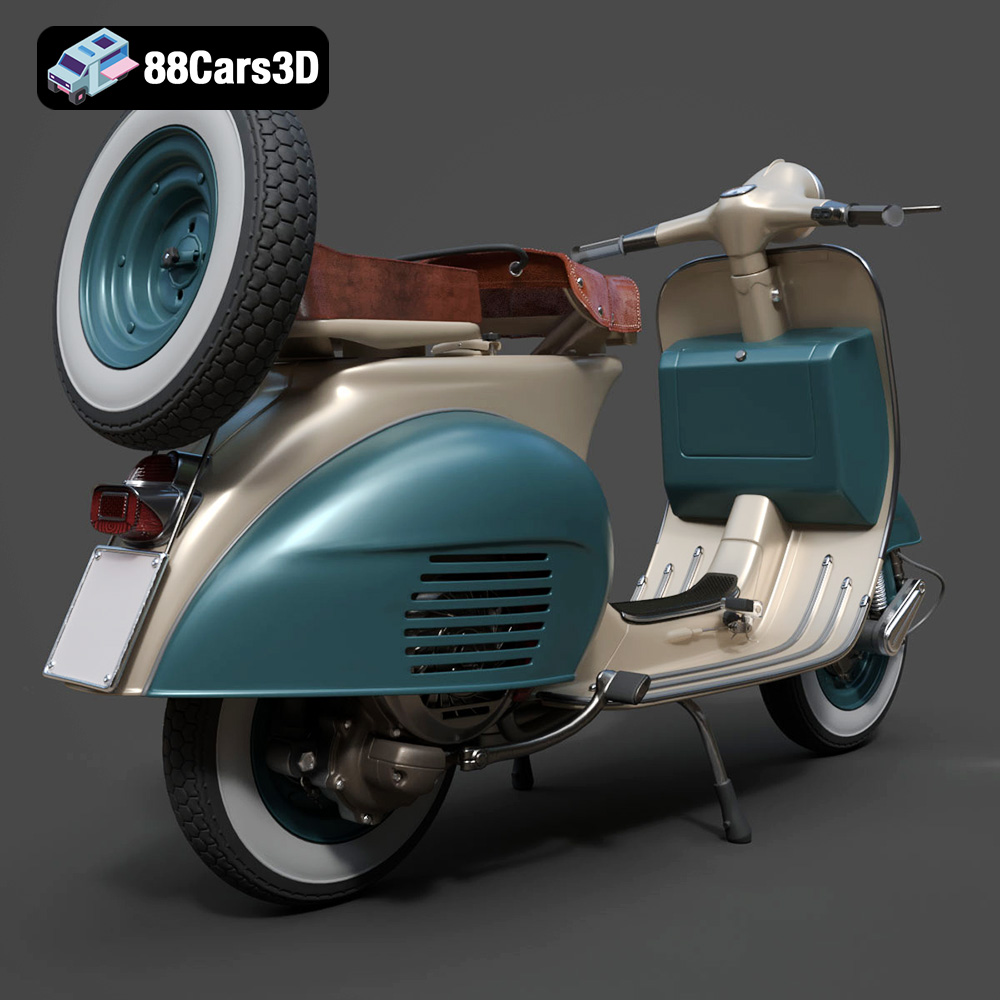
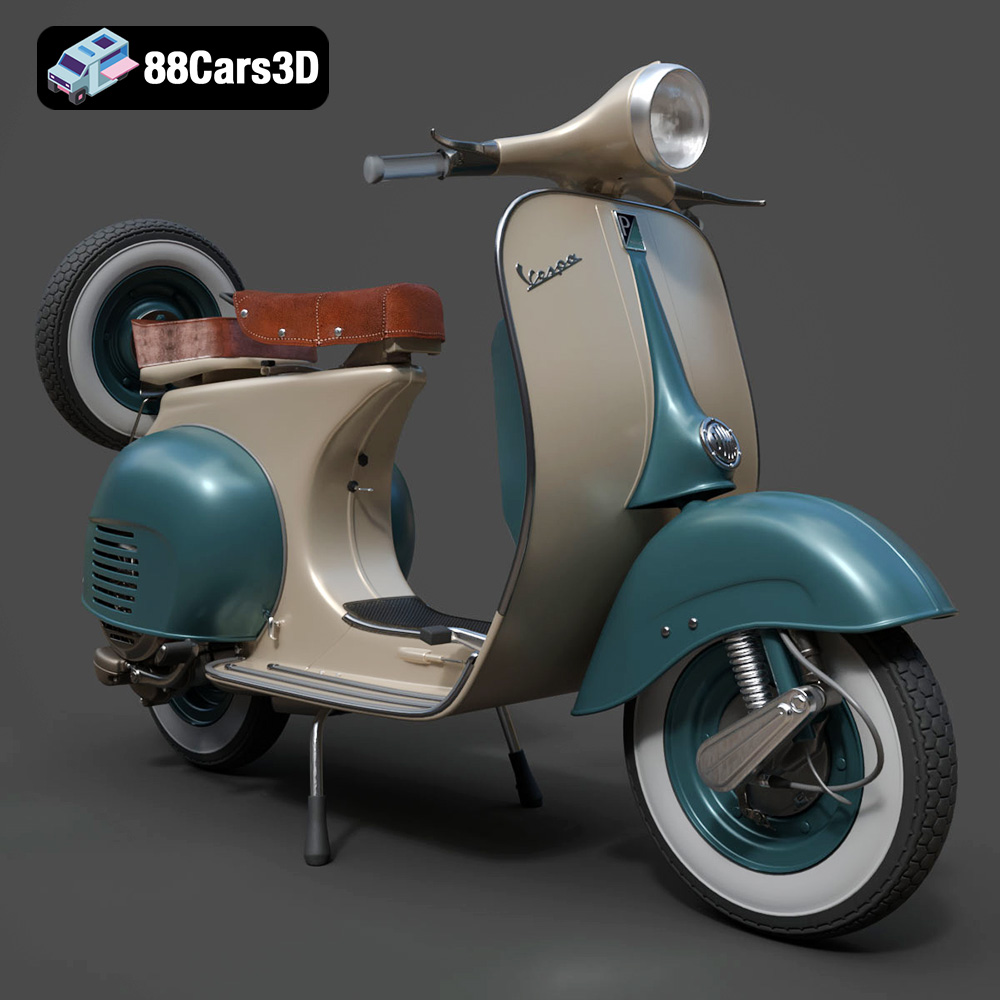
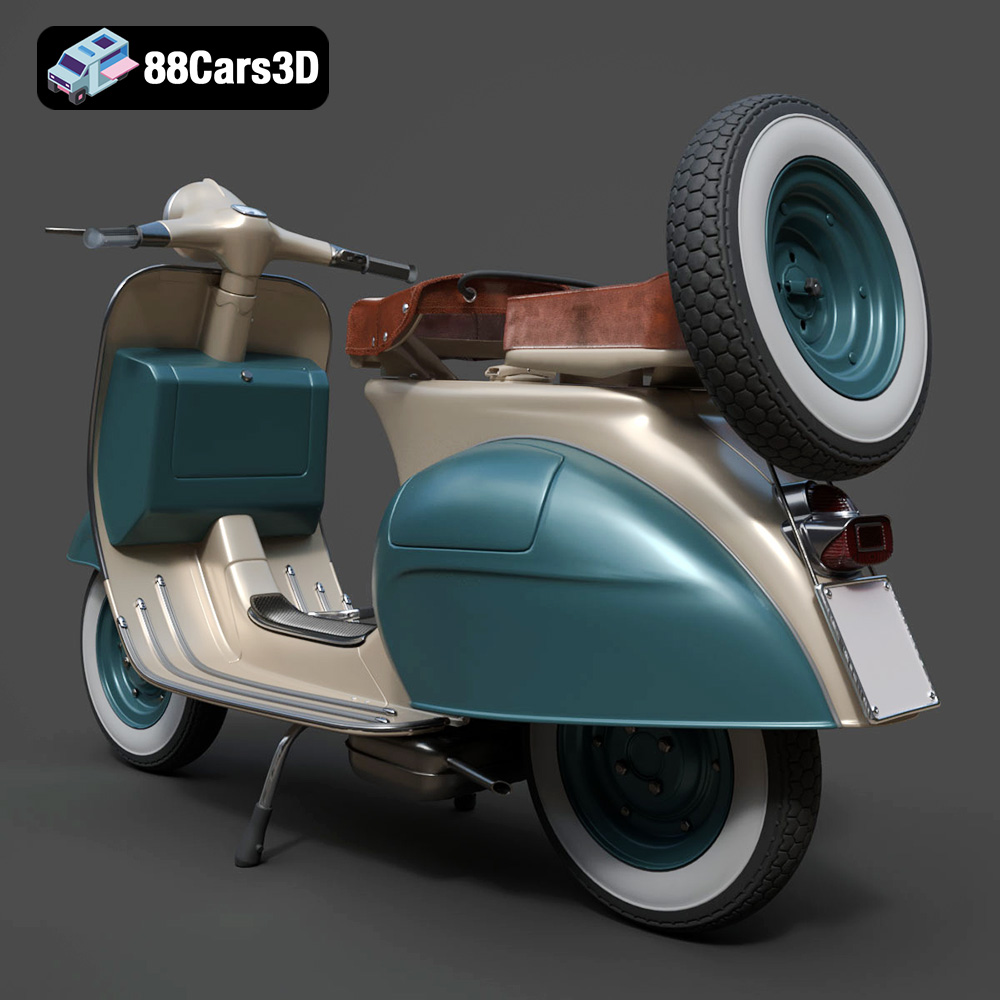
Today, we delve into a prime example of such craftsmanship: the Vespa VNB 125-B 3D Model. This iconic Italian scooter, a symbol of freedom and post-war European charm, is much more than just a vehicle; it’s a character in itself. Our featured model at 88cars3d.com captures the essence of the early 1960s VNB 125-B variant with remarkable fidelity, offering creators an indispensable tool for their diverse projects. From its graceful curves to its subtle mechanical refinements, every aspect has been meticulously recreated to provide an authentic digital experience, ready for rendering, animation, simulation, game development, and even AR/VR classic vehicle environments.
Choosing the right 3D model file format is paramount to a successful workflow, impacting everything from compatibility and performance to the level of detail and editability. The Vespa VNB 125-B 3D Model, available on 88cars3d.com, is offered in an extensive range of formats, ensuring seamless integration into virtually any professional pipeline. Understanding what each format brings to the table is crucial for optimizing your project and leveraging the full potential of your 3D assets.
The comprehensive range of formats for the Vespa VNB 125-B 3D Model ensures that whether your project demands deep customization in a native DCC application, real-time performance in a game engine, or a physical manifestation through 3D printing, you have the exact file you need for a smooth and efficient workflow.
Classic vehicles, like the charming Vespa VNB 125-B, possess an intrinsic appeal that transcends time. In the digital realm, this translates into compelling visual content that resonates with audiences. High-quality 3D car models are not just static representations; they are dynamic assets that can evoke nostalgia, convey luxury, or establish a strong sense of place and period.
Recreating vintage vehicles in 3D demands an appreciation for historical detail and a keen eye for subtle design nuances. The curves of a fender, the finish of a chrome trim, or the specific proportions of a headlight—these elements are critical for authenticity. When a 3D model accurately reflects these features, it becomes more than just data; it’s a digital artifact that preserves automotive heritage. The Vespa VNB 125-B 3D Model exemplifies this, capturing the monocoque steel body and rounded leg shield that defined the era of this iconic Italian scooter.
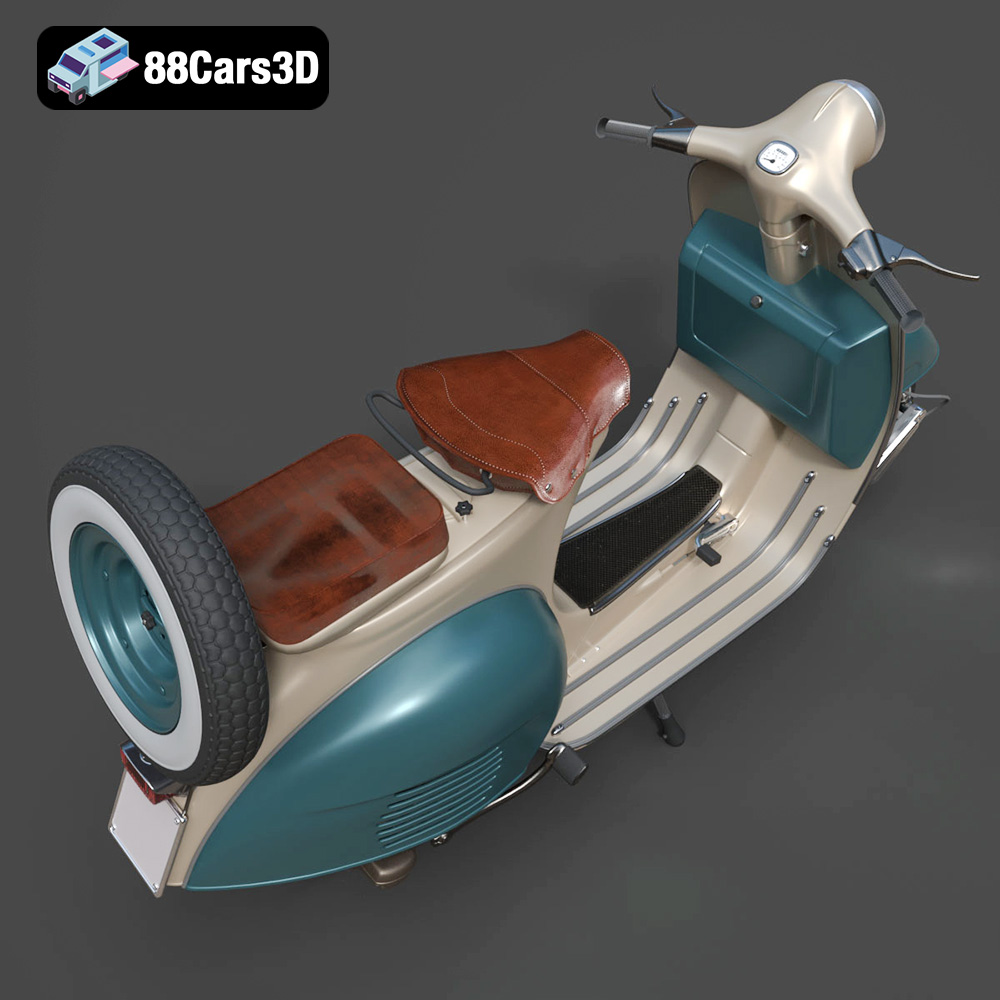
The Vespa VNB 125-B, specifically from the early 1960s, is particularly interesting due to its balance of timeless design and subtle production refinements. Our model faithfully reproduces its distinct features: the chrome-trimmed circular headlamp, the vented side panels, and the vintage wheel configuration. This level of detail makes it perfect for retro European streets, café scenes, coastal promenades, lifestyle branding visuals, and cinematic period productions. It’s a versatile asset that can anchor a scene or serve as a memorable focal point.
The true value of a professional 3D model lies not just in its visual appeal, but in its underlying technical integrity. For demanding applications like automotive rendering and game development, clean geometry, efficient UV mapping, and accurate scaling are non-negotiable. The Vespa VNB 125-B 3D Model has been developed with these principles at its core.
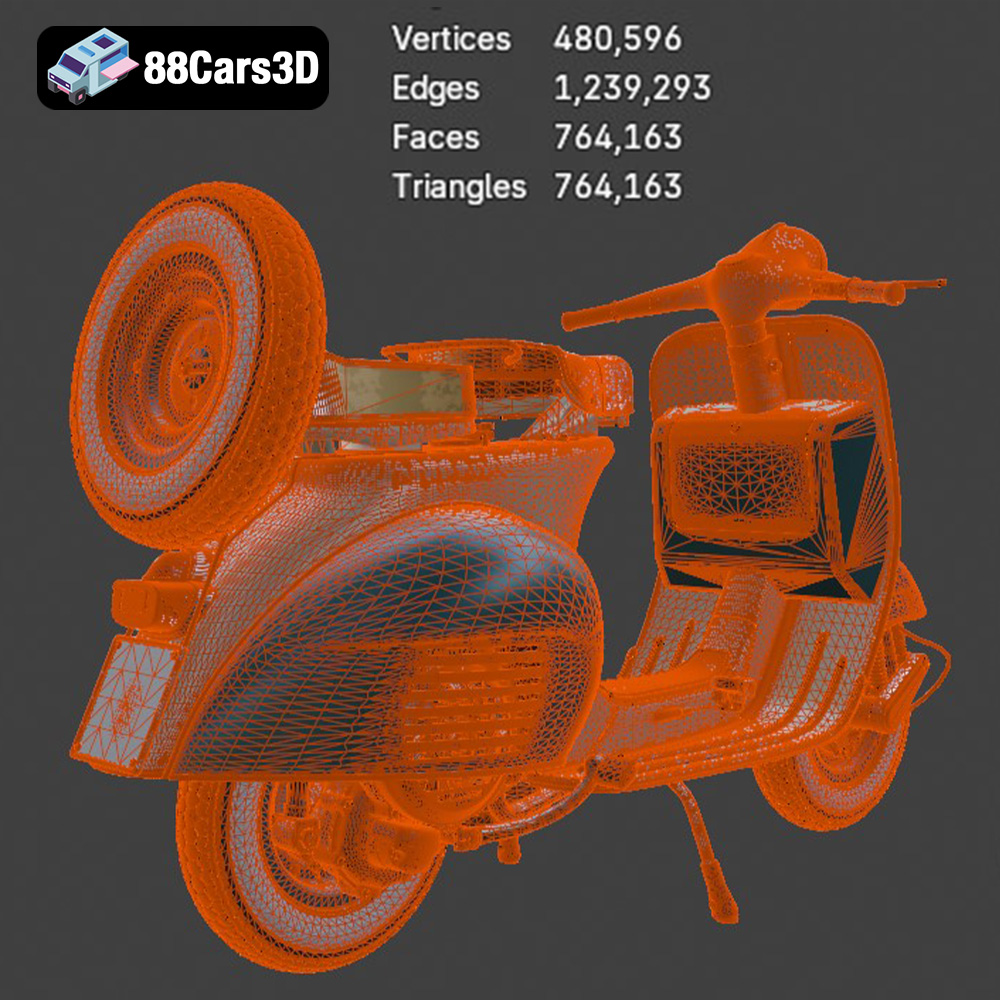
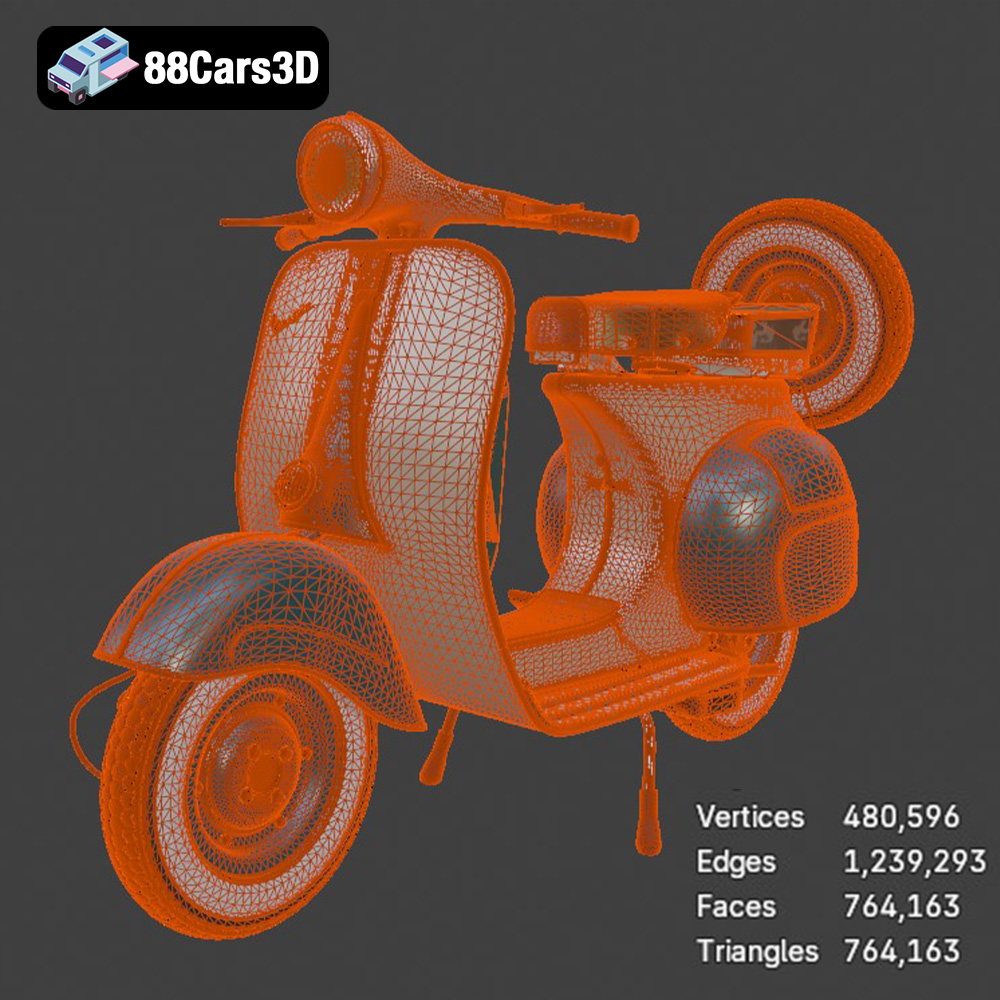
A high-quality 3D model begins with clean topology. This means a mesh structure that uses an optimal number of polygons, predominantly quads, to allow for smooth subdivision and distortion-free deformation. The Vespa VNB 125-B 3D Model boasts a well-organized mesh, which is crucial for achieving realistic reflections and shadows during rendering, and for efficient performance in real-time engines. Alongside clean geometry, proper UV mapping is essential. Each surface of the model is carefully unwrapped, ensuring efficient texture application without stretching or distortion. This attention to UVs allows for the seamless application of PBR (Physically Based Rendering) materials, bringing realistic paint finishes, chrome details, and vintage leather textures to life.
Accuracy in 3D modeling extends beyond visual fidelity to real-world scale. The Vespa model is built to accurate dimensions, ensuring it sits correctly within any scene and interacts realistically with other scaled assets. Furthermore, for animation purposes, the model features a proper pivot setup for steering and wheel rotation. This pre-rigged articulation saves considerable time for animators and game developers, allowing for immediate integration into dynamic sequences whether it’s navigating bustling city streets or performing in a virtual showroom.
For artists working in industry-standard Digital Content Creation (DCC) tools, seamless integration is key. The availability of the Vespa VNB 125-B 3D Model in both .max and .blend formats provides native project files for users of 3ds Max and Blender respectively. This means the model comes with materials pre-configured, object hierarchies intact, and often with specific render settings optimized for photorealistic output. Artists can directly open the file, drop it into their scene, and begin adjusting lighting, camera angles, and rendering parameters to achieve stunning visuals for their automotive rendering projects or lifestyle branding campaigns. The clean geometry and optimized polygon flow ensure that performance remains smooth even with complex scene setups.
The versatility of a well-crafted 3D asset like the Vespa VNB 125-B 3D Model allows it to find a home in a myriad of professional applications, pushing the boundaries of visual storytelling and interactive experiences.
For advertising agencies, product visualization specialists, and architectural firms, photorealistic automotive rendering is crucial for conveying a specific mood or message. The Vespa model is an ideal asset for vintage branding, lifestyle advertising, and historical automotive showcases. Imagine the classic scooter parked outside a quaint Italian café, bathed in golden hour sunlight, or featured in a sleek product launch for a retro-inspired fashion line. Its high detail ensures that close-up shots hold up to scrutiny, providing impeccable visuals for print, web, and video campaigns.
The gaming industry constantly seeks realistic and performance-optimized game assets to build believable worlds. The Vespa VNB 125-B 3D Model, with its clean geometry and optimized polygon flow, is perfectly suited for urban open-world games, 1960s-themed environments, and European street simulations. Its .fbx and .unreal formats ensure that it can be quickly imported into engines like Unreal Engine and Unity. Game developers can leverage its pre-set pivots for animating wheels and steering, allowing players to ride it, or populate scenes with static versions to enhance environmental realism. The efficient mesh structure minimizes draw calls, contributing to smoother gameplay even in densely populated virtual cities.
Augmented Reality (AR) and Virtual Reality (VR) are transforming how we interact with digital content. The Vespa VNB 125-B 3D Model is an excellent candidate for immersive retro vehicle showrooms and interactive classic scooter experiences. Utilizing formats like .glb, the model can be easily integrated into web-based AR viewers, allowing users to place a virtual Vespa in their living room. In VR, it can be the centerpiece of a vintage Italian street scene, letting users walk around and inspect the details up close, fostering a deeper connection with the classic design. This opens up new possibilities for education, entertainment, and virtual commerce.
Beyond the screen, the ability to physically hold a digital creation is a unique and satisfying aspect of 3D modeling. The Vespa VNB 125-B 3D Model provides a fantastic foundation for physical fabrication through 3D printing, enabling enthusiasts and professionals alike to create tangible collectibles.
3D printing requires specific considerations for a model to successfully transition from screen to physical object. Manifold geometry, watertight meshes, and appropriate wall thickness are vital. The clean and well-organized mesh structure of the Vespa model makes it an excellent candidate for this process. While the digital model allows for infinite resolution, the .stl format, which represents the model as a series of triangles, is universally understood by 3D printers, allowing for accurate physical reproduction.
For those looking to create a physical miniature, the provided details for 3D printing are invaluable. Recommended scales of 1:18, 1:12, or 1:10 allow for various levels of detail and display purposes. Settings such as a layer height of 0.08–0.16 mm and wall thickness of 1.2–2.0 mm are critical for achieving both detail and structural integrity. The advice on supports for elements like the handlebar, exhaust, and center stand, along with optimal print orientation (body upright, wheels separately), streamlines the printing process and ensures a smoother, higher-quality output, especially for curved surfaces inherent to the Vespa’s design.
Creating a truly stunning 3D print often goes beyond just the printing process. Post-processing recommendations for the Vespa model—sanding, primer, gloss pastel or cream paint finish, and chrome detailing—suggest a path to achieving a museum-quality miniature. This allows creators to apply real-world finishing techniques, bringing an additional layer of artistry to the physical manifestation of this classic scooter. It’s an excellent way to merge the digital and physical worlds, creating bespoke automotive collectibles.
Investing in high-quality 3D car models is a decision that pays dividends through versatility and longevity. The Vespa VNB 125-B 3D Model, available at 88cars3d.com, is designed not only for immediate use but also for extensive customization and future-proof application across various media.
One of the significant advantages of this detailed model is its adaptability. With the native .blend and .max files, artists have the freedom to truly make the Vespa their own. Changing body color with classic pastel schemes allows for period-correct variations or modern interpretations. Adding vintage registration plates adds a touch of localized authenticity, while configuring single or dual seat variations modifies its functionality and aesthetic. Furthermore, the option to add a rear rack or spare wheel accessory enhances its utility and visual interest, making it suitable for a wider array of scenes and narratives. Even adjusting lighting for daylight, sunset, or cinematic scenes can dramatically alter the mood, proving the flexibility of a well-constructed asset.
In a rapidly evolving digital landscape, assets that are technically sound and artistically robust retain their value. The clean topology, real-world scale, and broad format compatibility of the Vespa VNB 125-B 3D Model ensure it remains relevant for years to come. Whether new rendering techniques emerge, game engines update, or AR/VR platforms expand, a foundationally strong model will adapt. This foresight in asset creation means that the model can be continually reused and repurposed for new projects, reducing development time and costs in the long run. It’s an investment in a piece of digital automotive history that will continue to inspire and perform.
The journey from a historical artifact to a versatile 3D model is a testament to the meticulous craftsmanship and technical expertise required in modern digital content creation. The Vespa VNB 125-B 3D Model stands as a shining example of a premium asset that beautifully merges historical accuracy with contemporary technical demands. Its comprehensive detailing, clean topology, and wide array of supported file formats—from .blend and .max for deep customization to .fbx and .unreal for game development, and .stl for 3D printing—make it an indispensable tool for professionals across various industries.
Whether you’re aiming for breathtaking automotive rendering, immersive game assets, engaging AR/VR experiences, or tangible 3D printed collectibles, this model provides the quality and flexibility you need. It encapsulates the spirit of classic Italian design, ready to infuse your projects with a touch of vintage elegance and authenticity. Explore the possibilities and elevate your digital creations with this exceptional asset, and many more high-quality 3D car models, available at 88cars3d.com.
The Vespa VNB 125-B 3D Model is a high-detail digital recreation of the classic Italian scooter variant from the early 1960s. The VNB 125-B maintained the timeless Vespa silhouette while incorporating subtle production refinements, improved mechanical components, and refined detailing that defined the era of practical European urban mobility. This 3D model accurately captures the monocoque steel body construction, rounded front leg shield, chrome-trimmed circular headlamp, vented side panels, exposed handlebar assembly, and vintage wheel configuration. Built with clean topology and real-world scale accuracy, it is ideal for rendering, animation, simulation, game development, and AR/VR classic vehicle environments. Includes .blend, .fbx, .obj, .glb, .stl, .ply, .unreal, and .max formats for rendering, simulation, AR/VR, game development, and 3D printing.
$19.9
.arvr
.blend
.classicscooter
.fbx
.gameasset
.glb
.italianscooter
.max
.motorcycle3dmodel
.obj
.ply
.rendering
.retro
.simulation
.stl
.twowheeler
.unreal
.urbanvehicle
.vespa
.vintagevehicle
.vnb125b