Get 20% OFF All Premium 3D & STL Models!

In the expansive and ever-evolving world of 3D modeling and digital content creation, the pursuit of realism and authenticity often leads artists to seek out unique and culturally significant assets. While hypercars and futuristic vehicles often dominate the spotlight, there’s an undeniable charm and critical utility in faithfully recreated everyday classics. These workhorse vehicles often provide the grounded realism that makes a scene truly convincing, whether it’s for an architectural visualization, a game environment, or a historical reenactment.
Few vehicles embody this blend of practical ubiquity and nostalgic appeal quite like the Daewoo Nexia N100. This humble sedan, built on the venerable Opel Kadett E platform, became a global phenomenon, particularly cementing its legendary status as a rugged, reliable presence across Eastern Europe, Russia, and Central Asia. Its distinctive 1990s aesthetic – from its rectangular headlights to its no-nonsense three-box silhouette – instantly transports viewers to a specific era and geographic context. For 3D artists and developers aiming to evoke that precise feeling, finding a meticulously crafted digital representation of such an iconic vehicle is paramount. This is where high-quality 3D car models, like the Daewoo Nexia N100 (Classic) 3D Model available at 88cars3d.com, become indispensable tools, bridging the gap between artistic vision and technical execution.
While concept cars and luxury vehicles often grab headlines, the subtle power of everyday classic cars in digital scenes cannot be overstated. These vehicles tell stories; they ground fantastical settings with familiar elements or authenticate historical periods with undeniable accuracy. The Daewoo Nexia N100 is a prime example of a vehicle whose very presence instantly communicates an era and a region, making it an invaluable asset for various digital projects.
For many, the sight of a Daewoo Nexia N100 conjures vivid memories of a specific time and place. Its widespread adoption as a family car, taxi, and utility vehicle across various markets imbues it with a cultural significance that transcends mere transportation. In 3D art, this translates to an immediate sense of familiarity and realism. Imagine an architectural visualization of a street scene in Kyiv or Tashkent from the late 90s or early 2000s; a fleet of modern, sleek cars would feel utterly out of place. However, populating that scene with correctly era-specific 3D car models, such as the Nexia N100, instantly makes it believable and rich with contextual detail. This attention to detail is what separates good 3D art from truly immersive experiences.
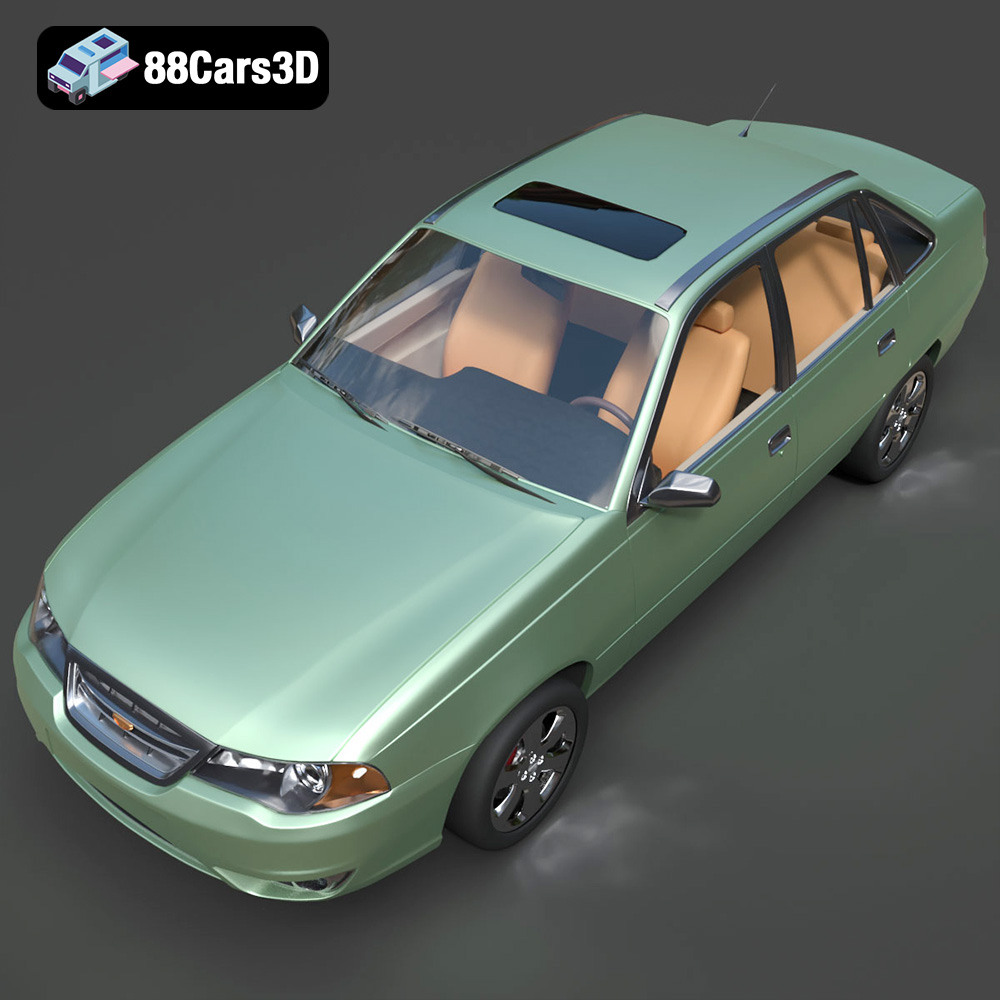
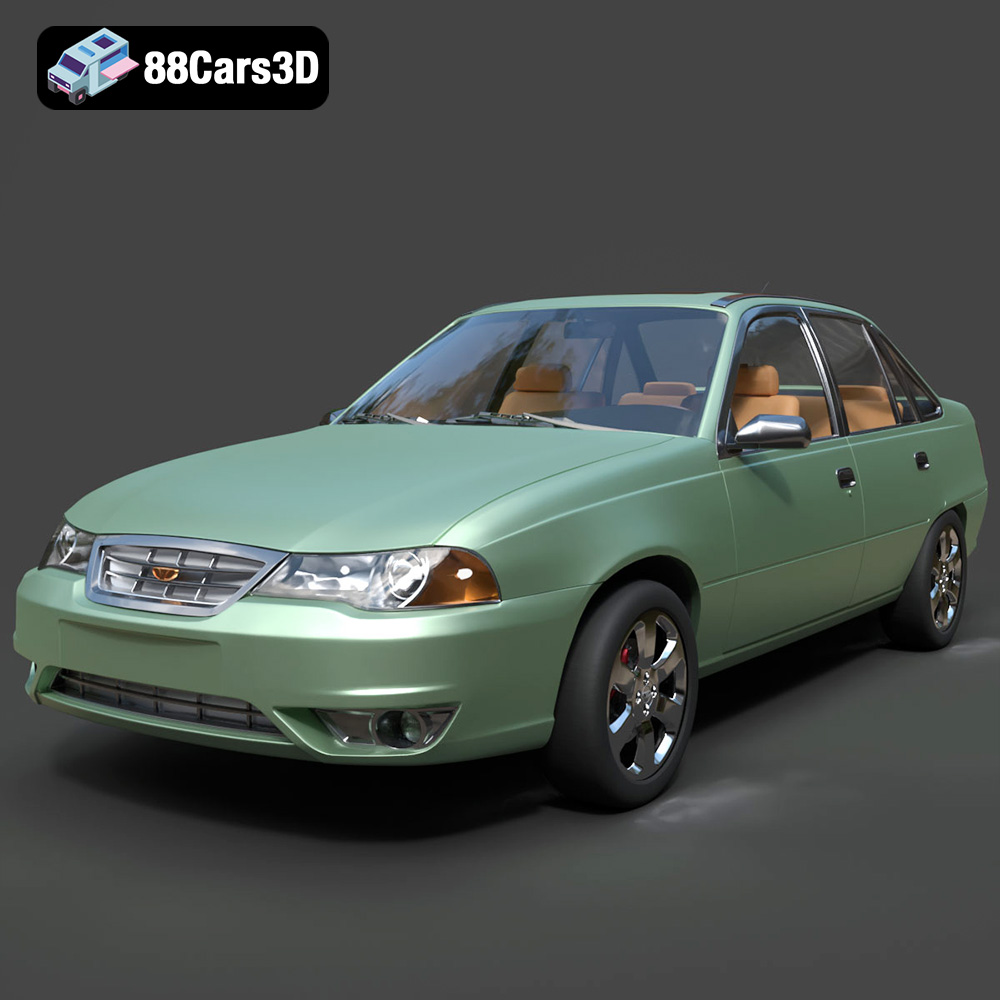
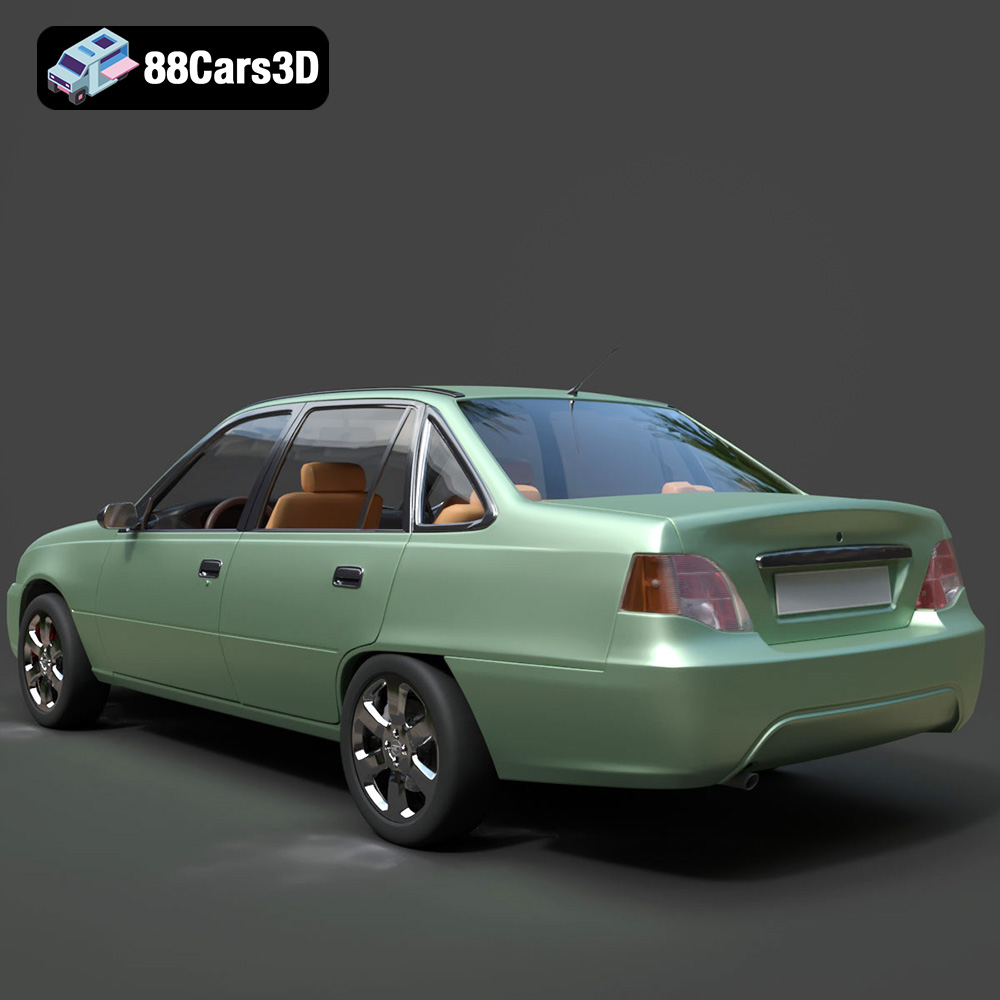
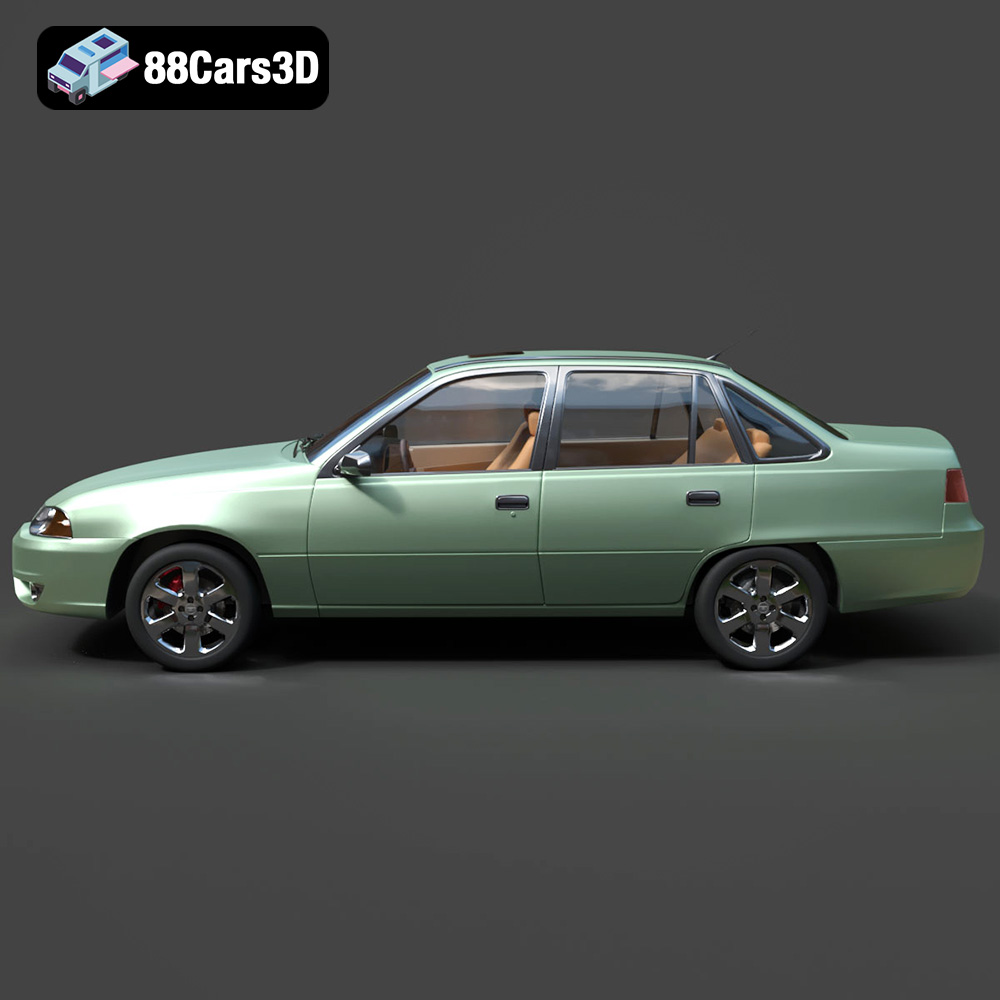
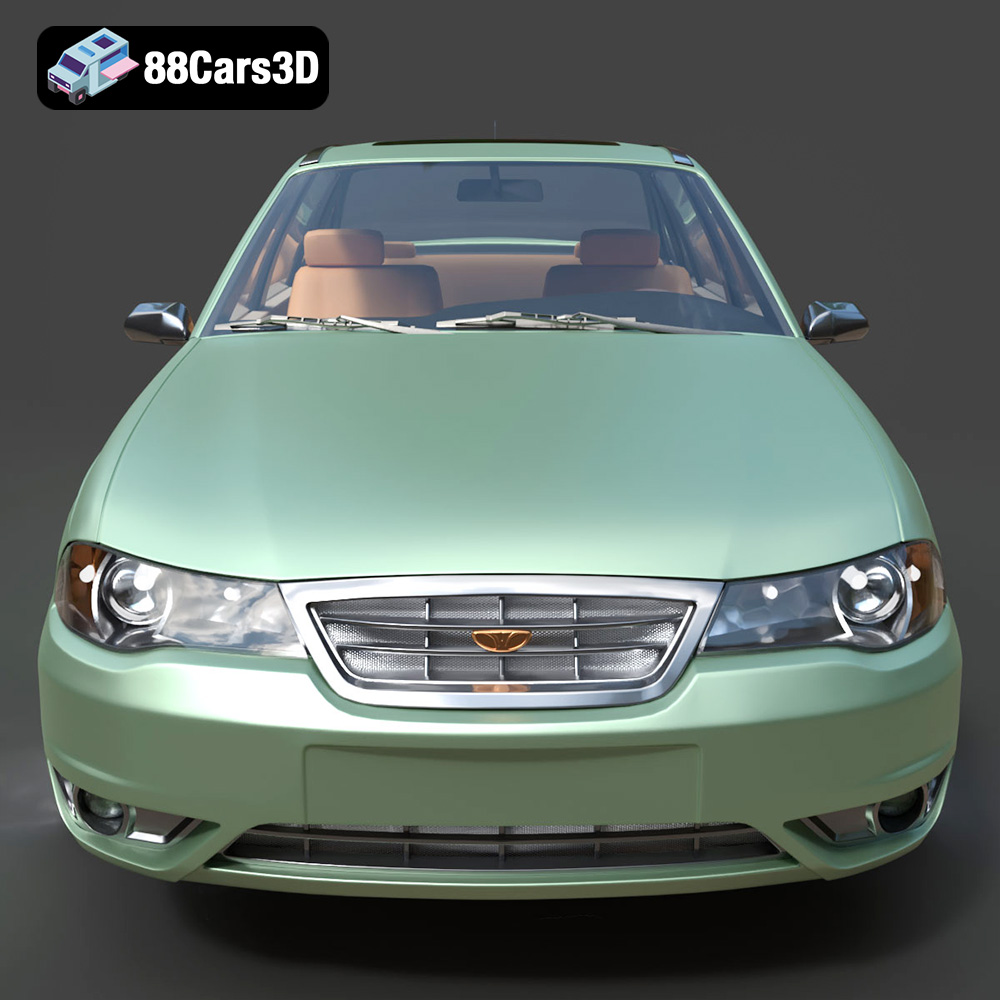
The Daewoo Nexia N100 (Classic) 3D Model perfectly captures the quintessential 90s aesthetic of the pre-facelift N100. Its authentic split front grille, classic rectangular headlight housings, and simple yet functional body molding are all faithfully reproduced. This isn’t just about exterior details; the model also boasts an authentic, practical driver-centric cabin layout, complete with a detailed dashboard, classic center console, and analog instrument cluster. This level of detail, both inside and out, means the model is versatile enough for close-up automotive rendering, where every curve and texture matters, as well as for populating dense background traffic in real-time game engines. The balance between visual fidelity and optimization is a testament to its expert craftsmanship, ensuring it delivers excellent visual impact without compromising performance.
Navigating the diverse landscape of 3D software and engines often requires a deep understanding of file formats. Each format serves specific purposes, offering unique advantages for different stages of the 3D pipeline. The Daewoo Nexia N100 3D Model is provided in a comprehensive array of formats, ensuring maximum compatibility and utility for professionals across various disciplines.
The .blend format is Blender’s native file type. It’s an all-encompassing package, storing not just the mesh data but also materials, textures (packed within the file), animation data, lighting, camera setups, and even the entire scene hierarchy. For artists primarily working within Blender, this is the most convenient and powerful format. It allows for full editability, offering complete access to the model’s topology, UV maps, materials, and any potential rigging or modifiers. This makes it ideal for customization, scene integration, or further development within the Blender ecosystem.
The .fbx (Filmbox) format is a proprietary file format owned by Autodesk and has become the industry standard for exchanging 3D data between different software applications. It supports geometry, materials, textures, animations, and skeletal data, making it highly versatile. For game developers, particularly those using Unreal Engine or Unity, .fbx is often the go-to format due to its robust support for animation and scene hierarchy, crucial for importing rigged 3D car models with moving parts. The Daewoo Nexia’s separate wheels and doors are perfectly suited for .fbx export, facilitating easy rigging for animation.
The .obj (Wavefront Object) format is another widely supported, open-standard file format. While it’s excellent for geometry and UV coordinates, it handles materials and textures through an accompanying .mtl (material) file, which might not always transfer perfectly between software. Unlike .fbx, .obj does not support animation or rigging data directly within the file. However, its simplicity and near-universal compatibility make it a reliable choice for purely static mesh export, ideal for artists who need a clean mesh to work with in a variety of programs without the complexities of animation data.
The .glb (GL Transmission Format Binary) is an optimized, self-contained format that bundles 3D models, textures, animations, and materials into a single file. It’s highly efficient for web-based 3D applications, AR/VR experiences, and quick previews due to its compact size and native support in many browsers and platforms. For interactive digital city-planning VR experiences or quick product visualization on the web, .glb provides a streamlined solution.
The .unreal format signifies an engine-ready asset specifically tailored for Unreal Engine. This often means the asset has undergone specific optimizations, material setups, and perhaps even collision meshes configured for optimal performance within the engine. While .fbx is often used to *import* into Unreal, a dedicated .unreal file implies a more polished, plug-and-play solution, saving developers significant time on asset preparation and integration.
The .stl (Stereolithography) format is the cornerstone of 3D printing. It represents 3D surfaces as a collection of unconnected triangular facets. While it doesn’t store color or texture information, its simplicity makes it universally compatible with 3D printers and slicing software. For hobbyists looking to 3D print a display-scale Daewoo Nexia N100 as a classic diecast model, the .stl file is essential. The model’s manifold geometry ensures it’s print-ready, requiring only scaling and support generation.
The .ply (Polygon File Format) is similar to .obj but can store more complex data, including color per vertex, transparency, and sometimes even scanner data. It’s often used in applications requiring high-precision mesh data, such as CAD, scientific visualization, or 3D scanning. While less common for general purpose rendering, it offers a robust solution for specific technical or analytical workflows.
The .max format is Autodesk 3ds Max’s native file format, much like .blend is to Blender. It encapsulates all scene data, including geometry, materials, textures, lighting, cameras, animations, and modifiers. For professionals working in architectural visualization, automotive design, or film/VFX pipelines that heavily rely on 3ds Max, having the model in its native .max format is invaluable. It provides full editability and allows seamless integration into existing 3ds Max scenes, leveraging all the powerful tools and renderers available within the software. This format is crucial for artists who need to manipulate the Daewoo Nexia N100’s components for custom animations or render setups.
The real value of a 3D asset lies not just in its visual appeal, but in its underlying technical integrity. A well-constructed 3D car model balances detail with performance, ensuring it’s usable across a wide spectrum of applications without bogging down a scene or requiring extensive re-optimization. The Daewoo Nexia N100 (Classic) 3D Model exemplifies this philosophy, boasting meticulously balanced topology and accurate specifications.
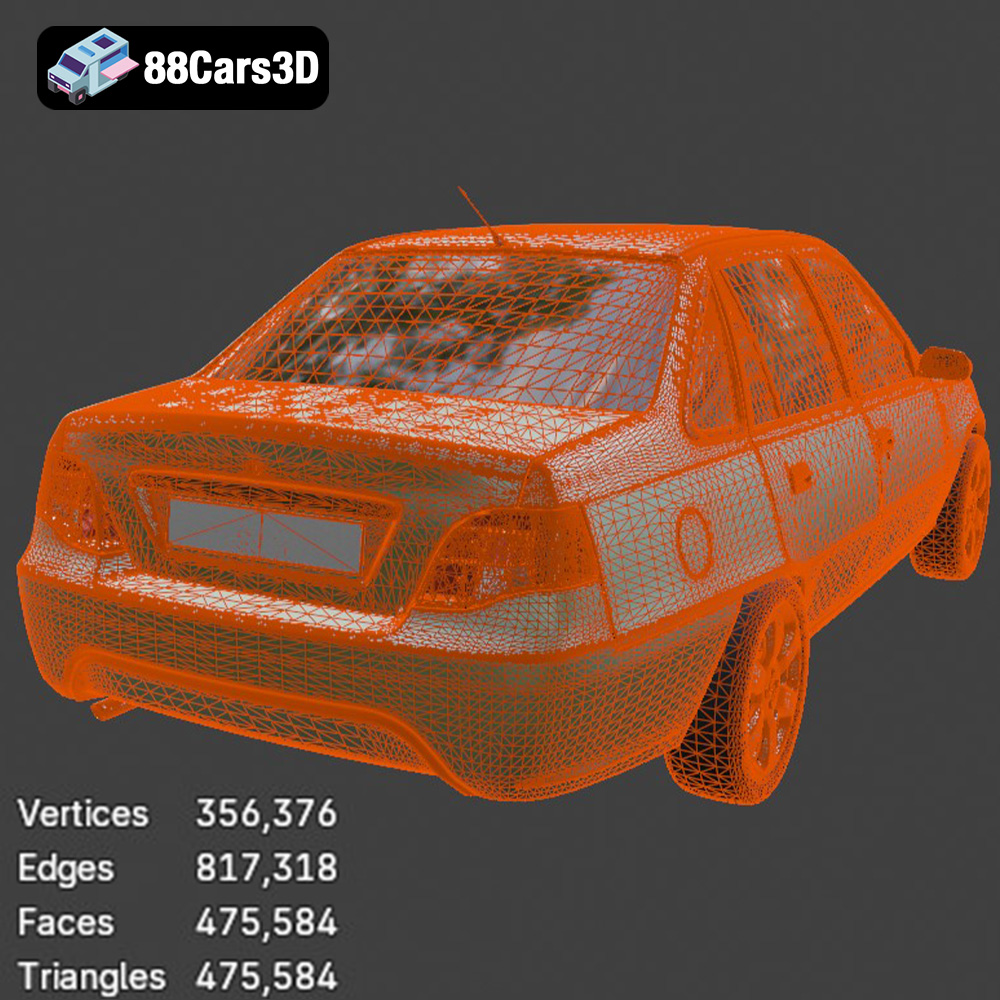
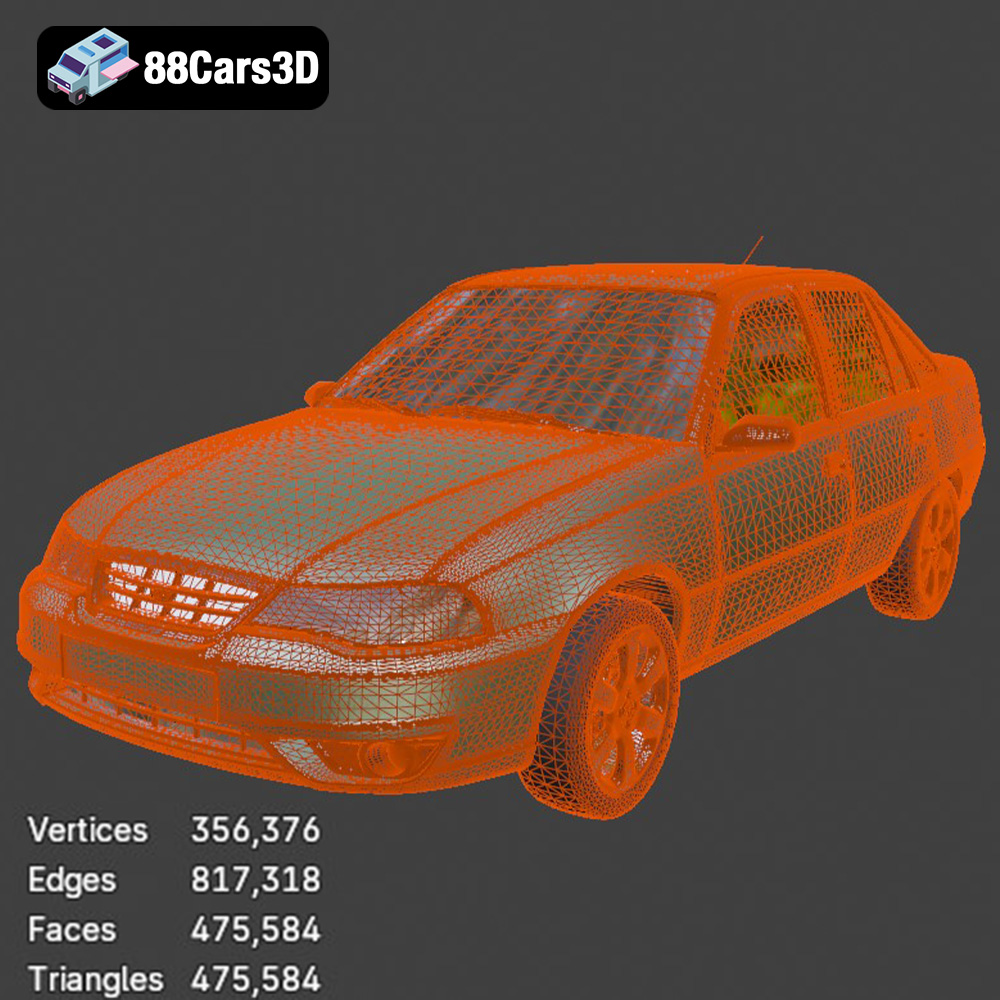
With approximately 475,584 triangles, the Daewoo Nexia N100 3D Model resides in what can be described as the “Goldilocks Zone” for modern 3D assets. This mid-to-high polygon count strikes an optimal balance: it’s detailed enough to hold up under close-up scrutiny in high-fidelity architectural visualizations or promotional renders, where smooth curves and intricate panel gaps are crucial. Yet, it remains sufficiently optimized to be effectively deployed as a drivable hero car or, more commonly, as dense background traffic in real-time game engines like Unreal Engine or Unity, without causing severe performance bottlenecks. This careful optimization means artists aren’t forced to choose between visual quality and scene fluidity, a critical advantage in professional production pipelines.
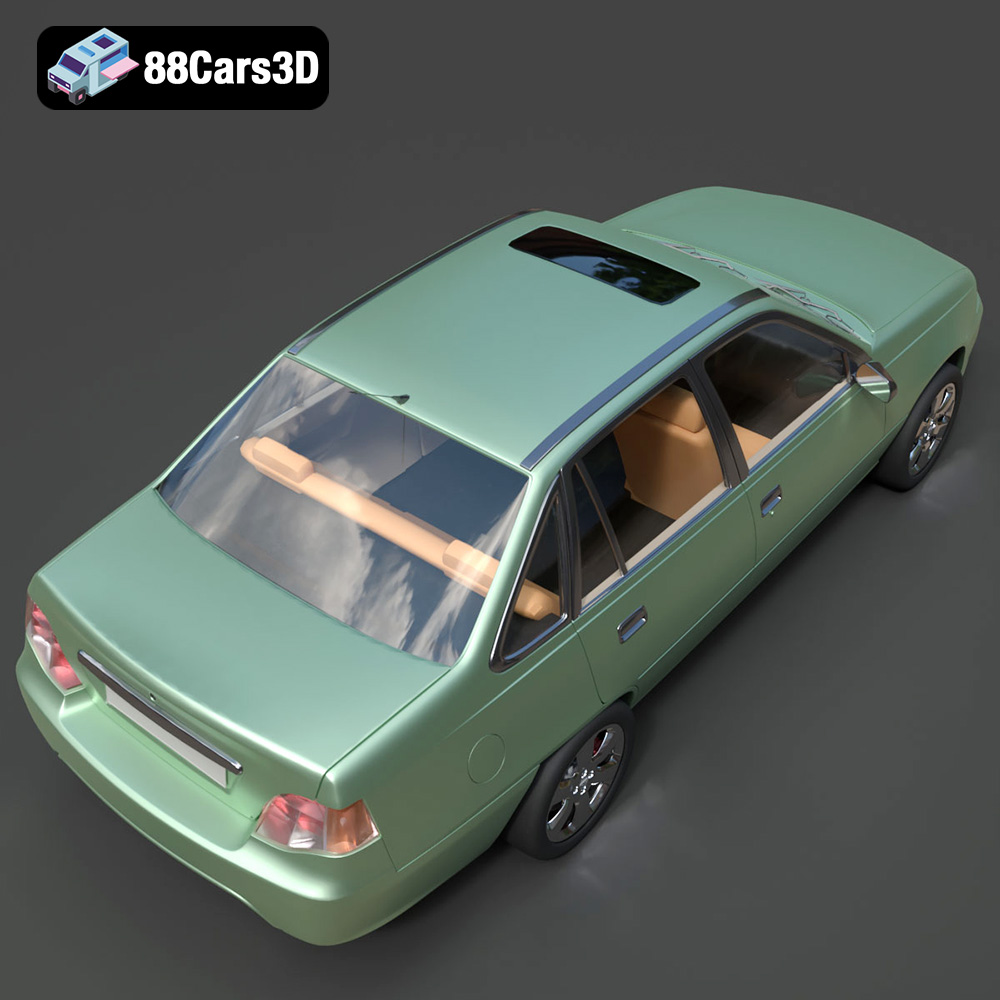
The accuracy of any 3D car model is paramount. The Daewoo Nexia N100 model is built to real-world scale, based on classic Daewoo factory dimensions, ensuring proportionate representation. Externally, this translates to accurate proportions, distinctive split front grille, original rectangular halogen headlight assemblies, and authentic 90s aerodynamic styling. Details like functional black plastic side moldings, realistic panel gaps, classic door handles, and separate, detailed standard factory wheels (classic basic alloys or steelies with hubcaps) wrapped in street tires contribute significantly to its photorealism.
Internally, the model doesn’t disappoint. It features an authentic, practical driver-centric cabin layout, typical of 90s budget sedans. The detailed dashboard, classic center console, and analog instrument cluster provide a convincing environment. Realistic seating geometry for a five-passenger layout, complete with retro cloth/vinyl texture mapping, ensures the interior holds up from any exterior view or even in immersive VR experiences. The optimization strategy here means that even with a detailed interior, the polygon distribution is intelligent, focusing detail where it’s most visible and simplifying elsewhere to maintain the overall balanced poly count.
Beyond static visual accuracy, the model is designed for dynamic integration. Its real-world scale is crucial for seamless placement in architectural scenes and for ensuring correct physics behavior in game engines. Furthermore, the model comes with separate components for rigging and animation: individual wheels, steering components, and doors. This means an artist or developer can easily set up a vehicle rig for realistic driving simulations, opening and closing doors for interactive experiences, or steering animations for cutscenes. The proper pivot setup for steering and wheel rotation further streamlines the animation process, saving valuable development time.
The versatility of the Daewoo Nexia N100 3D Model makes it a highly valuable asset across a multitude of professional 3D production pipelines. Its balanced technical specifications and accurate detailing allow for seamless integration into diverse projects, from high-end rendering to real-time interactive experiences.
For architectural visualization (ArchViz) artists, particularly those working on projects set in Eastern Europe or Central Asia, the Daewoo Nexia N100 is an absolute game-changer. It provides the perfect vehicle for breathing life into urban street scenes, offering highly recognizable, region-accurate, and era-appropriate traffic. Whether it’s adding a touch of grit to a modern apartment complex visualization or authentically recreating a historical street, the Nexia N100 instantly adds a layer of realism and cultural context that generic car models simply cannot achieve. Artists using 3ds Max with V-Ray or Corona Renderer, or Blender with Cycles, can leverage the model’s clean topology and texture maps to achieve stunning, photorealistic results. Setting up realistic materials, experimenting with studio or environment lighting, and rendering out high-resolution stills or animations becomes a straightforward process, thanks to the model’s professional-grade construction.
In game development, the demand for optimized yet visually rich assets is constant. The Daewoo Nexia N100 3D Model excels here, striking the ideal balance for real-time applications. Its ~475k triangle count is perfectly suited for use as a drivable vehicle or an everyday traffic asset in open-world games, retro 90s delivery simulators, or even dedicated taxi driving games that often feature vehicles like this. For Unreal Engine developers, the included .fbx and .unreal formats ensure straightforward import and setup. Importing the .fbx, artists can quickly assign materials, set up basic physics, and configure the vehicle blueprint. The separated components (wheels, doors) allow for easy implementation of a vehicle rigging system, enabling players to drive, animate, and interact with the car. Performance is key in games, and the Nexia N100’s balanced topology means it contributes to dense urban environments without introducing crippling lag, allowing for rich, immersive game worlds.
Augmented Reality (AR) and Virtual Reality (VR) platforms demand highly optimized assets that can render smoothly on a variety of devices, from mobile phones to high-end headsets. The Daewoo Nexia N100 3D Model, particularly with its .glb format, is ideal for these applications. It can be integrated into interactive digital city-planning VR experiences, allowing users to explore virtual urban landscapes with realistic traffic elements. For historical neighborhood reconstructions in VR, the Nexia N100 provides an authentic, era-specific vehicle that enhances immersion. Its balanced polygon count ensures quick loading times and fluid interaction, crucial for comfortable and engaging AR/VR experiences.
A truly versatile 3D asset provides a strong foundation for further artistic exploration. The Daewia Nexia N100 3D Model not only offers technical excellence but also provides ample room for customization and even transformation into a physical collectible through 3D printing.
The beauty of a well-structured 3D model lies in its adaptability. Artists can easily customize the Daewoo Nexia N100 to fit a wide array of specific narrative or aesthetic requirements. This includes changing exterior paint colors to match striking, vibrant, or weathered city-car palettes – perhaps an unassuming beige for a family car, or a bold metallic silver for a taxi. For game developers or animators recreating scenes from Moscow or Tashkent, the ability to add classic yellow “Taxi” roof signs and checker decals is invaluable. Furthermore, applying weathering materials such as dust, mud, or snow can instantly transform the vehicle, making it perfect for gritty, realistic winter environment scenes or post-apocalyptic settings. Adapting lighting setups for sunny urban commutes, moody rainy nights, or dramatic cinematic shots further enhances its visual impact and narrative potential.
The journey of a 3D model doesn’t always end on a screen. For enthusiasts and collectors, the Daewoo Nexia N100 3D Model offers the exciting possibility of becoming a tangible object through 3D printing. The inclusion of the .stl format, specifically designed for 3D printing, makes this a straightforward process. It’s perfectly convertible for display-scale classic diecast hobbyists who wish to add a unique, culturally significant model to their collection. The recommended scales (1:24 / 1:32 / 1:43) are ideal for urban dioramas, allowing the Nexia to stand alongside other scale models in a realistic setting.
For optimal results, specific 3D print settings are recommended:
The Daewoo Nexia N100 (Classic) 3D Model is far more than just another vehicle asset; it is a meticulously crafted digital artifact that resonates with cultural significance and technical excellence. Its balanced mid-to-high polygon topology, accurate detailing of both exterior and interior, and comprehensive file format support make it an exceptionally versatile tool for professionals across various industries. Whether you are an architect striving for unparalleled realism in an ArchViz project set in Eastern Europe, a game developer building an immersive open-world experience, an AR/VR creator designing interactive historical environments, or a hobbyist eager to 3D print a nostalgic collectible, this model delivers. It exemplifies the power of a well-engineered 3D asset to not only save development time but also to elevate the quality and authenticity of any project. Explore this exceptional 3D car model and many others at 88cars3d.com, where quality and versatility are paramount.
The Daewoo Nexia N100 3D Model is a highly accurate digital recreation of the classic 1990s budget sedan that became a global phenomenon. Built on the proven architecture of the Opel Kadett E, the original N100 Nexia (also known in various markets as the Cielo or Heaven) earned a legendary reputation for rugged reliability. It remains an absolute icon of everyday commuting and taxi fleets across Eastern Europe, Russia, and Central Asia to this day. This 3D model beautifully captures the quintessential 90s aesthetic of the pre-facelift N100. It features the classic rectangular headlight housings, the iconic split front grille, the simple yet functional body molding, and the timeless three-box sedan silhouette. Built with an incredibly clean and well-balanced mid-to-high polygon topology (approx. 475k triangles), it provides excellent visual fidelity for close-up automotive rendering while remaining highly optimized for background traffic in modern game engines and simulations. Perfect for populating realistic 90s or modern CIS (Commonwealth of Independent States) street scenes, architectural visualizations, urban taxi simulators, and mobile game development.
$35