Get 20% OFF All Premium 3D & STL Models!

The world of 3D modeling thrives on both innovation and a deep appreciation for classic design. Few vehicles encapsulate timeless style and cultural significance quite like the Vespa scooter. More than just a mode of transport, the Vespa is a symbol of freedom, urban elegance, and a particular zest for life. For 3D artists, game developers, architects, and product visualizers, incorporating such an iconic piece into a digital project requires a high-quality, technically sound 3D model. This article delves into the professional applications and technical intricacies of utilizing a premium asset like the Vespa Standard 3D Model, exploring its journey from a digital file to a stunning render, an interactive game asset, or even a tangible 3D print.
The demand for high-fidelity 3D car models and vehicle assets is constant across various industries. Whether for automotive rendering, cinematic sequences, virtual reality experiences, or robust game assets, the quality of the base model dictates the success of the final output. The Vespa Standard 3D Model from 88cars3d.com stands out as an exceptional example of an asset built with meticulous detail, offering unparalleled versatility for professionals. We’ll explore how this model, with its accurate proportions, clean topology, and comprehensive file formats, can elevate your projects and streamline your workflow.
The Vespa, an Italian marvel, has graced streets and screens for decades, its distinctive silhouette instantly recognizable. Translating this organic, flowing design into a digital 3D model requires both artistic sensitivity and technical precision. A high-quality Vespa Standard 3D Model is not just a visual replica; it’s an engineered digital asset designed to perform flawlessly across diverse applications.
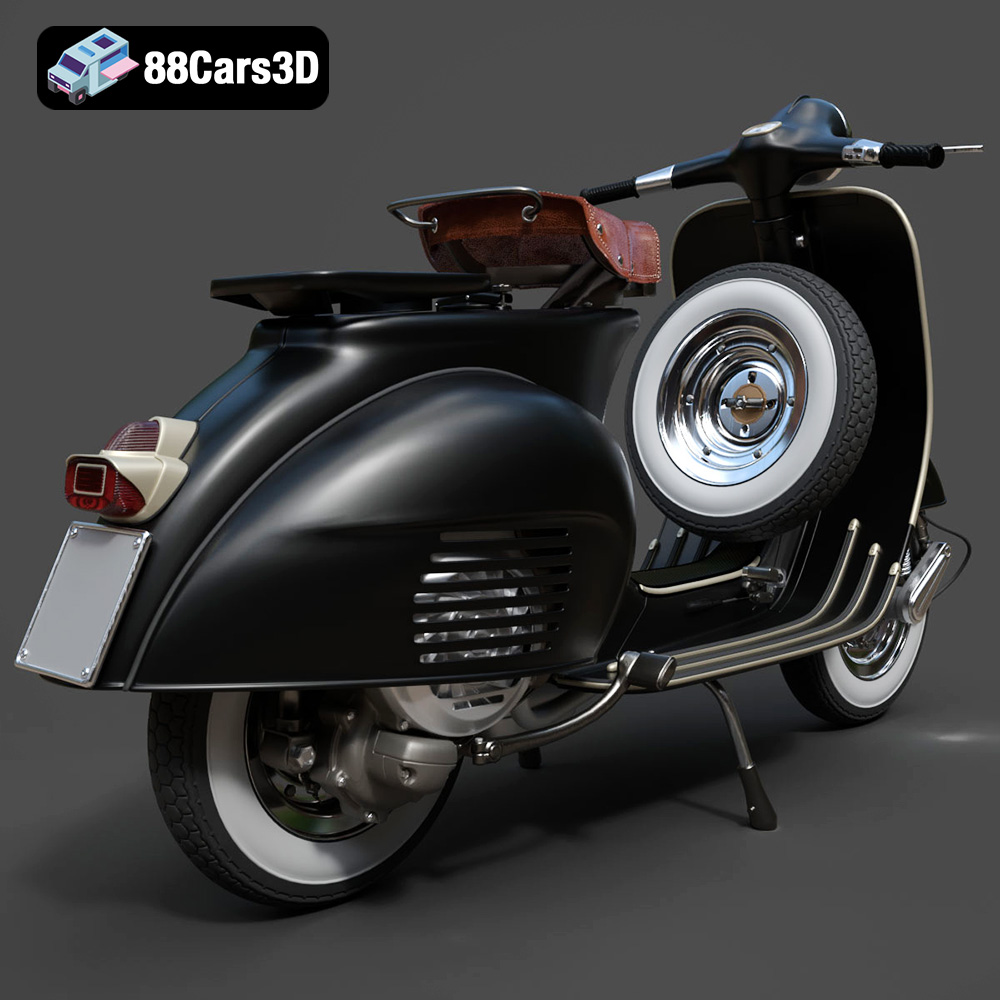
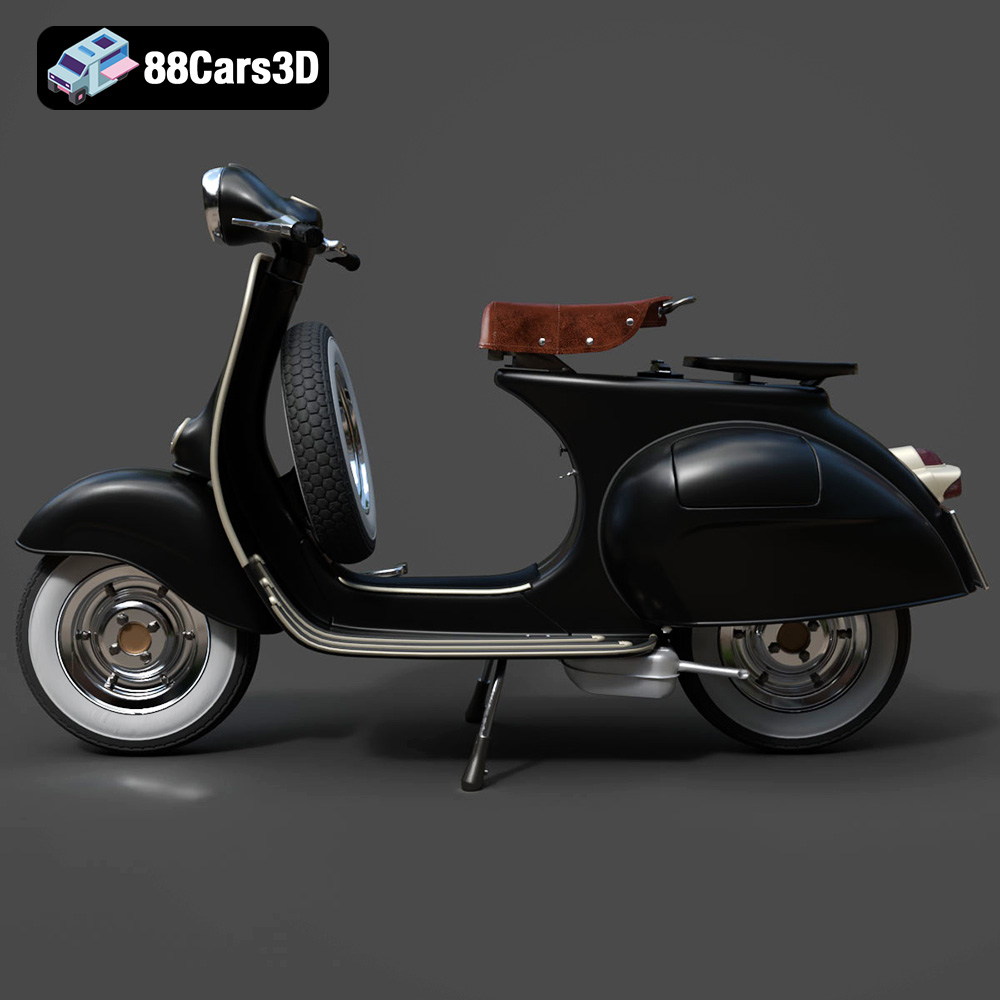
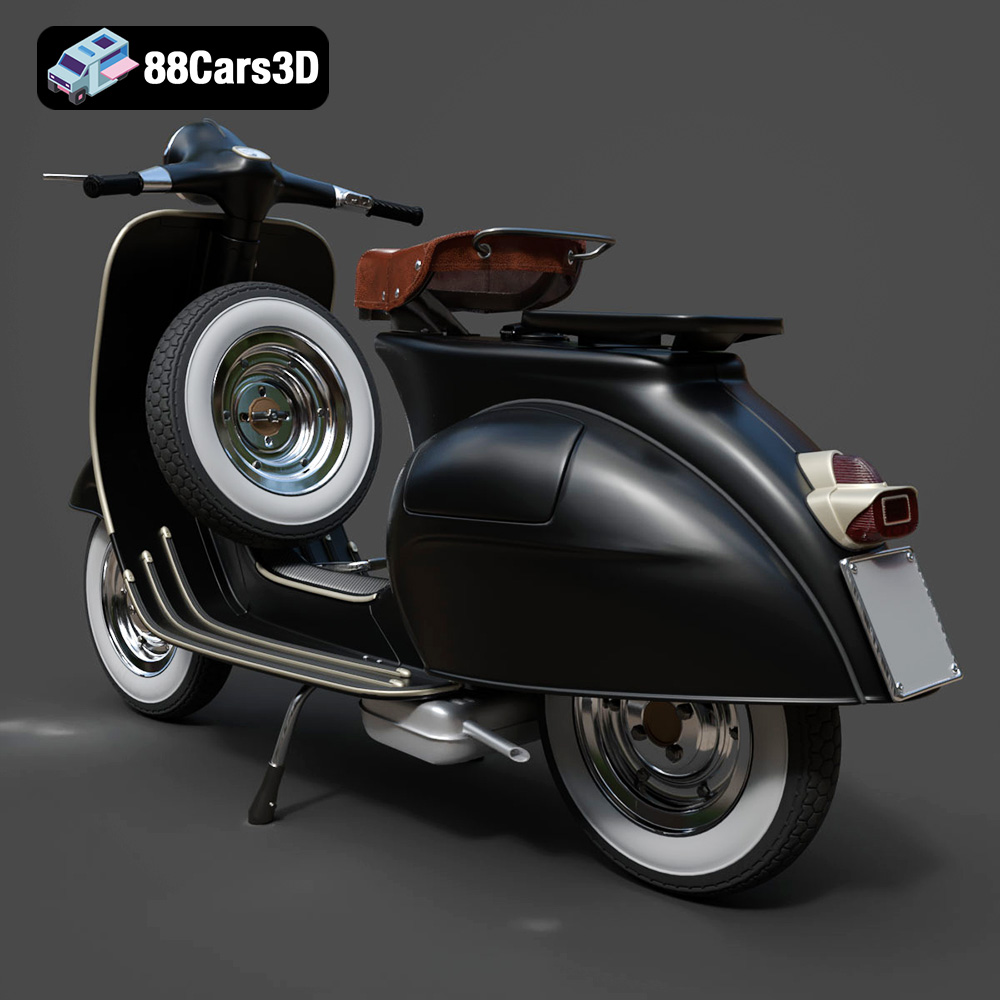
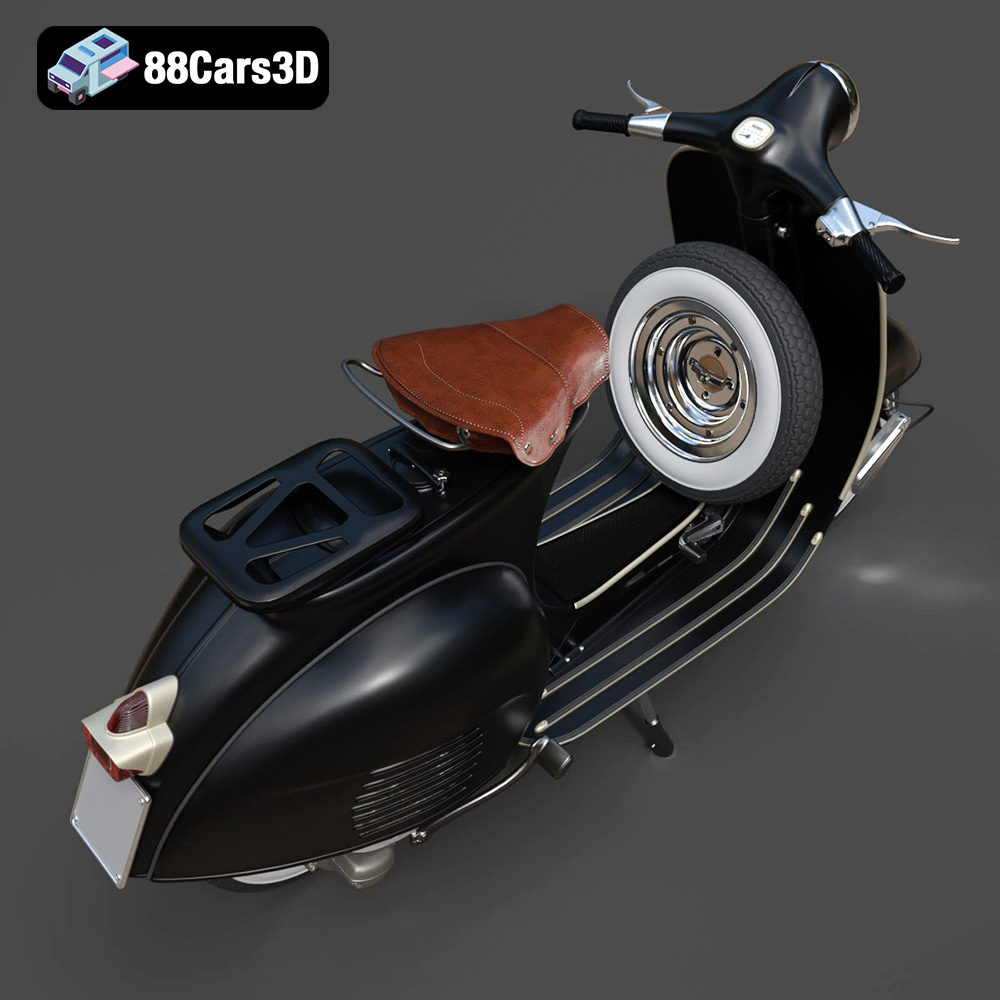
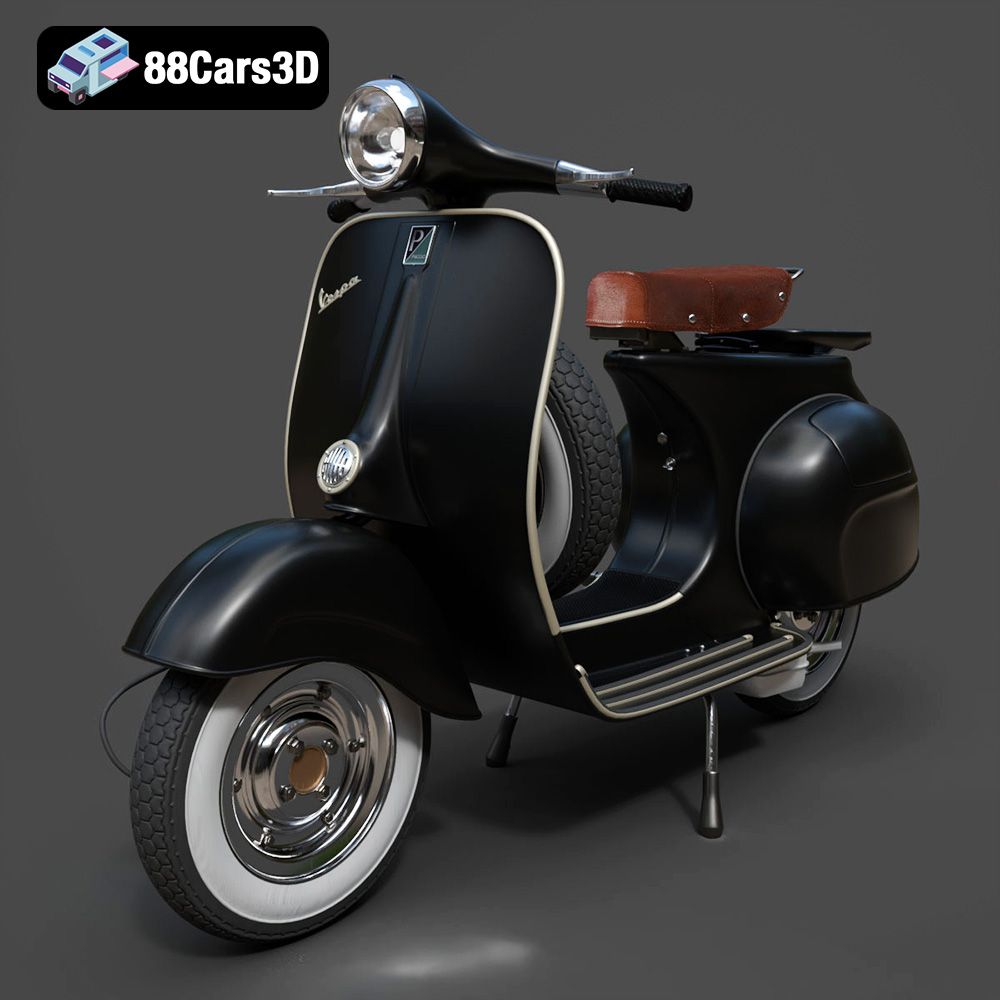
At its core, the Vespa Standard 3D Model is a celebration of classic Italian design. Every curve of the front shield, the integrated leg guard, and the elegantly tapered side panels are meticulously recreated. This isn’t merely about visual similarity; it’s about capturing the very essence and proportions that make the Vespa so appealing. The classic circular headlight housing, the characteristic single-sided front suspension, and the subtle contours of the compact seat are all crucial details that contribute to its authentic representation. When working on a project, starting with such an accurate foundation saves countless hours of modeling and ensures that the final product resonates with the intended audience. Imagine populating a realistic European city scene or designing a retro-themed advertisement; the immediate recognition and inherent charm of an accurate Vespa model lend instant credibility and aesthetic appeal.
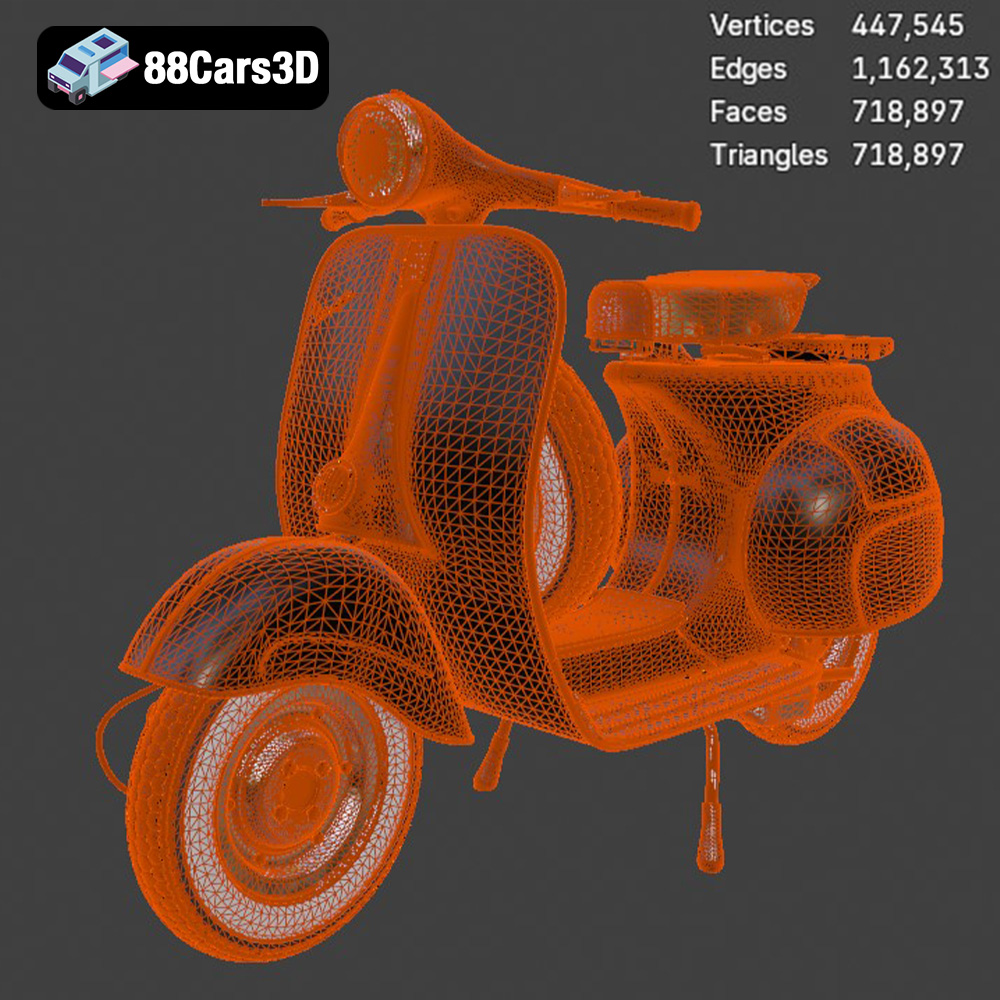
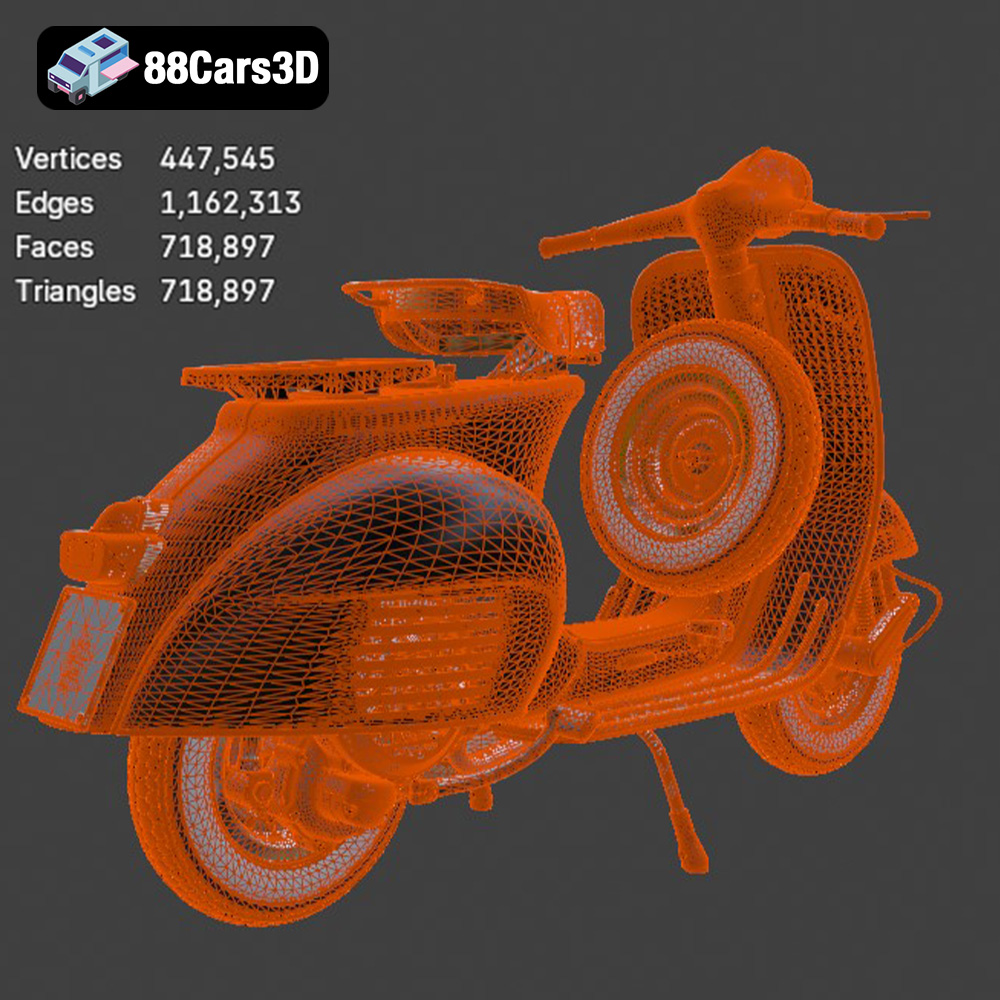
Beyond the general form, the devil is in the details. A professional-grade 3D car model, even of a relatively simple vehicle like a scooter, must possess refined geometry. The Vespa Standard 3D Model boasts clean topology, meaning its mesh structure is well-organized, free from artifacts, and optimized for both performance and visual fidelity. This clean mesh is crucial for smooth subdivision in high-resolution renders and efficient performance in real-time engines.
Key features like detailed wheels with vintage tire styling, rear-view mirrors, and subtle chrome accents are not overlooked. Furthermore, the model is designed with separate components for animation – the wheels and steering parts are distinct objects with proper pivot setups. This allows animators to easily articulate the scooter for dynamic sequences, from a simple static turn to a complex urban maneuver. The real-world scale accuracy ensures that when placed into a scene, the Vespa model fits seamlessly alongside other architectural or environmental elements without requiring manual scaling adjustments, a small but significant detail that significantly streamlines production pipelines.
The versatility of any 3D model is heavily dependent on the file formats it supports. For professionals dealing with diverse software and pipeline requirements, understanding these formats is paramount. The Vespa Standard 3D Model from 88cars3d.com thoughtfully includes a comprehensive suite of file types, catering to nearly every conceivable application. Each format has its strengths, ideal use cases, and technical considerations.
* .blend (Blender): This is Blender’s native file format, offering a fully editable scene with all materials, textures, lighting, and animation data intact. For artists working within Blender, this is the most convenient format, allowing for direct manipulation of the mesh, node-based material adjustments, and scene integration. It’s perfect for detailed customization, re-texturing, or incorporating the Vespa into a complex Blender animation project without any data loss. The .blend file ensures that if you want to modify the Vespa’s geometry, animate its suspension, or experiment with different render engines within Blender, you have complete control.
* .max (3ds Max): Similar to .blend for Blender users, .max is the proprietary format for Autodesk 3ds Max. It provides an editable project file, preserving all scene hierarchy, materials, modifiers, and animation data. This format is indispensable for studios deeply integrated into the Autodesk ecosystem, particularly for architectural visualization, high-end rendering, and complex animation workflows. Artists can easily open the Vespa model, adjust its V-Ray or Corona materials, incorporate it into a larger scene, or export it to other formats with maximum fidelity, ensuring robust compatibility within professional rendering and animation pipelines.
* .fbx (Filmbox): Developed by Autodesk, FBX is widely regarded as the industry-standard interchange format, especially for animation and game development. It efficiently transfers 3D models, animation data, camera information, and even some material definitions between different software packages like Maya, 3ds Max, Blender, Unreal Engine, and Unity. The .fbx variant of the Vespa model is ideal for real-time pipelines due to its robust support for mesh, skeletal animations, and UV mapping, making it a go-to for importing assets into game engines with minimal fuss.
* .obj (Wavefront Object): One of the most universally compatible 3D file formats, .obj is primarily known for its ability to store geometry (vertices, normals, texture coordinates, and faces). While it doesn’t typically store animation or complex material definitions (it references external .mtl files for basic material properties), its strength lies in its widespread adoption. Almost every 3D software can import and export .obj files, making the Vespa .obj a reliable choice for cross-software compatibility when the primary need is robust mesh transfer without complex scene data.
* .glb (GL Transmission Format Binary): GLB is an optimized, self-contained format that bundles 3D models, textures, and animations into a single file. It’s particularly optimized for AR (Augmented Reality), VR (Virtual Reality), and browser-based display, often used in web 3D viewers or e-commerce applications. The Vespa .glb file is perfect for creating interactive web experiences or quick AR previews on mobile devices, providing a compact and efficient package for real-time visualization.
* .stl (Standard Tessellation Language): STL is the de facto standard format for 3D printing. It represents a 3D model as a series of connected triangles (a triangular mesh) without any color, texture, or material information. The Vespa .stl file is essential for converting the digital model into a physical object. Its precision for manifold geometry ensures that the model is ready for slicing software and subsequent physical fabrication, making it suitable for creating collectible scale scooter models and display miniatures.
* .ply (Polygon File Format): Also known as the Stanford Triangle Format, .ply is a versatile mesh format capable of storing a wider range of properties than .obj, including color, transparency, normals, texture coordinates, and even scalar values per vertex or face. It’s often used for precision mesh data, especially in CAD or 3D scanning applications. The Vespa .ply file provides an alternative for scenarios where richer per-vertex data is required, offering robust integrity for analytical or more complex manufacturing workflows.
* .unreal (Unreal Engine): This isn’t a generic file format in the same sense as FBX or OBJ, but rather an engine-ready asset specifically packaged for Unreal Engine. It signifies that the Vespa model has been optimized, potentially with collision meshes, LODs (Levels of Detail), and native Unreal material setups, making it a plug-and-play solution for real-time environments. Importing an .unreal asset significantly reduces the setup time for game developers, as it bypasses many of the manual import and configuration steps typically required for generic formats.
Photorealistic rendering is a cornerstone of automotive visualization. For marketing, design reviews, or cinematic projects, the ability to produce stunning images of vehicles is critical. The Vespa Standard 3D Model provides an excellent foundation for achieving high-quality renders in various software.
In 3ds Max, paired with render engines like V-Ray or Corona Renderer, the Vespa model can be transformed into a photorealistic masterpiece. The first step involves importing the .max or .fbx file. Given the model’s clean mesh, applying smoothing groups and subdivision modifiers (like Turbosmooth) will ensure flawless curvature for close-up shots. Materials are paramount: a realistic paint shader with metallic flakes and clear coat reflections, a textured rubber for the tires, and chrome shaders for accents will bring the Vespa to life.
For lighting, a studio setup with an HDRI (High Dynamic Range Image) environment combined with specific area lights can simulate real-world conditions. Imagine a softbox setup for a product shot or an urban HDRI with a few key lights to mimic a sunny European street. The real-world scale of the Vespa model ensures that lighting interacts realistically, casting accurate shadows and reflections. With its proper pivot setup for wheels and steering, a stationary model can be posed dynamically, suggesting motion even in a still image, perfect for lifestyle marketing visuals or urban promotional content.
Blender offers powerful rendering capabilities with both its Cycles (path tracing) and Eevee (real-time) renderers. The included .blend file makes integrating the Vespa Standard 3D Model seamless. For photorealism, Cycles is the go-to. Setting up PBR (Physically Based Rendering) materials using Blender’s node editor allows for intricate control over paint reflectivity, tire roughness, and metallic sheens. Given the Vespa’s classic appeal, experimenting with pastel body colors, cream accents, or a deep metallic red can yield stunning results.
Eevee, while real-time, can produce surprisingly high-quality results for quicker iterations or stylized renders. It’s excellent for visualizing the Vespa in a game engine context or for pre-visualization. A Blender artist could quickly set up a dynamic scene with volumetric fog and dramatic lighting to create a cinematic shot of the Vespa cruising through a sun-drenched street, showcasing its elegant silhouette and practical engineering for retro-themed projects or cinematic productions.
Regardless of the software, successful rendering hinges on realistic material and lighting. The Vespa Standard 3D Model benefits from its organized mesh, making UV unwrapping and texture application straightforward. For the body, a multi-layered material simulating car paint (base color, clear coat, metallic flakes) is essential. Tires require detailed normal maps and roughness textures to convey their rubbery surface, while chrome parts demand highly reflective, low-roughness materials.
Lighting should always complement the narrative. For a vintage feel, warm, soft lighting reminiscent of a sunset or dappled light under a tree can enhance the model’s curves. For a modern, clean product shot, even, diffuse studio lighting emphasizes form. By leveraging the customization options—changing body color, adding custom decals, or modifying seat materials—artists can create bespoke visuals tailored to specific project needs, making the Vespa Standard 3D Model an incredibly adaptable asset.
In the realm of game development, AR/VR experiences, and real-time simulations, performance is as critical as visual fidelity. The Vespa Standard 3D Model is optimized to meet these demanding requirements, offering a game-ready asset that integrates smoothly into popular engines like Unreal and Unity.
The inclusion of an .unreal file format for the Vespa Standard 3D Model is a significant advantage for Unreal Engine developers. This signifies that the model is likely pre-optimized with appropriate UV layouts, potentially basic collision geometry, and suitable material setups, drastically reducing the effort required for import and configuration. For generic formats like .fbx, importing into Unreal involves careful attention to scale, pivot points, and material conversion. The clean and well-organized mesh structure of the Vespa ensures that automatic LOD generation within Unreal will produce good results, maintaining visual quality at a distance while optimizing performance.
Game developers can use this model for open-world city games, populating European street environments, or even creating dedicated scooter simulations. Its optimized polygon flow ensures it won’t unduly burden the rendering pipeline, even when multiple instances are present. The real-world scale and proper pivot setup are crucial here, allowing developers to easily integrate physics, attach it to character animations, and ensure it interacts realistically with the game world.
For an interactive game asset, simple animation capabilities are key. The Vespa Standard 3D Model, with its separate wheels and steering components and proper pivot setup, is already halfway there. Rigging the model in a 3D application like Blender or 3ds Max would involve creating a simple skeletal rig for the front wheel steering, suspension compression, and potentially a kickstand. These animations can then be imported into game engines via .fbx and controlled by player input or AI scripts.
Imagine a game where players can customize their Vespa, changing colors, adding luggage racks, or even customizing decals. The clean mesh facilitates easy material ID changes, allowing for dynamic material swapping in-engine. This level of preparation makes the Vespa model highly suitable for immersive vintage showroom experiences in VR or interactive mobility demos, where users can walk around, inspect, and even virtually “ride” the scooter.
AR/VR applications demand lightweight, high-quality models. The .glb format included with the Vespa Standard 3D Model is specifically designed for these environments, offering an optimized, self-contained asset. For an AR experience, users could place a virtual Vespa in their living room, inspecting its details from all angles. In VR, it could be the centerpiece of a virtual museum exhibit or part of an interactive travel simulation. The model’s real-world scale ensures accurate spatial perception within these immersive contexts. Its detailed yet optimized geometry ensures smooth frame rates, crucial for preventing motion sickness and providing a truly engaging experience in virtual and augmented realities.
The ability to translate a digital 3D model into a physical object is one of the most exciting advancements in digital design. The Vespa Standard 3D Model, provided in the .stl format, is perfectly suited for 3D printing, allowing enthusiasts and professionals to create tangible collectibles, prototypes, or display miniatures.
The .stl file format, while simple, is the industry standard for 3D printing because it defines only the surface geometry of a 3D object as a triangulation of the model. When preparing the Vespa .stl file for printing, it’s crucial to use slicing software (e.g., Cura, PrusaSlicer, Chitubox) to generate G-code for your specific 3D printer. The model’s manifold geometry, a characteristic of well-prepared .stl files, ensures that there are no holes or flipped normals, which are common issues that can lead to printing failures.
One of the first considerations is scale. The product description recommends scales of 1:18, 1:12, 1:10, or 1:8. Choosing an appropriate scale will depend on the desired detail and the capabilities of your printer. For intricate details like mirrors and handlebars, a larger scale or a resin printer (SLA/DLP) might be preferable, while FDM printers can handle larger scales with robust results.
Adhering to recommended print settings is crucial for a successful outcome. For FDM printing, a layer height of 0.08–0.16 mm strikes a balance between detail and print time. Wall thickness (1.2–2.0 mm) ensures structural integrity. Infill (15–25%) provides strength without excessive material usage.
Supports are indeed required for overhangs and delicate parts like the mirrors, handlebars, and the center stand. Proper print orientation is key: printing the body angled can help achieve smoother curved surfaces, minimizing visible layer lines. Separating the wheels for printing often yields better results, as they can be printed flat for clean circular forms.
Post-processing is where the model truly comes to life. Sanding, priming, and then applying a classic pastel, gloss, or metallic paint finish can replicate the real Vespa’s iconic look. Adding chrome detailing with specialized paints or foils can further enhance its realism, transforming a raw 3D print into a stunning collectible scale scooter model or display piece. This makes the Vespa model invaluable for creators of tabletop displays, automotive collectibles, or even custom car prototypes for hobbyists.
The ability to 3D print the Vespa Standard 3D Model opens up a new avenue for collectors and hobbyists. Imagine a series of Vespas in different color schemes, perhaps even with custom accessories like a rear luggage rack or vintage decals, all produced from the same base digital asset. This offers a highly customizable and repeatable way to create unique physical representations of this beloved scooter. For creators of miniature dioramas or architectural models, having a perfectly scaled and detailed vehicle instantly elevates the realism and narrative of their physical projects. The 3D printable nature transforms the digital asset into a tangible, cherished item, showcasing the full potential of 3D modeling beyond the screen.
A truly professional 3D model isn’t just a static representation; it’s a flexible foundation for boundless creativity. The Vespa Standard 3D Model exemplifies this adaptability, allowing artists and developers to tailor it precisely to their project’s vision.
The aesthetic customization possibilities for the Vespa are vast. The clean mesh structure makes changing body color effortless. Users can experiment with classic pastel shades, vibrant reds, elegant creams, or modern metallic finishes to match any mood or brand. Beyond color, adding custom decals or vintage stickers can infuse personality and history into the model, making it unique for specific campaigns or game levels.
The seat color and material style can also be modified to reflect different eras or personal tastes, from a classic black leather to a contemporary brown vinyl. For additional flair, artists can model and attach accessories like a rear luggage rack, a spare wheel, or custom mirrors. These small additions can significantly alter the model’s character, transforming it from a standard scooter into a personalized ride. This flexibility is what truly makes a premium asset from 88cars3d.com a valuable investment, providing a customizable starting point rather than a fixed outcome.
Beyond artistic choices, the Vespa Standard 3D Model can be technically adapted. For performance-critical applications like mobile AR/VR or low-spec games, the model’s polygon count can be further optimized by generating lower LODs (Levels of Detail). This process, often automated in modern 3D software and game engines, benefits from the clean initial topology, resulting in optimized meshes that retain visual integrity.
Conversely, for ultra-high-resolution cinematic renders, the model can be subdivided further, leveraging its clean mesh for perfectly smooth surfaces. The separate components and proper pivot setup also allow for complex rigging, enabling advanced physics simulations or sophisticated animations such as dynamic suspension or opening storage compartments. This dual capacity for both simplification and enhancement underscores the model’s professional-grade engineering and its readiness for any technical challenge.
The Vespa Standard 3D Model is more than just a digital replica of an iconic scooter; it’s a meticulously crafted, versatile asset designed to meet the rigorous demands of professional 3D workflows. From its accurate classic Italian design and real-world scale to its clean topology and comprehensive range of file formats, every aspect of this model is optimized for seamless integration into diverse projects.
Whether you are an architectural visualizer aiming to inject character into an urban scene, a game developer building an immersive European city, a product designer prototyping a collectible, or an animator crafting a compelling narrative, this Vespa model provides the robust foundation you need. Its compatibility with major 3D software like 3ds Max and Blender, and engines like Unreal, combined with its readiness for 3D printing and AR/VR, makes it an invaluable addition to any professional’s toolkit.
The flexibility for customization, from simple color changes to detailed accessory additions, further enhances its utility, ensuring it can be tailored to virtually any creative vision. Investing in high-quality 3D car models like the Vespa Standard 3D Model from 88cars3d.com streamlines your production process, elevates your final output, and allows you to focus on the artistry and storytelling that truly set your projects apart.
The Vespa Standard 3D Model is a high-detail digital recreation of the iconic Italian scooter known for its timeless design, curved body panels, and urban mobility heritage. Recognized worldwide for its elegant silhouette and practical engineering, the Vespa became a cultural symbol of freedom, style, and post-war European transportation. This 3D model accurately represents the rounded front shield, integrated leg guard, single-sided front suspension, curved side panels, classic headlight housing, compact seat, and rear-mounted engine structure. Designed with clean topology and real-world scale accuracy, it is ideal for rendering, animation, product visualization, game development, and AR/VR experiences. Perfect for European city scenes, retro environments, lifestyle projects, cinematic productions, and scooter simulations. Convertible to .stl format for collectible scale scooter models and display miniatures.
$29.99