Get 20% OFF All Premium 3D & STL Models!

In the vast and dynamic world of 3D content creation, few subjects capture the imagination quite like classic automobiles. These magnificent machines are more than just vehicles; they are cultural touchstones, symbols of design eras, and a testament to engineering prowess. For 3D artists, game developers, animators, and visualization specialists, accurately recreating these vintage icons offers a unique blend of technical challenge and creative reward. A high-quality 3D model of a classic car isn’t just a digital asset; it’s a meticulously crafted piece of virtual history, ready to be integrated into diverse projects.
The demand for authentic, well-optimized 3D car models continues to grow, driven by the needs of photorealistic automotive rendering, immersive game experiences, interactive AR/VR applications, and even detailed 3D printing for collectors. Whether you’re building a retro scene for a cinematic production, populating an open-world driving game, or creating an interactive showroom, the foundation of success lies in the quality of your base assets. This is where models like the Buick Wildcat Convertible 1963 3D Model from 88cars3d.com truly shine, offering a gateway to a bygone era of automotive excellence.
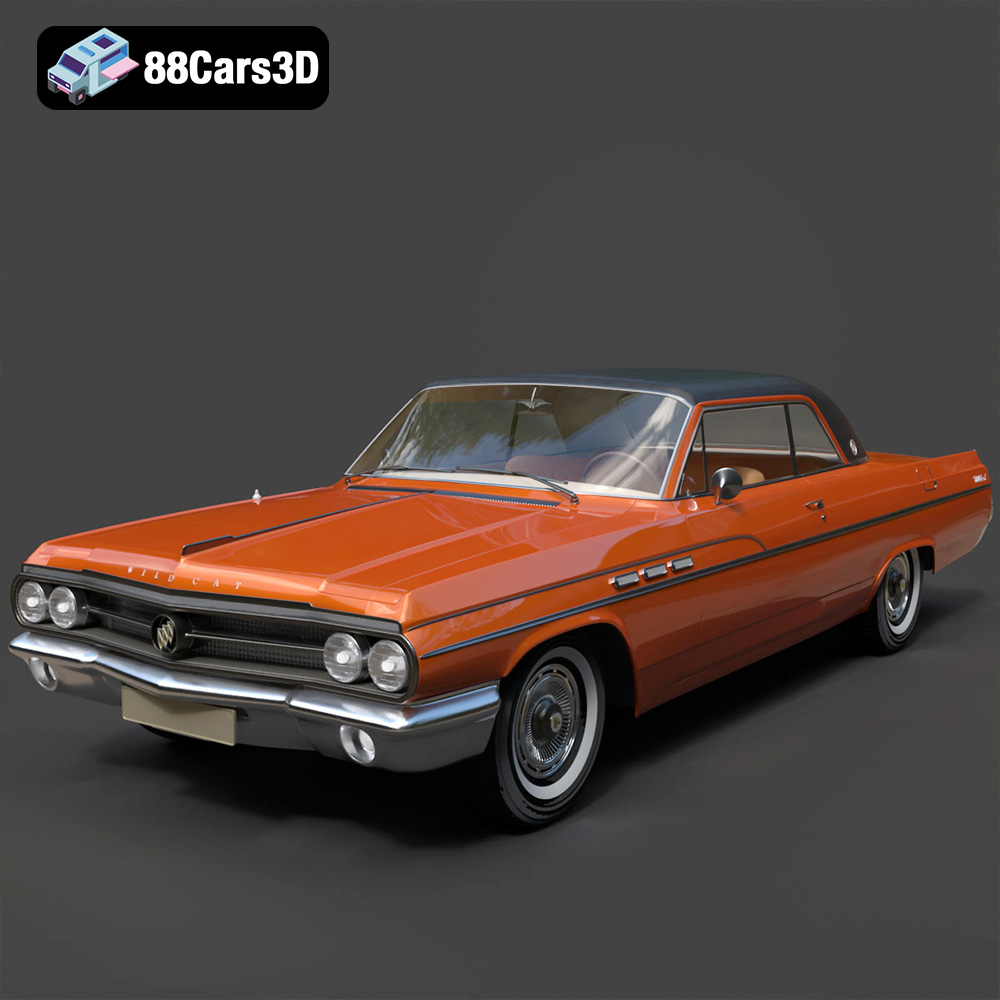
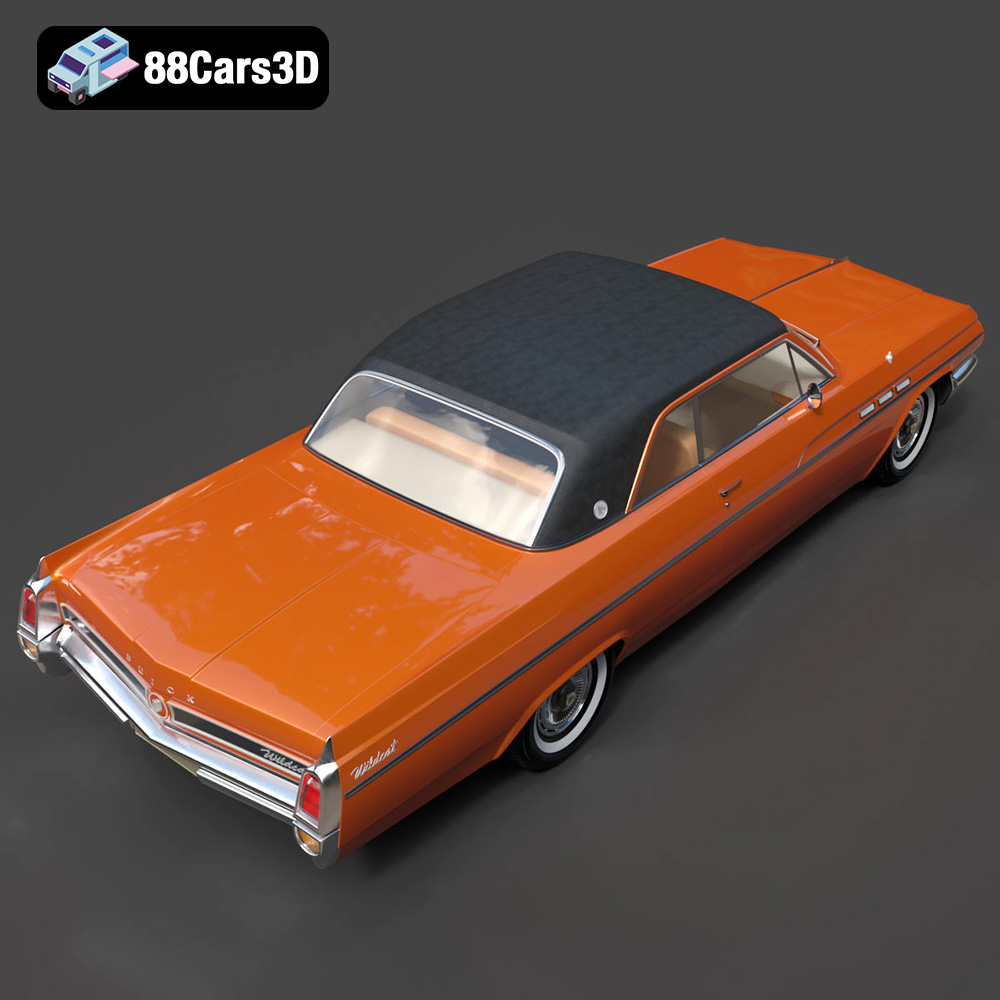
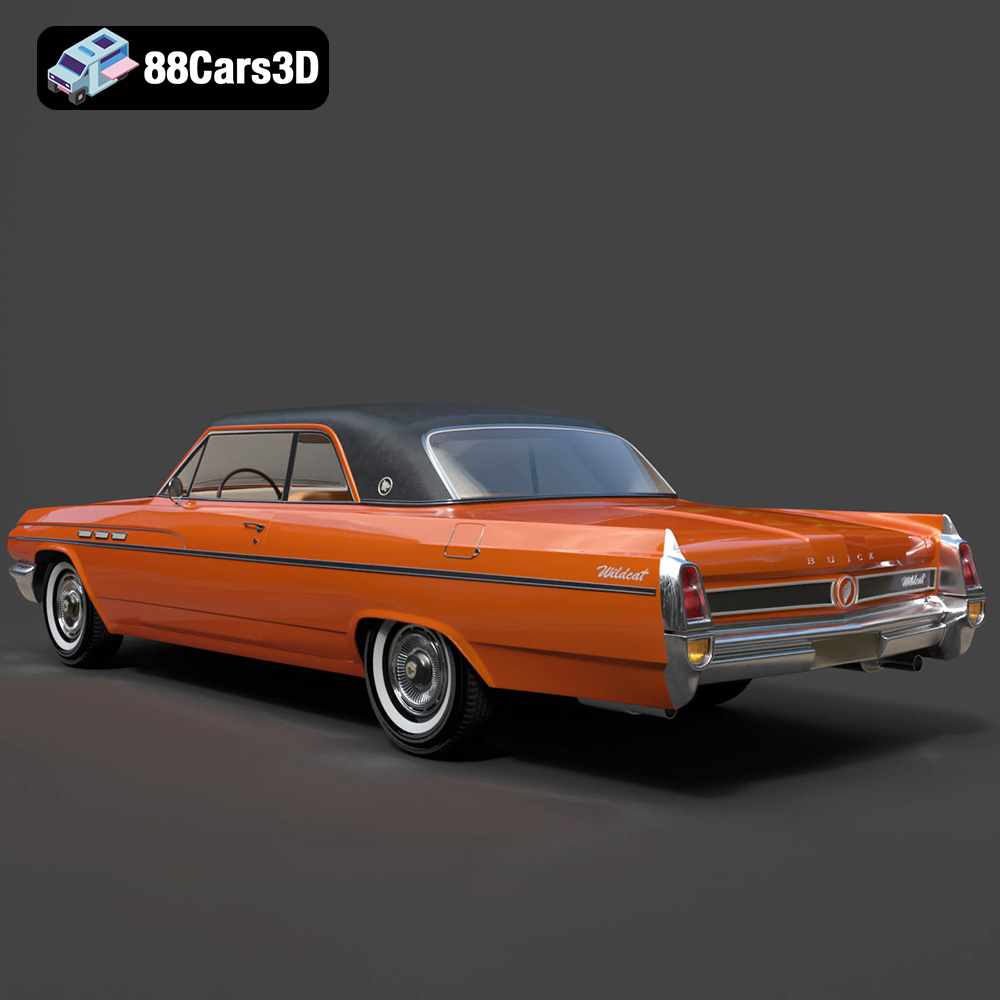
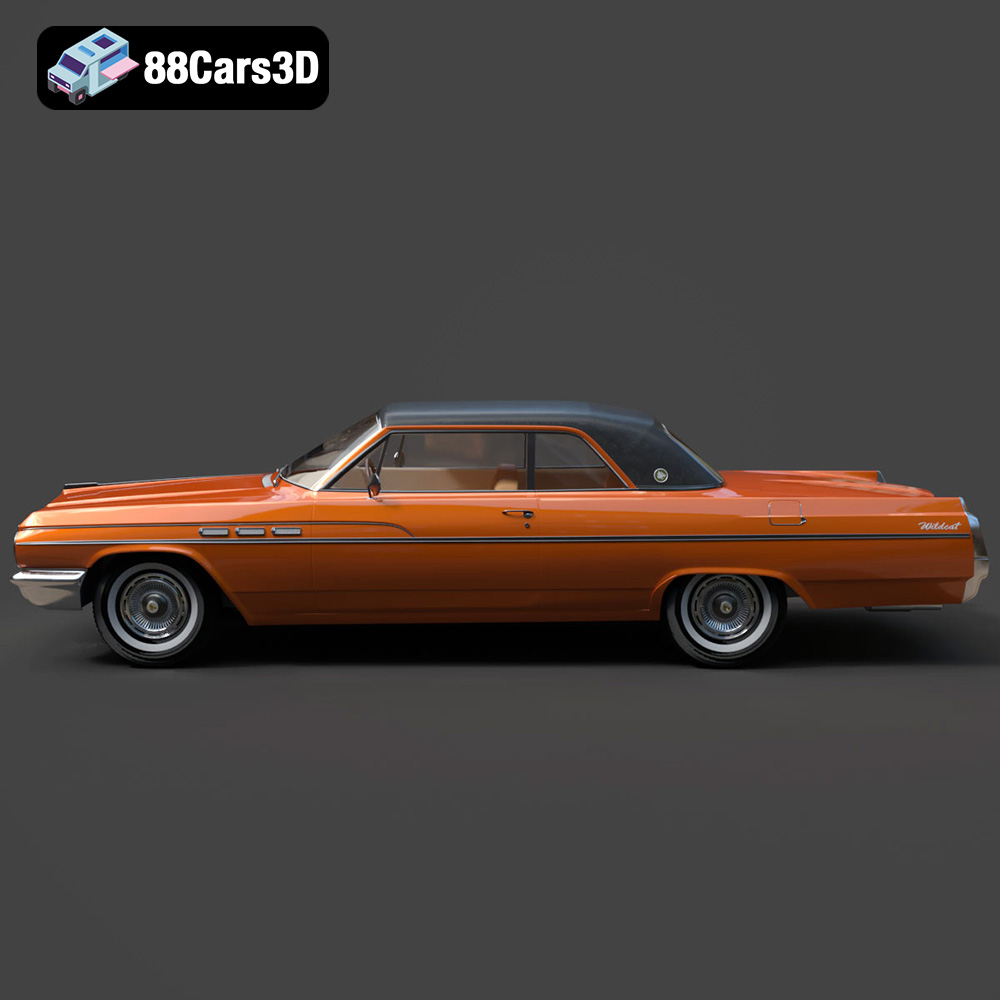
The 1963 Buick Wildcat Convertible embodies the spirit of early 1960s American luxury and performance. Its bold styling, powerful V8 engine heritage, and unmistakable open-top appeal make it a standout. A digital recreation of such a vehicle demands not only aesthetic accuracy but also technical precision, ensuring it performs flawlessly across various professional workflows. From its long and wide body proportions to the dual headlight front fascia, chrome grille, sculpted side lines, and period-correct wheel design, every detail needs to be meticulously translated into the digital realm. This article will delve into the technical considerations and creative opportunities presented by such a model, exploring how it integrates into cutting-edge production pipelines.
Choosing the correct 3D model file format is a critical decision that impacts compatibility, feature retention, and overall workflow efficiency. For professional 3D car models, a variety of formats are often provided to cater to different software, engines, and end-use applications. The Buick Wildcat Convertible 1963 3D Model, for instance, offers a comprehensive suite of formats, each serving a specific purpose in the production pipeline.
The .blend format is native to Blender, a powerful open-source 3D creation suite. When you receive a .blend file, you’re not just getting the model; you’re getting a fully editable Blender scene. This includes all scene data like meshes, materials, textures, lighting setups, cameras, animation data, and even modifiers. It’s ideal for artists who primarily work in Blender, allowing for direct access to the model’s construction, PBR material nodes, and easy customization. For the Buick Wildcat, having the .blend file means you can tweak shaders, modify geometry, adjust the convertible top’s configuration, or even set up custom animations directly within Blender.
.fbx (Filmbox) is arguably the most widely used proprietary 3D file format for exchanging 3D data between different software applications. Developed by Autodesk, it’s designed for maximum compatibility and robust feature support, including meshes, materials (often baked or simplified), textures, animations, skinning, and camera data. The .fbx format is particularly ideal for game engines like Unreal Engine and Unity, as well as digital content creation (DCC) tools such as 3ds Max, Maya, and Cinema 4D. Its widespread adoption makes it an essential format for real-time pipelines where performance and asset transfer are paramount. For the Wildcat, an .fbx ensures a smooth import into your game engine or animation software, retaining pivot points for wheels and steering, crucial for vehicle dynamics.
The .obj (Wavefront Object) format is a universal standard known for its simplicity and broad compatibility. It primarily stores geometric data (vertices, normals, UV coordinates) and can reference external material (.mtl) files. While .obj doesn’t typically store animation or rigging data, its widespread support across virtually all 3D software makes it an excellent choice for straightforward mesh transfer. It’s often used when you need a clean mesh for sculpting, retopology, or when integrating into software that might not fully support more complex formats. The Wildcat’s .obj version provides a stable, unadulterated mesh base for artists who prefer to rebuild materials or integrate into specialized pipelines.
.glb (GL Transmission Format Binary) is the binary version of glTF, an open-standard 3D file format optimized for efficient transmission and loading of 3D scenes and models by applications. It’s rapidly becoming the “JPEG of 3D” due to its efficiency and PBR material support. .glb files encapsulate all data (geometry, textures, animations) into a single file, making them perfect for AR/VR experiences, web-based 3D viewers, and other real-time applications where file size and quick loading are crucial. Deploying the Wildcat in an interactive web configurator or an augmented reality app would leverage the efficiency of its .glb counterpart.
.stl (Stereolithography) is the de facto standard for 3D printing. It represents a 3D model as a series of connected triangles (a triangulated surface), defining only the surface geometry without color, texture, or other attributes. The key characteristic of a good .stl for 3D printing is that it must be “manifold,” meaning it represents a watertight, solid object without holes or self-intersections. The Buick Wildcat Convertible 1963 3D Model, being 3D printable, comes with an optimized .stl, allowing enthusiasts to bring this classic car into the physical world as a collectible scale model or display miniature.
The .ply (Polygon File Format or Stanford Triangle Format) is another format for storing 3D data, particularly useful for capturing and storing 3D scanned data. Like .obj, it defines geometry, but it can also store additional properties like color, transparency, normals, texture coordinates, and even reliability information. While less common for general asset exchange, .ply is often used in scientific applications, CAD, and precise mesh analysis where fidelity to scanned data or complex attribute storage is important. For the Wildcat, its inclusion provides an option for highly accurate geometric analysis or specific manufacturing processes.
The .unreal format, or more accurately, assets packaged for Unreal Engine, typically refers to a collection of .uasset files and related content directly imported and optimized within the Unreal Engine ecosystem. While not a single universal file type like .fbx, providing an “unreal” option implies that the model has been specifically prepared or exported with Unreal Engine’s conventions in mind, potentially including optimized materials, collision meshes, LODs (Levels of Detail), and blueprint setups. This dramatically streamlines integration for game developers and real-time visualization artists, allowing the Wildcat to be dropped into an Unreal scene with minimal setup.
The .max format is native to Autodesk 3ds Max, one of the leading software packages for 3D modeling, animation, and rendering. Similar to .blend for Blender, a .max file contains the complete 3ds Max scene, including all geometric data, textures, lighting, cameras, animation, and specific 3ds Max modifiers and plugins. It’s invaluable for users working in 3ds Max, providing full editability and access to the model’s construction. For artists using 3ds Max for high-fidelity renders or complex animations, the Wildcat’s .max file offers the ultimate flexibility to refine, animate, and present the model as intended.
The provision of these diverse formats ensures that the Buick Wildcat Convertible 1963 3D Model from 88cars3d.com is a versatile and accessible asset, ready for integration into virtually any professional 3D workflow.
Creating a high-fidelity 3D model of a classic car like the 1963 Buick Wildcat Convertible goes far beyond basic geometry. It involves a deep understanding of automotive design, precise topology, and a meticulous approach to detail. The quality of a 3D car model is paramount, especially when targeting photorealistic automotive rendering and demanding real-time applications.
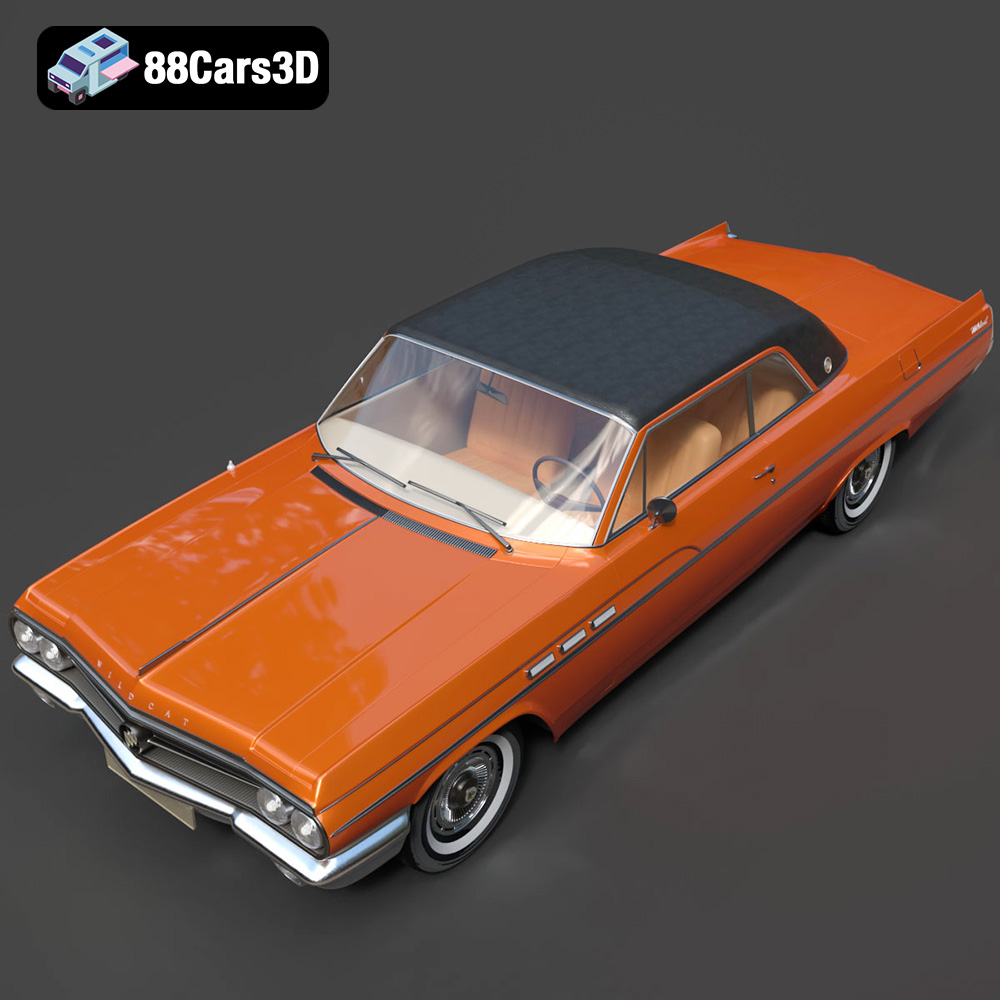
The foundation of any great 3D vehicle model lies in its accuracy. For the Buick Wildcat, this means faithfully replicating the distinct characteristics of the 1963 model year. This includes the car’s accurate body proportions, its long hood, wide-body silhouette, and the subtle curves that define its character. Every element, from the dual headlight front design with its intricate chrome grille to the sculpted side trim and emblem detailing, must be modeled with precision. Technical artists achieve this by working from extensive reference materials, blueprints, and photographic data, ensuring that the digital model is a true reflection of its physical counterpart. The goal is to capture not just the shape, but the very essence of the classic car’s styling.
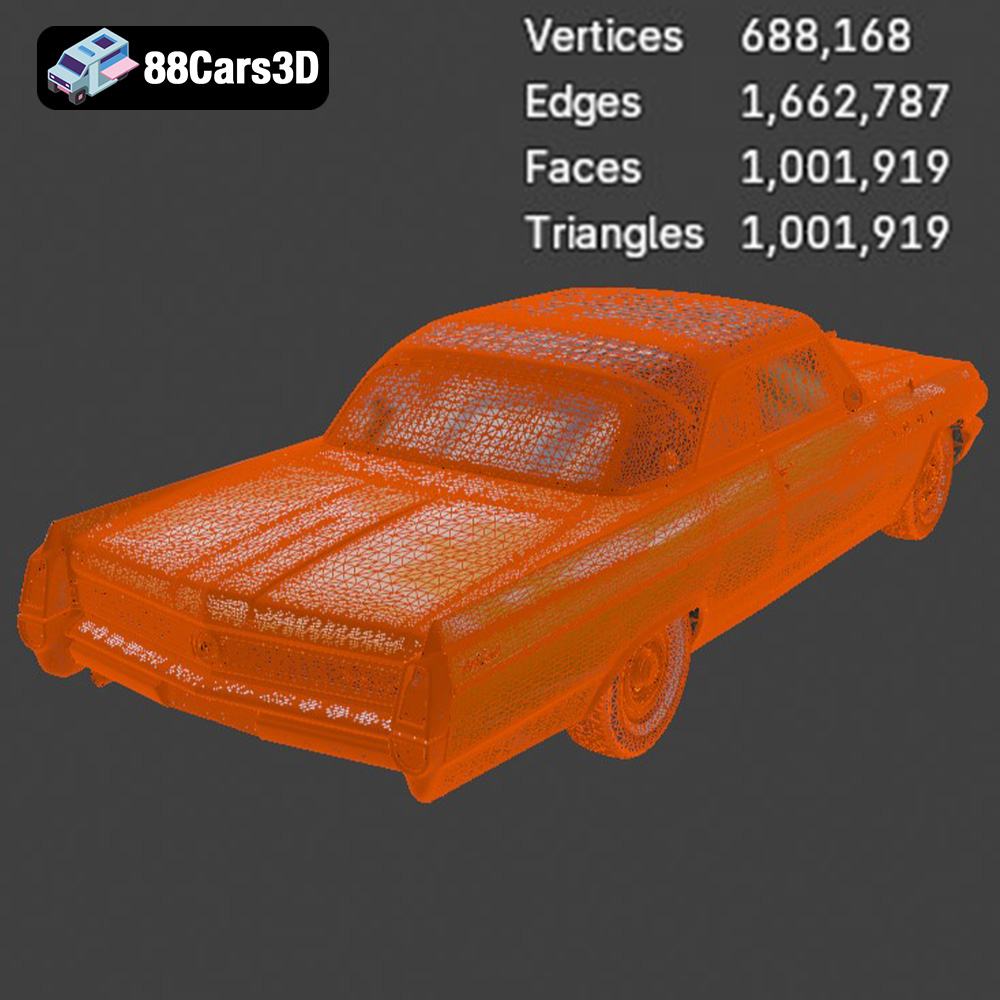
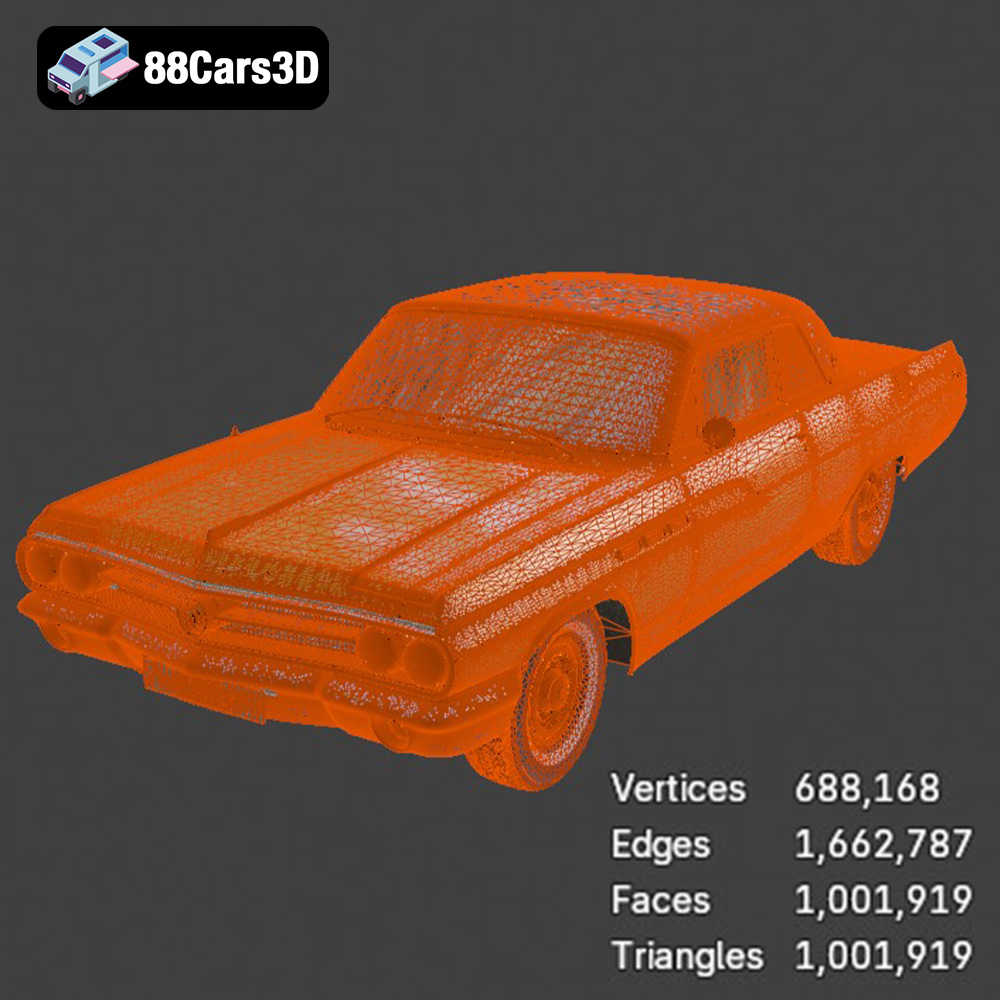
Underneath the stunning aesthetics, a professional 3D model boasts a clean and well-organized mesh structure. This “clean topology” is crucial for several reasons: it ensures smooth deformations during animation, facilitates UV mapping for efficient texturing, and allows for effective subdivision without artifacts. For the Wildcat, this means optimized polygon flow, striking a balance between detail and performance. Materials are equally vital. Utilizing Physically Based Rendering (PBR) workflows, artists create realistic paint finishes, highly reflective chrome, nuanced glass, and authentic interior fabrics. The model’s optimized geometry and PBR-ready materials ensure that whether it’s rendered in V-Ray, Corona, Cycles, or a real-time engine like Unreal, it will look consistently stunning and respond correctly to varying lighting conditions. The internal components, such as the vintage dashboard with analog gauges, classic steering wheel, and detailed door panels, receive the same meticulous attention, ensuring the model is complete and ready for any close-up.
The versatility of a well-crafted 3D car model like the Buick Wildcat Convertible 1963 is immense, extending its utility across a broad spectrum of professional endeavors. It seamlessly transitions from static renders to dynamic interactive experiences, serving as a powerful asset for diverse creative and technical needs.
For architectural visualization, product showcases, or marketing campaigns, the Buick Wildcat becomes a focal point for stunning imagery. Its detailed exterior and interior features are perfect for creating photorealistic renders that evoke nostalgia and luxury. Imagine the Wildcat cruising down a sun-drenched coastal highway in a vintage-style advertisement, or displayed in a pristine virtual showroom. Artists can leverage its accurate proportions and material detailing to produce high-resolution stills or animations for classic car promotions, retro marketing visuals, or automotive heritage projects. The model’s compatibility with major rendering engines (like V-Ray in 3ds Max or Cycles in Blender) allows for breathtaking results, showcasing every curve and chrome accent under expertly crafted lighting scenarios, perhaps a golden hour sunset or a moody streetlamp glow.
In the realm of game development, high-quality game assets are critical for creating immersive worlds. The Buick Wildcat Convertible 1963 3D Model is ideally suited for open-world driving games, 1960s-themed environments, and vintage cruising simulations. Its clean mesh and optimized polygon count, along with proper pivot setups for steering and wheel rotation, make it game-engine ready. Developers can integrate it into Unreal Engine or Unity, immediately benefiting from its accurate scale and animation readiness. Beyond traditional games, the model excels in AR/VR applications. Imagine walking around the Wildcat in an interactive virtual showroom, examining its details up close, or even “sitting” inside it to experience the classic interior. Such immersive classic car showrooms and interactive historical automotive experiences are made possible by the efficiency and fidelity of assets from 88cars3d.com.
Achieving breathtaking visual fidelity for automotive rendering demands a sophisticated approach, combining technical prowess with artistic vision. A premium 3D car model like the Buick Wildcat Convertible 1963 provides the perfect canvas for such endeavors, whether the goal is photorealism or stylized interpretation.
The journey to a stunning render often begins with impeccable lighting. In software like 3ds Max, artists utilize HDRI (High Dynamic Range Imaging) environments combined with targeted photometric lights to simulate real-world illumination. For a classic car like the Wildcat, careful consideration is given to how light interacts with its polished chrome, glossy paintwork, and soft-top fabric. PBR materials, crucial for realism, are meticulously adjusted for roughness, metallic values, and normal maps, ensuring surfaces respond authentically. In Blender, using Cycles or Eevee render engines, artists can achieve similar results, leveraging node-based materials for intricate shader networks. The Wildcat model, with its pre-configured PBR materials, provides an excellent starting point, allowing artists to focus on environmental lighting and composition rather than extensive material setup from scratch. Customization options, such as changing body color to classic 1960s finishes or adjusting the soft-top configuration (up or down), offer creative freedom for diverse scene compositions, from a vibrant beach setting to a moody night drive.
Raw renders are often just the beginning. The final cinematic impact comes from skillful post-production and compositing. Tools like Adobe Photoshop or Foundry Nuke are employed to enhance colors, add depth of field, introduce atmospheric effects, and integrate the rendered vehicle seamlessly into a background plate or CGI environment. For the Buick Wildcat, this might involve adding subtle lens flares to highlights on the chrome, adjusting color grading to evoke a vintage film look, or compositing the car into a period-correct street scene with realistic reflections and shadows. The “optimized polygon flow for performance and realism” of models from 88cars3d.com ensures that even complex renders maintain manageability, allowing artists to iterate quickly and focus on the artistic nuances that elevate a good render to an exceptional one.
Beyond digital screens, 3D car models are increasingly finding their way into the physical world through 3D printing. The Buick Wildcat Convertible 1963 3D Model, explicitly noted as “3D Printable STL,” bridges the gap between virtual design and tangible collectible, offering enthusiasts and professionals new avenues for creation and display.
For 3D printing, the model’s geometry needs to be absolutely watertight and manifold, meaning it must form a completely enclosed volume without any gaps or intersecting faces. This is where the .stl and .ply formats provided with the Wildcat model become essential. The .stl is the most common format for FDM (Fused Deposition Modeling) and SLA (Stereolithography) printers, while .ply can offer more intricate data for specialized machines. The “optimized geometry for real-time engines and high-quality renders” also translates to a cleaner mesh for 3D printing, reducing errors and print failures. The recommended scales (1:32 / 1:24 / 1:18 / 1:12) allow for flexibility in physical output, from desktop display models to larger, more detailed collector’s pieces. Understanding these technical requirements is crucial for a successful print, ensuring the classic lines and intricate details of the Wildcat are perfectly preserved.
Successful 3D printing is as much about the print settings as it is about the model itself. For the Buick Wildcat, specific recommendations are provided: layer heights between 0.08-0.16 mm for FDM (or finer for resin), wall thickness of 1.2-2.0 mm, and an infill of 15-25% for structural integrity without excessive material usage. Crucially, the model requires supports for complex overhangs like mirrors, bumper sections, and the windshield frame. Print orientation is also key – printing the body angled can result in a smoother surface finish, while wheels are typically printed separately for optimal detail and assembly. Post-processing is where the model truly comes to life: sanding to eliminate layer lines, applying primer, followed by a gloss pastel or metallic paint finish to match period-correct colors, and meticulous chrome detailing to capture the original car’s luster. This hands-on process allows designers to create custom dioramas, showcase vehicle prototypes, or produce unique automotive collectibles that celebrate the Wildcat’s legacy.
The demand for high-performance game assets and interactive experiences in AR/VR is constantly pushing the boundaries of 3D modeling. For a classic car like the Buick Wildcat Convertible 1963, balancing visual fidelity with real-time efficiency is paramount.
To ensure smooth performance in game engines like Unreal, models must be optimized with various Levels of Detail (LODs). This means creating multiple versions of the Wildcat model, each with progressively fewer polygons. When the car is far from the camera, a low-poly LOD is rendered, saving computational resources, while closer views switch to higher-poly versions. The “optimized geometry for real-time engines” of this model suggests it’s designed with this principle in mind. Furthermore, custom collision geometry is vital for realistic physics and interaction within a game world, ensuring the Wildcat behaves correctly when colliding with other objects or traversing terrain. The provided .fbx and .unreal formats are specifically designed to facilitate this integration, often containing pre-configured collision meshes or allowing easy generation within the engine.
For AR/VR applications, the Buick Wildcat Convertible 1963 3D Model needs to be more than just visually appealing; it needs to be interactive. This involves setting up proper pivot points for animation – for example, separate wheels and steering components for realistic rotation. The “convertible soft-top (up and down configuration ready)” is a perfect example of an interactive feature that enhances immersion, allowing users to switch the top’s state with a simple input. The .glb format is particularly beneficial here, offering a lightweight and efficient package for deployment in web-based AR experiences or dedicated VR showrooms. Imagine a user wearing a VR headset, walking around the Wildcat, opening its doors (if modeled), and inspecting the detailed vintage dashboard. These interactive elements transform a static model into a dynamic experience, making the 88cars3d.com model a valuable asset for virtual tours, training simulations, and educational platforms.
The realm of 3D design is continually evolving, demanding versatile, high-quality assets that can seamlessly adapt to various applications, from film and advertising to interactive games and physical prototypes. The Buick Wildcat Convertible 1963 3D Model stands as a prime example of a meticulously crafted 3D car model that meets these professional demands head-on.
From its accurate representation of the classic 1963 design, boasting both external and internal fidelity, to its technical advantages like clean topology and real-world scale, this model is built for success. Its comprehensive suite of file formats – .blend, .fbx, .obj, .glb, .stl, .ply, .unreal, and .max – ensures unparalleled compatibility across major DCC software and game engines, making it an invaluable asset for any creative professional. Whether you’re tasked with generating stunning automotive rendering for a marketing campaign, developing realistic game assets for a vintage driving simulator, crafting immersive AR/VR experiences, or even producing a tangible, 3D printed collectible, the Buick Wildcat Convertible 1963 3D Model provides the robust foundation you need.
The attention to detail, from its dual headlights to its classic chrome wheels and period-correct interior, allows artists and developers to integrate this model with confidence, knowing it will deliver on both aesthetic appeal and technical performance. For those seeking high-quality, versatile 3D car models that truly capture the essence of automotive history and are ready for any modern production pipeline, resources like 88cars3d.com offer an exceptional selection. Invest in quality assets like the Buick Wildcat, and unlock new possibilities for your projects, bringing the golden age of motoring to life in the digital and physical worlds.
The Buick Wildcat Convertible 1963 3D Model is a high-detail digital recreation of the classic American full-size performance convertible known for its bold styling, powerful V8 engine heritage, and open-top cruising appeal. The 1963 Wildcat combined luxury comfort with muscle-era presence, making it a standout of early 1960s American automotive design. This 3D model accurately represents the long and wide body proportions, dual headlight front fascia, chrome grille and bumpers, sculpted side lines, convertible soft-top configuration, rear deck detailing, and period-correct wheel design. Built with clean topology and real-world scale accuracy, it is ideal for rendering, animation, automotive visualization, game development, and AR/VR experiences.
$29.9
.1960scar
.americanclassic
.arvr
.automotive
.blend
.buick
.car3dmodel
.classiccar
.convertible
.fbx
.gameasset
.glb
.max
.obj
.ply
.rendering
.simulation
.stl
.unreal
.vintagecar
.wildcat1963