Get 20% OFF All Premium 3D & STL Models!

Few vehicles command as much respect and admiration as the Land Rover Defender 110. Its silhouette is instantly recognizable, synonymous with rugged adventure, unparalleled capability, and a legacy spanning decades across every continent. From vast African savannas to the bustling streets of global cities, the Defender 110 has proven itself as a true automotive legend.
In the world of 3D visualization, game development, and architectural rendering, capturing the essence of such an icon is paramount. Artists, designers, and developers constantly seek high-fidelity 3D car models that not only look authentic but are also technically sound and versatile enough to integrate into diverse projects. This is where a meticulously crafted asset like the Land Rover Defender 110 3D Model available on 88cars3d.com becomes an indispensable tool. It’s not just a model; it’s a gateway to creating compelling narratives, immersive simulations, and stunning visual experiences.
This comprehensive guide delves into the technical intricacies, practical applications, and creative potential unlocked by integrating a premium Land Rover Defender 110 3D Model into your workflow. We will explore everything from fundamental file formats to advanced rendering techniques, ensuring you understand why investing in high-quality 3D assets is a cornerstone of professional success.
The Land Rover Defender 110 isn’t merely a vehicle; it’s a cultural phenomenon. Its utilitarian design, durable construction, and go-anywhere attitude have solidified its place in history. Translating this real-world gravitas into a digital asset requires exceptional attention to detail and a deep understanding of the original vehicle’s characteristics.
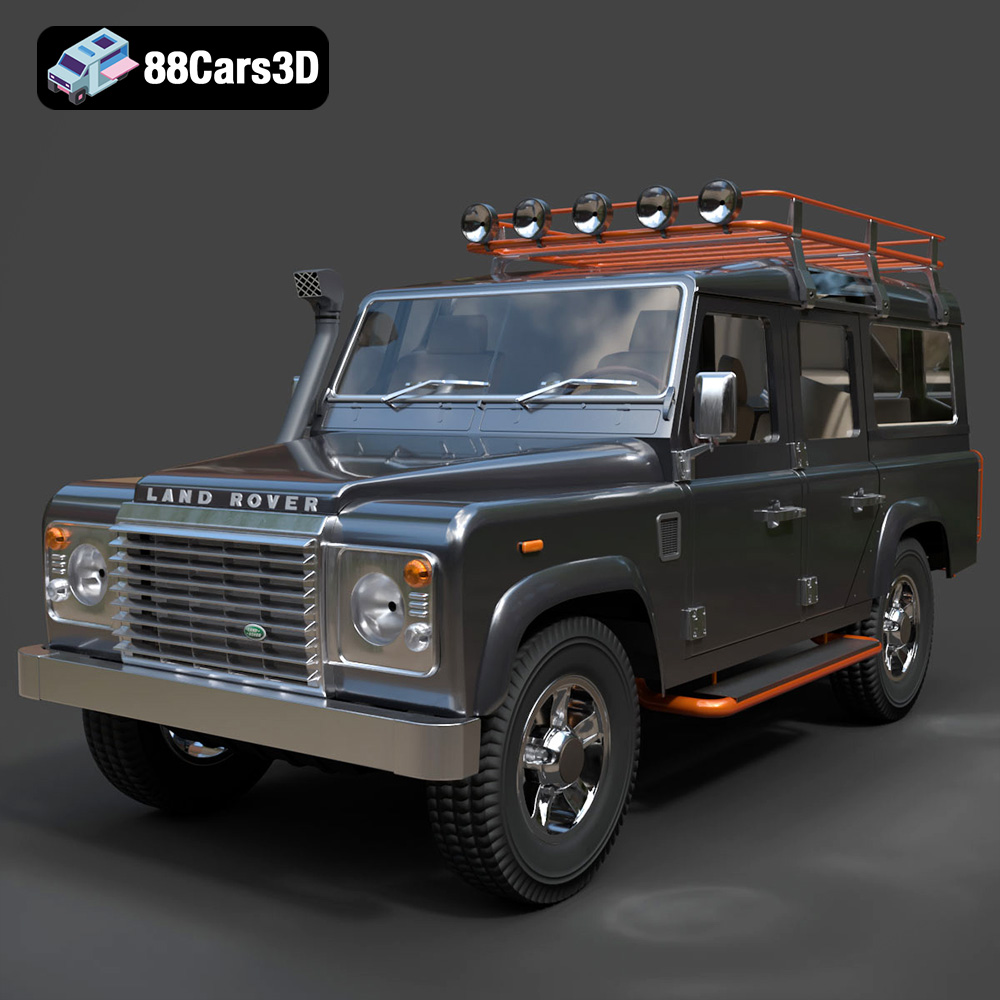
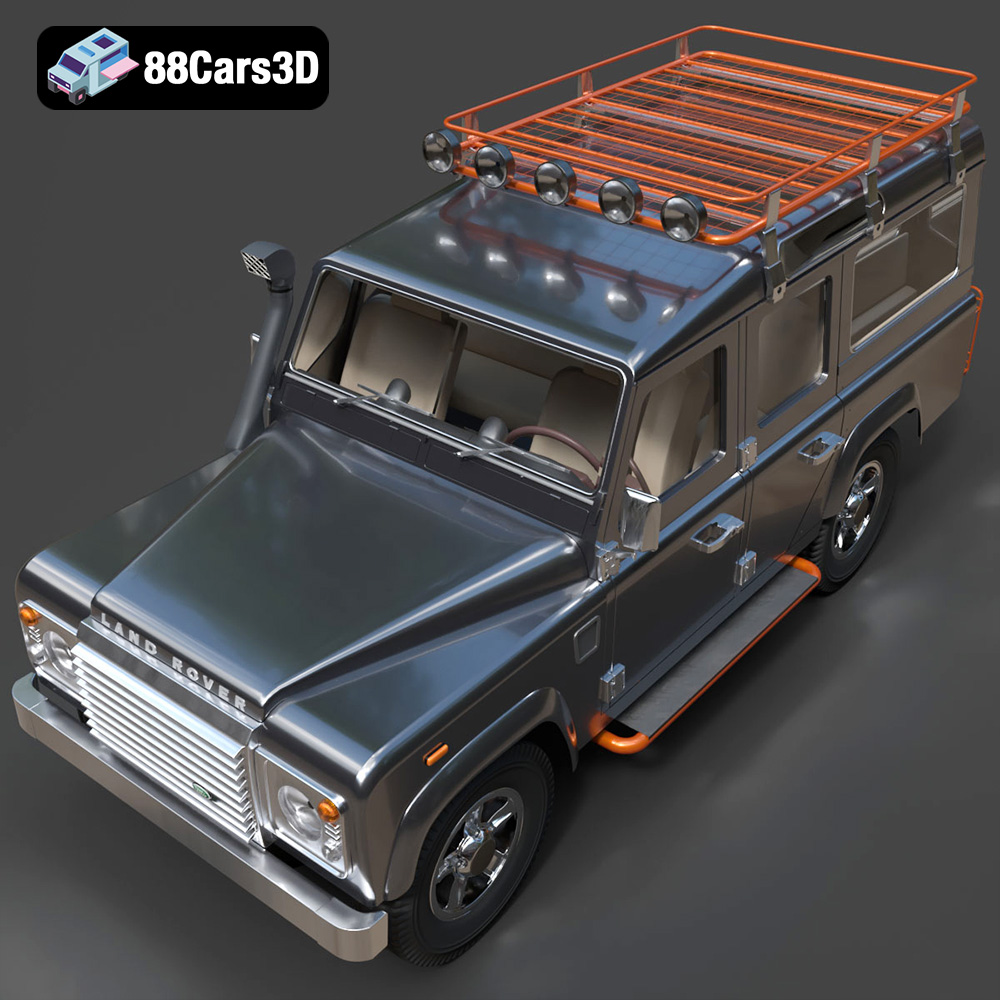
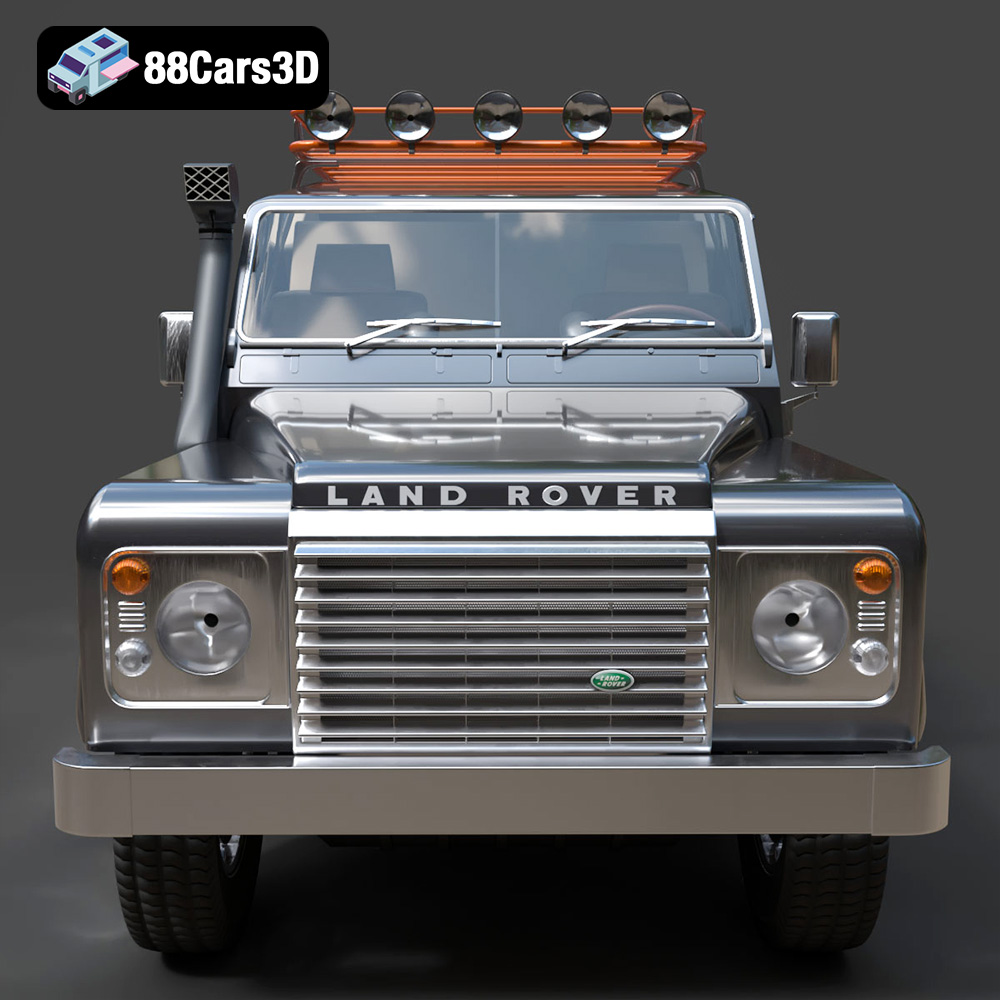
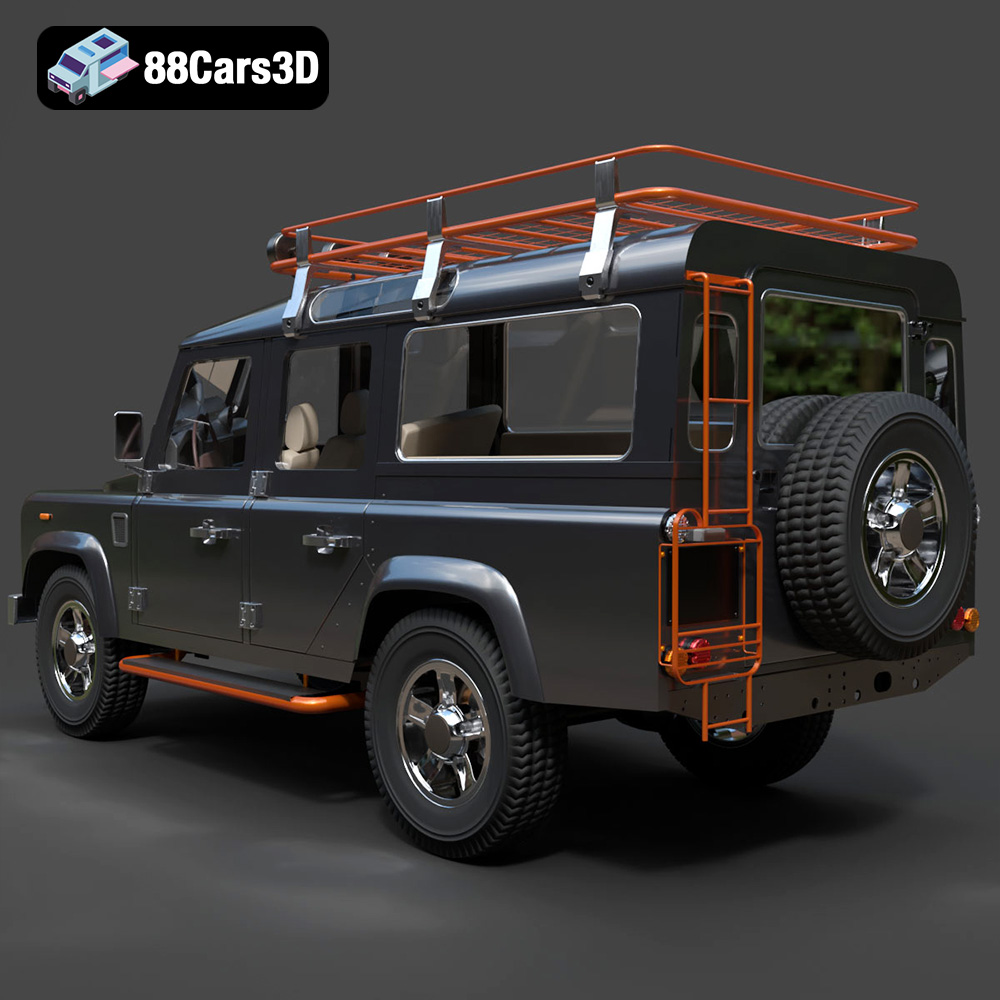
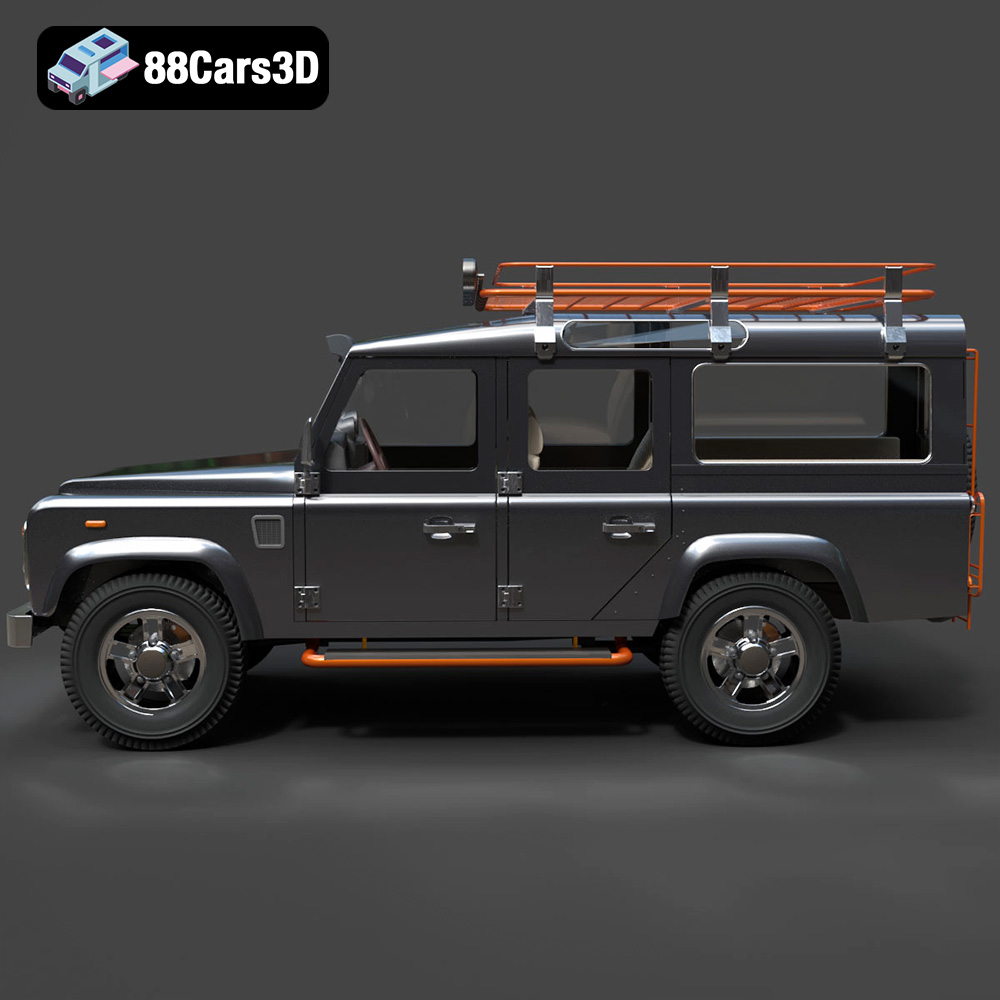
A truly exceptional Land Rover Defender 110 3D Model meticulously recreates every iconic design element. We’re talking about the distinct boxy body structure, the characteristic flat hood, the signature front grille, and the classic round headlamps that define its face. The reinforced bumpers, the extended wheelbase proportions, and the distinctive roof configuration are all critical for an authentic representation. Even subtle features like exposed hinges and the rear-mounted spare wheel contribute significantly to the model’s visual integrity. For professionals working on automotive rendering, advertising visuals, or historical simulations, these details are not just aesthetic choices; they are requirements for credibility.
The product description highlights these exact features, ensuring that the model maintains its historical accuracy and visual impact. This level of detail ensures that whether the Defender is placed in a rugged safari landscape, a military convoy, or a pristine rural environment, it holds its own, communicating its purpose and heritage effectively.
Beyond visual accuracy, technical precision in scale and proportion is crucial for any 3D asset, especially for a vehicle. The Land Rover Defender 110 3D Model is designed with real-world scale accuracy. This isn’t just a trivial detail; it’s fundamental for seamless integration into various 3D scenes. Incorrect scaling can lead to countless issues, from improper lighting and shadow casting to problematic interactions with other assets in a game engine or simulation environment. Architects using the model for visualization need it to fit perfectly within their scenes; game developers need it to align with character scales and environmental physics. An accurately scaled model saves valuable production time and eliminates the need for tedious manual adjustments, allowing artists to focus on creative tasks rather than remedial scaling issues.
One of the most critical aspects of working with 3D assets is understanding the various file formats available. Each format serves a specific purpose, offering different levels of compatibility, data retention, and optimization for particular workflows. The Land Rover Defender 110 3D Model from 88cars3d.com wisely includes a comprehensive array of formats, ensuring maximum utility for any professional pipeline.
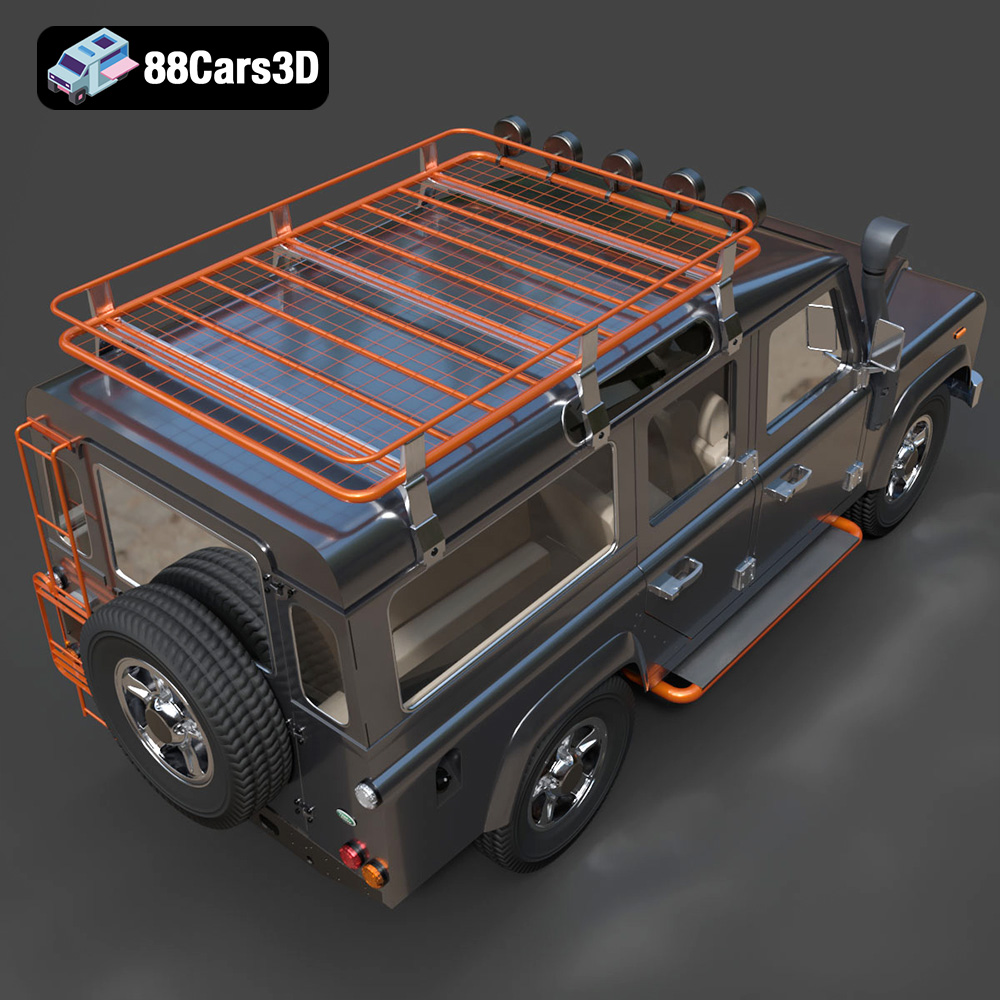
The .blend format is native to Blender, one of the most powerful and widely used open-source 3D creation suites. A .blend file is a complete package, often containing not just the mesh geometry but also materials, textures, lighting setups, camera positions, animations, and even physics simulations. For artists primarily working in Blender, this format offers the most direct and uncompromised access to the model’s original data. You can easily modify topology, adjust materials, or re-rig components without losing any information. This makes it ideal for users who wish to customize the Defender 110 model extensively, whether by adding a snorkel, roof rack, or changing its livery for a specific project.
The Filmbox, or .fbx format, is a proprietary file format owned by Autodesk, but it has become an industry standard for interoperability between various 3D applications, especially in game development. FBX files can store a wide range of data including meshes, materials, textures, animations, and skeletal data. Its strength lies in its ability to efficiently transfer complex scenes with animation data between software like 3ds Max, Maya, Blender, and game engines like Unreal Engine and Unity. For the Defender 110, an .fbx file ensures that the model can be dropped directly into a game engine with its proper pivot points for wheels and steering, ready for real-time interaction and simulation. It’s robust, widely supported, and excellent for production pipelines.
The Wavefront .obj format is one of the oldest and most universally supported 3D file formats. It’s a simple, text-based format primarily used to store 3D geometry (vertices, normals, texture coordinates, and faces). While it doesn’t typically store animation or advanced material properties within the .obj file itself (materials are often defined in a companion .mtl file), its widespread compatibility makes it an excellent choice for basic mesh transfer between virtually any 3D software. If you need to import the Defender 110 into a niche renderer or a less common 3D application, .obj is often the safest bet for ensuring geometry integrity. Its simplicity also means it’s generally a very stable format.
.glb (GLB, or Binary GL Transmission Format) is an increasingly popular format, especially for web-based 3D applications, augmented reality (AR), and virtual reality (VR). It’s a binary container format that encapsulates 3D models, scenes, animations, and PBR (Physically Based Rendering) materials into a single, self-contained file. This makes it incredibly efficient for streaming and displaying 3D content on the web or in mobile AR/VR applications without needing multiple external files. For showcasing the Land Rover Defender 110 in an interactive web viewer or a mobile AR experience, the .glb format provides an optimized, lightweight solution that ensures fast loading and consistent visual quality.
The Standard Tessellation Language, or .stl format, is the de facto standard for 3D printing. It represents a 3D model as a collection of unconnected triangles, defining only the surface geometry of an object without color, texture, or other CAD attributes. While simple, its ubiquity in the 3D printing world means that if you want to physically manifest the Land Rover Defender 110 into a scale model or collectible miniature, the .stl file is what your 3D printer slicing software will require. The model’s description specifically mentions its suitability for conversion to .stl, confirming it has manifold (watertight) geometry, a critical requirement for successful 3D printing.
The Polygon File Format, or .ply, is another format for storing 3D data, particularly useful for scanned data and models with complex mesh properties. It can store a wider range of properties than .obj, including color per vertex, transparency, surface normals, and range data. While less common for general 3D asset exchange, .ply is often used in scientific, engineering, and reverse-engineering applications, as well as for models derived from 3D scanning. For precise mesh analysis or integration into specific CAD workflows for the Defender 110, a .ply file can be advantageous.
While not a universal file extension in the same way as .fbx or .obj, “.unreal” in this context typically refers to an asset specifically prepared and optimized for Unreal Engine. This might imply an .fbx file that has already undergone specific export settings, or potentially even an Unreal Engine asset package ready for direct import and use within the engine’s content browser. Such an asset would likely include optimized meshes, materials set up with PBR textures, proper collision meshes, and LODs (Levels of Detail) to ensure optimal performance in real-time environments. This format is a huge time-saver for game developers and real-time visualization specialists, as it significantly reduces setup time within the engine.
The .max format is native to Autodesk 3ds Max, a leading software for 3D modeling, animation, and rendering in the architectural visualization, broadcast, and design industries. A .max file contains a complete scene, including geometry, materials, textures, lighting, cameras, animation keyframes, and modifiers. For users entrenched in the 3ds Max ecosystem, having the Defender 110 model in this format provides the most comprehensive and editable version, allowing for advanced rendering setups with V-Ray or Corona, complex animation sequences, or detailed environmental integrations without any data loss from conversion. It’s the ultimate format for deep customization within 3ds Max.
The inclusion of all these diverse formats with the Land Rover Defender 110 3D Model highlights its professional-grade quality and the foresight of 88cars3d.com in serving a broad user base with varied software preferences and project requirements. It underscores the model’s versatility and commitment to an efficient creative workflow.
The utility of a high-quality 3D car model extends across numerous professional domains. The Land Rover Defender 110 3D Model is designed to be a versatile asset, fitting seamlessly into various demanding pipelines.
For automotive advertising, product visualization, or cinematic sequences, photo-realistic rendering is non-negotiable. The clean topology and optimized polygon flow of this Defender model make it an ideal candidate for high-fidelity rendering engines like V-Ray, Corona Renderer, or Redshift, whether you’re working in 3ds Max or Blender. Artists can apply sophisticated PBR materials, set up intricate lighting scenarios (HDRI, physical sun and sky, studio lights), and render the Defender 110 with stunning realism. Imagine it gleaming under a desert sun or battling through a mud-splattered trail – the model’s detailed exterior features, from the accurate front grille to the rugged bumpers, ensure that every reflection and shadow contributes to an immersive visual narrative. The separate wheels and steering components are especially beneficial for animating subtle motions or creating detailed turntables for marketing collateral.
The demand for realistic vehicles in open-world exploration games, off-road simulators, and survival-based environments is constant. A well-optimized asset like the Land Rover Defender 110 3D Model is crucial. Its “optimized polygon flow” suggests that it’s designed to perform well within game engines like Unreal Engine and Unity, often requiring lower poly counts for distant views (LODs) and efficient UV mapping for texture atlases. The proper pivot setup for steering and wheel rotation mentioned in the description is a massive advantage for game developers, allowing for immediate integration into vehicle physics systems without tedious manual adjustments. This saves countless hours in the asset pipeline, letting developers focus on gameplay mechanics and environmental design.
Augmented Reality (AR) and Virtual Reality (VR) are transforming how we interact with digital content. The Defender 110 model is perfect for immersive expedition simulations or interactive vehicle demonstrations. Imagine a virtual showroom where users can walk around, inspect, and even customize the Defender 110 in real-time. For AR applications, placing a life-sized virtual Defender in a real-world environment offers unparalleled product engagement. The .glb file format, specifically optimized for such experiences, ensures that the model loads quickly and displays accurately across different devices, providing a smooth and captivating user experience.
The tactile satisfaction of holding a physical manifestation of a digital model is a unique reward. The Land Rover Defender 110 3D Model is specifically highlighted as being suitable for 3D printing, opening up possibilities for scale models, collectibles, and even functional prototypes.
Converting a high-detail rendering model into a 3D printable STL format requires careful consideration. The underlying geometry must be “manifold,” meaning it has no holes, self-intersecting faces, or non-uniform normals. The product description’s assurance of compatibility with .stl implies this structural integrity. When preparing for print, understanding the recommended scale (1:32, 1:24, 1:18, 1:10) is vital, as it dictates the level of detail that can be resolved by the printer. A larger scale allows for finer details, while smaller scales require simplification. The model’s “clean and well-organized mesh structure” aids in this conversion, preventing issues like print failures due to faulty geometry.
Different 3D printing technologies have varying requirements. For FDM (Fused Deposition Modeling), settings like layer height (0.12–0.20 mm), wall thickness (1.5–2.5 mm), and infill (20–35%) are crucial for structural integrity and print quality. The need for supports for elements like mirrors, the roof rack, and the spare wheel overhang is a practical consideration for FDM. For finer details, particularly at smaller scales, resin (SLA/DLP) printing is often recommended, as it can achieve much higher resolution. The suggested print orientation—body printed angled or upright, wheels separately—is a common technique to minimize supports and maximize surface quality. Post-processing, including sanding, priming, and painting, transforms the raw print into a finished, display-worthy collectible. Imagine a beautifully weathered 1:18 scale Defender 110, painted in a classic safari green, sitting on your desk – a direct result of this versatile 3D asset.
Behind every visually stunning 3D model lies a foundation of solid technical execution. The Land Rover Defender 110 3D Model exemplifies this, with several technical advantages that elevate it above generic assets.
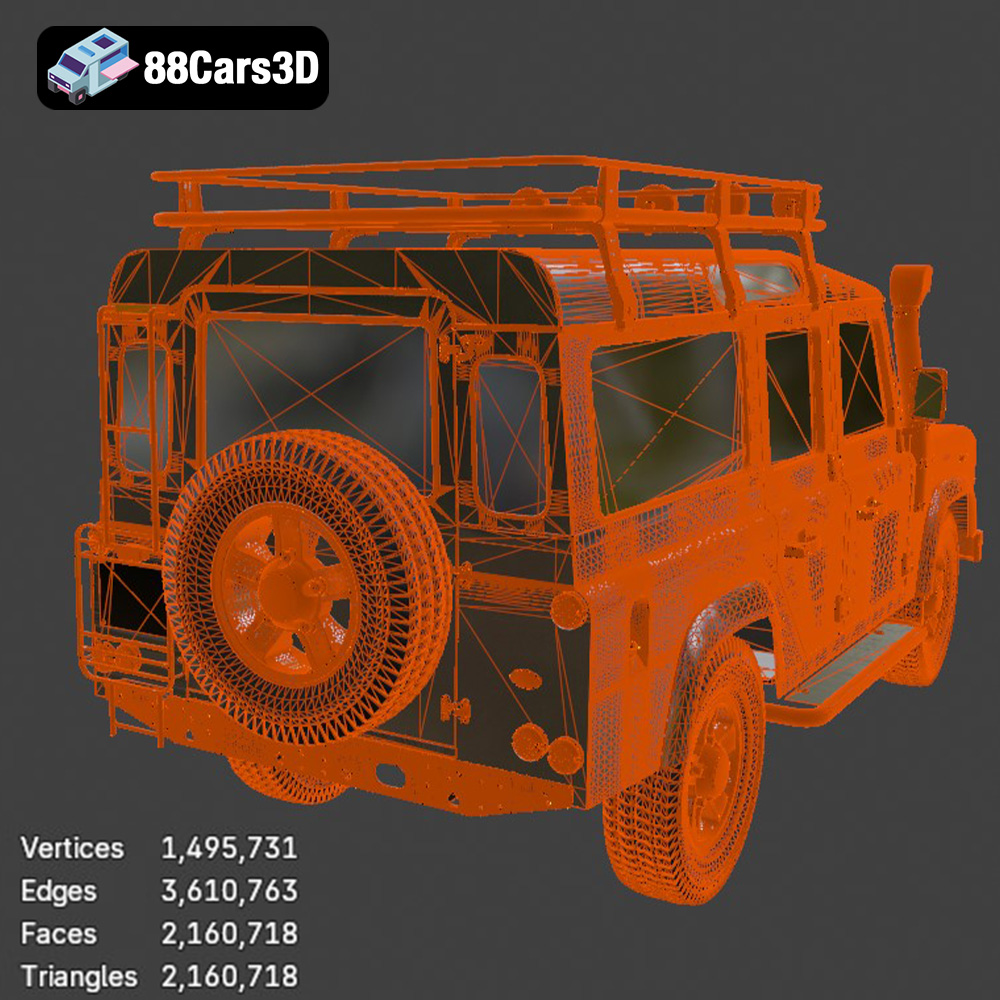
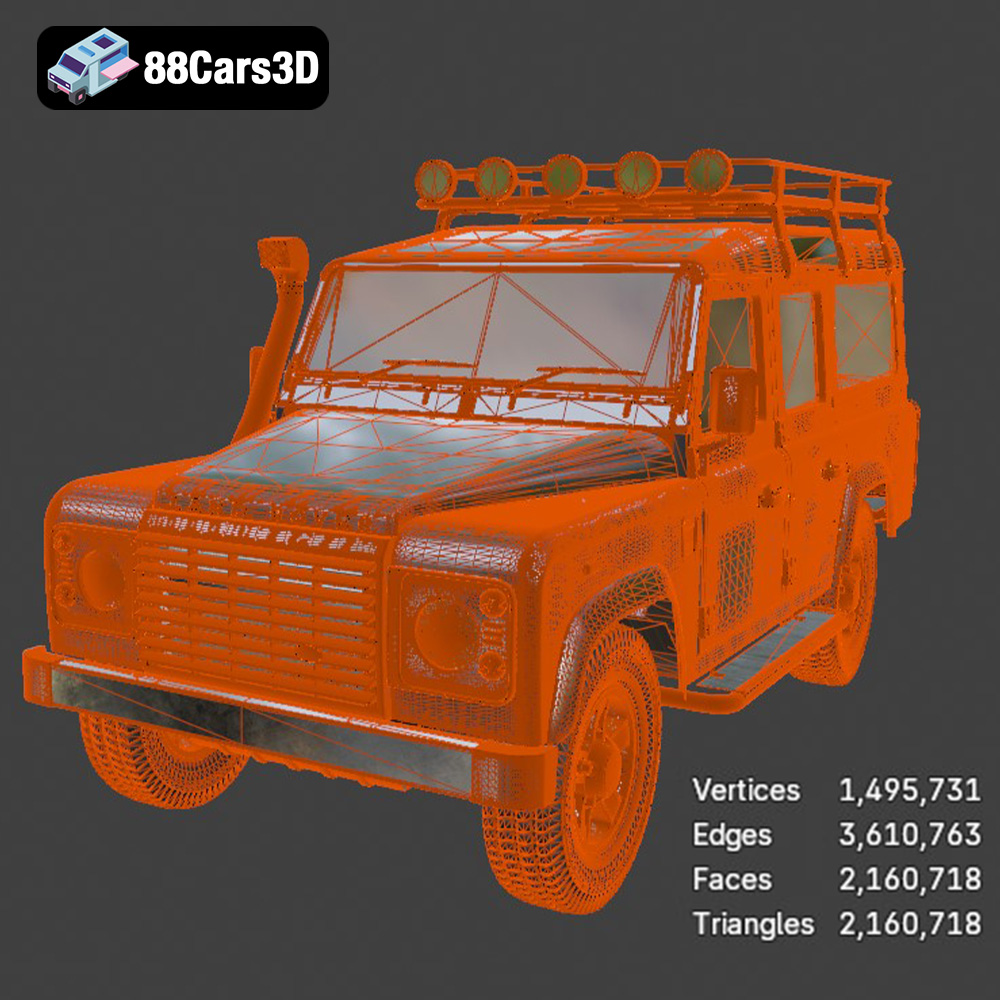
A “clean and well-organized mesh structure” is paramount. This refers to optimized polygon flow, where edge loops follow the contours of the vehicle, facilitating clean subdivisions, deformation, and rendering. Good topology means predictable shading and fewer artifacts, essential for close-up renders and animations. While specific poly counts aren’t provided, an “optimized polygon flow” suggests a balance between detail and performance, making it suitable for both high-end rendering (potentially with subdivision surfaces) and real-time applications. Properly laid out UVs (mapping 3D surfaces to a 2D texture space) are critical for applying textures without stretching or distortion. When combined with PBR (Physically Based Rendering) textures – which simulate real-world material properties like roughness, metallicness, and normal maps – the Defender 110 model can achieve photo-realistic material fidelity, from the subtle sheen of its aluminum body panels to the texture of its off-road tires.
The description highlights “proper pivot setup for steering and wheel rotation” and “separate wheels and steering components for animation.” This is a significant technical advantage. Correct pivot points are fundamental for any animated vehicle. Without them, wheels would rotate off-axis, and steering would look unnatural. These features ensure that the model is animation-ready out of the box, saving animators considerable setup time. Furthermore, a clean mesh and logical object hierarchy (e.g., body, doors, wheels as separate, grouped components) make scene integration effortless. Whether you’re dropping it into a complex environment for an architectural visualization or setting up a dynamic car chase sequence, the Defender 110 model is built for immediate utility.
Beyond its inherent quality, a truly valuable 3D asset offers room for customization, allowing artists to adapt it to specific project needs and creative visions. The Land Rover Defender 110 3D Model provides a solid base for extensive personalization.
The Defender 110 has served diverse roles, and the 3D model can be easily adapted to reflect these. Users can “change body color” to classic green for a military look, a sand tone for an expedition vehicle, or sleek black for a modernized civilian version. “Adding a roof rack, snorkel, or off-road accessories” transforms its utility and visual appeal, making it suitable for a daring overland journey. Modifying “wheel and tire configurations” can further enhance its character, from chunky mud-terrain tires for extreme off-roading to more subtle street-oriented options. Applying “expedition decals or military markings” adds authenticity to specific narratives, allowing artists to tell rich stories with their visuals. This flexibility ensures the model is not a one-off asset but a foundational element for countless creative projects.
The versatility of this Land Rover Defender 110 model is a testament to the quality found at 88cars3d.com. For professionals who frequently require high-quality 3D car models, having access to a curated marketplace like 88cars3d.com is invaluable. It streamlines the asset acquisition process, ensuring that every download meets rigorous technical standards. Whether you’re working on automotive rendering, game development, or any form of visualization, a reliable source for assets saves time and resources, allowing you to focus on the creative aspects of your work rather than struggling with suboptimal models. The availability of multiple file formats across their catalog further enhances this value proposition, ensuring compatibility with virtually any professional pipeline.
The Land Rover Defender 110 3D Model is more than just a digital representation of a legendary vehicle; it is a meticulously crafted, technically superior asset designed to meet the rigorous demands of modern 3D production. Its accurate detailing, real-world scale, optimized topology, and comprehensive file format support make it an indispensable tool for professionals in automotive rendering, game development, AR/VR experiences, simulation, and even 3D printing.
By understanding the nuances of different 3D file formats, integrating this model into industry-standard workflows, and leveraging its customization options, artists and developers can unlock unparalleled creative potential. Whether you’re aiming for photo-realistic renders, immersive real-time environments, or tangible scale models, this Defender 110 asset provides the robust foundation you need.
For those seeking to elevate their projects with high-quality 3D car models, the Land Rover Defender 110 available at 88cars3d.com represents an investment in excellence, efficiency, and limitless creative possibilities. It’s an asset that not only looks the part but performs impeccably across the entire spectrum of 3D applications.
The Land Rover Defender 110 3D Model is a high-detail digital recreation of the legendary long-wheelbase off-road SUV known for its rugged durability, utilitarian design, and global expedition heritage. Built to conquer extreme terrains, the Defender 110 has become an icon of adventure, military service, agriculture, and exploration worldwide. This 3D model accurately captures the boxy body structure, flat hood design, signature front grille, round headlamps, reinforced bumpers, extended wheelbase proportions, roof configuration, exposed hinges, and rear-mounted spare wheel. Designed with clean topology and real-world scale accuracy, it is ideal for rendering, animation, simulation, game development, and AR/VR environments. Perfect for off-road trails, safari landscapes, military scenes, rural environments, expedition visuals, and cinematic productions.
$29.99
.4×4
.arvr
.automotive
.blend
.car3dmodel
.defender110
.expeditionvehicle
.fbx
.gameasset
.glb
.landrover
.max
.obj
.offroadvehicle
.ply
.rendering
.simulation
.stl
.unreal
.utilityvehicle
SUV