

Mastering Automotive Design: The Enduring Appeal of Classic Utilitarian 3D Car Models
In the expansive universe of 3D modeling, where hyper-realistic supercars and futuristic concepts often dominate the spotlight, there exists a unique and enduring appreciation for the humble, the practical, and the iconic workhorses of yesteryear. These vehicles, often overlooked in the automotive glamour stakes, possess a charm and historical significance that makes them invaluable assets for a wide range of creative and technical projects. From populating retro urban scenes in architectural visualizations to serving as nostalgic game assets in indie titles, capturing the essence of these utilitarian legends is a testament to meticulous digital craftsmanship.
One such legend is the Suzuki Super Carry 1000 Microvan. Known for its incredible space efficiency, rugged simplicity, and quintessential 1980s/1990s aesthetic, the Super Carry (particularly the SK410 generation) became a global icon of urban logistics and everyday transport. It’s a vehicle that tells a story, evokes a specific era, and offers a unique character that can enrich any digital environment. For professionals seeking a highly detailed, authentic recreation of this compact classic, the Suzuki Super Carry 1000 Microvan 3D Model available on 88cars3d.com stands out as an exceptional resource. This high-fidelity model is not just a visual representation; it’s a meticulously engineered digital asset designed to integrate seamlessly into diverse professional workflows, from high-end automotive rendering to game development and even 3D printing.
Understanding 3D Model File Formats: The Backbone of Digital Automotive Assets
The utility of any 3D model, especially complex 3D car models like the Suzuki Super Carry 1000 Microvan, is heavily dependent on the file formats it supports. Choosing the correct format is crucial for compatibility, performance, and the specific application you have in mind. A comprehensive offering of formats ensures maximum flexibility and a streamlined workflow for designers, animators, and developers. Here’s a detailed look at the file formats included with the Suzuki Super Carry 1000 Microvan 3D Model and their optimal use cases:
- .blend (Blender): This is Blender’s native file format, offering a complete, editable scene. For users of Blender, this is often the most desirable format as it retains all aspects of the original project, including materials, textures, lighting, cameras, animation data, and even modifiers. It’s ideal for artists who want full control over customization, rigging, or further developing the model within a Blender-centric pipeline. The Suzuki Super Carry model in .blend format provides an excellent starting point for any Blender user.
- .fbx (Filmbox): Developed by Autodesk, FBX is arguably the most widely used interchange format in the 3D industry, particularly for game development and animation. It efficiently supports geometry, materials, textures, animations, and rigs across different software packages like Maya, 3ds Max, Blender, and crucially, game engines like Unreal Engine and Unity. When you need to move the Suzuki Super Carry model from a modeling application into a real-time environment, .fbx is often the go-to choice due to its robustness and broad compatibility.
- .obj (Wavefront OBJ): As one of the oldest and most universal 3D file formats, .obj is a reliable choice for pure geometry exchange. It primarily stores vertex positions, UV coordinates, normals, and face information. While it supports basic material definitions (.mtl file), it typically doesn’t carry complex materials, animations, or rigging data. Its strength lies in its unparalleled compatibility across virtually all 3D software. For scenarios where you need to import the Suzuki Super Carry model into a new application for re-texturing or simple rendering, .obj provides a clean, universally readable mesh.
- .glb (GL Transmission Format Binary): This is the binary version of the GLTF format, specifically designed for efficient transmission and loading of 3D scenes and models in web-based applications, augmented reality (AR), and virtual reality (VR) experiences. .glb files contain everything—geometry, materials, textures, and animation—in a single, compact file, making them perfect for displaying 3D car models interactively in a browser or integrating them into mobile AR apps. Its optimization for real-time environments makes it an excellent choice for showcasing the Suzuki Super Carry in interactive digital displays.
- .stl (Stereolithography): This format is the industry standard for 3D printing. It represents a 3D model as a series of connected triangles, forming the surface geometry. For successful 3D printing, the mesh must be “manifold,” meaning it has no holes or non-watertight geometry. The Suzuki Super Carry 1000 Microvan 3D Model’s availability as an .stl ensures it’s ready for physical manifestation, allowing hobbyists or designers to print miniature versions of this classic microvan.
- .ply (Polygon File Format): Also known as the Stanford Triangle Format, .ply files are commonly used for storing 3D data from 3D scanners, particularly point cloud and polygon mesh data. It supports properties such as color, normals, and transparency for each vertex or face. While not as universally used for asset exchange as .fbx or .obj, it’s a precise mesh format valuable in CAD, reverse engineering, or scientific visualization scenarios where the Suzuki Super Carry model might be used for analysis or as a reference for physical prototyping.
- .unreal (Unreal Engine Asset): While not a standalone file format in the traditional sense, providing a “.unreal” file implies an asset specifically packaged and optimized for direct import into Unreal Engine projects. This can include specific material setups, collision meshes, LODs (Level of Detail), and blueprint configurations that streamline integration into a real-time game environment. For game developers using Unreal Engine, this direct integration significantly speeds up workflow when using the Suzuki Super Carry as a game asset.
- .max (3ds Max): Similar to .blend for Blender, .max is the native file format for Autodesk 3ds Max. It contains all scene information, including geometry, modifiers, materials (especially complex V-Ray or Corona setups), lighting, cameras, and animation data specific to the 3ds Max environment. This format is crucial for professionals working primarily in 3ds Max, allowing them to access the original project file with all its editable components and complex render settings for the Suzuki Super Carry model.
The extensive array of formats included with the Suzuki Super Carry 1000 Microvan 3D Model highlights its versatility and the foresight of its creators. This ensures that no matter your software of choice or your project’s specific requirements—from high-fidelity automotive rendering to interactive game assets or even a physical 3D print—this model is ready to perform.
The Art of Capturing Automotive History: A Deep Dive into the Suzuki Super Carry 1000 Microvan 3D Model
Recreating a vehicle as iconic and functionally distinct as the Suzuki Super Carry requires an exceptional eye for detail and a deep understanding of automotive design principles. This 3D model exemplifies how meticulous attention to form and function can translate into a highly versatile digital asset, perfect for a wide array of professional uses, from detailed automotive rendering to creating engaging game assets.
Exterior Fidelity: Recreating a Global Icon
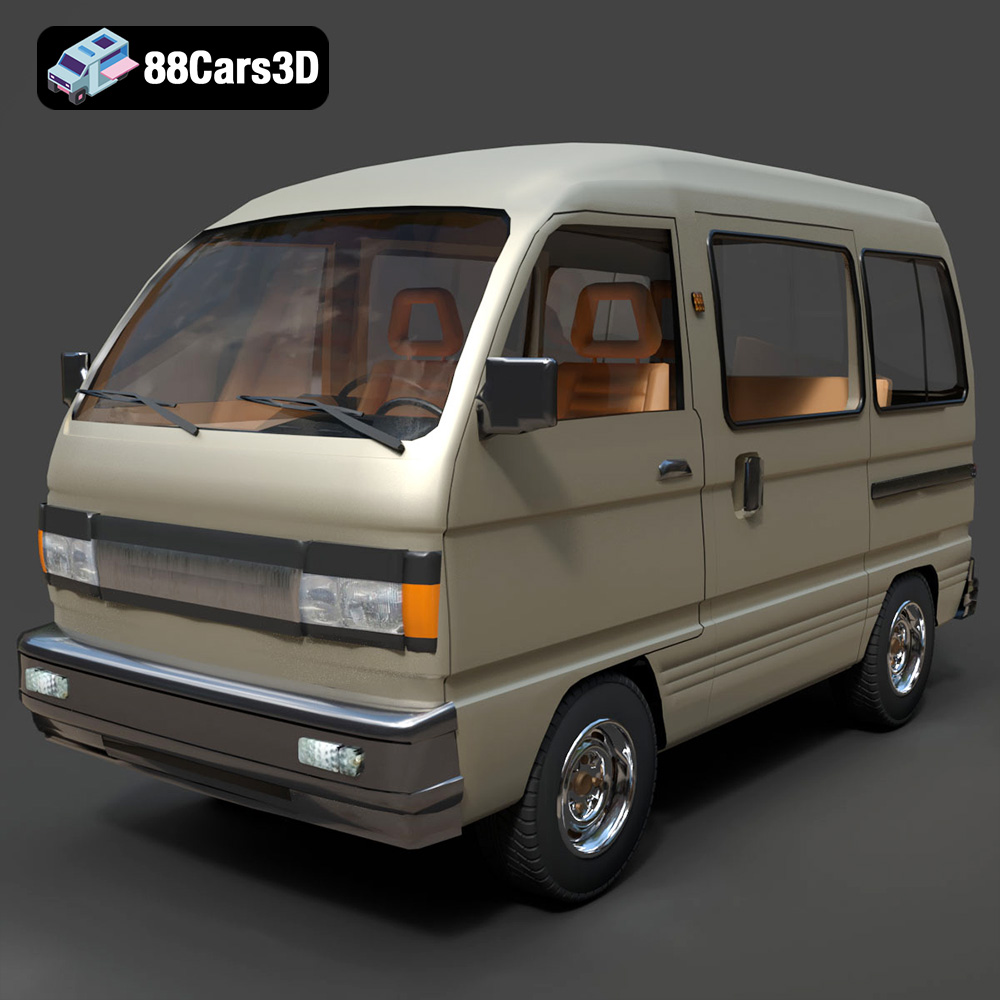
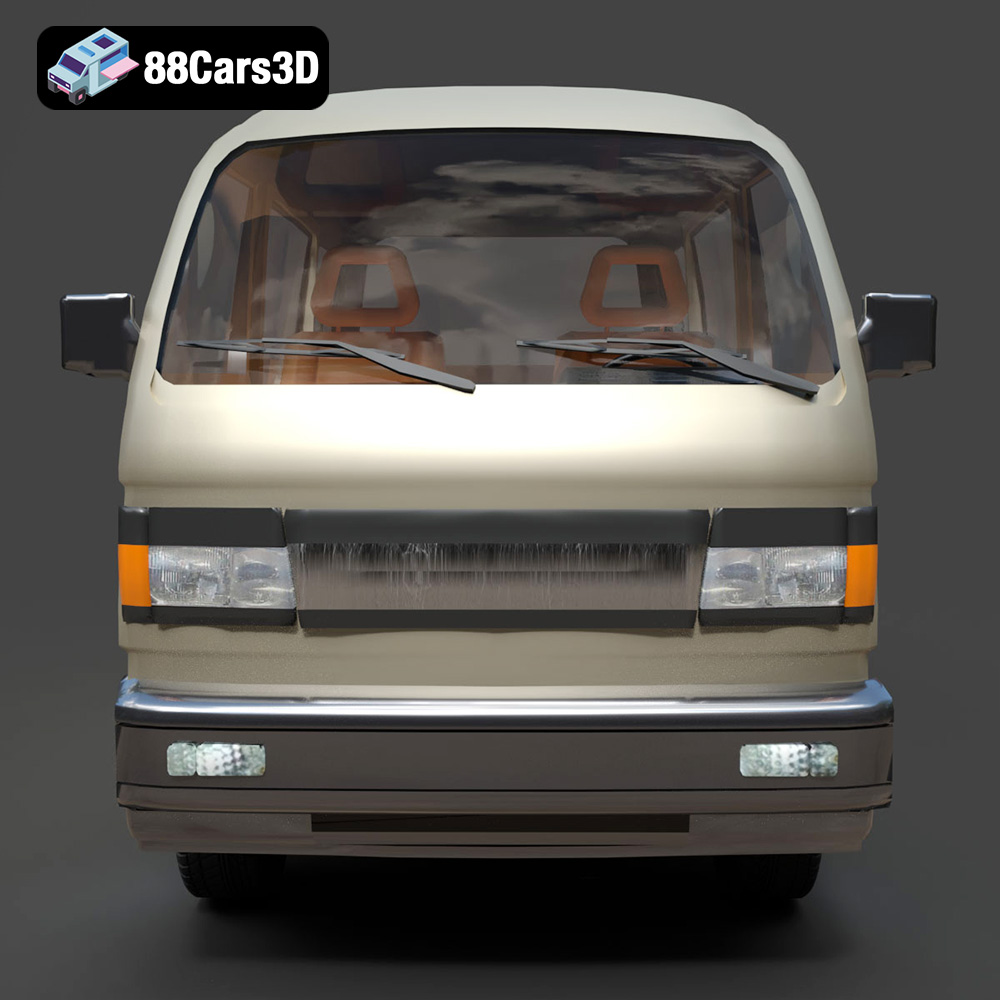
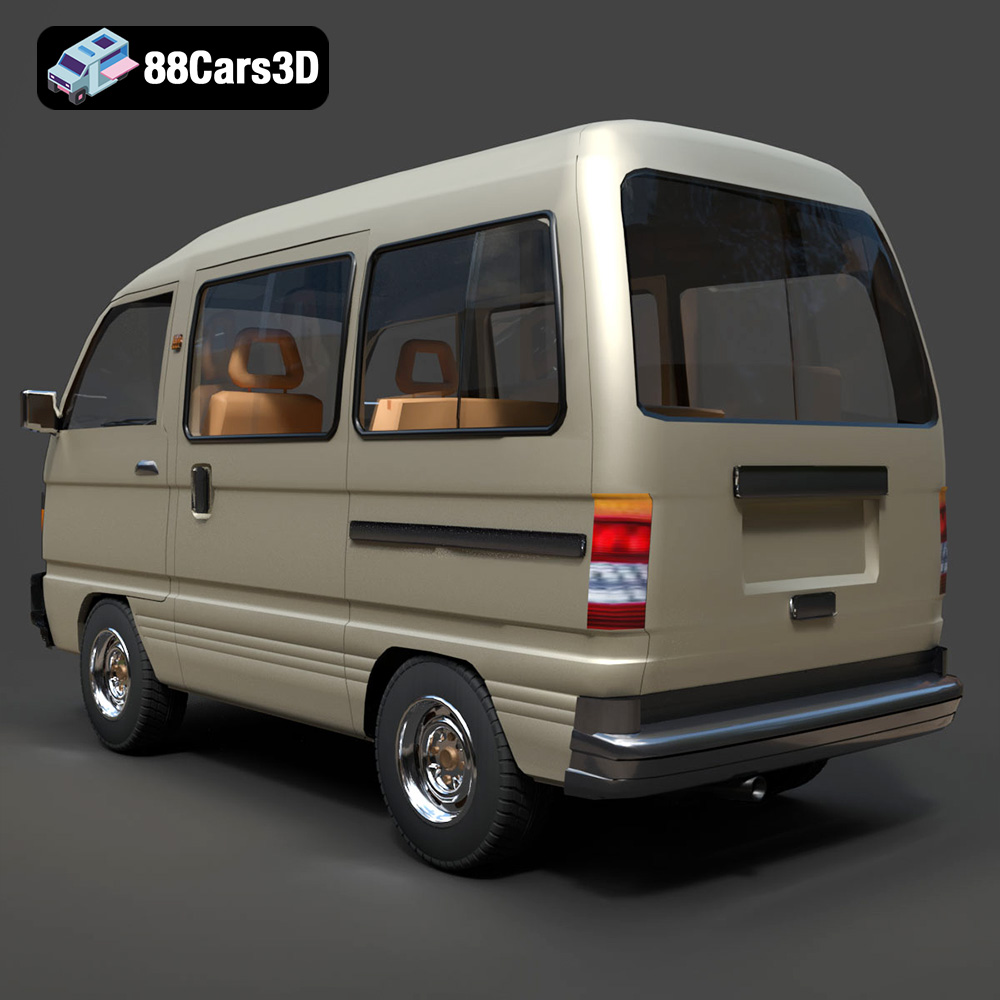
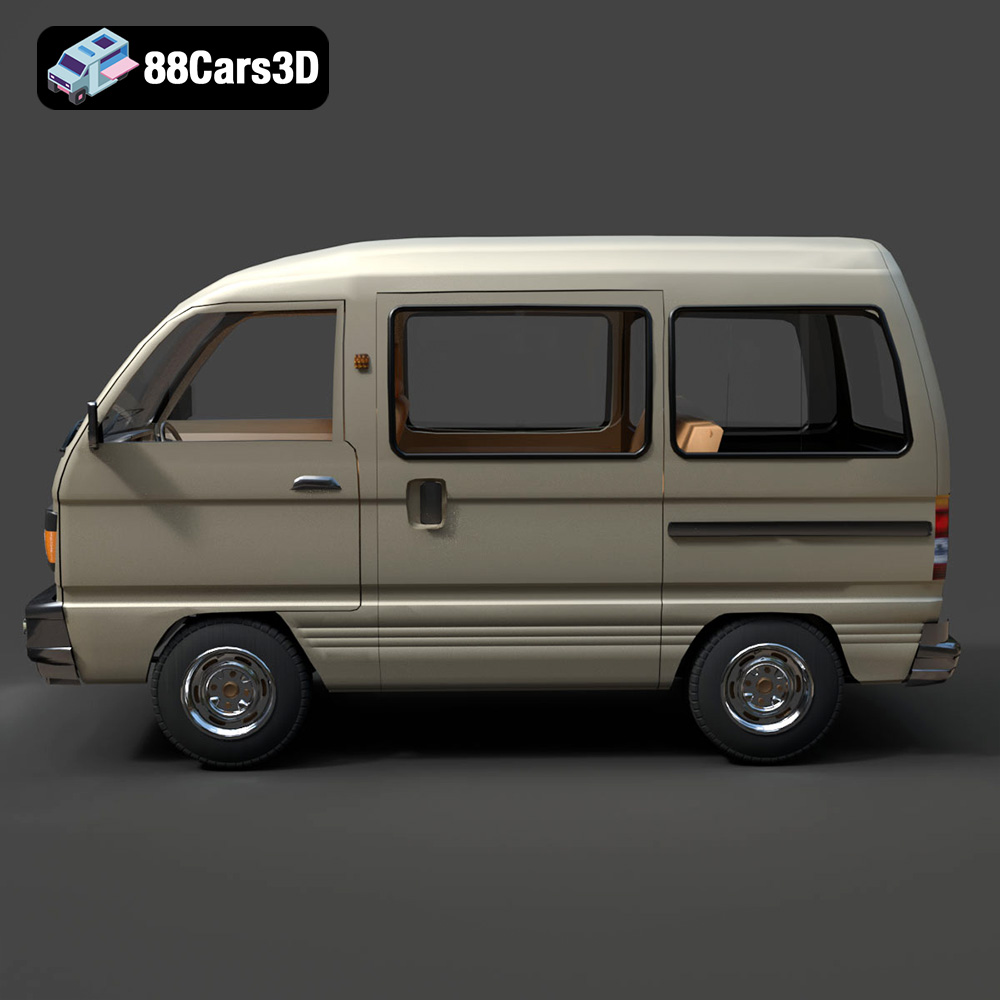
The Suzuki Super Carry 1000 Microvan 3D Model accurately represents the iconic boxy silhouette, which is instantly recognizable to anyone familiar with the vehicle. The flat front fascia, a hallmark of its cabover design, is faithfully reproduced, along with the distinct rectangular headlight housings and period-correct taillights. These elements are not just superficially replicated; their proportions and placement are true to the original, allowing for convincing close-up renders and historically accurate scene compositions. The utilitarian 12-inch steel wheels, functional period-correct side mirrors, and authentic door handles further solidify its retro charm. Crucially, components like the wheels, steering elements, and doors are modeled separately, a vital feature for animators looking to create dynamic scenes involving movement or interaction with the vehicle.
Interior Design for Utilitarian Authenticity
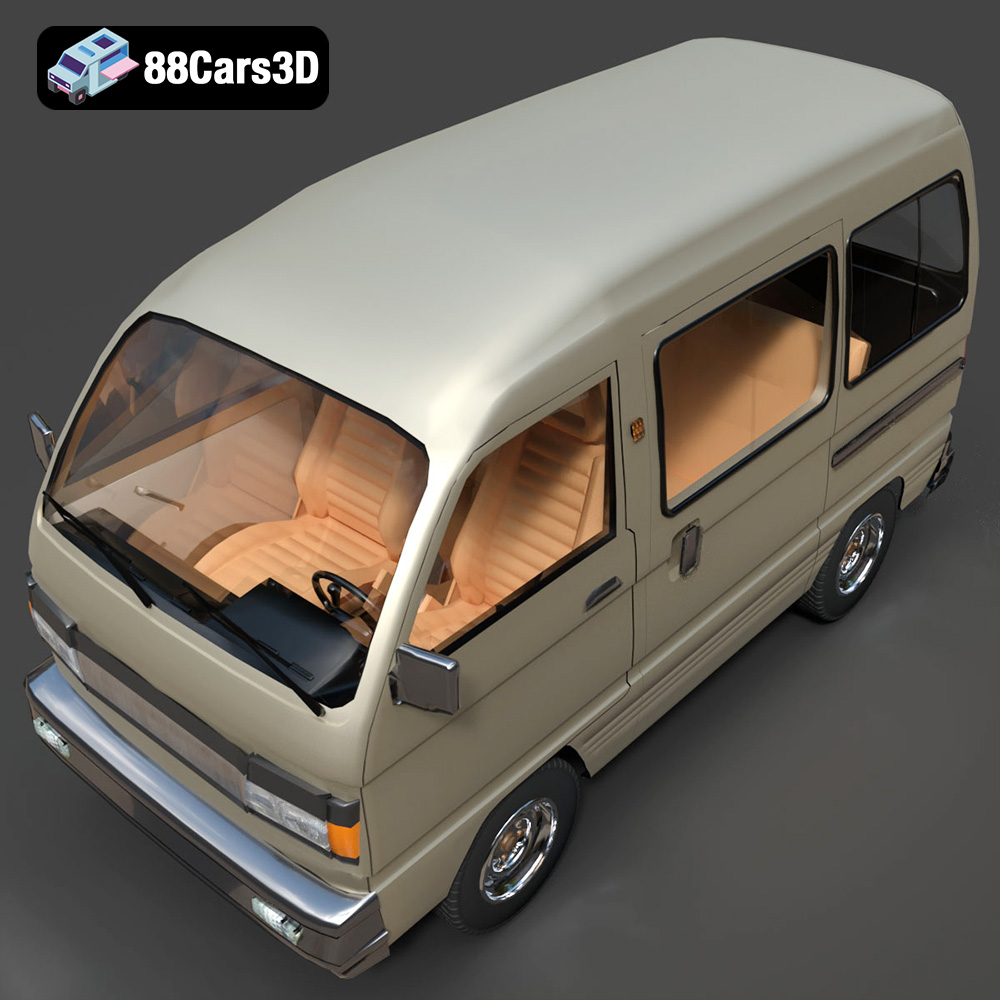
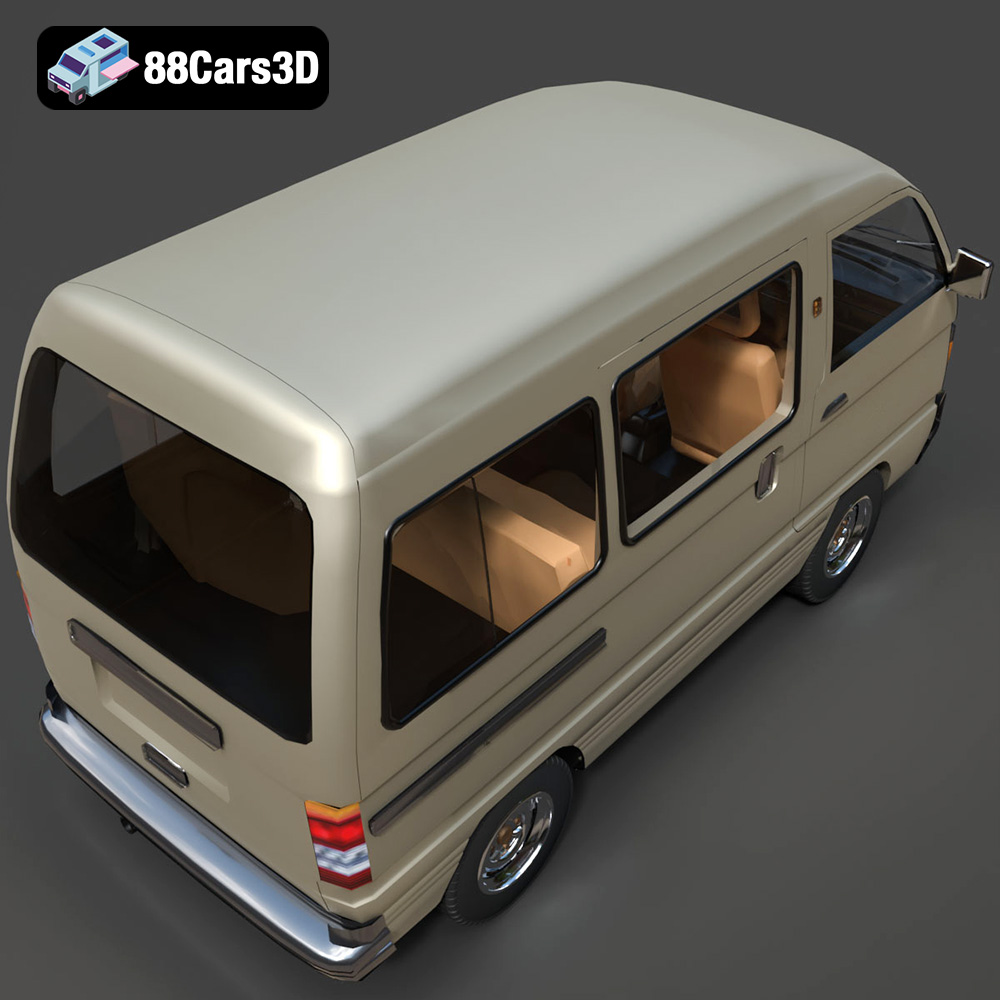
Beyond its exterior, the interior of the Suzuki Super Carry model tells a story of purposeful design. The utilitarian front cabin, with seats authentically mounted over the front axle, is faithfully represented. The spacious, flat-folding rear utility cargo area offers flexibility for various scenarios, from commercial fleet renders to quirky camper conversion projects. The retro, minimalist analog dashboard and simple two-spoke steering wheel capture the era’s functional aesthetic. Basic cloth or vinyl upholstery representation with realistic seam lines adds to the realism, and a manual gear shifter alongside utilitarian center console details round out the authentic experience. This optimized geometry is perfectly suitable for interior close-up rendering, providing rich visual context for any project.
Technical Precision for Professional Workflows
The true value of a professional 3D model lies not just in its visual appeal but in its underlying technical specifications and structure. The Suzuki Super Carry 1000 Microvan 3D Model is engineered with technical precision, making it a robust and reliable asset for demanding projects in automotive rendering, game development, and architectural visualization.
Topology and Poly Count Considerations
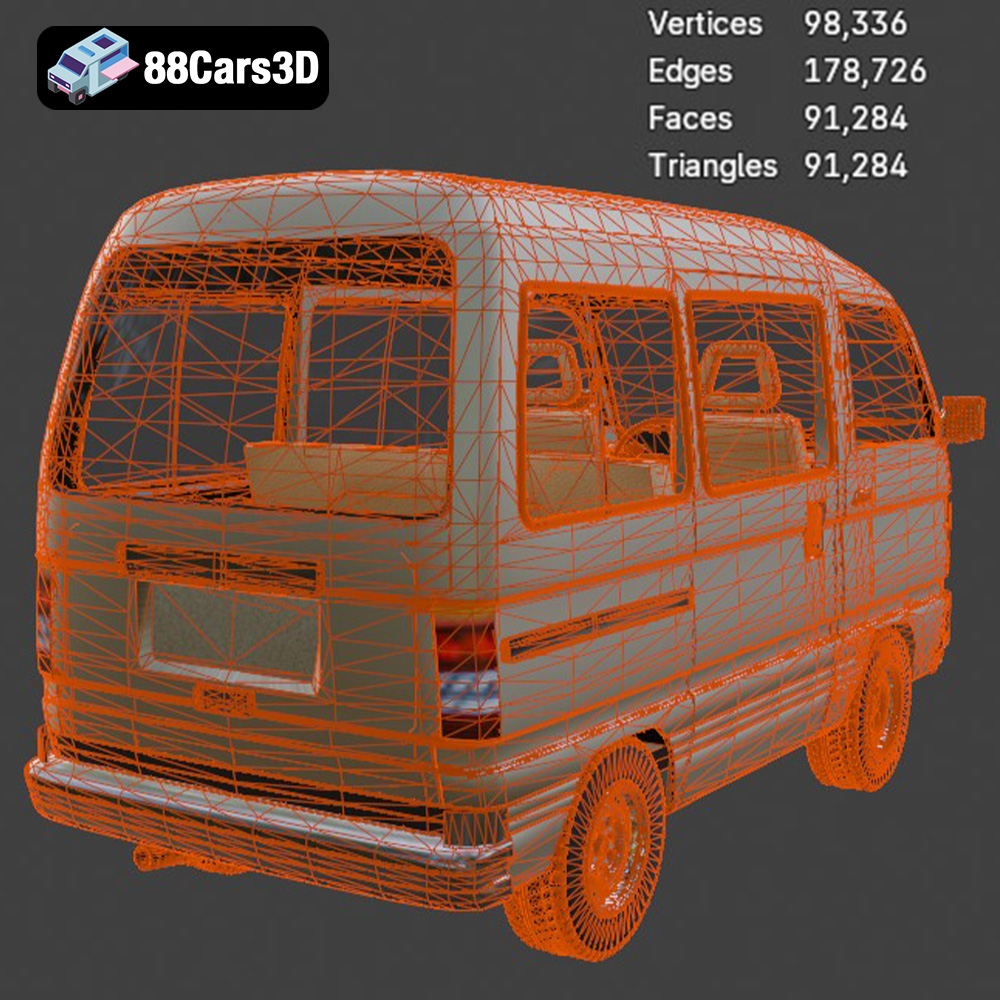
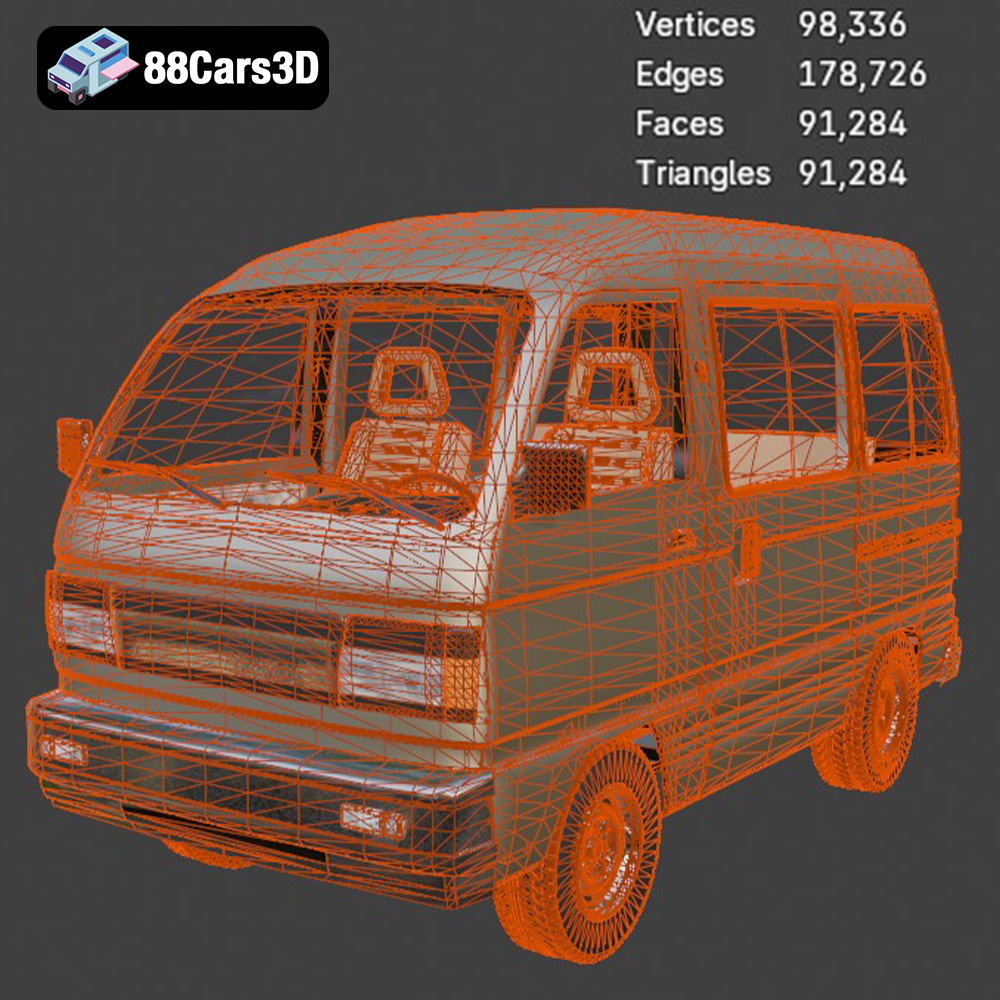
With a robust poly count of 965,800 faces/polygons (and an equivalent number of triangles) and 985,400 vertices, this model is firmly in the “high-poly” category. This dense mesh structure is a significant advantage for projects demanding maximum realism and detail in close-up shots. High-poly 3D car models like this allow for smooth curves, sharp edges, and intricate surface details without relying heavily on normal maps for illusion. The well-organized mesh structure ensures clean deformation during animation and accurate shading, which is paramount for photorealistic automotive rendering. While this polygon count is high for real-time game engines without optimization, the model serves as an excellent master asset from which optimized low-poly versions (with baked normal maps) can be easily derived for game development. This flexibility ensures the asset’s utility across different fidelity requirements.
Real-World Scale, Pivots, and Animation Readiness
Adherence to real-world scale accuracy is a fundamental requirement for professional 3D assets, particularly in architectural visualization and simulation. The Suzuki Super Carry model is built to its true dimensions, ensuring it integrates seamlessly into existing scenes without manual scaling adjustments, saving valuable production time. Furthermore, the model boasts a proper pivot setup for crucial components such as steering, wheel rotation, and the distinctive sliding door mechanisms. This pre-configured pivot information is invaluable for animators, as it simplifies the rigging process and enables the creation of realistic motion with minimal effort. Imagine animating the microvan navigating a bustling city street or a door sliding open for a delivery; these proper pivots are the foundation for such dynamic and convincing scenes, making it a highly desirable asset for any motion graphics or animation studio.
Unleashing Creativity: Applications Across Industries
The versatility of a well-crafted 3D model, such as the Suzuki Super Carry 1000 Microvan, allows it to transcend disciplinary boundaries, finding utility in various sectors from high-end visualization to interactive media.
High-Fidelity Automotive Rendering and Visualization
For architectural visualization studios and advertising agencies, the Suzuki Super Carry model is an ideal candidate for populating retro urban street scenes or adding character to commercial fleet presentations. Its detailed exterior and interior make it perfect for close-up shots, allowing artists to render with stunning realism using engines like V-Ray, Corona, or Cycles in Blender. Envision a scene where the microvan is parked outside a vintage cafe, or speeding through a bustling market street; the model’s fidelity brings these concepts to life. High-quality 3D car models are essential for creating compelling visual narratives that resonate with viewers and clients alike, and this model from 88cars3d.com fits that need perfectly.
Integrating into Game Development and Real-Time Environments
While high-poly, the Suzuki Super Carry 1000 Microvan 3D Model is an excellent foundation for game assets in historically set open-world games, indie simulators, or urban traffic vehicle packs. Its clean topology allows for efficient retopologization and the creation of various Levels of Detail (LODs), crucial for performance optimization in game engines. The included .fbx and .unreal formats streamline integration into Unreal Engine and Unity, allowing developers to quickly bring this classic vehicle into their interactive worlds. Imagine it as a drivable vehicle in a retro-themed racing game, or a background prop adding authenticity to a developing-world scenario. For AR/VR experiences, the model can serve as a detailed base for immersive virtual retro vehicle showcases or even interactive camper conversion configurations, offering users a unique way to engage with the digital asset.
The Tangible Realm: 3D Printing and Prototyping
Beyond the digital screen, the Suzuki Super Carry model’s availability in .stl format opens up a world of possibilities for physical creation. This feature caters to retro diecast hobbyists and model makers who appreciate the ability to bring their digital assets into the tangible world. The provided 3D print settings are highly detailed: recommended scales include 1:32, 1:24, and 1:18, allowing for different display sizes. Specifications like layer height (0.08–0.16 mm), wall thickness (1.2–2.0 mm), and infill (15–25%) offer precise guidance for successful prints. The necessity for supports on specific areas (side mirrors, bumpers, wheel arches) and recommendations for print orientation (angled body, separate wheels) ensure optimal results. Post-processing suggestions, including sanding, primer, and various paint finishes (commercial white, retro pastel blue, or classic post-office red), guide users towards achieving a high-quality finished physical model, transforming a digital asset into a cherished collectible.
Customization and Future-Proofing Your Digital Assets
A truly valuable 3D model offers more than just aesthetic appeal; it provides flexibility and ease of modification, ensuring its longevity and applicability across multiple projects. The Suzuki Super Carry 1000 Microvan 3D Model is designed with customization in mind, empowering artists and developers to tailor it precisely to their creative vision.
Tailoring the Super Carry to Your Vision
The ability to customize a vehicle model is paramount for diverse client projects or unique personal endeavors. With the Suzuki Super Carry, artists can easily change the exterior color, choosing from typical factory colors like Commercial White, Pastel Blue, Forest Green, or Bright Red to match a specific era or brand. The interior configuration is also adaptable, allowing for transitions between an empty cargo van setup, ideal for logistics visualizations, and a multi-seat passenger layout for urban transport scenes. Beyond aesthetics, the model facilitates adjustments to wheel designs, moving from standard steelies to retro aftermarket alloys, offering further personalization. Artists can even adapt lighting to suit various moods, from sunny urban streets to moody, rain-slicked neon alleys. Perhaps most powerfully, the flat side panels are perfectly suited for adding custom decals or business branding, instantly transforming the microvan into a bespoke commercial vehicle for any virtual company or historic setting.
The Value of Well-Structured 3D Car Models
The ease with which a 3D model can be customized is a direct reflection of its underlying quality and organization. The Suzuki Super Carry 1000 Microvan 3D Model features a high-poly, well-organized mesh structure that simplifies these modifications. Clean topology ensures that alterations, such as adjusting the interior layout or adding new elements, can be performed without introducing unwanted artifacts or complex cleanup. This structured approach means the asset isn’t just a static object; it’s a dynamic foundation for creative iteration. Investing in such high-quality 3D car models from marketplaces like 88cars3d.com ensures that your digital assets are not only visually impressive but also technically robust, maximizing their value and future-proofing your projects against evolving creative demands.
Conclusion
The Suzuki Super Carry 1000 Microvan 3D Model is more than just a digital representation of a classic vehicle; it’s a testament to the power of meticulous 3D artistry and technical precision. Its high-fidelity detail, comprehensive file format support, and thoughtful organization make it an indispensable asset for a diverse array of professionals. Whether your project demands photorealistic automotive rendering, compelling game assets for real-time environments, a tangible 3D-printed collectible, or dynamic architectural visualization, this model provides the quality and flexibility needed to succeed.
From its faithfully recreated exterior and utilitarian interior to its animation-ready components and robust technical specifications, the Suzuki Super Carry 1000 Microvan 3D Model offers unparalleled versatility. It’s a prime example of how expert-level 3D car models can bridge the gap between historical accuracy and modern digital application. Enhance your next project with this iconic piece of automotive history and explore its full potential. Discover this and many other high-quality 3D car models by visiting 88cars3d.com today.
Featured 3D Model
Suzuki Super Carry 1000 Microvan 3D Model 3D Printable STL
The Suzuki Super Carry 1000 Microvan 3D Model is a high-detail digital recreation of the legendary compact utilitarian workhorse from the 1980s and 1990s. Known for its incredible space efficiency and rugged simplicity, the Super Carry (often associated with the SK410 generation) combines a classic cabover design with highly practical proportions, making it a global icon of urban logistics and everyday transport. This 3D model accurately represents the iconic boxy silhouette, flat front fascia, classic headlight housings, dual sliding side doors, rear liftgate, and tiny but functional 12-inch steel wheels. Built with dense, clean topology for premium visual fidelity and real-world scale accuracy, it is ideal for close-up rendering, retro urban environment visualization, animation, indie game development, and AR/VR classic vehicle showcases. Perfect for retro street scenes, developing-market architectural visualizations, commercial fleet renders, and quirky camper conversion projects.
$39.99
Product Image Gallery
Related Tags
.automotive
.blend
.cabover
.fbx
.obj
.rendering
.stl
.suzuki
1000cc
3d printing
car-3d-model
game asset
high poly
kei-van
microvan
retro-van
super-carry
utility-vehicle
