

The world of 3D visualization has revolutionized how we design, showcase, and interact with complex objects, none more so than in the automotive industry. From concept development to marketing campaigns, high-fidelity 3D car models are indispensable tools for artists, engineers, and developers alike. They bridge the gap between imagination and reality, offering unparalleled flexibility and precision. Today, we delve into the intricate details of professional-grade 3D automotive assets, using a prime example that embodies both luxury and technical excellence: the Genesis G70 2018 3D Model.
This exquisite digital recreation of the acclaimed Korean luxury sports sedan is more than just a visual treat; it’s a testament to meticulous digital craftsmanship. Offered by 88cars3d.com, this model provides a versatile foundation for a multitude of applications, from stunning photorealistic renders to detailed 3D prints. Join us as we explore the technical facets, workflow integrations, and creative possibilities that a premium asset like the Genesis G70 2018 3D Model unlocks for professionals.
Understanding 3D Model File Formats
One of the most crucial aspects of working with 3D assets, especially high-detail 3D car models, is understanding the various file formats available. Each format serves a specific purpose, offering unique advantages for different stages of a project or different software environments. The Genesis G70 2018 3D Model is provided in a comprehensive suite of formats, ensuring maximum compatibility and utility across diverse professional workflows.
.blend – Fully Editable Blender Scene with Materials
The .blend format is native to Blender, a powerful open-source 3D creation suite. When you receive a .blend file, you’re getting a complete Blender scene, often including materials, lighting setups, cameras, and even animation data. For the Genesis G70 2018 3D Model, this means artists who prefer Blender have immediate access to a fully set up project, ready for rendering or further modification. The inherent non-destructive modifiers and robust rigging capabilities within Blender make .blend files ideal for detailed customization and animation work without needing to import and re-configure everything from scratch. It’s the go-to format for Blender users seeking an editable base for their automotive rendering projects.
.fbx – Ideal for Unreal, Unity, and Real-Time Pipelines
.fbx (Filmbox) is a proprietary file format developed by Autodesk, widely recognized as the industry standard for interoperability between different 3D applications and game engines. It’s particularly favored for animation, rigging, and exchanging models with complex scene data. For real-time applications like Unreal Engine or Unity, the .fbx format is often the preferred choice because it efficiently transfers geometry, materials, textures, cameras, and animation curves. When importing the Genesis G70 2018 3D Model as .fbx, developers can expect a well-structured asset, ready for game development or interactive experiences, though often requiring optimization for polygon-heavy hero models.
.obj – Universal Format for Cross-Software Compatibility
The .obj (Wavefront OBJ) format is one of the oldest and most universally supported 3D file formats. It’s a simple, text-based format that primarily stores geometric data like vertices, normals, and UV coordinates. While it doesn’t typically embed animation or advanced material properties (these are usually stored in a separate .mtl file), its widespread compatibility makes it an excellent choice for basic model exchange between virtually any 3D software. For the Genesis G70 2018 3D Model, the .obj provides a clean mesh that can be imported into any application, serving as a reliable foundation before applying specific materials or rigging in the target software.
.glb – Optimized for AR, VR, and Browser-Based Display
.glb (GL Transmission Format Binary) is the binary version of the glTF format, designed for efficient transmission and loading of 3D scenes and models by applications. It’s becoming the “JPEG of 3D” due to its optimization for web-based, AR (Augmented Reality), and VR (Virtual Reality) experiences. A single .glb file can embed geometry, textures, materials, and animations, making it highly portable. For presenting the Genesis G70 2018 in a web viewer, an AR app on a mobile device, or a VR showroom, the .glb format offers a lightweight yet visually rich solution, though the heavy poly count of this particular model would still require significant decimation for truly performant real-time AR/VR usage.
.stl – Suitable for 3D Printing Output
The .stl (STereoLithography) format is the cornerstone of 3D printing. It represents a 3D model as a series of connected triangles, defining only the surface geometry of an object without color, texture, or other CAD attributes. While simple, its ubiquity in additive manufacturing means that any 3D printer slicing software can interpret an .stl file. The Genesis G70 2018 3D Model’s availability in .stl format makes it directly suitable for 3D printing, enabling hobbyists and professionals to create physical scale models or prototypes of this luxury sedan, as outlined in the detailed 3D print settings.
.ply – Precision Mesh Format for CAD or Analysis
.ply (Polygon File Format or Stanford Triangle Format) is another widely used format for storing 3D data, particularly from 3D scanners. It supports properties such as color, transparency, surface normals, and texture coordinates. While .obj is more common for general geometry, .ply is often favored in scientific, CAD, or analysis applications where precision and additional per-vertex or per-face data are critical. It offers a robust alternative for detailed mesh data, useful for specific engineering or reverse-engineering workflows when working with 3D car models.
.unreal – Engine-Ready Asset for Real-Time Environments
The .unreal designation implies an asset specifically packaged or optimized for Unreal Engine. This could range from an .fbx import that has been carefully configured within Unreal with appropriate materials, colliders, and LODs, to a complete Unreal Engine asset package. For the Genesis G70 2018, an .unreal asset would aim to provide an immediate drag-and-drop solution for Unreal users, streamlining the integration process into virtual production, interactive experiences, or high-end game development. While the high poly count still necessitates optimization for gameplay, this format suggests a starting point designed for the engine’s ecosystem.
.max – Editable 3ds Max Project for Animation and Rendering
Finally, the .max format is the native file format for Autodesk 3ds Max, a leading software for 3D modeling, animation, and rendering in architectural visualization and product design. Similar to .blend, a .max file contains a complete scene, including all objects, lights, cameras, materials, and animations specific to 3ds Max. For users of this powerful software, the Genesis G70 2018 3D Model in .max format offers an immediately editable and render-ready scene, leveraging the software’s robust rendering capabilities and extensive plugin ecosystem for high-quality automotive rendering.
The Art of Digital Automotive Rendering: Beyond Photorealism
Automotive rendering is a specialized field that demands an exceptional level of detail and realism. It’s not just about creating a pretty picture; it’s about conveying the tactile quality of materials, the interplay of light and shadow on sculpted surfaces, and the sheer emotion a vehicle evokes. Premium 3D car models are the bedrock of achieving this artistic and technical feat.
Capturing the Essence: Exterior and Interior Fidelity
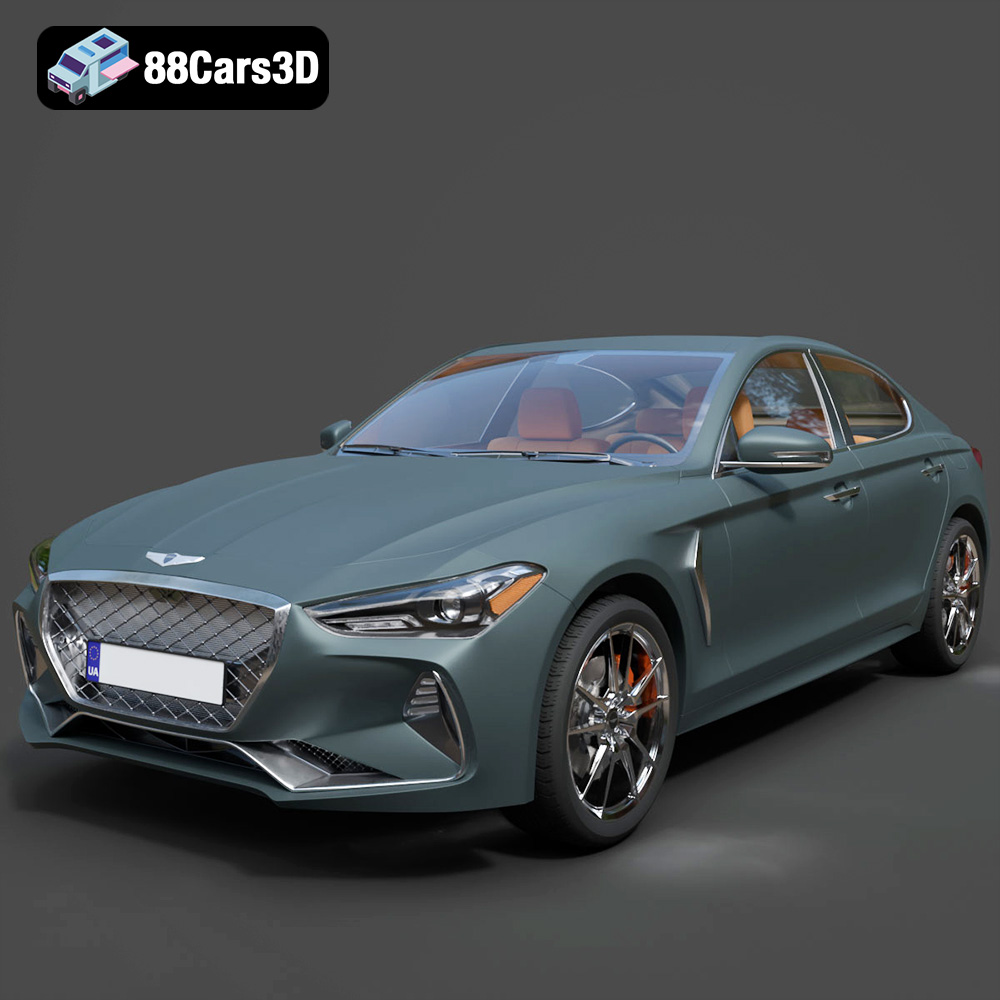
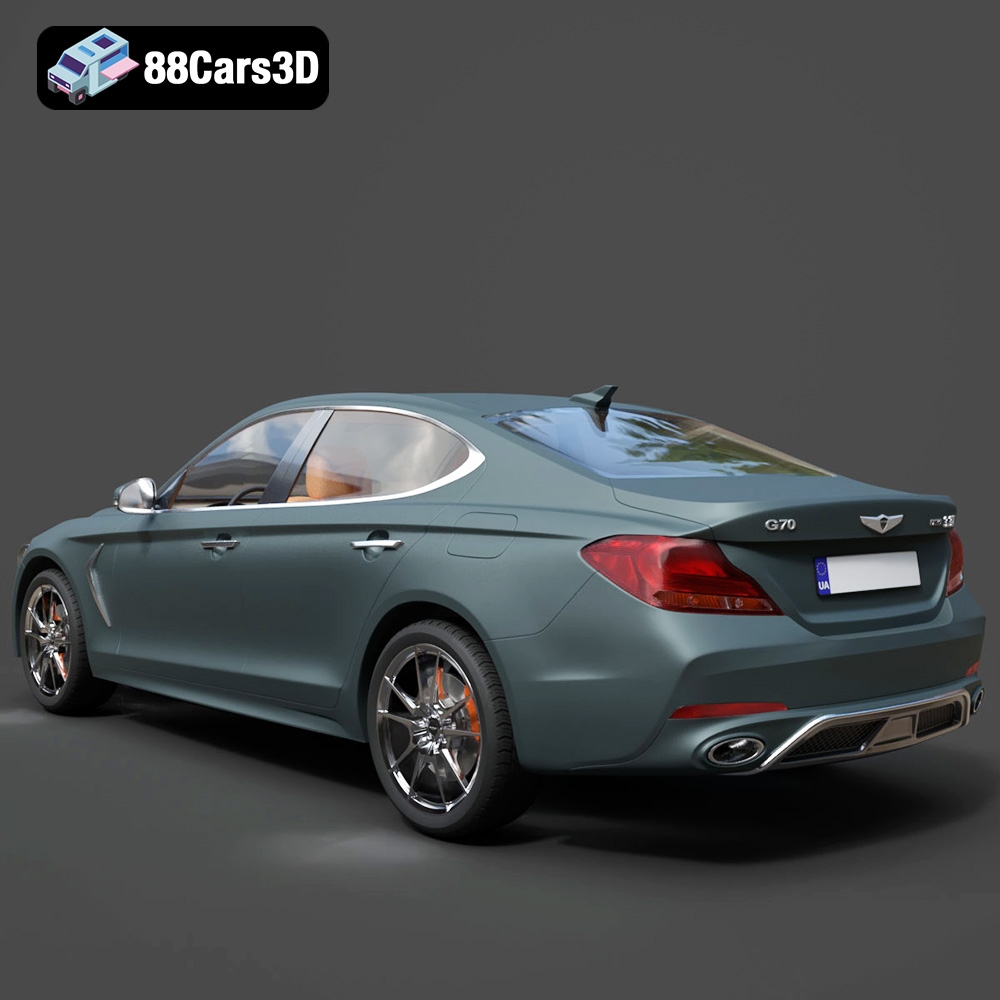
The Genesis G70 2018 3D Model exemplifies the meticulous attention to detail required to capture a vehicle’s essence. The original G70 established itself with an aggressive yet refined aesthetic, and this digital counterpart faithfully reproduces every curve and line. The distinctive front fascia, featuring the signature Crest Grille, is rendered with precise geometry, allowing for accurate light reflections that define its form. The sharp LED headlight assemblies, intricate in their real-world design, are recreated with similar fidelity, critical for close-up renders that showcase technological sophistication.
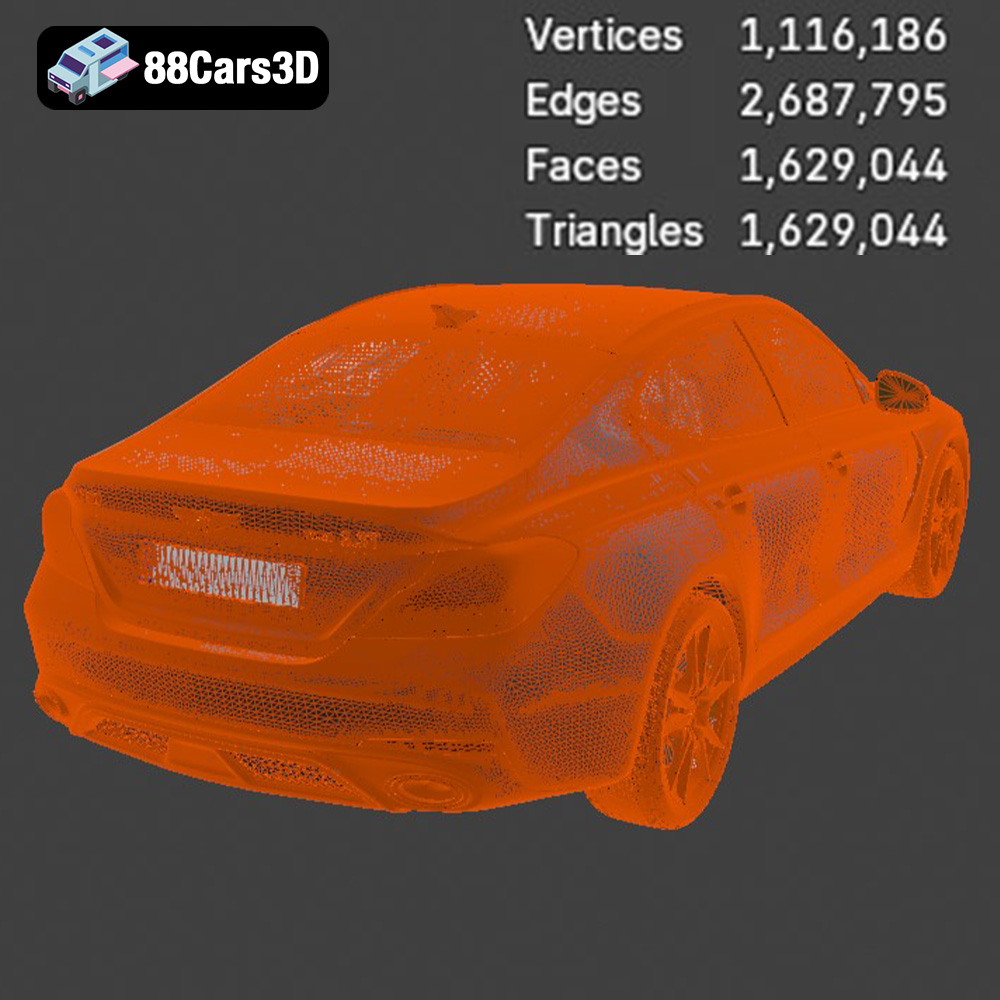
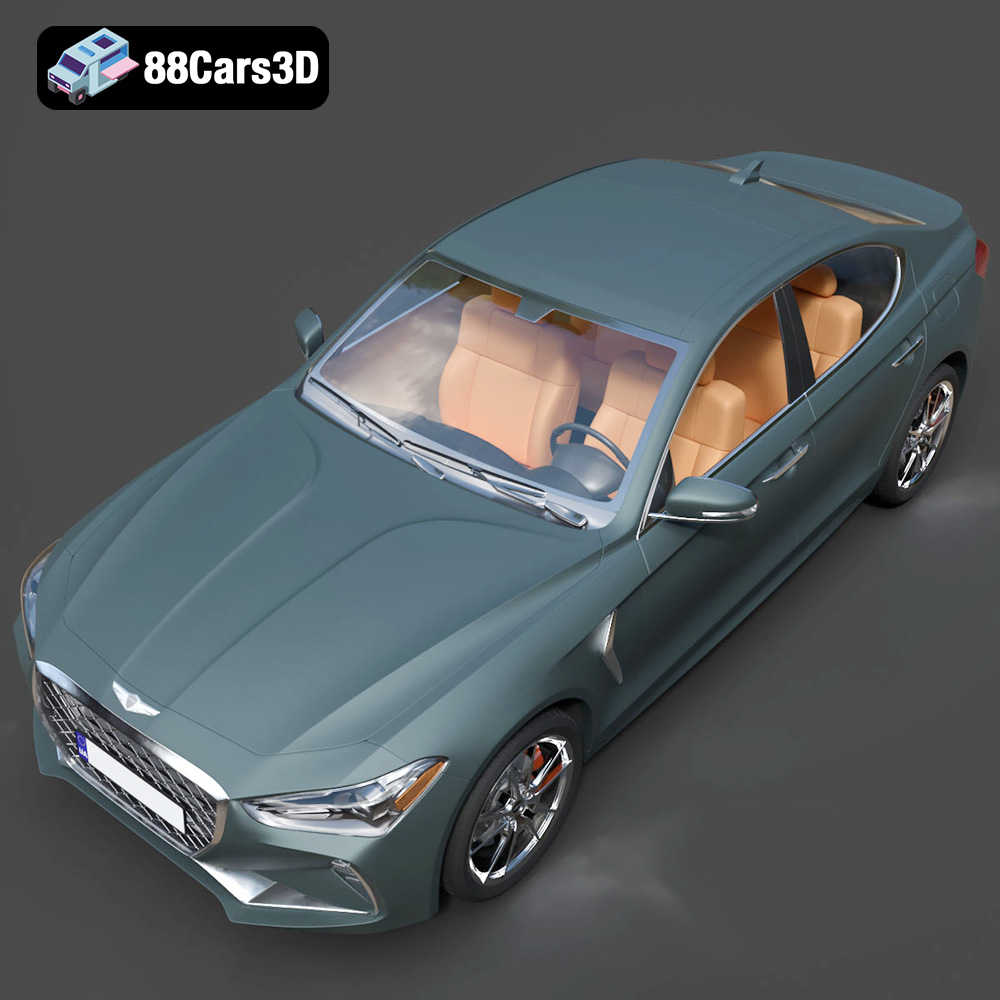
Beyond the exterior, the model boasts a comprehensively detailed interior. The luxury driver-focused cabin layout is authentically reproduced, from the premium dashboard with its central infotainment screen to the intricate seating geometry featuring classic luxury quilted/perforated leather textures. This level of detail, achieved through a dense and uncompromising topology of over 1.6 million triangles, provides maximum visual fidelity for extreme close-up rendering, ensuring that even the subtle stitching patterns and brushed aluminum trim representations hold up under intense scrutiny in cinematic automotive visualization or high-end commercial mockups.
Advanced Shading and Lighting Techniques
Achieving photorealism in automotive rendering hinges on the masterful application of shading and lighting. High-quality 3D car models like the Genesis G70 2018 3D Model are designed to facilitate this. Leveraging Physically Based Rendering (PBR) workflows, artists can assign materials that accurately simulate the interaction of light with various surfaces—be it the metallic flake of a car paint, the subtle refraction of window glass, the specular sheen of chrome accents, or the nuanced absorption and scattering of light by leather upholstery. The model’s well-organized mesh structure allows for efficient UV unwrapping, crucial for applying high-resolution textures for elements like tire treads, brake calipers, and interior fabrics.
In software like 3ds Max or Blender, paired with powerful rendering engines such as V-Ray, Corona Renderer, or OctaneRender, artists can craft complex lighting scenarios. Studio lighting setups emphasize the vehicle’s form and reflections, while environmental HDRI (High Dynamic Range Image) lighting grounds the car in a realistic setting, capturing the nuances of natural light. The Genesis G70 2018 3D Model, with its accurate real-world scale and proper pivot setups for animation, becomes a dynamic canvas for these advanced techniques, ensuring the final output is not just a render, but a believable digital photograph or film sequence.
Integrating High-Fidelity 3D Car Models into Professional Workflows
The versatility of a premium 3D car model extends across numerous professional applications. Its value lies not just in its visual appeal, but in its ability to seamlessly integrate into diverse projects, serving as a reliable and high-performance asset.
Architectural Visualization and Commercial Advertising
In architectural visualization (ArchViz), the inclusion of realistic vehicles is paramount for breathing life into static building renders. A high-quality model like the Genesis G70 2018 immediately elevates the perceived luxury and modernity of a scene. Imagine this sleek sedan parked gracefully in front of a contemporary urban high-rise or cruising down a tree-lined avenue in a proposed development. Its presence adds scale, context, and a touch of aspirational lifestyle. For commercial advertising, these 3D car models are indispensable. They allow brands to create bespoke scenes, showcase vehicles in environments that don’t yet exist, or produce dynamic sequences for online campaigns without the logistical complexities and costs of physical photo shoots or film productions. The ability to change exterior paint colors, modify wheel setups, or adjust interior materials digitally, as provided by the Genesis G70 2018 3D Model, offers unparalleled creative freedom for luxury brand campaigns and upscale architectural renders.
Game Development and Real-time Engines (Unreal Engine Focus)
While the Genesis G70 2018 3D Model is described as a “heavy ‘hero’ asset” at 1.62 million triangles, its application in game development and real-time engines like Unreal Engine is still significant, albeit with specific considerations. High-polygon models serve as the foundational source for creating optimized game assets. For a drivable vehicle in an interactive environment, the raw poly count would indeed be too high for efficient real-time rendering. The typical workflow involves a process called “retopology,” where a lower-polygon mesh is created over the high-detail model, preserving the overall shape and contours. The fine details from the high-poly Genesis G70 model (such as the intricate headlight assemblies or dashboard elements) are then “baked” into normal maps, displacement maps, and ambient occlusion maps, which are applied to the low-poly mesh. This allows the low-poly model to appear highly detailed while being computationally inexpensive.
Furthermore, Level of Detail (LOD) systems are crucial. Multiple versions of the Genesis G70 model, each with progressively lower polygon counts, would be created. The engine then automatically switches between these LODs based on the viewer’s distance from the car, ensuring optimal performance without sacrificing visual quality up close. The included .fbx and .unreal formats provide excellent starting points for this process, offering a well-organized mesh and proper pivot setups for steering, wheel rotation, and door articulation, which are essential for creating functional and immersive real-time game assets and interactive simulations.
The Tangible World: 3D Printing the Genesis G70 2018
The boundary between digital and physical is increasingly blurred, thanks to technologies like 3D printing. A meticulously crafted 3D model like the Genesis G70 2018 isn’t just for screens; it can be brought into existence as a tangible object, offering a unique avenue for hobbyists and professionals alike.
From Digital Mesh to Physical Miniature
The Genesis G70 2018 3D Model’s availability in the .stl format, coupled with its high-poly, well-organized mesh structure, makes it an excellent candidate for 3D printing. The transition from a digital mesh to a physical miniature requires the model to have “manifold geometry,” meaning it has a completely closed surface without any holes or intersecting faces, ensuring it can be sliced and printed correctly. This model’s design integrity supports this, making it an ideal base for creating highly detailed, large-scale luxury diecast hobbyist displays or even automotive prototypes.
Imagine holding a finely detailed replica of the G70, studying its aggressive stance and elegant lines from every angle. This application caters to car enthusiasts, designers wanting a physical review model, or even educators demonstrating automotive design principles. The ability to scale the model (recommended at 1:24, 1:18, or 1:12) allows for flexibility in print size, from desktop display pieces to more substantial collectibles.
Optimizing Print Settings and Post-Processing
Achieving a high-quality 3D print of a complex automotive model like the Genesis G70 2018 requires careful consideration of print settings and post-processing. The product description provides excellent guidelines: a layer height of 0.08–0.16 mm for FDM printers (or even finer for resin, especially at smaller scales) ensures smooth surfaces and captures minute details. A wall thickness of 1.2–2.0 mm provides structural integrity, while an infill of 15–25% balances strength with material usage. Supports are crucial for overhangs such as side mirrors, door handles, exhaust tips, and bumper overhangs to prevent print failures and maintain intricate geometry.
Print orientation is also key; printing the body angled can often result in a smoother surface finish, while wheels are typically printed separately for optimal detail. After printing, post-processing is where the model truly comes to life. Sanding removes layer lines, primer prepares the surface, and a careful paint job using standard factory colors (like Siberian Ice, Mallorca Blue, or Havana Red) or custom schemes, followed by gloss and chrome detailing, transforms the raw print into a stunning miniature. This hands-on process allows for deep engagement with the vehicle’s design and brings a tangible dimension to the digital asset.
Customization and Versatility for Every Project
The true power of a high-quality 3D asset lies in its adaptability. A professional 3D model isn’t a rigid, one-size-fits-all solution; it’s a flexible foundation that can be tailored to meet diverse creative and technical demands.
Tailoring Aesthetics and Performance
The Genesis G70 2018 3D Model offers extensive customization options, making it a highly versatile asset for any project. Artists can easily change exterior paint colors to match classic Genesis factory options or experiment with bespoke hues to suit a particular mood or brand aesthetic. This is critical for automotive rendering, where color choice can dramatically alter the perception of luxury and performance. Beyond paint, the ability to modify wheel setups allows for exploring different visual styles—from stock luxury alloys to aggressive aftermarket forged designs—which significantly impacts the vehicle’s character. Interior materials can also be adjusted, switching between classic black leather with red stitching for a sporty feel, or elegant beige/ivory layouts for a more sophisticated ambiance. These customization options ensure that the Genesis G70 2018 3D Model can be seamlessly integrated into a wide range of scenes, from high-octane action sequences to serene urban landscapes.
Future-Proofing Your Digital Assets
Investing in a high-quality, well-structured 3D car model from a reputable source like 88cars3d.com is a form of future-proofing your digital asset library. Such models, with their clean topology and organized components, provide an excellent base for future modifications, updates, or conversions to new rendering technologies. The Genesis G70 2018 model, with its separate wheels, steering components, and doors, is inherently set up for animation, allowing for dynamic camera movements, opening doors, or realistic driving sequences. This modularity means the asset retains its value over time, adaptable to evolving project requirements without needing to start from scratch. Whether you’re working on a new visualization, an interactive experience, or even a different scale of 3D print, the underlying quality and flexibility of this 3D model ensure it remains a valuable tool in your creative arsenal.
Conclusion
The journey from a blank canvas to a photorealistic image or a tangible object is a complex one, yet immensely rewarding. High-quality 3D car models are the silent workhorses that empower this creative process, offering precision, versatility, and unparalleled detail. The Genesis G70 2018 3D Model stands out as a prime example of what a premium digital automotive asset can achieve, serving as a powerful tool for a diverse range of applications, from cutting-edge automotive rendering and architectural visualization to immersive game assets and detailed 3D prints.
Its comprehensive technical specifications, including a robust mesh of over 1.6 million triangles, coupled with availability in a wide array of file formats (.blend, .fbx, .obj, .glb, .stl, .ply, .unreal, .max), ensures it fits seamlessly into any professional workflow. Whether you’re a seasoned 3D artist aiming for cinematic photorealism, a game developer crafting immersive worlds, or a hobbyist eager to bring a luxury sedan to life on your 3D printer, this model provides the foundation for exceptional results. For those seeking to elevate their projects with top-tier 3D assets, explore the exquisite collection of 3D car models available at 88cars3d.com. The Genesis G70 2018 3D Model is ready to drive your next masterpiece.
Featured 3D Model
Genesis G70 2018 3D Model 3D Printable STL
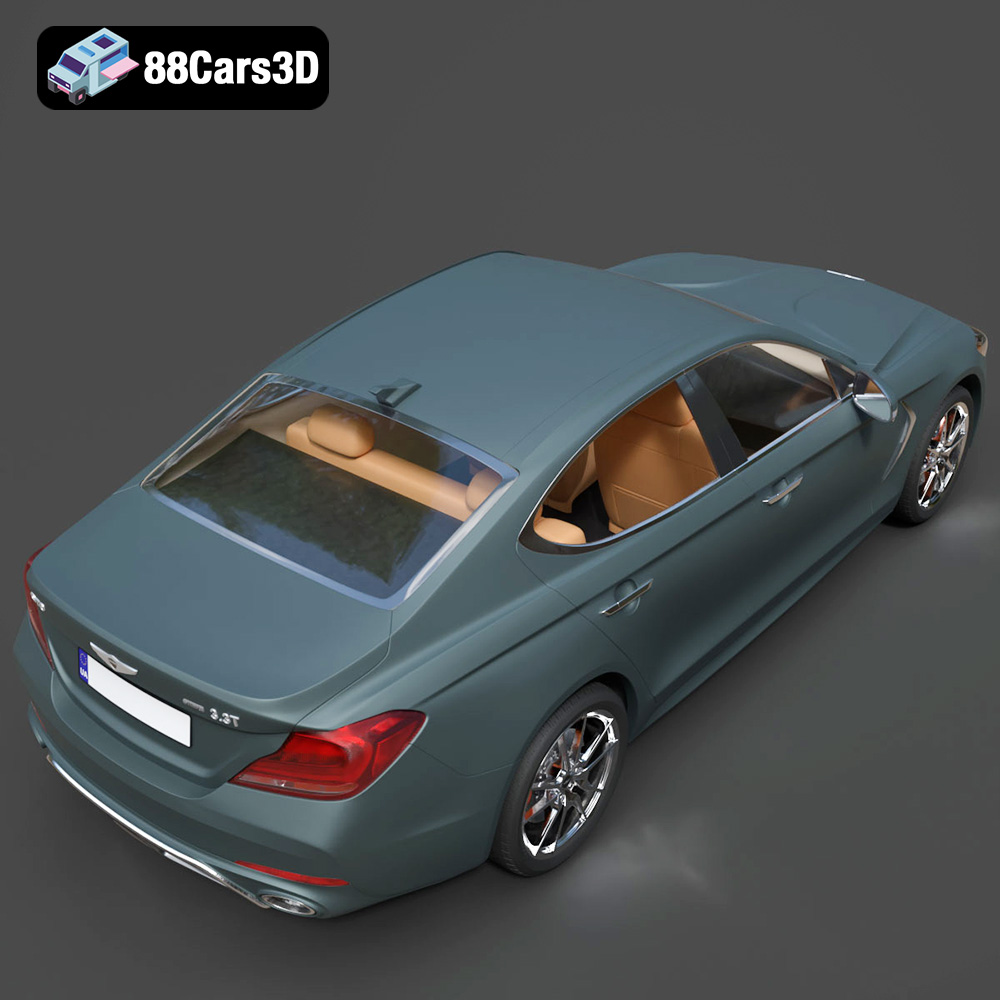
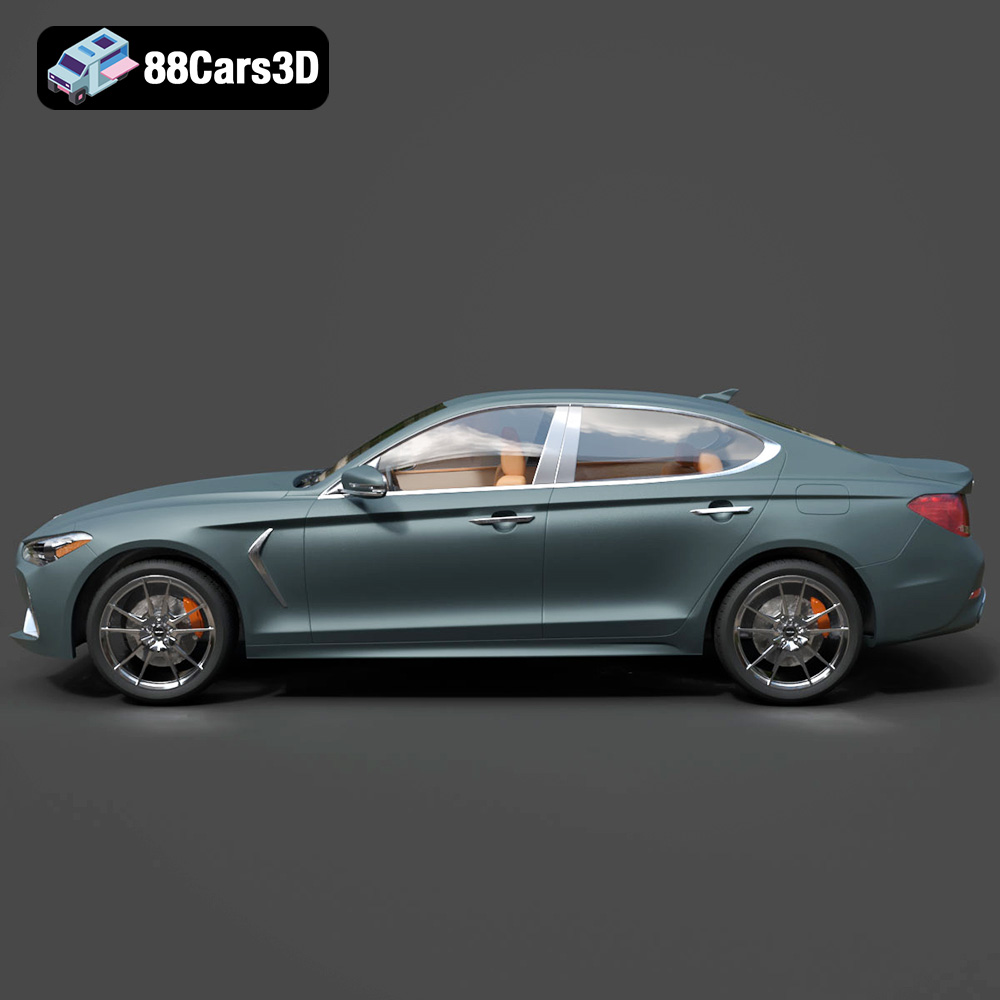
The Genesis G70 2018 3D Model is a premium, high-detail digital recreation of the acclaimed Korean luxury sports sedan. As the vehicle that firmly established Genesis as a serious competitor in the compact executive segment, the 2018 G70 combines an aggressive, athletic stance with refined elegance and world-class luxury design. This 3D model accurately represents the original pre-facelift styling, featuring the signature wide Crest Grille, sharp LED headlight assemblies with intricate detailing, sporty front fender vents, dynamic character lines, and a sleek, aerodynamic rear profile with dual exhausts. Built with dense, uncompromising topology (over 1.6 million triangles), it provides maximum visual fidelity for extreme close-up rendering, cinematic automotive visualization, commercial mockups, and high-end 3D printing.
$59.00
Product Image Gallery


Related Tags
.automotive
.blend
.fbx
.g70
.genesis
.obj
.rendering
.stl
2018-g70
3d printing
car-3d-model
compact-executive
high poly
korean-auto
luxury car
sports-sedan
