

Mastering Realistic Reflections and Refractions in Automotive Renders for 88cars3d.com
In the competitive world of 3D visualization, especially in automotive design and rendering, the pursuit of realism is paramount. A beautifully modeled car can fall flat without the intricate dance of light across its surfaces. Reflections and refractions are not just aesthetic enhancements; they are fundamental elements that define a car’s form, material properties, and its relationship with the surrounding environment. They convey the sleekness of metallic paint, the transparency of glass, and the subtle imperfections that make a render truly believable. For professionals and enthusiasts relying on high-quality 3D car models from platforms like 88cars3d.com, understanding these phenomena is crucial to unlocking the full potential of their assets.
This comprehensive guide delves deep into the technical intricacies of achieving photorealistic reflections and refractions in your automotive renders. We’ll explore the underlying physics, dissect the creation of sophisticated Physically Based Rendering (PBR) materials, optimize lighting environments, and examine advanced rendering techniques. From specific software workflows in 3ds Max, Blender, and V-Ray to the final touches in post-processing, you’ll gain actionable insights to elevate your 3D car models from mere digital objects to compelling visual masterpieces. Prepare to transform your renders with a profound understanding of how light interacts with the world.
The Physics of Light and Materials: Understanding the Foundation
To convincingly simulate reflections and refractions, one must first grasp the fundamental physics governing light interaction with surfaces. This isn’t just about making things “shiny”; it’s about accurately portraying how light rays bounce off or pass through different materials, providing visual cues about their composition and environment. Without this foundational understanding, even the most sophisticated rendering software will produce results lacking authenticity. Mastering these principles is the bedrock upon which all realistic automotive rendering is built.
Specular vs. Diffuse Reflection
Light hitting a surface can scatter in two primary ways: diffuse or specular. Diffuse reflection occurs when light rays hit a rough or matte surface and scatter in many directions. This is what gives objects their base color, regardless of the viewing angle, and it’s typically represented by the ‘albedo’ or ‘base color’ map in PBR workflows. Think of a perfectly matte, unpainted plastic bumper – its color appears consistent from all angles. In contrast, specular reflection happens when light hits a smooth, polished surface and bounces off uniformly, like a mirror. These reflections are angle-dependent, meaning they change as the camera or light source moves. This is the phenomenon responsible for the highlights on a car’s glossy paint or the glint of chrome. Automotive rendering relies heavily on controlling and balancing these two types of reflection to define material properties accurately. A highly polished car body will have strong, sharp specular reflections, while a textured tire will exhibit predominantly diffuse scattering with minimal specular highlights.
Index of Refraction (IOR) and Fresnel Effect
When light passes from one medium to another (e.g., from air to glass), it changes speed and direction – this bending of light is called refraction. The degree to which light bends is quantified by the Index of Refraction (IOR). Each material has a unique IOR; for instance, air has an IOR of approximately 1.0, water 1.33, and common glass around 1.5-1.6. Accurately setting the IOR is critical for realistic glass, headlights, and rearview mirrors. If your car windows look like solid plastic, an incorrect IOR is often the culprit. Coupled with IOR is the Fresnel Effect, a natural phenomenon where the reflectivity of a surface increases at grazing angles. This means that a glass window, while transparent when viewed straight on, becomes more reflective when viewed from an acute angle. The Fresnel effect is crucial for making automotive glass believable, adding subtle reflections that change dynamically with the viewing perspective and making models from 88cars3d.com truly shine.
Microfacets and Roughness/Glossiness
The microscopic surface irregularities, or microfacets, play a critical role in how reflections appear. A perfectly smooth surface, like a mirror, has perfectly aligned microfacets, leading to sharp, clear reflections. As the surface becomes rougher, these microfacets become more chaotic, scattering specular reflections over a wider area, making them appear blurred or diffused. In PBR workflows, this property is controlled by Roughness (where 0 is perfectly smooth and 1 is perfectly rough) or its inverse, Glossiness. Understanding this relationship is vital for replicating various automotive finishes: a highly polished clear coat will have low roughness (high glossiness), producing sharp reflections, while a matte finish or brushed aluminum will have higher roughness, resulting in softer, spread-out reflections. These maps are essential for adding subtle variations and imperfections to surfaces, preventing them from looking unnaturally perfect.
Mastering PBR Materials for Automotive Surfaces
Physically Based Rendering (PBR) has revolutionized the way 3D artists create materials, allowing for incredibly realistic results that react accurately to light in any environment. For automotive rendering, PBR is not just a preference; it’s a necessity. It ensures consistency across different lighting conditions and rendering engines, making models truly versatile whether for visualization, game development, or AR/VR applications. Building robust PBR materials involves careful attention to multiple texture maps and their interaction, meticulously recreating the complex layering found in real-world car finishes.
Car Paint Shaders: Layers of Realism
Automotive paint is far more complex than a simple colored surface; it’s a sophisticated multi-layered system designed for durability and aesthetic appeal. A realistic car paint shader must emulate this complexity. At its core, car paint consists of a base coat (the primary color, often metallic or pearlescent) and a protective, highly reflective clear coat. The base coat usually has some metallic flakes embedded, which scatter light and create a shimmering effect. In your PBR material, this often translates to a base color map, a metallic map (or metallic value), and a significant clear coat layer, often implemented as a secondary specular lobe or a dedicated clear coat input in advanced shaders. The clear coat itself needs accurate roughness/glossiness values to control the sharpness of reflections, and its IOR is typically around 1.5. Advanced shaders can also simulate the subtle scattering within the clear coat and the orientation of metallic flakes for an even more convincing effect. Experiment with subtle normal maps for microscopic orange peel texture on the clear coat for ultimate realism.
Glass and Transparent Materials: IOR and Absorption
Creating believable automotive glass goes beyond simply assigning transparency. As discussed, the IOR is critical for accurate refraction, typically around 1.5-1.6 for windshields and windows. However, real-world glass isn’t perfectly transparent; it absorbs and tints light to varying degrees, especially in thicker sections or with tinting. This is where absorption (or transmission color/density) comes into play. By giving the glass a subtle color (e.g., a very light green or blue, common in automotive glass) and controlling its density, you can simulate the light passing through the material more realistically. Additionally, consider scattering within the glass for a subtle misty effect, particularly in thicker elements like headlight lenses. The Fresnel effect must also be accurately applied, ensuring that the glass becomes more reflective at grazing angles. For intricate elements like headlight covers, sometimes even subtle normal maps can be used to add imperfections or patterns found in real lenses.
Chrome, Metal, and Rubber: Anisotropy and Roughness Maps
Automotive models feature a wide array of metallic and non-metallic materials, each requiring specific PBR parameters. Chrome and highly polished metals are characterized by their high metallic value (typically 1.0 in a metallic-roughness workflow), very low roughness, and a strong Fresnel effect. This results in mirror-like, sharp reflections. For brushed metals like aluminum accents, anisotropy becomes important. Anisotropic reflections occur when the micro-scratches on a surface cause reflections to stretch in a particular direction, giving that characteristic brushed look. This often requires a dedicated anisotropic map or shader parameter. Rubber, on the other hand, is a dielectric material with low reflectivity. Its PBR setup involves a low metallic value (0.0), a darker base color, and a relatively high roughness value to simulate its matte, slightly textured surface. Sometimes a subtle normal map can enhance the texture of tire treads or rubber seals. When sourcing 3D car models from marketplaces such as 88cars3d.com, pay close attention to the provided PBR texture sets; they are invaluable for achieving these nuanced material definitions.
Lighting Environments: The Key to Believable Reflections
The most perfectly crafted PBR materials will look artificial without a thoughtfully designed lighting environment. Reflections, by their very nature, mirror their surroundings. Therefore, the realism of your car renders is inextricably linked to the quality and authenticity of the light sources and the environment being reflected. A good lighting setup tells a story, grounds the car in its scene, and brings its materials to life through dynamic interplay of light and shadow.
High Dynamic Range Images (HDRIs): Setup and Impact
High Dynamic Range Images (HDRIs) are indispensable for creating photorealistic automotive renders. These specialized panoramic images capture the full range of light intensities from a real-world location, providing both realistic lighting and detailed reflections simultaneously. Using an HDRI as an environment map not only illuminates your scene but also populates the reflective surfaces of your car with accurate, high-fidelity environmental details. To set up an HDRI, you typically load it into an environment slot in your renderer (e.g., a Dome Light in V-Ray/Corona, an Environment Texture node in Blender Cycles). Experiment with rotating the HDRI to find the most flattering reflections and highlight specific details of the car. The intensity of the HDRI can be adjusted, but be mindful not to overexpose. Augmenting HDRIs with additional lights (e.g., a key light to emphasize a specific area or fill lights to soften shadows) can further enhance the realism without losing the inherent benefits of the HDRI’s natural light. Look for HDRIs with a wide dynamic range and interesting architectural or natural elements that will create compelling reflections on your car’s bodywork.
Studio Lighting Techniques: Softboxes and Area Lights
While HDRIs excel at environmental realism, controlled studio lighting is paramount for showcasing specific design elements or creating advertising-style renders. Studio setups often involve a combination of large area lights and simulated softboxes. Area lights, which emit light from a surface rather than a single point, produce soft, even illumination and beautiful, elongated reflections. Larger area lights create softer shadows and broader, more diffused reflections, mimicking professional photography studios. Positioning these lights strategically around the car is key. A large light above and slightly in front can create a pleasing highlight along the roof and hood, while smaller side lights can define the car’s contours. Often, a three-point lighting setup (key light, fill light, back light) is a good starting point, refined with additional area lights to sculpt the car’s form with reflections. The ‘shape’ of your light sources directly impacts the ‘shape’ of your reflections; hence, using rectangular or custom-shaped area lights can precisely control how light is reflected across the car’s surfaces.
Natural vs. Artificial Lighting for Automotive Scenes
The choice between natural and artificial lighting profoundly affects the mood and realism of your automotive scene. Natural lighting, typically achieved through HDRIs simulating outdoor environments (e.g., sunny day, overcast sky, golden hour), provides inherent realism and contextual reflections. An overcast sky HDRI, for instance, produces very soft, diffused reflections, ideal for showcasing car details without harsh specular highlights. Direct sunlight HDRIs create sharper, more defined reflections and shadows, perfect for conveying power and sleekness. Artificial lighting, on the other hand, gives the artist complete control over every light source, allowing for stylized and dramatic effects. This is common in CGI studios where precise product shots are required. Combining both approaches often yields the best results: use an HDRI for global illumination and environmental reflections, then add targeted artificial lights (area lights, spot lights) to emphasize key features, add rim lighting, or introduce specific highlights that the HDRI alone might not provide. This hybrid approach allows for both environmental realism and artistic control over the final render.
Advanced Rendering Techniques for Reflections and Refractions
Once your materials and lighting are expertly set up, the rendering engine takes over to simulate the complex interactions of light. However, simply hitting the render button isn’t enough; understanding the underlying rendering techniques and how to optimize them is crucial for achieving both stunning visual quality and manageable render times. This section dives into the more technical aspects of how reflections and refractions are computed and how to fine-tune these processes.
Ray Tracing vs. Rasterization for Realistic Effects
The two primary methods for rendering 3D graphics are ray tracing and rasterization. Rasterization is the traditional method used in real-time applications like games. It projects 3D objects onto a 2D screen by converting polygons into pixels, with lighting and reflections often approximated using techniques like screen-space reflections (SSR) or reflection probes. While fast, SSR can only reflect what’s currently visible on screen, and reflection probes offer static, pre-baked reflections, leading to less accurate results, especially for complex refractions or off-screen reflections. Ray tracing, however, simulates light physically. For each pixel, a ray is cast from the camera into the scene. When this ray hits a surface, new rays are spawned (reflection rays, refraction rays, shadow rays) and traced through the scene until they hit a light source or reach a maximum ‘bounce’ limit. This physically accurate approach is what delivers truly photorealistic reflections and refractions, including features like caustics and accurate glass. Modern GPUs and renderers (like Cycles, V-Ray, Corona, Arnold) leverage ray tracing, often accelerated by hardware, to produce the stunning visuals seen in high-end automotive renders. While more computationally intensive, ray tracing is indispensable for achieving the highest fidelity in light interaction.
Caustics and Dispersion in Glass
For the ultimate realism in glass components like headlights, windshields, or unique glass elements, two advanced phenomena are crucial: caustics and dispersion. Caustics are the patterns of light created when light rays are focused or scattered by a refractive or reflective surface – think of the shimmering light patterns at the bottom of a swimming pool or through a wine glass. In automotive rendering, caustics can add incredible depth and realism to headlights and glass panels, showing how light is focused through the lens onto the road or interior. However, caustics are notoriously computationally expensive to render accurately, often requiring specialized light setups or specific renderer settings (e.g., photon mapping or path tracing with high sample counts). Dispersion, also known as chromatic aberration, is the effect where different wavelengths of light (colors) refract at slightly different angles, causing white light to split into a rainbow spectrum when passing through a prism or, in our case, thick glass. This effect is subtle but can significantly enhance the realism of car glass and lenses, giving them a photographic quality. Like caustics, dispersion adds to render times and requires specific material parameters (e.g., Abbe number) to be set accurately within your renderer. Both features, when implemented carefully, push the boundaries of realism for automotive glass.
Optimizing Reflection/Refraction Quality vs. Render Time
Achieving stunning reflections and refractions often comes at the cost of increased render times. Efficient optimization is key to balancing quality and productivity. Here are some strategies:
- Max Bounces: Limit the number of reflection and refraction bounces in your render settings. While infinite bounces are physically accurate, often 2-4 reflection bounces and 4-8 refraction bounces are sufficient for realistic results without significant visual degradation for most automotive scenes.
- Samples: Increase sampling rates specifically for reflective and refractive surfaces. Many renderers allow you to target specific material types or objects for higher sampling, reducing noise without globally increasing render times unnecessarily.
- Denoising: Leverage AI-powered denoisers (e.g., OptiX, OpenImageDenoise) available in most modern renderers. Render with slightly lower samples and let the denoiser clean up the noise, significantly reducing render times while maintaining quality.
- Environment Map Resolution: Use high-resolution HDRIs for reflections but consider lower resolution for lighting contribution if your renderer supports separate settings.
- Reflection/Refraction Depth: Some renderers have specific controls for the depth of reflections/refractions per material. Adjust these for less critical objects to save computation.
Strategically applying these optimizations ensures that your automotive renders maintain their visual integrity without prohibitive render durations.
Software-Specific Workflows (3ds Max, Blender, Corona/V-Ray)
The principles of PBR and lighting apply universally, but the specific implementation varies between 3D software and render engines. This section details practical workflows for setting up realistic car materials and scenes in industry-standard tools, enabling artists to translate theoretical knowledge into tangible results. Whether you’re using models from 88cars3d.com or your own creations, these steps are vital.
Setting up Car Paint in 3ds Max/Corona
In 3ds Max with the Corona Renderer, creating realistic car paint is a straightforward yet powerful process. Start with a Corona Physical Material. For the base coat, assign your desired color to the ‘Base Color’ parameter. To make it metallic, increase the ‘Metalness’ value to 1.0. The ‘Roughness’ value for the base coat determines how diffused the metallic sparkle is; a value around 0.3-0.5 is often a good starting point. The magic happens with the clear coat: in Corona, you can enable a ‘Coating’ layer. Set its ‘Coating Color’ to white, ‘Coating IOR’ to approximately 1.5, and crucially, set its ‘Coating Roughness’ to a very low value (e.g., 0.01-0.03) to achieve that glossy, mirror-like finish. You can add a subtle ‘Coating Absorption Color’ if you want a slight tint. For metallic flakes, you might use a ‘Corona Flakes’ map in the ‘Base Color’ slot, or incorporate a separate noise texture with careful blending. Remember to use a high-quality HDRI in a Corona Sky or Dome Light for realistic reflections and global illumination.
Blender’s Eevee and Cycles for Automotive Rendering
Blender offers two powerful render engines: Eevee for real-time visualization and Cycles for physically accurate path tracing. For stunning automotive renders, Cycles is generally preferred for its fidelity in reflections and refractions. For car paint in Cycles, use a Principled BSDF shader. Set the ‘Base Color’ and then adjust ‘Metallic’ to 1.0. Crucially, set ‘Roughness’ to a low value (e.g., 0.02-0.05) for a glossy finish. For a clear coat effect, you can layer a second Principled BSDF with a transparent shader using an ‘Add Shader’ node, or even better, utilize the “Sheen” or “Clearcoat” parameters within the main Principled BSDF, setting ‘Clearcoat Weight’ to 1.0 and ‘Clearcoat Roughness’ to a very low value. For realistic glass, another Principled BSDF with ‘Transmission’ set to 1.0 and a ‘Roughness’ of 0.0 will provide clear refraction. Adjust the ‘IOR’ (e.g., 1.5-1.6) and ‘Transmission Color’ for tinting. For environment lighting, connect an ‘Environment Texture’ node (with your HDRI) to the ‘Background’ node in the World Shader Editor. For detailed guidance on specific material nodes and render settings in Blender, refer to the official Blender 4.4 documentation at https://docs.blender.org/manual/en/4.4/, particularly sections on shader nodes and Cycles render properties.
V-Ray Material Setup for Realistic Glass and Chrome
V-Ray is another industry-standard renderer known for its robustness and realism. For glass in V-Ray, use a V-Ray Material. Set the ‘Diffuse Color’ to black. For transparency, change ‘Refract Color’ to white and set the ‘IOR’ to approximately 1.5-1.6. Crucially, ensure ‘Affect Shadows’ is enabled to allow light to pass through and cast colored caustics. You can also adjust the ‘Fog Color’ and ‘Fog Multiplier’ to simulate absorption and tinting in thicker glass. For realistic chrome, also use a V-Ray Material. Set the ‘Diffuse Color’ to black. Change the ‘Reflect Color’ to pure white and set the ‘IOR’ to 999 (or 20-30 for metals if not using a Metalness workflow, as higher IORs emulate metallic reflections effectively). Keep ‘Reflect Glossiness’ at 1.0 for mirror-like chrome, or slightly reduce it for brushed effects. For environment lighting, a V-Ray Dome Light with an HDRI loaded is the ideal setup, providing both illumination and reflections.
Post-Processing for Enhanced Realism
Even with meticulously crafted materials and a perfectly lit scene, the rendering process alone rarely produces a final image. Post-processing in applications like Photoshop, GIMP, or even your 3D software’s compositor is where you add that extra layer of polish, bringing out the nuances of reflections and refractions and making your automotive renders truly “pop.” This stage allows for non-destructive adjustments and artistic enhancements that can dramatically elevate the realism and photographic quality of your work.
Adding Glare and Bloom Effects
Glare and bloom are subtle atmospheric effects that simulate how light scatters within a camera lens or the human eye. Bloom refers to the soft glow that emanates from bright areas, blurring light outwards. It’s particularly effective around intense light sources like headlights, taillights, or strong specular highlights on chrome, softening their edges and making them appear more luminous. Glare (also known as lens flare or streaks) is a more pronounced effect, appearing as streaks or starbursts emanating from very bright light sources. While sometimes overused, a subtle glare can add a professional, cinematic touch to headlights and reflections, especially in night renders. Most rendering engines have built-in bloom/glare post-processing options, or you can add them in compositing software using dedicated filters. The key is subtlety; too much bloom or glare can quickly make a render look artificial or over-processed. Experiment with different shapes (e.g., star, streak, ghost) and intensities to find the perfect balance that enhances the realism without distracting from the car model itself.
Color Grading and Tonal Adjustments
Color grading is the process of altering the colors of an image to evoke a specific mood, enhance visual appeal, or correct color inconsistencies. For automotive renders, color grading can dramatically influence how the reflections and overall image are perceived. Simple adjustments like increasing contrast can make reflections appear sharper and more defined. Manipulating saturation can make car paint colors more vibrant or subdue them for a more understated look. Adjusting the white balance can shift the overall color temperature, making a scene feel warmer or cooler. Tonal adjustments, such as curves and levels, allow for precise control over the luminance range of the image. By selectively boosting highlights, deepening shadows, or refining the mid-tones, you can add depth and dimension that enhances the perceived reflectivity of surfaces. For instance, slightly darkening the areas around strong reflections can make them stand out more. These adjustments, when applied carefully, can tie the entire image together, ensuring that the car, its reflections, and the environment exist harmoniously within a cohesive color palette.
Compositing Render Passes for Flexibility
For professional-grade automotive renders, rendering out separate render passes (also known as AOV’s – Arbitrary Output Variables) is an essential part of the workflow. Instead of a single final image, you render components like diffuse, specular, reflection, refraction, shadows, ambient occlusion, normal, Z-depth, and object IDs. Compositing these passes in software like Nuke, After Effects, or Photoshop provides unparalleled flexibility in post-processing. For example, you can independently adjust the intensity of reflections without affecting the diffuse color, or fine-tune the refractions in the glass without re-rendering the entire scene. If you find reflections too harsh, you can selectively dial down the reflection pass. If specific areas need more sheen, you can paint a mask and subtly boost the specular pass. This non-destructive workflow is invaluable for making precise adjustments, correcting errors, and adding nuanced effects that would be impossible or very time-consuming to achieve in a single render. It offers the creative freedom to experiment and perfect every aspect of light interaction on your 3D car models, ensuring they meet the highest standards of visual fidelity.
Conclusion
Achieving truly realistic reflections and refractions in automotive renders is a challenging yet incredibly rewarding endeavor. It transcends merely adding gloss and transparency; it’s about a deep understanding of light physics, the intricate layering of PBR materials, the strategic design of lighting environments, and the meticulous application of advanced rendering and post-processing techniques. By mastering the nuances of IOR, roughness, metallic values, and the subtle interplay of light with surfaces, you transform a static 3D model into a dynamic, living entity that breathes realism.
The journey from a basic render to a photorealistic masterpiece is iterative, involving constant experimentation and refinement. Remember to prioritize accurate material setup, utilize high-quality HDRIs for environmental realism, and leverage post-processing to add that crucial photographic polish. Whether you’re a seasoned professional or an aspiring artist, applying the principles outlined in this guide will undoubtedly elevate the quality of your automotive visualizations. Continually push the boundaries of your craft, explore new software features, and always strive for that perfect balance of technical accuracy and artistic vision. With dedication and these detailed insights, your 3D car models from resources like 88cars3d.com will not just reflect light, but truly reflect excellence.
Featured 3D Car Models
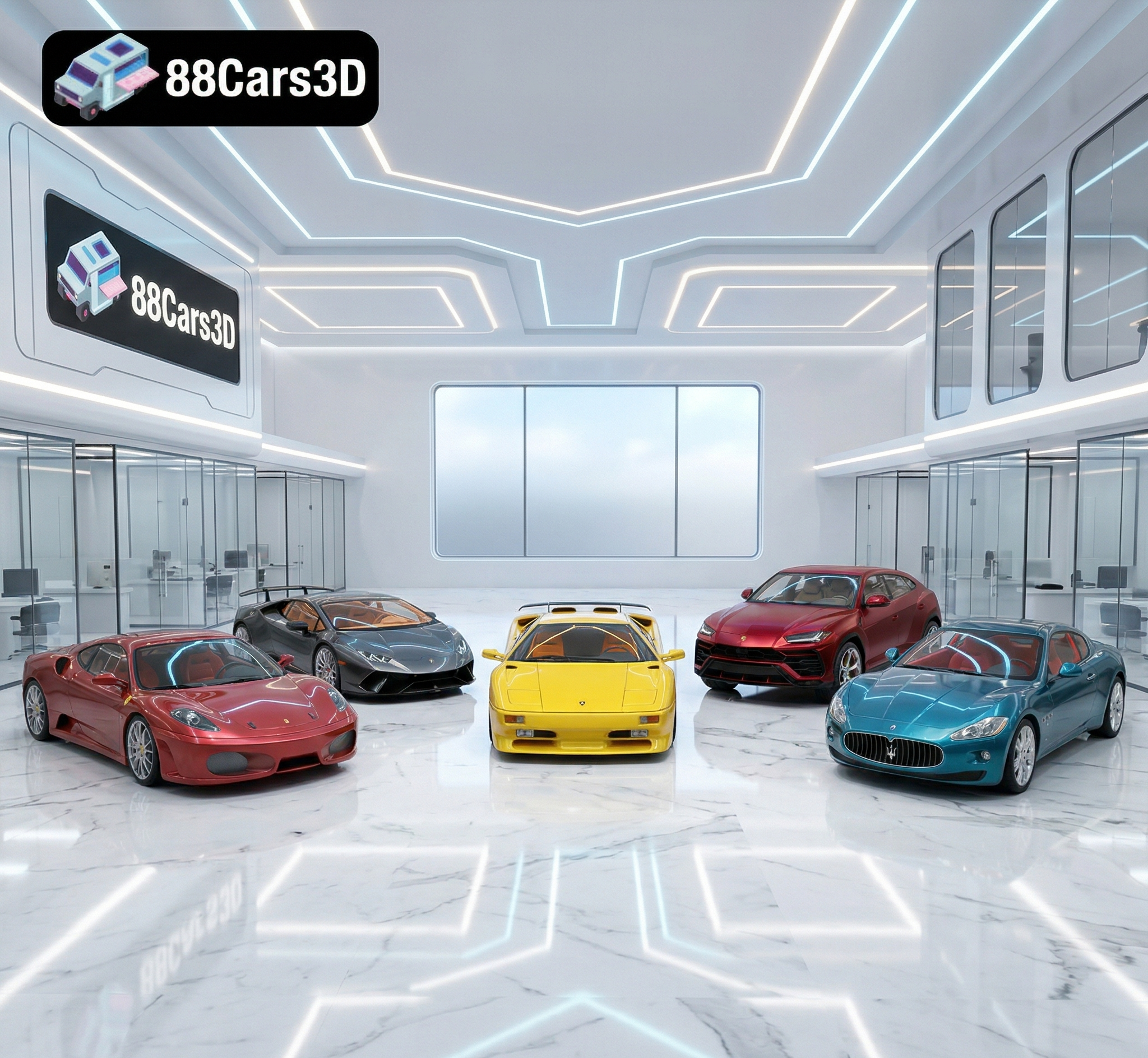
The Italian Legends Bundle 5 Ultimate Supercar 3D Models STL Optimized
Texture: Yes | Material: Yes | 3D Printable: Yes. Download the Italian Thoroughbreds Bundle featuring 5 iconic 3D models: Lamborghini Huracán Performante, Ferrari 458 Italia, Lamborghini Urus, Diablo SV, and Maserati GT. Optimized for 4K rendering and 3D printing (STL included). Save 50% with this ultimate Italian vehicle collection.
Price: $199.99

Elite Future Mobility: EV & Autonomous SUV Bundle (4 High-End 3D Models)3D Printable STL
Download the Elite Future Mobility Bundle featuring 4 highly optimized 3D models: Tesla Model S, Avatr 11, Li L9, and Zoox Robotaxi. Perfect for ArchViz, Smart City renders, and game dev. Optimized for Unreal Engine and Blender. Includes .fbx, .obj, and .max formats.
Price: $99
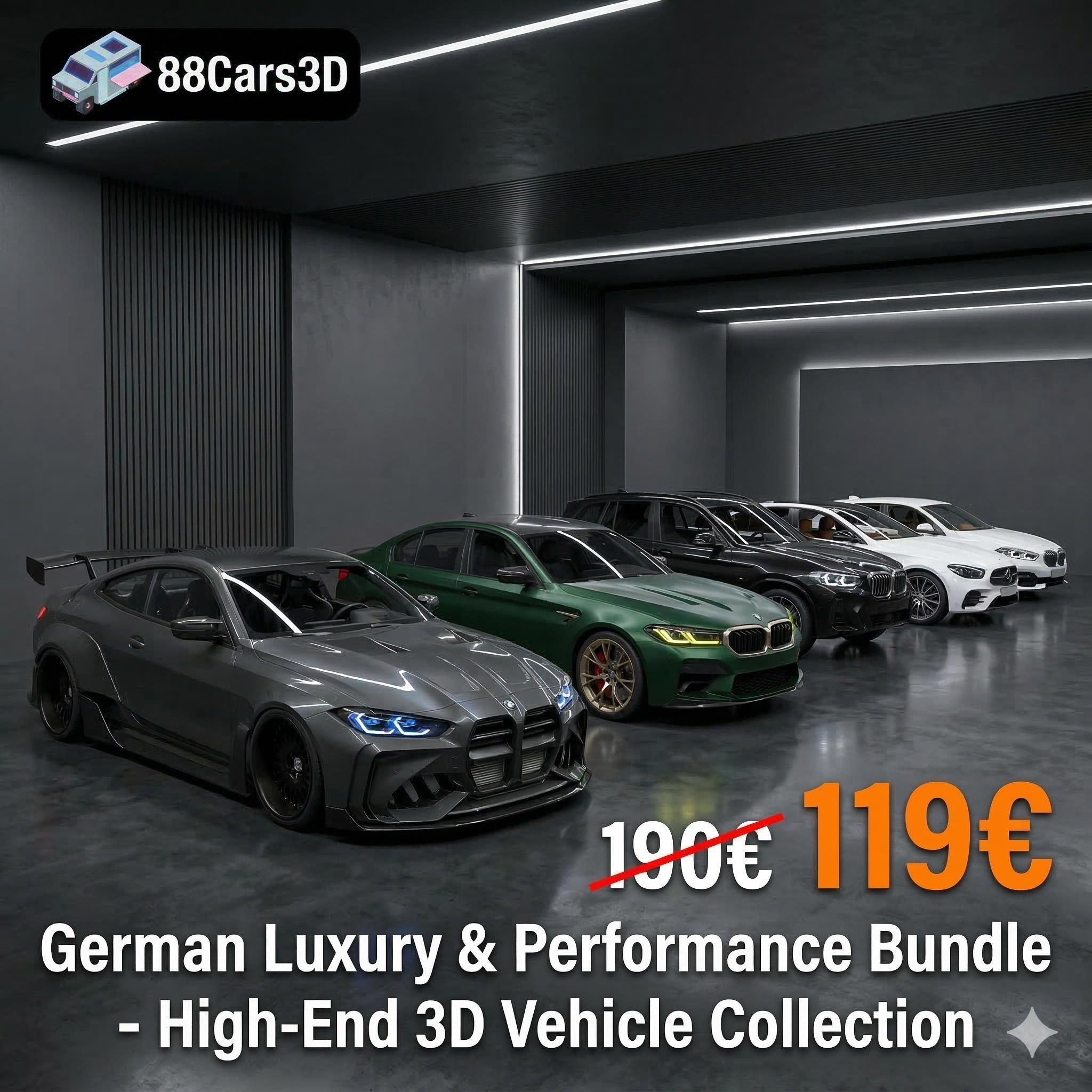
German Luxury & Performance Bundle – High-End 3D Vehicle Collection3D Printable STL
🚗 5 Iconic German Cars (BMW M4 G82, M5 CS, X3, 1 Series & Mercedes E-Class). ✅ Optimized for ArchViz: Ready for Corona & V-Ray. 💰 Save €71 with this limited-time collection! 🚀 Instant Download after purchase.
Price: $119
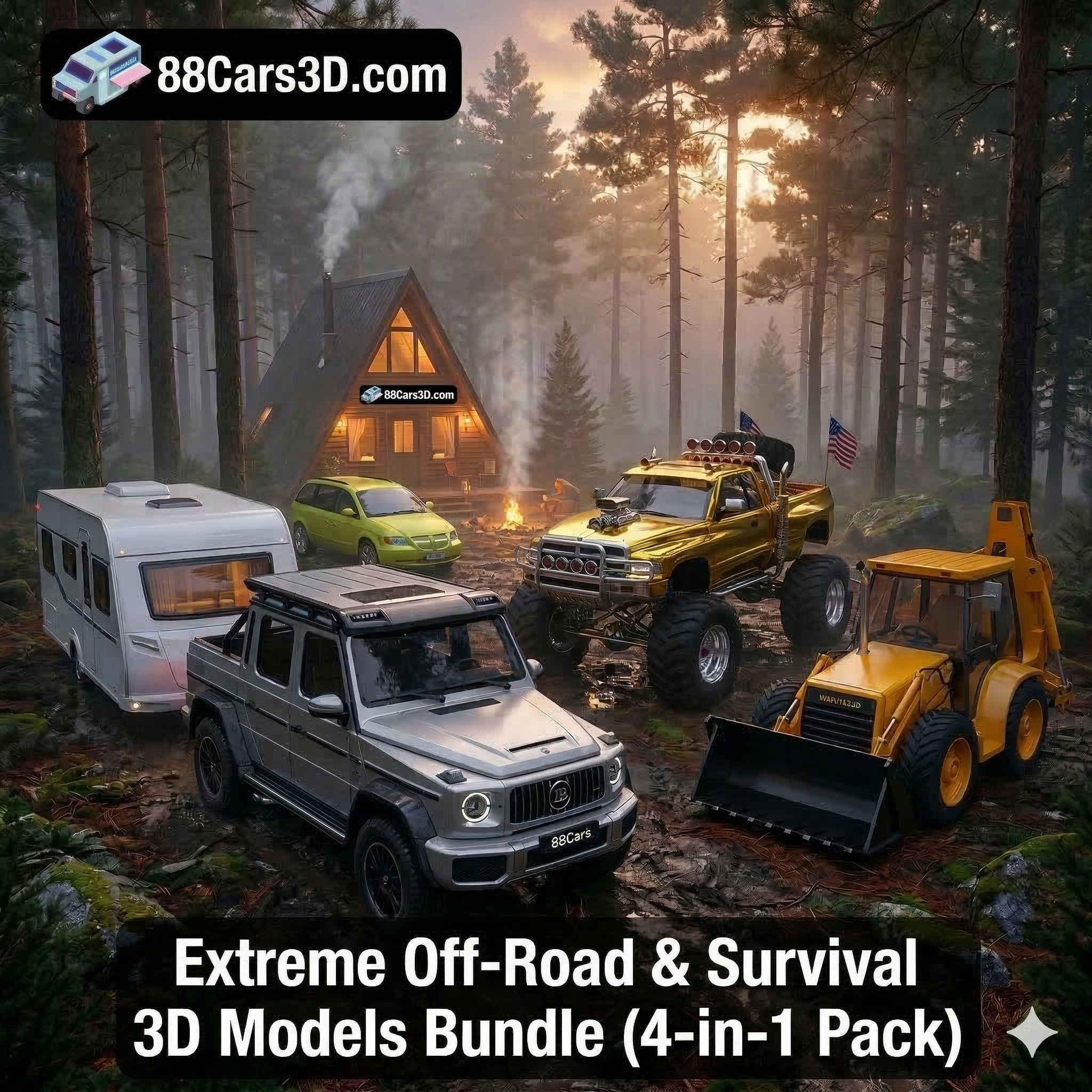
Extreme Off-Road & Survival 3D Models Bundle (4-in-1 Pack)3D Printable STL
Download the Extreme Off-Road & Survival 3D Models Bundle! Includes the Brabus 800 Adventure, Dodge Ram Bigfoot, Spec Truck, and a Caravan. Save over €210 on this premium 4-in-1 off-grid vehicle pack for ArchViz and game development.
Price: $149.99
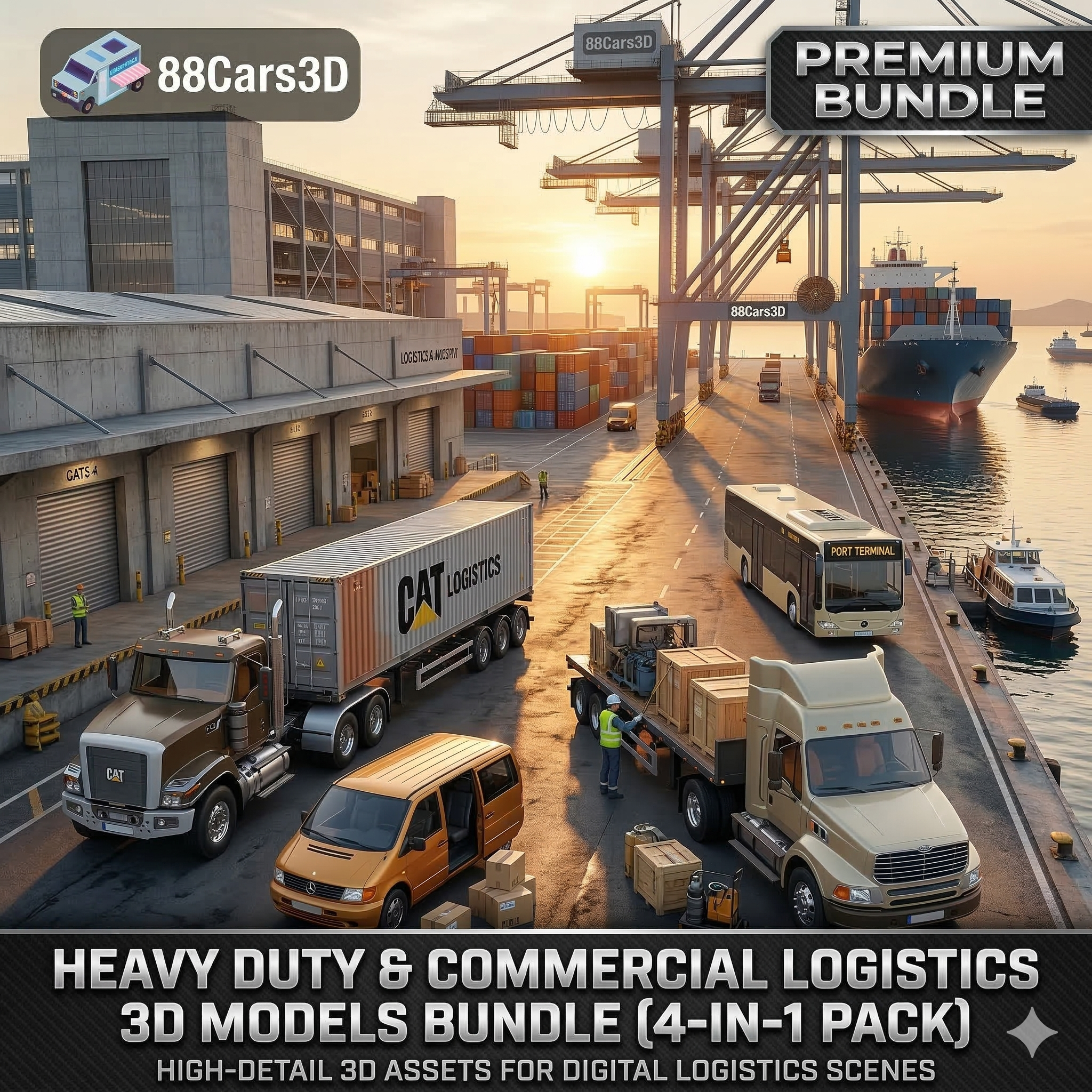
Heavy Duty & Commercial Logistics 3D Models Bundle (4-in-1 Pack)3D Printable STL
Download the Heavy Duty & Commercial Logistics 3D Models Bundle! Includes the Ford Sterling, Caterpillar CT680, Mercedes Citaro Bus, and Vito Van. Save over €130 on this massive, game-ready 4-in-1 industrial vehicle pack.
Price: $109.99

The Ultimate Garage Props & Custom Motorcycles 3D Models Bundle 3D Printable STL
Download the Ultimate Custom Motorcycles 3D Models Bundle. Includes a Custom Chopper, Ducati 916 Café Fighter, Harley XR1200X, and BMW K100. Perfect premium props for luxury ArchViz garages. Save over €250 today!
Price: $159.99

Japanese Legends: JDM Street Racing 3D Models Bundle (5-in-1 Pack) Nissan Mitsubishi Honda Mazda Toyota 3D Printable STL
Download the ultimate JDM Street Racing 3D Models Bundle! Includes the Nissan GT-R, Toyota Supra, Mazda RX-7, Lancer Evo IX, and Honda NSX. Save big on this highly optimized, game-ready 5-in-1 Japanese legend car pack.
Price: $129.99

American Muscle & Classics Pack 4 in 1 Ford Dodge Chevrolet 3D Printable STL
Download the ultimate American Muscle & Cinematic Classics 3D Models Bundle! Includes the Dodge Charger ’68, Mustang Eleanor GT500, Camaro Z28 ’79, and a custom ’69 Mustang. Save over €240 on this game-ready, premium 4-in-1 pack.
Price: $149.99
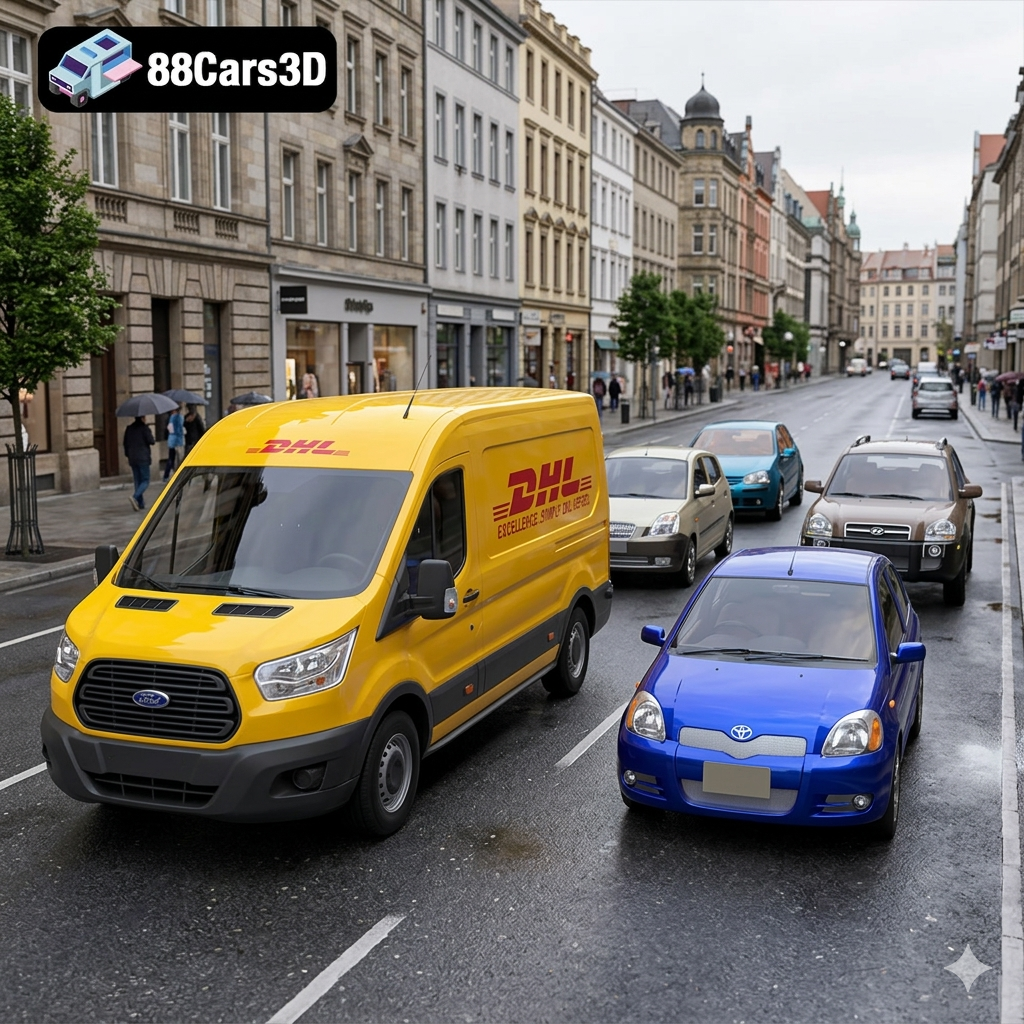
Everyday City Traffic Essentials pack 5in1 Hyundai Kia Volkswagen Toyota Ford 3D Printable STL
Download the Everyday City Traffic 3D Models Bundle. Includes the VW Golf, Kia Picanto, Hyundai Tucson, Toyota Yaris, and a DHL Ford Transit Van. Save big on this 5-in-1 pack, perfectly optimized for realistic ArchViz streets and game traffic.
Price: $99.99
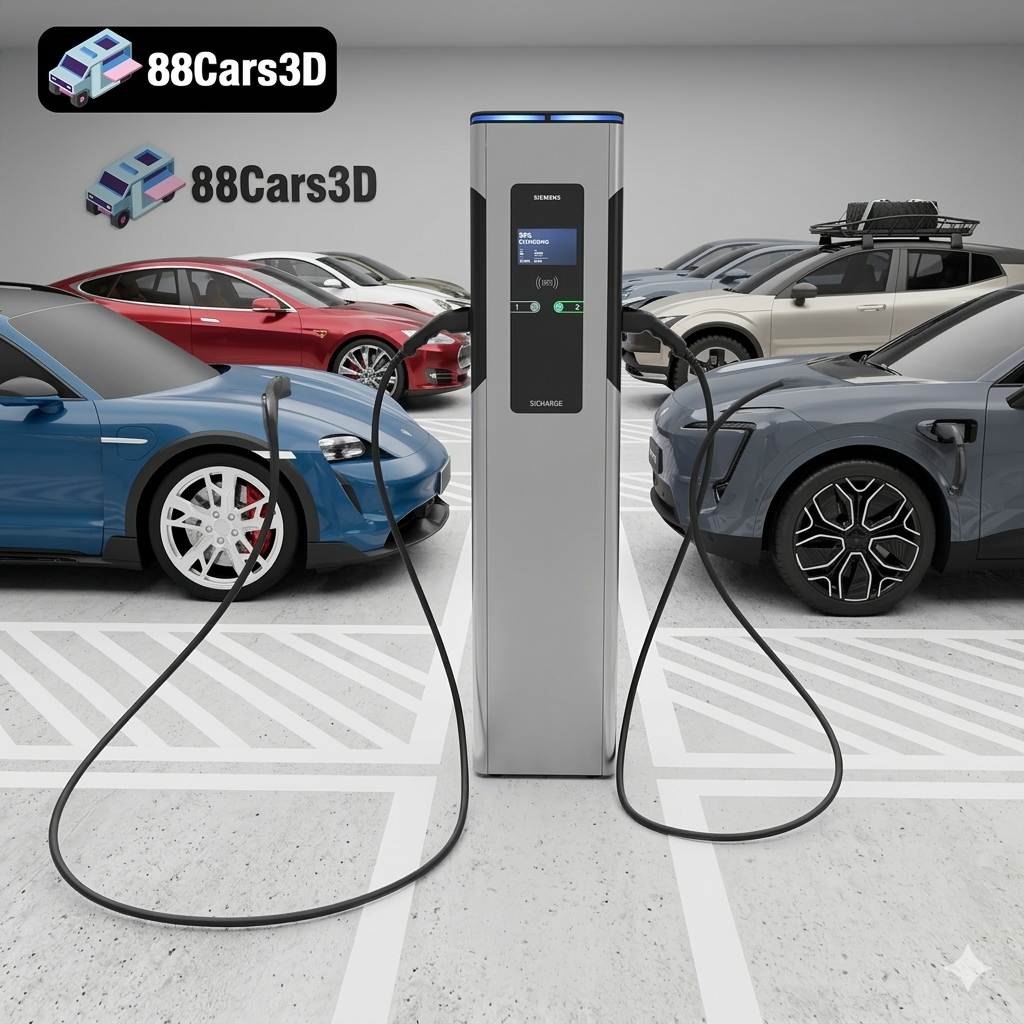
The Future of Mobility: Smart City EV 3D Models Bundle (5-in-1 Pack) Volvo Tesla AVATR Porsche 3D Printable STL
Download the Future of Mobility EV 3D Models Bundle. Includes the Volvo EX30, Tesla Model S, AVATR 11, Porsche Taycan, and a Siemens EV Charger. Save big on this highly optimized 5-in-1 pack for ArchViz and game development!
Price: $89.99
