Get 20% OFF All Premium 3D & STL Models!

In the world of 3D automotive design and visualization, the difference between a good render and a breathtaking one often hinges on the minute details of the car’s interior. While exterior models might capture immediate attention, it’s the tactile authenticity of seats, dashboards, and trim that truly immerses the viewer. Fabric and leather, in particular, present unique challenges and opportunities for realism. They demand a deep understanding of surface properties, light interaction, and material shaders to convey their inherent softness, texture, and subtle imperfections. This comprehensive guide will delve into the advanced techniques and best practices for crafting incredibly realistic fabric and leather materials for 3D car interiors, suitable for high-end rendering, interactive game environments, and even AR/VR experiences. We’ll explore everything from fundamental PBR principles and intricate UV mapping strategies to advanced rendering workflows and crucial optimization techniques. By the end, you’ll have a robust toolkit to elevate your automotive interior visualizations, ensuring every stitch and grain tells a story of meticulous craftsmanship.
Physically Based Rendering (PBR) has revolutionized material creation, allowing artists to achieve unparalleled realism by accurately simulating how light interacts with surfaces in the real world. For automotive interiors, especially with materials like fabric and leather, a thorough grasp of PBR principles is non-negotiable. PBR relies on a set of maps that define a material’s properties, ensuring consistency across different lighting conditions and render engines. Unlike older workflows, PBR materials behave predictably, making them ideal for the nuanced interplay of light within a car’s confined space.
At the heart of PBR are several key maps, each dictating a specific aspect of how light is absorbed, reflected, and scattered. The Albedo Map (or Base Color) defines the material’s inherent color without any lighting information. For fabric, this would be the color of the individual threads; for leather, the base dye. Crucially, it should be desaturated and flat, free from shadows or highlights. The Roughness Map is paramount for fabric and leather. It controls the microscopic surface imperfections that scatter light, influencing how ‘matte’ or ‘glossy’ a surface appears. A high roughness value indicates a duller, more diffuse surface (like suede or coarse fabric), while a low roughness suggests a shinier, more reflective one (like polished leather). The Normal Map (or sometimes Displacement/Bump Map) adds crucial surface detail without increasing polygon count. This map simulates bumps, weaves, and pores by faking the angle of the surface normals, making flat surfaces appear textured. For fabrics, this defines the intricate weave patterns; for leather, it sculpts the distinct grain. Other important maps include Metallic (usually black for non-metals like fabric and leather, unless metallic threads are involved), Ambient Occlusion (AO) for self-shadowing in crevices, and sometimes Height/Displacement for more significant geometric detail on close-up shots. Understanding how these maps interact is key to building compelling PBR shaders.
The resolution of your PBR textures directly impacts the perceived detail and realism of your automotive interior materials. For high-fidelity renders, resolutions of 2K (2048×2048) or 4K (4096×4096) are standard for primary interior components like seats and dashboards. For game engines or AR/VR applications where performance is critical, 1K (1024×1024) or even 512×512 might be necessary for less prominent elements, often utilizing texture atlases to optimize draw calls. When creating or acquiring textures, ensure they are seamless and tileable where appropriate, especially for large areas like seat upholstery. For unique details like specific leather panels or dashboard elements, unique, non-repeating textures are preferred. Platforms like 88cars3d.com offer high-quality 3D car models often accompanied by meticulously crafted PBR texture sets, ensuring material integrity from the start. Maintaining consistent texel density across your model is also vital; a seat might require higher density than a door panel if it’s a focal point, but avoid extreme variations that break visual coherence.
Fabric in a car interior goes beyond a simple flat color; it’s a complex interplay of woven fibers, micro-details, and subtle variations that capture and scatter light in unique ways. Achieving realism demands attention to these details, moving beyond basic texture maps to incorporate advanced shading techniques and micro-geometry. From the coarse weave of a heavy-duty upholstery to the plush softness of Alcantara, each fabric type presents its own set of challenges and demands a tailored approach.
The distinct character of a fabric material is largely defined by its weave pattern and microscopic fiber structure. While a Normal Map effectively simulates the visual depth of a weave, truly realistic fabric often requires additional layers of detail. Consider using a Displacement Map (or Height Map) for close-up shots where the geometric relief of the threads needs to be physically present, adding subtle volume to the weave. This is particularly effective for thicker fabrics or carpets. Procedural textures, either generated in software like Substance Designer or built with nodal editors in Blender, 3ds Max, or Maya, offer incredible flexibility. They allow you to define weave patterns dynamically, control thread thickness, and introduce subtle variations that break up perfect tiling. For instance, a small noise node added to the roughness or albedo can simulate the irregular scattering of light by individual fibers, giving fabric a softer, less uniform appearance. Advanced shader networks can also incorporate techniques like ‘fuzz’ or ‘sheen’ maps, which simulate the anisotropic reflection caused by tiny, upright fibers on surfaces like velvet or Alcantara, crucial for capturing that distinct plush look. Remember to ensure that your chosen weave pattern scales appropriately across different parts of the interior to maintain consistency.
Perfectly pristine fabric can sometimes look artificial. Realism often comes from subtle imperfections that tell a story. Incorporating realistic wear and tear, along with minor contamination, adds depth and authenticity to your car interior fabrics. This can involve several techniques:
When implementing these, ensure the effects are subtle. Overdoing wear and tear can make the material look damaged rather than just realistically used. The key is subtlety and thoughtful placement.
Leather, with its diverse finishes, natural grains, and varying levels of sheen, is another cornerstone of luxurious automotive interiors. Replicating its distinct visual qualities requires a focus on surface microstructure, specular reflections, and the subtle imperfections that define its organic nature. From supple Nappa leather to rugged perforated hides, each type demands careful material definition.
The most defining characteristic of leather is its unique grain. This texture, whether fine or coarse, must be accurately represented through high-resolution Normal Maps and potentially Displacement Maps for extreme close-ups. Look for seamless leather textures that capture organic variations rather than repetitive patterns. Beyond the base grain, realistic leather incorporates subtle imperfections:
Avoid perfectly uniform leather; embrace its natural irregularities to elevate realism. Tools like Substance Painter or Mari are excellent for texturing these nuanced imperfections directly onto your 3D car model, ensuring unique detail on every panel.
The way leather reflects light is critical for its perceived realism. Its sheen is dictated by the Roughness Map, but often also by the Specular Map, which controls the intensity of reflections. Highly polished leather will have a very low roughness and a strong specular response, while matte leather will have higher roughness and a more diffuse appearance. For very smooth, high-gloss leathers, consider incorporating Anisotropy into your shader. Anisotropy causes reflections to stretch in a particular direction, often seen on brushed metals but also applicable to certain very smooth, slightly directional leathers, adding a layer of subtle realism. This effect is usually controlled by an anisotropic map or a specific parameter in your PBR shader. The direction of the anisotropy should align with the ‘grain’ or ‘brush’ direction of the leather. Proper lighting setup, as discussed later, is essential for these specular and anisotropic properties to truly shine. Experiment with different roughness values and observe how light plays across the surface to find the sweet spot for your desired leather type.
Effective UV mapping is the unsung hero of realistic material application, particularly for the often-complex geometry of a car interior. Without well-laid UVs, even the highest resolution PBR textures will appear stretched, distorted, or incorrectly tiled, undermining all efforts at realism. Understanding how to efficiently unwrap and pack UVs for varied surfaces like contoured seats, multi-part dashboards, and intricate trims is fundamental.
Car seats and dashboards are arguably the most challenging interior components to UV map due to their organic curves, complex paneling, and often visible seams. The primary goals are to preserve consistent texel density (the number of texture pixels per unit of surface area) across all surfaces and to strategically place UV seams where they are least noticeable or anatomically correct (e.g., along actual stitching lines). For seats, consider unwrapping individual panels (cushion, backrest, bolsters) separately and then arranging them in the UV space. Using tools like “Unfold3D” or Blender’s UV Editor with its powerful “Follow Active Quads” and “Average Islands Scale” functions can greatly assist in achieving distortion-free unwraps. For Blender users, refer to the official Blender 4.4 documentation on UV editing for detailed guides on these tools. When unwrapping dashboards, break them down into logical sections, ensuring that areas receiving prominent, unique textures (e.g., gauge clusters, central console screens) have dedicated, unconstrained UV space. Avoid stretching textures by carefully marking seams and utilizing projection methods that best suit the geometry (e.g., planar for flat surfaces, cylindrical for steering wheels). Overlapping UVs can be used for mirrored parts to save texture space, but be mindful of baking unique details. Consistent texel density ensures that a leather grain or fabric weave appears the same size across different interior elements, maintaining visual harmony.
Once your UV islands are unwrapped, the next crucial step is efficient UV packing. This involves arranging all UV islands within the 0-1 UV space to maximize texture utilization and minimize wasted space. Tightly packed UVs mean you can get more detail into a smaller texture file, which is vital for both render memory and game engine performance. Most 3D software offers automated packing algorithms, but manual adjustments are often necessary for optimal results. For game assets and real-time applications, Texture Atlasing is an invaluable optimization technique. Instead of having multiple small texture maps for different parts of the interior, an atlas combines textures for several objects (e.g., door panels, console, steering wheel trim) into a single, larger texture map. This significantly reduces the number of draw calls (requests the CPU sends to the GPU to render an object), leading to better performance in game engines like Unity or Unreal Engine. When creating atlases, ensure sufficient padding between UV islands to prevent texture bleeding when mipmapping is applied. Strategically decide which parts of the interior can share an atlas – often grouping similar materials or adjacent objects. While creating your own UVs is an essential skill, sourcing meticulously pre-UV-mapped 3D car models from marketplaces like 88cars3d.com can provide a fantastic starting point for high-quality projects, saving significant time in this crucial stage.
Even with perfectly crafted materials and UVs, a car interior will only look its best under the right lighting and rendering conditions. The confined nature of a car’s cabin, coupled with the subtle reflective properties of fabric and leather, demands a nuanced approach to illumination. Proper lighting enhances depth, highlights material textures, and sets the mood, while intelligent rendering settings and post-processing push the final image from good to extraordinary.
Lighting a car interior is about more than just making it visible; it’s about making the materials come alive.
The goal is to create a sense of natural light diffusion and interaction, allowing the fabric weaves and leather grains to truly stand out.
Each render engine has its nuances, but the core principles remain.
Regardless of the engine, always perform test renders at lower quality settings to quickly iterate on material and lighting changes, then ramp up quality for final output.
The rendering process doesn’t end when the image finishes calculating. Post-processing is a crucial step to refine the image, correct imperfections, and add cinematic qualities that elevate realism.
Software like Photoshop, GIMP, or Blender’s compositor (for Blender users, explore the Blender 4.4 Compositing documentation) are ideal for these post-processing tasks. Remember, post-processing should enhance, not rescue, a poorly rendered image. Get the render as good as possible first.
Creating high-quality interior materials for real-time applications like game engines (Unity, Unreal Engine) or AR/VR experiences demands a careful balance between visual fidelity and performance. Unlike offline rendering, every polygon, texture, and shader instruction impacts frame rate. Optimizing your fabric and leather materials is crucial to ensure smooth, interactive experiences without sacrificing too much detail.
Level of Detail (LOD) systems are fundamental for optimizing complex 3D car models in real-time environments. For car interiors, this means creating multiple versions of key components like seats, dashboards, and door panels, each with progressively lower polygon counts.
Implement LODs for complex interior meshes such as the seats, steering wheel, and potentially intricate dashboard elements. The transition distances between LODs should be carefully chosen to avoid noticeable popping. For fabric and leather, ensure that critical details like seam lines and major wrinkles are maintained in the lower LODs either through geometry or robust normal mapping, preventing a sudden loss of character. Many game engines have built-in LOD generation tools, but often manual optimization provides superior results.
Beyond polygon count, texture usage and shader complexity are major performance bottlenecks.
These techniques are crucial for ensuring your 3D car models, especially their rich interiors, perform smoothly in interactive applications like AR/VR showcases or driving simulators.
AR/VR imposes even stricter performance budgets than traditional games due to the need for high frame rates (90+ FPS) to prevent motion sickness and maintain immersion.
When developing for AR/VR, constant performance profiling and testing on target hardware are essential to deliver a truly immersive and comfortable experience with your 3D car models.
Crafting realistic fabric and leather materials for 3D car interiors is a nuanced art that blends technical precision with artistic observation. It’s a journey from understanding the foundational principles of PBR to meticulously creating textures, expertly unwrapping complex geometry, carefully lighting the scene, and finally optimizing for performance. The tactile authenticity of a perfectly rendered seat or a finely textured dashboard can profoundly impact the viewer’s immersion, transforming a static model into a believable digital experience.
By focusing on high-resolution PBR textures, employing smart UV mapping strategies, carefully simulating weave patterns and leather grains, and leveraging advanced rendering techniques, you can elevate your automotive visualizations to professional standards. Whether you’re aiming for cinematic quality renders or highly optimized game assets, the principles outlined here provide a robust framework. Remember to always study real-world references, iterate on your materials, and continuously refine your workflows. Platforms like 88cars3d.com serve as excellent resources for high-quality 3D car models, often providing a solid foundation with professional UVs and base materials that you can further customize and enhance using these advanced techniques. Invest the time in mastering these material creation skills, and you’ll unlock the full potential of your 3D car interior projects, delivering stunning realism that captivates and impresses.

Texture: Yes | Material: Yes | 3D Printable: Yes. Download the Italian Thoroughbreds Bundle featuring 5 iconic 3D models: Lamborghini Huracán Performante, Ferrari 458 Italia, Lamborghini Urus, Diablo SV, and Maserati GT. Optimized for 4K rendering and 3D printing (STL included). Save 50% with this ultimate Italian vehicle collection.
Price: $199.99

Download the Elite Future Mobility Bundle featuring 4 highly optimized 3D models: Tesla Model S, Avatr 11, Li L9, and Zoox Robotaxi. Perfect for ArchViz, Smart City renders, and game dev. Optimized for Unreal Engine and Blender. Includes .fbx, .obj, and .max formats.
Price: $99

🚗 5 Iconic German Cars (BMW M4 G82, M5 CS, X3, 1 Series & Mercedes E-Class). ✅ Optimized for ArchViz: Ready for Corona & V-Ray. 💰 Save €71 with this limited-time collection! 🚀 Instant Download after purchase.
Price: $119

Download the Extreme Off-Road & Survival 3D Models Bundle! Includes the Brabus 800 Adventure, Dodge Ram Bigfoot, Spec Truck, and a Caravan. Save over €210 on this premium 4-in-1 off-grid vehicle pack for ArchViz and game development.
Price: $149.99

Download the Heavy Duty & Commercial Logistics 3D Models Bundle! Includes the Ford Sterling, Caterpillar CT680, Mercedes Citaro Bus, and Vito Van. Save over €130 on this massive, game-ready 4-in-1 industrial vehicle pack.
Price: $109.99

Download the Ultimate Custom Motorcycles 3D Models Bundle. Includes a Custom Chopper, Ducati 916 Café Fighter, Harley XR1200X, and BMW K100. Perfect premium props for luxury ArchViz garages. Save over €250 today!
Price: $159.99

Download the ultimate JDM Street Racing 3D Models Bundle! Includes the Nissan GT-R, Toyota Supra, Mazda RX-7, Lancer Evo IX, and Honda NSX. Save big on this highly optimized, game-ready 5-in-1 Japanese legend car pack.
Price: $129.99

Download the ultimate American Muscle & Cinematic Classics 3D Models Bundle! Includes the Dodge Charger ’68, Mustang Eleanor GT500, Camaro Z28 ’79, and a custom ’69 Mustang. Save over €240 on this game-ready, premium 4-in-1 pack.
Price: $149.99

Download the Everyday City Traffic 3D Models Bundle. Includes the VW Golf, Kia Picanto, Hyundai Tucson, Toyota Yaris, and a DHL Ford Transit Van. Save big on this 5-in-1 pack, perfectly optimized for realistic ArchViz streets and game traffic.
Price: $99.99
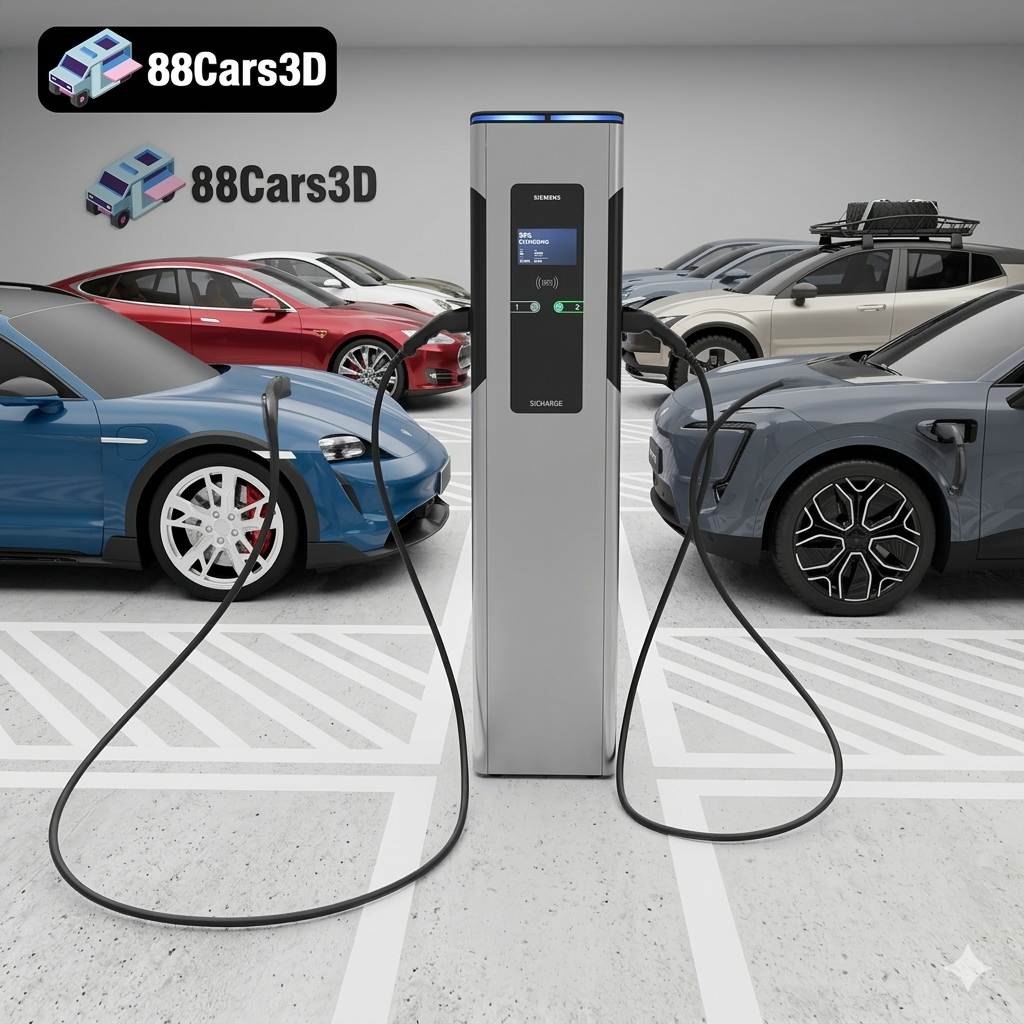
Download the Future of Mobility EV 3D Models Bundle. Includes the Volvo EX30, Tesla Model S, AVATR 11, Porsche Taycan, and a Siemens EV Charger. Save big on this highly optimized 5-in-1 pack for ArchViz and game development!
Price: $89.99

