Get 20% OFF All Premium 3D & STL Models!

The automotive industry is in a constant state of evolution, not just in vehicle design and technology, but also in how it engages with consumers. Gone are the days when static images and pre-rendered videos were sufficient to showcase a new model. Today, consumers demand immersive, interactive experiences that allow them to explore, customize, and even ‘drive’ a car before it’s physically available. This is where Unreal Engine, Epic Games’ powerful real-time 3D creation tool, has emerged as a game-changer for automotive marketing and visualization.
Unreal Engine provides an unparalleled platform for creating hyper-realistic, interactive automotive experiences. From high-fidelity 3D car models to dynamic lighting and physics simulations, it offers the toolset to build captivating configurators, cinematic advertisements, virtual showrooms, and even AR/VR applications. For 3D artists, automotive designers, and marketing professionals, mastering Unreal Engine is no longer an option but a necessity to stay competitive in a visually driven market. This comprehensive guide will delve into the technical depths of leveraging Unreal Engine for automotive marketing, covering everything from project setup and optimization to advanced visualization techniques, ensuring your creations not only look stunning but also perform flawlessly in real-time.
The foundation of any successful Unreal Engine project lies in its initial setup. For automotive visualization, a meticulous approach to project configuration and plugin selection is paramount to achieving high fidelity and efficient workflows. Choosing the right template and enabling essential features from the outset can save countless hours down the line and unlock powerful capabilities tailored for realism.
When starting a new project in Unreal Engine, you’re presented with various templates. For automotive work, the “Blank” template is often preferred as it offers maximum control, allowing you to add only the necessary components. Alternatively, the “Automotive” template, while offering a head start with some relevant settings and assets, might include features you don’t need, potentially increasing project size. Regardless of your choice, a few critical settings need immediate attention. In your Project Settings (Edit > Project Settings), navigate to “Rendering” and ensure “Ray Tracing” is enabled if your hardware supports it and you plan to leverage its superior global illumination and reflections. Also, consider enabling “Virtual Textures” for better texture memory management, especially with large, detailed assets like high-resolution vehicle exteriors. These initial choices profoundly impact the visual quality and performance potential of your automotive visualization.
Unreal Engine’s extensibility comes from its robust plugin architecture. For automotive projects, several plugins are indispensable. First and foremost is the Datasmith plugin. Datasmith is Unreal Engine’s primary pipeline for converting CAD data and other complex scene descriptions into Unreal Engine assets. It intelligently tessellates CAD surfaces, preserves scene hierarchy, and converts materials, making it ideal for importing intricate vehicle designs from software like SolidWorks, CATIA, or even standard 3D packages exporting FBX or USD. Without Datasmith, manual preparation of CAD assets can be an arduous and error-prone process. Another crucial plugin is HDRI Backdrop, which provides a simple yet effective way to light your scene with High Dynamic Range Images, essential for realistic environment reflections and global illumination. Additionally, for cinematic quality, ensure the Movie Render Queue plugin is enabled, allowing for high-resolution, multi-pass renders with advanced anti-aliasing. Remember to explore the official Unreal Engine documentation at https://dev.epicgames.com/community/unreal-engine/learning for detailed guides on configuring these settings and plugins.
The visual quality of any automotive experience hinges on the fidelity of its 3D car models. Bringing highly detailed models into Unreal Engine, while maintaining performance, is a critical step that requires careful planning and optimization. Models sourced from platforms like 88cars3d.com often come pre-optimized, but understanding the underlying principles is crucial for any workflow.
When dealing with automotive assets, you’ll frequently encounter CAD data or highly detailed mesh models. Datasmith, as mentioned earlier, is your best friend for importing CAD files. It streamlines the process by taking complex geometry, preserving material assignments, and often converting them into static meshes suitable for Unreal Engine. To use Datasmith, simply enable the plugin, then use the “Datasmith” option in the “Import” button dropdown in the Content Browser. It’s particularly adept at handling assemblies, converting them into Blueprints with their hierarchies intact, which is invaluable for car configurators where you might need to swap out parts like wheels or interiors. For traditional mesh files like FBX, direct import via the Content Browser is straightforward. When importing FBX files, pay attention to import settings such as “Combine Meshes” (often undesirable for cars if you want individual parts), “Import Materials,” and “Import Textures.” Ensure your FBX files are exported with smooth groups and proper UVs from your 3D modeling software to guarantee correct shading and material application in Unreal Engine. A well-structured FBX or Datasmith import will result in a clean scene hierarchy, making subsequent material assignment and interactivity setup much simpler.
High-fidelity 3D car models can easily reach millions of polygons, a traditional bottleneck for real-time rendering. Unreal Engine 5’s Nanite virtualized geometry system revolutionizes this by allowing you to import and render models with massive polygon counts (even hundreds of millions) without significant performance penalties. Nanite automatically handles LOD (Level of Detail) generation, streaming, and culling, enabling artists to work with cinema-quality assets directly. When importing a static mesh, you can simply tick the “Enable Nanite” checkbox. However, not all meshes are suitable for Nanite (e.g., translucent meshes or meshes with complex custom collision), and some target platforms (like older mobile devices or AR/VR headsets) might not support it. For such cases, traditional manual LODs remain essential. You can generate LODs within the Static Mesh Editor by setting a number of LODs and a reduction percentage. For a hero car model, aim for at least 3-4 LODs, aggressively reducing polygon counts for distant views. For example, LOD0 might be 500k-1M polygons for the exterior, while LOD3 could be 50k-80k. Optimized models from marketplaces like 88cars3d.com often come with clean topology and UVs, making them excellent candidates for both Nanite and efficient traditional LOD generation, ensuring optimal performance across various use cases and target hardware configurations.
Beyond geometry, the realism of an automotive visualization is largely determined by its materials and lighting. Unreal Engine’s physically based rendering (PBR) system, combined with advanced lighting solutions like Lumen, allows for incredibly lifelike representations of car paint, glass, metals, and environmental reflections.
Unreal Engine’s Material Editor is a node-based interface that allows for intricate material creation using the PBR Metallic/Roughness workflow. For automotive materials, specific techniques are crucial:
Understanding how these PBR parameters interact is key to achieving photorealistic finishes.
Unreal Engine offers powerful real-time lighting solutions. Lumen is Unreal Engine 5’s fully dynamic global illumination and reflections system, providing incredibly realistic lighting that reacts instantly to changes in the scene. To leverage Lumen, ensure it’s enabled in Project Settings under “Rendering > Global Illumination” and “Reflections.” Lumen calculates bounce lighting and reflections, making car interiors and shadowed areas look natural without baking lightmaps. For exterior scenes, an HDRI Backdrop actor is indispensable. It provides both realistic background visuals and crucial environmental lighting. Combine an HDRI with a Directional Light for the sun and a Sky Atmosphere actor for dynamic sky and cloud effects. For reflections, augment Lumen with Screen Space Reflections (SSR) for minor details, and for the highest quality, enable Hardware Ray Tracing (if supported) for reflections and global illumination. Ray Tracing provides pixel-perfect reflections and accurate light bounces, taking your automotive visualizations to a cinematic level. Utilizing a combination of these lighting technologies ensures that your 3D car models are presented in the most flattering and realistic light possible.
The real power of Unreal Engine for automotive marketing lies in its ability to create interactive experiences. Instead of passively viewing, consumers can actively engage with the vehicles, exploring features and customizing options. This interactivity is primarily driven by Unreal Engine’s visual scripting system, Blueprint, and its UI framework, UMG.
Blueprint Visual Scripting allows artists and designers to create complex gameplay and interactive logic without writing a single line of C++ code. For automotive configurators, Blueprint is the backbone. Here are common interactive elements you can build:
Each of these interactions enhances user engagement, providing a hands-on experience that surpasses traditional showrooms. Blueprint’s event-driven nature makes it intuitive to connect user input to vehicle actions, bringing your 3D car models to life.
To control these interactive elements, you need a robust user interface (UI). Unreal Engine’s UMG (Unreal Motion Graphics) UI Designer is a powerful tool for creating responsive and visually appealing interfaces. You can drag and drop UI widgets like buttons, sliders, text blocks, and images onto a canvas, then arrange them to form your configurator menu.
A well-designed UMG interface provides intuitive navigation and feedback, making the interactive automotive experience seamless and enjoyable for the end-user. The combination of powerful vehicle interaction logic and a user-friendly UI is what transforms a static model into an engaging marketing tool.
Beyond interactive configurators, Unreal Engine extends its capabilities into cinematic content creation and cutting-edge virtual production workflows, offering unparalleled flexibility for automotive marketing agencies and studios.
When it comes to creating stunning automotive commercials, product reveals, or animated featurettes, Sequencer is Unreal Engine’s non-linear cinematic editor. It allows you to orchestrate complex scenes with multiple cameras, character animations, visual effects (VFX), and dynamic lighting changes over a timeline.
Once your sequence is complete, the Movie Render Queue plugin allows you to export high-quality video files with advanced anti-aliasing, motion blur, and render passes, suitable for broadcast or online distribution.
Unreal Engine is at the forefront of Virtual Production, a revolutionary approach to filmmaking that combines physical and virtual elements in real-time. For automotive commercials, this often involves shooting a physical car on a stage surrounded by large LED Walls that display Unreal Engine environments.
For rendering complex scenes or multiple variations, especially for traditional pre-rendered commercials, real-time render farms leverage distributed computing to accelerate Unreal Engine’s Movie Render Queue output, dramatically reducing render times. Furthermore, the growing adoption of USD (Universal Scene Description) across the industry enables seamless interoperability between Unreal Engine and other DCC applications, making it a critical format for collaborative virtual production pipelines. This holistic approach to production positions Unreal Engine as an indispensable tool for future-proofing automotive marketing content creation.
Creating beautiful interactive automotive experiences is only half the battle; ensuring they run smoothly across various platforms is equally critical. Optimization is an ongoing process, not an afterthought, especially when dealing with high-fidelity Unreal Engine 3D car models.
Performance optimization begins with profiling. Unreal Engine offers powerful profiling tools:
Stat Unit (shows game, draw, GPU thread times), Stat FPS, and Stat GPU to get real-time performance metrics.General optimization strategies include:
For AR/VR applications, further optimizations like Forward Rendering (often faster than deferred for VR), Instanced Stereo Rendering, and Fixed Foveated Rendering are essential to maintain high frame rates necessary to prevent motion sickness and deliver a smooth experience. Always profile on your target hardware.
Once your interactive experience is optimized, the final step is packaging and distributing it. Unreal Engine offers robust packaging options through the Project Launcher (File > Package Project).
A well-optimized and properly packaged Unreal Engine application ensures your high-quality 3D car models and interactive experiences reach your audience effectively, delivering the immersive impact intended for modern automotive marketing.
Unreal Engine has irrevocably transformed the landscape of automotive marketing and visualization, transitioning it from static imagery to dynamic, interactive, and truly immersive experiences. By mastering its powerful suite of tools – from the precision of Datasmith for importing detailed 3D car models to the breathtaking realism of Lumen and Nanite, and the interactive potential of Blueprint and UMG – developers and artists can create automotive content that captivates and converts. We’ve explored the technical journey from initial project setup and rigorous optimization to advanced cinematic techniques and deployment strategies, highlighting how each step contributes to crafting a seamless and impactful user experience.
The ability to present an Unreal Engine automotive configurator, a virtual showroom, or a cinematic commercial with unparalleled fidelity and real-time performance is no longer a luxury but a strategic imperative. As the industry continues to push boundaries, staying adept with these tools ensures that your 3D car models and visualizations resonate with a tech-savvy audience. For those looking to elevate their automotive marketing, the path forward is clear: embrace the interactive power of Unreal Engine. For high-quality, pre-optimized 3D car models ready for your next Unreal Engine project, explore the extensive selection available at 88cars3d.com.

Texture: Yes | Material: Yes | 3D Printable: Yes. Download the Italian Thoroughbreds Bundle featuring 5 iconic 3D models: Lamborghini Huracán Performante, Ferrari 458 Italia, Lamborghini Urus, Diablo SV, and Maserati GT. Optimized for 4K rendering and 3D printing (STL included). Save 50% with this ultimate Italian vehicle collection.
Price: $199.99

Download the Elite Future Mobility Bundle featuring 4 highly optimized 3D models: Tesla Model S, Avatr 11, Li L9, and Zoox Robotaxi. Perfect for ArchViz, Smart City renders, and game dev. Optimized for Unreal Engine and Blender. Includes .fbx, .obj, and .max formats.
Price: $99

🚗 5 Iconic German Cars (BMW M4 G82, M5 CS, X3, 1 Series & Mercedes E-Class). ✅ Optimized for ArchViz: Ready for Corona & V-Ray. 💰 Save €71 with this limited-time collection! 🚀 Instant Download after purchase.
Price: $119

Download the Extreme Off-Road & Survival 3D Models Bundle! Includes the Brabus 800 Adventure, Dodge Ram Bigfoot, Spec Truck, and a Caravan. Save over €210 on this premium 4-in-1 off-grid vehicle pack for ArchViz and game development.
Price: $149.99

Download the Heavy Duty & Commercial Logistics 3D Models Bundle! Includes the Ford Sterling, Caterpillar CT680, Mercedes Citaro Bus, and Vito Van. Save over €130 on this massive, game-ready 4-in-1 industrial vehicle pack.
Price: $109.99

Download the Ultimate Custom Motorcycles 3D Models Bundle. Includes a Custom Chopper, Ducati 916 Café Fighter, Harley XR1200X, and BMW K100. Perfect premium props for luxury ArchViz garages. Save over €250 today!
Price: $159.99

Download the ultimate JDM Street Racing 3D Models Bundle! Includes the Nissan GT-R, Toyota Supra, Mazda RX-7, Lancer Evo IX, and Honda NSX. Save big on this highly optimized, game-ready 5-in-1 Japanese legend car pack.
Price: $129.99

Download the ultimate American Muscle & Cinematic Classics 3D Models Bundle! Includes the Dodge Charger ’68, Mustang Eleanor GT500, Camaro Z28 ’79, and a custom ’69 Mustang. Save over €240 on this game-ready, premium 4-in-1 pack.
Price: $149.99

Download the Everyday City Traffic 3D Models Bundle. Includes the VW Golf, Kia Picanto, Hyundai Tucson, Toyota Yaris, and a DHL Ford Transit Van. Save big on this 5-in-1 pack, perfectly optimized for realistic ArchViz streets and game traffic.
Price: $99.99
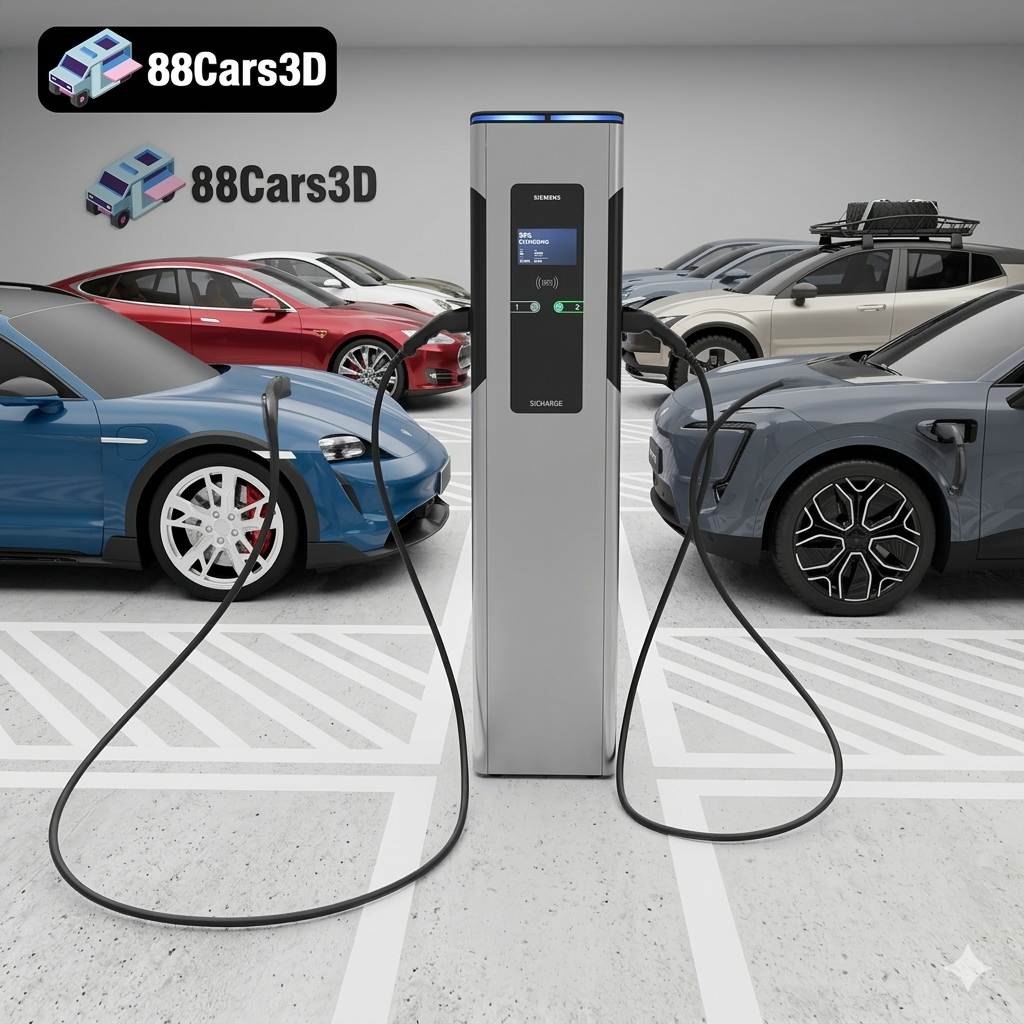
Download the Future of Mobility EV 3D Models Bundle. Includes the Volvo EX30, Tesla Model S, AVATR 11, Porsche Taycan, and a Siemens EV Charger. Save big on this highly optimized 5-in-1 pack for ArchViz and game development!
Price: $89.99

