

Mastering Automotive 3D Models: A Deep Dive into Professional Workflows and the Chery Tiggo 4 RU-Spec 2019 3D Model
In the dynamic world of digital content creation, high-quality 3D car models are indispensable across a multitude of industries. From captivating photorealistic automotive rendering to immersive game development and interactive AR/VR experiences, the demand for meticulously crafted vehicle assets continues to accelerate. Professionals in automotive design, advertising, simulation, and even 3D printing rely on precision and versatility to bring their visions to life.
Today, we’re taking a closer look at what defines a truly professional 3D vehicle asset, exemplified by a highly detailed model: the Chery Tiggo 4 RU-Spec 2019 3D Model. This compact crossover SUV, tailored specifically for the Russian market, serves as an excellent case study for understanding the technical specifications, workflow integrations, and creative possibilities that a premium 3D model can unlock. Whether you’re a seasoned 3D artist, a game developer, or an automotive designer, grasping the nuances of these assets is crucial for delivering exceptional results.
Understanding 3D Model File Formats
The versatility of any professional 3D model, including the Chery Tiggo 4 RU-Spec 2019 3D Model, hinges significantly on the file formats it supports. Each format is engineered for specific purposes, offering unique advantages in terms of compatibility, data retention, and optimization for various workflows. Understanding these formats is critical for any 3D professional.
.blend – The Heart of Blender Projects
The .blend format is the native file type for Blender, the powerful open-source 3D creation suite. A .blend file is a complete package, containing not just the mesh geometry but also materials, textures (often packed within or referenced), lighting setups, camera positions, animations, physics simulations, and even scene organization data. When you acquire a .blend file, you’re getting a fully editable Blender scene, allowing for deep customization and seamless integration into existing Blender projects. This is ideal for artists who primarily work in Blender and need to modify the model’s topology, rigging, or material shaders.
.fbx – The Industry Standard for Interchange
.fbx (Filmbox) is arguably the most widely used proprietary 3D file format for interchange between 3D software applications and game engines. Developed by Autodesk, FBX is excellent for transferring complex scenes, including geometry, materials, textures, animations, and rigs. Its robust support for animation data makes it indispensable for real-time pipelines like Unreal Engine and Unity, where efficiency and comprehensive data transfer are paramount. The Chery Tiggo 4 model in .fbx format ensures that all its detailed components and pivot setups for animation (like wheels and doors) can be easily imported and utilized in game development or cinematic sequences.
.obj – The Universal Geometry Carrier
The .obj (Wavefront OBJ) format is a universal standard for 3D geometry. It’s a simple, widely supported format that stores vertex positions, UV coordinates, normals, and face information. While it doesn’t typically store advanced material properties or animation data internally (these are usually handled by an accompanying .mtl file for basic materials), its strength lies in its widespread compatibility. Almost every 3D software can import and export .obj files, making it a reliable choice for cross-software collaboration or when you primarily need the raw mesh data without intricate scene setups. It’s excellent for foundational model sharing.
.glb – Optimized for AR, VR, and Web
.glb (GL Transmission Format Binary) is a modern, efficient, and increasingly popular format for 3D models, especially suited for AR, VR, and browser-based applications. It’s the binary version of glTF, packing all assets (geometry, materials, textures, animations) into a single file. This makes .glb files incredibly lightweight and fast to load, perfect for showcasing the Chery Tiggo 4 in interactive web viewers, virtual car dealerships, or augmented reality experiences on mobile devices. Its optimization for real-time rendering environments makes it a go-to for modern immersive applications.
.stl – The Gateway to 3D Printing
The .stl (Stereolithography) format is the cornerstone of 3D printing. It represents a 3D model as a series of connected triangles, forming the surface geometry without any color, texture, or material information. For the Chery Tiggo 4 RU-Spec 2019, an .stl file transforms the digital model into a tangible object, allowing users to 3D print scale models for display, prototyping, or educational purposes. Preparing a model for .stl requires ensuring “manifold” geometry (no holes or non-watertight surfaces) to ensure successful printing, as detailed in the product’s 3D print settings.
.ply – Precision for Scan Data and Analysis
The .ply (Polygon File Format) is a versatile format for storing 3D data, particularly popular for representing 3D scanned objects and for scientific/engineering applications. It can store not only geometry (vertices, faces) but also color, transparency, and sometimes even normal vectors, making it richer than .obj in some aspects. It’s often used in CAD, reverse engineering, and applications requiring precise mesh data for analysis, where the fidelity of the scan data is paramount. For a highly detailed model like the Chery Tiggo 4, .ply offers another avenue for precision-focused users.
.unreal – Engine-Ready for Real-time Environments
The inclusion of .unreal typically refers to assets specifically prepared or optimized for direct import and use within Unreal Engine. While .fbx is the primary conduit, an “.unreal” file implies that the asset has already undergone a level of optimization, material setup, and perhaps even collision mesh creation, making it an engine-ready asset. This can significantly reduce setup time for game developers, providing a streamlined workflow for integrating the Chery Tiggo 4 into real-time environments, complete with PBR materials and proper scaling.
.max – Native for 3ds Max Projects
Finally, the .max format is the native scene file for Autodesk 3ds Max, a leading software for 3D modeling, animation, and rendering. Like .blend, a .max file contains the complete scene, including geometry, materials, textures, lighting, cameras, animation, and scene hierarchies. This format is crucial for professionals who use 3ds Max for high-end automotive rendering or complex animation projects, allowing them full access to the original scene setup and the ability to leverage powerful renderers like V-Ray or Corona. The Chery Tiggo 4 in .max format ensures maximum flexibility for experienced 3ds Max users.
By offering the Chery Tiggo 4 RU-Spec 2019 3D Model in such a comprehensive array of formats, 88cars3d.com ensures that artists, developers, and designers can seamlessly integrate this high-quality asset into virtually any professional pipeline, maximizing its utility and value.
The Art and Science of Automotive 3D Modeling
Creating compelling 3D car models is a sophisticated blend of artistic intuition and precise technical execution. It demands an eye for detail, a deep understanding of automotive design, and mastery of 3D software. The Chery Tiggo 4 RU-Spec 2019 3D Model exemplifies this synthesis, offering a robust asset for various professional needs.
High-Fidelity Replication: Capturing Real-World Essence
The core challenge in automotive 3D modeling lies in accurately replicating the intricate forms and subtle curvatures of a real vehicle. This isn’t merely about getting the general shape right; it’s about capturing the essence and character of the car down to the smallest detail. For the Chery Tiggo 4, this means meticulous attention to its “rugged exterior proportions” and “modern, dynamic silhouette.”
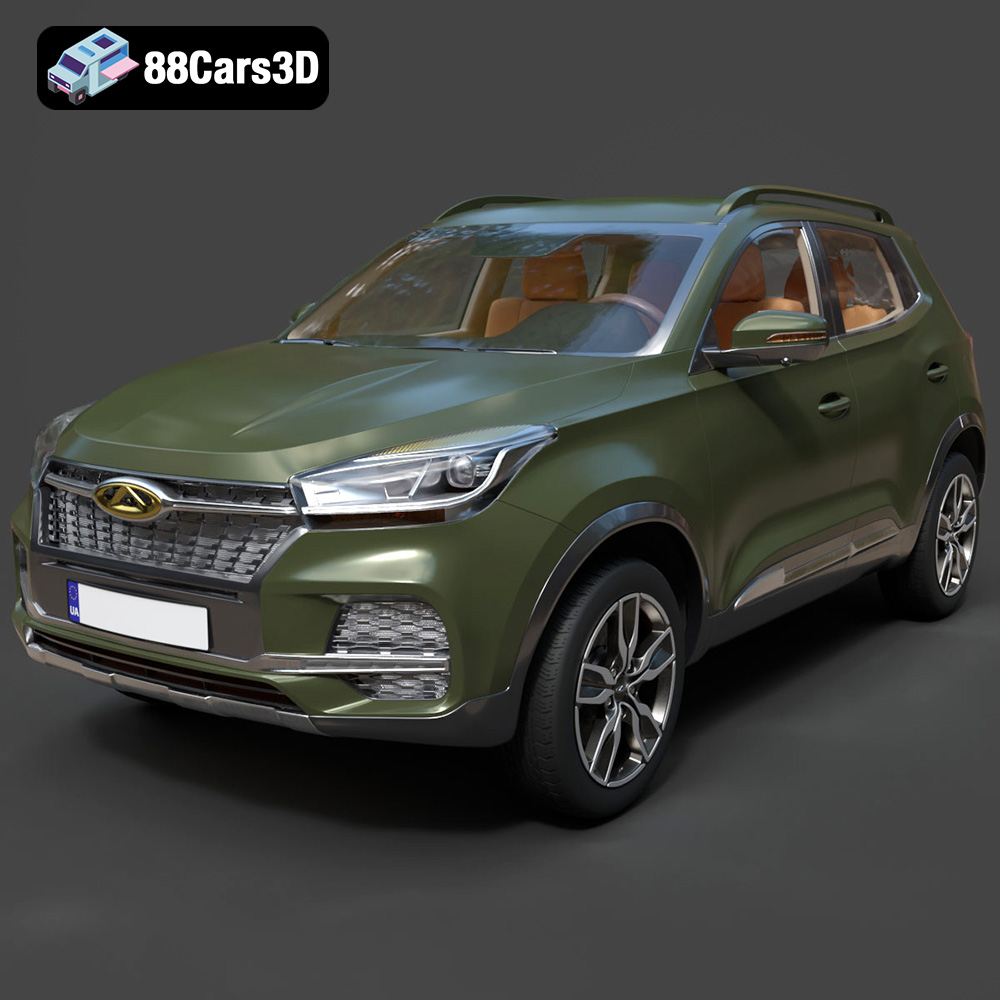
- Exterior Precision: Every curve, every panel gap, and every functional element on the exterior must be faithfully recreated. This includes the “bold matrix front grille,” “detailed headlight and taillight assemblies with LED signatures,” and even the “rugged plastic lower body cladding and wheel arch trim.” Such precision ensures that the model holds up under close-up scrutiny in high-resolution renders, making it ideal for commercial automotive presentations where realism is paramount. The separate components for wheels, brake calipers, and steering further underscore this commitment to accurate representation and animation readiness.
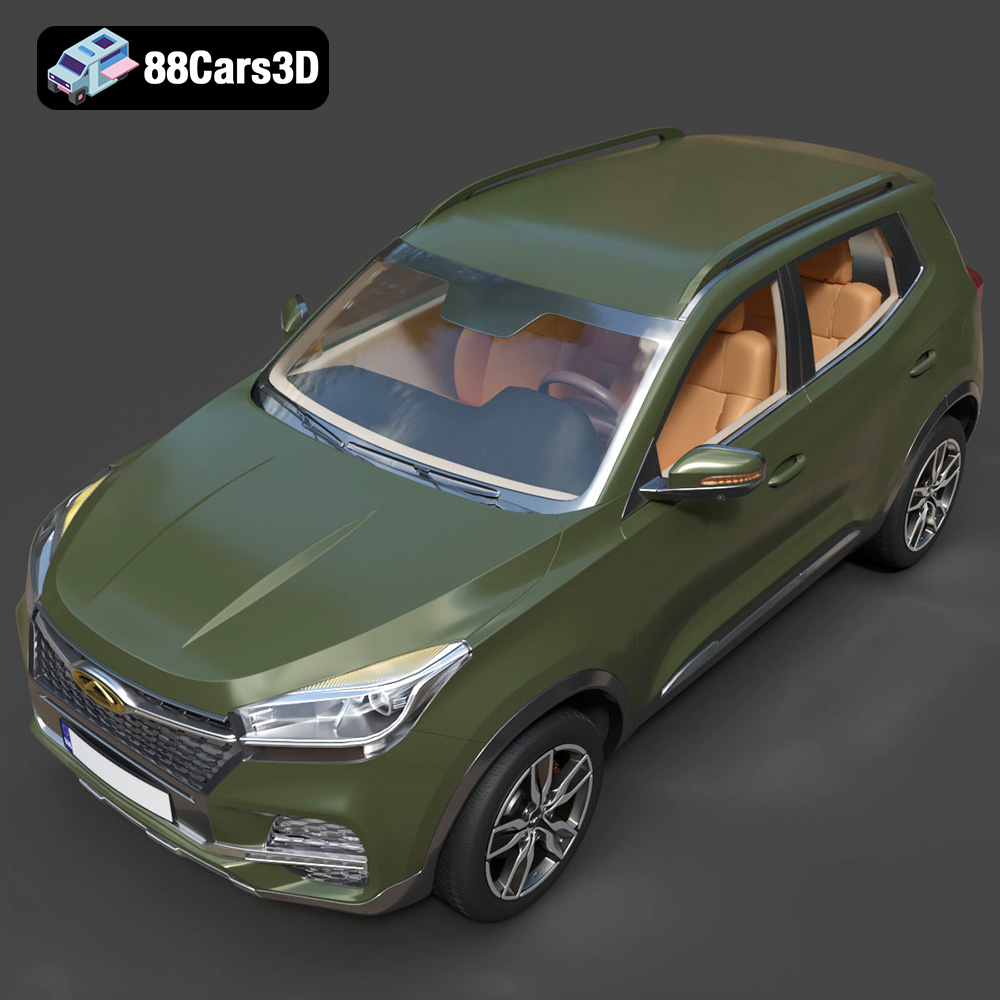
- Interior Detailing: The interior of a car is just as crucial for a complete experience. A professional 3D model goes beyond just the shell, depicting the “five-seat practical cabin layout,” “modern dashboard design with central infotainment screen geometry,” and “sculpted seating geometry with accurate stitching seams.” These details contribute significantly to the immersion factor, especially in AR/VR applications or driving simulations where users might interact closely with the cabin. The optimized geometry ensures suitability for interior close-up rendering without unnecessary poly count where it’s not needed, striking a balance between detail and efficiency.
Topology, Polygon Counts, and Optimization
Beyond visual accuracy, the underlying mesh structure—known as topology—is critical for the model’s performance and flexibility. The balance between visual fidelity and technical efficiency is a constant negotiation in 3D production.
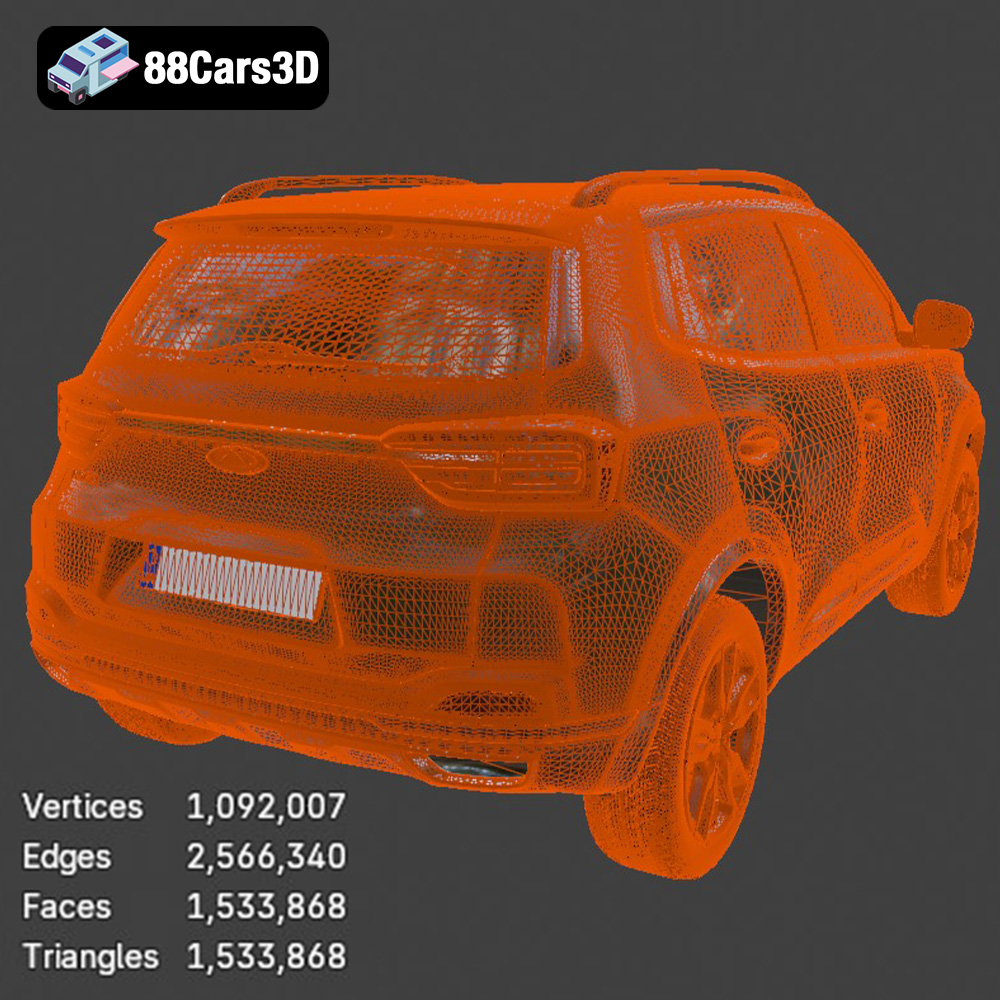
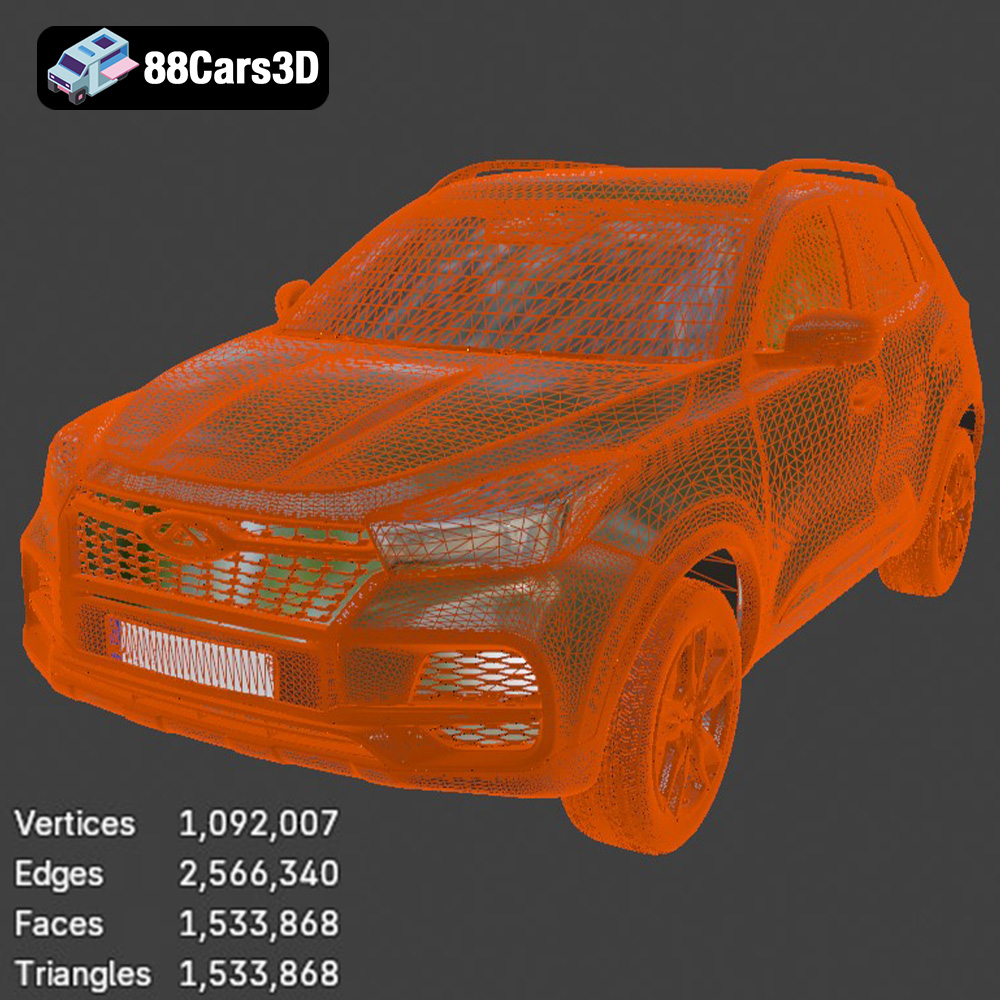
- High-Poly for Premium Visualization: With a polygon count of approximately 1,350,400 faces (or triangles), the Chery Tiggo 4 3D Model is classified as a high-poly asset. This dense mesh allows for incredibly smooth surfaces and sharp details, essential for “premium visual fidelity” in photorealistic rendering and automotive visualization. High-poly models minimize faceting and allow for greater deformation control, which is crucial for achieving lifelike reflections and shadows on complex automotive surfaces.
- Clean Mesh Structure and Real-World Scale: A “well-organized mesh structure” is as important as the poly count. Clean topology with proper edge flow facilitates UV mapping, texturing, and allows for easier modification or subdivision if needed. Furthermore, “real-world scale accuracy” is non-negotiable for integrating the model into existing scenes, whether for architectural visualization or precise engineering simulations. The careful arrangement of polygons ensures that materials and textures wrap correctly and that the model behaves predictably under various lighting conditions, providing a solid foundation for any professional project.
Workflow Integration: From Design to Deployment
A truly valuable 3D model, such as the Chery Tiggo 4 RU-Spec 2019, is not a standalone piece but a versatile asset designed to integrate seamlessly into diverse production pipelines. Its technical specifications and multi-format availability make it a cornerstone for various professional applications.
Automotive Rendering & Visualization
Photorealistic rendering is where high-detail 3D car models truly shine. They are the backbone of compelling visual content that can influence buying decisions, present design concepts, or enrich marketing campaigns.
- Studio Renders with 3ds Max and Blender: For high-end automotive rendering, software like 3ds Max (often paired with V-Ray or Corona Renderer) or Blender (with Cycles or Eevee) are industry staples. The Chery Tiggo 4 model, available in .max and .blend formats, provides artists with a production-ready asset. In 3ds Max, artists can leverage sophisticated material systems to create realistic paint shaders, intricate chrome reflections, and detailed glass effects. Blender users benefit from its integrated rendering engines and robust node-based material editor to achieve stunning visuals. Both allow for precise control over lighting, camera angles, and depth of field, transforming the raw 3D model into a captivating image or animation for commercial vehicle presentations or automotive design showcases.
- Architectural Visualization & Scene Population: Vehicles are essential components in architectural visualization. They add scale, context, and a sense of realism to urban and suburban scenes. The Tiggo 4, with its realistic standard-issue alloy wheel design and accurate proportions, can effectively populate street scenes, parking lots, or driveways, enhancing the overall believability of an architectural render. Its detailed exterior makes it suitable for both distant and closer views within these environments, adding to the visual richness without appearing generic.
Game Development & Real-time Engines
While often associated with high-poly renders, detailed 3D car models are also foundational for game development, albeit requiring specific optimization strategies. The Chery Tiggo 4 model, provided by 88cars3d.com, serves as an excellent base for real-time applications.
- Asset Preparation for Unreal Engine and Unity: Modern open-world games and urban traffic simulations demand a vast array of vehicle types. A high-poly model like the Tiggo 4 provides the rich detail needed for hero cars or high-fidelity segments. However, for real-time performance across an entire game, optimization is crucial. This often involves retopology to create lower-polygon versions (LODs – Level of Detail), creating efficient UV maps for texture atlases, generating collision meshes, and baking normal maps from the high-poly model to retain detail on lower-poly versions. The availability of the model in .fbx and .unreal formats streamlines this process, allowing developers to import and adapt the asset efficiently for engines like Unreal Engine and Unity.
- Interactive Experiences and Simulations: Beyond traditional gaming, the Chery Tiggo 4 can be invaluable for driving simulations, traffic safety training, and urban planning visualization. Its “proper pivot setup for steering, wheel rotation, and door hinges” is essential for animating the vehicle dynamically and allowing for interactive elements. This level of preparation means developers spend less time rigging and more time developing the interactive logic around the vehicle.
AR/VR Showcases & Immersive Experiences
Augmented Reality (AR) and Virtual Reality (VR) are revolutionizing how consumers interact with products, especially in the automotive sector. High-quality 3D car models are at the forefront of this revolution.
- Optimized for Immersive Technology: The .glb format, included with the Chery Tiggo 4 model, is specifically optimized for AR/VR and web-based display. This means the model can be quickly loaded and rendered in real-time within virtual car dealerships or interactive vehicle configurations, allowing potential customers to explore the car from every angle, customize colors, and even “sit inside” a virtual cockpit. The model’s “high-detail digital recreation” ensures that these immersive experiences are visually compelling and realistic, enhancing user engagement.
3D Printing and Physical Prototyping
The journey of a 3D model doesn’t always end on a screen. For many, the ability to transform a digital asset into a tangible object is a significant advantage. The Chery Tiggo 4 RU-Spec 2019 3D Model extends its utility into the realm of 3D printing, opening avenues for physical prototypes, scale models, and collectibles.
From Digital Mesh to Tangible Model
The transition from a virtual 3D car model to a physical 3D print requires specific considerations and adherence to print preparation guidelines. The provided .stl format for the Chery Tiggo 4 model is the standard gateway for this process.
- STL Preparation and Manifold Geometry: When converting a high-poly render model into an .stl for 3D printing, the mesh must be “manifold.” This means it must be a completely enclosed, watertight volume with no holes, inverted normals, or overlapping faces. Issues in geometry can lead to printing errors. Fortunately, professional-grade models like the Chery Tiggo 4 are typically constructed with clean geometry that is easily convertible and repairable for 3D printing. The .stl format strips away all color and material data, focusing purely on the geometric form that the 3D printer needs to interpret.
- Detailed Printing Considerations: The product description provides excellent guidance for successfully printing the Chery Tiggo 4 model.
- Recommended Scale: Scales like 1:32, 1:24, or 1:18 are ideal for creating display-quality SUV models. These scales balance detail retention with manageable print times and material usage. For intricate details such as LED DRLs and specific headlight geometry, resin printing (SLA/DLP) is often recommended, especially for smaller scales, due to its ability to produce finer details than FDM.
- Layer Height and Wall Thickness: A layer height of 0.08–0.16 mm for FDM or 0.04-0.12mm for resin ensures smooth surfaces and captures smaller details effectively. Wall thickness (1.2–2.0 mm) is crucial for the structural integrity of the printed model, preventing fragile parts.
- Supports and Orientation: Features like side mirrors, roof rails, and bumper overhangs will require supports to prevent sagging during printing. Printing the body angled can improve surface finish, and printing wheels separately allows for greater detail and easier post-processing.
- Post-processing: Achieving a showroom finish often involves post-processing steps: sanding to remove layer lines or support marks, applying primer for an even base, and then using standard automotive paint finishes. The suggestion for a matte black finish for lower cladding, for example, helps replicate the real car’s aesthetic accurately.
Applications in Prototyping and Collectibles
3D printed car models serve various practical and aesthetic purposes.
- Physical Prototypes for Design Review: Automotive designers can use these prints for rapid physical prototyping. Before committing to expensive full-scale models, a smaller, accurate 3D print provides a tangible representation for design review, ergonomic assessment, or aerodynamic studies. It allows for quick iterations and adjustments in the design process.
- Display Models and Collectibles: For automotive enthusiasts, 3D printing offers the unique opportunity to own a bespoke scale model of their favorite vehicle, like the Chery Tiggo 4 RU-Spec 2019. These models can be custom painted and finished, creating unique collectibles or display pieces. They also make excellent educational tools for teaching about vehicle design and engineering.
Customization and Project Flexibility
A professional 3D asset is not just a static representation; it’s a foundation for endless creative possibilities. The Chery Tiggo 4 RU-Spec 2019 3D Model provides a solid technical base, empowering artists and designers to tailor it to specific project requirements.
Adaptable Aesthetics: Materials and Colors
One of the most frequent needs in automotive visualization is the ability to change the vehicle’s appearance to match brand guidelines, customer preferences, or scene aesthetics. The Chery Tiggo 4 model’s well-organized mesh and material setup facilitate this.
- Exterior Color Variations: Easily modifying the exterior paint color is fundamental. Whether it’s to present the car in its “Ruby Red, Quartz White, Cosmic Silver, Metallic Black” factory options or to experiment with entirely new hues, the model’s clean material assignments allow for quick color swaps. This is crucial for marketing campaigns, virtual car configurators, or showcasing the vehicle in different environmental lighting scenarios. Similarly, the “modify wheel design and finish” option allows for variations from standard alloys to custom options, further enhancing visual diversity.
- Interior Material Customization: The interior details, such as “sculpted seating geometry with accurate stitching seams,” can be further enhanced by adjusting materials. Switching between fabric and leather representations, or altering the color and texture of dashboard elements, allows for a personalized cabin experience. This level of detail is particularly important for close-up renders or VR walkthroughs where the interior is a focal point, enabling artists to match the model to specific trim levels or bespoke designs.
Dynamic Scenes and Animation Readiness
For animation, simulation, or interactive applications, a 3D model needs to be more than just visually accurate; it must be functionally ready for movement. The Chery Tiggo 4 model addresses this with its thoughtful preparation.
- Proper Pivot Setup: The “proper pivot setup for steering, wheel rotation, and door hinges” is a critical technical advantage. Correct pivot points ensure that animations are smooth, realistic, and require minimal additional setup. Wheels will rotate on their correct axis, doors will swing open naturally, and steering components can be animated accurately. This saves significant time for animators and game developers, allowing them to focus on creating dynamic sequences rather than correcting foundational rigging issues. This functionality supports creating scenarios where doors open and close for close-up shots, or the vehicle navigates a city street.
- Configurable Lighting: The ability to “adapt lighting for studio setups or outdoor urban environments” means the model is flexible for various rendering scenarios. While not a direct model feature, the clean geometry and material separation allow lights to interact with the surfaces predictably, enabling artists to create stunning visual effects, from dramatic studio lighting for advertisements to realistic sun-drenched urban environments for simulations.
This inherent flexibility and readiness for customization make the Chery Tiggo 4 RU-Spec 2019 3D Model a robust and future-proof asset, capable of evolving with the demands of any creative project.
Conclusion: The Enduring Value of High-Quality 3D Car Models
The journey from concept to final render, or from digital mesh to physical print, is a complex one that relies heavily on the quality of foundational assets. As we’ve explored, a high-fidelity 3D car model is more than just a collection of polygons; it’s a meticulously crafted digital blueprint, engineered for versatility across myriad professional applications.
The Chery Tiggo 4 RU-Spec 2019 3D Model stands as a prime example of such an asset. Its accurate representation of the compact crossover, combined with a dense, well-organized mesh, meticulous interior and exterior detailing, and availability in a comprehensive range of file formats (.blend, .fbx, .obj, .glb, .stl, .ply, .unreal, .max), makes it an invaluable tool. Whether your focus is on creating breathtaking automotive rendering, populating realistic game environments, developing immersive AR/VR experiences, or fabricating detailed 3D prints, this model provides the technical precision and creative flexibility demanded by today’s leading professionals.
Investing in high-quality 3D car models like the Chery Tiggo 4 is a strategic decision that empowers artists and developers to streamline their workflows, achieve unparalleled realism, and ultimately deliver projects that stand out. For those seeking such premium assets, marketplaces like 88cars3d.com offer a curated selection of production-ready 3D car models designed to elevate your next project.
Featured 3D Model
Chery Tiggo 4 RU-Spec 2019 3D Model 3D Printable STL
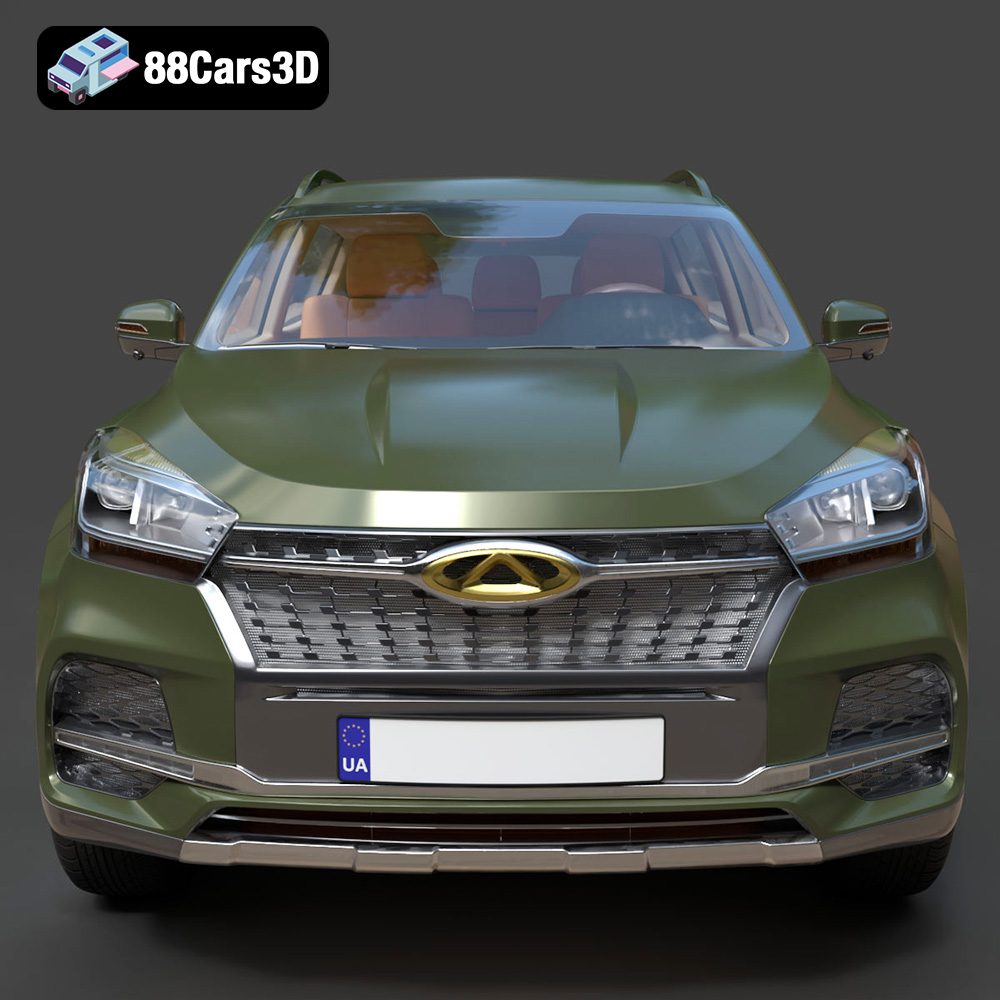
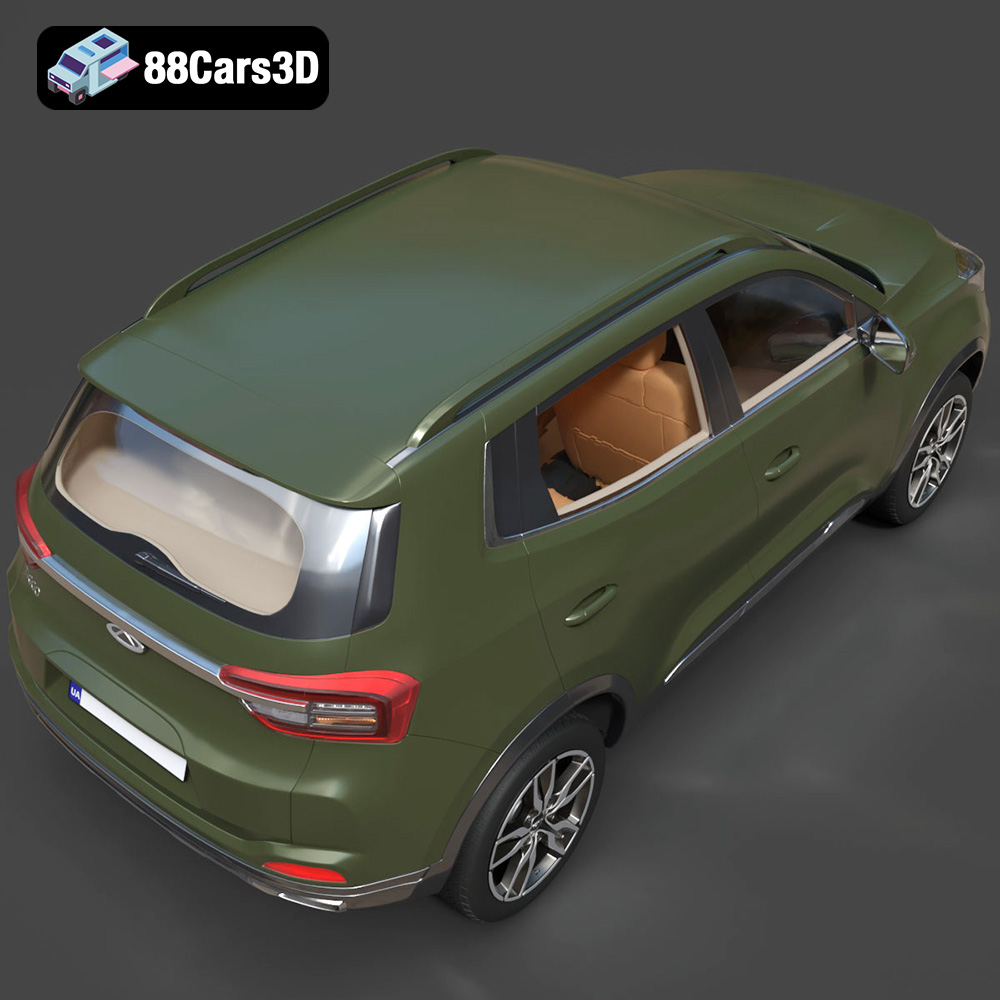
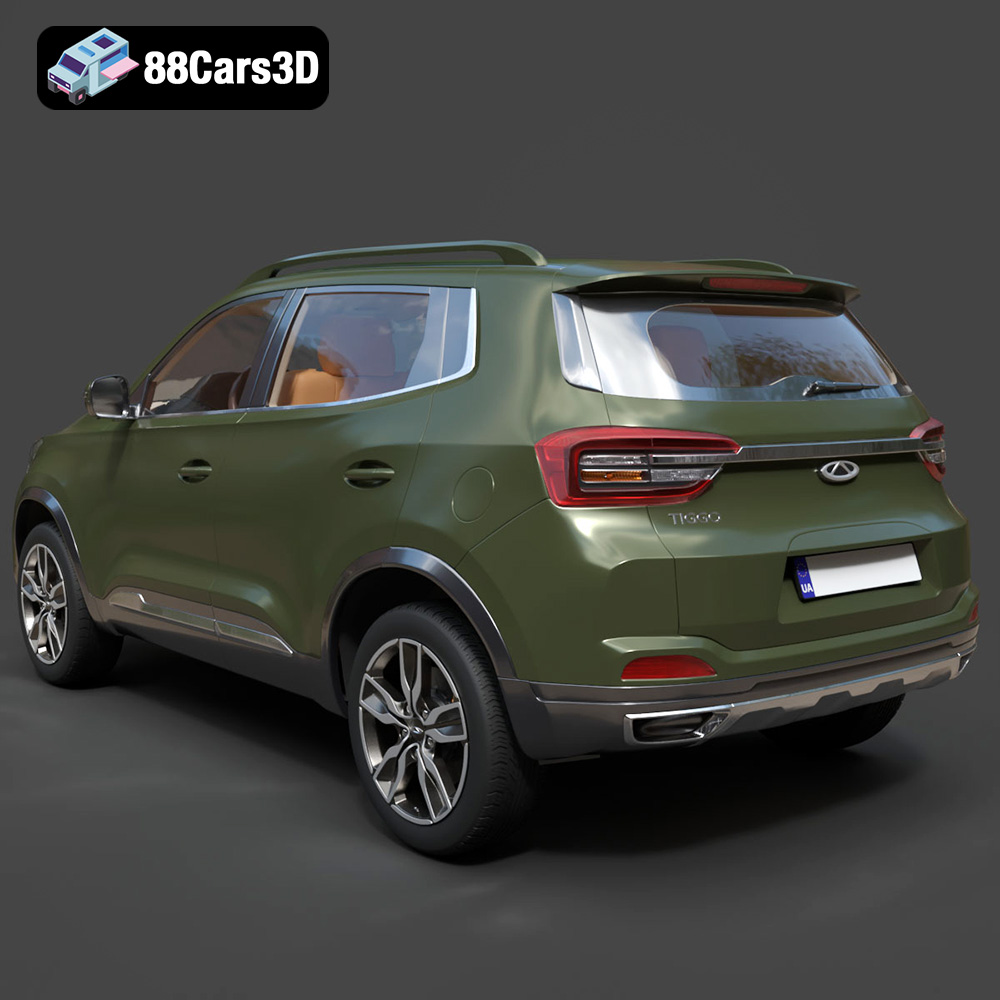
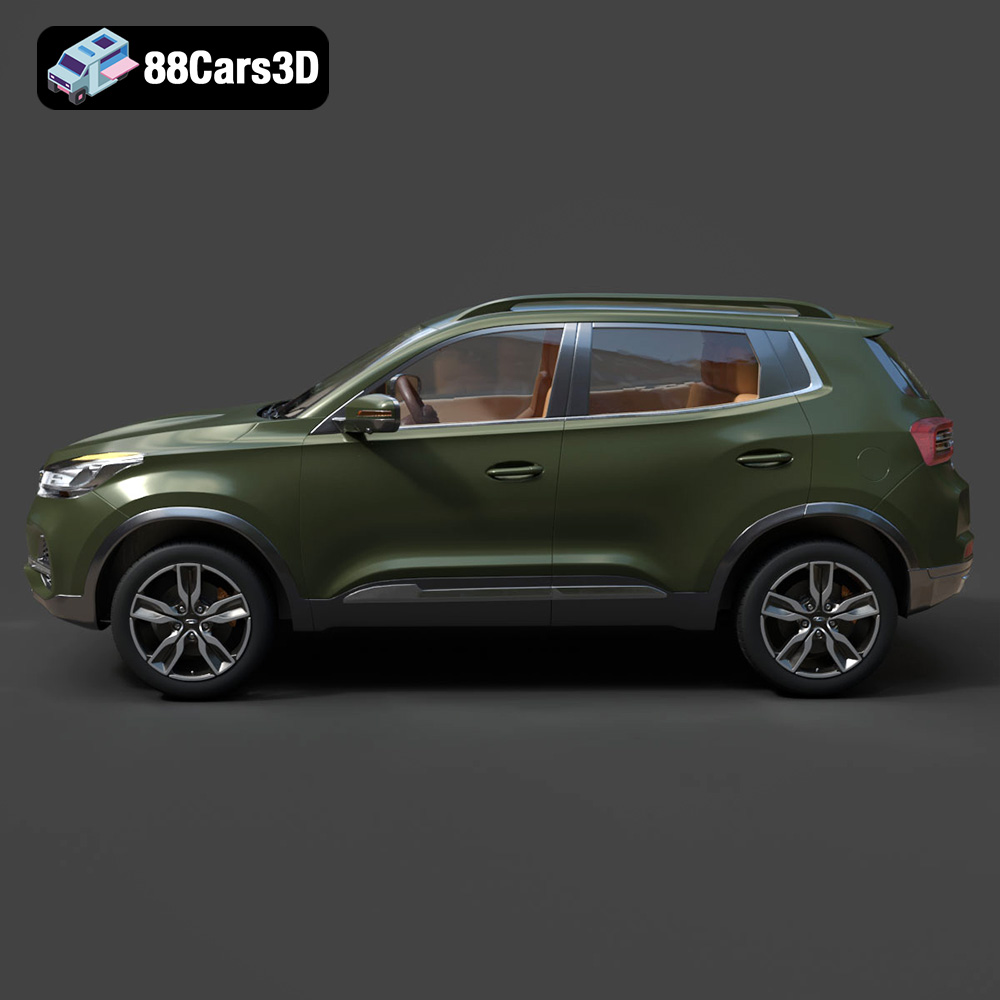
The Chery Tiggo 4 RU-Spec 2019 3D Model is a high-detail digital recreation of the popular compact crossover SUV tailored for the Russian market. Designed as a versatile and practical urban vehicle, the Tiggo 4 features a bold front fascia, rugged lower body cladding, elevated ground clearance, and a modern, dynamic silhouette that reflects Chery’s contemporary SUV design language. This 3D model accurately represents the robust exterior proportions, striking matrix grille, detailed headlight clusters with LED DRLs, functional roof rails, five-door layout, and distinct alloy wheels. Built with dense, high-polygon topology for premium visual fidelity and real-world scale accuracy, it is ideal for close-up rendering, automotive visualization, animation, game development, and AR/VR showroom showcases. Perfect for urban environment scenes, commercial automotive presentations, practical vehicle simulations, and architectural visualizations.
$49.99
Product Image Gallery
Related Tags
.automotive
.blend
.fbx
.obj
.rendering
.stl
2019-suv
3d printing
car-3d-model
chery
compact-crossover
game asset
high poly
ru-spec
tiggo-4
urban-suv
vehicle-design
VR/AR
