

The automotive industry is in a perpetual state of evolution, and one of the most transformative shifts in recent years has been the advent of virtual showrooms. These digital spaces are redefining how car manufacturers and dealerships connect with customers, offering immersive, interactive experiences that transcend geographical boundaries. At the heart of every compelling virtual showroom lies a crucial component: the high-fidelity 3D car model. These aren’t just static images; they are intricate digital twins, meticulously crafted to replicate every curve, every reflection, and every interior detail with stunning accuracy. They are the bedrock upon which realistic automotive visualization, engaging customer journeys, and powerful marketing campaigns are built. From showcasing new models before physical production to enabling extensive customization options and even facilitating virtual test drives, sophisticated 3D car models are indispensable.
This comprehensive guide delves into the intricate technical aspects of creating, optimizing, and deploying 3D car models for virtual showrooms. We will explore the nuances of modeling topology, the artistry of PBR material creation, advanced rendering techniques, critical optimization strategies for real-time environments, and how these models translate into cutting-edge AR/VR experiences and even 3D printing applications. Whether you’re a seasoned 3D artist, a game developer venturing into automotive visualization, or an automotive designer looking to leverage digital tools, understanding these foundational principles is key to unlocking the full potential of the virtual showroom experience. Prepare to explore the technical depth required to bring these digital automotive masterpieces to life.
The Foundation: High-Fidelity 3D Car Models for Virtual Showrooms
The journey to a captivating virtual showroom begins with the 3D car model itself. Far more than a simple mesh, a high-fidelity automotive model is a complex data structure meticulously built to represent a vehicle with photorealistic accuracy. This demands an unparalleled attention to detail, not just in external aesthetics but also in the underlying geometric integrity. Achieving this level of quality requires a deep understanding of polygon modeling, surface continuity, and the inherent requirements of various downstream applications, from real-time game engines to high-end cinematic renderers. The initial investment in a well-constructed base model saves countless hours in later stages and ensures a consistent, high-quality visual experience across all platforms.
For virtual showrooms, the goal is often to create models indistinguishable from their physical counterparts. This means capturing the subtle curvatures of body panels, the precise fit of components, and the intricate details of interior elements like stitching, dashboard textures, and control layouts. A poorly constructed model, with pinching geometry or inconsistent surface flow, will immediately break the illusion of realism, regardless of how advanced the rendering or lighting setup may be. Therefore, the foundational modeling work is perhaps the most critical stage in the entire pipeline, establishing the visual fidelity and performance characteristics that will define the virtual showroom experience.
Topology and Edge Flow for Automotive Precision
Topology, the arrangement of polygons (usually quads) that form the surface of a 3D model, is paramount for automotive models. Clean, optimized topology ensures smooth deformation, facilitates UV mapping, and allows for efficient rendering. For vehicles, maintaining impeccable edge flow is critical, especially around areas of high curvature, creases, and panel gaps. A good practice involves using primarily quadrilateral polygons, avoiding triangles and N-gons where possible, as they can cause pinching and undesirable shading artifacts, particularly under subdivision surfaces (e.g., Catmull-Clark in 3ds Max or Blender’s Subdivision Surface modifier). Key areas requiring careful edge flow include fender flares, door seams, hood lines, and character lines that define the car’s aesthetic. Proper edge loops should follow these design contours, allowing for smooth reflections and accurate shading. For example, a crisp edge on a door panel should be supported by several tight edge loops to prevent it from softening when subdivided. Artists often start with a low-poly base mesh, defining major shapes and proportions, then progressively add detail through subdivision or manual polygon refinement. For advanced modeling techniques in Blender, including working with subdivision surfaces and achieving optimal topology, artists can consult the official Blender 4.4 documentation for in-depth guides on mesh modeling tools and modifiers like the Subdivision Surface. This resource provides detailed explanations and best practices for creating clean, efficient meshes.
Scaling and Proportions: Ensuring Realism
Accuracy in scaling and proportions is non-negotiable for automotive models intended for virtual showrooms. Vehicles must be modeled to real-world dimensions (e.g., meters or centimeters) to ensure they integrate seamlessly with physically based lighting systems, realistic environments, and interactive elements. Incorrect scaling can lead to skewed light interactions, disproportionate reflections, and an overall uncanny valley effect that detracts from realism. It also impacts physics simulations in real-time engines and compatibility with other assets within the virtual environment. Artists typically work from CAD data, blueprints, or detailed reference images to meticulously match dimensions. A common workflow involves importing reference images into the 3D software’s viewport and scaling them to known real-world measurements of the vehicle. This provides an accurate visual guide throughout the modeling process, ensuring that the digital model is a precise replica of its physical counterpart. Consistency in unit systems across all assets and software packages in the pipeline is also crucial to avoid scaling issues during export and import.
Data Integrity and Model Sourcing
The quality of a 3D car model is intrinsically linked to its data integrity. This includes clean geometry (no overlapping faces, non-manifold edges, or disconnected vertices), efficient polycount, and proper naming conventions for objects, materials, and textures. When sourcing models, especially for commercial applications like virtual showrooms, ensuring high data integrity is critical. Platforms like 88cars3d.com specialize in providing meticulously crafted 3D car models that adhere to professional standards, featuring clean topology, optimized polygon counts (often ranging from 150,000 to 500,000 polygons for exterior details, with interior models potentially pushing above 1 million), and properly UV-mapped surfaces. Such marketplaces save artists and developers significant time and resources, offering production-ready assets that require minimal cleanup. When acquiring models, always review asset specifications for polycount, texture resolutions, included file formats (FBX, OBJ, GLB, USDZ are common and versatile), and licensing terms to ensure they meet project requirements and maintain legal compliance. Verifying the model’s structure, material assignments, and UV layouts before integration into a complex virtual showroom environment is always a recommended best practice.
Bringing Surfaces to Life: PBR Materials and Advanced Texturing
Once the geometric foundation is solid, the next crucial step is to imbue the 3D car model with lifelike surface properties. This is achieved through Physically Based Rendering (PBR) materials, a shading paradigm that accurately simulates how light interacts with different surfaces in the real world. PBR materials rely on physically accurate principles, meaning they respond correctly to lighting under any environment, ensuring consistent and realistic results across various rendering engines and lighting conditions. This consistency is vital for virtual showrooms, where vehicles need to look authentic and appealing regardless of the virtual scene or lighting setup. Understanding the core components of PBR—such as albedo/base color, roughness, metallic, normal, and ambient occlusion maps—is fundamental to creating compelling automotive shaders. The goal is not just to paint a surface, but to define its inherent properties: how reflective it is, how rough its finish is, and whether it absorbs or reflects light.
For automotive models, the complexity of materials ranges from the highly reflective and smooth clear coat of car paint to the intricate textures of tire rubber, the precise reflections of chrome, and the nuanced finishes of interior fabrics and plastics. Each material requires a dedicated approach to PBR map creation, often involving a combination of texture painting, procedural generation, and photographic references. The accuracy of these materials directly impacts the perceived realism, making PBR texturing a highly skilled and artistic endeavor that blends technical understanding with aesthetic judgment. This stage elevates a well-modeled car from a mere shape to a truly tangible, visually rich object.
Crafting Realistic Shaders: Metallic-Roughness Workflow
The metallic-roughness workflow is the predominant PBR approach for automotive visualization. It relies on a core set of texture maps:
- Base Color (Albedo): Represents the diffuse color for non-metallic surfaces and the reflected color for metallic surfaces. For car paint, this would be the base color pigment.
- Metallic: A grayscale map where 0 (black) indicates a dielectric (non-metallic) surface and 1 (white) indicates a metallic surface. Car paint, despite its sheen, is generally dielectric, while chrome trim or aluminum wheels would be metallic.
- Roughness: A grayscale map defining the microscopic surface irregularities. Lower values (darker) mean smoother, more reflective surfaces (e.g., clear coat car paint), while higher values (lighter) mean rougher, more diffuse surfaces (e.g., matte plastics, tire rubber).
- Normal Map: Provides high-frequency surface detail (e.g., fine scratches, subtle bumps in leather) without requiring additional geometry. This is crucial for adding realism efficiently.
- Ambient Occlusion (AO): Simulates soft shadows where surfaces are close together, adding depth and realism to crevices and corners.
Each map is carefully crafted, often using software like Substance Painter, Mari, or even directly within Blender’s shader editor. For complex materials like car paint, additional layers are often built into the shader network—a clear coat layer with its own roughness and normal map, a metallic flake layer, and even pearlescent effects, all contributing to the final stunning realism. Consistency in color spaces (e.g., sRGB for Base Color, Linear for Roughness/Metallic) is vital for accurate rendering.
UV Mapping Strategies for Seamless Textures
UV mapping is the process of unwrapping a 3D model’s surface into a 2D plane, allowing textures to be applied accurately. For complex automotive surfaces, effective UV mapping is paramount to avoid seams, stretching, and distortion. Common strategies include:
- Planar Projection: Suitable for flat or slightly curved surfaces.
- Cylindrical/Spherical Projection: Useful for curved components like wheels or headlights.
- Pelting/Unfolding: Manual unwrapping where seams are strategically placed in less visible areas (e.g., along panel gaps or under the chassis) and then the UV islands are relaxed to minimize stretching.
For car bodies, artists often separate panels (doors, hood, roof) into distinct UV islands, orienting them consistently to optimize texture space and minimize distortion. Interiors might utilize multiple UV sets: one for general materials and another for specific decals or intricate patterns. Efficient UV packing, maximizing the use of the 0-1 UV space, is also crucial for texture resolution and performance. Techniques like shared UVs for identical components (e.g., wheel rims) further optimize texture memory. Software features like Blender’s UV Editor, with its various unwrap methods and tools for aligning and scaling UV islands, are indispensable for this process.
Texture Resolutions and Optimization
The resolution of texture maps directly impacts visual fidelity and memory footprint. For virtual showrooms, a balance must be struck between stunning detail and optimal performance. Car paint and primary body elements might use 4K (4096×4096) or even 8K textures for critical details, while interior components and less visible parts could utilize 2K or 1K textures. Tire treads often benefit from high-resolution normal maps to capture intricate patterns. For optimal performance, especially in real-time virtual showrooms, strategies include:
- Texture Atlasing: Combining multiple smaller textures into one larger texture map, which reduces draw calls and improves rendering efficiency.
- Texture Compression: Utilizing formats like BC7 (for high quality) or BC1/BC3 (for greater compression) in game engines to reduce VRAM usage without significant visual degradation.
- Mipmapping: Automatically generating lower-resolution versions of textures, which the renderer uses for objects further from the camera, saving memory and improving rendering speed.
Careful planning of texture resolution per asset and intelligent use of optimization techniques are key to delivering a visually rich yet smoothly performing virtual showroom experience. Excessive texture sizes can quickly bloat memory, leading to stuttering or slow load times, especially on less powerful hardware.
Immersive Visualization: Lighting, Rendering, and Post-Processing
Even the most perfectly modeled and textured 3D car model will fall flat without a masterful approach to lighting, rendering, and post-processing. These elements are the atmospheric architects of the virtual showroom, dictating mood, realism, and visual impact. Lighting is not merely about illuminating a scene; it’s about shaping form, revealing texture, and guiding the viewer’s eye. Rendering transforms the 3D data into a captivating 2D image, while post-processing adds the final touches that elevate a raw render to a polished, professional-grade visualization. For virtual showrooms, the objective is to create an environment that feels as tangible and inviting as a physical dealership, where the vehicles are presented in their most flattering and realistic light, inviting interaction and admiration. This requires a deep understanding of light physics, camera optics, and artistic composition.
Achieving photorealism involves more than just throwing lights into a scene; it necessitates a physically accurate approach where light sources, materials, and environments interact in a predictable and realistic manner. This stage is where the car truly comes to life, reflecting its surroundings, showcasing its design philosophy, and evoking the emotional response intended by its creators. The interplay of subtle reflections, crisp shadows, and atmospheric effects transforms a static model into a dynamic focal point, ready to be explored by potential customers. This technical artistry is what makes a virtual showroom truly immersive and persuasive.
HDRIs and Physically-Based Lighting Setups
High Dynamic Range Images (HDRIs) are indispensable for creating realistic lighting in virtual showrooms. An HDRI is a 360-degree panoramic image that captures both color and intensity information from a real-world environment. When used as an environment map in a rendering engine, it provides incredibly accurate reflections and illumination, mimicking the look and feel of a specific location—be it a sunny outdoor car park, a moody studio, or a sleek showroom. The intense light data within an HDRI allows for precise reflections on metallic surfaces and car paint, which are crucial for showcasing a vehicle’s design. In addition to HDRIs, physically based area lights, spot lights, and point lights are strategically placed to highlight key features, create dramatic shadows, and direct attention to specific details of the car. These lights are configured with real-world units (e.g., lumens or watts) and properties like color temperature to ensure scientific accuracy. For example, a virtual showroom might use a studio HDRI for general ambient light and then add specific area lights to emphasize body lines or interior details, creating a dynamic interplay of light and shadow.
Advanced Rendering Techniques (Corona, V-Ray, Cycles, Arnold)
Different rendering engines offer unique strengths for automotive visualization:
- Corona Renderer: Known for its ease of use, speed, and photorealistic results with minimal setup. Excellent for architectural visualization and often favored for its intuitive material and lighting workflows.
- V-Ray: A industry-standard, robust renderer offering unparalleled control over every aspect of rendering. Highly versatile for complex scenes, animations, and product visualization, with extensive features for global illumination, caustics, and volumetric effects.
- Blender Cycles: Blender’s powerful physically based path tracer, offering excellent integration with Blender’s modeling and animation tools. Features include GPU rendering, adaptive sampling, and a comprehensive node-based material editor, making it a strong choice for artists looking for an integrated workflow.
- Arnold: A high-quality Monte Carlo path tracer favored by animation and VFX studios for its ability to handle extremely complex scenes and produce unbiased, photorealistic results. Excellent for detailed reflections and refractions.
Each renderer utilizes global illumination (GI) techniques (e.g., path tracing, irradiance caching) to simulate realistic light bounces, contributing to soft shadows and ambient light. Advanced techniques include volumetric lighting for atmospheric effects (e.g., haze), caustics for light passing through glass (e.g., headlights), and depth of field for cinematic camera effects. Optimizing render settings involves balancing quality (samples, bounces) with render time, often using render passes to separate elements for greater control in post-processing.
Post-Processing and Compositing for Impact
Post-processing and compositing are the final artistic steps that bring renders to their full potential, adding polish and cinematic quality. This stage involves taking the raw render output and enhancing it using image manipulation software like Adobe Photoshop, Affinity Photo, or Nuke. Key post-processing techniques include:
- Color Correction & Grading: Adjusting exposure, contrast, white balance, and overall color palette to achieve a desired mood or match brand guidelines.
- Vignetting: Darkening the edges of the image to draw attention to the center.
- Chromatic Aberration: A subtle lens distortion that can add a touch of photographic realism.
- Lens Flares & Glare: Simulating light artifacts from the camera lens, adding dramatic effect.
- Bloom & Glow: Enhancing bright areas to give them a luminous quality, often used on headlights or reflective surfaces.
- Sharpening: Enhancing fine details to make the image crisper.
- Noise Reduction: Cleaning up any residual noise from the rendering process.
Compositing, particularly for animation, involves layering different render passes (e.g., beauty, reflections, shadows, ambient occlusion, depth) to achieve maximum flexibility in adjusting individual elements without re-rendering the entire scene. This granular control allows artists to fine-tune the visual narrative, ensuring the car stands out and the virtual showroom environment is truly immersive and impactful, ultimately enhancing the presentation of 3D car models.
Performance for Interactivity: Optimization for Real-Time Environments
While photorealism is paramount for static renders, virtual showrooms often demand real-time interactivity, allowing users to explore vehicles from any angle, open doors, customize features, and even take a virtual test drive. This shift from pre-rendered images to dynamic, interactive experiences introduces a new set of technical challenges, primarily centered around performance optimization. A beautiful 3D car model rendered offline can become a sluggish, unplayable mess in a real-time engine if not properly optimized. The goal is to maintain visual fidelity while ensuring smooth frame rates across a range of hardware, from high-end gaming PCs to mobile devices for AR applications.
Optimization is not an afterthought; it must be considered throughout the entire asset creation pipeline, from modeling to texturing and engine integration. Every polygon, every texture, and every draw call contributes to the overall computational load. Therefore, a proactive approach to efficiency is crucial, combining smart asset management with engine-specific optimization techniques. This section dives into the strategies required to transform high-fidelity 3D car models into lightweight, performant assets capable of driving truly immersive and responsive virtual showroom experiences.
Level of Detail (LOD) Generation for Smooth Experiences
Level of Detail (LOD) is a critical optimization technique where multiple versions of a 3D model are created, each with varying levels of polygon complexity. The most detailed version (LOD0) is displayed when the camera is close to the object, while progressively simpler versions (LOD1, LOD2, etc.) are swapped in as the object moves further away. This significantly reduces the polygon count rendered at any given time, improving frame rates. For a high-fidelity 3D car model, LODs might include:
- LOD0 (High Detail): 200,000-500,000+ polygons for primary view, showing all intricate details.
- LOD1 (Medium Detail): 50,000-100,000 polygons, simplifying interior and less prominent exterior details.
- LOD2 (Low Detail): 10,000-20,000 polygons, suitable for mid-distance views.
- LOD3 (Very Low Detail/Imposter): 1,000-5,000 polygons or even a 2D billboard (imposter) for distant views, often just a silhouette.
LODs are often generated using automated tools within game engines (Unity, Unreal Engine) or 3D software (e.g., Blender’s Decimate modifier, or specialized tools like Simplygon). Careful tweaking is required to ensure smooth transitions between LODs and prevent noticeable visual popping. The specific LOD distances are determined by the virtual showroom’s scale and target hardware.
Draw Calls, Batching, and Occlusion Culling
Draw Calls: A draw call is an instruction from the CPU to the GPU to draw a batch of triangles. Minimizing draw calls is crucial for real-time performance. Each material, mesh, and light source typically incurs one or more draw calls. A car model with 50 separate material assignments, for instance, could generate at least 50 draw calls, significantly impacting performance.
Batching: To reduce draw calls, game engines employ batching techniques.
- Static Batching: Combines multiple static (non-moving) meshes that share the same material into a single mesh, reducing draw calls.
- Dynamic Batching: For smaller, moving meshes, the engine can combine them on the fly if they share materials.
Optimizing for batching often involves intelligent UV mapping and texture atlasing (combining multiple textures into one) so that many parts of the car can share a single material. For example, all interior plastics might share one material and texture atlas.
Occlusion Culling: This technique prevents objects that are hidden from the camera’s view (occluded by other objects) from being rendered. If a car is behind a wall in the virtual showroom, occlusion culling ensures it’s not wasting GPU resources. Game engines typically provide tools to bake occlusion data into the scene, further enhancing real-time performance by rendering only what’s visible.
Game Engine Integration (Unity, Unreal Engine)
Integrating high-fidelity 3D car models into game engines like Unity and Unreal Engine requires a systematic approach to ensure optimal performance and visual quality.
- Unity: Models are typically imported as FBX, with PBR textures assigned using Unity’s Standard or HDRP/URP Lit shaders. Material setup should use the Metallic Workflow. LOD groups are easily set up using the built-in LOD Group component. Real-time global illumination (e.g., Enlighten, or baked GI) can be used to pre-calculate light bounces for performance. Post-processing stack v2 adds cinematic effects.
- Unreal Engine: Models (FBX, USD) are imported, and PBR materials are created using the Material Editor, often leveraging instance materials for customization. Unreal’s Nanite virtualized geometry system (for static meshes) can handle incredibly high polygon counts without traditional LODs, though careful setup is still required for non-Nanite meshes. Lumen provides real-time global illumination and reflections, and Niagara handles advanced particle effects. Unreal’s extensive post-processing volumes allow fine-tuning of visual effects like exposure, bloom, and color grading.
Both engines require careful asset management, including texture sizing, mesh optimization, proper collision setup for interactivity, and smart use of lighting techniques (baked vs. real-time) to balance fidelity with performance. Platforms like 88cars3d.com often provide models specifically optimized and pre-configured for these engines, streamlining the integration process for developers.
Beyond the Screen: AR/VR and 3D Printing Applications
The utility of high-quality 3D car models extends far beyond traditional virtual showrooms. With the rapid advancement of Augmented Reality (AR) and Virtual Reality (VR) technologies, these models are becoming central to truly immersive and interactive automotive experiences. Imagine placing a virtual car in your driveway via AR on your smartphone, or exploring its interior in a fully interactive VR environment. Furthermore, the meticulous detail and accurate geometry required for photorealistic rendering also make these models ideal candidates for 3D printing, enabling rapid prototyping and physical visualization. The versatility of a well-constructed 3D car model allows for a wide array of applications, pushing the boundaries of how we interact with and experience automotive design. This highlights the foundational value of investing in robust, adaptable 3D assets.
However, translating models for AR/VR and 3D printing introduces its own set of unique technical considerations and optimization strategies. AR/VR demand extremely high performance and very specific file formats to ensure seamless user experiences on diverse hardware. 3D printing requires models to be watertight, manifold, and often needs adjustments to geometry to account for physical manufacturing constraints. Understanding these specific requirements and adapting workflows accordingly is crucial for maximizing the potential of 3D car models in these emerging and increasingly vital applications. The ability to bridge the gap between digital and physical realms makes these models exceptionally powerful tools for innovation in the automotive sector.
AR/VR Optimization and File Formats (GLB, USDZ)
AR/VR environments impose strict performance requirements due to the need for high frame rates (typically 90fps for VR to prevent motion sickness) and limited hardware resources on mobile devices for AR. Optimization strategies include:
- Aggressive LODs: More aggressive polygon reduction for distant objects and even for objects that aren’t the primary focus.
- Reduced Texture Resolutions: Textures are often scaled down to 1K or 512 for mobile AR to save memory.
- Single-Pass Stereo Rendering: VR-specific rendering techniques that process both eyes in a single pass to save GPU cycles.
- Baked Lighting: Pre-calculating complex lighting and shadows into lightmaps to avoid expensive real-time calculations.
- Optimized Shaders: Using simpler, more performant shaders with fewer instructions.
Specific file formats are favored for AR/VR due to their efficiency and platform compatibility:
- GLB (GL Transmission Format Binary): A self-contained, binary version of glTF, which packages models, materials, textures, and animations into a single file. It’s highly optimized for web and real-time 3D, supported by Google’s ARCore and many web AR viewers.
- USDZ (Universal Scene Description Zip): Apple’s proprietary format for AR, built on Pixar’s USD. It’s also a single-file archive that bundles assets and is natively supported by iOS devices for ARKit experiences.
Converting 3D car models into these formats often involves optimizing mesh, PBR materials, and textures for the specific target platform, sometimes requiring manual adjustments to shader networks to ensure compatibility and visual consistency.
Preparing Models for 3D Printing
While photorealistic rendering focuses on visual fidelity, 3D printing requires models to have physical integrity. Key preparation steps include:
- Manifold Geometry: Ensuring the mesh is “watertight” – a continuous surface with no holes, gaps, or internal geometry. Every edge must be connected to exactly two faces. Non-manifold geometry (e.g., edges connected to more than two faces, floating vertices) will cause print failures.
- Mesh Repair: Using software tools (e.g., Blender’s 3D Print Toolbox, MeshMixer, Netfabb) to identify and repair non-manifold edges, open boundaries, flipped normals, and self-intersecting geometry.
- Wall Thickness: Ensuring that all parts of the model have a sufficient wall thickness to be printable. Thin walls can be too fragile or fail to print.
- Scale and Units: Verifying the model is scaled correctly to real-world dimensions for the desired print size.
- Polygon Count vs. Detail: While high polygon counts are good for rendering, excessively dense meshes can be problematic for some slicer software. Decimation may be necessary, but care must be taken to retain fine details like emblems or grilles.
- Support Structures: Identifying areas that will require support structures during printing and designing the model to minimize overhangs where possible.
Converting a complex 3D car model, especially one designed for rendering, into a print-ready mesh often requires significant cleanup and attention to detail. This process transforms a virtual object into a tangible prototype or collectible, extending the model’s value beyond the screen.
Interactivity and User Experience in AR/VR
Beyond simply viewing a 3D car model, AR/VR virtual showrooms offer unprecedented levels of interactivity and user experience.
- Customization: Users can change paint colors, wheel designs, interior trims, and add accessories in real-time, seeing the changes instantly. This requires a modular approach to model creation, where components like wheels and interiors are separate objects with distinct material assignments.
- Virtual Tours: In VR, users can walk around the car, open doors, sit inside, and interact with the dashboard. This necessitates accurate scale, collision geometry, and interactive hotspots.
- AR Placement: In AR, users can place a full-scale virtual car in their real-world environment, allowing for realistic spatial context and overcoming the limitations of physical showroom space.
- Performance Feedback: Providing haptic feedback in VR when interacting with buttons or surfaces enhances immersion.
- Animated Features: Demonstrating animated features like retractable roofs, automatic doors, or active aerodynamics adds significant value.
Designing for AR/VR user experience involves intuitive controls, clear visual cues, and ensuring that all interactive elements are responsive and natural. The goal is to make the virtual experience as seamless and engaging as interacting with a physical vehicle, showcasing the true potential of high-quality 3D car models.
Workflow and Compatibility: From CAD to Virtual Showroom
The journey of a 3D car model from its initial design concept, often originating in Computer-Aided Design (CAD) software, to its final deployment in a virtual showroom is a complex pipeline involving multiple software packages, data conversions, and optimization stages. This workflow demands not only technical proficiency in various 3D applications but also a robust understanding of file formats, data integrity, and cross-software compatibility. Automotive design often starts in CAD systems like SolidWorks, CATIA, or Alias, which produce highly precise, mathematically defined surfaces (NURBS). These CAD models are ideal for engineering and manufacturing but are typically too dense and unoptimized for real-time rendering or game engines. Therefore, a critical part of the workflow involves converting and optimizing these CAD assets into polygon-based meshes suitable for visualization. This transition is delicate, as it requires retaining the original design’s fidelity while drastically reducing complexity and preparing the model for shading and texturing.
Establishing a streamlined and efficient workflow is paramount for studios and individual artists to manage projects effectively, especially when dealing with the high demands of virtual showrooms. This includes standardizing naming conventions, maintaining strict version control, and understanding how different file formats impact asset quality and performance. The ability to seamlessly move assets between modeling, sculpting, texturing, rendering, and engine integration software is a hallmark of a professional pipeline, ensuring that the high-quality 3D car models developed can be leveraged across diverse platforms and applications.
File Format Conversions and Data Preparation (FBX, OBJ)
Converting CAD data into a usable polygon mesh is often the first technical hurdle. CAD software typically exports NURBS data, which needs to be tessellated (converted into triangles or quads) into a polygon mesh. This conversion must be handled carefully to maintain surface curvature without creating excessive polygon counts.
- FBX (Filmbox): A proprietary file format by Autodesk, widely regarded as the industry standard for interoperability between 3D software (e.g., 3ds Max, Maya, Blender, Unity, Unreal Engine). FBX supports geometry, materials, textures, animations, and camera data. It’s an excellent choice for exporting complete scene data, including LODs and skeletal animations for car components (doors, wheels).
- OBJ (Wavefront Object): A simpler, open-standard format primarily used for transferring geometry (vertices, normals, UVs). It doesn’t typically store advanced material properties or animations directly but is highly compatible across almost all 3D applications. Often paired with an MTL (Material Template Library) file for basic material definitions.
- Other Formats: GLB/glTF and USDZ are gaining traction for real-time and AR/VR applications due to their efficiency and modern feature sets. USD (Universal Scene Description) is also becoming a strong contender for complex pipelines, allowing for scene assembly and layering of assets.
Data preparation involves cleaning up imported meshes (removing duplicate vertices, fixing flipped normals, combining meshes), ensuring consistent scaling, and setting up pivot points correctly for interactive elements like doors or wheels.
Managing Polygon Counts and Asset Pipelines
Effective polygon count management is an ongoing process throughout the asset pipeline. High-poly models are typically used for baking normal maps and for high-resolution renders, while optimized low-poly versions are created for real-time applications using techniques like LODs. A typical pipeline for a 3D car model might look like this:
- CAD Import & Retopology: Convert CAD to high-poly mesh. Retopologize to create a clean, quad-based mesh with optimal edge flow for subdivision and deformation. This can range from 150k to 500k polygons for exteriors, sometimes over 1M for full interiors.
- UV Mapping: Create efficient UV layouts for texture application.
- High-Poly Detailing: Add fine details using sculpting software (ZBrush) or normal map baking from CAD data.
- PBR Material Creation: Develop metallic-roughness textures in Substance Painter or similar tools, often targeting 4K or 8K resolution for key components.
- Low-Poly Optimization: Generate LODs (e.g., 150k, 50k, 10k, 2k polygons) for real-time use, baking normal maps from the high-poly model to retain detail.
- Rigging & Animation: Set up pivots for doors, wheels, and steering, and create simple animations for interactive elements.
- Engine Integration & Optimization: Import into Unity/Unreal, apply materials, set up LODs, and apply engine-specific optimizations (batching, occlusion culling).
Maintaining a clear asset pipeline with consistent naming conventions (e.g., car_body_LOD0, wheel_front_left_tex_albedo) and folder structures is crucial for collaboration and efficient project management. This modular approach ensures that each component of the 3D car model can be individually optimized and managed.
Collaborative Workflows and Version Control
For large-scale virtual showroom projects, collaboration among multiple artists and developers is common. Implementing robust collaborative workflows and version control systems is essential to prevent data loss, manage changes, and streamline production.
- Version Control Systems (VCS): Tools like Perforce, Git LFS (Large File Storage), or Plastic SCM are invaluable for tracking changes to 3D assets, allowing multiple users to work on different parts of a project simultaneously without overwriting each other’s work. They enable rolling back to previous versions, comparing changes, and merging updates.
- Asset Management Systems (AMS): Specialized AMS (e.g., Shotgun, ftrack) help organize and track the status of all project assets, manage tasks, and facilitate communication within the team.
- Modular Asset Design: Breaking down the 3D car model into smaller, manageable components (e.g., body, wheels, interior, lights) allows different artists to work on specific parts independently, which can then be assembled into the final model.
- Clear Communication: Establishing clear guidelines for asset naming, file formats, export settings, and material standards ensures consistency and reduces integration issues. Regular reviews and feedback loops are also vital.
By implementing these strategies, teams can efficiently produce and manage the complex, high-quality 3D car models required for cutting-edge virtual showrooms, ensuring that every detail, from the geometry to the PBR materials, contributes to an exceptional customer experience. This structured approach, often utilized by platforms such as 88cars3d.com, guarantees that the models delivered are not only visually stunning but also technically robust and production-ready.
Conclusion
The virtual showroom represents the vanguard of automotive retail and visualization, offering unprecedented opportunities for engagement, customization, and global reach. At the core of this revolution lies the meticulously crafted 3D car model—a digital artifact whose quality directly dictates the success and immersion of the virtual experience. We’ve journeyed through the intricate technical landscape, from the foundational principles of clean topology and precise scaling, essential for capturing a vehicle’s true form, to the artistry of PBR material creation that breathes lifelike surface properties into every component. We’ve explored advanced rendering techniques that transform raw data into stunning photorealistic imagery, and delved into the critical optimization strategies that ensure seamless real-time performance in interactive environments.
Furthermore, we’ve examined how these versatile 3D models extend their utility into cutting-edge AR/VR applications, offering new paradigms of interaction, and even into the realm of 3D printing for tangible prototypes. The discussion on file formats, data preparation, and collaborative workflows underscored the complexity and rigor involved in managing a modern 3D asset pipeline. The takeaway is clear: investing in high-quality 3D car models, coupled with a deep understanding of the technical processes involved in their creation and deployment, is not merely an option but a strategic imperative for any entity looking to excel in the digital automotive space. These assets are the keys to unlocking truly immersive virtual showrooms that captivate, inform, and ultimately drive the future of automotive engagement. Embrace these technical insights, and empower your virtual showrooms to truly shine.
Featured 3D Car Models

The Italian Legends Bundle 5 Ultimate Supercar 3D Models STL Optimized
Texture: Yes | Material: Yes | 3D Printable: Yes. Download the Italian Thoroughbreds Bundle featuring 5 iconic 3D models: Lamborghini Huracán Performante, Ferrari 458 Italia, Lamborghini Urus, Diablo SV, and Maserati GT. Optimized for 4K rendering and 3D printing (STL included). Save 50% with this ultimate Italian vehicle collection.
Price: $199.99

Elite Future Mobility: EV & Autonomous SUV Bundle (4 High-End 3D Models)3D Printable STL
Download the Elite Future Mobility Bundle featuring 4 highly optimized 3D models: Tesla Model S, Avatr 11, Li L9, and Zoox Robotaxi. Perfect for ArchViz, Smart City renders, and game dev. Optimized for Unreal Engine and Blender. Includes .fbx, .obj, and .max formats.
Price: $99

German Luxury & Performance Bundle – High-End 3D Vehicle Collection3D Printable STL
🚗 5 Iconic German Cars (BMW M4 G82, M5 CS, X3, 1 Series & Mercedes E-Class). ✅ Optimized for ArchViz: Ready for Corona & V-Ray. 💰 Save €71 with this limited-time collection! 🚀 Instant Download after purchase.
Price: $119

Extreme Off-Road & Survival 3D Models Bundle (4-in-1 Pack)3D Printable STL
Download the Extreme Off-Road & Survival 3D Models Bundle! Includes the Brabus 800 Adventure, Dodge Ram Bigfoot, Spec Truck, and a Caravan. Save over €210 on this premium 4-in-1 off-grid vehicle pack for ArchViz and game development.
Price: $149.99

Heavy Duty & Commercial Logistics 3D Models Bundle (4-in-1 Pack)3D Printable STL
Download the Heavy Duty & Commercial Logistics 3D Models Bundle! Includes the Ford Sterling, Caterpillar CT680, Mercedes Citaro Bus, and Vito Van. Save over €130 on this massive, game-ready 4-in-1 industrial vehicle pack.
Price: $109.99

The Ultimate Garage Props & Custom Motorcycles 3D Models Bundle 3D Printable STL
Download the Ultimate Custom Motorcycles 3D Models Bundle. Includes a Custom Chopper, Ducati 916 Café Fighter, Harley XR1200X, and BMW K100. Perfect premium props for luxury ArchViz garages. Save over €250 today!
Price: $159.99

Japanese Legends: JDM Street Racing 3D Models Bundle (5-in-1 Pack) Nissan Mitsubishi Honda Mazda Toyota 3D Printable STL
Download the ultimate JDM Street Racing 3D Models Bundle! Includes the Nissan GT-R, Toyota Supra, Mazda RX-7, Lancer Evo IX, and Honda NSX. Save big on this highly optimized, game-ready 5-in-1 Japanese legend car pack.
Price: $129.99

American Muscle & Classics Pack 4 in 1 Ford Dodge Chevrolet 3D Printable STL
Download the ultimate American Muscle & Cinematic Classics 3D Models Bundle! Includes the Dodge Charger ’68, Mustang Eleanor GT500, Camaro Z28 ’79, and a custom ’69 Mustang. Save over €240 on this game-ready, premium 4-in-1 pack.
Price: $149.99
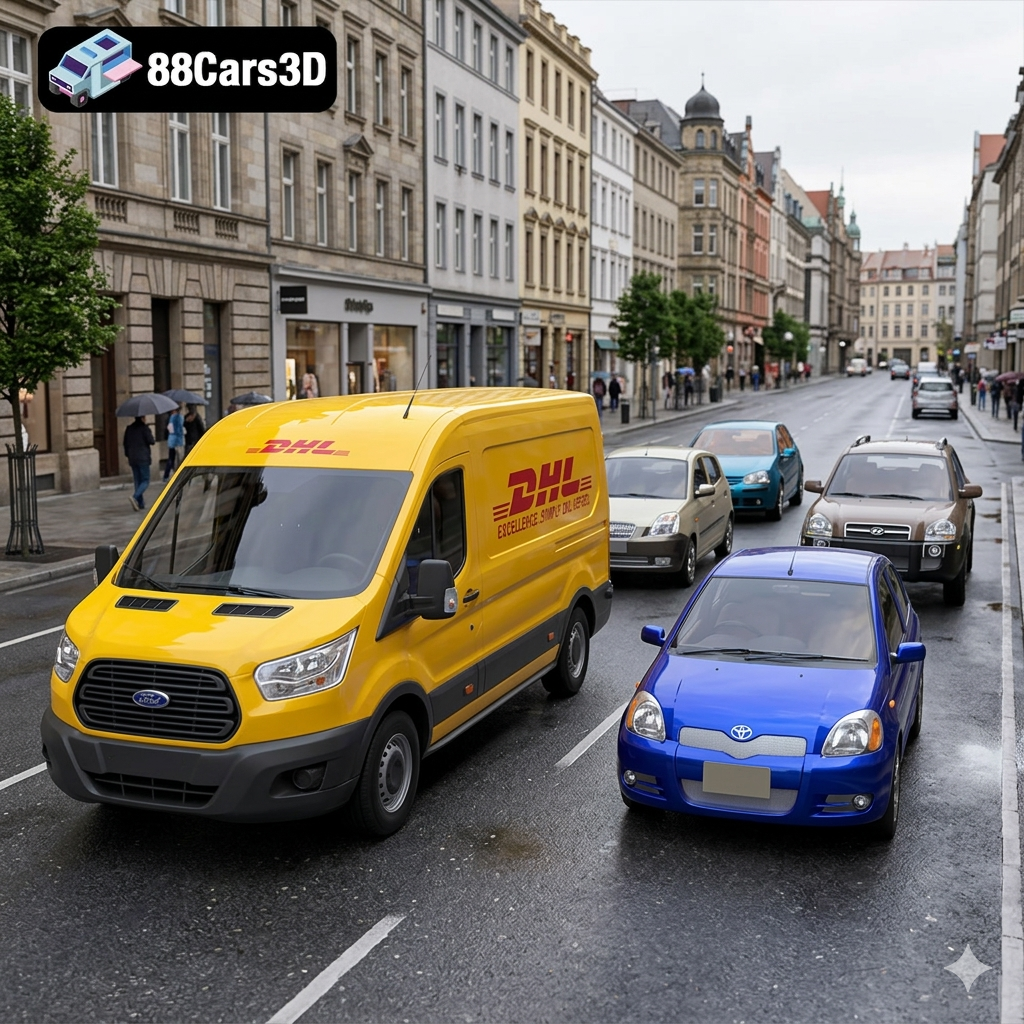
Everyday City Traffic Essentials pack 5in1 Hyundai Kia Volkswagen Toyota Ford 3D Printable STL
Download the Everyday City Traffic 3D Models Bundle. Includes the VW Golf, Kia Picanto, Hyundai Tucson, Toyota Yaris, and a DHL Ford Transit Van. Save big on this 5-in-1 pack, perfectly optimized for realistic ArchViz streets and game traffic.
Price: $99.99
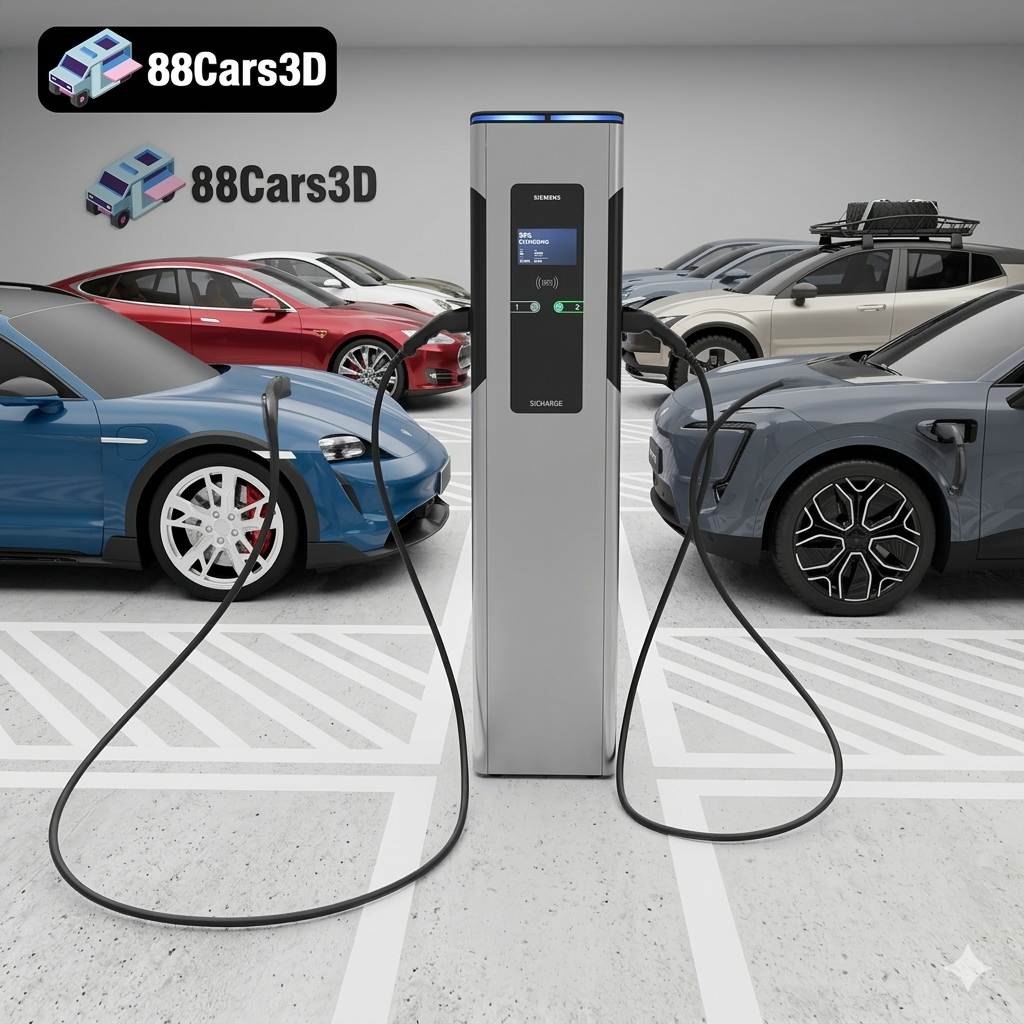
The Future of Mobility: Smart City EV 3D Models Bundle (5-in-1 Pack) Volvo Tesla AVATR Porsche 3D Printable STL
Download the Future of Mobility EV 3D Models Bundle. Includes the Volvo EX30, Tesla Model S, AVATR 11, Porsche Taycan, and a Siemens EV Charger. Save big on this highly optimized 5-in-1 pack for ArchViz and game development!
Price: $89.99
