Get 20% OFF All Premium 3D & STL Models!

In the fast-evolving landscape of digital content creation, the demand for exceptionally detailed and versatile 3D models is constant. From breathtaking automotive renders that blur the line between virtual and real, to immersive game environments and precise engineering visualizations, the quality of your foundational assets dictates the final output. Few subjects capture the imagination quite like a high-performance vehicle, and in the realm of superbikes, the BMW S 1000 RR stands as an icon of precision engineering and raw power.
For designers, animators, game developers, and visualization specialists, having access to an accurate and optimized digital replica of such a machine is invaluable. It’s not merely about aesthetics; it’s about a meticulously crafted asset that adheres to technical standards, supports diverse workflows, and offers creative flexibility. This is where a premium offering like the BMW S 1000 RR 2018 3D Model distinguishes itself, providing a robust starting point for a myriad of projects. Whether you’re aiming for photorealistic marketing imagery, integrating it into a high-octane racing game, or even creating a physical collectible through 3D printing, the underlying quality of the 3D car model from platforms like 88cars3d.com is paramount.
The journey of a 3D model often involves transitions across various software platforms and applications. The format in which a model is saved plays a critical role in its compatibility, usability, and the type of data it preserves. Understanding these nuances is key to optimizing your workflow and ensuring your 3D car models function perfectly across different pipelines. The BMW S 1000 RR 2018 3D Model is supplied in a comprehensive range of formats, making it incredibly versatile.
The .blend format is Blender’s native file type. When you download a .blend file, you’re not just getting the mesh; you’re receiving a complete Blender scene. This typically includes the model, materials, textures, lighting setups, cameras, animation data, and even modifiers. It’s fully editable within Blender, allowing artists to easily adjust topology, unwrap UVs, refine materials, and make any project-specific modifications. For those primarily working in Blender, this format offers the most flexibility and direct access to the model’s construction, making it perfect for custom renders or integration into existing Blender projects.
.fbx (Filmbox) is a proprietary file format developed by Autodesk, widely recognized as the industry standard for 3D data exchange between various software applications. Its strength lies in its ability to store not just mesh data, but also complex animation, rigging, materials, textures, and camera information. This makes it ideal for game engines like Unreal Engine and Unity, as well as digital content creation (DCC) tools such as 3ds Max, Maya, and Cinema 4D. For real-time pipelines, an .fbx file with optimized geometry and proper UVs is often the go-to format for importing game assets, ensuring a smooth transition of the BMW S 1000 RR 2018 3D Model into interactive environments.
The .obj (Wavefront Object) format is one of the oldest and most universally supported 3D file formats. It primarily stores geometric data, including vertices, normals, UV coordinates, and polygon faces. While it doesn’t typically embed animations or complex material nodes directly, it’s an excellent choice for pure mesh data transfer between almost any 3D software. Materials are usually referenced in a companion .mtl (Material Template Library) file. Its simplicity and widespread compatibility make it a reliable fallback for cross-software integration, particularly when you need a clean mesh to start building your scene-specific materials and setups.
.glb (GL Transmission Format Binary) is the binary version of the glTF format, specifically designed for efficient transmission and loading of 3D scenes and models by applications. It packages textures, animations, and other data directly into a single file, making it incredibly convenient for web-based 3D viewers, AR/VR experiences, and mobile applications where file size and quick loading times are crucial. For showcasing the BMW S 1000 RR 2018 3D Model in an interactive browser window or a mobile AR experience, .glb offers superior performance and integration.
.stl (STereoLithography) is the de facto standard file format for 3D printing. It represents a 3D model as a series of connected triangles (a tessellation) that define the surface geometry of an object. The .stl format is purely geometric; it contains no color, texture, or material information. For designers looking to transform the BMW S 1000 RR 2018 3D Model from a digital asset into a tangible collectible or prototype, a manifold (watertight) .stl file is essential for preparing the model for additive manufacturing processes.
.ply (Polygon File Format or Stanford Triangle Format) is another common format for storing 3D data, particularly from 3D scanners. It supports the storage of additional properties like color, transparency, surface normals, and even data reliability for each vertex and face, making it suitable for more complex data sets, scientific visualization, or CAD applications where precision and attribute data are important beyond simple geometry. While less common for general purpose rendering, it offers robust data integrity for specific technical analyses of the S 1000 RR’s form.
The .unreal format, or more accurately, assets that are “Unreal Engine-ready,” refers to models specifically prepared and packaged for direct import into Unreal Engine. This typically means the asset, like the BMW S 1000 RR 2018 3D Model, has been optimized for real-time performance, complete with proper materials, textures, collision meshes, and often LODs (Levels of Detail). These assets are designed to integrate seamlessly into Unreal Engine projects, requiring minimal setup and maximizing efficiency for game developers and real-time visualization artists.
Finally, the .max format is the native scene file for Autodesk 3ds Max. Similar to .blend, it contains all the information within a 3ds Max project, including geometry, modifiers, materials, textures, lights, cameras, animations, and render settings. For artists using 3ds Max for architectural visualization, advanced rendering, or complex animation, the .max file provides full editability and direct access to the model within their primary DCC environment. This allows for deep customization and integration into high-fidelity rendering pipelines.
High-quality 3D car models like the BMW S 1000 RR 2018 3D Model are the bedrock for stunning automotive rendering. In the competitive world of advertising, design reviews, and virtual showrooms, photorealism is not just an advantage; it’s a necessity. This model, with its accurate proportions and detailed geometry, is primed for high-end visualization.
For many professionals in automotive rendering, Autodesk 3ds Max remains a go-to platform. Importing the .max or .fbx version of the S 1000 RR model into 3ds Max allows for immediate access to its clean mesh and proper pivot setups. The workflow typically begins with scene setup: choosing an appropriate HDRI (High Dynamic Range Image) for realistic environmental lighting and reflections, or building a studio lighting rig. Advanced material creation is crucial; this involves crafting realistic shaders for the metallic paint, reflective chrome, rubber tires, clear glass of the windscreen, and the various textures of the engine components. Leveraging renderers like V-Ray or Corona, artists can apply physically based materials (PBR) that accurately simulate how light interacts with surfaces, bringing out the aggressive aerodynamic fairing design and the detailed inline-four engine structure with stunning fidelity. The model’s optimized polygon flow ensures that even close-up renders maintain exceptional detail without excessive subdivision.
Blender, with its powerful Cycles ray-tracing engine and real-time Eevee renderer, offers another robust pipeline for visualizing the S 1000 RR. Importing the .blend file provides an immediate, ready-to-render scene, complete with materials. Artists can then customize the lighting – perhaps setting up a dynamic racetrack scene with sun lamps and fill lights to highlight the sculpted fuel tank and asymmetrical headlight configuration. Cycles excels at photorealistic outputs, simulating complex light bounces and reflections. For quicker iterations or real-time previews, Eevee provides impressive results with much faster render times, perfect for creating animated product walkthroughs or rapid concept visualization. The separate wheels and steering components included in the model are invaluable here, enabling fluid animation sequences that showcase the superbike’s dynamic potential.
Imagine an automotive marketing agency tasked with launching a virtual campaign for the S 1000 RR. They utilize the BMW S 1000 RR 2018 3D Model from 88cars3d.com. Starting with the high-detail .max file, their team crafts a series of hero shots, focusing on the distinct fairing lines and the precision of the braking system. They render the bike in various custom liveries, adjusting the exhaust finish from standard to a more aggressive titanium look. For a promotional video, they animate the bike taking corners on a virtual track, using the properly pivoted components for realistic steering and wheel rotation. The clean topology and real-world scale accuracy ensure that whether it’s a still image or a full animation, the final visual communication is consistent with BMW Motorrad’s high standards.
The transition from high-fidelity rendering to real-time interactive experiences, such as game development and AR/VR, requires careful optimization. The BMW S 1000 RR 2018 3D Model is engineered with this in mind, providing a clean and organized mesh structure that is crucial for performance-sensitive applications.
For game developers leveraging Unreal Engine, the .fbx or .unreal formats are paramount. An optimized .fbx file with properly unwrapped UVs (essential for baking lighting and texture maps) and potentially pre-defined LODs (Levels of Detail) ensures efficient import. Once in Unreal, the model can be assigned its PBR materials, using texture maps for albedo, normal, roughness, metallic, and ambient occlusion to recreate the realistic look of the S 1000 RR in a game environment. The separate movable parts, such as wheels and steering, are critical for rigging the motorcycle for player control or AI-driven animations. Collision meshes would be generated to define the physical boundaries of the bike within the game world, crucial for realistic physics and interaction.
Unity, another leading game engine, also benefits greatly from well-prepared .fbx assets. Given Unity’s strong presence in mobile and VR/AR development, optimizing poly counts and draw calls is even more vital. While the base model provides excellent detail, further optimization, such as creating additional LODs, might be necessary for target platforms. The model’s clean topology makes this process straightforward, ensuring that even on less powerful hardware, the S 1000 RR maintains its distinctive silhouette and key features. Developing a motorcycle simulator in Unity, for example, would involve scripting the suspension dynamics, engine characteristics, and rider physics, all relying on the accurately modeled components and proper pivot points of the digital asset.
The emergence of augmented and virtual reality has created new frontiers for 3D car models. The .glb format, included with the S 1000 RR model, is specifically tailored for these lightweight, real-time applications. Imagine an AR experience where potential buyers can place the BMW S 1000 RR 2018 3D Model in their driveway, rotating it, changing colors, and examining details in real time on their smartphone. Or a VR simulator putting riders on a virtual track, experiencing the bike’s ergonomics and design from a first-person perspective. The optimized mesh and combined data in the .glb file ensure smooth performance and quick loading times, making these interactive experiences highly engaging and technically feasible.
Beyond the screen, 3D printing offers a unique way to bridge the gap between digital assets and physical reality. The BMW S 1000 RR 2018 3D Model is not just for pixels; it’s also designed with 3D printing in mind, enabling the creation of intricate physical replicas.
The .stl format is the universal language for 3D printers. The crucial aspect for 3D printing is that the model must be “manifold” or “watertight,” meaning it has no holes or inverted faces, forming a completely enclosed volume. While the base 3D model is designed with clean topology, some adjustments may be needed to prepare it for specific printing scales or technologies. For example, thin elements might need to be thickened, or small details exaggerated to be successfully rendered by the printer. Software like Meshmixer or Blender’s 3D Print Toolbox can be used to analyze and repair meshes, ensuring a flawless .stl output.
The product description provides excellent guidance for printing the S 1000 RR model. For FDM (Fused Deposition Modeling) printers, a recommended scale of 1:18, 1:12, 1:10, or 1:8 allows for a good balance of detail and printability. Layer height settings of 0.08–0.16 mm are crucial for capturing the smooth curves of the fairings and the intricate details of the engine. Wall thickness (1.2–2.0 mm) ensures the structural integrity of the print. Supports are almost always required for complex geometries like fairings, the exhaust, rear swingarm, and handlebar area to prevent drooping during printing. For optimal results, printing the frame angled and the wheels separately facilitates detail preservation and reduces the need for excessive supports.
Post-processing is where the model truly comes to life. Sanding removes layer lines and support marks, while primer creates a uniform surface for paint. A gloss sport paint finish, mirroring BMW’s iconic colors, followed by optional racing decals, can transform a raw print into a stunning collectible. For even finer details at smaller scales, resin (SLA/DLP) printing is often preferred, capturing elements like brake calipers and engine fins with higher precision than FDM.
The ability to 3D print the S 1000 RR model opens up a niche for custom collectibles and display models. Hobbyists, enthusiasts, and professional model makers can create unique versions, perhaps with custom paint schemes not available from manufacturers, or even incorporate minor modifications to represent a personalized track bike. This practical application demonstrates the versatility of a high-quality 3D car model – extending its utility from purely digital domains into the tangible world of physical objects.
The inherent quality of a 3D model dictates its utility across various professional applications. For a complex machine like the BMW S 1000 RR, technical precision isn’t just a nicety; it’s a fundamental requirement. The BMW S 1000 RR 2018 3D Model is built with specific technical advantages that underscore its professional-grade status.
A “clean mesh” refers to geometry that is free of errors, such as non-manifold edges, overlapping faces, or isolated vertices. It typically uses quads (four-sided polygons) rather than triangles where possible, which makes subdivision smoother and topology easier to manage for animation and deformation. The organized mesh structure of this model means that components are logically grouped, named, and easily selectable. This significantly reduces the time artists spend cleaning up or restructuring the model, allowing them to focus on creative tasks rather than technical troubleshooting. For game assets, clean topology also translates to more efficient UV mapping and better performance.
Working with real-world scale is critical for realism and seamless integration into larger scenes. If a 3D car model is not built to accurate dimensions, it becomes a nightmare to match with other assets, architectural environments, or even for physics simulations. The S 1000 RR model’s adherence to real-world scale means it can be dropped into any scene – from a virtual garage to a vast outdoor environment – and immediately feel proportional and correct. This is particularly important for architectural visualization, product visualization, and simulation projects where precise spatial relationships are paramount.
For any animated object, correctly placed pivot points are essential. The BMW S 1000 RR 2018 3D Model features proper pivot setup for its steering and wheel rotation. This seemingly small detail saves animators hours of work. Without correctly placed pivots, animating a motorcycle’s steering or wheels requires tedious manual adjustment or complex rigging. With them, the bike can be easily rotated, its wheels spun, and its steering articulated realistically with minimal effort, making it ideal for cinematic sequences, game physics, and interactive demonstrations.
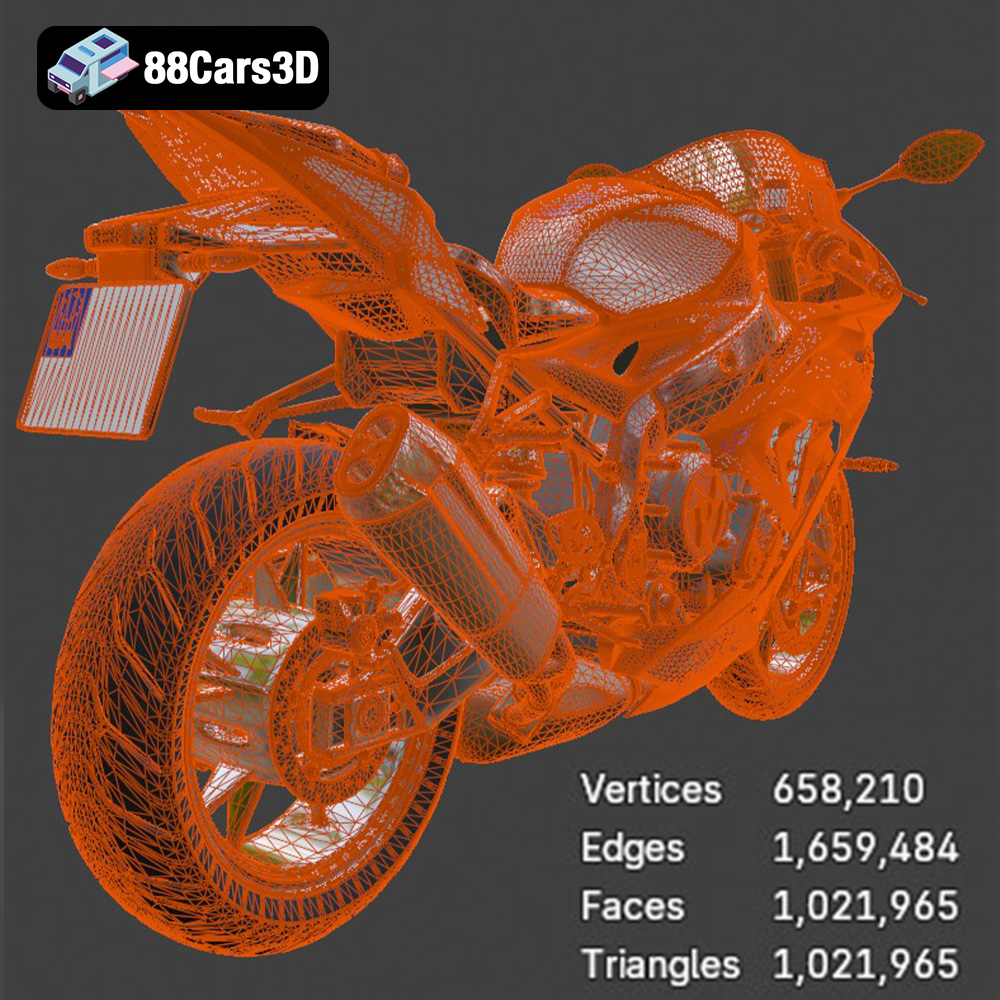
Polygon flow refers to the way edges and faces are arranged to define the contours of a 3D model. Good polygon flow follows the natural curvature and deformation lines of an object, ensuring that details are preserved during subdivision and that animations deform smoothly. For the S 1000 RR, an optimized polygon flow means that while the model is detailed, its poly count is managed to strike a balance between visual fidelity and performance efficiency. This is crucial for both high-end rendering (where clean topology makes subdivision surfaces behave predictably) and real-time engines (where minimizing poly count while retaining shape is key for framerate).
The true value of a versatile 3D asset lies in its adaptability. The BMW S 1000 RR 2018 3D Model provides extensive opportunities for customization, allowing artists to tailor it to specific project requirements and unlock a vast array of applications.
The ability to change body color and racing livery is a fundamental customization for any automotive model. Designers can experiment with classic BMW Motorrad colors, create bespoke racing team liveries, or even generate abstract artistic interpretations. Beyond the main body, adjusting wheel and brake caliper colors adds another layer of personalization. Imagine a matte black S 1000 RR with neon green calipers, or a classic white model with gold wheels – these creative choices can drastically alter the visual impact. Adding track number decals transforms the bike from a showroom piece to a track-ready machine, ready for motorsport visuals or cinematic action productions.
The model’s clean structure facilitates easy modification of material properties. The exhaust finish, for instance, can be re-textured to simulate titanium, carbon fiber, or a weathered race-worn look. This level of detail allows artists to tell a story through the bike’s appearance. Configuring lighting is equally crucial for setting the mood and showcasing the model. For racetrack scenes, dynamic sunlight with strong shadows might be appropriate, while for showroom scenes, soft, diffused lighting will highlight every curve and reflection. The optimized mesh is suitable for close-up renders, allowing the lighting to bring out even the smallest details of the cockpit and rider area features, such as the detailed instrument cluster and sport clip-on handlebar assembly.
The journey from concept to final product in 3D design is complex, requiring both artistic vision and robust technical execution. A high-quality 3D car model is more than just a collection of polygons; it is an investment in efficiency, versatility, and visual excellence. The BMW S 1000 RR 2018 3D Model exemplifies these principles, offering an unparalleled foundation for a diverse range of professional applications.
From its meticulously accurate proportions and aggressive aerodynamic styling to its clean, optimized mesh and comprehensive file format support, this model is built to empower creators. Whether you are crafting a cinematic advertising campaign in 3ds Max, developing the next-generation racing game in Unreal Engine, or bringing a physical collectible to life through 3D printing, the technical advantages of this asset streamline your workflow and elevate your final output. It’s an indispensable resource for anyone serious about automotive rendering, game assets, or interactive visualization.
For those seeking top-tier 3D car models that stand up to the most demanding projects, 88cars3d.com offers a curated selection of premium assets, ensuring you have the tools to push the boundaries of digital creation. The BMW S 1000 RR 2018 3D Model is a testament to the blend of artistry and engineering that defines excellence in the world of 3D modeling, ready to accelerate your creative projects.
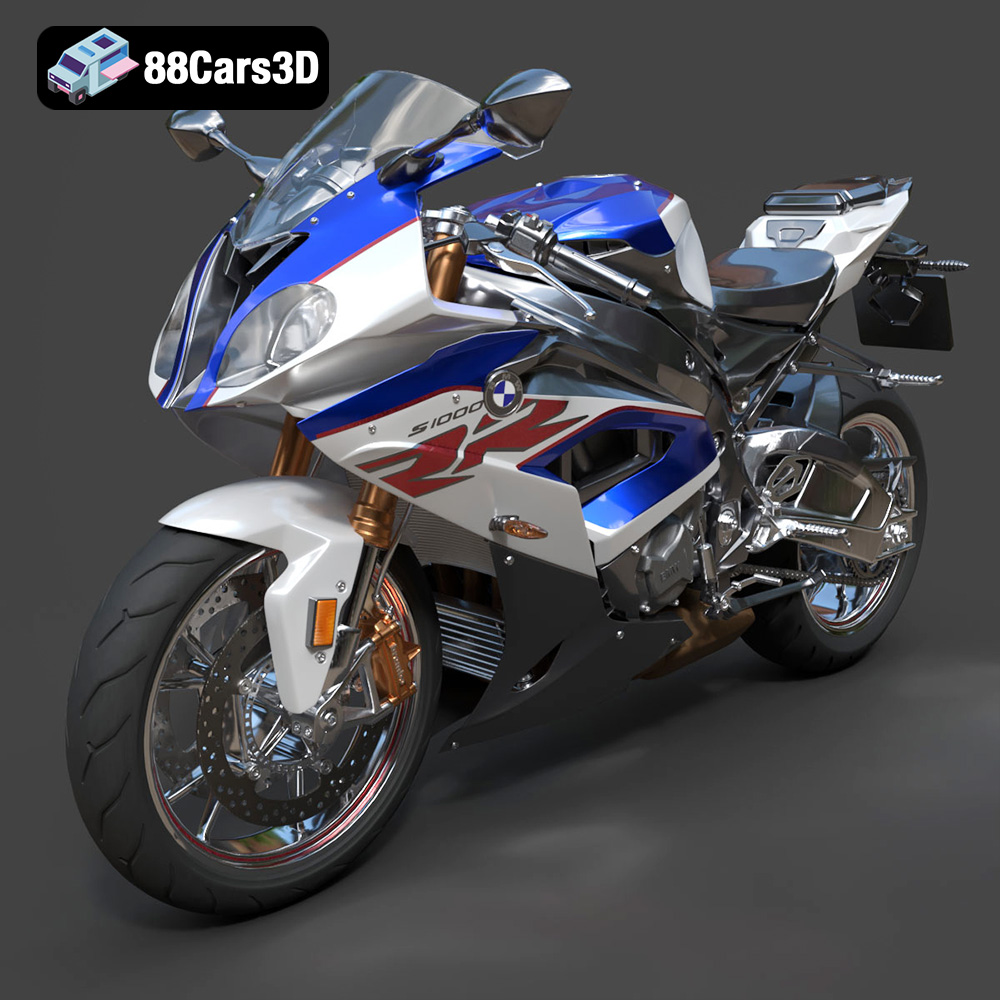
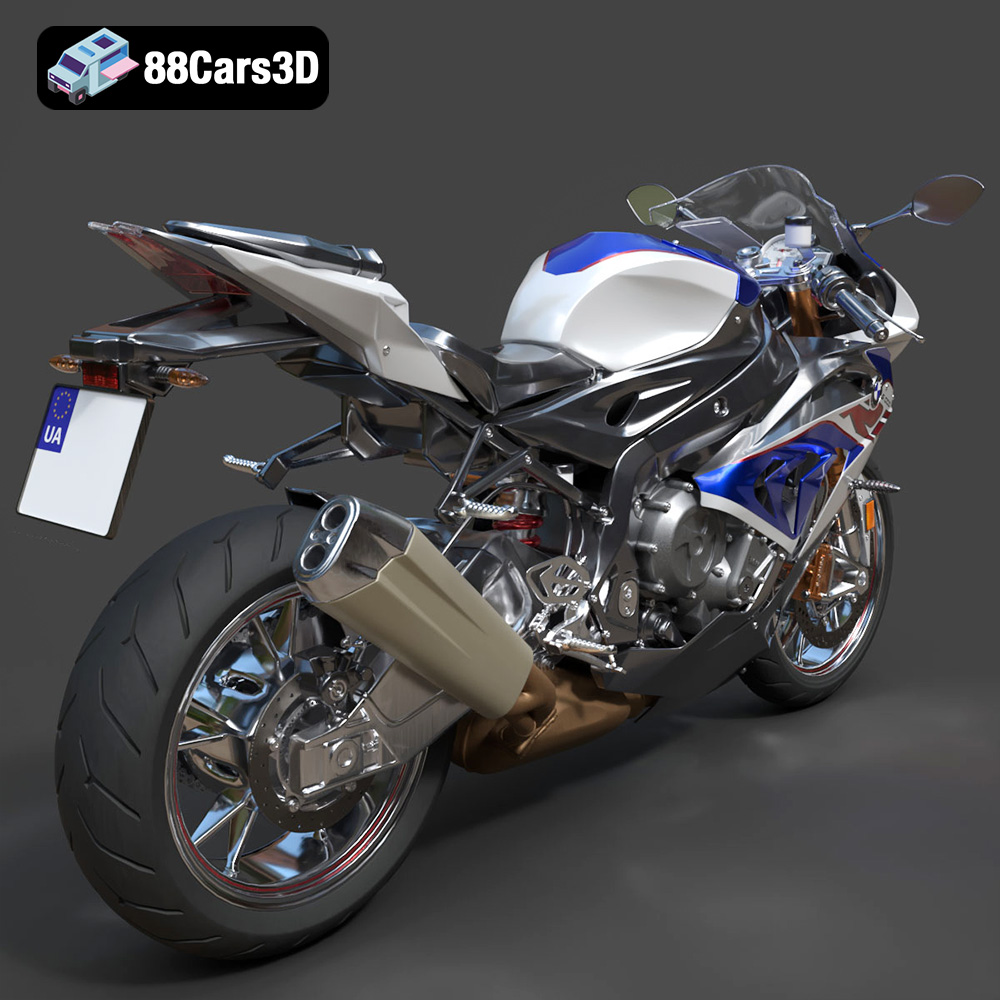
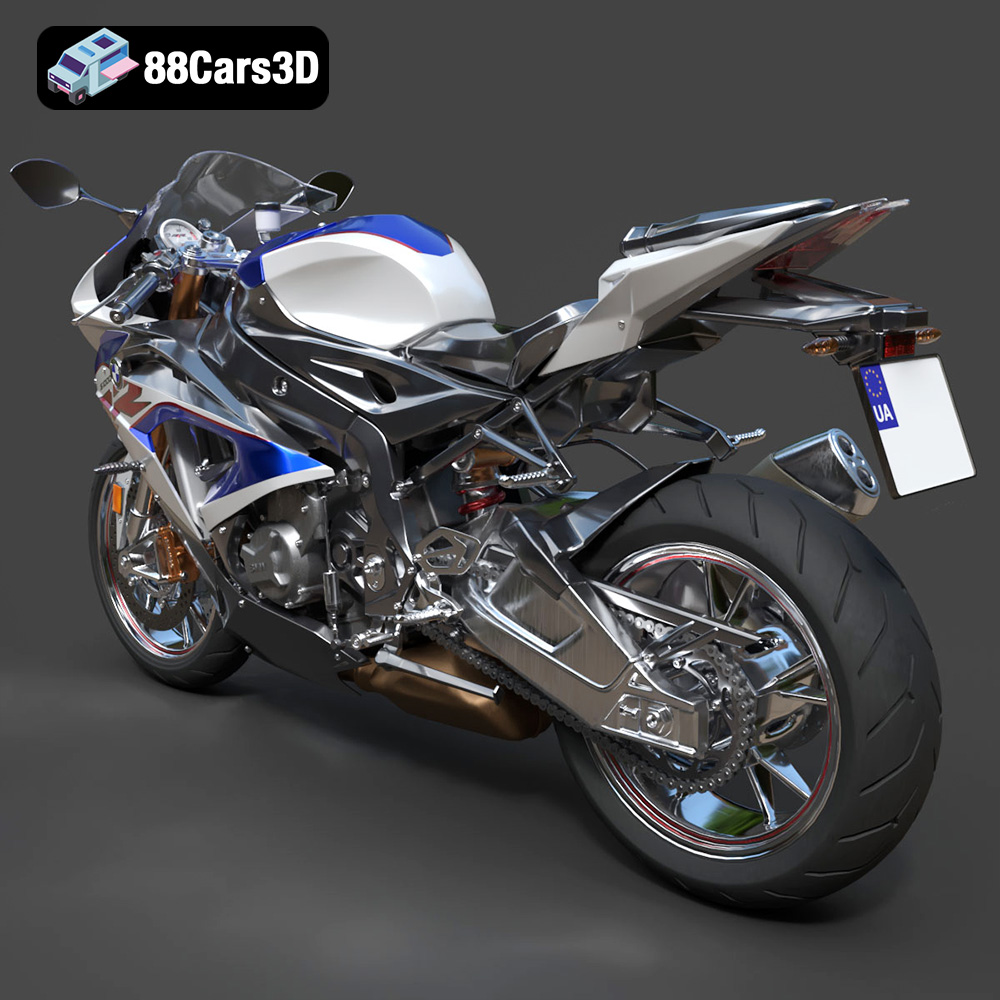
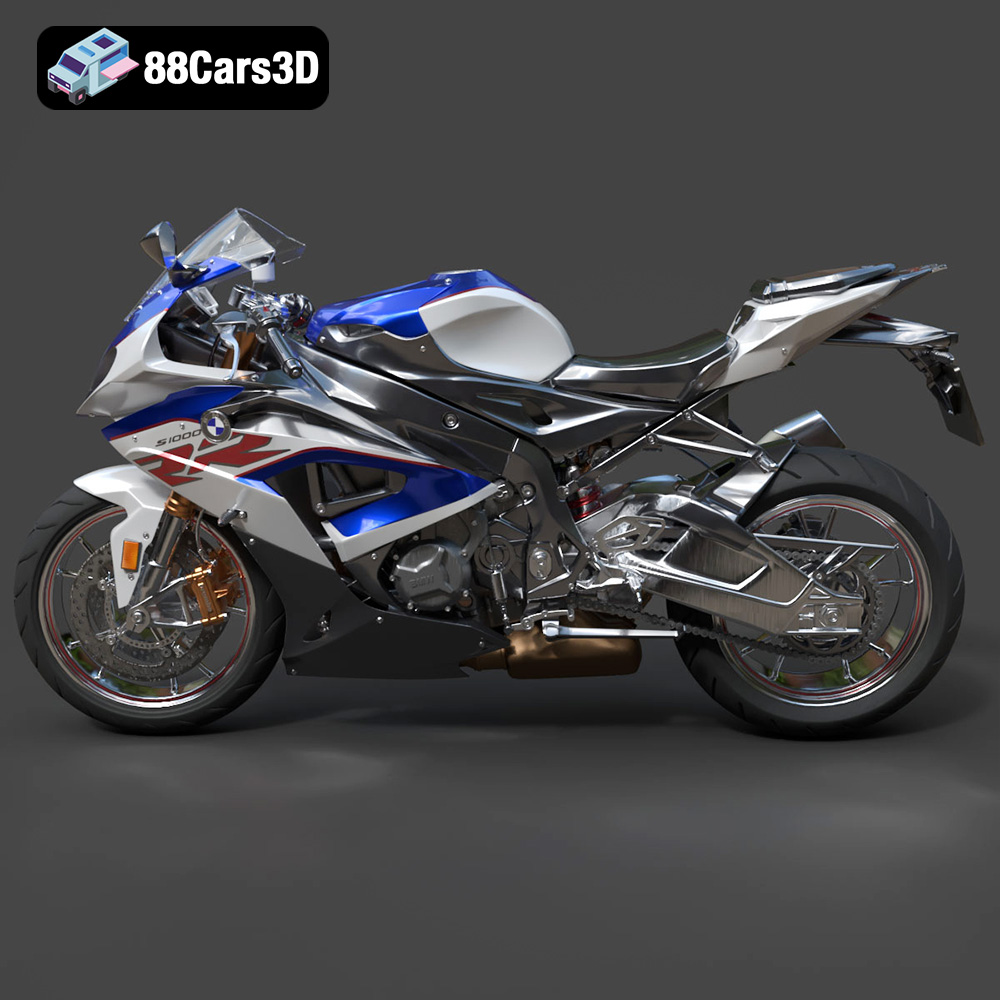
The BMW S 1000 RR 2018 3D Model is a high-detail digital recreation of BMW Motorrad’s iconic superbike, engineered for high performance on both road and track. Known for its aggressive aerodynamic styling, inline-four engine power, and advanced electronic systems, the 2018 S 1000 RR represents precision German sportbike engineering. This 3D model accurately captures the sharp fairing design, asymmetrical headlight styling (pre-2019 generation), aerodynamic windscreen, sculpted fuel tank, exposed frame elements, high-performance braking system, rear swingarm assembly, and race-inspired exhaust configuration. Built with clean topology and real-world scale accuracy, it is ideal for rendering, animation, simulation, game development, and AR/VR motorcycle experiences. Perfect for racetrack scenes, high-speed urban environments, motorsport visuals, and cinematic action productions.
$29.99
.2018superbike
.arvr
.blend
.bmw
.fbx
.gameasset
.glb
.max
.motorcycle3dmodel
.obj
.performancebike
.ply
.racingbike
.rendering
.s1000rr
.simulation
.sportbike
.stl
.twowheeler
.unreal