Unlocking Digital Realism: The Power of High-Quality 3D Car Models in Modern Workflows
In the dynamic world of 3D visualization, game development, and architectural rendering, the pursuit of realism is relentless. Achieving truly immersive environments hinges on the quality and authenticity of every asset, especially when it comes to vehicles. Accurate, well-optimized 3D car models are no longer a luxury but a fundamental necessity for professionals striving to create compelling digital experiences. These assets serve as crucial elements, grounding scenes in reality, defining a specific time or place, and often acting as central interactive components.
From the subtle reflections on a car’s paintwork in an architectural visualization to the intricate deformation of a vehicle in a high-octane racing game, every detail matters. Artists and developers demand models that not only look the part but are also technically robust, offering flexibility across various software platforms and use cases. This demand for versatility and fidelity brings us to an excellent example of such an asset: the Daewoo Nexia (N150) 3D Model, available at 88cars3d.com. This model perfectly encapsulates the blend of detailed visual appeal and technical optimization required for today’s diverse digital projects, embodying the crucial role realistic 3D car models play in shaping our digital worlds.
The Unsung Hero of Digital Worlds: The Daewoo Nexia (N150) 3D Model
Every region has its iconic vehicles that define its everyday landscape. In Eastern Europe, Russia, and Central Asia, the Daewoo Nexia N150 holds a special place. Far more than just a car, it’s a ubiquitous presence—a reliable family car, an urban taxi, and a tireless daily commuter. For 3D artists and developers looking to accurately portray these regions, incorporating such a culturally significant vehicle is not just about adding realism; it’s about adding authenticity and narrative depth to their scenes. The Daewoo Nexia (N150) 3D Model fills this niche perfectly, offering an incredibly versatile asset.
Capturing the N150’s Authentic Charm
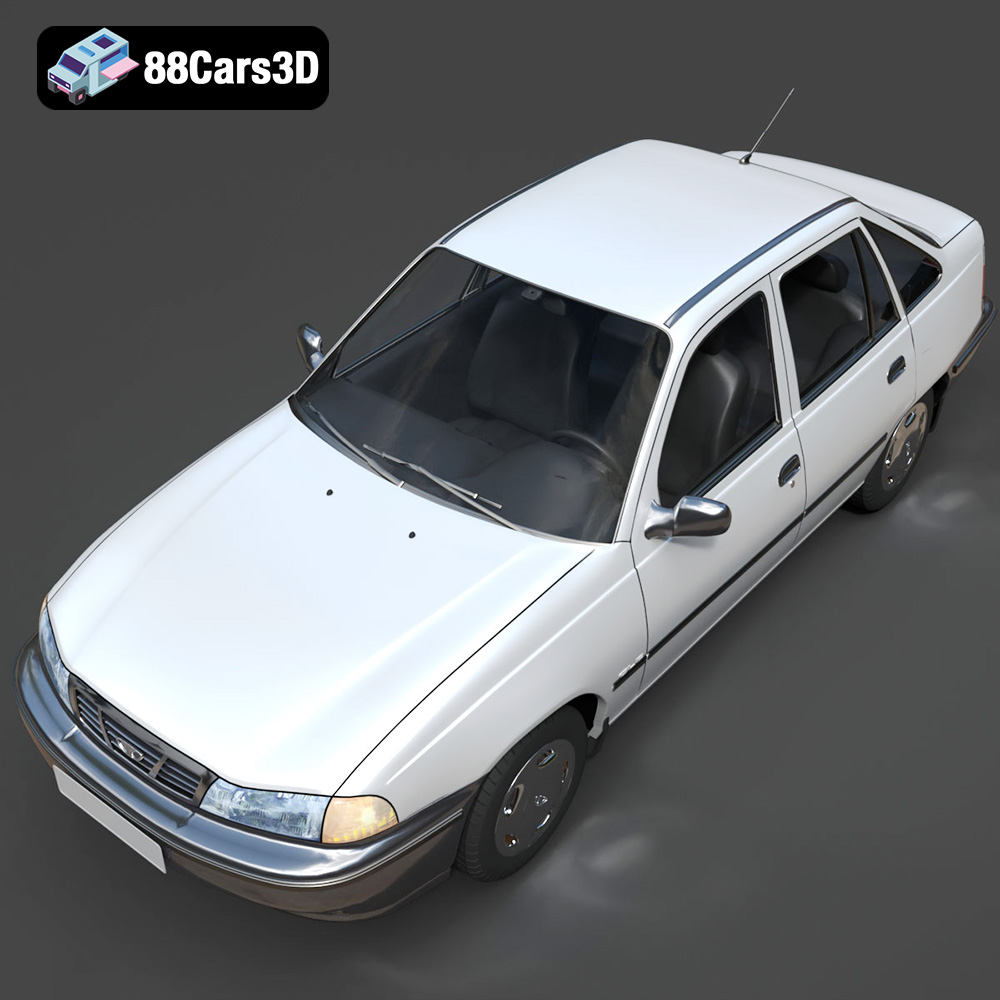
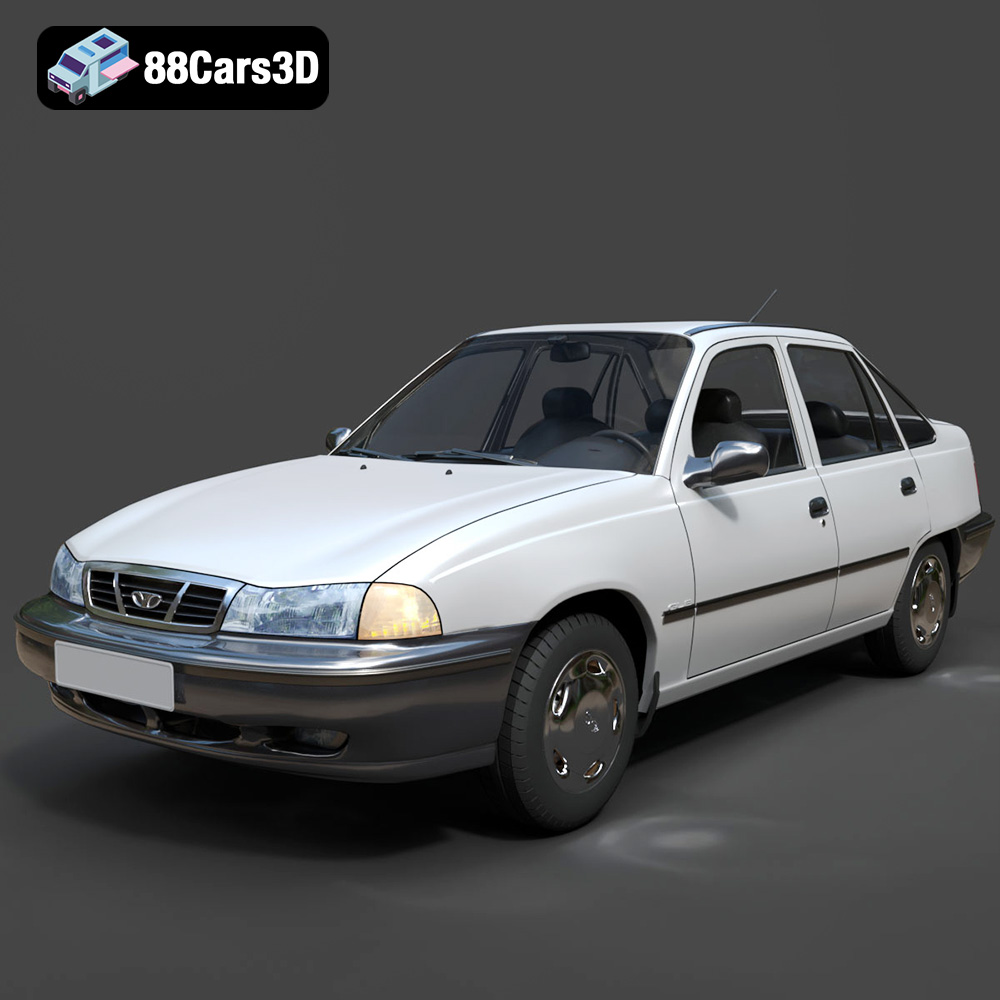
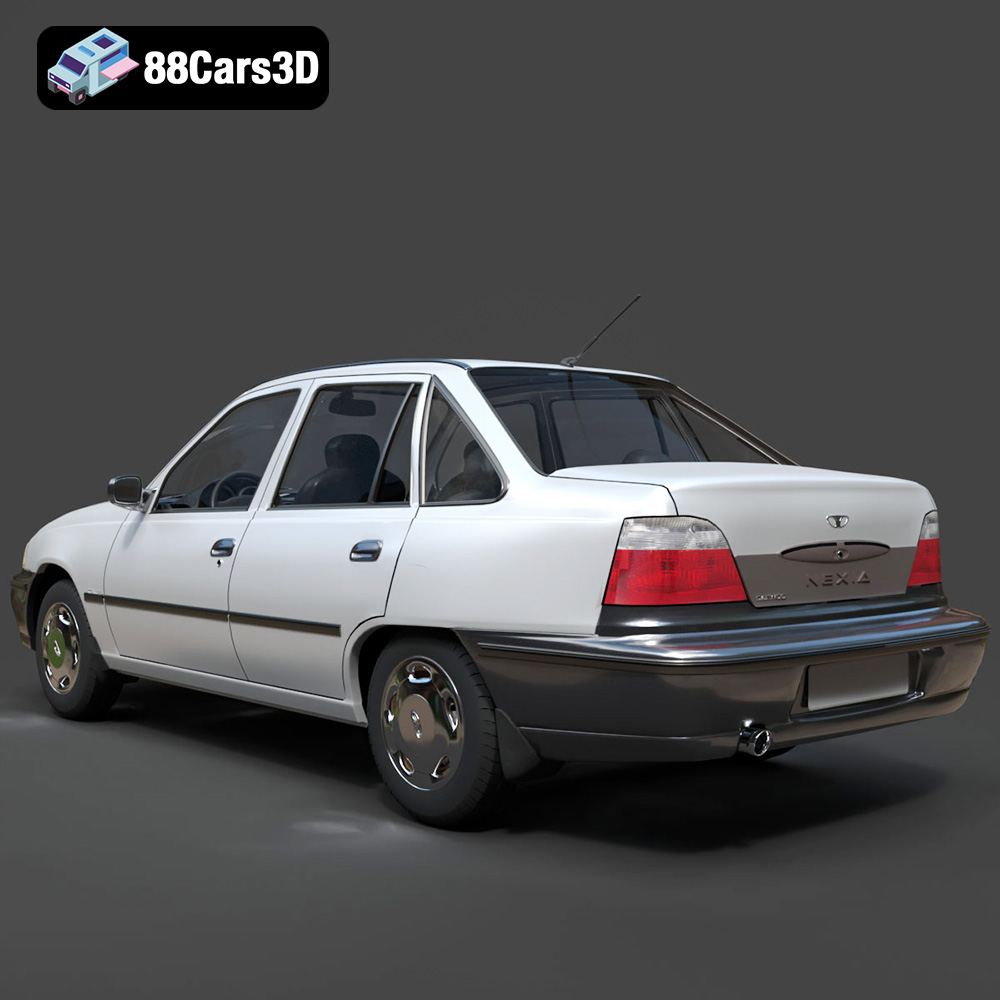
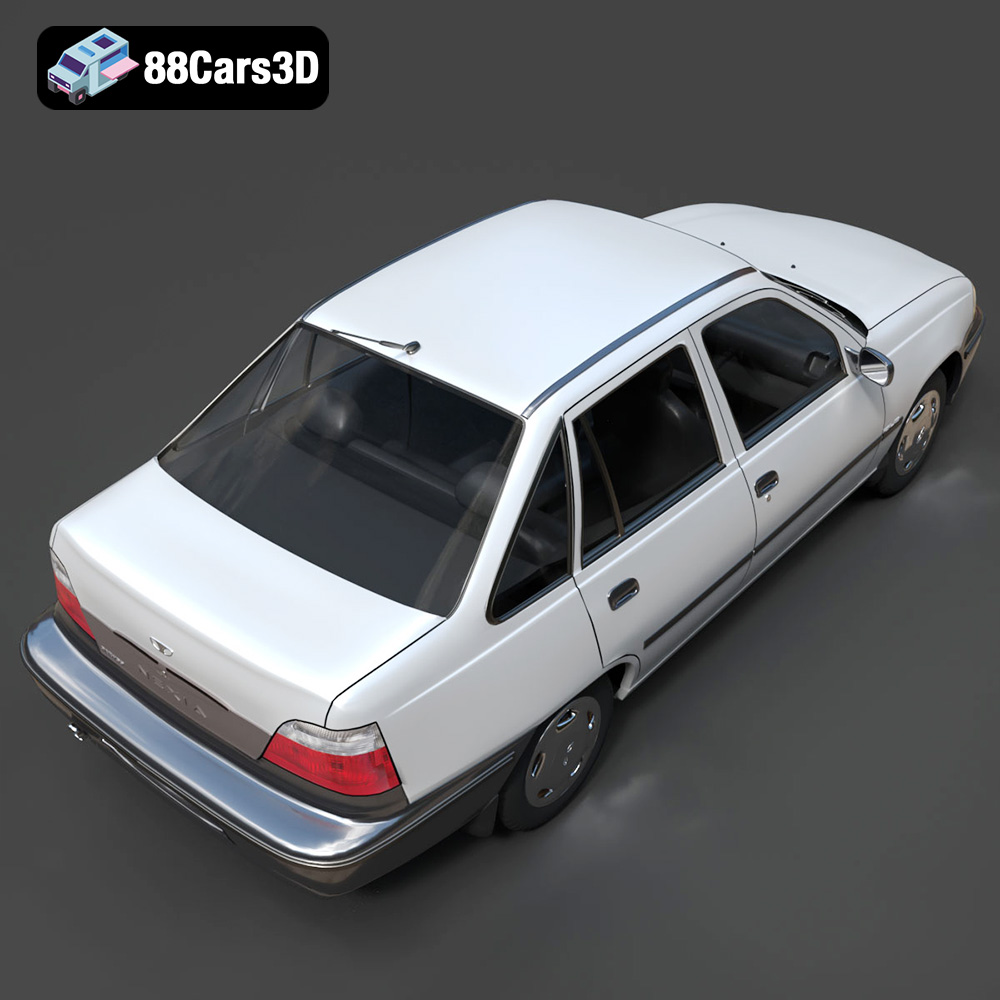
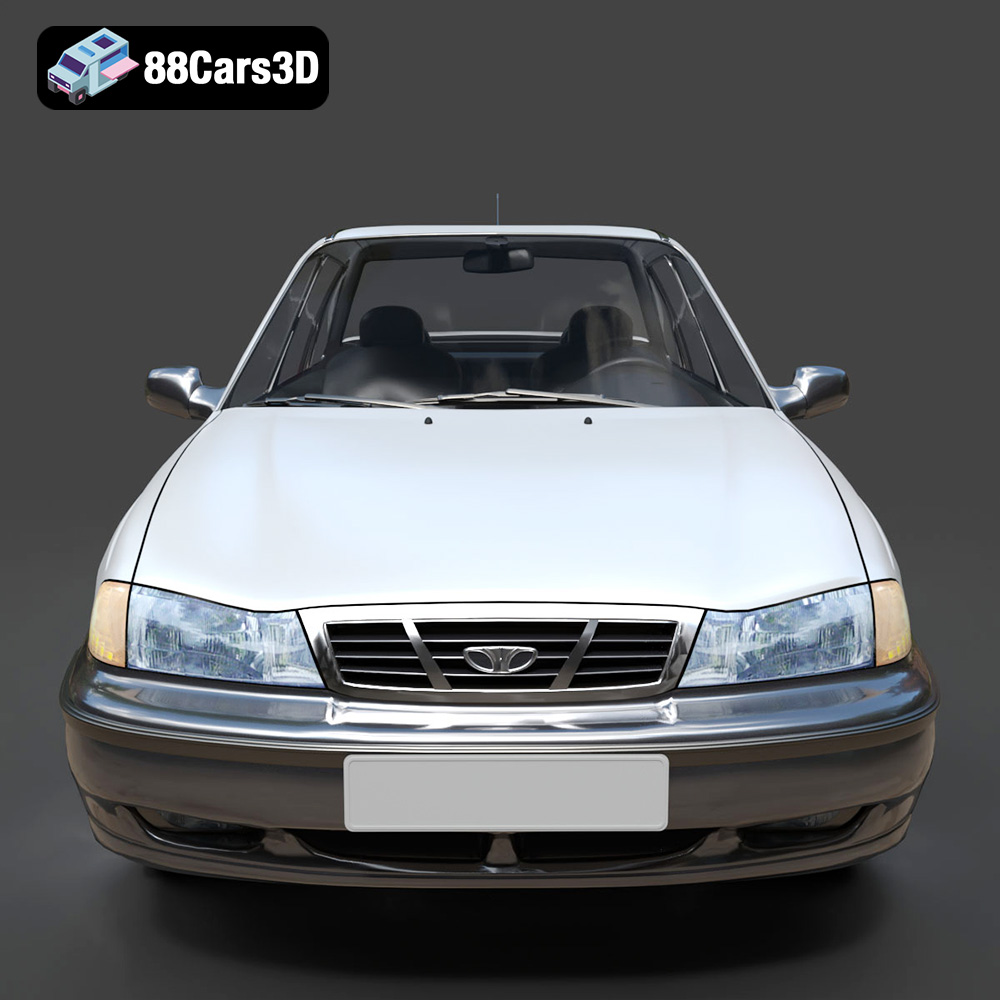
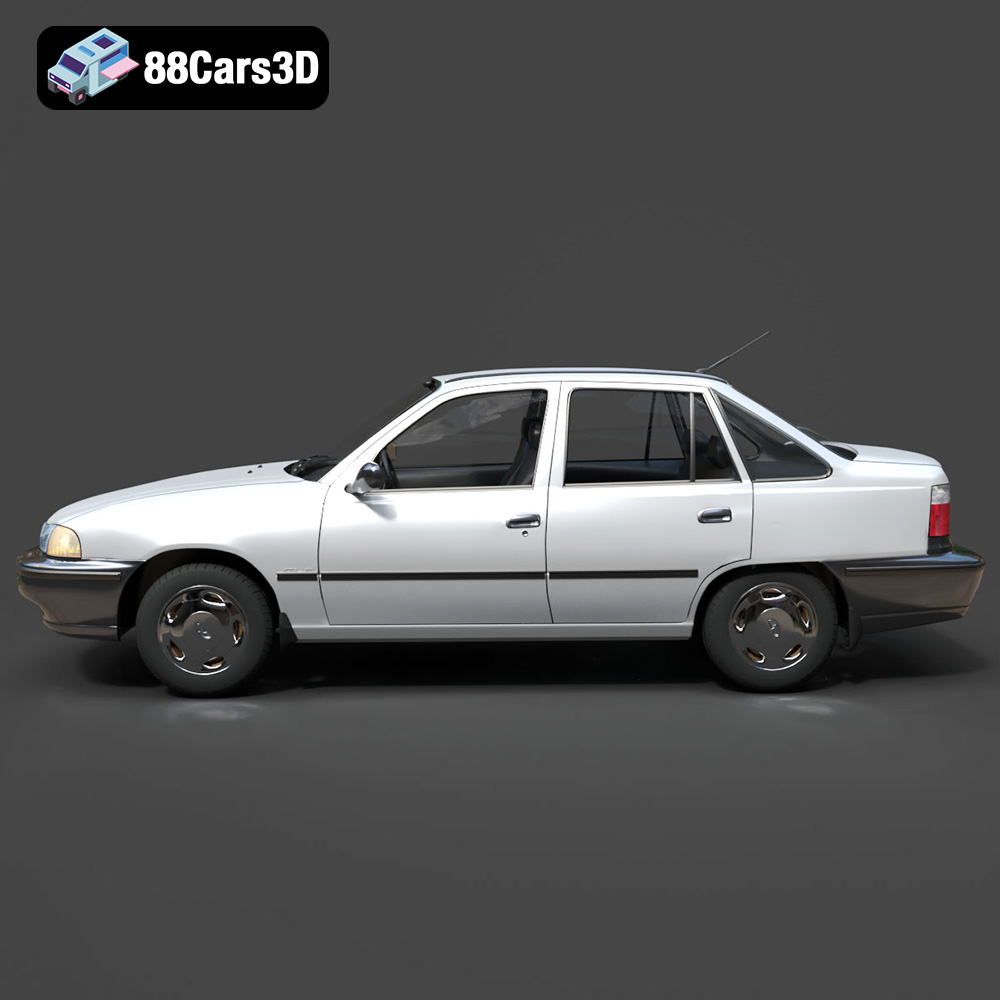
This 3D model meticulously recreates the N150 facelift generation, known for its modernized aesthetic derived from the robust Opel Kadett E platform. The model features accurate proportions and body geometry, capturing the distinct character of this budget-friendly sedan. Special attention has been paid to the updated front fascia, complete with detailed projector-style headlight assemblies and a smoothed-out front bumper and grille. The classic taillight clusters and rear bumper are also faithfully reproduced. From realistic panel gaps and door handles to detailed standard factory wheels wrapped in street tires, the exterior offers exceptional visual fidelity. Crucially for animators and game developers, the wheels, steering components, and doors are separated, allowing for straightforward rigging and interactive animation.
The attention to detail extends to the interior. While optimized for performance, the cabin provides an authentic, practical driver-centric layout. The dashboard, classic center console, and analog instrument cluster are all represented, alongside realistic seating geometry for a five-passenger layout, complete with cloth/vinyl texture mapping. This thoughtful balance ensures the interior looks great from an exterior camera view, or even in a close-up VR experience, without being overly polygon-heavy.
Balancing Fidelity and Performance: Technical Specifications
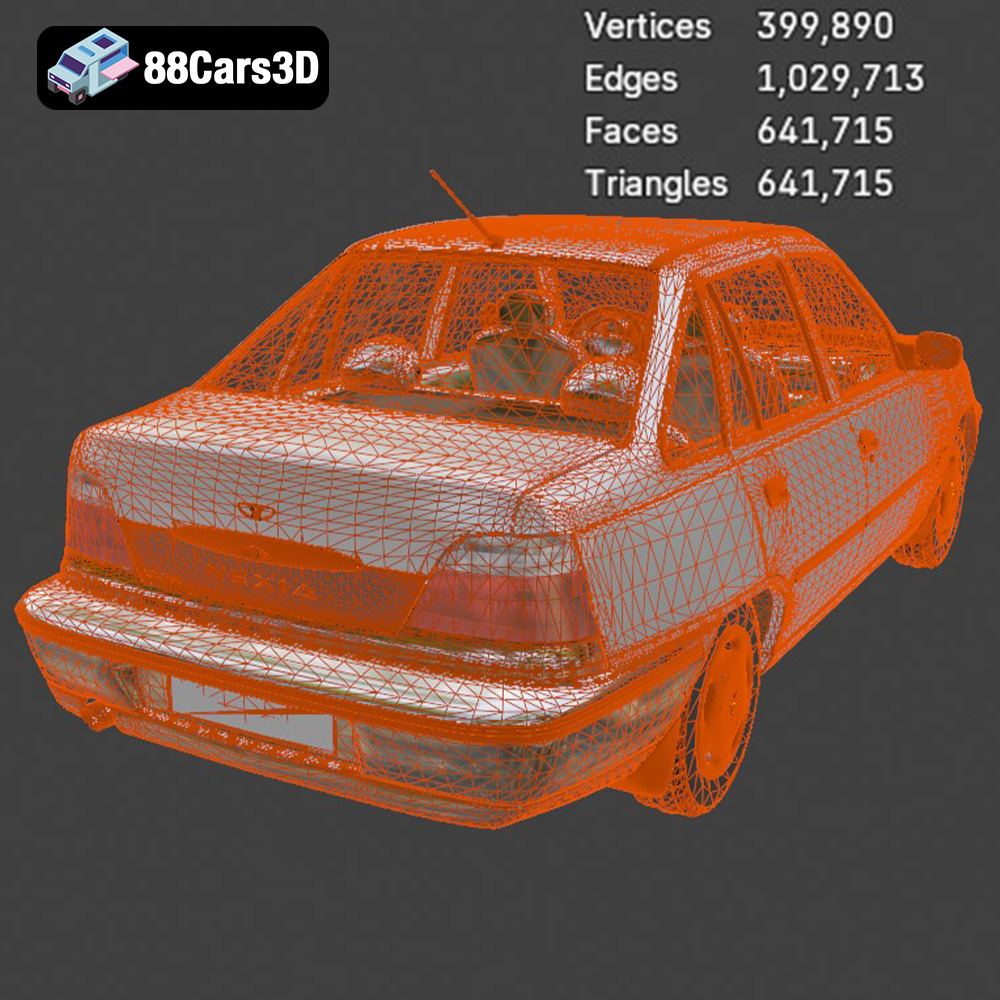
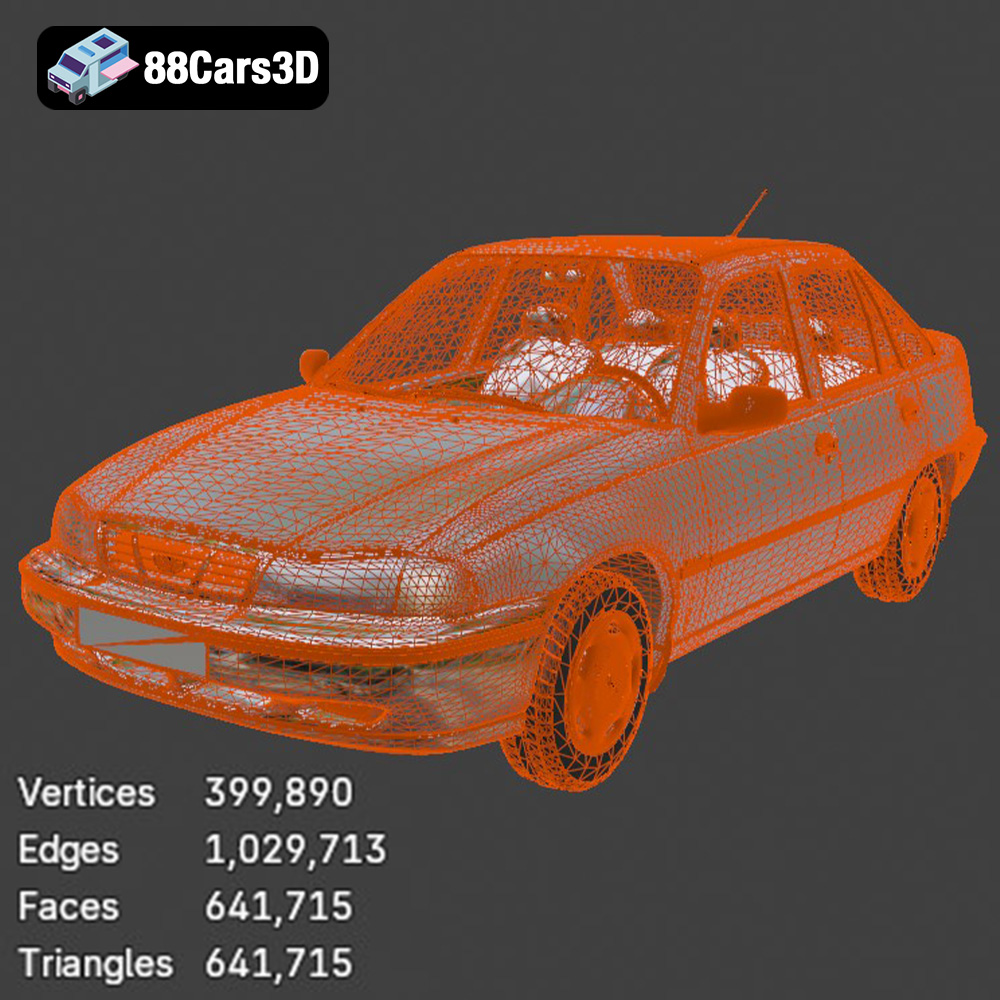
The technical specifications of the Daewoo Nexia (N150) 3D Model highlight its balanced approach to quality and optimization. With 399,890 vertices, 1,029,713 edges, and 641,715 faces/polygons (totaling 641,715 triangles), it achieves what we call the “Goldilocks zone” for asset quality. This mid-to-high polygon topology is detailed enough for high-resolution architectural visualization renders, where close-ups demand crisp geometry and smooth surfaces. Yet, it remains lean enough to be efficiently integrated into modern game engines like Unreal Engine or Unity, serving as a drivable hero car or populating dense background traffic without incurring significant performance penalties. This carefully considered poly count ensures that the model provides excellent visual fidelity without sacrificing real-time performance, making it a truly invaluable resource for various professional applications.
Further enhancing its utility, the model is built to real-world scale based on factory dimensions, ensuring seamless integration into scenes and environments without scaling issues. Proper pivot setups are already in place for steering and wheel rotation, streamlining the rigging process for interactive applications. This holistic approach to design and technical execution ensures that the Daewoo Nexia (N150) 3D Model from 88cars3d.com is not just a visual asset, but a fully functional and flexible tool for digital creators.
Understanding 3D Model File Formats
The choice of 3D model file format is a critical decision that impacts workflow, compatibility, and the ultimate utility of an asset. Professionals in automotive rendering and game development must understand the nuances of each format to ensure seamless integration and optimal performance. The Daewoo Nexia (N150) 3D Model, for instance, comes in a comprehensive array of formats, each serving distinct purposes.
Blender’s Native Power: .blend
The .blend format is Blender’s native file type, offering a complete scene package. When you download a .blend file, you’re not just getting the mesh; you’re receiving the entire Blender project. This includes geometry, materials, textures (often packed within the file), lighting setups, cameras, animation data, modifiers, and even custom scripts. For artists primarily working within Blender, this is the most convenient and powerful format. It preserves all the scene’s intricacies and allows for full editability without any loss of data during export/import cycles. It’s perfect for continuing development, making modifications, or leveraging Blender’s robust rendering capabilities with Cycles or Eevee.
Universal Exchange for Real-time: .fbx
The .fbx (Filmbox) format, owned by Autodesk, has become the industry standard for exchanging 3D data between different software applications, especially in game development. It supports geometry, materials (with some limitations on complex shader networks), textures, animations, skinning, and even cameras and lights. Its strength lies in its ability to encapsulate complex animated scenes efficiently. For integrating 3D car models like the Daewoo Nexia into game engines such as Unreal Engine or Unity, .fbx is often the go-to choice. It offers robust support for skeletal animations and blend shapes, making it ideal for interactive vehicle assets that require steering, suspension, and body deformation. While powerful, it’s crucial to ensure proper export settings from the originating software to maintain material fidelity.
The Ubiquitous Workhorse: .obj
The .obj (Wavefront OBJ) format is one of the oldest and most widely supported 3D file types. It primarily stores geometry (vertices, normals, texture coordinates, and faces) and can reference external .mtl (material) files for basic material properties and texture maps. Its simplicity makes it incredibly compatible across virtually all 3D software. While it doesn’t support advanced features like animation, rigging, or complex shader networks, it’s an excellent choice for static mesh exchange. For artists needing to import the Daewoo Nexia model into a different 3D application for basic rendering or further modeling, .obj provides a reliable and universal starting point, ensuring the core geometry and UVs are preserved.
Web-Optimized Immersion: .glb
.glb (GLB format for glTF) is a relatively newer format designed for efficient transmission and loading of 3D scenes and models in web and AR/VR applications. It’s a binary version of the glTF (GL Transmission Format), which bundles textures and other assets directly into a single file, reducing HTTP requests and improving load times. glTF/GLB supports PBR (Physically Based Rendering) materials, animations, and skeletal structures, making it perfect for interactive web viewers, e-commerce product displays, and mobile AR/VR experiences. For showcasing 3D car models directly in a browser or deploying them in a lightweight AR application, the .glb format is highly optimized and increasingly popular.
Bridging Digital to Physical: .stl
.stl (Stereolithography) is the most common file format used for 3D printing. It represents a 3D model as a collection of unconnected triangular facets, without color, texture, or other CAD attributes. Its primary function is to define the surface geometry of a 3D object for manufacturing. When converting a detailed 3D car model like the Daewoo Nexia for physical output, .stl is the necessary format. It requires the model to be ‘manifold’—meaning it has no holes, self-intersecting geometry, or non-uniform normals—to ensure a successful print. For hobbyists wanting to create a physical scale model of the Nexia, the .stl file is the critical link between the digital design and the tangible object.
Precision for CAD and Analysis: .ply
.ply (Polygon File Format or Stanford Triangle Format) is primarily used for storing 3D data from 3D scanners, CAD applications, or other technical processes. It can store not only XYZ coordinates of vertices but also additional properties like color, transparency, normals, texture coordinates, and even reliability information. While less common for general animation or game development compared to .fbx or .obj, .ply is valuable in specific technical fields for precision mesh analysis or transferring data between specialized CAD software. For highly technical applications of the Daewoo Nexia model, such as reverse engineering or detailed surface analysis, .ply could be a suitable format.
Unreal Engine Native Assets: .unreal
While not a universal exchange format, a dedicated .unreal file (or specific Unreal Engine asset files like .uasset) indicates a pre-packaged asset ready for direct import or use within Unreal Engine. This often means the model has been optimized, had its materials set up using Unreal’s PBR shaders (e.g., as a Static Mesh, Skeletal Mesh, Material Instance, etc.), and potentially includes blueprints for interactivity. For users of Unreal Engine, this format represents maximum convenience, bypassing many of the common import challenges and allowing for immediate integration into projects. The Daewoo Nexia (N150) 3D Model, being provided in an .unreal variant, signifies its robust readiness for real-time environments.
3ds Max: The Industry Standard for Production: .max
Similar to Blender’s .blend, the .max format is Autodesk 3ds Max’s native file type. It preserves the entire 3ds Max scene, including geometry, complex material setups (like V-Ray or Corona materials), lighting, cameras, animation paths, modifiers, and all other scene-specific data. 3ds Max is a powerhouse in architectural visualization, product design, and cinematic rendering. Having the Daewoo Nexia model in .max format ensures that artists working in this environment can access all the original scene settings, make extensive modifications, or render with high-fidelity renderers without any compatibility hurdles. It represents the full professional-grade editable project for in-depth work.
Understanding these formats empowers 3D artists and developers to choose the right tool for the job, ensuring their purchased assets, like the versatile Daewoo Nexia (N150) 3D Model, integrate seamlessly into their unique workflows and deliver optimal results across diverse applications.
Elevating Automotive Rendering and Visualization with the N150
Automotive rendering and visualization are about more than just showcasing a car; they’re about telling a story, setting a mood, and creating a believable environment. For architectural visualization (ArchViz) professionals, the accurate depiction of vehicles can make or break the realism of an urban or suburban scene. The Daewoo Nexia (N150) 3D Model excels in this application, offering a high-fidelity asset that breathes life into digital landscapes, particularly those set in Eastern European or Central Asian contexts.
Crafting Realistic Urban Scapes in 3ds Max
For artists working in 3ds Max, the .max file format for the Daewoo Nexia (N150) 3D Model provides unparalleled flexibility. Professionals can effortlessly drop the model into their existing scene, knowing that its real-world scale and balanced topology will fit perfectly. With its detailed exterior, the N150 can serve as foreground traffic, adding specific regional flavor to street-level renders. Imagine an ArchViz project showcasing a new residential complex in Kyiv or a bustling street in Tashkent—a fleet of Nexias immediately grounds the scene in authenticity. Artists can duplicate, scatter, and customize instances of the model, adjusting paint colors, adding subtle weathering, or even applying taxi decals to create a truly dynamic and believable environment. The separate components like doors and wheels also allow for subtle adjustments, such as slightly ajar doors or steering wheel angles, to add human presence even to static renders.
Lighting and Material Mastery for Photorealism
Achieving photorealism in automotive rendering hinges on expert lighting and material application. The Daewoo Nexia (N150) 3D Model, with its clean topology and optimized UVs, is an excellent base for this. In 3ds Max, artists can apply advanced PBR materials using render engines like V-Ray or Corona. This involves creating realistic car paint shaders with appropriate metallic flakes and clear coat reflections, precise tire rubber materials, and convincing glass for windows and headlights. The detailed projector-style headlight assemblies and classic taillight clusters are perfect for showcasing intricate light refraction and emission effects, especially in dusk or night renders. By experimenting with HDR lighting environments, physical sun and sky systems, and strategically placed artificial lights, artists can make the Nexia model look indistinguishable from its real-world counterpart, whether bathed in harsh midday sun or glowing softly under streetlights.
Case Study: Populating an Eastern European ArchViz Scene
Consider a scenario where an architect needs to present a new commercial building in an Eastern European city. Generic car models would detract from the scene’s authenticity. By leveraging the Daewoo Nexia (N150) 3D Model, the visualization immediately gains credibility. Multiple instances of the Nexia can be placed strategically: one parked at the curb, another driving by, and a taxi waiting in front of the building. With custom paint jobs—ranging from classic silver metallic to a weathered, dusty finish—and the optional addition of “Taxi” signs, the scene transforms. The precise technical details of the model allow for close-up shots that reveal its authentic features, such as the design of the factory wheels or the subtle reflections on the bodywork. This level of specific regional detail makes the architectural project resonate more strongly with the target audience, demonstrating how high-quality 3D car models are essential for immersive and convincing presentations.
Game Development Gold: Integrating the Nexia into Real-time Environments
For game developers, 3D car models are often at the core of gameplay, environment design, and player interaction. The need for models that are both visually appealing and highly performant in real-time engines is paramount. The Daewoo Nexia (N150) 3D Model, available at 88cars3d.com, is meticulously designed to meet these rigorous demands, making it an ideal asset for a wide range of game development projects, from open-world simulations to urban taxi experiences.
Optimization Strategies for Game Engines
The Daewoo Nexia N150’s “Goldilocks zone” topology, with its ~641k triangles, is perfectly suited for modern game engines like Unreal Engine and Unity. This poly count allows for rich visual detail without overburdening the rendering pipeline, even when multiple instances of the vehicle are present. When integrating the .fbx or .unreal versions into Unreal Engine, developers can leverage efficient LOD (Level of Detail) systems. By creating lower-polygon versions of the model, performance can be dynamically optimized based on the camera’s distance, ensuring smooth frame rates whether the Nexia is a background vehicle or a player’s drivable car. Material setup is also streamlined; the model’s clean UV mapping allows for easy application of PBR textures, which can then be instantiated and optimized within the engine, utilizing texture atlases or shared materials to reduce draw calls.
Rigging and Animation for Interactive Experiences
A static car model has limited utility in a game. The Daewoo Nexia (N150) 3D Model is pre-prepared for animation, with separate geometry for wheels, steering components, and doors. This modularity significantly accelerates the rigging process. In Unreal Engine, for example, developers can import the .fbx and quickly set up a skeletal mesh for the car. This skeleton can then be driven by a vehicle physics system (like Chaos Vehicles in Unreal Engine 5), allowing for realistic suspension, wheel rotation, and steering behavior. Furthermore, the separate door meshes enable interactive elements such as opening and closing doors, crucial for features like character entry/exit or cargo loading in a delivery simulator. For mobile game development, where performance is even more critical, the optimized poly count ensures that the Nexia can be a hero vehicle without causing performance bottlenecks on lower-end devices.
Use Cases: From Background Traffic to Drivable Hero Car
The versatility of the Daewoo Nexia (N150) 3D Model shines in its diverse game applications. For open-world games set in realistic urban environments, it’s an excellent asset for populating roads with authentic traffic, instantly grounding the player in a specific geographical and cultural context. Imagine a vast city with hundreds of Nexias driving around, adding to the bustling atmosphere. For more focused experiences, like a taxi simulator or a delivery game, the Nexia can serve as the player’s primary drivable vehicle. Its detailed interior, though optimized, provides enough fidelity for first-person views, making the driving experience more immersive. Even for AR/VR applications focused on interactive city planning or virtual tourism, the Nexia provides a recognizable, interactive element that can enhance user engagement and realism without demanding excessive computational resources. This robust adaptability truly makes it a ‘game-ready’ asset.
Beyond the Screen: 3D Printing the Daewoo Nexia
The journey of a 3D model doesn’t always end on a digital screen. For hobbyists, collectors, and even automotive design enthusiasts, the ability to transform a virtual asset into a tangible object through 3D printing offers a unique and rewarding experience. The Daewoo Nexia (N150) 3D Model embraces this physical dimension, providing an .stl file format specifically designed for 3D printing, enabling the creation of detailed scale models and miniatures.
Preparing the Model for Physical Manifestation
While the Daewoo Nexia (N150) 3D Model is highly detailed digitally, preparing it for 3D printing requires specific considerations. The provided .stl format is the standard for additive manufacturing, ensuring that the model’s geometry is translated into a printable format. Before printing, it’s crucial to check the model for manifold errors (holes, self-intersecting geometry), though professional models like this one are typically cleaned and prepared for such outputs. Software like PrusaSlicer, Cura, or Lychee (for resin printers) allows for final checks, scaling, and the addition of necessary support structures. The model’s optimized topology helps in this conversion, ensuring a clean mesh that translates well from digital polygons to physical layers.
Recommended Scales and Print Settings
For enthusiasts looking to create a miniature Daewoo Nexia, the recommended scales are 1:24, 1:32, or 1:43. These scales are perfect for urban dioramas, display shelves, or classic diecast hobby collections. Printing at these smaller scales demands precision, which is why resin printing (SLA/DLP) is highly recommended. Resin printers can achieve layer heights between 0.04mm and 0.12mm, crucial for capturing the finer details like headlight housings, subtle panel lines, and the delicate design of the factory wheels. For FDM (filament) printing, slightly larger scales might be preferable, with careful attention to nozzle size and print speed to maintain detail. The suggested wall thickness of 1.2–2.0mm ensures the printed model has sufficient structural integrity without being overly heavy. An infill of 15–25% is usually adequate, balancing strength with material usage.
Supports are almost always necessary for complex geometries and overhangs. For the Daewoo Nexia, supports will be required for the side mirrors, the inside of the wheel arches, and the exhaust pipe to prevent warping and ensure fidelity. Printing the main body angled can significantly improve surface finish by minimizing visible layer lines, while printing wheels separately allows for greater detail and easier post-processing. This meticulous approach ensures that the physical replica faithfully represents the digital model.
Post-Processing and Customization for Enthusiasts
Once printed, the physical model enters the post-processing phase, where it truly comes to life. Resin prints will require thorough cleaning and UV curing. Both resin and FDM prints will benefit from careful sanding to remove support marks and smooth out any layer lines. Applying a good quality primer creates an even surface for painting. For a truly authentic look, painting the Daewoo Nexia in classic factory colors like Silver Metallic, Sahara Dust, or Classic White will evoke the original vehicle’s aesthetic. Hobbyists can go further, adding weathering effects like dust, rust, or mud to create a ‘road-worn’ look, perfect for a gritty urban diorama. Custom decals, such as taxi liveries or regional license plates, can further personalize the model, making each printed Nexia a unique piece of automotive art. The ability to iterate and customize provides endless possibilities for modelers.
The Value Proposition: Why the Daewoo Nexia N150 is a Must-Have Asset
In the competitive fields of 3D modeling, rendering, and game development, efficiency, quality, and versatility are paramount. Investing in high-quality 3D car models is not just about acquiring assets; it’s about investing in a streamlined workflow and superior final output. The Daewoo Nexia (N150) 3D Model stands out as a prime example of an asset that delivers exceptional value across multiple professional applications, making it an indispensable addition to any professional’s digital library.
A Strategic Asset for Diverse Projects
The Daewoo Nexia N150’s unique positioning as a ubiquitous vehicle in specific global regions gives it a strategic advantage. It’s not a generic car; it’s a character in its own right, capable of instantly defining the setting of an architectural visualization, a game world, or an animated short. Its balanced poly count makes it incredibly adaptable—equally at home in a high-fidelity cinematic render as it is performing as background traffic in a mobile game. This versatility saves valuable development time and resources, as one core asset can be deployed across projects with varying technical demands. The comprehensive range of included file formats (.blend, .fbx, .obj, .glb, .stl, .ply, .unreal, .max) further amplifies its utility, ensuring compatibility with virtually any professional workflow and software suite.
Maximizing ROI with High-Quality 3D Models
Time is money in professional production. Creating a highly accurate, optimized 3D car model from scratch is a significant undertaking, requiring hundreds of hours of skilled labor in modeling, UV mapping, texturing, and optimization. By leveraging a pre-made, high-quality asset like the Daewoo Nexia (N150) 3D Model from 88cars3d.com, artists and developers can significantly reduce their production timelines and costs. The technical details—from proper pivot setups to clean topology and real-world scale—mean less time spent on fixing issues and more time focused on creative implementation. Whether it’s enhancing the realism of an ArchViz project, populating a game world, or even creating a tangible scale model, this asset provides a robust and reliable foundation, ensuring a strong return on investment for any studio or individual professional.
Conclusion
The demand for authentic, technically robust 3D car models continues to grow as digital experiences become more immersive and realistic. The Daewoo Nexia (N150) 3D Model embodies the pinnacle of this requirement, offering a versatile, highly detailed, and optimized asset suitable for an extensive range of professional applications. From enriching architectural visualizations with regional authenticity in 3ds Max to serving as a performance-friendly yet visually rich game asset in Unreal Engine, its utility is undeniable.
The inclusion of multiple industry-standard file formats underscores its adaptability, allowing seamless integration into diverse workflows, while its carefully balanced topology ensures it meets the exacting demands of both high-end rendering and real-time interactive environments. Furthermore, its potential for 3D printing opens up exciting avenues for physical scale models, bridging the gap between digital creation and tangible collectibles.
For any professional seeking to elevate their projects with genuine regional character and technical excellence, the Daewoo Nexia (N150) 3D Model is an indispensable choice. Discover this exceptional asset and many other high-quality 3D car models by visiting 88cars3d.com, where quality and versatility drive digital realism.
Featured 3D Model
Daewoo Nexia (N150) 3D Model
The Daewoo Nexia 3D Model is a highly accurate digital recreation of the legendary budget-friendly sedan. Specifically representing the N150 facelift generation (widely produced by UzDaewoo), this vehicle is an absolute staple of everyday life, serving as a reliable family car, urban taxi, and daily commuter across Eastern Europe, Russia, and Central Asia. This 3D model beautifully captures the modernized aesthetic of the N150 facelift, featuring the updated projector-style headlight housings, the smoothed-out front bumper and grille, and the classic, practical sedan proportions originally derived from the Opel Kadett E platform. Built with a perfectly balanced mid-to-high polygon topology (just over 641k triangles), it provides excellent visual fidelity for close-up automotive rendering while remaining highly optimized for background traffic in modern game engines. Perfect for populating realistic CIS or Eastern European street scenes, architectural visualizations, urban taxi simulators, and mobile game development.
$34.99
Product Image Gallery