

The Timeless Appeal of Two Wheels: Integrating the Bicycle Classic 3D Model into Your Projects
In the vibrant world of 3D visualization, the demand for meticulously crafted assets that seamlessly blend realism with versatility is ever-growing. Whether you’re an architect aiming to populate a bustling urban scene, a game developer creating an immersive open-world environment, or an animator bringing a story to life, the details truly define the experience. While the digital realm often buzzes with high-performance vehicles, there’s an undeniable charm and practical elegance in simpler forms of transportation. This is where the Bicycle Classic 3D Model truly shines, offering a sophisticated and detailed recreation of a vintage-style bicycle that captures the essence of timeless European commuter designs.
From its gracefully curved steel frame to its upright riding position and retro detailing, this model is more than just a prop; it’s a character in itself. It’s designed not only for stunning visual appeal in high-fidelity renders but also for robust performance across various platforms, including real-time game engines, AR/VR applications, and even 3D printing. This article delves into the technical advantages, diverse applications, and professional workflows that make the Bicycle Classic 3D Model an indispensable asset for any serious 3D artist or developer, readily available at 88cars3d.com.
Understanding 3D Model File Formats: The Foundation of Digital Asset Versatility
The choice of file format for a 3D model is not merely a technicality; it’s a critical decision that impacts workflow, compatibility, performance, and the fidelity of your final output. The Bicycle Classic 3D Model distinguishes itself by offering a comprehensive suite of formats, ensuring it integrates flawlessly into virtually any professional pipeline. Understanding the nuances of each format is key to leveraging its full potential.
.blend – Fully Editable Blender Scene with Materials
The .blend file is Blender’s native format. For users of Blender, this is the definitive version of the Bicycle Classic 3D Model. It encapsulates not just the mesh data but also the entire scene setup: materials, textures, lighting, cameras, rigging, animations, and even modifiers. This means you gain full access to the original project file, allowing for unparalleled customization. Artists can easily modify the mesh, adjust shader networks for Cycles or Eevee, change object hierarchies, or even extend the existing animations for wheels and pedals. The .blend format is ideal for those who want to integrate the model deeply into a Blender-centric workflow or require maximum flexibility for extensive modifications.
.fbx – Ideal for Unreal, Unity, and Real-Time Pipelines
As one of the most widely supported interchange formats, .fbx (Filmbox) is a cornerstone for professional 3D pipelines, particularly in game development and animation. The .fbx version of the Bicycle Classic 3D Model is optimized for robust transfer between different software packages and game engines like Unreal Engine and Unity. It efficiently bundles mesh data, materials, textures, rigging, and animation data into a single, compact file. Its key advantage lies in its ability to maintain scene hierarchy and pivot points, making it straightforward to import the bicycle with its wheels and pedals pre-configured for animation within a game engine. This format prioritizes compatibility and efficient asset transfer, making it a go-to for real-time applications.
.obj – Universal Format for Cross-Software Compatibility
The .obj (Wavefront Object) format is a classic for a reason: its universal compatibility. Nearly every 3D software application can import and export .obj files. While it primarily stores geometric data (vertices, faces, normals, UV coordinates), it typically references external .mtl (material library) files for material properties and texture maps. The .obj version of the Bicycle Classic 3D Model ensures broad accessibility across a multitude of platforms, making it an excellent choice when cross-software compatibility is paramount, or when you need a clean mesh for sculpting or retopology in a different application.
.glb – Optimized for AR, VR, and Browser-Based Display
.glb (GL Transmission Format Binary) is the binary version of glTF, a royalty-free specification for the efficient transmission and loading of 3D scenes and models by applications. For the Bicycle Classic 3D Model, the .glb format is particularly powerful for web-based 3D viewers, augmented reality (AR), and virtual reality (VR) applications. It packs all the necessary data—geometry, materials, textures, and animation—into a single file, resulting in faster loading times and simpler distribution. Its optimization for real-time rendering on various devices makes it perfect for interactive product showcases or immersive digital experiences.
.stl – Suitable for 3D Printing Output
The .stl (Stereolithography) format is the industry standard for 3D printing. It represents the surface geometry of a 3D object using a collection of triangular facets. The .stl version of the Bicycle Classic 3D Model is specifically prepared for physical fabrication, ensuring a manifold mesh where all surfaces are closed and watertight—critical for successful 3D prints. This format allows hobbyists and professionals alike to bring the vintage bicycle design into the physical world, creating scale models, collectibles, or components for dioramas. The precise geometric data makes it suitable for direct import into slicing software.
.ply – Precision Mesh Format for CAD or Analysis
The .ply (Polygon File Format) is often used for storing 3D data from 3D scanners, CAD applications, and scientific visualization. It can store a variety of properties including color, transparency, surface normals, and texture coordinates. While less common for general 3D asset distribution than .fbx or .obj, its inclusion for the Bicycle Classic 3D Model provides a robust option for applications requiring high precision mesh data, such as reverse engineering, detailed analysis, or integration into specific CAD workflows where additional mesh properties might be crucial.
.unreal – Engine-Ready Asset for Real-Time Environments
The .unreal format, or rather, an asset directly imported and configured within an Unreal Engine project, signifies an engine-ready asset. While not a standalone file type in the same way .fbx is, receiving an “.unreal” asset implies a pre-packaged Unreal Engine asset. This typically means the Bicycle Classic 3D Model is imported, materials are set up with PBR shaders, collision meshes are generated, LODs (Levels of Detail) might be configured, and potentially even simple Blueprint animations are ready to go. This significantly accelerates workflow for Unreal Engine developers, as it bypasses much of the initial setup required for raw .fbx imports.
.max – Editable 3ds Max Project for Animation and Rendering
Similar to .blend for Blender, the .max file is the native format for Autodesk 3ds Max. For 3ds Max users, this provides the Bicycle Classic 3D Model in its original working environment. This includes all scene data, modifiers, materials, textures, lighting, and any animation or rigging already set up within 3ds Max. It offers the highest degree of editability and is perfect for high-end architectural visualization, product rendering, or complex animation projects where 3ds Max is the primary tool. The inclusion of the .max file caters directly to a massive professional user base, ensuring seamless integration into existing 3ds Max pipelines.
By offering the Bicycle Classic 3D Model in these diverse formats, 88cars3d.com ensures that creators have the flexibility to choose the best format for their specific project needs, optimizing for either maximum editability, broad compatibility, real-time performance, or physical manifestation through 3D printing.
Crafting Digital Realism: The Art of the Bicycle Classic 3D Model
Creating a compelling 3D model isn’t just about shaping polygons; it’s about capturing an essence, a feeling, and translating intricate real-world details into a digital form. The Bicycle Classic 3D Model exemplifies this artistic and technical mastery, providing an asset that is both visually authentic and technically robust.
Capturing Vintage Authenticity: Design Philosophy and Detail
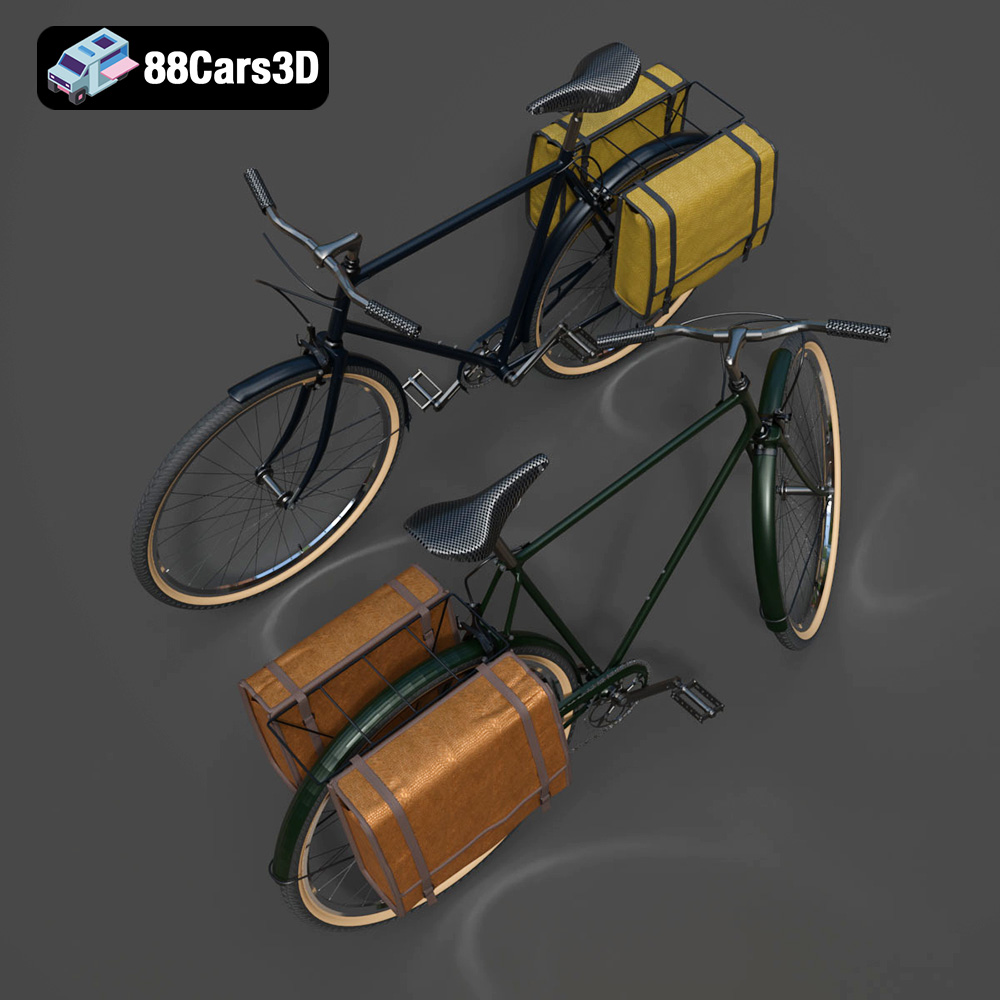
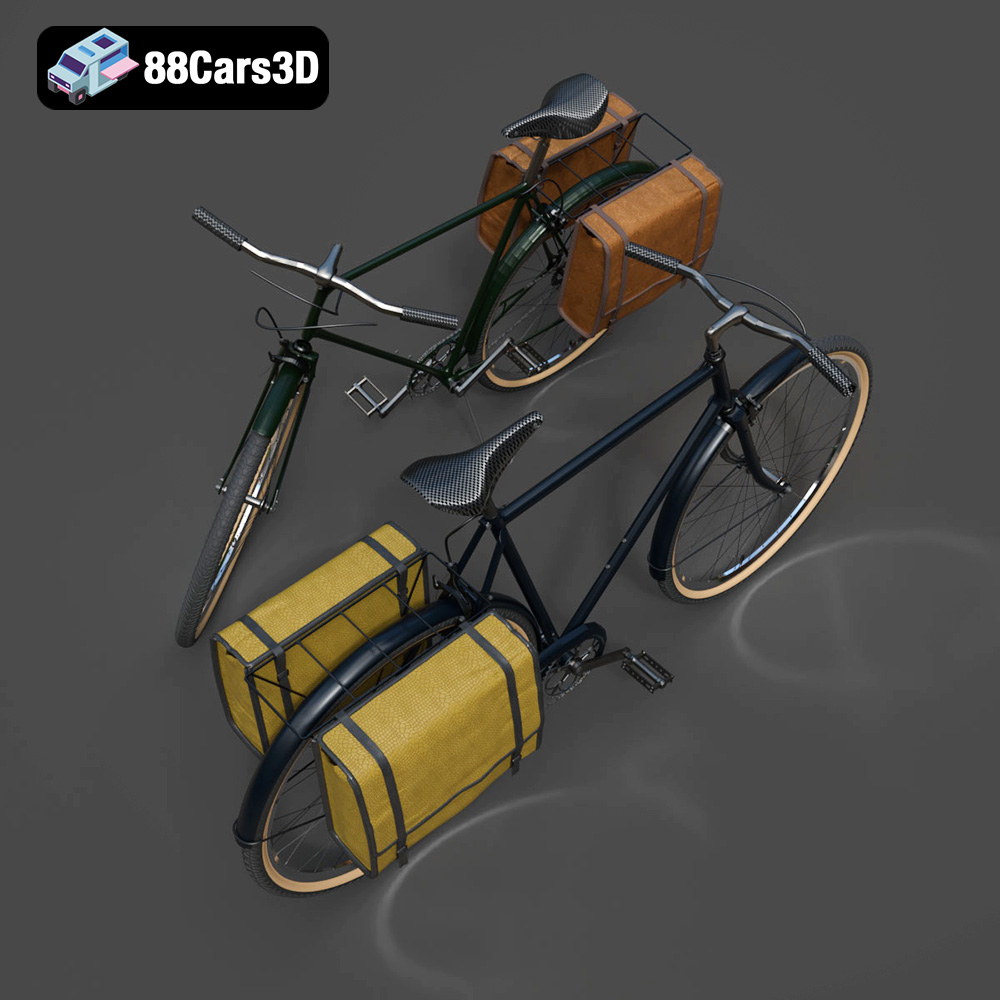
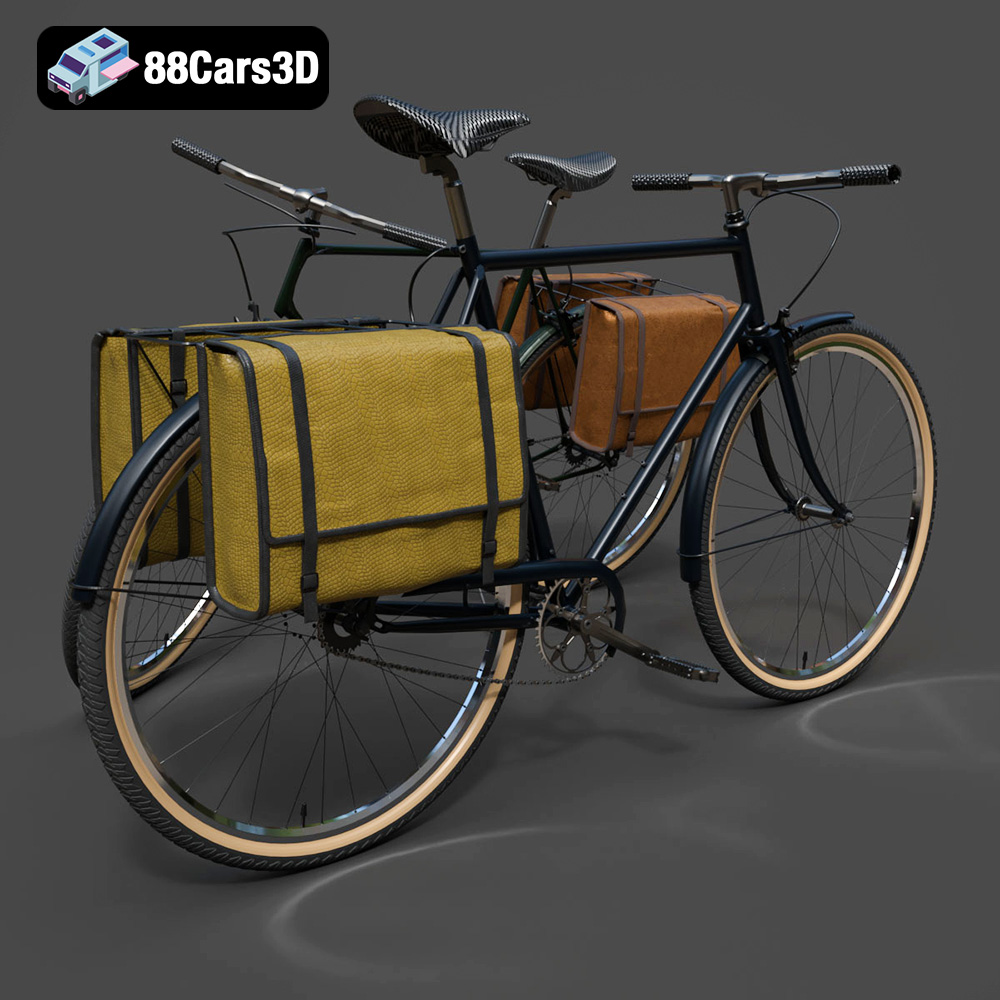
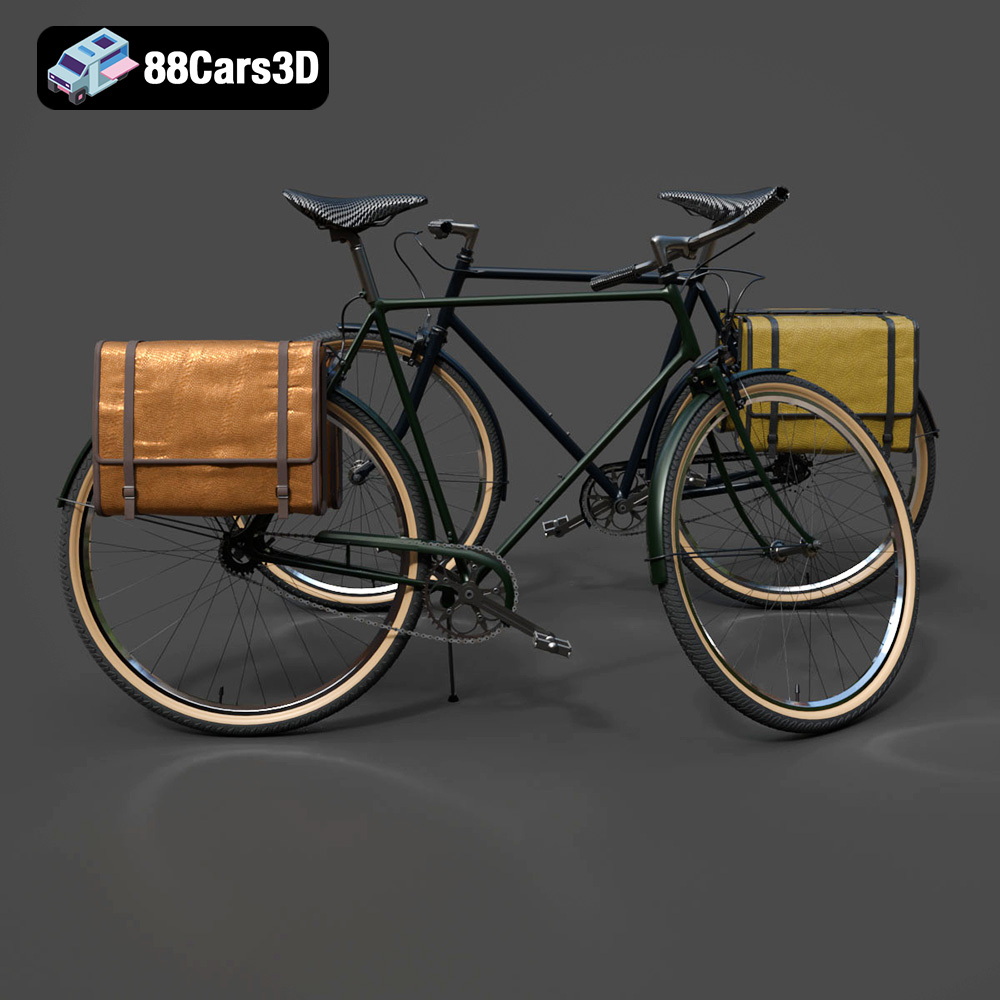
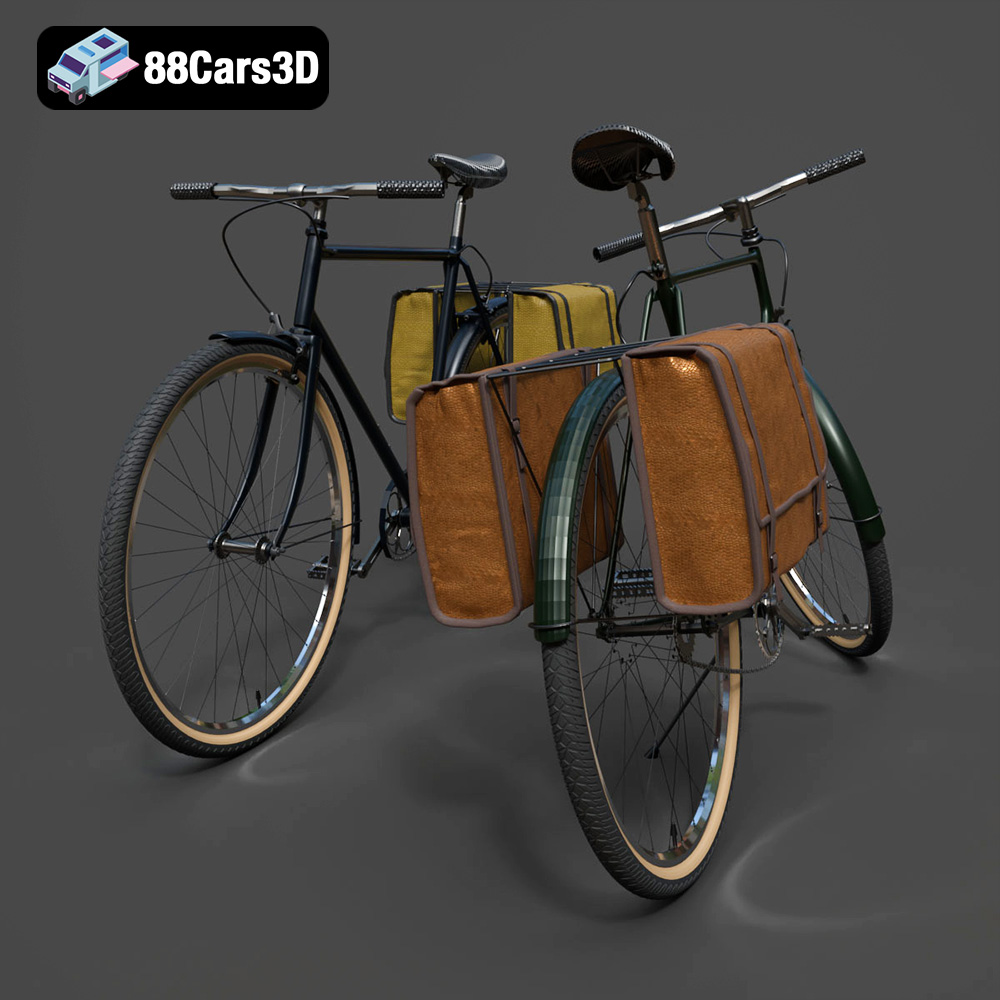
The charm of the Bicycle Classic 3D Model lies in its meticulous adherence to vintage aesthetics. Inspired by timeless European commuter designs, every element has been thoughtfully recreated. We see the characteristic curved steel frame, which dictates the bicycle’s elegant silhouette and upright riding position. This isn’t just an arbitrary curve; it’s a design choice that reflects a specific era and function. The slim road tires speak to its urban commuting purpose, while retro detailing, from the classic saddle seat to the gently curved handlebars, evokes a sense of nostalgia and craftsmanship. Whether it’s the choice between a step-through or diamond frame geometry, the realistic spoked wheels with subtle hub detailing, or the functional front and rear fenders, the model tells a story. Even the chain guard and rear cargo rack are not merely additions but integrated components that complete its classic identity. This level of authentic representation makes the model ideal for period-themed projects, lifestyle advertising, and historical visualizations where accuracy is paramount.
Precision Engineering in Polygons: Technical Superiority
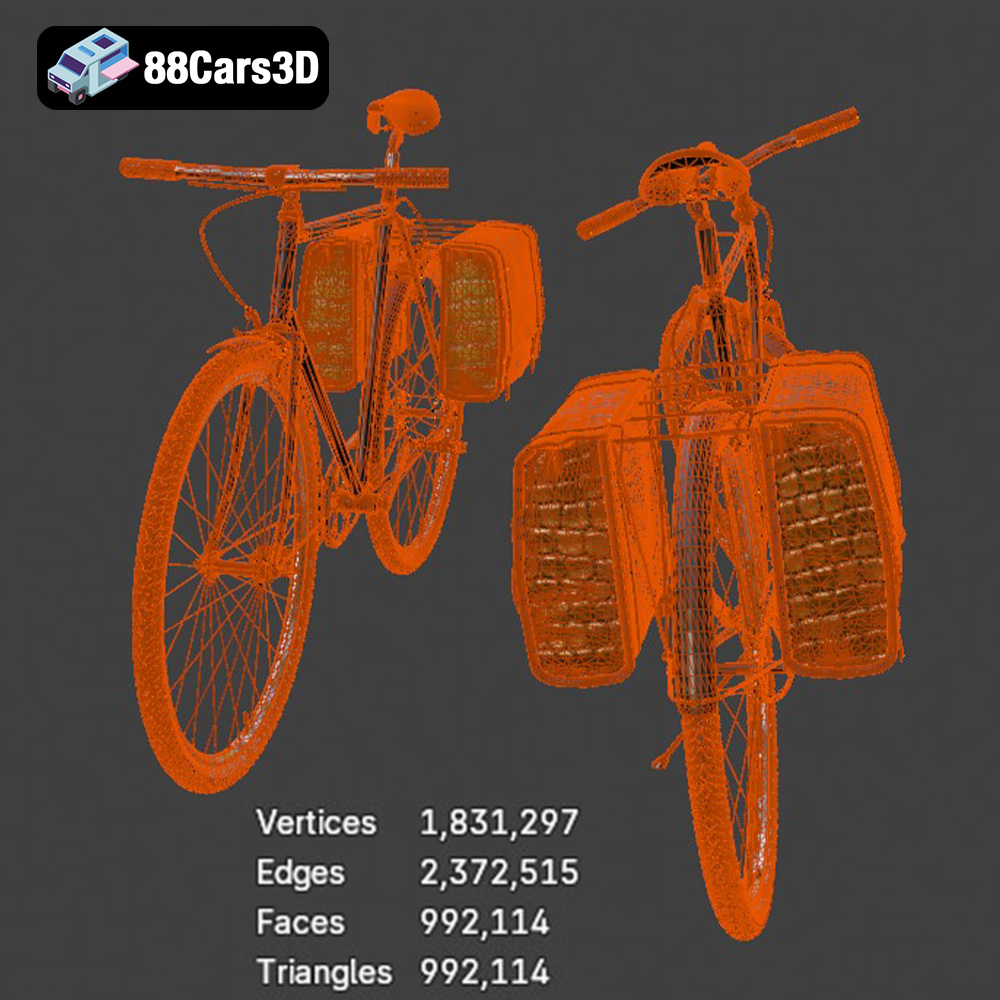
Beyond its visual appeal, the Bicycle Classic 3D Model is a testament to strong technical execution. Its “clean topology” and “well-organized mesh structure” are foundational for professional use. This means the polygon flow is optimized, preventing common issues like stretched textures or rendering artifacts. For animators, the inclusion of “separate wheels and pedals for animation” is crucial, complemented by “proper pivot setup for wheel rotation and pedal animation” and a “steering pivot properly aligned.” These features allow for realistic movement and interaction within any 3D scene, from simple rotation to complex rider animations. Furthermore, the model accurately represents mechanical details such as the chain and crankset system, rear gear assembly (whether single-speed or multi-speed), and intricate brake assemblies with appropriate cable routing. This attention to mechanical accuracy means the model not only looks the part but could also be used for technical demonstrations or simulations where component function is important. The “real-world scale accuracy” ensures it fits seamlessly into environments without requiring tedious scaling adjustments, which is a significant time-saver in large-scale projects like urban visualizations or architectural renders.
Integrating the Bicycle Classic into Professional Workflows
The utility of a 3D model is often defined by its adaptability across various professional pipelines. The Bicycle Classic 3D Model is engineered to be a versatile asset, enhancing projects from high-fidelity cinematic renders to performance-critical real-time applications.
High-Fidelity Rendering with 3ds Max and Blender
For artists focused on achieving photorealistic imagery, the Bicycle Classic 3D Model provides an excellent foundation, especially with its native .max and .blend files. These formats typically contain the original scene setup, including properly configured materials and often basic lighting rigs. In 3ds Max, artists can leverage powerful rendering engines like V-Ray or Corona Renderer. The model’s clean topology and well-UV-mapped surfaces ensure that PBR (Physically Based Rendering) textures apply flawlessly, reacting realistically to light. Workflow involves importing the .max file, adjusting materials (perhaps adding procedural wear or specific paint finishes), setting up studio or environmental lighting, and composing dynamic camera angles to highlight its vintage appeal. This is ideal for product advertising campaigns, architectural visualization (populating street scenes with authentic details), or lifestyle imagery. Similarly, in Blender, the .blend file allows for direct manipulation using Cycles or Eevee. Artists can easily customize shaders, add dirt or rust procedural textures, and integrate the bicycle into complex scenes. The separate animatable parts make it simple to pose the bicycle, whether leaning against a wall, in motion, or parked in a quaint cafe scene. These capabilities make the Bicycle Classic 3D Model a valuable asset for creating stunning visuals that resonate with audiences.
Real-Time Performance for Game Development (Unreal Engine & Unity)
In game development, the balance between visual quality and performance is paramount. The Bicycle Classic 3D Model, particularly in its .fbx and .unreal (Unreal Engine ready) formats, is optimized for real-time environments. Its “optimized polygon flow” ensures that the model is efficient enough to be rendered at high frame rates without excessive resource consumption. For Unreal Engine users, the provided .unreal asset would include pre-configured materials using the engine’s PBR shader system, potentially with LODs (Levels of Detail) already set up to swap lower-polygon versions at a distance, further enhancing performance. Proper pivot points for wheels and pedals are critical here, allowing animators and developers to easily integrate dynamic motion components via Blueprints or C++ scripting. Collision meshes can be automatically generated or custom-defined to allow player interaction. In Unity, the .fbx import process is straightforward. Developers would assign PBR materials, set up colliders, and script basic wheel rotation or pedal animations. The Bicycle Classic 3D Model serves as an excellent environmental prop for open-world city games, providing a touch of realism to urban landscapes, or as an interactive vehicle in casual or adventure titles. Its robust structure also makes it suitable for AR/VR applications where efficient rendering is non-negotiable.
Beyond the Screen: 3D Printing and Immersive Experiences
The versatility of the Bicycle Classic 3D Model extends beyond traditional screen-based visualizations, embracing physical creation and cutting-edge immersive technologies.
Bringing Digital to Life: 3D Printing with STL
The world of 3D printing allows creators to manifest digital designs into tangible objects, and the Bicycle Classic 3D Model is perfectly equipped for this transition through its dedicated .stl format. This format ensures that the mesh is watertight and manifold, crucial characteristics for successful 3D printing. The provided 3D Print Settings offer invaluable guidance:
This detailed guidance empowers hobbyists and professionals to create stunning physical replicas, whether for miniature collectors, tabletop gaming dioramas, or as a unique desktop display piece. The availability of a robust .stl file from 88cars3d.com significantly reduces the preparation time for physical fabrication.
AR/VR and Web-Optimized Deployment
As augmented reality (AR) and virtual reality (VR) continue to gain traction, the need for optimized 3D assets capable of fast loading and interactive display becomes paramount. The .glb format for the Bicycle Classic 3D Model is specifically designed for these applications. Being a single-file container that embeds geometry, materials, and textures, it offers unparalleled efficiency for web-based viewers and immersive experiences. For AR applications, a virtual Bicycle Classic can be superimposed onto the real world, allowing users to interact with it in a retail setting or see it virtually placed in a park scene. In VR, it can populate virtual showrooms or urban simulations, contributing to a believable and immersive environment. Its lightweight nature ensures smooth performance on various devices, from high-end VR headsets to mobile AR platforms. This makes the model an excellent choice for interactive urban simulations, virtual showroom experiences, or educational tools demonstrating bicycle mechanics in an engaging, three-dimensional space.
Maximizing Value: Customization and Future-Proofing
Investing in a high-quality 3D asset is not just about its immediate use; it’s about its longevity, adaptability, and the potential for future projects. The Bicycle Classic 3D Model offers significant advantages in customization and long-term value.
Tailoring the Classic to Your Vision
The true power of a versatile 3D model lies in its ability to be customized to fit specific project requirements. The Bicycle Classic 3D Model, with its clean topology and multiple included file formats, provides ample opportunities for personalization. Artists can easily change frame color and decal style to match brand aesthetics or period-specific schemes. Want to create a charming delivery bike? You can add a basket or front cargo rack. Perhaps a different era calls for a subtle design tweak; the option to modify handlebar type allows for such nuances. Beyond these, adding lighting accessories can enhance realism in night scenes, and applying a weathered or restored finish through advanced texturing techniques can drastically alter its character, making it appear brand new or lovingly aged. The editable nature of the .blend and .max files provides the greatest flexibility for these deeper modifications, allowing artists to truly make the Bicycle Classic their own.
The Long-Term Investment in Quality Assets
Time is money in any creative industry, and high-quality 3D assets represent a significant time-saver. Rather than spending countless hours modeling a bicycle from scratch, designers and developers can immediately integrate a pre-made, professionally crafted asset like the Bicycle Classic 3D Model. The technical advantages—clean mesh structure, real-world scale, proper pivot setup, and optimized polygon flow—mean less time spent on fixing common issues and more time on creative iteration. Moreover, the broad compatibility across major 3D software platforms and engines future-proofs the investment. As tools evolve or project requirements shift, this model will remain a usable asset. By sourcing such premium 3D assets from reputable marketplaces like 88cars3d.com, studios and freelancers ensure they are building their asset libraries with dependable, high-performance models that enhance project quality and streamline production workflows. It’s an investment that pays dividends in efficiency, realism, and creative freedom.
Conclusion: A Timeless Asset for the Modern Digital Creator
The Bicycle Classic 3D Model is a testament to the power of thoughtful design and meticulous technical execution in the realm of digital assets. From its authentic vintage aesthetic and precise mechanical details to its comprehensive file format support and robust optimization for diverse applications, it stands out as a truly versatile and indispensable tool. Whether your project demands photorealistic renders, fluid real-time game performance, immersive AR/VR experiences, or even tangible 3D prints, this model is equipped to meet the challenge.
Its ability to seamlessly integrate into workflows utilizing 3ds Max, Blender, Unreal Engine, and other platforms, combined with its readiness for 3D printing and web-optimized deployment, underscores its value for any professional. By offering not just a model, but a fully prepared asset package, 88cars3d.com empowers creators to achieve their visions with efficiency and unparalleled quality. Explore the Bicycle Classic 3D Model and other exceptional 3D car models and transportation assets at 88cars3d.com to elevate your next project.
Featured 3D Model
Bicycle Classic 3D Model
The Bicycle Classic 3D Model is a high-detail digital recreation of a traditional vintage-style bicycle, inspired by timeless European commuter designs. Featuring a curved steel frame, upright riding position, slim road tires, and retro detailing, this model captures the charm and practicality of classic city bicycles. Ideal for rendering, animation, urban visualization, game development, AR/VR, and 3D printing.
$15.99
Product Image Gallery

Related Tags
.arvr
.bicycle3dmodel
.bicycleclassic
.blend
.citybike
.classicbike
.fbx
.gameasset
.glb
.max
.obj
.ply
.rendering
.retrobike
.simulation
.stl
.unreal
.urbanvehicle
.vintagebicycle
