Get 20% OFF All Premium 3D & STL Models!

In the dynamic world of digital content creation, the demand for highly detailed, versatile 3D assets continues to surge across diverse industries. From breathtaking architectural visualizations to immersive video games and cutting-edge virtual reality experiences, precision and authenticity are paramount. Nowhere is this more evident than with automotive models, which serve as crucial elements in countless professional projects. As the automotive industry itself undergoes a monumental shift towards electrification, the need for accurate digital representations of electric vehicles (EVs) becomes even more critical.
Today, professionals require 3D car models that not only look spectacular but are also technically sound and optimized for various pipelines. This includes a meticulous balance of polygon efficiency, accurate real-world scaling, and comprehensive material setups. One such exemplary asset that meets these stringent demands is the Volvo XC40 Recharge (2020) 3D Model. This digital recreation of Volvo’s first fully electric SUV embodies the blend of Scandinavian design and EV innovation, offering artists and developers a premium, highly functional asset for their projects. Whether you’re a seasoned ArchViz artist populating an urban streetscape, a game developer crafting an open-world environment, or an engineer prototyping a new concept, understanding the technical nuances behind such a model is key to unlocking its full potential.
The versatility of a 3D model is often defined by the file formats it supports. Each format is engineered for specific purposes, offering unique advantages in terms of compatibility, data retention, and optimization for particular workflows. When acquiring a premium asset like the Volvo XC40 Recharge (2020) 3D Model, understanding the implications of each included format is crucial for seamless integration into your project pipeline. The model from 88cars3d.com ships with a comprehensive suite of formats, ensuring its utility across virtually any professional application.
The .blend file format is the native file type for Blender, the powerful open-source 3D creation suite. A .blend file typically encapsulates the entire scene, including mesh data, materials, textures, lighting, cameras, animations, and even scripts. For users deeply integrated into the Blender ecosystem, the .blend file provides the most complete and editable version of the model. It allows for direct manipulation of the original geometry, material nodes, and full access to any rigging or animation setups, making it ideal for customization and detailed scene integration within Blender.
.fbx (Filmbox) stands as one of the most widely adopted proprietary file formats for 3D data exchange across different software applications and real-time engines. Developed by Autodesk, it supports not only mesh geometry but also critical elements like skeletal animations, blend shapes, cameras, lights, and materials. For game developers working with Unreal Engine or Unity, .fbx is often the preferred format due to its robust support for animation and ability to transfer complex scene data efficiently. The Volvo XC40 Recharge model in .fbx format is primed for immediate import into these engines, preserving pivot points for wheels and doors, and ensuring animation readiness.
The .obj (Wavefront Object) file format is a universal standard for 3D geometry. It is a simple, text-based format that defines 3D geometry (vertices, normals, texture coordinates, and faces) and can also reference external material files (.mtl). While .obj doesn’t typically store animation or rigging data, its widespread compatibility makes it an excellent choice for transferring mesh data between almost any 3D software package. Artists needing to import the Volvo XC40 Recharge into less common renderers or simply wanting clean geometry will find the .obj format invaluable for its broad support.
.glb (GL Transmission Format Binary) is the binary version of glTF, a royalty-free specification for the efficient transmission and loading of 3D scenes and models by applications. .glb files contain the entire 3D model, textures, and animations within a single, self-contained file, making them incredibly efficient for web-based 3D viewers, augmented reality (AR), and virtual reality (VR) applications. Its optimization for lightweight, real-time display makes the Volvo XC40 Recharge .glb file perfect for interactive EV showrooms, online car configurators, or integrating into immersive digital experiences.
.stl (Stereolithography) is almost exclusively used for 3D printing. It represents a 3D model as a collection of unconnected triangular facets, defining only the surface geometry without color, texture, or material information. A “manifold” .stl file is crucial for successful 3D printing, meaning the mesh must be watertight and error-free. The Volvo XC40 Recharge (2020) 3D Model, convertible to .stl, provides a solid foundation for producing physical miniatures or display models, allowing enthusiasts to bring the digital design into the real world. Its preparation for recommended scales and print settings highlights its suitability for this application.
.ply (Polygon File Format) is another widely supported format for storing 3D data, particularly useful for scan data, point clouds, and polygon meshes. It can store a broader range of properties than .obj, including color, transparency, and often normal vectors. While less common for general 3D asset exchange, .ply is valuable in scientific, engineering, and CAD applications where precise mesh data or attributes from 3D scanning are critical. The inclusion of .ply for the Volvo XC40 Recharge ensures its adaptability for more specialized analytical or manufacturing design workflows.
The .unreal format represents an asset specifically prepared or packaged for direct integration into Unreal Engine projects. This can include optimized meshes, material setups utilizing Unreal’s node-based material editor, collision data, and potentially LODs (Levels of Detail). Using a pre-packaged .unreal asset often streamlines the import process, ensuring the model’s textures and materials are correctly interpreted and rendered within the engine’s real-time environment. This eliminates much of the manual setup and iteration usually required, making the Volvo XC40 Recharge instantly deployable for game development or interactive architectural visualizations within Unreal.
.max is the native file format for Autodesk 3ds Max, one of the leading software packages for 3D modeling, animation, and rendering. Like .blend files, .max files contain the complete scene, including geometry, materials, lighting, cameras, and animation data. For users of 3ds Max, the .max file offers the highest degree of editability and allows for full utilization of the software’s extensive toolset for detailed modifications, animation rigging, or setting up complex rendering scenarios. The availability of the Volvo XC40 Recharge in .max ensures seamless integration for professionals accustomed to this powerful platform.
Automotive rendering is a specialized field that blends technical precision with artistic vision. It’s about capturing not just the form but also the essence, the materials, and the environmental interaction of a vehicle. A high-quality 3D model like the Volvo XC40 Recharge (2020) is the cornerstone of achieving photo-realistic results across various applications, from marketing collateral to virtual prototypes.
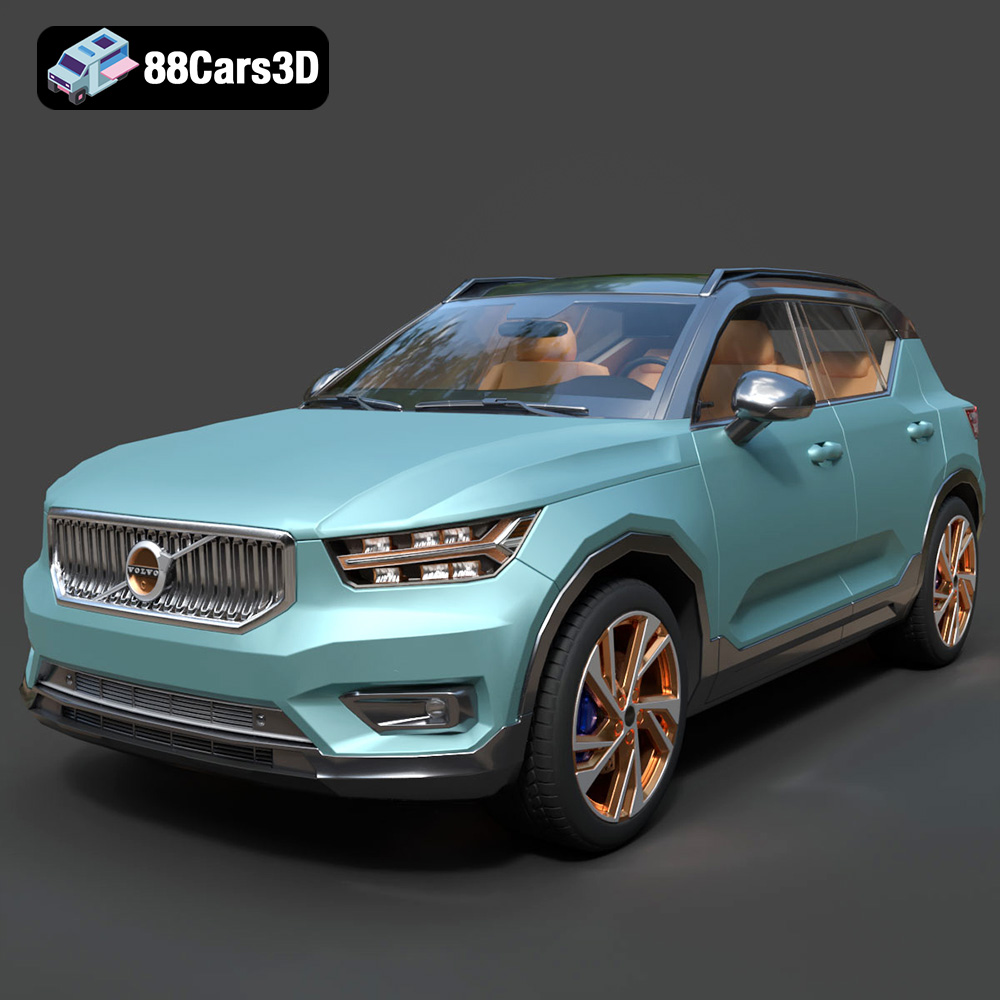
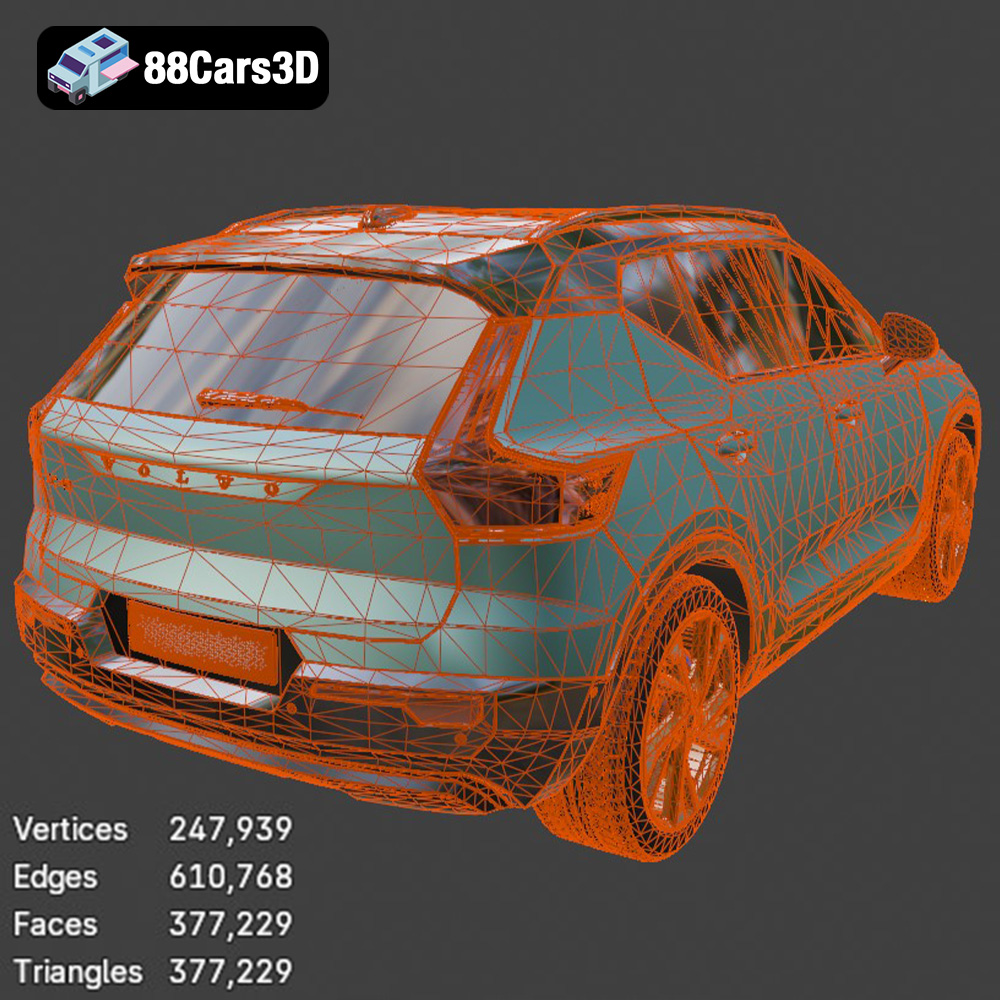
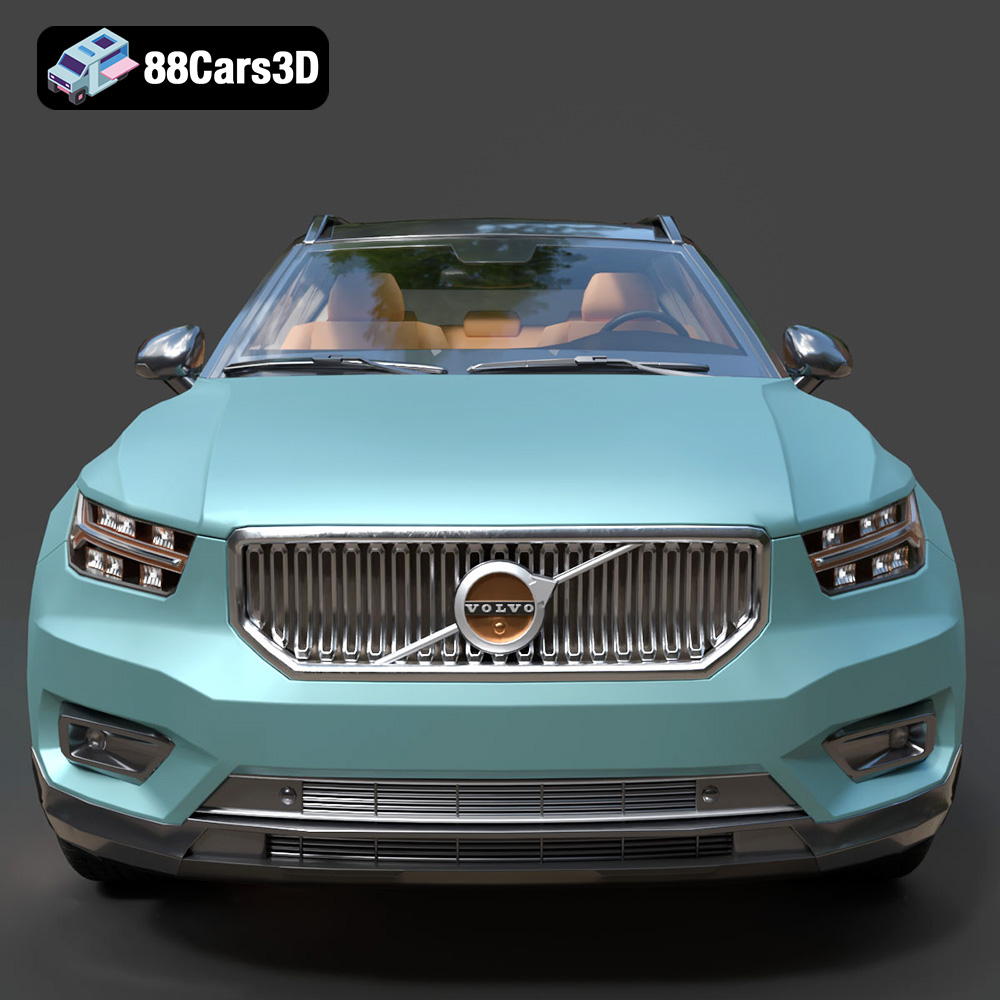
In architectural visualization, vehicles are not merely background props; they are integral components that inject life, scale, and context into a scene. The Volvo XC40 Recharge, with its distinct modern EV styling and premium aesthetic, is perfectly suited for populating luxury architectural visualizations. Imagine a contemporary smart home driveway, an urban streetscape, or an eco-conscious development – placing this electric SUV immediately grounds the scene in a realistic, forward-thinking context. Its accurate proportions and highly detailed features, such as the signature closed-off front grille and the iconic “Thor’s Hammer” LED headlight clusters, hold up beautifully even in close-up shots, adding an undeniable touch of realism and sophistication to any ArchViz project. The model’s mid-polygon topology (just over 377k triangles) is a crucial advantage here, allowing artists to populate dense scenes with multiple vehicles without bogging down rendering times, while still maintaining crisp visual fidelity.
Before a new vehicle even leaves the factory, 3D models play a pivotal role in its marketing and conceptualization. Automotive studios and advertising agencies leverage models like the Volvo XC40 Recharge for everything from product configurators and early design mockups to high-impact commercial renders. The ability to apply custom paint schemes, modify wheel setups, or even add accessories like a sleek rooftop cargo box offers immense creative freedom. Artists can experiment with various lighting scenarios – from a sunny suburban driveway to moody, neon-lit city streets – to evoke specific emotions and target demographics. The model’s clean topology and accurate material setups enable designers to quickly iterate on different finishes, showcasing the car’s R-Design aesthetic elements, like the contrasting gloss black roof, with impeccable detail.
For professionals using industry-standard software, seamless workflow integration is paramount. The Volvo XC40 Recharge (2020) 3D Model, available in both .max (3ds Max) and .blend (Blender) formats, offers a direct pathway into these powerful environments. In 3ds Max, artists can leverage V-Ray or Corona Renderer to achieve stunning photo-realism. The process typically involves importing the .max file, refining material definitions (car paint shaders, glass, tire rubber), setting up advanced lighting using HDRI (High Dynamic Range Image) environments for realistic reflections, and configuring cameras for cinematic shots. Similarly, in Blender, artists can utilize Cycles or Eevee render engines. The .blend file provides access to the native node-based material editor, allowing for sophisticated material creation, leveraging Blender’s robust physics simulations for environmental effects, and employing its comprehensive rendering tools to produce breathtaking visuals. The model’s optimized topology ensures that these complex rendering processes remain efficient, even with multiple light bounces and intricate material shaders.
The interactive nature of game development and immersive experiences demands 3D assets that are not only visually appealing but also highly optimized for real-time performance. The Volvo XC40 Recharge (2020) 3D Model is meticulously crafted to meet these rigorous requirements, making it an ideal choice for populating virtual worlds, interactive simulations, and AR/VR applications.
When it comes to game development, balancing visual fidelity with performance is a constant challenge. The Volvo XC40 Recharge model, with its “mid-polygon” count of just over 377k triangles, strikes an exceptional balance. This poly count is high enough to provide crisp detail for close-up views and hero shots, yet efficient enough to allow for multiple instances in a scene without causing significant performance drops. For Unreal Engine and Unity developers, the inclusion of .fbx and dedicated .unreal formats is a game-changer. These formats facilitate direct import, often retaining critical data like pivot points for animating wheels, steering, and doors. Further optimization involves generating Level of Detail (LOD) meshes – lower polygon versions of the model that automatically switch in at greater distances – to ensure smooth frame rates. Developers can also create custom collision meshes to define the car’s physical presence in the game world, allowing for realistic interactions and driving mechanics.
Augmented Reality (AR) and Virtual Reality (VR) platforms thrive on highly optimized 3D content that loads quickly and renders smoothly. The .glb file format, specifically designed for efficient transmission and display in web-based and immersive environments, makes the Volvo XC40 Recharge an excellent candidate for AR/VR applications. Imagine an interactive digital EV showroom where potential customers can explore the car in 3D, customize its color, and view its interior in a VR headset or through an AR app on their smartphone. The model’s optimized interior geometry, tailored to look authentic from the exterior or within VR, is particularly important here. Its lightweight nature ensures that these experiences remain fluid and engaging, providing a realistic and accessible way to interact with the vehicle digitally.
For a vehicle to truly come alive in a game or simulation, it needs to be animated. The Volvo XC40 Recharge (2020) 3D Model is designed with animation in mind, featuring separate components for wheels, steering, and doors. This modularity is crucial for rigging – the process of creating a skeletal system that allows the model to be posed and animated. Game developers can easily attach physics-based controllers to the wheels for realistic driving dynamics, open and close doors for character entry/exit animations, and simulate steering mechanisms. This attention to detail in asset preparation significantly reduces development time and allows for a more dynamic and interactive experience, whether it’s a drivable “hero” vehicle in an open-world game or high-quality background traffic in a city simulator.
While digital visualization is a core application, the versatility of a well-constructed 3D model extends into the physical realm through 3D printing. The Volvo XC40 Recharge (2020) 3D Model provides a solid foundation for creating tangible scale models, offering a unique opportunity for designers, hobbyists, and automotive enthusiasts to hold a physical representation of the digital asset.
The transition from a virtual 3D model to a physical object relies heavily on the quality and format of the source geometry. The inclusion of the .stl format, specifically designed for stereolithography and other 3D printing processes, makes the Volvo XC40 Recharge model suitable for direct manufacturing. Furthermore, the .ply format offers an alternative for processes that might benefit from its specific data structure. For 3D printing, the model’s geometry needs to be “manifold” – meaning it’s a perfectly sealed, watertight mesh without any gaps or intersecting polygons. This ensures that the slicing software can correctly interpret the model and generate toolpaths for the 3D printer. Producing miniature cars, scale models, or even rapid prototypes of design elements is entirely feasible with this asset, connecting the digital design back to the tactile world.
Achieving a high-quality 3D print requires careful attention to printing parameters and post-processing. For the Volvo XC40 Recharge (2020) 3D Model, specific recommendations are provided to ensure optimal results. Recommended scales like 1:24, 1:32, or 1:43 are ideal for display-scale models, balancing detail with printability. A layer height of 0.04–0.12 mm is suggested, with resin printing (SLA/DLP) highly recommended for smaller scale details, such as the intricate “Thor’s Hammer” headlights, which would be challenging to reproduce precisely with FDM (Fused Deposition Modeling) printers. Wall thickness recommendations of 1.2–2.0 mm and an infill of 15–25% ensure structural integrity without excessive material usage. Supports are crucial for overhangs like side mirrors, wheel arches, and the subtle rear roof spoiler, and the print orientation of the body (angled for a smooth finish) and separate wheels are key considerations for clean output. After printing, post-processing steps such as sanding, priming, and applying authentic Volvo factory colors (like Sage Green, Glacier Silver, or Crystal White) paired with a gloss black roof can transform the raw print into a stunning, professional-grade scale model.
At the heart of any professional 3D model lies its topology – the arrangement of vertices, edges, and faces that form its surface. The quality of a model’s topology directly impacts its performance, visual fidelity, and flexibility for modification and animation. The Volvo XC40 Recharge (2020) 3D Model exemplifies superior topology, making it a valuable asset for demanding professional workflows.
The Volvo XC40 Recharge model boasts an incredibly efficient mid-polygon topology, with just over 377,000 triangles. This figure represents a sweet spot in 3D asset creation: it’s detailed enough to provide crisp visual fidelity for close-up automotive rendering, capturing the nuanced curves and sharp lines of the XC40 Recharge without appearing blocky or low-resolution. At the same time, it is lightweight enough to be used efficiently in real-time game engines or for populating dense architectural visualization scenes without overwhelming system resources. A clean, quad-heavy structure, as implied by the relatively low face count (377,229 faces for 377,229 triangles indicates minimal triangulation of quads), is a hallmark of professional-grade models. This optimized topology ensures smooth deformation during animation, facilitates easy UV mapping for textures, and allows for clean subdivision if higher detail is required for extreme close-ups, making it an incredibly versatile asset across the spectrum of 3D applications.
Accuracy is non-negotiable in professional 3D visualization. The Volvo XC40 Recharge (2020) 3D Model is built with real-world scale accuracy, based on precise Volvo factory dimensions. This attention to detail is critical for several reasons. In architectural visualization, correctly scaled vehicles ensure that buildings and environments appear proportionally accurate and believable. In game development, precise scaling affects gameplay mechanics, collision detection, and the overall immersive experience. For product design or engineering simulations, accurate dimensions are fundamental for reliable analysis and prototyping. This commitment to dimensional precision ensures that the model seamlessly integrates into any scene, maintaining visual integrity and aiding in realistic spatial representation.
Beyond its inherent quality, a truly valuable 3D model offers significant scope for customization and adaptation. The Volvo XC40 Recharge model provides numerous opportunities for creative expression. Artists can easily apply the distinctive two-tone paint scheme (colored body with a contrasting gloss black roof and mirror caps) that is characteristic of the R-Design aesthetic, or opt for a sleek monochrome look. The ability to modify the wheel setup to match different trim levels (Momentum vs. R-Design) further enhances its flexibility. Moreover, the model serves as an excellent base for adding additional elements, such as a sleek rooftop cargo box or crossbars, to craft a rugged, lifestyle-oriented render. Adapting lighting setups for different times of day or specific atmospheric conditions is also made straightforward due to the model’s clean structure and material readiness. This level of adaptability ensures that the Volvo XC40 Recharge can be tailored to fit virtually any project’s unique creative vision.
The digital landscape of 3D modeling and visualization is constantly evolving, driven by an insatiable demand for realism, efficiency, and versatility. In this environment, assets like the Volvo XC40 Recharge (2020) 3D Model stand out as indispensable tools for professionals across multiple disciplines. Its meticulous design, balanced topology, and broad file format compatibility underscore its value for automotive rendering, game development, AR/VR experiences, and even physical 3D printing.
From architectural visualizations that demand subtle realism to game engines requiring robust, optimized assets, the technical specifications and thoughtful design of this particular model ensure it meets the highest industry standards. Its ability to serve as a hero vehicle, a background element, or an interactive object in a virtual showroom speaks volumes about its utility. When sourcing such critical assets, platforms like 88cars3d.com provide access to a curated selection of high-quality 3D car models, ensuring that artists and developers have the reliable tools they need to bring their creative visions to life. Investing in premium 3D models like the Volvo XC40 Recharge is not just about acquiring geometry; it’s about investing in efficiency, quality, and the limitless possibilities of modern digital design.
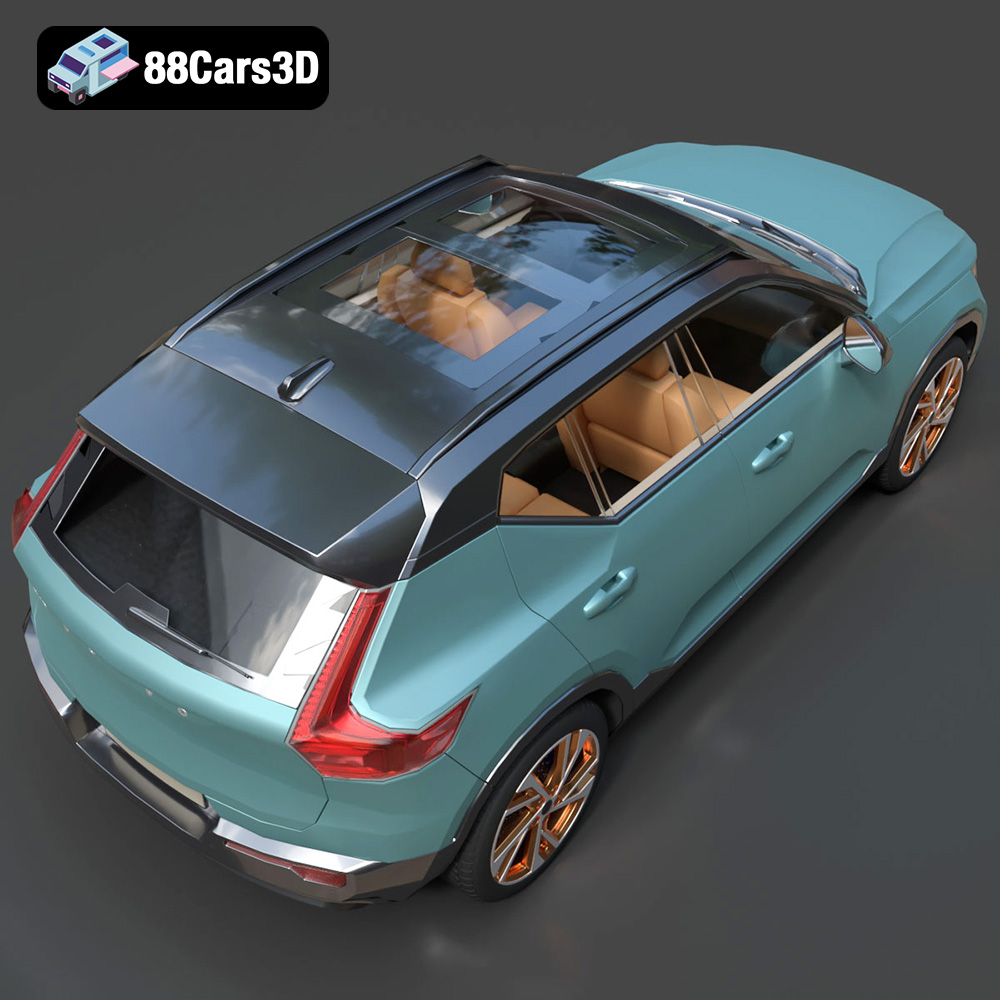
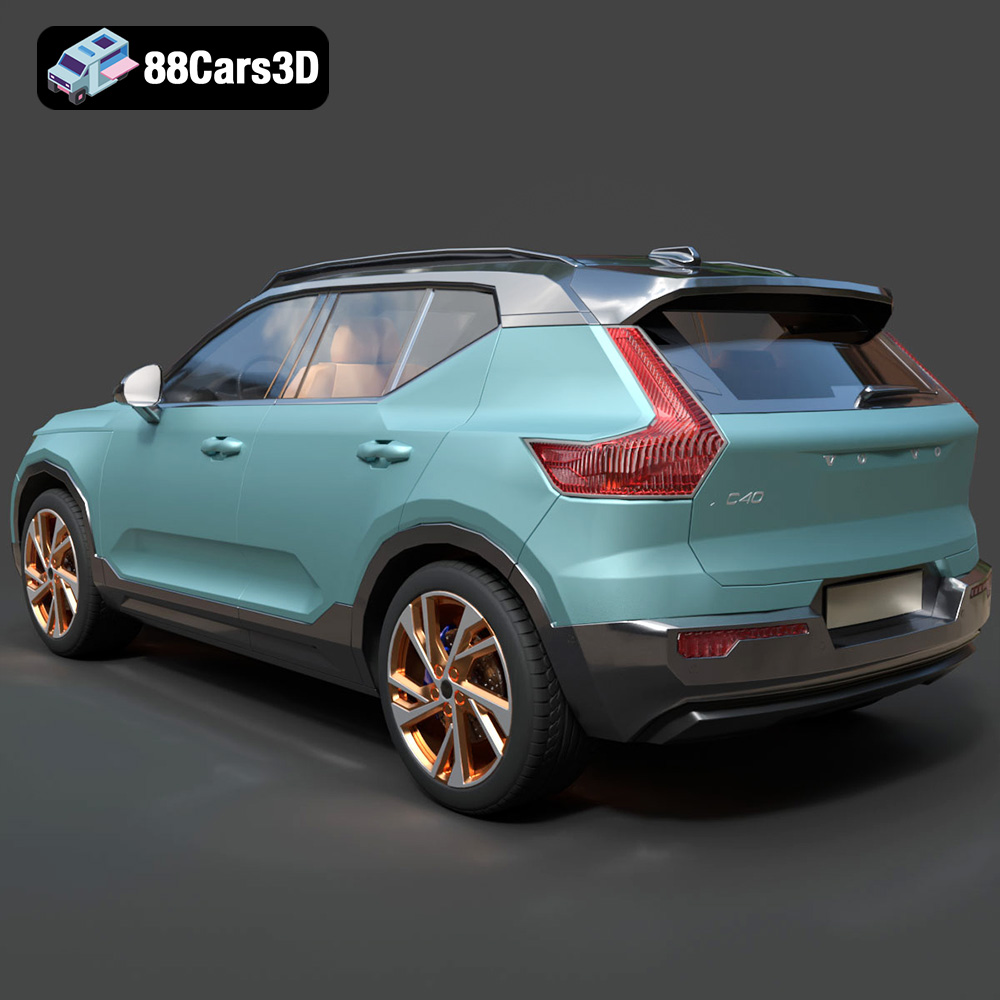
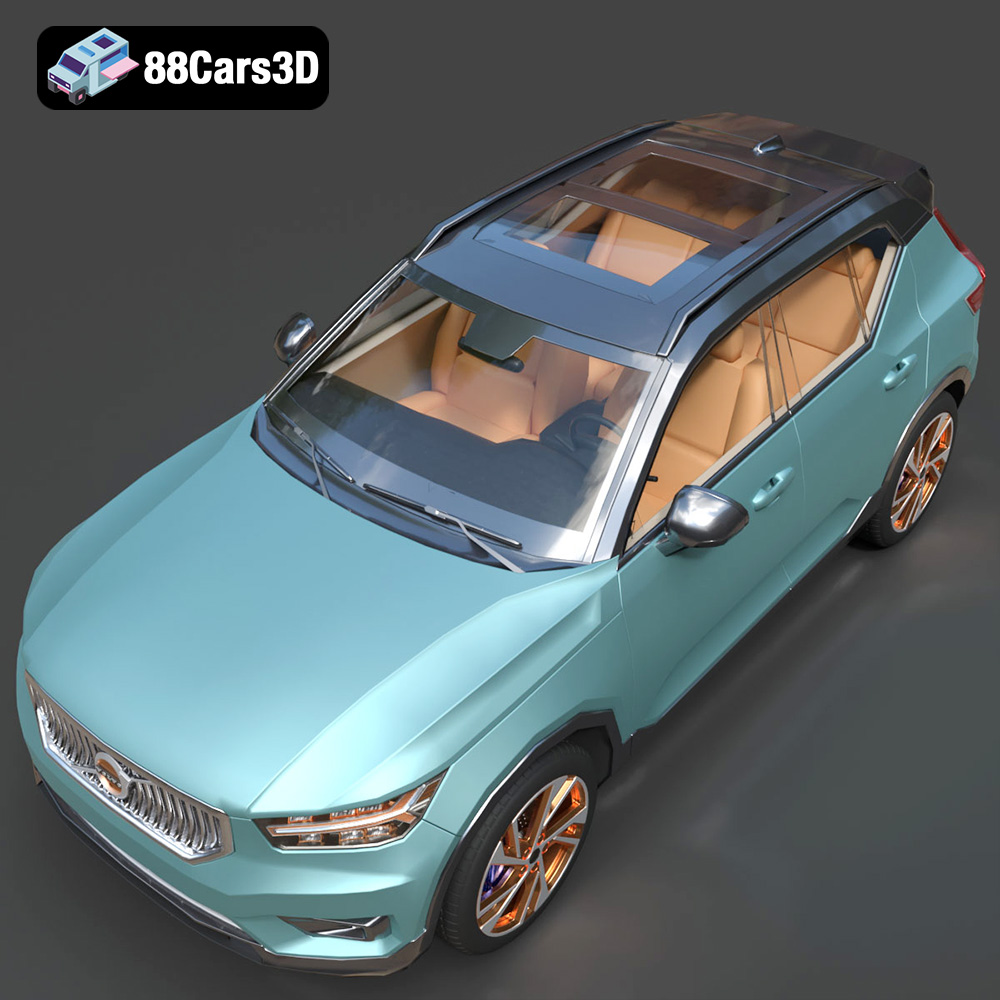
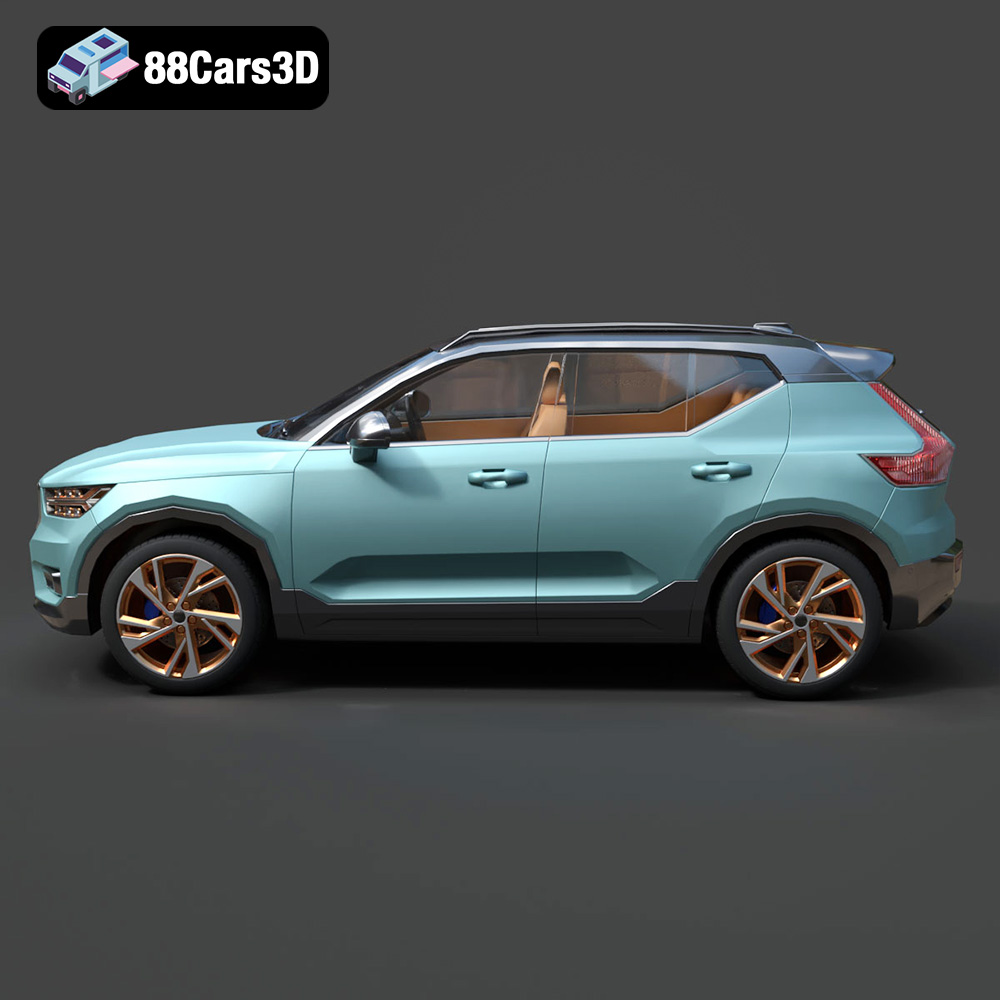
The Volvo XC40 Recharge (2020) 3D Model is an exceptionally accurate digital recreation of the Swedish brand’s groundbreaking first fully electric SUV. Marrying Volvo’s renowned commitment to safety and Scandinavian minimalism with a cutting-edge EV powertrain, the XC40 Recharge is a highly recognizable and premium compact crossover built on the CMA platform. This 3D model perfectly captures the distinct, modernized EV styling of the 2020 Recharge edition. It features the signature closed-off, body-color front grille (a hallmark of Volvo’s electric line), the iconic “Thor’s Hammer” LED headlight assemblies, an aerodynamic contrast-color roof, and the muscular yet compact crossover stance. Built with a highly efficient, impeccably clean mid-polygon topology (just over 377k triangles), it strikes the absolute perfect balance. It provides crisp visual fidelity for close-up automotive rendering while remaining lightweight enough to populate modern virtual environments, ArchViz driveways, and real-time game engines. Perfect for populating modern, eco-conscious street scenes, luxury architectural visualizations, electric vehicle commercial mockups, and mobile/PC game development.
$39
.archviz
.blend
.ev
.fbx
.obj
.rendering
.volvo
.xc40
car-3d-model
compact-suv
electric-vehicle
game-ready
mid-poly
Scandinavian design
SUV
traffic-car
xc40-recharge