

Crafting Digital Realities: The Power of High-Fidelity 3D Vehicle Models
In the dynamic world of 3D visualization, the demand for meticulously crafted assets is ever-growing. From hyper-realistic automotive rendering to immersive game development and cutting-edge AR/VR experiences, the quality of your foundational 3D models dictates the success of your entire project. Artists and developers consistently seek assets that offer not only visual appeal but also technical robustness, ensuring seamless integration and optimal performance across diverse platforms.
Imagine populating a bustling urban scene, or creating a compelling advertisement that tells a story of sustainable commuting. Such projects require more than just a generic placeholder; they demand models that embody realism, precision, and animation readiness. This is where specialized 3D models shine, and a prime example of such excellence is the Velik Bicycle 3D Model. This particular asset stands out as a testament to detailed craftsmanship, offering a high-detail digital recreation of a classic road-style bicycle. It’s built with realistic proportions and mechanical accuracy, making it an indispensable tool for a wide array of professional applications.
Whether you’re an architect visualizing a new city park, a game developer building an open-world environment, or a product designer iterating on concepts, the integrity of your 3D assets forms the backbone of your creative endeavors. Let’s delve into what makes models like the Velik Bicycle so critical and explore the technical considerations that elevate a good model to an exceptional one.
Understanding 3D Model File Formats: A Technical Deep Dive
The versatility of a 3D model is often defined by the file formats it supports. For professionals, understanding the nuances of each format is crucial for efficient workflow, compatibility, and achieving specific project goals. The Velik Bicycle 3D Model, for instance, is offered in a comprehensive suite of formats, each serving distinct purposes within the 3D pipeline. This multi-format availability ensures that regardless of your software or end-use application, you have an optimized version at your fingertips.
.blend – The Native Blender Scene
The .blend format is the native file type for Blender, a powerful open-source 3D creation suite. When you acquire a .blend file for the Velik Bicycle, you’re gaining access to a fully editable Blender scene. This means all modifiers, curves, procedural textures, rigging, and animation data are preserved. It’s ideal for Blender users who want to dive deep into the model’s construction, make significant alterations, or leverage Blender’s extensive toolset for rendering with Cycles or Eevee. Technical details such as subdivision surface levels, custom normals, and specific shader node setups are all retained, offering maximum flexibility.
.fbx – The Industry Standard for Interoperability
.fbx (Filmbox) is a proprietary file format developed by Autodesk, widely recognized as an industry standard for 3D data exchange between different software applications. Its strength lies in its ability to store not only geometry but also materials (though often simplified), textures, animations, and even rigging information. For the Velik Bicycle, an .fbx file is ideal for exporting to game engines like Unreal Engine or Unity, or for transferring to other DCC applications like Maya, Cinema 4D, or even 3ds Max. It’s robust, supports embedded media, and is highly optimized for real-time pipelines, making it a go-to for game assets and animated sequences.
.obj – The Universal Geometry Carrier
The .obj (Wavefront OBJ) format is one of the most widely supported and universal formats for 3D models. It’s a simple, text-based format that primarily describes 3D geometry (vertices, normals, texture coordinates, and faces). While it supports basic material definitions via an accompanying .mtl file, it doesn’t typically carry animation, rigging, or advanced shader information. For the Velik Bicycle, an .obj file guarantees cross-software compatibility, making it perfect for scenarios where you need the core mesh data and plan to re-texture or re-shade in your target application. Its simplicity makes it extremely stable and reliable for transferring raw mesh data.
.glb – Optimized for AR, VR, and Web
.glb (GLB, the binary version of glTF) is a relatively newer format specifically designed for efficient transmission and loading of 3D scenes and models by engines and applications. It’s a “transmission format” that packs all assets (geometry, materials, textures, animations) into a single, self-contained binary file. This makes it highly optimized for AR/VR applications, web-based 3D viewers, and other real-time experiences where speed and portability are paramount. The Velik Bicycle in .glb format would load quickly and efficiently in a web browser for product showcases or interactive AR apps, providing a compact, ready-to-display asset.
.stl – The Standard for 3D Printing
.stl (STereoLithography) is the most common file format for 3D printing. It represents a 3D model as a series of connected triangles, essentially describing the surface geometry without any color, texture, or material information. While simplistic, its ubiquity in the 3D printing world is unmatched. The Velik Bicycle provided as an .stl ensures it’s directly ready for conversion into physical objects, allowing for scale models and display miniatures. Manifold geometry and watertight meshes are critical for .stl, and a professional model like the Velik Bicycle will be structured to meet these requirements.
.ply – Precision Mesh for CAD and Analysis
The .ply (Polygon File Format, also Stanford Triangle Format) is a versatile format for storing 3D data, particularly useful for scanned data, CAD applications, and scientific analysis. It can store various properties for each vertex (color, normal, confidence) and face (color), making it more feature-rich than .obj in some aspects, especially for precision meshes. While less common for general asset distribution, its inclusion for the Velik Bicycle suggests an emphasis on raw, precise mesh data, potentially useful for engineering, measurement, or specific CAD integrations.
.unreal – Engine-Ready for Real-Time Environments
The inclusion of a .unreal file directly signifies an asset optimized and prepared for Unreal Engine. This often means the asset has been imported, materials set up (perhaps using Unreal’s physically-based rendering system), collision meshes generated, and potentially even blueprinting or basic interactivity implemented. For the Velik Bicycle, this format would offer a drag-and-drop solution for Unreal users, saving significant time in asset preparation and ensuring it’s engine-ready for real-time environments and virtual production workflows.
.max – The Native 3ds Max Project
Finally, the .max format is the native scene file for Autodesk 3ds Max, a leading software for 3D modeling, animation, and rendering. Similar to .blend for Blender, a .max file preserves all scene data specific to 3ds Max, including object hierarchy, modifiers, materials (V-Ray, Corona, Arnold, standard Max), lighting, camera setups, and animation curves. This is invaluable for 3ds Max users who require full control and editability over the Velik Bicycle model for high-end rendering and complex animation sequences within a professional studio environment.
The availability of the Velik Bicycle 3D Model in such a diverse range of formats demonstrates a commitment to professional usability, catering to every imaginable workflow from initial concept to final deployment.
The Anatomy of a Professional 3D Bicycle Model
Creating a truly professional 3D model, whether it’s an intricate 3D car model or a detailed bicycle, goes far beyond simply replicating its outward appearance. It involves a deep understanding of geometry, mechanics, and optimization. The Velik Bicycle 3D Model exemplifies this holistic approach, providing an asset that is both visually striking and technically robust.
Meticulous Geometry and Real-World Scale
The foundation of any high-quality 3D model is its geometry. The Velik Bicycle boasts “accurate bicycle frame geometry” and a “detailed front fork and rear triangle structure.” This isn’t just about looking correct; it’s about being correct. Real-world scale accuracy is paramount for proper integration into scenes, ensuring correct lighting, shadow casting, and physical interactions. Imagine trying to place a bicycle that’s subtly out of proportion into an architectural visualization – it immediately breaks immersion. The model’s “realistic spoked wheels with hubs” and “modeled chain, crankset, and pedal system” further underscore this commitment to detail, capturing the essence of the bicycle’s mechanical elegance.
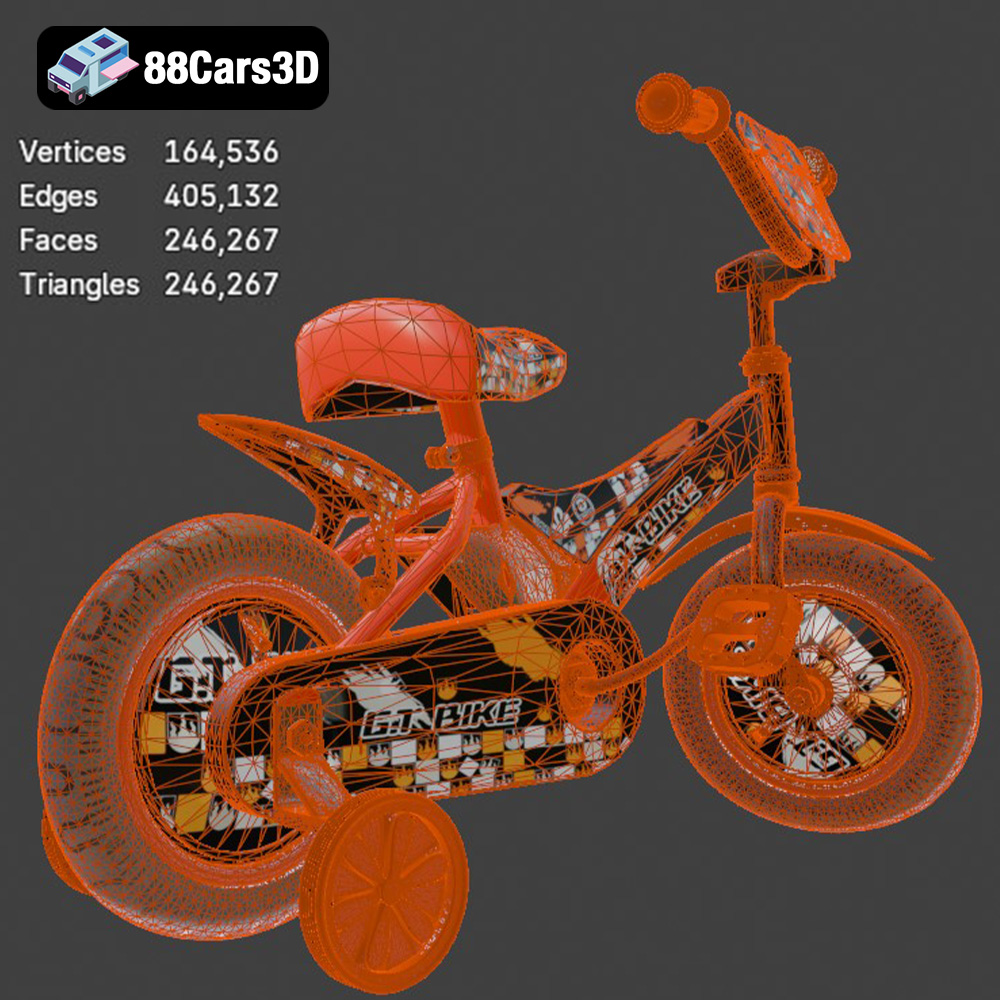
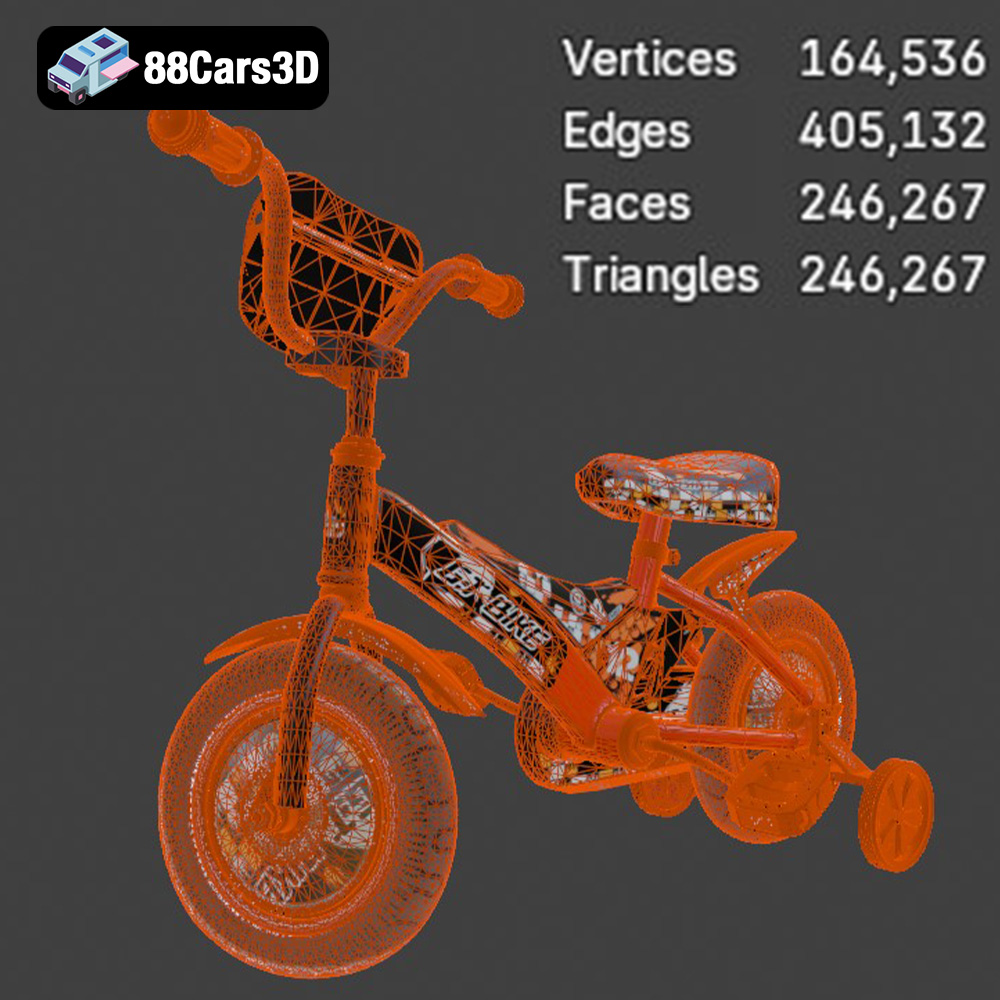
Furthermore, the description highlights “clean topology” and “optimized polygon flow.” Clean topology refers to a mesh structure that is organized, free of n-gons (faces with more than four sides), and uses quad-based polygons where possible. This is crucial for smooth subdivision, deformation during animation, and ease of editing. Optimized polygon flow means the distribution of polygons is efficient, using more detail where it’s needed (e.g., curves and critical mechanical parts) and less where it’s not, balancing visual fidelity with performance, especially important for game assets and real-time rendering.
Animatable Components and Proper Pivot Setup
For any 3D model intended for animation, separating components and setting up correct pivots is non-negotiable. The Velik Bicycle is designed with “separate wheels and pedals for animation,” a key feature that simplifies rigging and allows for realistic motion. The “proper pivot setup for wheel rotation and pedal animation” ensures that when these parts are rotated, they behave as they would in the real world, eliminating complex animation corrections. This attention to mechanical detail extends to the “chain-driven drivetrain system” and “gear cassette detailing,” which, while not always individually animated, contribute to the overall realism and provide opportunities for close-up renders or detailed simulations.
Even subtle details like the “steering pivot properly aligned” and “brake cable routing” demonstrate a commitment to functional accuracy. These elements enhance the model’s credibility, making it suitable not just for static renders but also for dynamic scenes, simulations, and interactive experiences. Such meticulous preparation saves artists countless hours of setup time and ensures that the model is production-ready right out of the box.
Integrating the Velik Bicycle into Diverse Professional Workflows
The true value of a versatile 3D asset like the Velik Bicycle 3D Model lies in its adaptability across a spectrum of professional applications. Its robust technical foundation and multi-format support make it a powerful tool for creators in various industries.
High-Fidelity Rendering and Visualization
For advertising agencies, architectural visualization studios, and product marketing teams, photorealistic rendering is paramount. The Velik Bicycle’s “optimized geometry for high-quality renders” means it can be pushed to extreme levels of detail when paired with advanced rendering engines like V-Ray, Corona, or Arnold within 3ds Max or Blender. Its accurate proportions and mechanical details allow for precise lighting and material application, resulting in stunning visuals. Imagine the bicycle featured in a sleek urban lifestyle commercial, a dynamic shot of it leaning against a modern building in an arch-viz project, or as a key element in sports marketing visuals. The ability to customize frame color and add accessories further enhances its utility for tailor-made campaigns, making it a compelling asset for designers looking for top-tier 3D car models or vehicle props.
Optimizing for Real-Time Environments (Game Dev & AR/VR)
The world of game development and immersive AR/VR experiences demands models that are not only visually appealing but also highly optimized for performance. The Velik Bicycle, described as suitable for “game development, and AR/VR visualization,” fits this requirement perfectly. Its “optimized polygon flow” and “clean and well-organized mesh structure” are critical for maintaining high frame rates in real-time engines like Unreal Engine and Unity. When developing open-world city games or sports simulators, every asset contributes to the overall budget, and a well-optimized model reduces the need for costly manual clean-up. The inclusion of formats like .fbx and .unreal streamlines the import process into these engines, while the .glb format is perfect for web-based AR experiences or virtual showroom displays, allowing users to interact with the model seamlessly. Professionals looking for reliable game assets can find them at marketplaces like 88cars3d.com.
The Precision of 3D Printing and Simulation
Beyond digital screens, the Velik Bicycle also offers tangible applications through 3D printing. The model is “convertible to .stl format for scale bicycle models and display miniatures.” This opens avenues for creating physical prototypes, educational tools, or collectibles. The provided 3D print settings, such as recommended scales (1:18, 1:12, 1:10, 1:8), layer height, wall thickness, and infill, offer a clear guide for achieving optimal physical results. Additionally, its accurate mechanical details make it useful for “simulation & training,” allowing for mechanical demonstrations or cycling-related educational projects where physical accuracy is key, even if the simulation is purely digital.
Mastering Your 3D Workflow with the Velik Bicycle
Integrating a new 3D model into an existing workflow can sometimes be a challenge, but the thoughtful design and varied file formats of the Velik Bicycle 3D Model simplify this process for artists and developers across different platforms. This section explores practical steps for leveraging this asset within popular 3D software.
Workflow in Blender and 3ds Max
For users of Blender, the native .blend file is a direct gateway to the model’s full potential. Upon opening, you’ll find the Velik Bicycle with its materials, UV maps, and possibly even scene lighting pre-configured. This allows for immediate rendering using Cycles or Eevee. Artists can easily inspect the “clean and well-organized mesh structure,” modify existing shaders, or apply new textures. The “separate wheels and pedals for animation” mean that setting up a simple rotation rig for a spinning wheel or pedaling motion is straightforward, leveraging Blender’s robust animation tools.
Similarly, 3ds Max users benefit from the dedicated .max file. This ensures that all Max-specific features, such as modifier stacks, V-Ray or Corona materials, and object hierarchy, are intact. Importing the Velik Bicycle into 3ds Max allows seamless integration into architectural scenes, advertising renders, or complex animations. Artists can quickly adjust materials for specific rendering engines, set up dynamic lighting scenarios, and utilize Max’s advanced animation and simulation tools to bring the bicycle to life in diverse urban or natural environments.
Preparing for Unreal Engine and Real-Time Performance
For game developers and virtual production artists, the .fbx and .unreal formats are particularly valuable. Importing the .fbx version of the Velik Bicycle into Unreal Engine typically involves a few key steps:
- Import Settings: Ensure correct import settings for normals, UVs, and scale. The model’s real-world scale accuracy makes this a smooth process.
- Material Setup: Unreal Engine’s physically-based rendering (PBR) system requires specific material setups. While some basic materials might transfer, artists will often want to create high-quality PBR materials using textures provided or by building new ones within Unreal’s Material Editor, leveraging the model’s clean UVs.
- Collision: Generating efficient collision meshes is crucial for game interactivity. For a complex object like a bicycle, simple bounding box collisions might suffice for distant objects, but for player interaction or physics, custom collision shapes or “per-poly” collision might be required.
- Animation Blueprints: For an animated bicycle (e.g., a character riding it, or interactive pedals), Unreal’s Blueprint system can be used to control the rotation of the separate wheel and pedal components, linking them to character movement or other game logic.
The .unreal file, if it exists, would bypass most of these steps, offering a pre-configured, engine-ready asset, saving valuable development time. This makes assets from 88cars3d.com highly efficient for game asset pipelines.
Unleashing Creativity: Customization and Application
A well-designed 3D model offers more than just static beauty; it serves as a versatile foundation for creative exploration. The Velik Bicycle 3D Model provides extensive opportunities for customization and diverse application, empowering artists to tailor it to their specific project needs.
Personalizing Your Velik Bicycle
The product description highlights several customization options, which are critical for an asset’s longevity and utility. The ability to “change frame color and decal style” is fundamental. A bicycle in a vibrant urban scene might sport a bright, eye-catching frame, while one in a more subdued historical visualization could have a classic, muted tone. Decals allow for branding, adding wear and tear, or unique graphic designs that tell a story. This flexibility means the same core model can serve vastly different aesthetic requirements without needing to start from scratch.
Further personalization includes the capacity to “modify tire thickness (road / hybrid / sport)” and “add accessories (water bottle holder, rear rack, lights).” These modifications can dramatically alter the bicycle’s character and functionality within a scene. A slim road tire implies speed and performance, whereas a thicker hybrid tire suggests robustness for varied terrain. Accessories add realism and functionality, making the bicycle feel lived-in and part of a larger narrative. Even adjusting “handlebar type (drop bar / flat bar)” allows for fine-tuning the ergonomics and overall style of the bike to match specific cycling disciplines or character personalities.
Beyond the Bike: Scene Integration and Storytelling
The true magic happens when the Velik Bicycle is integrated into a larger scene, becoming a prop that enhances storytelling and realism. For urban street scenes, it can be parked by a coffee shop, ridden by a character, or leaned against a fence in a park environment. In advertising visuals, it can be the centerpiece, reflecting a lifestyle of health and sustainability. For transportation projects, it can illustrate urban mobility solutions or complement other 3D car models in a city layout.
The option to “configure lighting for studio or outdoor scenes” is another crucial aspect of customization. Different lighting setups can completely change the mood and perception of the model. A studio light setup might highlight the bicycle’s sleek lines for a product shot, while natural outdoor lighting will integrate it seamlessly into an environmental render. The Velik Bicycle’s detailed mechanical components and clean geometry ensure it reacts realistically to complex lighting, volumetric effects, and reflections, providing rich visual depth whether it’s reflecting city lights or the warm glow of a sunset.
Conclusion: The Enduring Value of Precision 3D Assets
In the competitive landscape of digital content creation, the difference between good and great often lies in the quality of the assets used. The Velik Bicycle 3D Model stands as a prime example of a meticulously crafted asset that provides both aesthetic appeal and profound technical advantages. From its accurate frame geometry and animatable components to its optimized polygon flow and real-world scale, every aspect of this model has been designed with professional workflows in mind.
Its availability across a spectrum of crucial file formats—from native Blender and 3ds Max scenes to universal .fbx and .obj, and specialized formats like .glb, .stl, .ply, and engine-ready .unreal—ensures seamless integration into any pipeline. Whether your project demands high-fidelity automotive rendering, dynamic game assets for an immersive open-world, intricate 3D printing for physical prototypes, or compelling AR/VR experiences, the Velik Bicycle is equipped to meet those needs. It offers a solid foundation for customization, allowing artists to adapt its appearance and functionality to tell a unique story or fit a specific brand.
Investing in high-quality 3D models like the Velik Bicycle from trusted sources such as 88cars3d.com empowers creators to achieve unparalleled realism and efficiency. It eliminates the tedious task of modeling from scratch, allowing artists to focus their energy on creative direction, scene composition, and delivering exceptional visual experiences. For anyone in search of reliable, high-performance vehicle 3D models to elevate their projects, the Velik Bicycle is an asset that truly delivers on its promise of technical excellence and creative freedom.
Featured 3D Model
Velik Bicycle 3D Model 3D Printable STL
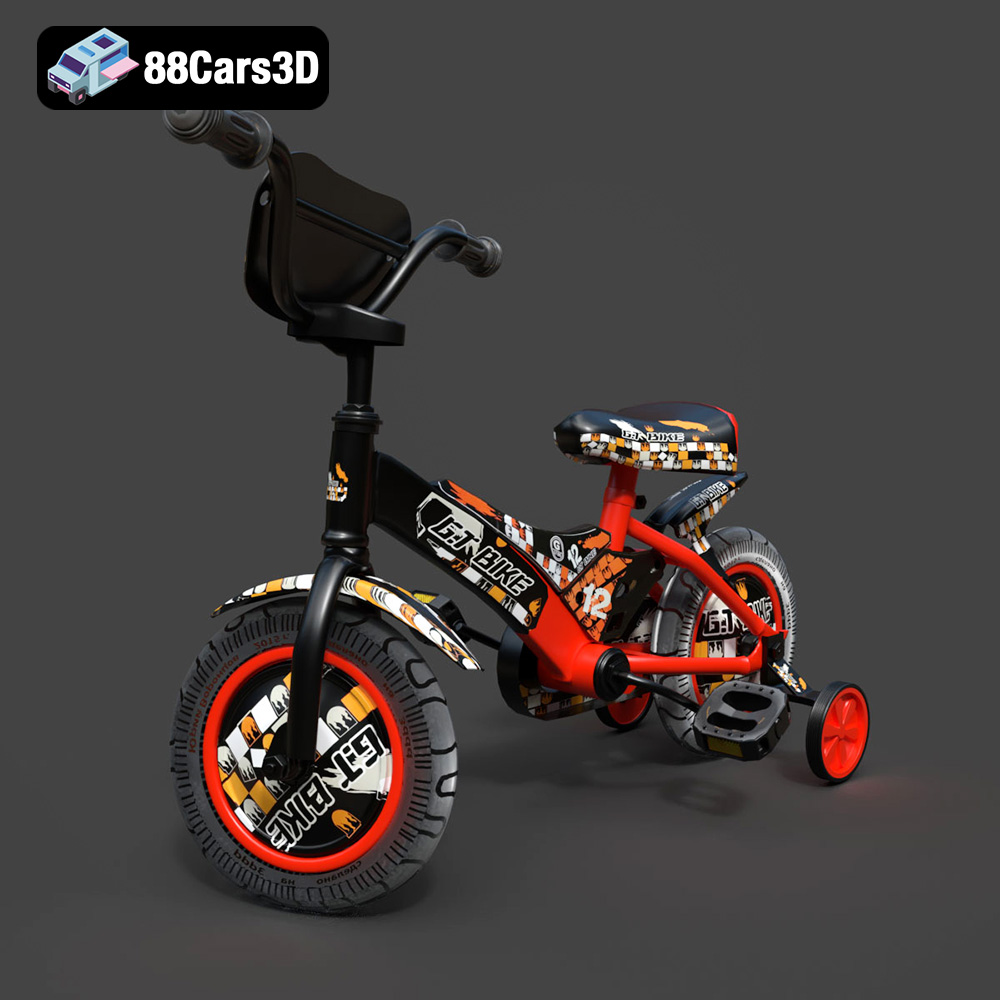
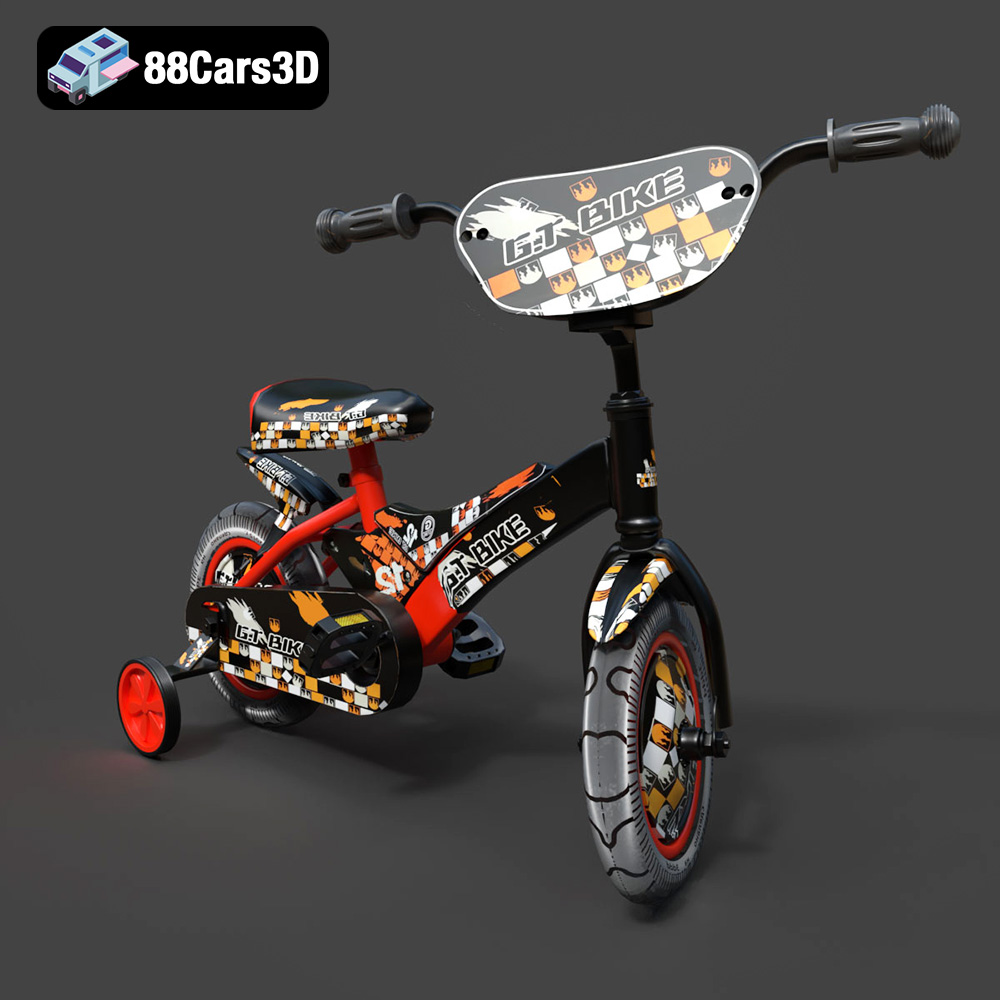
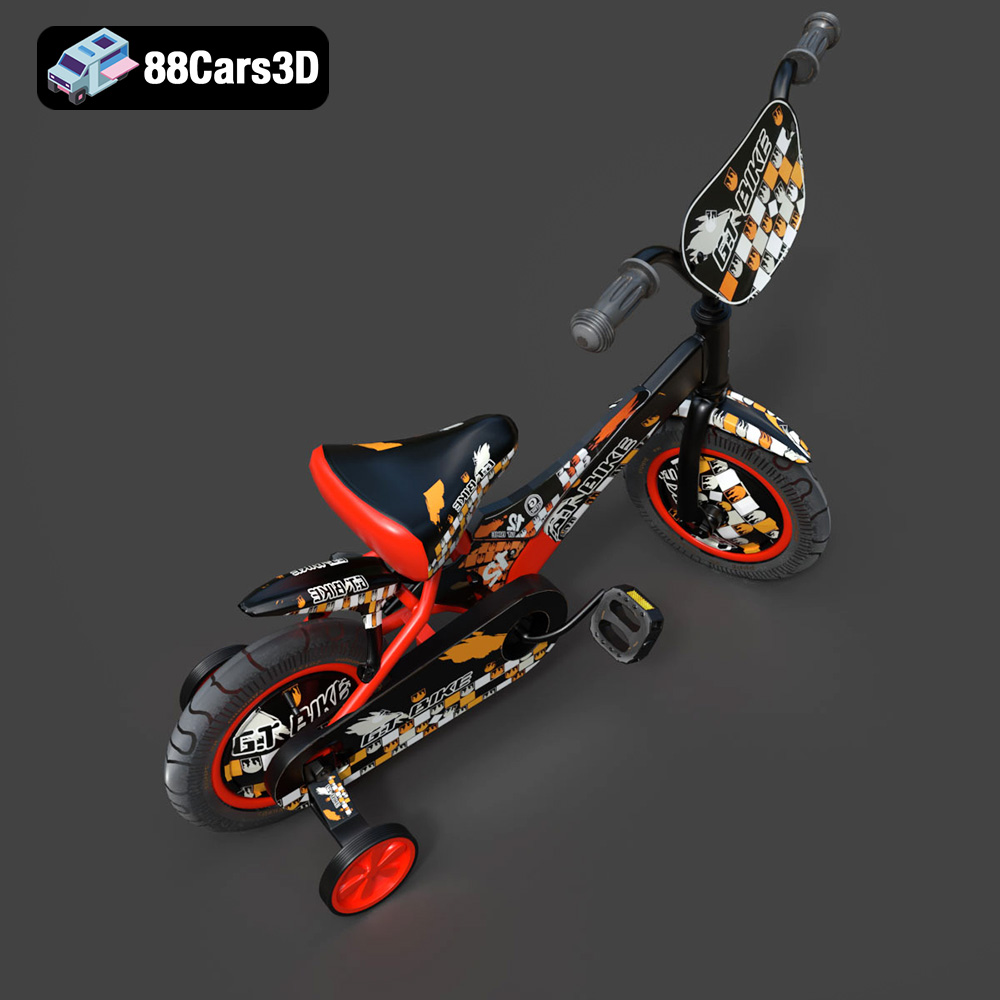
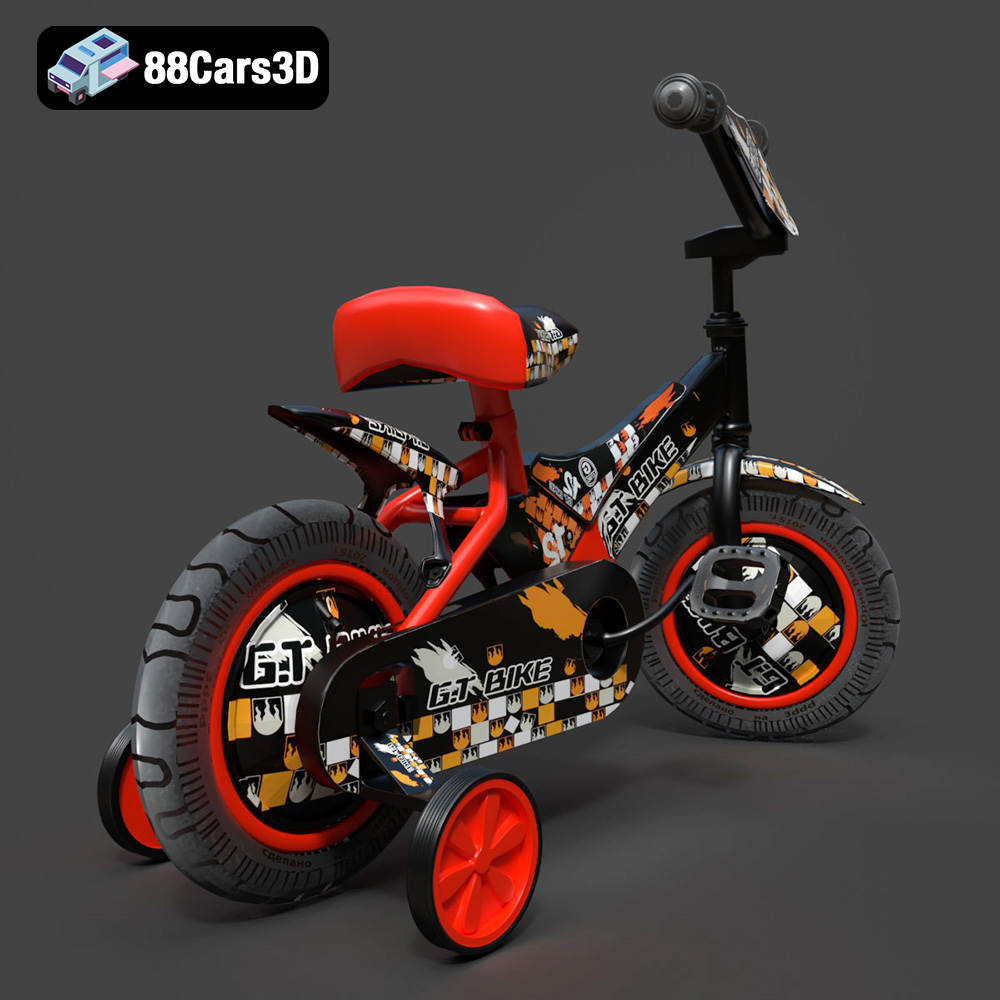
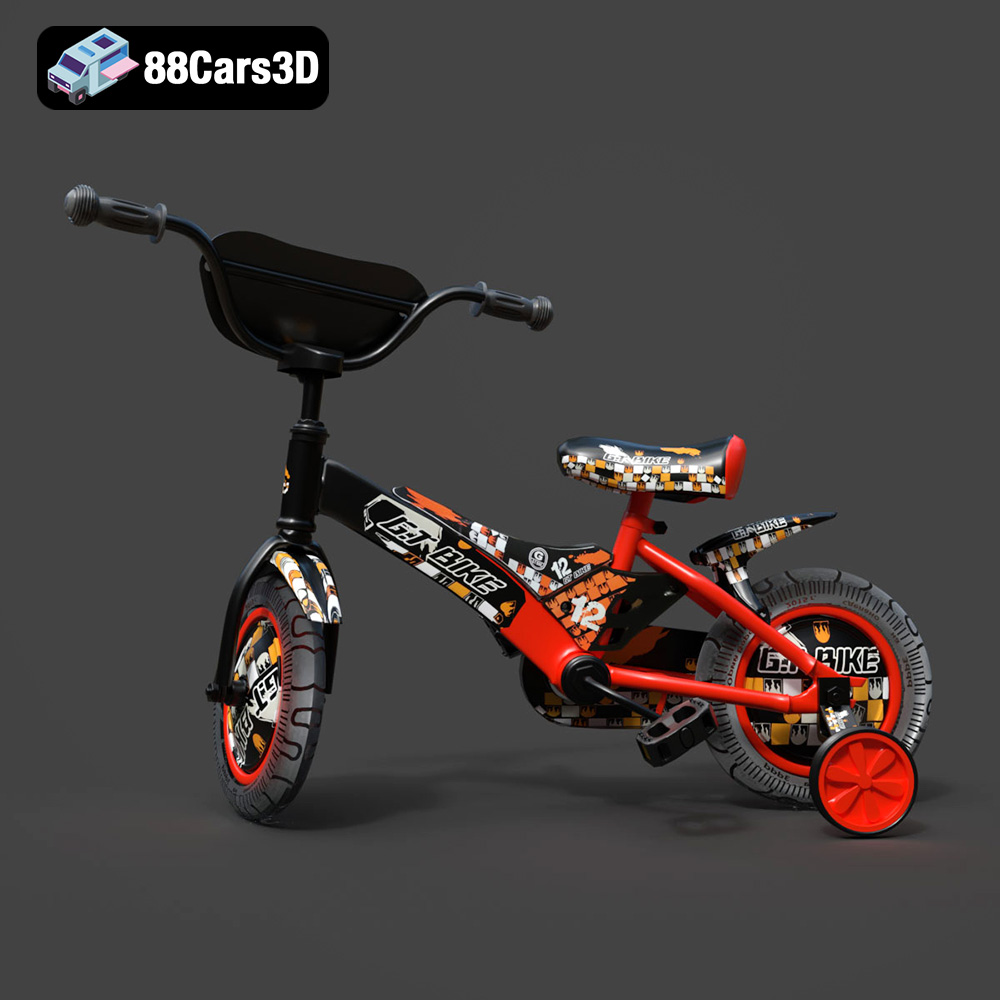
The Velik Bicycle 3D Model is a high-detail digital recreation of a classic road-style bicycle designed for urban commuting and recreational riding. Built with realistic proportions and mechanical accuracy, this model captures the lightweight frame structure, slim road tires, chain-driven drivetrain system, and ergonomic handlebar configuration. Ideal for rendering, animation, simulation, game development, AR/VR, and 3D printing.
$15.9
Product Image Gallery
Related Tags
.arvr
.bicycle
.bicycle3dmodel
.bike
.blend
.cycling
.fbx
.gameasset
.glb
.max
.obj
.ply
.rendering
.simulation
.sportsvehicle
.stl
.unreal
.urbanvehicle
.velik
