

The quest for photorealism in real-time experiences has long been a balancing act between visual fidelity and performance. For 3D artists, game developers, and automotive visualization professionals, this often meant painstakingly optimizing complex 3D models, creating multiple Levels of Detail (LODs), and compromising on geometric detail to achieve smooth frame rates. Automotive assets, in particular, are notorious for their intricate details – from panel gaps and intricate interiors to complex suspension systems – pushing traditional real-time rendering pipelines to their limits.
Enter Unreal Engine 5’s Nanite virtualized geometry system, a groundbreaking technology that fundamentally redefines how high-fidelity 3D assets are handled in real-time. With Nanite, the barriers between source art and real-time scenes are virtually dissolved, allowing artists to import film-quality assets with millions or even billions of polygons directly into Unreal Engine without manual optimization. This revolutionizes workflows for fields like automotive visualization, enabling unprecedented levels of detail, realism, and efficiency.
In this comprehensive guide, we’ll dive deep into Nanite’s capabilities, exploring how it transforms the integration and rendering of high-quality 3D car models within Unreal Engine 5. We’ll cover everything from project setup and material creation to interactive experiences and optimization strategies, empowering you to leverage Nanite for breathtaking automotive projects. If you’re looking to elevate your real-time rendering, reduce asset pipeline friction, and create truly immersive experiences with stunning automotive detail, Nanite is your game-changer.
Understanding Nanite: A Paradigm Shift in Geometry Management
At its core, Nanite is Unreal Engine 5’s virtualized geometry system designed to handle massive amounts of geometric detail with unparalleled efficiency. Traditional real-time rendering pipelines struggled with high-polygon meshes due to limitations in draw calls, memory bandwidth, and CPU processing time required for culling and LOD management. Artists had to spend countless hours creating simplified versions of their models, often compromising on the original artistic vision.
Nanite fundamentally bypasses these issues. Instead of rendering individual triangles, Nanite transforms meshes into a proprietary internal format comprising many small, hierarchical clusters of triangles. This allows the engine to render only the geometric detail that is truly visible and necessary at a given screen resolution, at an astonishing micro-polygon level. It intelligently streams only the necessary data from disk as needed, dramatically reducing the memory footprint and CPU overhead associated with high-poly models. This means you can import highly detailed CAD data or scanned models directly into Unreal Engine without worrying about polygon counts.
The Core Mechanics of Nanite
Nanite operates through several ingenious mechanisms. First, it converts traditional static meshes into a highly compressed, multi-resolution mesh format. During runtime, Nanite employs a GPU-driven rendering pipeline. This means the CPU offloads much of the geometry processing to the GPU, where it can be handled more efficiently in parallel. The system performs fine-grain visibility culling, determining which micro-polygon clusters are visible on screen and then streaming and rendering only those. As the camera moves closer, more detailed clusters are streamed in, and as it moves away, coarser clusters are used – all seamlessly and automatically, without the need for manual LODs.
This cluster-based rendering dramatically reduces the number of draw calls, which is a major performance bottleneck in traditional rendering. Instead of submitting thousands of individual objects, Nanite can render entire complex scenes with far fewer, more efficient draw calls. For automotive models, which are often composed of numerous small, highly detailed parts (e.g., individual bolts, dashboard buttons, intricate engine components), this is a monumental advantage. A crucial prerequisite for optimal Nanite performance is well-constructed mesh data – clean topology, non-overlapping UVs, and clear material assignments. Platforms like 88cars3d.com specialize in providing car models that adhere to these professional standards, ensuring seamless integration with Nanite.
Performance Implications and Hardware Requirements
While Nanite is incredibly efficient, it is important to understand its performance characteristics. Being a GPU-driven pipeline, Nanite shifts the performance bottleneck from the CPU to the GPU. This means modern GPUs with robust compute capabilities and ample VRAM are essential for harnessing its full potential. The system works by processing vast amounts of tiny triangles, requiring significant pixel fill rate and memory bandwidth. However, compared to rendering the same scene with traditional methods at equivalent visual fidelity (if that were even possible without Nanite), the performance gains are substantial.
Developers should expect higher VRAM usage for the Nanite data itself, especially with extremely detailed assets. However, the runtime memory usage is dynamically managed, streaming only what’s visible. The key takeaway is that Nanate allows you to push geometric detail far beyond what was previously thought possible in real-time, often at better performance than a heavily LOD’d, less detailed traditional scene. It’s a game-changer for high-end cinematic, visualization, and gaming experiences, primarily targeting desktop PCs and next-gen consoles.
Integrating High-Fidelity Car Models with Nanite
Integrating a high-fidelity 3D car model into Unreal Engine 5 with Nanite is a straightforward process, but preparing your assets correctly is key to unlocking the system’s full potential. The beauty of Nanite is that it minimizes the need for extensive pre-optimization of polygon counts, allowing artists to focus on artistic detail and quality.
The general workflow involves importing your detailed mesh, enabling Nanite for it, and then configuring its settings within the engine. When sourcing automotive assets, whether from internal CAD pipelines or marketplaces like 88cars3d.com, look for models with clean geometry, distinct material assignments, and ideally, proper UV mapping already applied. While Nanite handles geometric complexity, good base mesh quality will always yield the best results.
Pre-Import Optimization and Asset Preparation
Even with Nanite, some best practices before importing are beneficial. Ensure your model is exported in a compatible format such as FBX or USD. USD (Universal Scene Description) is particularly powerful as it can encapsulate complex scene hierarchies, material assignments, and even animation data, making it ideal for automotive workflows. Make sure your mesh topology is clean; while Nanite can handle messy geometry to some extent, a well-quadrupled mesh without excessive non-manifold edges will generally process and render more efficiently.
Crucially, ensure distinct parts of your car model that will have different materials are assigned unique material IDs in your 3D modeling software. For example, the car body paint, window glass, tire rubber, and chrome trim should all be separate material assignments. This simplifies material setup in Unreal Engine. Also, ensure your UV maps are laid out efficiently, even if you’re primarily using tiling textures or tri-planar mapping, as good UVs are essential for lightmaps, decals, and any baked textures (though Nanite largely bypasses baked normal maps by rendering true geometry). The kind of high-quality, pre-optimized automotive assets found on platforms like 88cars3d.com often come with these prerequisites handled, streamlining your workflow considerably.
Nanite Configuration and Optimization within Unreal Engine
Once your model is imported into Unreal Engine 5, enabling Nanite is simple. In the Content Browser, double-click your static mesh asset to open the Static Mesh Editor. In the Details panel, under the Nanite section, check the “Enable Nanite” checkbox. The engine will then process the mesh for Nanite, which might take a moment depending on the mesh’s complexity. You can further refine Nanite settings here, such as “Preserve Area,” which helps maintain small geometric details like tiny bolts or emblems even when viewed from a distance, or “Fallback Relative Error” which controls the fidelity of the non-Nanite fallback mesh.
To visualize Nanite’s workings and identify potential issues, you can use the viewport’s “Nanite Visualization” modes (accessible via the “Lit” dropdown menu). “Clusters” shows how Nanite breaks down the mesh, “Triangles” displays the active triangle count at various distances, and “Overdraw” helps identify areas where multiple layers of triangles are being rendered unnecessarily. While Nanite efficiently handles overdraw at the micro-polygon level, understanding these visualizations can aid in optimizing material complexity or identifying problematic mesh areas. For more detailed information on Nanite settings and best practices, refer to the official Unreal Engine documentation at https://dev.epicgames.com/community/unreal-engine/learning.
Unleashing Visual Fidelity: PBR, Lumen, and Nanite Synergy
Nanite forms a powerful trio with Unreal Engine 5’s other flagship features: Lumen for real-time global illumination and reflection, and its robust Physically Based Rendering (PBR) material system. This synergy is what truly elevates automotive visualization to new heights, allowing for previously unattainable levels of realism and immersion.
With Nanite handling the geometric complexity, artists are free to push the boundaries of material detail and lighting realism. Lumen provides incredibly accurate indirect lighting and reflections, reacting dynamically to every nuance of the Nanite-enabled geometry. This means that highly detailed car interiors, intricate engine bays, and complex exterior surfaces will reflect and bounce light realistically, creating a truly believable presence within your scenes. The combination allows for nuanced interplay between light and surface, crucial for rendering realistic automotive paint, glass, and metallic components.
Physically Based Rendering (PBR) Materials with Nanite
Creating realistic PBR materials for your Nanite-enabled car models is a critical step. The Unreal Engine Material Editor is a node-based system that allows you to define the appearance of surfaces through various input parameters like Base Color, Metallic, Roughness, Specular, Normal, and Emissive. For automotive finishes, achieving photorealism often involves sophisticated material graphs.
- Car Paint: Typically a complex blend of metallic flakes, clear coat, and sometimes a pearlescent effect. This often involves blending multiple layers of materials, using a high metallic value, low roughness for the clear coat, and potentially custom normal maps for subsurface detail or flake patterns.
- Glass: Requires precise control over refraction, reflection, and transparency. Setting a low metallic value, high roughness for diffused reflections, and a high specular value with an appropriate index of refraction (IOR) are crucial.
- Metal & Chrome: High metallic values (close to 1), very low roughness, and sometimes anisotropic reflections (for brushed metals) are key.
With Nanite handling geometry, you can leverage extremely high-resolution textures (e.g., 4K, 8K, or even 16K) for your PBR maps without fear of performance degradation related to polygon count. This allows for incredible detail in normal maps, base color variations, and roughness maps, further enhancing realism. You can define these materials as Material Instances, making it easy to swap colors and properties via Blueprint, ideal for configurators.
Real-time Global Illumination with Lumen
Lumen is Unreal Engine 5’s revolutionary real-time global illumination and reflections system, and it works seamlessly with Nanite geometry. Lumen calculates diffuse inter-reflection with infinite bounces and indirect specular reflections from emissive surfaces and sky light, all in real-time. For automotive scenes, this means:
- Realistic Ambient Lighting: Light from the sky, environment HDRI, or large light sources will bounce around the car’s interior and exterior, subtly illuminating shadowed areas.
- Accurate Reflections: Car surfaces, especially metallic and glossy ones, will accurately reflect their surroundings, including other Nanite-enabled objects and Lumen-lit environments.
- Dynamic Lighting Changes: If you change the time of day, move a light source, or open a car door, Lumen will instantly update the global illumination and reflections, providing a truly interactive experience.
Setting up Lumen involves enabling it in your Project Settings under “Rendering > Global Illumination” and “Reflections.” You’ll typically use a Sky Light (capturing the environment) and a Directional Light (for the sun). For more precise control over reflections, especially on complex car body shapes, consider supplementing Lumen with Screen Space Reflections (SSR) or even Hardware Ray Tracing for extremely demanding projects, though Lumen often suffices for stunning results.
Advanced Lighting and Reflection Techniques
Beyond Lumen, Unreal Engine offers additional tools to refine your automotive lighting and reflections. For highly reflective surfaces like car paint, polished metal, and glass, Lumen’s software ray tracing provides excellent results. However, for ultimate fidelity, especially in enclosed spaces or with complex geometries, enabling Hardware Ray Tracing (if your GPU supports it) can provide pixel-perfect reflections and refractions.
Reflection Captures (Sphere and Box) can be strategically placed to provide localized reflections for specific parts of the car, though Lumen significantly reduces their necessity. For transparent materials like glass, ensuring proper render order and using translucent blend modes, potentially with refraction and clear coat normal maps, will enhance realism. Consider using the Cine Camera Actor for cinematic renders, as it offers realistic lens effects like depth of field, bloom, and chromatic aberration, which can significantly enhance the visual appeal of a photorealistic car render.
Interactive Experiences and Virtual Production with Nanite-Powered Cars
The combination of Nanite’s geometric prowess with Unreal Engine’s interactivity and cinematic tools unlocks incredible possibilities for automotive applications, from dynamic configurators to cutting-edge virtual production.
Gone are the days of pre-rendered car configurators or static turntable videos. With Nanite, you can build fully interactive experiences where users can explore every minute detail of a car model, change options in real-time, and even drive it within a high-fidelity environment. For virtual production, this means integrating film-quality car models into LED wall stages or green screen composites, reacting realistically to live lighting and camera movements, blurring the lines between physical and digital.
Building Automotive Configurators with Blueprint
Unreal Engine’s Blueprint Visual Scripting system is ideal for creating interactive automotive configurators. With Blueprint, you can build logic that allows users to:
- Swap Parts: Easily switch between different wheel designs, spoilers, or body kits. This involves referencing different Nanite-enabled static mesh components and setting their visibility.
- Change Colors: Create Material Instances of your car paint material. Blueprint can then dynamically set the Base Color parameter (and potentially metallic flake properties) based on user selection, providing instant visual feedback.
- Open Doors/Hoods/Trunks: Animate specific car components using Sequencer and then trigger these animations via Blueprint based on user input (e.g., clicking on a door handle).
- Interior Customization: Allow users to change seat upholstery, dashboard finishes, or interior lighting colors, all controlled through Blueprint and Material Instances.
The ability to handle extremely high-poly models with Nanite means that even intricate interior details, often crucial for a luxury car configurator, can be rendered with full fidelity without performance compromises. You can even implement features like a “X-ray” view to highlight internal components, all dynamically driven by Blueprint.
Cinematic Storytelling with Sequencer
For creating stunning automotive marketing materials, product reveals, or animated sequences, Unreal Engine’s Sequencer is an indispensable tool. Sequencer is a multi-track non-linear editor that allows you to choreograph complex scenes with animation, cameras, audio, and visual effects.
With Nanite-enabled car models, you can create breathtaking cinematics that showcase every detail of the vehicle. You can animate camera paths, keyframe individual car parts (like doors opening or suspension articulating), apply cinematic post-processing effects, and integrate dynamic elements created with Niagara (Unreal Engine’s VFX system) – such as exhaust fumes, kicking up dust, or rain effects. For cutting-edge virtual production workflows, Nanite-powered cars can be placed on LED volumes, providing high-fidelity foreground elements that are seamlessly integrated with physical sets and actors. This real-time rendering capability allows filmmakers to make creative decisions on set, seeing final-pixel results instantly.
Physics Simulation and Vehicle Dynamics
Unreal Engine’s Chaos Physics system provides robust tools for simulating vehicle dynamics. The Chaos Vehicles plugin offers specialized vehicle components that allow you to define parameters for engine power, transmission, suspension, and tire friction. When combined with Nanite, you can create driving experiences with incredibly detailed vehicles interacting realistically with the environment.
While Nanite excels at rendering visual geometry, for physics collisions, it’s generally best practice to use simplified collision meshes. The high polygon count of a Nanite mesh would be computationally expensive for collision detection. You can define custom collision meshes for your Nanite-enabled car parts, ensuring accurate physics simulation while maintaining visual fidelity. This allows for immersive driving experiences where players can admire the intricate details of their high-fidelity car models while enjoying realistic handling and interactions.
Optimizing for Performance: Nanite and Beyond
While Nanite significantly simplifies performance optimization by handling geometric complexity, it’s not a magic bullet that negates all other optimization efforts. Strategic use of Nanite, combined with general Unreal Engine best practices, is crucial for achieving optimal performance, especially when targeting specific platforms or large-scale environments. Understanding where Nanite excels and where traditional optimization methods are still relevant is key to a robust workflow.
The goal is always to deliver the highest possible visual quality at the target frame rate. For complex automotive scenes, this involves a holistic approach, considering not just geometry, but also materials, lighting, effects, and overall scene management. Profiling your project regularly using Unreal Engine’s built-in tools (like the GPU Visualizer and Stat commands) will help identify bottlenecks and guide your optimization efforts. Remember that while Nanite takes care of geometry LODs, other factors like shader complexity, texture memory, and Lumen’s overhead still need careful management.
Strategic Nanite Usage and Fallback
Nanite is incredibly powerful for static, high-poly meshes, but it does have limitations. It’s generally not suitable for meshes that deform significantly (e.g., character animation, cloth simulations) or for transparent and masked materials that require complex pixel shader calculations. For these cases, traditional meshes with manual LODs or simpler geometry are still preferred. You can selectively enable Nanite on specific components of your car model, using it for the main body, interior structure, and engine parts, while keeping tires or small animated components as traditional meshes.
Nanite also includes a “Fallback Mesh” feature. This is a simplified version of your Nanite mesh that can be used when Nanite rendering is not active (e.g., for specific platforms that don’t support Nanite, or for certain render passes). You can control the error tolerance for this fallback mesh, ensuring a visually acceptable level of detail. For mobile or lower-end AR/VR applications, where Nanite might not be viable, a highly optimized traditional mesh with aggressive LODs will still be necessary. Understanding these nuances allows for a flexible and performant asset pipeline.
General Unreal Engine Performance Best Practices
Beyond Nanite, several general optimization techniques remain vital for automotive projects:
- Texture Optimization: Use appropriate texture resolutions (e.g., 4K for hero assets, 1K for background elements), ensure textures are properly compressed (e.g., BC7 for normal maps), and utilize texture streaming to load only visible mipmaps.
- Material Complexity: While PBR materials can be complex, optimize the number of instructions in your Material Editor graphs. Use Material Instances to reduce draw calls when applying the same base material with different parameters.
- Lighting: Balance real-time lights with baked lighting (Lightmass) where appropriate, especially for static scene elements. Optimize Lumen settings for your target platform, potentially sacrificing some accuracy for performance.
- Culling and Instancing: Ensure proper frustum culling and occlusion culling are active. Use Instanced Static Meshes for repetitive geometry (e.g., screws, bolts if not part of a single Nanite mesh) to reduce draw calls.
- AR/VR Optimization: For automotive AR/VR applications, specific optimizations are critical. Employ techniques like fixed foveated rendering, forward rendering paths, and aggressive LODs for non-Nanite elements. Maintain a consistent 90+ FPS for a comfortable experience, which means judicious use of all engine features.
Managing Project Complexity for Large-Scale Environments
For expansive automotive scenes, such as open-world driving simulations or large showrooms, Unreal Engine’s World Partition system becomes invaluable. World Partition automatically divides your world into a grid, streaming in and out only the necessary cells, regardless of the overall world size. This is particularly beneficial when pairing with Nanite-enabled car models, as it allows you to populate vast environments with highly detailed vehicles and props without exceeding memory limits.
Additionally, Data Layers can be used to manage different variations of your scene – for instance, swapping between day and night versions of a showroom, or enabling/disabling specific detail elements for different quality settings. Combining these scene management tools with Nanite’s geometric efficiency allows for the creation of truly massive, highly detailed automotive experiences that would have been impossible just a few years ago. Regular profiling with tools like the Unreal Engine GPU Visualizer will provide actionable insights into where performance bottlenecks lie, whether they are related to GPU processing, VRAM, or CPU overhead.
Conclusion
Unreal Engine 5’s Nanite virtualized geometry system represents a monumental leap forward for 3D workflows, especially within the demanding realm of automotive visualization. By enabling artists and developers to integrate incredibly detailed 3D car models with millions of polygons directly into real-time environments, Nanite eliminates the laborious process of manual LOD creation and significantly reduces development time and artistic compromises.
The synergy of Nanite with other UE5 features like Lumen’s real-time global illumination and the robust PBR material system unlocks unprecedented levels of photorealism and immersion. From creating dynamic automotive configurators with Blueprint to crafting cinematic product reveals with Sequencer and pushing the boundaries of virtual production, Nanite empowers creators to tell compelling stories and build engaging experiences with fidelity that blurs the line between reality and simulation.
While Nanite addresses geometric complexity with elegance, a holistic approach to optimization, encompassing smart material creation, efficient lighting, and strategic scene management, remains crucial. By understanding Nanite’s capabilities and integrating it thoughtfully into your Unreal Engine 5 projects, you can achieve visual excellence and efficiency like never before. Start exploring high-quality automotive assets, such as those optimized for Unreal Engine on 88cars3d.com, and embark on your journey to revolutionize your real-time automotive visualization today. The future of high-fidelity 3D is here, and it’s driven by Nanite.
Featured 3D Car Models

The Italian Legends Bundle 5 Ultimate Supercar 3D Models STL Optimized
Texture: Yes | Material: Yes | 3D Printable: Yes. Download the Italian Thoroughbreds Bundle featuring 5 iconic 3D models: Lamborghini Huracán Performante, Ferrari 458 Italia, Lamborghini Urus, Diablo SV, and Maserati GT. Optimized for 4K rendering and 3D printing (STL included). Save 50% with this ultimate Italian vehicle collection.
Price: $199.99

Elite Future Mobility: EV & Autonomous SUV Bundle (4 High-End 3D Models)3D Printable STL
Download the Elite Future Mobility Bundle featuring 4 highly optimized 3D models: Tesla Model S, Avatr 11, Li L9, and Zoox Robotaxi. Perfect for ArchViz, Smart City renders, and game dev. Optimized for Unreal Engine and Blender. Includes .fbx, .obj, and .max formats.
Price: $99

German Luxury & Performance Bundle – High-End 3D Vehicle Collection3D Printable STL
🚗 5 Iconic German Cars (BMW M4 G82, M5 CS, X3, 1 Series & Mercedes E-Class). ✅ Optimized for ArchViz: Ready for Corona & V-Ray. 💰 Save €71 with this limited-time collection! 🚀 Instant Download after purchase.
Price: $119

Extreme Off-Road & Survival 3D Models Bundle (4-in-1 Pack)3D Printable STL
Download the Extreme Off-Road & Survival 3D Models Bundle! Includes the Brabus 800 Adventure, Dodge Ram Bigfoot, Spec Truck, and a Caravan. Save over €210 on this premium 4-in-1 off-grid vehicle pack for ArchViz and game development.
Price: $149.99

Heavy Duty & Commercial Logistics 3D Models Bundle (4-in-1 Pack)3D Printable STL
Download the Heavy Duty & Commercial Logistics 3D Models Bundle! Includes the Ford Sterling, Caterpillar CT680, Mercedes Citaro Bus, and Vito Van. Save over €130 on this massive, game-ready 4-in-1 industrial vehicle pack.
Price: $109.99

The Ultimate Garage Props & Custom Motorcycles 3D Models Bundle 3D Printable STL
Download the Ultimate Custom Motorcycles 3D Models Bundle. Includes a Custom Chopper, Ducati 916 Café Fighter, Harley XR1200X, and BMW K100. Perfect premium props for luxury ArchViz garages. Save over €250 today!
Price: $159.99

Japanese Legends: JDM Street Racing 3D Models Bundle (5-in-1 Pack) Nissan Mitsubishi Honda Mazda Toyota 3D Printable STL
Download the ultimate JDM Street Racing 3D Models Bundle! Includes the Nissan GT-R, Toyota Supra, Mazda RX-7, Lancer Evo IX, and Honda NSX. Save big on this highly optimized, game-ready 5-in-1 Japanese legend car pack.
Price: $129.99

American Muscle & Classics Pack 4 in 1 Ford Dodge Chevrolet 3D Printable STL
Download the ultimate American Muscle & Cinematic Classics 3D Models Bundle! Includes the Dodge Charger ’68, Mustang Eleanor GT500, Camaro Z28 ’79, and a custom ’69 Mustang. Save over €240 on this game-ready, premium 4-in-1 pack.
Price: $149.99

Everyday City Traffic Essentials pack 5in1 Hyundai Kia Volkswagen Toyota Ford 3D Printable STL
Download the Everyday City Traffic 3D Models Bundle. Includes the VW Golf, Kia Picanto, Hyundai Tucson, Toyota Yaris, and a DHL Ford Transit Van. Save big on this 5-in-1 pack, perfectly optimized for realistic ArchViz streets and game traffic.
Price: $99.99
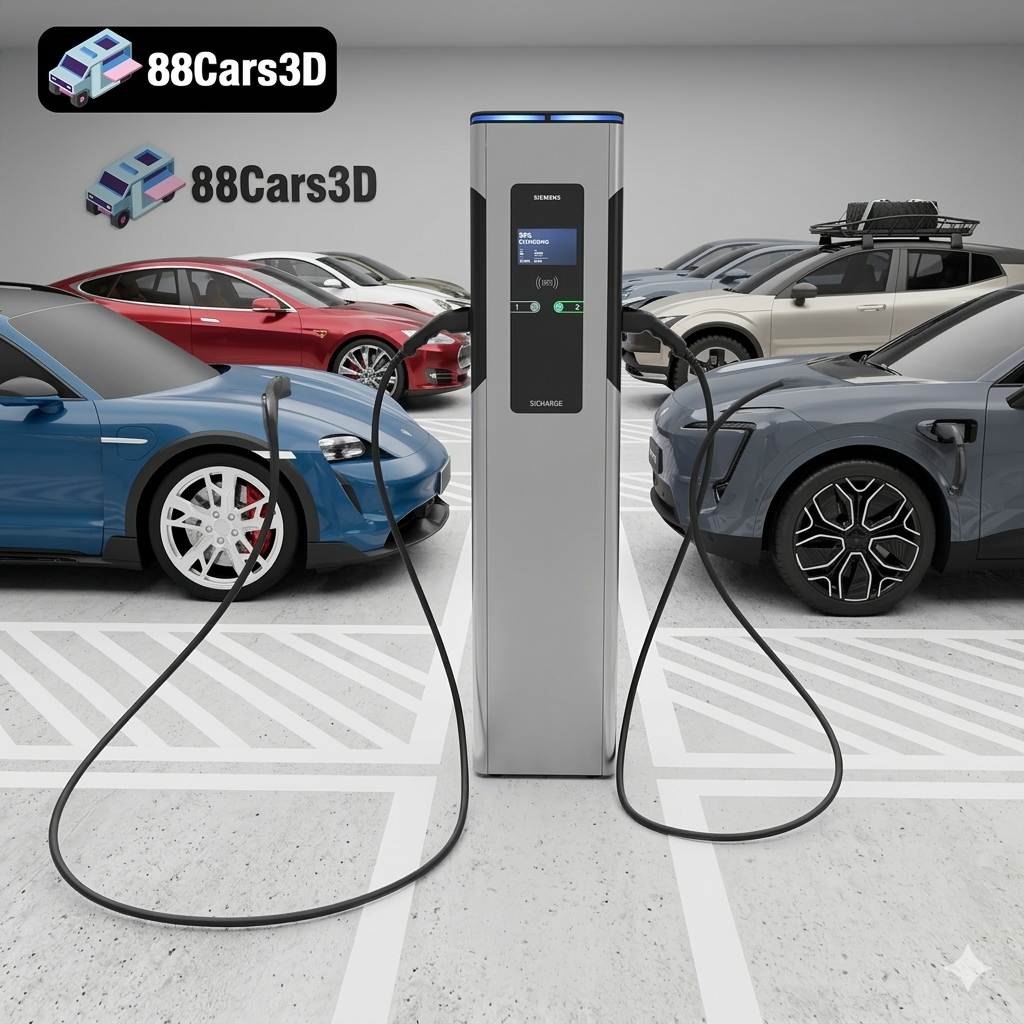
The Future of Mobility: Smart City EV 3D Models Bundle (5-in-1 Pack) Volvo Tesla AVATR Porsche 3D Printable STL
Download the Future of Mobility EV 3D Models Bundle. Includes the Volvo EX30, Tesla Model S, AVATR 11, Porsche Taycan, and a Siemens EV Charger. Save big on this highly optimized 5-in-1 pack for ArchViz and game development!
Price: $89.99
