Get 20% OFF All Premium 3D & STL Models!

In the vibrant world of 3D visualization, automotive assets stand as some of the most sought-after and complex creations. From blockbuster game titles and high-fidelity product renders to immersive AR/VR experiences and detailed 3D prints, the demand for accurate, high-quality 3D car models is ever-growing. These digital replicas are more than just polygons; they are canvases for creative expression, technical marvels, and indispensable tools for professionals across diverse industries.
Creating a truly photorealistic 3D car model involves a meticulous blend of artistic skill and technical precision. Every curve, every reflection, every minute detail must be captured to convey the essence of the real-world vehicle. Beyond aesthetics, the model must be versatile, capable of performing flawlessly in various software environments and production pipelines. This demands clean topology, proper UV mapping, accurate real-world scaling, and optimized asset structure for both high-resolution rendering and real-time performance.
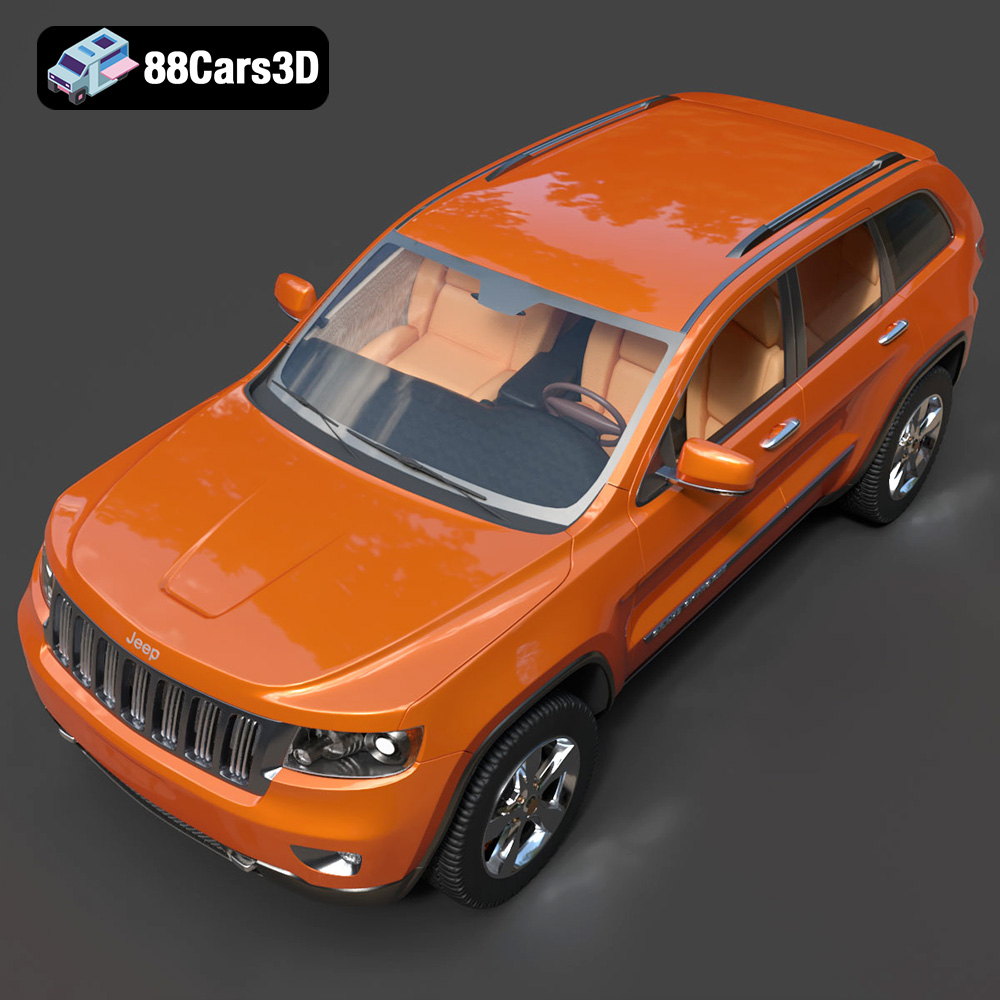
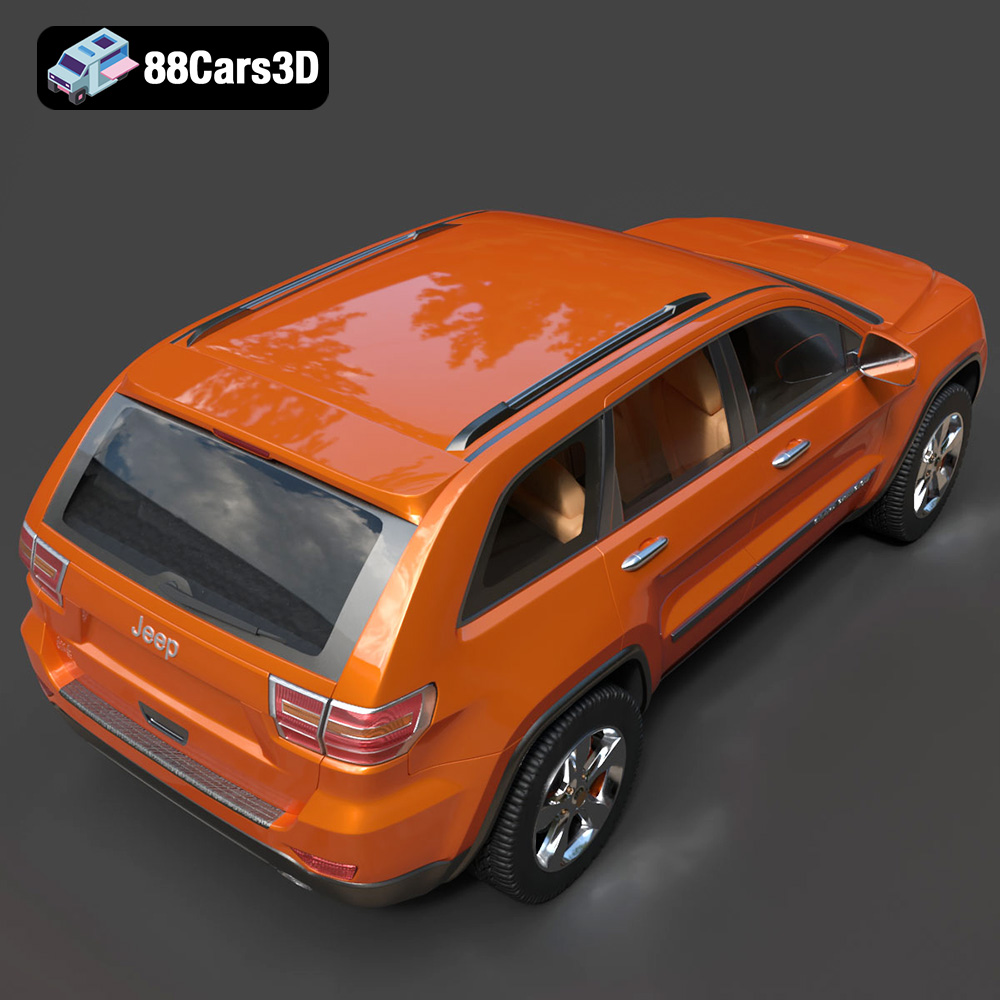
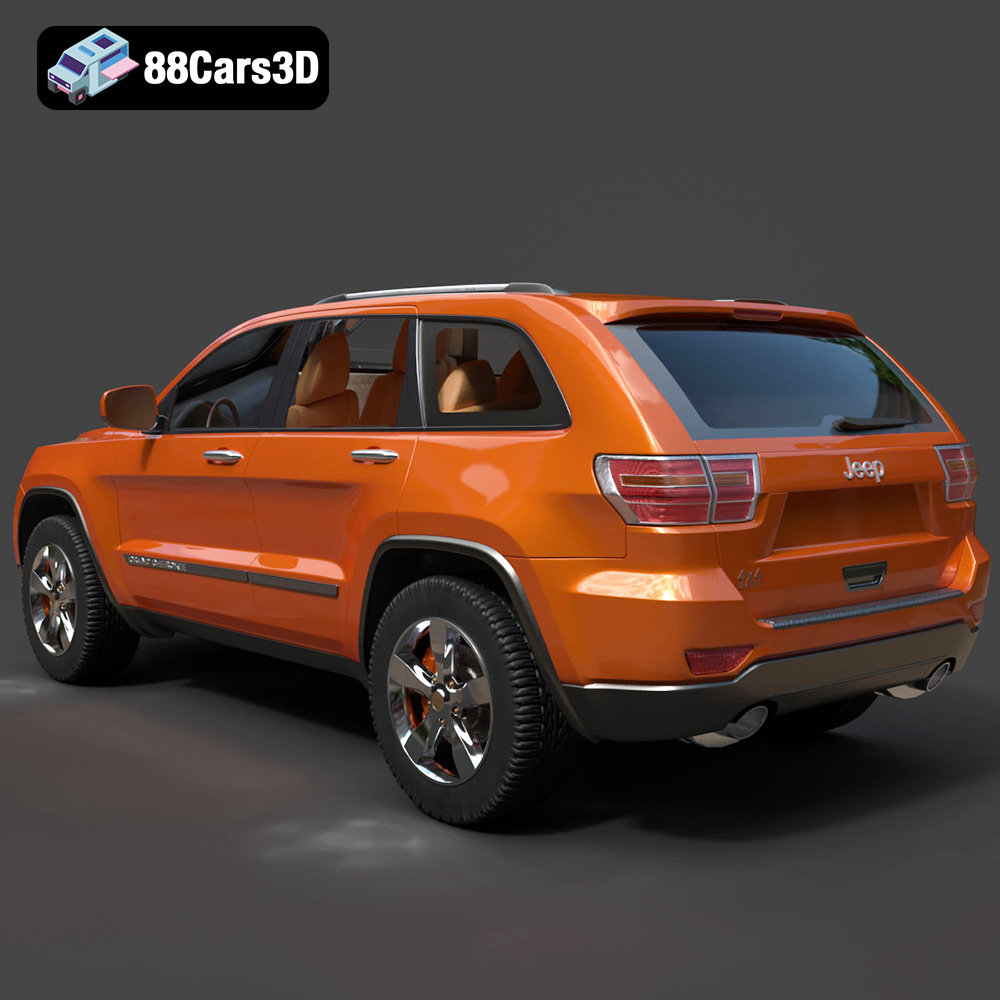
Today, we’re putting the spotlight on a prime example of such a versatile asset: the Jeep Grand Cherokee 2010 3D Model. This particular model, available on 88cars3d.com, encapsulates the rugged spirit and distinctive design of the WK generation, the final iteration known for its muscular stance and robust off-road capability. It’s a testament to how a well-crafted 3D asset can serve as the cornerstone for a multitude of projects, offering unparalleled detail for those who require a durable and recognizable SUV in their digital endeavors.
The choice of file format is a critical decision in any 3D workflow, dictating compatibility, feature support, and overall project efficiency. A comprehensive 3D car model, such as the Jeep Grand Cherokee 2010 available on 88cars3d.com, often comes with a variety of formats to ensure maximum usability across different software and pipelines. Understanding these formats is key to leveraging your assets effectively.
The .blend file is Blender’s native format and is ideal for users working within the Blender environment. When you download a .blend file for the Jeep Grand Cherokee 2010, you’re not just getting the mesh; you’re receiving a complete Blender scene. This typically includes all materials (often set up with advanced shader nodes), textures packed or referenced, lighting setups, camera positions, and any modifiers or animations applied. It’s a fully editable project, offering the most flexibility for those who want to dive deep into customization, tweak topology, adjust UVs, or render directly within Blender’s powerful Cycles or Eevee render engines.
Autodesk’s .fbx (FilmBox) format is a widely adopted standard for exchanging 3D data between different software applications. It’s particularly favored in game development (Unity, Unreal Engine), animation, and visual effects pipelines due to its robust support for geometry, hierarchies, transforms, animations, rigging, skinning, blend shapes, lights, and cameras. When integrating the Jeep Grand Cherokee 2010 into a larger project or a game engine, .fbx is often the go-to choice. It efficiently bundles complex scene data, allowing for a smooth transfer of the model’s structure and often its PBR (Physically Based Rendering) materials.
The Wavefront .obj format is revered for its universal compatibility. It’s a simpler format, primarily storing geometric data like vertices, normals, UV coordinates, and face definitions. While it doesn’t support animation or advanced scene data, it’s an excellent choice for static meshes or when you need to import geometry into almost any 3D software without compatibility headaches. .obj files often come accompanied by an .mtl (material template library) file, which defines basic material properties and references texture maps. For the Jeep Grand Cherokee 2010, the .obj version provides a clean, raw mesh that can be easily re-textured and re-shaded in your preferred renderer.
The .glb (GL Transmission Format Binary) is the binary version of glTF, a modern, royalty-free specification designed for efficient transmission and loading of 3D scenes and models by engines and applications. .glb is a single-file asset that bundles geometry, materials, textures, and animation data, making it incredibly optimized for web-based 3D, AR (Augmented Reality), and VR (Virtual Reality) applications. Its compact size and PBR metallic-roughness workflow support ensure consistent visual quality across various platforms, making it ideal for virtual showrooms or interactive web previews of the Jeep Grand Cherokee 2010.
The .stl (Stereolithography) format is the cornerstone of 3D printing. Unlike other formats that carry rich scene data, .stl files exclusively describe the surface geometry of a 3D object using a mesh of interconnected triangles. It contains no color, texture, or material information. The Jeep Grand Cherokee 2010 3D Model also comes in .stl format, specifically prepared for additive manufacturing. This means you can transform the digital SUV into a tangible scale model, making it a valuable asset for collectors, hobbyists, or prototyping.
The .ply (Polygon File Format) is another format focused on mesh data, often used for storing 3D data from 3D scanners. It’s more flexible than .obj and .stl in that it can store a variety of properties including color, transparency, normals, texture coordinates, and even confidence values for each vertex and face. This makes .ply a strong candidate for scientific visualization, CAD applications, or scenarios where precise geometric data with additional per-element properties is required. While less common for direct rendering, its inclusion ensures high-fidelity mesh analysis and manipulation capabilities for the Jeep Grand Cherokee 2010.
The .unreal format, or more accurately, an Unreal Engine-ready asset package, indicates that the model has been specifically prepared and optimized for seamless integration into Unreal Engine. This typically means the mesh has appropriate polygon counts and LODs (Levels of Detail), PBR materials are correctly set up within Unreal’s material editor, collision meshes are generated, and possibly even basic blueprint interactivity or vehicle physics are pre-configured. This engine-ready setup saves developers significant time and effort, allowing for immediate use of the Jeep Grand Cherokee 2010 in real-time simulations, games, or virtual production.
The .max file is Autodesk 3ds Max’s native project format. Similar to .blend, it contains the entire scene, including geometry, materials (often V-Ray or Corona setups), textures, lights, cameras, animations, modifiers, and rendering settings. For professionals primarily working with 3ds Max for architectural visualization, product rendering, or high-end animation, the .max file provides the most comprehensive and editable version of the Jeep Grand Cherokee 2010 3D Model, enabling complex lighting scenarios and advanced rendering techniques.
Achieving photorealistic results with 3D car models like the Jeep Grand Cherokee 2010 requires more than just a detailed mesh; it involves a sophisticated interplay of materials, lighting, and camera work. Professional automotive rendering workflows aim to replicate the nuances of real-world photography and physical properties.
The provided Jeep Grand Cherokee 2010 3D Model comes with pre-set materials, offering a strong starting point. However, customization is often key. Using PBR workflows in software like 3ds Max (with V-Ray or Corona) or Blender (with Cycles), artists can meticulously refine surfaces. This includes adjusting metallic, roughness, normal, and displacement maps for paint, glass, rubber, and chrome. For the body paint, layered materials simulating clear coat, base coat, and metallic flakes can elevate realism. The transparent materials for windows and lights are crucial, requiring accurate IOR (Index of Refraction) values and subtle imperfections to catch light authentically. The detailed alloy wheels and off-road tires benefit immensely from high-resolution texture maps that capture intricate tread patterns and subtle wear, ensuring the vehicle looks grounded and lived-in.
Lighting is paramount in automotive rendering. For studio shots, an HDRI (High Dynamic Range Image) environment combined with targeted area lights can simulate a controlled studio setup, highlighting the Jeep Grand Cherokee’s contours and reflections. Three-point lighting or a classic car photography setup (large softboxes) helps emphasize form. For outdoor scenes, a high-quality outdoor HDRI is essential, providing realistic ambient light and reflections. Integrating the model into a 3D environment with matching lighting, or using a backplate and dome light setup, ensures seamless blending. Consideration of time of day, weather conditions, and natural light sources (sun, sky) is critical to create compelling narratives around the vehicle, whether it’s navigating urban streets or rugged mountain trails.
Even the most perfect render benefits from post-production. In software like Photoshop or Fusion, artists can enhance the Jeep Grand Cherokee 2010 renders with color grading, contrast adjustments, lens effects (depth of field, chromatic aberration, glare), and atmospheric effects. Adding subtle environmental elements like dust, rain, or lens flares can significantly boost realism and emotional impact. Compositing rendered passes (diffuse, specular, reflection, normal, Z-depth) allows for granular control over every aspect of the final image, ensuring cinematic quality suitable for marketing visuals or high-end presentations.
The demands of real-time applications like game development are distinct from those of offline rendering. Performance is king, and assets like the Jeep Grand Cherokee 2010 3D Model must be meticulously optimized to maintain high frame rates without sacrificing visual fidelity.
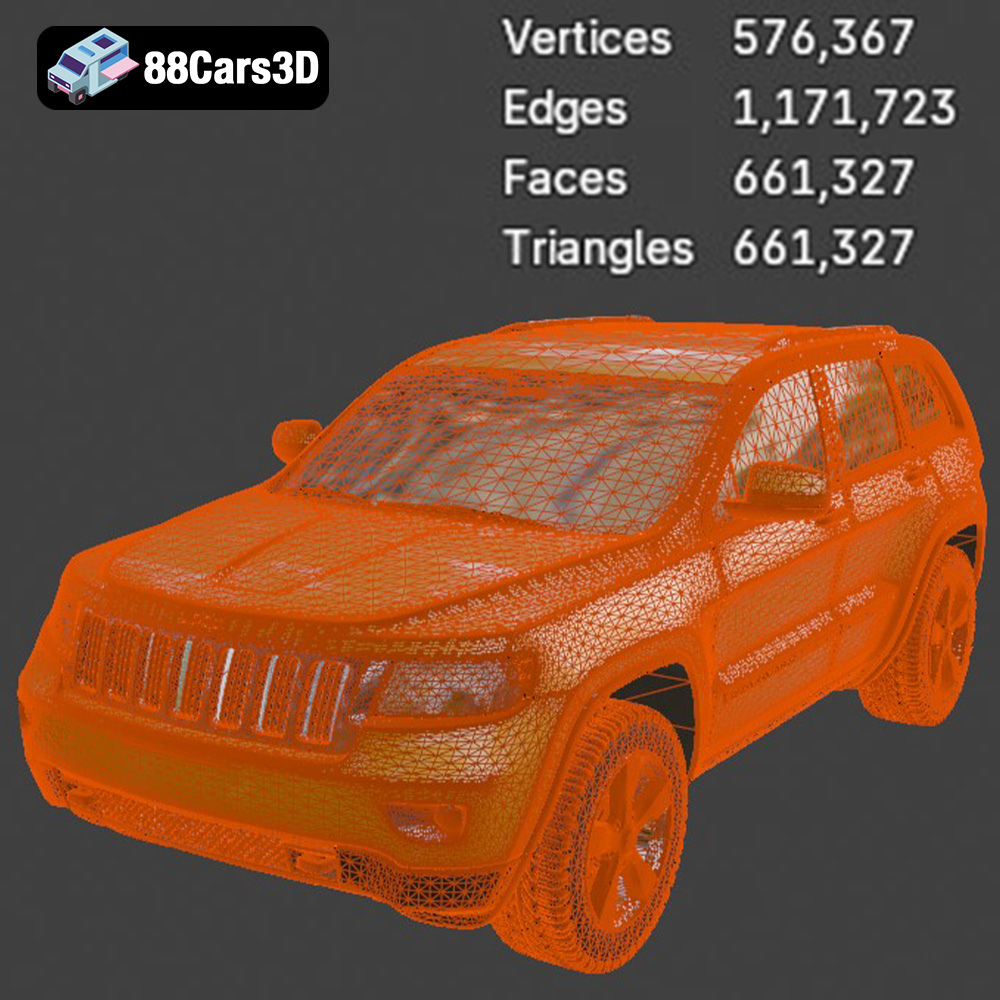
Game engines operate under strict polygon budgets. While the Jeep Grand Cherokee 2010 model boasts a balanced polygon count for realism and performance, further optimization is often necessary for large open-world games. This involves creating multiple Levels of Detail (LODs) for the model. LOD0 is the highest detail for close-ups, while LOD1, LOD2, and so on progressively reduce polygon count as the vehicle moves further from the camera. This dynamic swapping of meshes ensures that distant vehicles don’t consume unnecessary processing power, maintaining a smooth experience for off-road simulators or traffic environments. Efficient UV mapping and texture atlasing also reduce draw calls, further enhancing performance.
Leveraging the .fbx or .unreal format for integration into Unreal Engine simplifies the process. Once imported, PBR materials are set up within Unreal’s robust material editor, connecting textures (Albedo, Normal, Roughness, Metallic, Ambient Occlusion) to the appropriate nodes. Physics assets are created to define collision boundaries, crucial for realistic driving mechanics and interactions with the environment. The vehicle’s hierarchy, with separated components like doors, hood, tailgate, and wheels, allows for dynamic animations. Blueprints can then be used to create interactive elements – opening doors, functioning headlights, or even fully drivable vehicle systems, making the Jeep Grand Cherokee 2010 an active participant in your game world.
For a realistic driving experience, accurately configured physics and collision meshes are paramount. The Jeep Grand Cherokee 2010, designed with real-world scale and proper pivot setups, facilitates the implementation of realistic suspension, wheel rotation, and steering. Collision meshes, often simplified versions of the visual mesh, dictate how the vehicle interacts with terrain and other objects. Beyond basic movement, scripting interactive elements such as working lights, dashboard gauges, and custom vehicle sounds brings the model to life. These detailed technical advantages ensure the model is ready for serious simulation and interactive experiences, from driver training systems to immersive AR/VR applications.
While digital visualization offers immense flexibility, there’s a unique satisfaction in holding a physical representation of a digital asset. The inclusion of an STL-ready version of the Jeep Grand Cherokee 2010 3D Model opens up exciting avenues for collectors, hobbyists, and model makers.
The provided .stl format for the Jeep Grand Cherokee 2010 is ready for 3D printing. However, understanding the nuances of 3D printing is crucial for optimal results. The model should have manifold geometry, meaning no gaps, overlapping faces, or inverted normals, which is a standard for well-prepared .stl files. Before printing, users should inspect the model in their slicer software (e.g., Cura, PrusaSlicer, Chitubox) to ensure its integrity. Scaling is a key consideration, with recommended ratios like 1:32, 1:24, 1:18, or 1:12 allowing for varying levels of detail and print time. For smaller scales, resin printers (SLA/DLP) are often recommended to capture finer details like the signature grille and trim elements, while larger scales can be achieved with FDM printers.
The product description provides specific print settings to guide users. A layer height of 0.12–0.20 mm is suggested for FDM, balancing detail and print speed. For resin, even finer layers (e.g., 0.04-0.12mm) will yield exceptional detail. Wall thickness (2.0–3.5 mm for FDM, 1.2-2.0mm for resin) ensures structural integrity. Infill (20–35%) balances strength and material usage. Supports are almost always required for complex automotive models, especially for overhangs like mirrors, bumper overhangs, roof rails, and underbody sections. A “body upside-down” print orientation can significantly improve the finish of the hood and roof, reducing visible layer lines. Post-processing, including sanding, priming, and painting, is crucial for transforming a raw print into a collectible scale model. This allows for customized finishes, from classic factory colors to bespoke off-road schemes.
The beauty of 3D printing the Jeep Grand Cherokee 2010 is the potential for personalization. After printing, modelers can go beyond basic paint jobs, adding custom decals, weathering effects, or even miniature accessories like roof racks, light bars, or winches. Since components like wheels are separated, they can be printed in different materials or painted with specific tire and rim finishes before assembly. This capability turns a digital asset into a physical project, offering endless opportunities for creating unique automotive collectibles or prototypes for display.
The value of a high-quality 3D car model like the Jeep Grand Cherokee 2010 extends far beyond a single use case. Its technical advantages and detailed construction make it indispensable across a spectrum of professional applications.
In the competitive automotive industry, compelling visuals are critical. Manufacturers and marketers frequently utilize 3D car models for product launches, advertisements, and showroom experiences. The Jeep Grand Cherokee 2010 can be rendered in stunning photorealism for brochures, websites, and television commercials, showcasing its rugged appeal and design features without the need for expensive physical photography shoots. Imagine a dynamic render depicting the SUV tackling a snowy mountain pass, or a pristine studio shot highlighting its interior comforts – all generated digitally. This level of visualization allows for rapid iteration of colors, trims, and environments, saving significant time and resources compared to traditional methods.
Augmented Reality (AR) and Virtual Reality (VR) are transforming how consumers interact with products. With the .glb and .unreal formats, the Jeep Grand Cherokee 2010 3D Model is perfectly suited for immersive AR/VR applications. Virtual showrooms can allow potential buyers to “walk around” the vehicle, explore its interior, and customize options in a virtual space. An AR application could project the Jeep onto a user’s driveway, letting them visualize its size and presence in their real-world environment. These interactive experiences provide unparalleled engagement, enabling a deeper connection between the product and the audience.
Beyond entertainment and marketing, 3D car models play a crucial role in simulation and training. The accurate real-world scale and detailed technical features of the Jeep Grand Cherokee 2010 make it ideal for driver training systems, simulating various terrains and driving conditions in a safe, controlled virtual environment. For engineering and design, it can serve as a digital prototype, allowing for visualization and analysis of modifications or integration into larger vehicle systems before any physical components are manufactured. From urban planning simulations involving traffic flow to military training scenarios for off-road navigation, the model provides a robust and reliable digital asset.
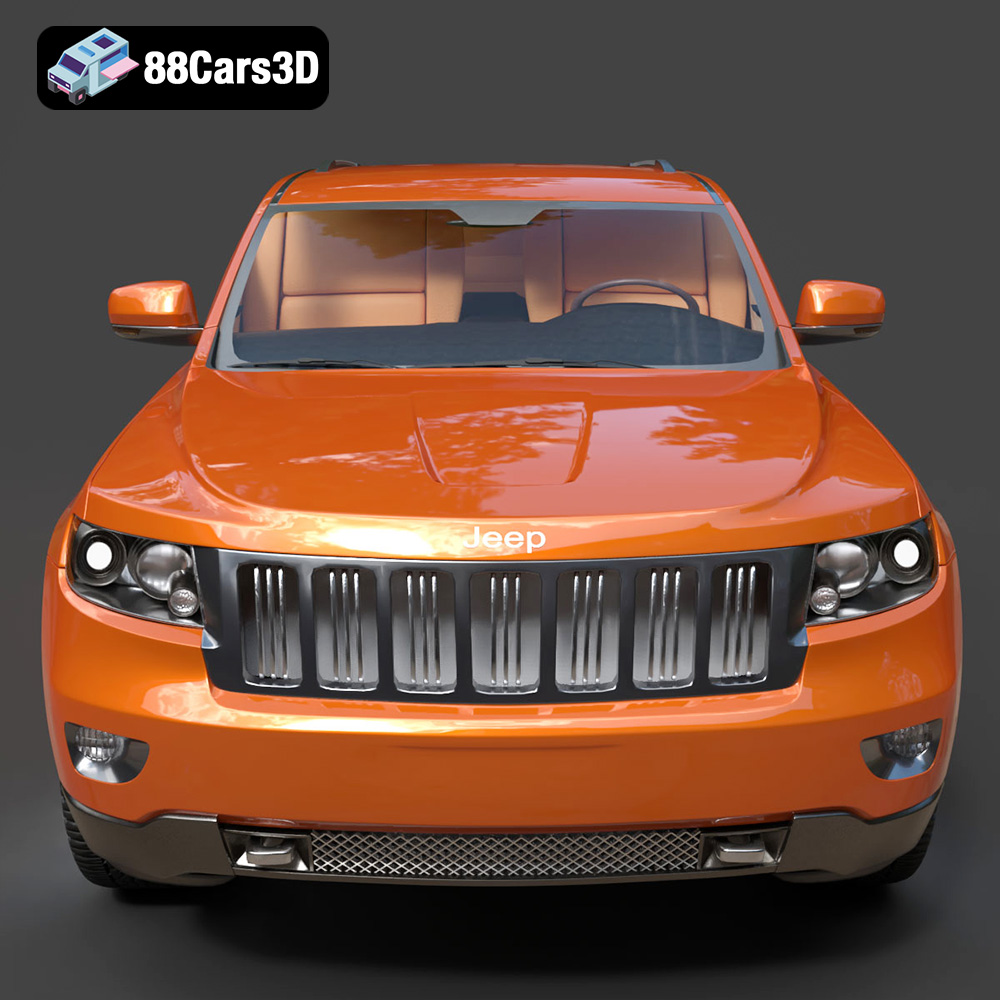
The world of 3D modeling continues to evolve, pushing the boundaries of realism and interactivity. At the heart of this evolution lies the meticulous craftsmanship of digital assets such as the Jeep Grand Cherokee 2010 3D Model. Its comprehensive detailing, from the signature seven-slot grille to the fully modeled interior, alongside its availability in a wide array of industry-standard file formats, positions it as an invaluable resource for professionals and enthusiasts alike.
Whether your goal is to produce breathtaking automotive renders, develop immersive game environments, craft interactive AR/VR experiences, contribute to critical simulations, or even bring a physical scale model to life through 3D printing, this model offers the versatility and technical quality required. It exemplifies the type of high-fidelity 3D car models that empower creators to push their digital projects to new heights.
By understanding the nuances of file formats, mastering rendering and game optimization techniques, and exploring the potential of physical fabrication, artists and developers can unlock the full power of assets like the Jeep Grand Cherokee 2010. For those seeking to elevate their projects with exceptional 3D vehicles, exploring the curated selection at 88cars3d.com is a definitive step toward achieving unparalleled digital realism and functional excellence.
A highly detailed and accurately scaled digital recreation of the rugged Jeep Grand Cherokee 2010. This model precisely captures the signature seven-slot grille, bold headlamps, and classic SUV proportions, built with clean topology and real-world scaling. Ideal for rendering, animation, visualization, simulation, AR/VR, game development, and 3D printing, it includes .blend, .fbx, .obj, .glb, .stl, .ply, .unreal, and .max formats for versatile use across professional workflows.
$44
.4x4vehicle
.arvr
.blend
.car3dmodel
.fbx
.gameasset
.glb
.grandcherokee2010
.jeep
.max
.obj
.offroadsuv
.ply
.rendering
.simulation
.stl
.suv3dmodel
.unreal
.vehicle3D
.wkseries