Get 50% OFF All Premium 3D & STL Models!

In the rapidly evolving landscape of digital content creation, the demand for high-quality 3D assets is insatiable. From breathtaking cinematic renders to immersive real-time game environments and even tangible 3D printed collectibles, the foundation of excellence lies in meticulously crafted 3D models. For automotive enthusiasts and professionals alike, a car is more than just transportation; it’s a statement of design, engineering, and aspiration. Recreating this essence in a digital format requires an unparalleled attention to detail and a deep understanding of geometry, materials, and real-world physics.
This pursuit of digital perfection is where specialized assets truly shine. Imagine bringing the robust, modern aesthetic of a compact crossover to life in your next project. The Chery Tiggo 4 RU-Spec 2019 3D Model exemplifies this commitment to detail, offering a versatile foundation for a myriad of applications. Whether you’re an automotive designer seeking a realistic prototype, a game developer populating an urban environment, or an architect envisioning street scenes, models like the Chery Tiggo 4 provide the essential building blocks for captivating visuals and interactive experiences.
When acquiring a premium 3D model, understanding the various file formats available is paramount. Each format is designed with specific strengths, catering to different software ecosystems, project requirements, and output destinations. The Chery Tiggo 4 RU-Spec 2019 3D Model, for instance, comes equipped with a comprehensive suite of formats, ensuring maximum compatibility and utility across diverse professional pipelines. Let’s delve into the technical nuances of these essential file types.
The .blend format is Blender’s native file type, offering a complete and fully editable scene. When you receive a .blend file, it typically includes not just the mesh data, but also materials, textures, lighting, cameras, animation data, and even physics simulations if they were set up. This makes it ideal for Blender users who want to dive deep into the model, make extensive modifications, re-texture, rig, animate, or render directly within Blender’s powerful environment. It preserves all the intricate details of the model’s construction, ensuring that the artist can leverage every aspect of the original creation.
.fbx (Filmbox) is arguably the most widely adopted interchange format in the 3D industry. Developed by Autodesk, it’s a robust format for transferring 3D data between different software applications like 3ds Max, Maya, Blender, Cinema 4D, and most importantly, game engines like Unreal Engine and Unity. An .fbx file can encapsulate a vast array of data, including mesh geometry (vertices, faces, normals, UVs), materials (sometimes with texture paths), skeletal animations, blend shapes, and camera/light data. For projects involving real-time applications or cross-software collaboration, .fbx is often the go-to choice due to its excellent support for animation and skeletal data, making it perfect for integrating the Chery Tiggo 4 into a driving simulation or a cinematic sequence.
The .obj (Wavefront Object) format is a universal standard for storing 3D geometry. It’s a simpler format compared to .fbx, primarily focusing on mesh data, including vertices, UV coordinates, normals, and polygonal faces. It can also reference external material files (.mtl) for basic material properties and texture maps. While it lacks support for animation or advanced scene data, its widespread compatibility makes it an excellent choice for straightforward mesh transfer between virtually any 3D software. If you primarily need the raw geometry of the Chery Tiggo 4 for sculpting, retopology, or simply importing into a new rendering engine, .obj provides a clean, universally readable foundation.
.glb (GL Transmission Format Binary) is the binary version of .gltf, an open-standard format designed for efficient transmission and loading of 3D scenes and models by engines and applications. It’s particularly optimized for augmented reality (AR), virtual reality (VR), and web-based 3D viewers. A .glb file packages all necessary data—geometry, materials, textures, animations—into a single, self-contained file, making it incredibly easy to deploy. For interactive showrooms featuring the Chery Tiggo 4 in a web browser or a mobile AR experience, .glb offers superior performance and integration.
The .stl (STereoLithography) format is the industry standard for 3D printing. It represents 3D surfaces as a collection of unconnected triangles, essentially defining the outer shell of a 3D object. While it carries no color or texture information, its simplicity and ubiquity make it indispensable for additive manufacturing. The Chery Tiggo 4 model, being provided in .stl, means it is directly ready for slicing software, allowing users to transform the digital design into a physical scale model. The meticulous detailing in the digital model translates directly into the intricate features of the physical print, assuming proper print settings are applied.
.ply (Polygon File Format) is another common format for storing 3D data, particularly useful for scanned data, CAD applications, and scientific visualization. It’s known for its ability to store information beyond just geometry, such as color per vertex, normal vectors, and even transparency. While less common for everyday artistic exchange than .fbx or .obj, it offers a robust solution for precision mesh data, useful for analyzing the Chery Tiggo 4’s geometry or integrating it into more technical design or engineering software.
The inclusion of an .unreal file (or an Unreal Engine-optimized .fbx with a specific structure) signifies that the model is specifically prepared for integration into Epic Games’ Unreal Engine. This often means optimized polycount, correct material setup (often with PBR textures), collision meshes, and proper scaling, minimizing the setup time for game developers. Having the Chery Tiggo 4 in this format allows for immediate drag-and-drop implementation into an Unreal Engine project, ready for real-time rendering, simulations, or interactive experiences.
Similar to .blend for Blender, the .max format is the native file type for Autodesk 3ds Max, a leading software for 3D modeling, animation, and rendering. A .max file contains the complete scene data, including geometry, materials (often V-Ray, Corona, or Arnold specific), lighting, cameras, modifiers, and animation. For professionals primarily working in 3ds Max, this format provides full editability and access to the original scene setup, making it easy to integrate the Chery Tiggo 4 into complex architectural visualizations or high-end automotive rendering projects.
The provision of these diverse formats for the Chery Tiggo 4 RU-Spec 2019 3D Model underscores its versatility, ensuring that professionals can seamlessly integrate it into virtually any workflow, maximizing their creative potential.
Automotive visualization is a specialized field demanding extreme precision and artistic sensibility. A high-quality 3D car model is the linchpin of this discipline, enabling designers, marketers, and animators to showcase vehicles with photorealistic accuracy. The Chery Tiggo 4 RU-Spec 2019 3D Model provides an excellent example of the level of detail required for such demanding applications.
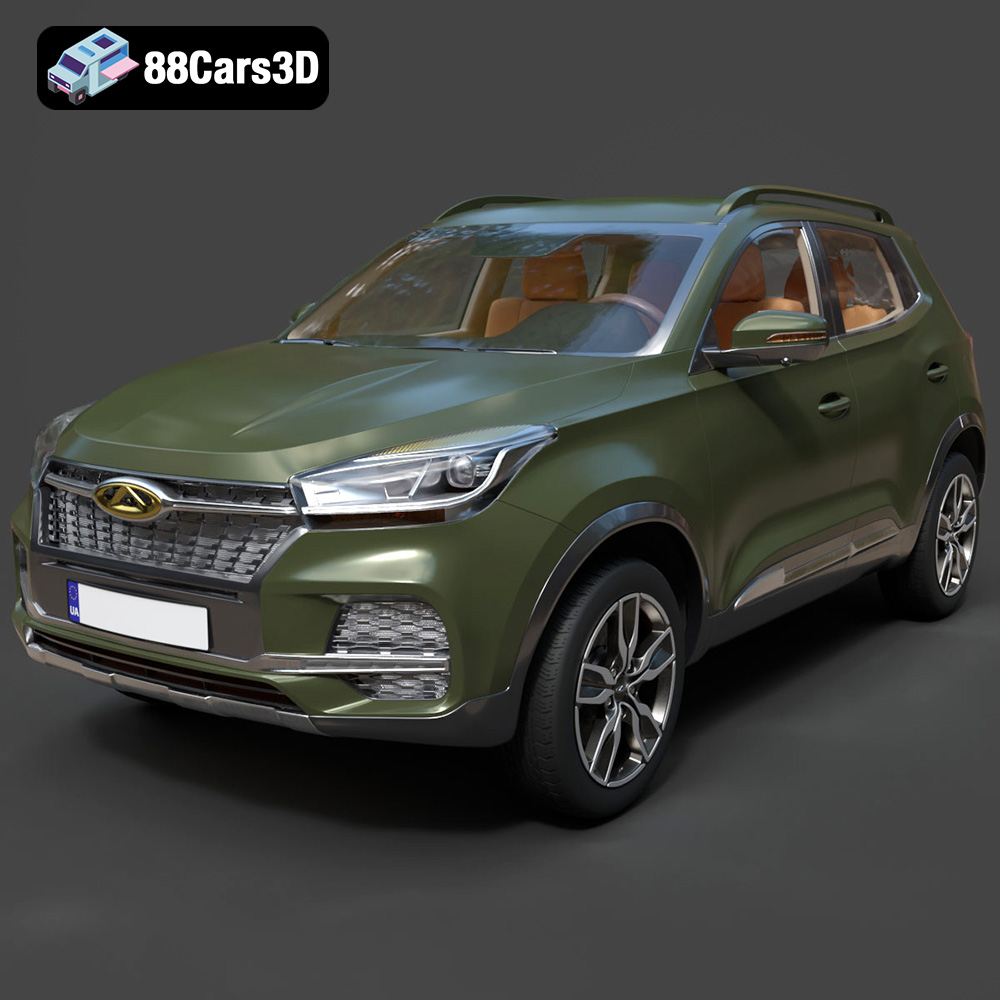
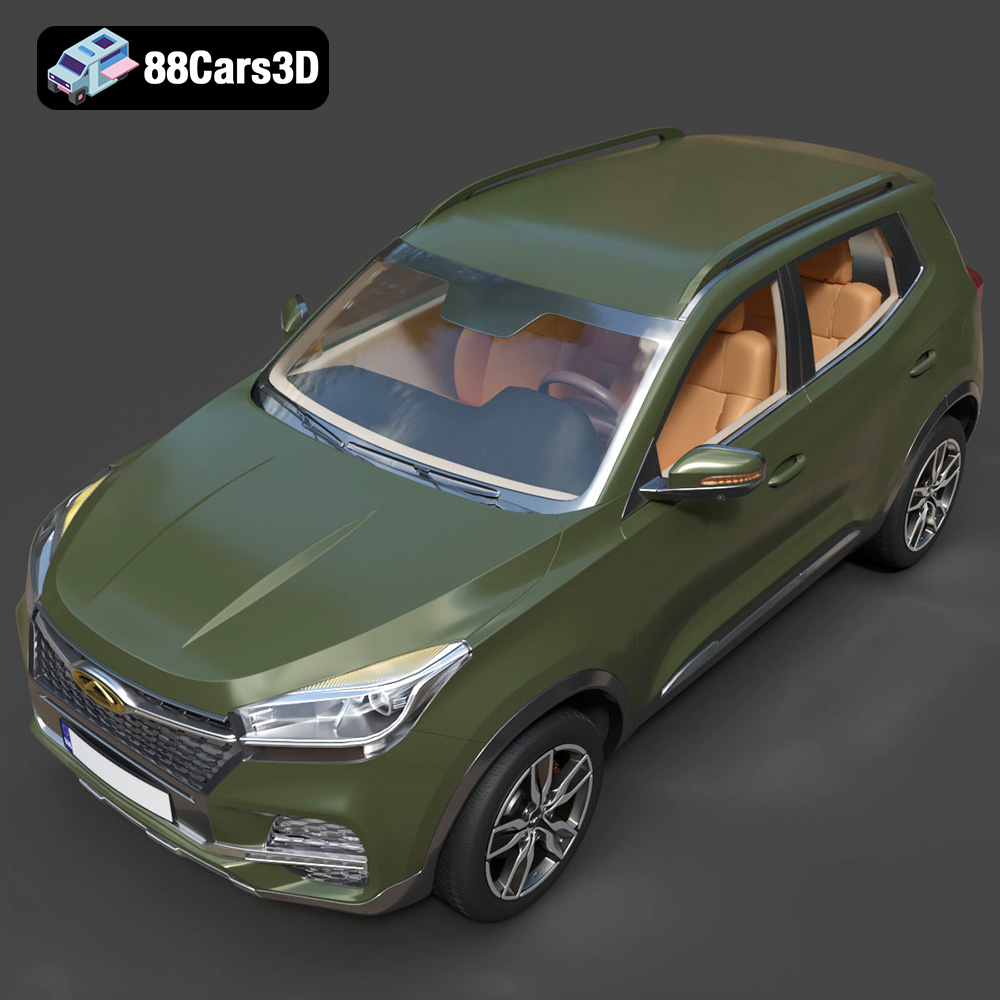
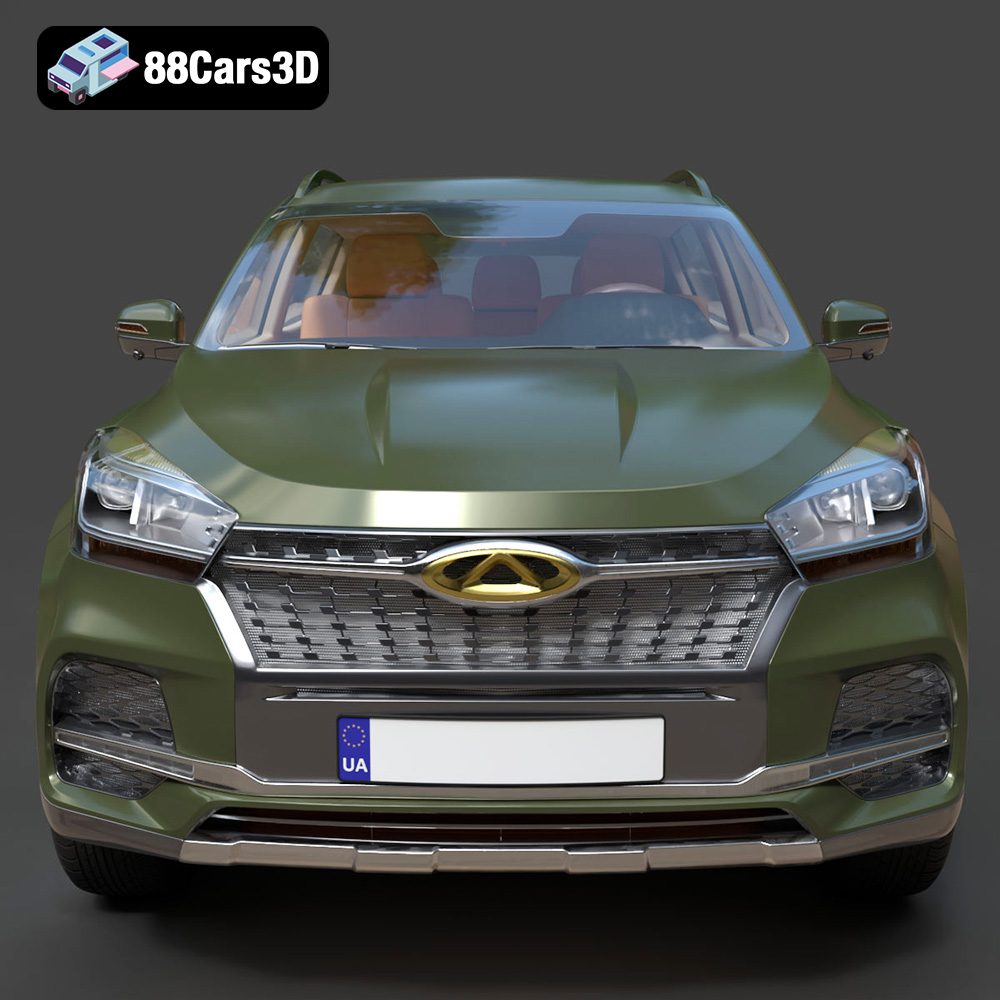
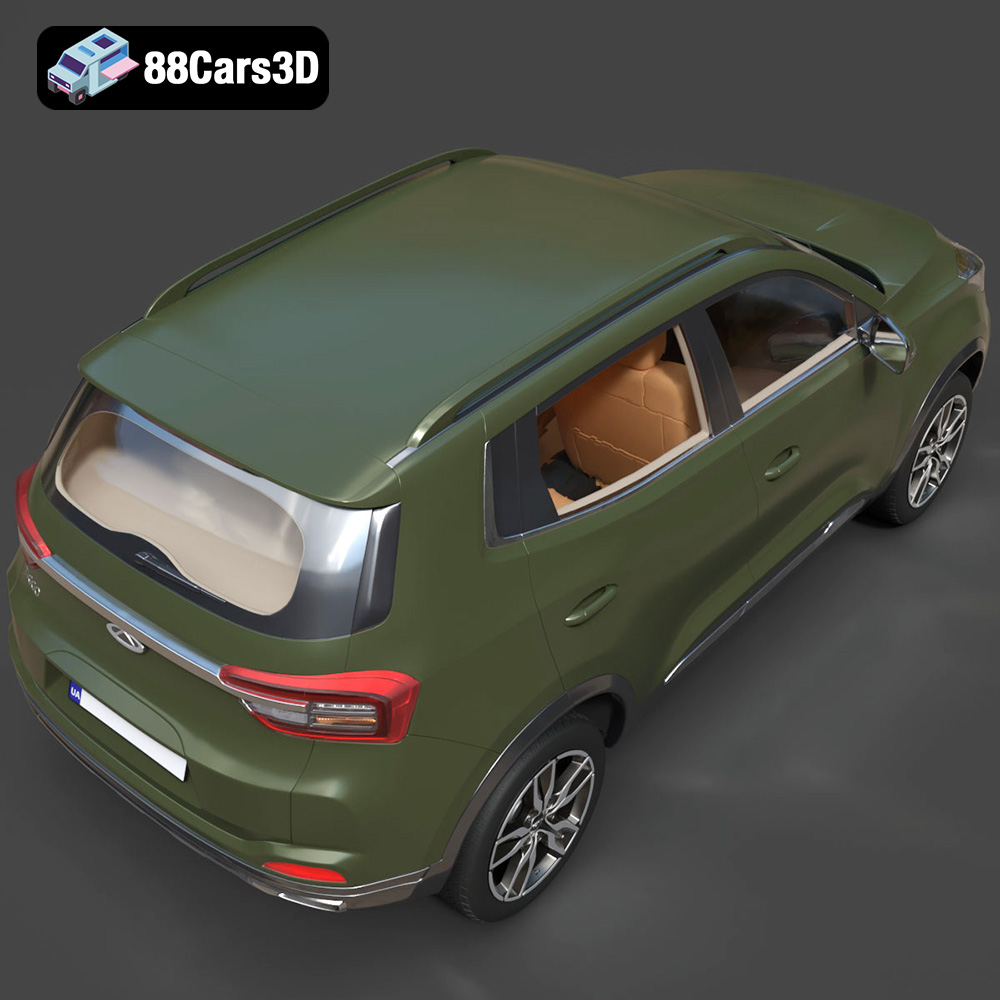
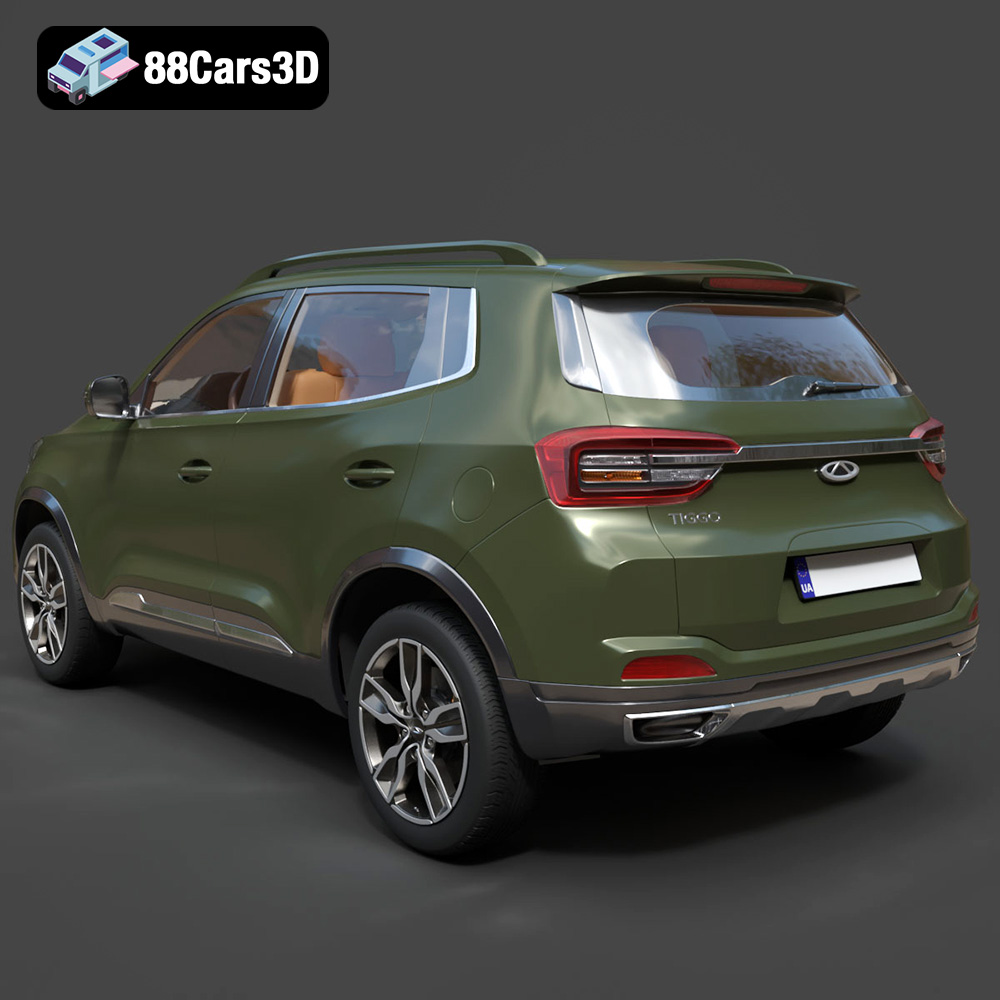
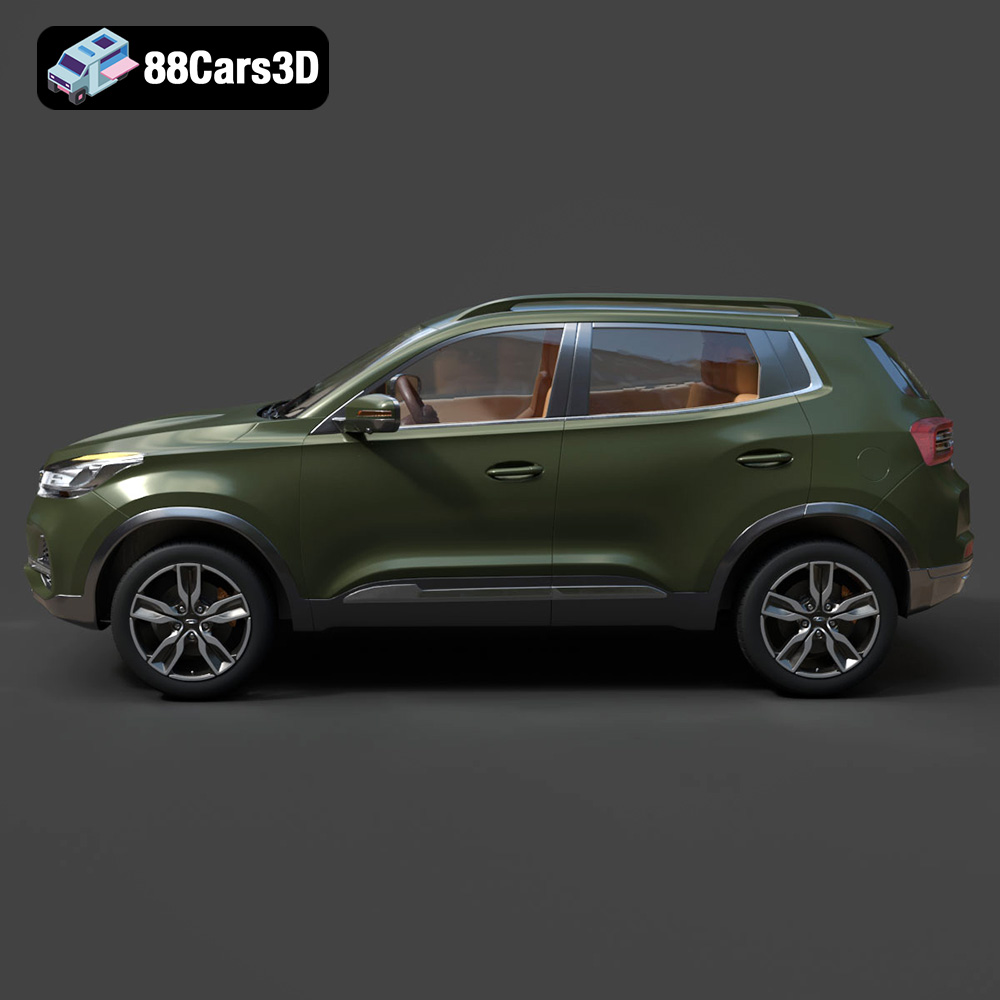
The exterior of any car is its most recognizable feature, and replicating it digitally requires meticulous attention to every curve, panel gap, and component. The Chery Tiggo 4 model accurately captures the 2019 RU-specification compact crossover proportions, from its bold matrix front grille to its rugged plastic lower body cladding and wheel arch trim. Critical elements like detailed headlight and taillight assemblies, complete with LED signatures, are not just flat textures but carefully modeled geometry that interacts correctly with light. The five-door layout, functional roof rails, and realistic alloy wheel designs further enhance its authenticity. This level of detail ensures that whether rendered in a studio setup or a dynamic urban environment, the vehicle maintains its distinctive character and visual integrity.
While often overlooked in quick renders, a detailed interior is crucial for immersive experiences, especially in AR/VR, close-up presentations, or driver’s-eye view simulations. The Chery Tiggo 4 model features a practical five-seat cabin layout with a modern dashboard design, central infotainment screen geometry, and a detailed center console. Sculpted seating geometry with accurate stitching seams and a multi-function steering wheel are all designed for close-up rendering. Such optimized interior geometry allows for dynamic camera movements and interactive explorations, making the model valuable for virtual showrooms or even training simulations where internal controls are important.
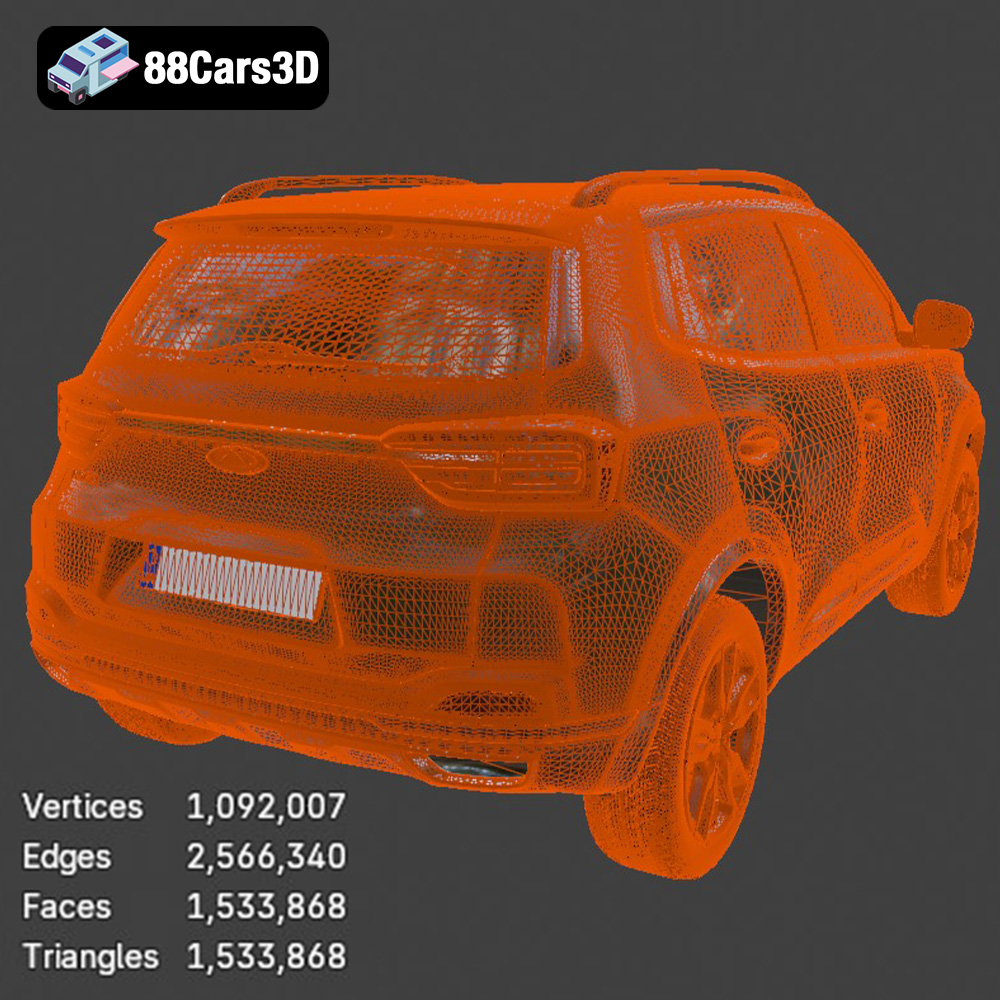
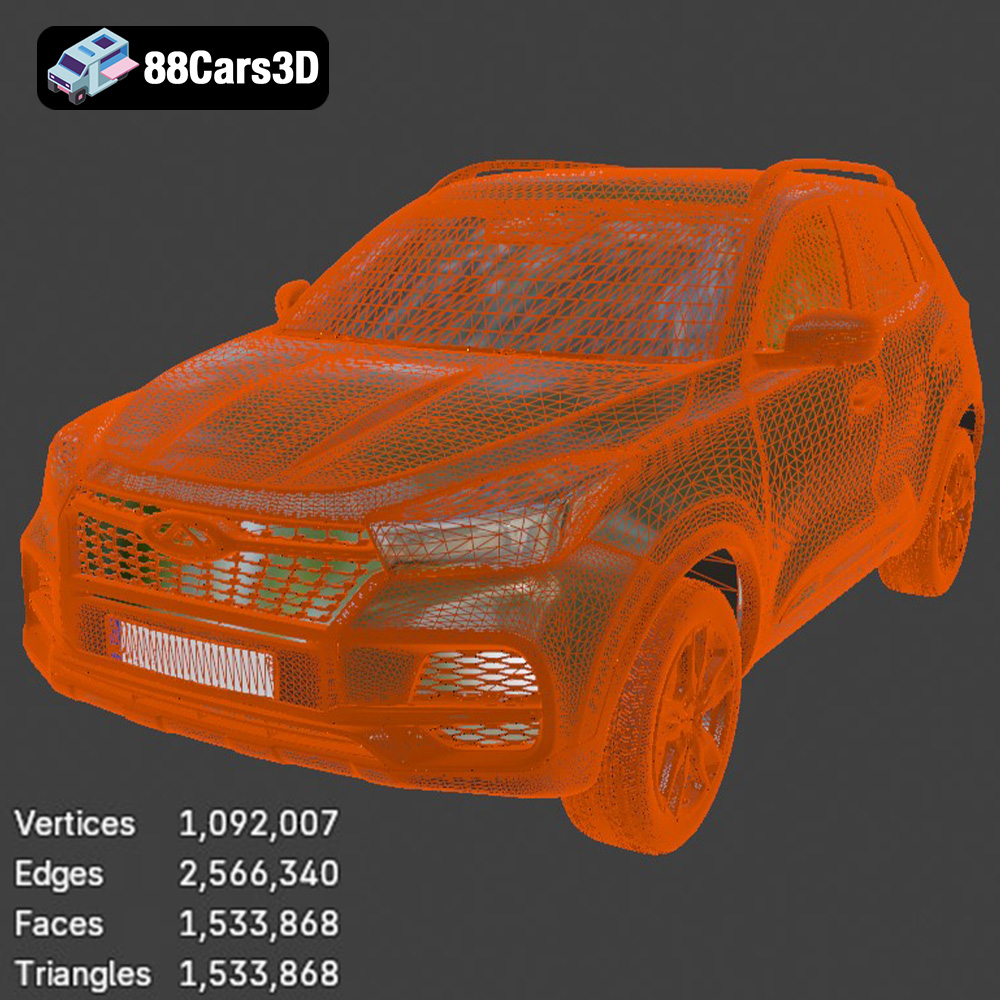
The “high-detail” claim isn’t just aesthetic; it’s backed by robust technical specifications. With 1,245,600 vertices, 2,480,200 edges, and 1,350,400 faces/polygons (or triangles), the Chery Tiggo 4 model boasts a dense, well-organized mesh structure. This high polycount allows for smooth curves, sharp edges, and intricate details without relying solely on normal maps, leading to superior quality for high-resolution commercial visualization. Crucially, a premium model like this comes with real-world scale accuracy and proper pivot setups for crucial components like wheels, brake calipers, steering, and door hinges. This is vital for animation and accurate physical simulations. Furthermore, for modern rendering, models are typically prepared for Physically Based Rendering (PBR) workflows, meaning materials are designed to react to light in a physically accurate way, leading to incredibly realistic results whether using V-Ray, Corona Renderer, Arnold, or real-time engines.
A high-quality 3D car model is a powerful asset, but its true value is realized through seamless integration into various professional pipelines. The Chery Tiggo 4 RU-Spec 2019 3D Model is engineered for compatibility, making it a versatile choice for artists and developers working across different software and engines.
For professionals leveraging Autodesk 3ds Max, the included .max file for the Chery Tiggo 4 is a game-changer. It provides the model in its native environment, preserving all modifiers, material assignments, and scene organization. Artists can easily integrate the vehicle into architectural visualizations, product showcases, or marketing animations. The proper pivot setup for individual components like wheels and doors simplifies animation, allowing for realistic driving sequences, car-door opening demonstrations, or dynamic camera tours around and through the vehicle. Combined with rendering engines like V-Ray or Corona, 3ds Max users can achieve photorealistic results, showcasing the Chery Tiggo 4 in a variety of lighting conditions and environments.
Blender users benefit immensely from the native .blend file. This grants full access to the model’s underlying geometry, materials, and potential rigging. Indie developers and studios can swiftly integrate the Chery Tiggo 4 into their Blender projects, whether for concept visualization, animation, or even as a base for custom modifications. Blender’s powerful Cycles and Eevee renderers can then be used to produce stunning visuals, from stylized renders to physically accurate photorealism, directly from the provided asset. The editable nature of the .blend file allows artists to experiment with different textures, lighting setups, and even alter the car’s components to fit unique project requirements.
Game developers and those working on interactive experiences demand models optimized for real-time performance. The .fbx and specifically the .unreal optimized files for the Chery Tiggo 4 are tailored for this. For Unreal Engine, the model can be directly imported, often with pre-configured materials and collision meshes, significantly reducing setup time. In Unity, the .fbx format is equally effective, allowing for quick integration into scenes. While the model is high-poly, its organized mesh structure means it can be efficiently decimated or retopologized for specific performance targets without losing its core visual integrity. This makes it suitable for modern open-world games as a detailed traffic vehicle or a hero car, and perfect for immersive AR/VR applications like virtual car dealerships or interactive simulations where responsiveness is key.
The utility of a high-quality 3D car model extends far beyond static images and animations. Modern digital pipelines leverage these assets for dynamic, interactive, and even tangible experiences, with the Chery Tiggo 4 RU-Spec 2019 3D Model demonstrating remarkable versatility.
In game development, the Chery Tiggo 4 serves as an excellent foundation for vehicle assets. While its high-poly count (over 1.3 million polygons) provides exceptional fidelity for close-up views and cinematic sequences, it can be efficiently optimized for real-time performance. Techniques like retopology, baking normal maps from the high-poly mesh onto a lower-poly version, and LOD (Level of Detail) implementation ensure that the vehicle performs smoothly across various hardware configurations. This allows the Chery Tiggo 4 to function as a detailed player vehicle, a realistic AI traffic car in an open-world setting, or a prop in an interactive urban environment. For AR/VR, the .glb format becomes invaluable, offering a streamlined, optimized package for interactive virtual car dealerships or immersive simulations, allowing users to explore the model from any angle, open doors, or even customize colors in real-time, all with minimal latency.
One of the most exciting applications for 3D models today is 3D printing, bridging the gap between digital design and physical reality. The inclusion of the .stl file for the Chery Tiggo 4 RU-Spec 2019 3D Model specifically caters to this. This manifold geometry ensures that the model is watertight and ready for slicing software. Users can translate the detailed digital recreation into a tangible scale model, perfect for automotive enthusiasts, collectors, or even as a physical prototype for design reviews. The recommended print settings – scales of 1:32, 1:24, or 1:18, layer heights (0.08–0.16 mm), wall thickness (1.2–2.0 mm), infill (15–25%), and essential supports for delicate parts like side mirrors and roof rails – guide users to achieve optimal results. Post-processing steps like sanding, priming, and applying a realistic automotive paint finish can transform the raw print into a stunning miniature replica. This capability opens up new avenues for product display and collectible creation.
Consider a major automotive marketing campaign. Instead of expensive physical photo shoots in multiple locations, high-fidelity 3D models like the Chery Tiggo 4 can be rendered into countless virtual scenes, saving significant time and budget. For urban planners, populating a digital city model with accurate 3D vehicles helps visualize traffic flow and infrastructure impact more realistically. In educational simulations, a detailed vehicle model provides an accurate representation for driver training or safety analysis. These real-world applications underscore the critical role that meticulously crafted 3D car models play in driving innovation and efficiency across various industries.
Investing in a premium 3D model is about more than just getting a static mesh; it’s about acquiring a flexible asset that can evolve with your project needs. The Chery Tiggo 4 RU-Spec 2019 3D Model is designed with customization in mind, ensuring it remains a valuable tool across multiple iterations and future projects.
The detailed technical specifications and file formats provided offer immense scope for customization. Users can effortlessly change the exterior color to any of the typical factory options like Ruby Red, Quartz White, Cosmic Silver, or Metallic Black, or even experiment with custom hues to match specific branding. Modifying wheel designs and finishes, adjusting interior materials to represent fabric or leather, and configuring door presentations (open or closed) are all straightforward operations with a well-organized model. Furthermore, adapting the lighting setup for different environments – be it a pristine studio render or a gritty urban street scene – allows for endless creative possibilities without needing to re-model the entire vehicle. This adaptability is critical for projects that require a unique visual identity while maintaining the base model’s integrity.
The true value of purchasing high-quality 3D car models from reputable marketplaces like 88cars3d.com lies in the significant time and cost savings. Instead of spending hundreds of hours modeling a complex vehicle from scratch, artists and studios can instantly access a production-ready asset. The included formats and detailed mesh ensure compatibility and ease of use, reducing friction in project workflows. Moreover, the emphasis on real-world scale and accurate proportions means less time spent on adjustments and corrections. This kind of investment streamlines production, allows teams to focus on creative direction rather than foundational asset creation, and ultimately leads to superior final results across automotive rendering, game assets, and various visualization projects. 88cars3d.com specializes in providing these reliable, high-fidelity assets, empowering creators to bring their visions to life with confidence.
The landscape of digital creation demands assets that are not only visually stunning but also technically robust and highly adaptable. The Chery Tiggo 4 RU-Spec 2019 3D Model stands as a prime example of a premium 3D car model that meets these stringent requirements. From its meticulously recreated exterior and interior details to its high-poly, well-organized mesh, and comprehensive suite of file formats, it provides an invaluable resource for professionals across various industries.
Whether your project calls for photorealistic automotive rendering, integration into dynamic game assets for Unreal Engine or Unity, immersive AR/VR experiences, or even the tangible output of 3D printing, this model offers the foundation for success. Understanding the nuances of each included file format – from the editable .blend and .max to the universal .fbx and .obj, and the specialized .glb, .stl, and .ply – empowers artists and developers to harness the model’s full potential. By leveraging high-quality assets like the Chery Tiggo 4 from trusted sources such as 88cars3d.com, creators can elevate their projects, save valuable development time, and deliver captivating digital experiences that resonate with audiences worldwide.
Embrace the power of precision and versatility; let high-fidelity 3D models drive your creative ambitions forward.
The Chery Tiggo 4 RU-Spec 2019 3D Model is a high-detail digital recreation of the popular compact crossover SUV tailored for the Russian market. Designed as a versatile and practical urban vehicle, the Tiggo 4 features a bold front fascia, rugged lower body cladding, elevated ground clearance, and a modern, dynamic silhouette that reflects Chery’s contemporary SUV design language. This 3D model accurately represents the robust exterior proportions, striking matrix grille, detailed headlight clusters with LED DRLs, functional roof rails, five-door layout, and distinct alloy wheels. Built with dense, high-polygon topology for premium visual fidelity and real-world scale accuracy, it is ideal for close-up rendering, automotive visualization, animation, game development, and AR/VR showroom showcases. Perfect for urban environment scenes, commercial automotive presentations, practical vehicle simulations, and architectural visualizations.
$49.99
.automotive
.blend
.fbx
.obj
.rendering
.stl
2019-suv
3d printing
car-3d-model
chery
compact-crossover
game asset
high poly
ru-spec
tiggo-4
urban-suv
vehicle-design
VR/AR