Get 50% OFF All Premium 3D & STL Models!

In the vast and dynamic world of 3D design, the ability to accurately and beautifully represent complex objects is paramount. From blockbuster cinematic sequences to hyper-realistic game environments and precision engineering simulations, the demand for high-quality 3D assets continues to surge. Among the most intricate and visually compelling assets are vehicles, and watercraft present their own unique set of challenges and opportunities. Replicating the sleek curves of a hull, the intricate deck detailing, and the interplay of light on water demands a deep understanding of both aesthetics and technical execution.
For designers, developers, and artists, creating such detailed models from scratch can be an incredibly time-consuming and resource-intensive endeavor. This is where a meticulously crafted, ready-to-use 3D model becomes an invaluable asset. It allows professionals to bypass the initial modeling phase and dive straight into integration, rendering, and interaction. The featured Boat 3D Model is an exemplary asset designed to meet these exact needs, offering a versatile foundation for marine visualization, simulation, and entertainment applications across a multitude of platforms. Whether you’re building a bustling marina scene, developing a high-seas adventure game, or designing immersive AR/VR experiences, this model provides the detail and flexibility required to bring your vision to life.
The world of 3D modeling is rich with diverse software and applications, each with its strengths and preferred workflows. The key to seamless integration and maximum utility for any 3D asset lies in its file format. A high-quality model, such as the Boat 3D Model available on 88cars3d.com, often comes with a variety of formats to ensure compatibility across different pipelines, from cinematic rendering to real-time game engines and even physical 3D printing. Understanding these formats is crucial for any professional looking to optimize their workflow and leverage their assets effectively.
The .blend format is the native file type for Blender, the powerful open-source 3D creation suite. When a model is provided in .blend, it means you’re getting the complete Blender scene, often including materials, textures, lighting setups, cameras, and even animation data. For users deeply integrated into the Blender ecosystem, this format offers the most editable and robust version of the asset. You can directly open the file, modify the mesh, adjust shader networks, re-rig components, and export to other formats with all scene information intact. It’s perfect for artists who prefer Blender’s non-destructive workflows and extensive modifier stack.
Developed by Autodesk, the .fbx (Filmbox) format has become the de facto standard for exchanging 3D data between different software applications. It supports geometry, materials, textures, animations, skinning, and camera data, making it incredibly versatile. For pipelines involving Unreal Engine, Unity, 3ds Max, Maya, or Cinema 4D, .fbx is often the go-to choice. Its robustness ensures that complex assets like the Boat 3D Model retain their hierarchy, pivot points, and material assignments when transferred. It’s particularly ideal for real-time applications due to its optimized structure for game engines.
The .obj (Wavefront OBJ) format is one of the oldest and most universally supported 3D file formats. While it doesn’t typically carry animation or rigging data, it excels at storing mesh geometry (vertices, normals, texture coordinates, and faces) and references to external material (MTL) files. Its simplicity makes it highly compatible across virtually all 3D software. For scenarios where you need to import the pure mesh geometry into a different application for re-texturing or re-rigging from scratch, .obj is an excellent, reliable choice. The Boat 3D Model in .obj ensures foundational mesh access for any workflow.
.glb (GLB, Binary glTF) is a relatively newer format optimized for efficient transmission and loading of 3D scenes and models in web and AR/VR applications. It’s a binary container format that includes all necessary data—geometry, materials, textures, animations—in a single file, making it incredibly easy to share and integrate into browser-based viewers, mobile AR apps, and VR experiences. Its compact size and efficient parsing make it perfect for interactive, real-time online deployments of assets like the Boat 3D Model, providing quick and seamless user experiences.
The .stl (Stereolithography) format is the standard for 3D printing. It represents a 3D model as a series of connected triangles (a tessellation of the surface geometry) without any color, texture, or material information. For physical prototypes, scale models, or custom parts, .stl is indispensable. The Boat 3D Model‘s availability in .stl means it’s ready for direct preparation in slicing software for FDM, SLA, or DLP printers, allowing you to bring the digital design into the tangible world. This is a critical advantage for product designers, hobbyists, and educators alike.
.ply (Polygon File Format) is often used for storing 3D data from 3D scanners, CAD software, and other technical applications. Like .obj, it stores geometric information but can also include properties like color, transparency, and normal vectors for each vertex or face. While not as universally used as .fbx or .obj for general asset exchange, its precision and ability to handle dense point cloud data make it valuable for scientific visualization, reverse engineering, and applications requiring highly accurate surface data. The Boat 3D Model in .ply offers an alternative for precise technical manipulation.
While not a standalone file extension in the traditional sense, “unreal” often refers to assets specifically prepared and optimized for direct import into Unreal Engine projects. This can involve .fbx files configured with specific settings, material presets, collision meshes, and LODs (Levels of Detail) that ensure optimal performance and visual fidelity within Unreal Engine. Receiving an “unreal” version of the Boat 3D Model means significant time savings for game developers, as the asset is already primed for the engine’s rendering and physics systems, ready to be dropped into a real-time environment.
The .max format is the native file type for Autodesk 3ds Max, a leading software for 3D modeling, animation, and rendering, particularly strong in architectural visualization and product design. A .max file provides the complete 3ds Max scene, including all modifiers, materials (often V-Ray, Corona, or Arnold specific), lighting, cameras, and animation curves. For users of 3ds Max, this offers the most comprehensive and editable version of the Boat 3D Model, allowing for deep customization, advanced rendering setups, and complex animation sequences without any data loss from format conversions.
Creating a 3D model that is both visually striking and technically robust is a meticulous process. For a complex asset like a boat, it involves a blend of artistic interpretation and engineering precision. The Boat 3D Model exemplifies this balance, demonstrating how careful construction leads to versatility across various applications, from stunning automotive rendering-level detail to real-time game asset efficiency.
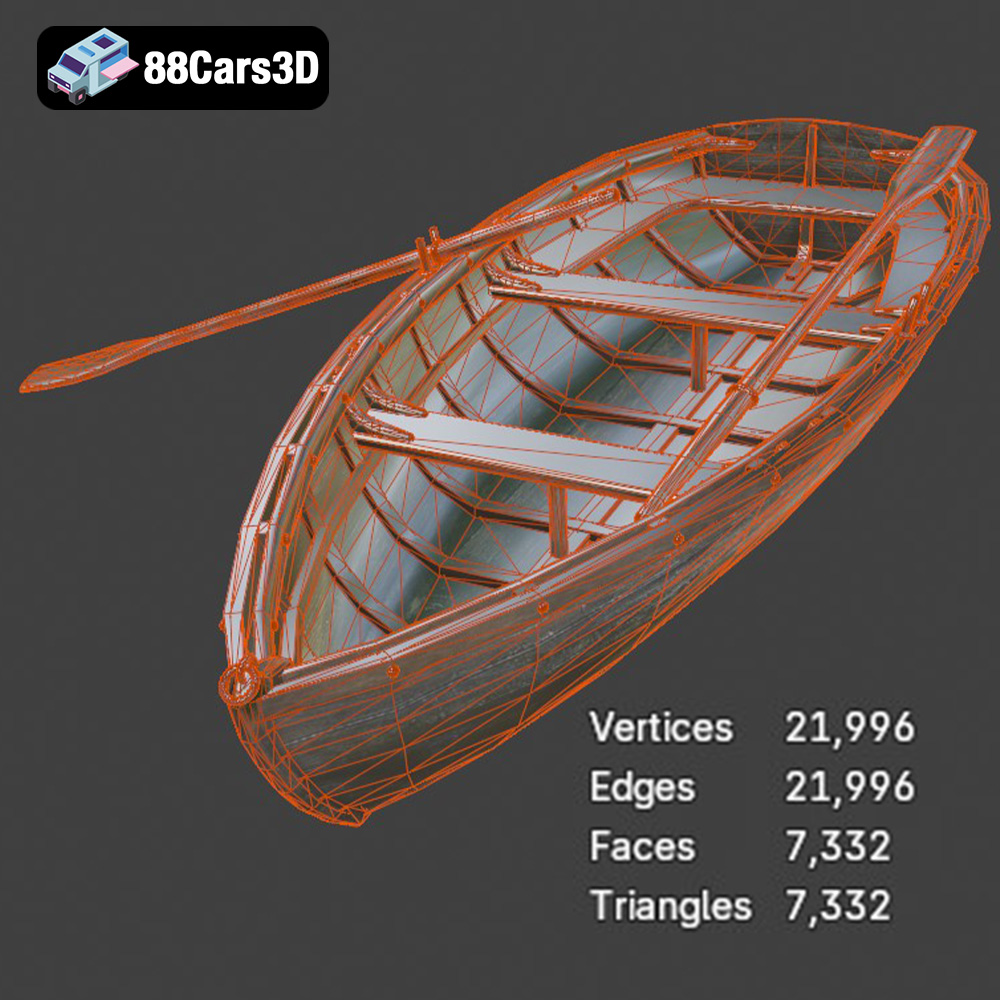
The foundation of any great 3D model lies in its geometry. For the Boat 3D Model, this begins with accurate hull geometry and waterline proportions. Replicating the buoyant form and structural balance of a modern recreational boat requires precise curve definition and clean topology. This means the mesh is organized efficiently, using quads predominantly, which allows for smooth deformation during animation and predictable subdivision for high-resolution renders. Real-world scale accuracy is another critical principle, ensuring that the model integrates seamlessly into scenes with other assets and adheres to realistic physics in simulations.
Detailing is where a generic shape transforms into a recognizable, functional object. The Boat 3D Model features an array of exterior and interior elements that contribute to its realism. On the deck, you’ll find a detailed surface and a robust railing system, essential for both aesthetic and safety representation. The realistic seating layout, complete with cushions and storage compartments, adds to the model’s usability in visualization projects. A steering console with a windshield, propeller, and rudder assembly are not just present, but designed with separate components, allowing for independent animation – crucial for interactive experiences and cinematic sequences. Even navigation light placements are considered, enhancing the model’s authenticity in nighttime or low-light renders. For specific cabin variants, the interior layout provides additional depth and realism.
Beyond visual appeal, a professional-grade 3D model must also be technically sound. The Boat 3D Model boasts a clean and well-organized mesh structure, which makes it easy to modify and reduces potential issues during import or export. Crucially, it features a proper pivot setup for steering and propeller rotation. This foresight by the modeler saves animators countless hours, allowing for immediate rigging and animation without tedious setup work. Optimized polygon flow is another key technical advantage; it means the mesh is dense where detail is needed (e.g., curves and edges) but optimized in flatter areas to maintain performance without sacrificing realism. Clean UV mapping, though not explicitly detailed, is implied by “optimized geometry” and “compatible with major 3D software,” as it is fundamental for high-quality texturing with PBR (Physically Based Rendering) workflows, ensuring materials like polished metal or fiberglass respond realistically to light.
The true value of a versatile 3D asset lies in its broad applicability across various professional fields. The Boat 3D Model is engineered to be a workhorse, serving diverse needs from high-fidelity marketing visuals to interactive game environments and educational simulations.
In the realm of rendering and visualization, precision and aesthetic appeal are paramount. This model is ideal for marine advertising campaigns, yacht brochures, and coastal promotional visuals. Imagine it anchored majestically in a photorealistic marina scene rendered with V-Ray or Corona in 3ds Max, or under the golden hour sun using Blender’s Cycles. Its detailed hull geometry, realistic deck layout, and accurate marine proportions make it perfect for showcasing luxury, adventure, or practicality. Architects can integrate it into visualizations of waterfront properties, demonstrating lifestyle, while product designers can use it to visualize marine accessories or equipment in context.
The demand for realistic assets in game development and AR/VR experiences is higher than ever. The Boat 3D Model is an excellent game asset, optimized for open-world water environments, sailing simulations, and adventure games. Its clean topology and optimized geometry ensure smooth performance even in complex scenes, while its separate, animatable components allow for dynamic gameplay, such as steerable rudders and rotating propellers. For AR/VR, the model’s quality lends itself to immersive marine experiences and interactive boat demonstrations, where users can explore the vessel up close, change customization options in real-time, or even pilot it virtually. The inclusion of the .glb and .unreal formats specifically caters to these real-time pipelines, streamlining integration into platforms like Unreal Engine or Unity.
Beyond entertainment, accurate 3D models play a critical role in simulation and training. The Boat 3D Model is highly useful for nautical visualization and maritime training simulations. Its real-world scale and accurate proportions allow for realistic physics implementation, making it suitable for teaching navigation, mooring procedures, or emergency maneuvers in a safe, virtual environment. Research institutions can utilize such models for hydrodynamic studies or for visualizing complex data related to marine engineering. The detailed representation of the steering console and propeller assembly can be instrumental in creating interactive training modules that mimic real-world controls.
One of the most exciting aspects of modern 3D modeling is the ability to bridge the gap between digital and physical. The Boat 3D Model is not just for digital renders; it’s also designed to be convertible to .stl format, making it perfectly suitable for 3D printing scale boat models and display miniatures. This opens up an entirely new dimension of application, from creating detailed prototypes to producing custom collectibles.
The inclusion of the .stl format is a testament to the model’s robust construction. An .stl file represents a model’s surface as a series of interconnected triangles, a process known as tessellation. For 3D printing, it’s crucial that the model has “manifold geometry” – meaning it’s a completely sealed, watertight mesh without any gaps or intersecting faces. This ensures that a 3D printer can accurately interpret the object’s volume. The Boat 3D Model is designed with this in mind, providing a clean .stl output that minimizes errors during slicing and printing.
Achieving a high-quality physical print requires careful attention to 3D print settings. The recommended scales for the Boat 3D Model are 1:72, 1:48, 1:32, and 1:24, allowing for a range of miniature to larger display pieces. A layer height of 0.10–0.20 mm is suggested for FDM printers, balancing detail with print time, while a wall thickness of 2–3 mm ensures structural integrity. An infill of 20–35% provides a good balance between material usage and model strength. Due to the intricate details like railings, the windshield frame, and the propeller, supports will be required during printing to prevent sagging. The recommended print orientation involves printing the hull flat or splitting it vertically for very large prints, which helps manage supports and surface finish. Post-processing is key to a professional look: sanding removes layer lines, primer provides a uniform surface, and a gloss marine paint finish, optionally adorned with decals, can bring the miniature to life, echoing the realism of its digital counterpart. This attention to 3D print readiness truly enhances the model’s versatility.
A truly valuable 3D asset provides not just a foundation, but also ample room for customization. The Boat 3D Model offers significant flexibility, allowing users to tailor its appearance and features to perfectly match the demands of their specific projects.
The ability to modify visual elements is crucial for project-specific needs. With the Boat 3D Model, you can easily change hull colors and stripe accents to match a particular brand, a specific user preference, or a unique artistic vision. Adding marine branding or registration numbers personalizes the vessel, making it unique to a client or a fictional universe. The seating layout can be modified to reflect different configurations—from luxurious leisure setups to more utilitarian arrangements. Furthermore, the model serves as an excellent base for adding additional elements like fishing equipment, luxury deck accessories (coolers, umbrellas, towels), or even more advanced navigation systems, enhancing its functionality and narrative potential within a scene. This level of customization allows the boat to seamlessly integrate into diverse scenarios without requiring a full re-model.
The versatility of the Boat 3D Model extends to its integration within larger digital environments. Its clean topology and optimized geometry ensure it behaves well within complex scenes. Whether you need to place it in a tranquil coastal environment, a bustling marina at sunset, or battling the waves in an open-ocean simulation, the model adapts beautifully. Configuring lighting for different scenes—such as a vibrant, sunlit day at sea or a serene, moonlit marina—drastically affects the mood and visual impact, and the model’s robust material setup will respond realistically to these varied lighting conditions. Its detailed exterior and interior features contribute significantly to environmental storytelling, providing rich visual cues that enhance the narrative of any visualization or game experience.
The journey from conceptual design to a fully realized 3D asset is complex, but the availability of high-quality, pre-built models like the Boat 3D Model significantly streamlines this process for professionals across multiple industries. This meticulously crafted asset, with its realistic hull proportions, detailed deck layout, and functional components, stands as a testament to the power of well-executed 3D modeling.
From powering immersive game environments and AR/VR experiences to generating stunning marketing renders and serving as a foundation for precise maritime simulations or even tangible 3D prints, its versatility is unmatched. The comprehensive range of included file formats—from .blend and .max for native software users, to universal .fbx and .obj, web-optimized .glb, and print-ready .stl—ensures seamless integration into virtually any professional workflow. This strategic foresight by the creators at 88cars3d.com allows artists and developers to focus on creativity and project execution rather than foundational asset creation.
For anyone seeking to elevate their marine visualization projects, develop compelling game assets, or create detailed physical prototypes, the Boat 3D Model offers an unparalleled combination of detail, optimization, and format flexibility. It’s more than just a model; it’s a professional-grade solution designed to accelerate your projects and bring your digital worlds to life with exceptional fidelity. Explore this and other high-quality 3D car models and vehicle assets, including everything from realistic cars to specialized watercraft, at 88cars3d.com to enhance your next creative endeavor.
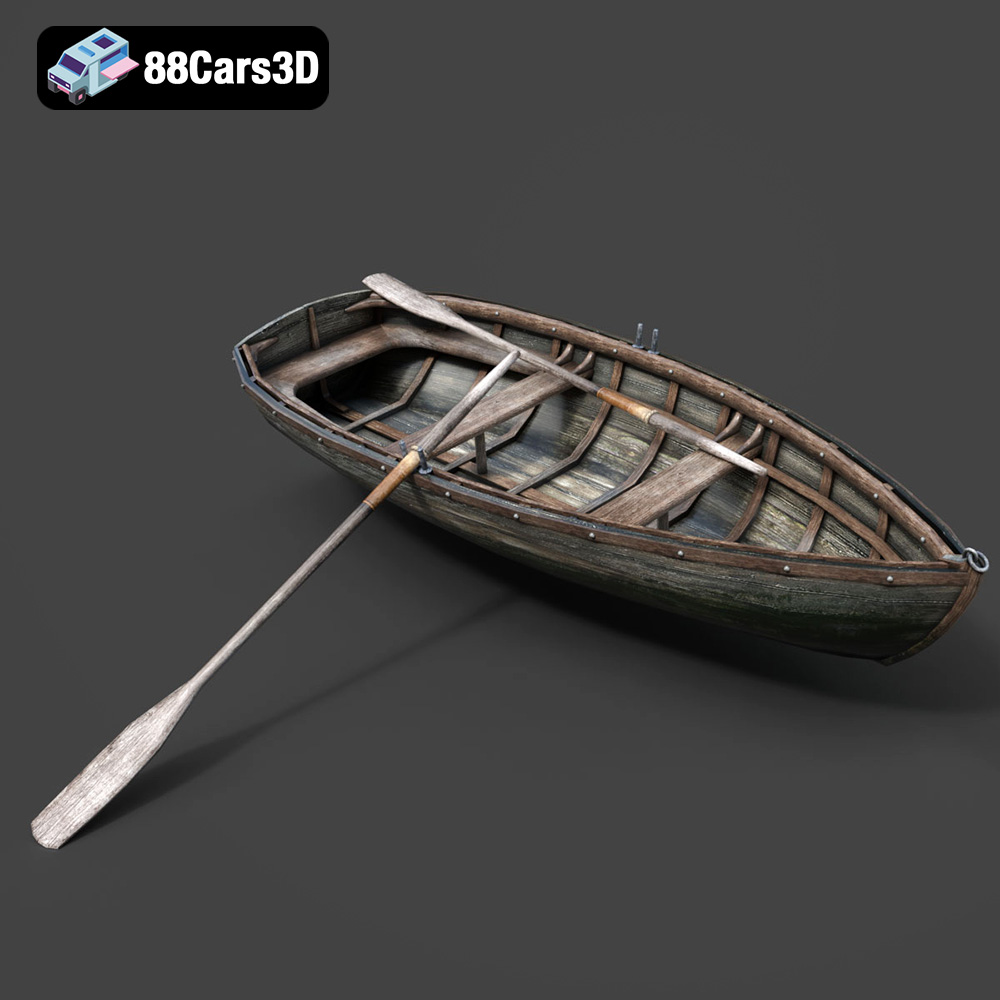
The Boat 3D Model is a high-detail digital recreation of a versatile watercraft designed for marine visualization, simulation, and entertainment applications. Featuring realistic hull proportions and functional deck detailing, this model captures the structural balance, buoyant form, and nautical design elements of a modern recreational boat.
This 3D model accurately represents the streamlined hull structure, deck layout, railing system, seating configuration, steering console, and propeller assembly. Built with clean topology and real-world scale accuracy, it is ideal for rendering, animation, marine simulation, game development, and AR/VR visualization.
Perfect for coastal environments, marina scenes, open-water simulations, cinematic ocean renders, and promotional marine projects.
$5
.arvr
.blend
.boat
.boat3dmodel
.fbx
.gameasset
.glb
.marinesimulation
.marinevehicle
.max
.obj
.oceanrender
.ply
.rendering
.sailing
.simulation
.stl
.unreal
.watercraft
yacht