Get 50% OFF All Premium 3D & STL Models!

In the rapidly evolving landscape of digital content creation, the demand for high-fidelity 3D assets continues to surge across diverse industries. From hyper-realistic automotive rendering to immersive game development, and from interactive AR/VR experiences to precise 3D printing, the quality of your foundational 3D models dictates the success of your final output. Expert designers and studios understand that investing in meticulously crafted digital assets is not merely a convenience but a strategic imperative. This is particularly true when it comes to capturing the intricate details and luxurious presence of modern vehicles.
Today, we delve into a prime example of such an asset: the Lincoln Navigator 2018 3D Model. This isn’t just another digital car; it’s a testament to precision engineering in the virtual realm, meticulously recreated to capture every aspect of the full-size luxury SUV. Known for its commanding aesthetics, refined interior, and robust performance, the 2018 Navigator embodies contemporary American luxury. Our exploration will reveal how such a sophisticated 3D model, available at marketplaces like 88cars3d.com, empowers professionals across various disciplines to elevate their projects with unparalleled realism and versatility.
Choosing the right 3D model file format is a critical decision that impacts workflow efficiency, compatibility, and the ultimate quality of your project. Each format is designed with specific strengths and applications in mind. Understanding these nuances is crucial for any professional working with 3D assets, especially high-detail 3D car models like the Lincoln Navigator 2018.
The .blend format is native to Blender, one of the most powerful and versatile open-source 3D content creation suites. When you acquire a .blend file, you’re getting a complete Blender project, often including scene setups, lighting, cameras, and fully configured materials with textures. This offers unparalleled flexibility for artists who use Blender, allowing them to dissect, modify, and render the model exactly as it was intended by the creator. For the Lincoln Navigator 2018, a .blend file means access to all the original material nodes, modifiers, and scene settings for complete artistic control, making it ideal for deep customization or integrating into existing Blender workflows for automotive rendering and animation.
.fbx (Filmbox) is an industry-standard format developed by Autodesk, widely recognized for its robust support for 3D models, animation, and scene data. It’s the go-to choice for transferring assets between different 3D software applications and, crucially, for importing into game engines like Unreal Engine and Unity. An .fbx file for the Lincoln Navigator 2018 would contain the mesh geometry, UV mapping, materials (often as references or embedded), skeletal animations (if applicable, such as wheels and steering), and blend shapes. Its efficiency and comprehensive data support make it an essential format for developing high-performance game assets and interactive simulations where real-time performance is paramount.
The .obj (Wavefront OBJ) format is one of the most universal and widely supported 3D file types. It primarily stores geometry data—vertices, normals, texture coordinates, and faces—and can reference external material (.mtl) and texture files. While it doesn’t typically store animation or complex scene data, its simplicity and widespread adoption make it an excellent choice for straightforward mesh exchange between virtually any 3D software. If you need to bring the Lincoln Navigator 2018 into an obscure or specialized renderer, or simply ensure maximum compatibility across a diverse software pipeline, .obj is a reliable foundation.
.glb (GL Transmission Format Binary) is the binary version of glTF, a royalty-free specification for the efficient transmission and loading of 3D scenes and models by applications. It packages geometry, materials, textures, and animation into a single, compact file, making it incredibly efficient for web-based 3D, augmented reality (AR), virtual reality (VR), and mobile applications. The Lincoln Navigator 2018 in .glb format would be perfect for virtual showrooms, interactive web configurators, or integrating the SUV into AR experiences on smartphones, offering optimized performance and visual fidelity.
.stl (Stereolithography) is the standard file format for 3D printing. It represents a 3D model as a collection of unconnected triangular facets, defining only the surface geometry without color, texture, or other model attributes. For the Lincoln Navigator 2018, an .stl file transforms the digital model into a printable blueprint, ready to be sliced and manufactured on a 3D printer. This allows for the creation of physical scale models, prototypes, or collectibles, bridging the gap between the digital and physical realms.
.ply (Polygon File Format or Stanford Triangle Format) is another format used to store 3D data, particularly from 3D scanners. It supports vertex properties (color, normal, texture coordinates) and face properties, and can store a wider range of data than .obj, including comments and properties for each vertex and face. It’s often used in scientific visualization, CAD, and applications where precise mesh data is crucial, offering an alternative for detailed geometrical analysis of the Lincoln Navigator 2018.
The .unreal file type refers to assets specifically packaged or exported for optimal integration into Unreal Engine. While .fbx is often used for initial import, Unreal Engine processes and optimizes assets into its own internal formats. An “unreal” tagged asset might refer to a fully configured asset package (e.g., a uasset file) that’s ready to be dropped into an Unreal project with materials, LODs, collision, and blueprints already set up. This significantly streamlines the development pipeline for creating immersive real-time experiences with the Lincoln Navigator 2018.
Similar to .blend for Blender, .max is the native file format for Autodesk 3ds Max, a leading software for 3D modeling, animation, and rendering in the design visualization industry. A .max file of the Lincoln Navigator 2018 would contain the complete scene, including the model, materials, textures, lighting, cameras, and any animation data (such as wheel rotation or door opening rigs). This format provides the most comprehensive control for users of 3ds Max, allowing for deep modifications, high-quality cinematic renders, and complex scene setups.
The availability of multiple formats, as offered for the Lincoln Navigator 2018 3D Model on 88cars3d.com, ensures maximum compatibility and utility, catering to diverse professional needs and workflows.
At the heart of any exceptional 3D visualization or interactive experience lies a meticulously crafted model. The Lincoln Navigator 2018 3D Model exemplifies this commitment to detail, offering a digital recreation that captures the very essence of the luxury SUV. From its commanding exterior to its opulent interior, every aspect has been carefully considered to ensure fidelity and functionality.
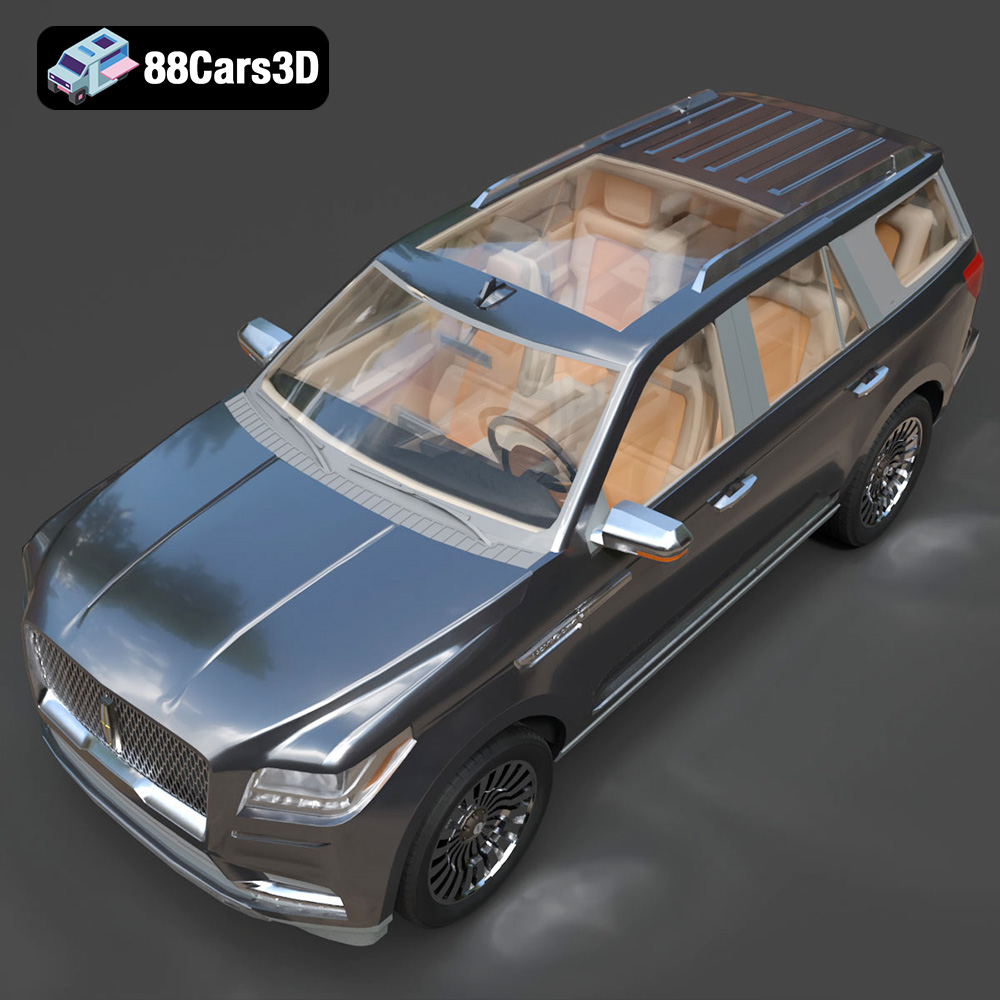
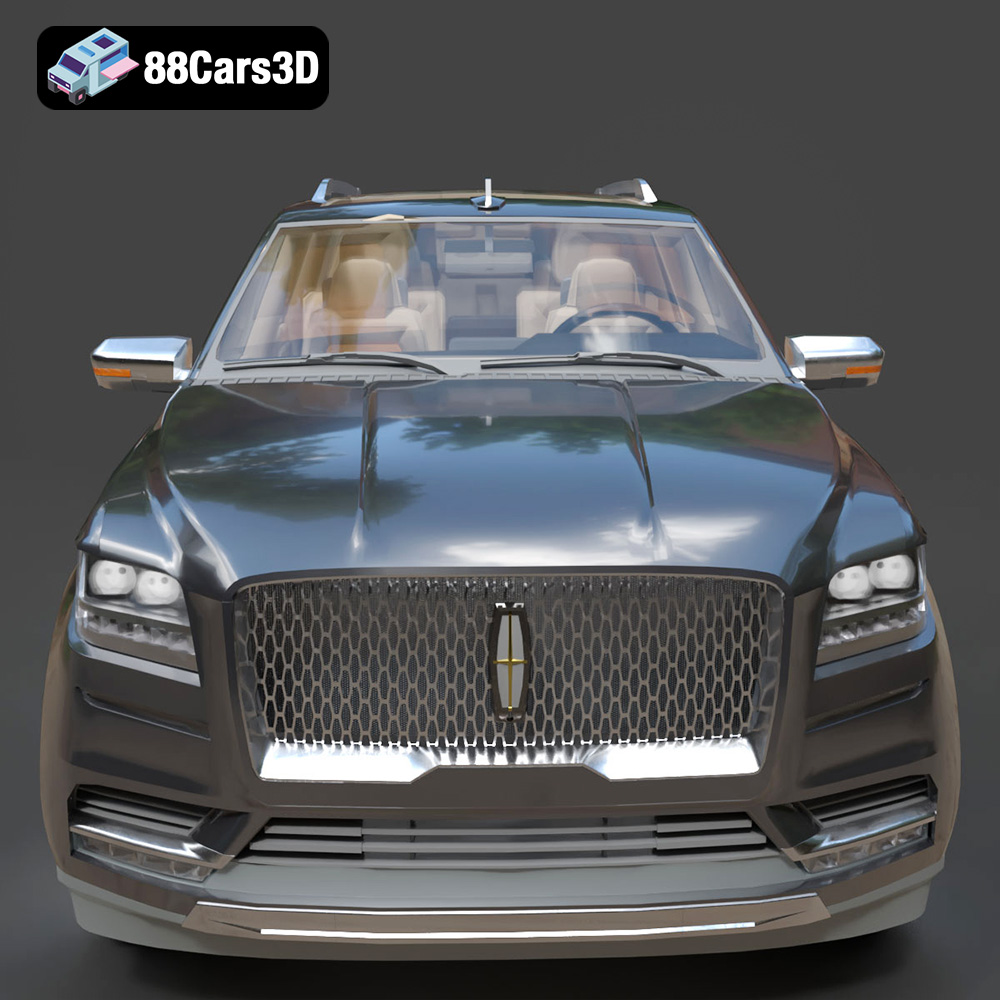
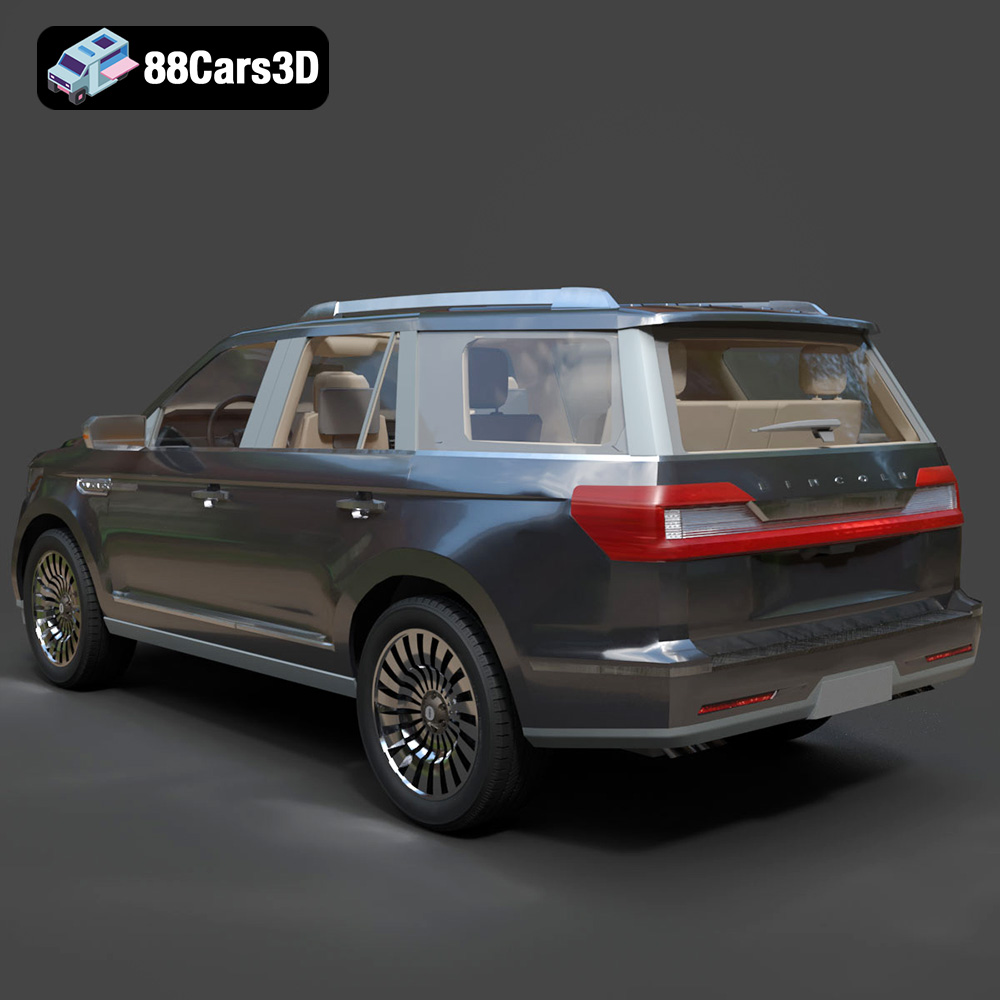
The exterior of the Lincoln Navigator 2018 is defined by its bold presence and sophisticated lines, and the 3D model mirrors this with remarkable accuracy. You’ll find the signature chrome mesh front grille, an iconic design element, recreated with precise geometry. The intricate detailing of the LED headlights and taillights is captured, from their distinctive shapes to the subtle internal components that give them their realistic glow in renders. Sculpted hood and side body contours, roof rails, and chrome window trim accents are all present, adding to the visual authenticity. The large multi-spoke alloy wheels are not merely static textures but fully modeled components, and crucially, they are separate from the main body geometry, allowing for realistic rotation and suspension articulation in animations. Transparent glass materials and accurate mirror geometry further enhance the realism, reflecting environments naturally.
Stepping inside the digital Navigator reveals an equally impressive level of detail. The luxury dashboard, complete with its digital display cluster and infotainment screen, is meticulously modeled. The multifunction steering wheel, a tactile interface in the real world, is accurately represented, ready for virtual drivers. Premium seat geometry, often overlooked in lower-quality models, includes subtle stitching details and proper cushioning, contributing to a sense of plush comfort. Door panel and trim representations complete the cabin, creating an immersive internal environment for architectural visualizations, virtual showrooms, or in-game perspectives. This attention to both exterior and interior elements ensures that the model holds up under close scrutiny from any angle.
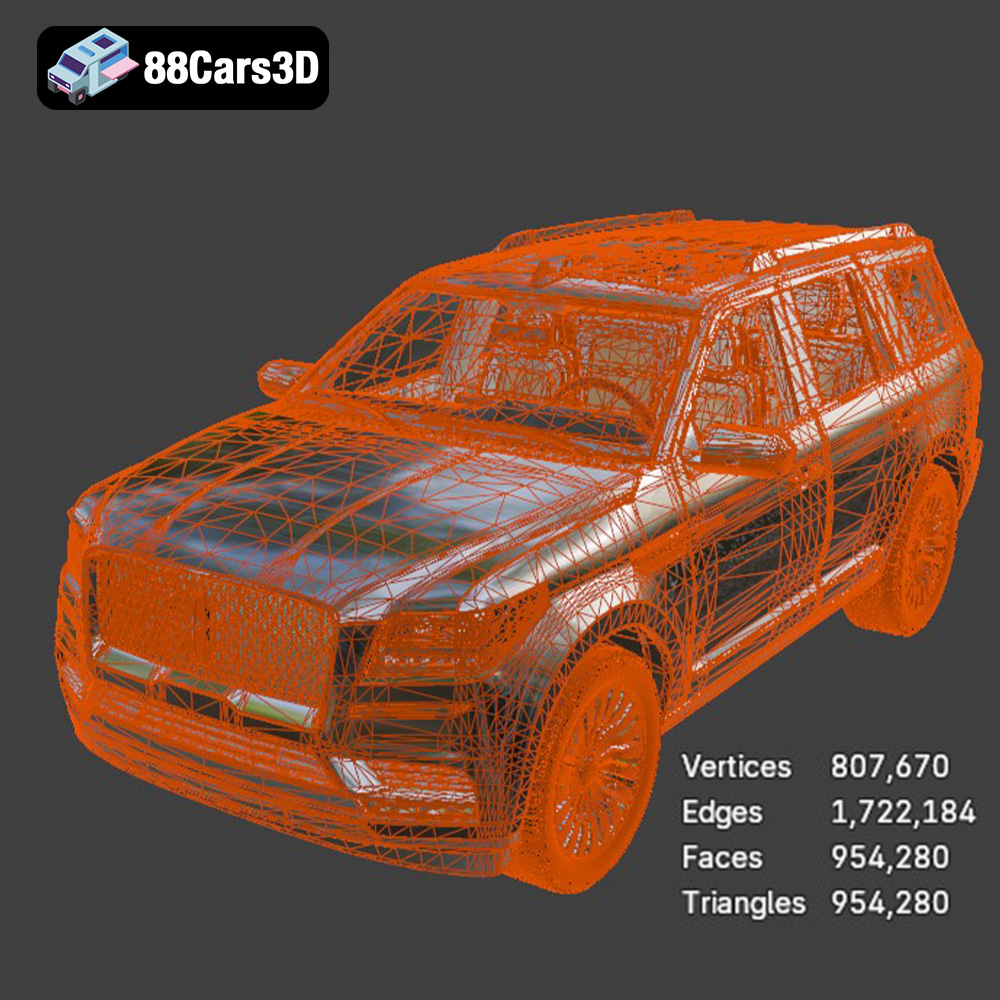
Beyond visual accuracy, the technical underpinnings of this 3D car model are crucial. It boasts a clean and well-organized mesh structure, which translates to efficient rendering and smooth deformations during animation. Real-world scale accuracy is paramount for proper integration into scenes and environments, ensuring that the Navigator looks correct alongside other assets or in architectural renderings. A proper pivot setup for steering and wheel rotation simplifies the animation process significantly, saving valuable artist time. Furthermore, the optimized polygon flow is a hallmark of a professional asset, balancing visual fidelity with performance, making it suitable for both high-quality offline renders and demanding real-time engines without excessive poly counts that could bog down a scene.
The versatility of a high-quality 3D car model like the Lincoln Navigator 2018 lies in its ability to seamlessly integrate into diverse professional workflows. From generating stunning marketing visuals to building interactive virtual experiences, the model serves as a robust foundation.
For artists and studios focused on creating breathtaking visual content, the Lincoln Navigator 2018 3D Model is an ideal asset. In software like 3ds Max, professionals can leverage advanced rendering engines such as V-Ray or Corona to produce photorealistic images and animations. This involves setting up sophisticated PBR (Physically Based Rendering) materials that accurately simulate paint, chrome, glass, and leather. High-Dynamic Range Imaging (HDRI) environments combined with physical light sources can create realistic reflections and global illumination, making the vehicle look as if it were truly in a showroom or on the open road. Similarly, Blender users can harness the power of Cycles for unbiased rendering or Eevee for real-time visualization, applying the included .blend file’s materials or creating custom ones. These applications extend to luxury automotive marketing, dealership presentations, commercial advertising, and cinematic projects where every detail counts.
The transition from high-fidelity rendering to real-time game engines presents its own set of challenges, but the Lincoln Navigator 2018 3D Model is optimized for this purpose. With formats like .fbx and .unreal, developers can import the model directly into environments such as Unreal Engine and Unity. The optimized polygon flow is critical here, ensuring the model performs efficiently without sacrificing visual quality. For game assets, implementing Level of Detail (LOD) models is essential, where lower poly versions of the car are rendered when seen from a distance, saving GPU resources. Collision meshes are also crucial for realistic physics interactions. The model’s clean topology and organized structure facilitate the creation of real-time materials, often using PBR workflows within the engine, and allow for easy integration into open-world driving games, city simulators, and premium vehicle environments where dynamic lighting and interactive elements are key.
As augmented and virtual reality continue to redefine how we interact with digital content, specialized 3D car models are becoming indispensable. The Lincoln Navigator 2018 3D Model, particularly with its .glb format, is perfectly suited for AR/VR applications. Its optimized geometry ensures smooth performance in resource-constrained AR/VR environments, preventing motion sickness and maintaining high frame rates. Imagine a virtual showroom where prospective buyers can walk around, sit inside, and even customize the Navigator in real-time. Or an AR app that lets users place a life-size virtual Navigator in their driveway. These immersive experiences are powerful tools for marketing, product demonstration, and even training, leveraging the model’s accuracy and adaptability.
While digital visualization is a primary use case, the tangibility offered by 3D printing opens up an entirely new dimension for the Lincoln Navigator 2018 3D Model. The inclusion of the .stl format signals its readiness for physical creation, transforming a virtual asset into a real-world object.
The ability to convert the Lincoln Navigator 2018 into an .stl format means it can be brought to life as a physical collectible SUV scale model or display miniature. The product description provides crucial 3D Print Setting recommendations: suitable scales like 1:32, 1:24, or 1:18, and even 1:14. These scales allow for varying levels of detail and print time. Essential parameters like layer height (0.10–0.18 mm), wall thickness (1.5–2.5 mm), and infill (15–25%) are provided, guiding users to achieve optimal print quality and structural integrity. For intricate areas like mirrors, roof rails, and underbody details, supports are required to ensure fidelity during the printing process. Careful print orientation, such as printing the body angled for a smooth surface finish and the wheels separately, further optimizes the final physical output.
The journey from a raw 3D print to a showroom-quality miniature involves a crucial post-processing stage. As recommended, this typically includes sanding to remove layer lines and imperfections, applying a primer coat for an even surface, and then applying a gloss luxury paint finish. The choice of paint can mimic the actual Navigator’s factory colors or allow for unique customization. Optional chrome detailing can further enhance realism, bringing out the signature grille and trim accents. This process transforms the functional print into a high-end display piece, making it a perfect addition for automotive enthusiasts or professional displays.
Beyond collectibles, the 3D printable aspect of this 3D car model also serves prototyping and physical asset creation needs. Designers can print smaller versions of custom accessories or design modifications to test their fit and appearance before committing to full-scale manufacturing. For educational purposes, it can serve as a detailed model for studying automotive design and engineering. Its utility extends to creating physical representations for client presentations, enhancing engagement and providing a tactile dimension to digital designs, reinforcing its value for automotive visualization.
A truly professional 3D asset offers more than just static beauty; it provides a canvas for creative expression and adaptation. The Lincoln Navigator 2018 3D Model is engineered with versatility in mind, allowing artists and designers to customize it extensively for specific project needs and artistic visions.
The ability to dynamically alter key visual attributes of the Lincoln Navigator 2018 is a significant advantage. Users can easily change the body color to match a brand’s palette, specific client requests, or seasonal themes. Chrome accents, a defining feature of luxury vehicles, can be adjusted in tone or reflectivity. Furthermore, the model allows for modification of the wheel style and finish, offering endless possibilities for custom looks – from polished chrome to matte black or unique multi-tone designs. Advanced users can even adjust the vehicle’s ride height or suspension stance, creating aggressive low-riders, off-road variants, or simply fine-tuning its appearance for a particular scene or animation. This level of control is invaluable for creating diverse narratives and bespoke visual content.
Effective lighting is paramount to showcasing any 3D car model, and the Lincoln Navigator 2018 is built to respond beautifully to various lighting conditions. Designers can configure the lighting for day, night, or specialized showroom scenes, drastically altering the mood and visual impact. Whether it’s the crisp, clear reflections of a sunny afternoon, the dramatic glints under streetlights, or the sophisticated spotlights of a product launch, the model’s materials and geometry are designed to interact realistically with light. This flexibility extends to seamlessly integrating the vehicle into diverse digital environments, from bustling cityscapes to serene countryside roads, or futuristic architectural renders.
For commercial projects, the model offers robust options for brand integration. Users can add custom license plates, apply company logos, or embed branded elements directly onto or around the vehicle. This makes it an invaluable asset for agencies and marketing teams looking to feature a luxury SUV in their campaigns while maintaining creative control. Whether the goal is a sleek product advertisement, an interactive configurator for a virtual dealership, or a compelling cinematic sequence, the Lincoln Navigator 2018 3D Model provides the adaptability needed to tell specific stories and achieve distinct visual objectives.
In the dynamic world of 3D content creation, the availability of high-quality, technically sound 3D car models is a cornerstone for professional success. The Lincoln Navigator 2018 3D Model stands out as an exemplary asset, offering an unparalleled blend of aesthetic fidelity, technical precision, and versatile functionality. From its accurately recreated exterior and detailed interior to its optimized mesh and comprehensive file format support, it addresses the diverse needs of modern creative pipelines.
Whether your project demands photorealistic automotive rendering for a marketing campaign, optimized game assets for an immersive driving simulator, interactive elements for AR/VR experiences, or precise models for 3D printing physical collectibles, this Navigator model delivers. Its thoughtful design, including separate components for animation, proper pivots, and clean topology, ensures a smooth workflow across leading software like 3ds Max, Blender, and Unreal Engine. The flexibility for customization, from color changes to environmental lighting, empowers artists to infuse their unique vision into every project.
For professionals seeking to elevate their digital automotive projects, investing in such a robust and versatile 3D model is a clear advantage. Discover the potential of premium 3D assets and streamline your creative process by exploring the extensive catalog at 88cars3d.com, where quality meets innovation.
The Lincoln Navigator 2018 3D Model is a high-detail digital recreation of the full-size luxury SUV known for its bold presence, refined design, and premium comfort. Combining powerful performance with upscale craftsmanship, the 2018 Navigator represents modern American luxury in the SUV segment. This 3D model accurately captures the commanding front grille, signature LED lighting, sculpted body lines, chrome trim accents, large alloy wheels, and spacious cabin layout. Designed with clean topology and real-world scale accuracy, it is ideal for rendering, animation, automotive visualization, game development, and AR/VR experiences. Perfect for urban environments, luxury vehicle showcases, commercial presentations, cinematic projects, and driving simulations. Also convertible to .stl format for collectible SUV scale models and display miniatures.
$29.99
.2018suv
.americanSUV
.arvr
.automotive
.blend
.car3dmodel
.fbx
.gameasset
.glb
.lincoln
.luxurysuv
.max
.navigator
.obj
.ply
.rendering
.simulation
.stl
.unreal