Get 50% OFF All Premium 3D & STL Models!

The world of 3D modeling offers an incredible canvas for creativity, allowing artists and developers to bring any vision to life, from futuristic landscapes to historically accurate recreations. Among the most popular and technically demanding subjects are automobiles, especially classic cars, which evoke a profound sense of nostalgia and engineering marvel. Capturing the intricate curves, chrome accents, and distinct character of a vintage vehicle in a digital realm requires exceptional skill and attention to detail. These high-fidelity 3D car models are indispensable assets for a myriad of professional applications, from blockbuster movie rendering and immersive game environments to cutting-edge AR/VR experiences and even precise 3D printing.
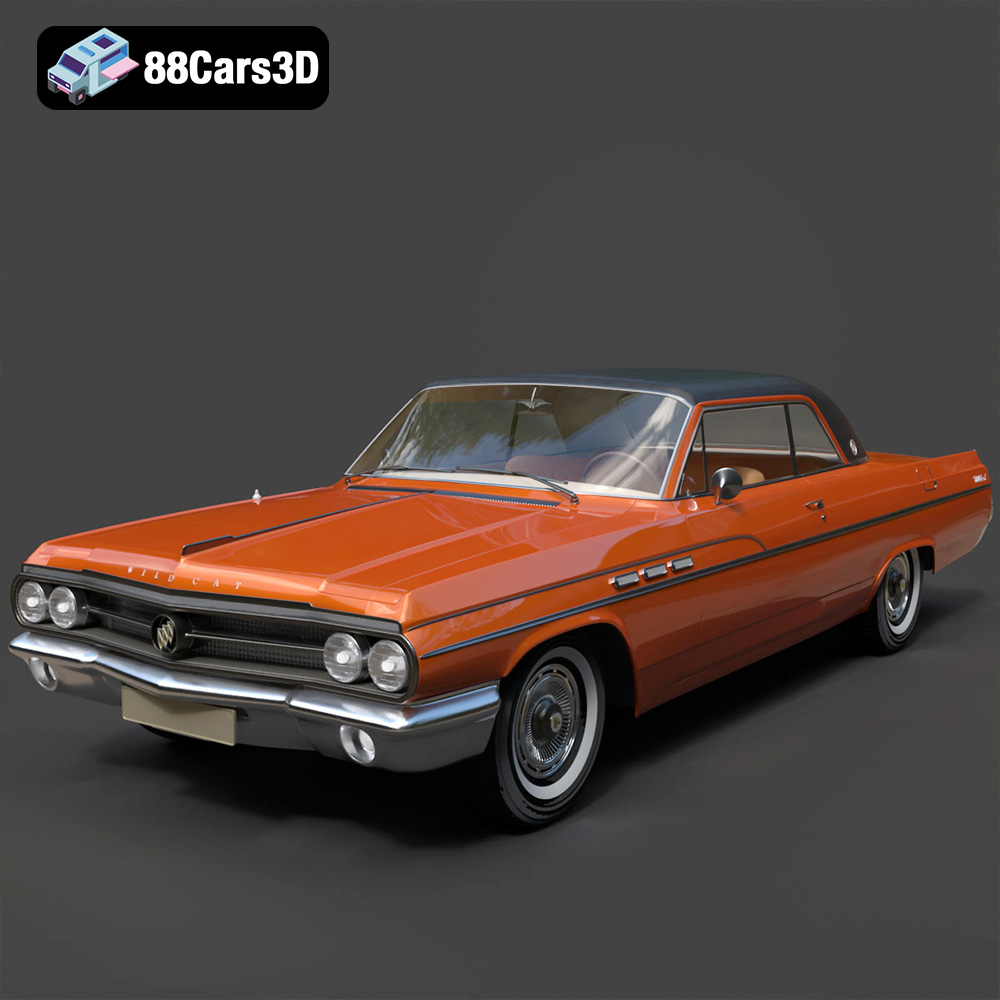
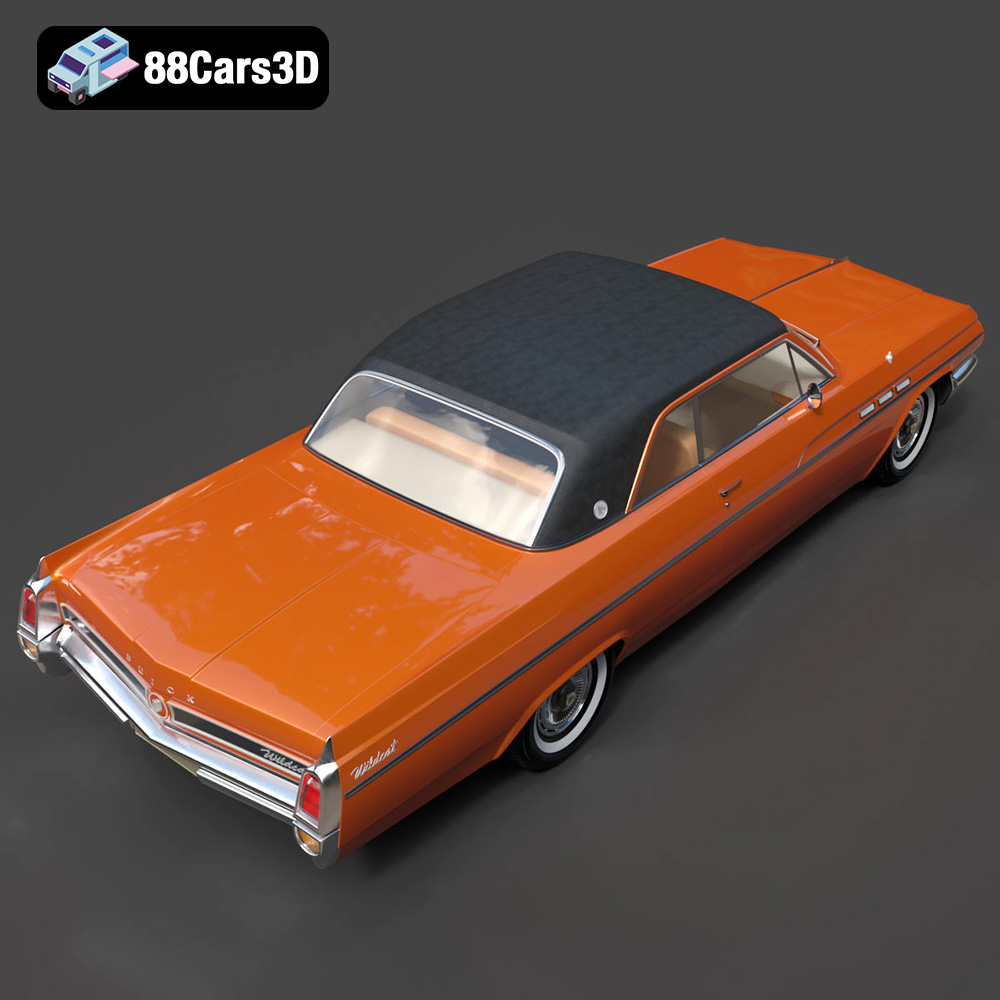
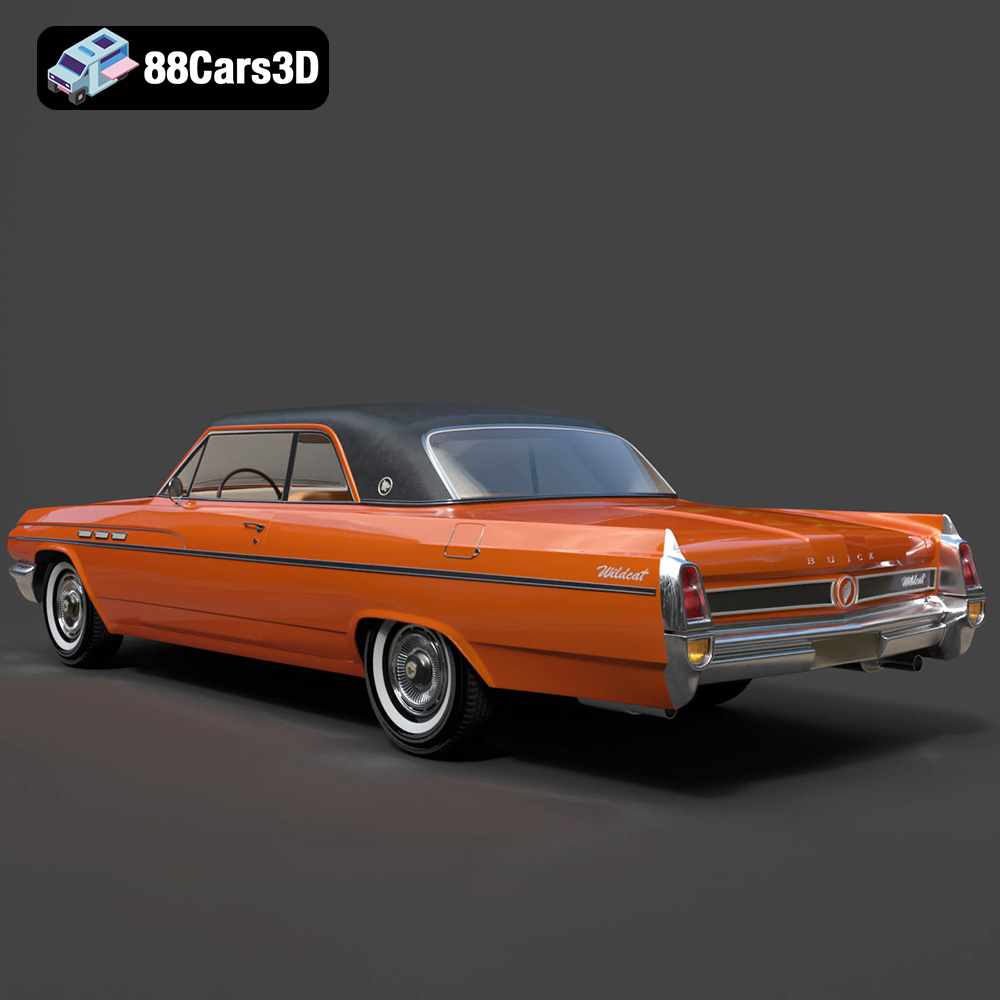
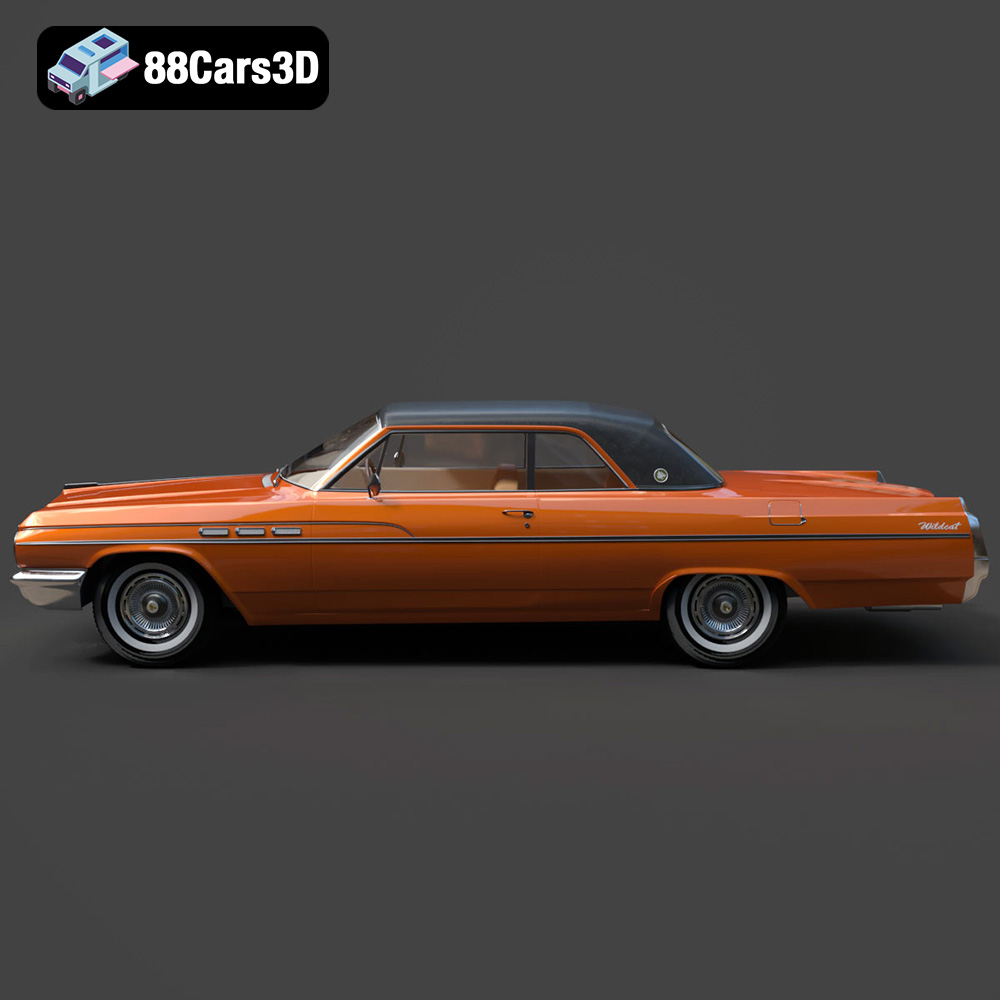
Today, we delve into the craftsmanship behind such digital automotive masterpieces, using the exquisite Buick Wildcat Convertible 1963 3D Model as our prime example. This particular model, available on 88cars3d.com, encapsulates the essence of early 1960s American luxury and performance, providing a robust and versatile asset for any professional project. It’s more than just a model; it’s a meticulously engineered digital twin, ready to accelerate your creative endeavors.
The 1963 Buick Wildcat Convertible stands as a testament to an era of bold design and powerful engines. It fused the spaciousness and comfort expected from a full-size Buick with a performance-oriented edge, embodying the spirit of American motoring in the golden age. Digitally recreating such an iconic vehicle demands a deep understanding of its physical form, historical context, and the nuances that define its presence. The Buick Wildcat Convertible 1963 3D Model meticulously delivers on these fronts, offering an authentic representation that respects its rich heritage.
The 1963 Wildcat was distinguishable by its distinctive “sweepspear” side trim, quad headlights, and a commanding stance. Its powerful V8 engine heritage, combined with its open-top cruising appeal, made it a true standout. This 3D model perfectly captures these elements, from the long, wide body proportions to the distinctive chrome grille and bumpers. Every curve and panel line is digitally sculpted to mirror the original, ensuring that whether it’s destined for a static render or an animated sequence, it exudes historical accuracy and period-correct charm. Such attention to detail is paramount for projects aiming for authenticity in automotive rendering or historical game settings.
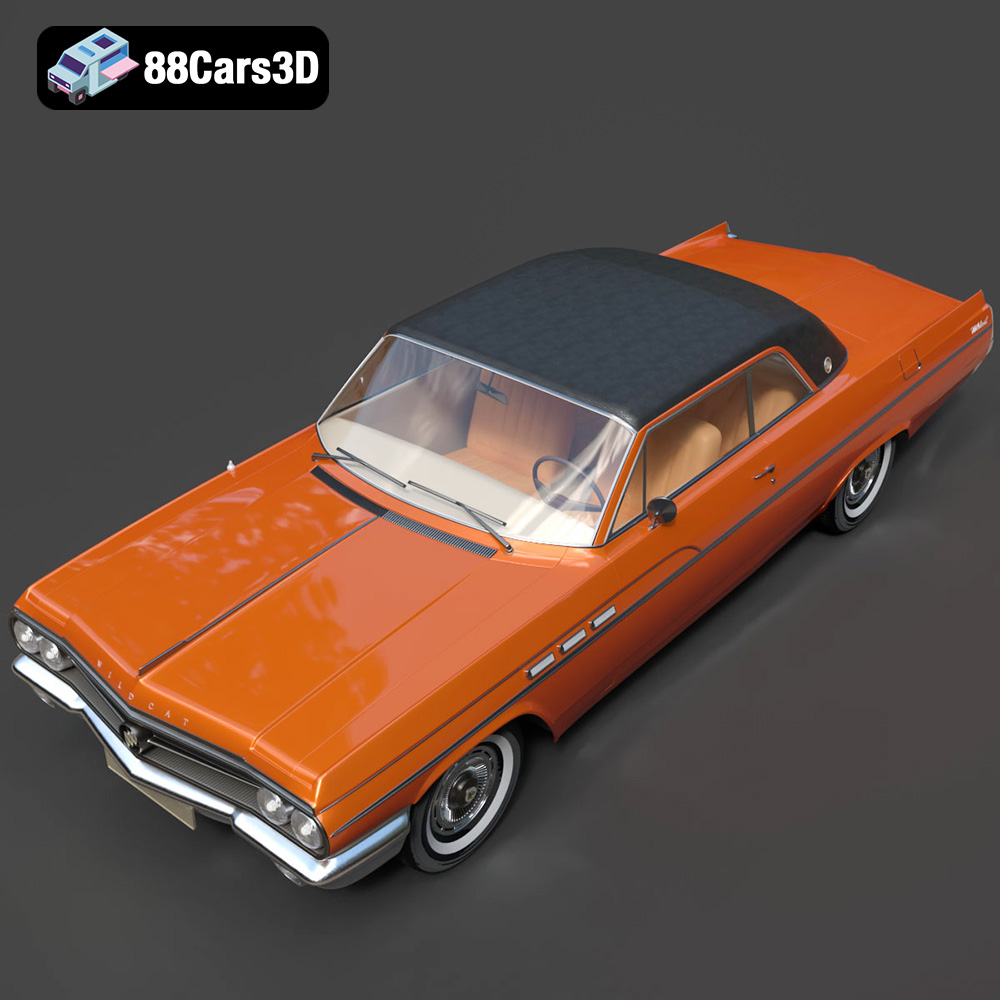
Beyond the overall silhouette, the true quality of a 3D car model lies in its intricate details. The Buick Wildcat Convertible 1963 3D Model boasts a comprehensive list of exterior and interior features. Externally, this includes the sculpted side lines, emblem detailing, classic chrome wheels with whitewall tire styling, and even a convertible soft-top configuration that is ready for both ‘up’ and ‘down’ states. Internally, the model doesn’t compromise, featuring a vintage dashboard with an analog gauge cluster, a classic steering wheel, detailed front seating options (bench or bucket), and period-correct door panels with chrome trim accents. Crucially, elements like wheels and steering components are separated, enabling seamless animation for dynamic scenes or interactive simulations. This level of granular detail allows for close-up shots and immersive virtual experiences that truly resonate with enthusiasts and professionals alike.
Choosing the correct file format for a 3D model is a critical decision that impacts workflow, compatibility, performance, and the final output of any project involving 3D car models or game assets. High-quality assets, like the Buick Wildcat Convertible 1963 3D Model from 88cars3d.com, are often provided in multiple formats to ensure maximum versatility across different software and platforms. Understanding the technical specifications and ideal use cases for each format is key to streamlining your production pipeline.
Each 3D file format has its strengths and weaknesses, making some more suitable than others for specific tasks. For instance, an artist working on a high-end cinematic render might prioritize a format that preserves complex material setups and modifier stacks, while a game developer will look for optimized geometry and PBR material compatibility. Similarly, a designer preparing a physical prototype needs a format ideal for additive manufacturing. Let’s break down the common formats you’ll encounter:
Understanding the internal structure of these formats further illuminates their utility. FBX, for example, uses a hierarchical node structure, making it excellent for complex rigs and animations. OBJ’s simplicity makes it robust against parsing errors but limits its ability to carry rich scene data. GLB’s binary nature and self-contained design make it incredibly fast for web loading, while STL’s facet-based geometry, though lacking color, ensures direct translation for manufacturing. For professionals, the availability of a model like the Buick Wildcat in such a wide array of formats means greater flexibility and fewer conversion headaches, ensuring seamless integration into any pipeline.
The true value of a versatile 3D asset like the Buick Wildcat Convertible 1963 3D Model lies in its applicability across various professional domains. From cinematic rendering to interactive real-time experiences, this model is engineered to integrate smoothly into established workflows, significantly reducing production time and enhancing creative output.
For artists focused on photorealistic imagery, the Buick Wildcat model is a cornerstone. In environments like 3ds Max, artists can leverage its clean mesh structure and separate components for animation to craft stunning visualizations. Imagine a meticulously lit studio shot, highlighting the vehicle’s chrome gleam and sculpted body lines, or a dynamic scene with the Wildcat cruising down a sun-drenched boulevard. Using V-Ray or Corona Renderer, artists can apply advanced physically based rendering (PBR) materials, fine-tuning reflections, refractions, and subsurface scattering to achieve breathtaking realism. Similarly, Blender users can utilize the native .blend file, tapping into Cycles or Eevee render engines to create compelling automotive renders, from detailed product showcases to dramatic cinematic sequences. The model’s optimized geometry and real-world scale ensure that light interaction and material properties behave authentically, delivering impeccable visual quality for marketing, film, or design validation.
The demand for high-quality game assets is ever-growing, and the Buick Wildcat model is perfectly suited for game development. Its “optimized polygon flow” and “real-world scale accuracy” are critical for performance in real-time engines like Unreal. The .fbx and .unreal formats streamline the import process, allowing developers to quickly integrate the vehicle into virtual worlds. With proper pivot setup for steering and wheel rotation, the model is animation-ready, enabling realistic driving mechanics for open-world games, racing simulations, or historical narrative titles set in the 1960s. Developers can implement advanced material shaders, add physics-based destruction (if desired), and incorporate it into dynamic lighting scenarios, providing players with an immersive and authentic vintage driving experience. This model serves as an excellent foundation for any project needing detailed 3D car models.
The emerging fields of AR and VR present exciting opportunities for showcasing classic automobiles. The Buick Wildcat Convertible 1963 3D Model, particularly in the .glb format, is ideal for these applications. Imagine an interactive virtual showroom where users can walk around, inspect the Wildcat from every angle, customize its paint, or even sit inside using a VR headset. In augmented reality, the Wildcat could appear in your driveway through a smartphone, allowing for a realistic scale preview. Its optimized geometry ensures smooth performance on mobile devices and VR platforms, providing an engaging and educational experience. This is invaluable for classic car dealerships, museums, or even marketing campaigns looking to offer innovative, immersive historical automotive experiences.
While visual appeal is paramount, the true mark of a professional 3D car model lies in its underlying technical integrity. A beautiful render can mask flawed geometry or poor optimization, but these issues quickly become apparent in animation, real-time engines, or during further development. The Buick Wildcat Convertible 1963 3D Model from 88cars3d.com exemplifies the rigorous standards expected in the industry, showcasing a balance of detail and technical cleanliness that empowers versatile use.
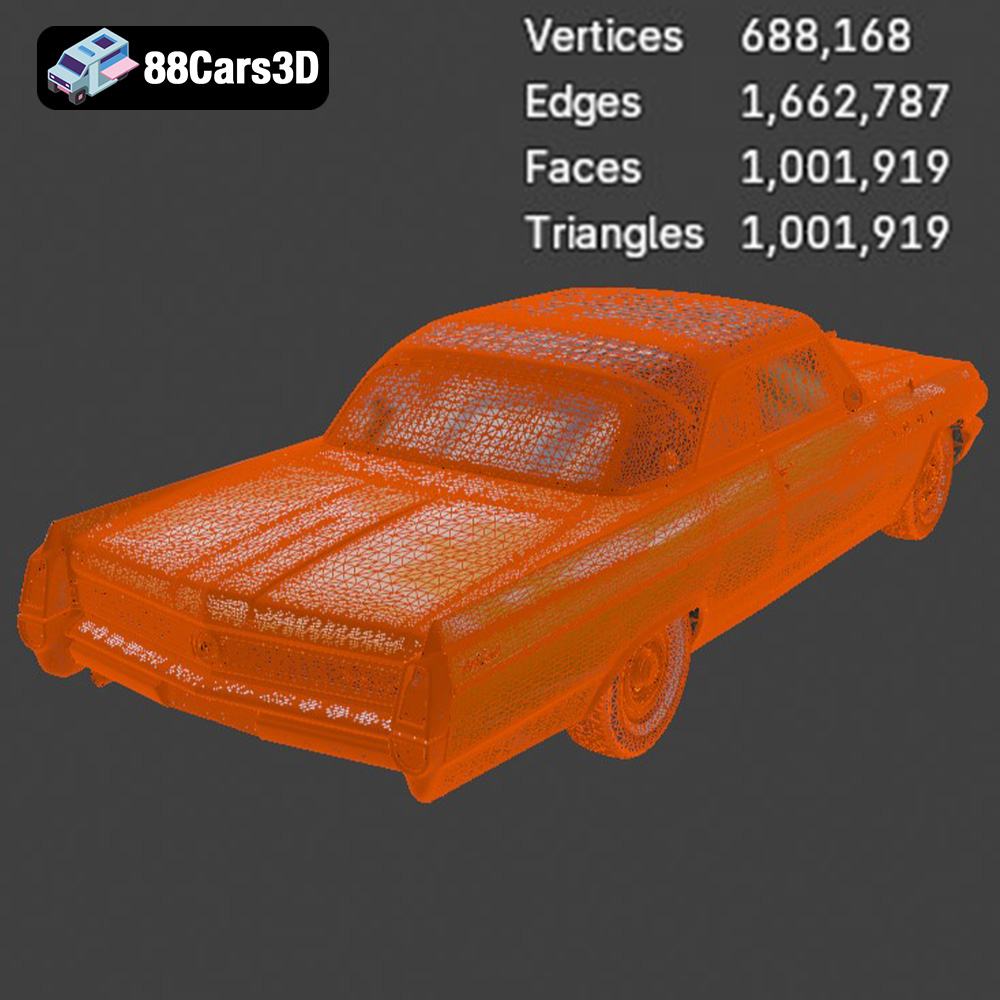
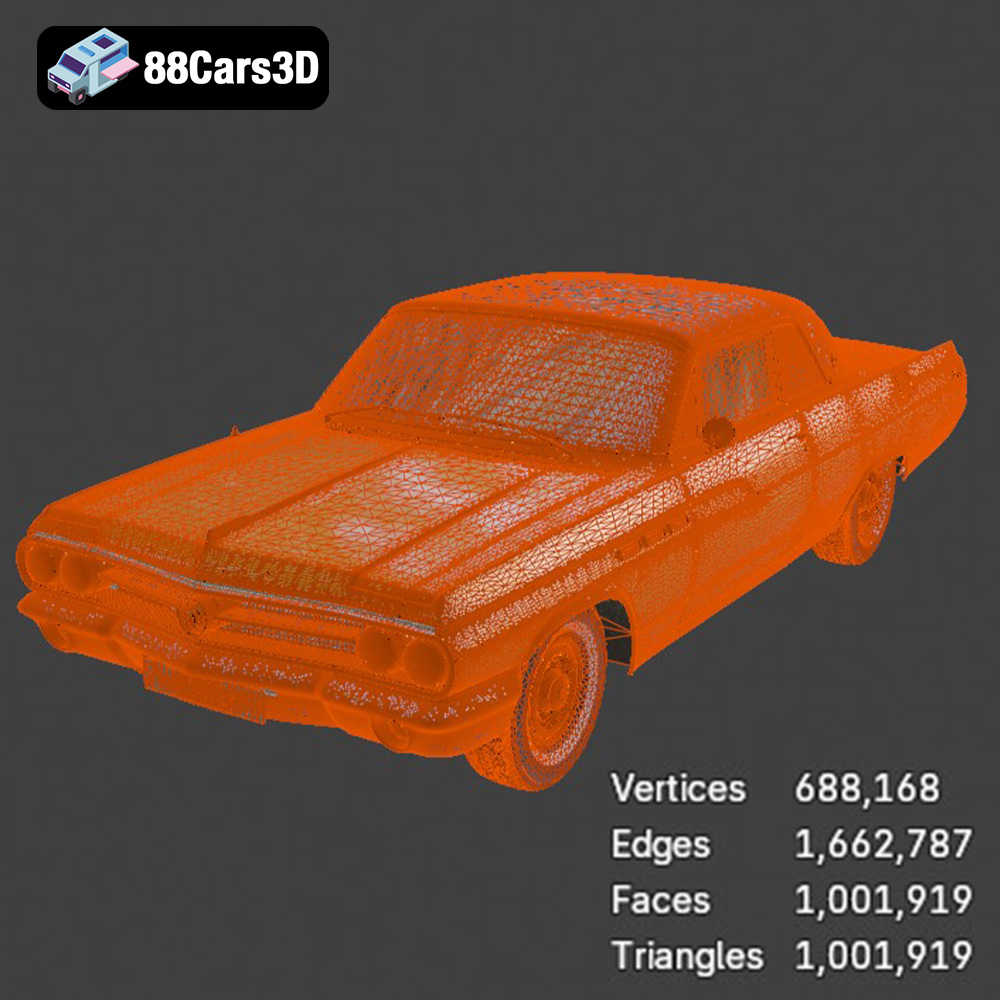
A “clean and well-organized mesh structure” is foundational. This means careful poly-count management, ensuring enough detail where needed (like the distinctive chrome grille or intricate interior dashboard) while maintaining efficiency elsewhere to keep the model lightweight. Good topology, often achieved with quad-based meshes, facilitates smooth subdivision, deformation for animation, and clean UV unwrapping. The Buick Wildcat model’s “optimized polygon flow for performance and realism” indicates that its geometry is constructed with these principles in mind. This is crucial for maintaining high frame rates in game engines and ensuring smooth deformations if the model is animated, for example, when the convertible top folds down or the suspension compresses.
Modern 3D rendering relies heavily on Physically Based Rendering (PBR) workflows, which mimic how light interacts with real-world materials. A high-quality 3D car model comes with well-prepared PBR textures (Albedo/Base Color, Metallic, Roughness, Normal, Ambient Occlusion, etc.). These textures, combined with accurate UV mapping, are what give the Buick Wildcat its realistic appearance – from the lustrous paint and reflective chrome to the subtle grain of the interior upholstery. The inclusion of textures and materials, as stated in the product description, ensures that the model is ready for immediate use in PBR-compliant renderers and game engines, allowing artists to achieve stunning realism without extensive material setup.
For any dynamic scene, rigging and animation capabilities are essential. The Buick Wildcat model’s “proper pivot setup for steering and wheel rotation” and “separate wheels and steering components for animation” are critical advantages. This foresight in the model’s construction saves animators countless hours, allowing them to directly import the model and begin animating realistic driving sequences, car door openings, or even the movement of the convertible top. This feature makes it an invaluable asset for automotive visualization, cinematic productions, and interactive simulations where motion is key. Such foundational preparation elevates a static model into a dynamic, adaptable asset.
The inherent flexibility of a well-constructed 3D model extends far beyond its initial purpose. The Buick Wildcat Convertible 1963 3D Model not only excels in digital environments but also offers exciting avenues for customization and even tangible creation through 3D printing. This versatility makes it a truly valuable asset for a diverse range of projects and creative expressions.
A digital classic car offers limitless customization opportunities that would be impractical or impossible with a physical vehicle. The Buick Wildcat model is designed with this in mind. Artists can effortlessly “change body color with classic 1960s finishes” or experiment with modern palettes. They can “add whitewall or custom wheel variations” to alter its character, or “configure soft-top up or down” to suit different scene requirements. Beyond the vehicle itself, customization extends to its environment: “adjust lighting for sunset cruise or retro city scenes,” add “vintage license plates,” and populate the scene with period-correct props and characters. This flexibility allows professionals to use the same core model to tell countless different stories, adapting it perfectly to specific client briefs, marketing campaigns, or personal artistic visions.
The ability to transform a digital model into a physical object through 3D printing is a revolutionary application. The Buick Wildcat Convertible 1963 3D Model is explicitly offered as a “3D Printable STL,” opening up a new dimension of utility. While the product description includes general 3D print settings, achieving a high-quality physical replica of such a detailed classic car requires careful consideration. Recommended scales (1:32 / 1:24 / 1:18 / 1:12) allow for various display options, from detailed desk models to larger, more intricate collectibles. The suggested layer height and wall thickness are crucial for capturing fine details while ensuring structural integrity. Supports are indeed “required for mirrors, bumper overhangs, and windshield frame,” indicating the complexity of the car’s geometry. Post-processing, including sanding, priming, and detailed painting (like gloss pastel or metallic finishes and chrome detailing), is essential to bring the printed model to life, mirroring the digital asset’s fidelity. This blend of digital precision and physical craftsmanship makes the model a fantastic resource for scale model enthusiasts, product designers, and anyone looking to hold a piece of automotive history in their hands.
The demand for high-quality 3D car models continues to grow across industries, from game development and film production to architectural visualization and advanced simulations. Assets like the Buick Wildcat Convertible 1963 3D Model exemplify the precision, technical excellence, and artistic dedication required to meet these demands. Its meticulous recreation of an American classic, combined with its versatile file formats, optimized geometry, and attention to animation-ready details, positions it as an invaluable resource for professionals.
Whether you’re creating a photorealistic rendering in 3ds Max, integrating a vintage vehicle into an immersive Unreal Engine game, developing an AR experience, or even 3D printing a collectible scale model, this Buick Wildcat model offers a robust and reliable foundation. It streamlines workflows, enhances visual fidelity, and empowers creative freedom, allowing you to focus on the artistic and technical challenges of your project rather than struggling with suboptimal assets. For those seeking top-tier 3D models that deliver both aesthetic excellence and technical integrity, exploring the curated selection at 88cars3d.com is an essential step towards elevating your next project.
The Buick Wildcat Convertible 1963 3D Model is a high-detail digital recreation of the classic American full-size performance convertible known for its bold styling, powerful V8 engine heritage, and open-top cruising appeal. The 1963 Wildcat combined luxury comfort with muscle-era presence, making it a standout of early 1960s American automotive design. This 3D model accurately represents the long and wide body proportions, dual headlight front fascia, chrome grille and bumpers, sculpted side lines, convertible soft-top configuration, rear deck detailing, and period-correct wheel design. Built with clean topology and real-world scale accuracy, it is ideal for rendering, animation, automotive visualization, game development, and AR/VR experiences. Perfect for retro boulevard scenes, beach environments, classic car showcases, cinematic productions, and vintage driving simulations.
$29.9
.1960scar
.americanclassic
.arvr
.automotive
.blend
.buick
.car3dmodel
.classiccar
.convertible
.fbx
.gameasset
.glb
.max
.obj
.ply
.rendering
.simulation
.stl
.unreal
.vintagecar
.wildcat1963