Get 50% OFF All Premium 3D & STL Models!

In the expansive and ever-evolving landscape of 3D content creation, the demand for highly detailed yet optimized 3D car models is ceaseless. From cinematic automotive rendering to dynamic open-world game environments and immersive architectural visualizations, the fidelity and performance of these digital assets are paramount. Professionals constantly seek models that strike the perfect balance between visual accuracy and technical efficiency, enabling them to bring their creative visions to life without compromising project deadlines or system resources.
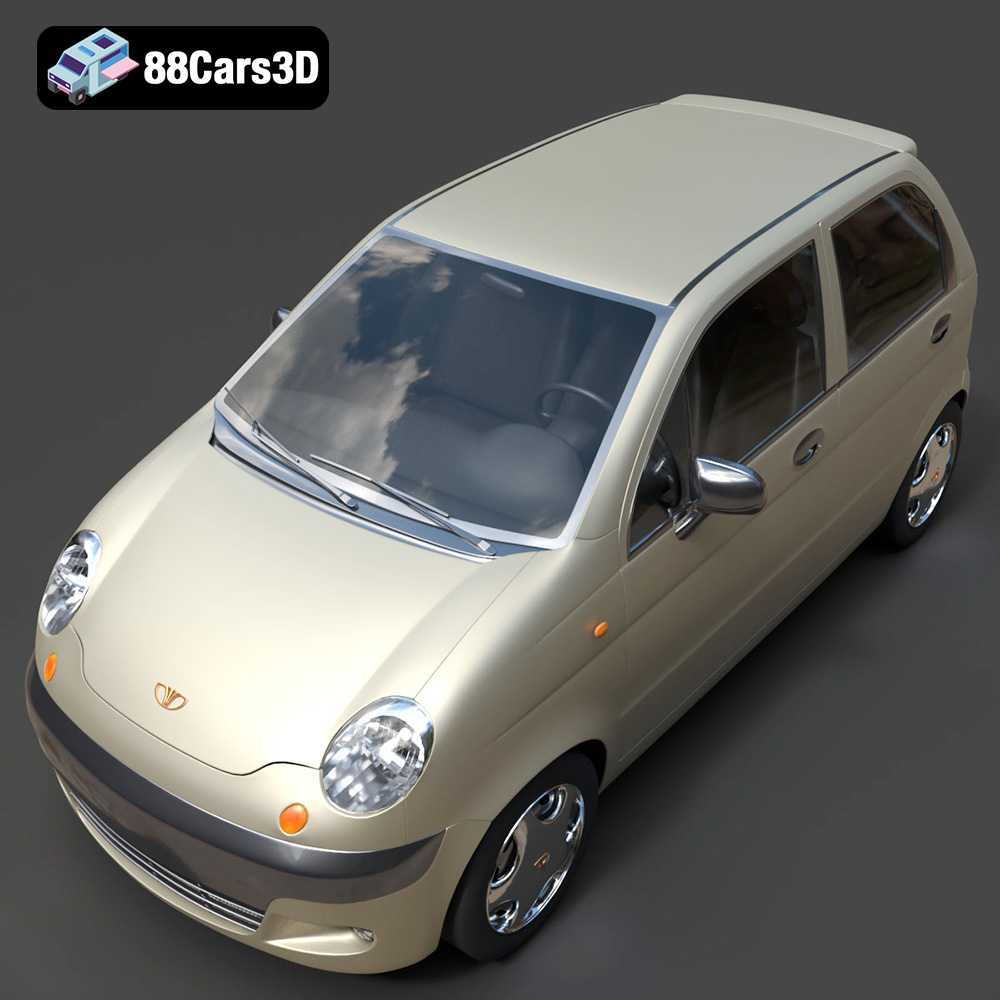
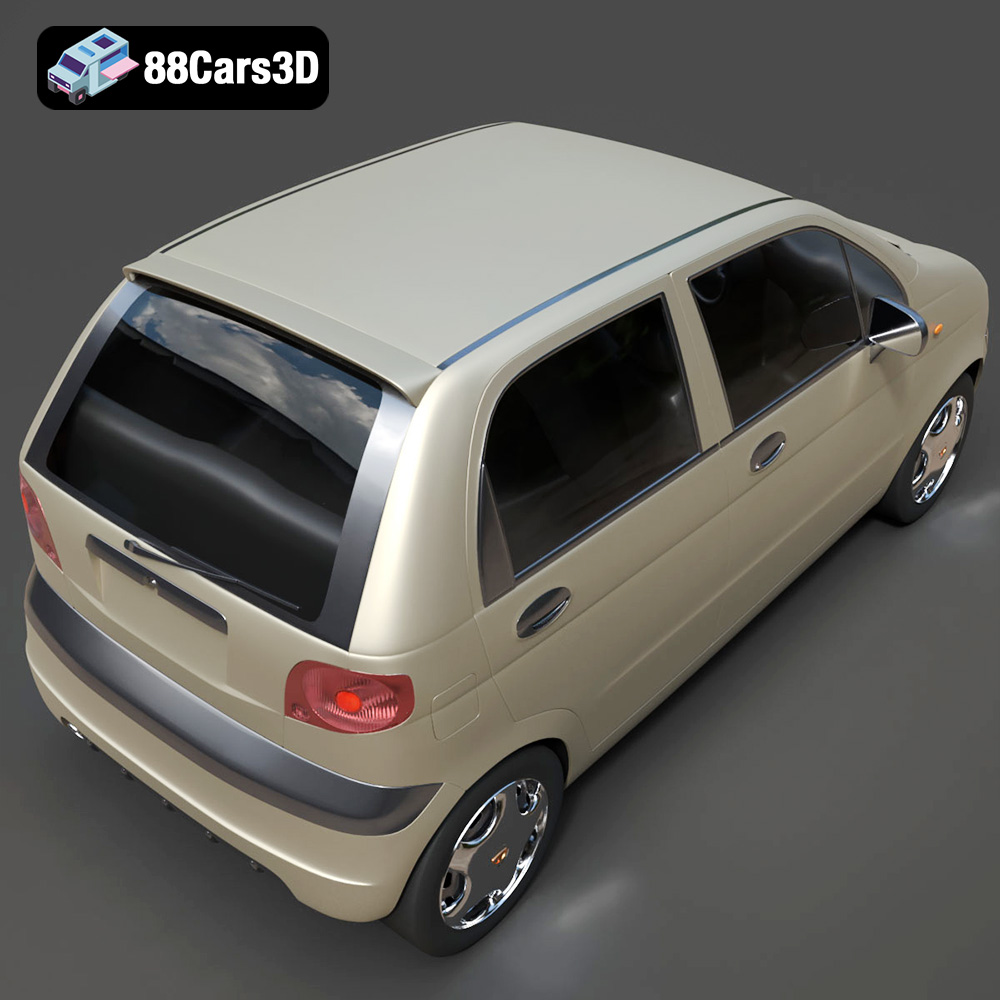
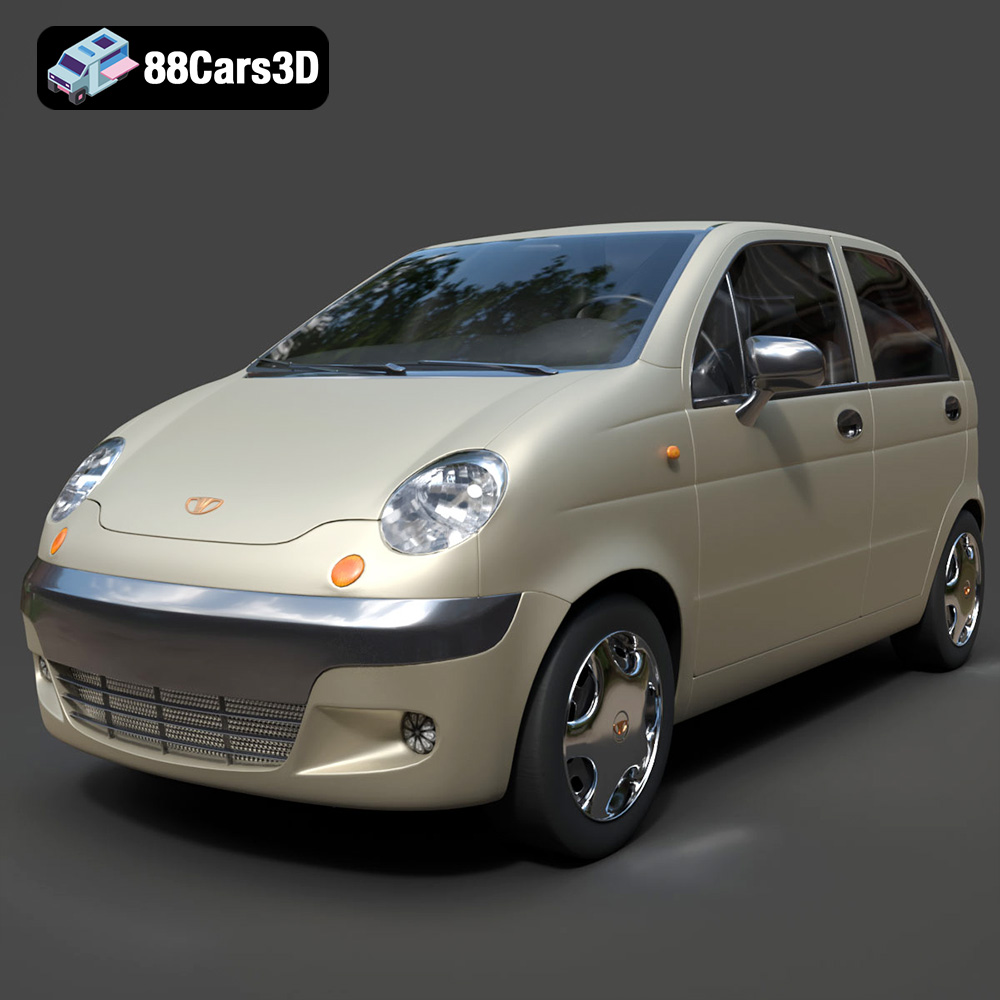
While the spotlight often falls on high-performance sports cars or luxury sedans, there’s an equally critical need for the unsung heroes of urban landscapes: the utilitarian vehicles that populate our streets and define the everyday fabric of cities worldwide. These workhorses, often overlooked, provide essential realism and regional authenticity to any digital scene. Today, we’re diving deep into one such quintessential vehicle, perfectly exemplified by the Daewoo Damas Microvan 3D Model, a remarkable asset available on 88cars3d.com that embodies optimization, accuracy, and versatility for a myriad of professional applications.
The Daewoo Damas is more than just a compact commercial microvan; it’s a cultural icon in many parts of the world, from the bustling markets of South Korea to the sprawling cities of Central Asia and the Middle East. Its distinctive cabover design, space-maximizing roofline, and humble utilitarian aesthetic make it instantly recognizable. Recreating such a vehicle in 3D requires a nuanced understanding of its real-world presence, coupled with a mastery of 3D modeling techniques to ensure it functions flawlessly across diverse pipelines. This article will explore the technical brilliance behind such 3D car models, dissecting their creation, application, and the crucial role they play in modern digital production.
The journey of a 3D model, from its initial creation to its final deployment, often involves navigating a complex ecosystem of file formats. Each format serves a specific purpose, offering unique advantages in terms of compatibility, data preservation, and optimization for particular workflows. The Daewoo Damas Microvan 3D Model, for instance, comes equipped with a comprehensive suite of formats, ensuring maximum flexibility for any professional pipeline. Understanding these formats is crucial for optimizing your workflow and achieving the desired results.
The .blend format is the native file type for Blender, the powerful open-source 3D creation suite. When you download a .blend file like that for the Daewoo Damas, you’re getting a fully editable Blender scene. This means not only the mesh data but also the materials, textures (if packed within the file or linked externally), lighting setups, camera positions, animations, and even physics simulations are preserved. For artists whose primary DCC (Digital Content Creation) tool is Blender, this format offers unparalleled flexibility. You can directly open the model, inspect its topology, modify its materials, adjust rigging, or even re-sculpt elements without any loss of fidelity or conversion artifacts. It’s the ultimate starting point for deep customization and seamless integration into Blender-centric projects.
Autodesk’s .fbx (Filmbox) format has long been the industry workhorse for exchanging 3D data between different software applications and particularly for game development. Its strength lies in its ability to store a wide range of 3D data, including geometry, materials, textures, animations, and camera data, in a highly compatible manner. For assets like the Daewoo Damas, .fbx is ideal for importing into game engines like Unreal Engine and Unity, or into other DCC applications such as 3ds Max, Maya, or Cinema 4D. It effectively acts as a bridge, ensuring that the model’s core attributes, especially its mesh, UVs, and PBR (Physically Based Rendering) material assignments, translate accurately across platforms. Its binary nature also makes it relatively compact and efficient for real-time applications.
The .obj (Wavefront OBJ) format is one of the oldest and most universally supported 3D file formats. While it’s primarily excellent for storing geometry (vertices, normals, UVs, and faces), it handles materials and textures through an accompanying .mtl (Material Template Library) file. The .obj format’s widespread compatibility makes it a safe bet for cross-software transfers when simpler geometry is the main concern, or when you need a guaranteed fallback option. For the Daewoo Damas, the .obj provides a clean, raw mesh that can be imported into virtually any 3D software for artists who prefer to rebuild materials or work with a minimal base.
.glb (GL Transmission Format Binary) is quickly becoming the go-to format for efficient transmission and loading of 3D scenes and models in web, augmented reality (AR), and virtual reality (VR) applications. It’s a binary container format that packages the 3D model, textures, animations, and other scene data into a single, self-contained file. This makes it incredibly efficient for streaming and display in browser-based viewers, mobile AR apps, and standalone VR experiences. The Daewoo Damas .glb file is specifically optimized for these real-time, lightweight environments, ensuring quick load times and smooth performance in interactive digital presentations or online product showcases.
The .stl (STereoLithography) format is the undisputed king of 3D printing. It represents 3D surfaces as a series of connected triangles (a triangular mesh), without any color, texture, or material information. Its simplicity makes it universally compatible with 3D printers and slicing software. For the Daewoo Damas 3D Model, the .stl file enables the conversion of the digital asset into a tangible, physical object. This is perfect for creating scale models for dioramas, automotive collectibles, or prototypes. The model’s manifold geometry ensures it’s print-ready, supporting physical manifestation of its detailed design.
The .ply (Polygon File Format or Stanford Triangle Format) is another versatile format often used for storing 3D data from 3D scanners, CAD software, and various modeling applications. It can store a wider range of properties than .obj, including color, transparency, surface normals, and even confidence values for each vertex. While not as universally used for game assets as .fbx, .ply offers a robust solution for preserving detailed mesh information, often preferred in scientific visualization, CAD workflows, or when detailed analysis of the mesh structure is required. For the Daewoo Damas, the .ply format offers an alternative high-fidelity mesh export, valuable for specific engineering or display applications.
The inclusion of an .unreal file (often referring to assets specifically prepared and packaged for Unreal Engine, perhaps as a .uasset or within a small project file structure) highlights a direct, optimized path for integration. This format signifies that the model has likely undergone specific preparation for Unreal Engine’s conventions, such as proper scaling, material setup (using Unreal’s PBR shader system), and potentially collision mesh generation. This “engine-ready” state drastically reduces the time and effort required for developers to get the Daewoo Damas up and running in their Unreal projects, ensuring it’s battle-tested for real-time performance and visual consistency within the engine’s rendering pipeline.
Finally, the .max format is the native file type for Autodesk 3ds Max, a leading software for 3D modeling, animation, and rendering. Similar to .blend, a .max file preserves the entire scene, including all modifiers, materials, lighting, cameras, and animations, exactly as they were created within 3ds Max. For professionals working in architectural visualization, automotive rendering, or any field heavily reliant on 3ds Max, this format offers unparalleled access to the model’s construction. It allows for advanced customization, integration into complex scenes, or even re-rigging with 3ds Max’s powerful animation tools, making the Daewoo Damas an incredibly flexible asset for users of this robust platform.
The availability of such a diverse array of formats for the Daewoo Damas Microvan 3D Model underscores its professional-grade quality and the commitment of 88cars3d.com to provide versatile assets that fit seamlessly into any artist’s or developer’s toolkit.
The Daewoo Damas is far more than just a means of transport; it’s a cultural touchstone in numerous regions, embodying resilience, practicality, and an unwavering spirit of utility. Capturing this essence in a 3D model requires meticulous attention to detail, not just in its physical form but in its implied narrative. The Daewoo Damas Microvan 3D Model available on 88cars3d.com excels in this regard, offering a digital twin that resonates with its real-world counterpart.
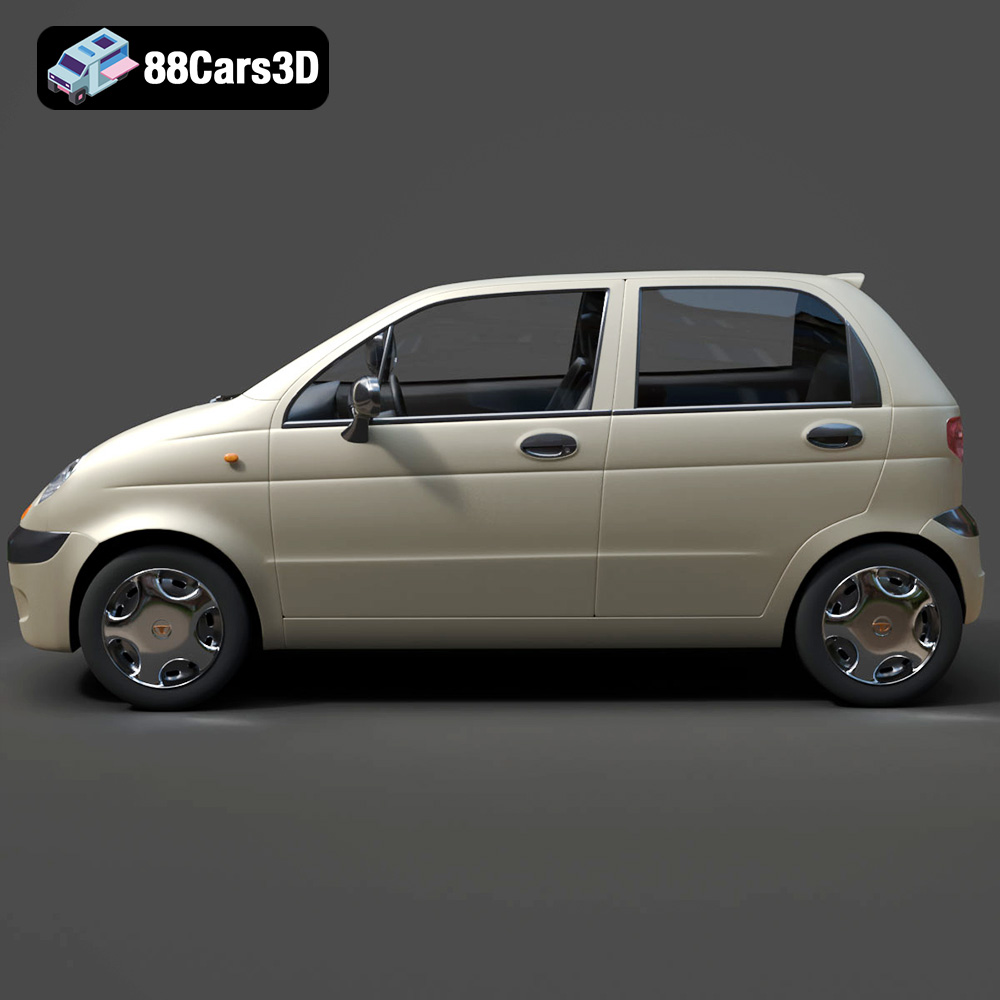
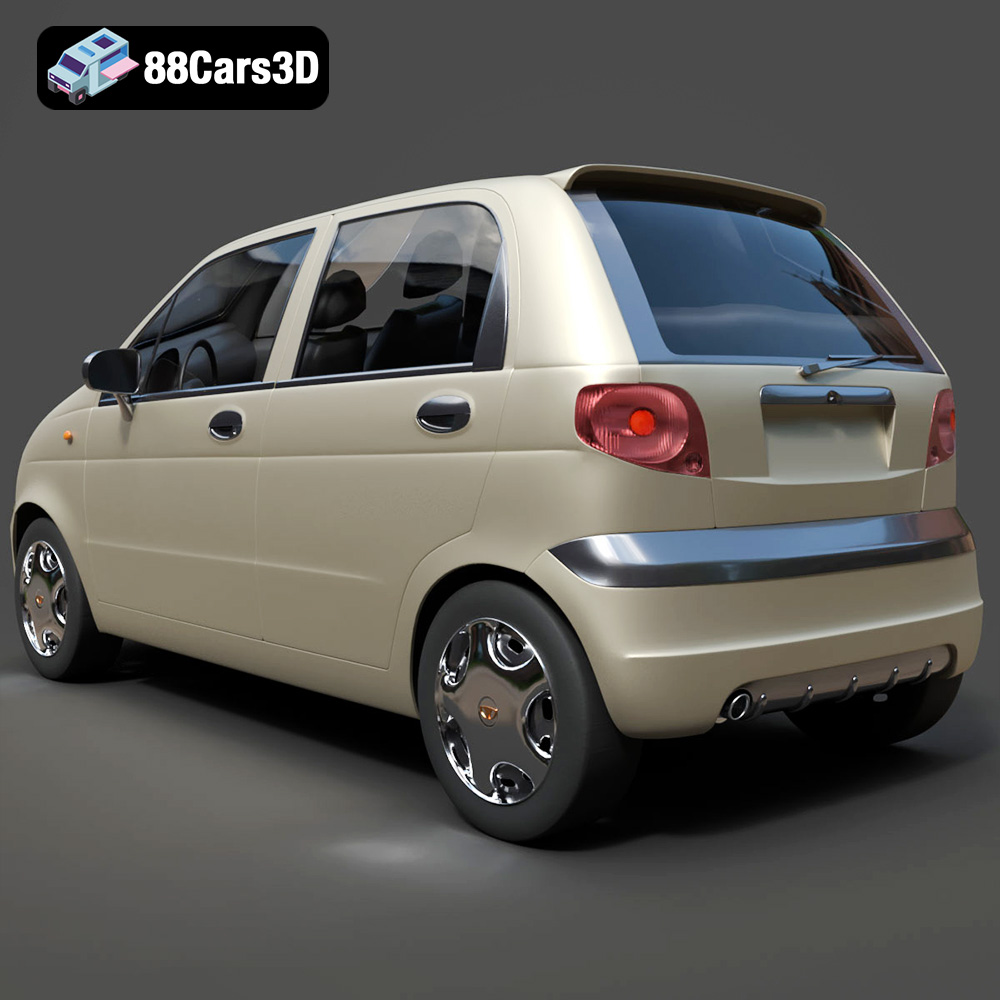
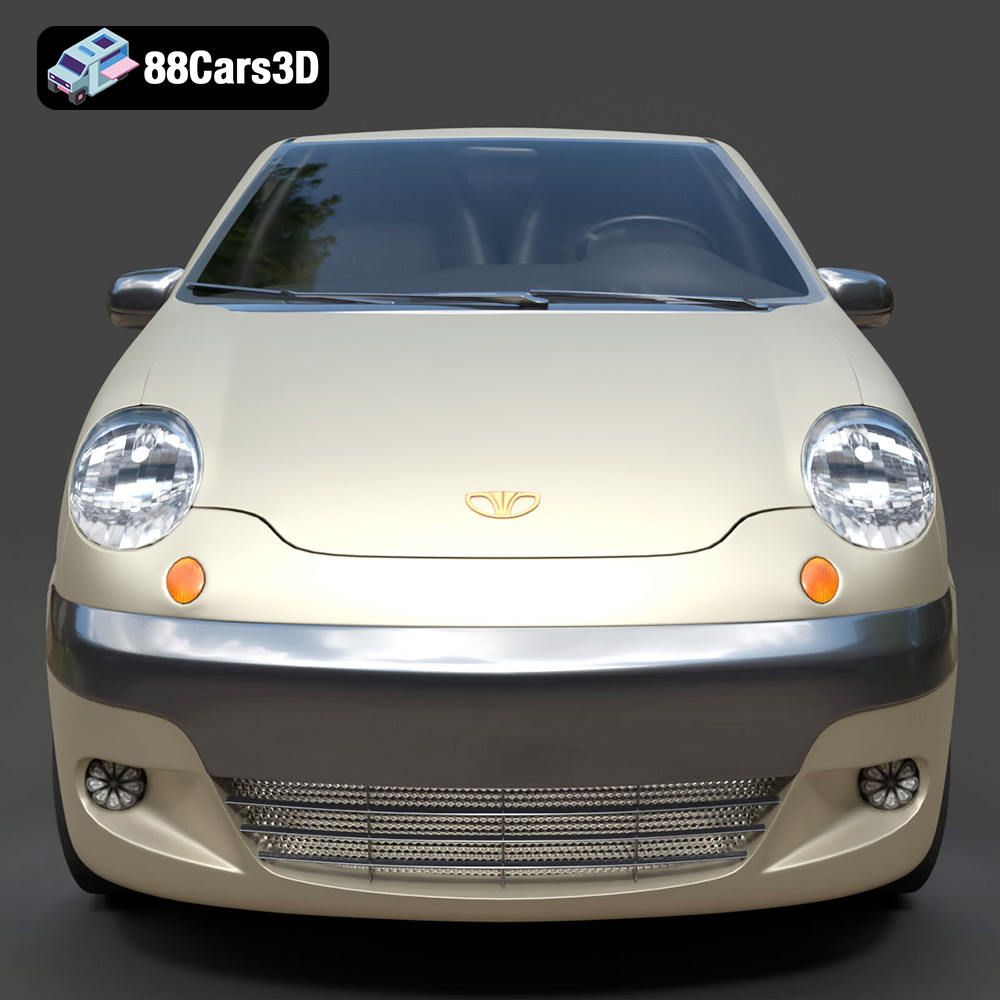
The Daewoo Damas’s design is defined by its commitment to maximum interior volume within a compact footprint. This translates to a distinctive, boxy cabover aesthetic, where the driver sits directly above the front axle. The 3D model accurately replicates these unique proportions, from the flat front fascia with its large rectangular headlight assemblies to the tall, space-maximizing roofline. The utilitarian front fascia, often seen with unpainted black plastic bumpers, is faithfully reproduced, giving the model its authentic, hard-working character. Details like the dual sliding rear doors and a functional large rear liftgate are not just visually present but modeled as separate, rig-ready components. This level of accurate representation ensures that whether the model is used for distant background traffic or close-up rendering, its identity is unmistakable and believable.
While often seen from the exterior, the interior of a vehicle like the Damas is crucial for specific applications such as first-person game perspectives, VR experiences, or detailed architectural visualizations that peer through windows. The 3D model’s interior captures the practical, Spartan driver-centric cabin layout typical of affordable commercial vans. It features a detailed minimalist dashboard, a classic two-spoke steering wheel, and analog gauges. Critically, the realistic seating geometry, with front seats mounted directly over the front axle, is accurately modeled. The rear space is configurable, designed to be suitable for empty cargo delivery, or, with simple modifications, for passenger benches, reflecting its real-world versatility as a delivery van or a “Marshrutka” (route taxi). This optimization ensures the interior looks authentic from the exterior or in VR, without adding unnecessary polygon overhead.
The true value of a professional 3D model extends beyond its visual accuracy to its underlying technical structure. For the Daewoo Damas Microvan 3D Model, a key focus has been on achieving an optimal balance between visual fidelity and performance efficiency, making it suitable for demanding pipelines.
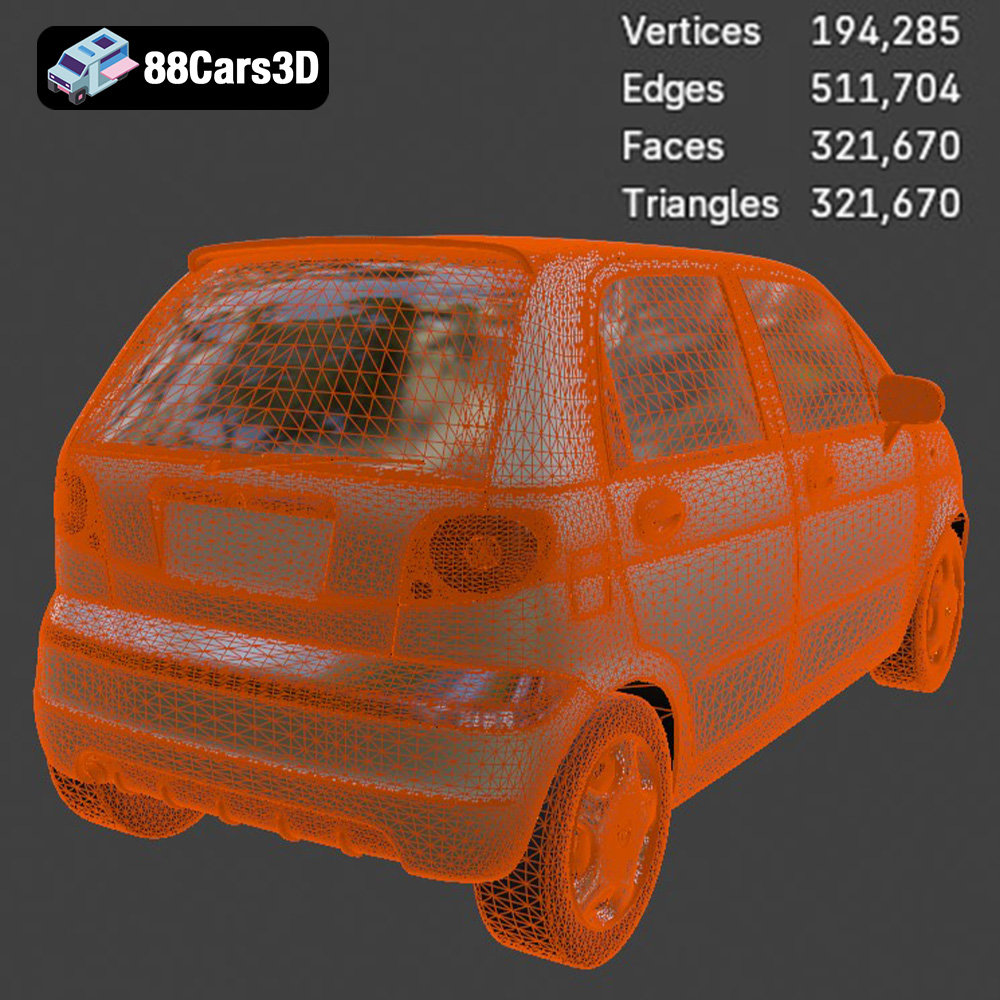
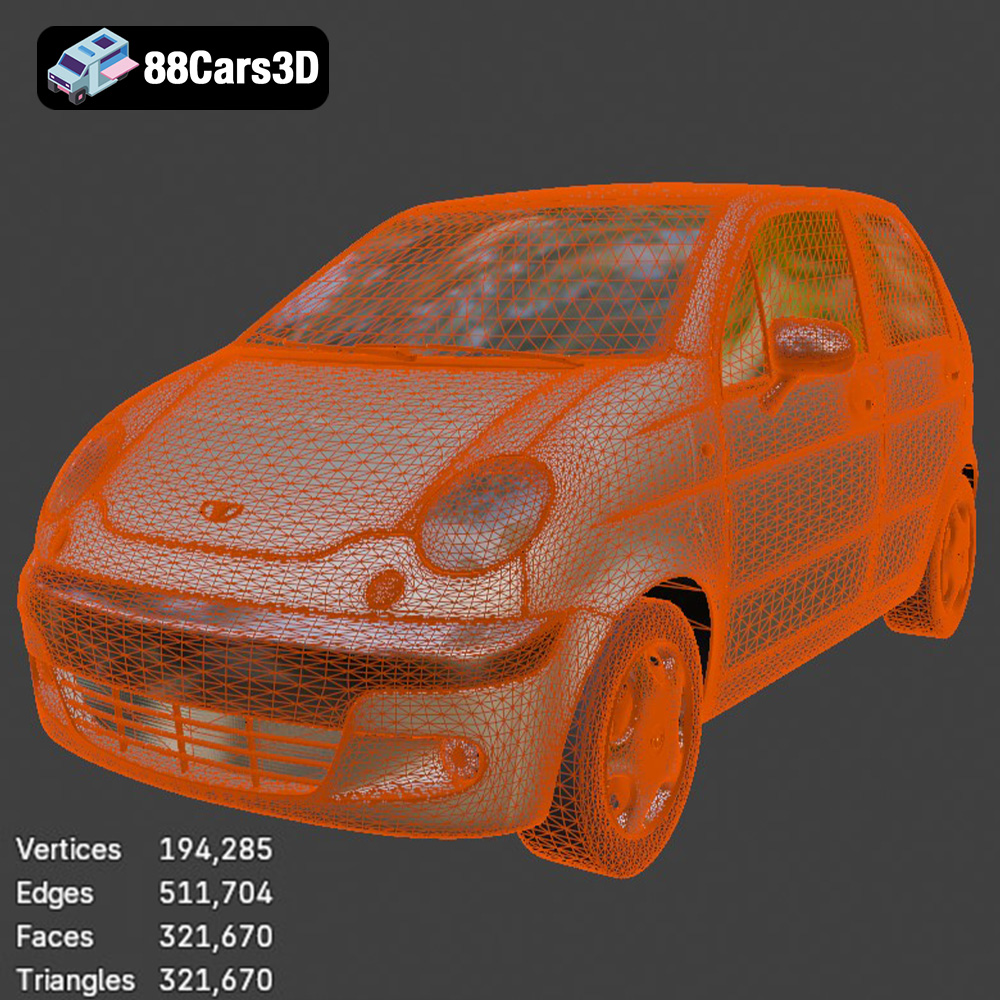
The Daewoo Damas 3D Model boasts a highly efficient, impeccably clean mid-polygon topology, with just over 321,000 triangles. This figure represents a sweet spot for professional assets. A lower poly count might sacrifice essential visual details, making the model appear blocky or simplistic in close-ups. Conversely, an excessively high poly count (millions of triangles) would severely hinder real-time performance, particularly in scenes requiring multiple instances of the vehicle or in resource-intensive game engines. At 321k triangles, the Damas provides crisp visual fidelity for close-up automotive rendering, ensuring smooth curves and defined edges, while remaining lightweight enough to be duplicated endlessly as background traffic without choking the render engine or causing frame rate drops in modern game engines. The stated vertices (194,285) and edges (511,704) further attest to this careful optimization, indicating a well-managed mesh without excessive subdivision or redundant geometry.
Professional applications often require more than just a static model; animation is frequently a necessity. The Daewoo Damas model addresses this by featuring separate wheels, steering components, and doors. This modularity is critical for rigging, allowing animators to easily set up controls for wheel rotation, steering articulation, and the opening/closing of the dual sliding rear doors and liftgate. The proper pivot setup for these components is a testament to the model’s professional-grade construction, saving countless hours for riggers and animators. Whether simulating a delivery route, creating a dynamic traffic flow, or developing interactive vehicle mechanics in a game, the model’s structure facilitates complex animated sequences with ease.
The true measure of a high-quality 3D asset lies in its seamless integration into diverse professional workflows. The Daewoo Damas Microvan 3D Model is designed with this versatility in mind, providing artists and developers with robust foundations for their projects, whether in traditional rendering software or cutting-edge real-time engines.
For artists working within industry-standard DCC (Digital Content Creation) software like Blender and 3ds Max, the Daewoo Damas model provides an immediate advantage. With native .blend and .max files included, users can open the project with all its materials, textures (if packed or properly linked), and hierarchy intact. In Blender, artists can effortlessly re-texture the model, apply custom shaders, or integrate it into complex scene layouts. The clean, quad-heavy topology is highly conducive to further modification, whether it’s adding subtle dents for a weathered look using sculpting tools or preparing the mesh for advanced subdivision. Similarly, 3ds Max users benefit from the native file, allowing for immediate access to the model’s construction, enabling quick setup for V-Ray or Corona renders, complex lighting scenarios, and advanced animation sequences. The proper pivot setups for doors and wheels are instantly usable, streamlining the rigging process for intricate automotive animations.
The landscape of game development demands assets that are not only visually appealing but also highly optimized for real-time performance. The Daewoo Damas 3D Model excels as a game asset, particularly for Unreal Engine and Unity. Its mid-polygon count (~321k triangles) is perfectly balanced to provide excellent visual fidelity without taxing the engine, making it ideal for populating realistic global street scenes, commercial fleet simulations, or as a driveable vehicle in mobile game development. The inclusion of the .fbx format ensures a smooth import process into both engines, preserving UV maps, material IDs, and rigging information. For Unreal Engine, specifically, the “engine-ready” .unreal format option likely implies that the model has been pre-configured with appropriate scaling, PBR material setups, and potentially simple collision meshes, drastically cutting down on integration time. Developers can easily create multiple instances of the Damas to simulate dense traffic, benefiting from engine-level instancing features without a significant performance hit. This makes it the ultimate “everyday traffic” and delivery vehicle for open-world games, logistics simulators, and mobile driving titles.
The versatility of a well-crafted 3D model extends far beyond traditional screen-based rendering. Modern production pipelines increasingly demand assets capable of bridging the gap between digital and physical, and the Daewoo Damas Microvan 3D Model is designed to meet these diverse needs.
For enthusiasts and professionals in the collectible and diorama communities, the ability to translate a digital model into a physical object is invaluable. The Daewoo Damas 3D Model is fully convertible to the .stl format, making it ready for 3D printing. This opens up possibilities for creating display-scale commercial diecast models or adding highly accurate vehicles to urban dioramas. The product description provides excellent print settings: a recommended scale of 1:24, 1:32, or 1:43, ideal for miniature scenes. For optimal detail, especially for smaller elements like wipers and door tracks, resin printing with a layer height of 0.04–0.12 mm is recommended. Sensible wall thickness (1.2–2.0 mm) and infill (15–25%) ensure structural integrity without excessive material usage. Crucially, specific support requirements are outlined for elements like side mirrors, wheel arches, and bumper overhangs, along with a recommendation for printing the body angled for a smooth surface finish and wheels separately. Post-processing with sanding, primer, and classic commercial colors like Factory White or Taxi Yellow can bring these physical models to life with remarkable authenticity.
Augmented Reality (AR) and Virtual Reality (VR) represent the next frontier for interactive digital experiences. The inherent optimization of the Daewoo Damas 3D Model makes it an excellent candidate for these emerging technologies. Its mid-polygon count and clean topology ensure smooth performance in AR applications running on mobile devices, where computational resources are often limited. For VR, where maintaining high frame rates is critical to prevent motion sickness, the lightweight nature of the Damas model is a significant advantage. The inclusion of the .glb format specifically caters to these applications, as it’s optimized for efficient transmission and display in web-based AR/VR viewers and standalone headsets. Imagine using this model in interactive digital delivery fleet configurators, allowing users to customize paint jobs and branding in real-time, or populating detailed city-planning VR experiences where every vehicle contributes to the sense of immersion and scale. Its optimized geometry is specifically tailored to look authentic from the exterior or in VR, making it a highly effective tool for creating engaging, interactive virtual worlds.
The true utility of a versatile 3D model like the Daewoo Damas lies not just in its base quality, but in its potential for adaptation. Professional projects rarely use a model straight out of the box; customization is key to achieving unique and specific artistic visions.
The Daewoo Damas Microvan 3D Model offers extensive customization options, allowing artists to transform its appearance to fit any narrative or environment. The most straightforward customization is changing exterior paint colors, which can shift its persona dramatically from a pristine fleet vehicle to a weathered, working urban van. Artists can easily apply striking commercial palettes, match specific company branding, or create dusty, sun-bleached finishes appropriate for arid regions. Beyond color, the ability to add custom delivery logistics decals, company branding, or even “Marshrutka” (route taxi) signage to the side panels is crucial for regional accuracy and storytelling. This level of detail allows for a subtle yet powerful injection of realism into any scene. Furthermore, applying weathering materials—such as dust, mud, or rust—can instantly transform the model into a gritty, realistic urban environment asset, reflecting the hard life of a commercial workhorse. Adaptable lighting setups can then further enhance the mood, whether it’s for a sunny urban commute or a moody, rainy night-time delivery route, demonstrating the model’s flexibility in various atmospheric conditions.
In architectural visualization (ArchViz), the Daewoo Damas 3D Model is invaluable for grounding renders in reality. Imagine a photorealistic render of a new apartment complex in Tashkent or a bustling market street scene in Seoul. Without region-accurate traffic, these scenes can feel generic or artificial. The Damas, being a ubiquitous vehicle in these areas, provides that critical layer of authenticity. Its optimized nature means multiple instances can be placed without hindering render times, breathing authentic life into the visualization. This adds significant value, allowing architects and developers to present their projects within a believable, culturally specific context. Similarly, in game development, models like the Daewoo Damas are the backbone of realistic open-world environments. They serve as essential background traffic in major cities, as mission-critical delivery vehicles in logistics simulators, or even as modifiable player vehicles in mobile driving titles. A game set in Central Asia or the Middle East would feel incomplete without the constant presence of the Damas. Its game-ready optimization ensures smooth performance even when dozens of these vehicles are on screen, making it a powerful asset for developers striving for immersive and geographically accurate game worlds.
The world of 3D content creation thrives on precision, versatility, and efficiency. The Daewoo Damas Microvan 3D Model embodies these principles, standing out as a meticulously crafted asset designed to meet the rigorous demands of professional pipelines. From its accurately captured utilitarian aesthetics and optimized interior to its technically clean mid-polygon topology of 321k triangles, every aspect of this model is engineered for performance and visual fidelity.
Its comprehensive file format support—including .blend, .fbx, .obj, .glb, .stl, .ply, .unreal, and .max—ensures seamless integration into any workflow, whether you’re animating in 3ds Max, rendering in Blender, developing a game in Unreal Engine, or preparing for 3D printing. This level of thoughtful preparation saves countless hours for artists and developers, allowing them to focus on creativity rather than compatibility issues.
The Daewoo Damas is more than just a model; it’s a versatile tool that can populate realistic game worlds, add regional authenticity to architectural visualizations, power immersive AR/VR experiences, and even become a tangible scale model. Its customization potential further enhances its value, allowing it to be tailored to any scene or narrative with specific paint schemes, decals, and weathering effects.
For professionals seeking high-quality 3D car models that offer both exceptional visual appeal and robust technical performance, the Daewoo Damas Microvan 3D Model from 88cars3d.com represents an invaluable investment. It’s a testament to how specialized, well-engineered assets can elevate the quality and efficiency of any 3D project, proving that even the humblest of vehicles can be a powerhouse in the digital realm.
The Daewoo Damas 3D Model is an incredibly accurate, highly optimized digital recreation of the legendary compact commercial microvan. Based on the classic kei-van architecture, the Damas is a ubiquitous and unstoppable workhorse recognized globally—serving as the ultimate urban delivery vehicle, taxi, and daily commuter, particularly across South Korea, Central Asia (such as Uzbekistan), and the Middle East. This 3D model beautifully captures the timeless, utilitarian cabover aesthetic of the classic Damas. It features the distinctive flat front fascia, large rectangular headlight assemblies, dual sliding passenger/cargo doors, and a tall, space-maximizing roofline. Built with a highly efficient, impeccably clean mid-polygon topology (just over 321k triangles), it strikes the absolute perfect balance. It provides crisp visual fidelity for close-up automotive rendering while remaining lightweight enough to be duplicated endlessly as background traffic in modern game engines. Perfect for populating realistic global street scenes, commercial fleet simulations, architectural visualizations, and mobile game development.
$29