Get 50% OFF All Premium 3D & STL Models!

In the rapidly evolving landscape of digital content creation, the demand for exceptionally detailed and versatile 3D models has never been higher. From breathtaking automotive visualizations that grace advertising campaigns to immersive open-world environments in the latest video games, a high-quality 3D car model is often the cornerstone of a successful project. These assets are not just static representations; they are dynamic tools that breathe life into digital worlds, driving narratives and engaging audiences across a multitude of platforms.
The quest for realism, performance, and adaptability pushes artists and developers to seek out models that meet stringent technical and aesthetic criteria. It’s a pursuit that underscores the value of meticulously crafted digital assets capable of seamlessly integrating into diverse professional workflows. This comprehensive guide will explore the intricacies of leveraging premium 3D car models, using the exceptional BMW 1 Series Coupe 2009 3D Model as our focal point. This particular model, available at 88cars3d.com, exemplifies the blend of accuracy, detail, and versatility that professionals require, making it an ideal candidate for rendering, game development, AR/VR experiences, and even 3D printing.
We’ll delve into the critical technical aspects that define a superior 3D asset, dissect its applications across various industries, and provide insights into optimizing workflows from initial design to final deployment. Whether you’re a seasoned professional or an aspiring digital artist, understanding the nuances of these sophisticated tools is key to unlocking their full potential.
The ability to utilize a 3D model effectively hinges significantly on understanding its native and export file formats. Each format serves a specific purpose, offering unique advantages in terms of data retention, compatibility, and optimization for particular applications. The BMW 1 Series Coupe 2009 3D Model stands out by offering a comprehensive suite of file formats, ensuring maximum flexibility for any project. Navigating these options is crucial for any professional workflow, dictating how a model can be edited, rendered, or deployed.
The .blend file is Blender’s native format, renowned for its comprehensiveness. When you acquire a .blend file, you’re not just getting the mesh; you’re receiving a fully editable scene complete with materials, textures, lighting, cameras, animations, and even physics setups if present. This format is ideal for artists who primarily work within Blender and desire full control over every aspect of the model. It allows for non-destructive workflows, enabling deep customization, material tweaking, and animation adjustments without the hurdles of re-importing or re-establishing relationships between scene elements. For the BMW 1 Series Coupe 2009, having a .blend file means users can immediately dive into Cycles or Eevee rendering, adjust body colors, modify interior accents, or animate specific components like the steering and wheels with ease, leveraging Blender’s robust toolset.
As Autodesk’s Filmbox format, .fbx has become an industry standard for exchanging 3D data between different software applications. It’s incredibly versatile, capable of storing geometry, materials, textures, animations, bones, and rigs. The .fbx format is particularly ideal for real-time pipelines, including game engines like Unreal Engine and Unity, and is widely supported by DCC (Digital Content Creation) software such as 3ds Max, Maya, and Blender itself. Its ability to retain complex animation data and material assignments makes it indispensable for projects requiring movement or dynamic interaction, ensuring a smooth transition of the BMW 1 Series Coupe 2009 into game development or cinematic sequences.
The .obj (Wavefront Object) format is one of the most widely supported and simplest 3D file formats. It primarily stores geometric data – vertices, normals, UV coordinates, and faces – along with references to external material files (.mtl) for basic shading information. While .obj doesn’t typically carry animation or rigging data, its universal compatibility makes it an excellent choice for static models and for ensuring broad cross-software compatibility. It’s a reliable fallback for importing geometry into almost any 3D application, making the BMW 1 Series Coupe 2009 accessible even in highly specialized or legacy workflows where other formats might pose compatibility challenges.
The .glb (GL Transmission Format Binary) format is a compact, single-file representation of the glTF (Graphics Language Transmission Format) standard. Designed for efficient transmission and loading of 3D scenes and models by applications, it’s quickly becoming the go-to format for AR, VR, and browser-based 3D viewing. .glb files embed all necessary data (geometry, textures, animations, materials) into a single binary file, simplifying distribution and integration. For showcasing the BMW 1 Series Coupe 2009 in a virtual showroom or an interactive web experience, .glb offers superior performance and ease of use, delivering a rich 3D experience directly within a browser or an AR/VR application.
.stl (Stereolithography) is the de facto standard file format for 3D printing. It represents a 3D object as a collection of unconnected triangular facets, making it suitable for conveying surface geometry to 3D printers. For 3D printing, the model must be “manifold,” meaning it has no holes, self-intersecting geometry, or reversed normals – effectively being a watertight solid. The inclusion of an .stl file for the BMW 1 Series Coupe 2009 means that the digital model is ready for physical manifestation, allowing enthusiasts to print scale models, prototypes, or collectibles, as specifically highlighted by its 3D printable nature.
The .ply (Polygon File Format) is often used for storing 3D data from 3D scanners, CAD systems, and for scientific applications. It can store a wide range of data, including color, transparency, normals, texture coordinates, and other properties at each vertex or face. While not as universally used for general asset exchange as .fbx or .obj, .ply is valuable for applications requiring high-precision mesh data, potentially with per-vertex attributes. Its presence indicates a model’s suitability for advanced analysis or integration into workflows that prioritize granular data.
The .unreal format signifies that a model has been specifically prepared and optimized for seamless integration into Unreal Engine. This often means the asset includes properly configured materials, collision meshes, Level of Detail (LOD) setups, and potentially even Unreal Engine Blueprints for interactive functionality. For game developers or anyone working within the Unreal ecosystem, this format drastically reduces import times and setup work, ensuring the BMW 1 Series Coupe 2009 is an ‘out-of-the-box’ solution ready for immediate deployment in high-fidelity real-time simulations and games.
Similar to .blend for Blender, the .max file is the native format for Autodesk 3ds Max, a powerhouse in architectural visualization, automotive rendering, and animation. A .max file contains the complete scene, including geometry, materials, textures, lighting, cameras, modifiers, and animation data specific to 3ds Max’s environment. For professionals utilizing 3ds Max with renderers like V-Ray or Corona, the .max format offers the highest level of detail and editability, allowing for direct manipulation of the BMW 1 Series Coupe 2009 model within a familiar and powerful ecosystem for creating stunning photorealistic imagery and complex animations.
The availability of these diverse formats for the BMW 1 Series Coupe 2009 3D Model from 88cars3d.com underscores its utility across virtually any digital project, from high-end cinematic rendering to functional 3D printing, empowering creators with unparalleled flexibility.
Automotive visualization is an art form that merges technical precision with creative flair, essential for marketing, design reviews, and virtual prototyping. High-quality 3D car models are the bedrock of this discipline, enabling the creation of stunning photorealistic imagery and compelling animations. The BMW 1 Series Coupe 2009 3D Model, with its accurate proportions, detailed exterior, and meticulously crafted interior, provides an exceptional foundation for such endeavors.
For professionals in automotive advertising and design, achieving photorealism is paramount. Software like Autodesk 3ds Max, paired with advanced render engines such as V-Ray or Corona Renderer, are the tools of choice. With the .max format provided, users can seamlessly import the BMW 1 Series Coupe 2009 directly into 3ds Max. The process involves setting up sophisticated material shaders, often utilizing Physically Based Rendering (PBR) workflows to accurately depict metallic paints, glass reflections, and intricate interior textures. Lighting is equally critical, typically involving High Dynamic Range Images (HDRIs) for realistic environmental reflections and studio-style lighting setups to highlight the car’s sculpted lines. The model’s clean topology and real-world scale ensure that light interacts accurately with its surfaces, resulting in authentic reflections and shadows that are indistinguishable from real photography. Consider a scenario where an advertising agency needs to create a series of digital brochures showcasing classic BMW models; the accurate detail of this 1 Series Coupe model dramatically reduces production time while maintaining the highest visual fidelity.
Beyond static renders, premium 3D car models are vital for dynamic animations and cinematic sequences. For the BMW 1 Series Coupe 2009, its separate wheels and steering components are a significant advantage. This modularity allows animators to easily set up rigs for realistic wheel rotation, independent suspension movement, and responsive steering. Utilizing software like Blender (with its .blend format) or 3ds Max, animators can craft engaging narratives: a tracking shot through an urban landscape, a close-up revealing the intricate brake components during a corner, or a slow pan highlighting the iconic kidney grille. These animations are crucial for automotive commercials, product reveals, and even interactive experiences, providing a comprehensive view of the vehicle’s design and performance attributes. The robust technical setup of the 88cars3d.com model ensures that these animations run smoothly and look convincing.
The rise of augmented and virtual reality has opened new avenues for showcasing vehicles. The BMW 1 Series Coupe 2009 3D Model, particularly in its optimized .glb format, is perfectly suited for immersive AR/VR applications. Imagine a virtual showroom where potential buyers can explore the car’s exterior and interior in full 3D, customize its color and wheels in real-time, and even “sit inside” to experience the dashboard and seat geometry. For real-time applications, efficient geometry and properly set up materials are crucial for maintaining high frame rates. The model’s optimized polygon flow and real-world scale make it an excellent candidate for such interactive experiences, offering a glimpse into the future of automotive sales and marketing.
Integrating high-fidelity 3D car models into game development presents a unique set of challenges, balancing visual realism with real-time performance. Game assets require meticulous optimization, precise technical specifications, and thoughtful implementation to ensure a smooth, immersive player experience. The BMW 1 Series Coupe 2009 3D Model from 88cars3d.com is engineered to meet these rigorous demands, making it a valuable addition to any game developer’s library.
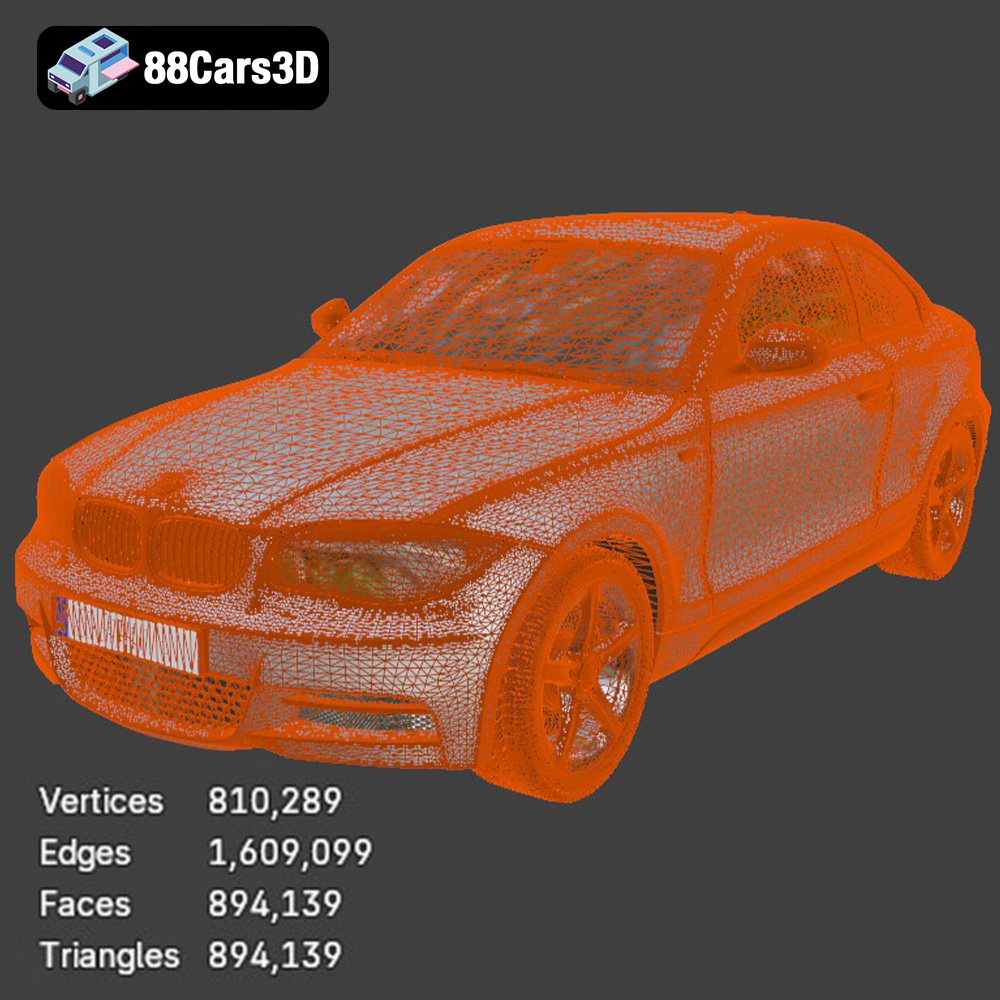
Game engines like Unreal Engine and Unity demand highly optimized assets. The .fbx and .unreal formats of the BMW 1 Series Coupe 2009 model are particularly beneficial here. Optimization involves managing polygon counts (often through Level of Detail or LODs), creating efficient UV maps for texture atlases, and generating accurate collision meshes. For the BMW 1 Series Coupe 2009, the “optimized polygon flow for performance and realism” is a key technical advantage, meaning the geometry is structured to render efficiently without sacrificing visual fidelity. Developers can implement multiple LODs, where a high-detail mesh is used when the car is close to the camera, and progressively lower-detail versions are swapped in as it moves further away. This ensures excellent visual quality up close while maintaining high frame rates across large open-world environments. The inclusion of a dedicated .unreal format further streamlines the import process into Unreal Engine, often bringing pre-configured materials and collision setups, dramatically cutting down development time.
Open-world games and racing simulations rely heavily on believable vehicle physics and seamless environmental integration. The BMW 1 Series Coupe 2009 3D Model’s “proper pivot setup for steering and wheel rotation” is critical for this. In game engines, developers can use this information to define accurate vehicle physics, allowing the car to handle realistically, respond to terrain, and collide naturally with other objects. The detailed exterior and interior mean that whether a player is viewing the car from a distance, driving it in a first-person perspective, or interacting with it in a garage customization screen, the quality remains consistently high. This model is perfect for populating virtual cities in crime dramas, adding variety to racing game rosters, or even being featured in realistic driving simulations for training purposes.
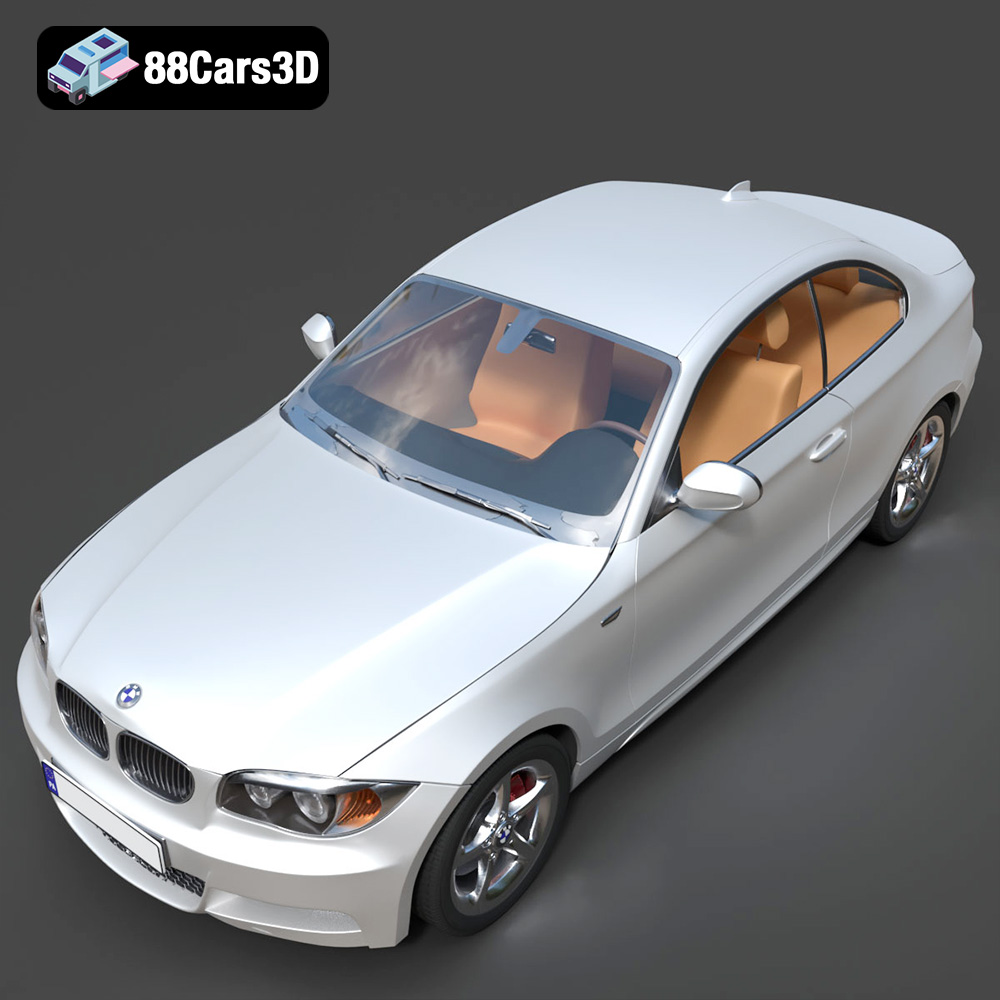
For games that emphasize immersion, the interior detail of a car model is just as important as the exterior. The BMW 1 Series Coupe 2009 features a “dashboard with analog instrument cluster,” a “multifunction steering wheel,” and “front sport seat geometry.” These details are crucial for first-person driving experiences, where players spend significant time inside the vehicle. High-quality interior assets enhance the sense of presence and realism, making the virtual driving experience more believable and engaging. Developers can hook up interactive elements, like animated gauges, working infotainment screens, and customizable interiors, further enriching the player’s interaction with the vehicle. The optimized geometry ensures that even these intricate interior details perform well in real-time, providing a visually rich experience without bogging down the game engine.
The journey of a 3D model doesn’t always end on a digital screen. With advancements in additive manufacturing, digital assets can now be transformed into tangible objects. The BMW 1 Series Coupe 2009 3D Model’s explicit support for 3D printing in .stl format opens up exciting possibilities for collectors, prototypers, and enthusiasts alike, bridging the gap between the virtual and physical realms.
For a 3D model to be successfully printed, it must be “manifold” – meaning it forms a completely enclosed volume without any holes, inverted normals, or overlapping geometry. The .stl format is specifically designed for this purpose, representing the model as a series of triangular facets. The BMW 1 Series Coupe 2009 3D Model is provided as an .stl, ensuring it’s ready for conversion into physical form. Before printing, users might need to check the model for any potential errors using specialized software, though a professionally prepared model like this one from 88cars3d.com typically minimizes such issues. The recommended scales (1:32 / 1:24 / 1:18 / 1:12) suggest versatility for different display purposes, from compact desktop models to larger, more detailed collectibles. Specific printing recommendations like layer height, wall thickness, and infill are invaluable guidelines for achieving optimal print quality.
The choice of 3D printing technology significantly impacts the final product. Fused Deposition Modeling (FDM) printers are common for their affordability and ability to use a wide range of thermoplastic filaments. However, for models like the BMW 1 Series Coupe 2009, which boast intricate details like the “signature BMW kidney grille detailing” and “detailed alloy wheels,” Stereolithography (SLA) or resin printing is often recommended. SLA printers use liquid resin cured by a laser or UV light, allowing for much finer layer heights (e.g., 0.04–0.12 mm as mentioned in general 3D print settings, though the specific product description implies slightly higher for the BMW) and sharper details, which is crucial for capturing the car’s precise design elements. While FDM can produce larger prints more economically, resin printing excels in fidelity, making it ideal for high-quality scale models that require smooth surface finishes and crisp edges.
Once printed, a 3D model often requires post-processing to achieve a showroom-quality finish. For the BMW 1 Series Coupe 2009, this might involve removing supports (especially for mirrors, bumper overhangs, and underbody details), sanding to eliminate layer lines, applying primer, and finally painting. The product description’s suggestion of “gloss automotive paint finish, optional sport trim detailing” guides users towards creating a truly authentic miniature. This meticulous attention to detail in post-processing can elevate a raw 3D print into a display-worthy collectible or a realistic prototype. Imagine a designer using a 3D printed model to review physical proportions or present a concept to a client, showcasing the vehicle’s design in a tangible, tactile format before committing to full-scale production. The precision of the 88cars3d.com model ensures that these physical iterations accurately reflect the digital design.
In the fast-paced world of digital production, efficiency is as critical as quality. Professional 3D artists, game developers, and visualization specialists constantly seek ways to streamline their workflows without compromising on the final output. This is where pre-made, high-quality 3D models like the BMW 1 Series Coupe 2009 3D Model from 88cars3d.com prove invaluable, offering significant advantages in time, cost, and creative freedom.
Creating a detailed 3D car model from scratch is a time-consuming and labor-intensive process, often requiring hundreds of hours of modeling, unwrapping, and texturing. By acquiring a professional-grade asset like the BMW 1 Series Coupe 2009, studios and individual artists can drastically cut down on project timelines. Instead of allocating resources to primary asset creation, teams can immediately jump into scene assembly, lighting, animation, or integration into a game engine. This accelerates delivery for tight client deadlines and allows for greater iteration on creative aspects. For instance, a small indie game studio could integrate this model directly into their racing game prototype, saving weeks of development time and allowing them to focus on gameplay mechanics and environmental design.
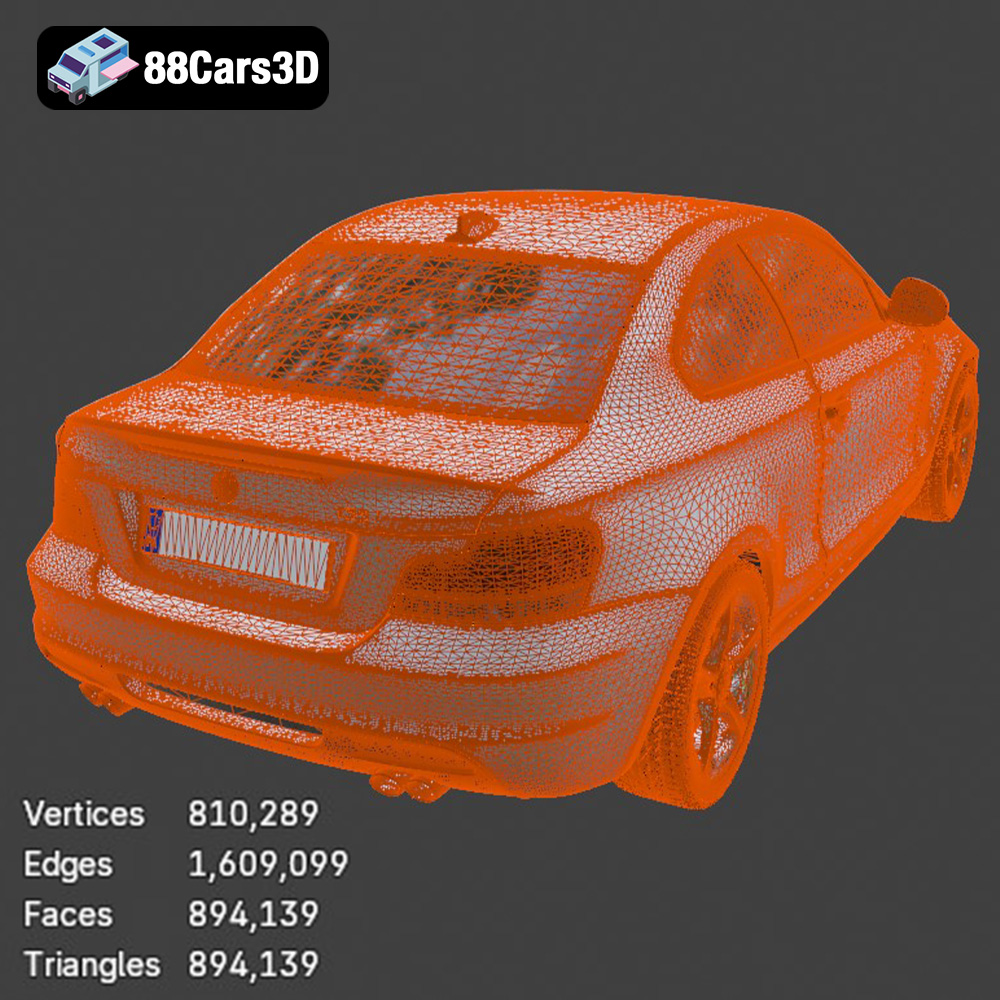
Client expectations for realism and accuracy in automotive projects are extremely high. The “clean and well-organized mesh structure” and “real-world scale accuracy” of the BMW 1 Series Coupe 2009 3D Model provide a robust foundation that ensures professional results. Low-quality or inaccurate models can lead to numerous problems, including rendering artifacts, scaling issues, and a general lack of realism that detracts from the final presentation. 88cars3d.com specializes in providing models that adhere to strict quality standards, meaning artists can trust that the underlying geometry, UVs, and material setups are production-ready. This reliability is crucial for projects where visual precision is non-negotiable, such as high-stakes automotive commercials or architectural visualizations that require realistic vehicles to populate a scene.
While ready-to-use, premium models also offer extensive customization options. The BMW 1 Series Coupe 2009 3D Model is described as allowing users to “change body color and trim accents,” “add sport package elements or performance wheels,” and “modify ride height or stance.” These customization capabilities are paramount for creating unique scenes or fitting the vehicle into specific project requirements. Artists can tailor the model to match a client’s specific branding, create variations for different in-game models, or design personalized scenes that stand out. For example, a virtual photography enthusiast can customize the model’s appearance to mimic a specific real-world tuning style, then configure lighting for “city, track, or showroom scenes” to capture stunning digital renders. This balance of out-of-the-box readiness and deep customizability makes the model a powerful asset for creative professionals.
The digital realm thrives on detail, accuracy, and versatility, and the world of 3D modeling for automotive applications is no exception. High-quality 3D car models are indispensable assets for a wide array of industries, from producing breathtaking marketing visualizations to building expansive, immersive game worlds. The BMW 1 Series Coupe 2009 3D Model serves as a prime example of an asset that perfectly encapsulates these critical attributes.
We’ve explored how its meticulously crafted exterior and interior details, combined with its optimized geometry and real-world scale, empower professionals across diverse fields. From leveraging its multiple file formats for seamless integration into 3ds Max, Blender, or Unreal Engine, to its readiness for physical manifestation through 3D printing, this model offers unparalleled flexibility. It simplifies complex workflows, accelerates project timelines, and ensures a level of visual fidelity that meets the highest industry standards, whether for cinematic rendering, real-time gaming, or interactive AR/VR experiences.
Ultimately, investing in premium 3D assets like the BMW 1 Series Coupe 2009 3D Model from 88cars3d.com is a strategic decision that pays dividends in efficiency, quality, and creative potential. It allows artists and developers to focus on innovation and storytelling, confident that the foundational assets underpinning their projects are robust, accurate, and truly world-class. Elevate your next project by exploring the comprehensive collection of high-quality 3D car models available at 88cars3d.com.
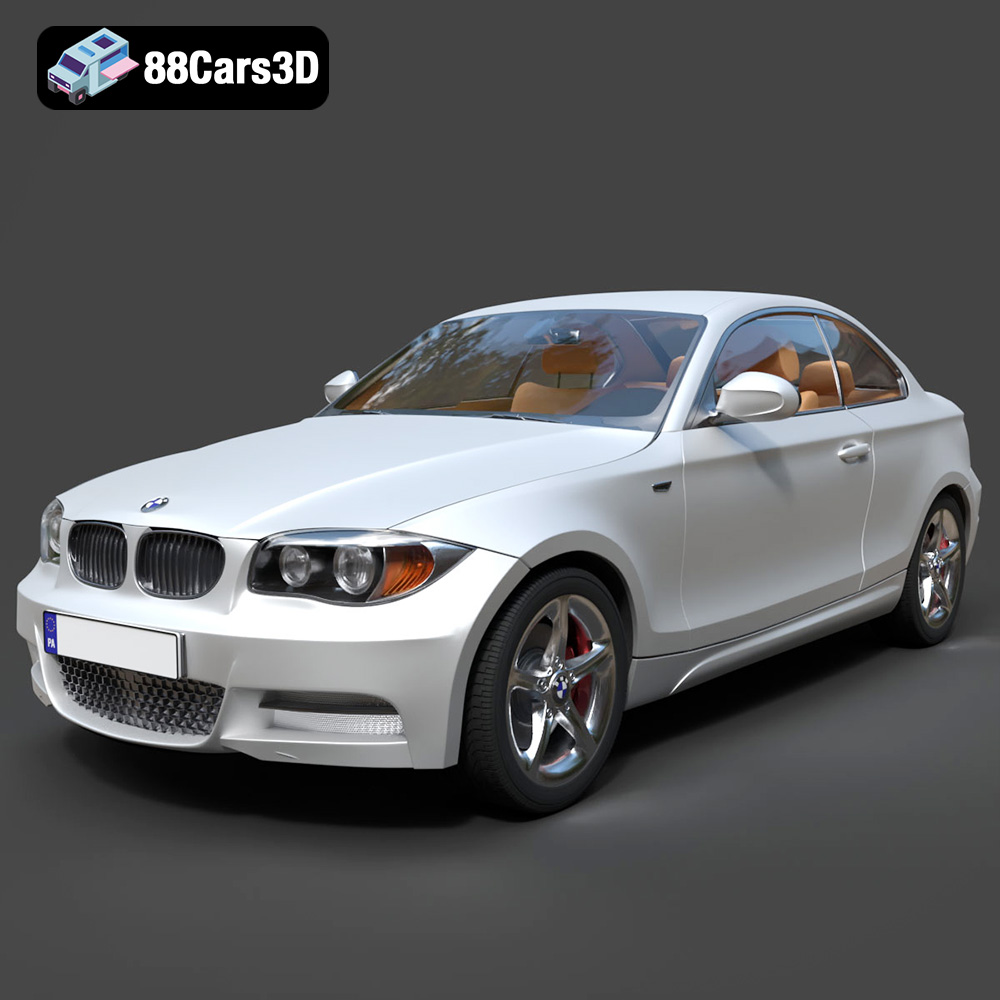
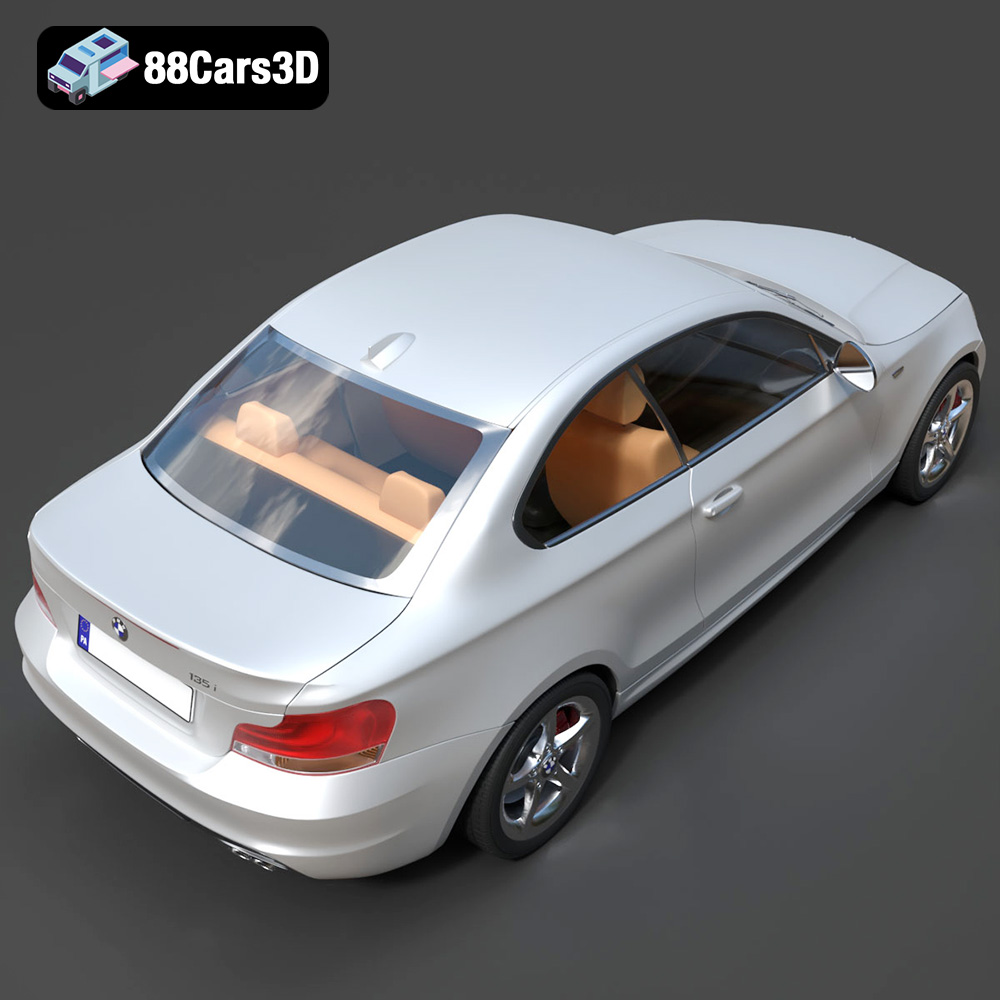
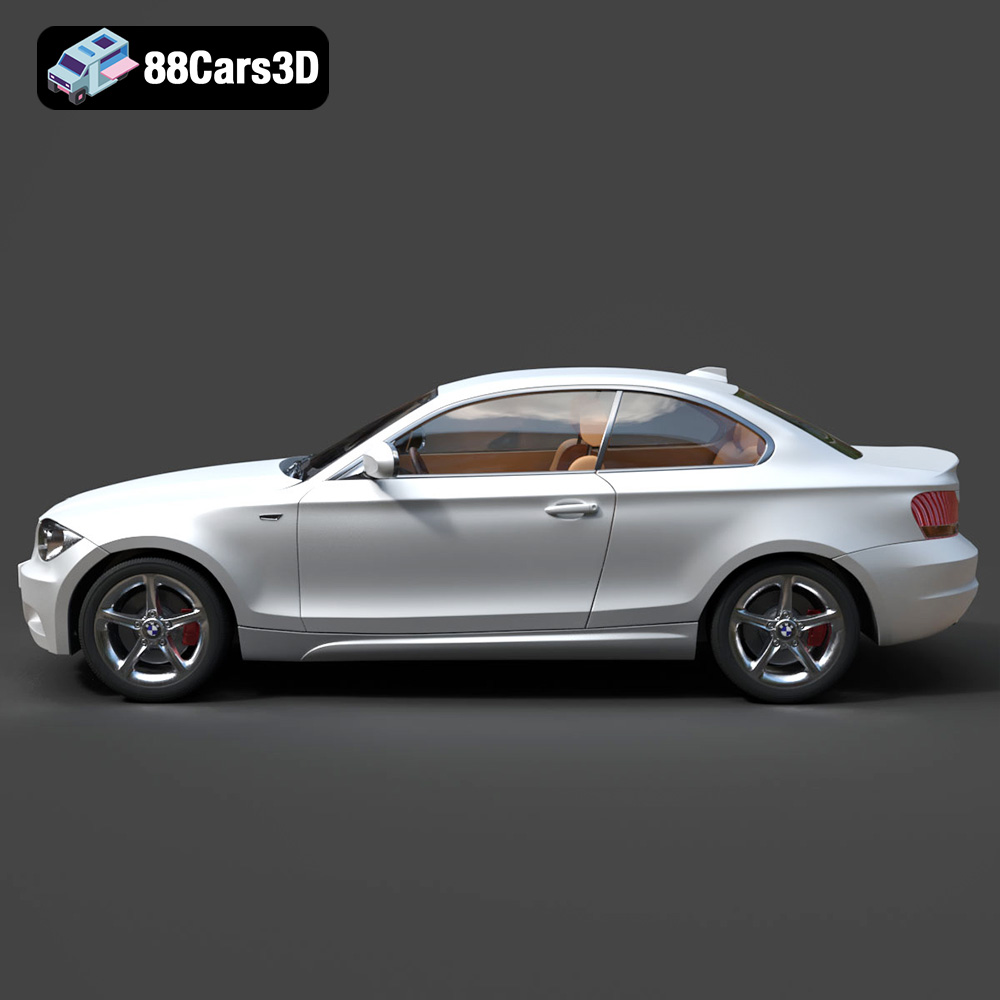
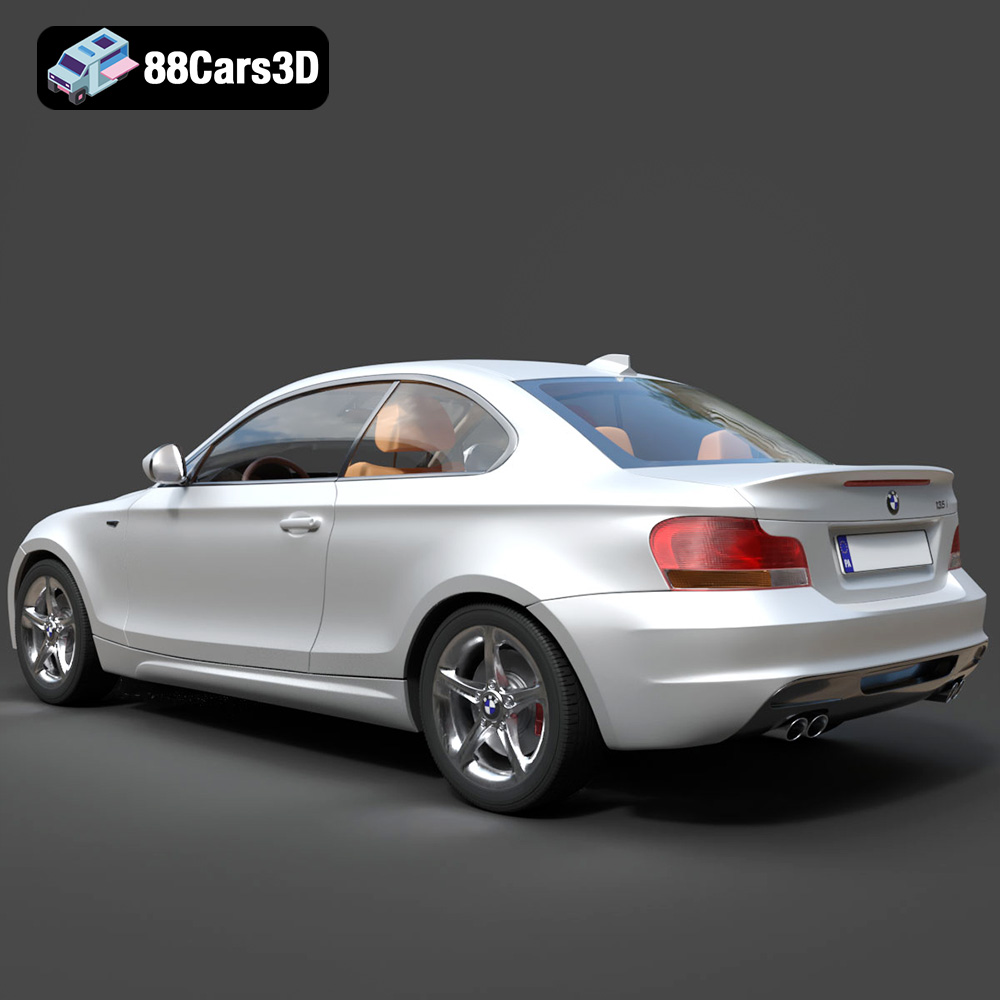
The BMW 1 Series Coupe 2009 3D Model is a high-detail digital recreation of the compact premium sports coupe known for its balanced chassis, rear-wheel-drive dynamics, and distinctive BMW styling. The 2009 1 Series Coupe blends everyday practicality with sporty performance, making it a popular choice among driving enthusiasts. This 3D model accurately represents the signature kidney grille, dual headlight design, sculpted hood lines, compact coupe proportions, sporty side profile, rear trunk layout, and alloy wheel detailing. Built with clean topology and real-world scale accuracy, it is ideal for rendering, animation, automotive visualization, game development, and AR/VR experiences. Perfect for urban driving scenes, car commercials, open-world simulations, cinematic projects, and automotive showcases.
$39.99
.1series
.arvr
.automotive
.blend
.bmw
.bmw2009
.car3dmodel
.compactcoupe
.fbx
.gameasset
.glb
.max
.obj
.ply
.rendering
.simulation
.sportcoupe
.stl
.unreal