Get 50% OFF All Premium 3D & STL Models!

In the dynamic world of 3D modeling, precision, versatility, and technical fidelity are paramount. Whether you’re a seasoned visualization artist, a game developer crafting immersive open worlds, or an engineer prototyping designs, the quality of your base assets dictates the final output. High-quality 3D car models are the backbone of countless projects, offering a foundation for stunning renders, realistic simulations, and engaging interactive experiences. Today, we delve into the technical capabilities and diverse applications of a prime example from the automotive modeling sphere: the Jeep Commander 3D Model.
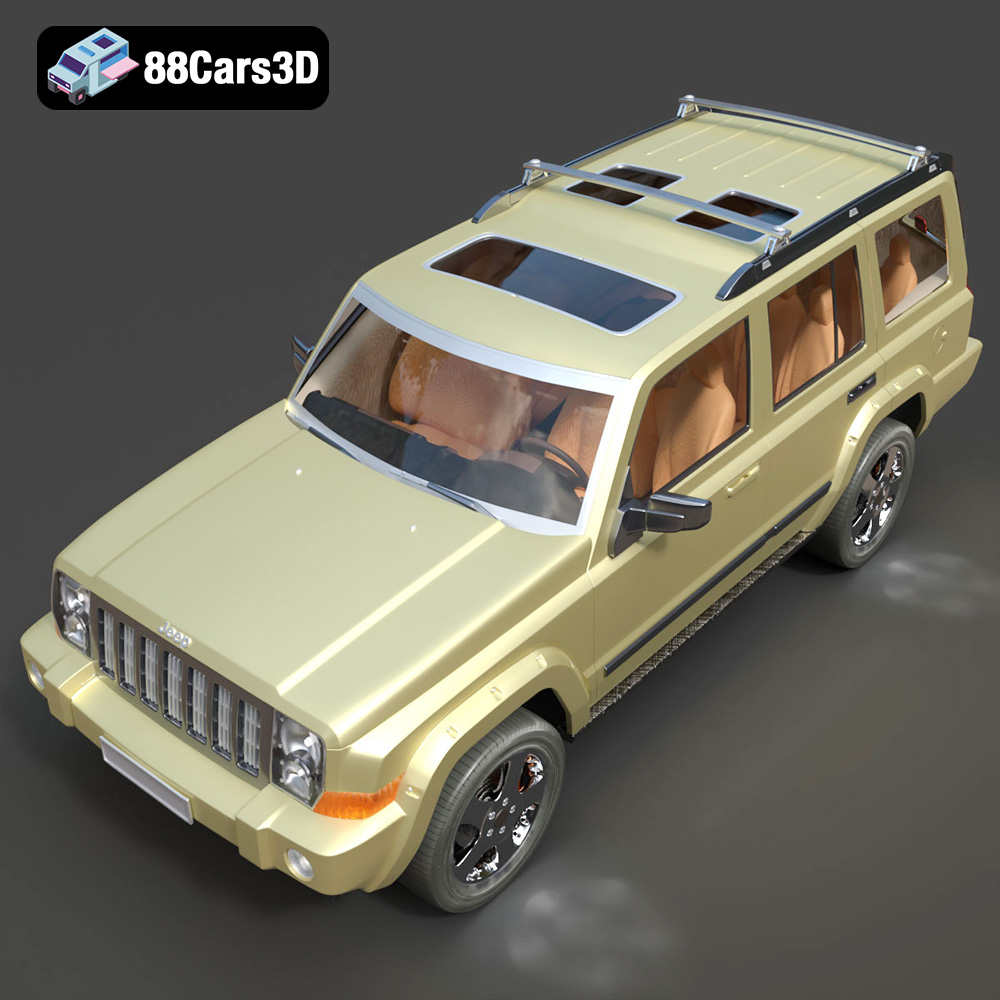
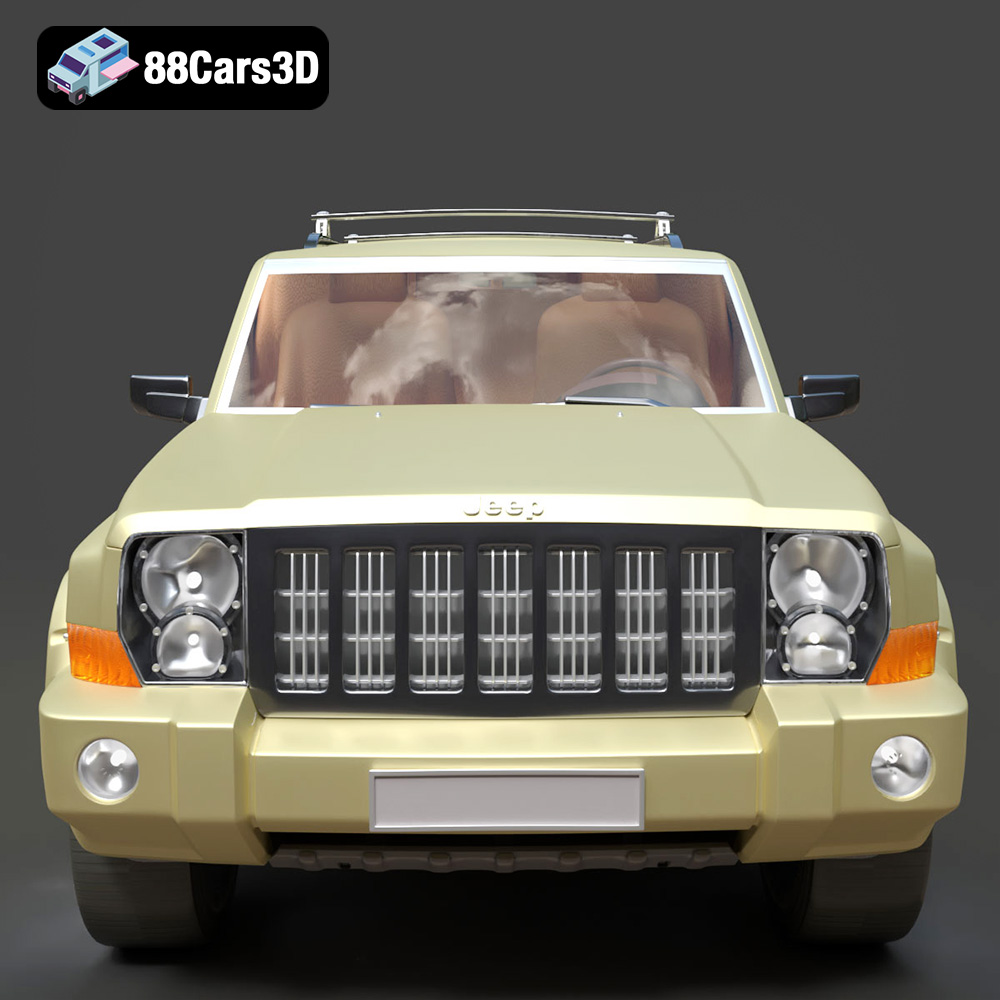
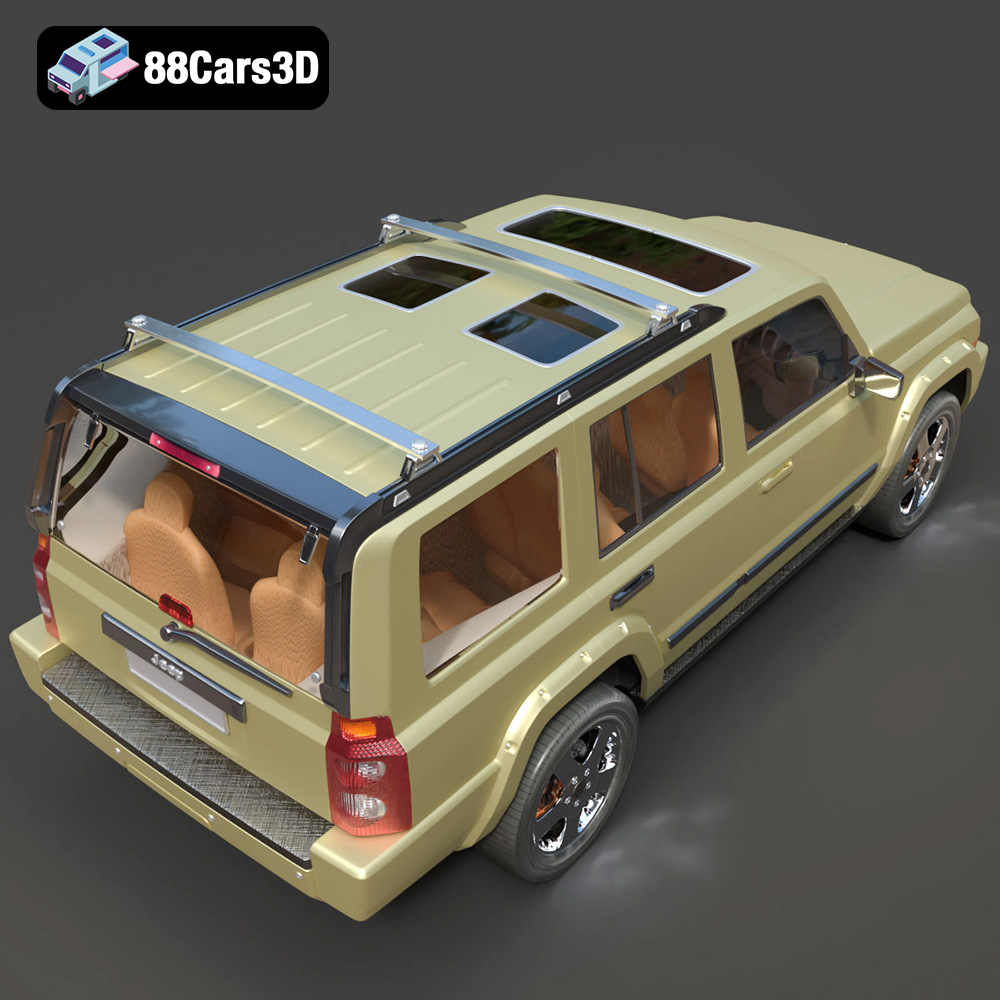
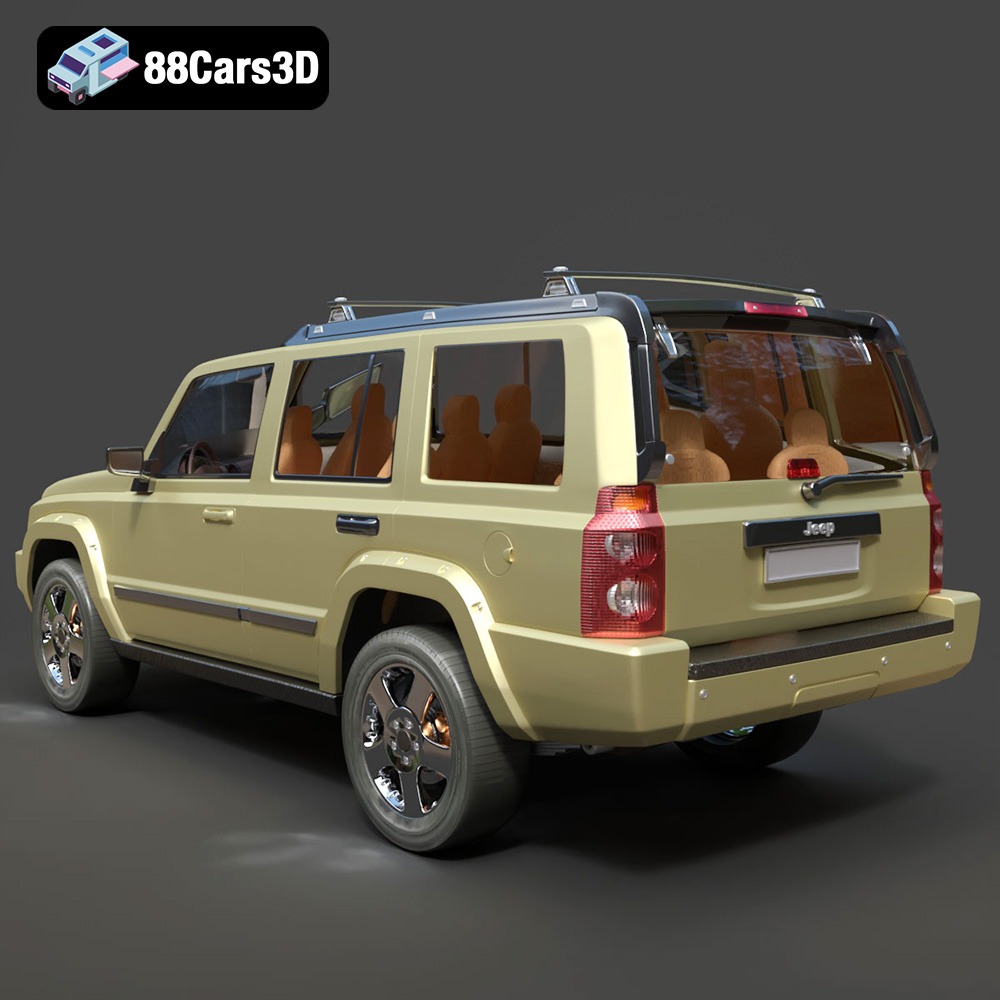
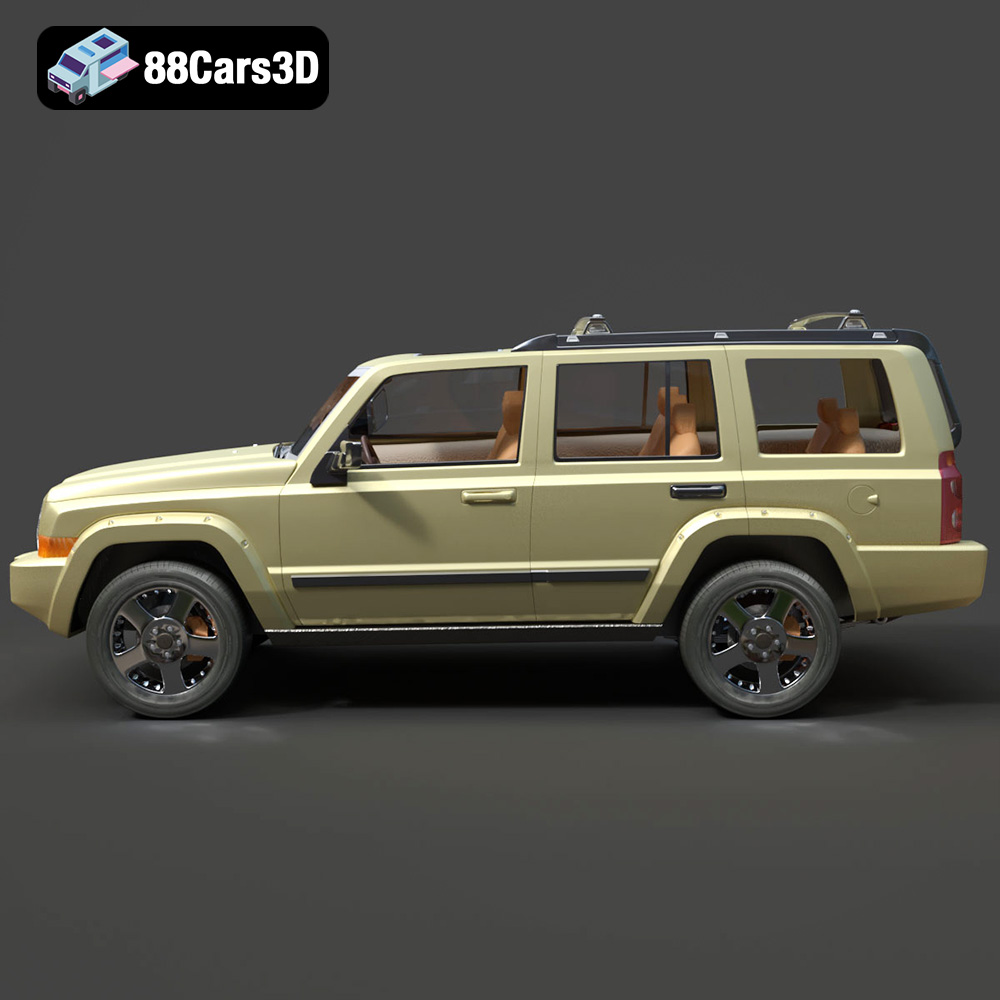
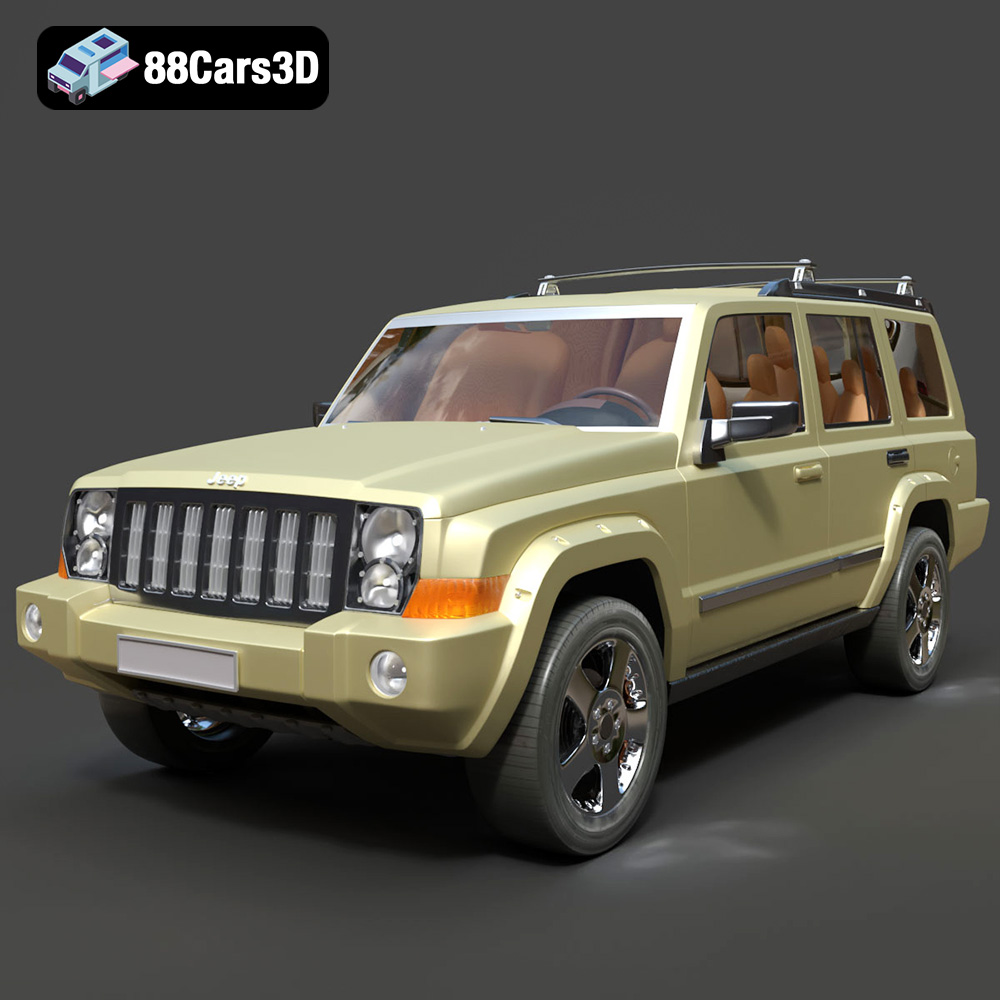
This model, a meticulously crafted digital recreation of Jeep’s full-size SUV, embodies the blend of rugged utility and practical design that defines the Commander. From its distinctive boxy styling and seven-slot grille to its functional roof rails and elevated stance, every detail has been faithfully translated into a digital asset. Its clean topology, accurate proportions, and optimized geometry make it an ideal candidate for a wide array of professional uses, from detailed automotive rendering to real-time game environments and even physical 3D printing. The versatility offered by such a comprehensive asset, readily available from platforms like 88cars3d.com, significantly streamlines workflows and empowers creators to focus on their vision rather than on foundational modeling.
The choice of a 3D model file format is not merely a preference; it’s a critical technical decision that impacts compatibility, feature retention, and overall workflow efficiency. Understanding the nuances of each format is essential for any professional working with 3D assets, especially when dealing with complex objects like 3D car models. The Jeep Commander 3D Model, designed for broad applicability, comes in an impressive array of formats, each serving distinct purposes.
The .blend format is native to Blender, a leading open-source 3D creation suite. When you receive a .blend file, you’re getting a complete Blender scene. This means not just the mesh data, but also materials, textures, lighting setups, camera positions, animations, modifiers, and even scene physics. For artists deeply integrated into the Blender ecosystem, a .blend file offers unparalleled editability and flexibility. You can dissect every aspect of the Jeep Commander 3D Model, modify its topology, adjust materials using Blender’s powerful node-based shader editor, or animate its separate components like doors and wheels directly within the native environment.
Autodesk’s .fbx (Filmbox) format has become an industry standard for data exchange between different 3D software applications. It’s renowned for its ability to store not just geometry and UVs, but also hierarchical structures, material assignments (often simplified PBR values), animations, skinning information, and even cameras and lights. For real-time pipelines in game engines like Unreal Engine and Unity, .fbx is often the go-to. It ensures a relatively smooth transfer of the Jeep Commander 3D Model‘s structure and basic material properties, making it immediately usable for creating game assets or cinematic sequences across various software platforms.
The .obj (Wavefront Object) format is one of the oldest and most universally compatible 3D file formats. It primarily stores geometric data (vertices, normals, texture coordinates) and group information. Material definitions are typically handled by a companion .mtl file, which specifies basic color, reflectivity, and texture map paths. While .obj doesn’t retain advanced scene data like animations or complex material graphs, its widespread support makes it an excellent choice for basic mesh exchange when you need maximum compatibility across virtually any 3D software. It’s a reliable format for the raw mesh data of the Jeep Commander for import into diverse rendering packages.
.glb (GL Transmission Format Binary) is a modern, self-contained format that bundles 3D models with textures, materials, and animations into a single, optimized file. Based on JSON, glTF (the text-based counterpart) and .glb are designed for efficient transmission and loading in web applications, augmented reality (AR), virtual reality (VR), and other real-time environments. It’s becoming the JPEG of 3D, making the Jeep Commander 3D Model readily displayable in virtual showrooms, interactive web configurators, or AR applications on mobile devices without complex conversions.
.stl (Stereolithography) is almost exclusively used for 3D printing. It represents 3D surfaces as a collection of triangular facets, defining the geometry without any color, texture, or material information. For successful 3D printing, an .stl file must be “manifold,” meaning it represents a watertight volume without gaps or intersecting faces. The Jeep Commander 3D Model‘s availability in .stl format directly addresses the growing demand for physical prototypes and scale models, allowing designers to easily convert it into a tangible object for prototyping or collectible builds, requiring careful consideration of print settings like scale and supports.
The .ply (Polygon File Format) is another format for storing 3D data, particularly popular for 3D scanning and CAD applications. Beyond geometry, it can store additional properties like color per vertex, normal vectors, and transparency, making it suitable for representing complex, detailed scanned objects. While less common for general animation or rendering than .fbx or .obj, .ply provides a robust, extensible format for precise mesh data, often used in scientific visualization or when converting models for detailed analysis.
While not a universal file format in the strictest sense, “.unreal” typically refers to assets or projects specifically structured and optimized for Unreal Engine. This could mean a .fbx file pre-imported and configured within an Unreal project, or a packaged asset designed to drop directly into an Unreal environment. Assets prepared in this manner, like the Jeep Commander 3D Model, come with proper collision setups, material instances, LODs (Levels of Detail), and sometimes even blueprint logic, ensuring seamless integration and optimal performance within Unreal Engine for game development and architectural visualization.
Similar to .blend, the .max format is proprietary to Autodesk 3ds Max, a powerful 3D modeling, animation, and rendering software widely used in architectural visualization, film, and game development. A .max file contains the entire scene, including geometry, materials (often V-Ray or Corona specific), lighting, cameras, animation timelines, and all modifiers. For professionals working in 3ds Max, having the Jeep Commander 3D Model in this native format provides the most comprehensive editing capabilities, allowing full manipulation of the model’s setup, materials, and potential for advanced animation and rendering using high-end renderers.
Automotive rendering demands meticulous attention to detail, realistic material properties, and sophisticated lighting setups. A high-quality 3D car model is the cornerstone of achieving photorealistic results, and the Jeep Commander 3D Model stands out as an excellent foundation for such endeavors. Its accurate body proportions, signature seven-slot grille, and detailed exterior components provide the essential fidelity needed for convincing visuals.
For professional automotive rendering, 3ds Max paired with renderers like V-Ray or Corona is a common industry choice. The Jeep Commander 3D Model, available in .max format, provides an immediate starting point. Artists can import the model, which typically comes with clean mesh structures and organized hierarchies, and begin the refinement process. This involves:
The model’s separate mesh components for doors, hood, tailgate, and wheels allow for precise control during rendering, enabling close-ups, cutaways, or even opening the doors for interior shots, showcasing the modeled dashboard and three-row seating. This attention to hierarchy and mesh separation is a technical advantage that saves countless hours in post-production.
Imagine an aftermarket parts manufacturer looking to showcase a new line of off-road accessories for the Jeep Commander. Instead of physically fitting parts and conducting expensive photoshoots, they could leverage the Jeep Commander 3D Model. Using software like 3ds Max, the new accessories (e.g., custom roof racks, bull bars, suspension lifts) can be modeled and digitally integrated onto the existing Commander model. High-resolution renders can then be generated, showing the vehicle in various rugged environments – traversing rocky trails, crossing rivers, or parked against a scenic mountain backdrop. This approach is not only cost-effective but also allows for rapid iteration and a consistent visual style, crucial for a professional marketing campaign. The optimized polygon count ensures that even with added accessories, the scene remains manageable for high-quality output.
Game development, particularly for open-world titles and driving simulators, demands 3D car models that are not only visually appealing but also highly optimized for real-time performance. The Jeep Commander 3D Model is designed with game engines in mind, offering a clean mesh structure and an optimized polygon count suitable for efficient rendering.
Unreal Engine is a powerhouse for creating realistic game environments. When integrating the Jeep Commander 3D Model into Unreal, the .fbx or .unreal formats are preferred. The process typically involves:
Consider a professional driving simulation for a logistics company training drivers in challenging off-road conditions. Using the Jeep Commander 3D Model, developers can create a highly realistic training vehicle within a simulator. The accurate proportions and detailed exterior/interior features provide visual immersion, while the optimized geometry ensures smooth frame rates even in complex terrain. The ability to separate mesh components allows for interactive elements, such as opening doors, turning the steering wheel, and animating suspension travel, adding to the realism of the training scenario. Such detailed game assets from 88cars3d.com significantly reduce development time and enhance the training experience.
The application of high-quality 3D car models extends far beyond traditional rendering and game development. Augmented Reality (AR), Virtual Reality (VR), and 3D printing represent exciting frontiers where precise digital assets, like the Jeep Commander 3D Model, offer unique opportunities.
AR and VR are transforming how we interact with products and environments. For automotive manufacturers, virtual showrooms and interactive configurators built around accurate 3D models provide unparalleled customer engagement. The Jeep Commander 3D Model is perfectly suited for these applications:
The ability to transform a digital model into a physical object via 3D printing is a testament to its technical quality. The Jeep Commander 3D Model‘s availability in .stl format directly caters to this. 3D printing allows for the creation of:
Professional 3D workflows demand assets that are not only visually appealing but also technically sound and efficient to work with. The Jeep Commander 3D Model is engineered with several technical advantages that significantly streamline integration and reduce iteration times across various projects.
A “clean mesh structure with proper edge flow” is a hallmark of a professional 3D model. Good topology ensures that the model deforms correctly during animation, subdivides smoothly for high-resolution renders, and avoids shading artifacts. For a complex object like an automobile, proper edge loops are critical for maintaining the curvature and sharp lines of the body panels, allowing for easy selection and modification. This characteristic of the Jeep Commander model simplifies UV mapping, texturing, and rigging processes, making it a joy to work with for artists and developers alike.
Accuracy in “real-world scale” is fundamental for consistent integration into any scene, whether it’s an architectural visualization or a game environment. Artists can drop the Jeep Commander 3D Model into their scene with confidence, knowing it will fit dimensionally with other assets. Furthermore, an “organized hierarchy for animation workflows” means that components like doors, wheels, steering wheel, and suspension elements are logically grouped and parented. This hierarchical structure is essential for rigging and animating the vehicle, allowing animators to easily control individual parts without affecting the entire model, saving significant time in complex animation setups.
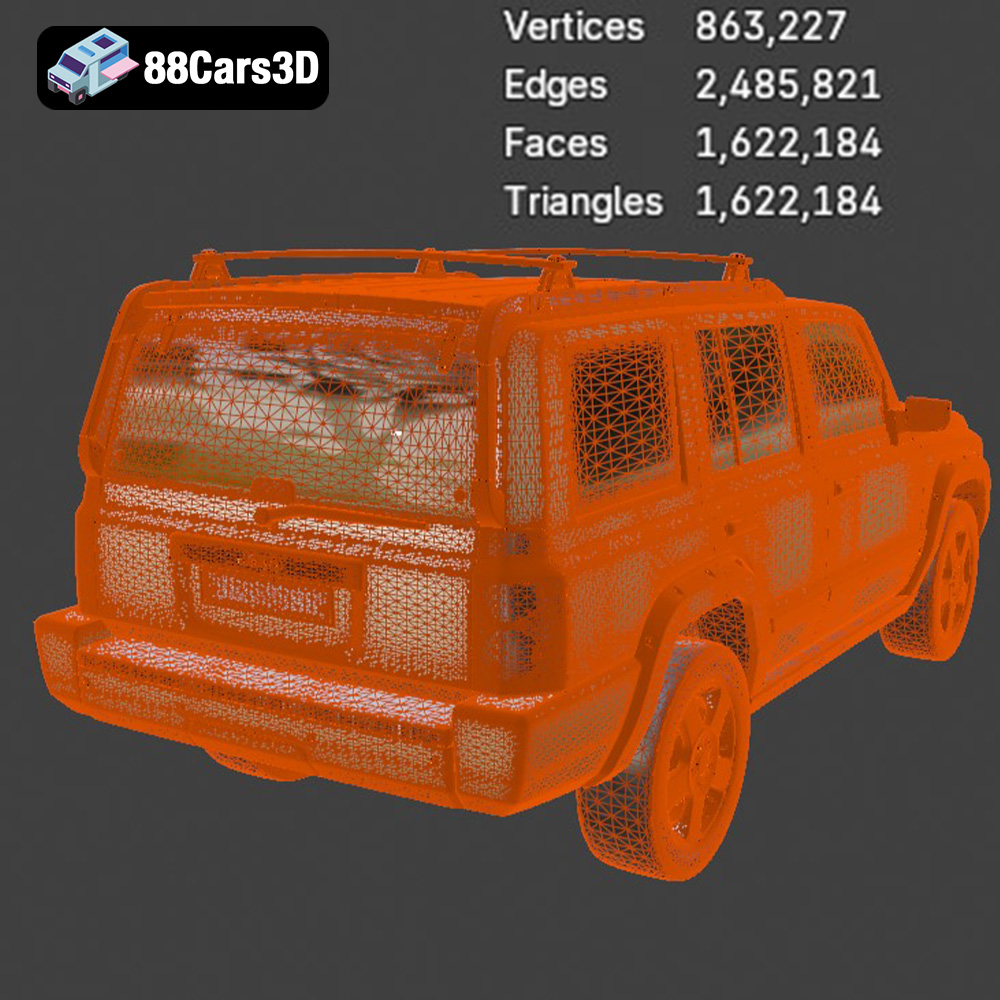
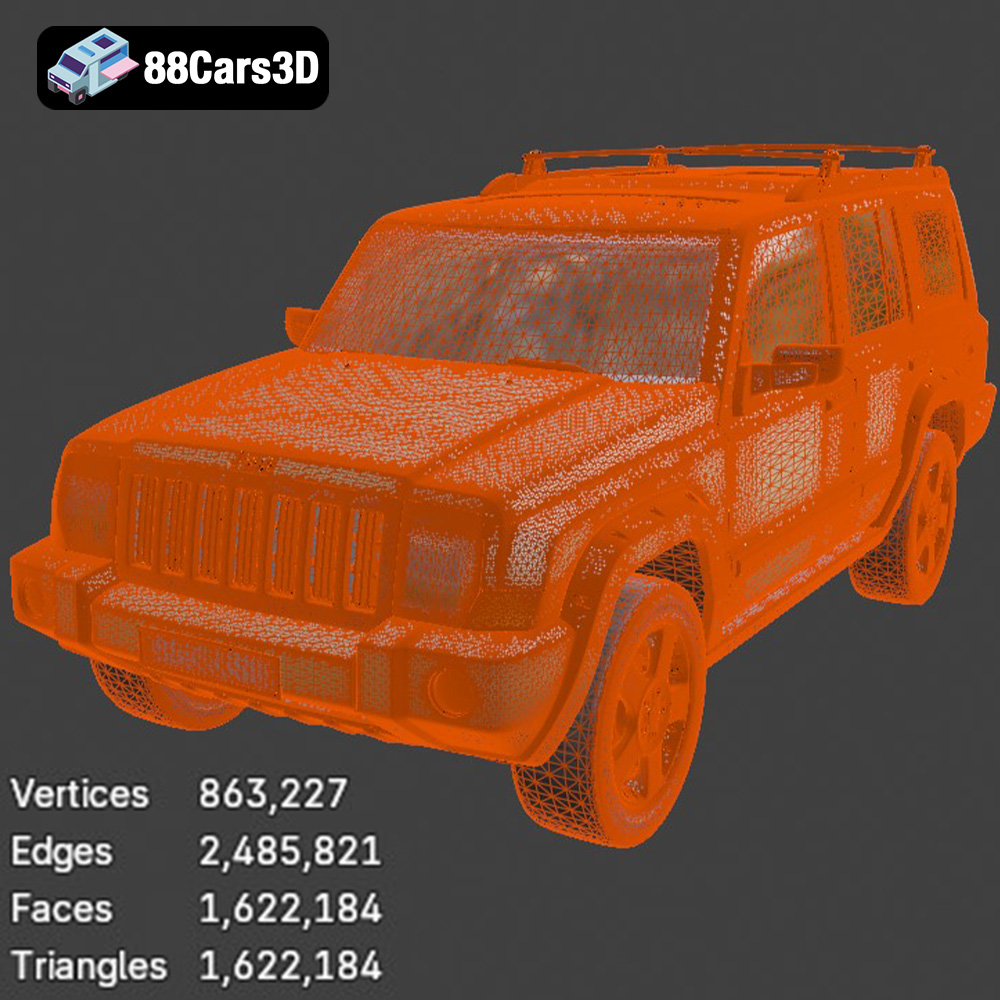
The balance between visual detail and performance is key, especially for game engines and real-time applications. The Jeep Commander 3D Model boasts an “optimized polygon count for both high-quality rendering and game engines.” This means the model has enough detail for close-up renders without being excessively heavy, preventing performance bottlenecks in interactive experiences. Accompanying this optimized geometry are usually high-quality PBR (Physically Based Rendering) materials. PBR workflows, supported by modern renderers and game engines, ensure that the materials (like car paint, glass, rubber, and chrome) react realistically to light, producing consistent and believable results across different lighting conditions and platforms. The inclusion of textures and materials, as stated in the meta description, confirms its readiness for PBR pipelines.
The world of 3D content creation is constantly evolving, demanding assets that are not only aesthetically pleasing but also technically robust and versatile. The Jeep Commander 3D Model exemplifies these qualities, offering a highly detailed, accurately scaled, and meticulously organized digital asset ready for a multitude of professional applications. From generating photorealistic renders for marketing campaigns in 3ds Max to integrating a performant vehicle into a demanding Unreal Engine game, or even creating tangible scale models through 3D printing, this model serves as an invaluable resource.
Its comprehensive file format support—including .blend, .fbx, .obj, .glb, .stl, .ply, .unreal, and .max—ensures seamless compatibility across a wide spectrum of software and pipelines. This technical flexibility, combined with its clean topology and optimized geometry, positions it as a go-to choice for artists and developers who require reliable and high-fidelity 3D car models. Investing in such a premium asset from reputable sources like 88cars3d.com empowers creators to elevate their projects, streamline their workflows, and focus on innovation rather than wrestling with subpar models. The Jeep Commander 3D Model is more than just a digital car; it’s a foundation for creative excellence in the digital automotive landscape.
The Jeep Commander 3D Model is a precise digital recreation of the full-size SUV produced by Jeep. Known for its boxy styling, three-row seating configuration, and rugged 4×4 capability, the Commander blends classic Jeep DNA with family-oriented practicality. This 3D model captures the Commander’s distinctive squared body design, seven-slot grille, roof rails, elevated stance, and strong off-road character. Designed with clean topology and accurate proportions, it is ideal for rendering, animation, simulation, AR/VR applications, and game development.
$39.99
.4x4vehicle
.arvr
.blend
.car3dmodel
.commander
.familySUV
.fbx
.gameasset
.glb
.jeep
.max
.obj
.ply
.rendering
.simulation
.stl
.suv3dmodel
.unreal
.vehicleasset