The automotive industry is in a perpetual state of innovation, not just in vehicle design and engineering, but also in how cars are presented, visualized, and experienced. Unreal Engine has emerged as the definitive platform for pushing the boundaries of real-time automotive visualization, offering unparalleled fidelity, interactivity, and speed. From breathtaking marketing renders to immersive configurators, virtual production, and high-performance game development, Unreal Engine empowers artists and developers to bring their automotive visions to life with stunning realism.
This comprehensive guide delves into the essential techniques and workflows for leveraging Unreal Engine to create cutting-edge automotive experiences. We’ll explore everything from setting up your project and integrating high-quality 3D car models—like those found on 88cars3d.com—to mastering advanced rendering features, crafting interactive Blueprints, and optimizing for various platforms. Whether you’re an automotive designer, a game developer, or a visualization professional, prepare to unlock the full potential of Unreal Engine and drive your projects toward unparalleled excellence.
Laying the Foundation: Project Setup and Asset Integration
Success in Unreal Engine automotive visualization begins with a solid foundation. Proper project setup and the efficient integration of high-quality 3D assets are critical steps that influence every subsequent stage of development, from material creation to lighting and optimization. Understanding how to configure your project for automotive work and efficiently import and manage your vehicle models is paramount.
Initial Unreal Engine Project Configuration
When starting a new Unreal Engine project for automotive visualization, selecting the right template and settings can significantly streamline your workflow. For high-fidelity automotive work, the “Blank” or “Architectural Visualization” templates often provide a clean slate with suitable default settings. Crucially, ensure your project is set up to utilize the latest rendering features.
Refer to the official Unreal Engine documentation at dev.epicgames.com/community/unreal-engine/learning for detailed instructions on project setup and plugin management.
Importing and Optimizing 3D Car Models from 88cars3d.com
The quality of your 3D car models directly impacts the final visual fidelity of your project. Platforms like 88cars3d.com offer high-quality, pre-optimized 3D car models specifically designed for Unreal Engine, featuring clean topology, realistic PBR materials, and proper UV mapping. When importing these models, consider the following best practices:
- File Formats: FBX is the most common and robust format for static and skeletal meshes. USD (Universal Scene Description) and USDZ are gaining traction for their interoperability and scene description capabilities, especially in AR/VR workflows. When importing an FBX, ensure you check options like “Combine Meshes,” “Generate Missing Collision” (if needed), and “Import Materials” (which will create basic placeholder materials).
- Scale and Units: Always ensure your imported models are at the correct real-world scale (centimeters in Unreal Engine). Verify the import scale factor during FBX import.
- Pivot Points and Transformations: Check that the model’s pivot point is at a logical location (e.g., center of the car, bottom center). If not, you can adjust this in a 3D modeling software prior to export, or in Unreal Engine using the Pivot Offset tool (right-click on actor in editor, Pivot > Set Pivot Offset). Ensure all transformations are frozen or reset (X=1, Y=1, Z=1 scale; X=0, Y=0, Z=0 rotation/location) before importing.
- LODs (Levels of Detail): High-quality car models from marketplaces like 88cars3d.com often come with pre-generated LODs. If not, Unreal Engine can automatically generate them for static meshes (
Static Mesh Editor > LOD Settings). Proper LODs are essential for performance, reducing polygon count as the camera moves further from the asset.
For models without Nanite (e.g., older assets or for specific VR/Mobile targets), target polygon counts for a detailed car might range from 150,000 to 500,000 triangles for LOD0, scaling down significantly for subsequent LODs.
Essential PBR Material Creation and Application
Realistic materials are crucial for compelling automotive visuals. Unreal Engine’s Physically Based Rendering (PBR) system allows you to accurately simulate how light interacts with surfaces. PBR materials typically require maps for Base Color (Albedo), Normal, Metallic, Roughness, and Ambient Occlusion. Some advanced materials might also use Height, Emissive, or Opacity maps.
- Material Workflow:
- Import Textures: Import your PBR texture maps (PNG, TGA, JPG) into Unreal Engine. Ensure appropriate compression settings (e.g., SRGB for Base Color, Linear for Normal, Metallic, Roughness, AO).
- Create a Master Material: Develop a versatile master material in the Material Editor that can be instanced for various car parts. This allows for quick iteration and consistency. Use parameters for values like paint color, metallic flakes, clear coat intensity, and roughness to easily modify instances.
- Instance Materials: Right-click on your master material and create a “Material Instance.” Apply these instances to different parts of your car model (body, wheels, windows, interior).
- Assign Textures: In each material instance, assign the corresponding texture maps from your imported assets to the correct parameters.
- Automotive Paint Shader: A complex automotive paint typically involves multiple layers: a base color, a metallic flake layer, and a clear coat. In Unreal Engine, this can be simulated using layered materials or by blending parameters within a single complex material. Parameters like “Clear Coat” and “Clear Coat Roughness” are built-in features of Unreal Engine’s default material model, making it easier to achieve realistic car paint.
- Glass and Chrome: For realistic glass, use a translucent material with appropriate refraction, roughness, and opacity. For chrome or highly reflective surfaces, a metallic material with very low roughness is essential.
Always ensure your texture resolutions are appropriate for the visual fidelity required, typically 2K to 4K for primary vehicle textures, and 1K-2K for secondary components, balancing visual quality with memory footprint.
Bringing Cars to Life: Advanced Lighting and Real-Time Rendering
Once your car models are integrated with stunning PBR materials, the next critical step is to illuminate them effectively. Unreal Engine’s advanced lighting systems, particularly Lumen and Nanite, provide powerful tools to create photo-realistic automotive scenes that react dynamically to changes in the environment, whether for a virtual studio, an outdoor scene, or an interactive configurator.
Mastering Lumen: Global Illumination and Reflections
Lumen is Unreal Engine’s fully dynamic global illumination and reflections system, replacing traditional static lighting workflows for many real-time applications. It’s a game-changer for automotive visualization, enabling physically accurate indirect lighting and reflections without needing lengthy lightmap baking.
- Enabling Lumen: Ensure Lumen Global Illumination and Lumen Reflections are enabled in your Project Settings under “Rendering.” For optimal quality, set “Global Illumination” and “Reflections” methods to “Lumen” in your Post Process Volume.
- Lumen Scene Representation: Lumen uses a software ray-tracing approach for distant scenes and a hardware ray-tracing fallback (if enabled and supported) for more accurate reflections. Understanding how Lumen samples and represents your scene (using signed distance fields or meshes) is key to troubleshooting artifacts.
- Environment Setup: Combine Lumen with a powerful directional light (for sun), sky light (for ambient light from the sky), and an HDRI (High Dynamic Range Image) through the Sky Sphere/Sky Atmosphere system. The Sky Light will capture the HDRI and contribute to Lumen’s global illumination, bathing your car in realistic ambient light and reflections from the environment.
- Troubleshooting Lumen: Common issues include light leaking or insufficient bounces. Adjusting the “Lumen Scene Lighting & Reflections” settings in the Post Process Volume, particularly “Max Trace Distance” and “Indirect Lighting Intensity,” can help. Also, ensure your meshes are closed and watertight for accurate Lumen representation.
Lumen enables incredibly fast iteration for lighting setups, allowing artists to experiment with different times of day, weather conditions, and studio environments without rebuilding lighting, saving countless hours.
Traditional Lighting Techniques and Performance
While Lumen is powerful, traditional lighting techniques still have their place, especially for performance-critical applications or when very specific, controlled lighting is required. Combining different light types strategically is essential.
- Light Types:
- Directional Light: Simulates distant light sources like the sun. Crucial for strong shadows and a primary light source.
- Sky Light: Captures ambient light from the sky or an HDRI, providing soft, diffuse illumination and reflections.
- Spot Lights: Ideal for focused illumination, highlights, and creating dramatic lighting effects on specific parts of the car.
- Point Lights: For omnidirectional light sources, like interior dome lights or accent lighting.
- Rect Lights: Excellent for studio setups, simulating softbox lighting, and achieving broad, even illumination with realistic specular highlights on car surfaces.
- Static vs. Movable vs. Stationary Lights:
- Movable: Fully dynamic, casts dynamic shadows, no baking. Highest performance cost but full flexibility (used with Lumen).
- Stationary: Static shadows, dynamic direct lighting, baked indirect lighting. Good balance of quality and performance, but indirect lighting is baked.
- Static: Fully baked, no dynamic lighting. Lowest performance cost but no dynamic changes. Limited use for automotive visualization where dynamism is often desired.
- Performance Considerations: Each light source, especially movable ones, adds to the rendering cost. Minimize the number of lights where possible. Use light function textures for complex Gobo effects without adding more geometry. For production rendering, consider using the Movie Render Queue with full ray tracing for maximum quality, even if real-time performance is not the primary goal for the final output.
Utilizing Nanite for High-Fidelity Geometry
Nanite, Unreal Engine 5’s virtualized geometry system, revolutionizes how high-detail 3D assets are handled. It allows artists to import film-quality assets with millions or even billions of polygons directly into Unreal Engine without manual LOD creation or performance penalties. This is particularly beneficial for automotive models, which often feature intricate details.
- Enabling Nanite: For any Static Mesh in the Content Browser, right-click and enable “Nanite.” Once enabled, the mesh will be processed by Nanite. You can adjust Nanite settings (like fallback mesh quality) in the Static Mesh Editor.
- Workflow with High-Poly Models: Import your highest-detail car models directly from your 3D modeling software. Nanite will automatically handle the complexity, rendering only the necessary detail for each pixel on screen. This means you no longer need to decimate meshes or spend hours creating manual LODs for the main car body.
- Benefits for Automotive Visualization:
- Unprecedented Detail: Showcase every curve, panel gap, and intricate component with photorealistic precision.
- Faster Iteration: Focus on artistic decisions rather than poly budget constraints.
- Seamless Scaling: Nanite meshes scale effortlessly from wide shots to extreme close-ups without pop-in or detail loss.
- Limitations: Nanite currently only supports Static Meshes. Skeletal meshes (for animated parts like doors that pivot) cannot be Nanite-enabled. For these, traditional LODs and optimization are still required. Also, meshes with translucent materials, or complex effects like vertex animation, may not benefit or be compatible with Nanite.
When sourcing automotive assets from marketplaces such as 88cars3d.com, look for models that are either optimized with Nanite in mind (extremely high poly) or come with well-structured parts that can be selectively Nanite-enabled.
Blueprinting the Future: Interactive Automotive Experiences
Beyond static renders, Unreal Engine truly shines in creating interactive automotive experiences. Blueprint Visual Scripting empowers designers and artists to add complex logic and interactivity without writing a single line of code. This is where your high-fidelity car models can transform into dynamic, user-driven showcases, configurators, and even driveable prototypes.
Core Concepts of Blueprint Visual Scripting for Vehicles
Blueprints are visual scripts that define game logic, behaviors, and interactivity. For automotive projects, Blueprints are indispensable for bringing your vehicles to life.
- Actor Blueprints: The primary type of Blueprint for vehicles. You would typically create an Actor Blueprint for your car, containing the Static Mesh components (body, wheels, doors) and adding logic for their interaction.
- Components: Blueprints are composed of components (e.g., Static Mesh Component, Skeletal Mesh Component, Camera Component, Collision Component). Each car part (body, individual wheel, door) should be a separate component or even a child Actor for better modularity.
- Event Graph: This is where you define the logic using nodes connected by wires. Events (e.g., “On Input Pressed,” “On Component Hit,” “Event Tick”) trigger sequences of actions. For a car, you might have events for opening doors, changing paint color, or starting the engine sound.
- Variables: Store data like current paint color, door open/closed state, or material parameters. Variables can be exposed for easy modification in the editor or to drive dynamic behavior.
- Functions and Macros: Encapsulate reusable blocks of logic, making your Blueprints cleaner and more efficient. For instance, a “SetPaintColor” function could take a color input and apply it to all relevant material instances.
Understanding the flow of execution and how to use common nodes (e.g., Branch, Sequence, Delay, Gate, Flip Flop) is fundamental to building robust automotive Blueprints.
Animating Car Parts and Simulating Physics with Blueprints
While traditional Animation Blueprints are primarily for skeletal characters, Blueprints are extensively used to “animate” car parts and simulate vehicle physics through various methods:
- Door, Hood, and Trunk Animation:
- Setup: Ensure your car’s doors, hood, and trunk are separate Static Mesh components (or child Actors) within your main car Blueprint. Crucially, each part needs its pivot point correctly set in your 3D software (or in Unreal) at the hinge rotation axis.
- Blueprint Logic: On an input event (e.g., pressing ‘D’ for door), use a “Timeline” node to animate the rotation of the door component. The Timeline outputs a value over time, which you can map to the rotation angle of the door. Use “Set Relative Rotation” on the specific component.
- Smooth Transitions: Timelines provide smooth interpolation, making the opening/closing action feel realistic. You can add sound cues or particle effects (like steam from a hot engine) triggered by the Timeline’s events.
- Wheel Rotation and Steering:
- Physics-Based Wheels: For driveable vehicles, Unreal Engine’s Chaos Vehicle Physics system is the go-to. It uses a specialized “Wheeled Vehicle Blueprint” that integrates physics constraints and input logic to simulate realistic driving.
- Visual Rotation (Non-Physics): For configurators or cinematics where physics isn’t needed, you can simply rotate wheel meshes. Link wheel rotation to a “Vehicle Speed” variable. As speed increases, rotate the wheel meshes on their local X-axis using
Event Tick > Add Relative Rotation. For steering, link the front wheels’ Yaw rotation to a “Steering Angle” variable.
- Suspension Dynamics:
With Chaos Vehicles, suspension is simulated automatically. For visual-only suspension, you can use inverse kinematics (IK) in conjunction with spring joints, or simpler Blueprint logic to move wheels up/down based on simulated road conditions or ground traces. For example, a Line Trace downwards from each wheel could detect ground height and adjust the wheel’s Z-position to match, creating a simple responsive suspension.
Building Interactive Configurators and Demos
Automotive configurators are a prime application for Blueprint scripting, allowing users to customize vehicles in real time. The Variant Manager plugin combined with Blueprints is a powerful combination.
- Variant Manager Setup: Create “Variant Sets” to define different configurations (e.g., “Paint Color,” “Wheel Type,” “Interior Trim”). Within each Variant Set, create “Variants” for specific options (e.g., “Red Paint,” “Blue Paint”; “Sport Wheels,” “Luxury Wheels”).
- Blueprint-Driven UI: Create a User Interface (UI) using Unreal Motion Graphics (UMG) Widgets. Buttons on the UI can trigger Blueprint events.
- Applying Changes:
- Material Swaps: On a button click, use Blueprint to “Set Material” on the car’s body mesh, assigning a different material instance (e.g., a “BluePaint_Inst” material). Exposing a “Color” parameter in your master paint material allows for even more dynamic color changes without needing separate material instances for every single color.
- Mesh Swaps: For different wheel types, use “Set Static Mesh” on the wheel components to swap between different wheel meshes.
- Activating Variants: For more complex changes (e.g., adding a spoiler, changing interior layout), use the “Activate Variant” node from the Variant Manager. This allows you to define complex changes (visibility, material changes, mesh swaps) for each variant directly in the editor, and trigger them via Blueprint.
This level of interactivity is where Unreal Engine truly excels, offering a dynamic and engaging experience that static renders cannot match.
Cinematic Storytelling and Virtual Production with Automotive Assets
Unreal Engine isn’t just for real-time interactivity; it’s a powerhouse for creating stunning cinematic content and driving the next generation of virtual production for automotive marketing, film, and television.
Crafting Dynamic Scenes with Sequencer
Sequencer is Unreal Engine’s multi-track non-linear editor for creating cinematic sequences, animations, and camera moves. It’s the equivalent of a film editor right inside your game engine, perfect for showcasing your automotive models.
- Sequence Creation: Create a new Level Sequence asset (
Right-click in Content Browser > Animation > Level Sequence). Drag your car Blueprint, cameras, and lights into the Sequencer track list.
- Keyframing Transformations: Animate your car’s movement, rotation, and scale over time by setting keyframes for its transform track. You can make the car drive, drift, or simply pose it dynamically.
- Camera Animation: Create Cine Camera Actors and animate their position, rotation, focal length, and aperture to create professional-looking camera moves. Use camera rigs (like Cranes or Dollys) for complex cinematic paths.
- Material Parameter Animation: Animate material parameters over time. Imagine changing the car’s paint color smoothly over a shot, or animating the glow of interior lights. Use a “Material Parameter Collection” or expose parameters directly on the car’s material instances in Sequencer.
- Event Tracks: Trigger Blueprint events (e.g., opening a car door, playing a custom animation, spawning a particle effect) at specific points in your sequence.
- Exporting: Use the Movie Render Queue (MRQ) to render out high-quality cinematics. MRQ offers advanced features like temporal anti-aliasing, render passes (for compositing), and support for various codecs and resolutions, making it ideal for broadcast-quality output.
For detailed guides on Sequencer, refer to the official Unreal Engine learning resources: dev.epicgames.com/community/unreal-engine/learning.
Leveraging Virtual Production for Automotive Marketing
Virtual production (VP) workflows, often involving large LED walls and real-time rendering, are transforming automotive advertising and film. Unreal Engine is at the forefront of this revolution.
- In-Camera VFX (ICVFX): Place your physical car model on a stage in front of an LED wall displaying a virtual environment rendered in Unreal Engine. The car is lit by the virtual environment, providing realistic reflections and lighting interaction without green screens.
- Benefits for Automotive:
- Dynamic Environments: Instantly change locations, time of day, or weather conditions with a few clicks.
- Realistic Lighting: The virtual environment dynamically lights the physical car, resulting in accurate reflections and diffuse light.
- Cost-Effective: Reduces the need for expensive location shoots and extensive post-production.
- Creative Freedom: Experiment with impossible environments and camera angles in real time.
- Workflow Considerations: Requires specialized hardware (LED panels, camera tracking systems like Vicon or Mo-Sys) and a robust Unreal Engine setup. Synchronization between the physical camera and the virtual camera within Unreal is critical for accurate parallax and perspective.
Real-World Applications and Case Studies
Unreal Engine’s capabilities extend across various automotive sectors:
- Automotive Design Review: Designers can load CAD models into Unreal Engine for real-time visualization, iterating on designs in an immersive 3D space. This accelerates decision-making and reduces the need for costly physical prototypes.
- Showroom Experiences: Interactive showrooms allow customers to explore car features, customize configurations, and even take virtual test drives.
- Driver Training and Simulation: High-fidelity vehicle physics and realistic environments provide immersive training simulations for drivers of all types, from everyday commuters to professional racers.
- Marketing and Advertising: Creating stunning photo-realistic renders, cinematic trailers, and engaging online configurators that capture audience attention.
Companies like Porsche, GM, and Toyota are actively utilizing Unreal Engine for design, marketing, and training, demonstrating its proven value in the industry.
Performance and Next-Gen Deployment: Optimization for AR/VR
Real-time rendering demands careful attention to performance, especially when deploying automotive experiences to demanding platforms like Augmented Reality (AR) and Virtual Reality (VR). Optimizing your Unreal Engine project ensures a smooth, immersive experience without sacrificing visual quality.
LOD Management and Draw Call Optimization
While Nanite handles high-poly static meshes efficiently, other aspects of your scene still require optimization, particularly for skeletal meshes, translucent materials, and specific AR/VR targets.
- Manual LODs: For parts that cannot be Nanite-enabled (e.g., individual door meshes for animation, driver characters), manually create or import LODs. Aim for significant polygon reductions at each LOD level (e.g., 50%, 75%, 90%).
- Draw Calls: Every unique mesh, material, and light contributes to draw calls. Minimize these by:
- Combining Meshes: Merge static meshes that share the same material and don’t need individual interaction.
- Material Instancing: Use master materials with instances to reduce the number of unique materials.
- Texture Atlases: Combine multiple small textures into a single large atlas to reduce material swaps.
- Disabling Shadow Casting: For small, insignificant objects, disable shadow casting to save performance.
- Culling: Utilize frustum culling (objects outside the camera view are not rendered) and occlusion culling (objects hidden behind others are not rendered) which are handled automatically by Unreal, but good scene organization helps.
- Profiling Tools: Use Unreal Engine’s built-in profilers (
Stat GPU, Stat RHI, Stat Engine, Stat Unit) to identify performance bottlenecks. The “GPU Visualizer” (Ctrl+Shift+,) is invaluable for understanding rendering costs.
Specifics for AR/VR Automotive Applications
AR/VR imposes unique and strict performance targets (e.g., 90 FPS per eye for comfortable VR). Automotive experiences in AR/VR are incredibly immersive but require meticulous optimization.
- Resolution Scaling: Dynamically adjust the screen percentage (resolution) based on performance to maintain a stable framerate.
- Forward Shading: For mobile VR (e.g., Meta Quest), use the Forward Shading Renderer. It is more performant than the deferred renderer but has some limitations in features.
- Mobile MSAA: Enable Mobile Multi-Sample Anti-Aliasing (MSAA) for smoother edges on mobile VR.
- Reduced Draw Distances: Cull less important objects at shorter distances.
- Baked Lighting: For static elements in AR/VR, baked lighting (with Lightmass) can be more performant than dynamic Lumen, especially on lower-end hardware.
- Stereo Rendering Optimizations: Be aware that VR renders the scene twice (once for each eye), effectively doubling the rendering cost.
- Interaction Design: Keep AR/VR interactions intuitive and responsive. Blueprints for user input (e.g., gaze-based interaction, controller input) need to be highly optimized to avoid latency.
Data Formats and Interoperability (USD, USDZ)
Interoperability is becoming increasingly important for complex automotive pipelines, allowing seamless data exchange between different software packages and platforms.
- USD (Universal Scene Description): Developed by Pixar, USD is an open-source framework for robustly describing, composing, and interchanging 3D scene data. It’s excellent for managing complex automotive assemblies, variations, and layering different data sources (geometry, materials, animation). Unreal Engine has strong USD support, enabling you to import and export entire scenes or individual assets.
- USDZ: A single-file, zero-compression variant of USD, optimized for AR applications, particularly on Apple devices. It’s ideal for distributing lightweight, interactive 3D car models for AR viewing on smartphones and tablets. You can export USD assets from Unreal Engine to USDZ for AR experiences.
- Benefits: These formats facilitate collaborative workflows, asset reuse across different projects and tools, and streamline the process of delivering consistent automotive data from design to marketing and real-time experiences.
Conclusion
Unreal Engine stands as an unrivaled platform for automotive visualization, offering a powerful suite of tools to create everything from stunning marketing collateral to immersive interactive experiences and advanced virtual production pipelines. By mastering project setup, leveraging high-quality 3D car models from resources like 88cars3d.com, and understanding advanced rendering features like Lumen and Nanite, you lay the groundwork for visual excellence.
The true magic often unfolds through Blueprint Visual Scripting, which empowers artists and designers to bring cars to life with interactive features, dynamic animations of car parts, and engaging configurators. Combined with cinematic storytelling via Sequencer and strategic optimization for performance-critical applications like AR/VR, Unreal Engine provides an end-to-end solution for driving innovation in the automotive sector.
The journey into Unreal Engine’s capabilities is continuous, with new features and optimizations constantly emerging. We encourage you to dive deeper, experiment with the techniques discussed, and explore the vast learning resources available. The future of automotive design, marketing, and experience is real-time, interactive, and powered by platforms like Unreal Engine. Start building your next automotive masterpiece today!
Featured 3D Car Models

Texture: Yes | Material: Yes | 3D Printable: Yes. Download the Italian Thoroughbreds Bundle featuring 5 iconic 3D models: Lamborghini Huracán Performante, Ferrari 458 Italia, Lamborghini Urus, Diablo SV, and Maserati GT. Optimized for 4K rendering and 3D printing (STL included). Save 50% with this ultimate Italian vehicle collection.
Price: $199.99
View Product

Download the Elite Future Mobility Bundle featuring 4 highly optimized 3D models: Tesla Model S, Avatr 11, Li L9, and Zoox Robotaxi. Perfect for ArchViz, Smart City renders, and game dev. Optimized for Unreal Engine and Blender. Includes .fbx, .obj, and .max formats.
Price: $99
View Product

🚗 5 Iconic German Cars (BMW M4 G82, M5 CS, X3, 1 Series & Mercedes E-Class). ✅ Optimized for ArchViz: Ready for Corona & V-Ray. 💰 Save €71 with this limited-time collection! 🚀 Instant Download after purchase.
Price: $119
View Product

Download the Extreme Off-Road & Survival 3D Models Bundle! Includes the Brabus 800 Adventure, Dodge Ram Bigfoot, Spec Truck, and a Caravan. Save over €210 on this premium 4-in-1 off-grid vehicle pack for ArchViz and game development.
Price: $149.99
View Product

Download the Heavy Duty & Commercial Logistics 3D Models Bundle! Includes the Ford Sterling, Caterpillar CT680, Mercedes Citaro Bus, and Vito Van. Save over €130 on this massive, game-ready 4-in-1 industrial vehicle pack.
Price: $109.99
View Product

Download the Ultimate Custom Motorcycles 3D Models Bundle. Includes a Custom Chopper, Ducati 916 Café Fighter, Harley XR1200X, and BMW K100. Perfect premium props for luxury ArchViz garages. Save over €250 today!
Price: $159.99
View Product

Download the ultimate JDM Street Racing 3D Models Bundle! Includes the Nissan GT-R, Toyota Supra, Mazda RX-7, Lancer Evo IX, and Honda NSX. Save big on this highly optimized, game-ready 5-in-1 Japanese legend car pack.
Price: $129.99
View Product

Download the ultimate American Muscle & Cinematic Classics 3D Models Bundle! Includes the Dodge Charger ’68, Mustang Eleanor GT500, Camaro Z28 ’79, and a custom ’69 Mustang. Save over €240 on this game-ready, premium 4-in-1 pack.
Price: $149.99
View Product
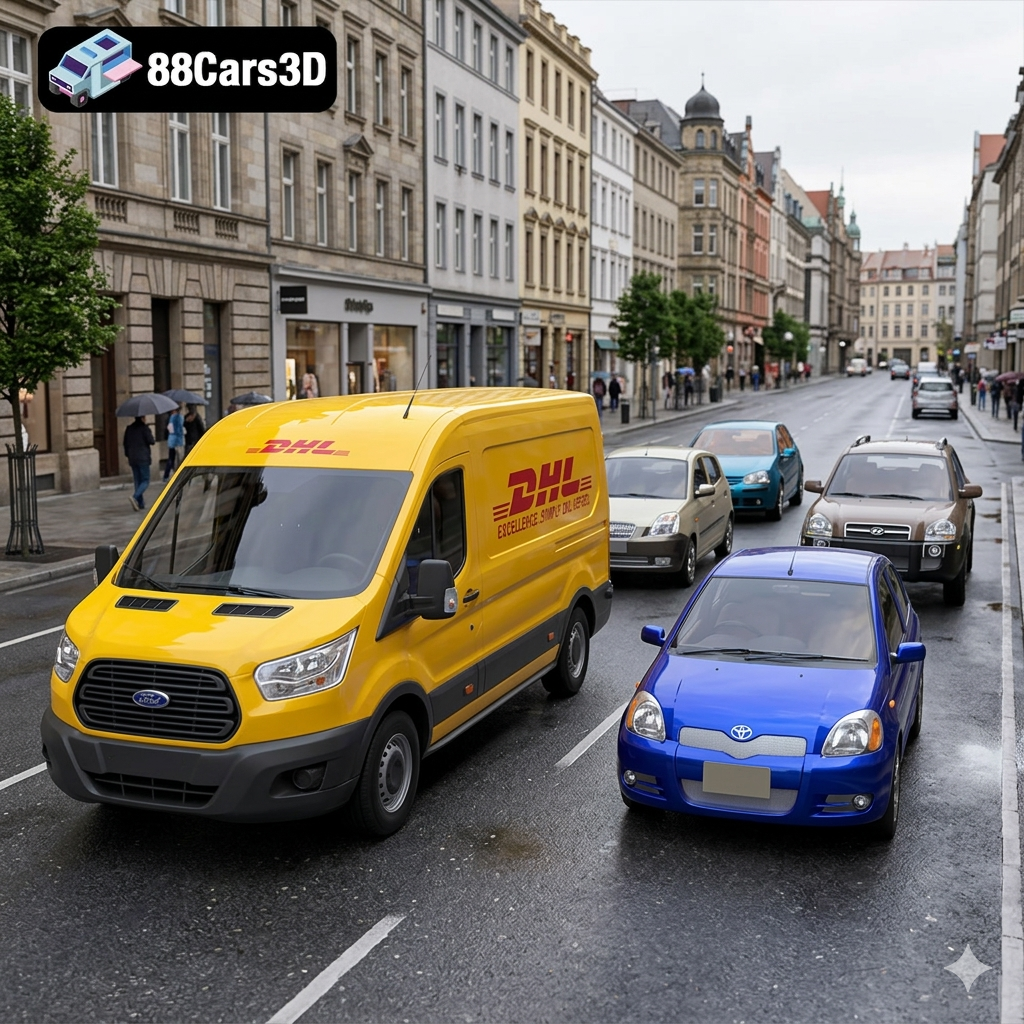
Download the Everyday City Traffic 3D Models Bundle. Includes the VW Golf, Kia Picanto, Hyundai Tucson, Toyota Yaris, and a DHL Ford Transit Van. Save big on this 5-in-1 pack, perfectly optimized for realistic ArchViz streets and game traffic.
Price: $99.99
View Product
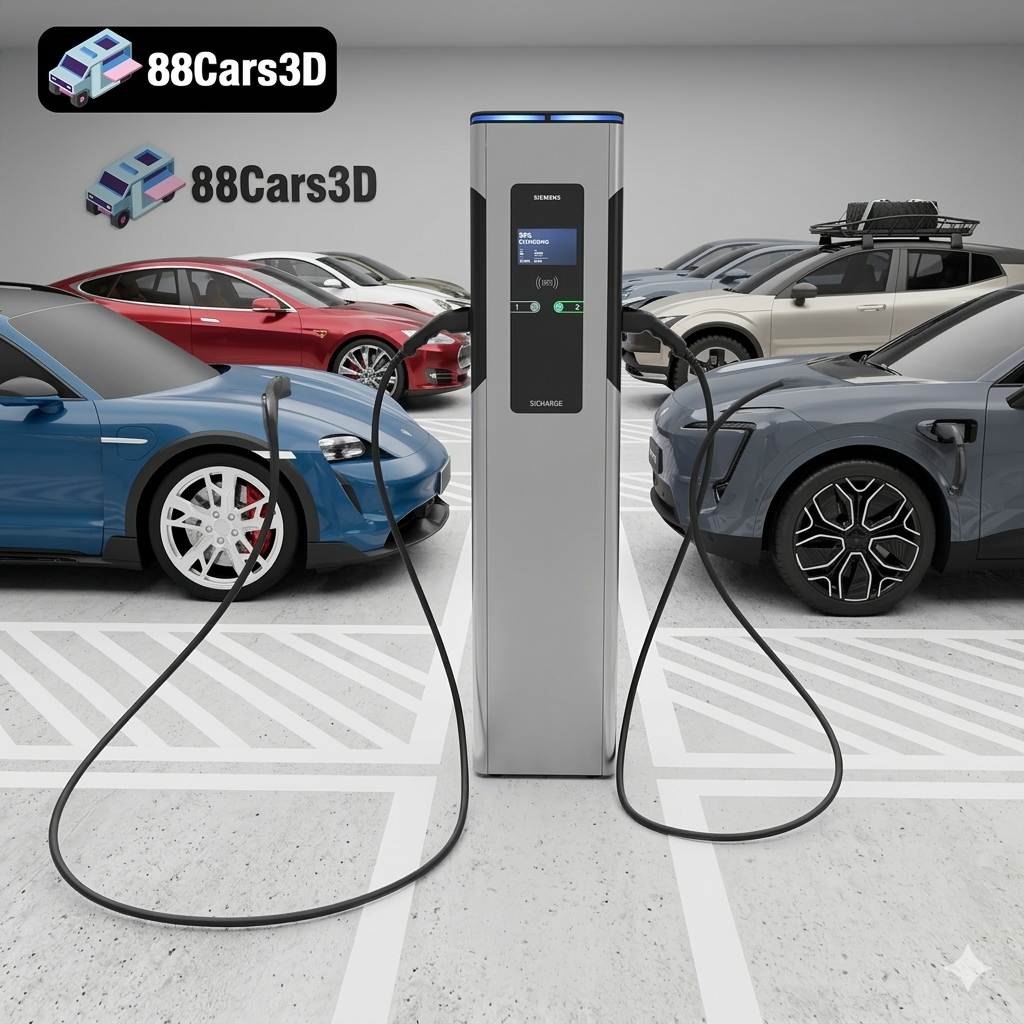
Download the Future of Mobility EV 3D Models Bundle. Includes the Volvo EX30, Tesla Model S, AVATR 11, Porsche Taycan, and a Siemens EV Charger. Save big on this highly optimized 5-in-1 pack for ArchViz and game development!
Price: $89.99
View Product


