Get 50% OFF All Premium 3D & STL Models!

“`html
The allure of a perfectly rendered, 3D printed miniature car is undeniable. Whether you’re a seasoned hobbyist looking to expand your collection, an automotive enthusiast seeking to visualize your dream machine, or a designer prototyping a custom body kit, the journey from a digital STL file to a tangible model is incredibly rewarding. However, achieving that sought-after detail and smooth finish requires more than just hitting “print.” This comprehensive guide delves into the technical intricacies of 3D printing detailed vehicle models, focusing on everything from file preparation and slicer settings to the best 3D printers and post-processing techniques. We’ll explore the nuances of FDM and resin printing, optimize your slicing strategies, and troubleshoot common pitfalls to ensure your next printed car is a showstopper. Get ready to transform those intricate STL files into stunning replicas!
The first critical decision in your 3D printing journey for detailed car models is selecting the right technology: Fused Deposition Modeling (FDM) or Stereolithography (SLA)/Digital Light Processing (DLP) resin printing. Each has distinct advantages and disadvantages that significantly impact the final output, print time, and complexity of post-processing. Understanding these differences is paramount to achieving the level of detail your automotive models deserve.
FDM printing, the most common form of desktop 3D printing, works by extruding melted thermoplastic filament layer by layer. For car models, FDM printers offer a cost-effective entry point and the ability to print larger, more robust parts. They excel at creating functional components or larger display models where extreme micro-detail might not be the absolute priority. However, FDM prints are inherently characterized by visible layer lines, which can detract from the smooth curves and sharp edges typical of automotive designs. Achieving a smooth finish often requires significant post-processing, such as sanding, filling, and priming.
Key considerations for FDM:
Resin printing technologies, like SLA and DLP, cure liquid photopolymer resin layer by layer using a UV light source. These methods are renowned for their exceptional ability to produce incredibly fine details, smooth surfaces, and sharp edges, making them ideal for highly intricate car models where realism is paramount. The layer lines, if present at all, are often imperceptible. However, resin printing comes with its own set of challenges: the resins themselves can be messy and require careful handling, post-processing involves washing and curing, and the build volumes are typically smaller than FDM printers. Furthermore, resin prints can be more brittle than FDM prints, depending on the resin type.
Key considerations for resin:
Recommendation for 88cars3d.com Models: For the high-fidelity, detailed car models offered on platforms like 88cars3d.com, resin printers generally provide superior results out-of-the-box due to their inherent resolution. However, FDM printers, with careful calibration and settings, can also produce impressive results, especially for larger-scale models or if post-processing is an acceptable part of your workflow.
The journey to a perfect 3D print begins long before the printer hums to life. It starts with the STL file itself and how it’s interpreted by your slicing software. A well-prepared STL and meticulously configured slicer settings are the cornerstones of a successful, detailed print. For automotive models, where smooth curves, sharp panel lines, and intricate details are critical, every parameter matters.
STL (STereoLithography) files represent 3D surface geometry using a collection of triangular facets. The quality of this mesh directly impacts the printability and final appearance of your model. For car models, issues like non-manifold geometry (where edges are shared by more than two triangles), holes, or inverted normals can lead to slicing errors, printing failures, and compromised detail. Fortunately, software tools exist to address these issues.
Mesh Repair Workflow:
Platforms like 88cars3d.com prioritize providing clean, manifold STL files, significantly reducing the need for extensive manual repair. However, understanding this process is crucial for any modeler.
The slicer software (e.g., Cura, PrusaSlicer, Lychee Slicer for resin) translates your 3D model into layer-by-layer instructions (G-code) for the printer. Optimizing these settings is where the magic happens for detailed prints.
Key FDM Slicer Settings:
Key Resin Slicer Settings:
Detailed car models, with their overhangs, delicate spoilers, and complex undercarriages, almost invariably require support structures. These temporary structures hold up suspended parts of the model during printing and are removed afterward. The type, placement, and density of supports are critical for print success and the quality of the final surface finish. Poorly implemented supports can leave behind unsightly marks, damage delicate features, or even cause print failure.
In FDM printing, supports are typically printed from the same filament as the model. The goal is to create supports that are strong enough to hold the geometry but easy enough to remove cleanly.
Types of FDM Supports:
Optimizing FDM Supports:
Resin supports are typically much finer and more delicate than FDM supports. They are printed directly from the build plate and are designed to be less intrusive.
Types of Resin Supports:
Optimizing Resin Supports:
Support Removal Techniques: For FDM, use flush cutters, hobby knives, and files. For resin, carefully pry supports off with small tools, followed by sanding or light abrasion. Always wear safety glasses and gloves when removing supports, especially from resin prints.
How you orient your car model on the build plate and ensure it sticks reliably are fundamental to a successful print. The orientation affects print time, support requirements, and surface quality, while poor bed adhesion is a leading cause of print failure.
The orientation of your model on the build plate dictates which parts are printed first, how supports are generated, and the direction of layer lines. For detailed car models, this decision is multifaceted.
Key Considerations for Orientation:
Whether you’re using FDM or resin, a secure bond to the build plate is non-negotiable. Print failures due to poor adhesion are frustrating and wasteful.
FDM Bed Adhesion Techniques:
Resin Bed Adhesion Techniques:
The choice of printing material and the subsequent post-processing steps are what truly elevate a 3D printed car model from a raw print to a display-worthy piece. Each material has unique properties, and post-processing techniques can transform a rough print into a smooth, painted masterpiece.
The material you choose will dictate the strength, surface finish, temperature resistance, and ease of post-processing for your automotive model.
FDM Materials:
Resin Materials:
Post-processing is where raw 3D prints are refined into finished products. For car models, this often involves smoothing, assembling, and painting.
FDM Post-Processing:
Resin Post-Processing:
By carefully selecting your materials and dedicating time to post-processing, you can transform even the most complex STL files from marketplaces like 88cars3d.com into stunningly realistic automotive miniatures.
3D printing highly detailed car models is a rewarding endeavor that blends technical skill with artistic vision. From the foundational choice between FDM and resin printing technologies to the meticulous preparation of STL files and the fine-tuning of slicer settings, every step plays a crucial role in achieving a high-fidelity result. We’ve explored how understanding mesh topology, optimizing layer heights, wall thickness, and print speeds can dramatically improve print quality. The critical role of support structures, whether strategically placed tree supports on FDM or delicate anchors on resin prints, ensures that even the most complex overhangs and delicate features are flawlessly reproduced.
Furthermore, mastering print orientation and ensuring robust bed adhesion are the bedrock upon which successful prints are built. Your choice of material – from user-friendly PLA to tough ABS for FDM, or the high-resolution standard and specialty resins – will significantly impact the final outcome and subsequent finishing possibilities. Finally, the often-underestimated art of post-processing, including sanding, filling, painting, and assembly, is what elevates a raw 3D print into a truly exceptional replica. By applying the technical insights and best practices outlined in this guide, you are well-equipped to tackle the intricate car models available on platforms like 88cars3d.com and produce breathtaking results. Embrace the process, experiment with settings, and enjoy bringing your favorite vehicles to life, layer by detailed layer.
“`

Texture: Yes | Material: Yes | 3D Printable: Yes. Download the Italian Thoroughbreds Bundle featuring 5 iconic 3D models: Lamborghini Huracán Performante, Ferrari 458 Italia, Lamborghini Urus, Diablo SV, and Maserati GT. Optimized for 4K rendering and 3D printing (STL included). Save 50% with this ultimate Italian vehicle collection.
Price: $199.99

Download the Elite Future Mobility Bundle featuring 4 highly optimized 3D models: Tesla Model S, Avatr 11, Li L9, and Zoox Robotaxi. Perfect for ArchViz, Smart City renders, and game dev. Optimized for Unreal Engine and Blender. Includes .fbx, .obj, and .max formats.
Price: $99

🚗 5 Iconic German Cars (BMW M4 G82, M5 CS, X3, 1 Series & Mercedes E-Class). ✅ Optimized for ArchViz: Ready for Corona & V-Ray. 💰 Save €71 with this limited-time collection! 🚀 Instant Download after purchase.
Price: $119

Download the Extreme Off-Road & Survival 3D Models Bundle! Includes the Brabus 800 Adventure, Dodge Ram Bigfoot, Spec Truck, and a Caravan. Save over €210 on this premium 4-in-1 off-grid vehicle pack for ArchViz and game development.
Price: $149.99

Download the Heavy Duty & Commercial Logistics 3D Models Bundle! Includes the Ford Sterling, Caterpillar CT680, Mercedes Citaro Bus, and Vito Van. Save over €130 on this massive, game-ready 4-in-1 industrial vehicle pack.
Price: $109.99

Download the Ultimate Custom Motorcycles 3D Models Bundle. Includes a Custom Chopper, Ducati 916 Café Fighter, Harley XR1200X, and BMW K100. Perfect premium props for luxury ArchViz garages. Save over €250 today!
Price: $159.99

Download the ultimate JDM Street Racing 3D Models Bundle! Includes the Nissan GT-R, Toyota Supra, Mazda RX-7, Lancer Evo IX, and Honda NSX. Save big on this highly optimized, game-ready 5-in-1 Japanese legend car pack.
Price: $129.99

Download the ultimate American Muscle & Cinematic Classics 3D Models Bundle! Includes the Dodge Charger ’68, Mustang Eleanor GT500, Camaro Z28 ’79, and a custom ’69 Mustang. Save over €240 on this game-ready, premium 4-in-1 pack.
Price: $149.99

Download the Everyday City Traffic 3D Models Bundle. Includes the VW Golf, Kia Picanto, Hyundai Tucson, Toyota Yaris, and a DHL Ford Transit Van. Save big on this 5-in-1 pack, perfectly optimized for realistic ArchViz streets and game traffic.
Price: $99.99
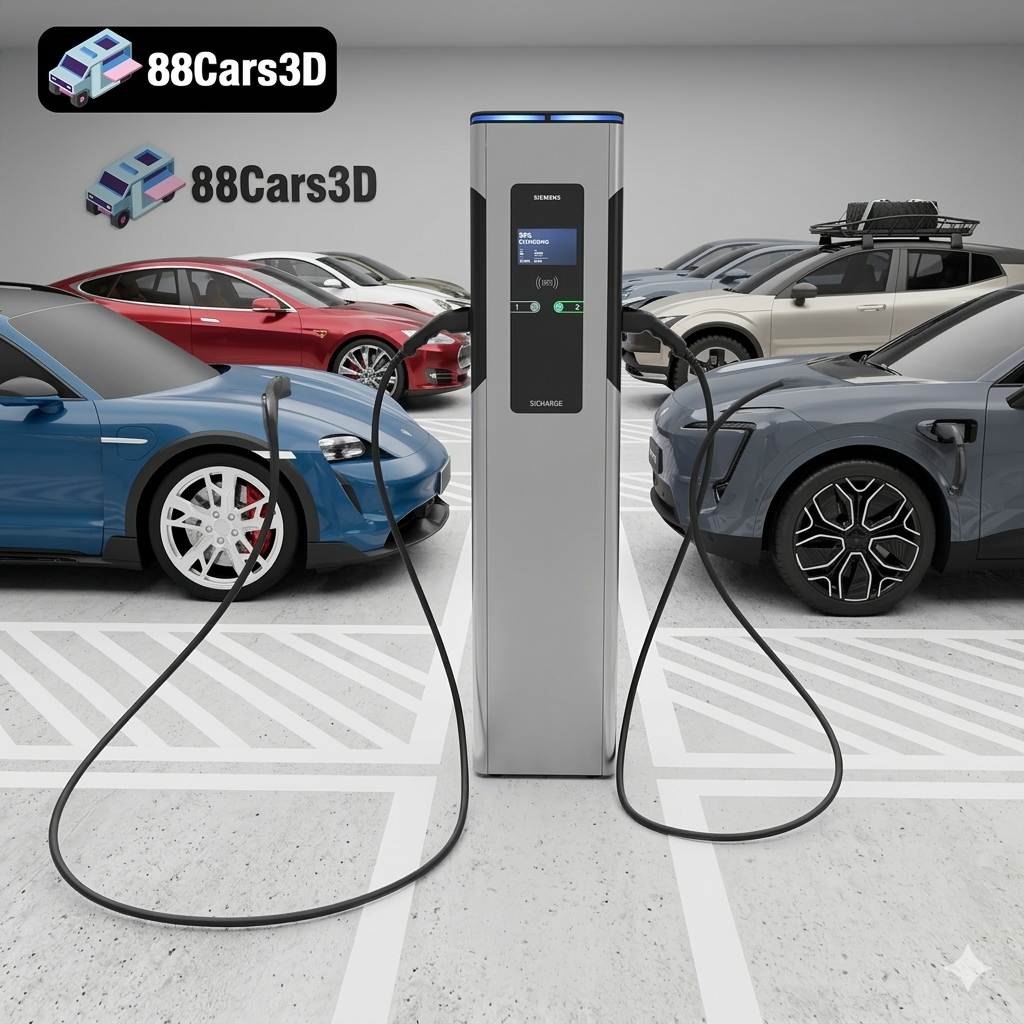
Download the Future of Mobility EV 3D Models Bundle. Includes the Volvo EX30, Tesla Model S, AVATR 11, Porsche Taycan, and a Siemens EV Charger. Save big on this highly optimized 5-in-1 pack for ArchViz and game development!
Price: $89.99

